Taxonomy and identification
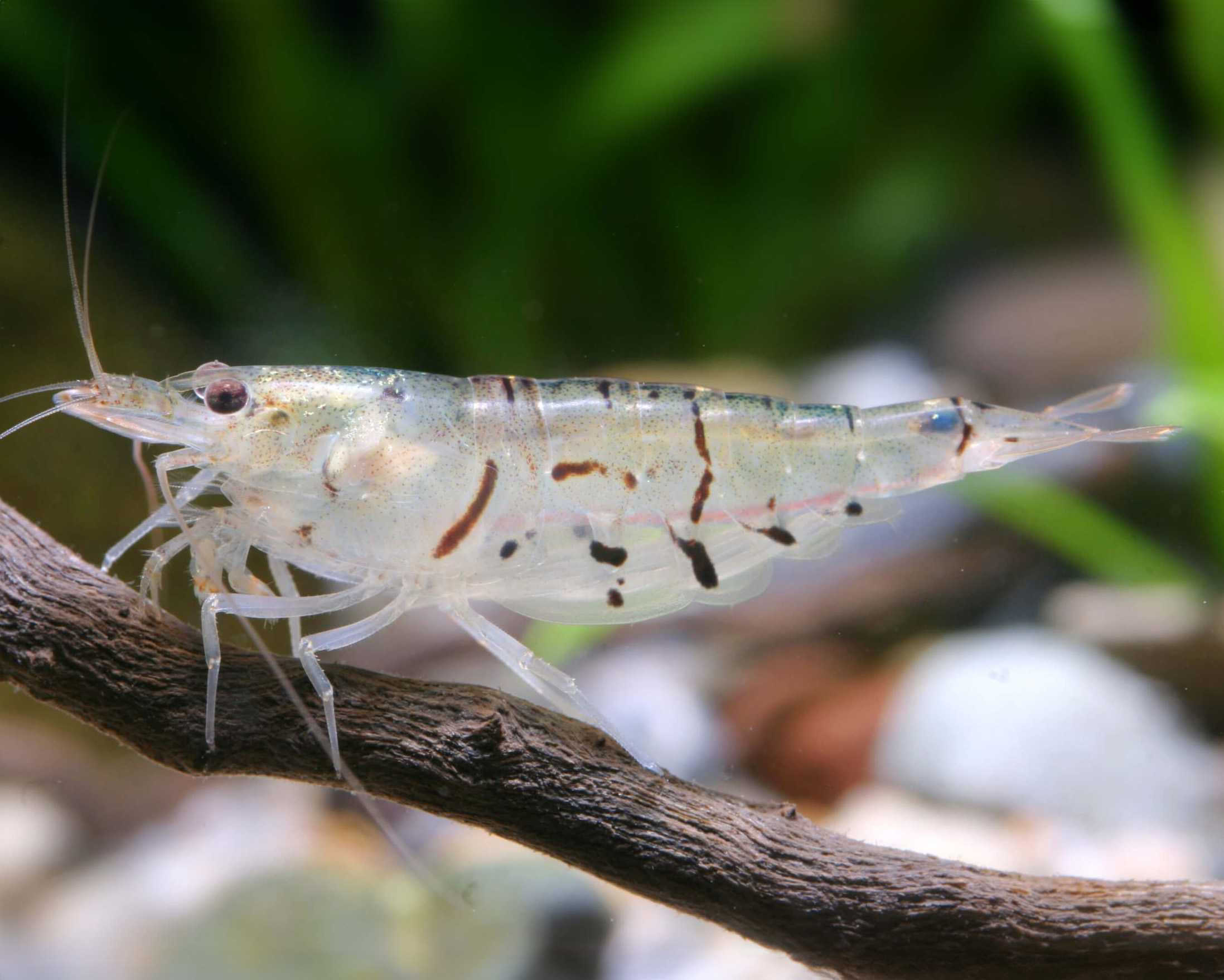
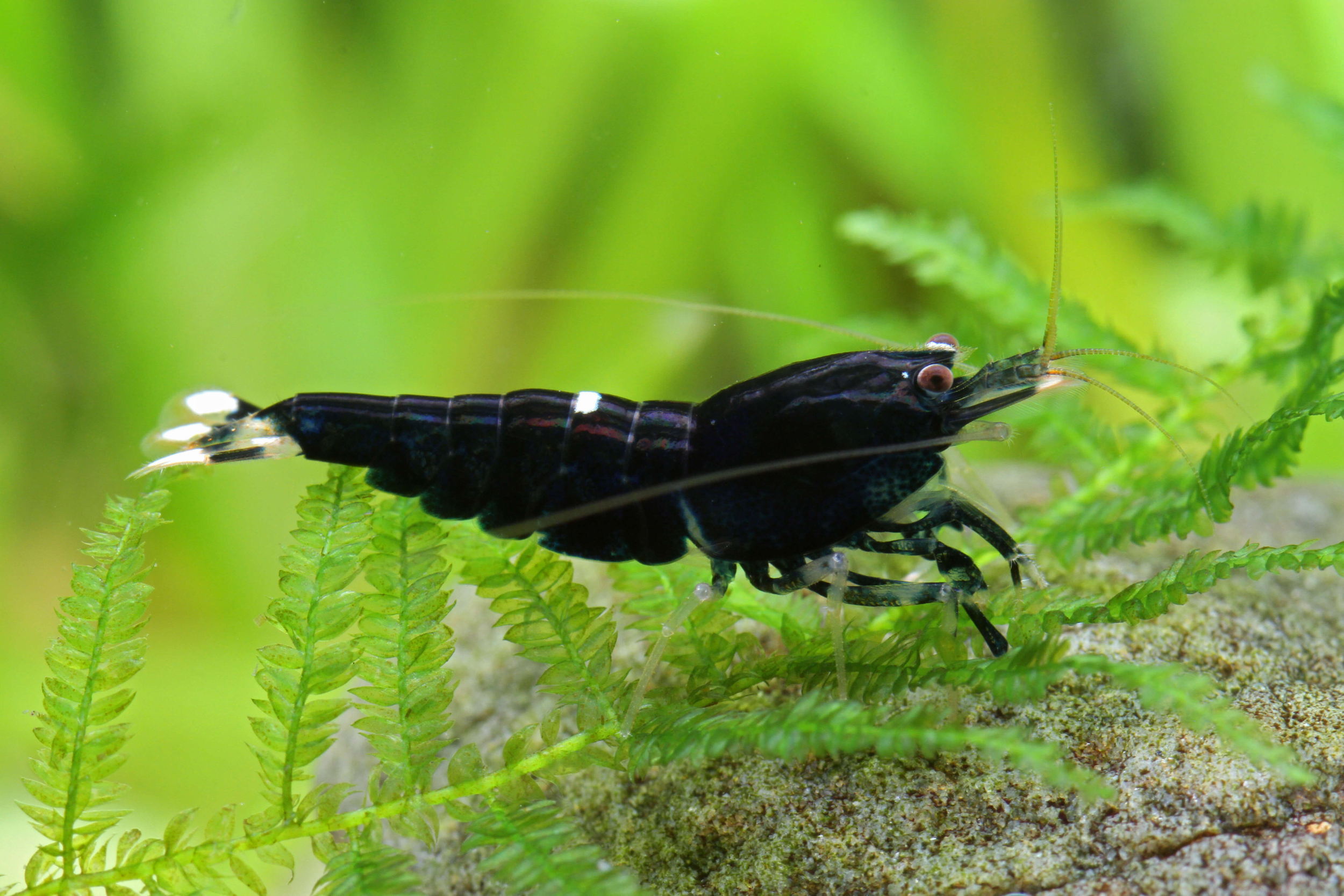
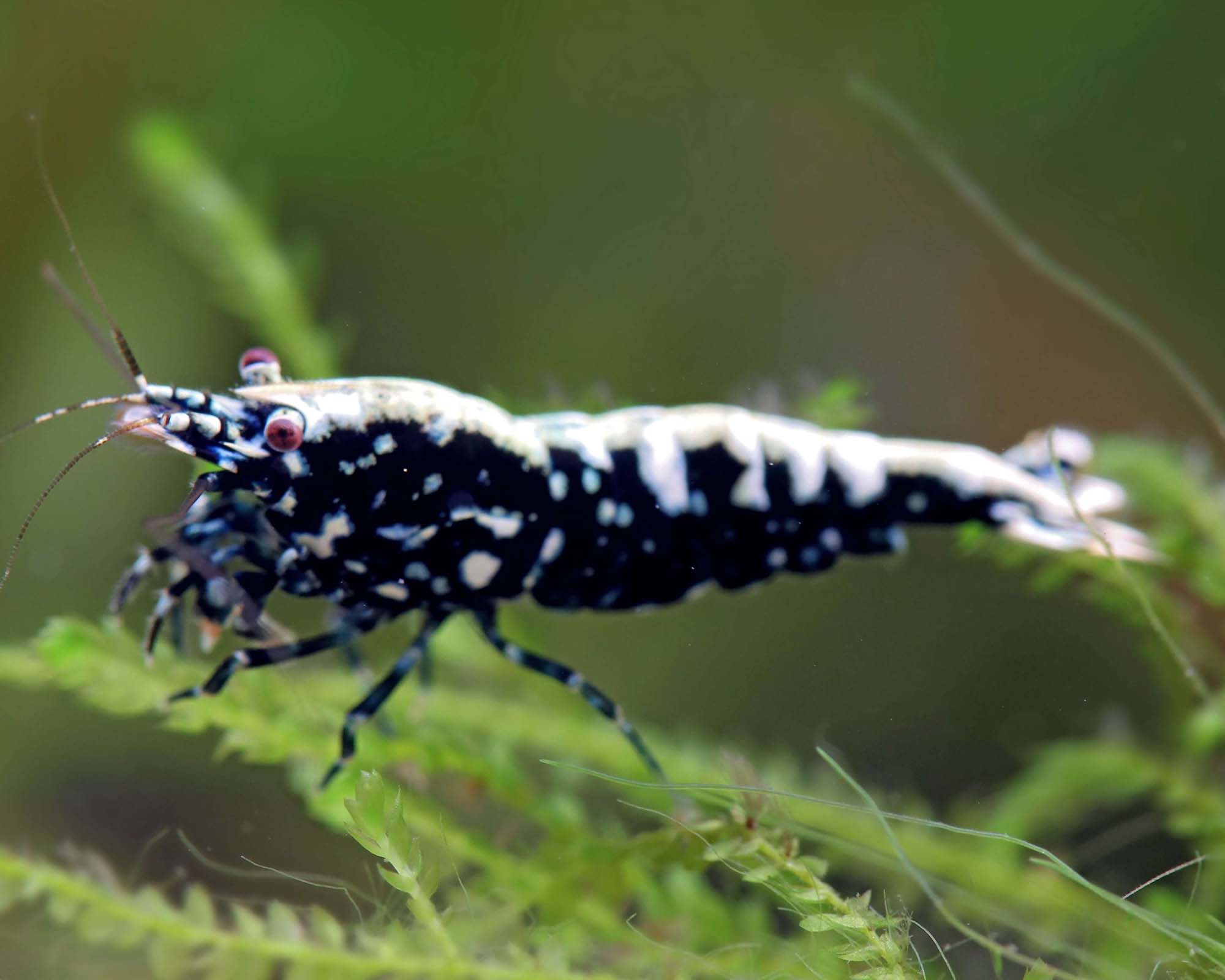
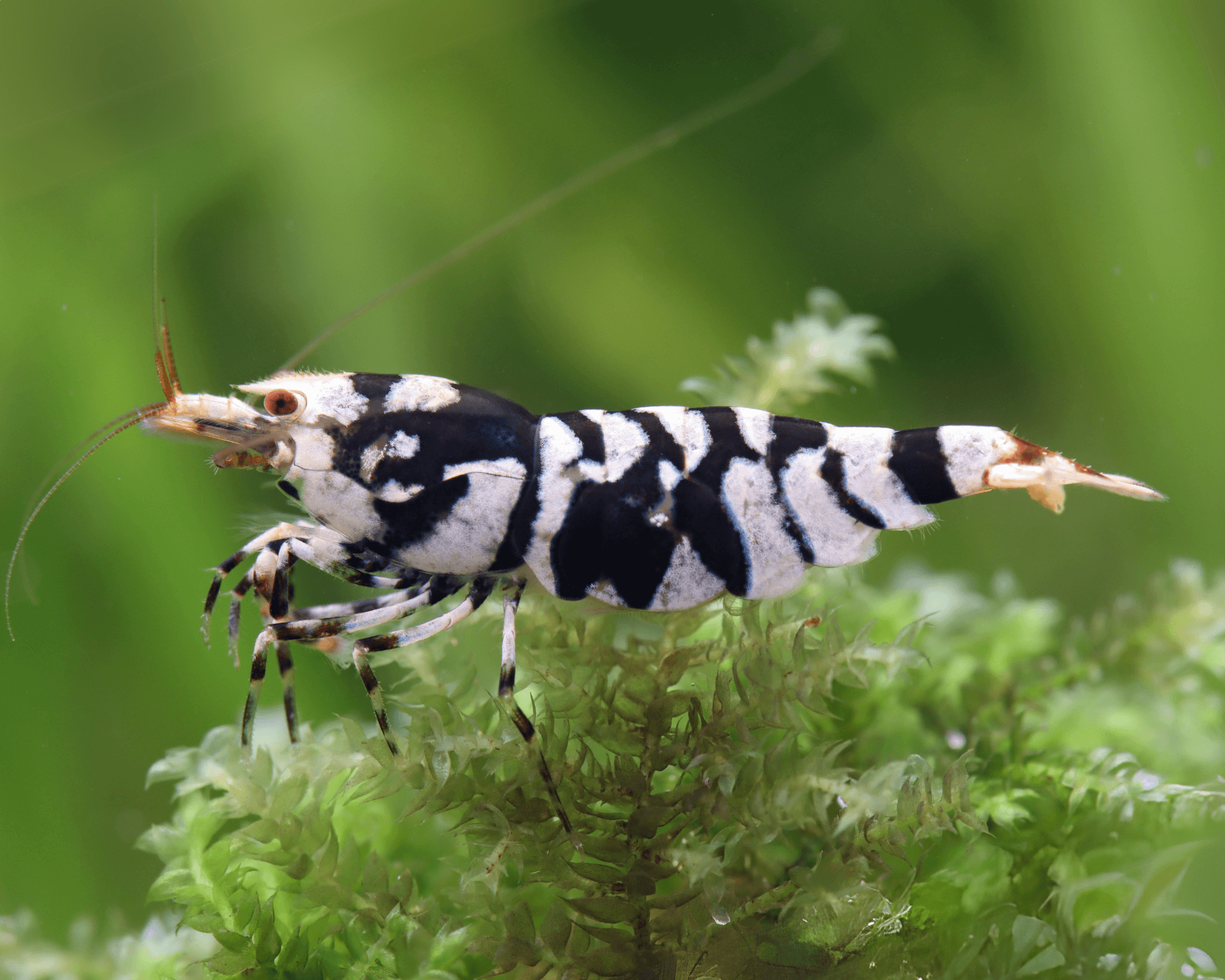
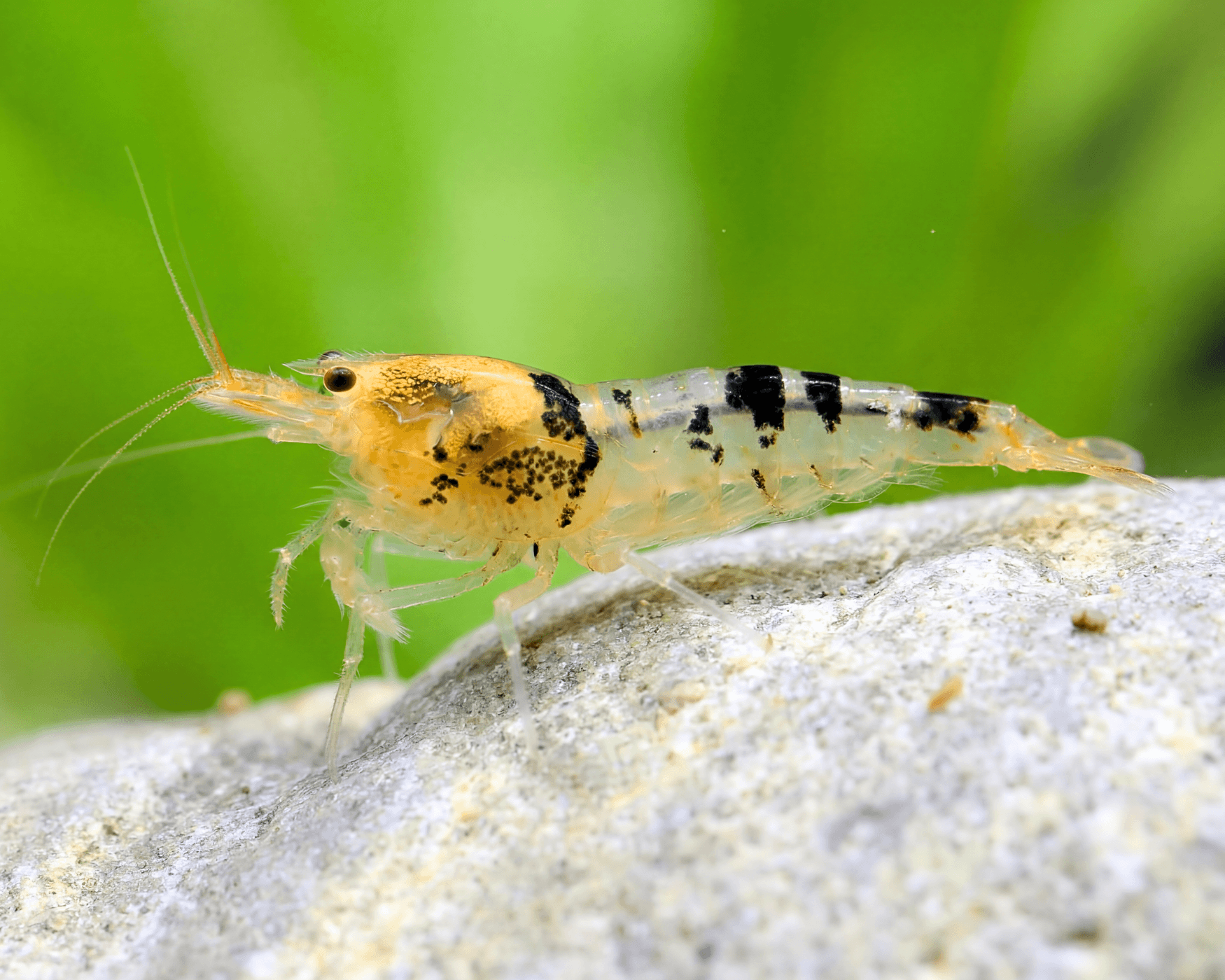
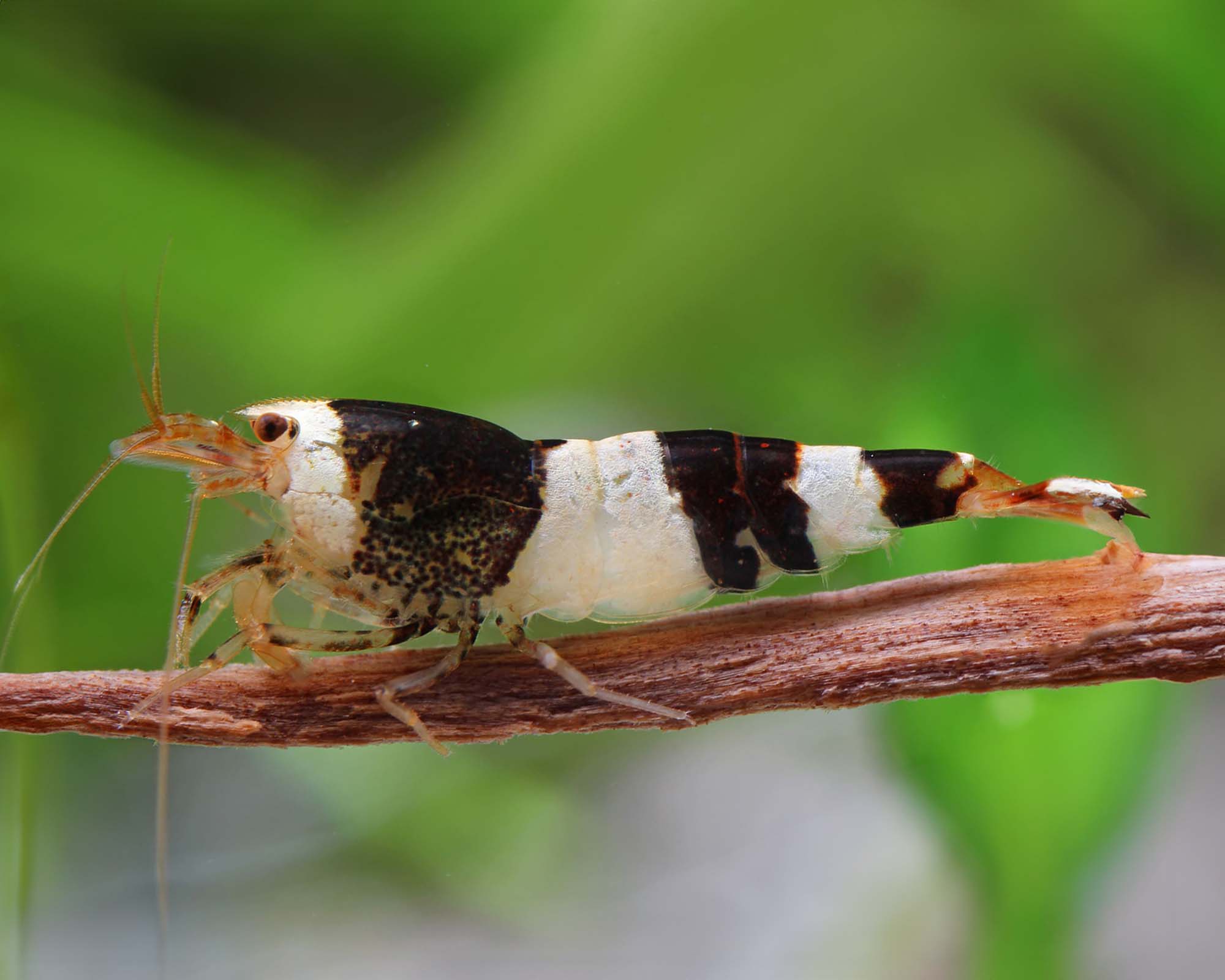
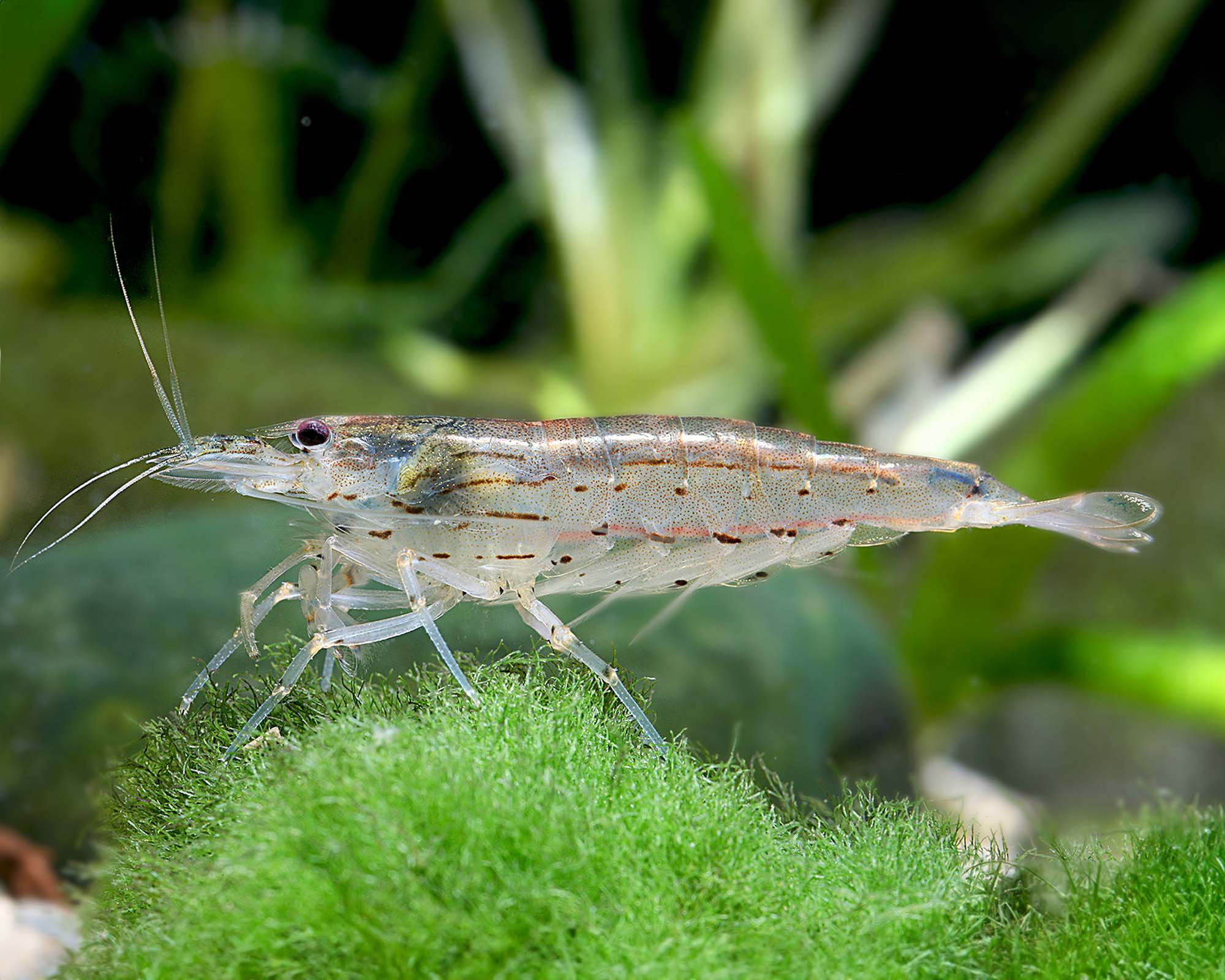
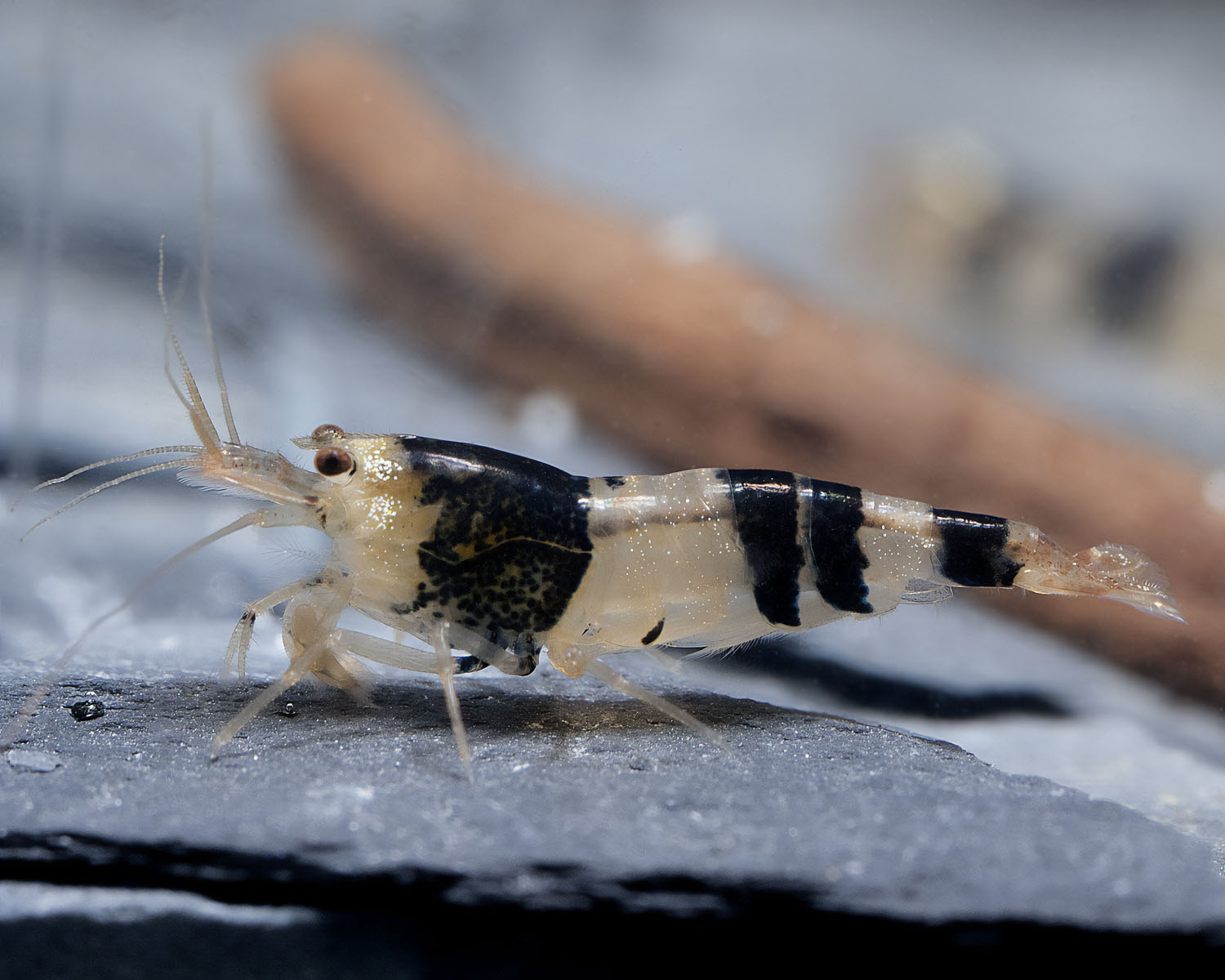
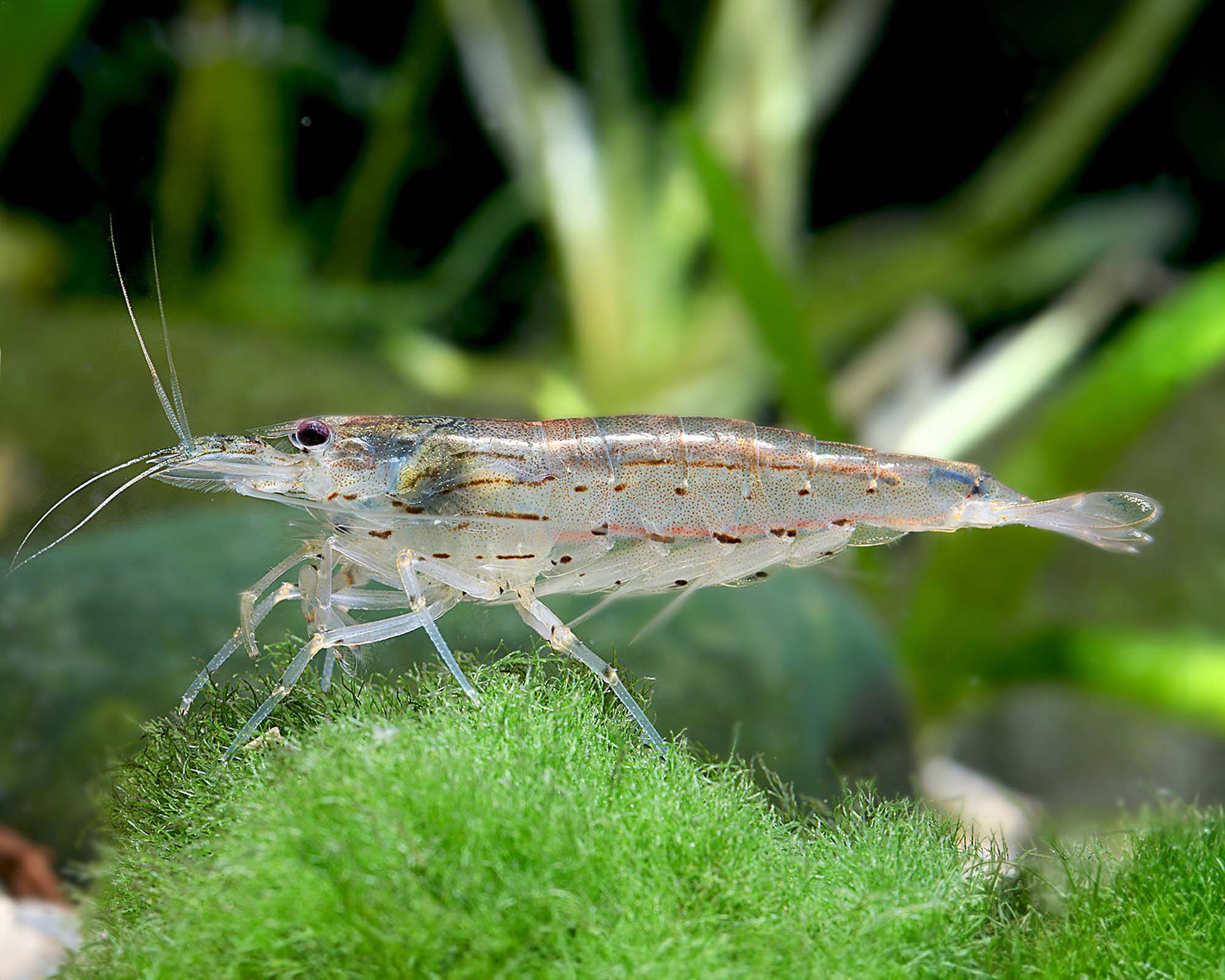
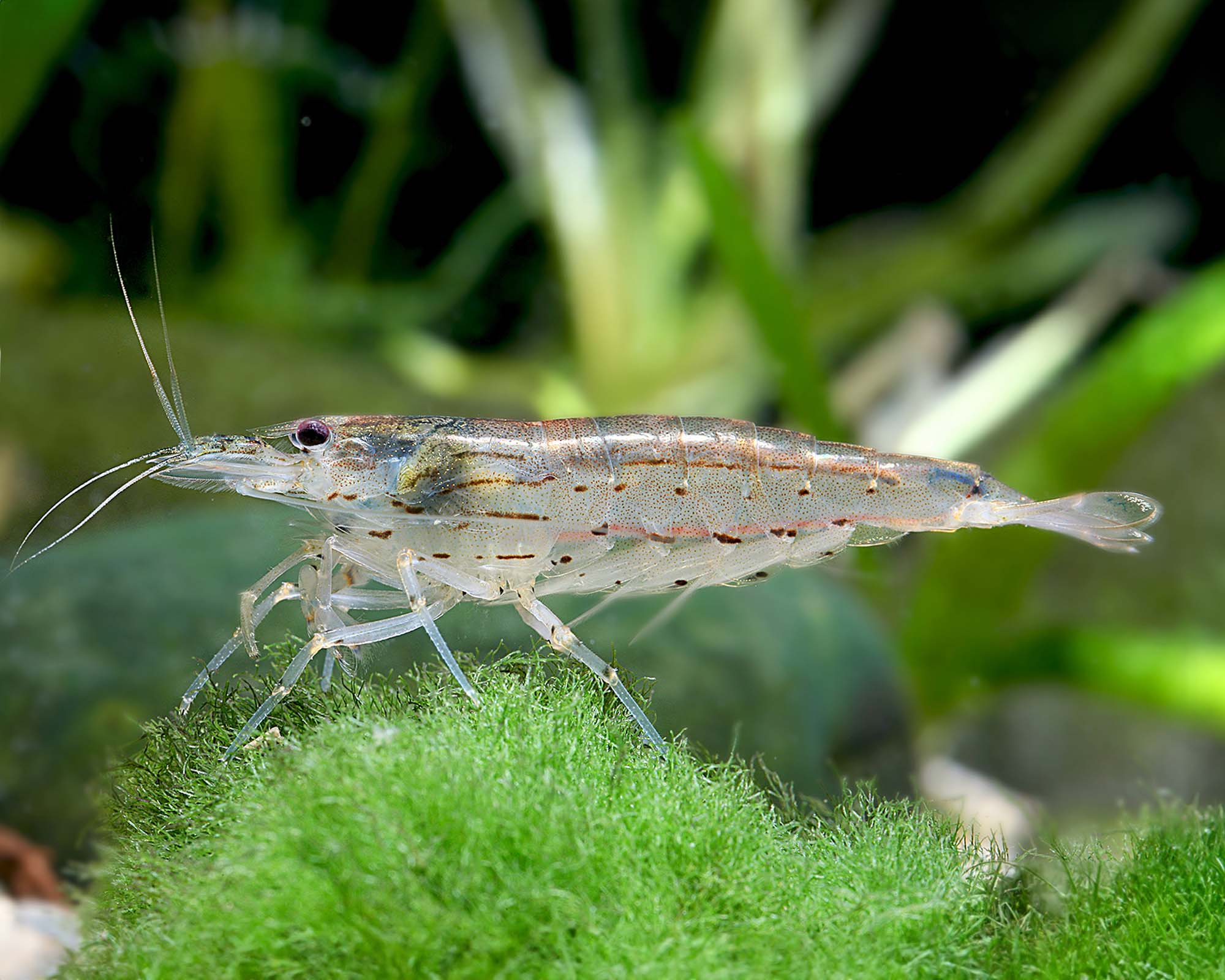
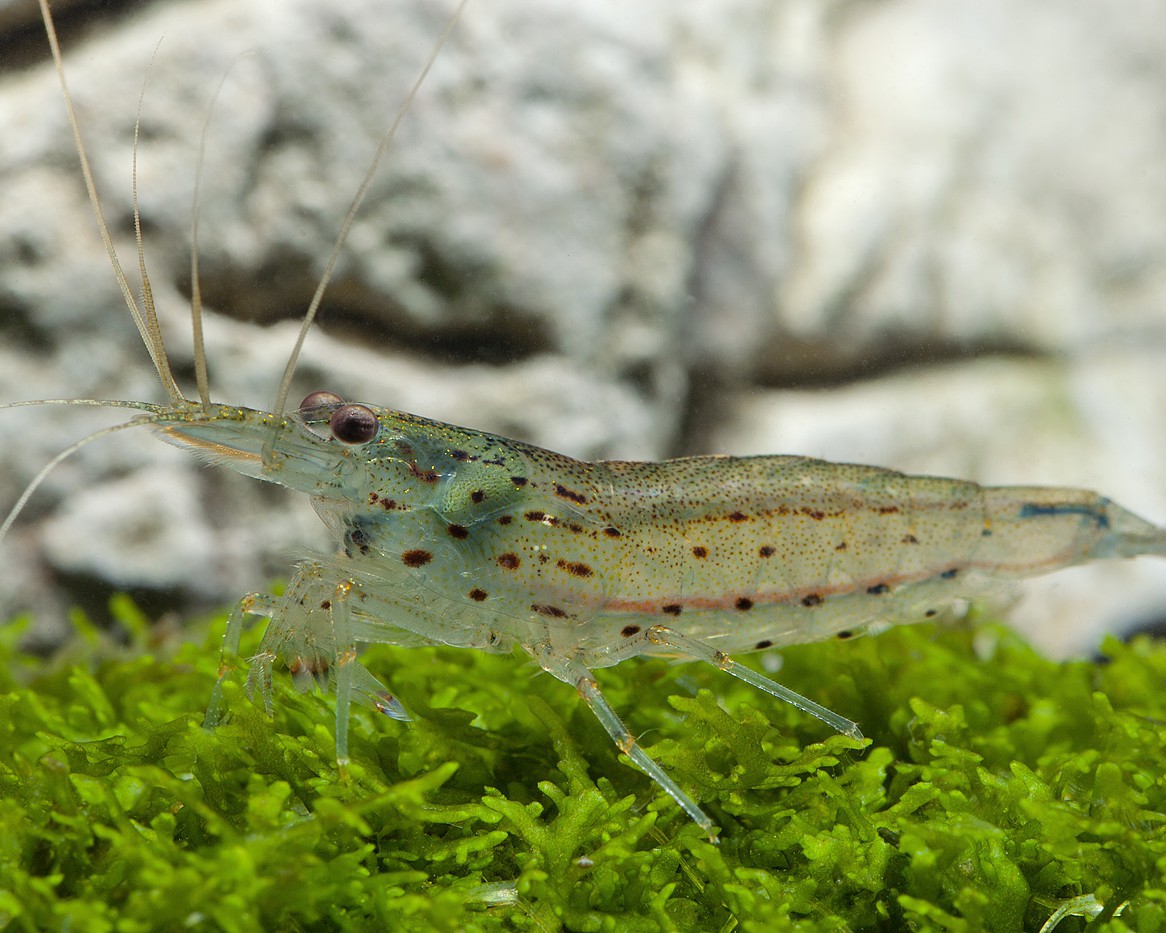
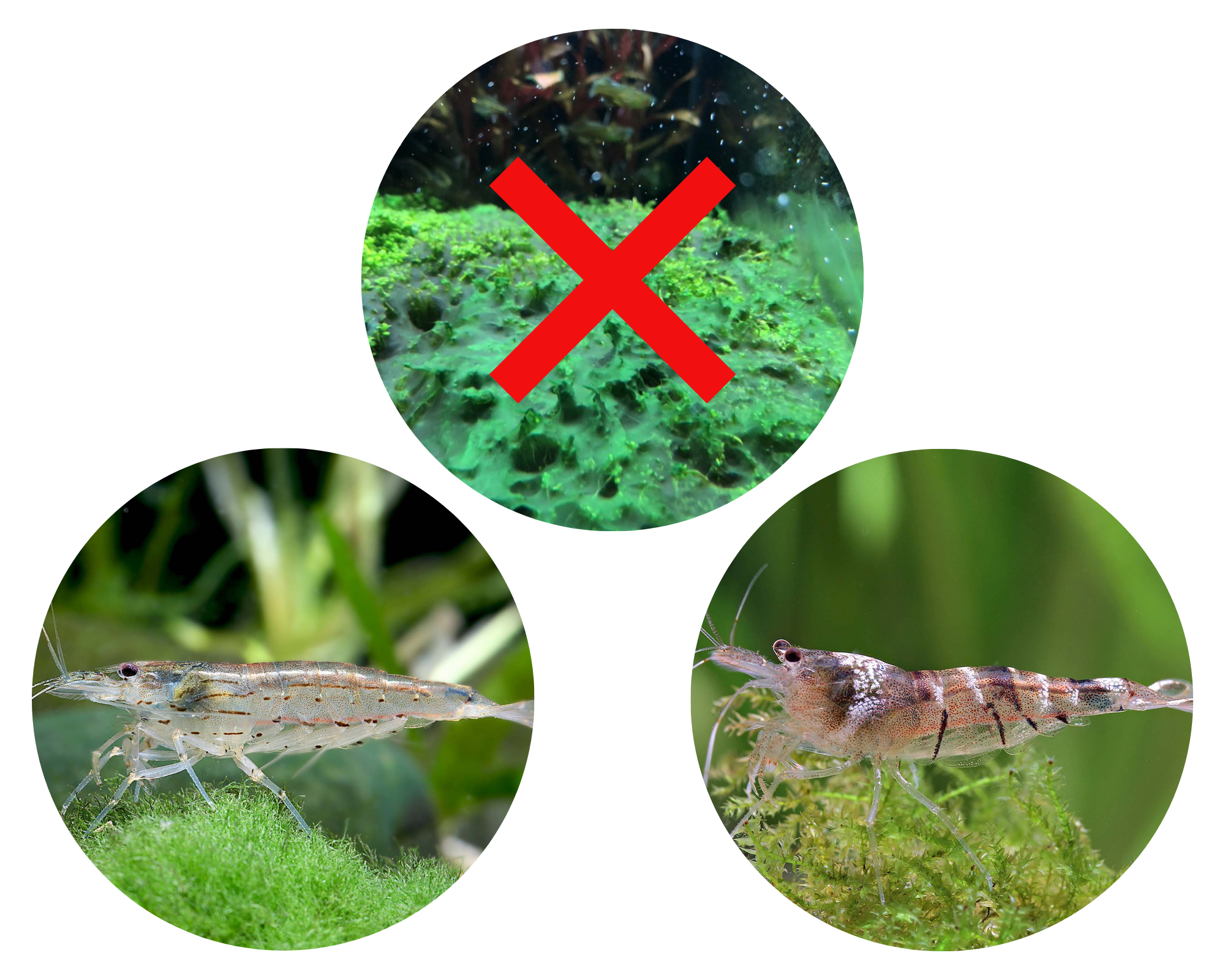
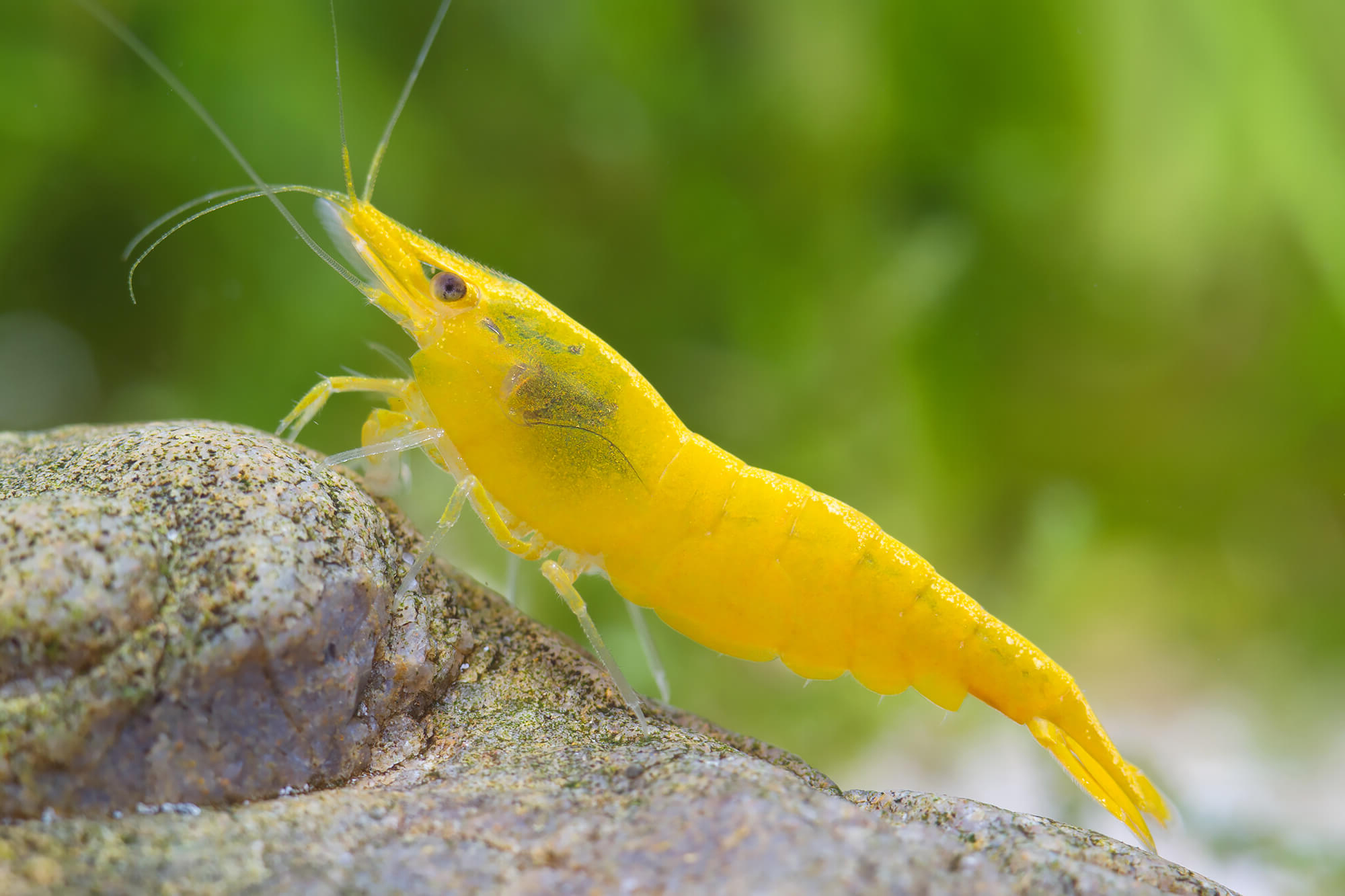
The supplied identification is Caridina typus, a shrimp in the family Atyidae and genus Caridina. It is not Caridina multidentata, the commonly traded Japanese Amano shrimp, although the two may be confused in commerce. Caridina typus is generally translucent and may show dark transverse markings, spots, and reddish-brown speckling. Identification from photographs alone can be uncertain, so the stated species should be treated as provisional without locality or specialist confirmation.
Natural habitat
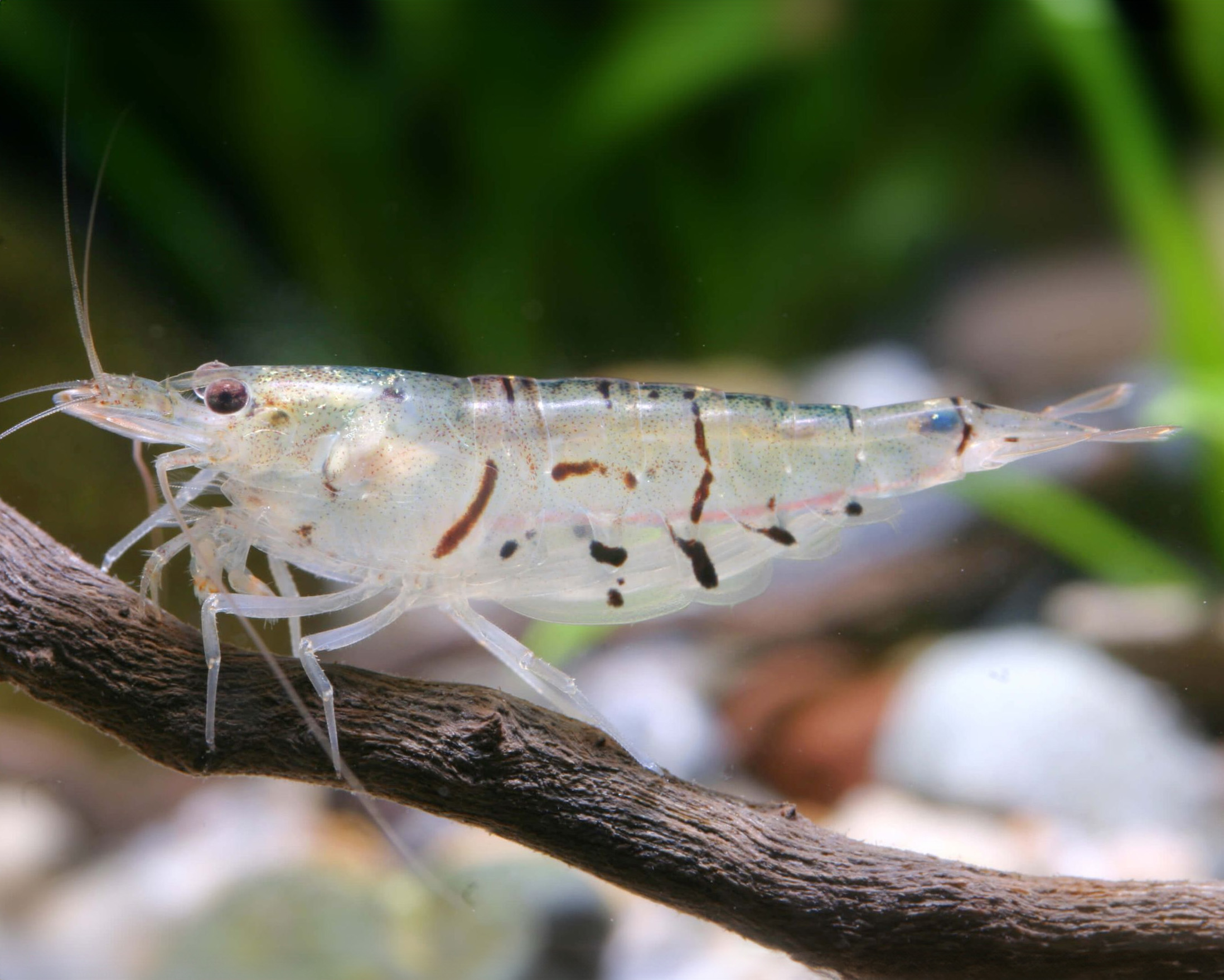
Caridina typus is associated with freshwater habitats in the Indo-Pacific region, including Australia. Suitable aquarium surroundings imitate quiet streams and vegetated margins with abundant surfaces for grazing. Use mature wood, stones, leaf litter, mosses, and fine-leaved plants to provide biofilm and shelter. A covered aquarium is prudent because shrimp may climb out, especially after disturbance or changes in water conditions.
Aquarium and water parameters
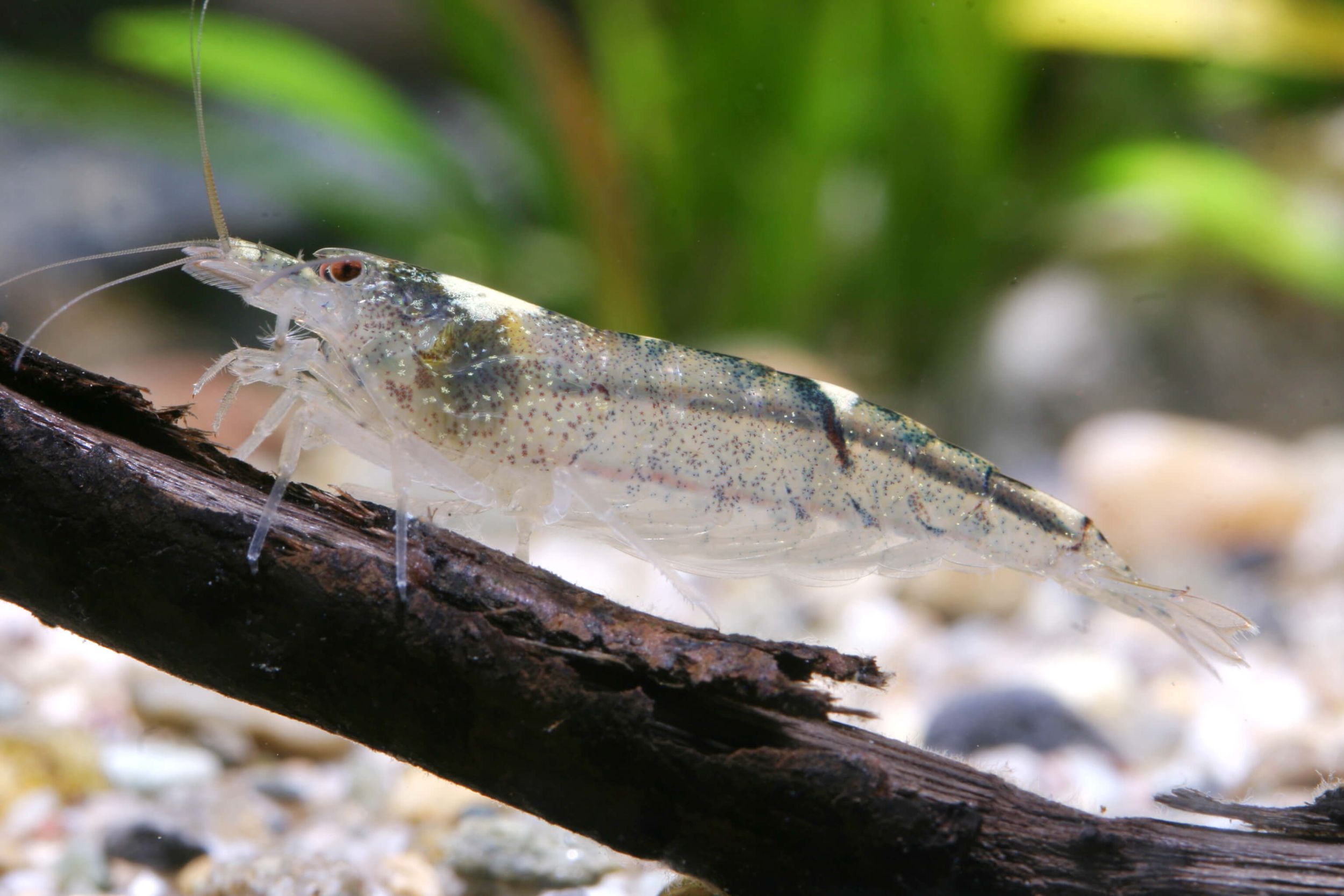
Keep this shrimp in mature, fully cycled water with zero detectable ammonia and nitrite and low nitrate. A practical range is 20-28 °C and pH 6.5-8.0, provided conditions remain stable. Moderate general hardness and carbonate hardness are usually preferable to either extremely soft or very hard water, but exact requirements may vary with the collection population. Avoid copper-based medications, sudden conductivity changes, and large, poorly matched water changes. Gentle filtration with an intake guard protects small shrimp.
Feeding
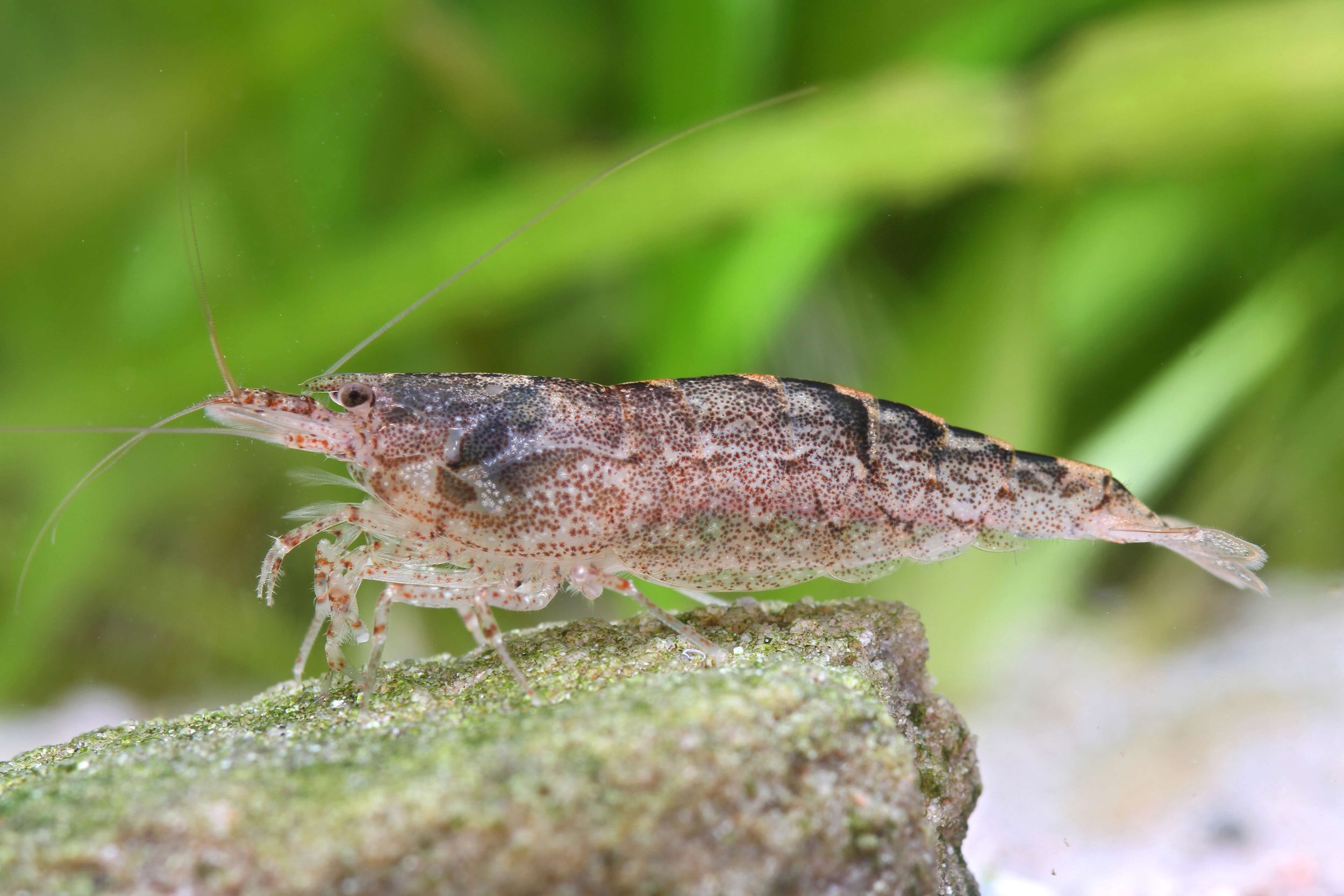
The species grazes on biofilm, algae, microorganisms, and organic material on hard surfaces. Offer a varied supplemental diet of quality shrimp pellets or wafers, blanched vegetables, and occasional protein-containing foods. Feed small portions and remove uneaten food before it decomposes. In a mature aquarium, natural grazing should remain the main food source rather than being replaced by frequent heavy feeding.
Tank mates
Choose peaceful, small tank mates such as snails and non-predatory fish that will not swallow adult shrimp. Even peaceful fish may eat newly released juveniles, so a species aquarium or densely planted shrimp aquarium gives the best survival. Avoid large cichlids, predatory or strongly territorial fish, crayfish, and fin-nipping species. Keep water chemistry compatible for all inhabitants and provide many hiding places.
Molting and maintenance
Shrimp periodically shed the old exoskeleton to grow. Before and after a molt they may become less visible and vulnerable, so stable water chemistry, shelter, and adequate dietary minerals are important. Do not remove a normal shed exoskeleton immediately; it can be consumed and recycled. A failed molt may follow abrupt parameter changes, poor nutrition, pollution, or unsuitable mineral balance. Perform regular modest water changes and avoid handling the shrimp.
Breeding and larval development
Adults may mate after a female molts, and the female carries fertilized eggs beneath the abdomen until hatching. Caridina typus should not be assumed to breed fully in ordinary freshwater: species in this group can have larval stages with specialized requirements, and the precise requirements may differ between populations. Successful breeding may require separate rearing, carefully prepared brackish or marine-influenced water, suitable microscopic foods, and gradual acclimation. Because the exact reproductive pattern of an aquarium population may be uncertain, research its locality and observe larval development before selecting a breeding method.
 - 1.webp)
Leave your comments