Taxonomy and identification
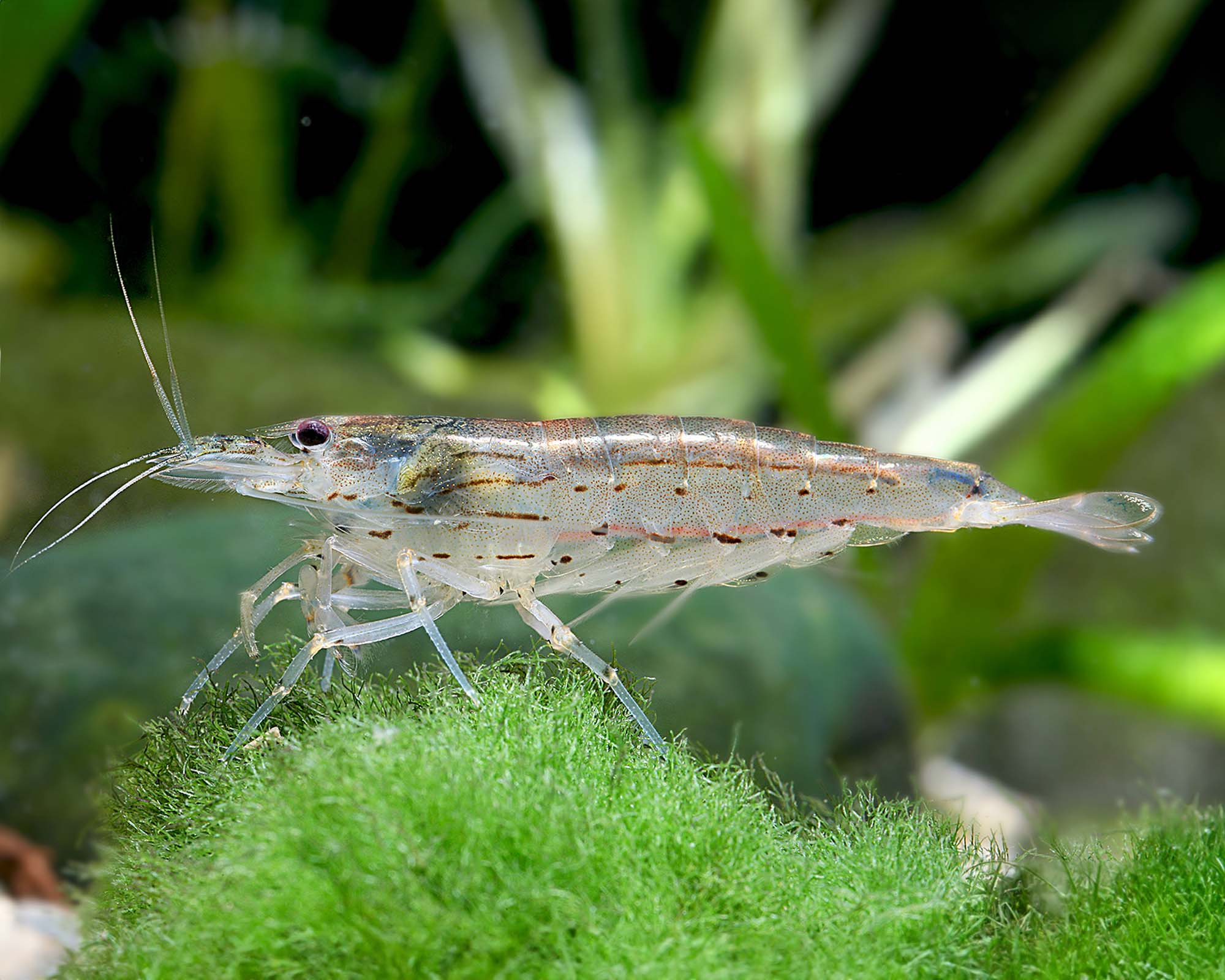
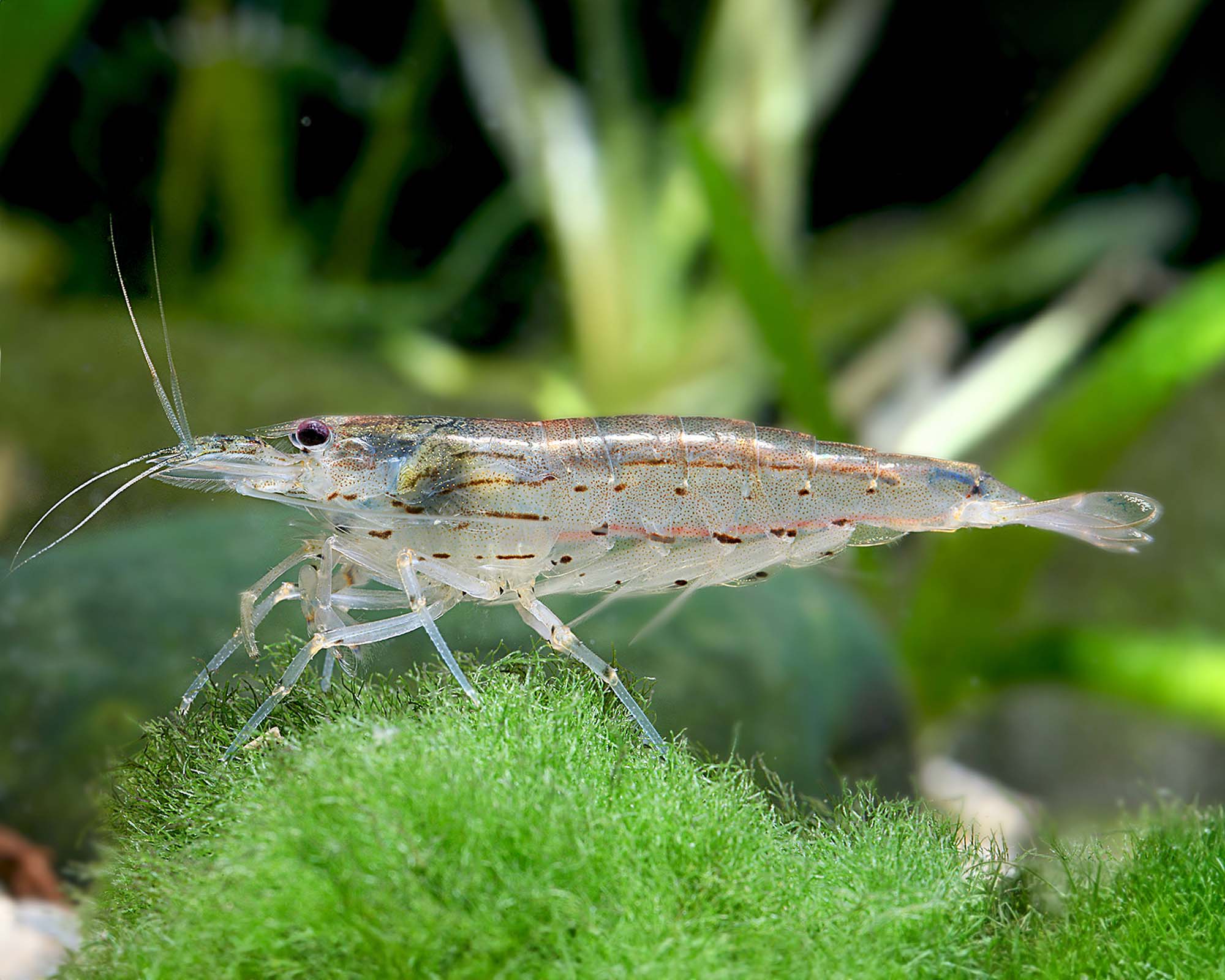
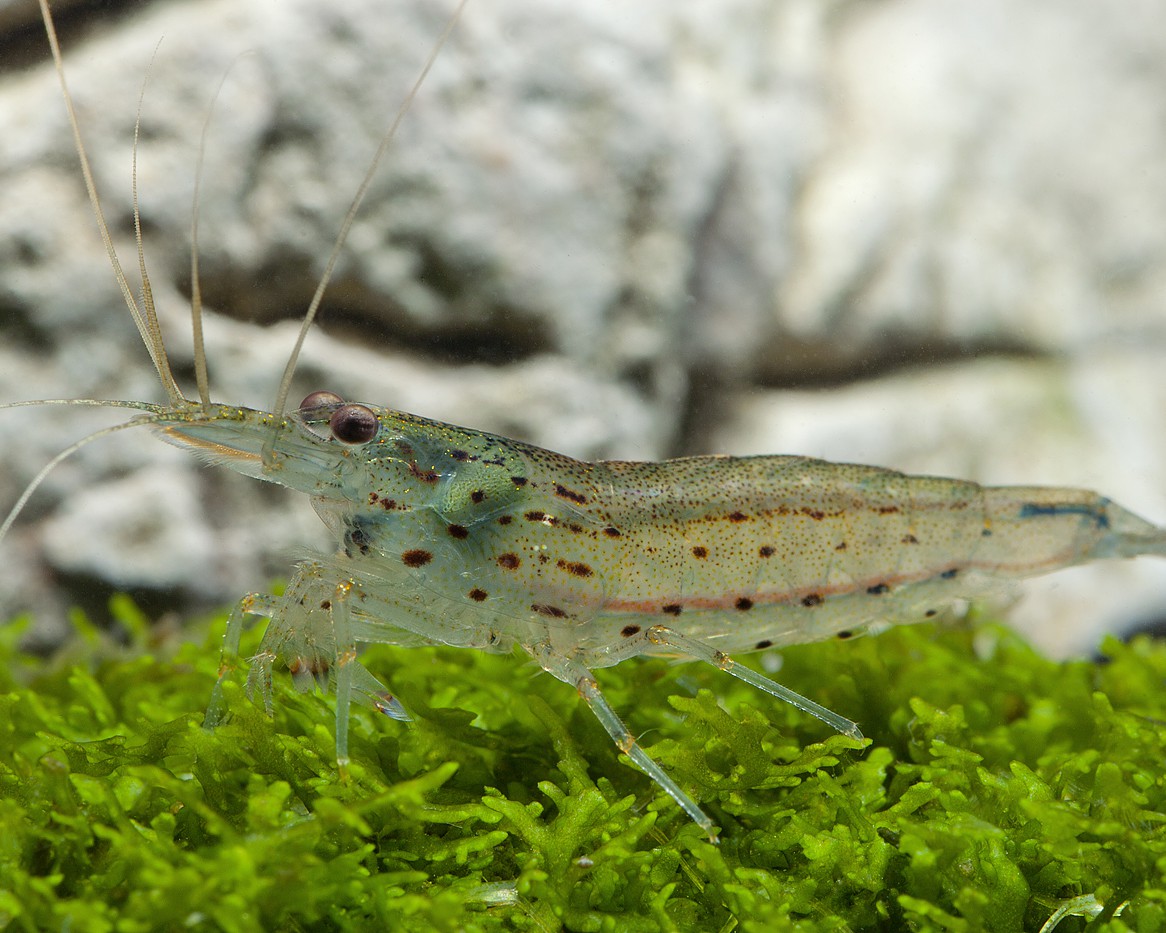
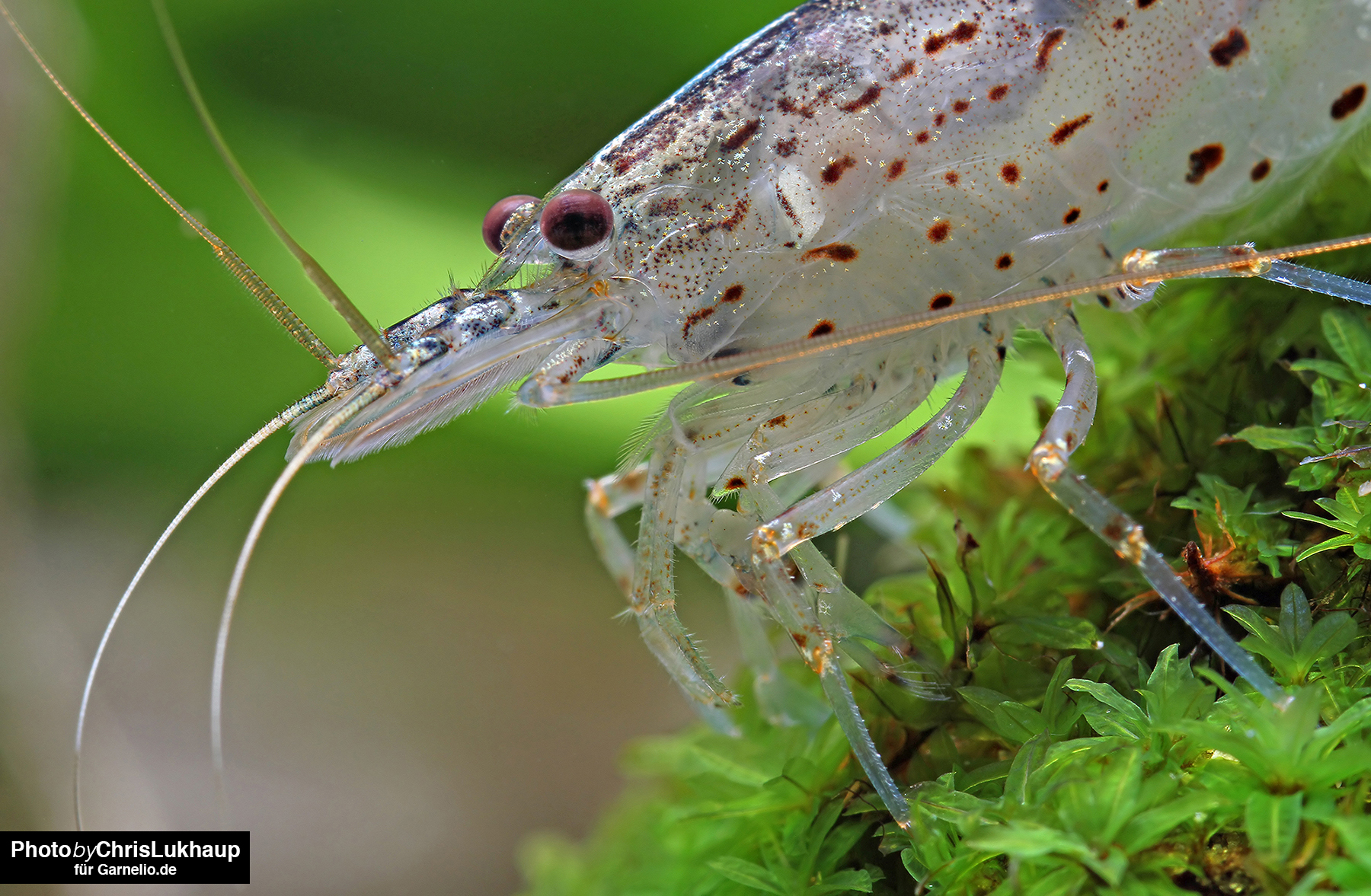
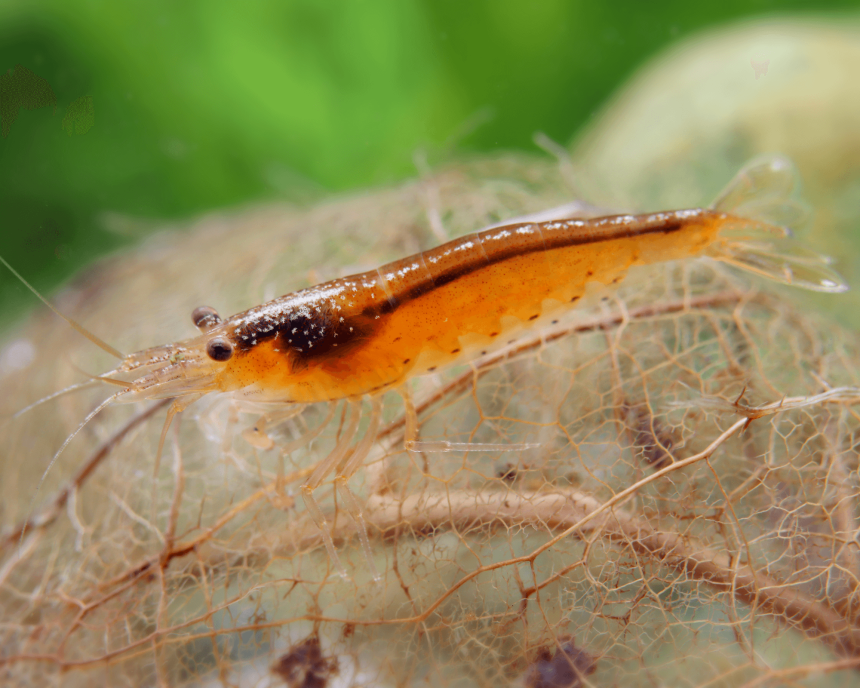
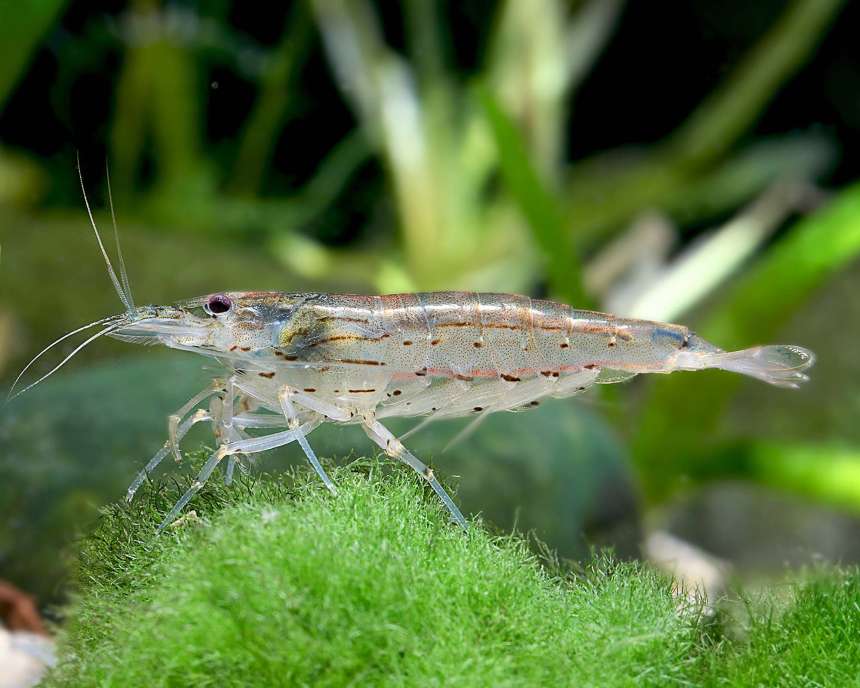
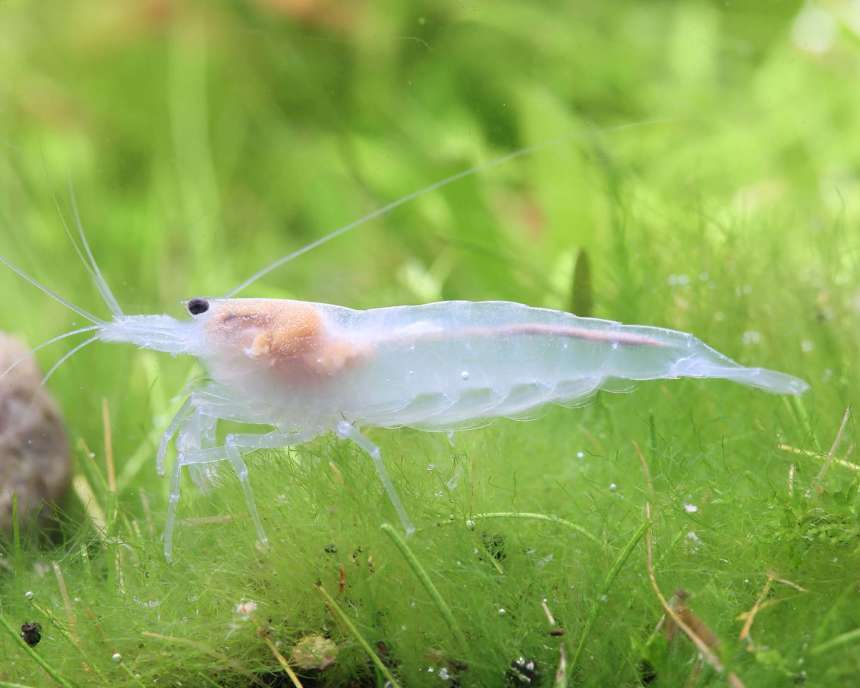
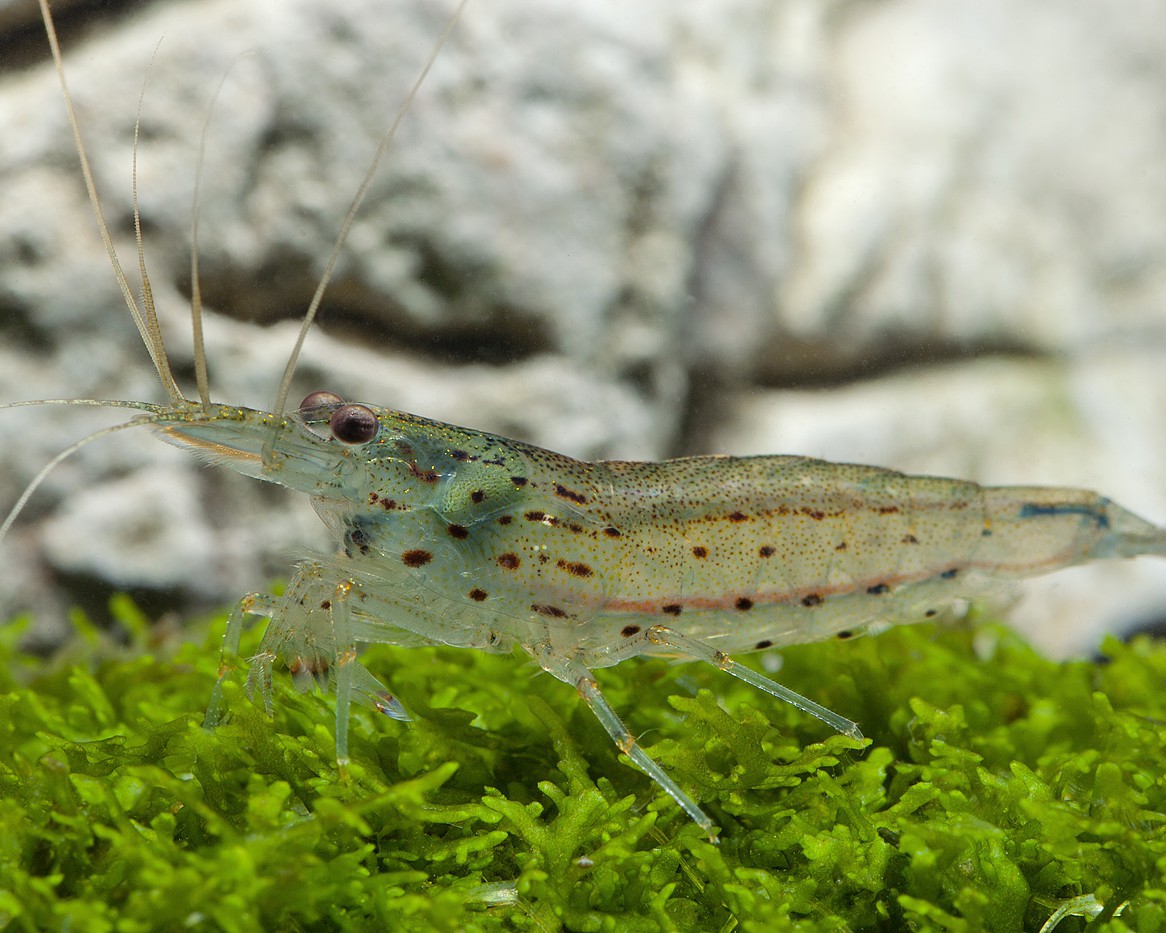
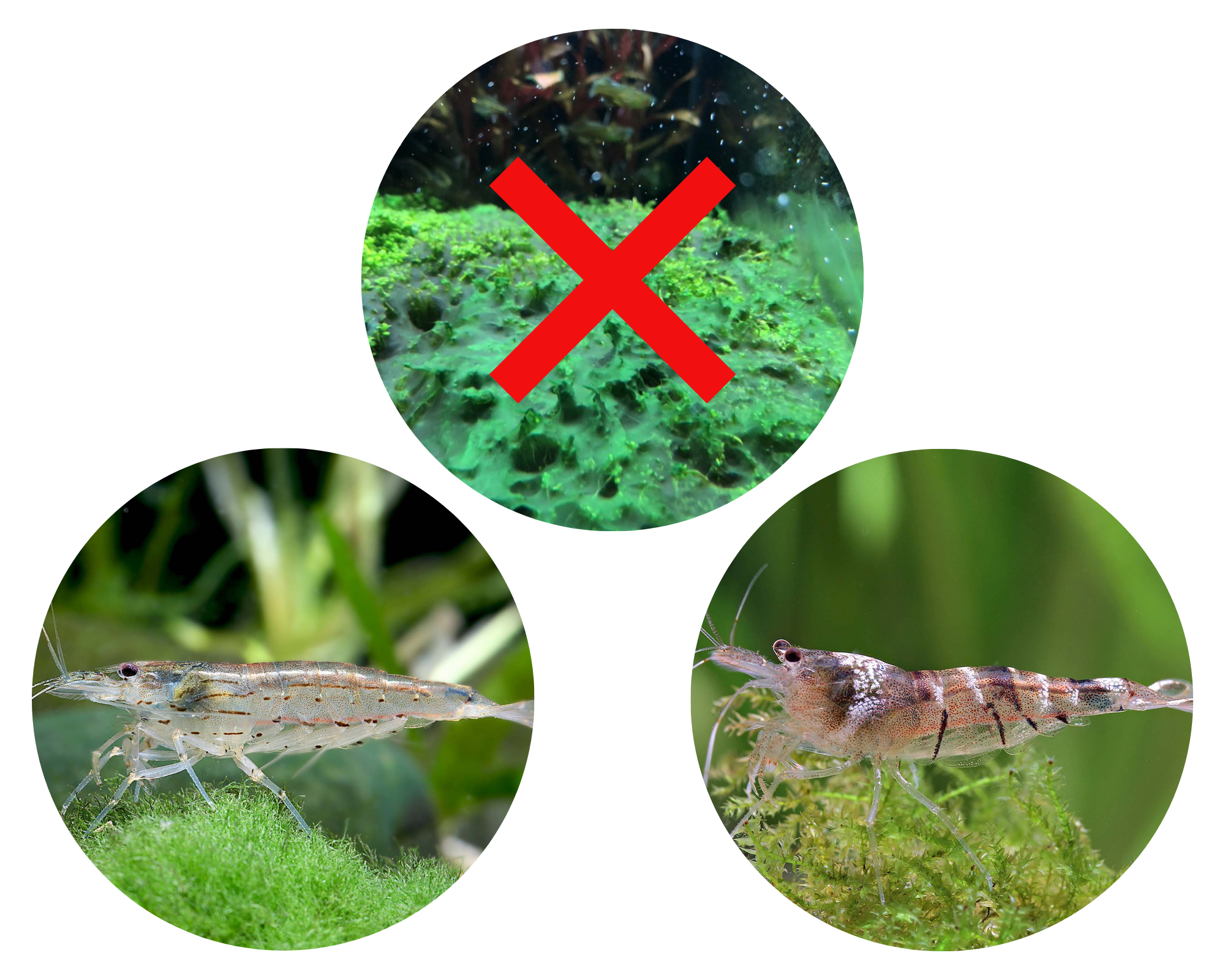
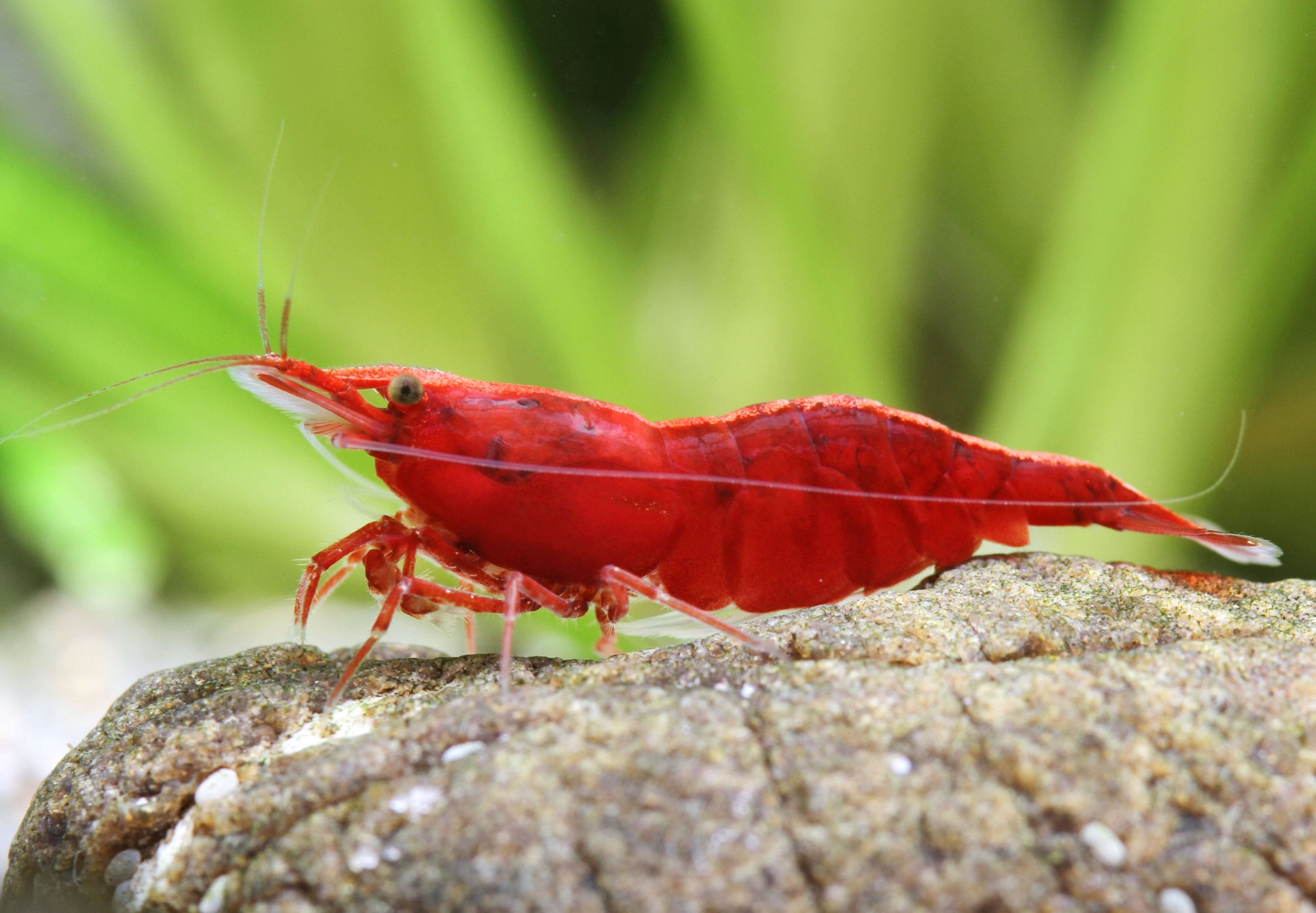
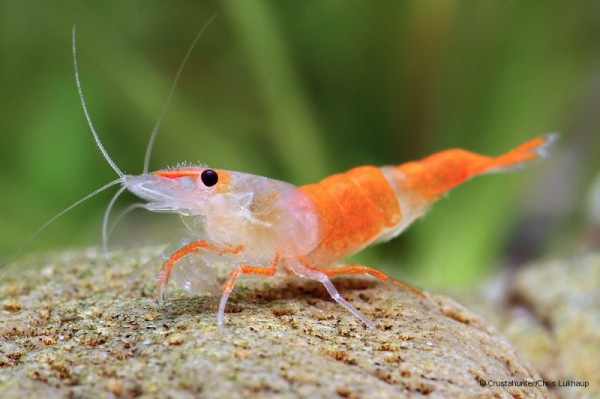
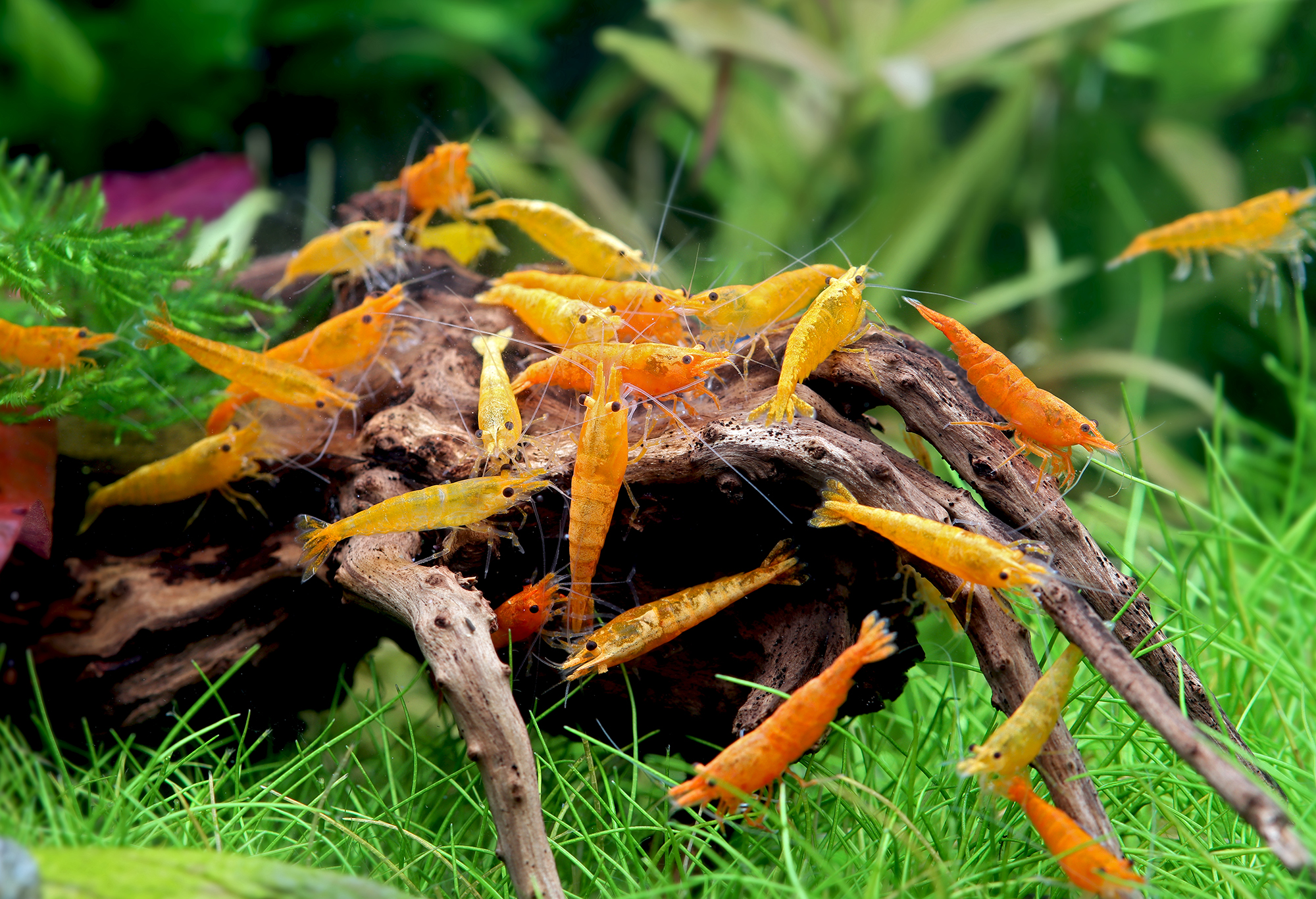
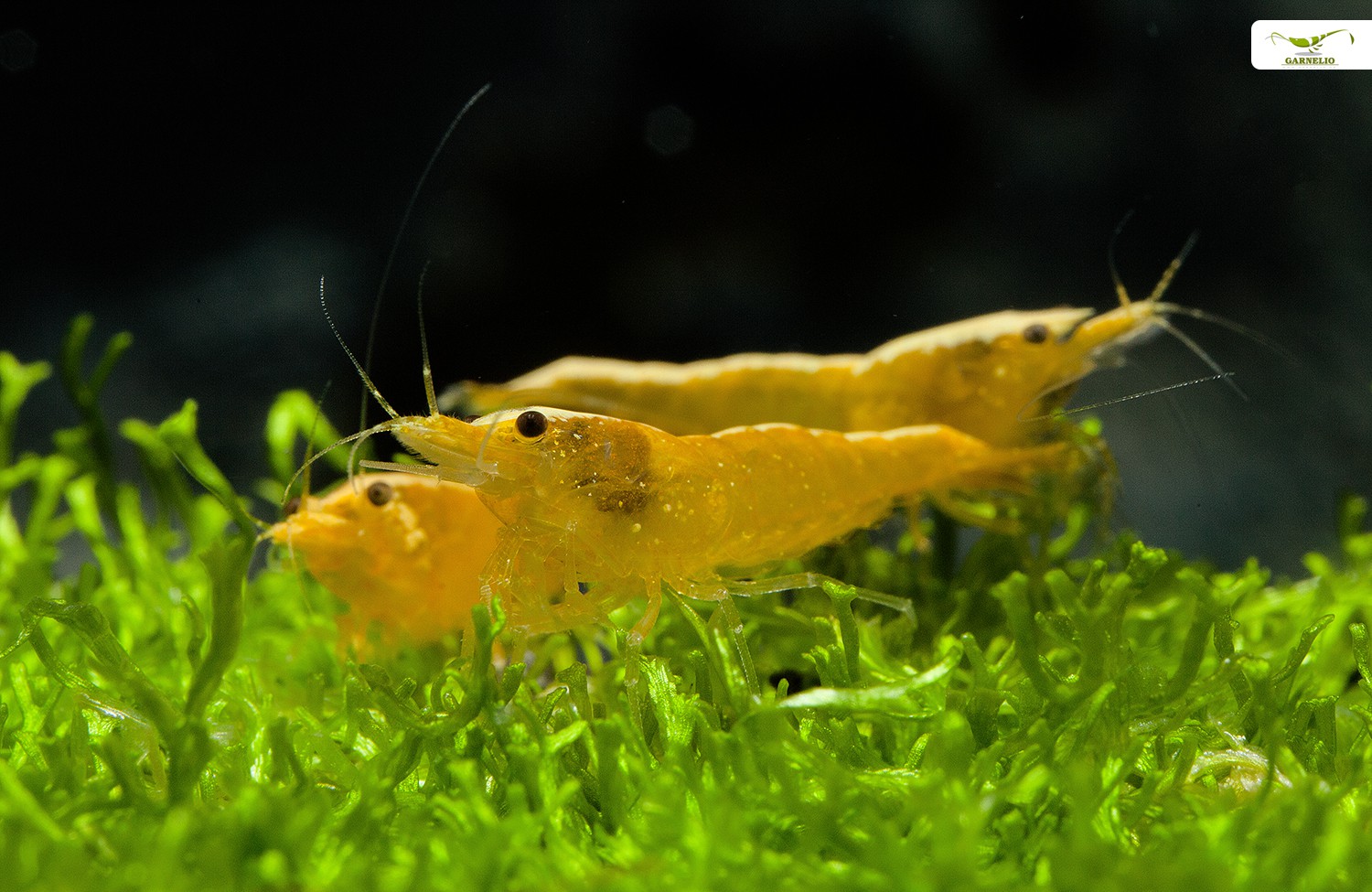
Caridina multidentata is the species commonly sold as Amano Shrimp, Amano Garnele, or Yamato Shrimp. Adults have a slender, mostly translucent body, long antennae, and irregular brown to reddish-brown spots and short dashes along the sides. Females are usually larger and deeper-bodied than males. Color intensity varies with background, diet, stress, and individual condition; the orange appearance sometimes seen in photographs should not automatically be treated as a separate established form.
Natural habitat
This species is native to freshwater streams and rivers in Japan and Taiwan. Adults inhabit flowing, well-oxygenated water with stones, wood, leaf litter, algae, and biofilm. Its life cycle includes movement between freshwater and coastal brackish or marine environments: adults reproduce in freshwater, while drifting larvae develop in saltier water before returning upstream as juveniles.
Aquarium setup and water
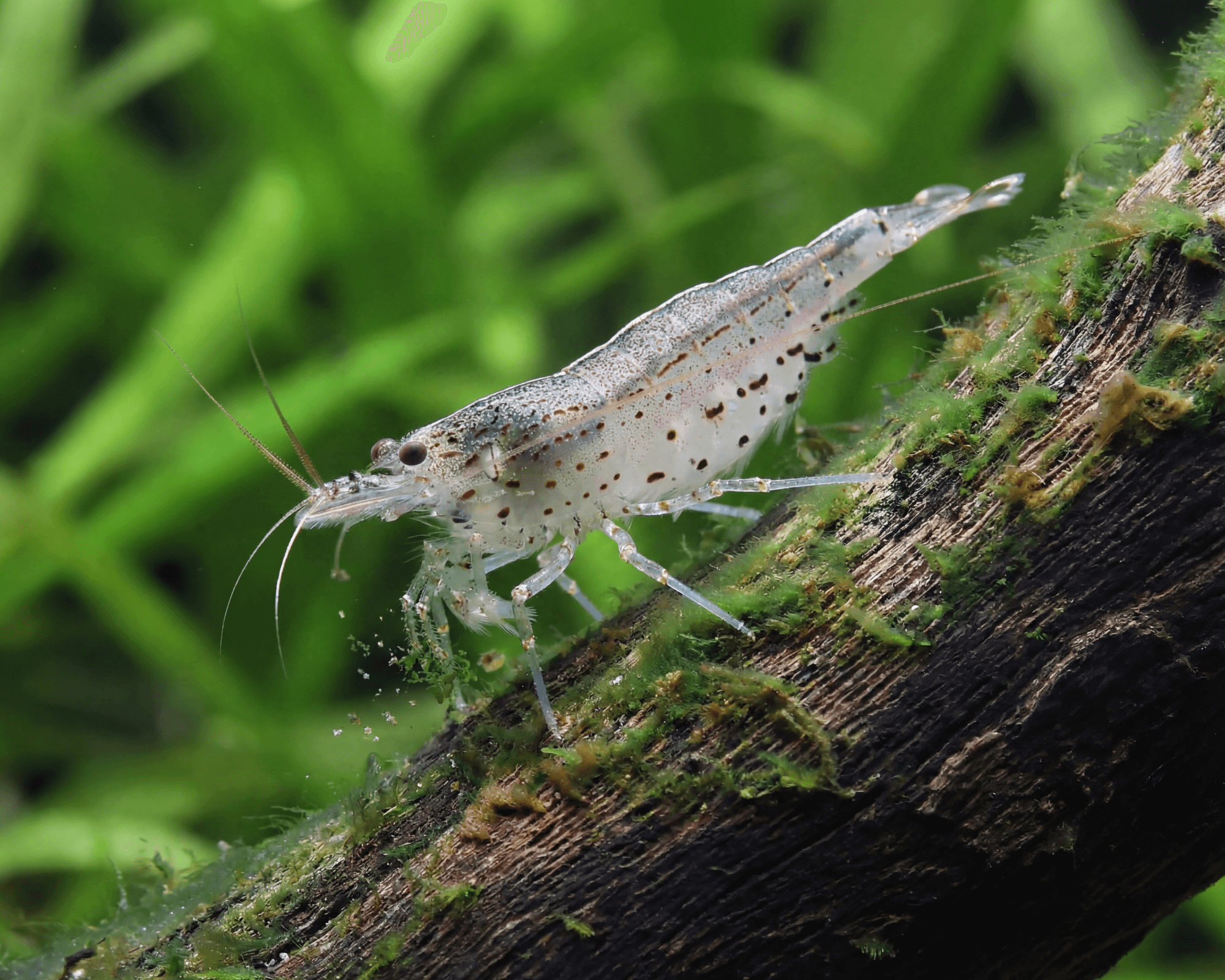
Use a mature, cycled aquarium with gentle to moderate circulation, good oxygenation, smooth surfaces for grazing, and dense plants, moss, wood, or rockwork for shelter. A covered aquarium is useful because shrimp may climb through small openings. Keep ammonia and nitrite at zero and avoid abrupt changes in temperature, pH, hardness, or salinity. The listed ranges are practical guides; stability is more important than pursuing a precise target.
Feeding
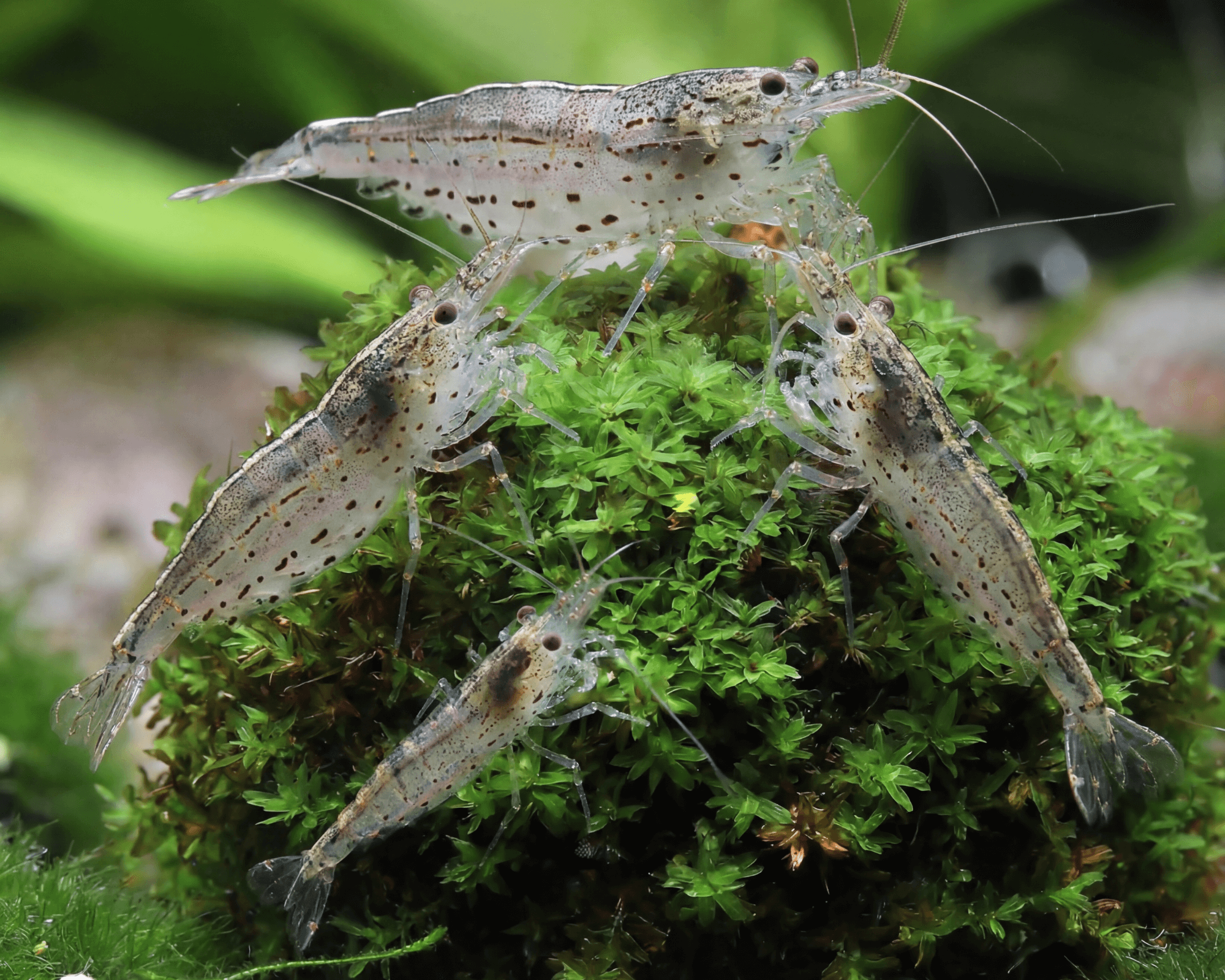
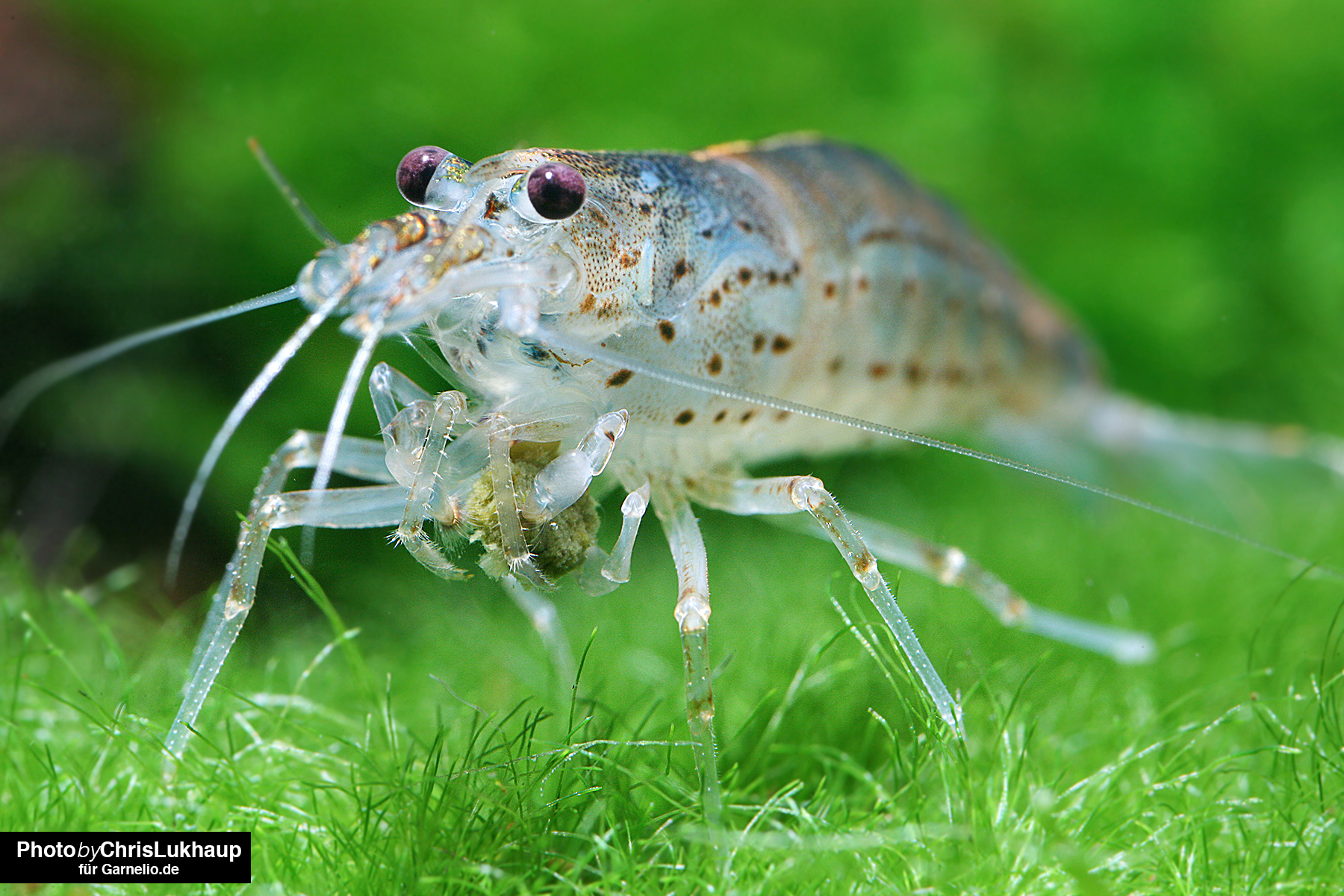
Amano Shrimp graze continuously on algae, aufwuchs, and biofilm. In a mature aquarium this natural grazing should be supplemented with small amounts of shrimp food, algae wafers, blanched vegetables, or other suitable plant-based foods. Offer occasional protein-containing food, especially in a larger group or where natural food is limited. Remove uneaten food to protect water quality, and do not rely on them to eliminate all visible algae.
Tank mates
Suitable companions include peaceful community fish and other nonaggressive invertebrates. Small rasboras, many small tetras, peaceful livebearers, and freshwater snails can work when the aquarium provides cover. Avoid large, predatory, fin-nipping, or highly aggressive fish, which may eat or injure shrimp. Newly released juveniles and freshly molted adults are particularly vulnerable, so dense moss and other shelter are valuable.
Molting and care
Growth occurs through periodic molting. Before a molt, a shrimp may become less active and seek cover; the shed exoskeleton may remain visible and is normally eaten as a source of minerals. Do not remove a normal molt. Provide a consistent supply of calcium and other minerals through an appropriate complete diet and adequately mineralized water, but avoid sudden hardness increases. Sudden water changes, copper-based treatments, poor oxygenation, and pollution can cause failed molts or deaths.
Breeding
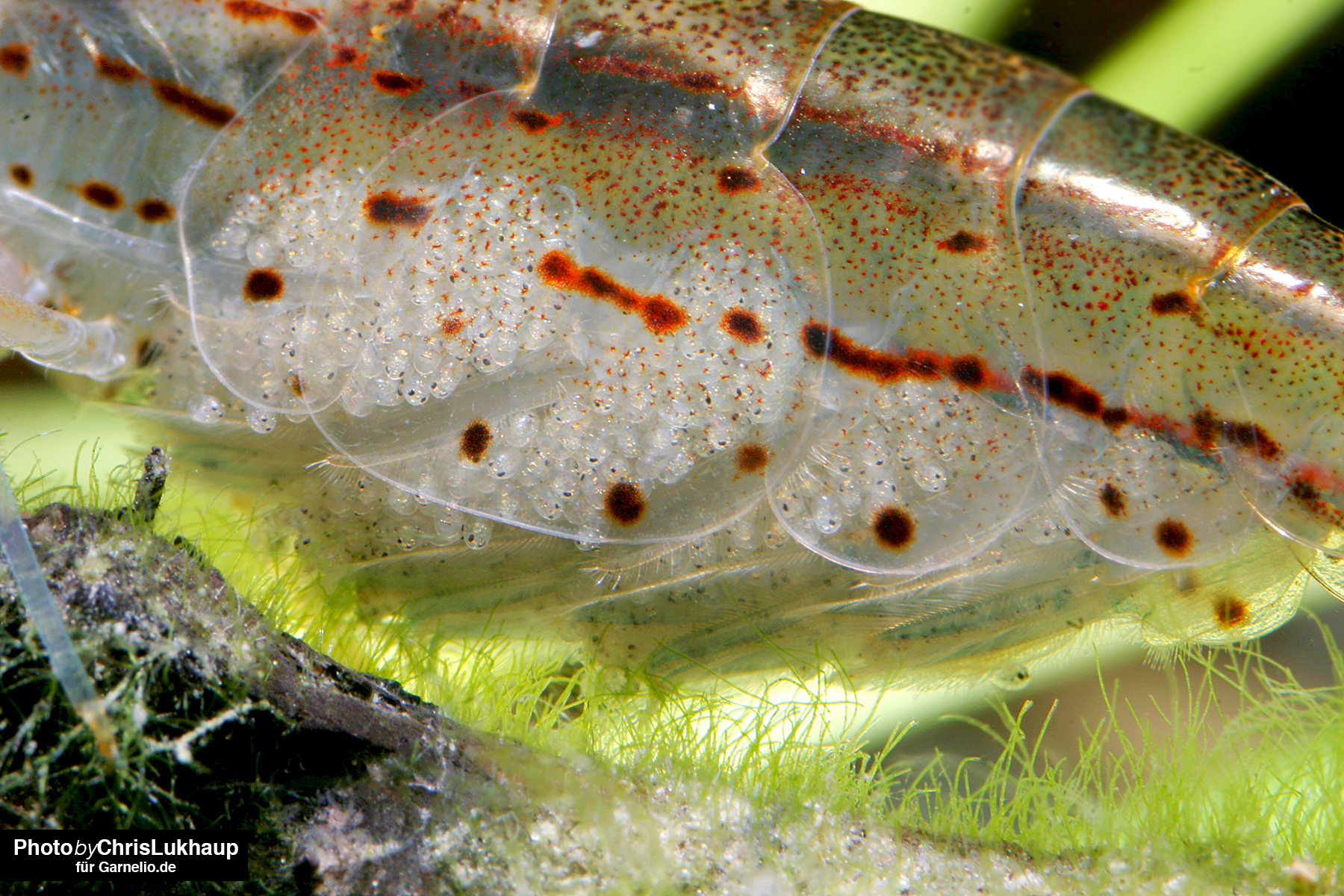
Breeding in a normal freshwater community aquarium is uncommon because the eggs hatch into planktonic larvae that need brackish or marine water. Females carry many small eggs beneath the abdomen and fan them until hatching. Successful rearing generally requires a separate, carefully managed larval system with appropriate salinity, fine food, strong aeration, and gradual acclimation. After metamorphosis, young shrimp can be moved to freshwater. Adults may mate and carry eggs in freshwater without producing surviving offspring there.
Leave your comments