Taxonomy and identification
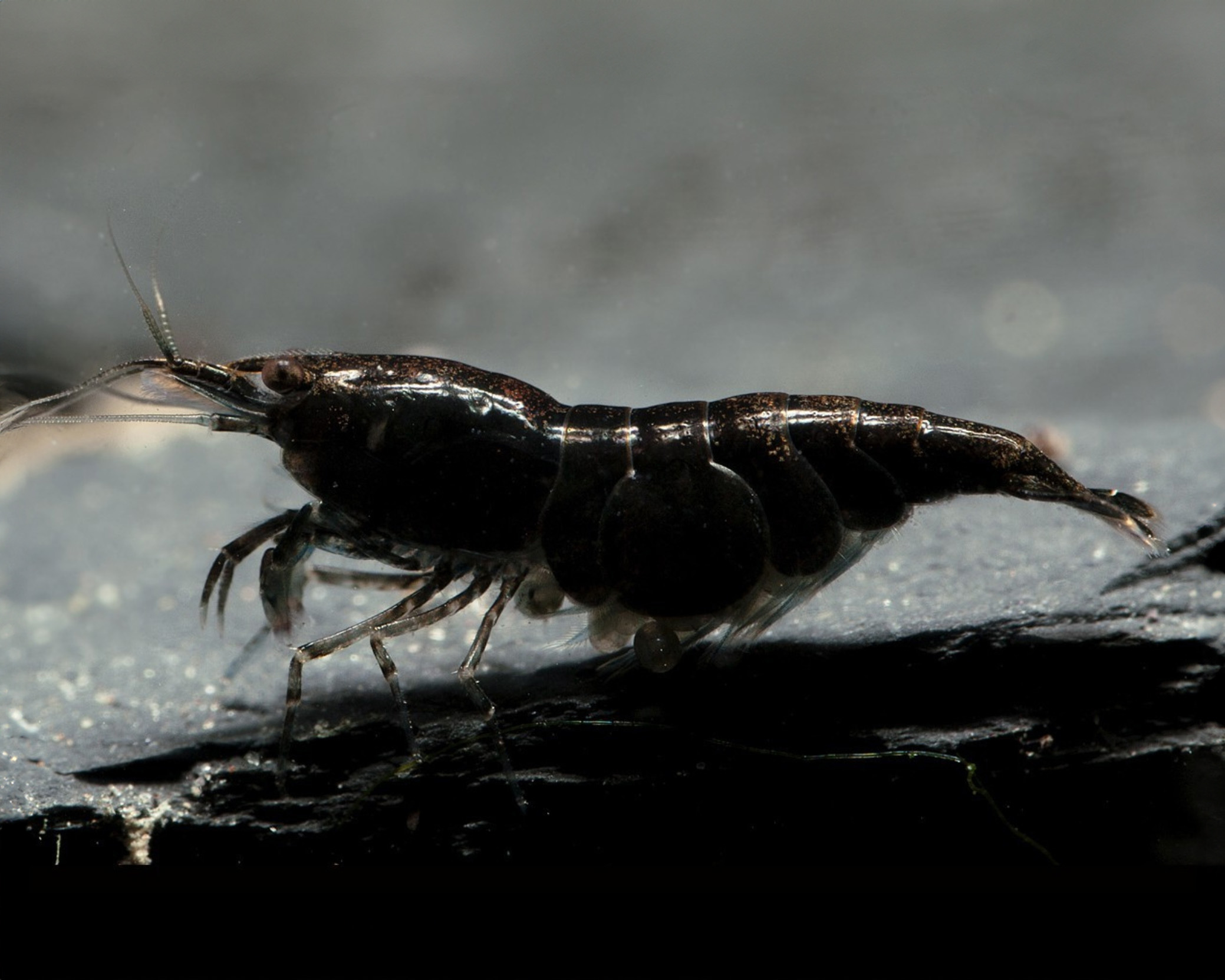
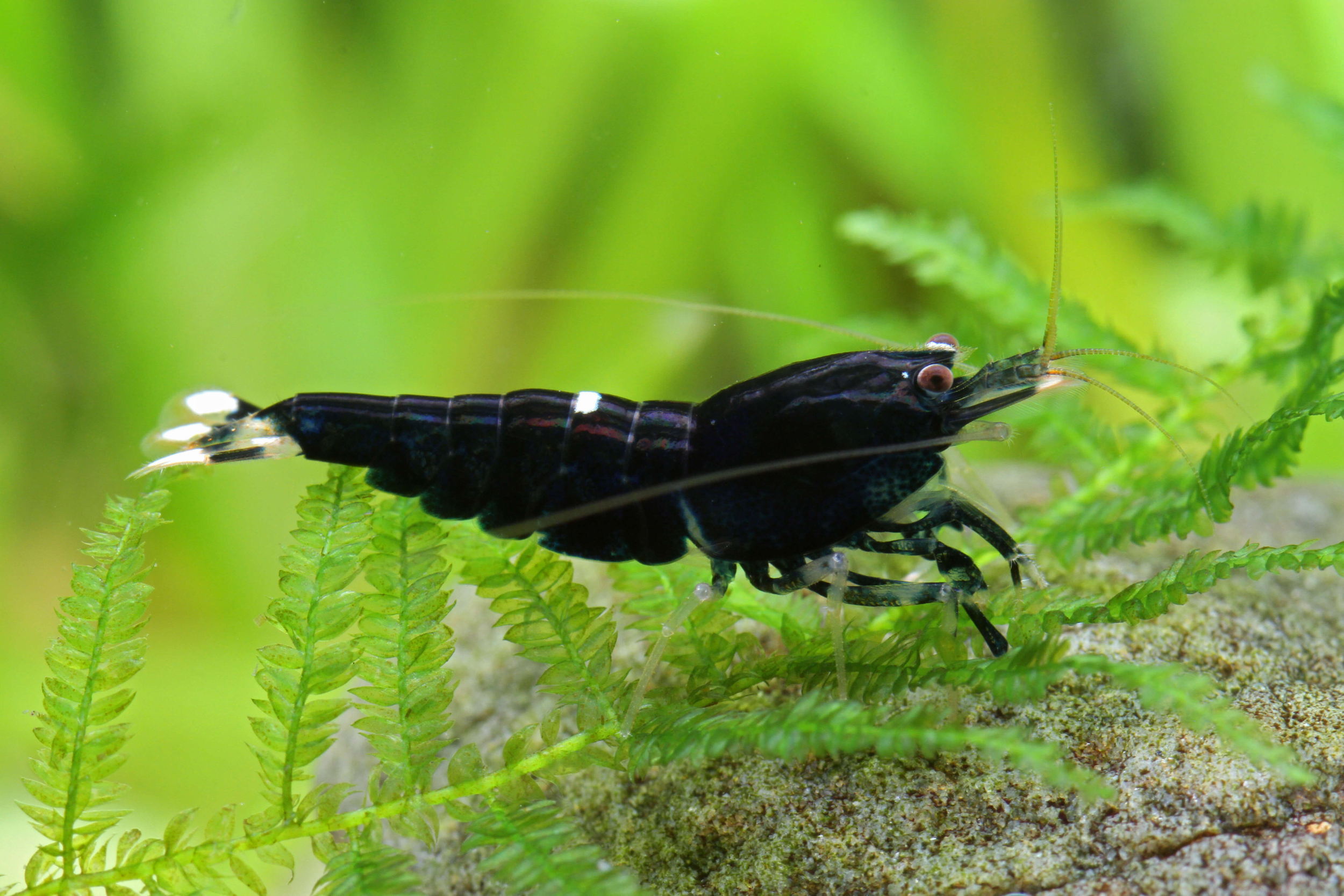
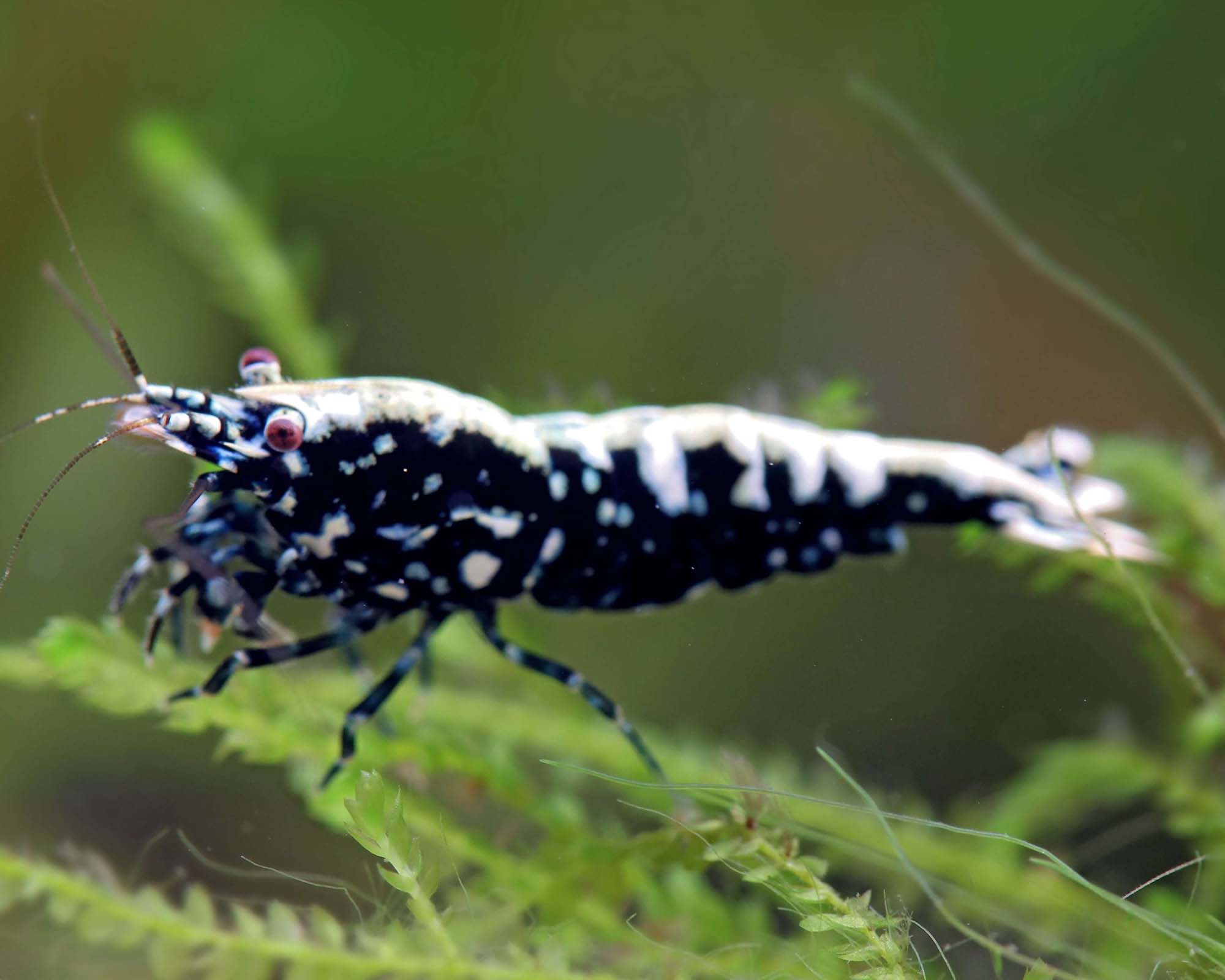
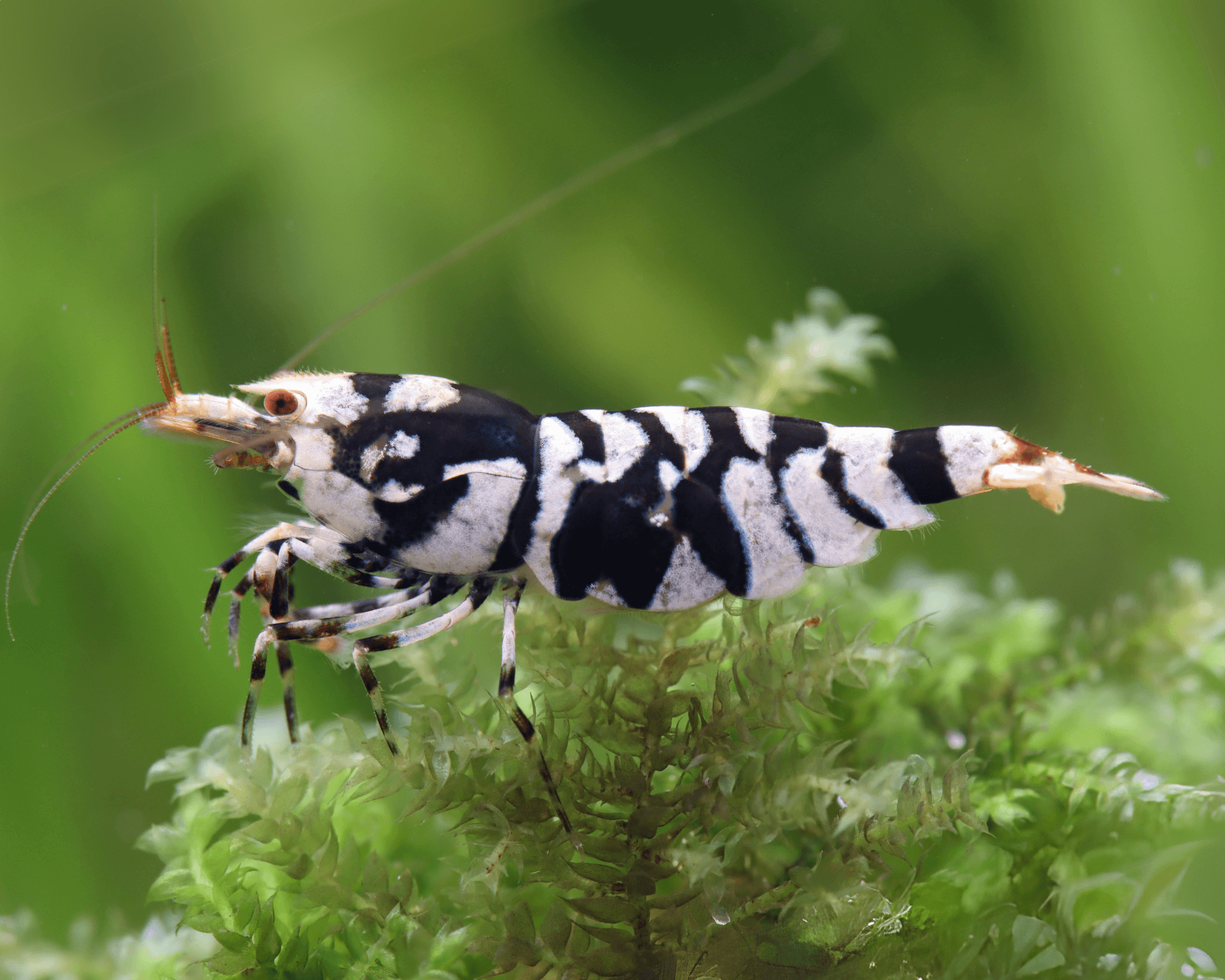
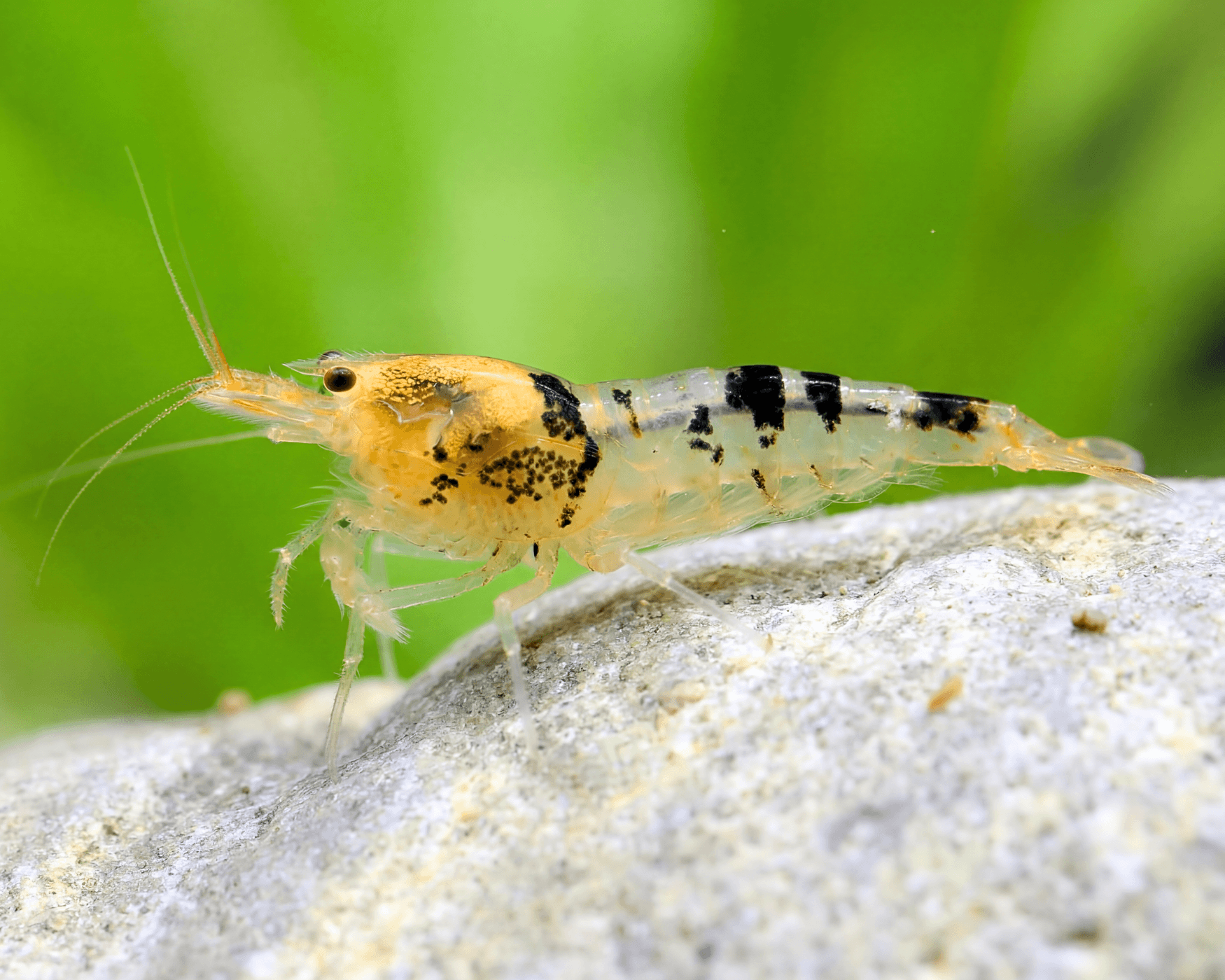
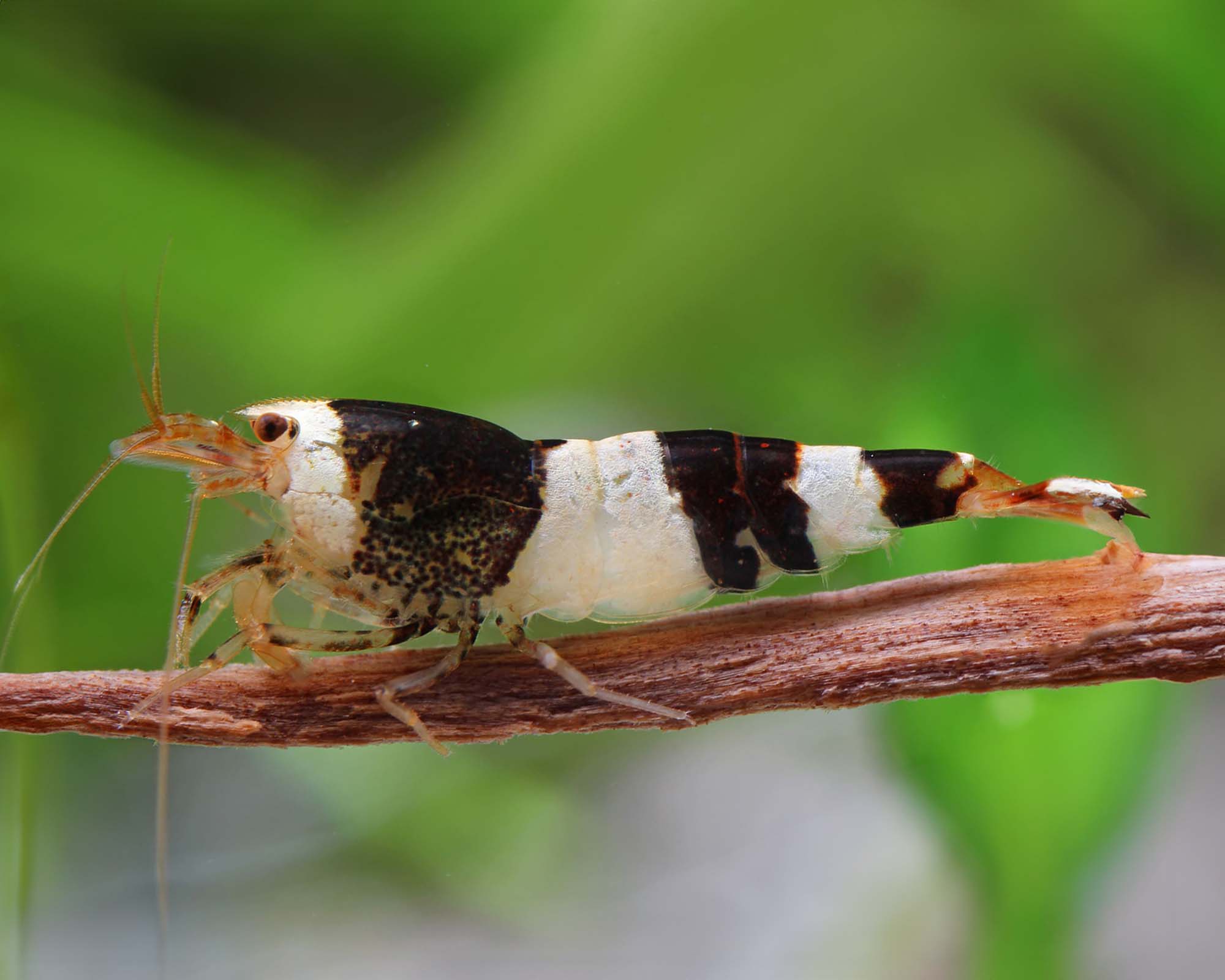
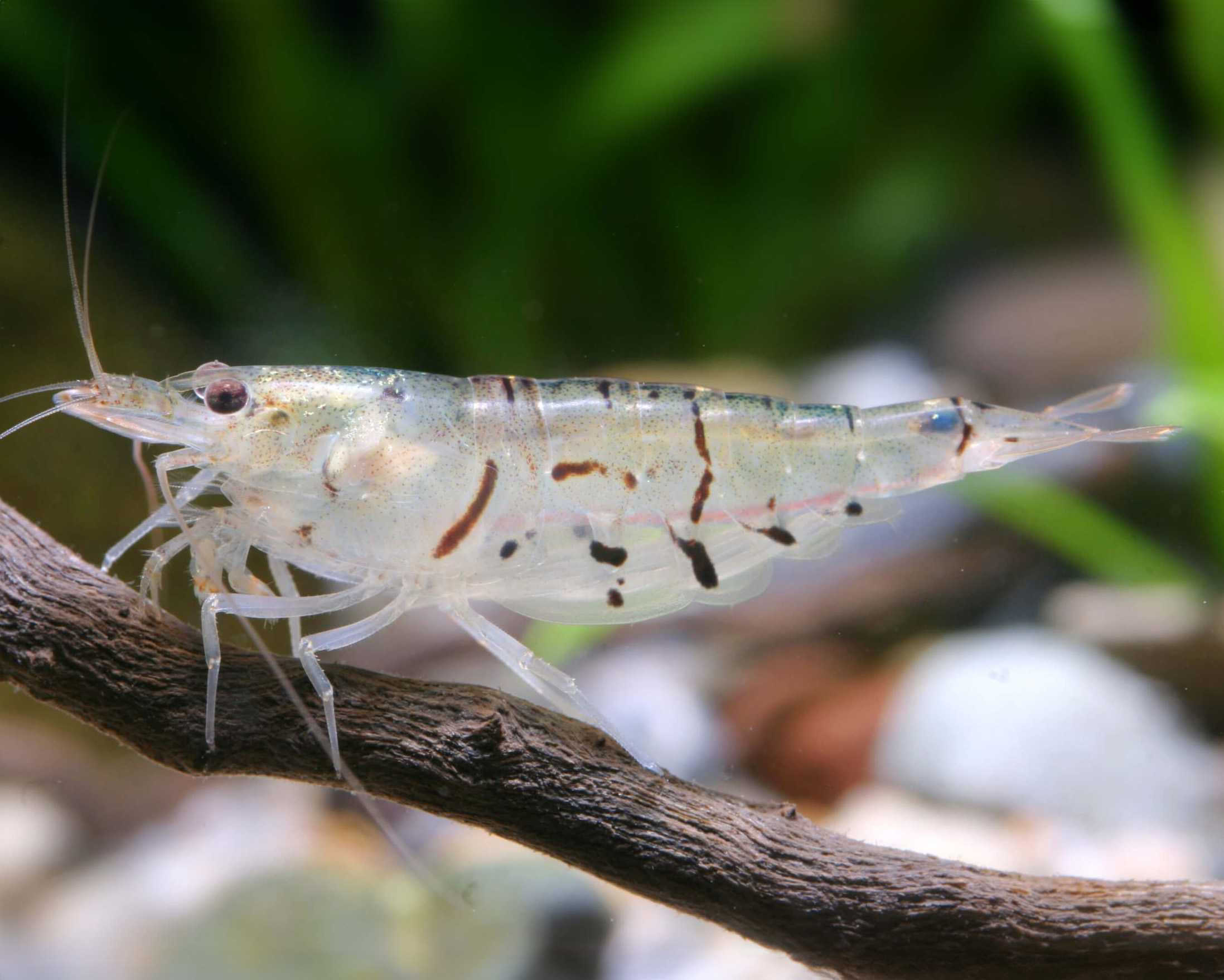
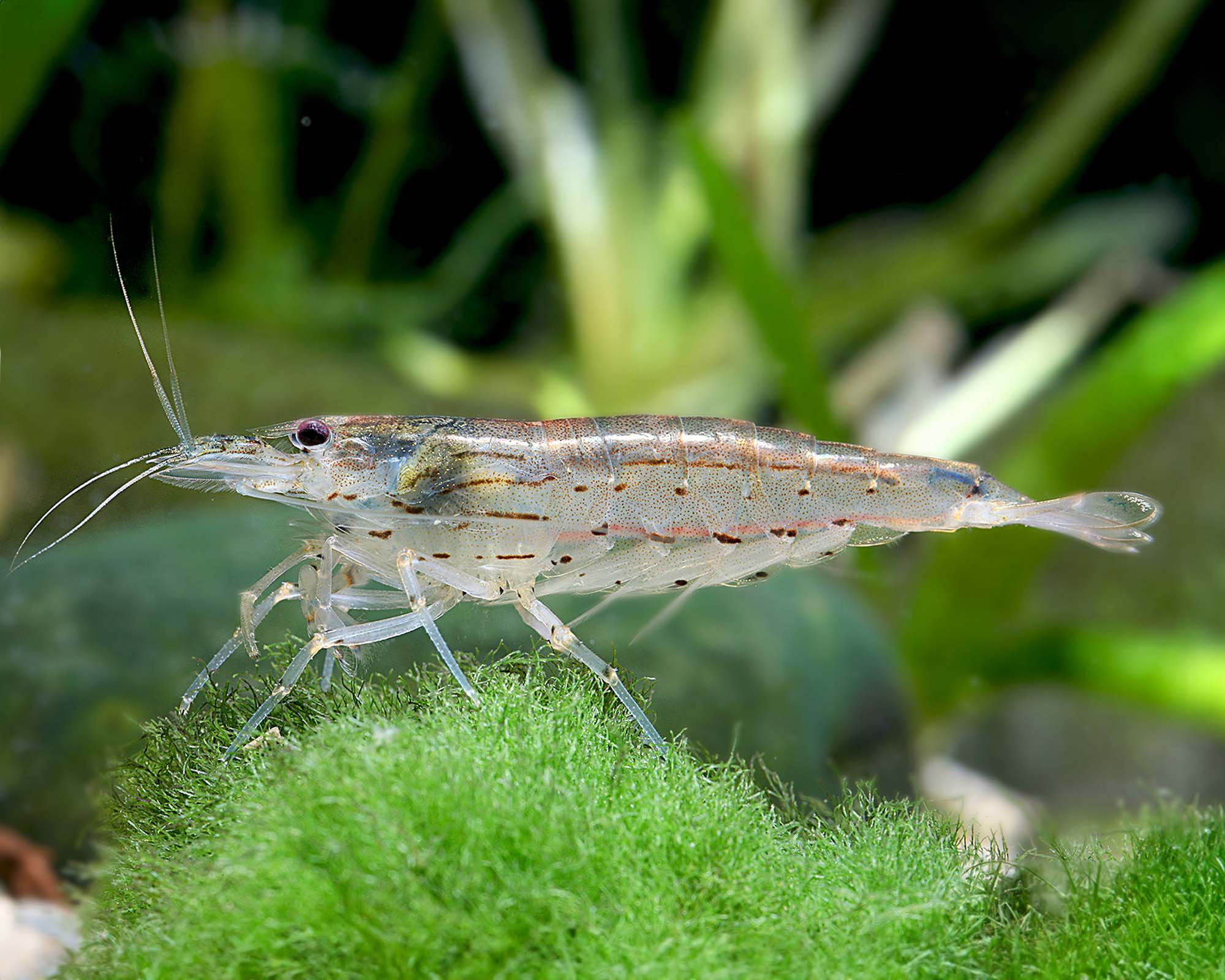
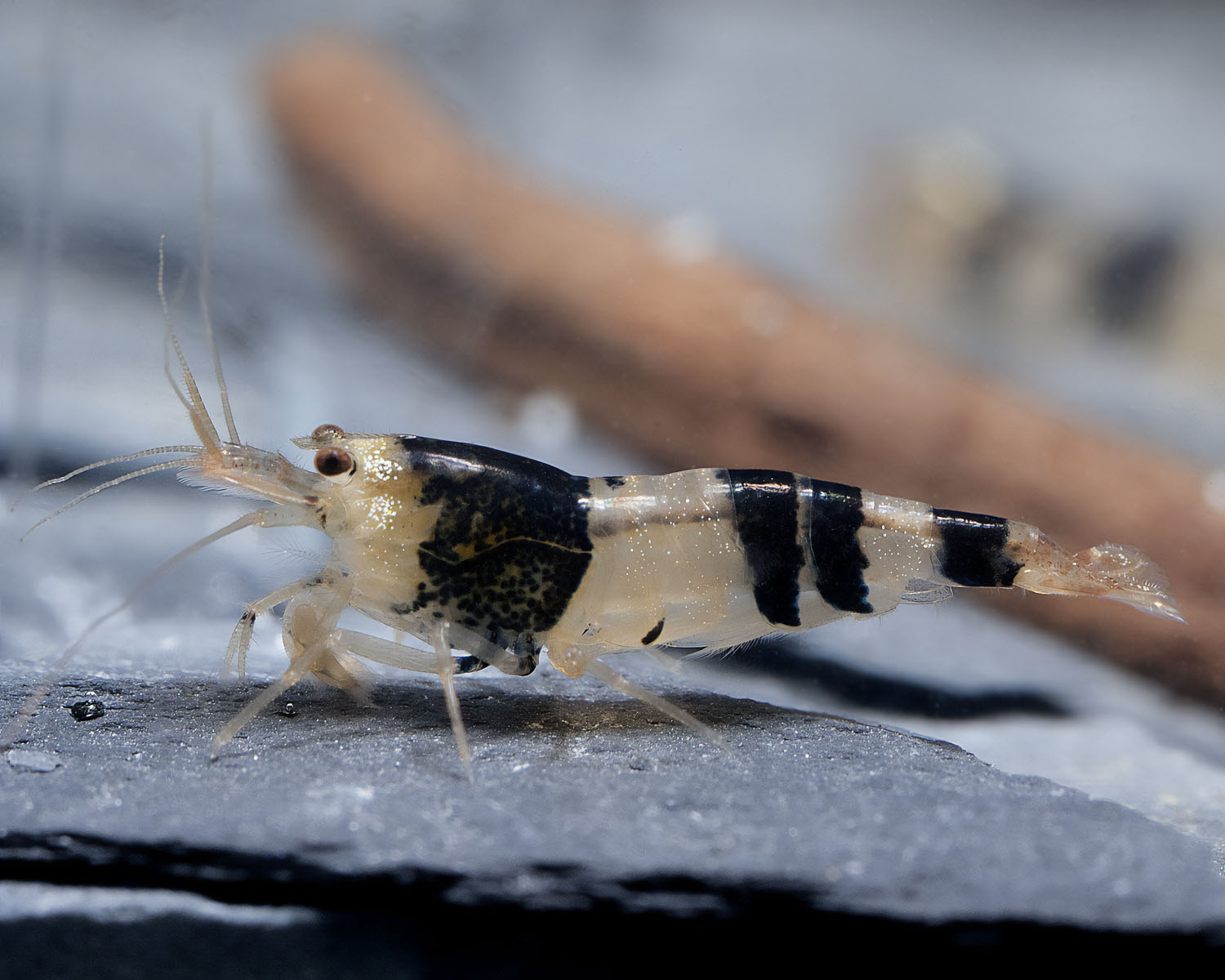
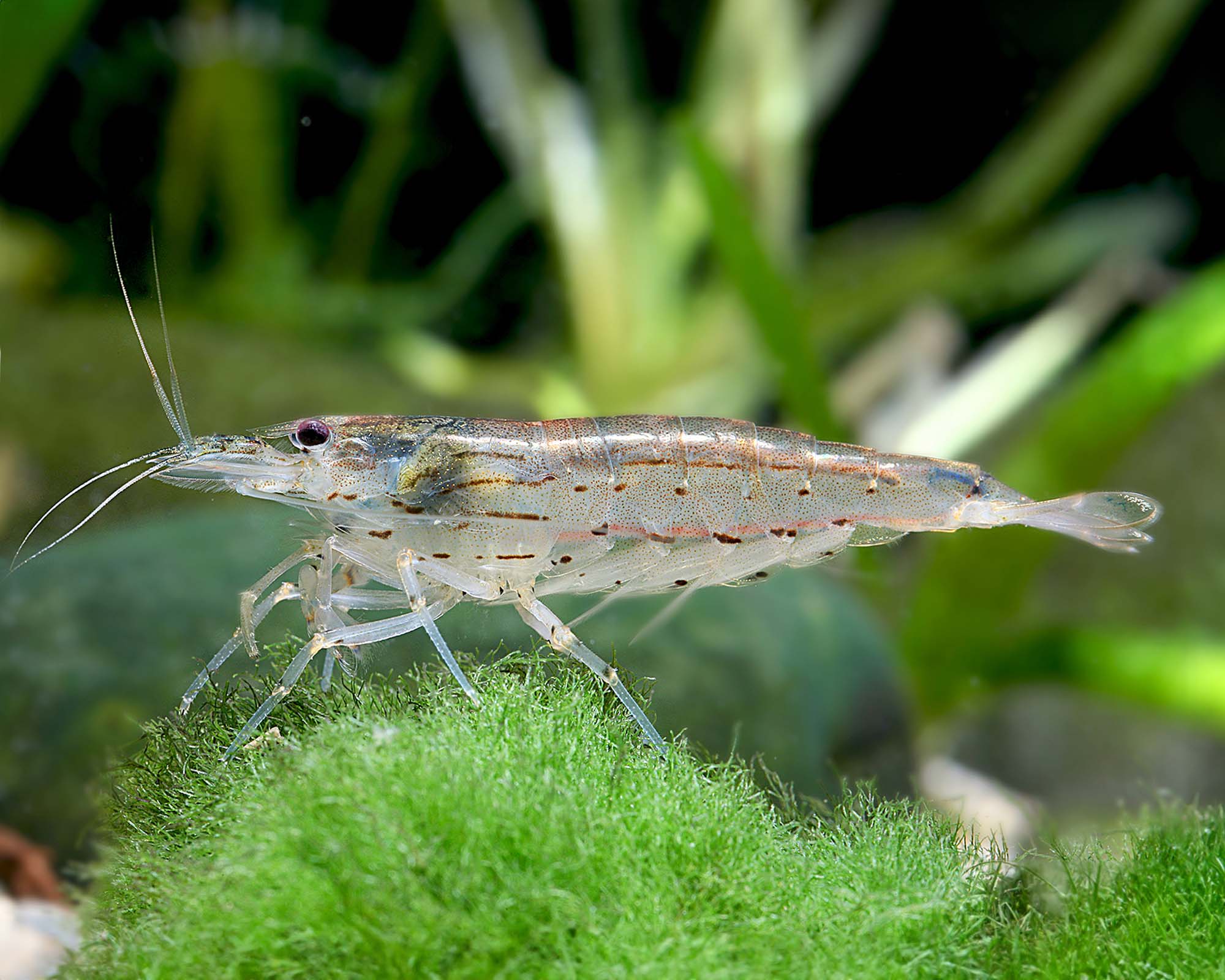
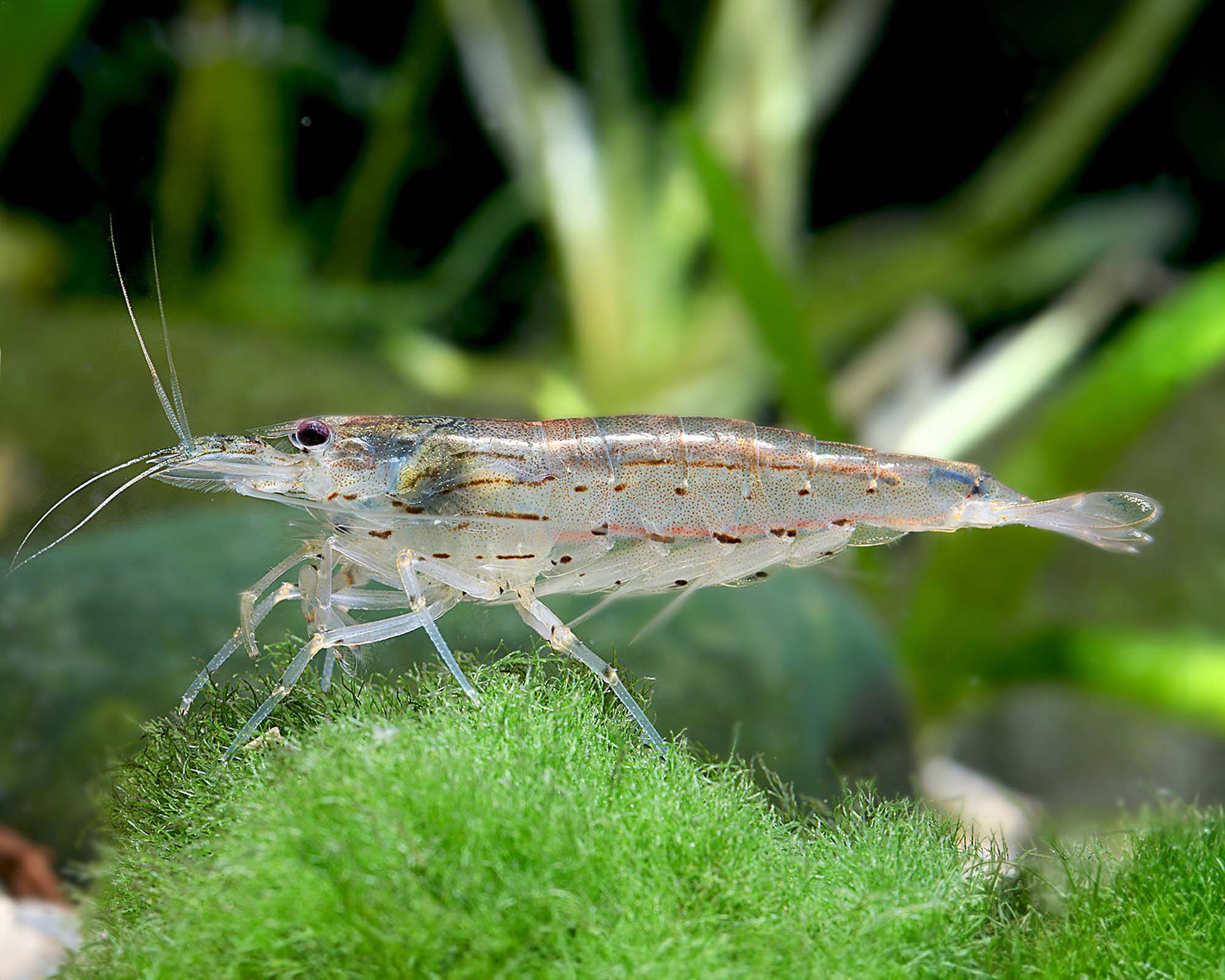
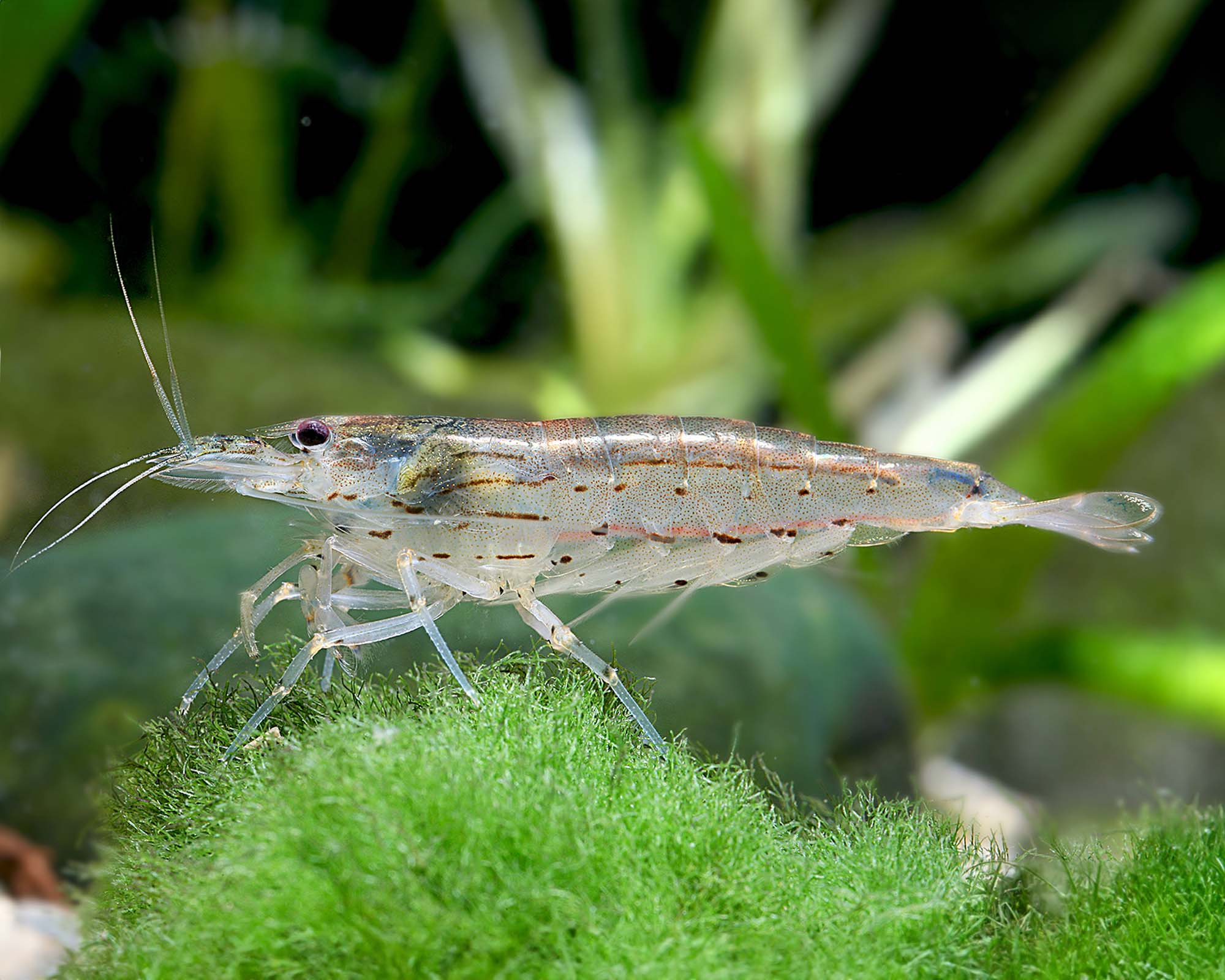
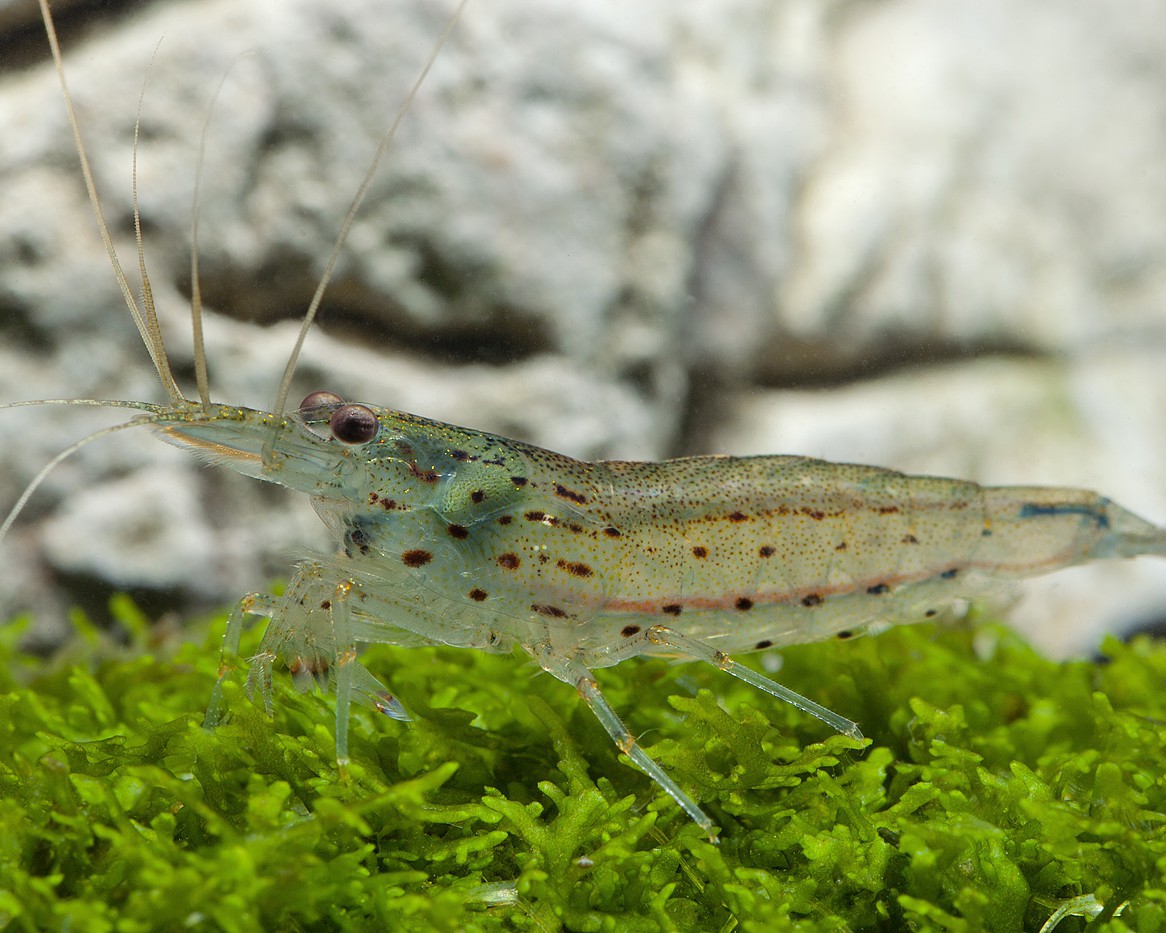
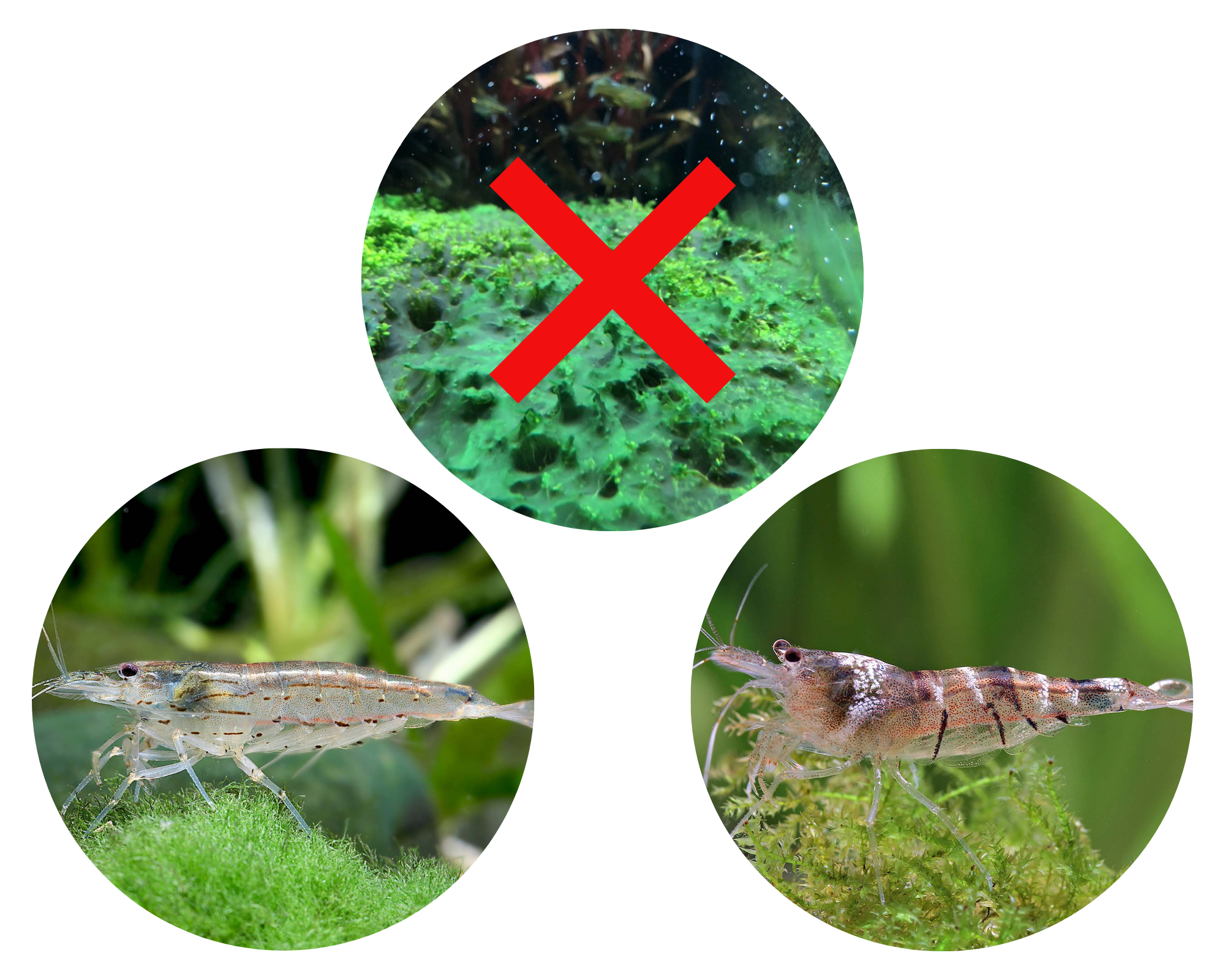
The species is Neocaridina davidi, commonly called the cherry shrimp. Black Sakura is a selectively bred aquarium color form rather than a separate species. Females are usually larger and fuller-bodied than males. A berried female carries eggs under the abdomen and regularly fans them with her swimmerets. The exact color grade and whether the visible animal is carrying eggs cannot be confirmed with certainty from the supplied image alone.
Natural habitat
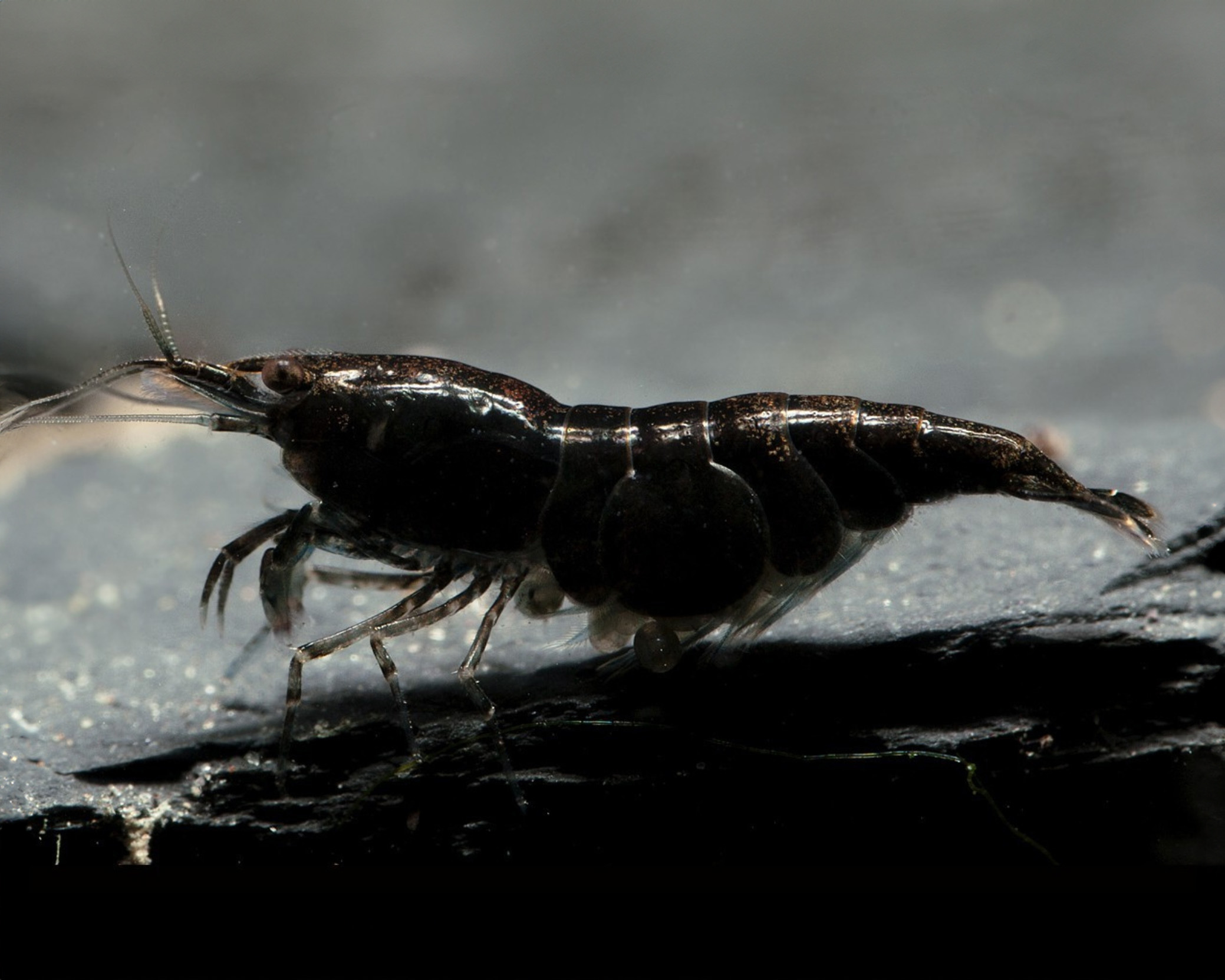
Neocaridina davidi is associated with freshwater streams, shallow waters, ponds, and vegetated margins in East Asia. Aquarium specimens adapt well to planted, mature freshwater aquariums. Fine-leaved plants, moss, wood, rock, and leaf litter provide grazing surfaces and shelter for juveniles.
Water parameters
Keep the aquarium biologically mature, well oxygenated, and free from detectable ammonia and nitrite. A practical range is 18-26 °C and pH 6.5-8.0. Moderate general hardness and carbonate hardness are commonly suitable, with enough calcium and magnesium for shell formation. Avoid abrupt changes in temperature, pH, hardness, and total dissolved solids. Use dechlorinated water and make gradual, moderate water changes.
Aquarium setup
Use a covered or securely filtered aquarium with gentle flow. Sponge filters or pre-filtered intake sponges prevent small shrimp from being drawn into the filter. Dense moss, fine plants, and other textured surfaces support biofilm and give berried females and juveniles refuge. Avoid copper-based medications and keep maintenance equipment free of cleaning chemicals.
Feeding
Biofilm and naturally occurring microorganisms should form the dietary foundation. Offer small amounts of quality shrimp food, blanched vegetables, and occasional protein-containing foods. Remove uneaten food before it decomposes. Feeding lightly and observing the colony is safer than adding large portions; juveniles benefit from constant access to mature surfaces for grazing.
Tank mates
The safest companions are other peaceful Neocaridina shrimp and small, non-predatory freshwater invertebrates such as suitable snails. Many fish will eat shrimplets, and even peaceful fish may prey on newly released young. If fish are kept, choose very small, non-aggressive species and provide dense cover, while accepting that juvenile survival may be lower. Avoid large, predatory, or persistently fin-nipping tank mates.
Molting
Shrimp periodically shed their exoskeleton to grow. A newly molted shrimp is soft and vulnerable, so stable water chemistry, shelter, and low aggression are important. Do not remove a normal shed exoskeleton immediately; the shrimp may consume it and recover minerals. Failed molts are often associated with unsuitable or rapidly changing water conditions, inadequate minerals, stress, or poor general health.
Breeding
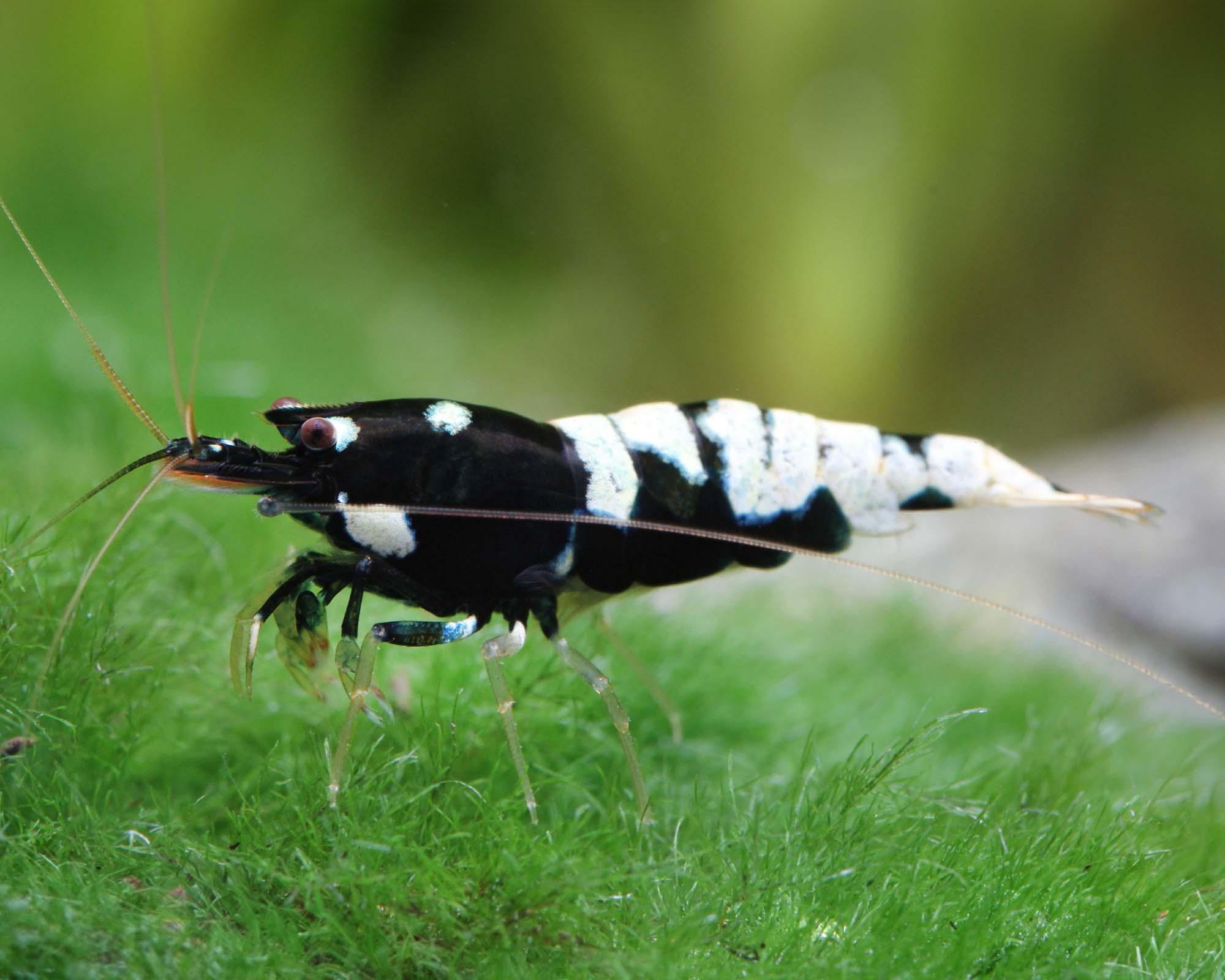
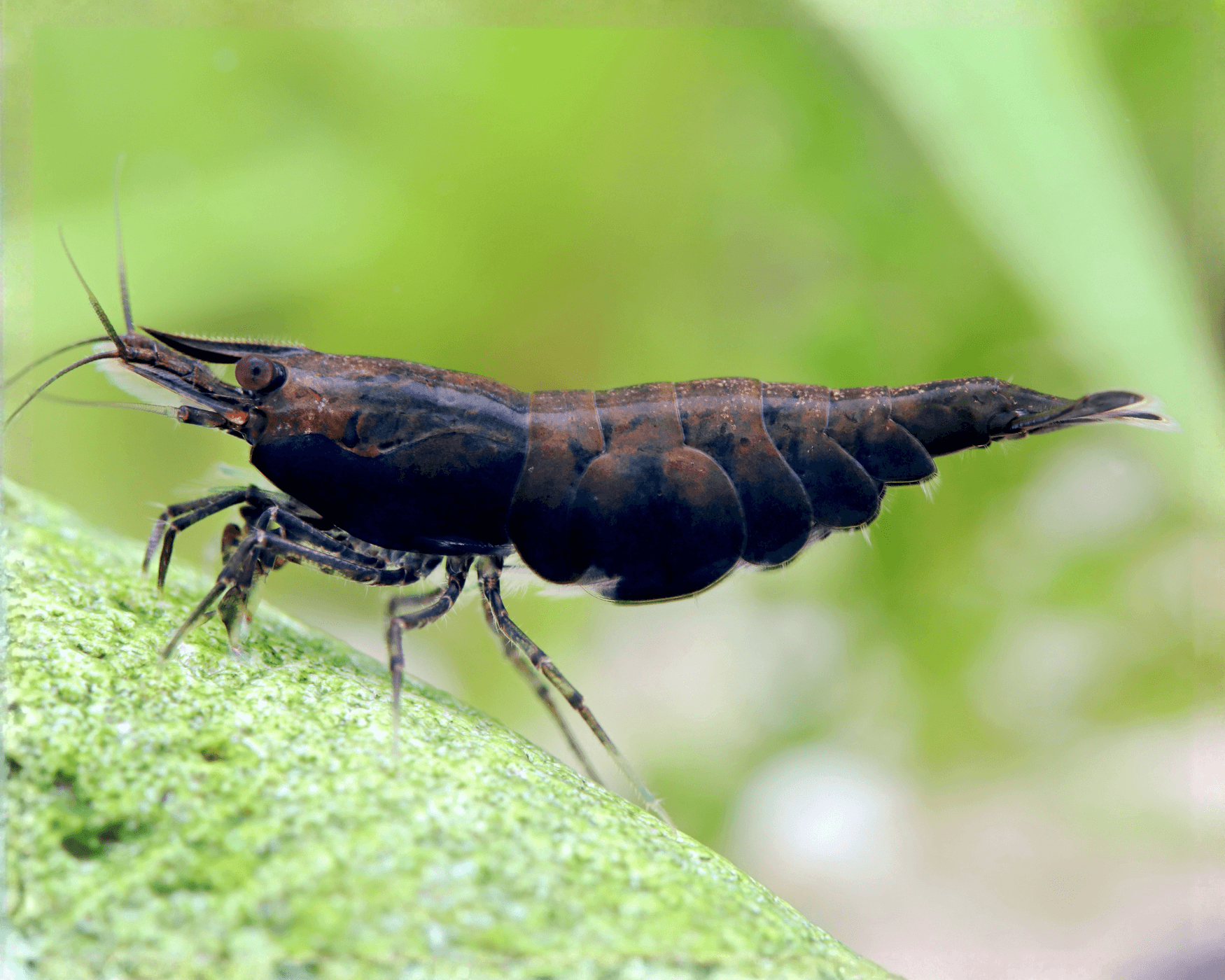
In a stable aquarium, females may breed repeatedly. After mating, a female transfers fertilized eggs to the underside of her abdomen, where she carries and fans them until hatching. The eggs hatch as miniature shrimp rather than free-swimming larvae, so no brackish-water stage is required. Provide mature biofilm, fine plants, and sponge filtration for the young. Black Sakura offspring may vary in darkness and may gradually show less intense coloration without continued selective breeding.
 - 1.webp)
Leave your comments