Taxonomy and identification
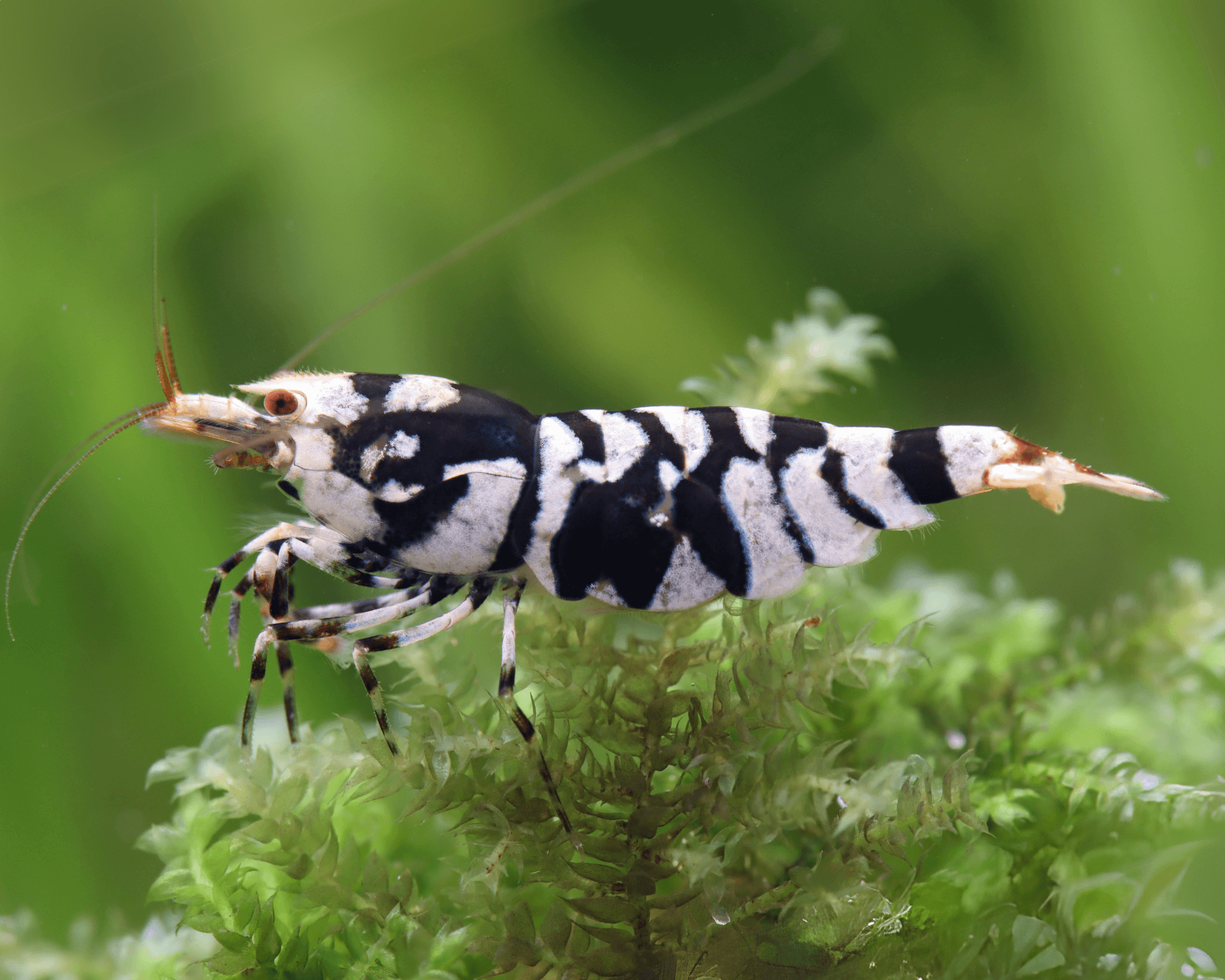
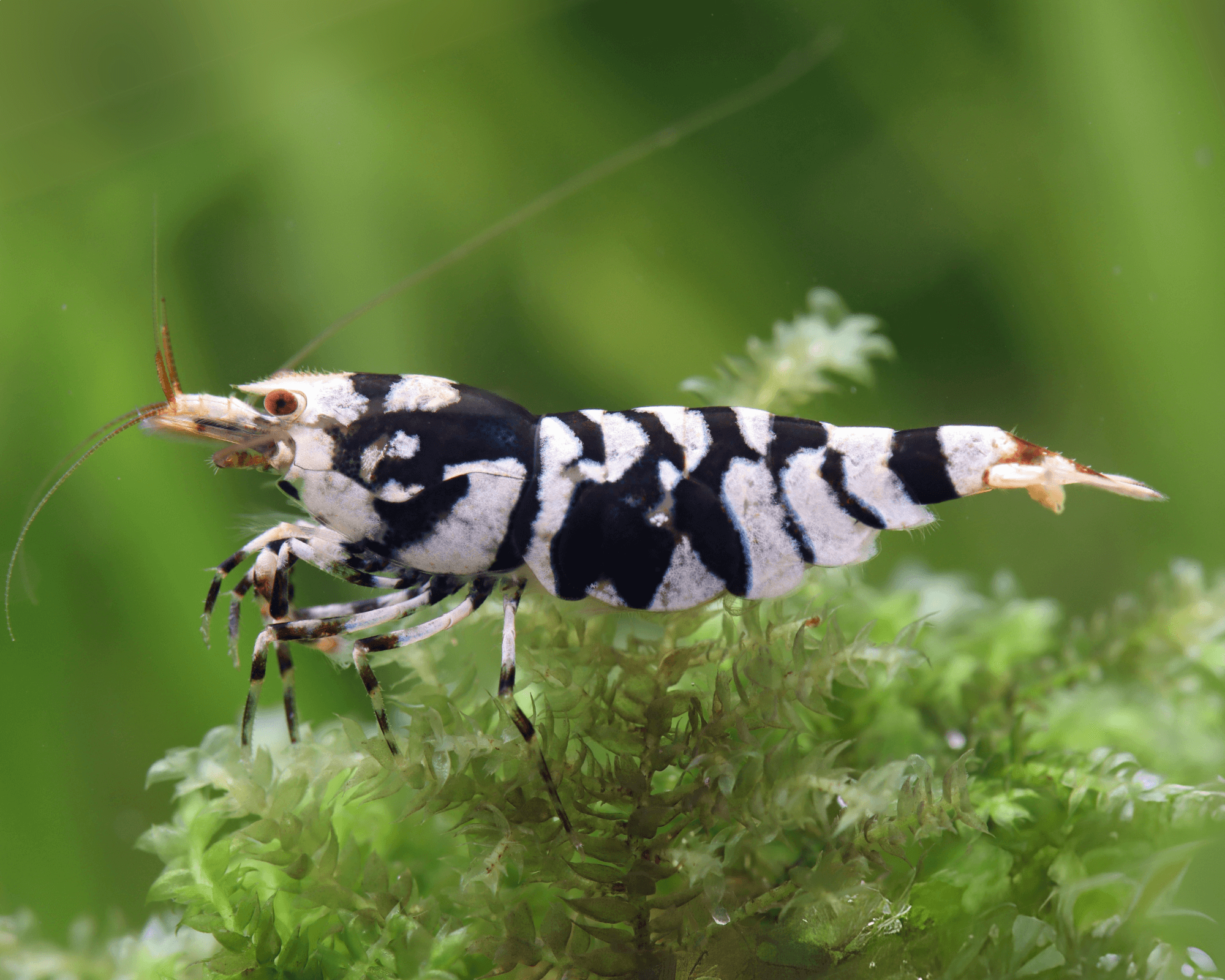
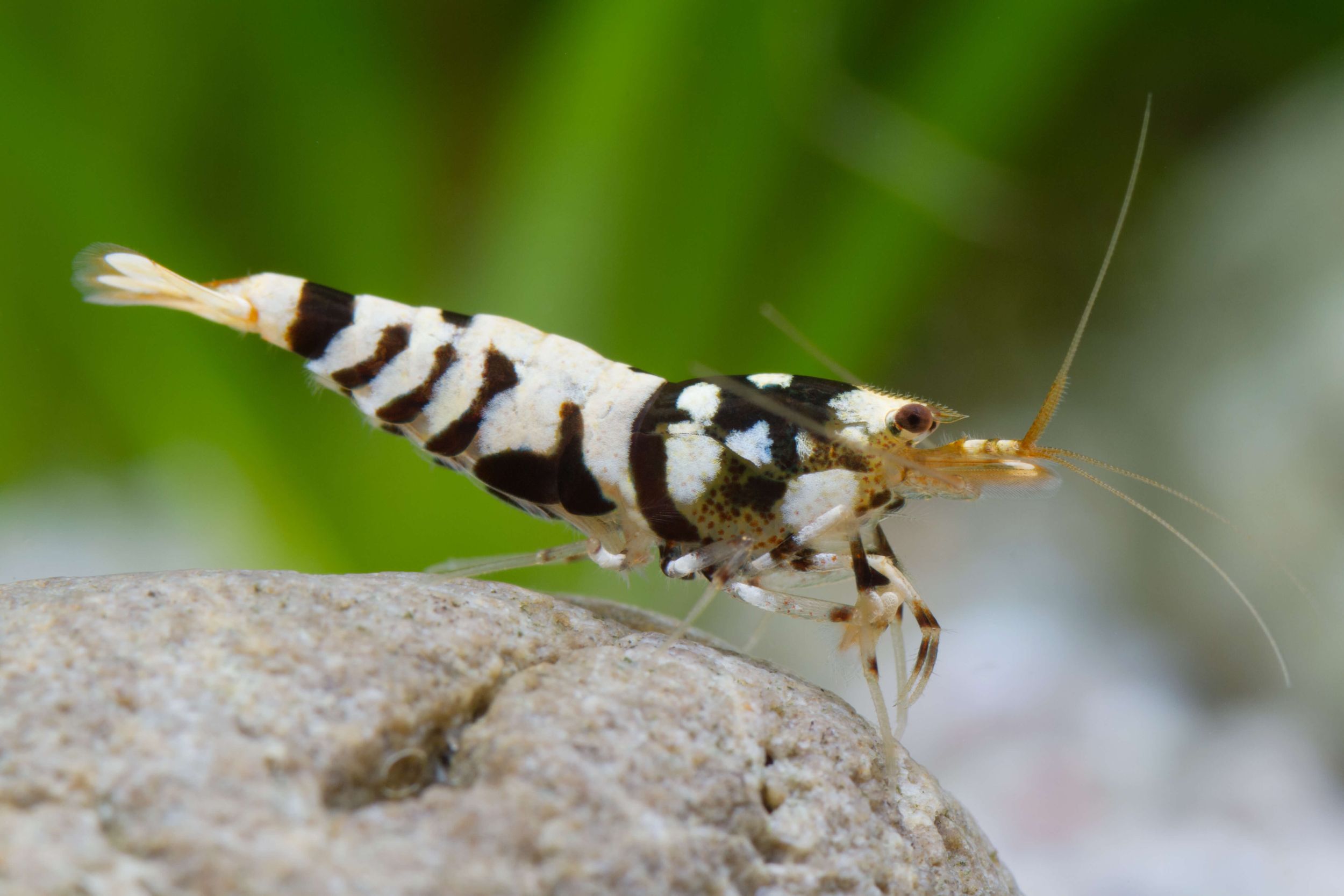
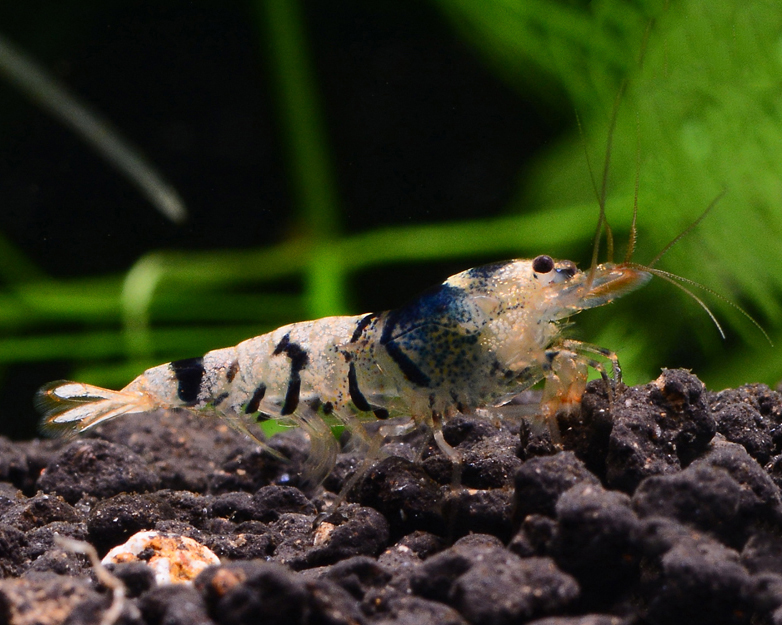
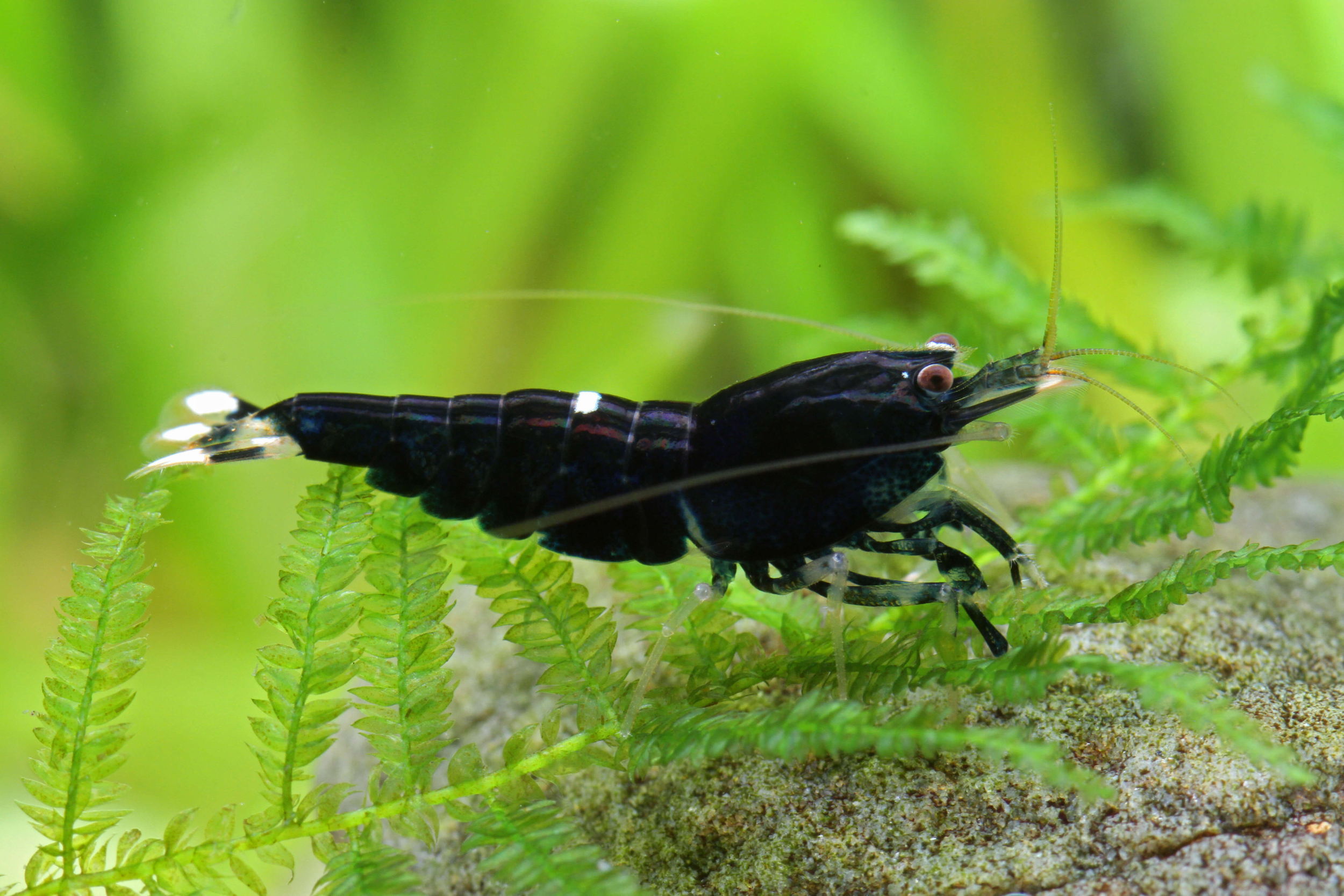
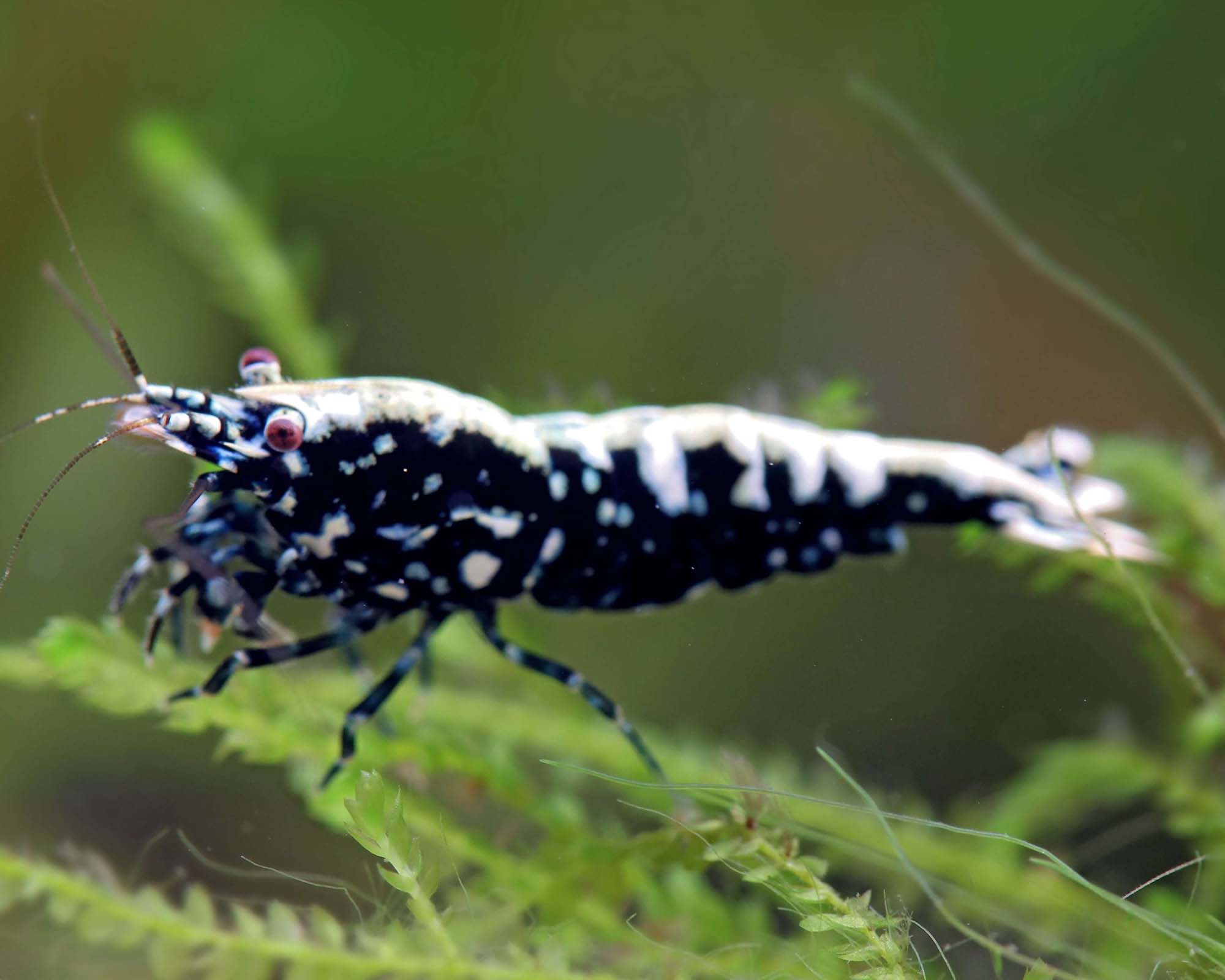
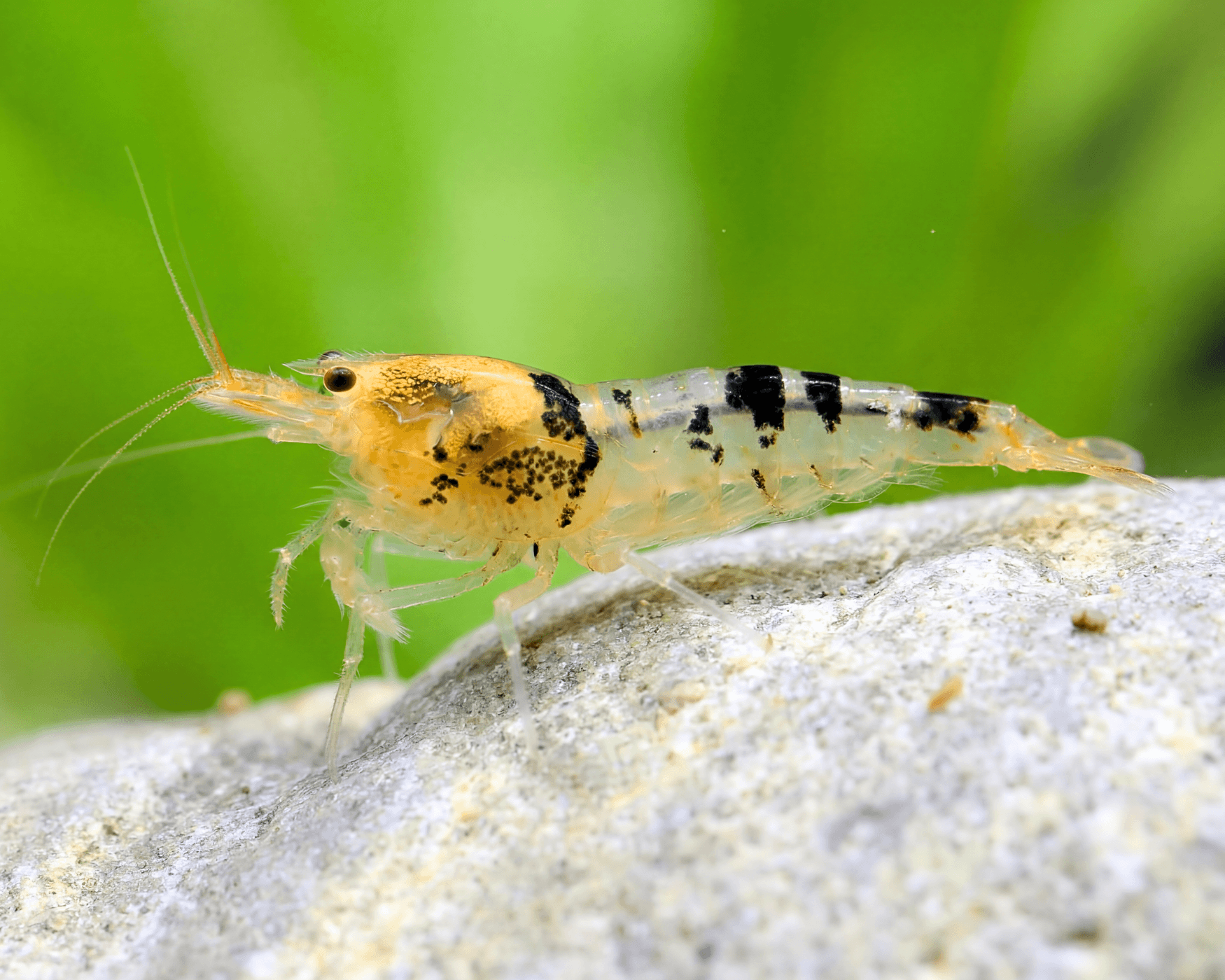
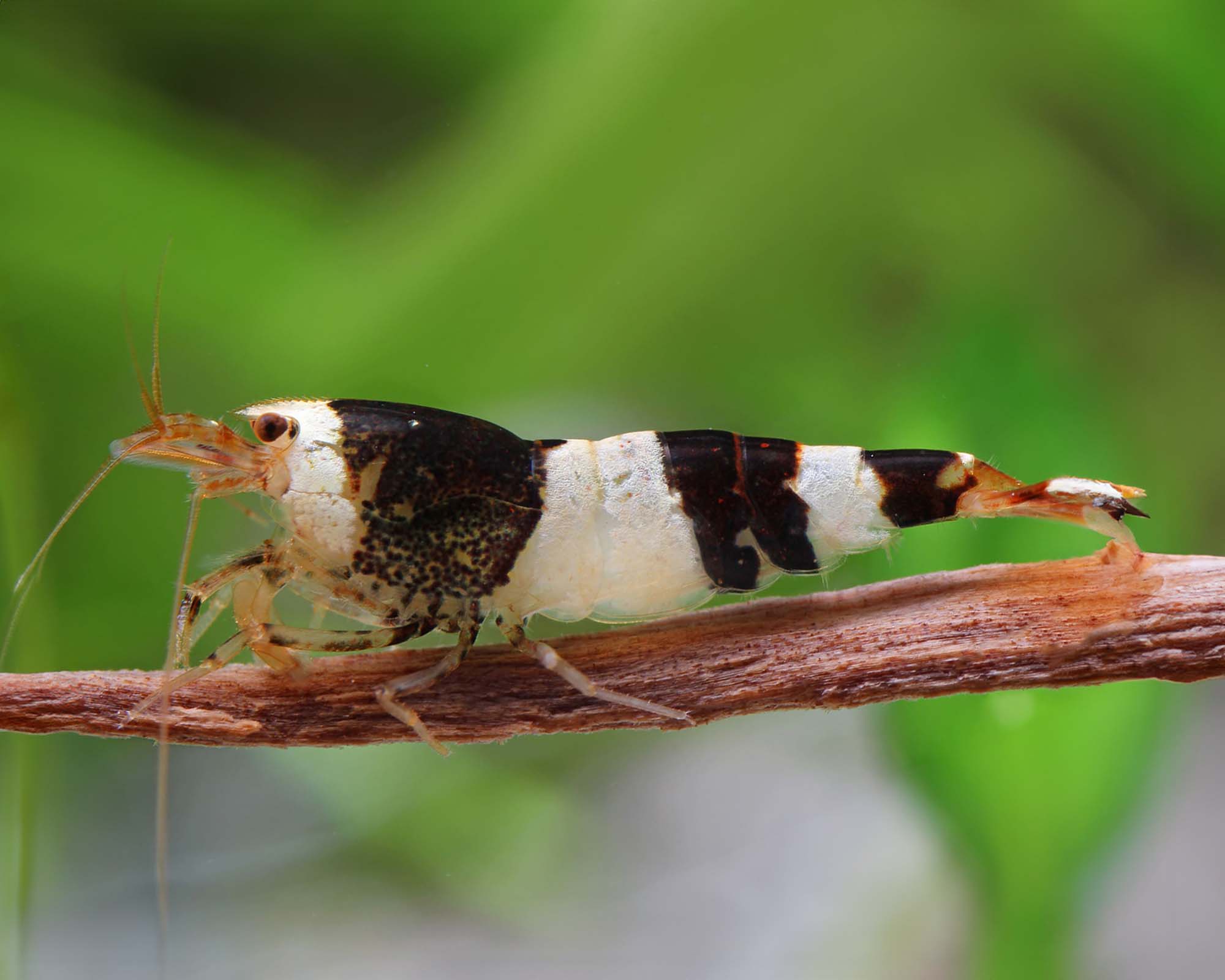
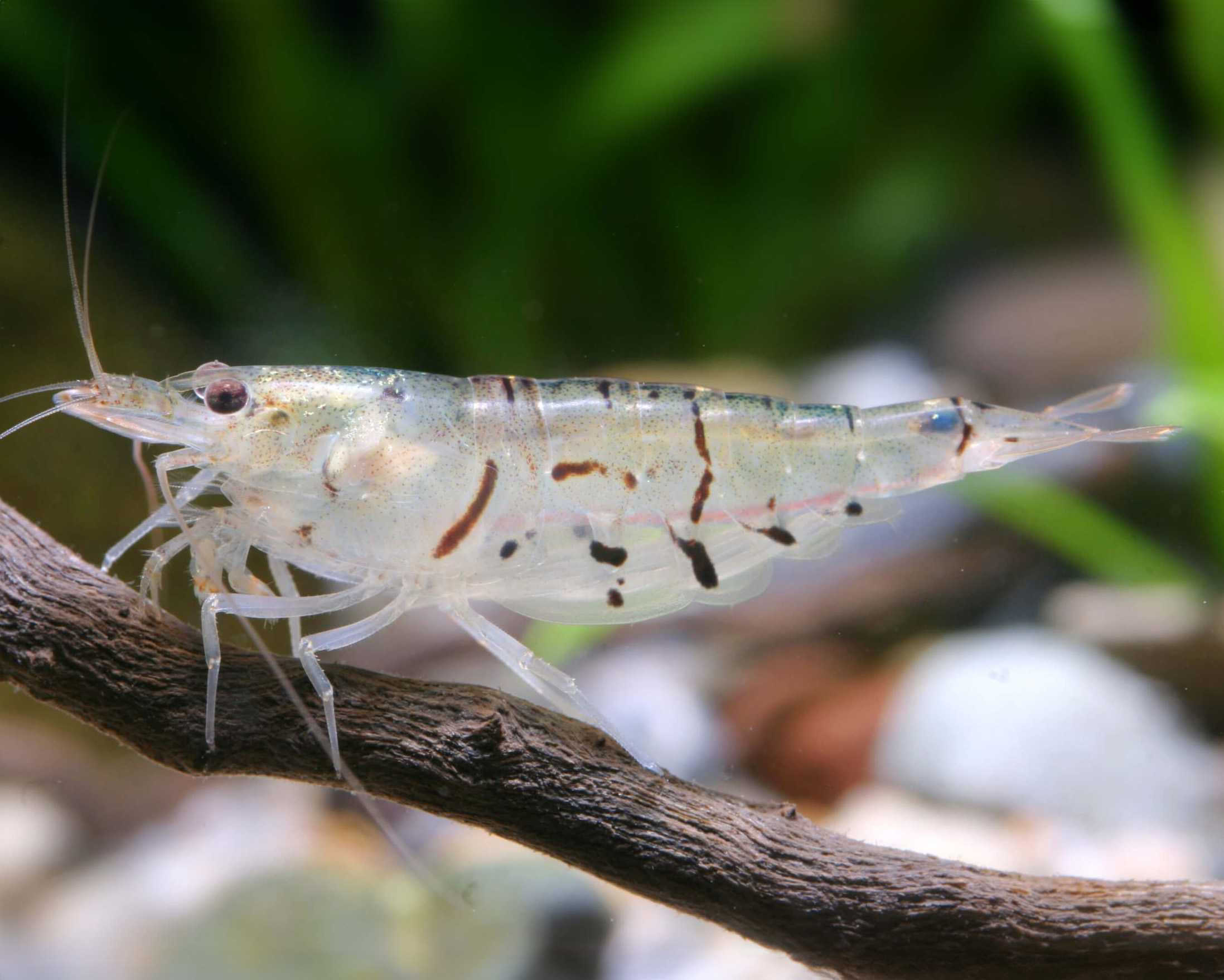
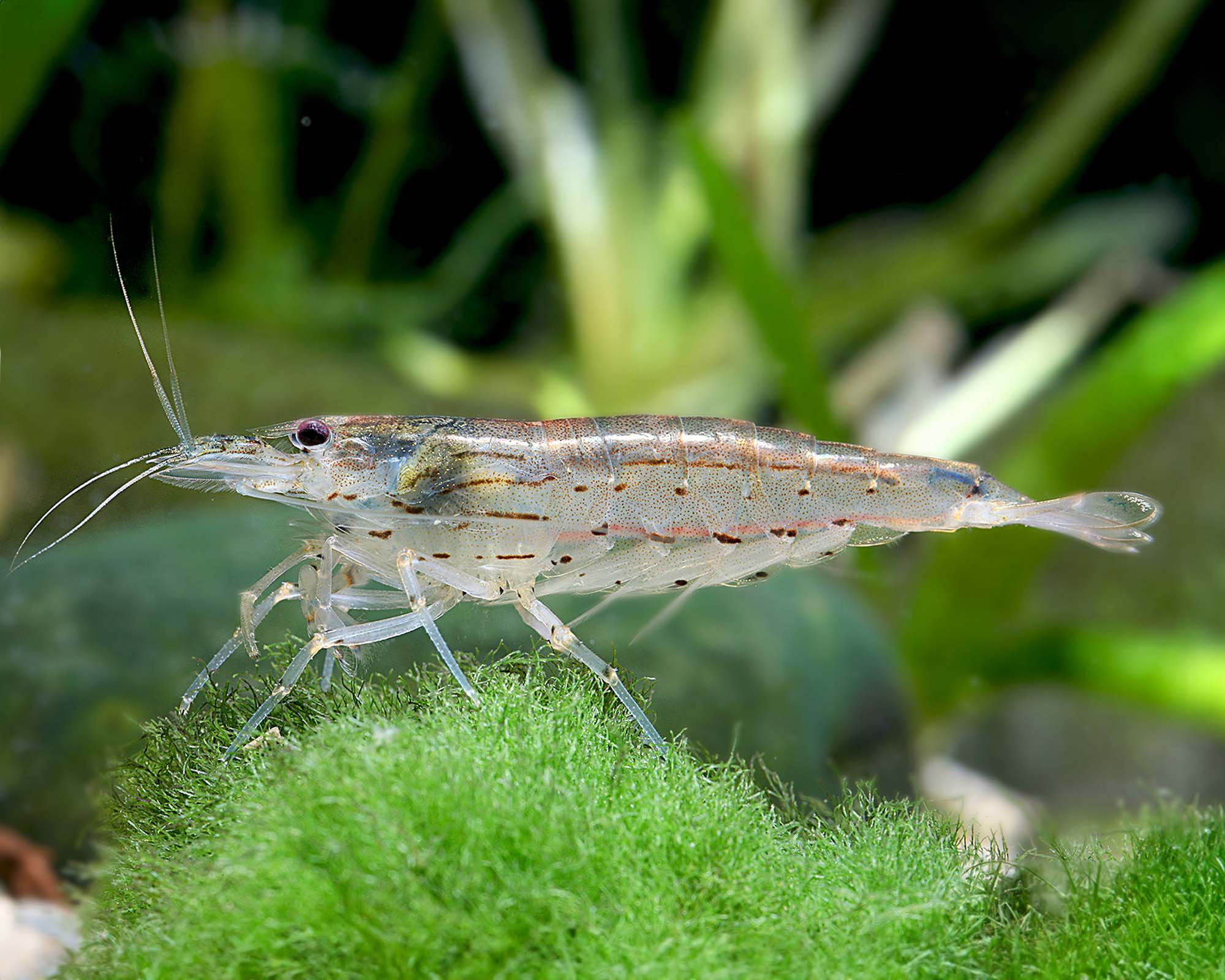
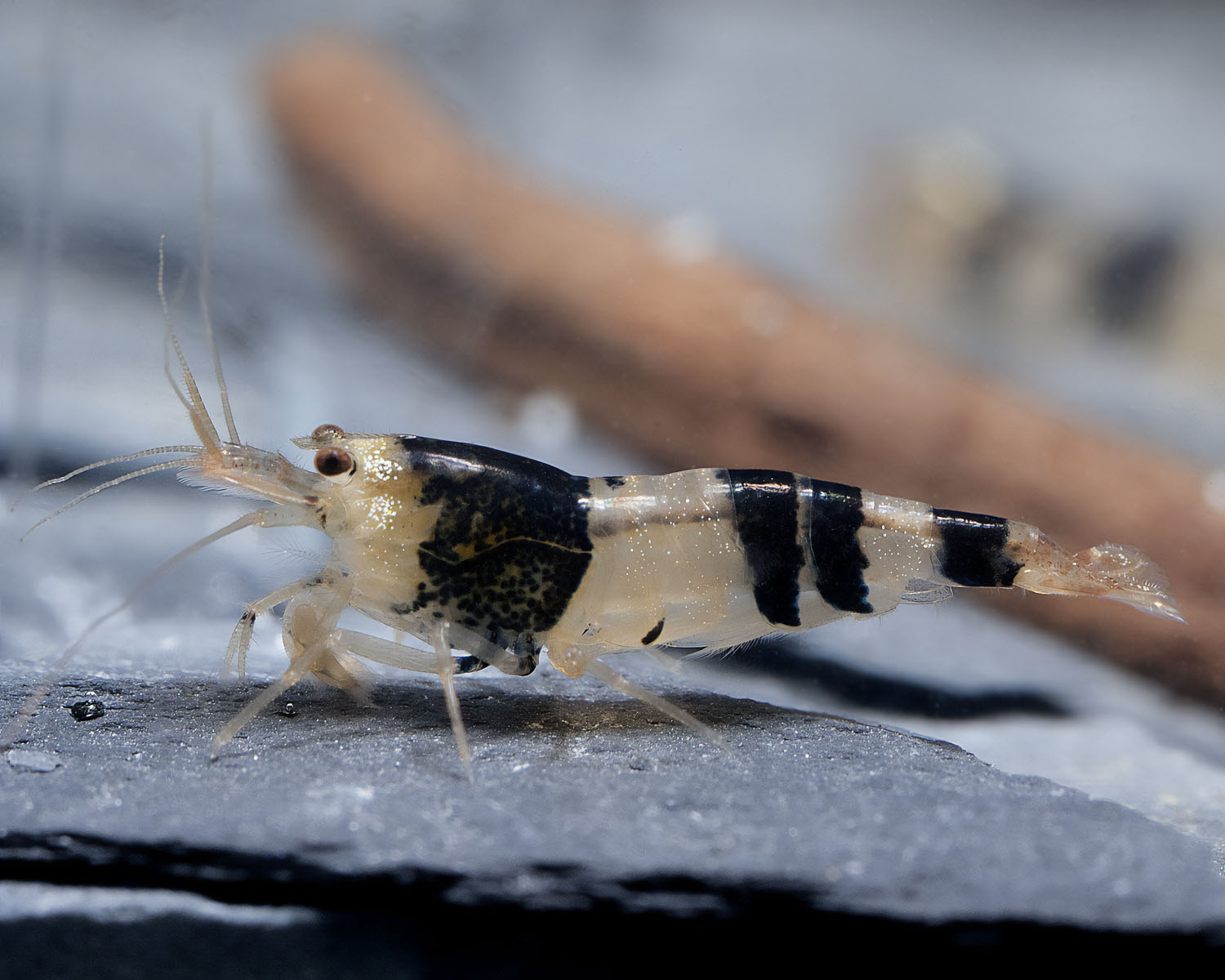
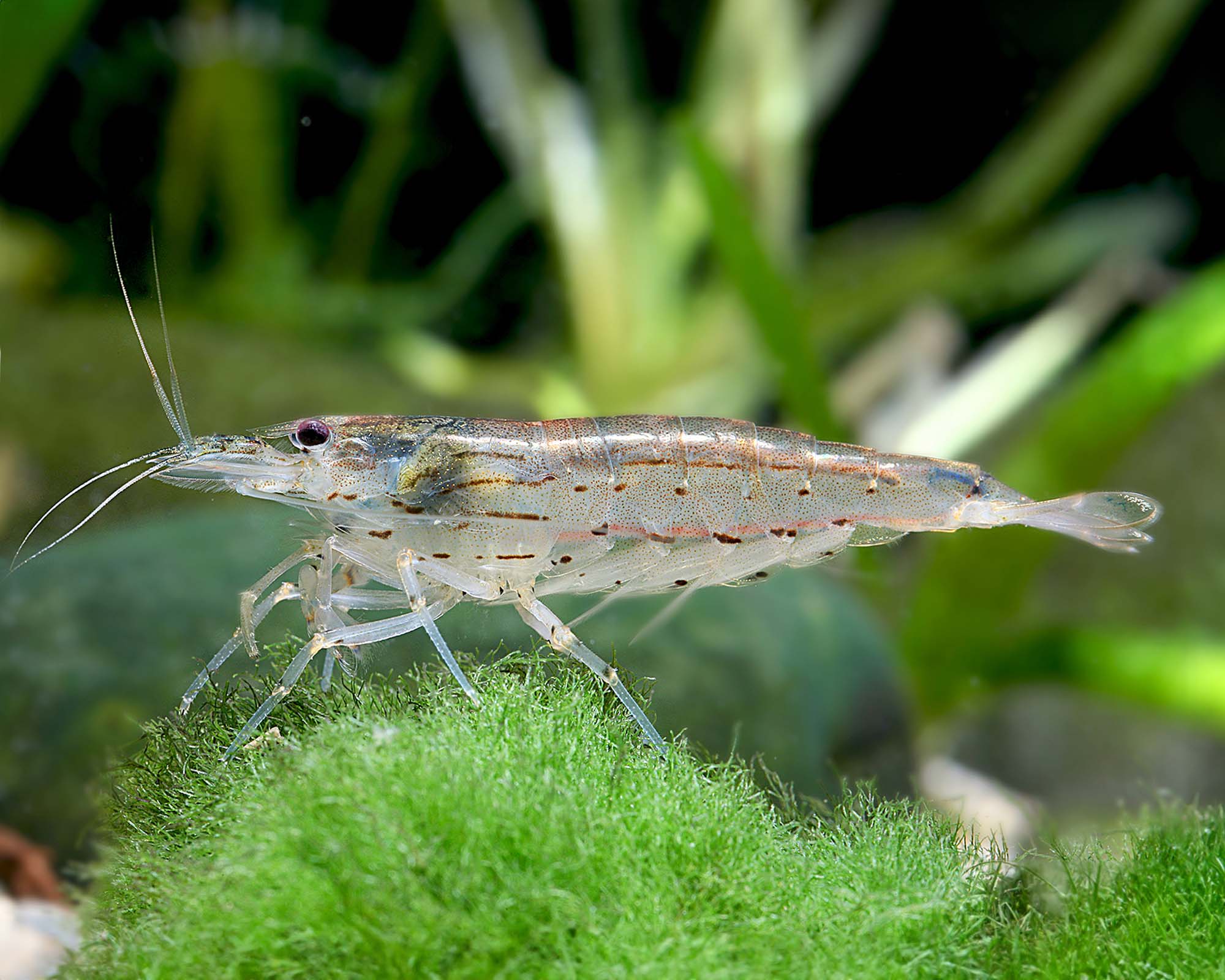
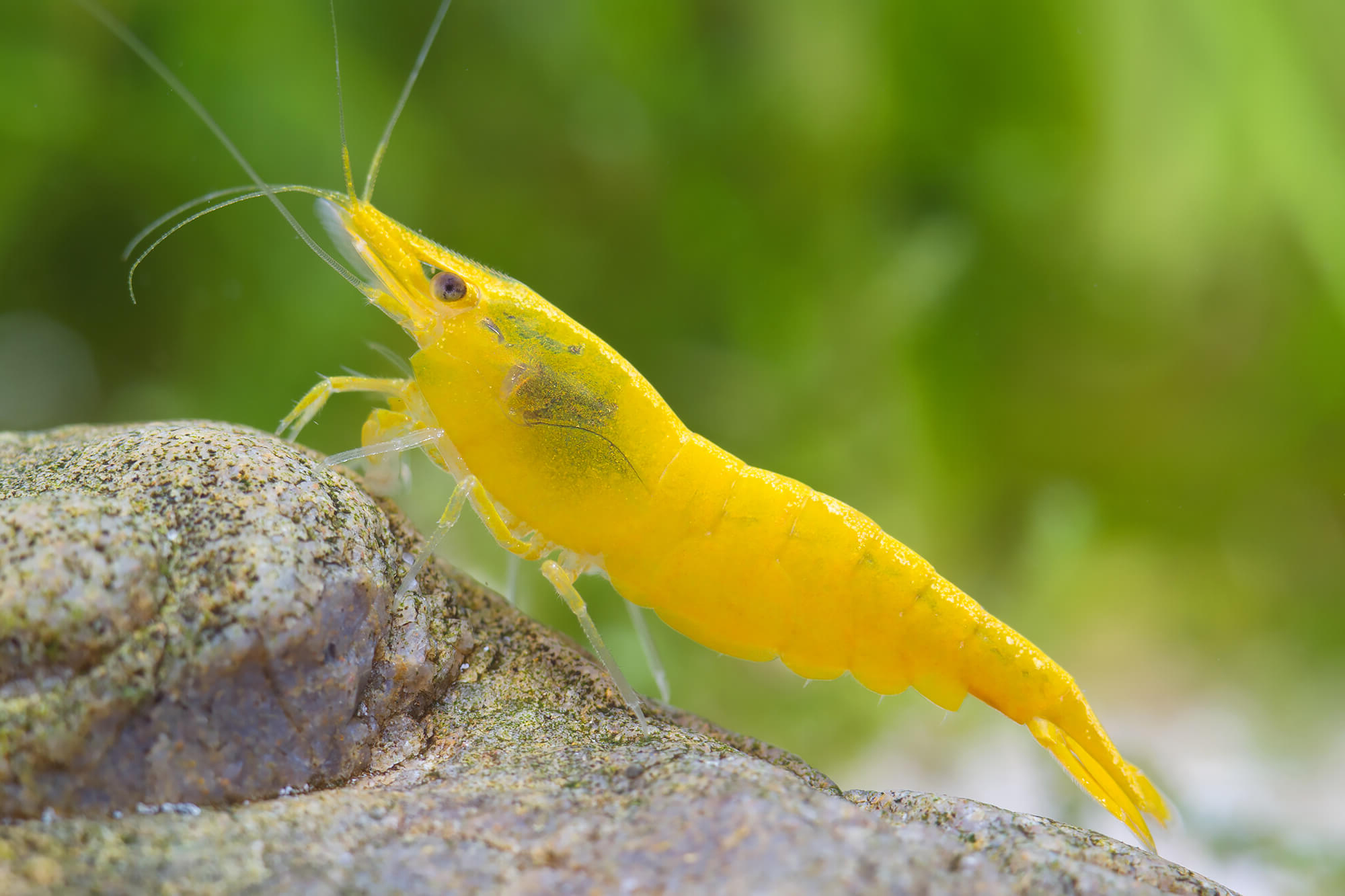
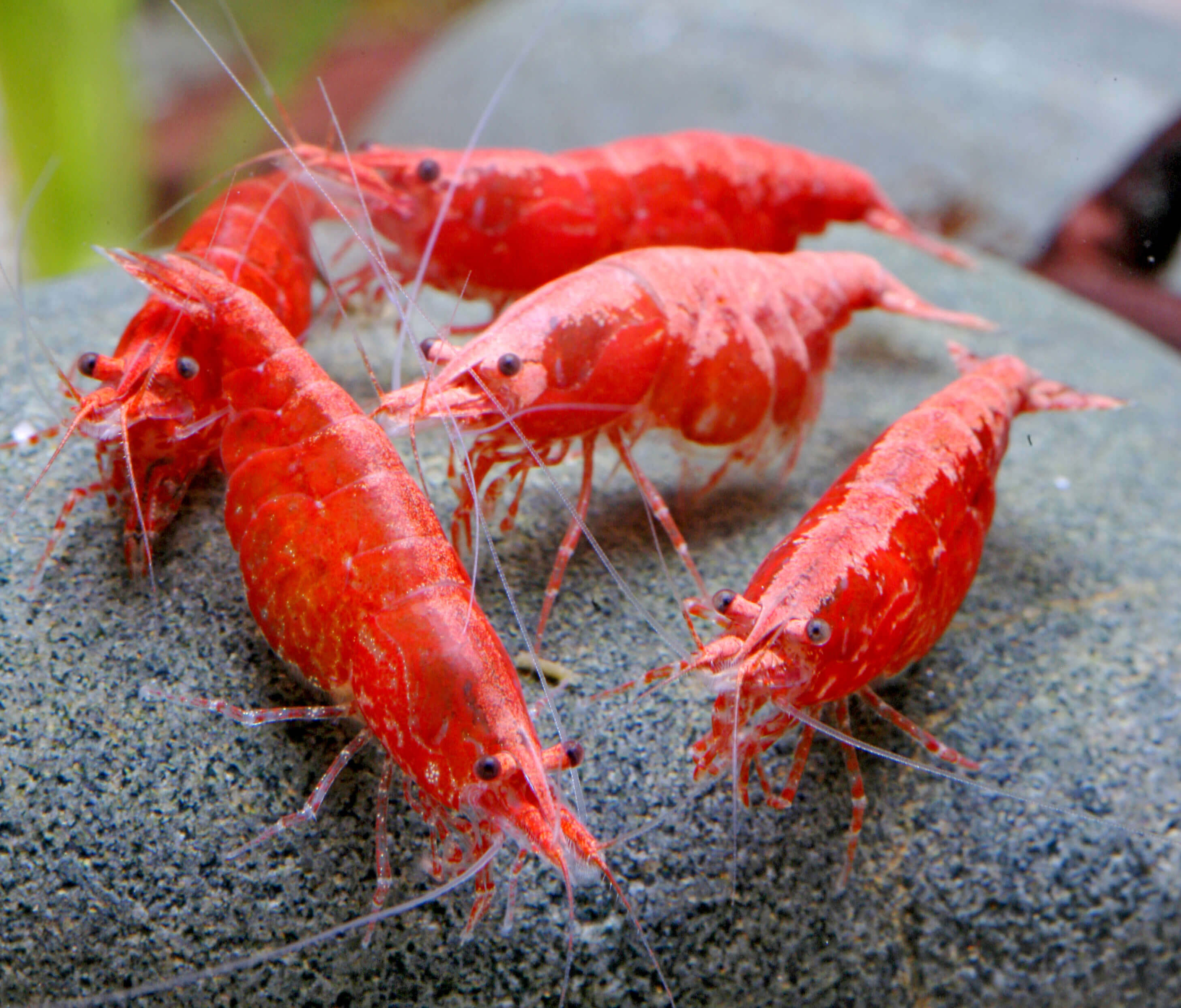
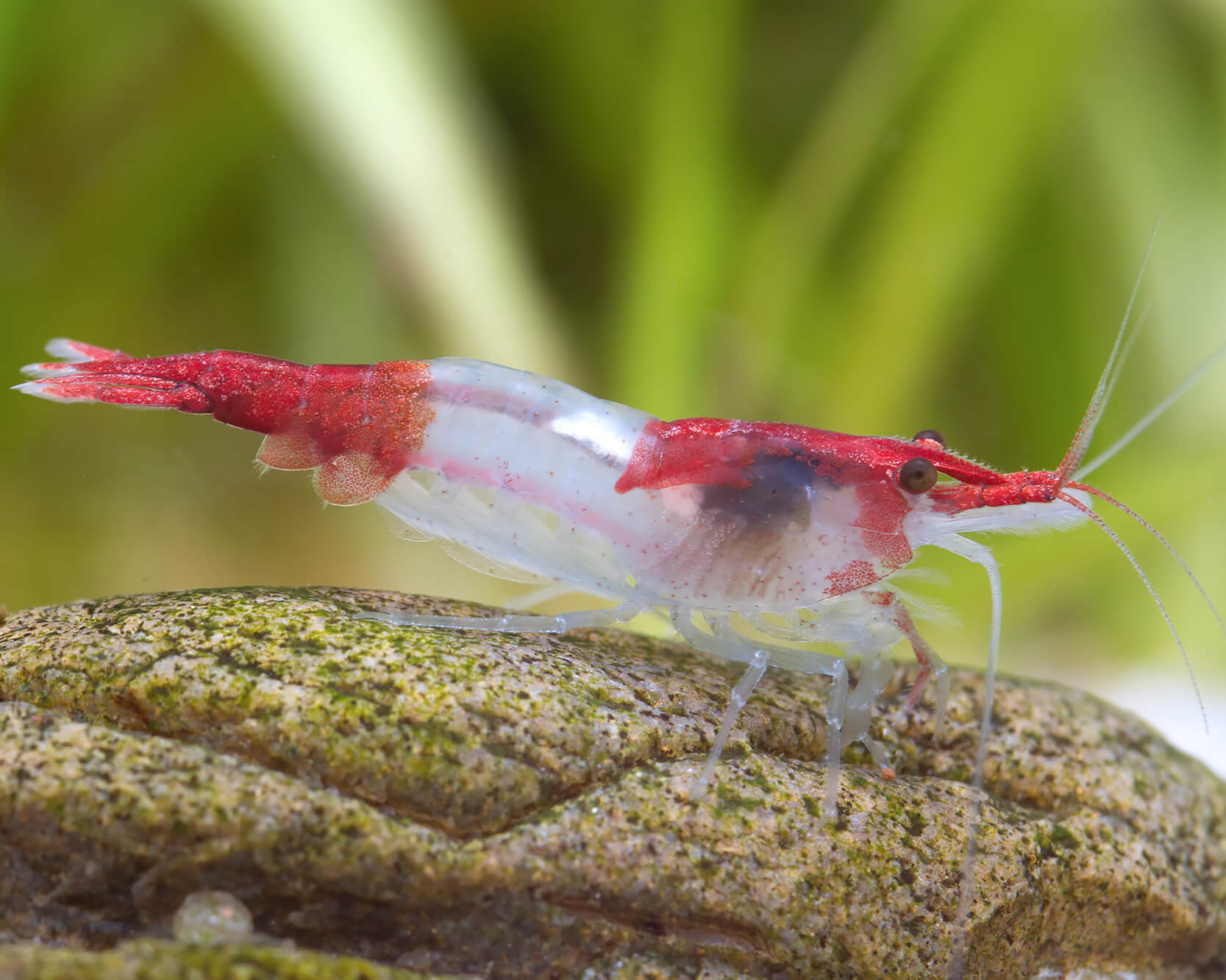
The supplied label is Black Fancy Tiger Caridina sp. Caridina indicates the genus, while sp. means that a precise species identification is not provided. Black Fancy Tiger is a trade name for a selectively bred color and pattern form rather than a formally established species name. The pictured shrimp show black and white banding with some brown or translucent areas; pattern intensity may differ among individuals and breeding lines.
Habitat and aquarium setup
A confirmed natural habitat cannot be assigned to this trade form. In captivity, provide a mature, fully cycled aquarium with gentle filtration, abundant biofilm-producing surfaces, mosses or other fine-leaved plants, and shaded areas. Use a tight-fitting cover because shrimp may climb along equipment or escape. Avoid copper-based medications and sudden changes in temperature, pH, conductivity or mineral content.
Water parameters
Aim for approximately 20-24 °C, pH 6.0-6.8, low general hardness and moderate carbonate hardness appropriate to the remineralized water used. Exact hardness targets vary among Caridina lines, so the most important factors are consistency, zero ammonia, zero nitrite, low nitrate and adequate calcium and magnesium for molting. Make slow, temperature-matched water changes and avoid large corrections to established conditions.
Feeding
Black Fancy Tigers graze continually on biofilm, microorganisms and fine organic matter on hardscape, substrate and plants. Supplement this natural grazing with a small shrimp-specific food several times weekly. Offer occasional blanched vegetables or leaf litter in modest quantities, and remove uneaten food before it decomposes. Feed less in a heavily matured aquarium and more cautiously than necessary in a new setup.
Tank mates
A species-only aquarium is safest, particularly when preserving a selected pattern or raising young. Peaceful, very small tank mates may sometimes be compatible, but even small fish can eat shrimplets or stress adults. Avoid aggressive fish, large bottom feeders, crayfish and predatory snails. Other Caridina lines may interbreed, so separate populations if maintaining a consistent breeding project.
Molting and health
Shrimp periodically shed the old exoskeleton to grow. A newly molted shrimp is soft and vulnerable, so cover and plant thickets provide important refuge. Do not remove a normal shed exoskeleton immediately; shrimp often consume it and recover minerals. Molting problems are commonly associated with unstable water, unsuitable mineral balance, poor nutrition or abrupt changes. Test water and correct underlying conditions gradually rather than adding unmeasured supplements.
Breeding
This is a fully freshwater breeding type when fertile males and females are present. After mating, the female carries fertilized eggs beneath the abdomen and fans them until they hatch as miniature shrimp; there is no required marine larval stage. A mature, stable aquarium with biofilm, fine sponge filtration and plentiful cover improves juvenile survival. Separate or selectively cull offspring only when the breeding objective and line history are known, because this trade form may produce variable patterns.
 - 1.webp)
Leave your comments