Taxonomy and identification
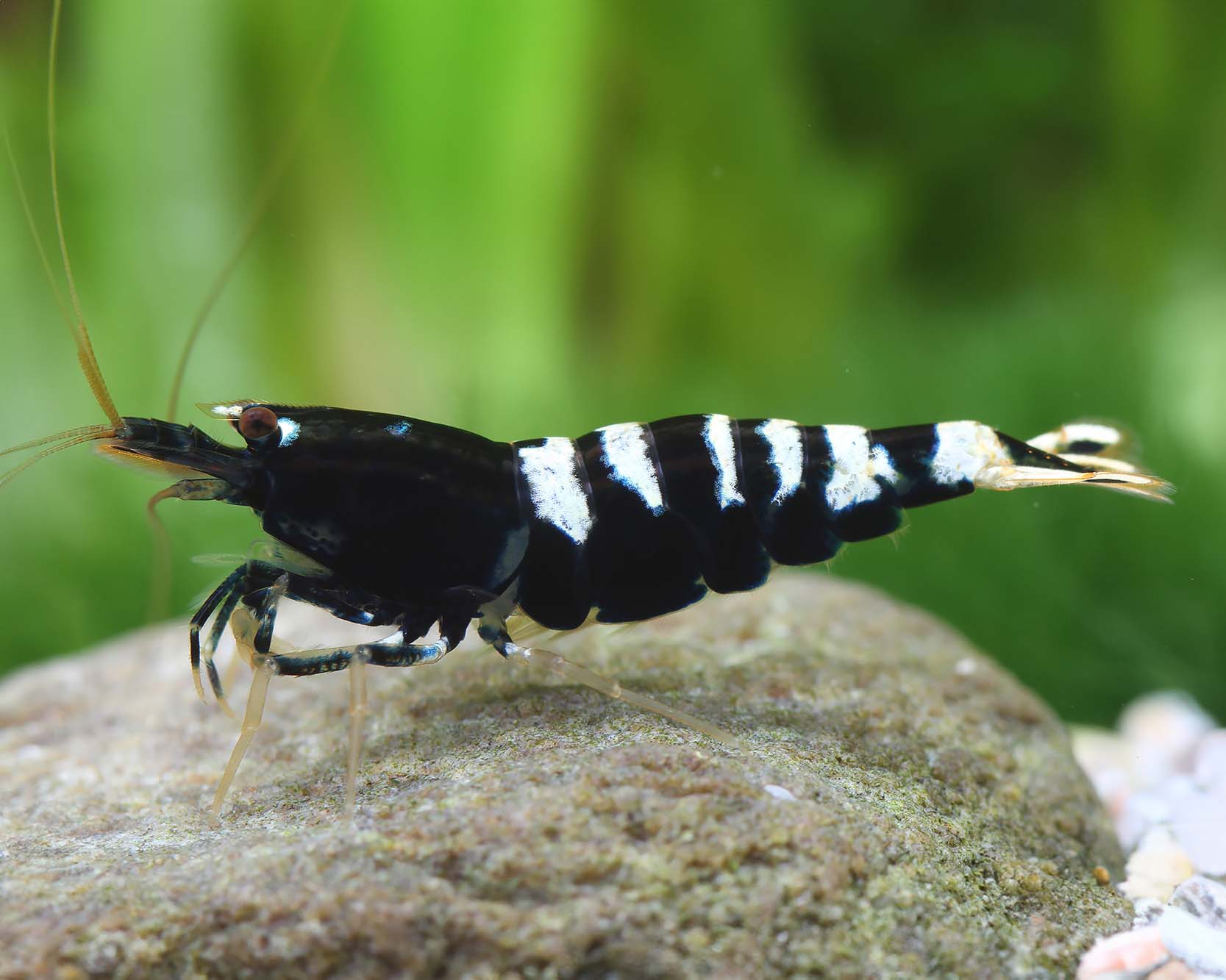
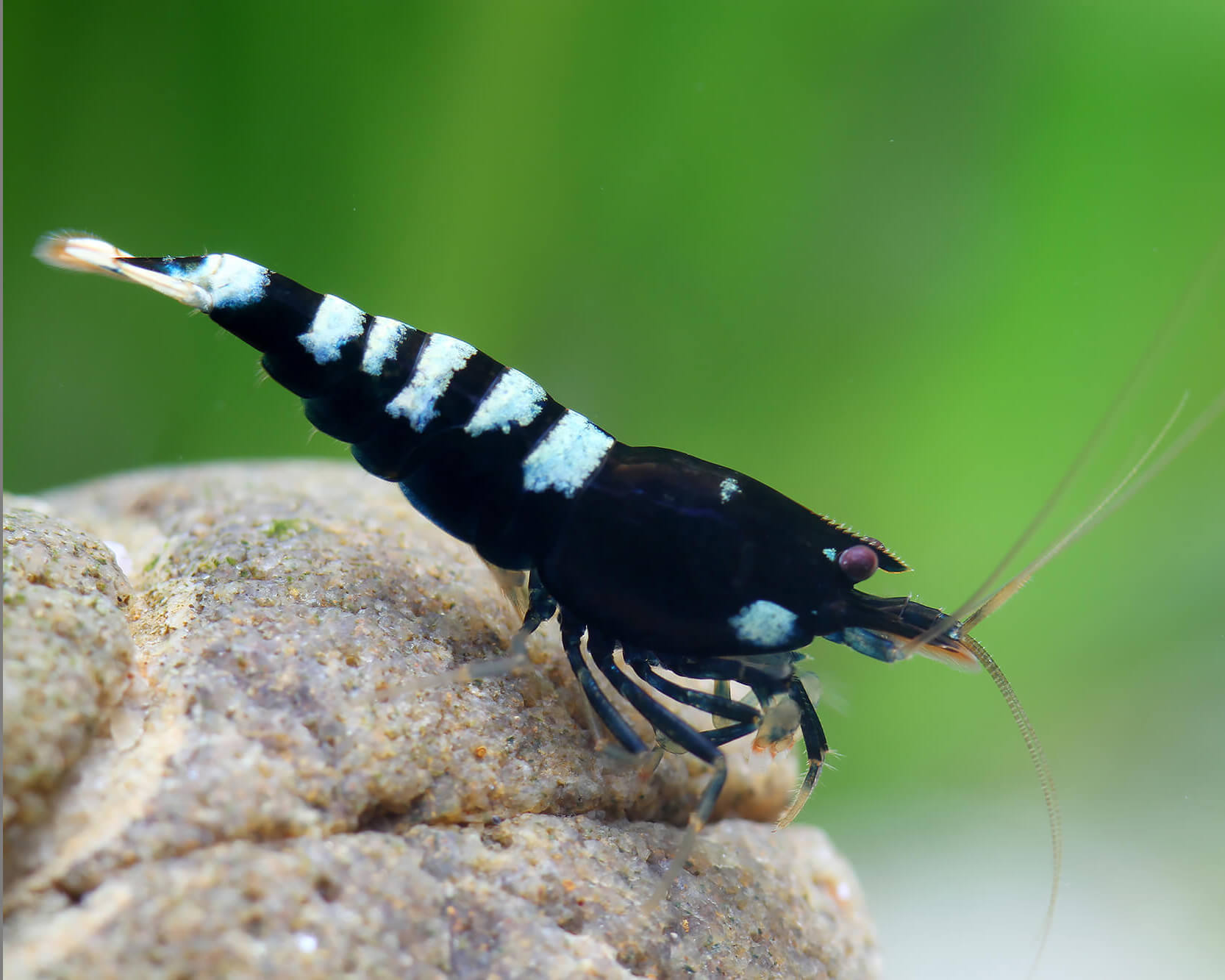
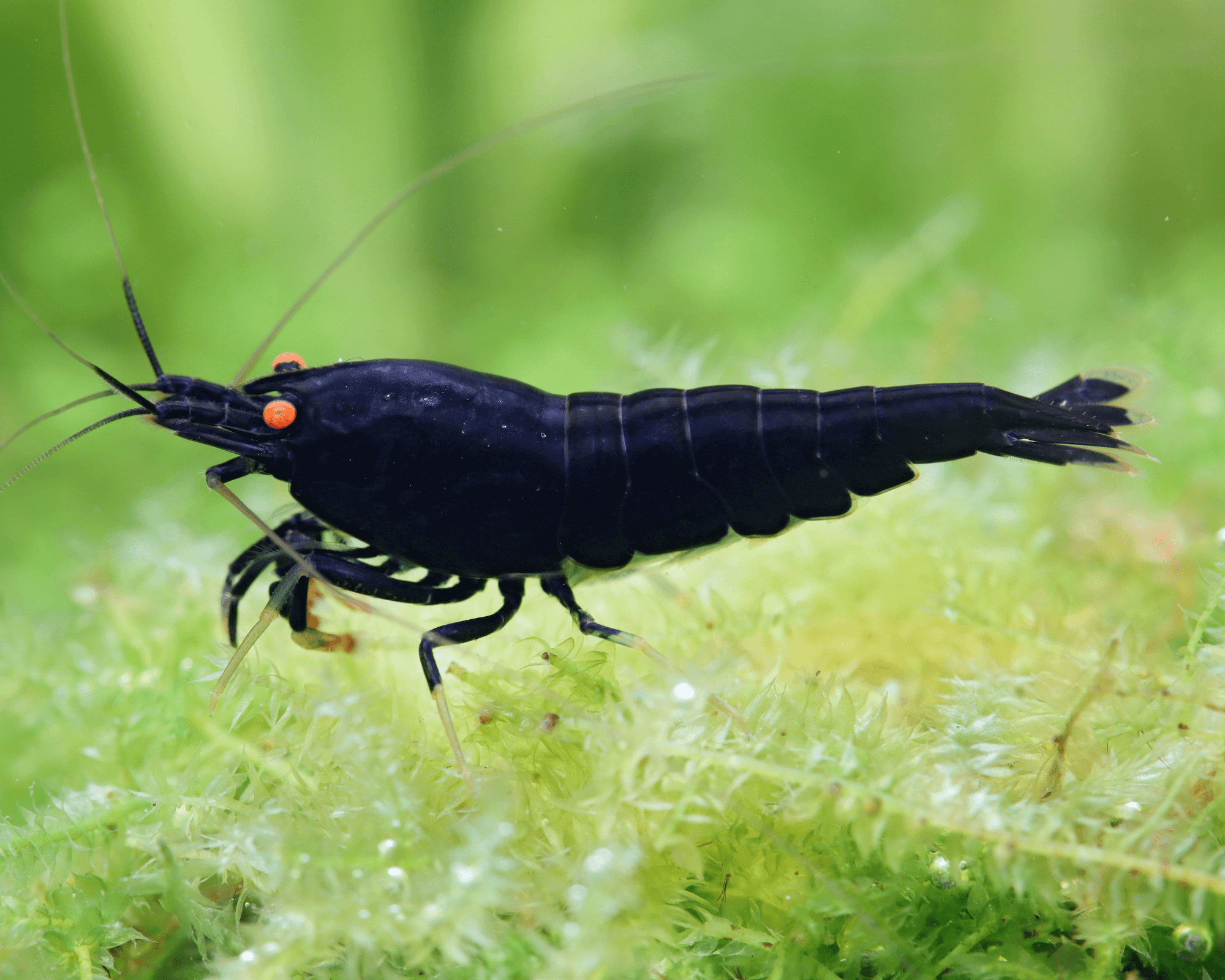
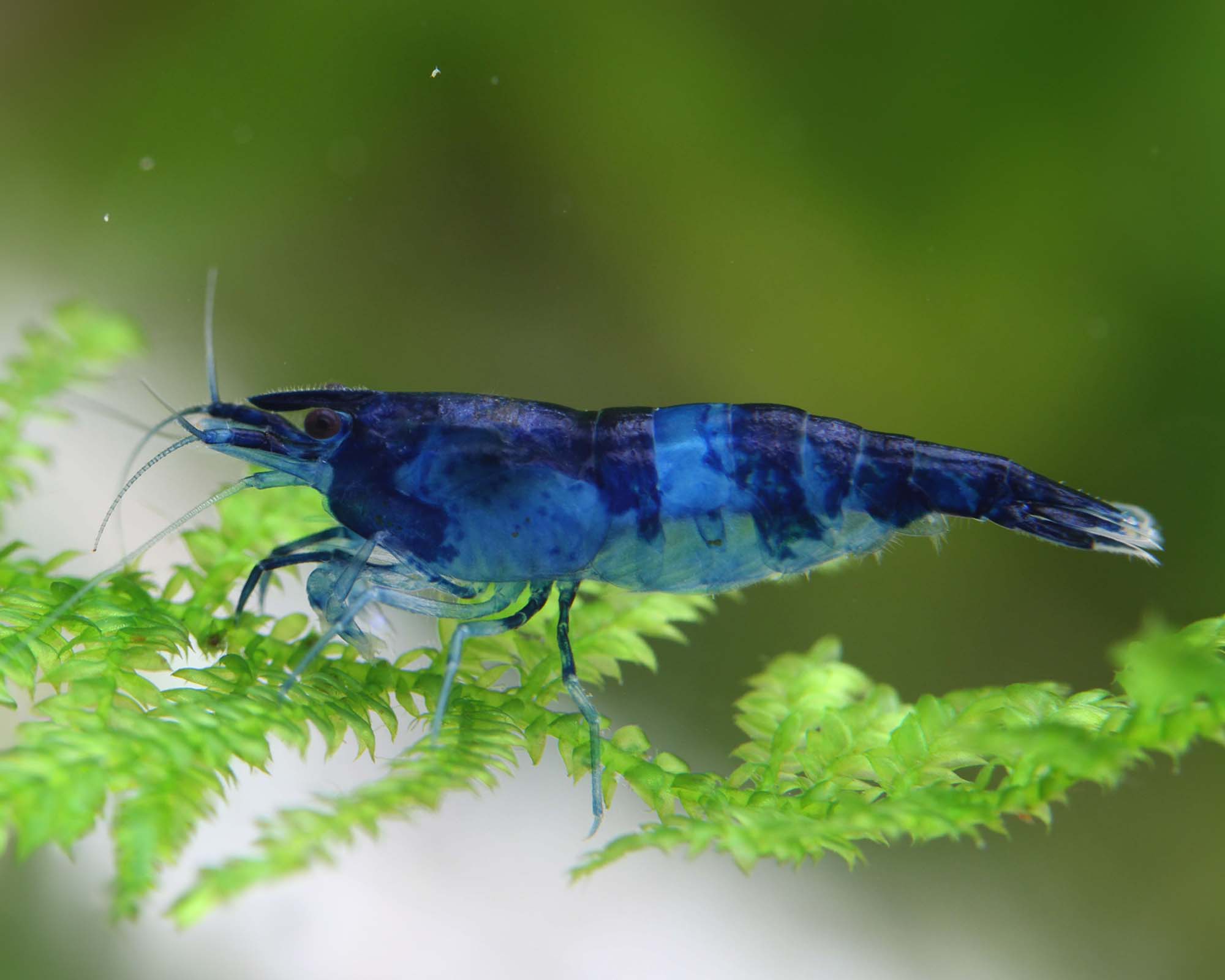
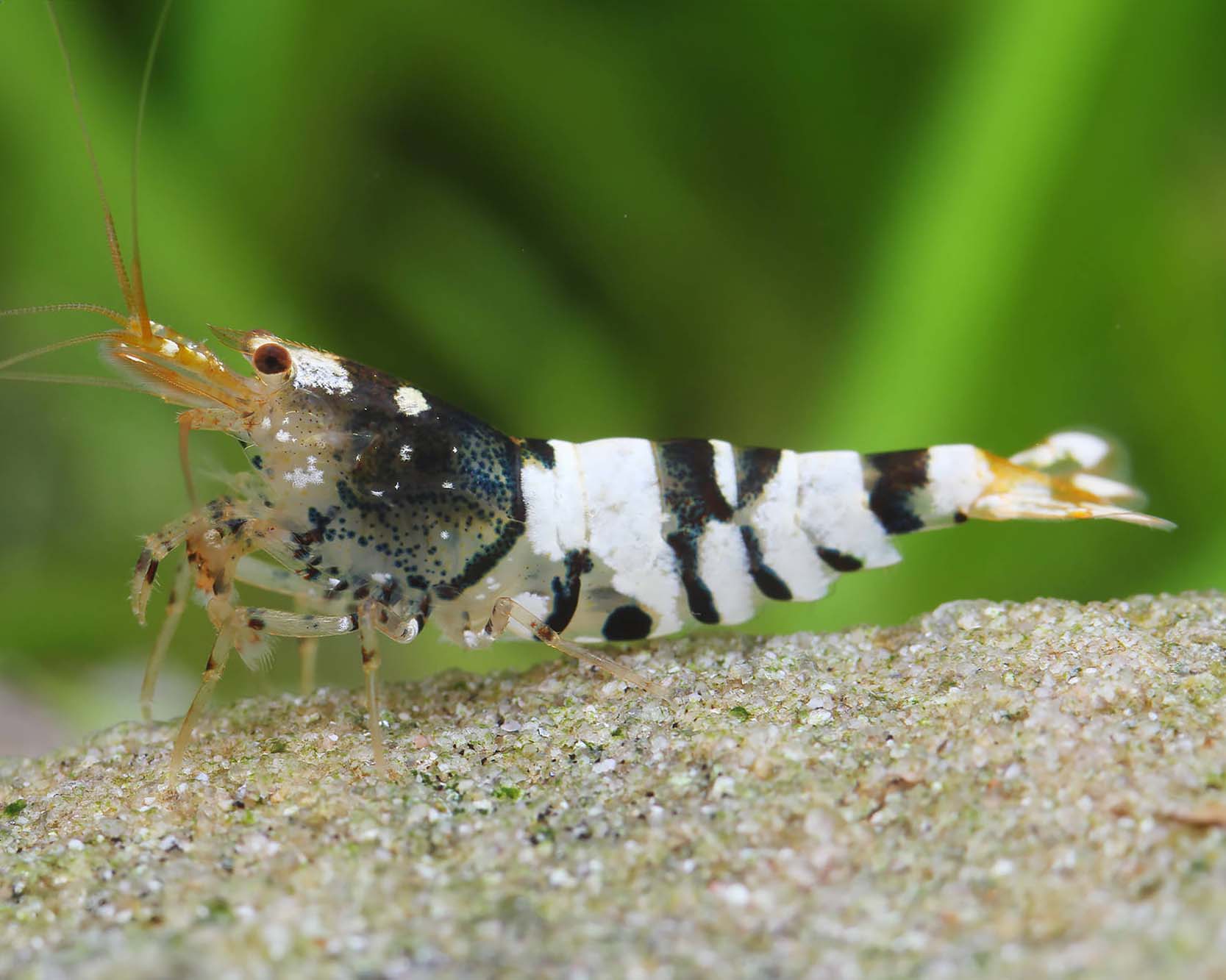
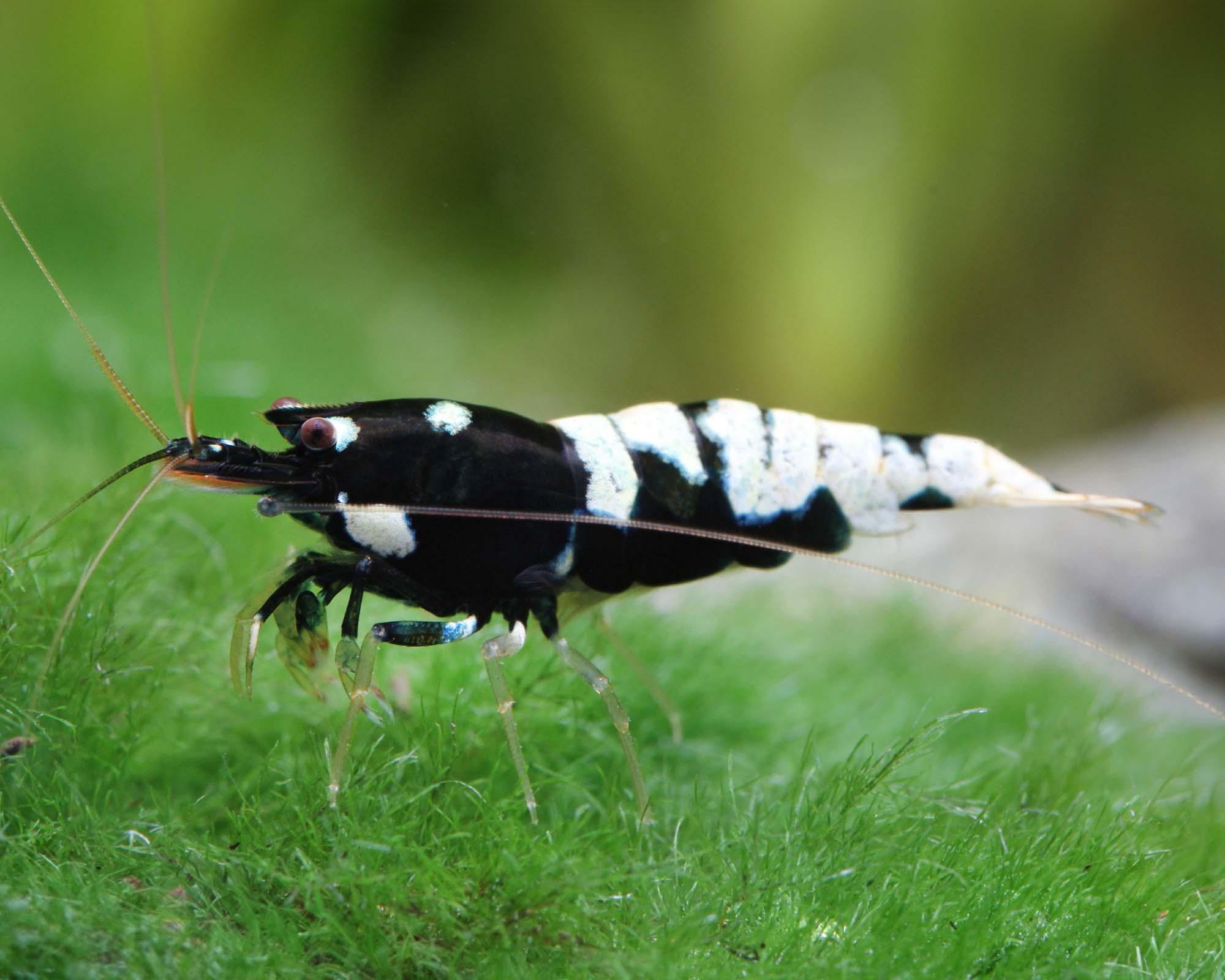
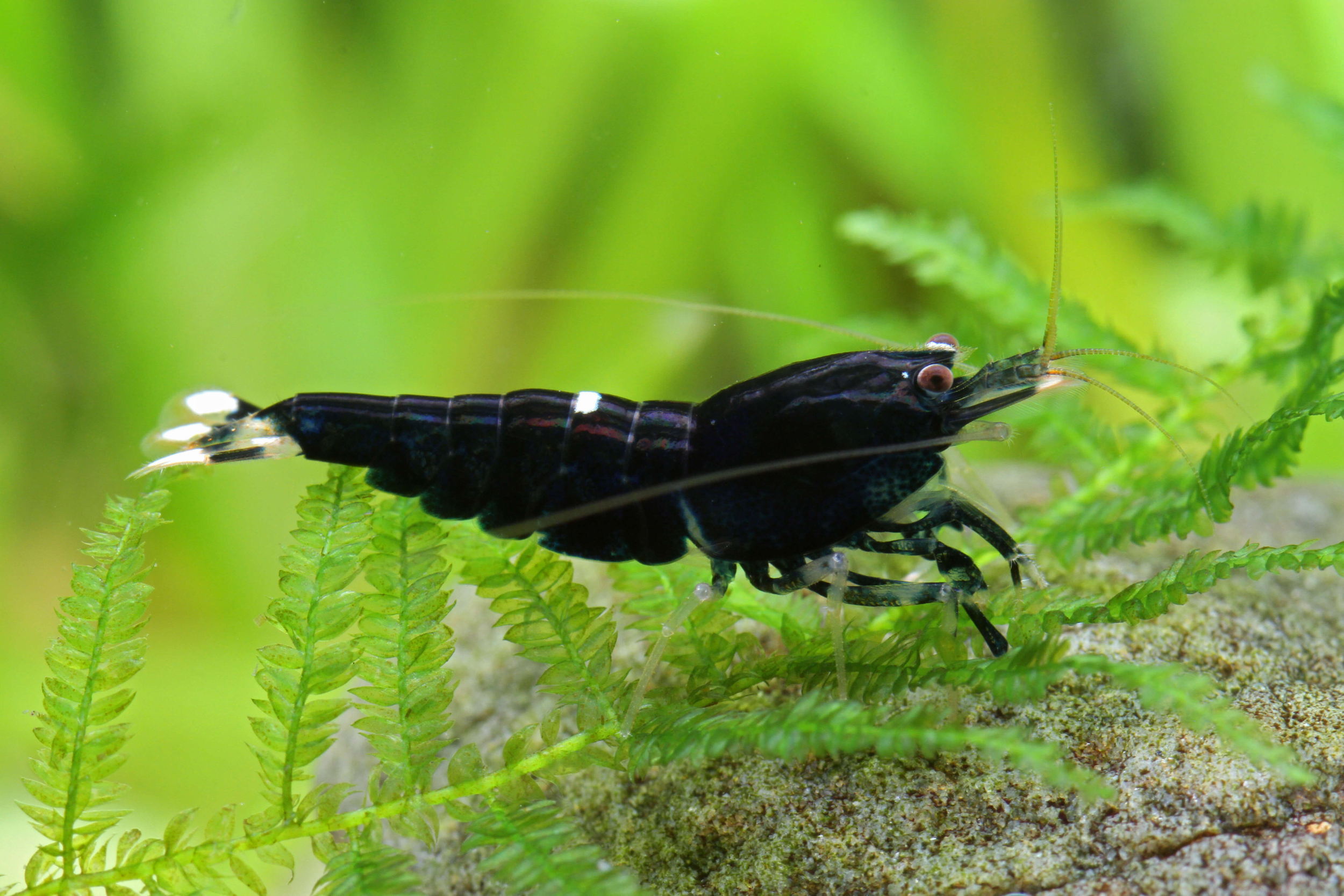
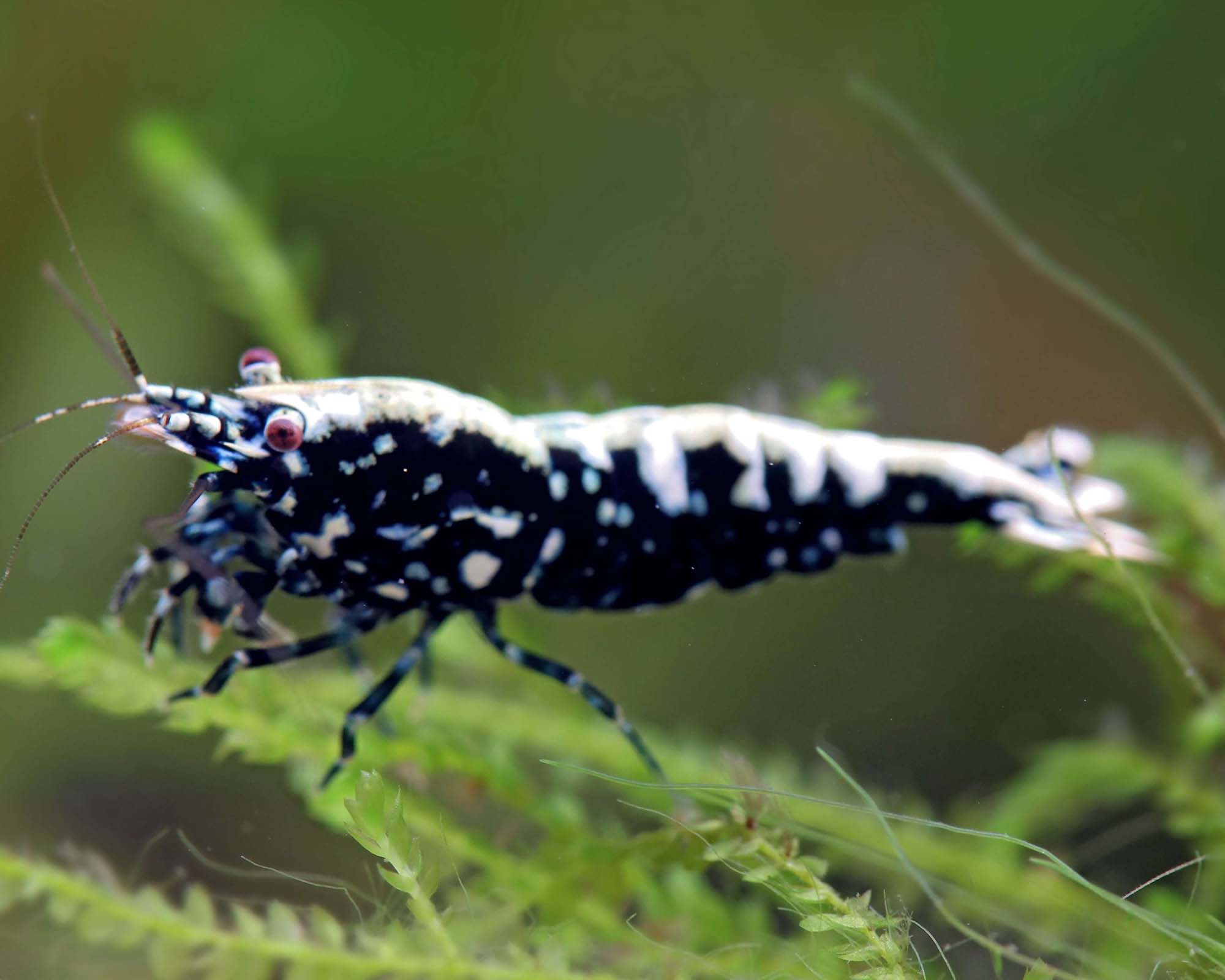
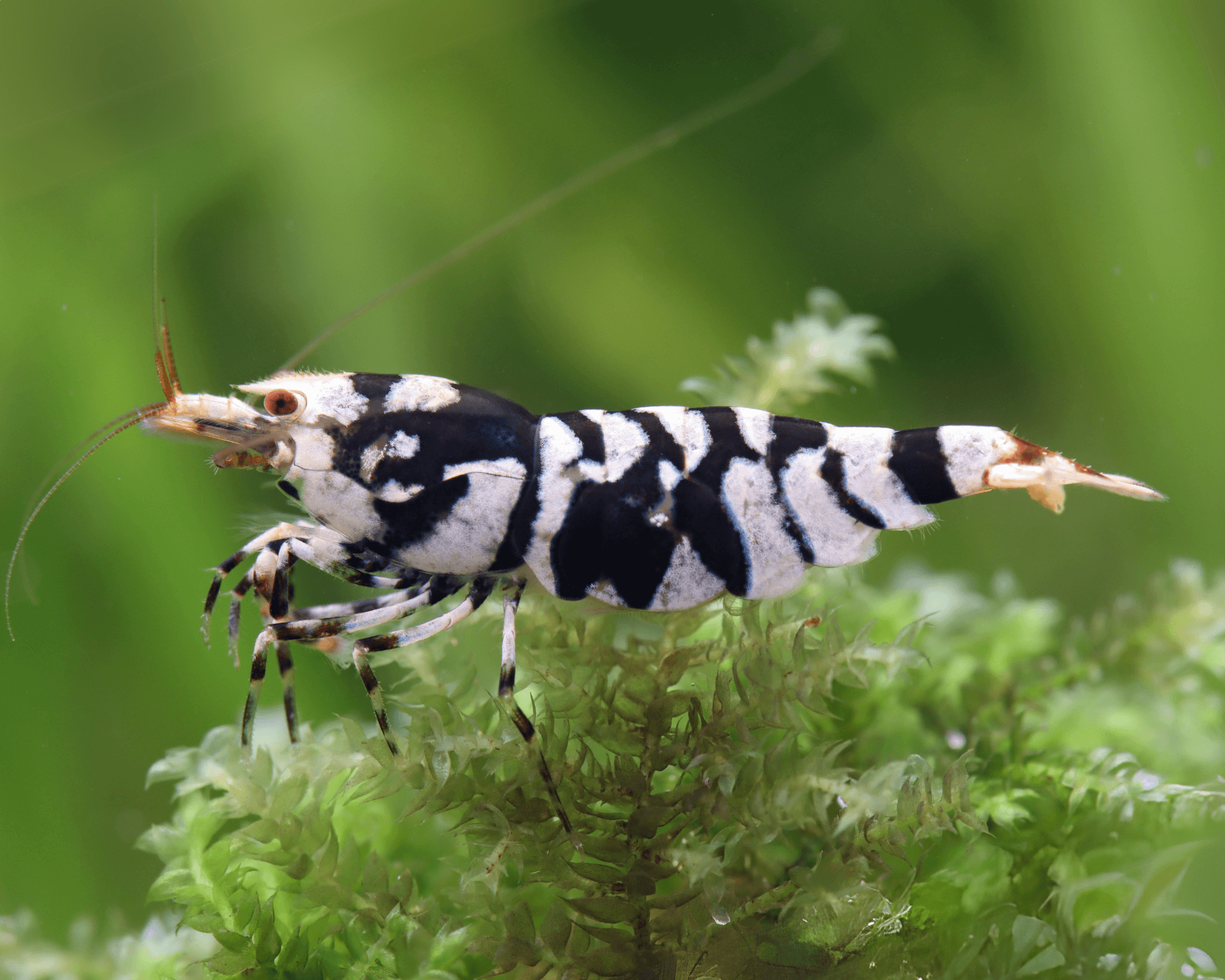
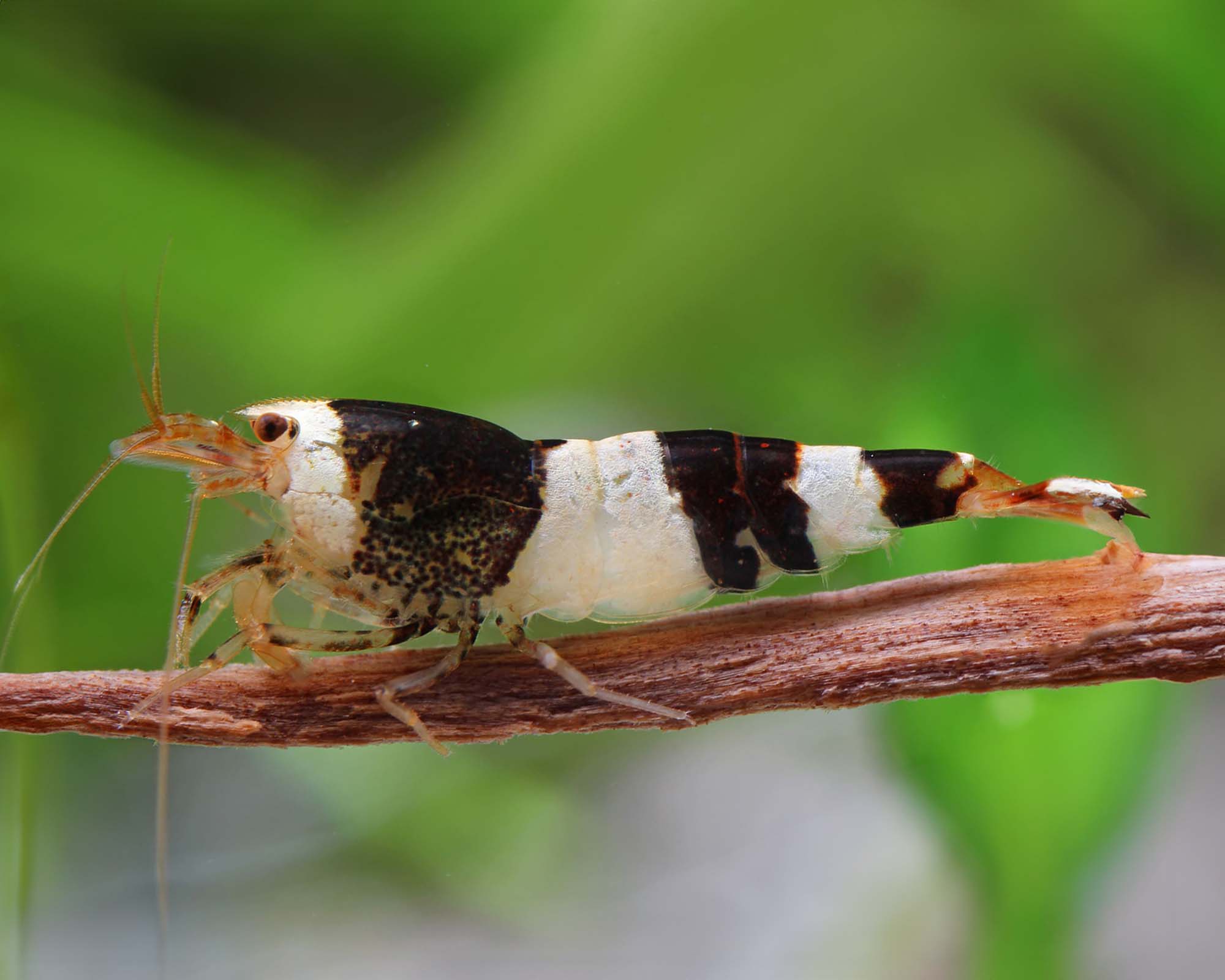
The supplied trade label is Black Zebra Pinto, Caridina sp. Caridina identifies the genus, but the species is not established by the supplied information. Pinto is an aquarium-bred pattern designation, and Black Zebra describes the dark body with contrasting white bands. Individual pattern coverage and band shape can vary, so the appearance alone should not be used for formal species identification.
Natural background and habitat
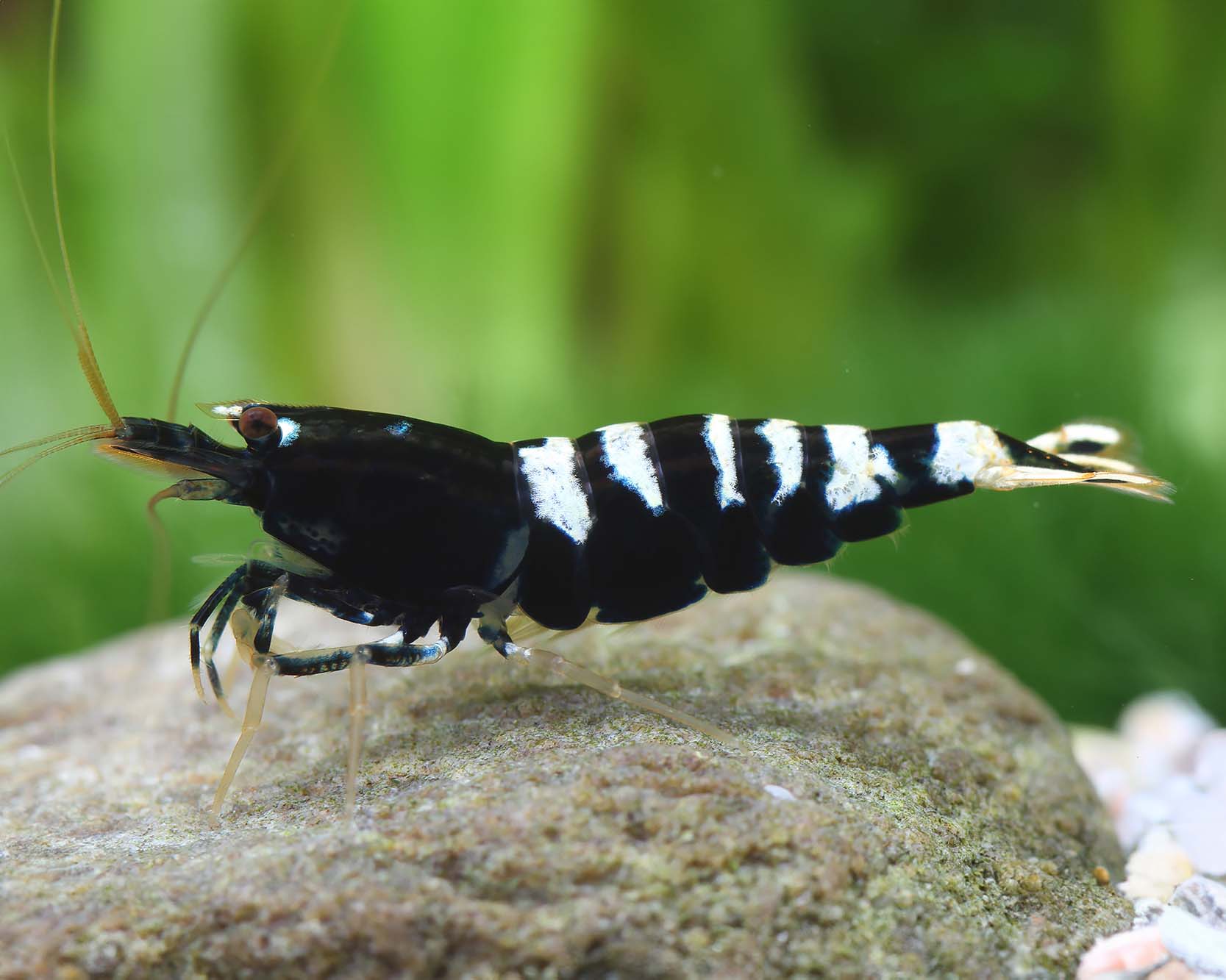
This form is primarily encountered as an ornamental aquarium strain rather than as a documented wild population. Pinto-type Caridina are associated in the hobby with bee-shrimp breeding lines, but the precise wild ancestry of an individual Black Zebra Pinto may be uncertain. A suitable aquarium should reproduce the general requirements of soft, clean, mature freshwater with biofilm, fine surfaces, gentle flow, and abundant cover.
Water parameters and aquarium setup
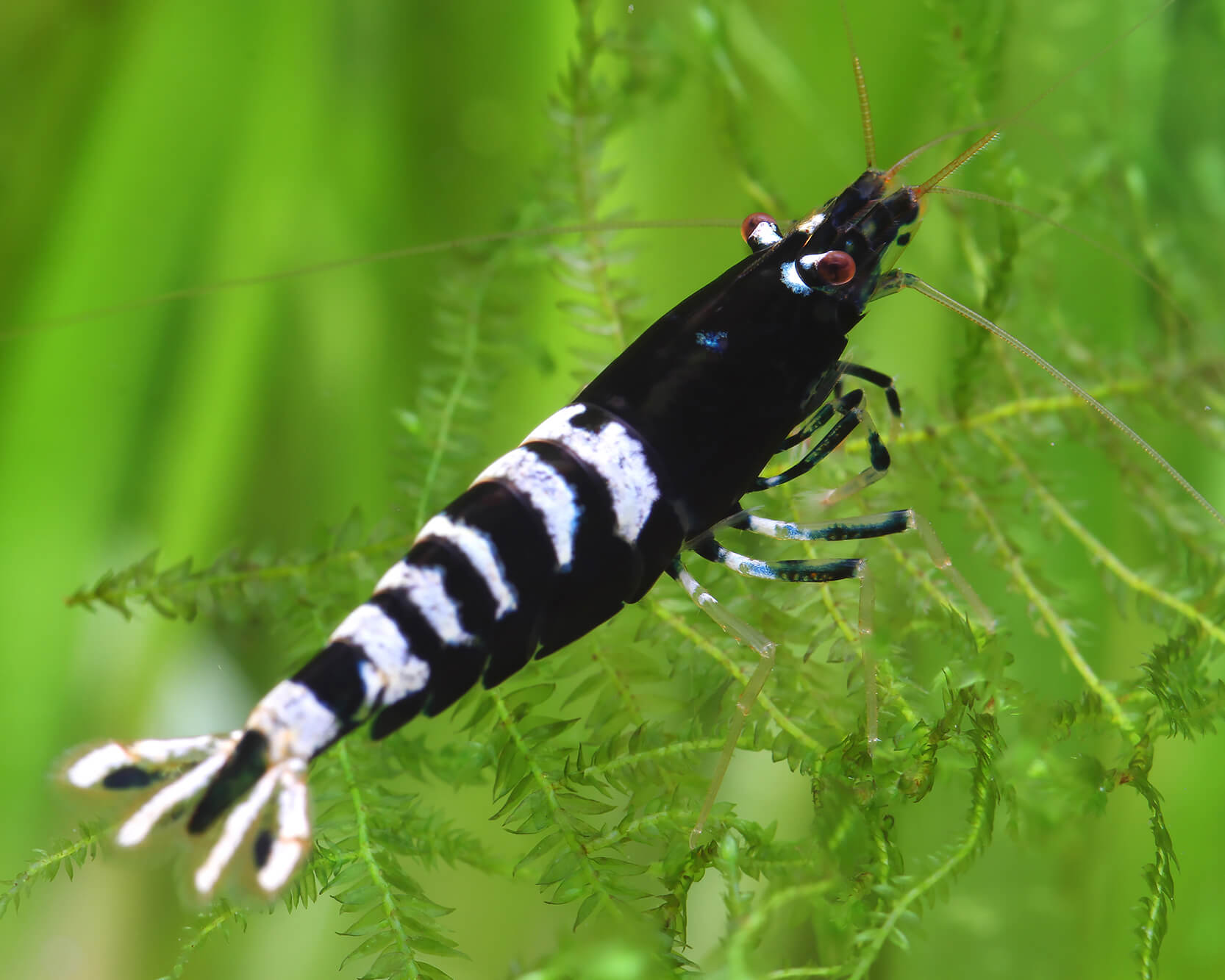
Use stable, soft, slightly acidic water. A practical target is 20-24 °C, pH 5.8-6.8, low carbonate hardness, moderate mineral content, and no detectable ammonia or nitrite. Exact GH and TDS targets vary among breeding lines, so consistency is more important than chasing a single number. Use remineralized reverse-osmosis water when necessary, an established biologically active filter, and a pre-filter sponge to protect juveniles. Avoid copper-based treatments, sudden temperature changes, and large, chemically different water changes. Mosses, leaf litter, wood, and rock provide grazing surfaces and shelter.
Feeding
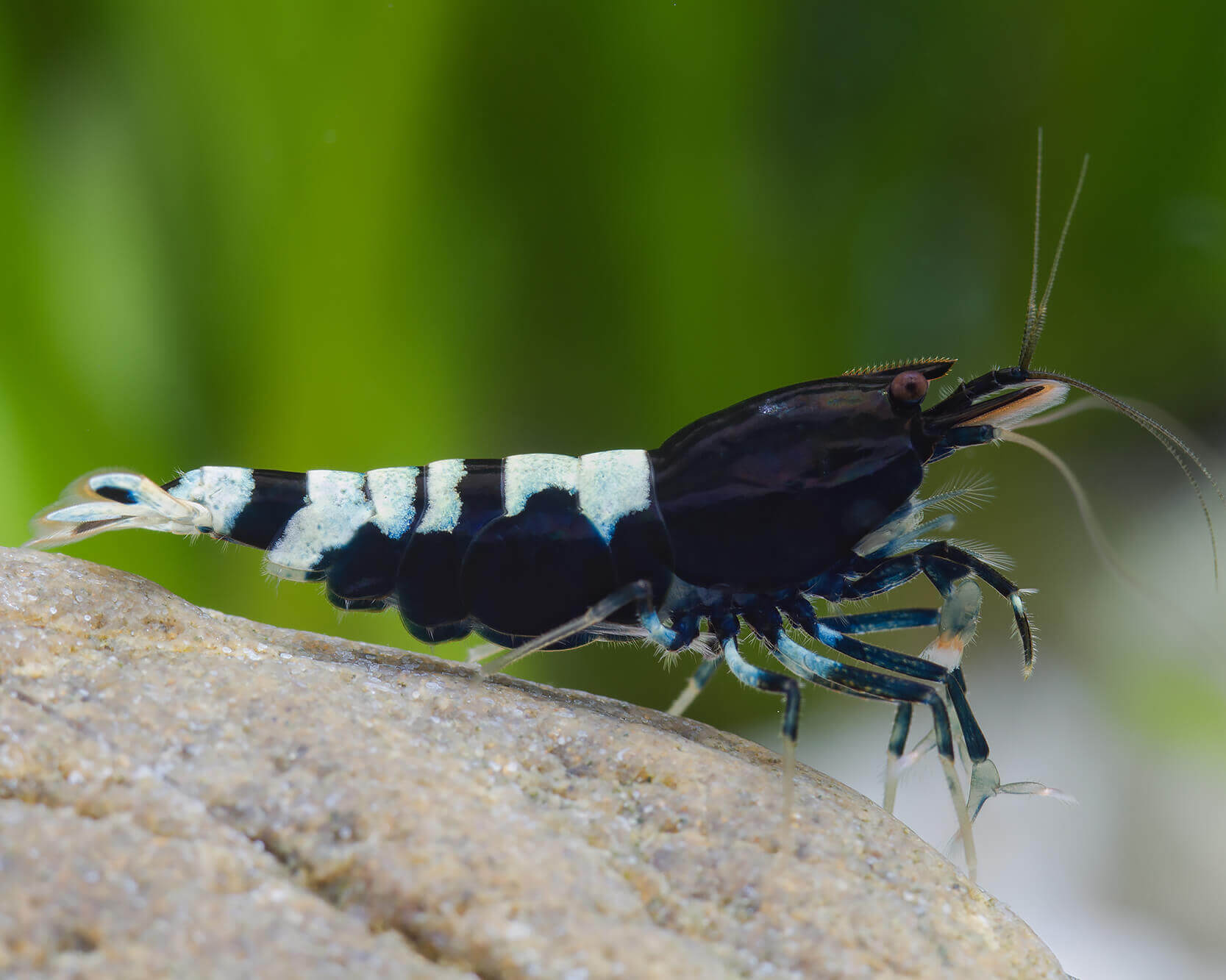
Black Zebra Pinto grazes continually on biofilm, algae films, microorganisms, and decaying plant material. Supplement this natural grazing with a small amount of quality shrimp food containing plant matter and appropriate minerals. Occasional blanched vegetables or botanicals can add variety, while a modest protein food may be offered periodically, especially to breeding adults. Remove uneaten food promptly. Overfeeding can degrade water quality and is a common cause of problems in small shrimp aquariums.
Tank mates
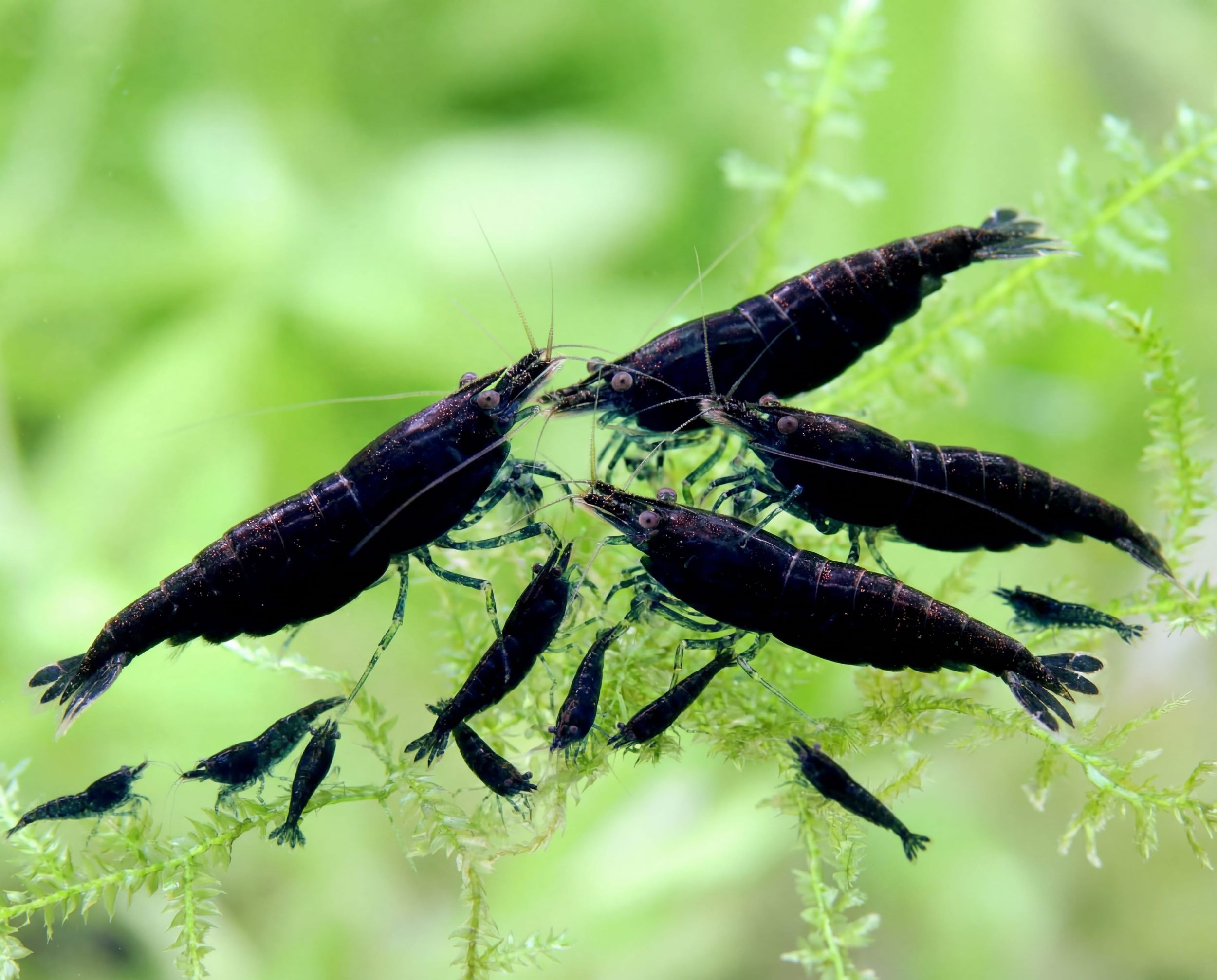
The safest companions are other peaceful Caridina of compatible water requirements. A species-only aquarium provides the best survival rate for eggs and young shrimp. Very small, non-predatory fish may be kept in a heavily planted community aquarium, but they can eat newly hatched or juvenile shrimp. Avoid larger fish, crayfish, predatory snails, and boisterous species. Do not mix different Caridina lines if maintaining a controlled breeding project, because offspring may not retain the desired Pinto pattern.
Molting and health
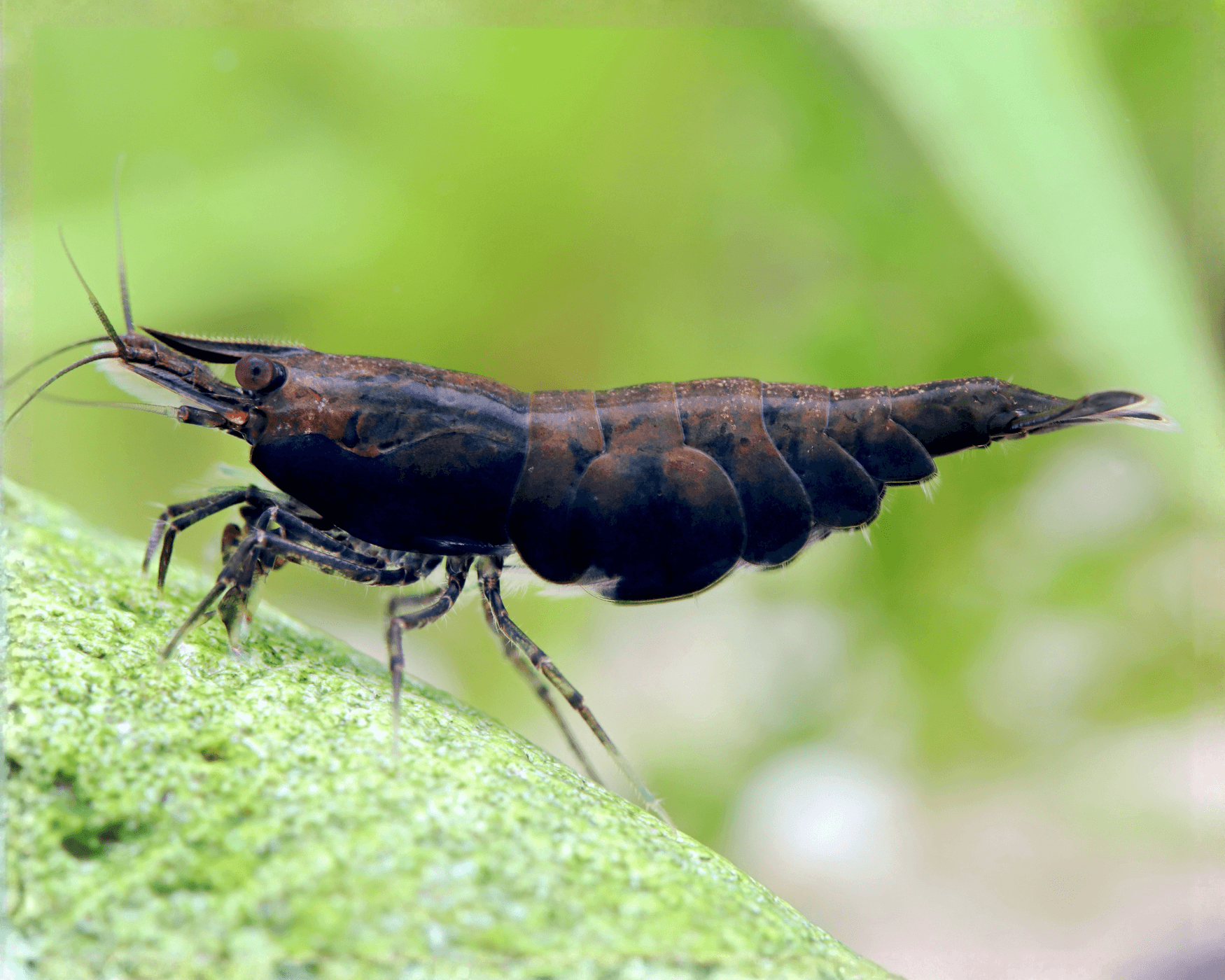
Shrimp periodically shed their exoskeleton to grow. A shrimp may become less active and seek cover before molting, then remain vulnerable while its new shell hardens. Leave shed exoskeletons in the aquarium unless they deteriorate, since shrimp often consume them and recover minerals. Stable hardness, adequate dietary minerals, hiding places, and low stress support successful molts. A shrimp lying motionless, repeatedly failing to shed, or showing sudden losses may indicate unsuitable water, contamination, or an abrupt parameter change.
Breeding
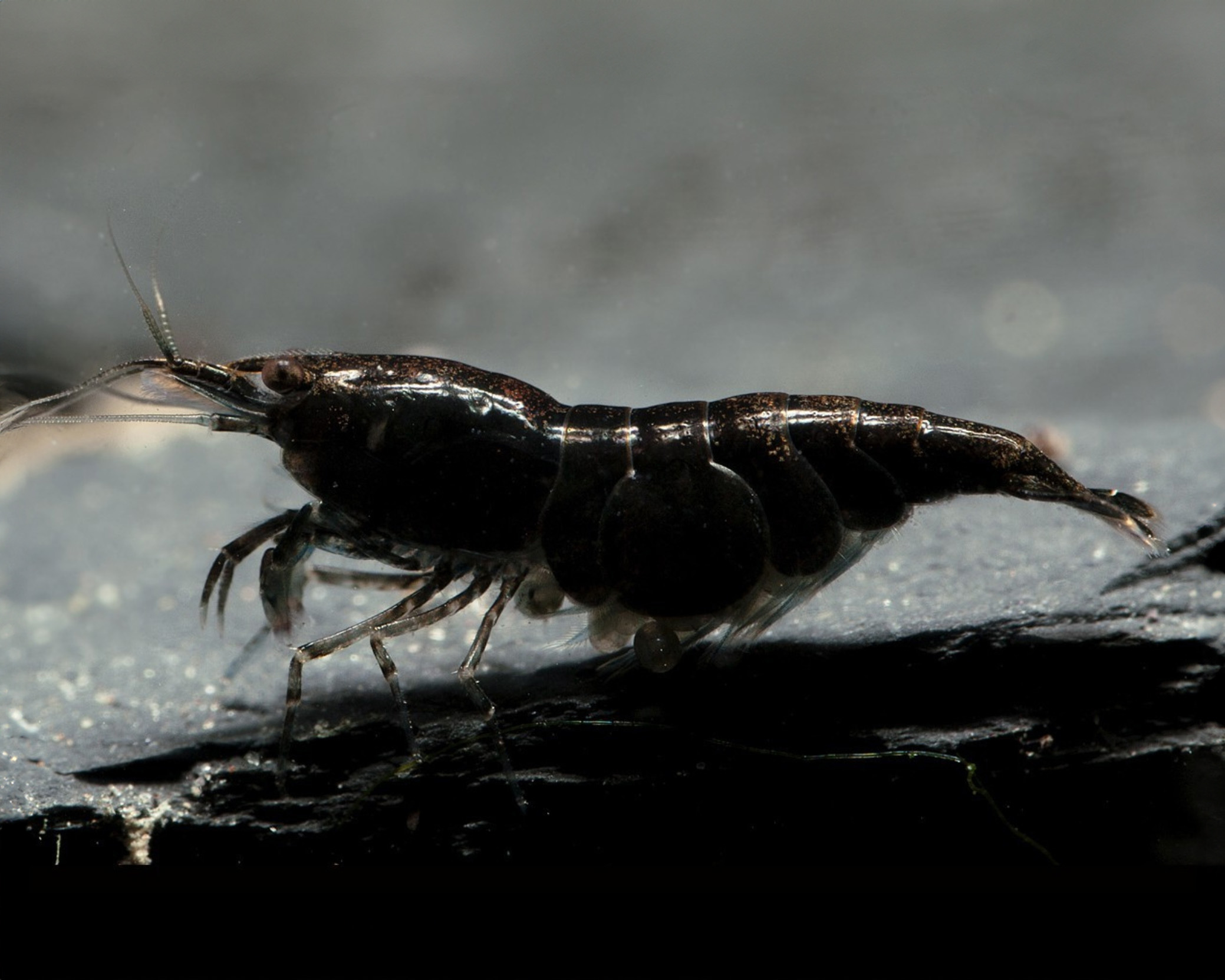
This is a freshwater-breeding shrimp: females carry fertilized eggs beneath the abdomen until they hatch as miniature shrimp, with no required marine larval stage. After a female molts, mating may occur, and eggs are held under the pleopods and regularly fanned. Provide a mature, stable aquarium with dense moss, biofilm, gentle filtration, and sponge protection on intakes. Feed lightly but consistently and avoid major maintenance during egg carrying. Juveniles need fine grazing surfaces and may be difficult to detect at first. Selective breeding can preserve or improve the black-and-white pattern, but offspring may vary and exact results depend on the parent line.
 - 1.webp)
 - 1.webp)
Leave your comments