 - 1.webp)
Taxonomy and identification
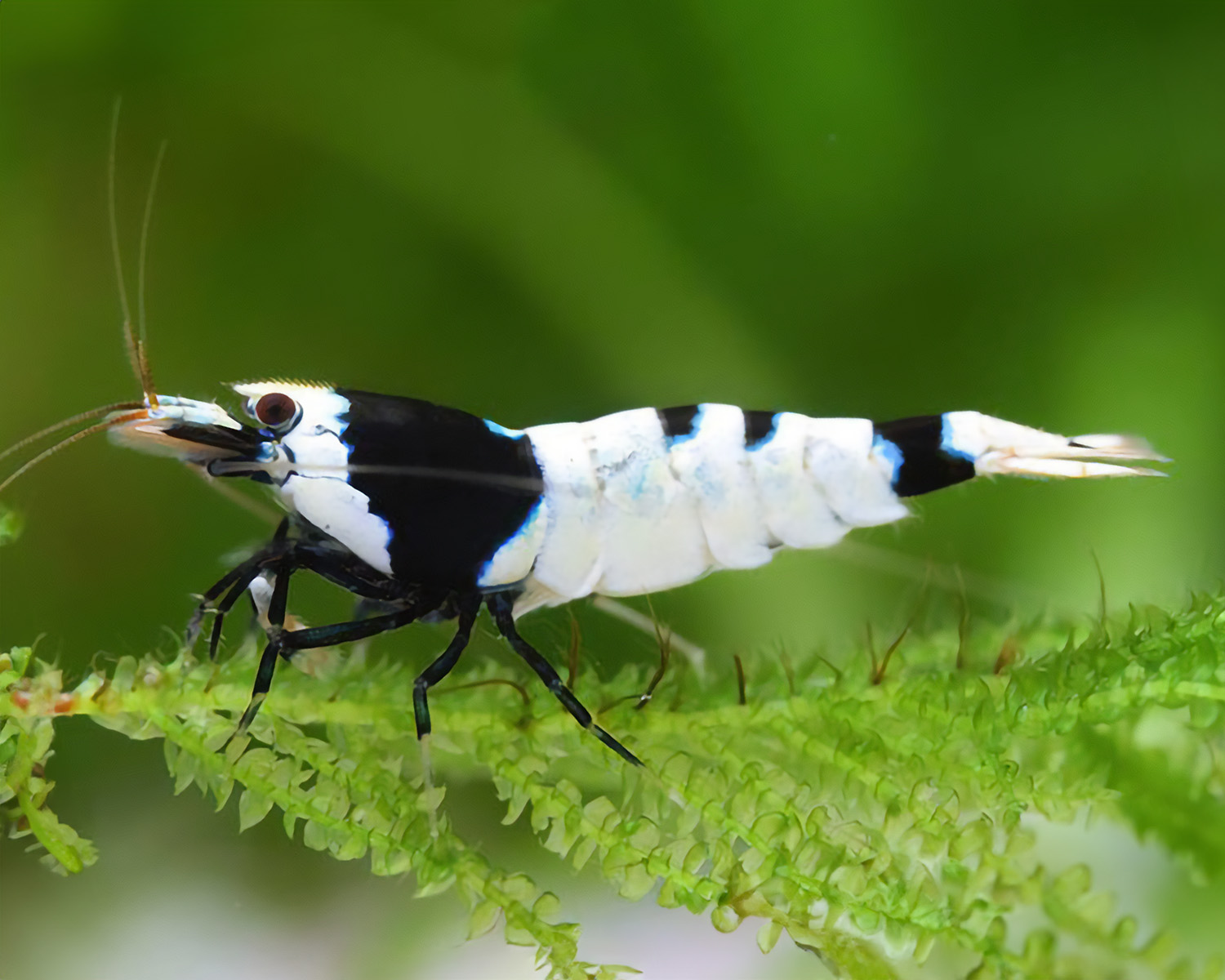
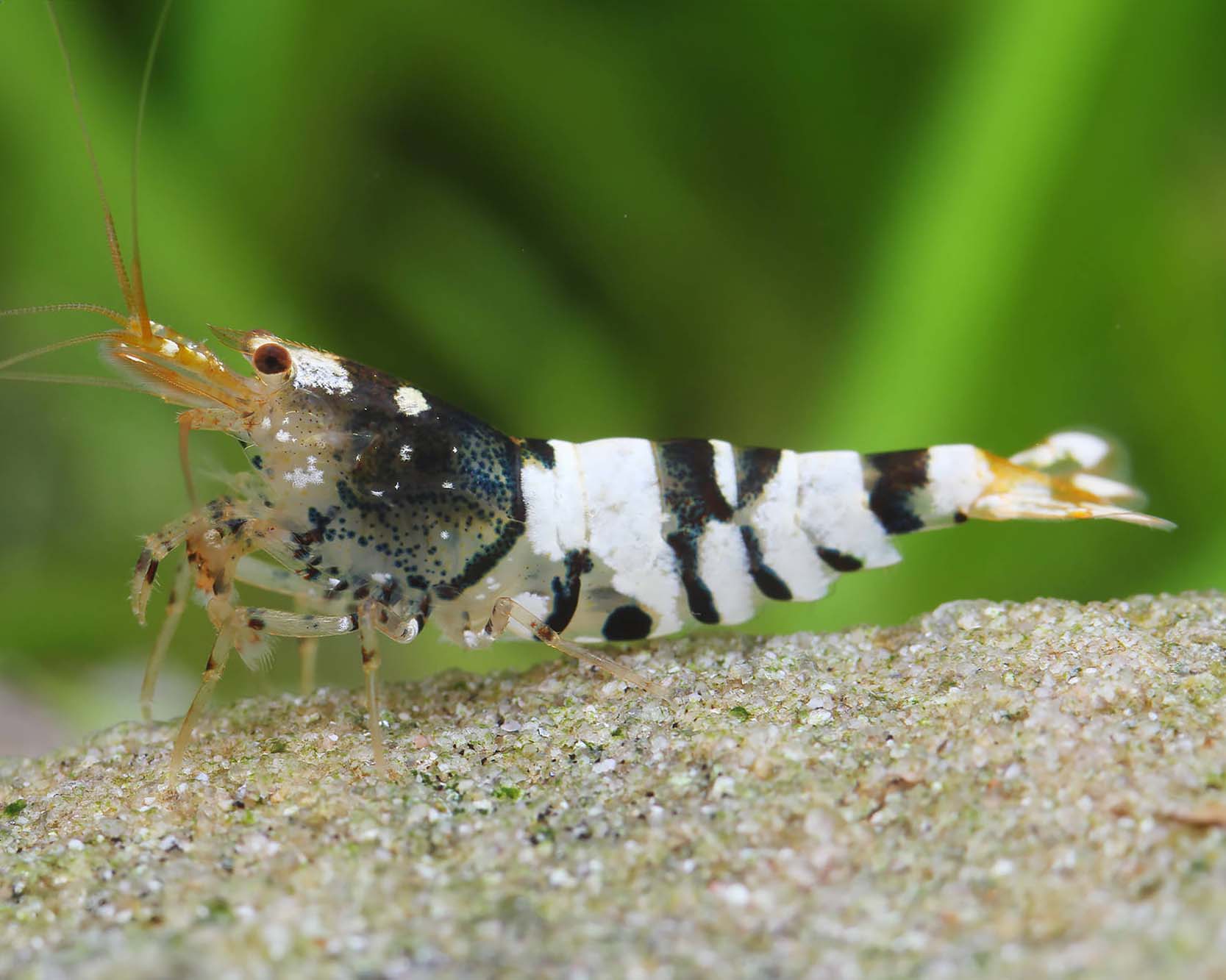
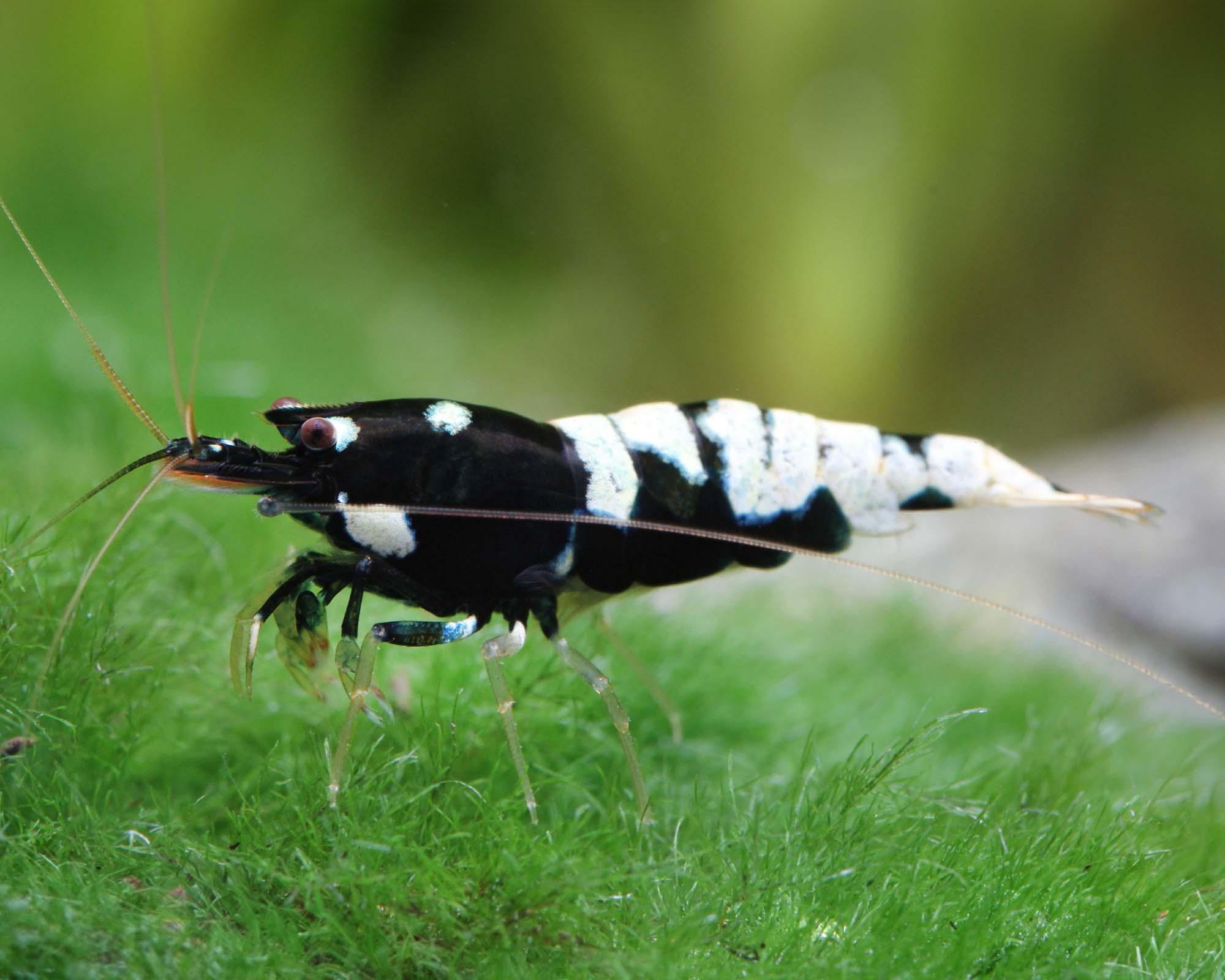
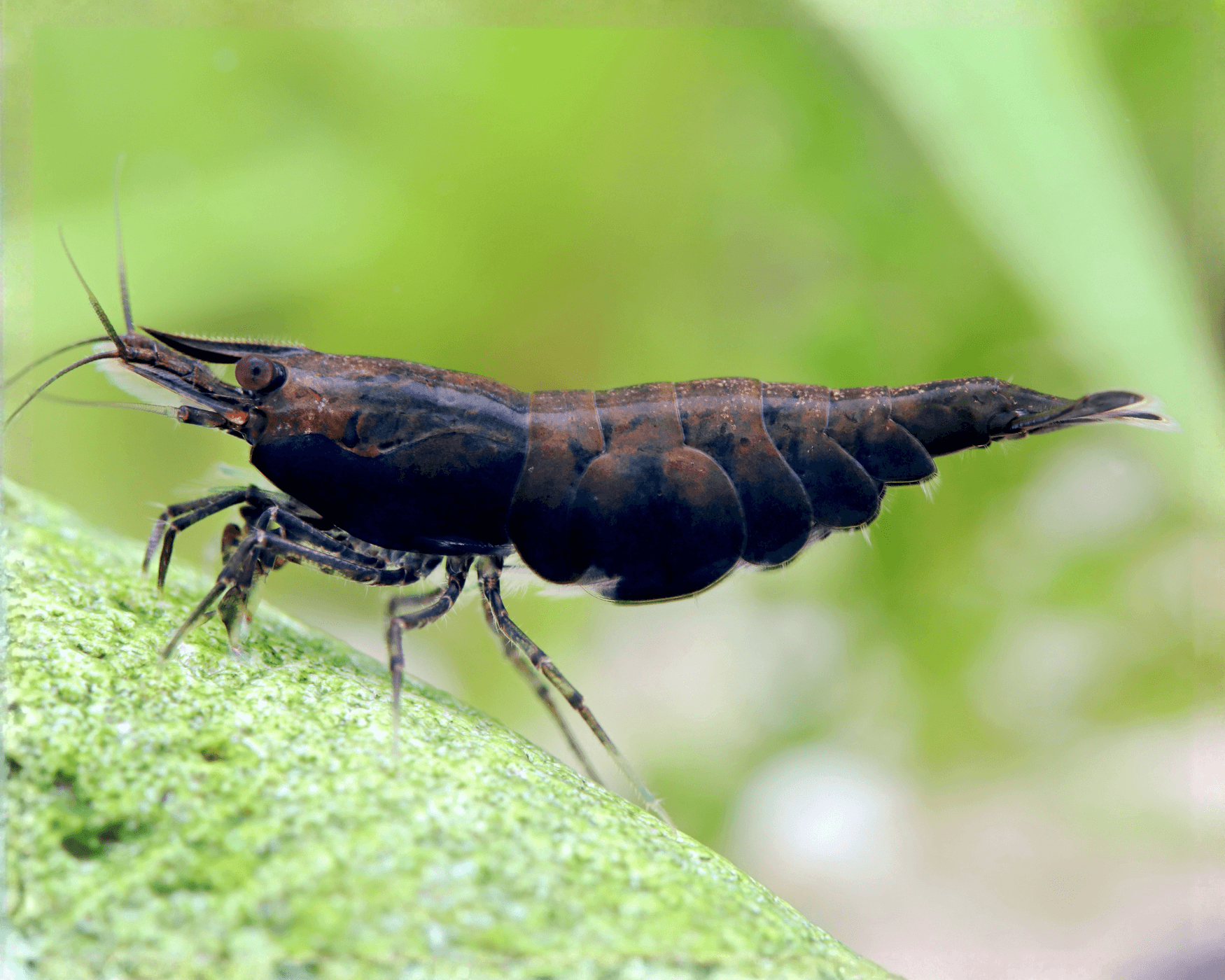
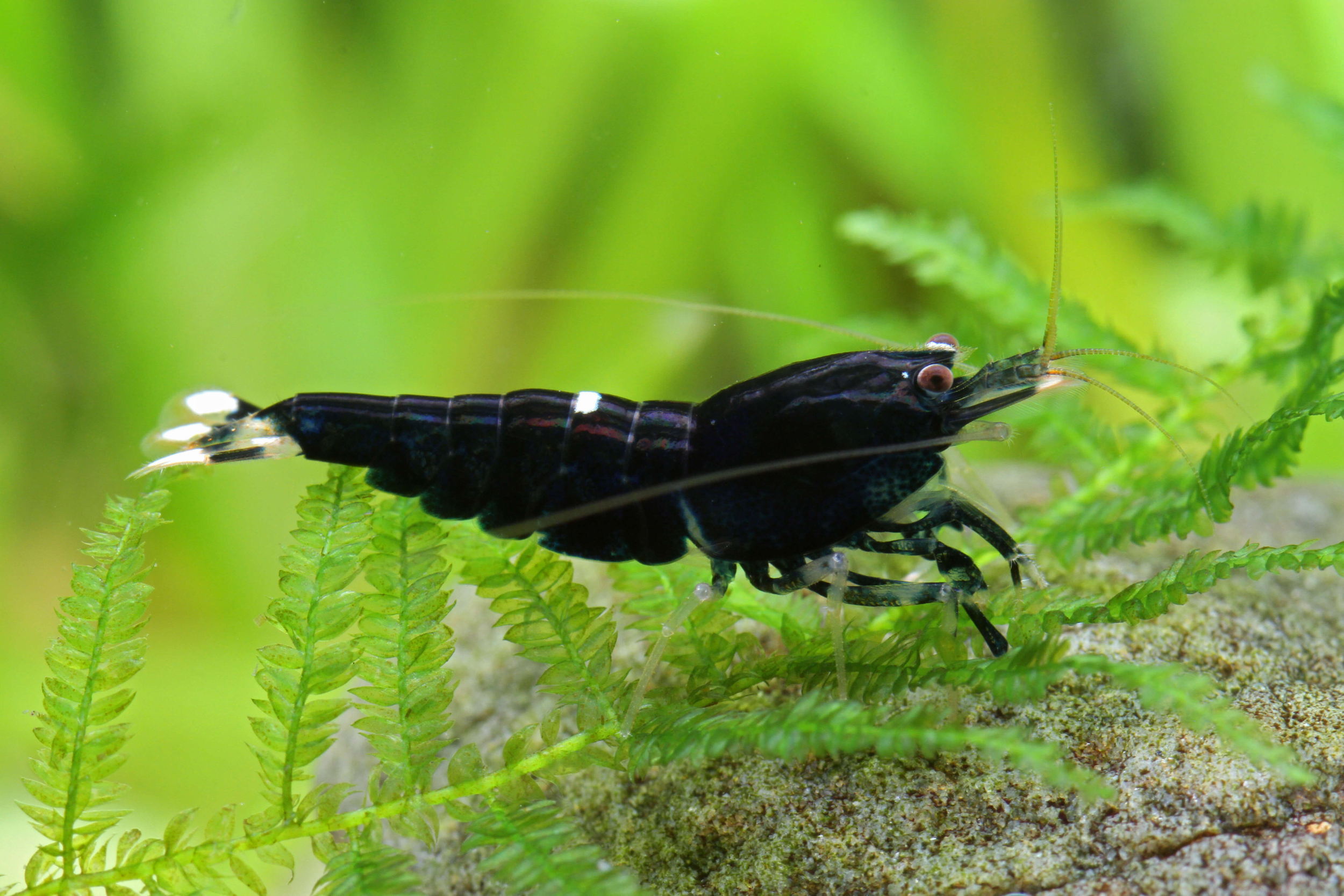
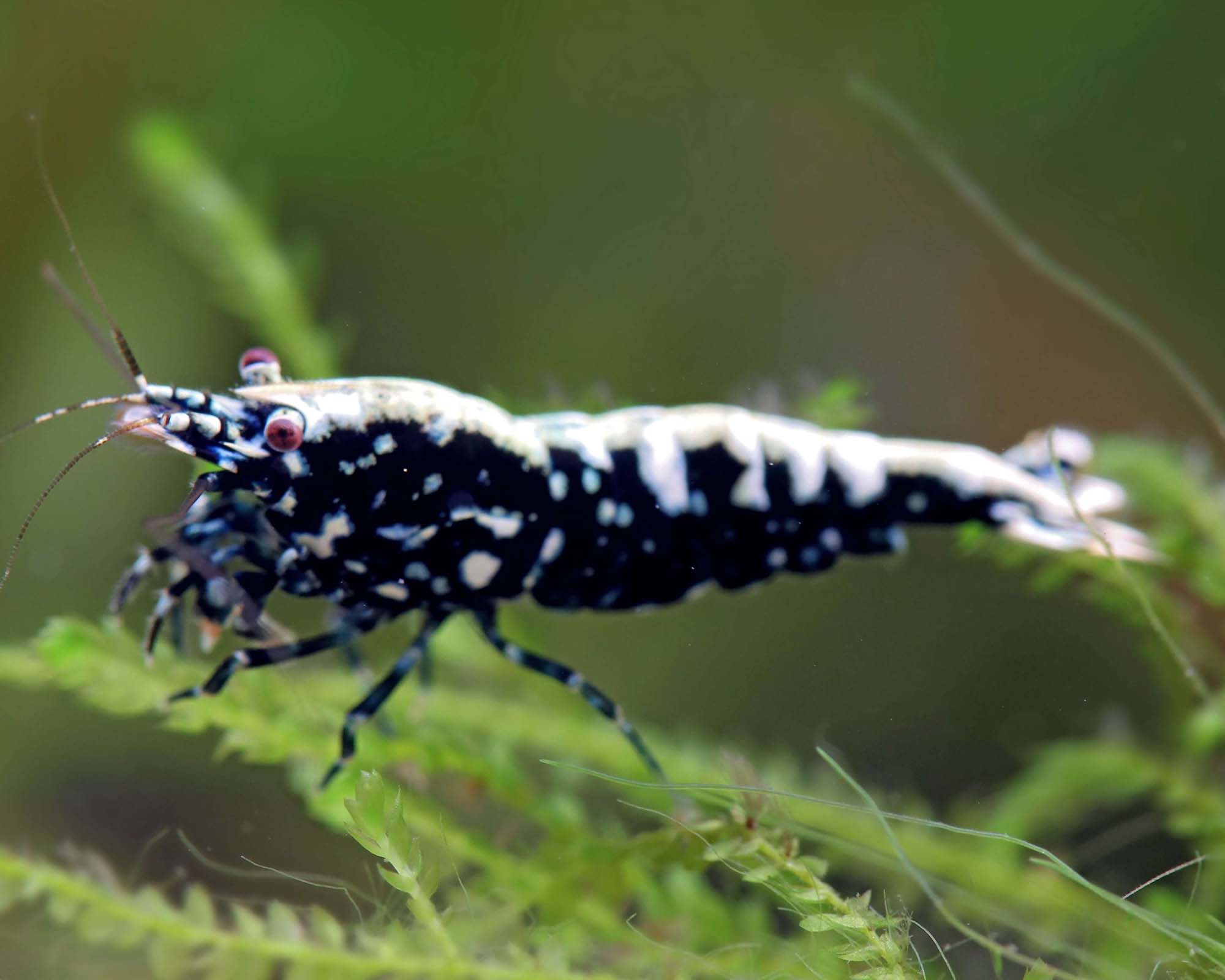
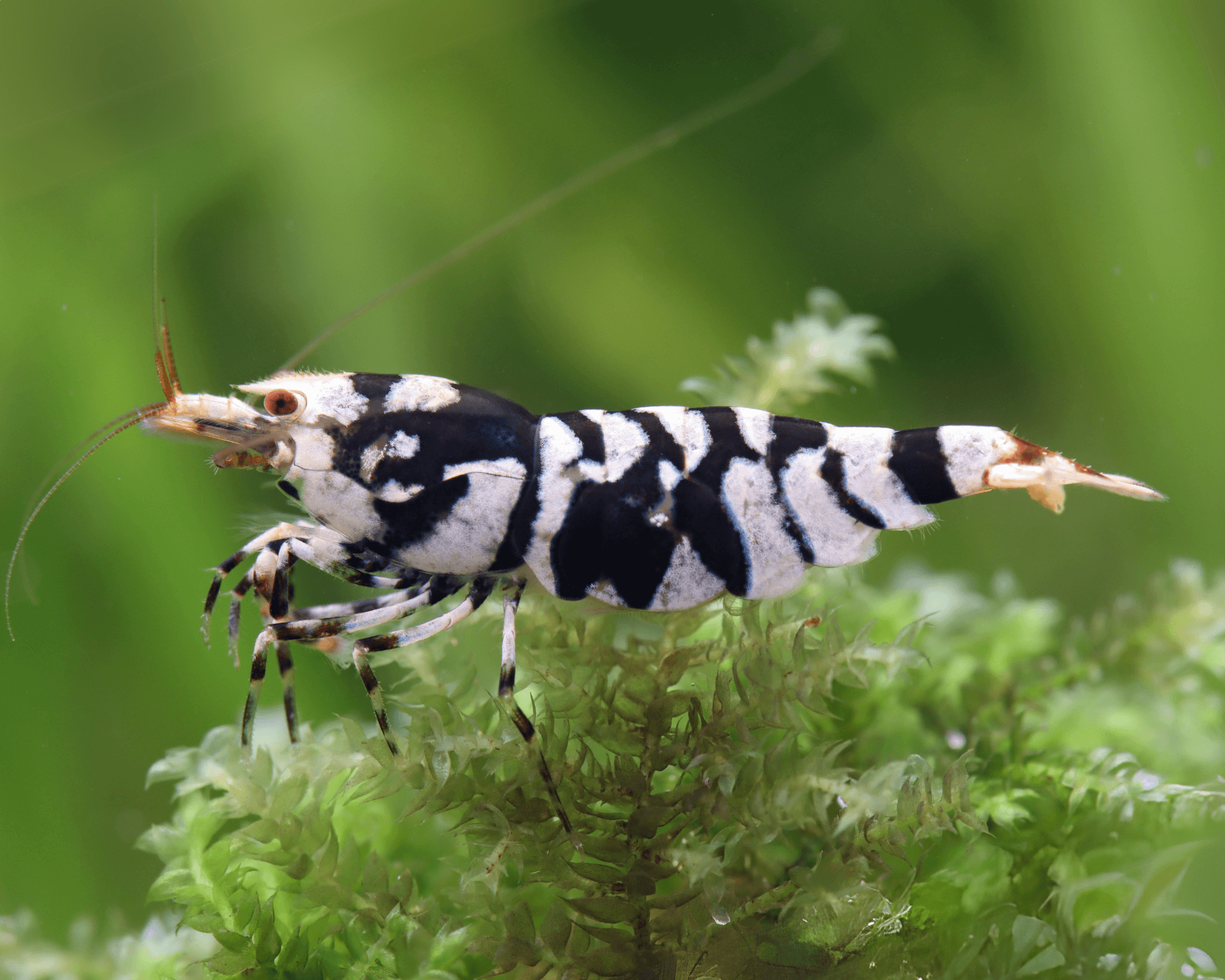
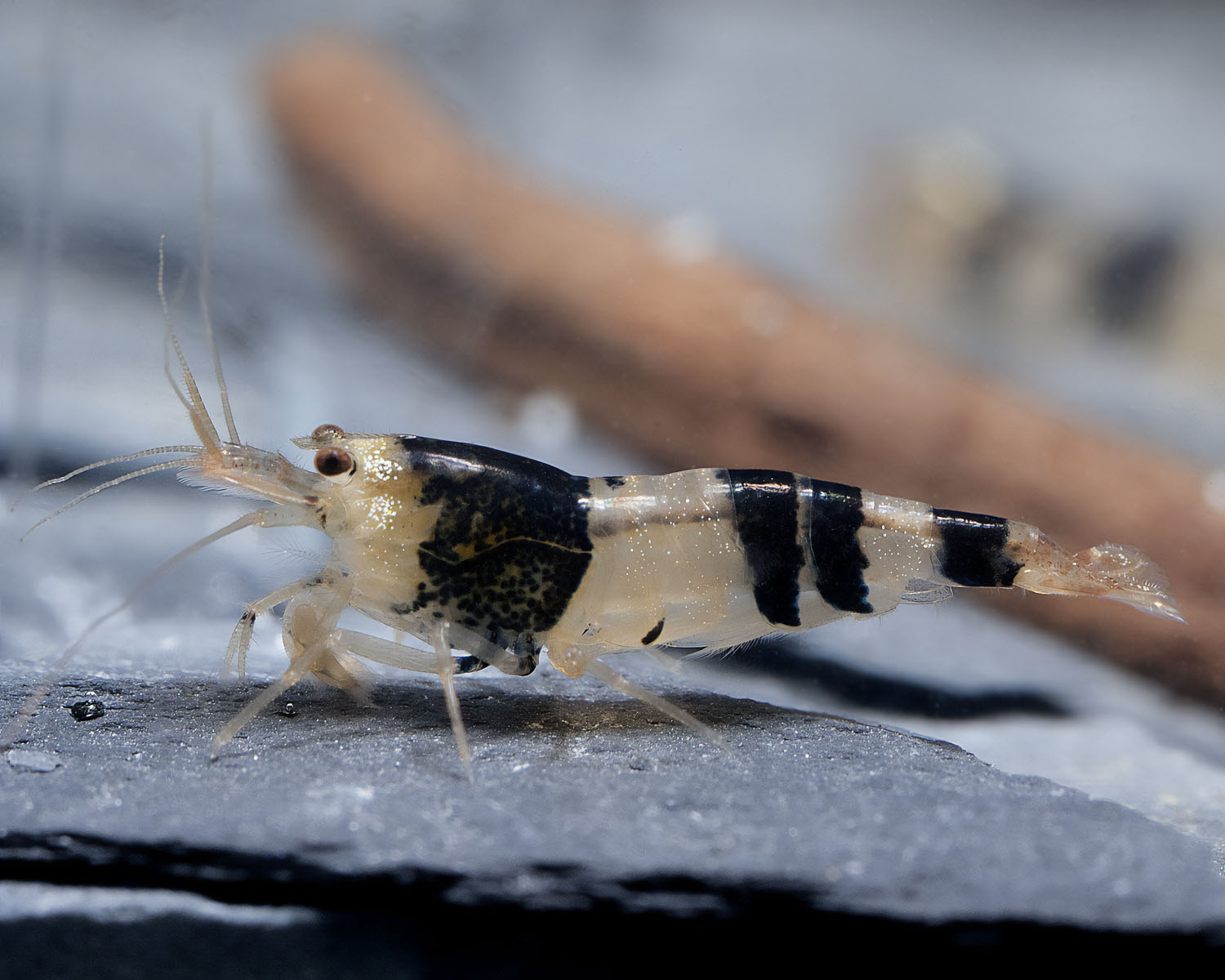
The supplied trade name is Black Shadow Mosura, with the source label identifying it as Caridina spec. (Taiwan Bee). Taiwan Bee is a captive-bred trade grouping rather than a formal species name, and the exact taxonomic placement of this individual cannot be confirmed from the supplied information alone. The pictured form is characterized by black and white bands or patches, but pattern intensity and coverage can vary between individuals.
Habitat and aquarium setup
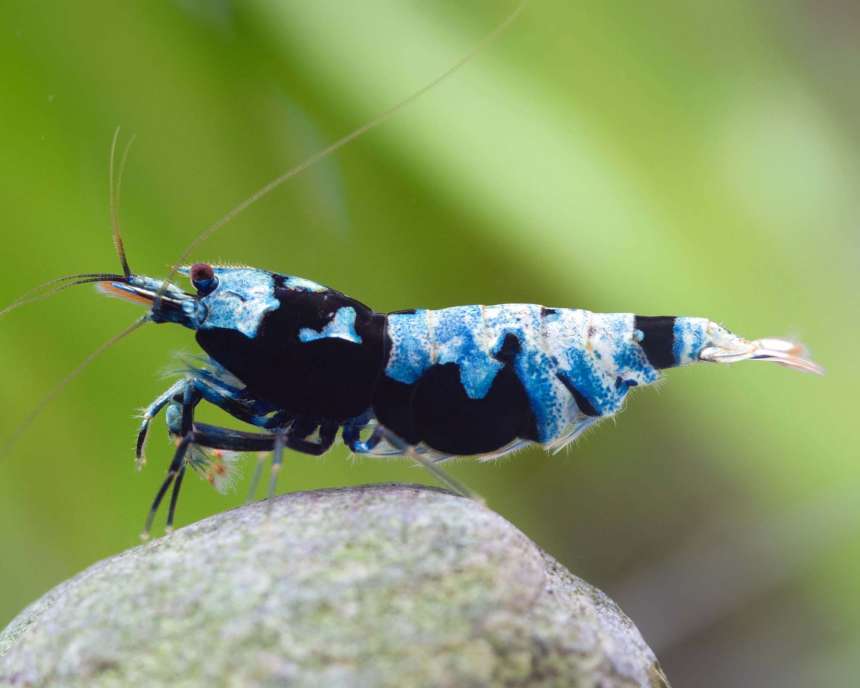
The natural habitat of this selectively bred form is not established by the trade name. Its aquarium care is based on Taiwan Bee–type Caridina rather than a verified wild collection locality. Use a mature, biologically stable aquarium with gentle filtration, inert or shrimp-specific substrate, mosses and other fine-leaved plants, leaf litter, and hiding places. Avoid copper-containing treatments, rapid changes in water chemistry, and newly set-up tanks.
Water parameters
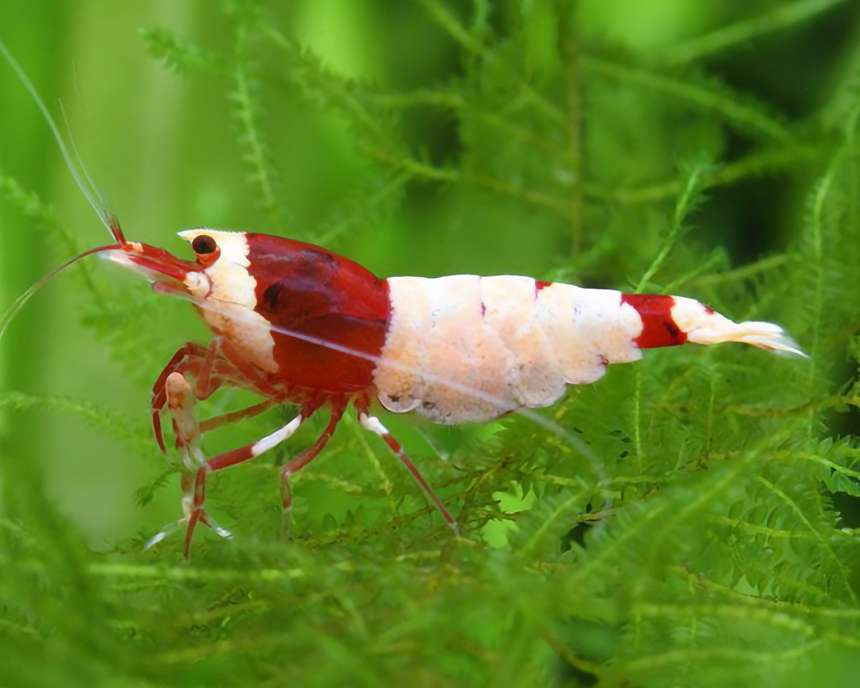
Aim for 20-24 °C, pH 5.8-6.8, low general hardness, and moderate carbonate hardness kept consistently low. Exact hardness targets depend on the source water and remineralization product, so stability is more important than chasing a single number. Ammonia and nitrite should remain undetectable, and nitrate should be kept low. Use slow, temperature-matched water changes and test new water before adding it.
Feeding
Allow the colony to graze on biofilm, microorganisms, and soft algae growing on mature surfaces. Supplement with a quality shrimp food in small portions once or several times weekly, removing uneaten food promptly. Occasional blanched vegetables or suitable leaf litter can provide additional variety. Do not overfeed: excess food can degrade water quality and trigger losses during sensitive periods.
Tank mates
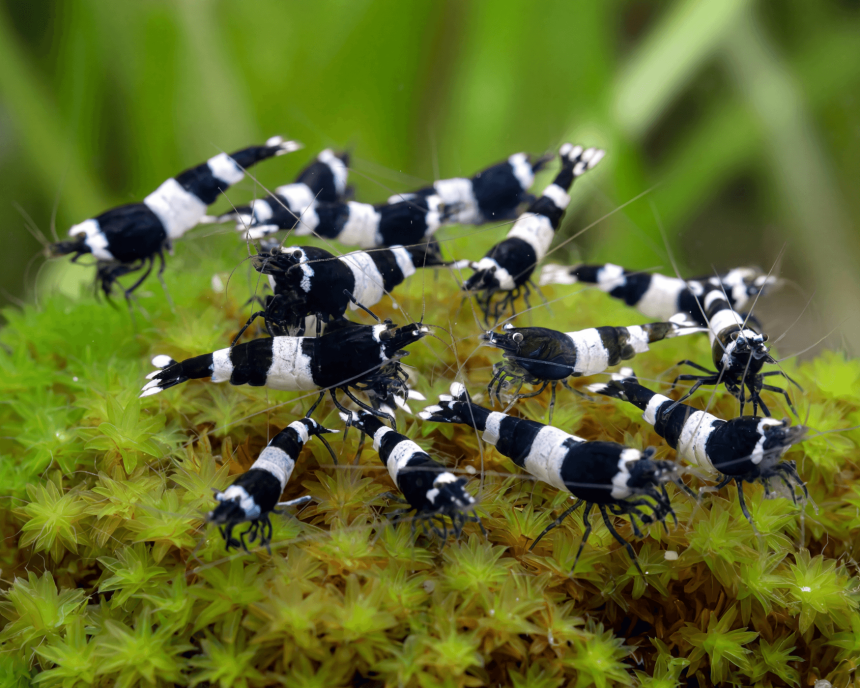
A species-only aquarium is safest and helps preserve the colony. Small, peaceful snails are generally compatible, while fish may eat shrimplets or continually stress adults. Avoid predatory, boisterous, or large tank mates. Do not mix this shrimp with other Caridina breeding lines if maintaining a specific pattern or bloodline is important, because crossbreeding may produce variable offspring.
Molting and health
Shrimp periodically shed their exoskeleton to grow. Provide stable mineral availability, adequate calcium and magnesium, biofilm, and cover so recently molted animals can hide. A pale or inactive shrimp may be preparing to molt, whereas repeated failed molts, sudden deaths, or persistent lethargy can indicate unsuitable parameters, contamination, poor nutrition, or abrupt water changes. Leave a shed exoskeleton in the aquarium unless it is decomposing, as shrimp often consume it for minerals.
Breeding
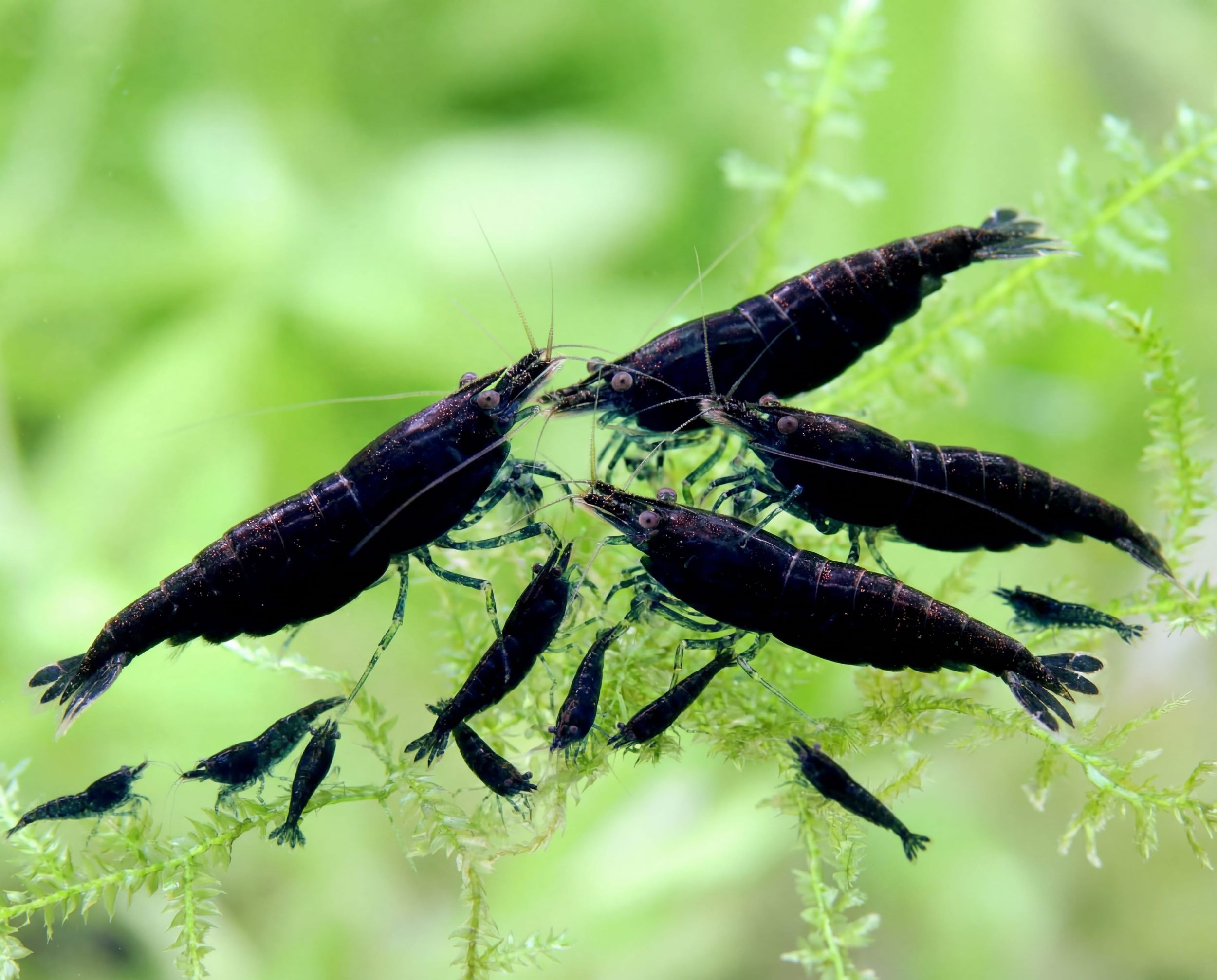
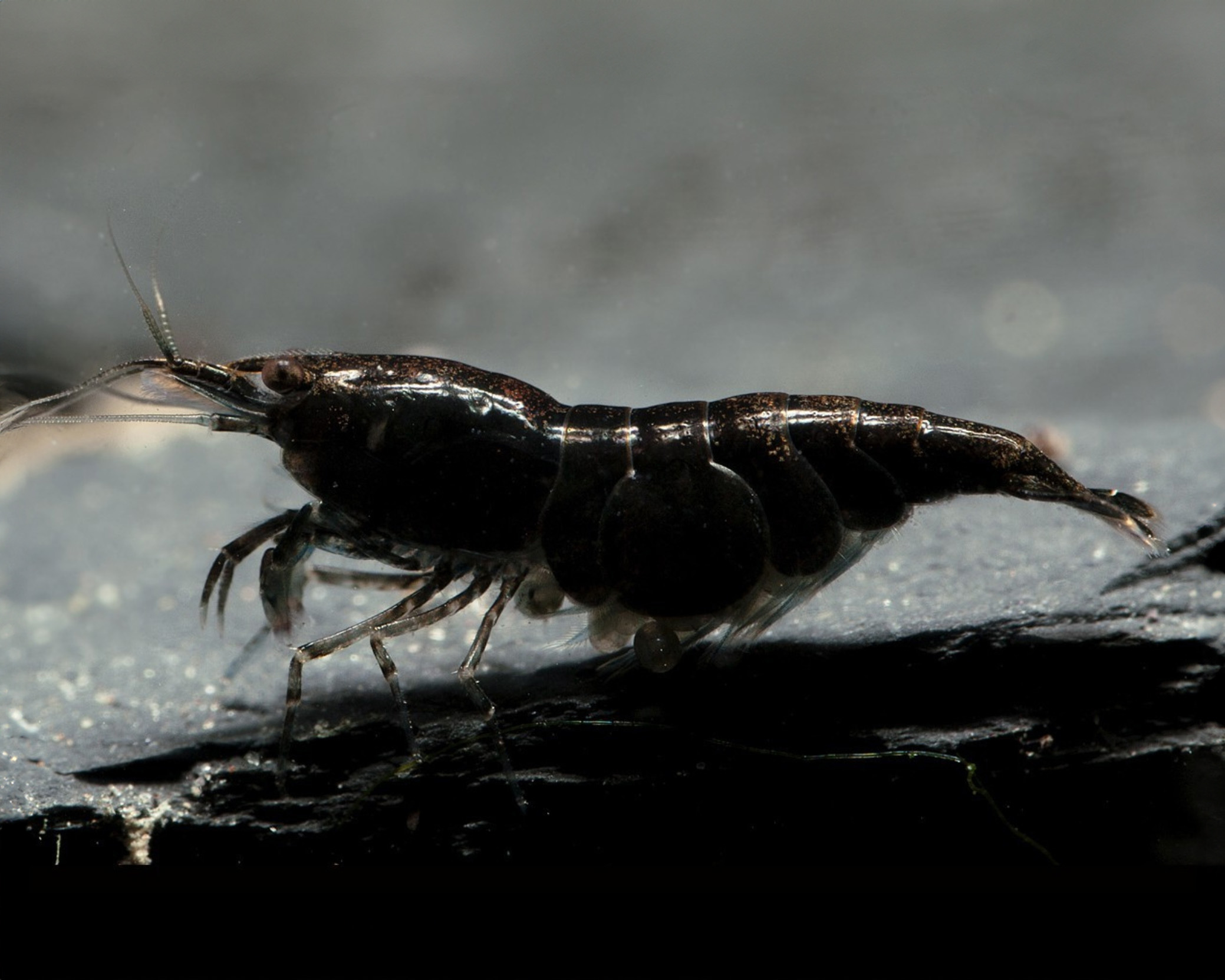
This is a fully freshwater breeding type: females carry fertilized eggs beneath the abdomen until miniature shrimplets hatch, with no marine larval stage. Maintain a mature, stable tank, a group containing both sexes, abundant biofilm, gentle filtration, and dense cover for young. Use a prefilter sponge to prevent shrimplets entering the intake. Selective breeding can help maintain dark coloration and the desired Mosura pattern, but offspring may vary and the exact inheritance of trade-line traits is not guaranteed.
 - 1.webp)
Leave your comments