Taxonomy and identification
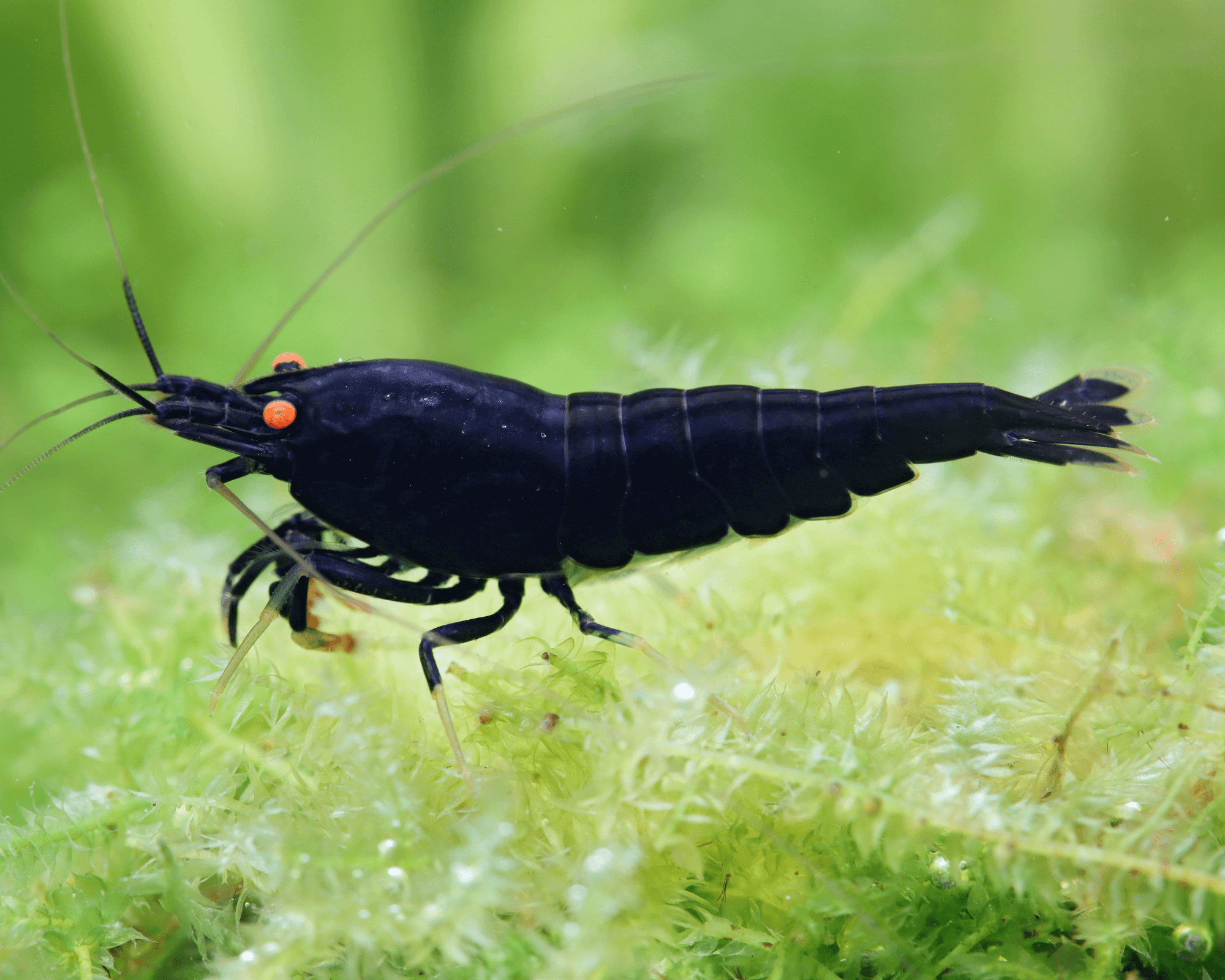
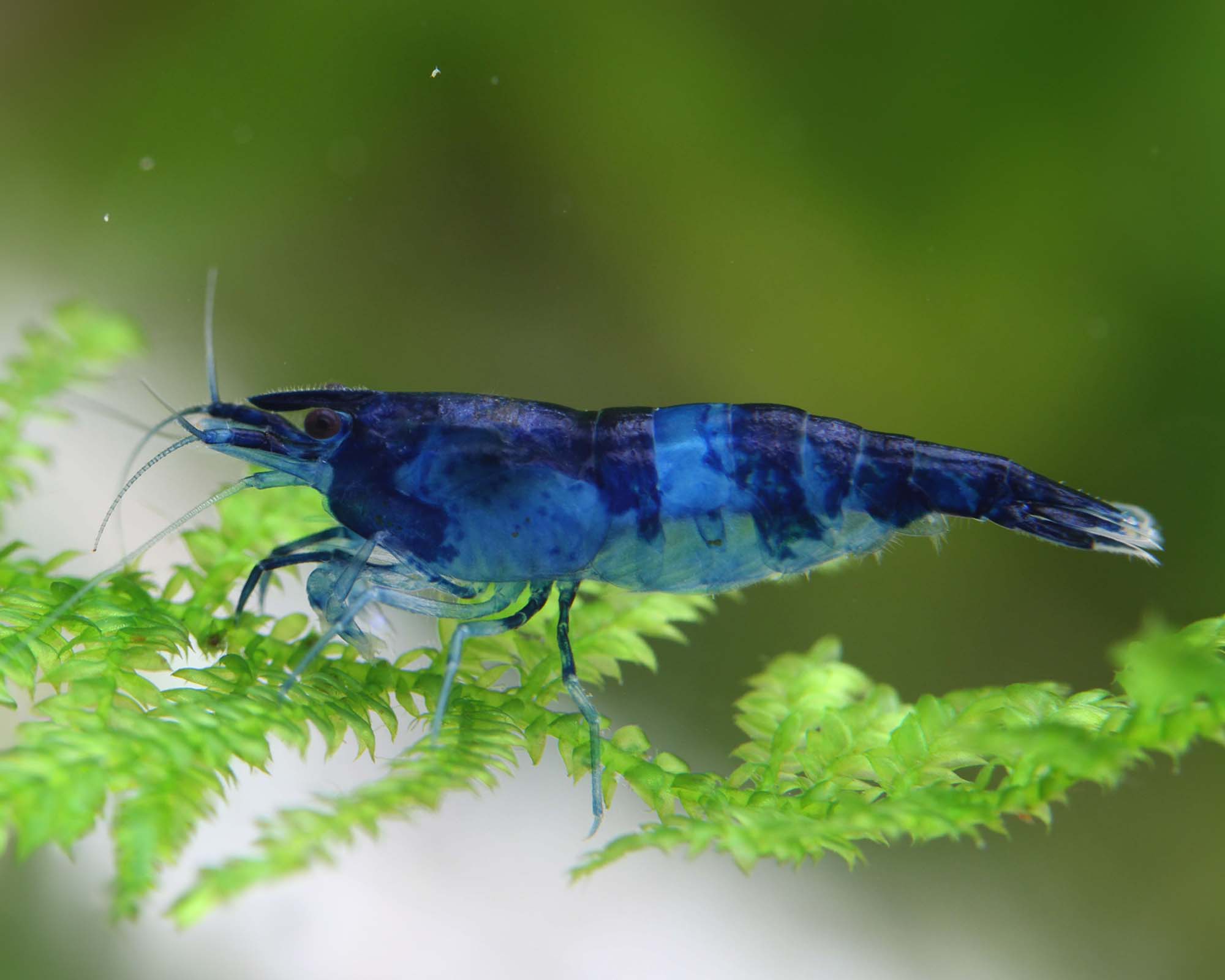
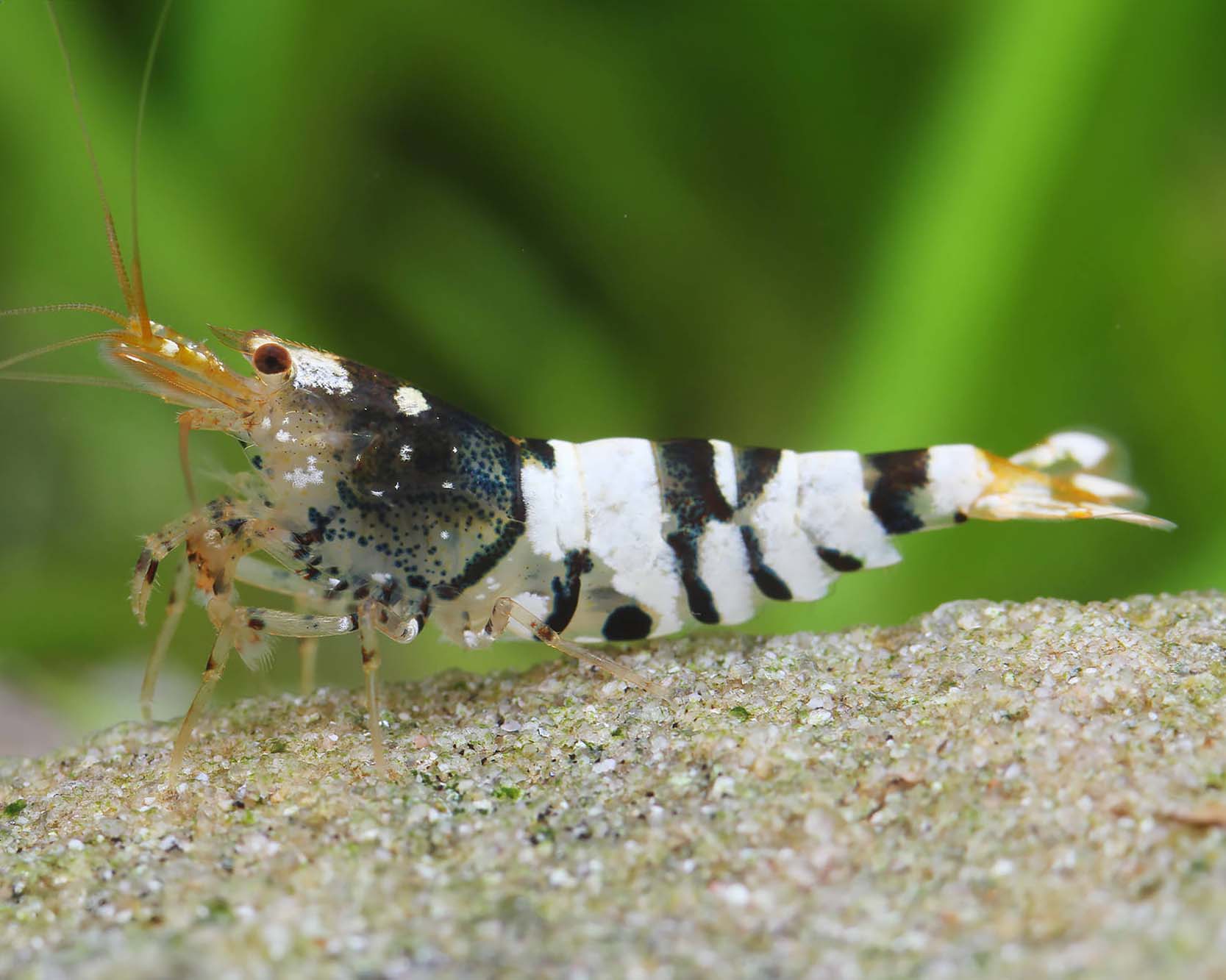
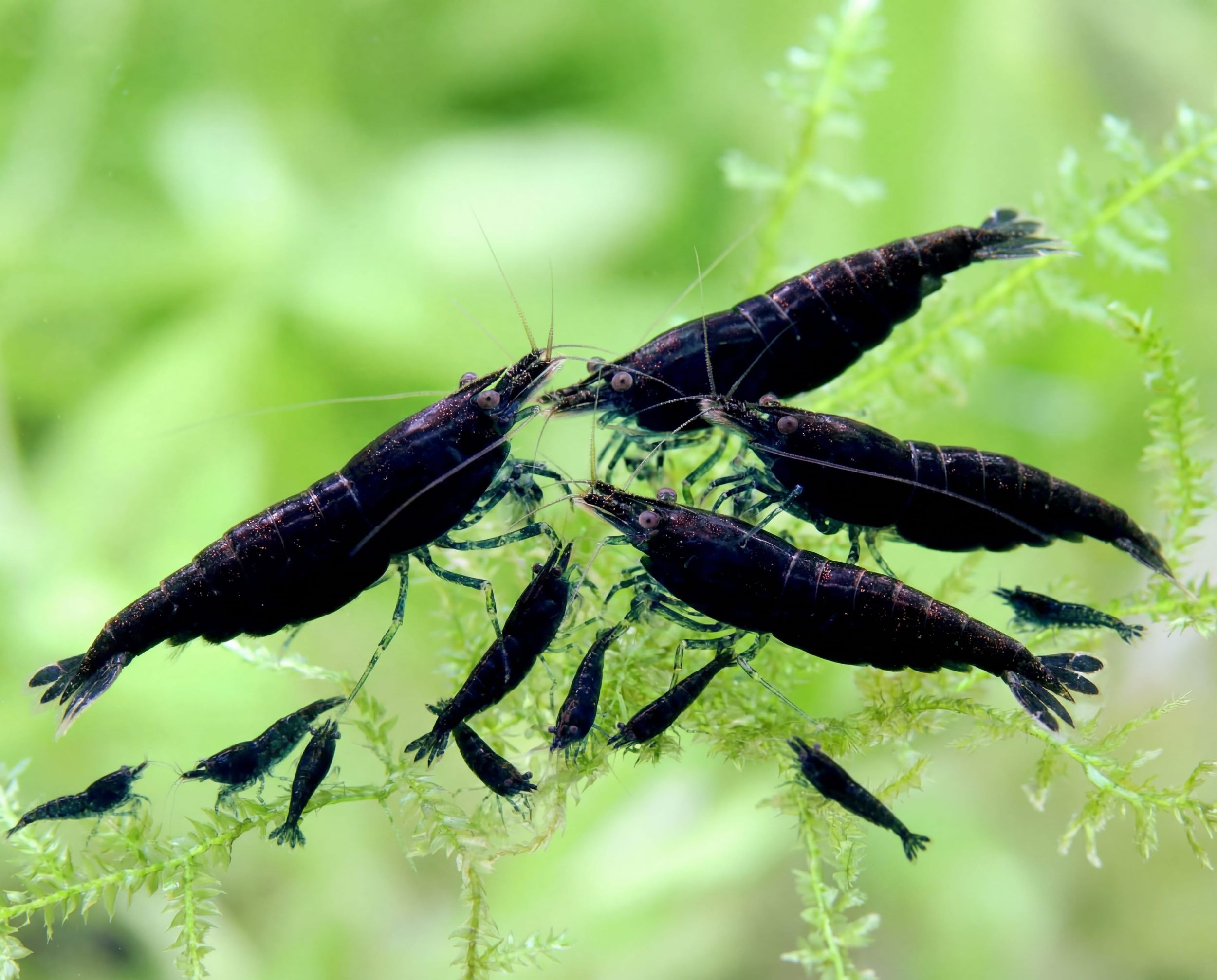
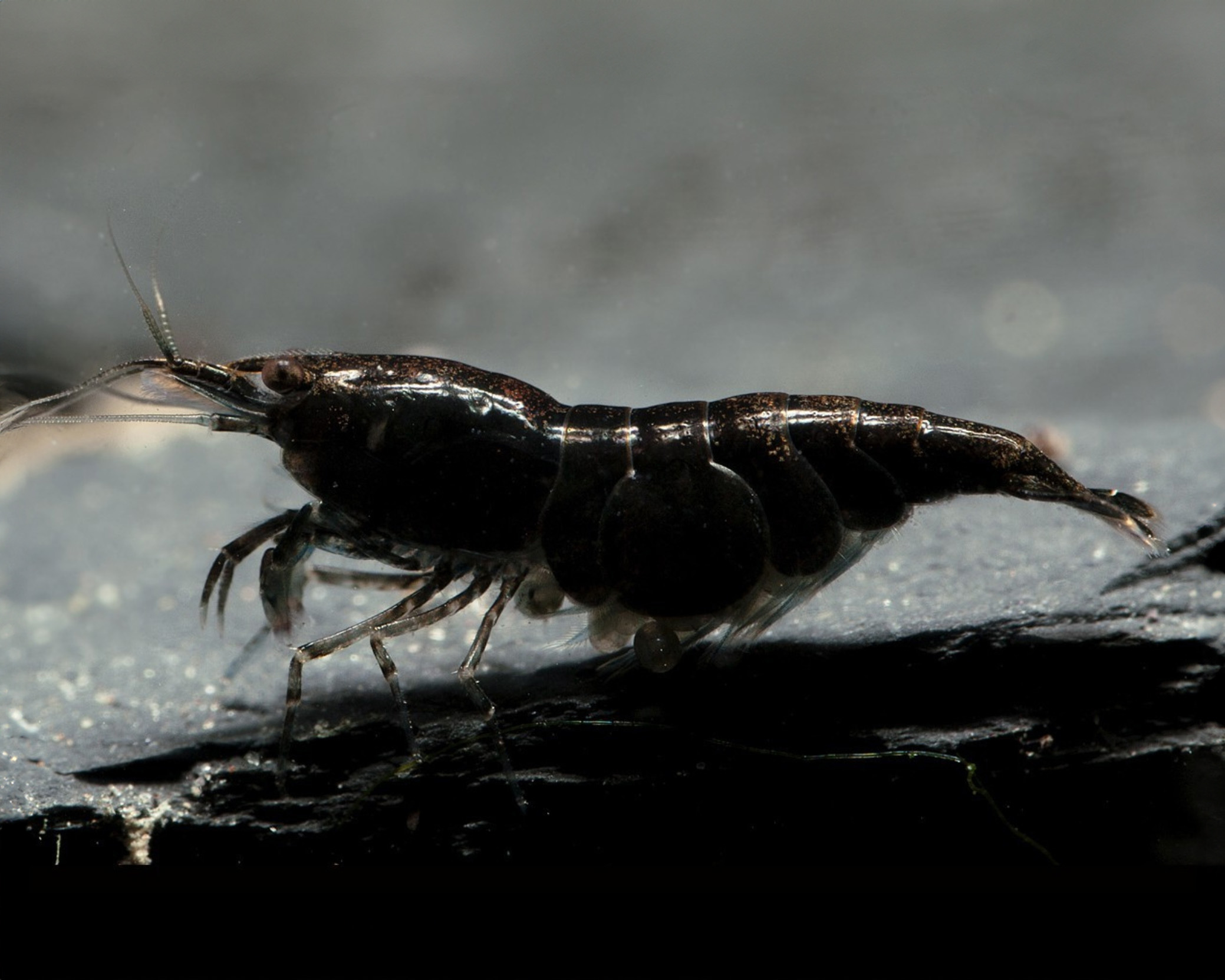
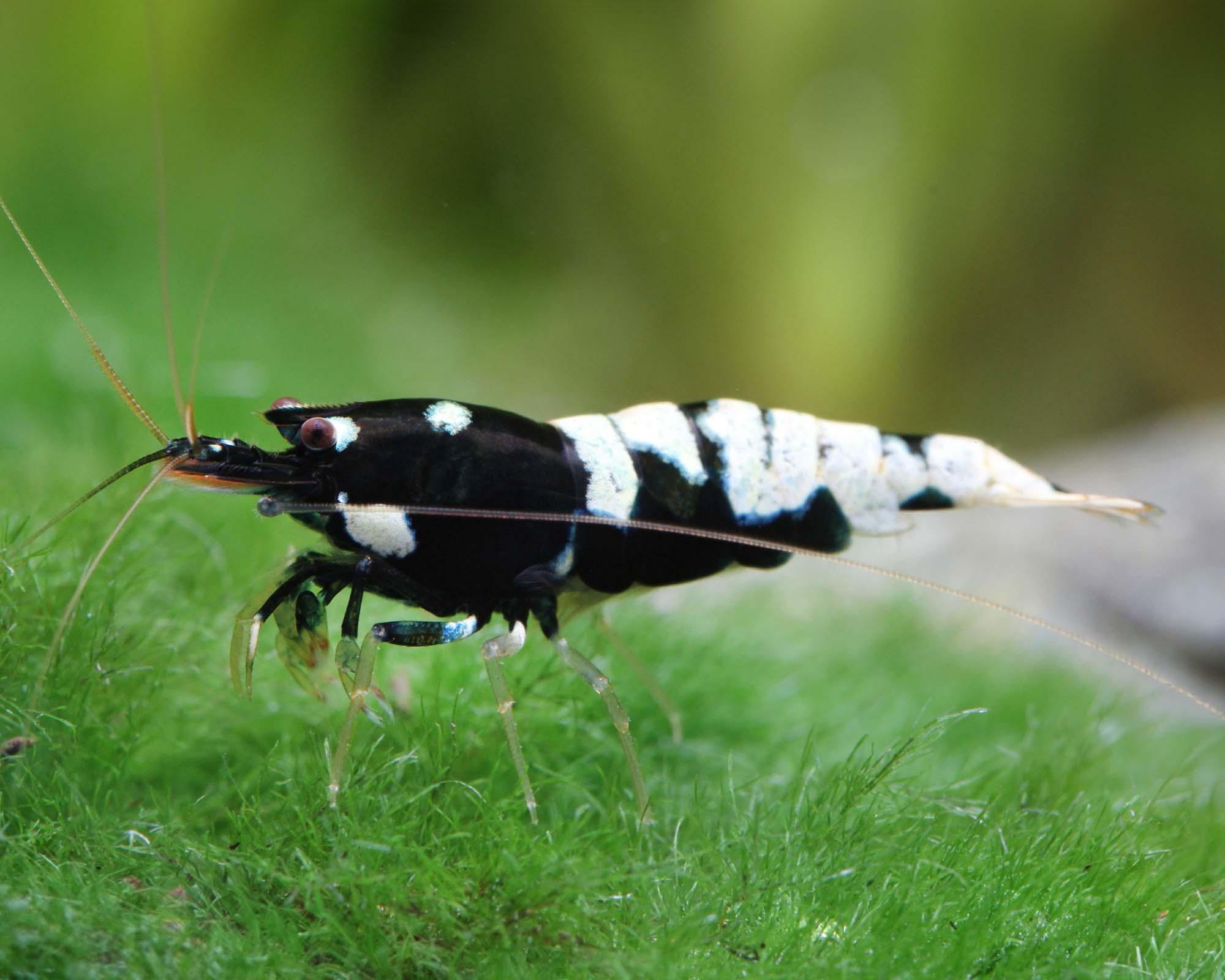
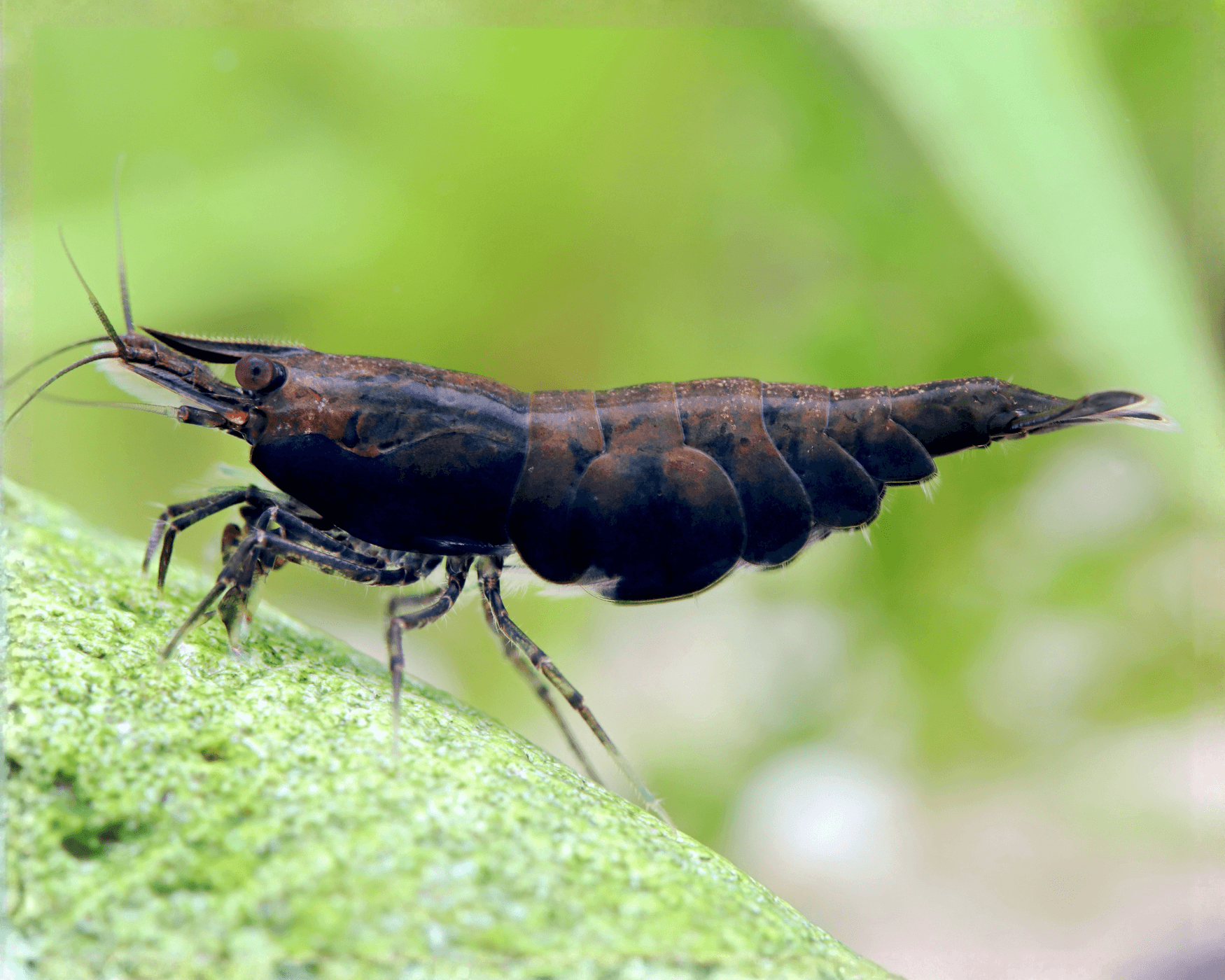
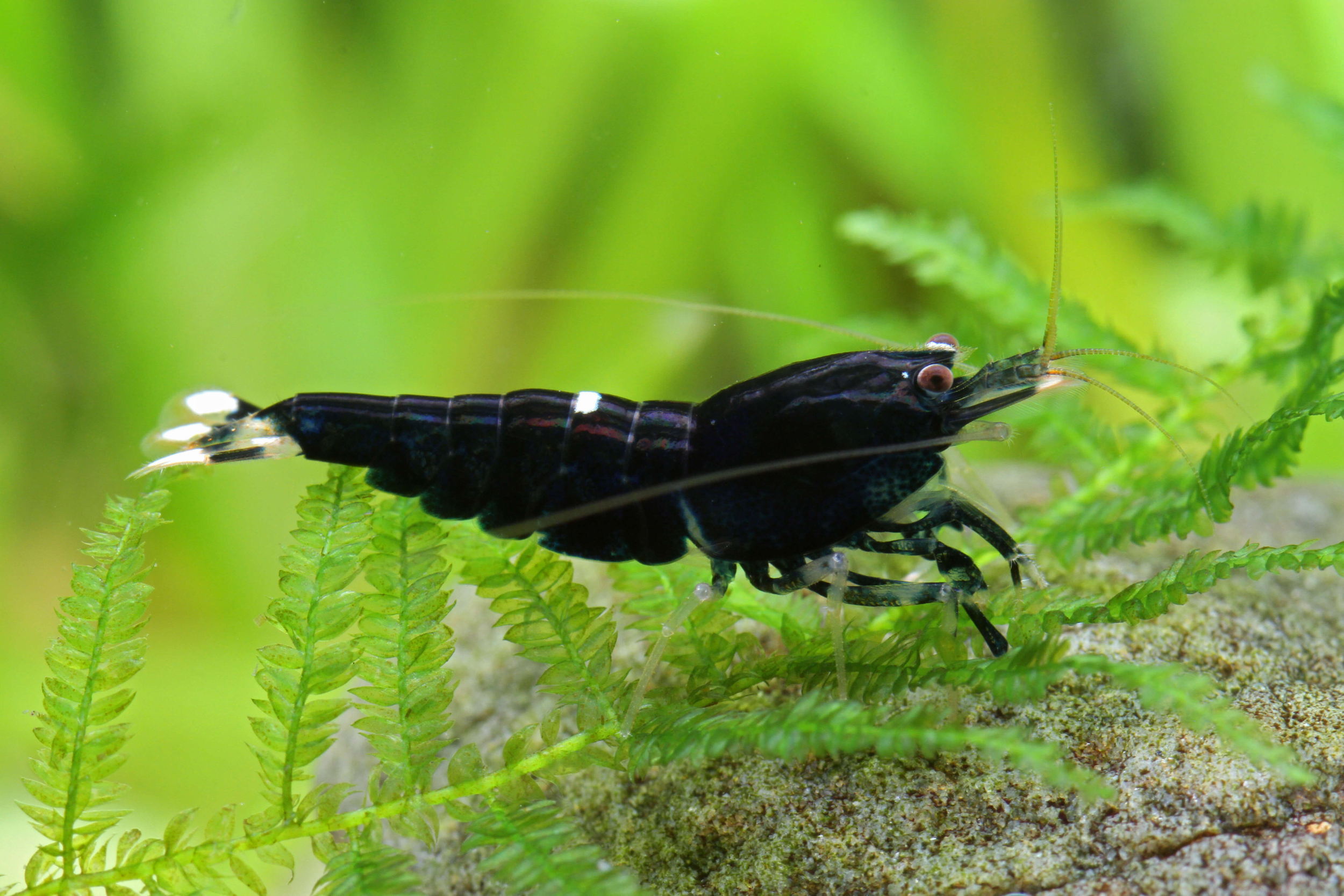
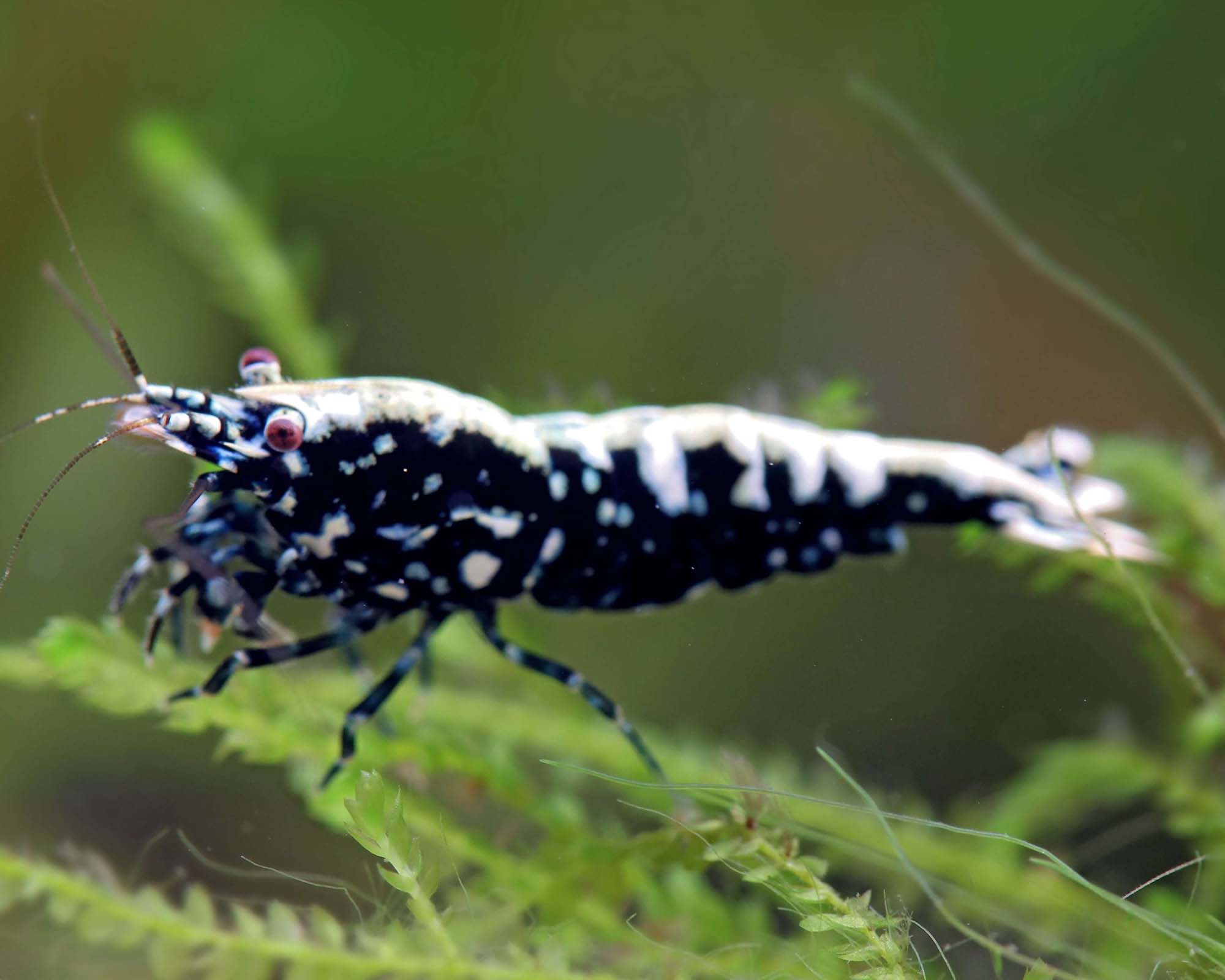
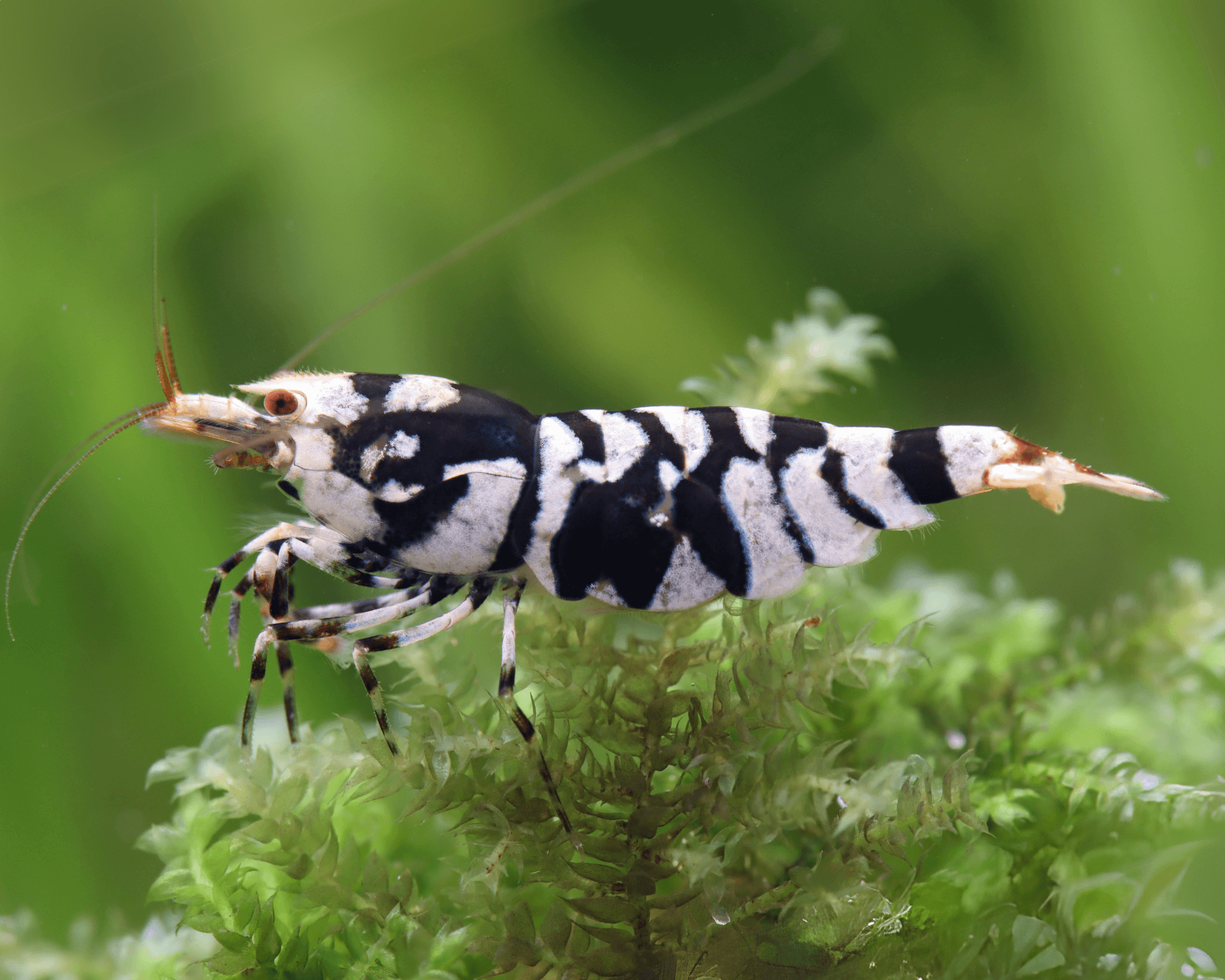
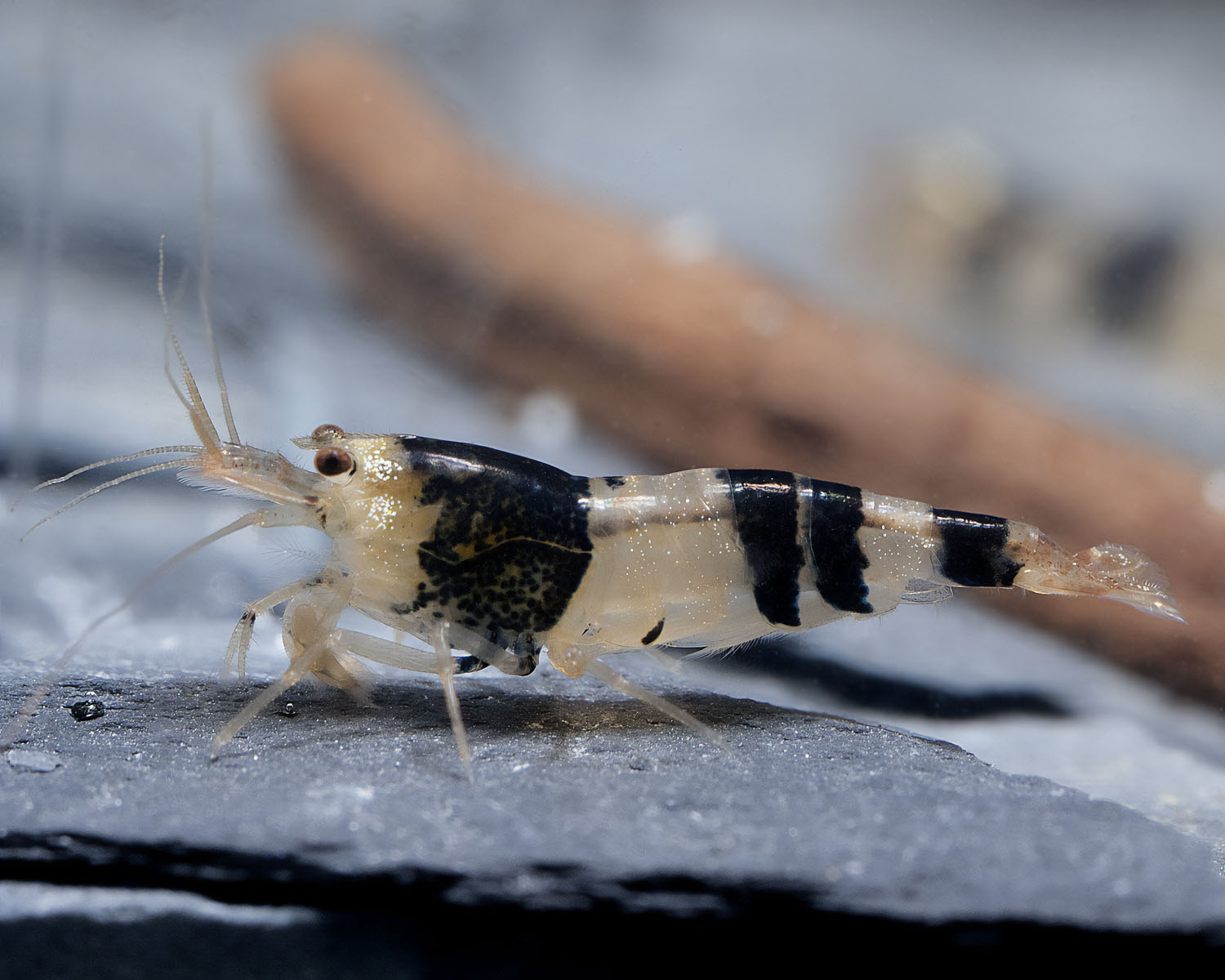
Caridina mariae is a freshwater shrimp in the family Atyidae and genus Caridina. Black Tiger Shrimp Orange Eye is a cultivated color and eye form rather than a separately described species. The shrimp shown has a predominantly black body, light abdominal bands and orange eyes. Aquarium trade labels and selective breeding histories are not always standardized, so an individual sold under this name may not be genetically identical to every other black tiger line.
Natural habitat
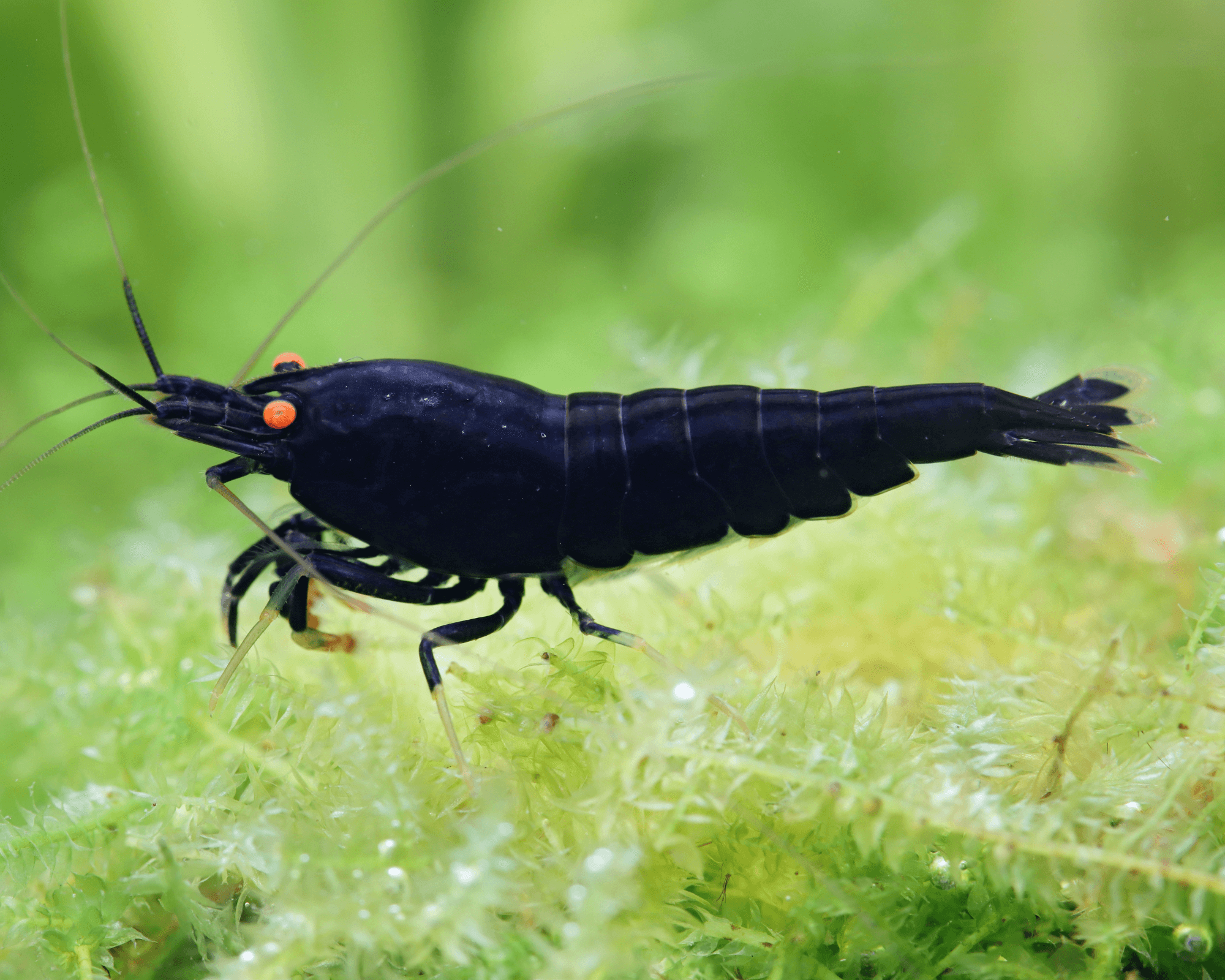
Caridina mariae is associated with clean, oxygen-rich freshwater habitats in southern China, including stream environments connected with the Hong Kong region. Such habitats typically provide flowing water, rocky or gravelly surfaces, leaf litter and abundant biofilm. The exact collection locality of aquarium-bred black orange-eye stock is usually unavailable, so natural conditions should be treated as a general guide rather than a confirmed origin for every specimen.
Aquarium and water parameters
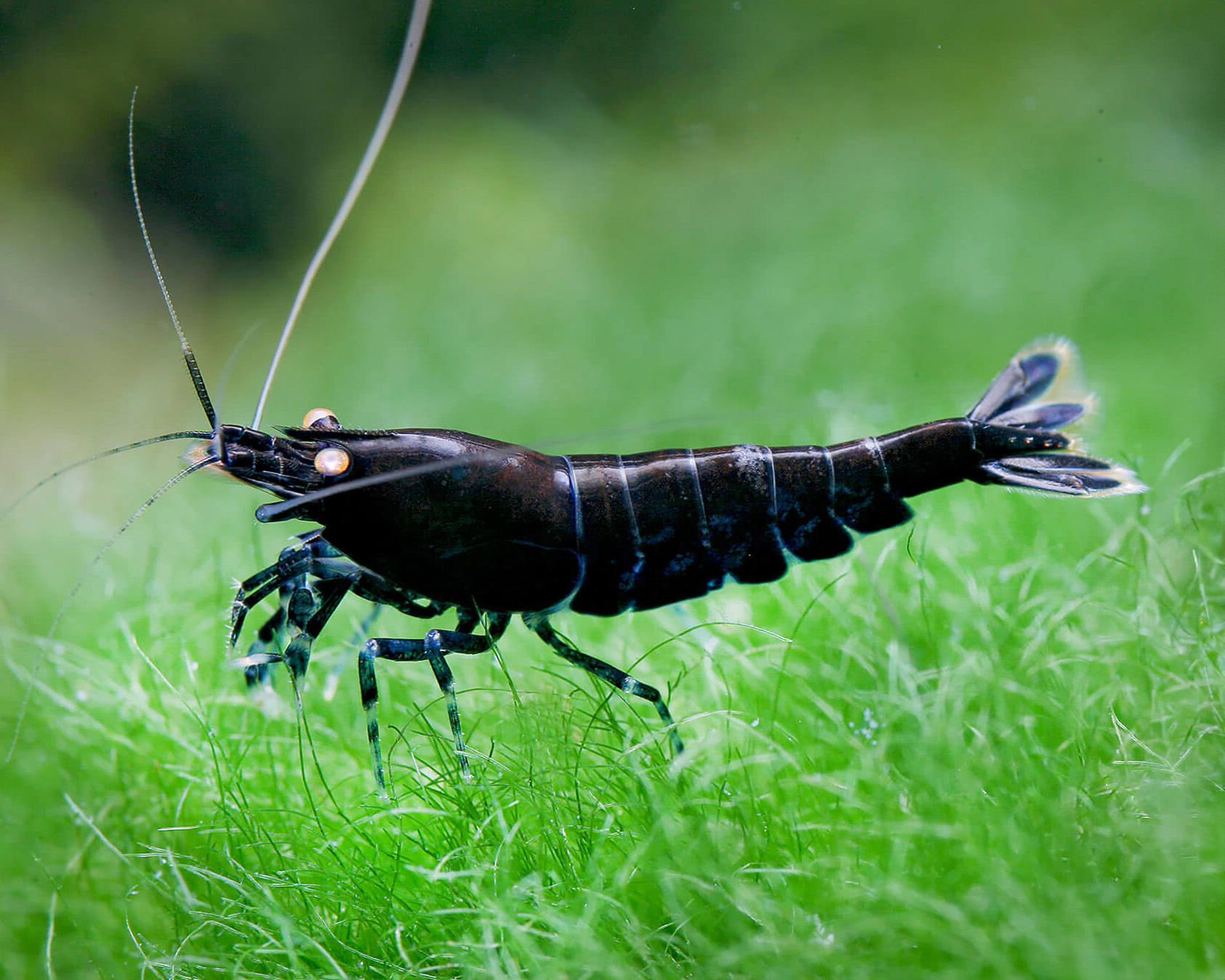
Use a mature, fully cycled aquarium with gentle circulation, strong biological filtration and plentiful moss, wood, rocks or other surfaces for grazing. A sponge prefilter protects juveniles. Aim for 20-24 °C, pH 5.8-6.8, low to moderate general hardness, low carbonate hardness and zero ammonia and nitrite. Nitrate should remain low. Stability is more important than chasing a single target value; avoid sudden changes in temperature, pH, mineral content or total dissolved solids.
Feeding
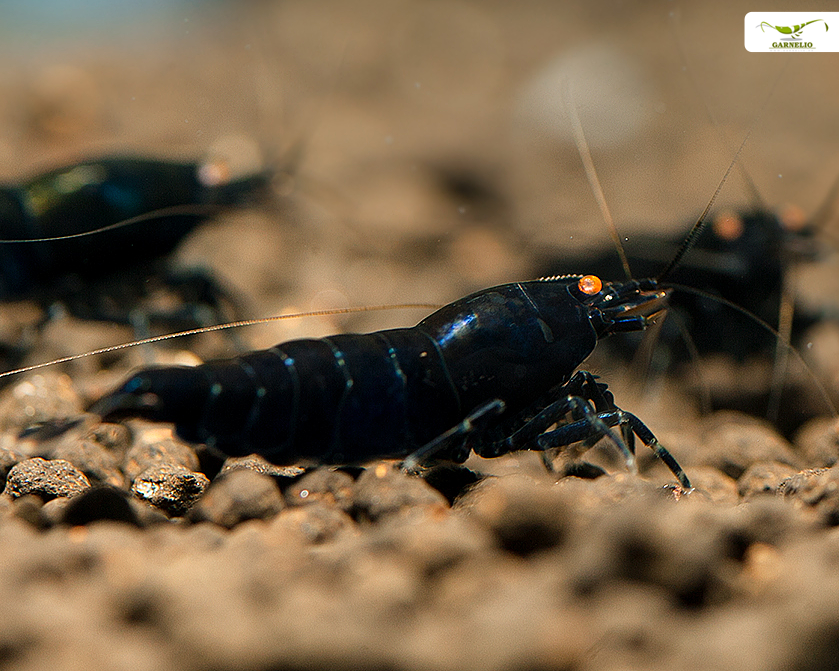
This shrimp grazes continually on biofilm, microorganisms and soft organic material. Offer small amounts of a quality shrimp food, supplemented with blanched vegetables, leaf litter and occasional protein-rich food. Remove uneaten food promptly, especially in a small aquarium. A mature tank with algae and biofilm is particularly important for young shrimp, which spend much of their time grazing rather than eating large prepared-food pieces.
Tank mates
The safest companions are other peaceful Caridina shrimp of compatible water requirements and small, non-predatory snails. A species-only aquarium gives the best survival and breeding results. Avoid fish that can eat shrimplets, including most larger or active community species, and avoid aggressive invertebrates. Do not mix different Caridina lines if preserving a particular black tiger orange-eye appearance or breeding outcome is important, because hybridization and variable offspring are possible.
Molting and health
Shrimp periodically shed the old exoskeleton to grow. Provide mineral availability through appropriately remineralized water, a stable hardness level and a varied diet, but do not make abrupt mineral corrections. A recently molted shrimp is soft and vulnerable, so dense cover is essential. Leave discarded molts in the aquarium unless they decay; shrimp commonly consume them and recover minerals. Sudden deaths, failed molts and inactivity commonly indicate unstable water, unsuitable mineral balance, toxins or excessive heat.
Breeding
This is a freshwater-breeding Caridina shrimp: females carry developing eggs beneath the abdomen until they hatch as miniature shrimp, with no marine larval stage. Mature females may be identified by a broader abdomen and an egg-carrying saddle or visible eggs, while males are usually smaller and slimmer. Maintain a mature species tank, stable soft acidic water, abundant biofilm and fine-leaved cover. Protect babies with sponge filtration and avoid heavy maintenance or large water changes around berried females. Offspring may vary in black intensity, banding and eye color, so selective breeding is needed to maintain the desired form.
 - 1.webp)
 - 1.webp)
Leave your comments