Taxonomy and identification
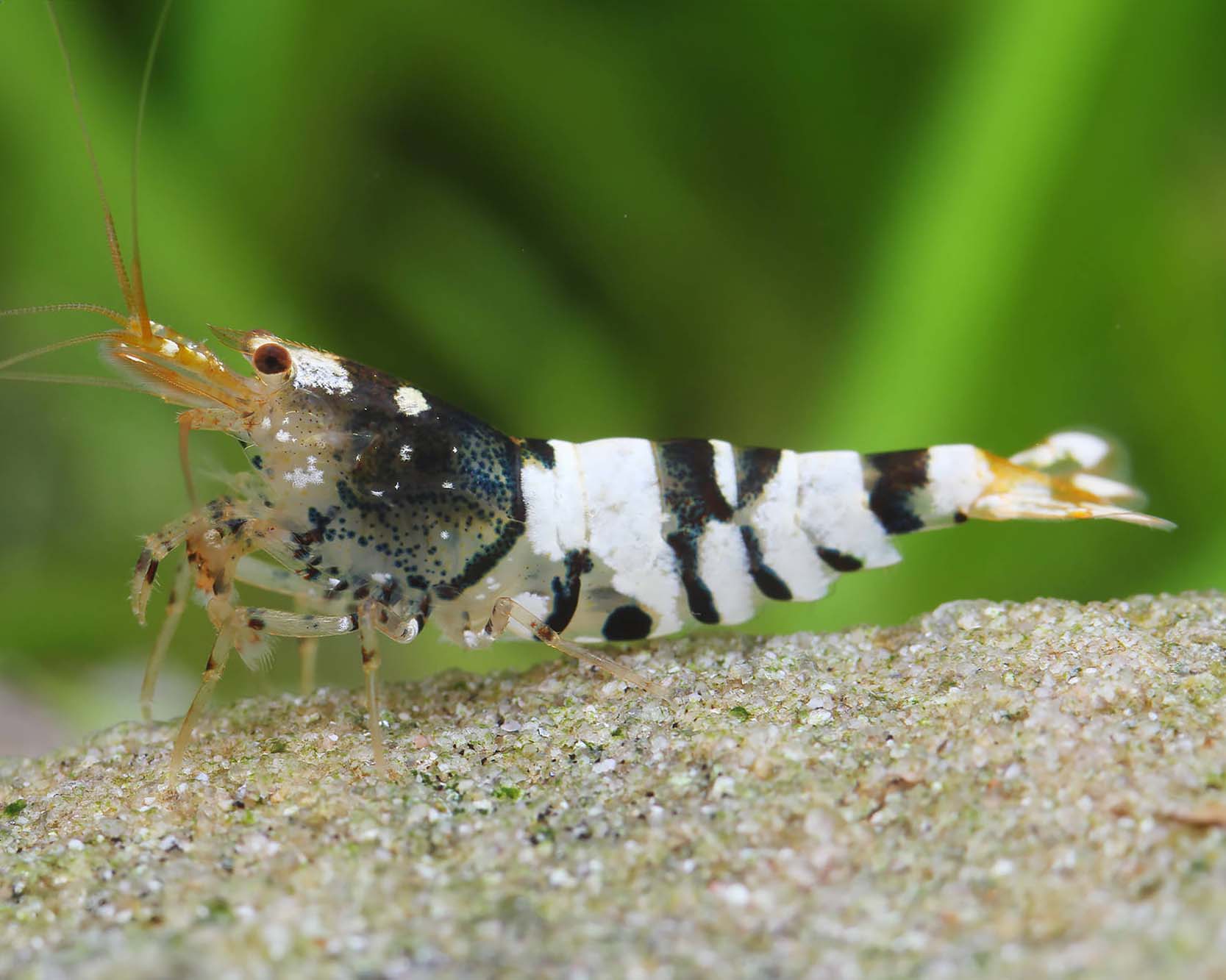
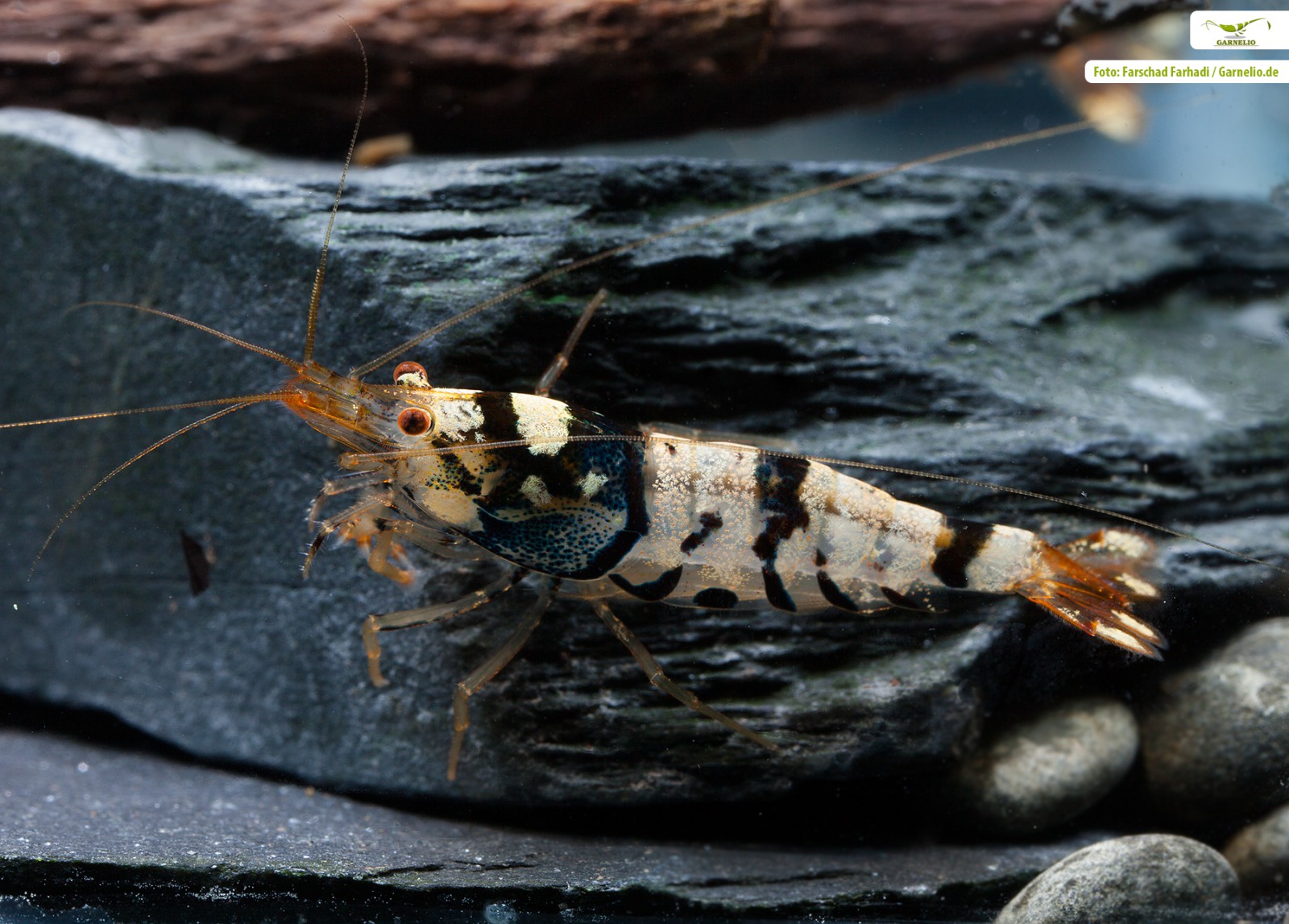
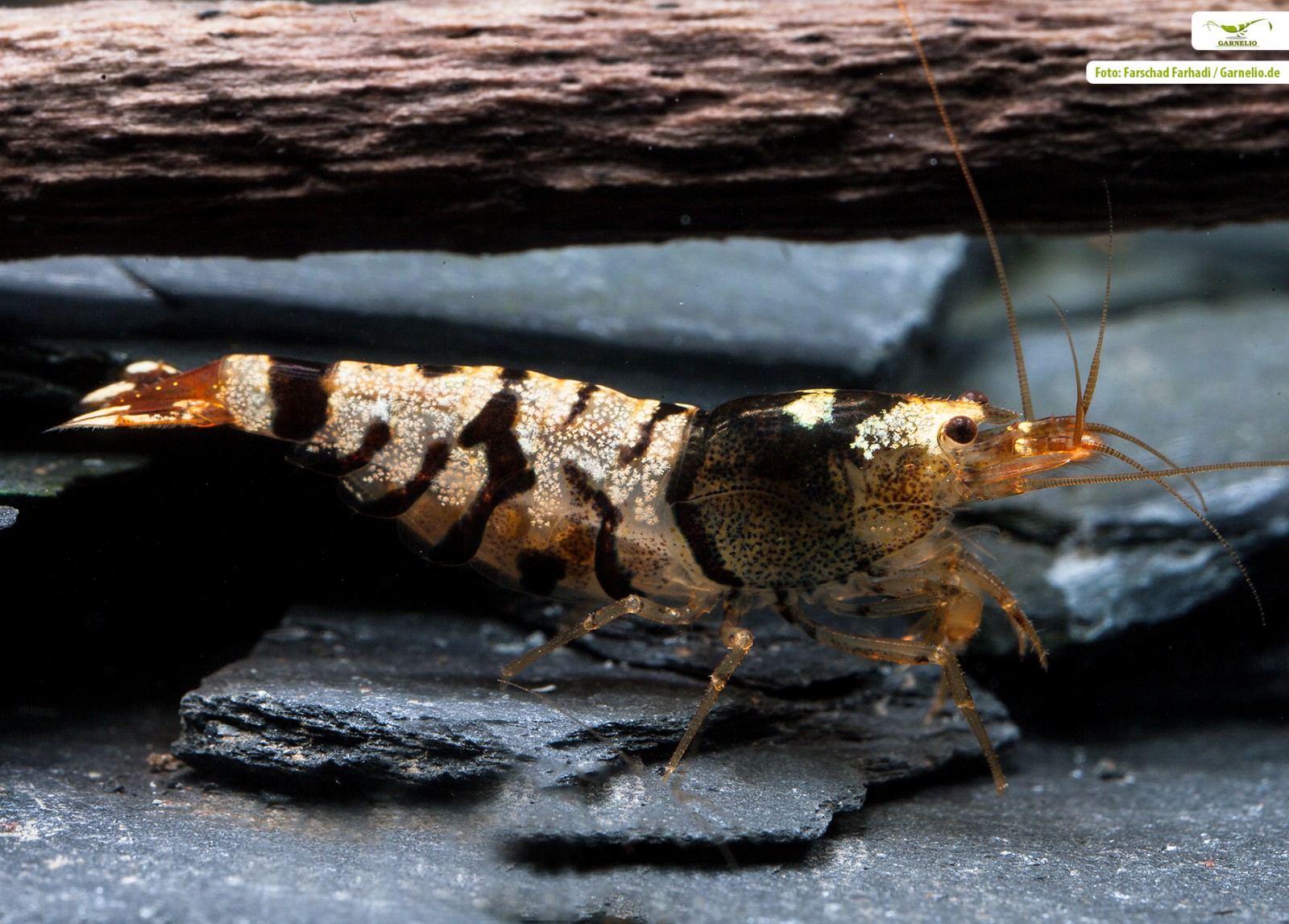
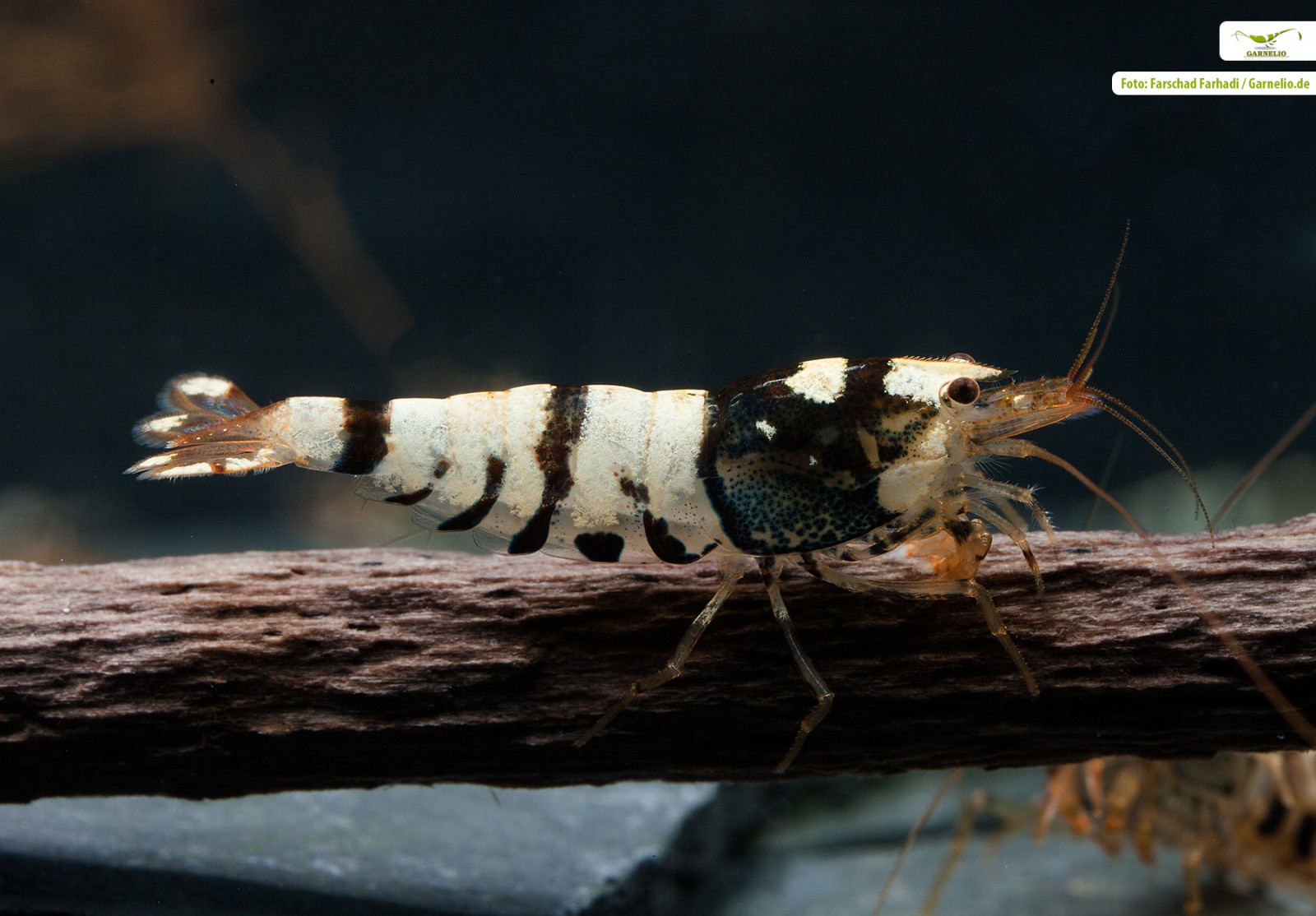
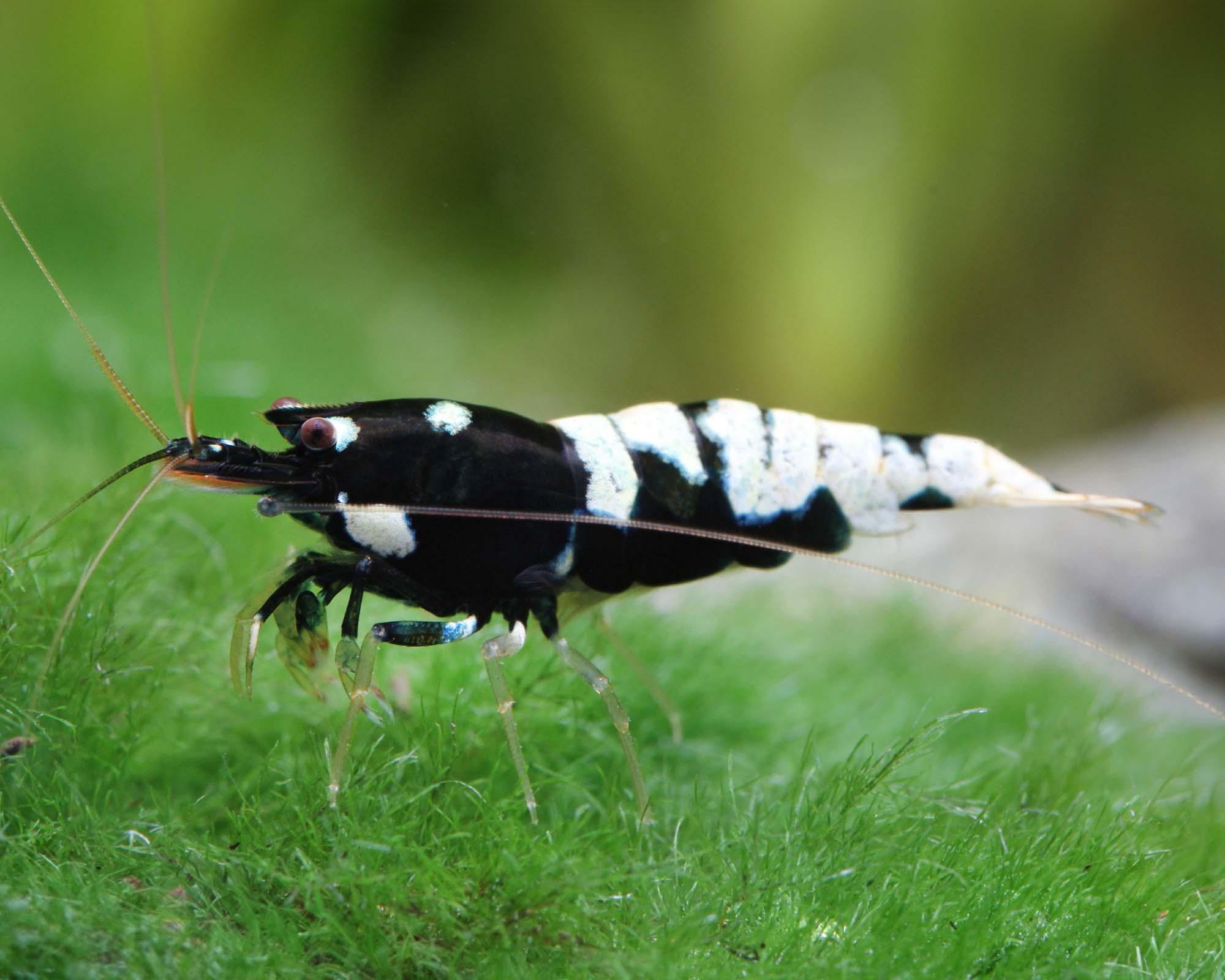
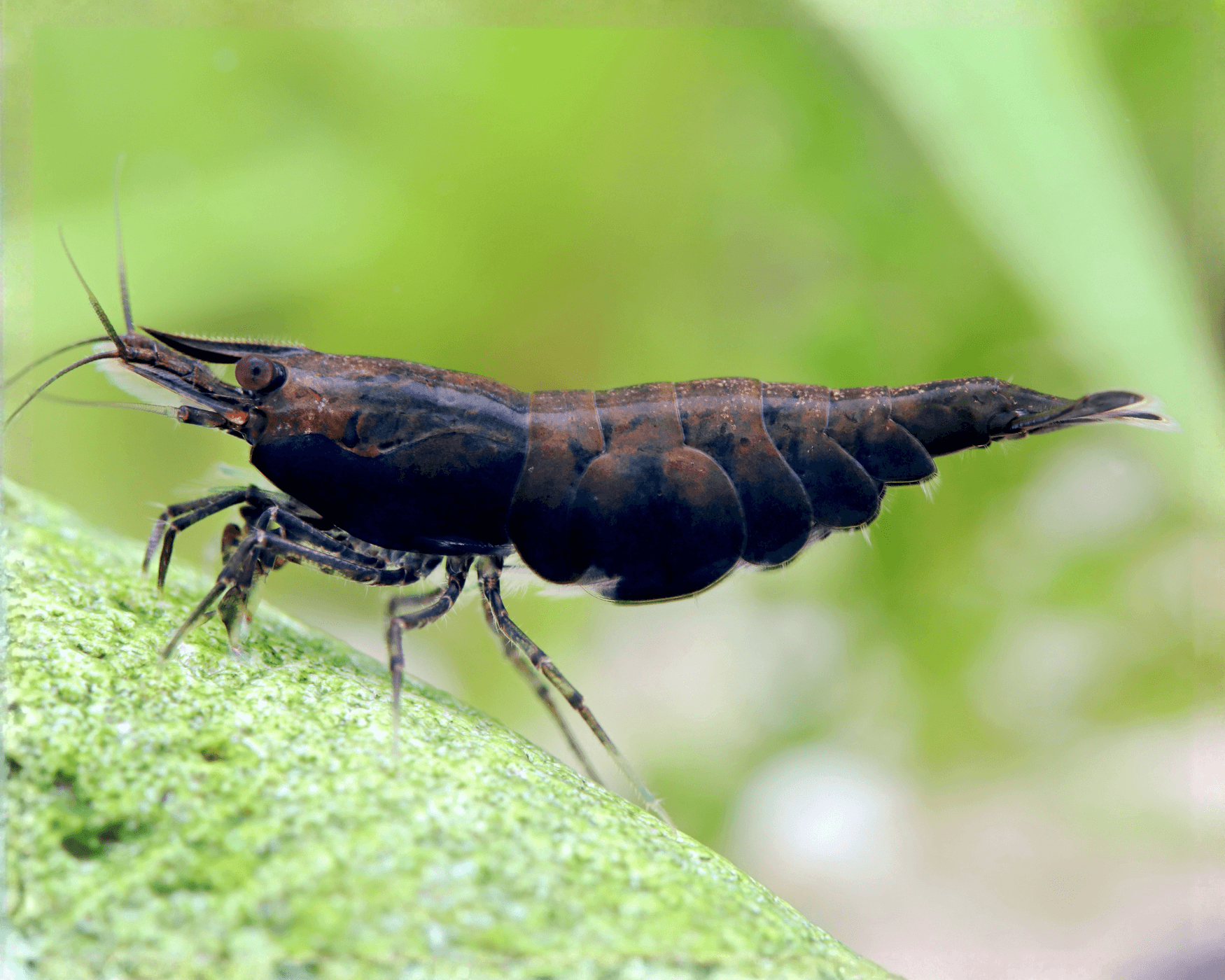
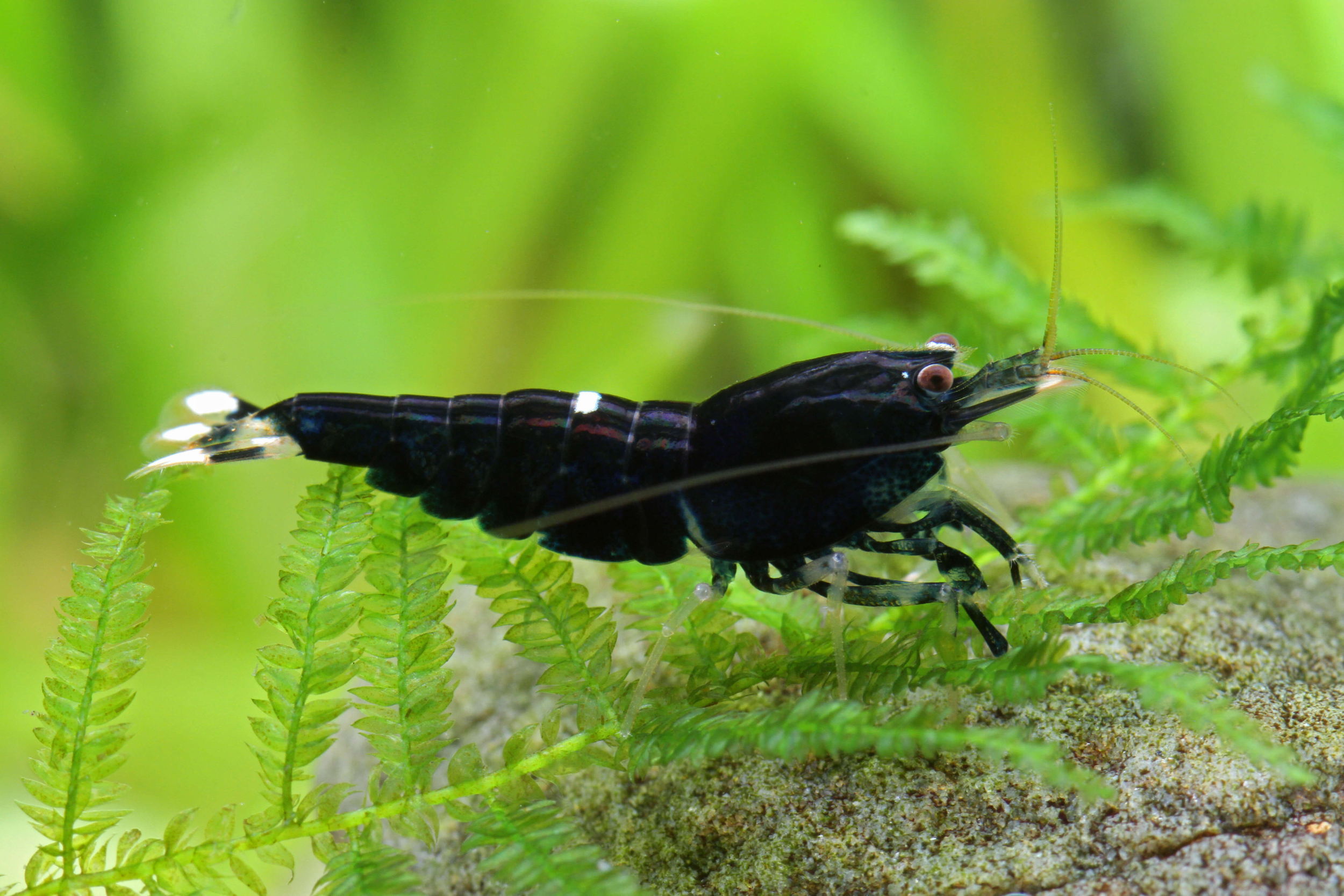
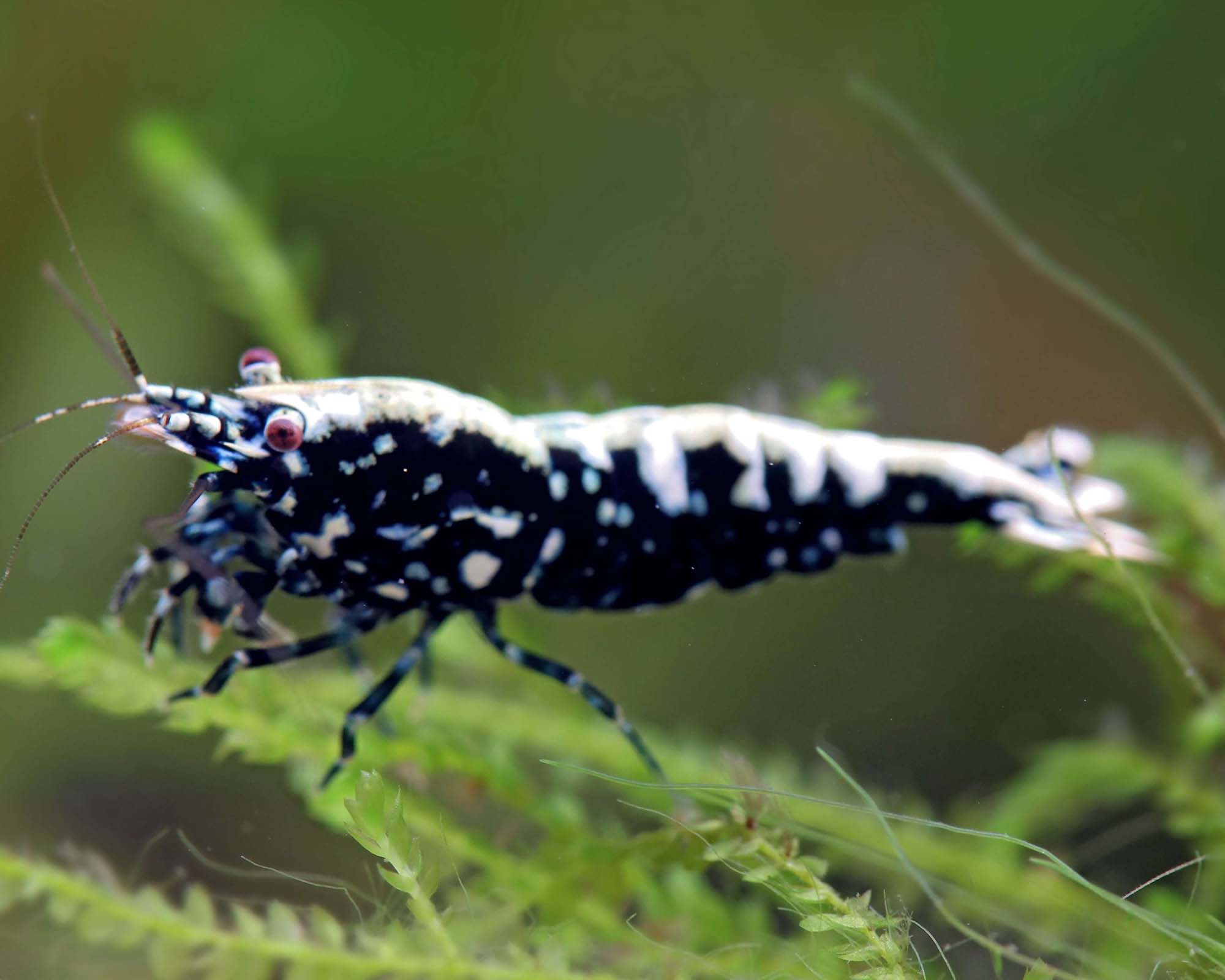
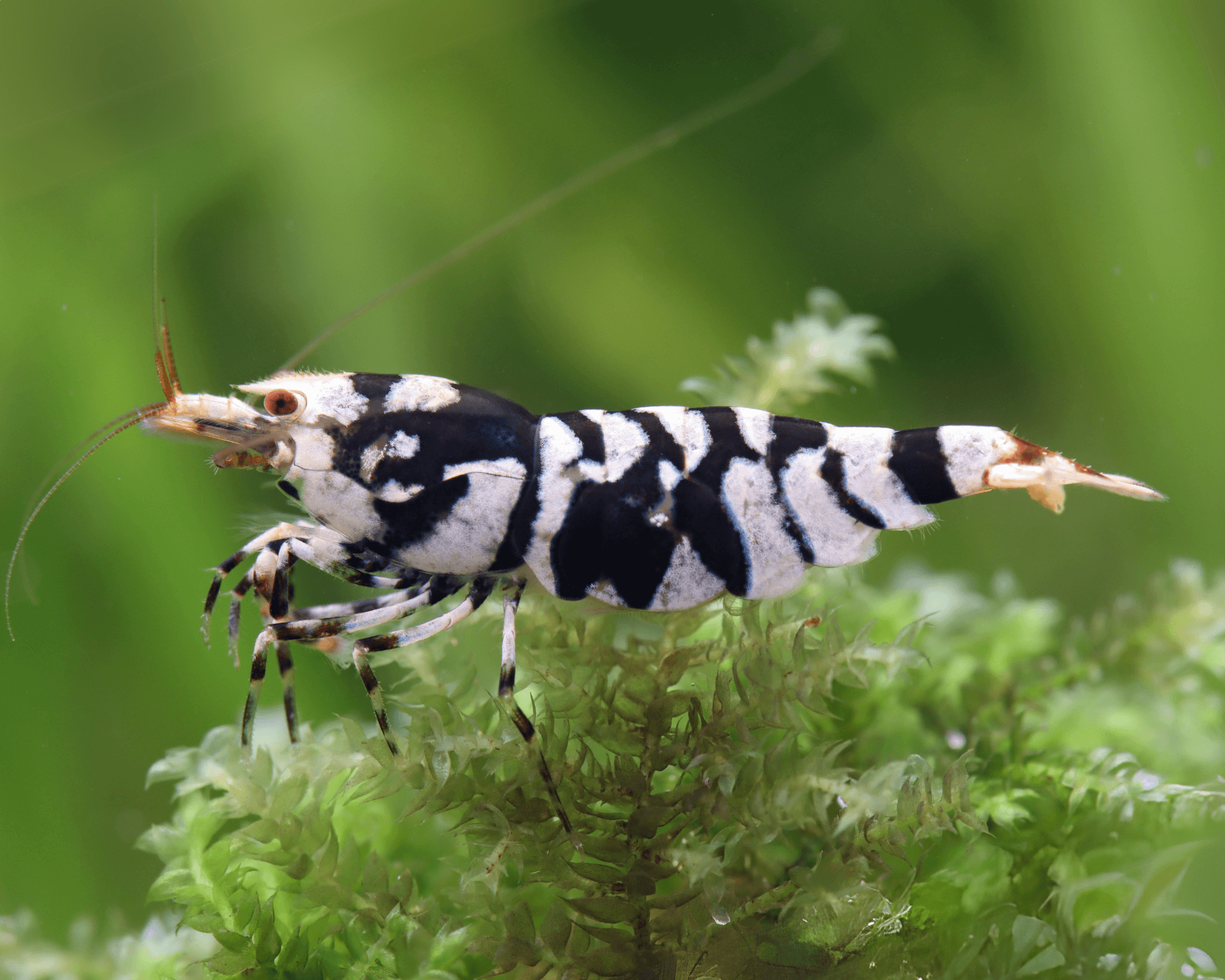
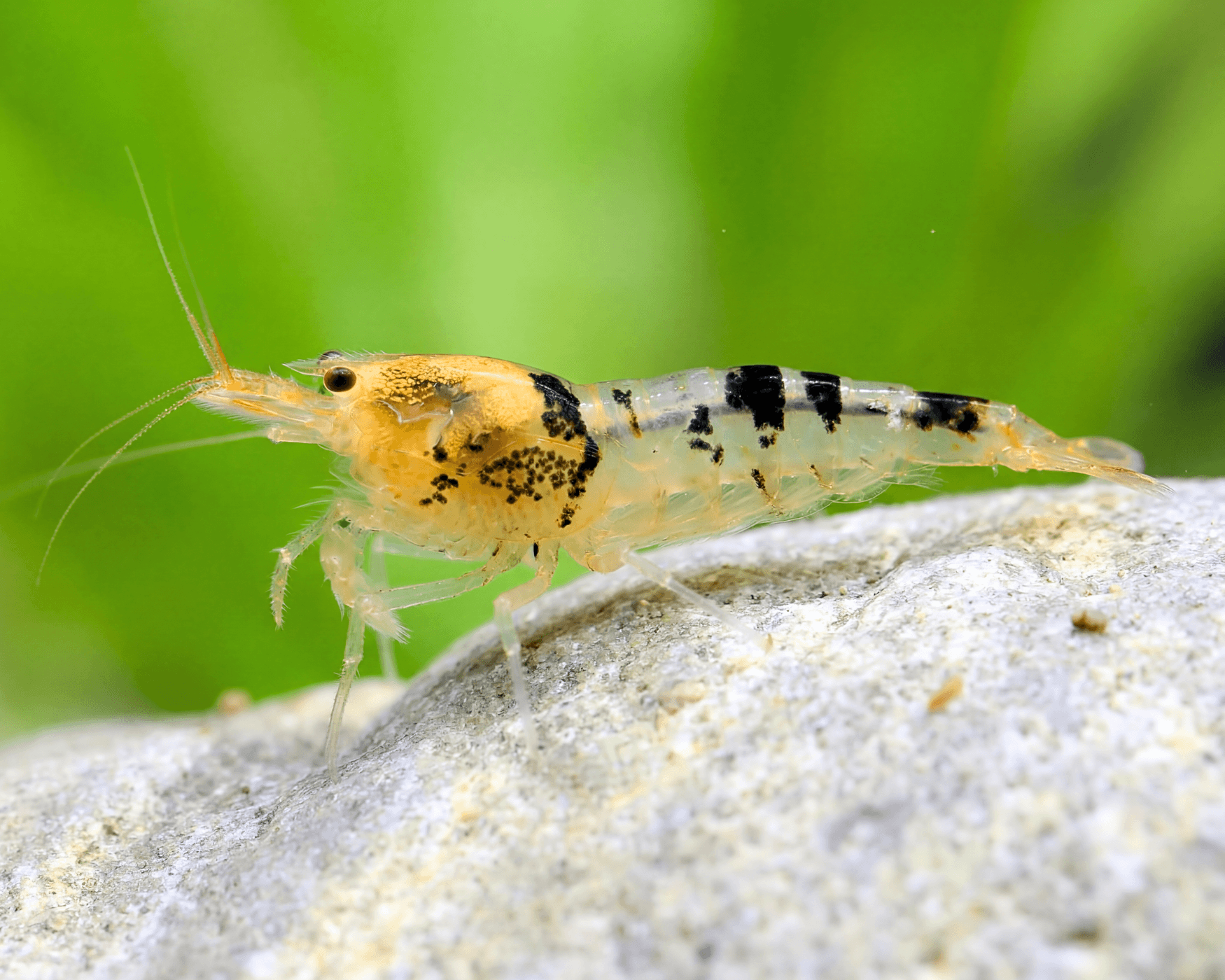
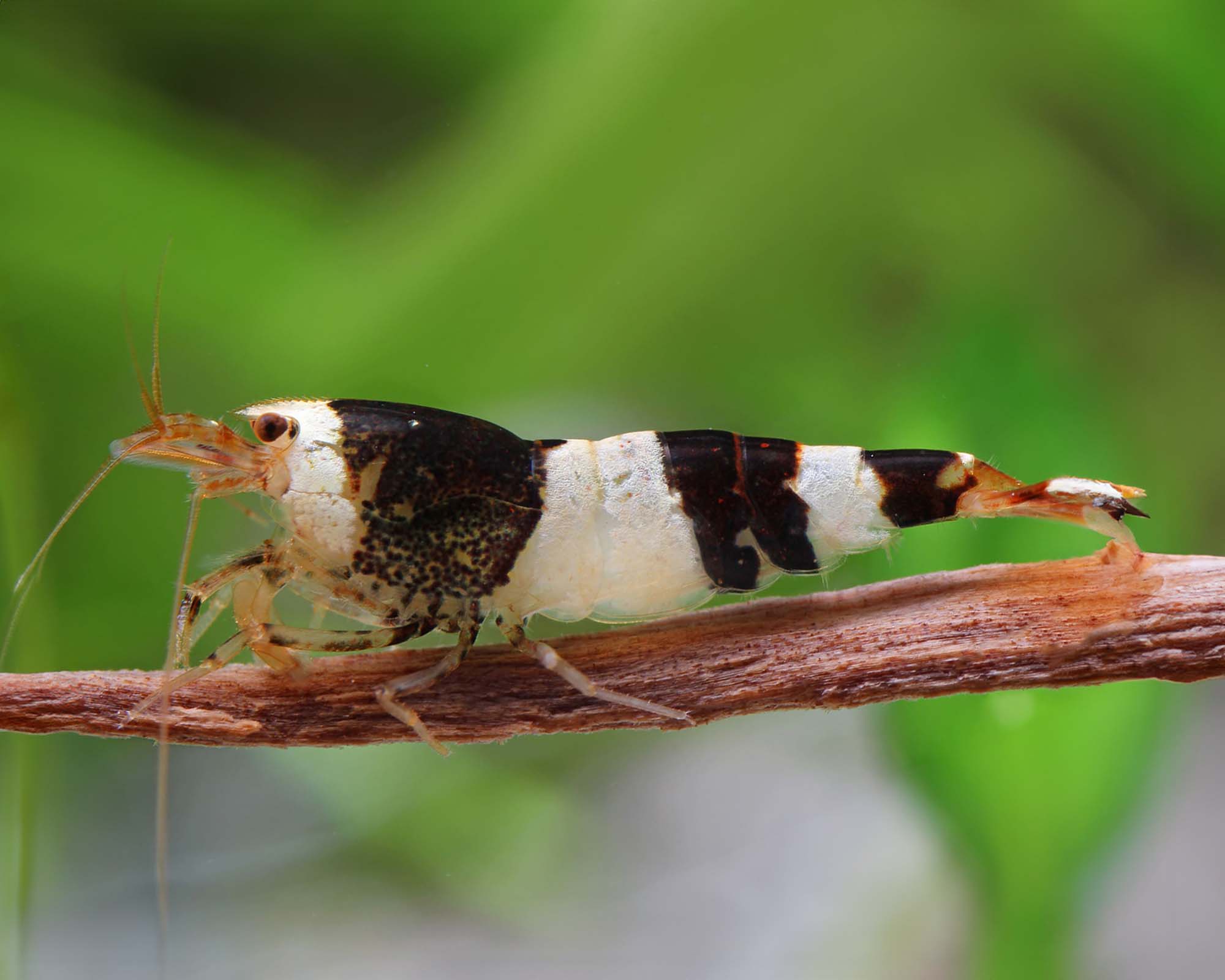
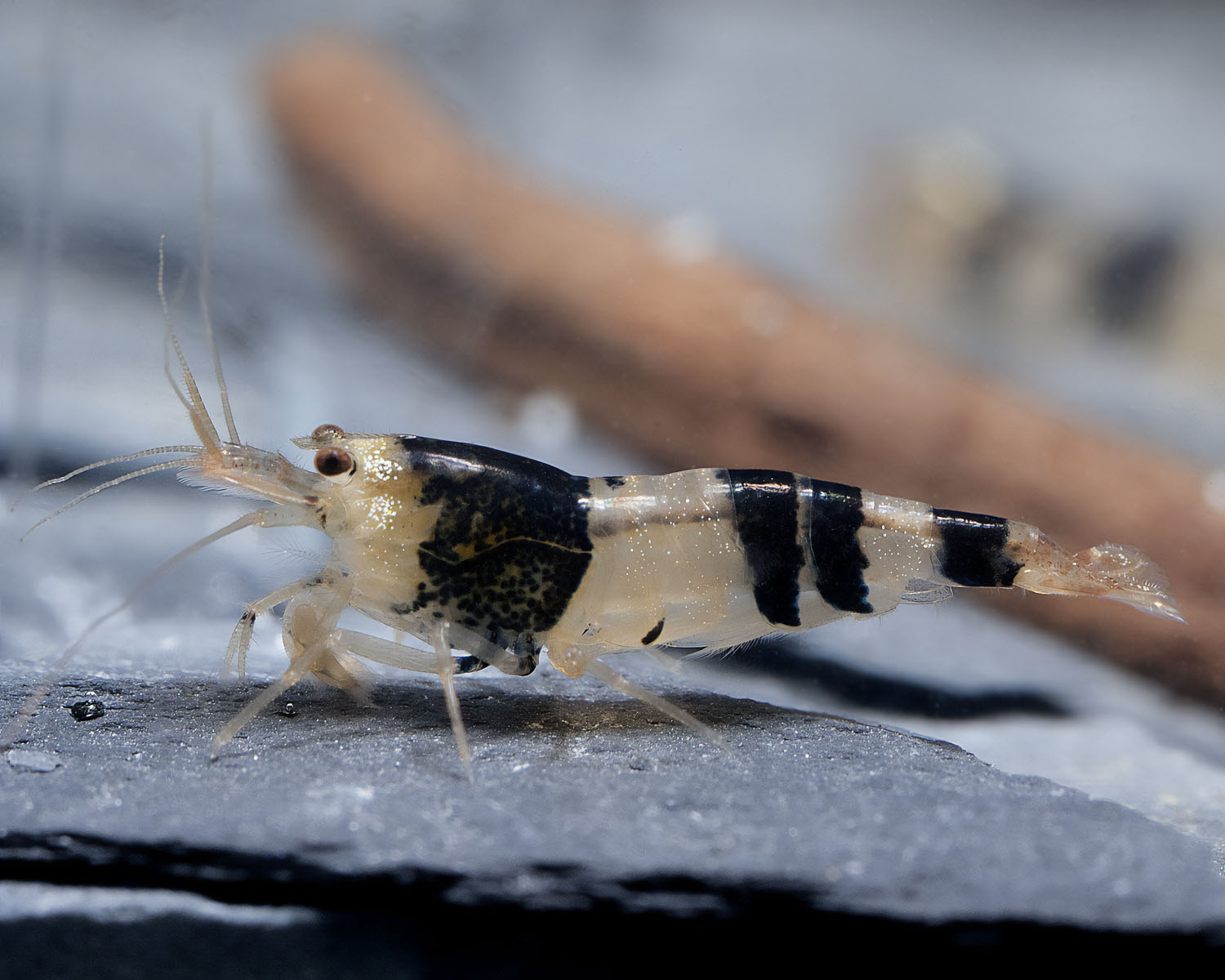
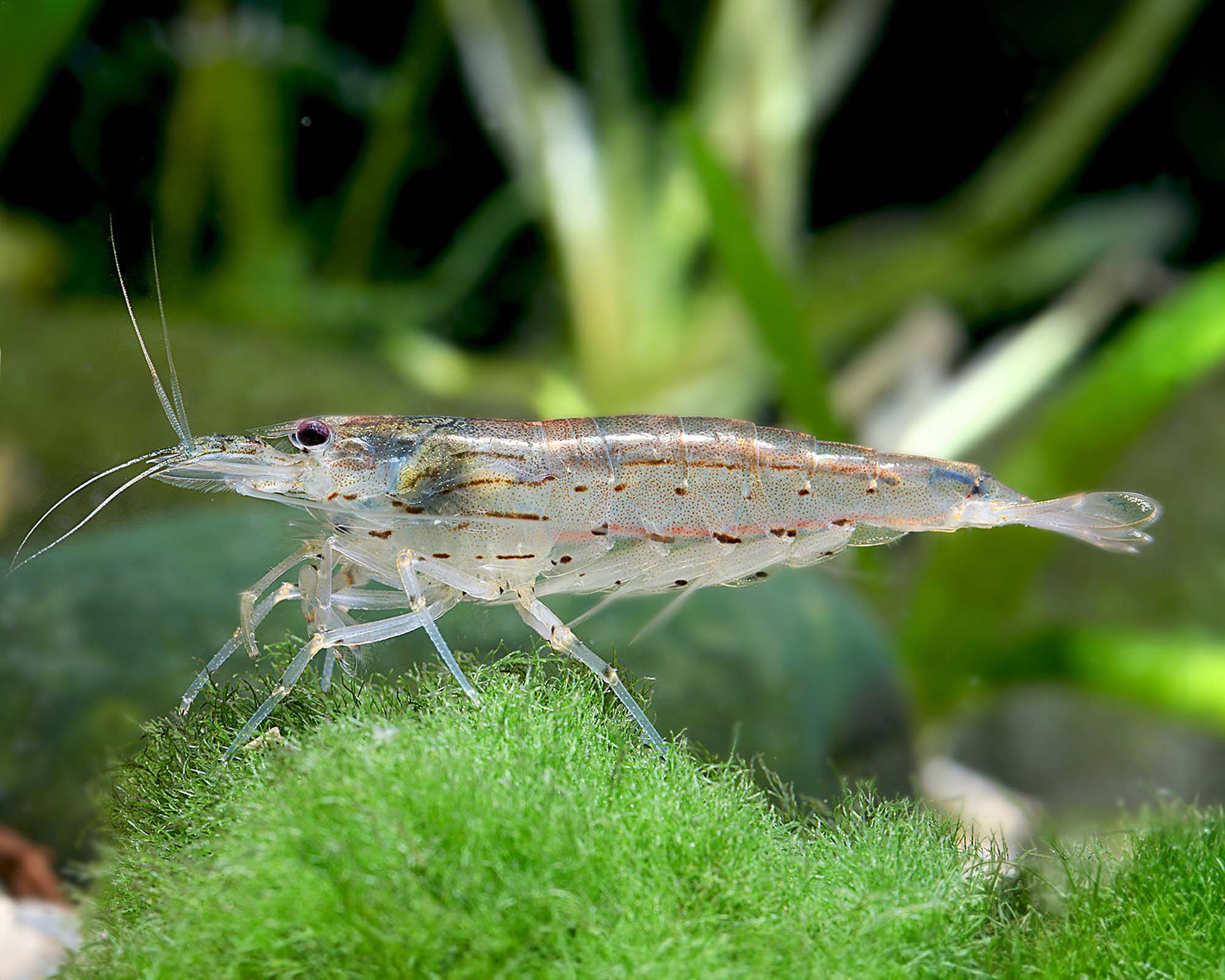
Tibee is an aquarium trade name rather than a consistently defined species. It generally refers to tiger-bee hybrid Caridina lines combining traits associated with tiger shrimp and bee shrimp. The supplied label is Caridina logemanni mariae, but the exact taxonomic status and parentage of individual Tibee animals can be uncertain. The shrimp shown has an opaque white body with strong black bands and irregular black patches, plus transparent areas and orange tones on the appendages. Appearance alone cannot confirm its precise lineage.
Habitat and aquarium setup
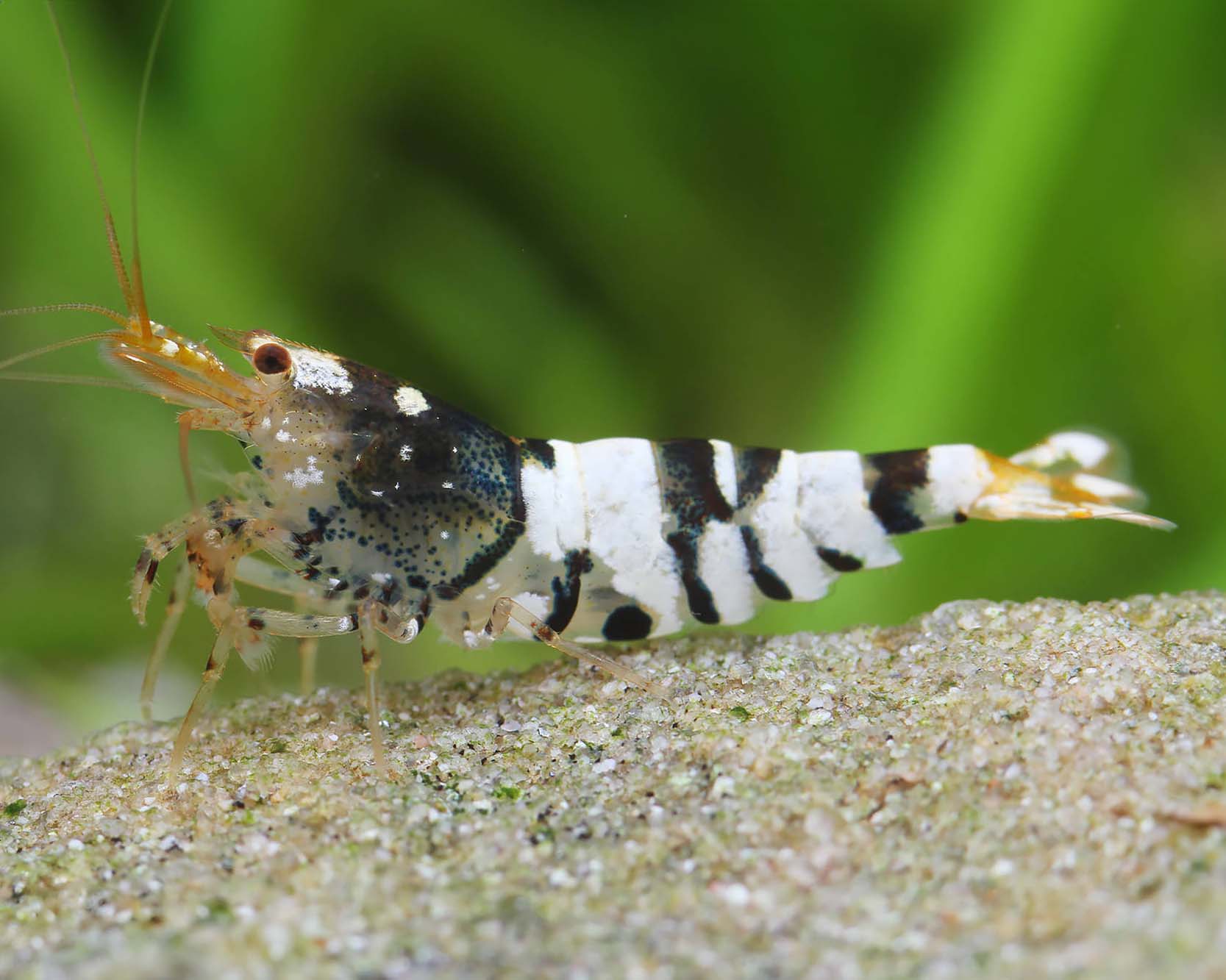
Because Tibee is a selectively bred aquarium line, it has no single confirmed natural habitat. Its bee-shrimp ancestry is associated with cool, soft, mineral-poor freshwater environments, so a mature aquarium should provide stable conditions rather than strong current or frequent disturbance. Use inert or shrimp-appropriate substrate, mosses and fine-leaved plants for grazing, wood or leaf litter for cover, and a sponge-covered intake. A practical starting volume is about 20 litres or more, with a larger footprint preferred for colonies.
Water parameters
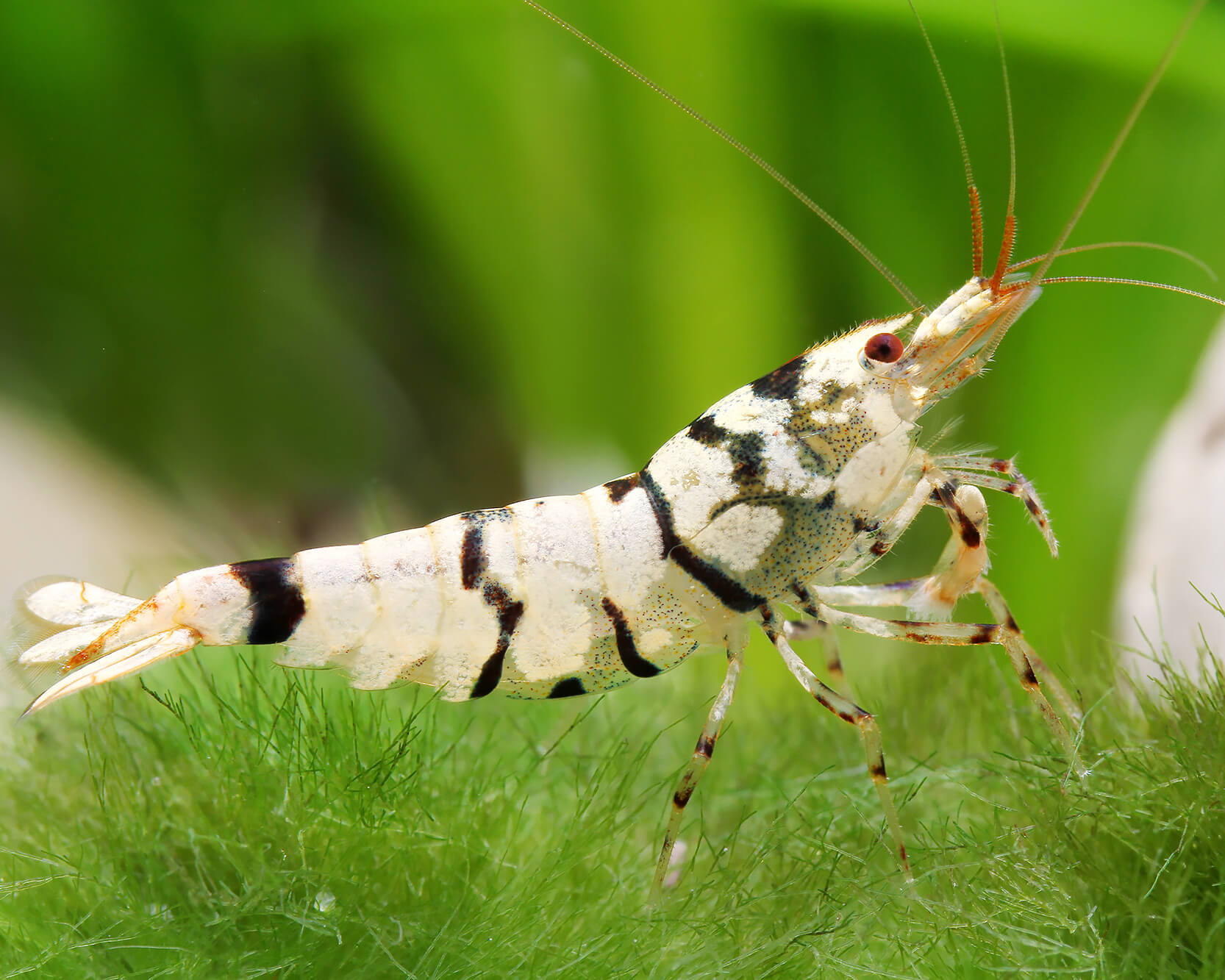
Aim for 20-24 °C and pH 5.8-6.8. Keep the water soft and only mildly buffered, with low carbonate hardness and enough general hardness to support a sound exoskeleton; many keepers use remineralized reverse-osmosis water for consistency. Avoid detectable ammonia and nitrite, keep nitrate low, and match temperature and mineral content carefully during water changes. Stability is more important than chasing an exact number. Test replacement water before use and make gradual changes.
Feeding
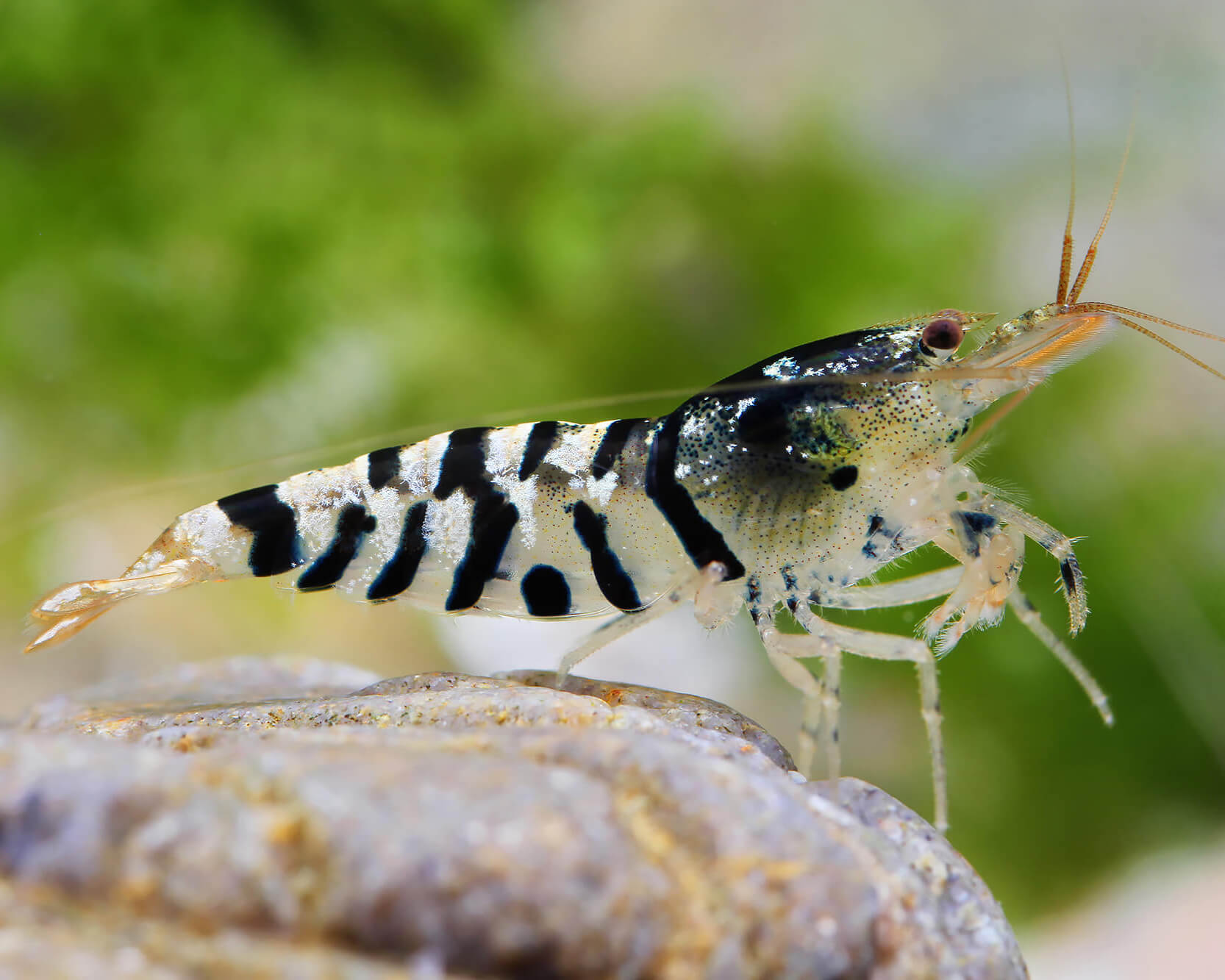
Tibees graze continuously on biofilm, microorganisms, and fine organic material on plants, wood, and hard surfaces. Offer a small amount of quality shrimp food containing vegetable matter and appropriate minerals once or a few times weekly, adjusting to the colony size. Blanched spinach, nettle, or similar vegetables can provide variety. Remove uneaten food promptly, especially in a small aquarium. Leaf litter can supply cover and a slow food source as it softens.
Tank mates
The safest companions are other peaceful shrimp of compatible water requirements and small, non-predatory snails. Avoid fish if raising a colony is the priority, because even small fish may eat newly hatched shrimplets. Do not mix Tibees with other Caridina breeding lines if preserving a particular pattern or project is important; crossbreeding can produce unpredictable offspring. Avoid aggressive shrimp, crayfish, large snails that may disturb them, and any species known to prey on invertebrates.
Molting and health
Shrimp periodically shed the old exoskeleton to grow. A newly molted individual is soft and vulnerable, so dense plants, moss, leaf litter, and small crevices are important refuges. Do not remove a normal shed exoskeleton; consuming it helps recycle minerals. Failed molts are often linked to unstable water, unsuitable hardness, contamination, poor nutrition, or rapid changes. Use only shrimp-safe treatments, and avoid copper-based medications unless their safety for shrimp is specifically established.
Breeding
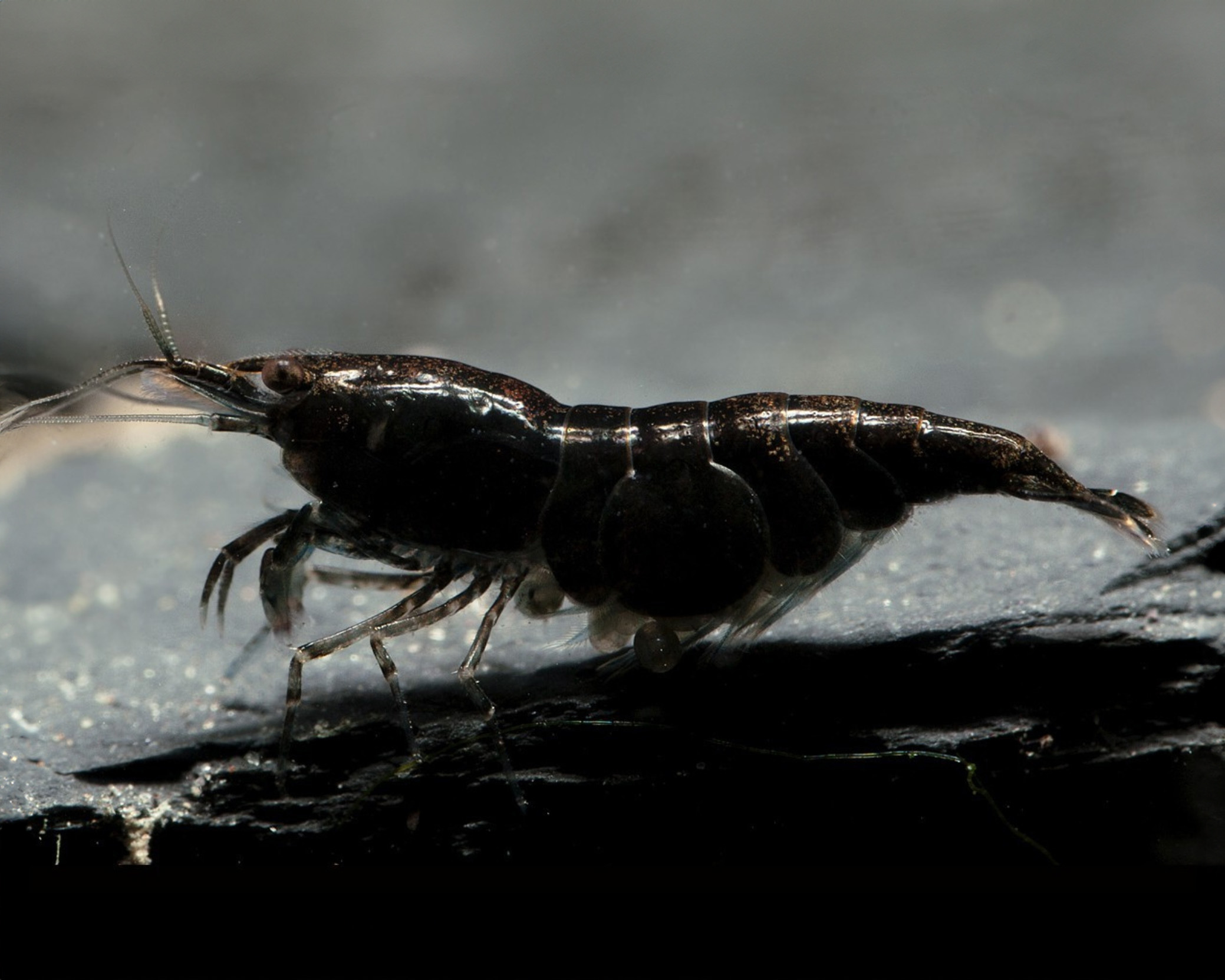
Tibees reproduce through direct development: females carry relatively large eggs beneath the abdomen, and the young hatch as miniature shrimp rather than free-swimming larvae. Provide a mature, biofilm-rich breeding aquarium, stable soft acidic water, gentle filtration, and abundant cover for juveniles. After a female molts, males may search actively for her and mating can occur. Young shrimp need microscopic food and grazing surfaces. Because Tibee parentage and genetics vary, offspring may show a wide range of black, white, transparent, and intermediate patterns; selective breeding requires separating juveniles by the traits being developed.
 - 1.webp)
 - 1.webp)
Leave your comments