Taxonomy and identification
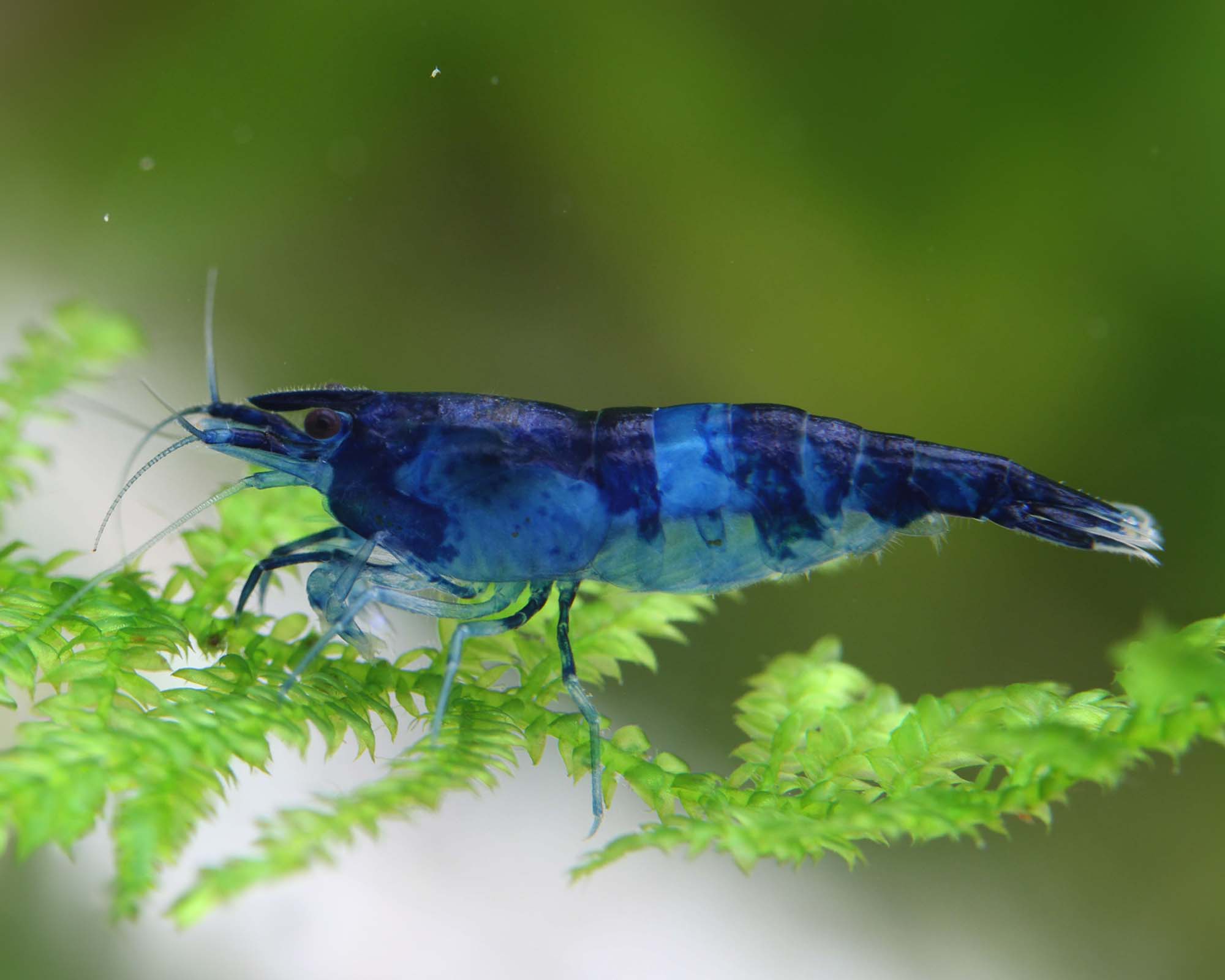
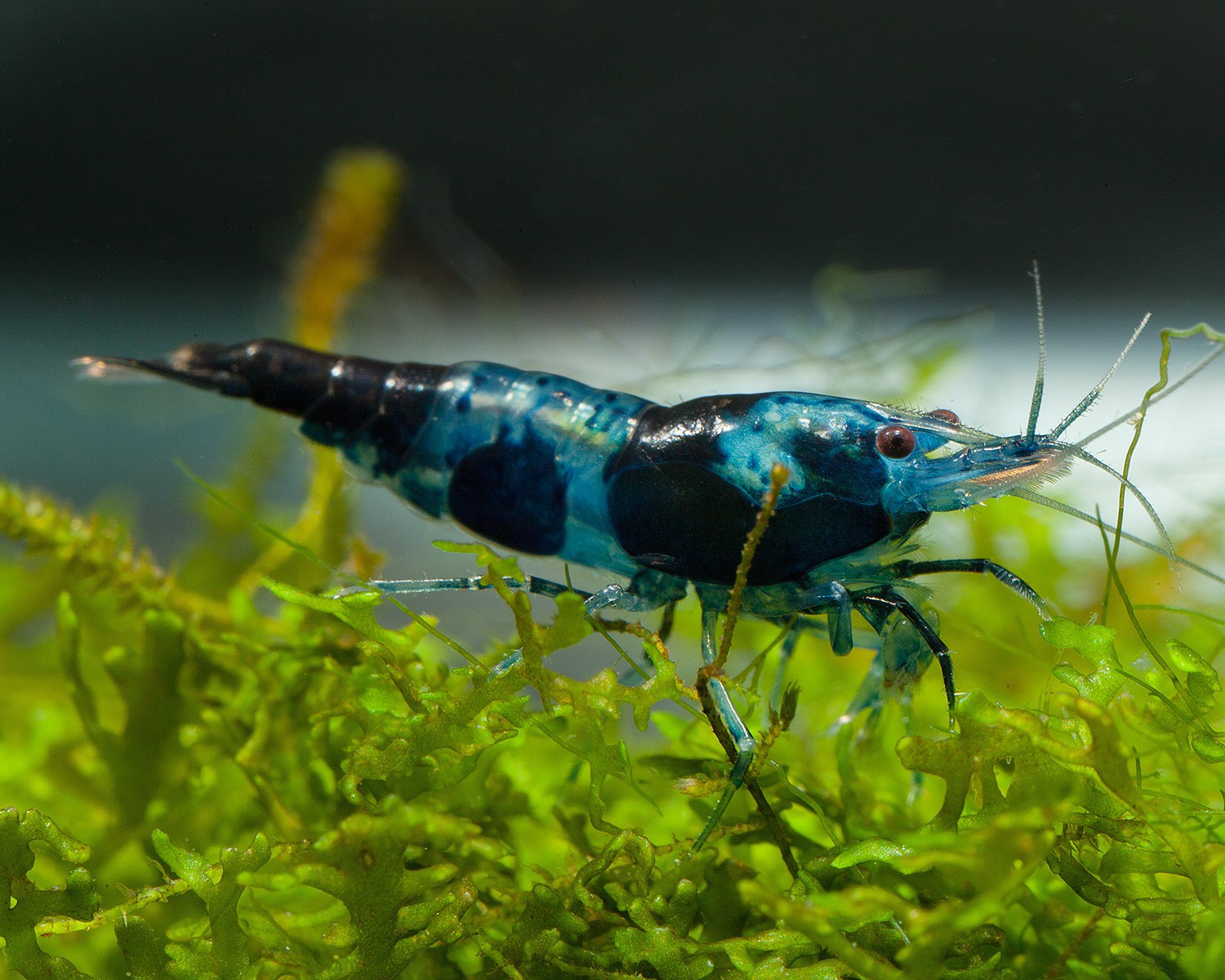
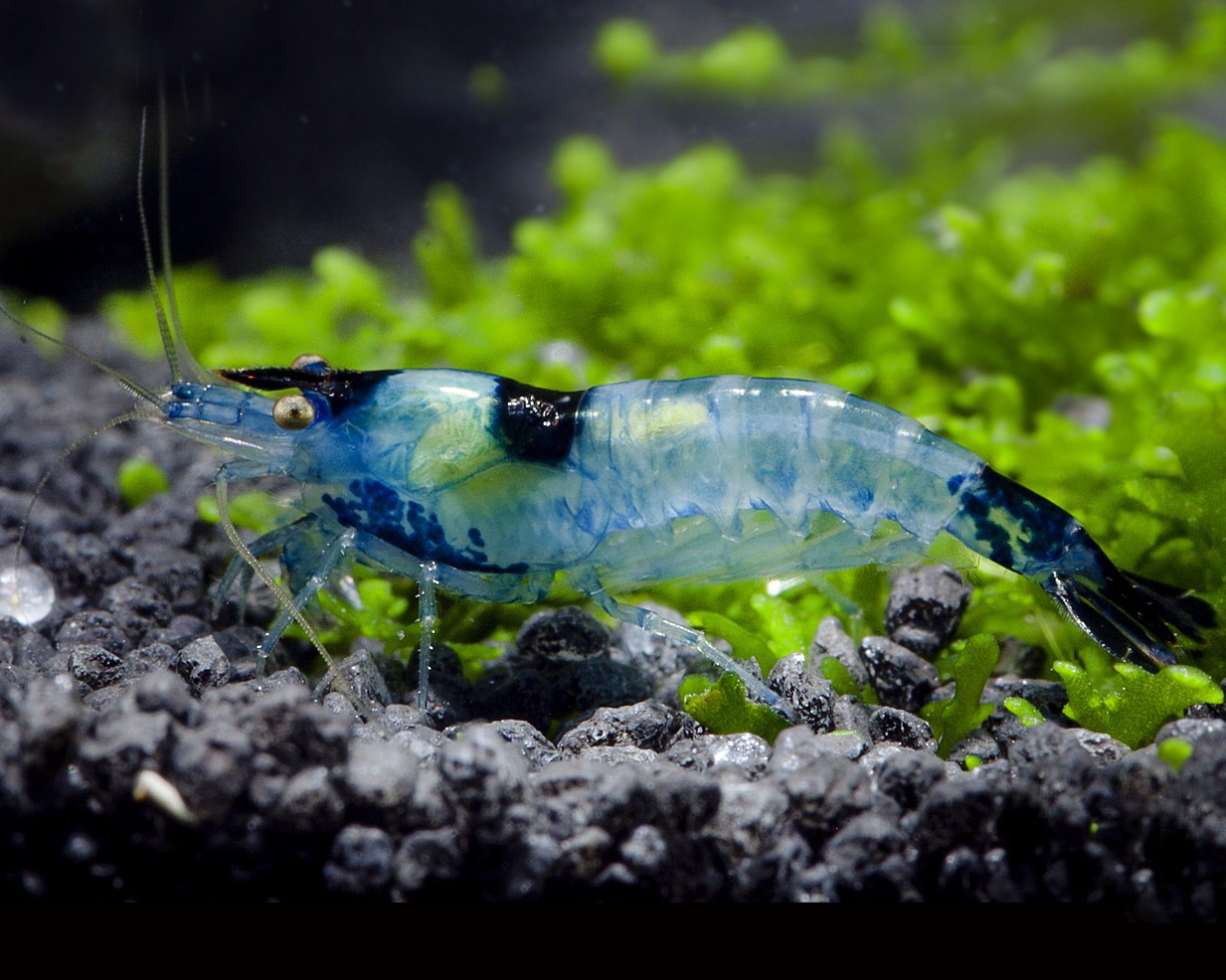
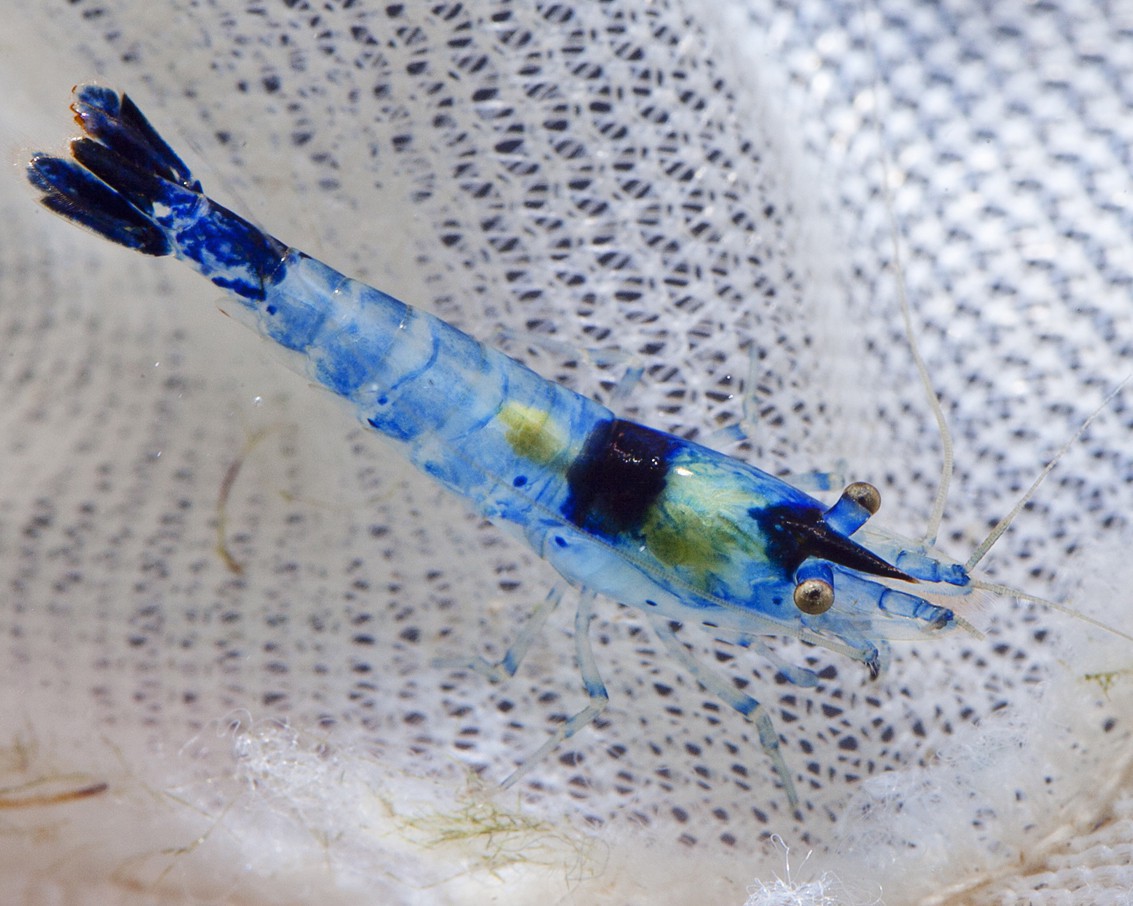
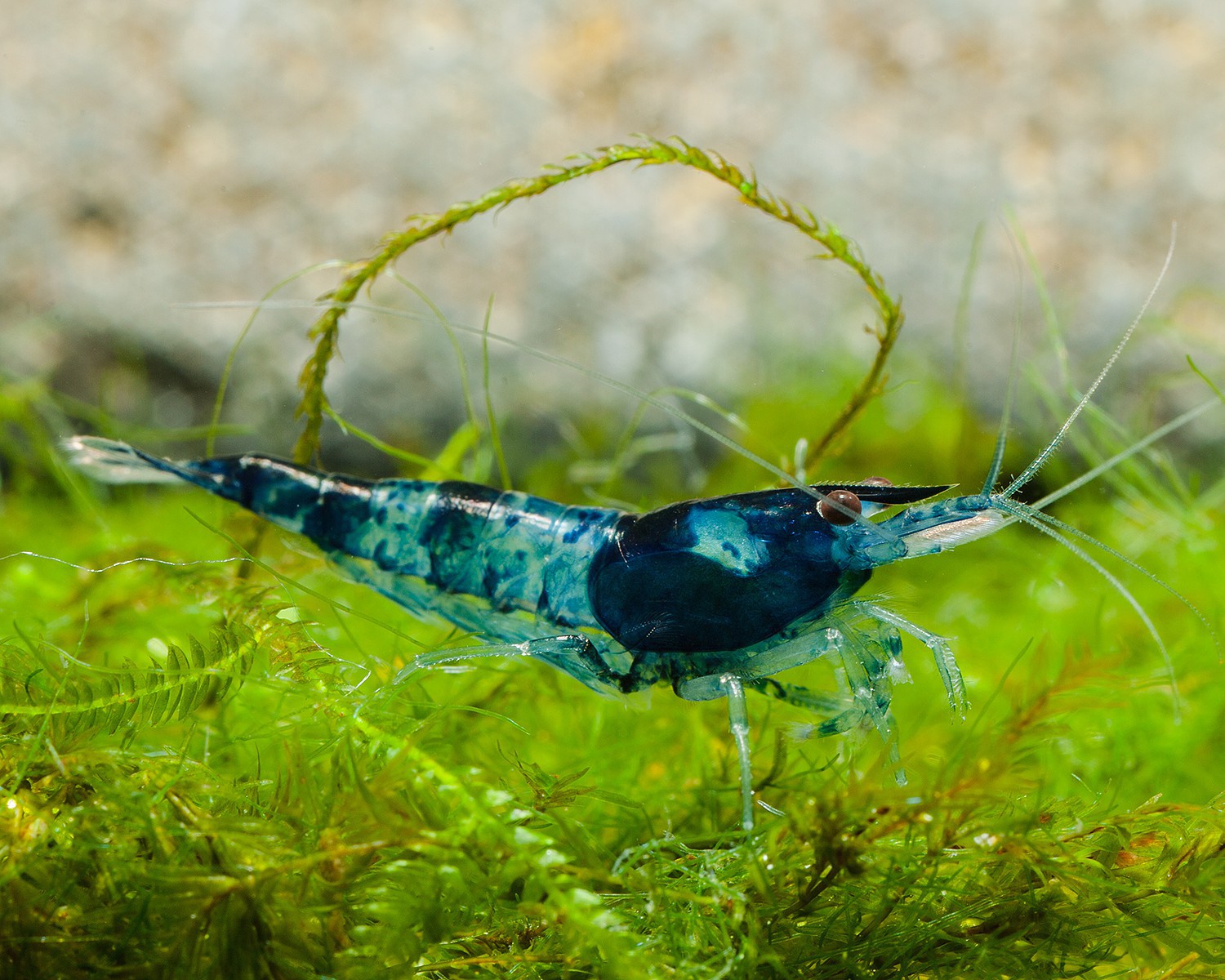
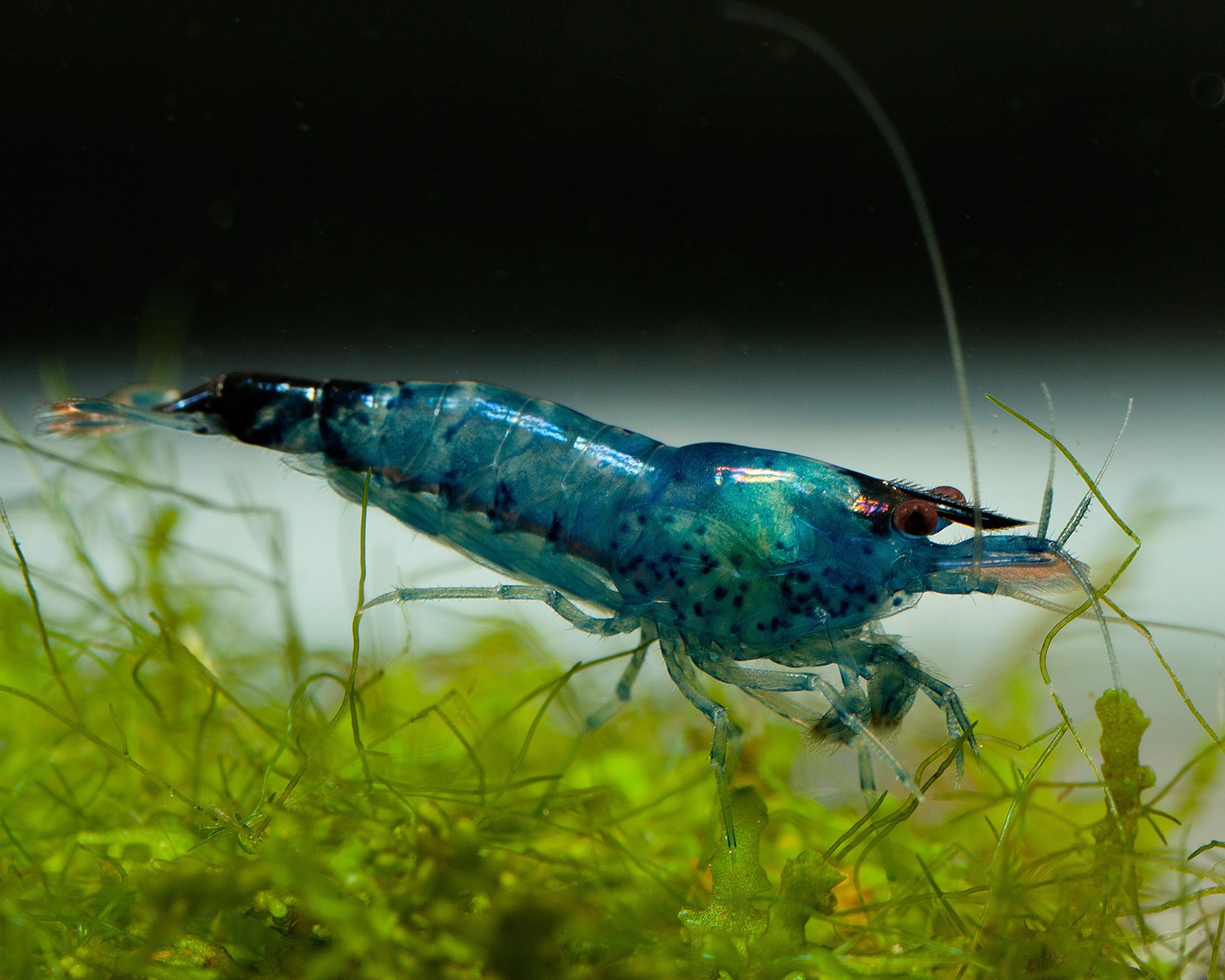
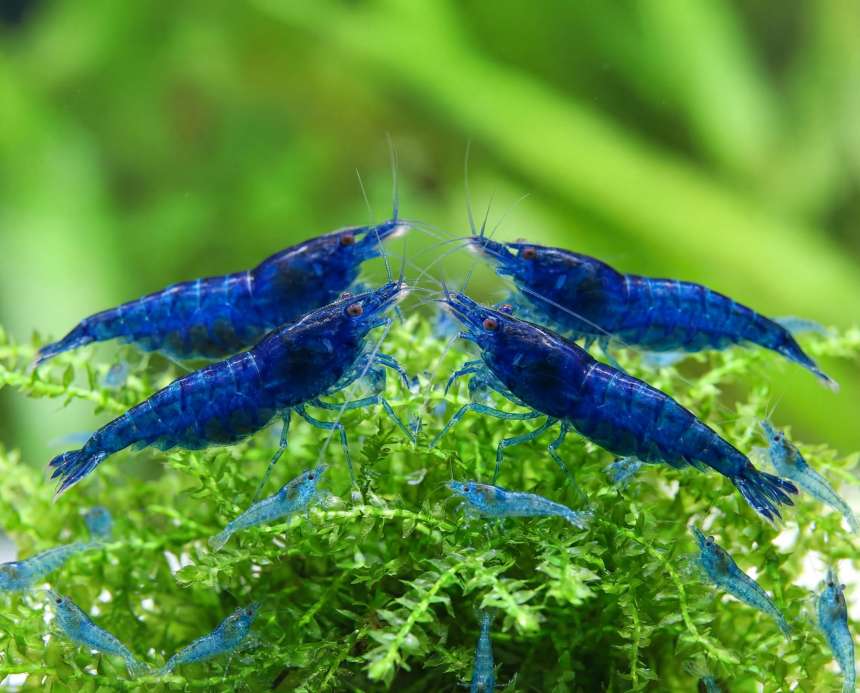
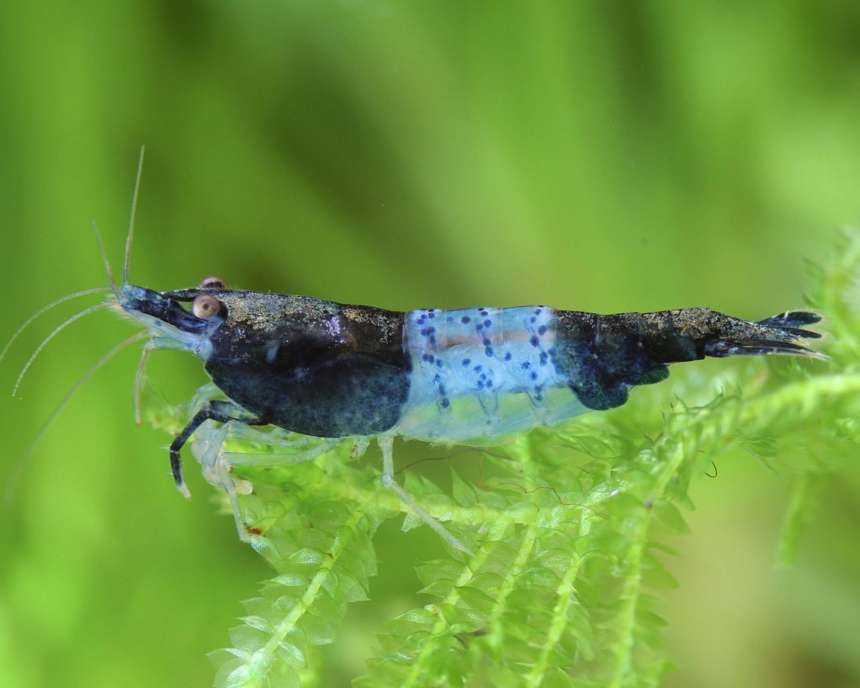
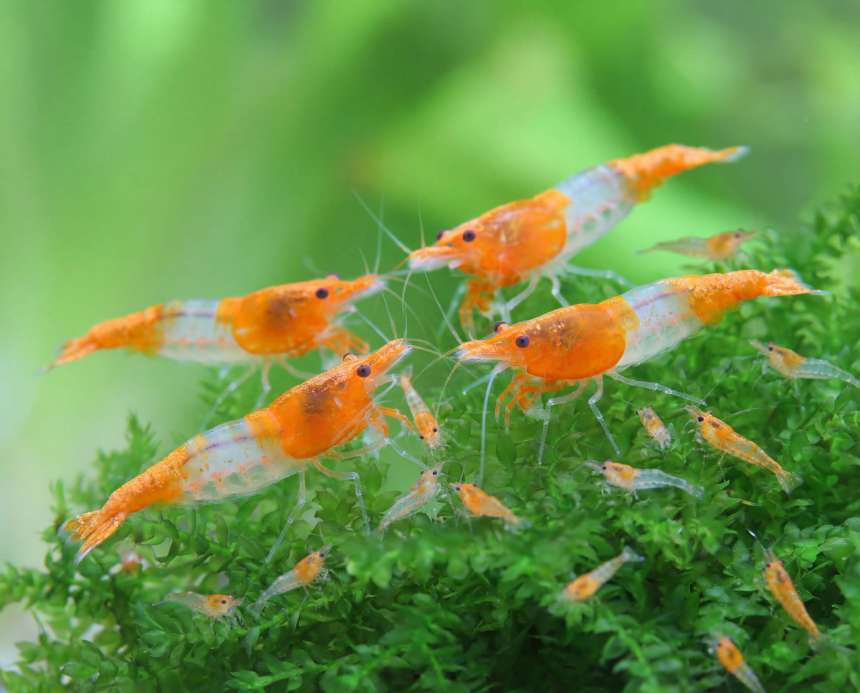
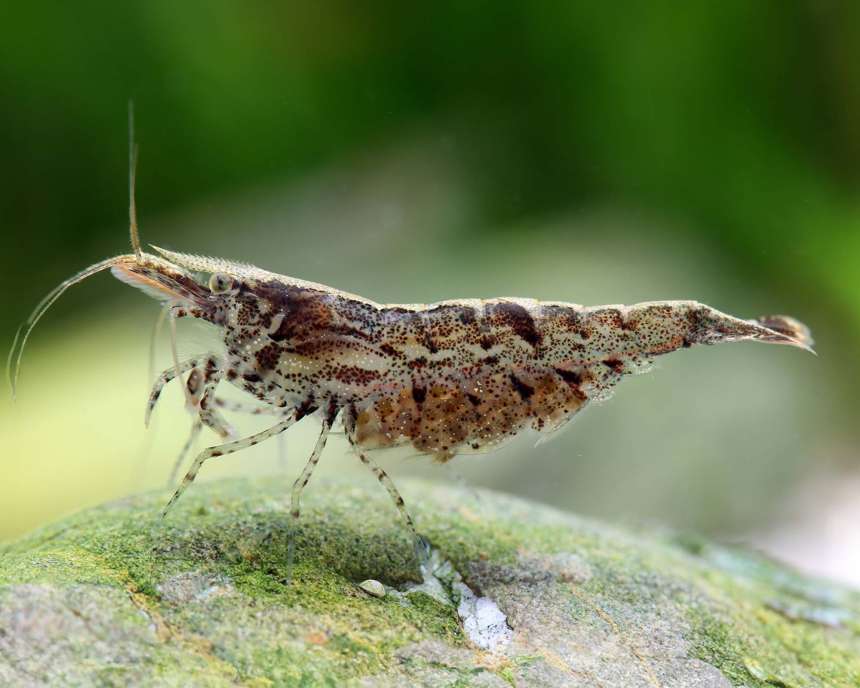
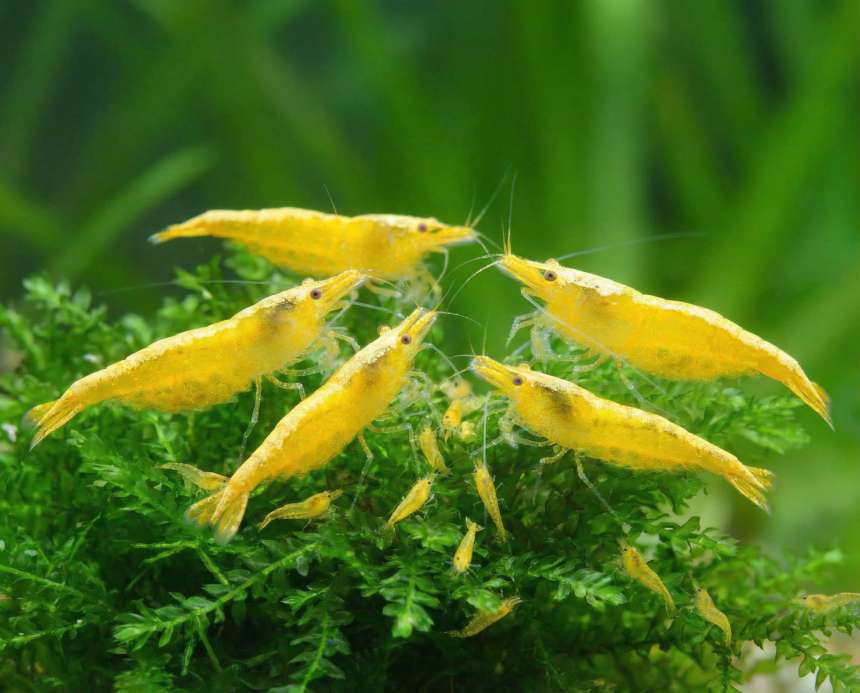
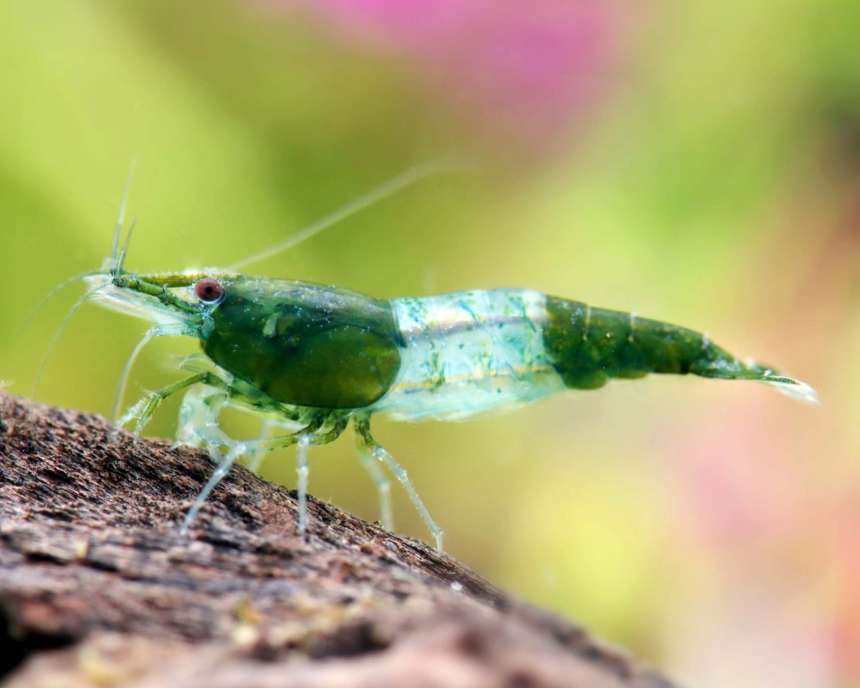
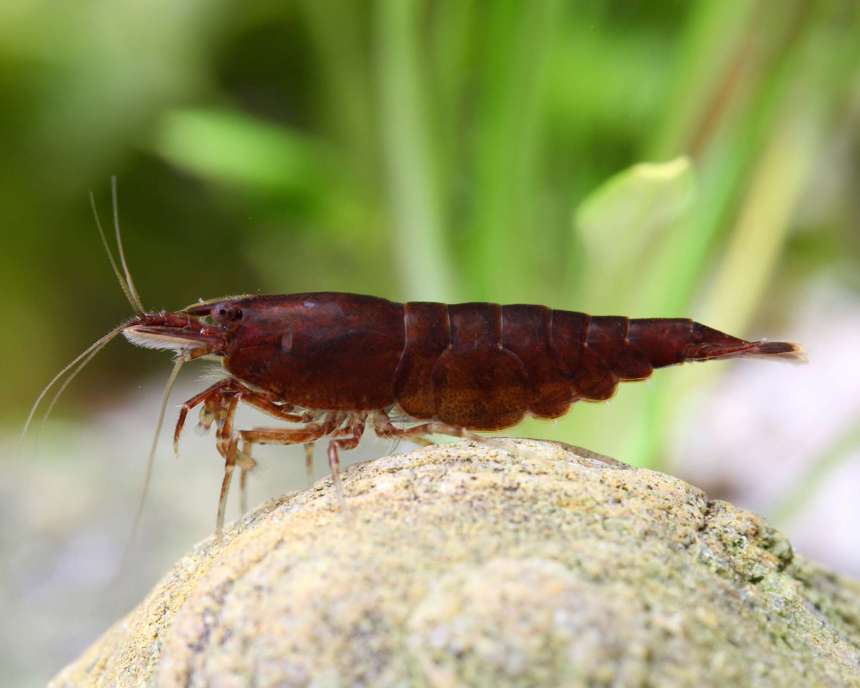
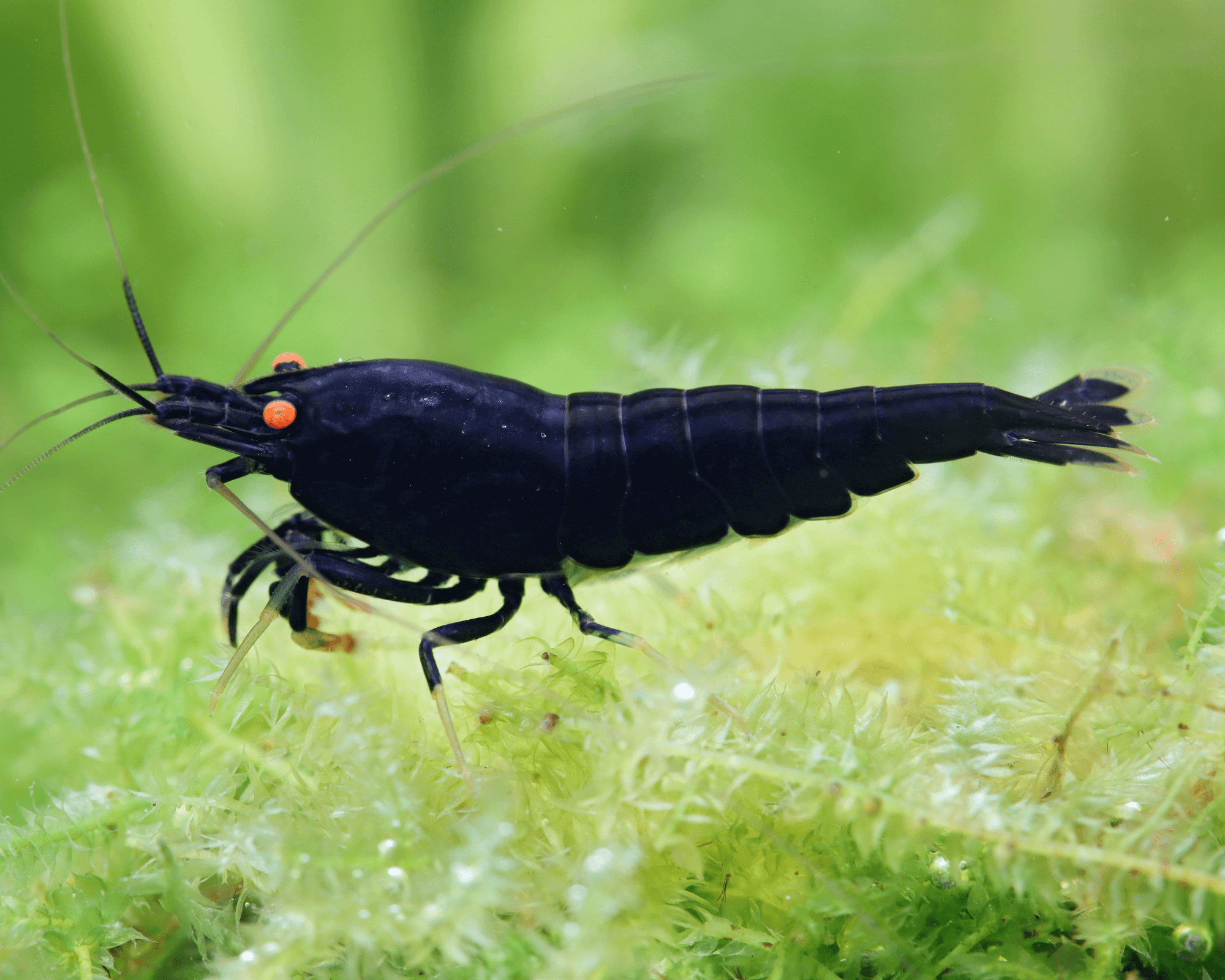
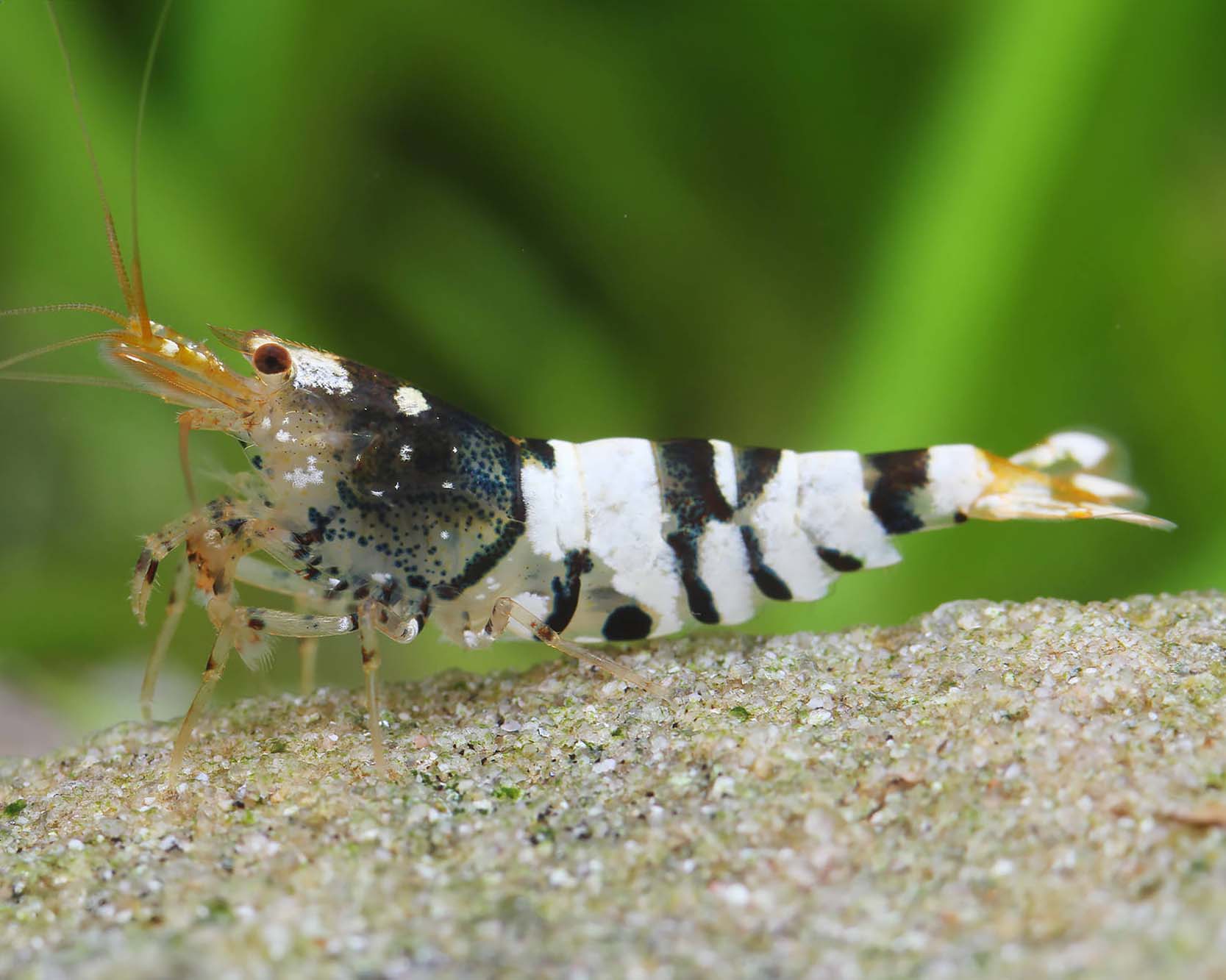
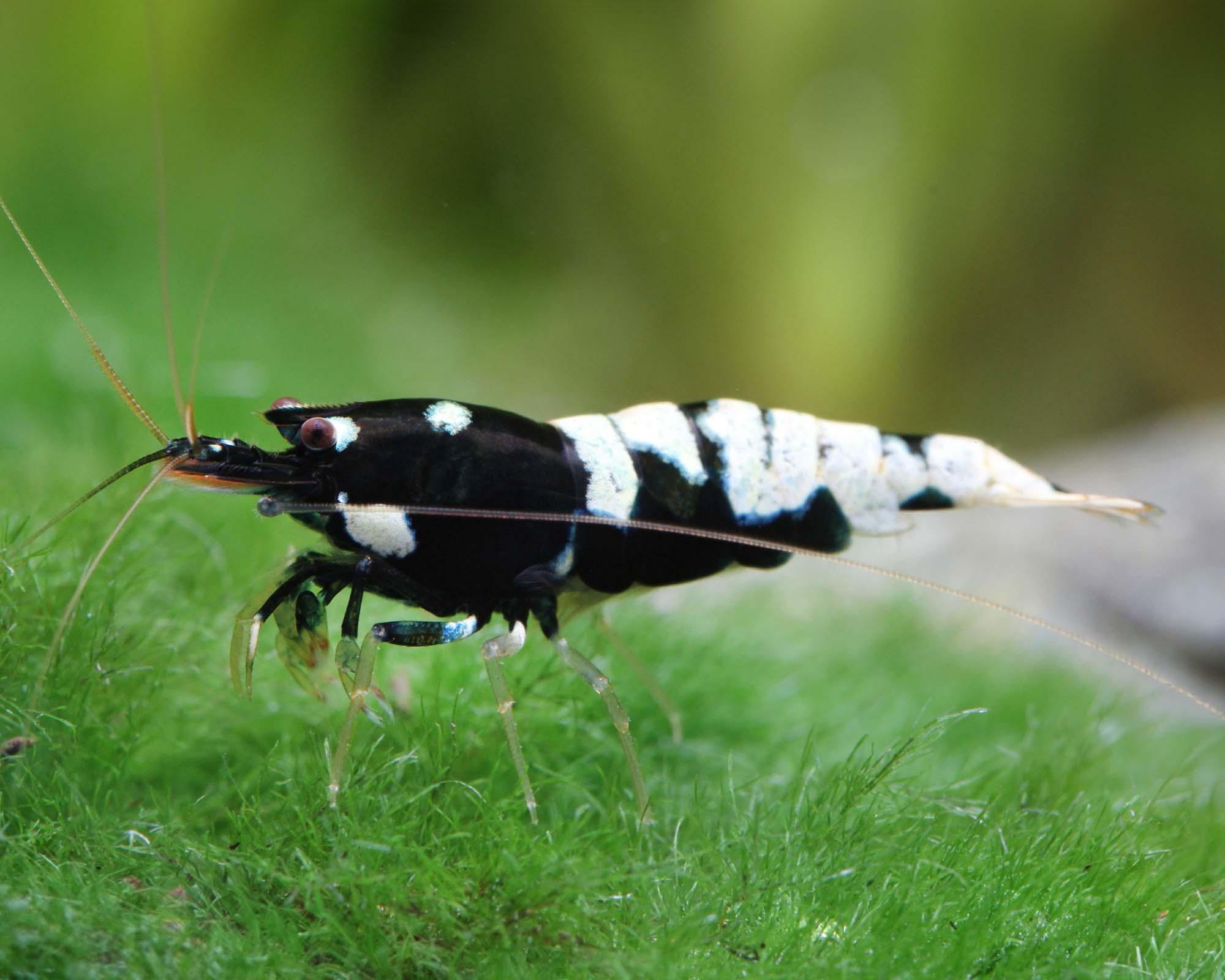
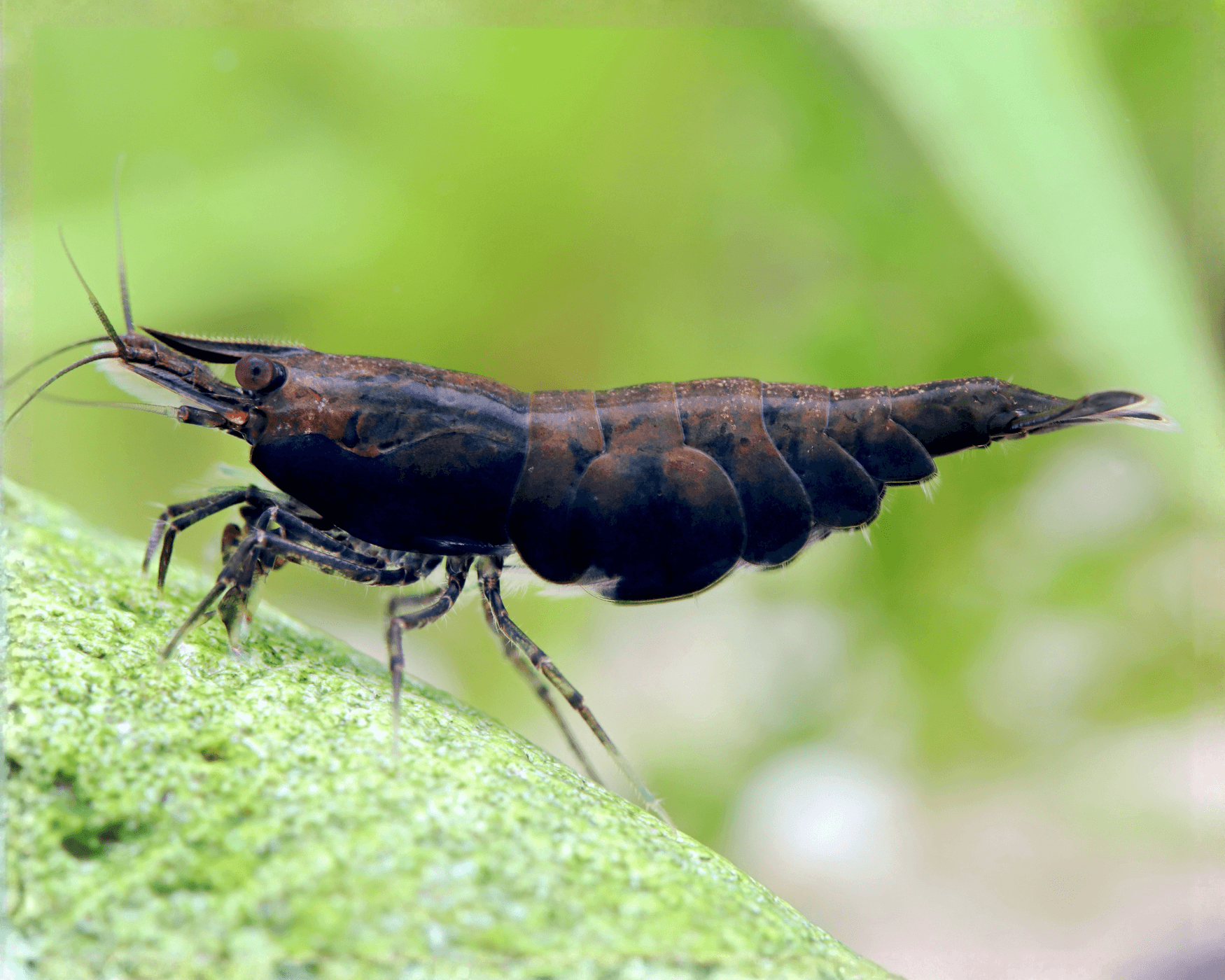
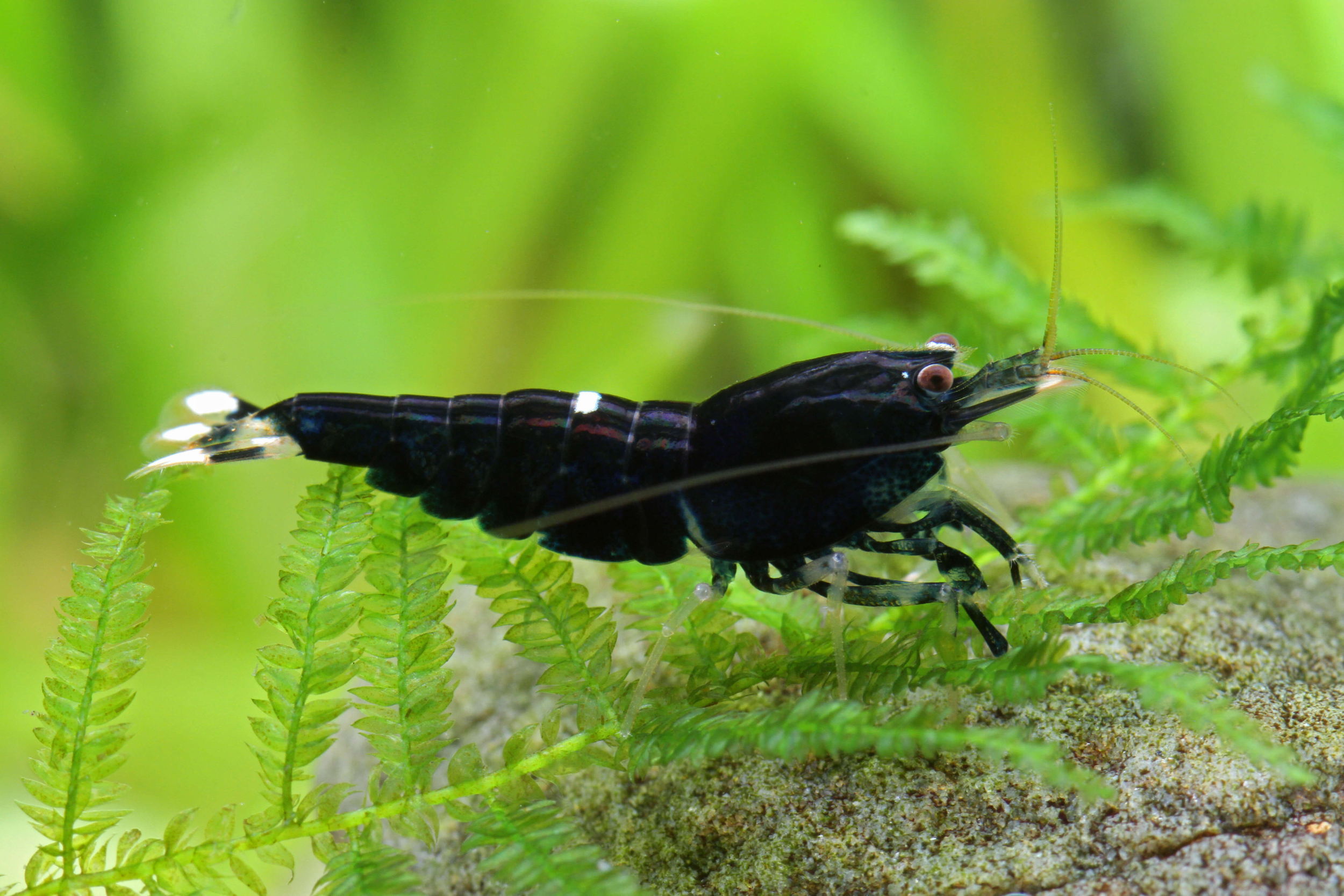
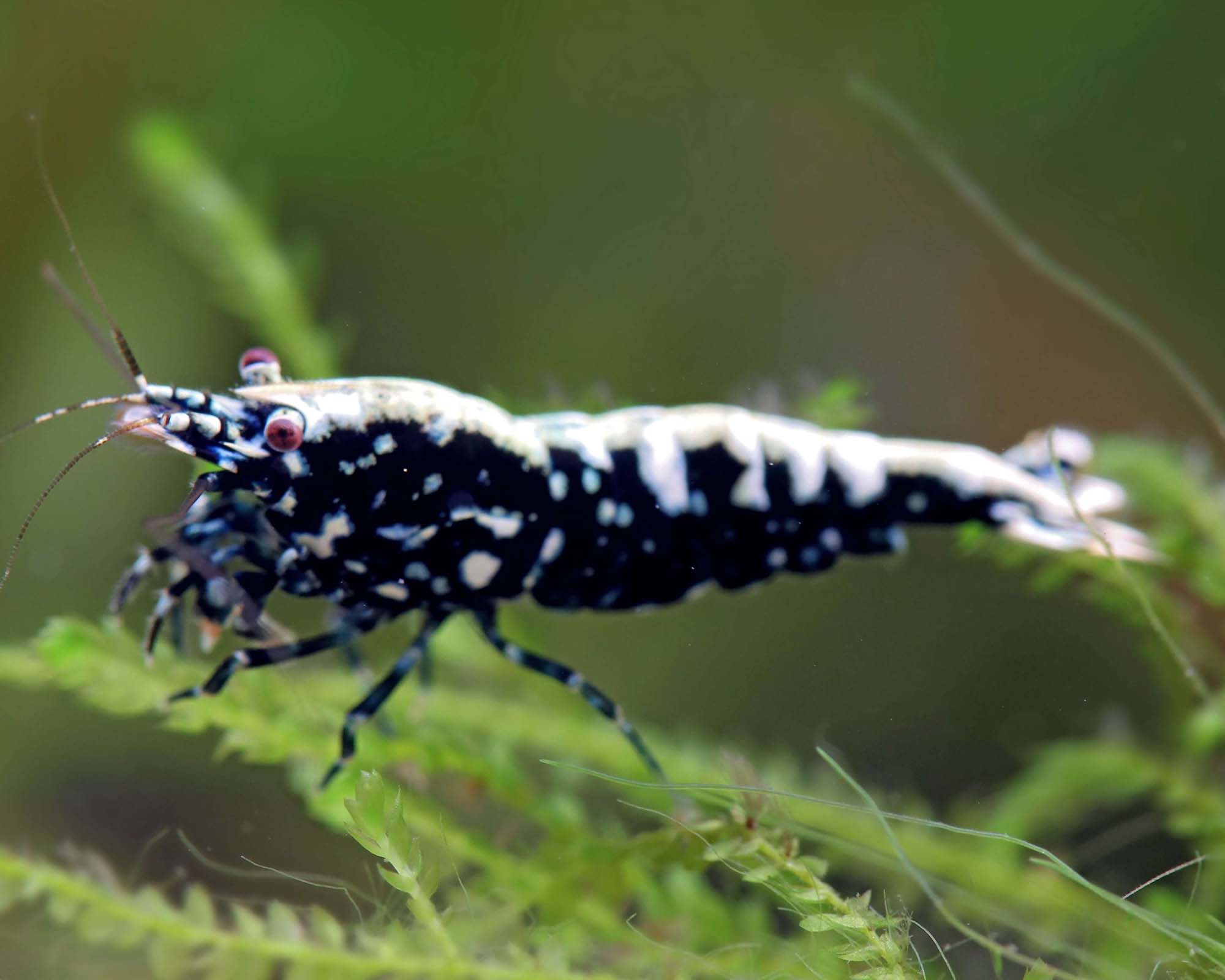
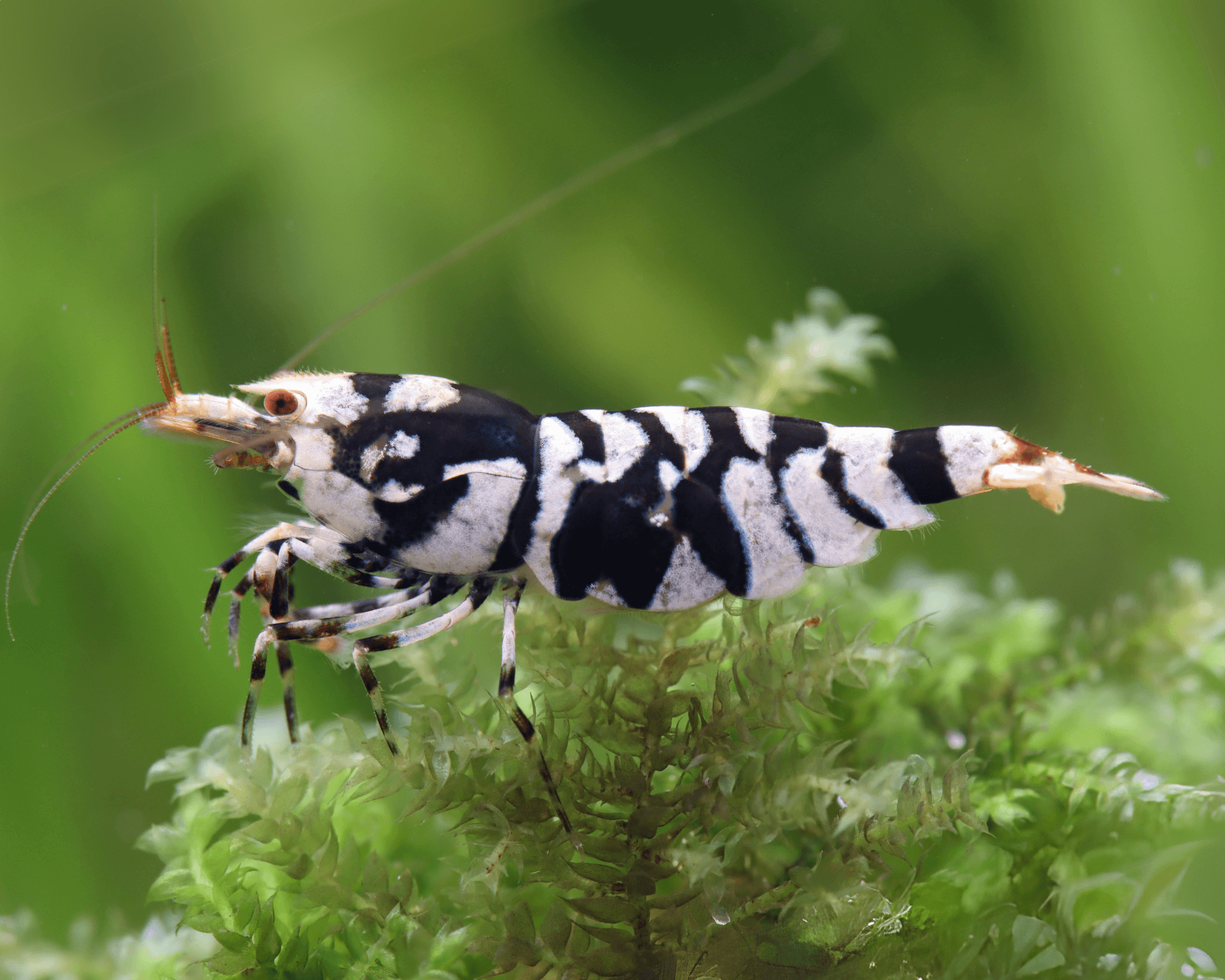
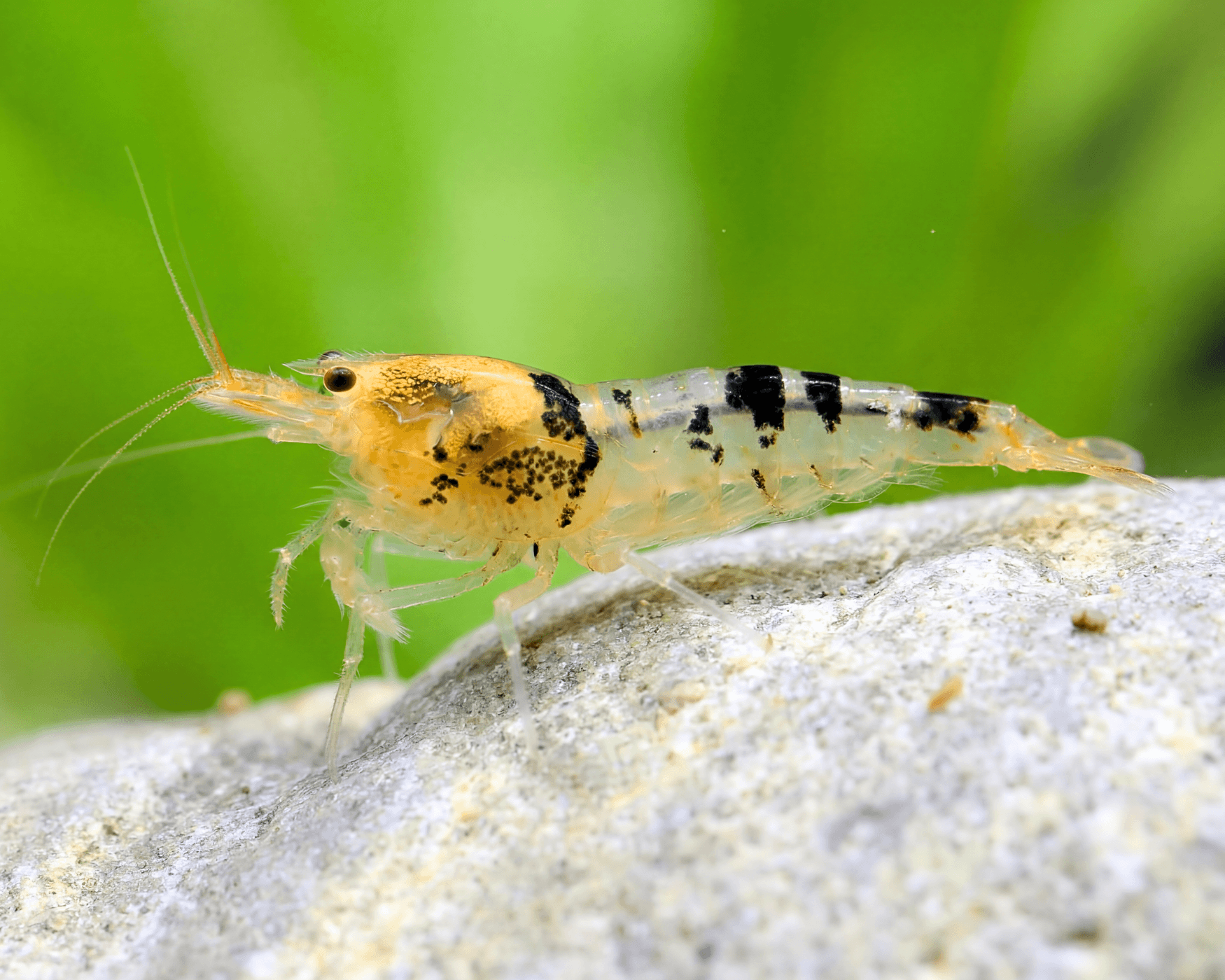
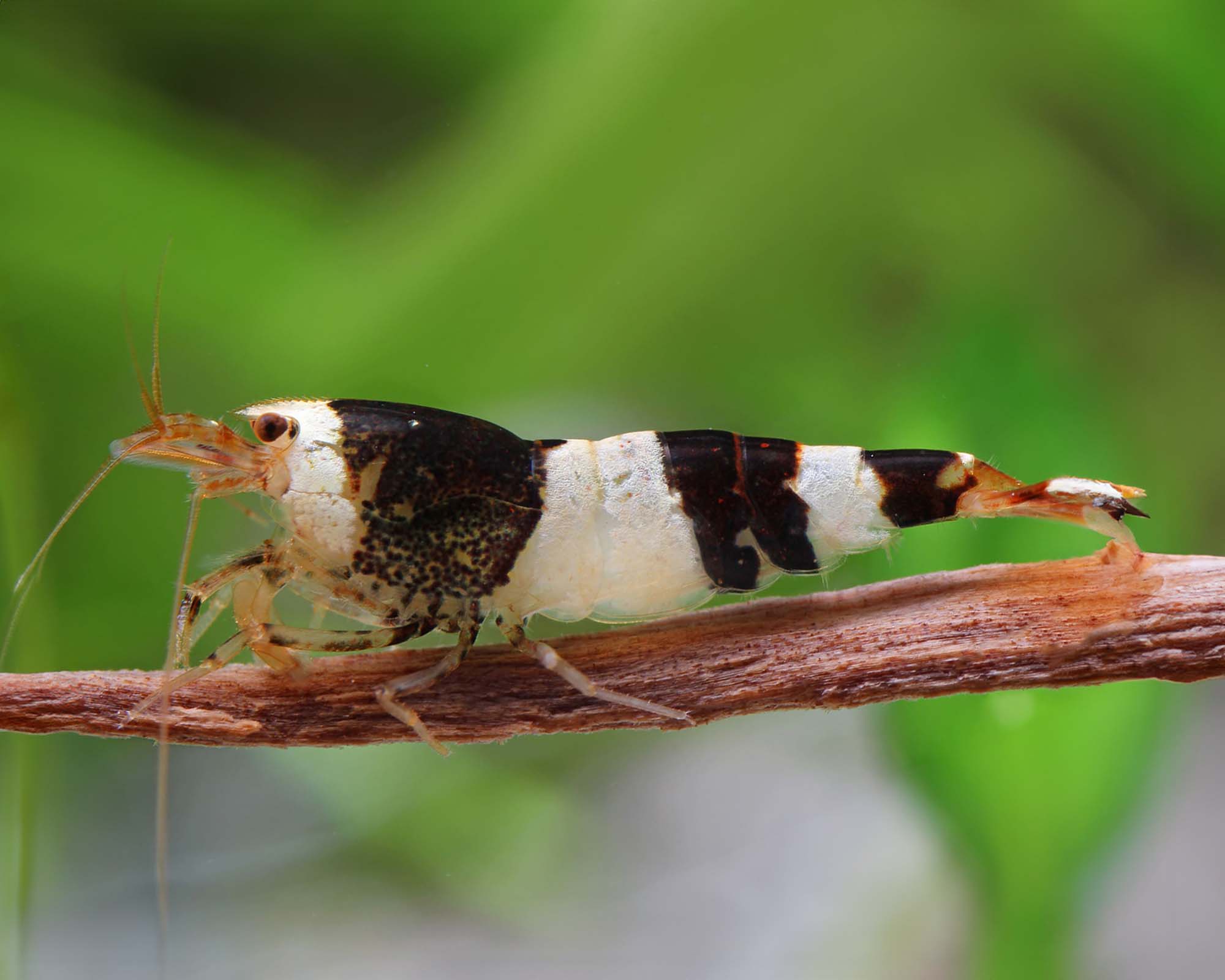
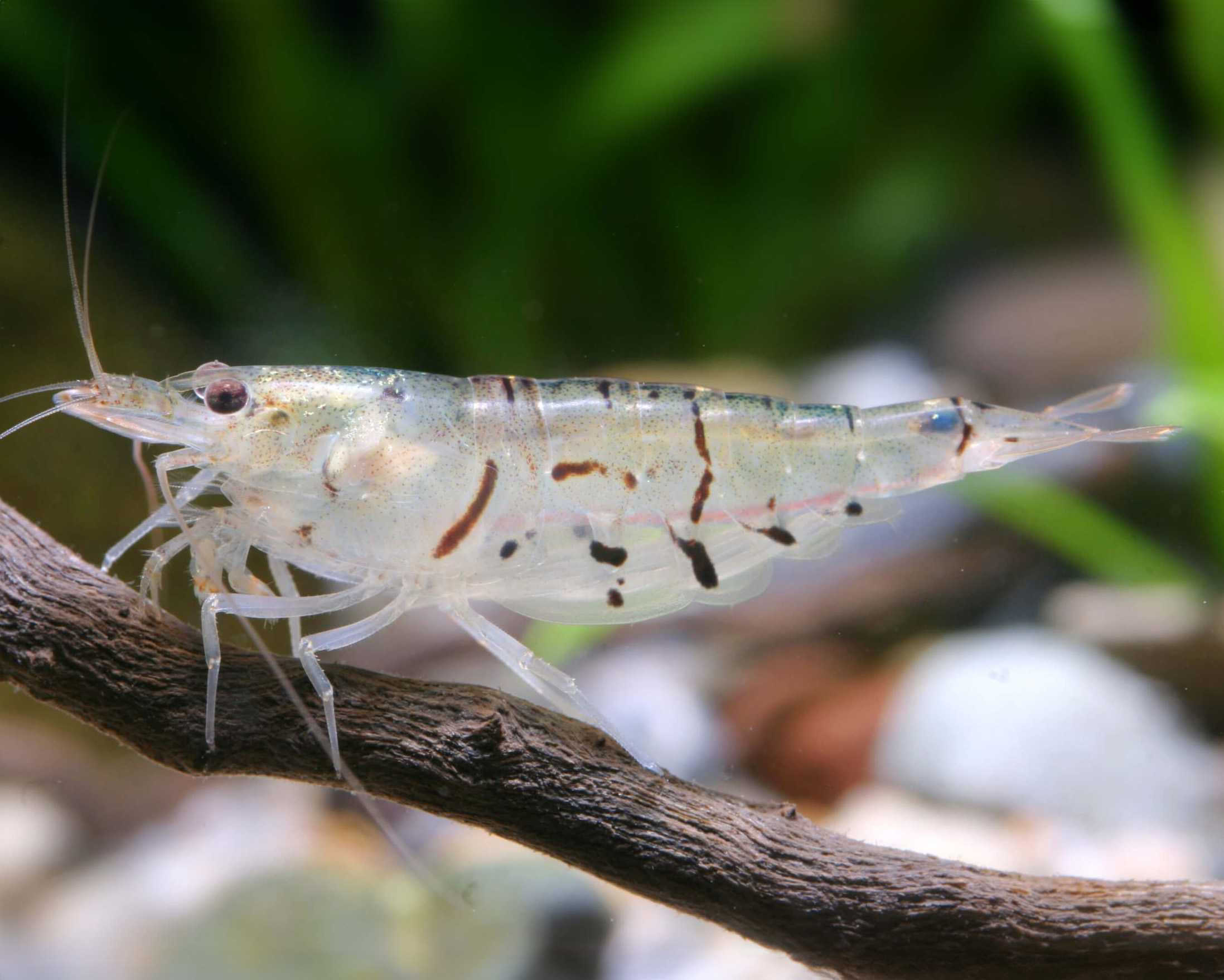
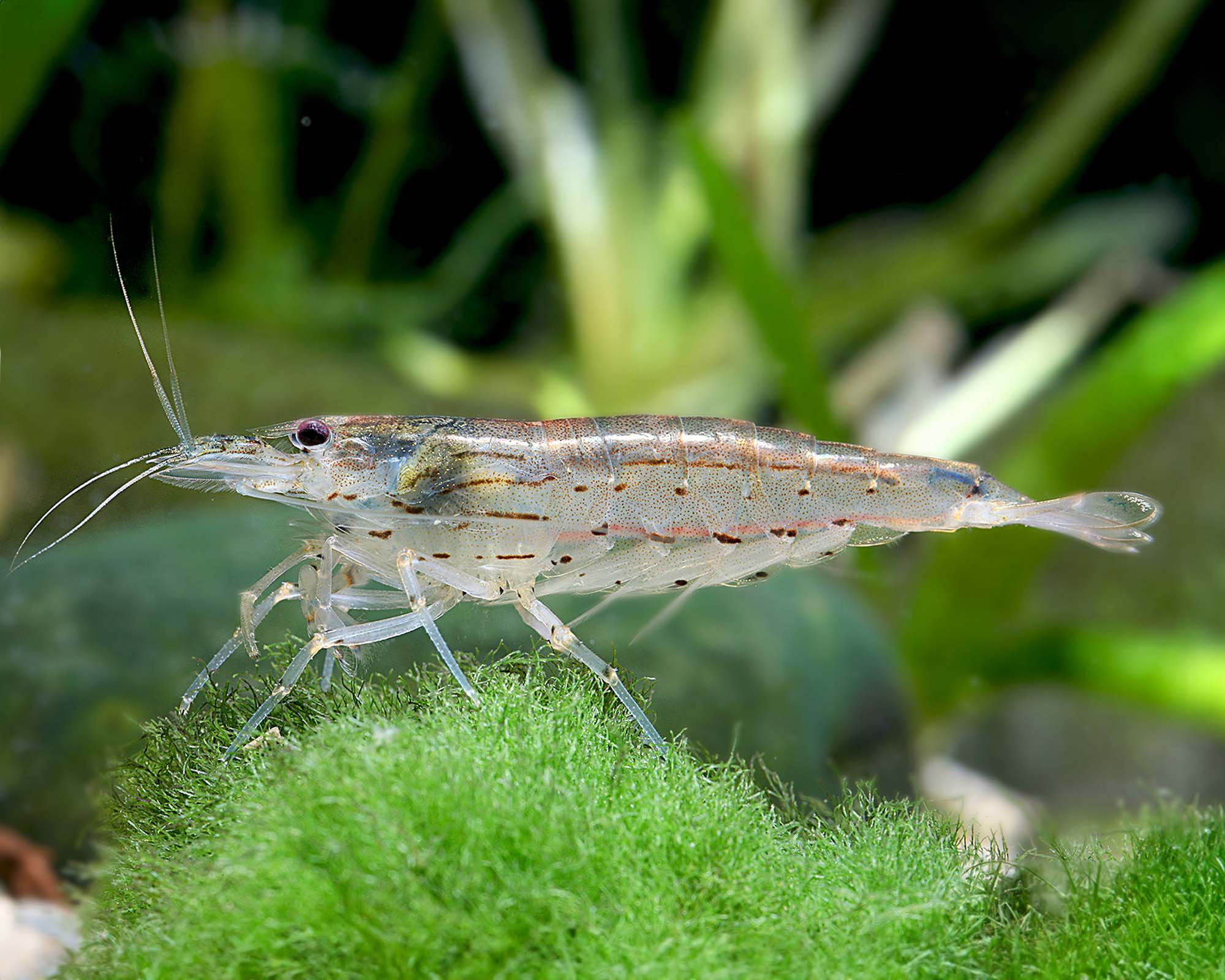
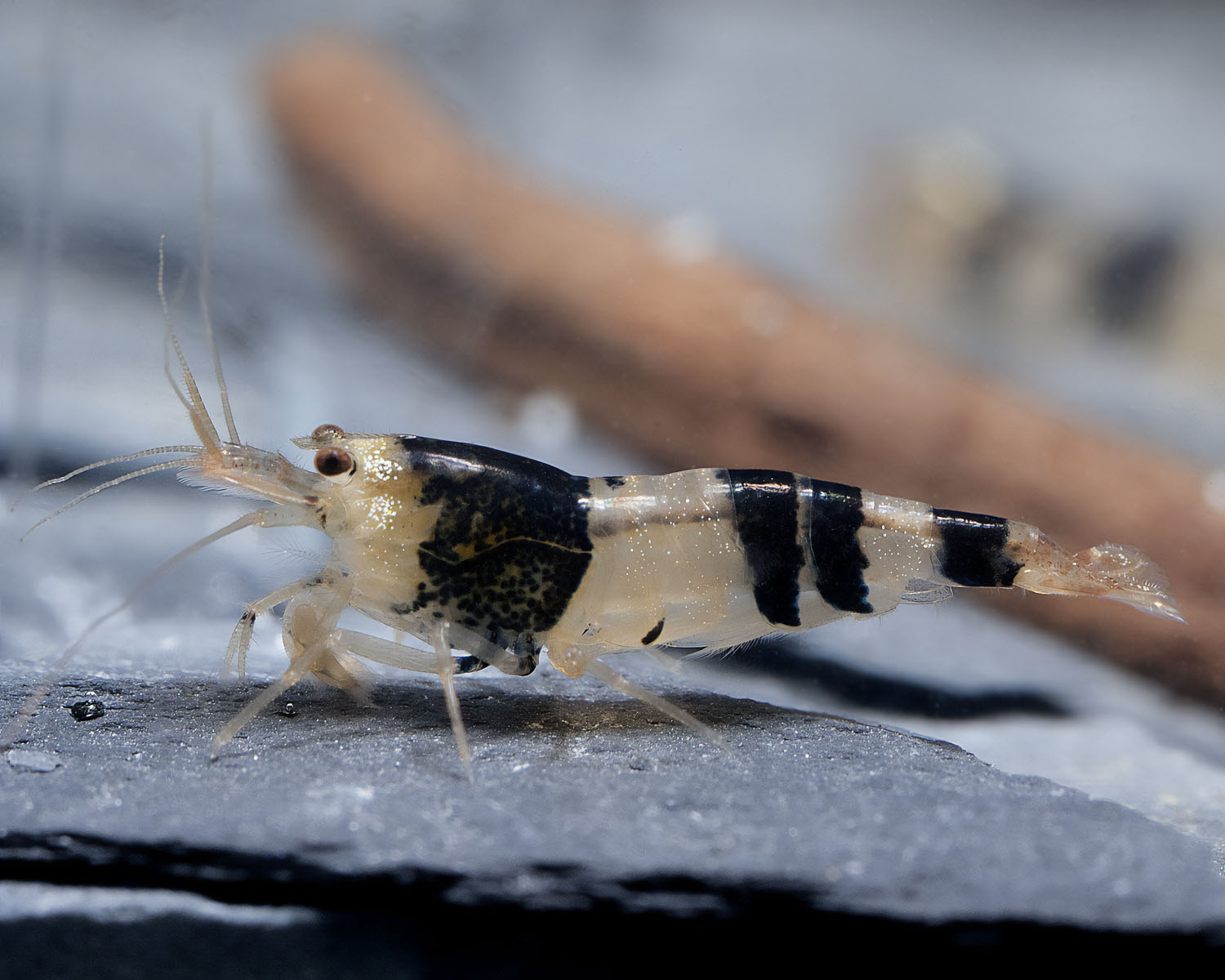
The accepted species name is Neocaridina davidi. Blue Black Rili and Blue Carbon Rili are aquarium trade names for selectively bred color forms rather than separate species or formally recognized wild taxa. A typical rili pattern has stronger pigment on the head and rear body with a translucent or paler central section. Color coverage, contrast and pattern stability can vary, and the supplied images do not establish a single standardized grade.
Natural habitat
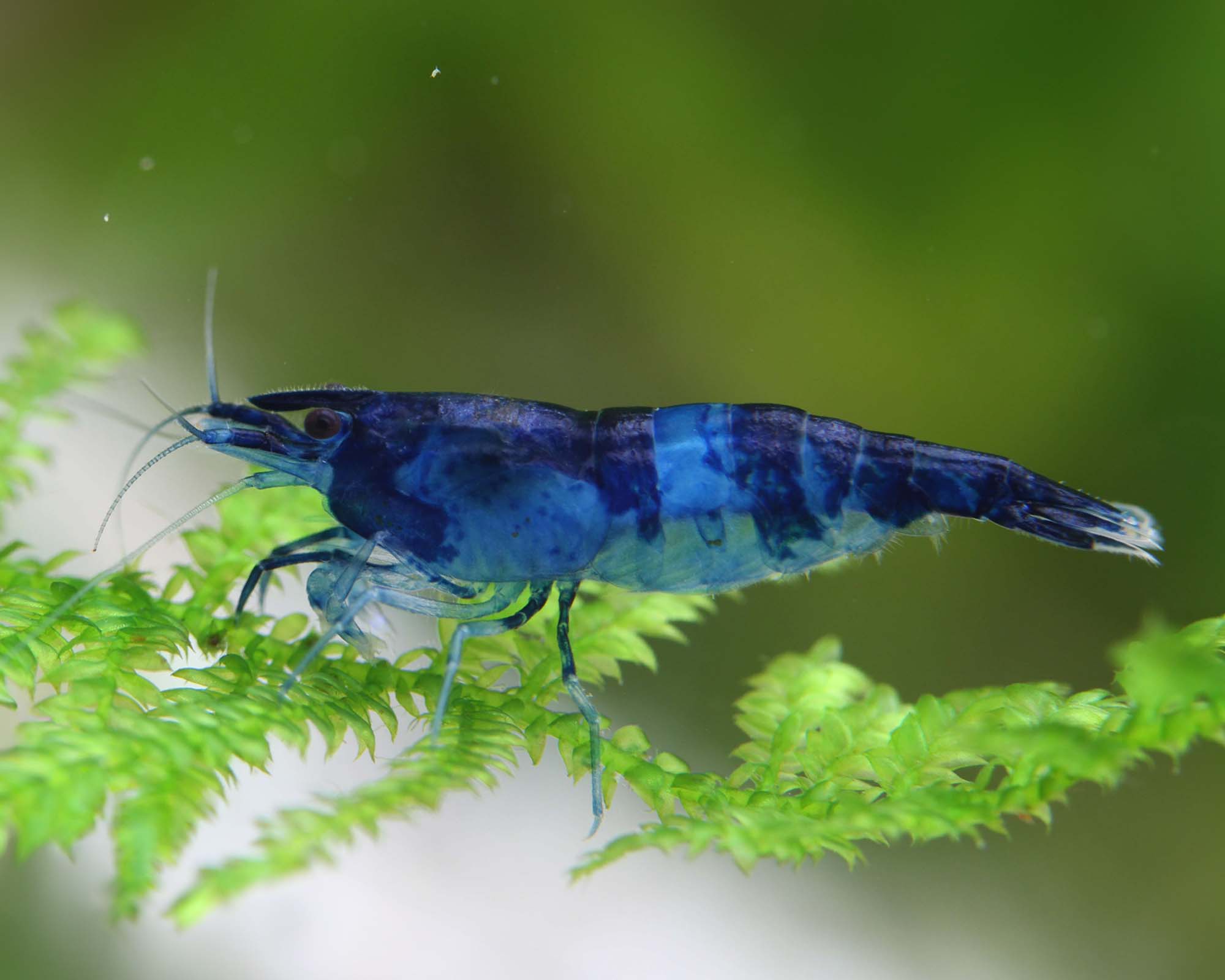
Neocaridina davidi is a freshwater shrimp associated with shallow, slow-moving or still waters in its native East Asian range. Aquatic plants, leaf litter, wood, stones and biofilm provide grazing surfaces and shelter. In an aquarium, a mature planted setup that offers comparable cover is more important than reproducing one exact natural location.
Aquarium setup and water quality
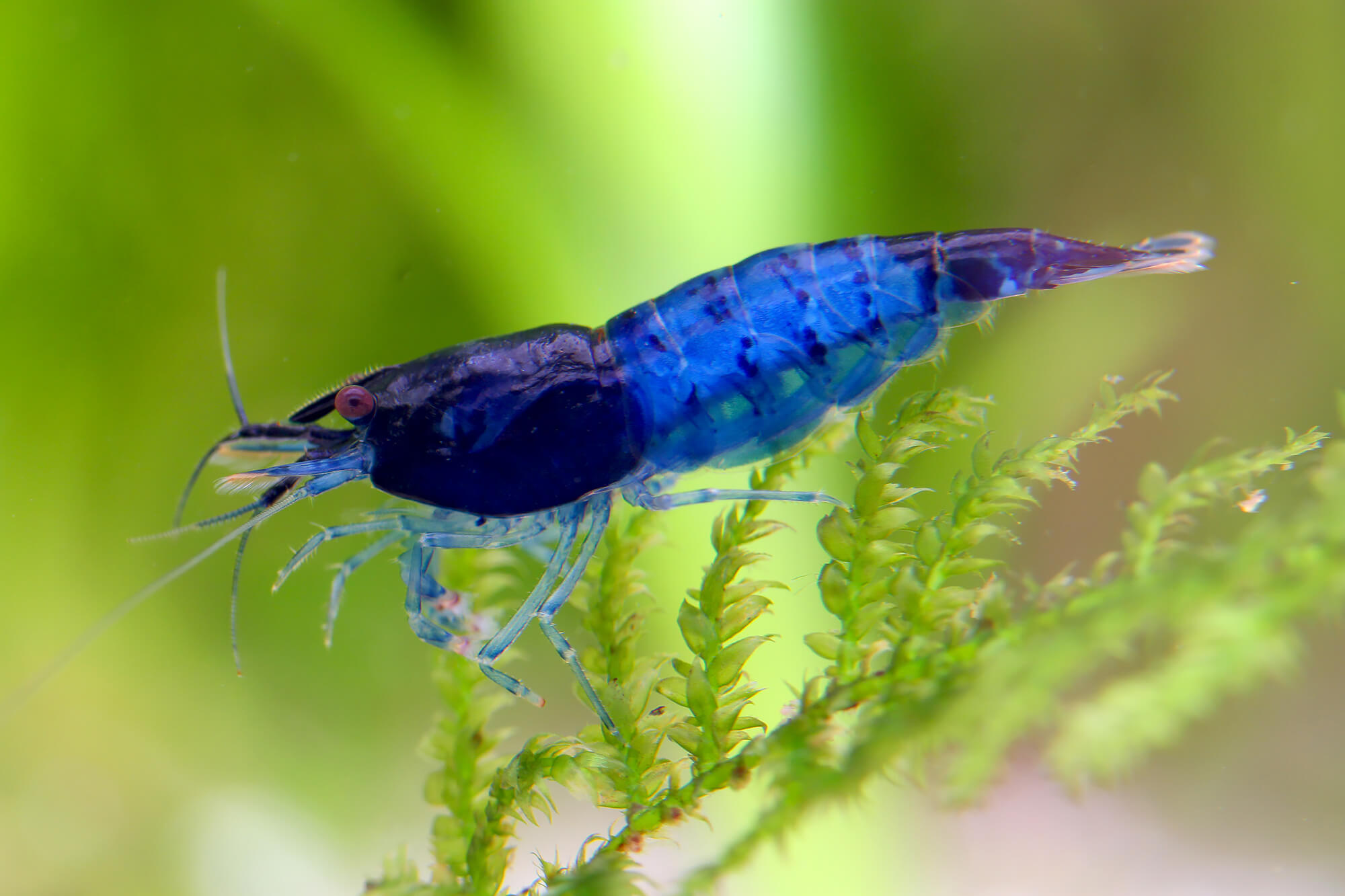
Use a fully cycled aquarium with gentle filtration and an intake pre-filter or sponge guard. Mosses, fine-leaved plants, wood and other textured surfaces support grazing and give juveniles shelter. Keep ammonia and nitrite at zero, avoid detectable chlorine or chloramine, and keep nitrate low through regular maintenance. Stable conditions are safer than rapidly changing values. Moderate general hardness and carbonate hardness are useful because shrimp need dissolved minerals for shell formation.
Water parameters
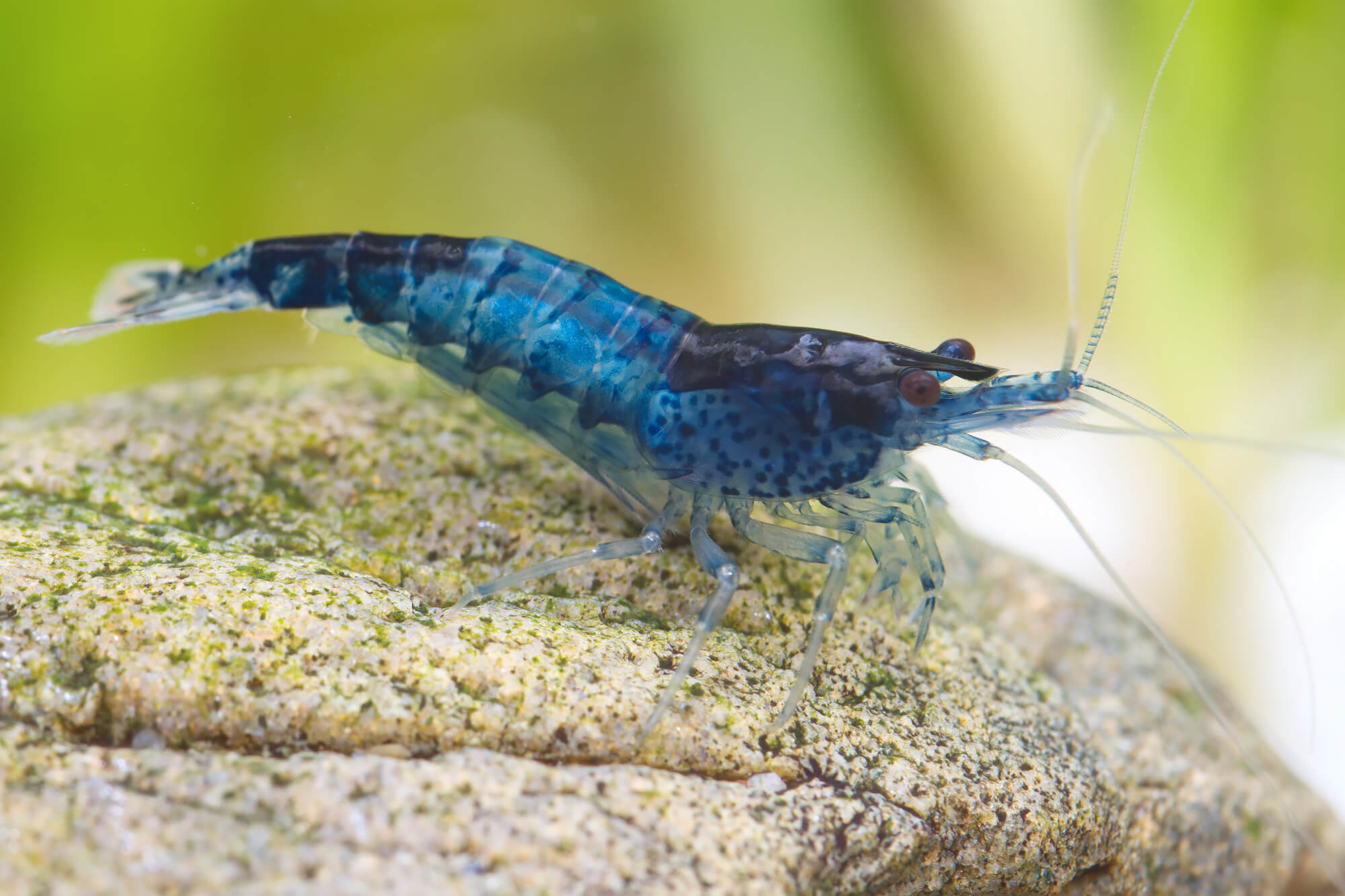
A practical range is 18–28 °C and pH 6.5–8.0. Many keepers maintain them around 20–25 °C, where metabolism and breeding are moderate. Match replacement water closely for temperature and mineral content, and avoid large, sudden changes in pH, hardness or conductivity. Test source water before adding mineral products; excessive hardness can also be stressful.
Feeding
These shrimp graze continuously on biofilm, algae and fine organic material. Supplement this natural grazing with a small amount of a quality shrimp food containing plant matter and appropriate minerals. Occasional blanched vegetables or botanically suitable leaf foods can add variety. Feed sparingly and remove uneaten food before it decays. Juveniles benefit from abundant biofilm and powdered foods offered in very small quantities.
Tank mates
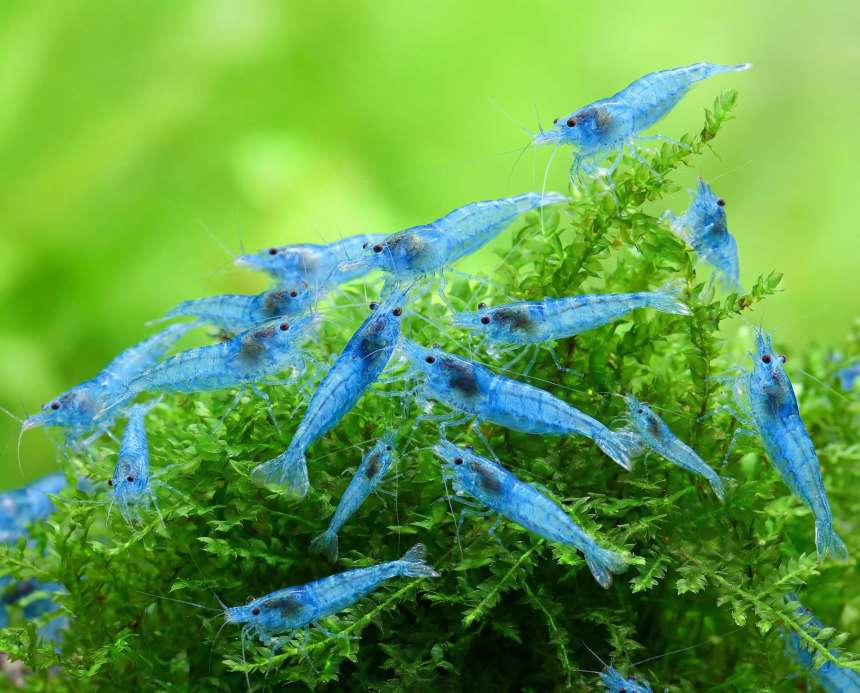
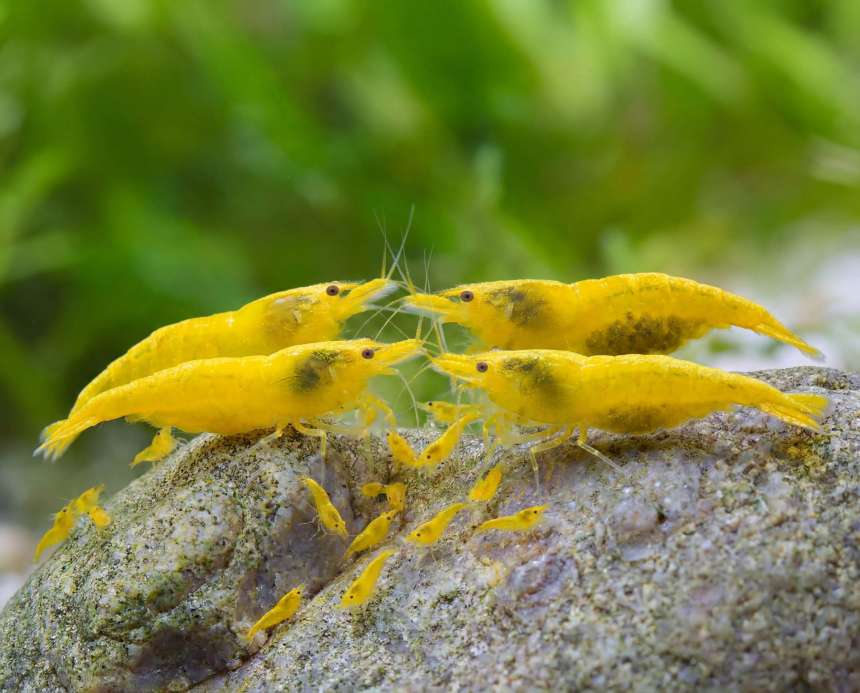
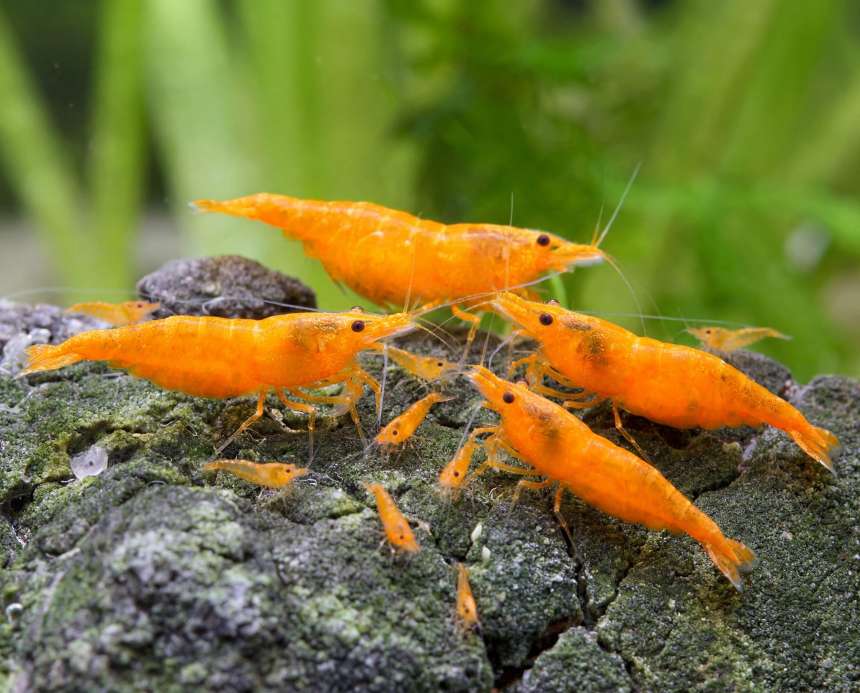
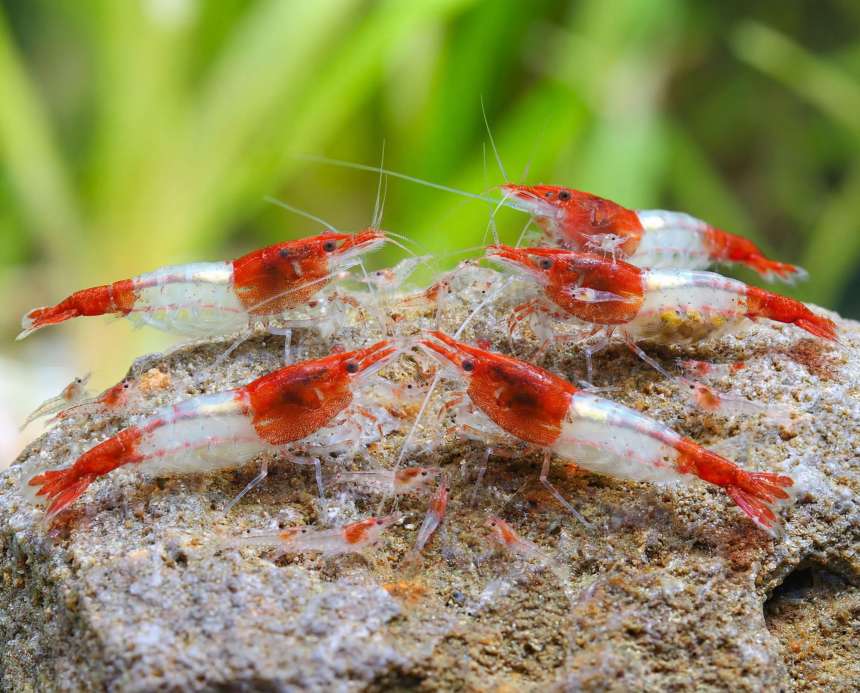
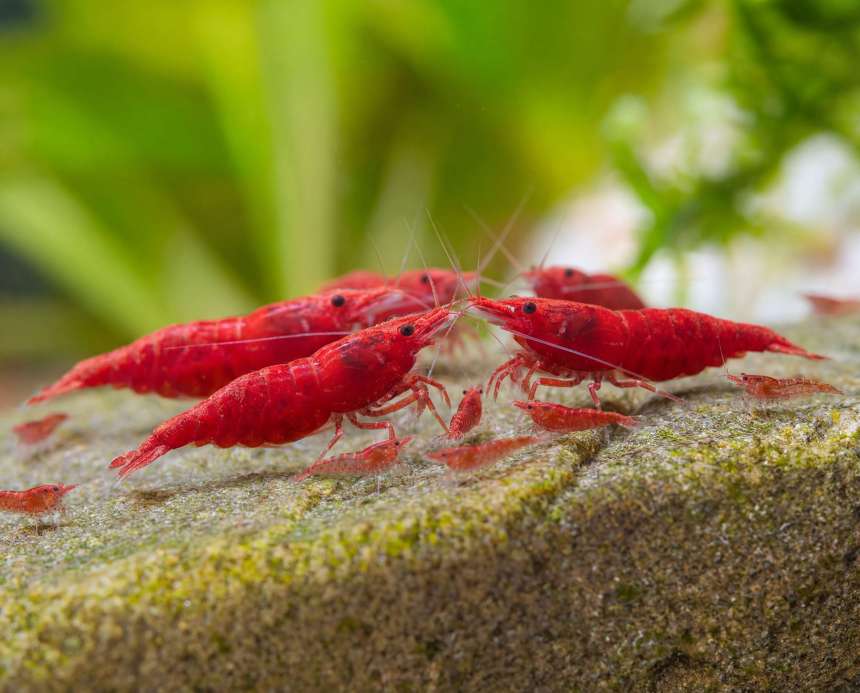
The safest companions are other peaceful Neocaridina and similarly non-predatory invertebrates, such as suitable freshwater snails. Small, calm fish may coexist with adult shrimp, but most fish can eat newly hatched or juvenile shrimp. Avoid large, aggressive, predatory or highly active species if the goal is to maintain a colony. Mixing different Neocaridina color lines can produce less predictable offspring and may gradually reduce the original blue-and-translucent pattern.
Molting and mineral needs
Shrimp periodically shed the old exoskeleton to grow. They may become less visible before or after a molt and should not be disturbed. Provide stable water chemistry, adequate dietary minerals and hiding places such as moss or dense plants. Do not remove a clean shed unless it begins to foul; shrimp commonly consume it and recover minerals from it. Sudden changes in hardness or pH can contribute to failed molts.
Breeding
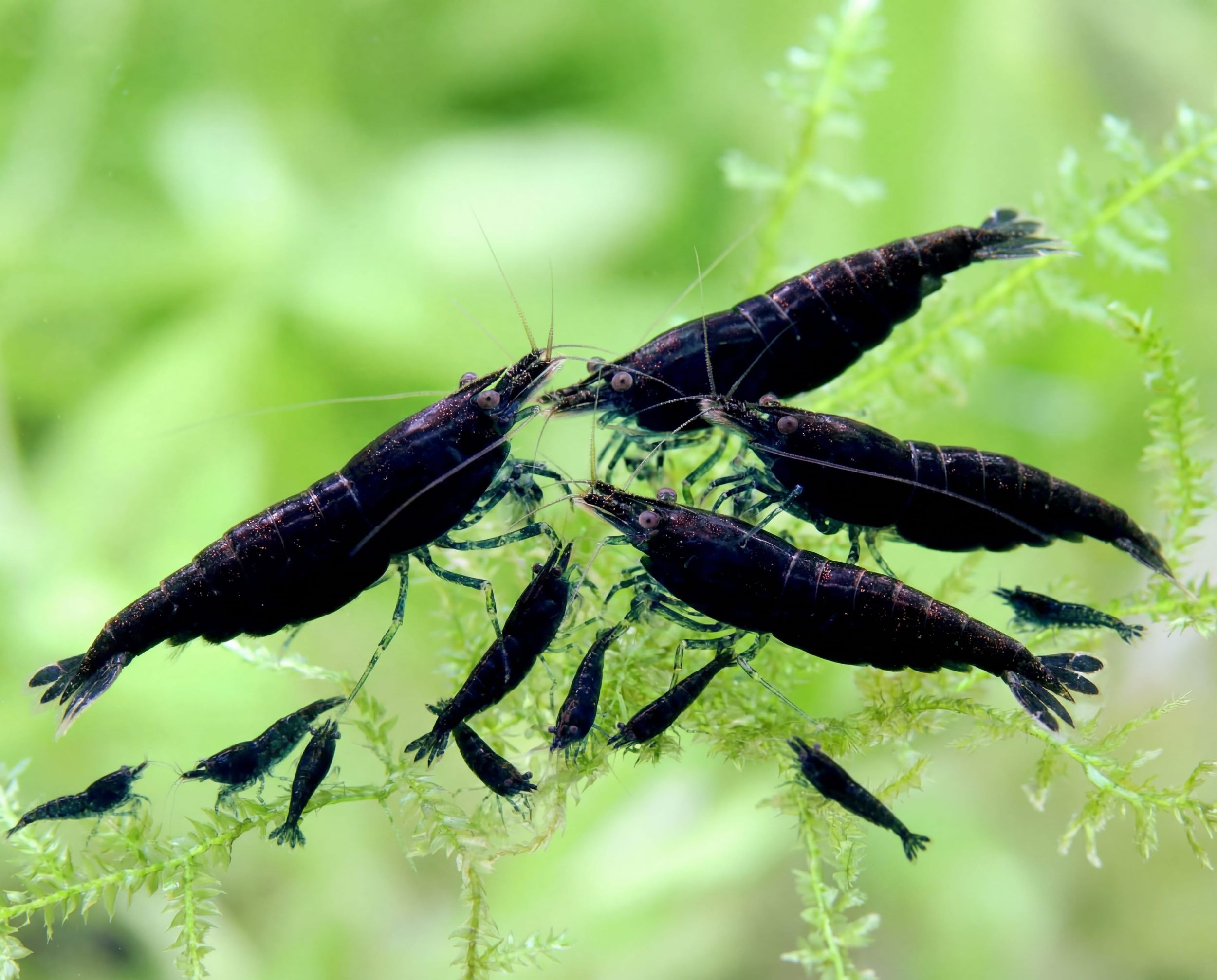
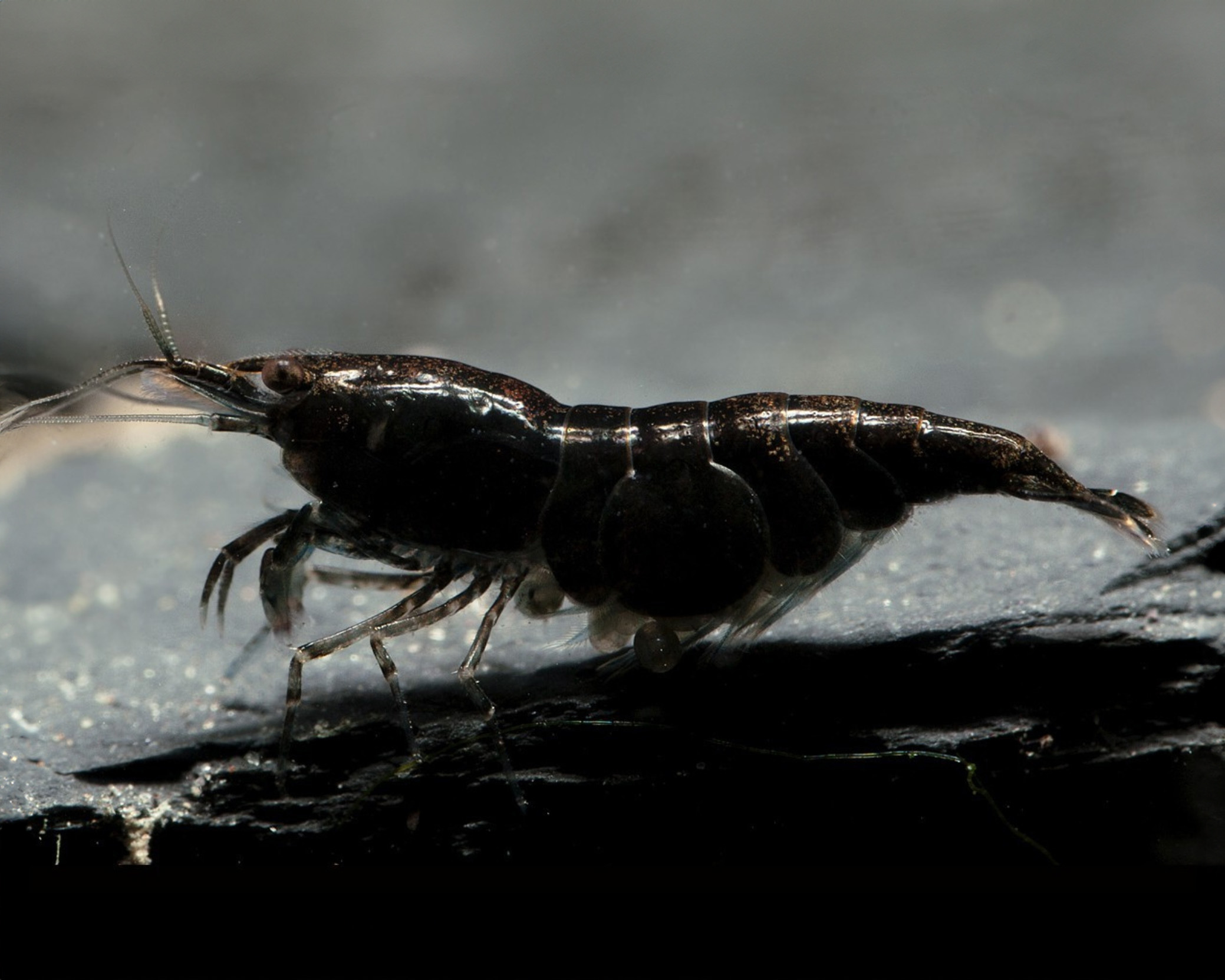
This is a freshwater, fully reproducing Neocaridina form: females carry developing eggs beneath the abdomen until they hatch as miniature shrimp, with no free-swimming larval stage requiring saltwater. In a mature, stable aquarium, provide both sexes, dense cover and plentiful biofilm. After a female molts, males may search actively for her and mating occurs soon afterward. Protect the colony from fish predation and use gentle filtration to improve juvenile survival. Offspring from selective lines can vary in blue intensity, black coverage, transparency and rili pattern.
 - 1.webp)
 - 1.webp)
Leave your comments