AquaLibs presents AquaRank Discover the world’s leading aquascapers

Explore transparent rankings built from published results across the world’s leading aquascaping contests.

Ranunculus inundatus (River Buttercup)

Identification

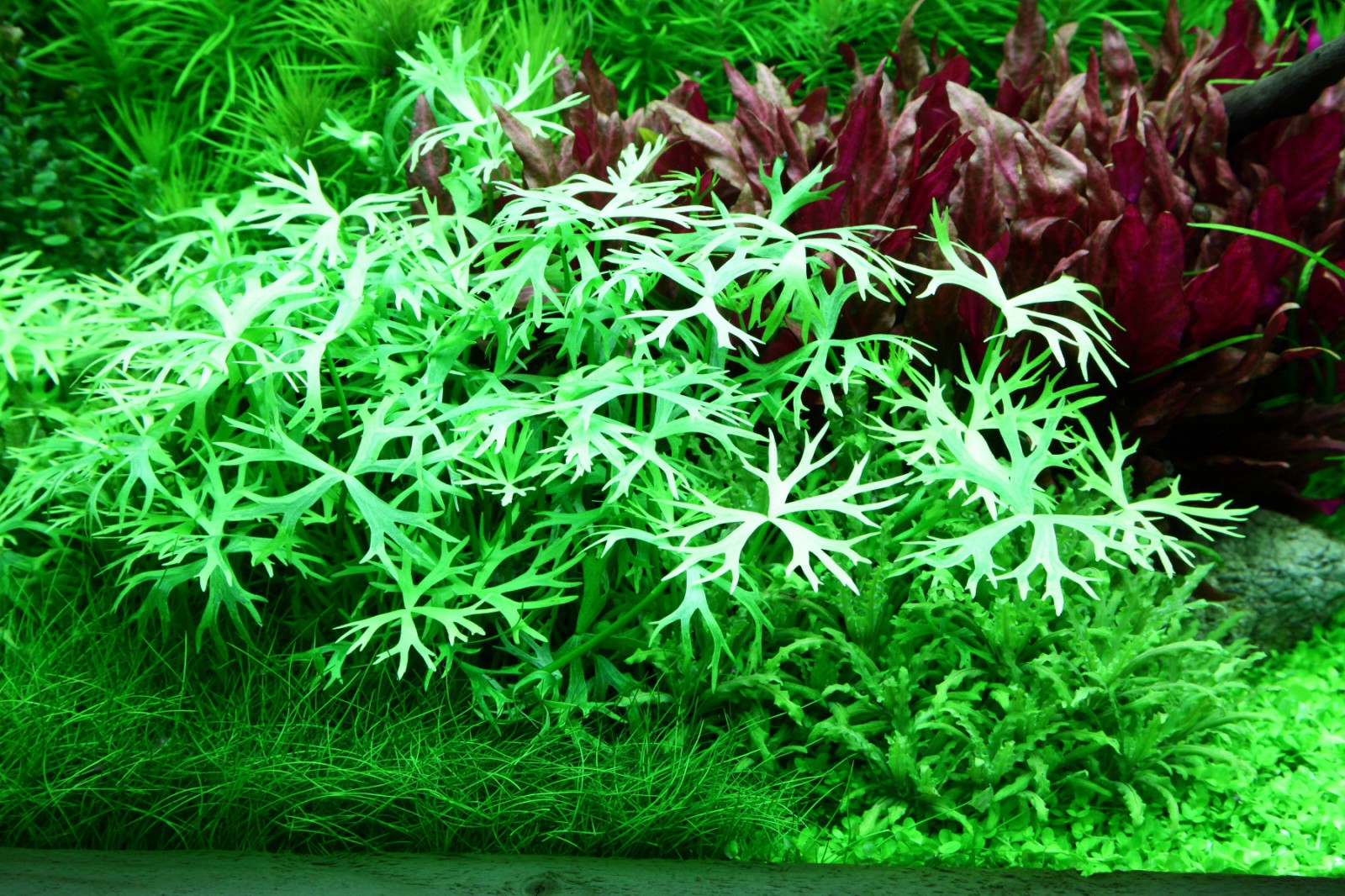
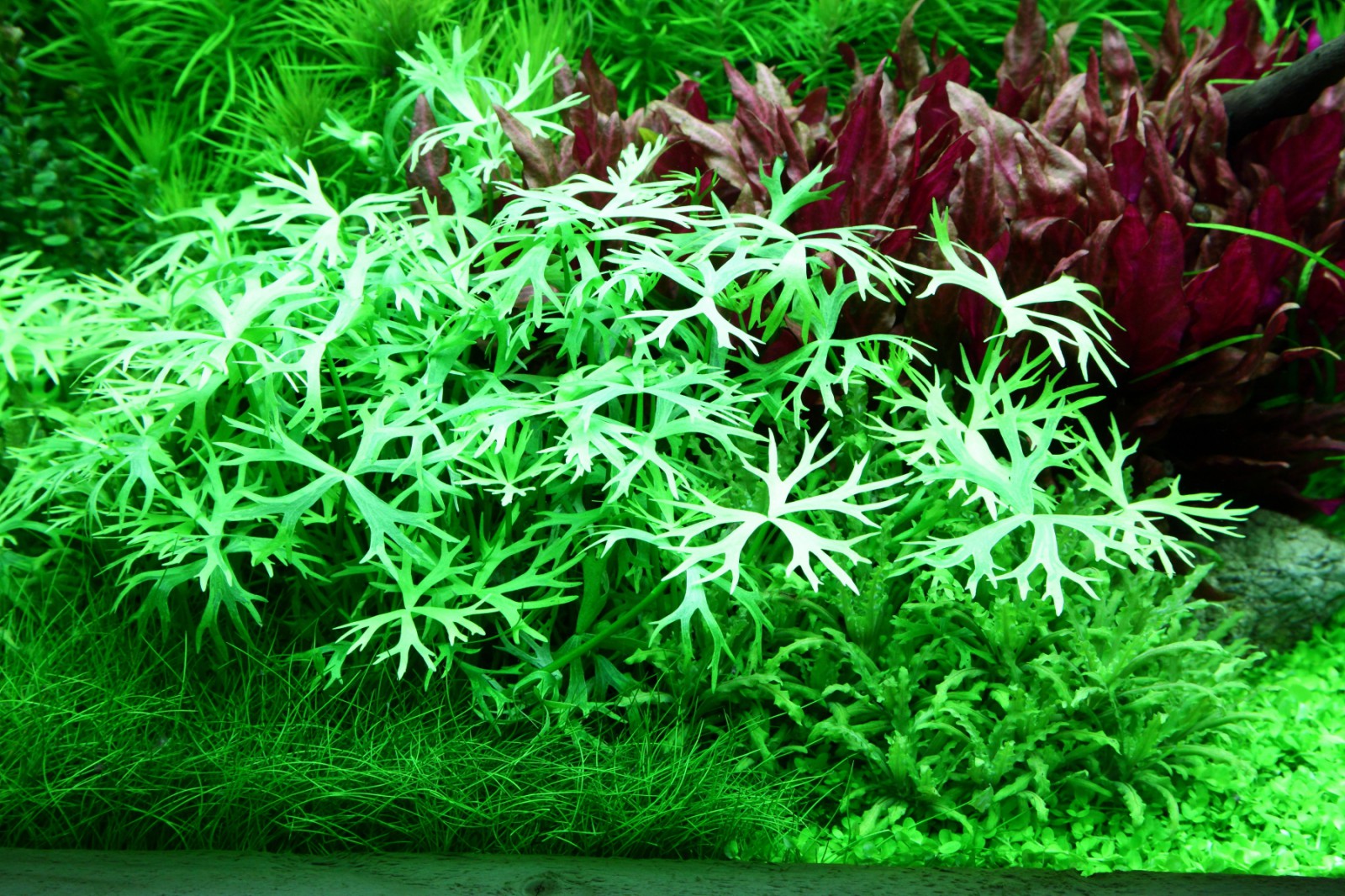
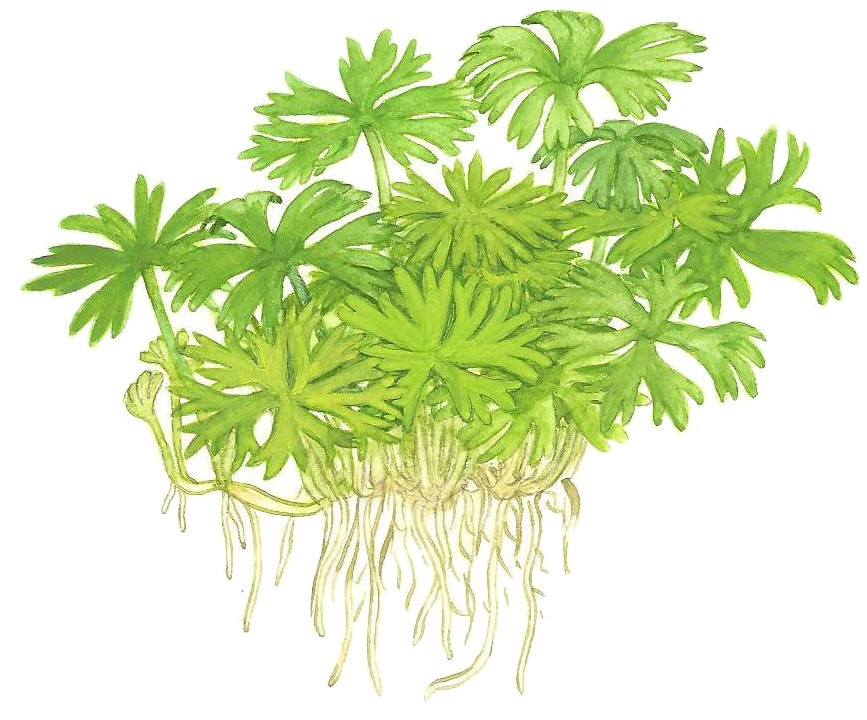
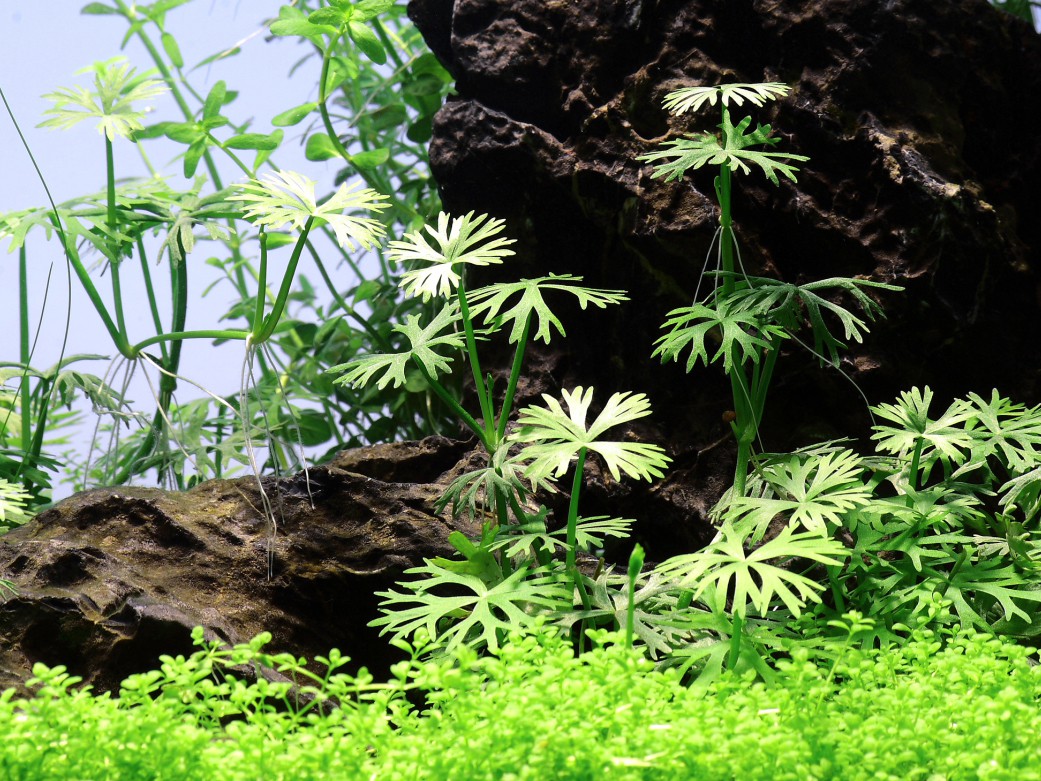
Ranunculus inundatus is recognized by its palmate, finely divided leaves carried on individual petioles. In aquarium culture it develops creeping growth and may spread laterally from the base. The foliage is usually green to light green. It is an amphibious species, so its appearance can change substantially when grown emersed or allowed to reach the water surface.
Identification

Placement and planting

Plant individual rooted portions in nutrient-rich substrate with the crown kept at or just above the substrate surface. Leave space between portions so the creeping stems can spread without becoming overcrowded. It works best in the foreground or lower middle ground, where its unusual leaf shape contrasts with finer-textured carpeting plants.
Placement and planting

Light and carbon

Moderate to strong aquarium lighting helps maintain compact growth and encourages dense foliage. Carbon dioxide supplementation is beneficial and generally improves establishment, leaf production, and overall form, although the plant may survive under lower-carbon conditions with slower growth. Maintain stable water conditions and avoid shading it with taller plants.
Light and carbon

Maintenance

Remove damaged or excessively long leaves close to their base and thin spreading stems when they begin to cover neighboring plants. Replant healthy rooted sections after trimming if additional groups are wanted. Regular pruning is preferable to repeatedly uprooting the entire planting, which can disturb the roots and substrate.

Propagation

Propagation is normally carried out by separating rooted lateral growth or portions of the creeping stem. Each division should retain healthy roots or a viable growth point. Plant the divisions gently and give them stable conditions while they establish. The species may also grow emersed, but aquarium stock should be acclimated gradually when changing between emersed and submerged culture.
Plant info

  • Colors: Green, Light green
  • Difficulty: Medium
  • Origin: Australia
  • Usage: Foreground
  • Type: Amphibious rosette-forming stem plant
  • Growth rate: Medium
  • Height: 5–15 cm submerged
  • Light demand: Medium
  • CO2: Medium
Related on Plants
Leave your comments
Latest on Plants
  • Hemianthus micranthemoides (Pearl weed)

    Hemianthus micranthemoides (Pearl weed)

    Medium
    Middleground
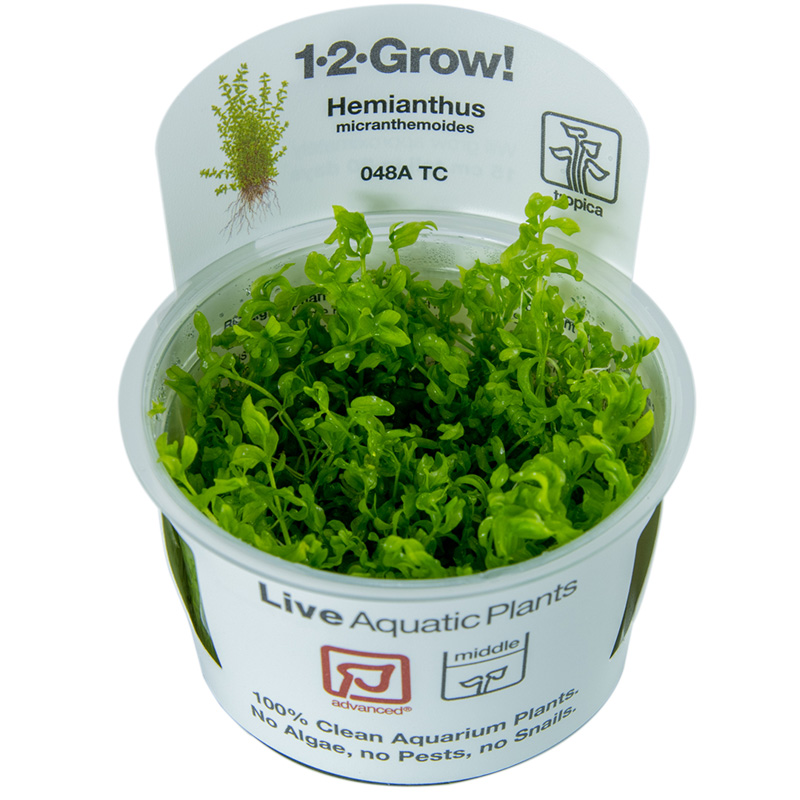
    Hemianthus micranthemoides is a small, fast-growing stem plant used for dense midground groups or a trimmed foreground. Its narrow, bright green leaves form compact cushions under strong light and adequate carbon dioxide, while lower light encourages more open, upward growth. The trade name and identification should be treated cautiously because this plant has been confused with closely related Micranthemum species in the aquarium trade.
  • Monosolenium tenerum (Zartes Lebermoos)

    Monosolenium tenerum (Zartes Lebermoos)

    Medium
    On rock or root
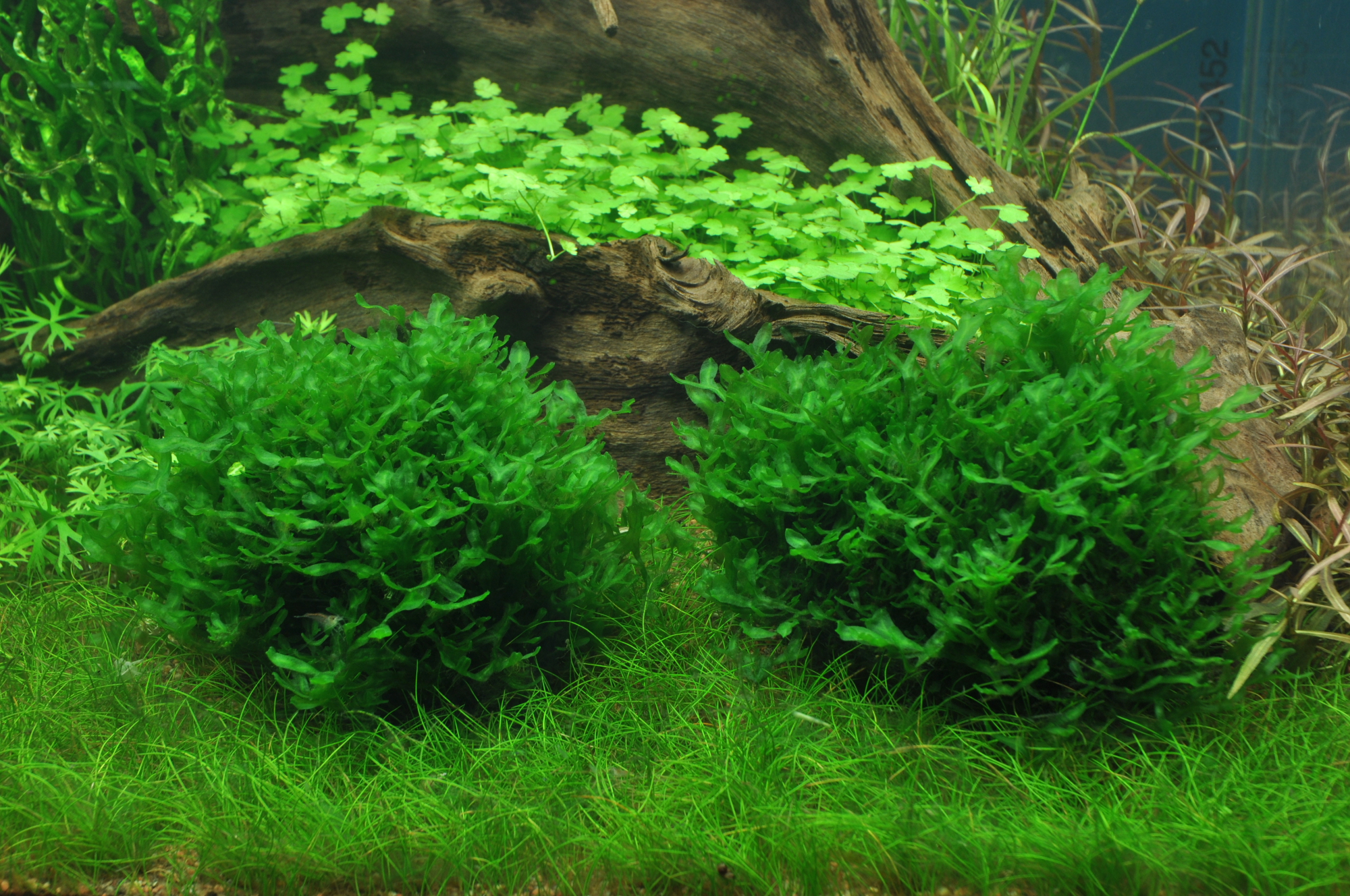
    Monosolenium tenerum is a delicate aquatic liverwort with broad, repeatedly branched green thalli. It forms loose to dense cushions and is most effective when attached to porous rock or aquarium wood rather than buried in substrate. The supplied product label supports this identification, although liverworts can be difficult to distinguish from one another from photographs alone. Stable water conditions, moderate light and a steady carbon supply help maintain compact, healthy growth.
  • Eriocaulon cinereum (Wool stem)

    Eriocaulon cinereum (Wool stem)

    Advanced
    Foreground
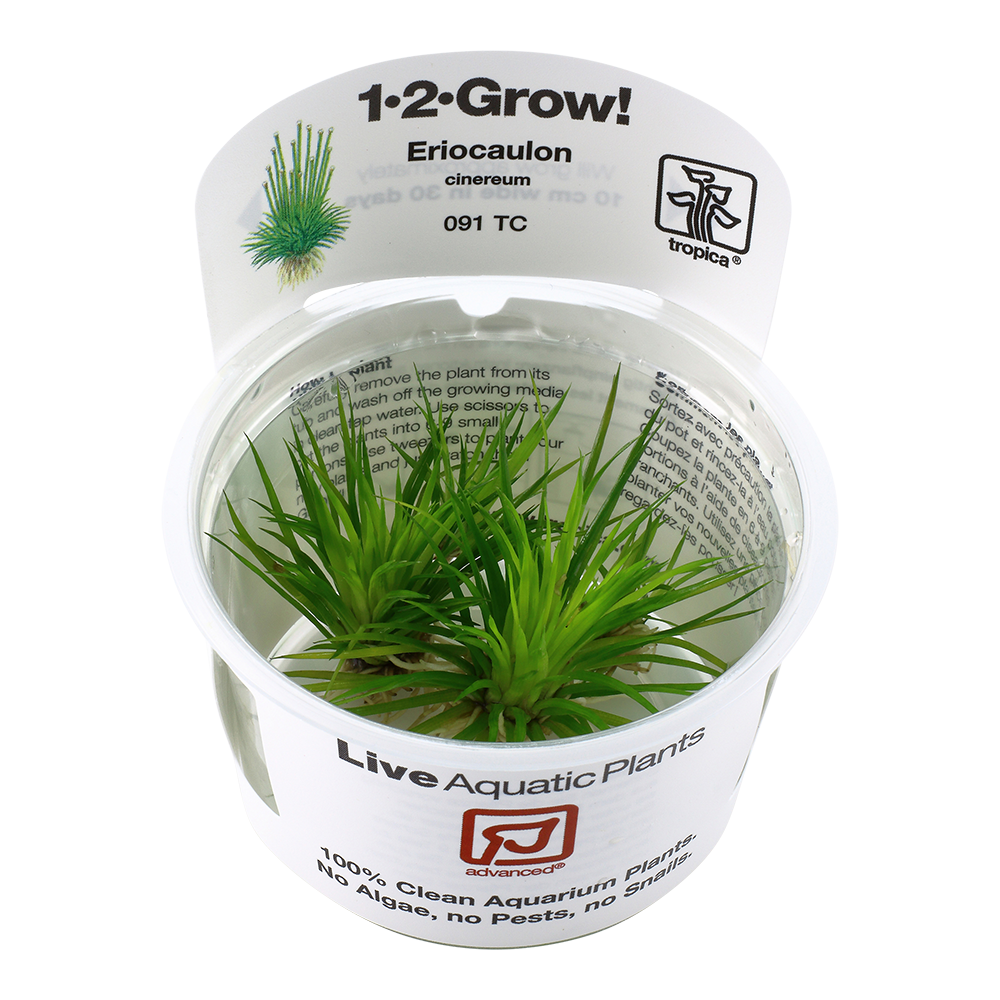
    Eriocaulon cinereum is a small rosette-forming aquatic plant with narrow green leaves and distinctive slender flower stalks. It is a demanding species that generally performs best in soft, slightly acidic water, nutrient-rich substrate, strong light and reliable carbon dioxide supplementation. The supplied label supports the identification, although cultivated Eriocaulon plants can be difficult to distinguish without flowers or specialist examination.
  • Hygrophila polysperma 'White' (White water wisteria)

    Hygrophila polysperma 'White' (White water wisteria)

    Easy
    Background
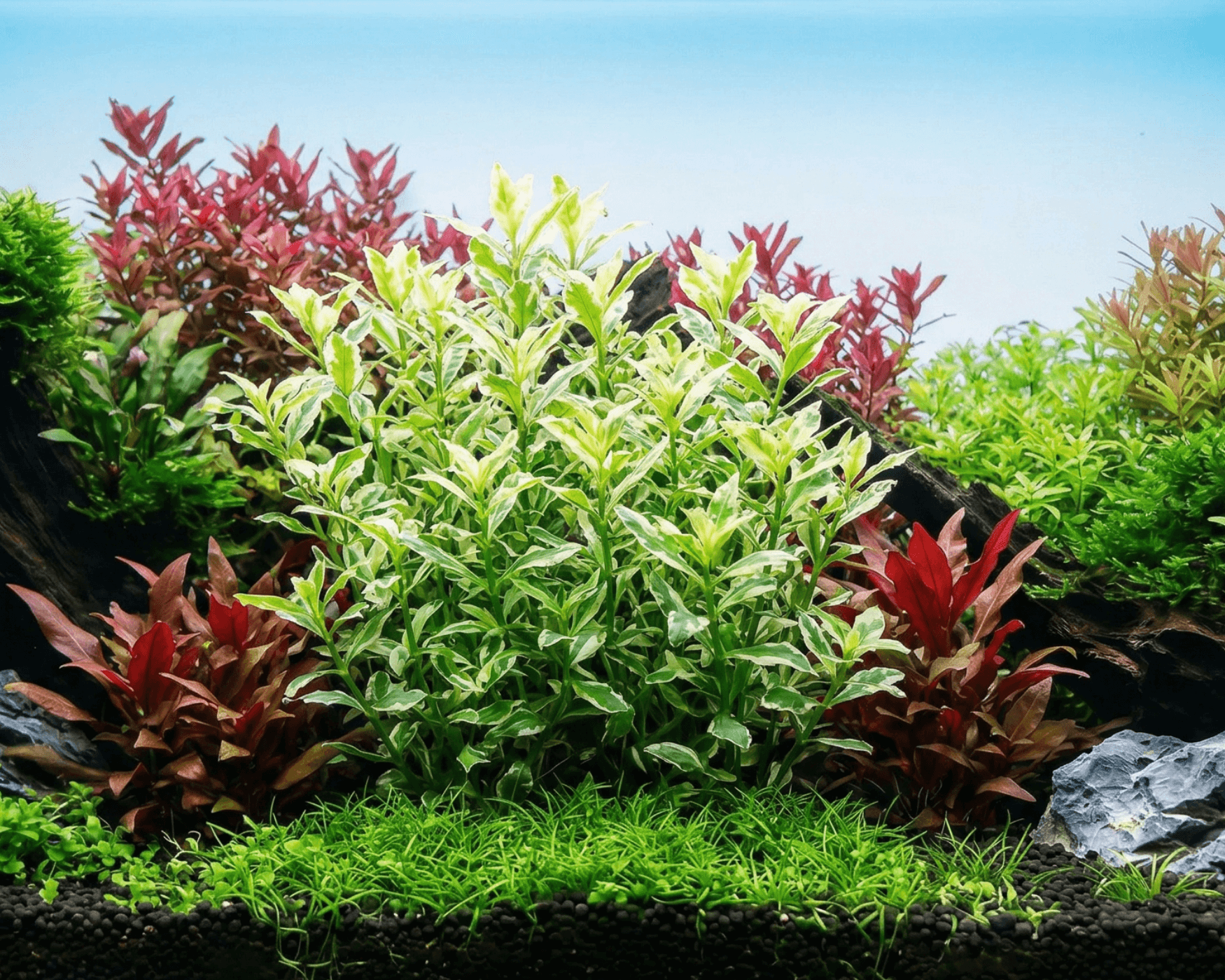
    Hygrophila polysperma 'White' is a variegated aquarium stem plant sold under this cultivar name. Its narrow leaves show irregular pale green to white areas, while new growth may appear more yellow-green. The supplied label supports identification as Hygrophila polysperma 'White', although cultivar names and appearance can vary between growers. It grows quickly under suitable conditions and is best maintained by regular trimming and replanting of healthy stem cuttings.
  • Vesicularia ferriei 'Weeping' (Weeping Moss)

    Vesicularia ferriei 'Weeping' (Weeping Moss)

    Easy
    On rock or root
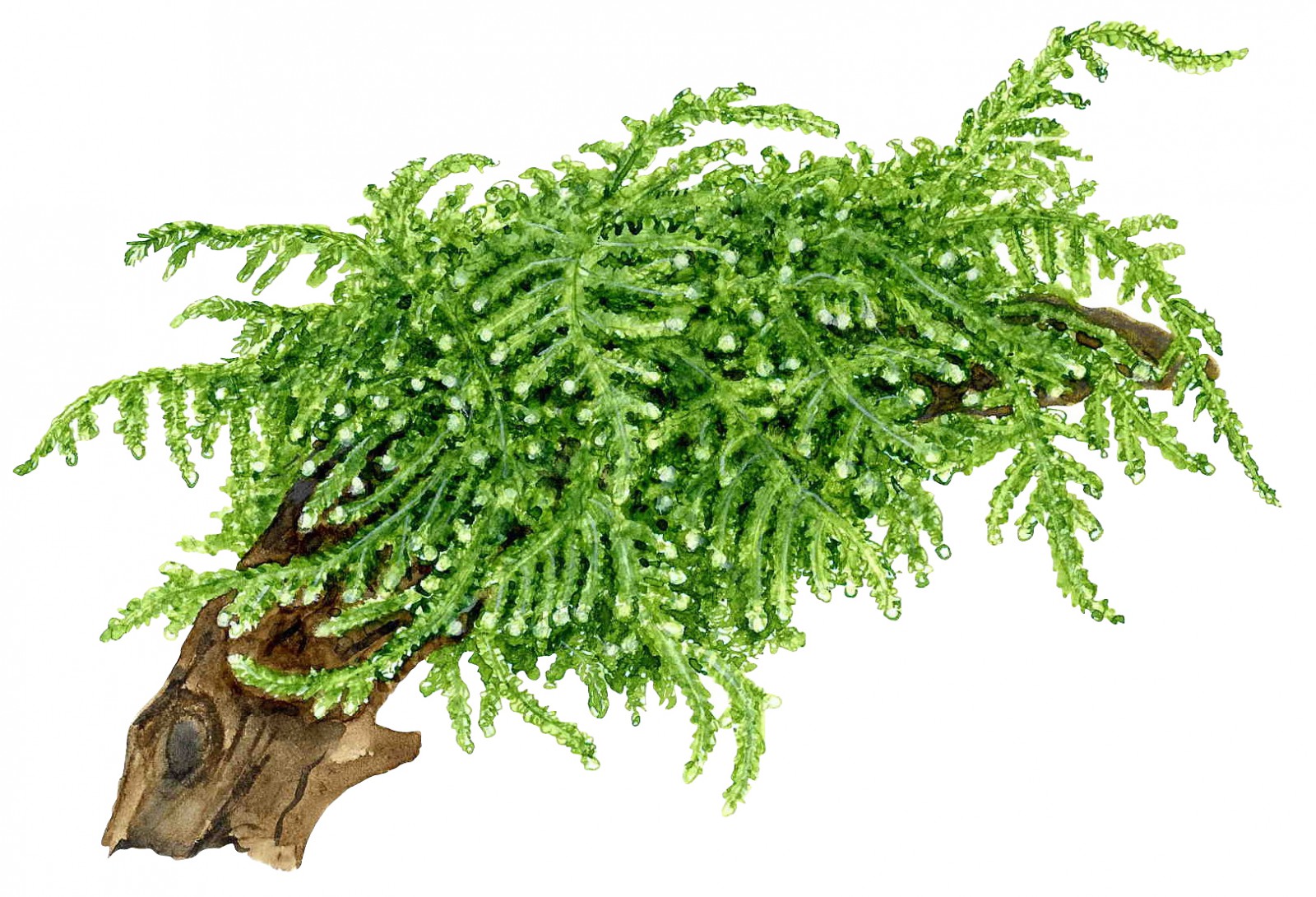
    Weeping Moss is a cultivated aquarium moss sold under the name Vesicularia ferriei 'Weeping'. Its pendant, branching shoots form a soft, trailing cover over wood and rock rather than a flat carpet. It is generally undemanding, but clean water, moderate circulation and regular trimming help maintain an attractive shape. The exact distinction between this commercial form and other similar Vesicularia mosses can be difficult from photographs alone, so the identification here follows the supplied product label.
  • Heteranthera zosterifolia (Stargrass)

    Heteranthera zosterifolia (Stargrass)

    Easy
    Middleground
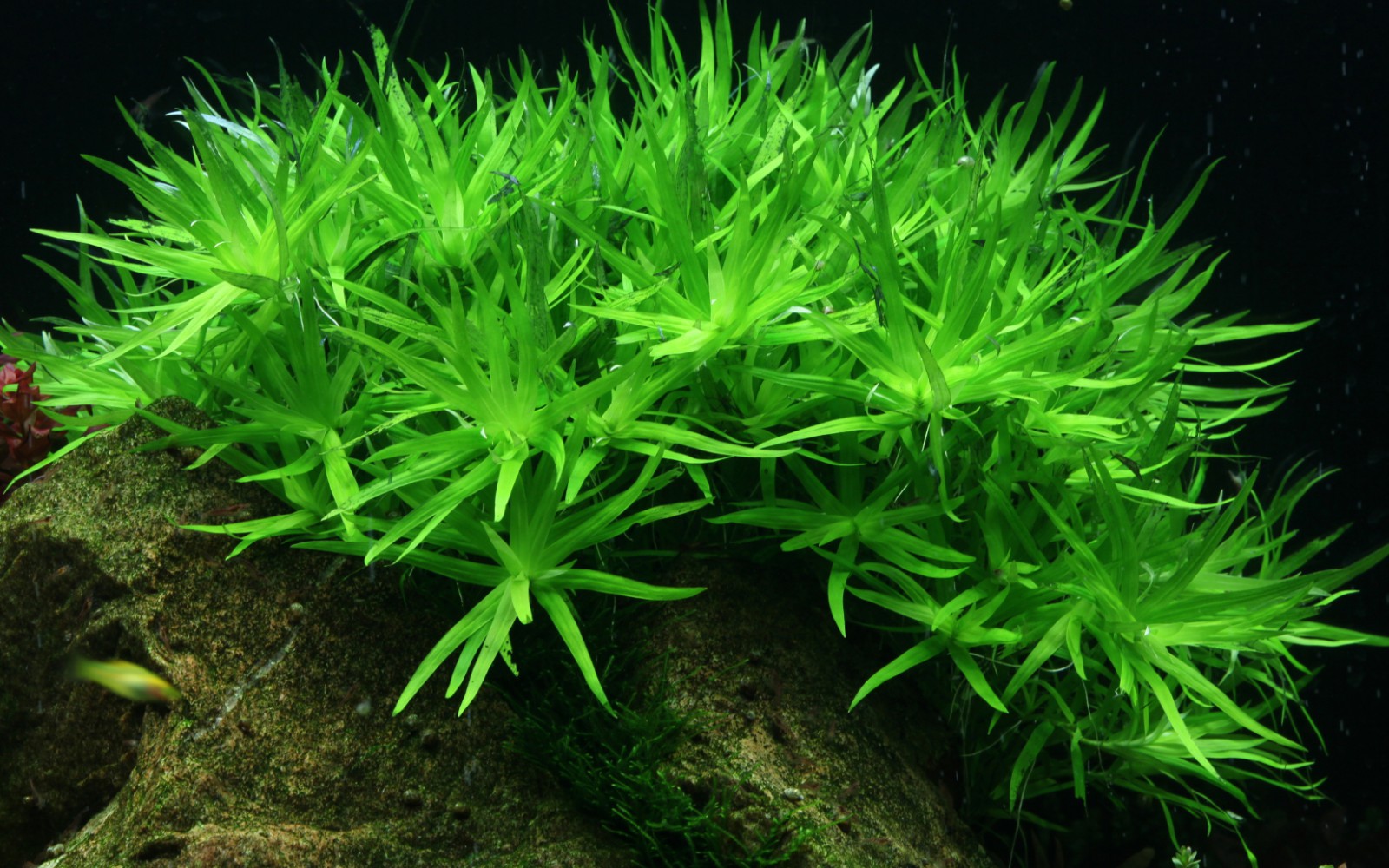
    Heteranthera zosterifolia is a fast-growing South American stem plant commonly known as stargrass. It forms dense, bright green shoots with narrow leaves arranged around the stems, making it useful for filling the middle or background of a planted aquarium. The supplied label identifies this plant as Heteranthera zosterifolia, and the pictured morphology is consistent with that identification, although confirmation from flowers or a verified specimen is not available.
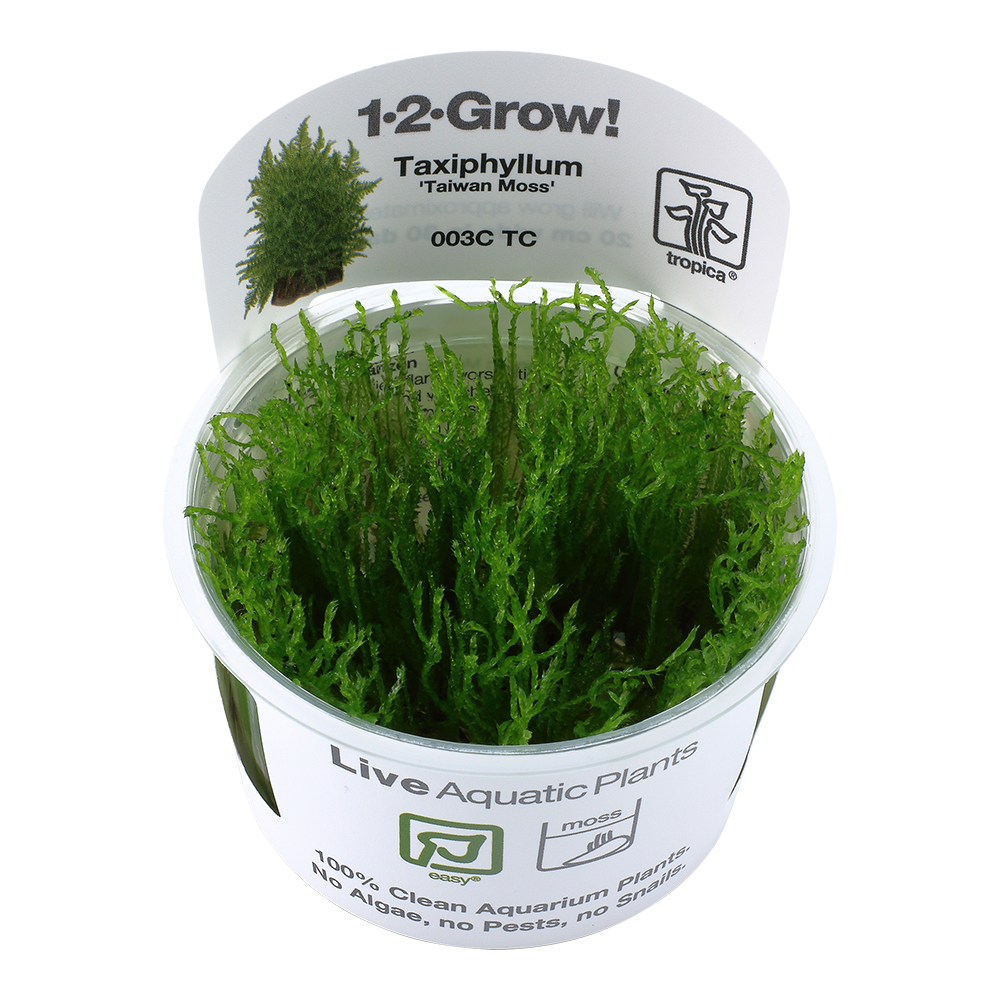
  • Taxiphyllum alternans (Taiwan Moss)

    Taxiphyllum alternans (Taiwan Moss)

    Easy
    On rock or root
    Taiwan Moss is a finely branched aquatic moss commonly traded as Taxiphyllum alternans. It forms bright to medium green, upright and somewhat feathery growth that can create texture on hardscape. The commercial name is well established, but moss identification from appearance alone can be difficult, so this listing should be treated as a conservative identification rather than a definitive specimen-level determination.
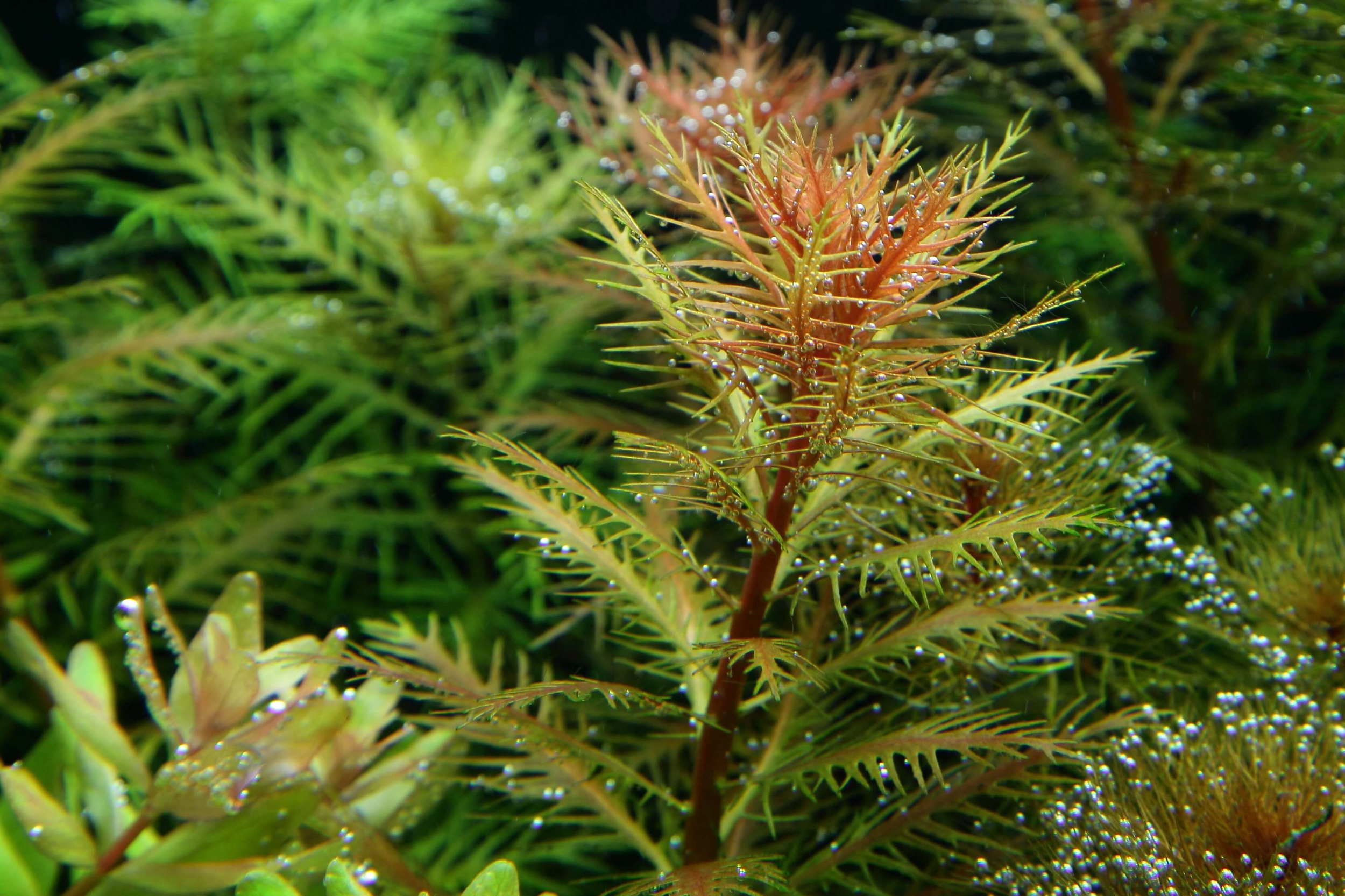
  • Proserpinaca palustris 'Cuba' (Mermaid Weed)

    Proserpinaca palustris 'Cuba' (Mermaid Weed)

    Advanced
    Middleground
    Proserpinaca palustris 'Cuba', often sold as Cuban mermaid weed, is a distinctive stem plant with finely divided leaves that can develop orange to red tones under strong light. The supplied trade name supports identification as the Cuba form, although appearance can vary with submerged or emersed growth and cultivation conditions. It is best suited to planted aquariums where stable carbon dioxide, adequate fertilisation and regular trimming can be provided.
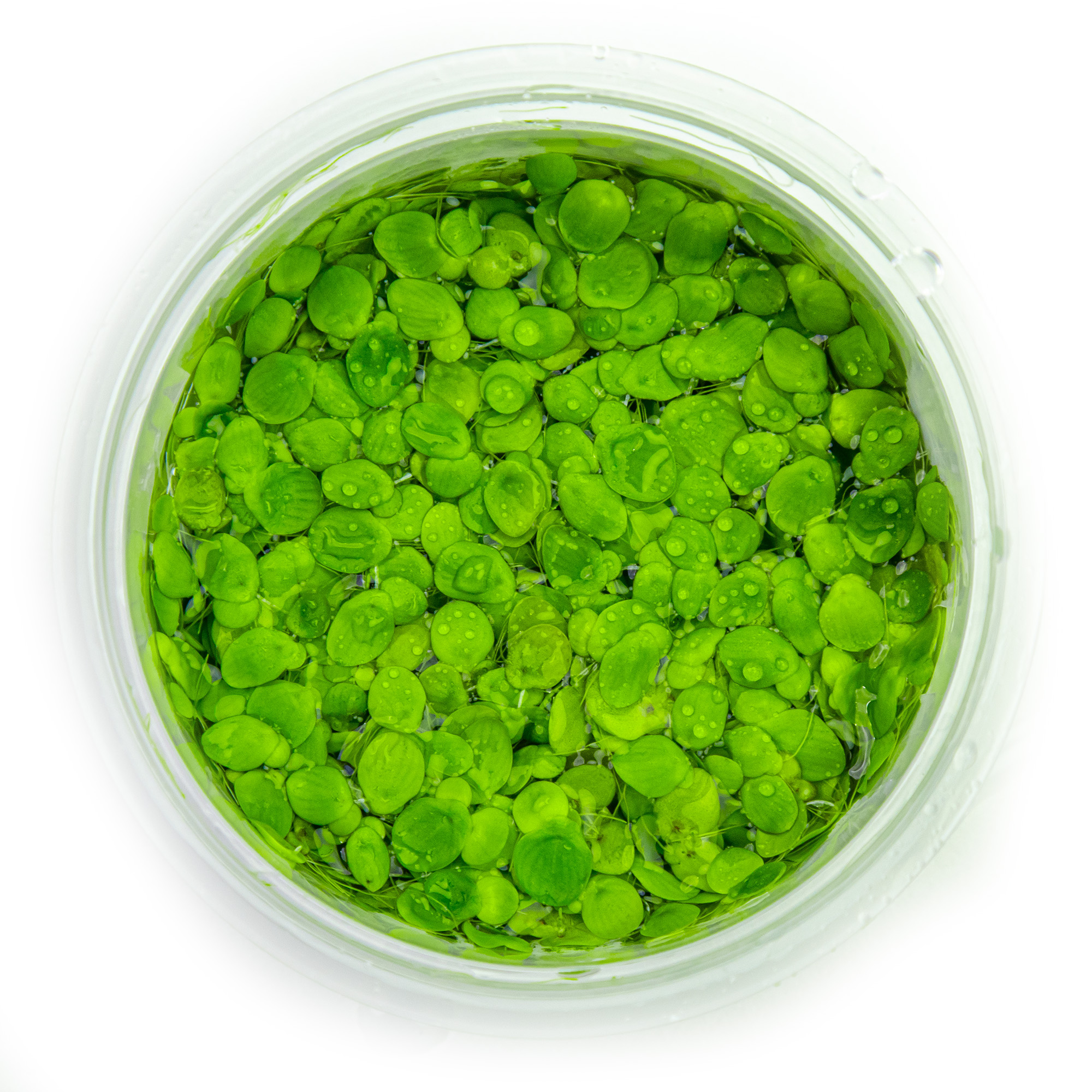
  • Spirodela polyrrhiza (Giant Duckweed)

    Spirodela polyrrhiza (Giant Duckweed)

    Easy
    Supporting plants
    Spirodela polyrrhiza is a small floating aquatic plant commonly known as giant duckweed. It forms clusters of green, rounded to oval fronds on the water surface, with fine roots hanging below. The supplied plant is consistent with this identification, although definitive separation from similar duckweeds may require close examination of frond structure and root characters. It grows rapidly in suitable aquariums and is best used where surface cover is wanted.
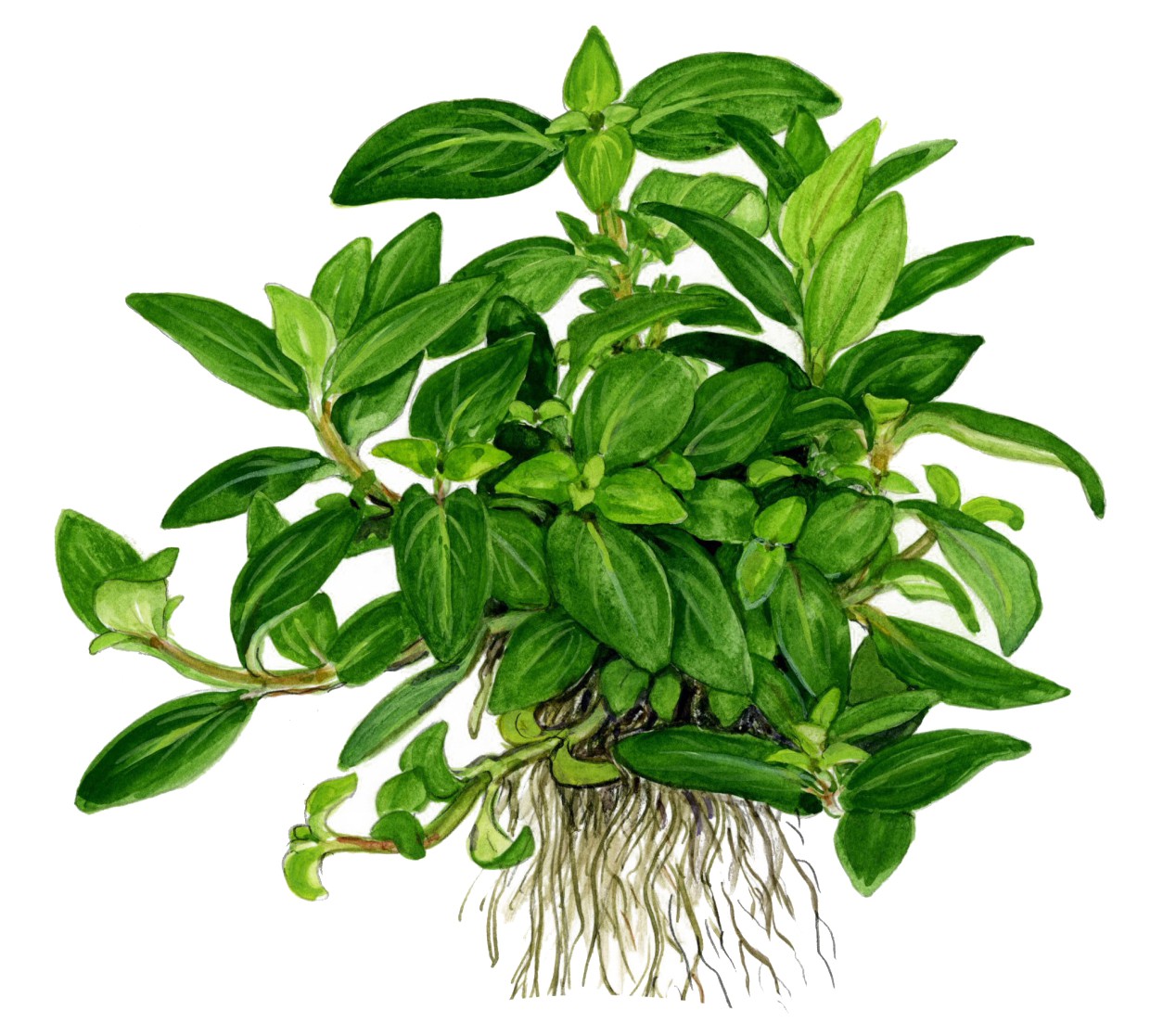
  • Staurogyne repens (Creeping Staurogyne)

    Staurogyne repens (Creeping Staurogyne)

    Easy
    Foreground
    Staurogyne repens is a compact South American stem plant valued for forming a low, leafy foreground or midground planting. Its creeping habit develops best when stems are planted individually and trimmed regularly. It tolerates a range of aquarium conditions, but stronger light, reliable nutrition and carbon availability generally produce denser growth. The supplied material is consistent with this species, although cultivar or trade-form variation cannot be excluded from images alone.
  • Salvinia natans (Small tussock fern)

    Salvinia natans (Small tussock fern)

    Easy
    Supporting plants
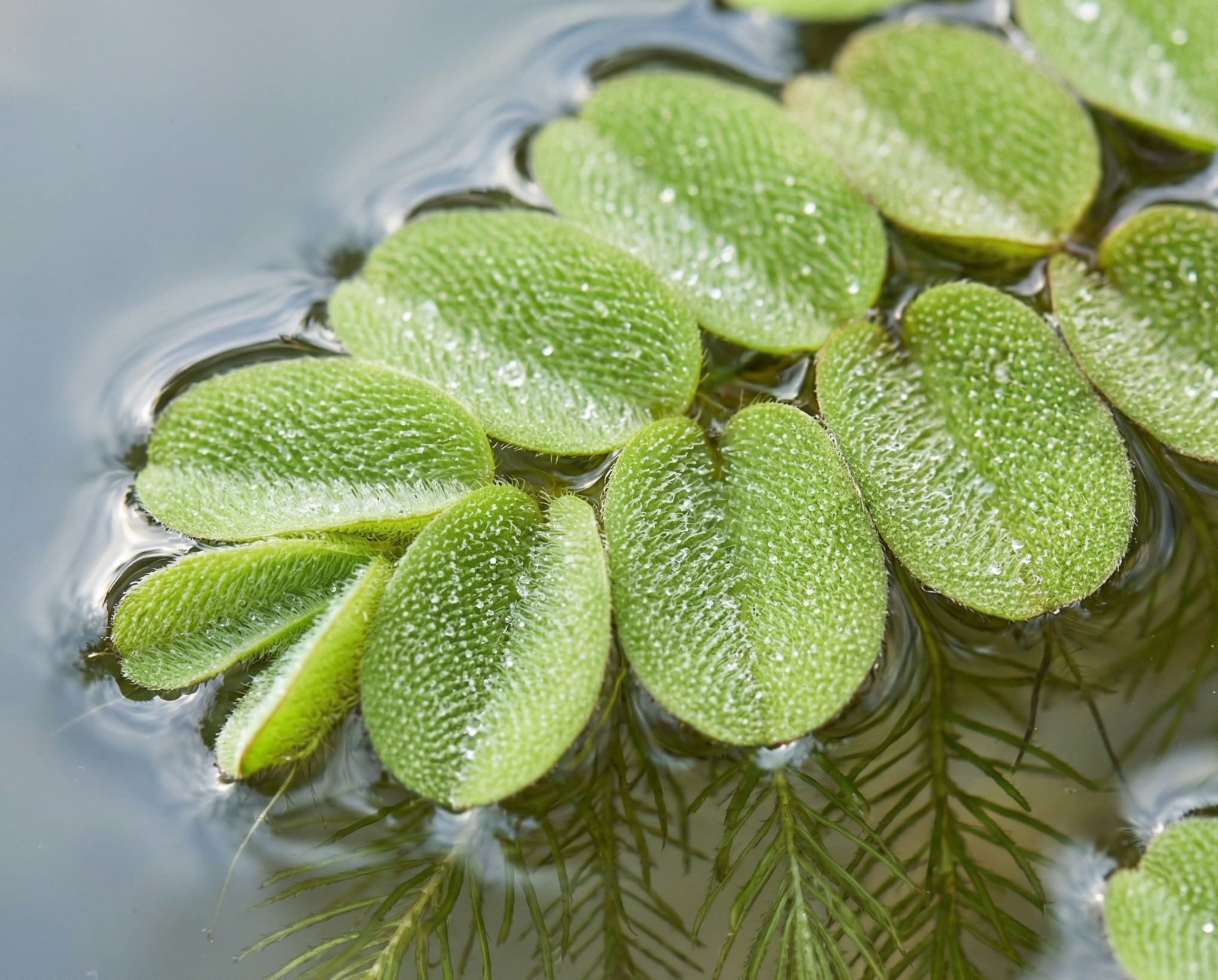
    Salvinia natans is a small floating fern with paired, oval green leaves and a finely divided submerged frond that resembles roots. It forms a useful surface cover and provides shelter for small aquatic animals, but can quickly shade submerged plants when conditions are favorable. Identification is based on the supplied source label and visible form; closely related Salvinia species can look similar, so confirmation from a specialist may be needed for specimens lacking diagnostic features.
  • Taxiphyllum 'Spiky' (Spiky moss)

    Taxiphyllum 'Spiky' (Spiky moss)

    Easy
    On rock or root
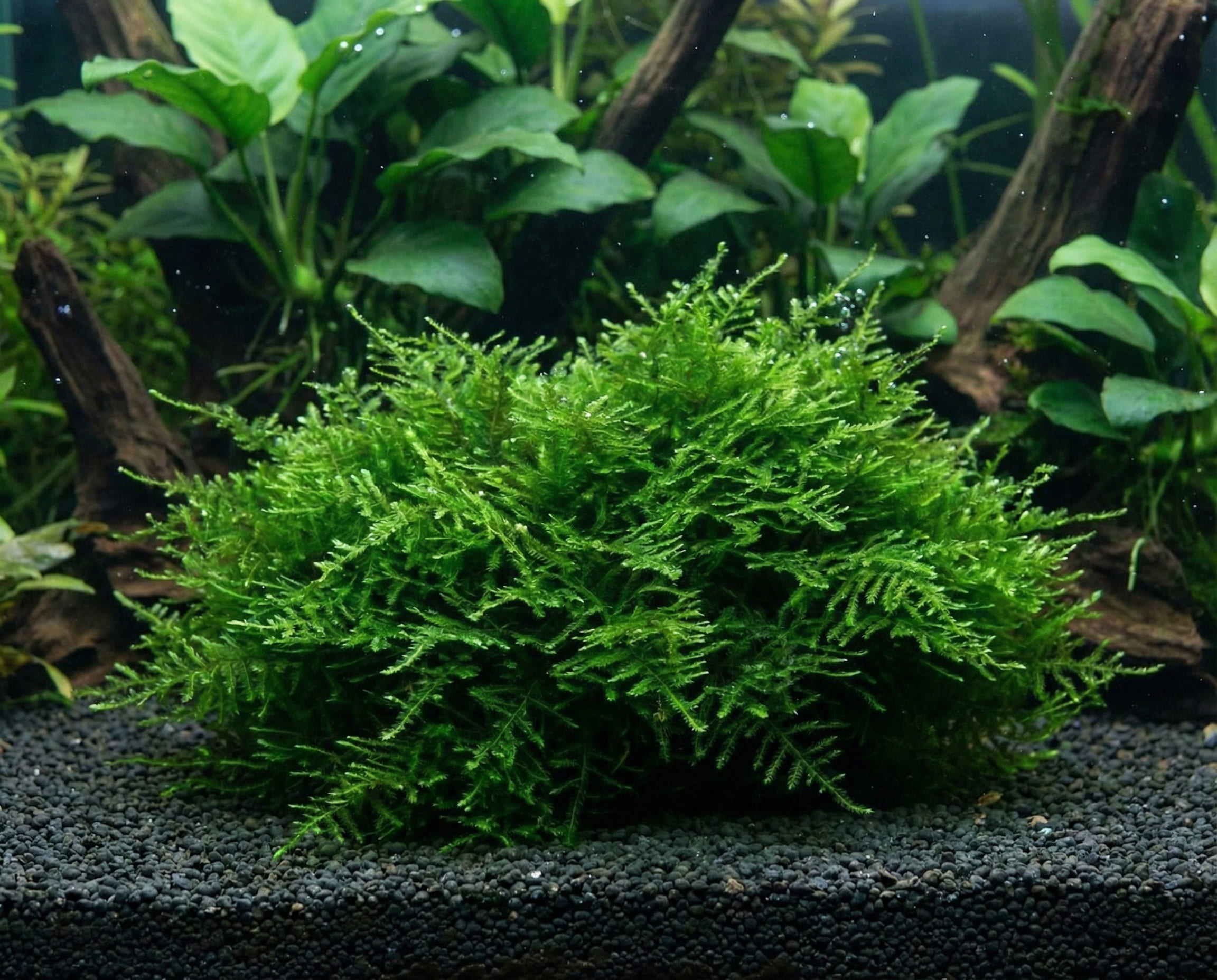
    Spiky moss is an aquarium moss sold under the trade name Taxiphyllum 'Spiky'. Its strongly branched, three-dimensional shoots form dense green cushions or trailing growth on hardscape. The name is commonly used for a cultivated form, but it does not by itself establish a formally described species, so identification should remain conservative. It is generally adaptable and suitable for beginners when attached to wood or rock, provided circulation and regular trimming prevent debris from accumulating within the mat.
  • Solenostoma tetragonum (Pearl Moss)

    Solenostoma tetragonum (Pearl Moss)

    Medium
    On rock or root
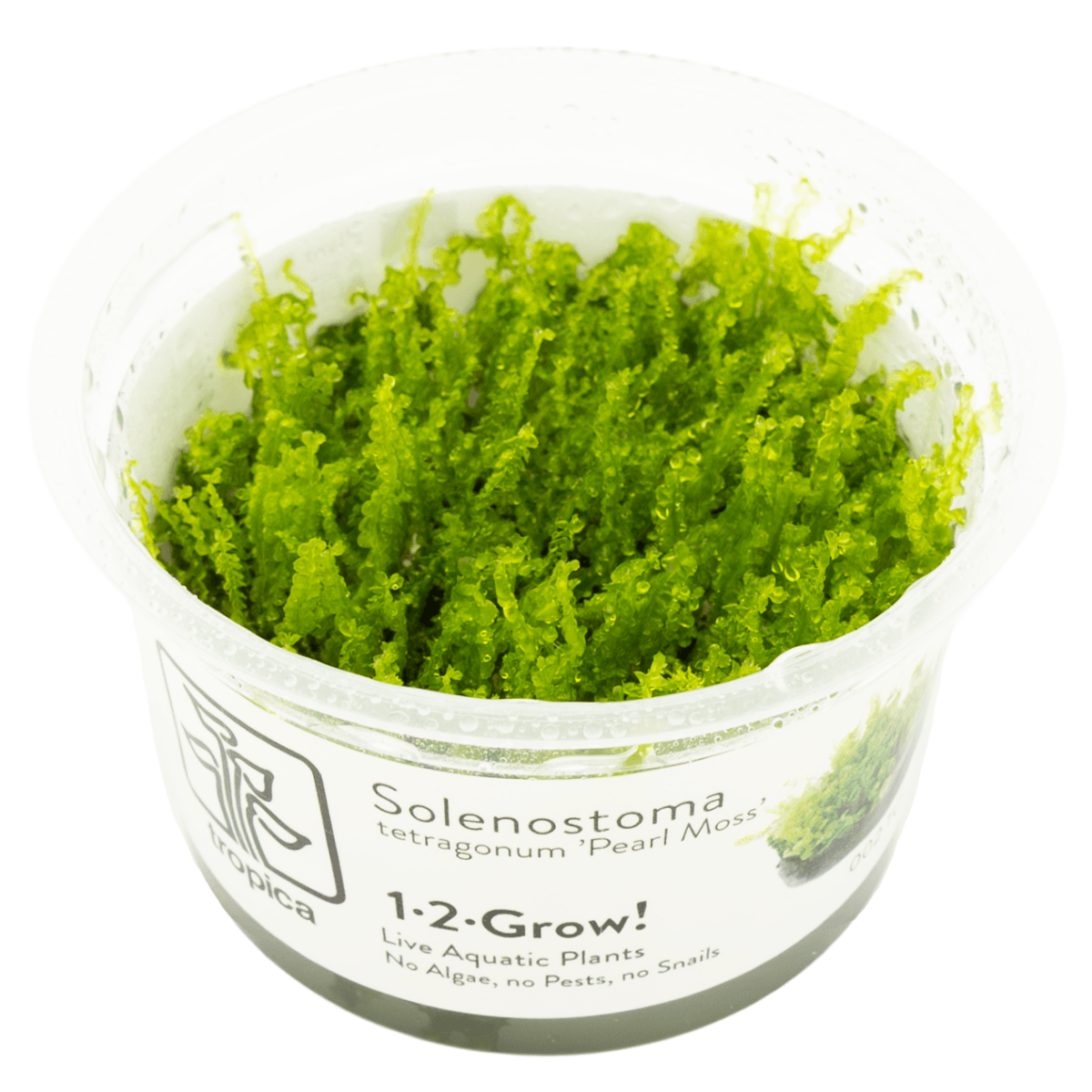
    Solenostoma tetragonum is a small aquatic liverwort sold in the aquarium trade as Pearl Moss. The supplied product identification is consistent with the finely branched, bright green growth shown, although a definitive species determination cannot be made from product images alone. It is best used as an attached epiphyte on wood or stone, where its delicate texture provides detail without dominating the layout.
  • Phyllanthus fluitans (Red Root Floater)

    Phyllanthus fluitans (Red Root Floater)

    Easy
    Supporting plants
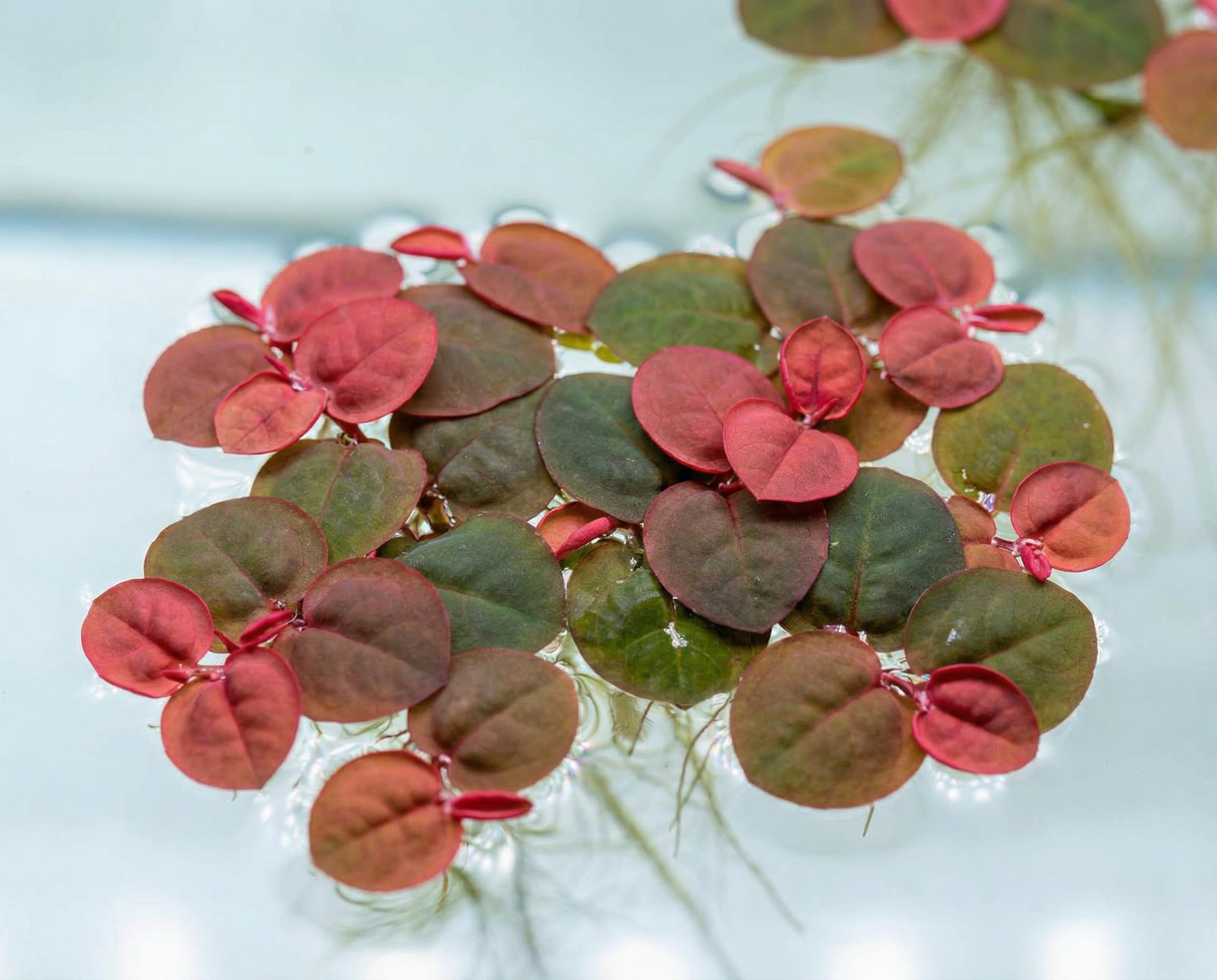
    Phyllanthus fluitans is a free-floating South American aquatic plant with rounded, slightly swollen leaves and fine hanging roots. Under strong light, mature leaves may develop red or pink tones, while lower light generally produces greener growth. It is useful for absorbing nutrients, providing shade and offering cover near the surface. The supplied images show characteristic features, but coloration varies with light and growing conditions.
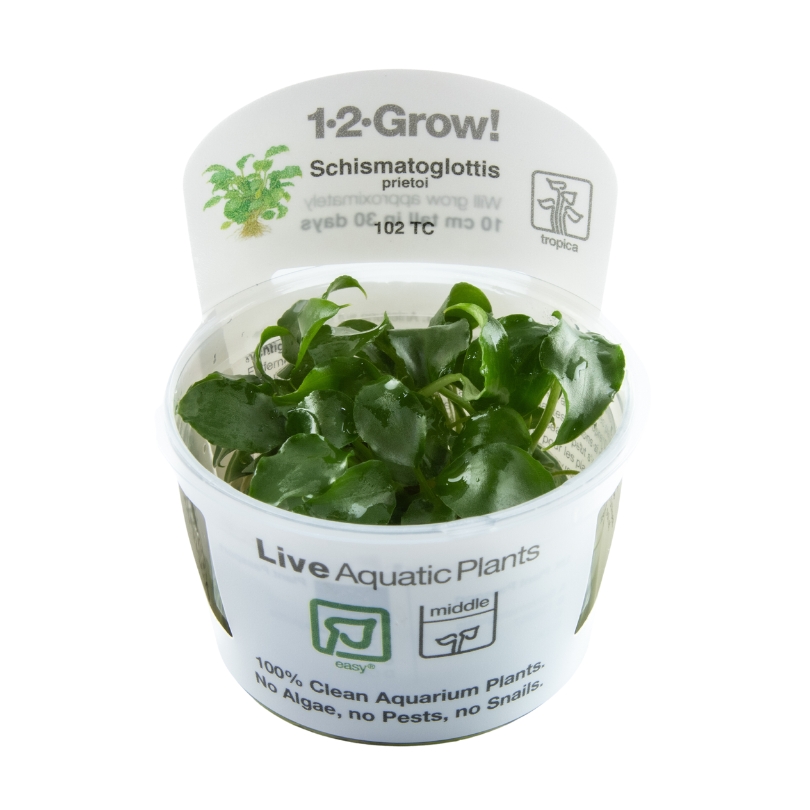
  • Schismatoglottis prietoi

    Schismatoglottis prietoi

    Easy
    Middleground
    Schismatoglottis prietoi is a compact, green aroid with thick, gently wavy leaves and a clumping growth habit. It is suitable for the middle area of smaller or medium-sized aquariums, where its textured foliage provides contrast without dominating the layout. The supplied material supports identification as S. prietoi, although aquarium-trade plants can sometimes be confused with related Schismatoglottis species.
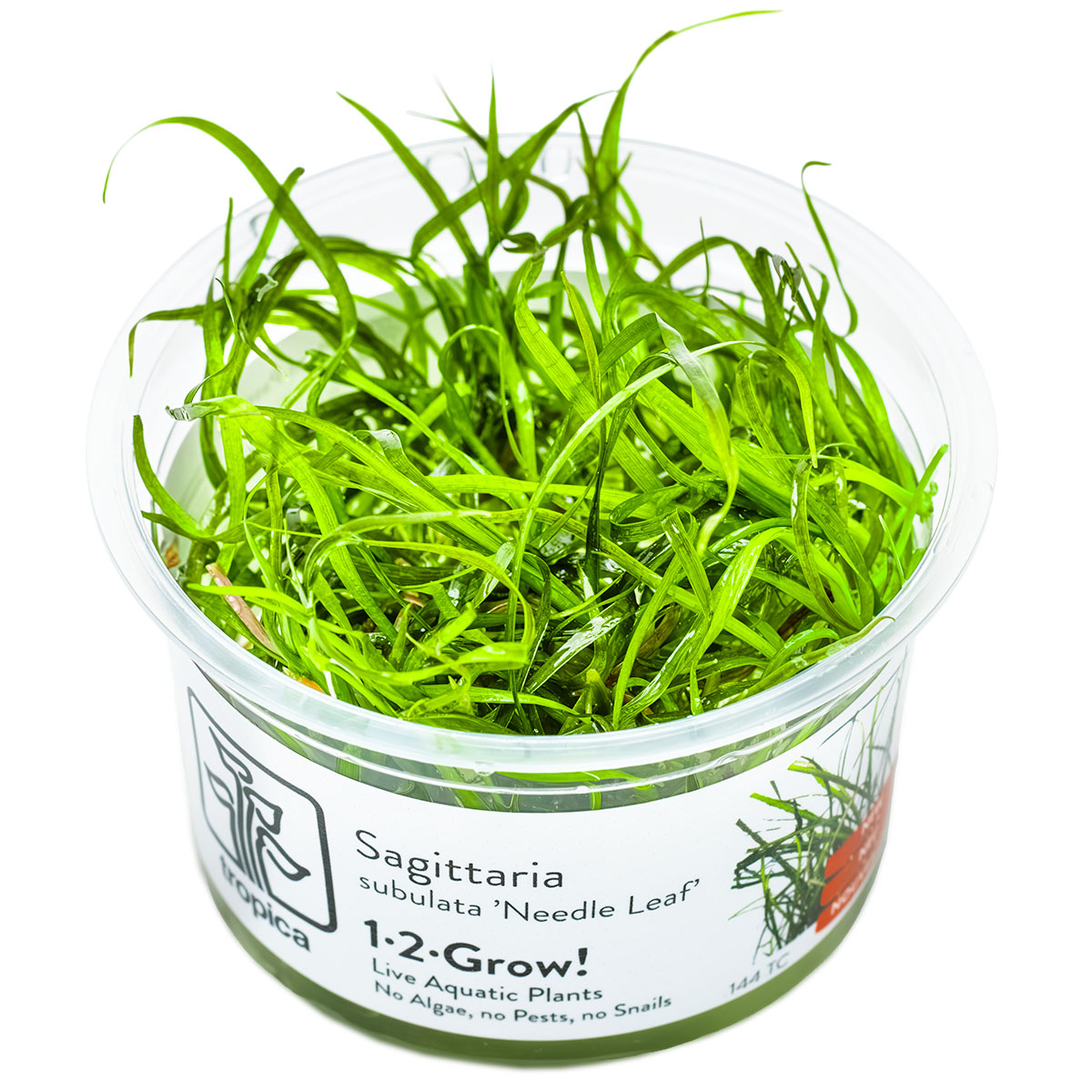
  • Sagittaria subulata (Needle Leaf)

    Sagittaria subulata (Needle Leaf)

    Easy
    Foreground
    Sagittaria subulata is a grass-like, rosette-forming aquarium plant sold as Needle Leaf or Dwarf Sagittaria. Its narrow leaves arise from a basal crown and it spreads by runners, forming a low to medium-height patch when grown submerged. The exact form can vary considerably: some specimens remain compact, while others produce taller leaves under aquarium conditions. Identification is reasonably clear from the supplied label and plant appearance, but cultivar or commercial-form distinctions cannot be confirmed from images alone.