Identification
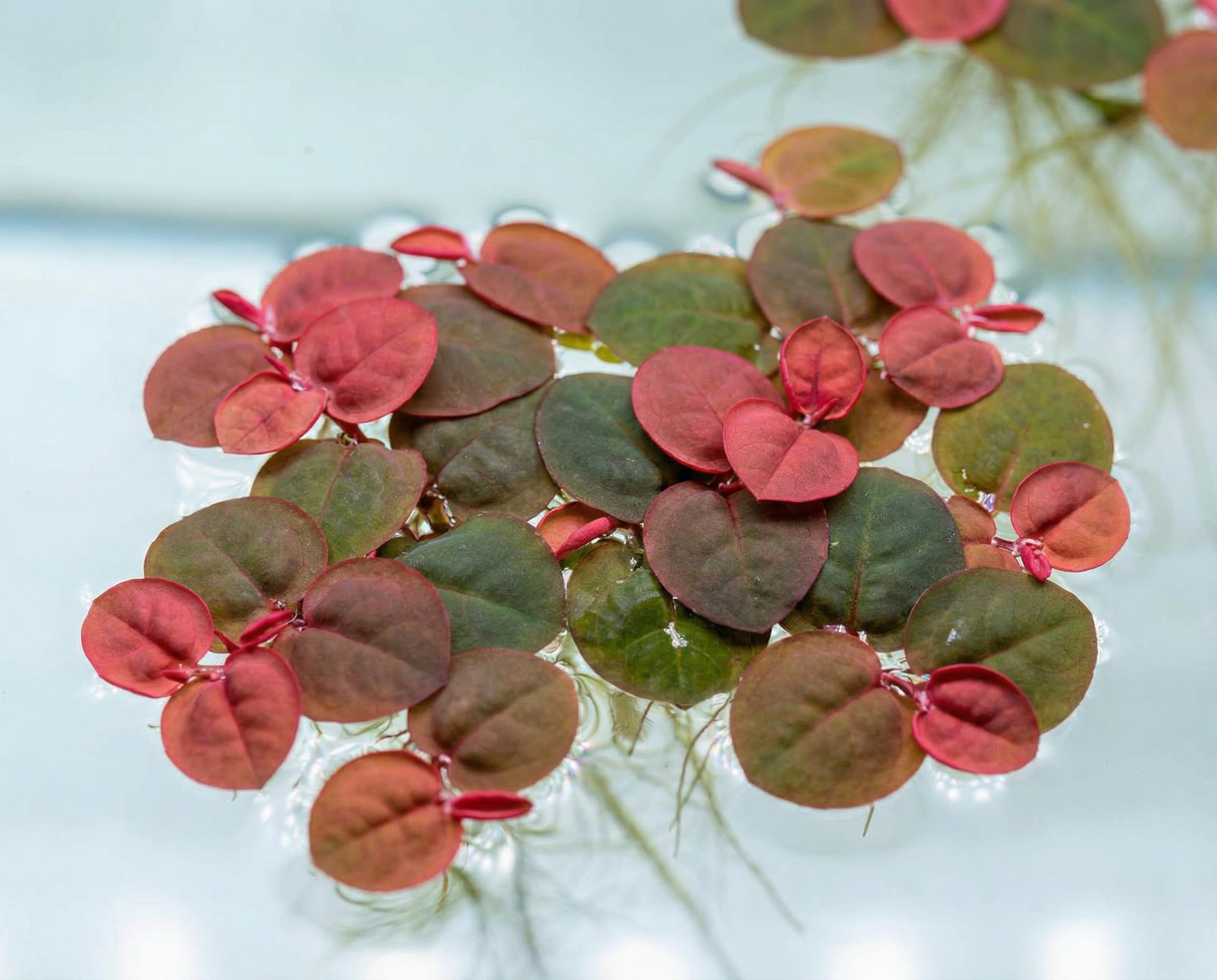
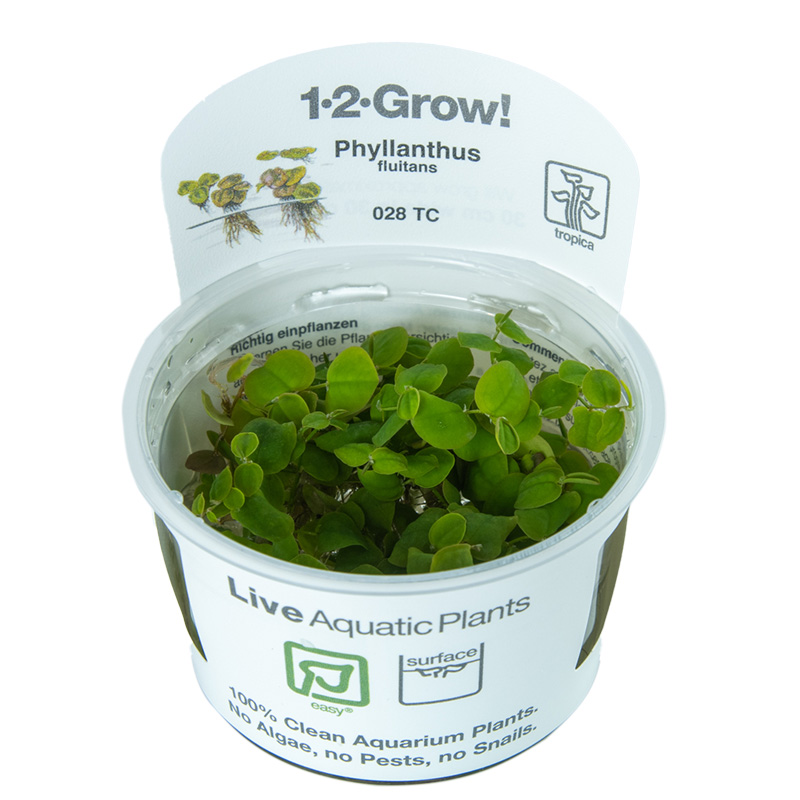
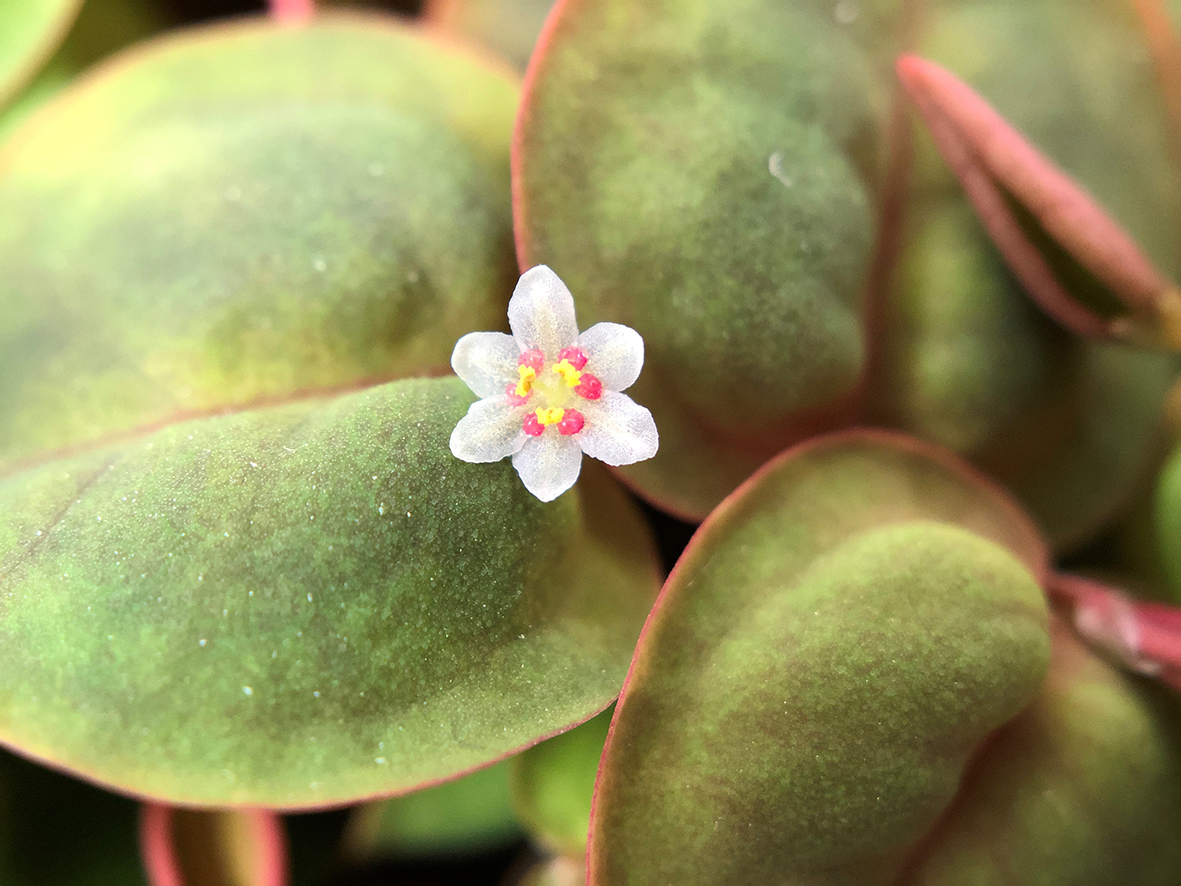
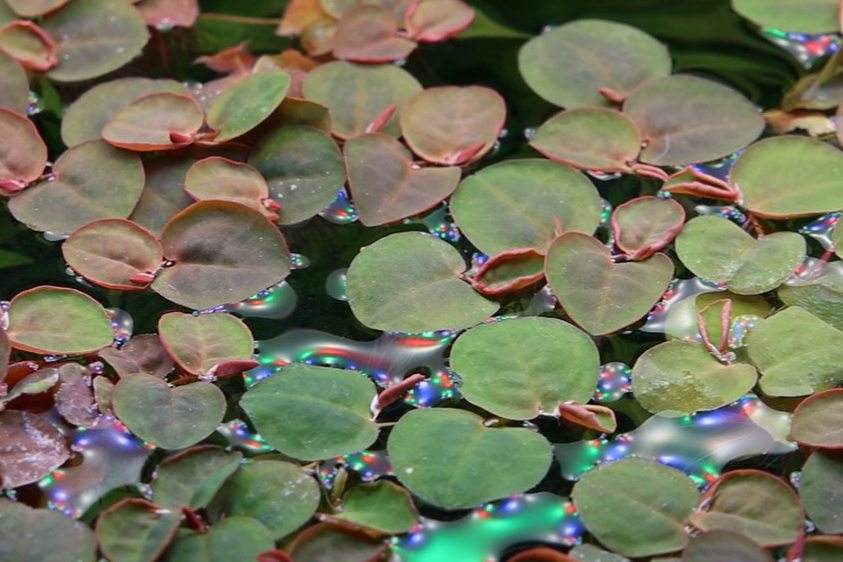
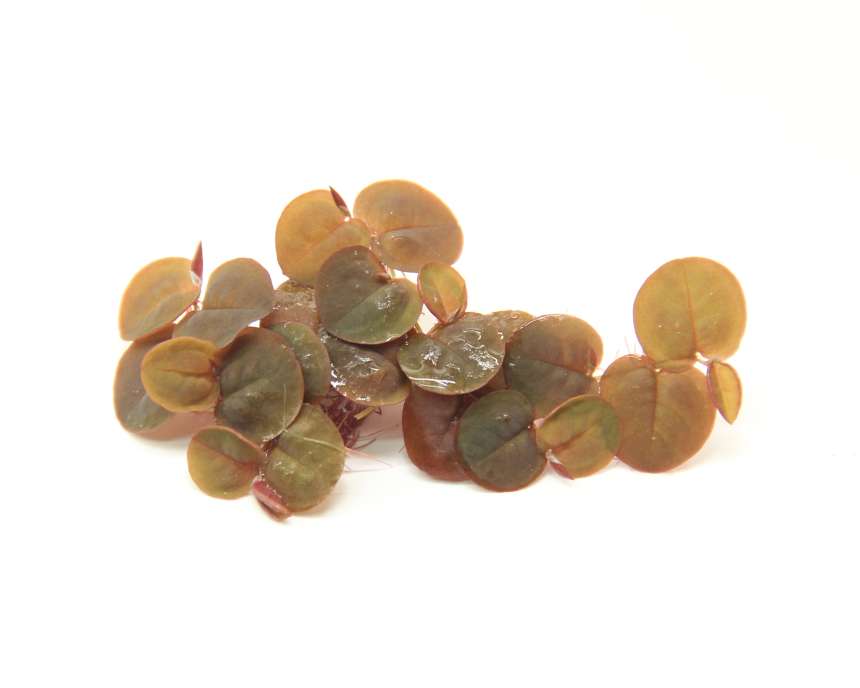
This species forms small, rounded leaves on short connecting stems, with fine roots hanging below the surface. It is commonly called Red Root Floater. Leaf color can range from green to bronze, red, or pink depending on light intensity, nutrient availability, and plant condition. Color alone should not be used to confirm identification.
Placement and light
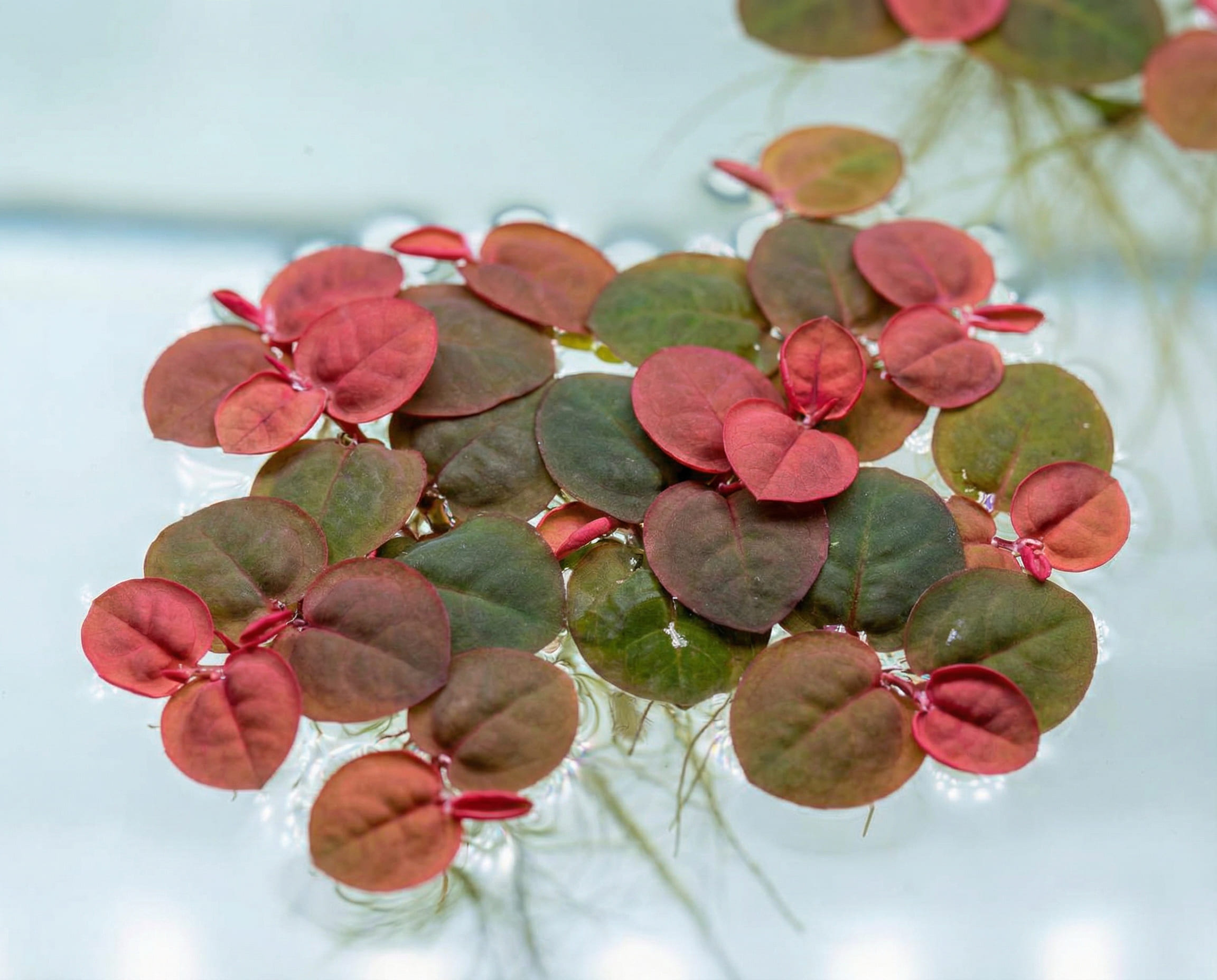
Keep the plant floating freely at the surface rather than burying it in substrate. Provide bright, stable aquarium lighting for compact growth and stronger red coloration. Leave some open surface area for gas exchange and avoid allowing the plant to form a completely opaque layer, especially in smaller aquariums.
Water and nutrition
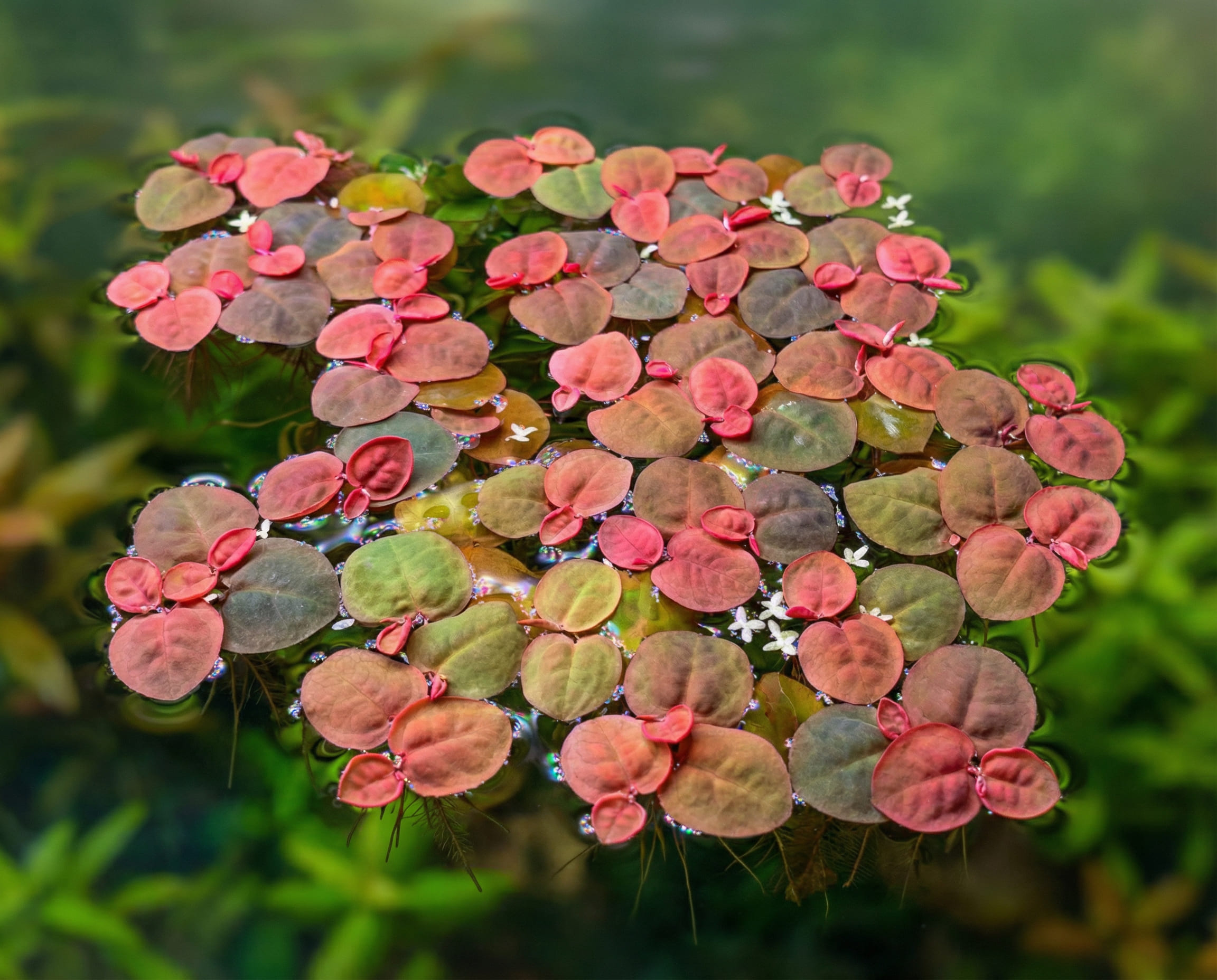
Phyllanthus fluitans can grow in a range of established freshwater aquarium conditions. It takes nutrients primarily from the water, so consistent but moderate nutrient availability supports healthy leaves and roots. Avoid persistent surface agitation that repeatedly submerges the foliage, and keep the leaves dry above the waterline where possible.
Propagation and maintenance
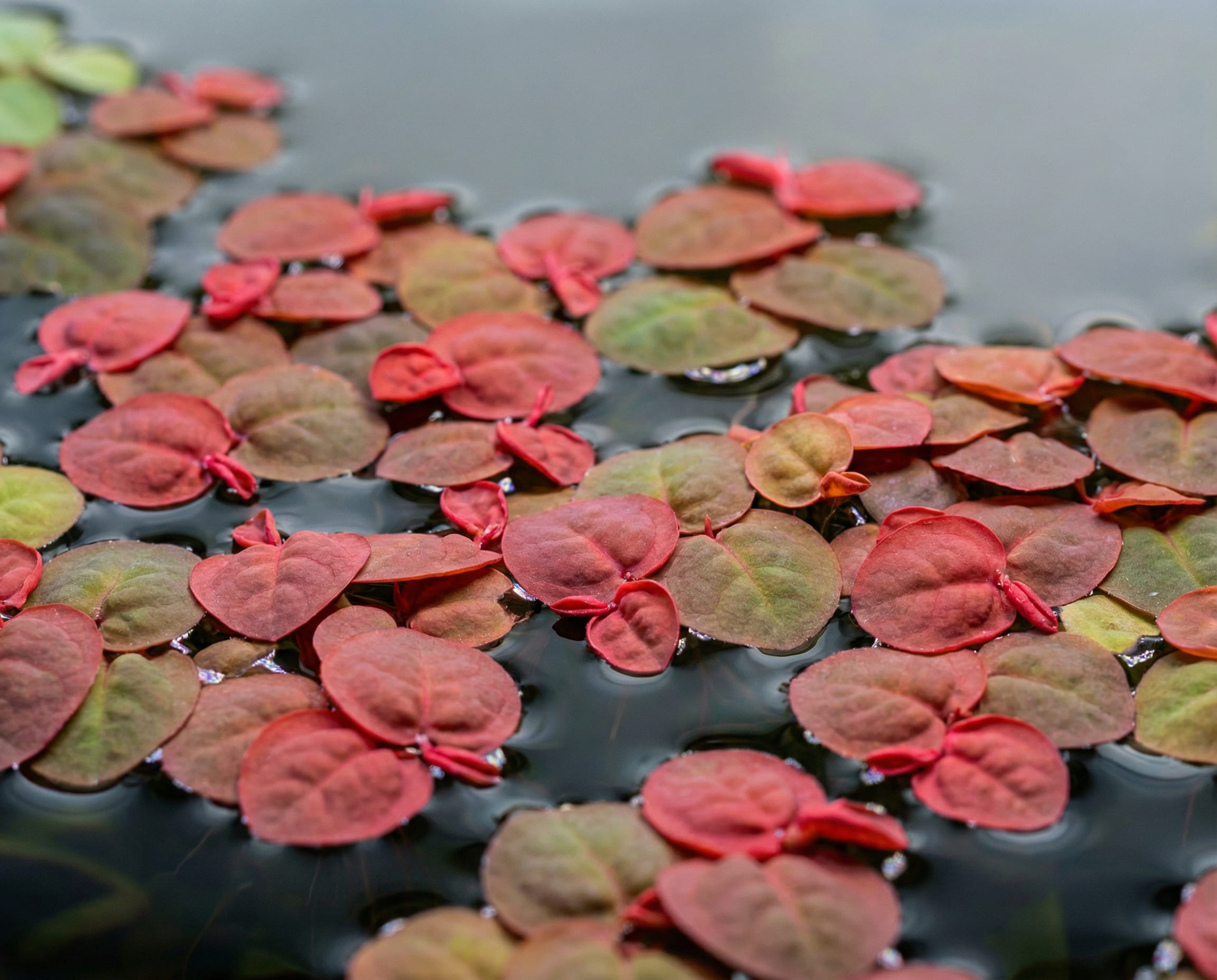
It spreads by branching and can be propagated by separating healthy side shoots or connected sections. Remove yellowing, damaged, or overcrowded growth regularly. Thin the surface cover so submerged plants still receive adequate light and so oxygen exchange is not unnecessarily restricted.
Practical cautions
Strong light can encourage red coloration but may also expose nutrient deficiencies or increase algae on older leaves. Long roots can become entangled with equipment or dense plantings, so inspect and trim or reposition floating clusters as needed. The identification is treated as Phyllanthus fluitans based on the supplied source and visible morphology; cultivar or population variation is not established here.
Leave your comments