Identification
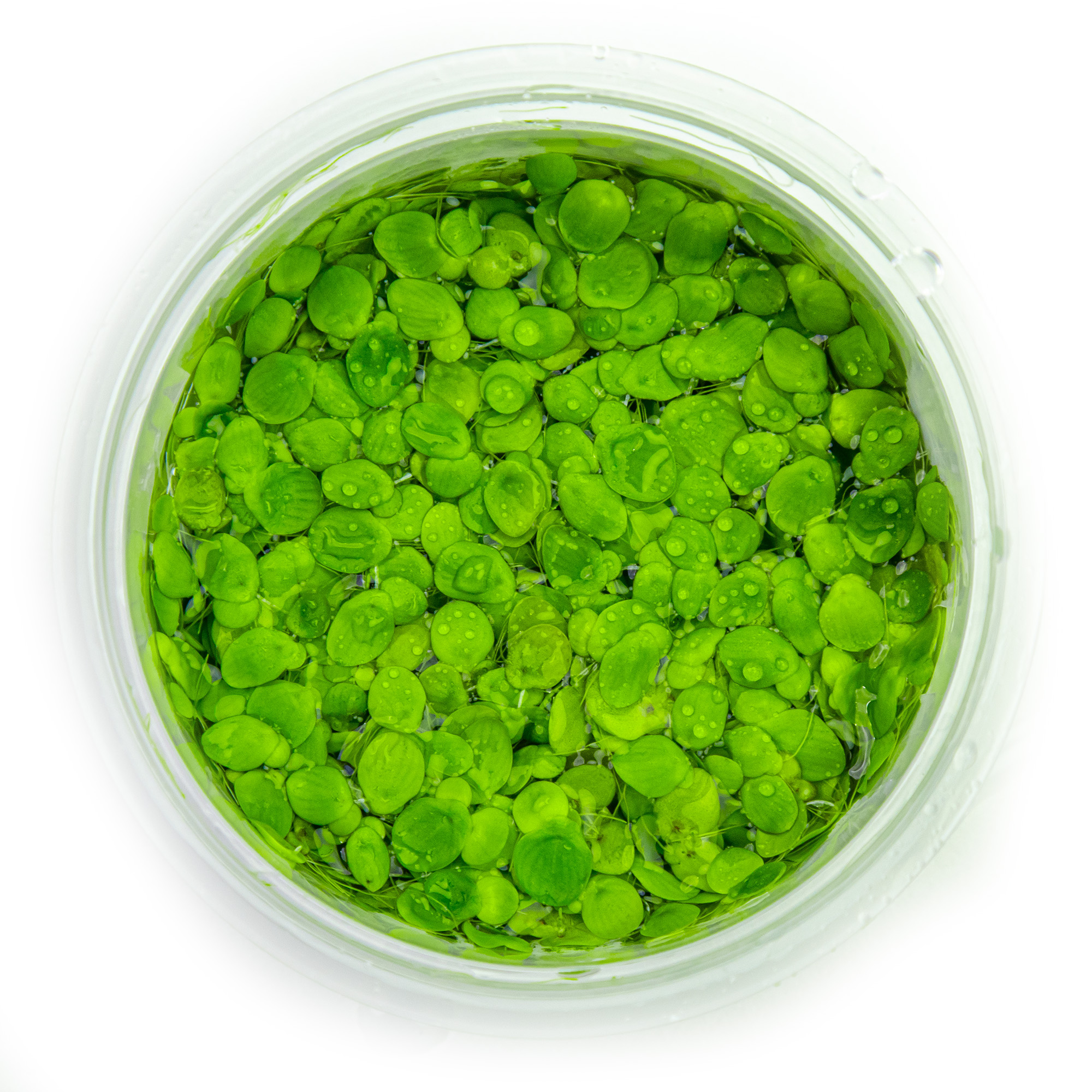
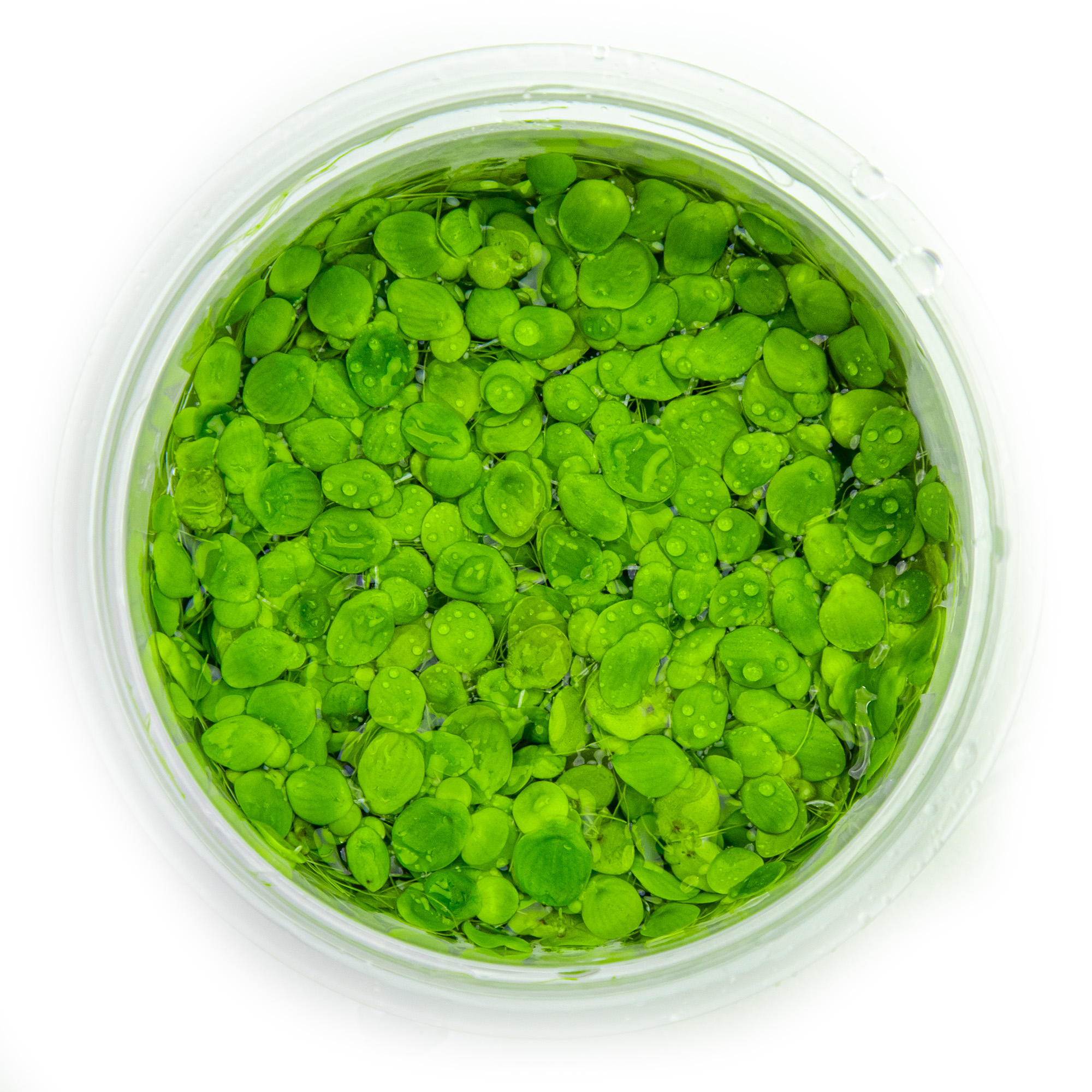
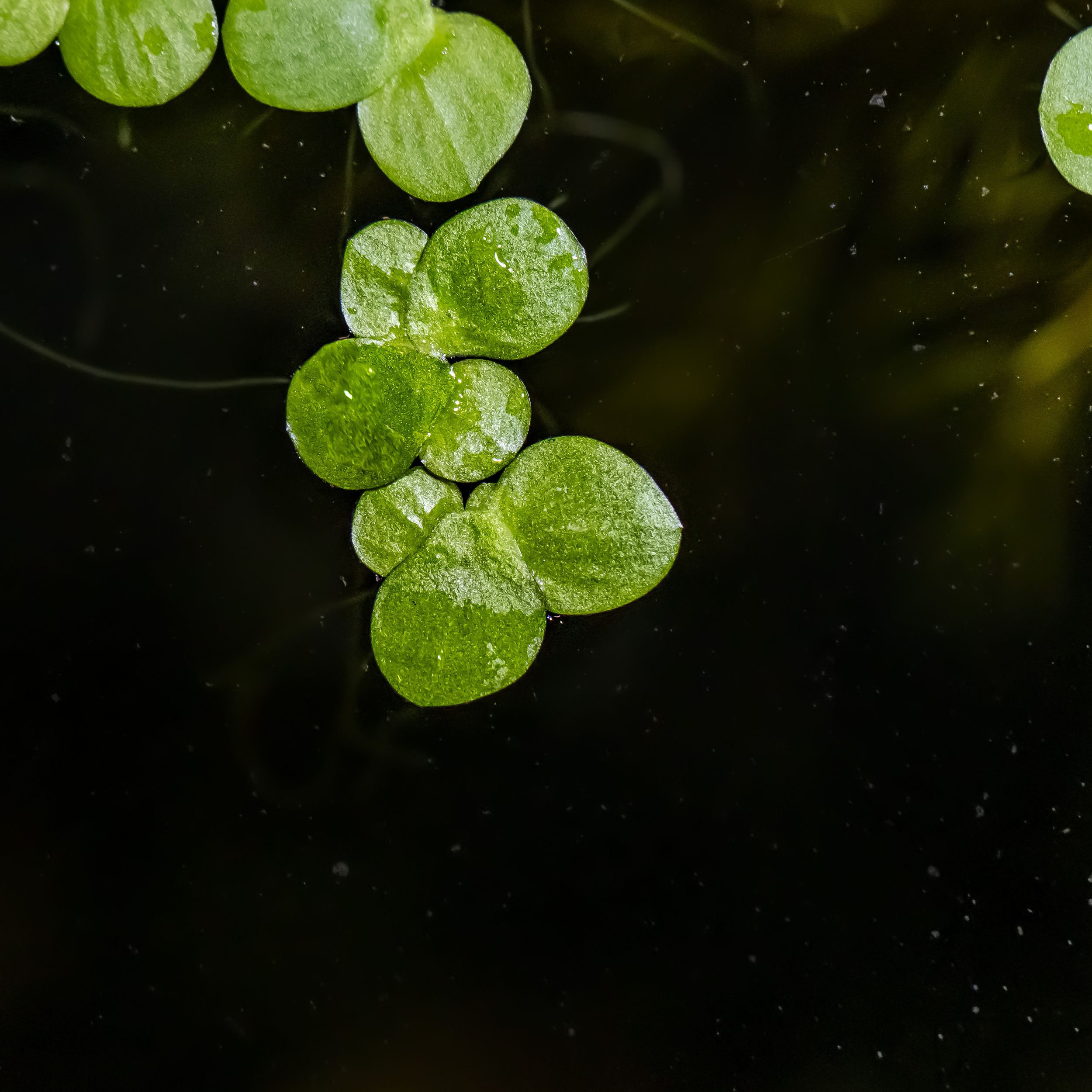
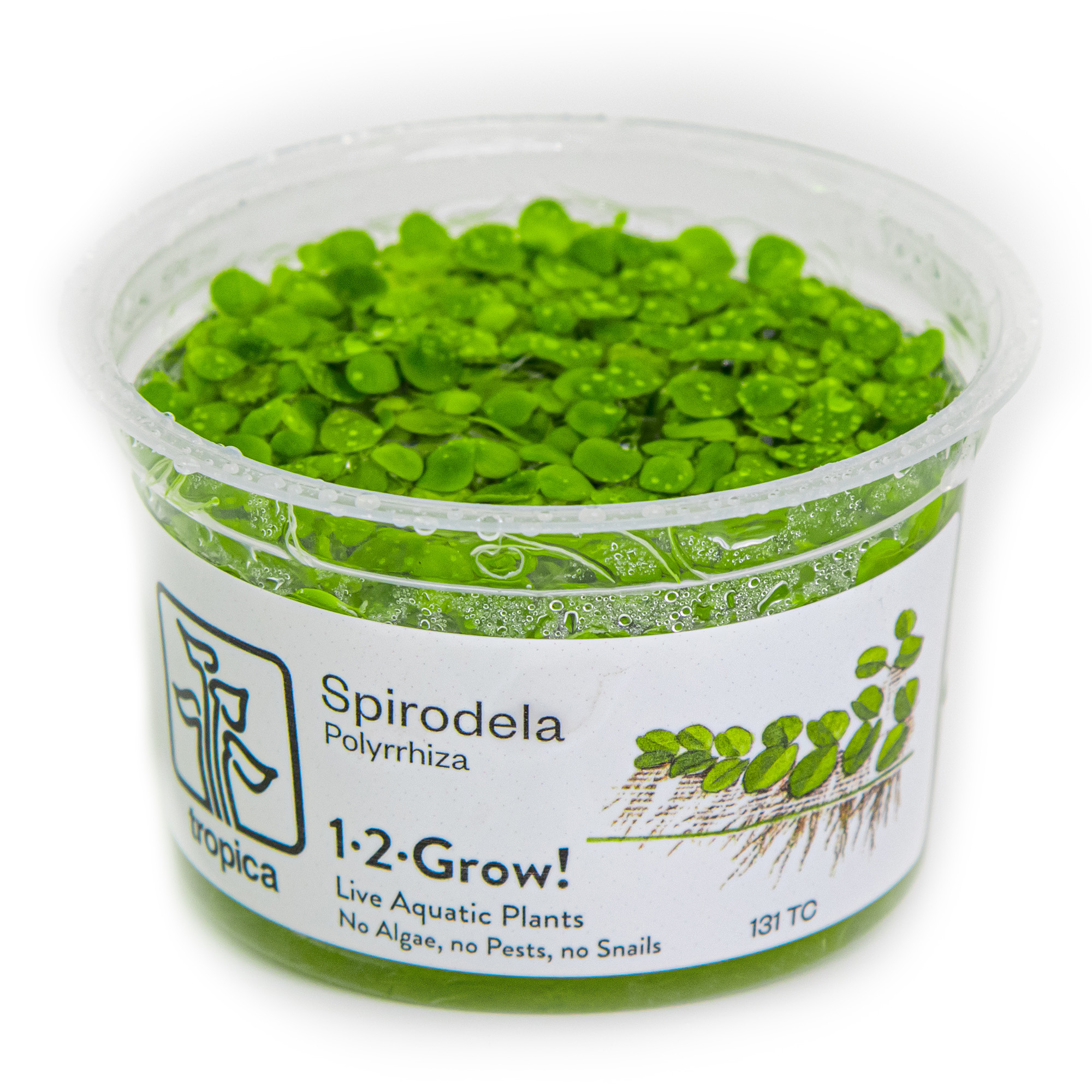
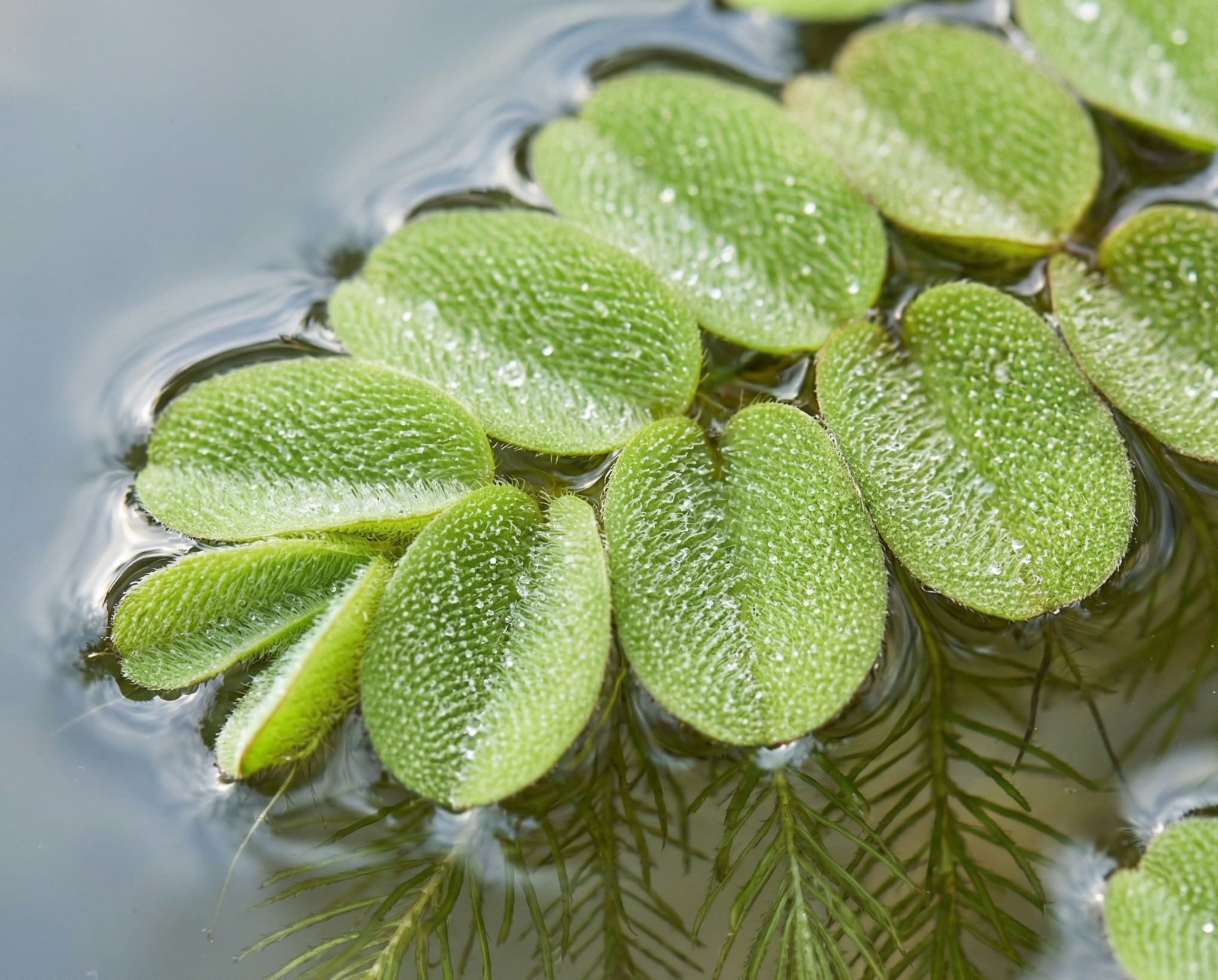
The plant consists of compact floating fronds rather than rooted stems or leaves. Fronds are generally green, rounded or oval, and occur singly or in connected groups, with several fine roots extending into the water. The supplied material is labelled Spirodela polyrrhiza and visually matches giant duckweed, but images alone cannot confirm every diagnostic species character.
Placement and light
Keep the fronds floating freely at the surface. Moderate light supports healthy growth; stronger light can produce dense coverage but may also encourage algae if nutrients are excessive. Leave part of the surface open so gas exchange and light penetration are not restricted.
Water and nutrition
Giant duckweed absorbs nutrients from the water column and does not need substrate planting. It generally grows in established aquariums with available dissolved nutrients. Stable aquarium conditions and clean, reasonably well-lit water are more important than specialised substrate or carbon supplementation.
Maintenance
Growth can be very fast. Thin the colony regularly with a net or by hand, removing yellowing or damaged fronds. Keep the plant away from strong filter outflows, skimmers, and tightly fitted surface equipment, which can trap or damage it. Excessive coverage can shade submerged plants and reduce circulation at the surface.
Propagation and handling
Propagation is primarily vegetative: mature fronds produce daughter fronds that separate and form new clusters. Rinse new material carefully if transferring it between aquariums, and inspect it for unwanted organisms. Because even a small amount can multiply quickly, remove unwanted fragments promptly and avoid releasing the plant into natural waterways.
Leave your comments