Identification
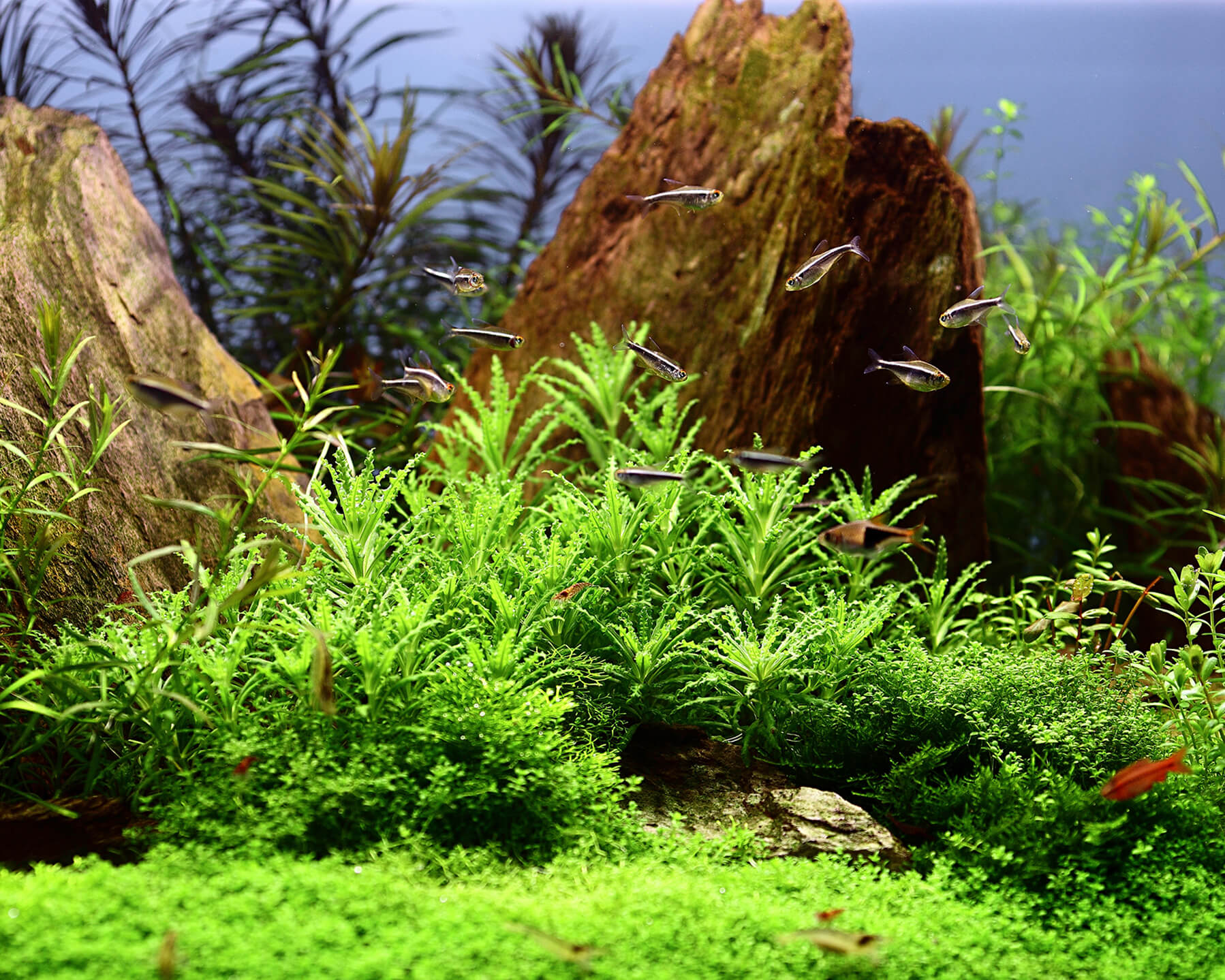
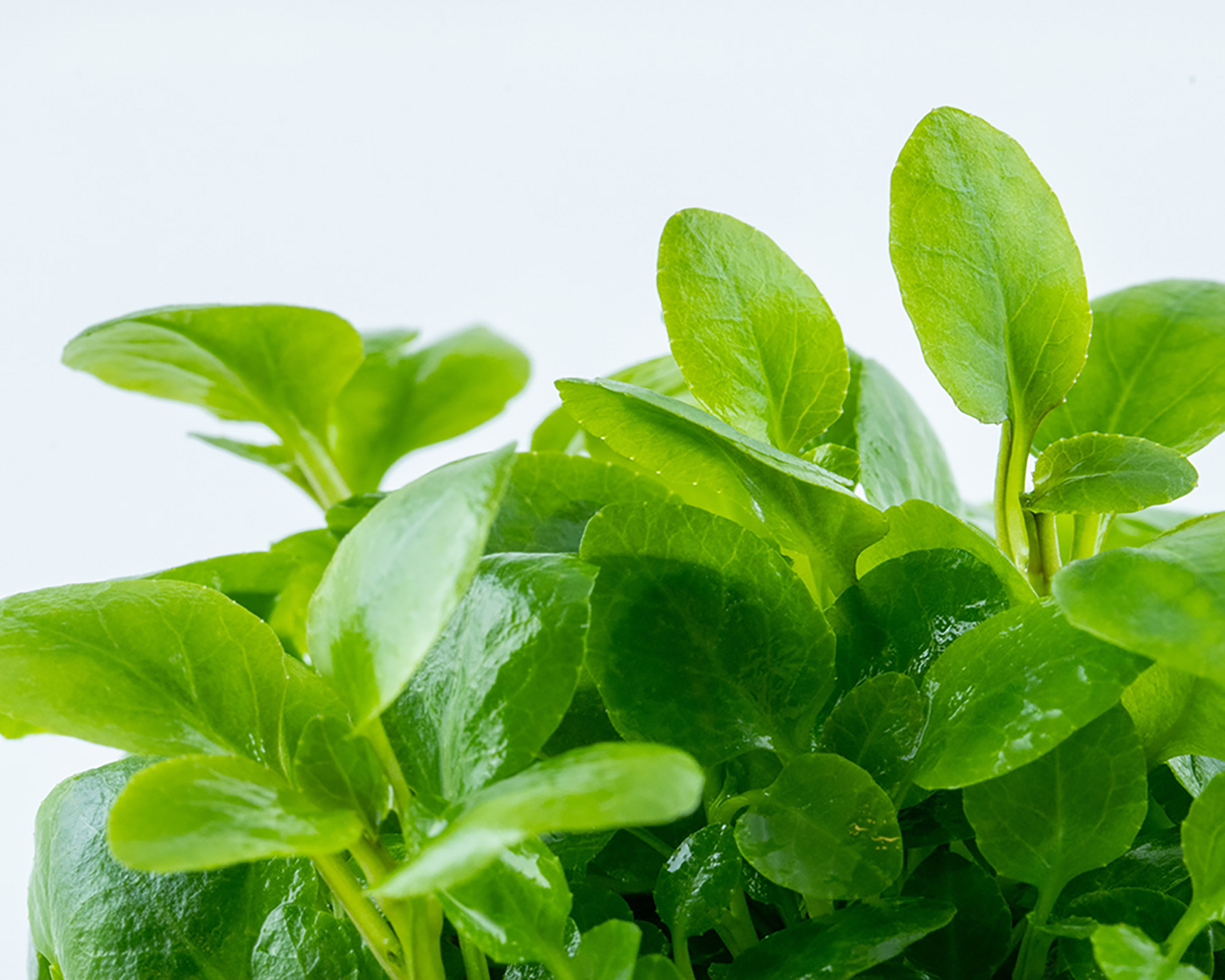
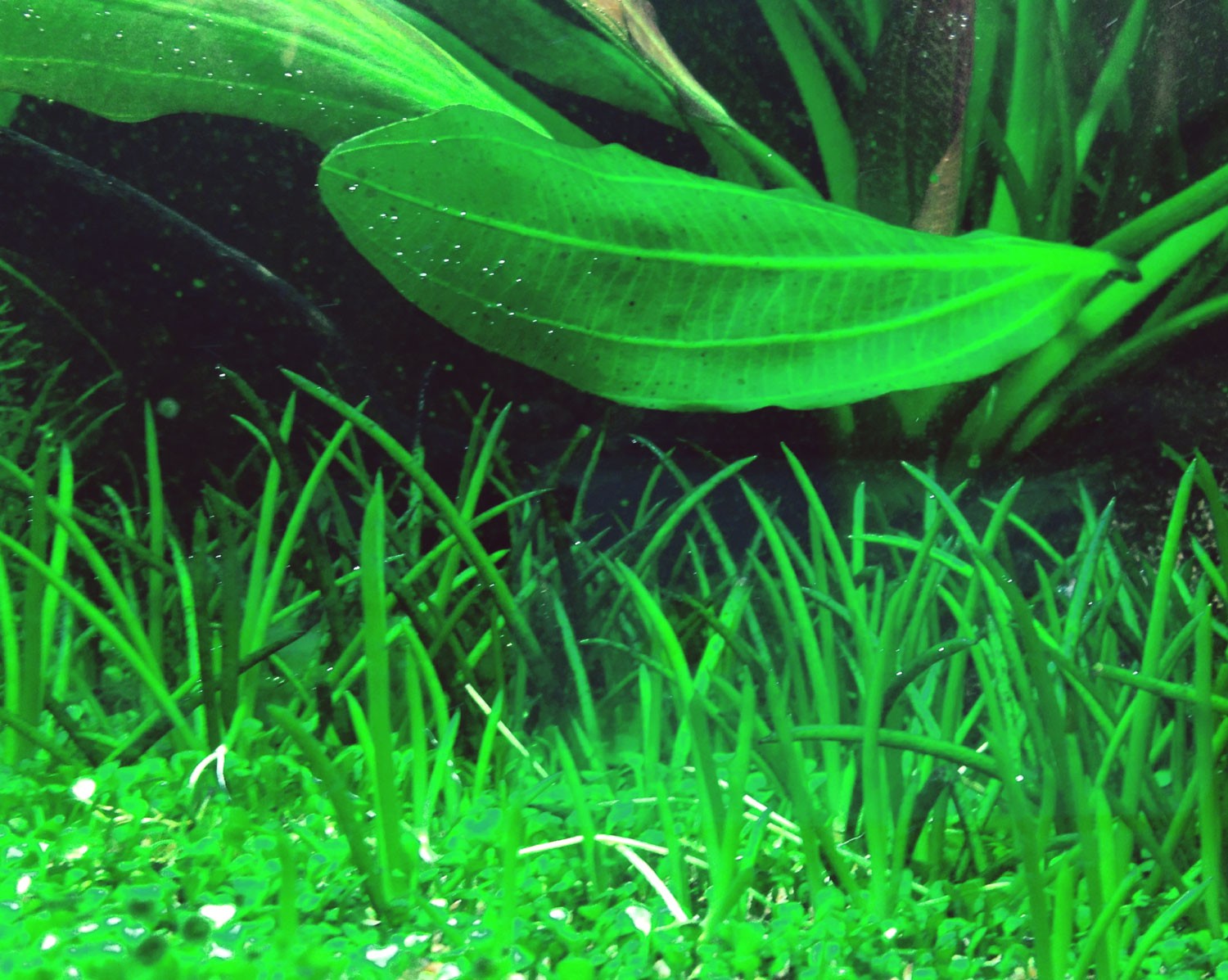
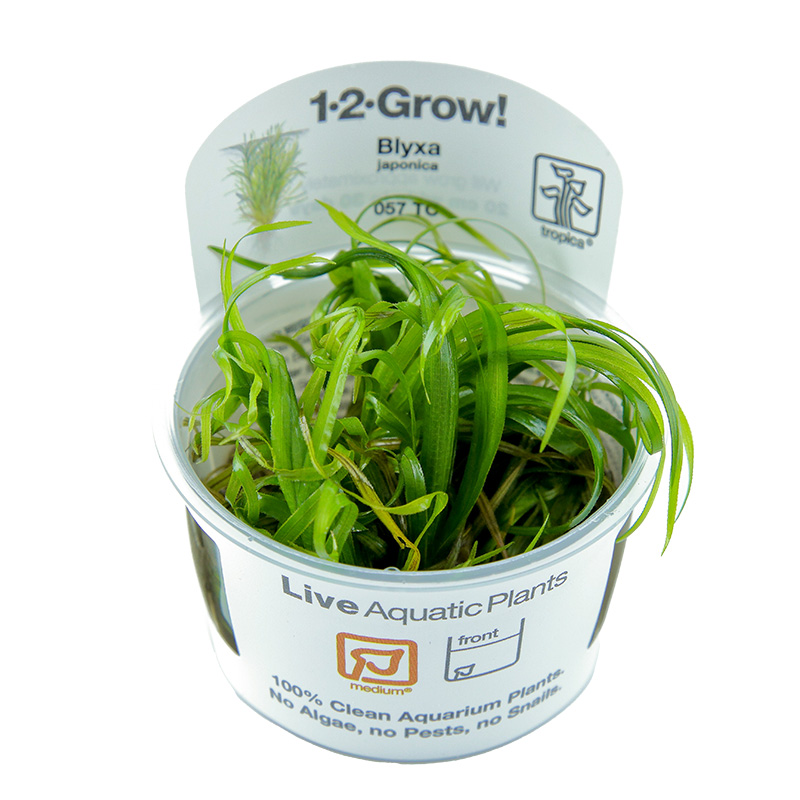
Pogostemon helferi forms compact rosettes of narrow, undulating leaves. The leaves may range from light green to deeper green depending on lighting, nutrition, and growing conditions. Aquarium specimens are commonly sold as cultivated tissue-culture plants. The supplied product label supports identification as Pogostemon helferi; individual plants can vary in leaf shape and size.
Placement and planting
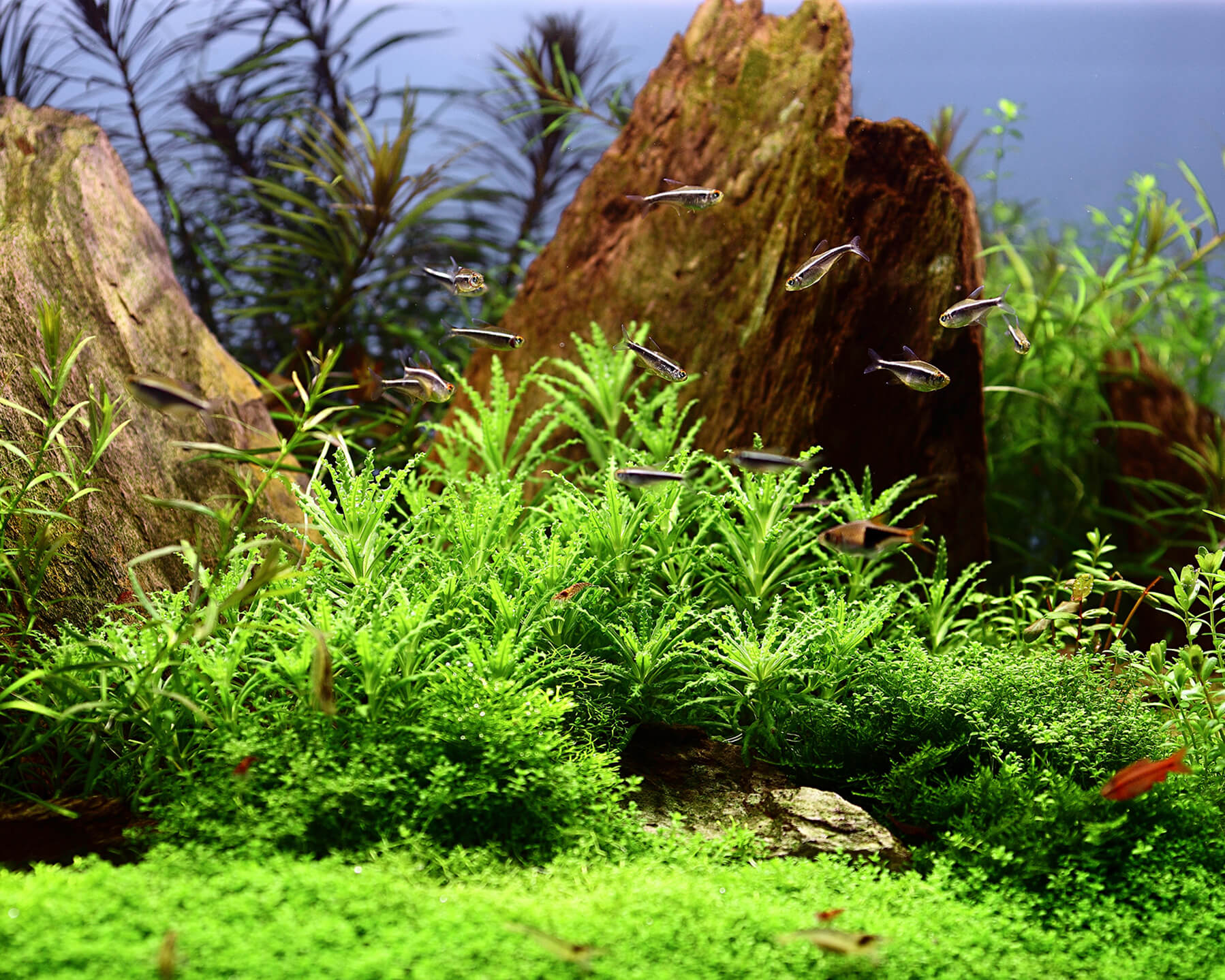
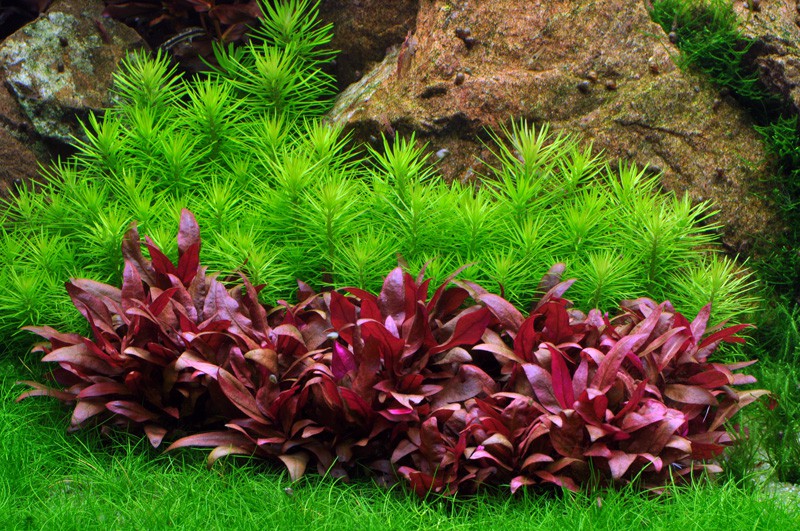
Use it in the foreground or in small groups between stones and roots. Remove the plant from its culture medium, rinse it carefully, and divide it into several portions if desired. Plant each portion shallowly in the substrate, keeping the crown above the substrate surface. Avoid burying the central growing point, which can encourage rot.
Light and carbon
Medium light is suitable, while stronger, well-balanced lighting generally helps maintain compact growth. Carbon dioxide supplementation is beneficial and can improve establishment, leaf production, and form, although results also depend on nutrients and overall aquarium stability. Avoid abrupt changes in light intensity or carbon availability.
Substrate and nutrients
A fine or moderately fine substrate allows the roots to anchor while reducing the risk of exposing the plant during maintenance. Provide a steady supply of nitrogen, potassium, trace elements, and other essential nutrients through the water column and, where appropriate, a nutrient-rich substrate. Pale or stunted new growth can indicate an imbalance rather than a single universal deficiency.
Propagation and maintenance
Propagation is normally achieved by separating side shoots or dividing a mature clump, then replanting the divisions. Remove damaged leaves and keep nearby plants from shading the rosettes. Growth is usually moderate under suitable conditions, but recently transferred tissue-culture plants may need time to adapt from emersed growth to submerged growth.
Leave your comments