Identification
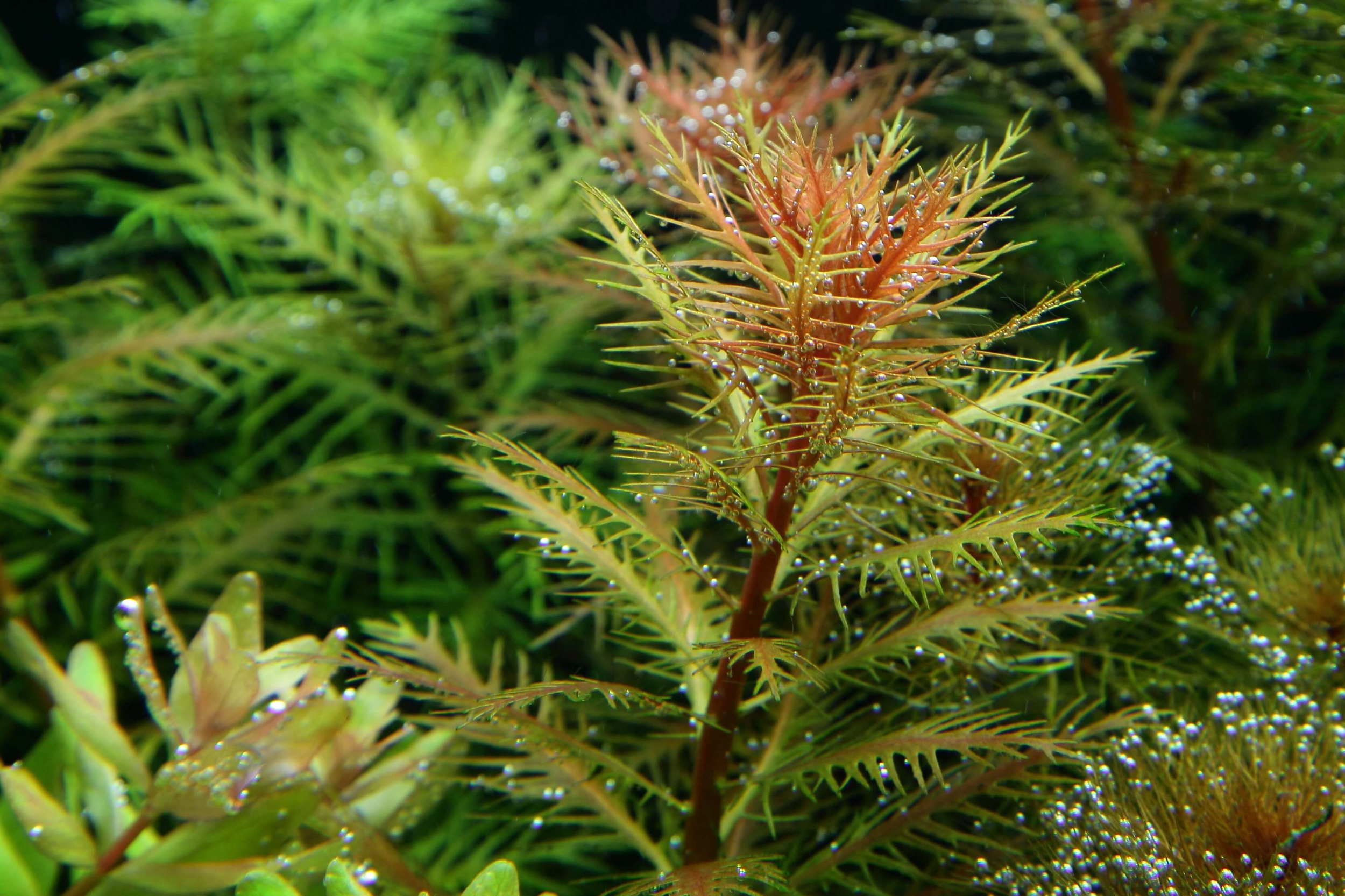
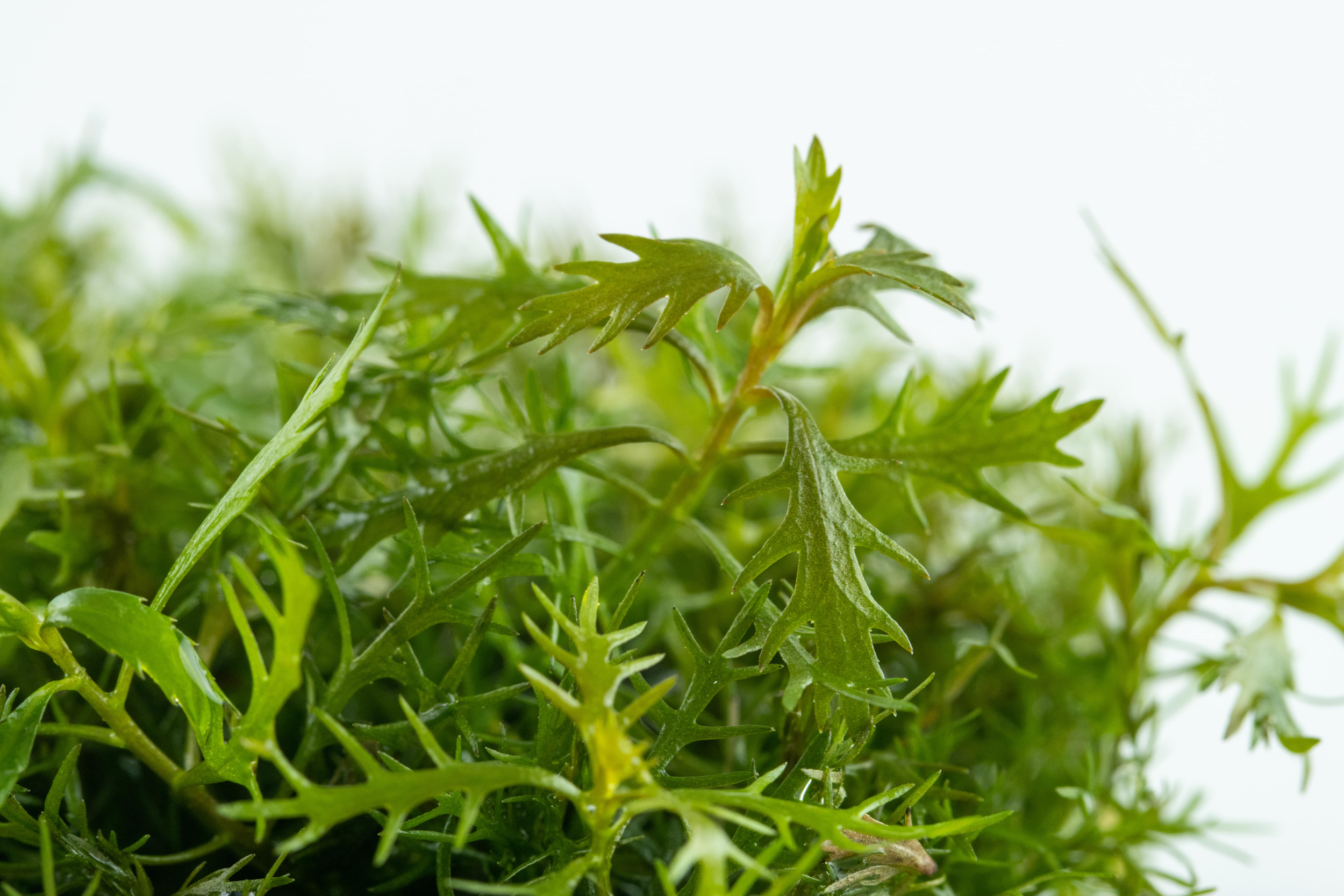
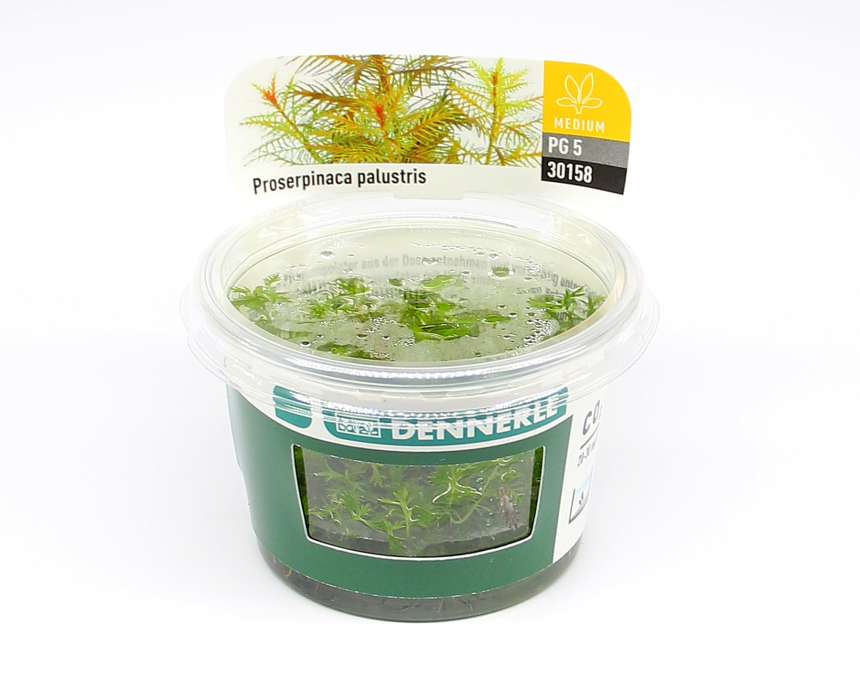
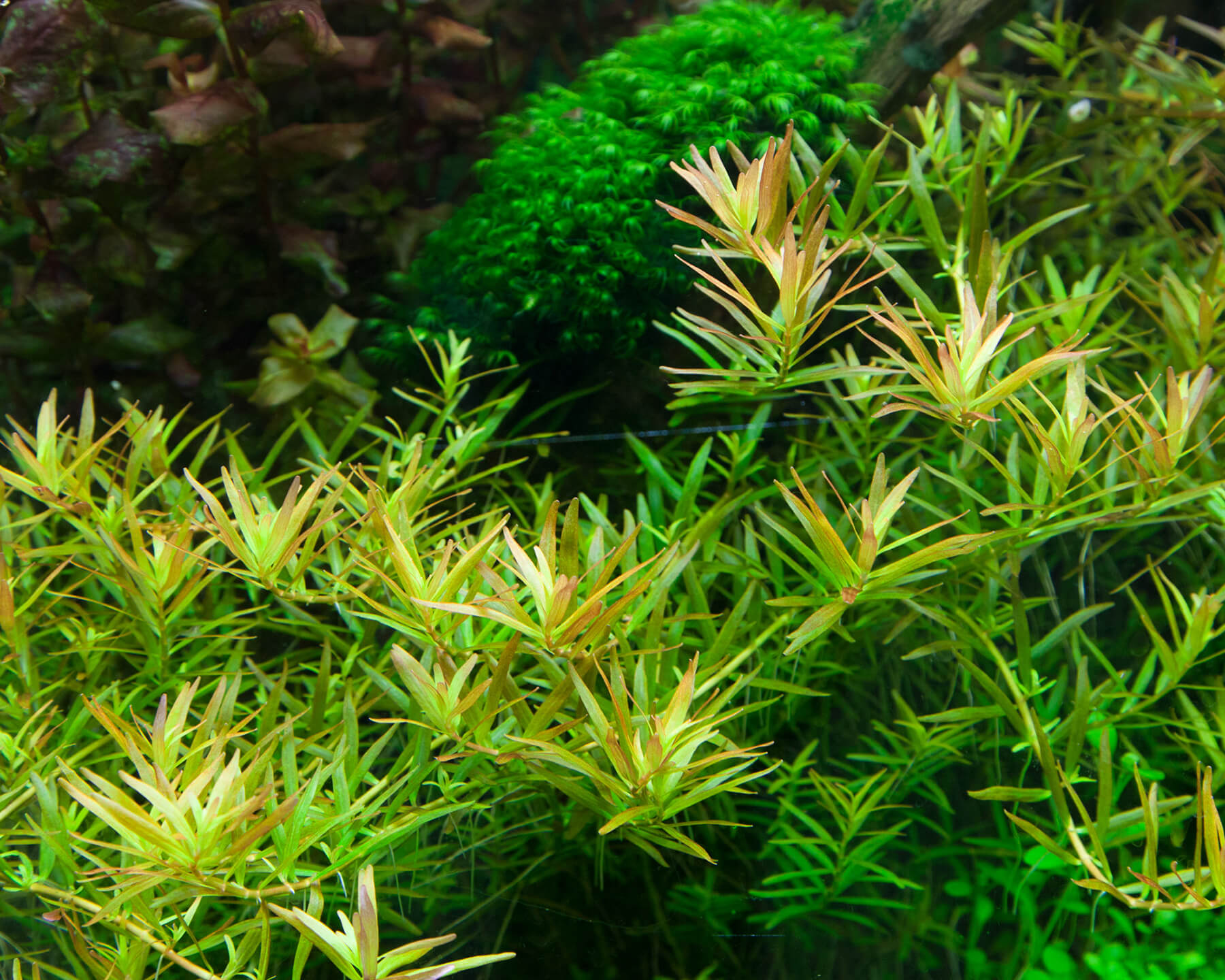
The plant is identified conservatively as Proserpinaca palustris 'Cuba', based on the supplied source name and the characteristic narrow, deeply divided submerged leaves. The name 'Cuba' is commonly used for a cultivated or locality-associated form. Exact provenance and formal cultivar status are not established here, so the trade designation should not be treated as a separately verified species.
Appearance
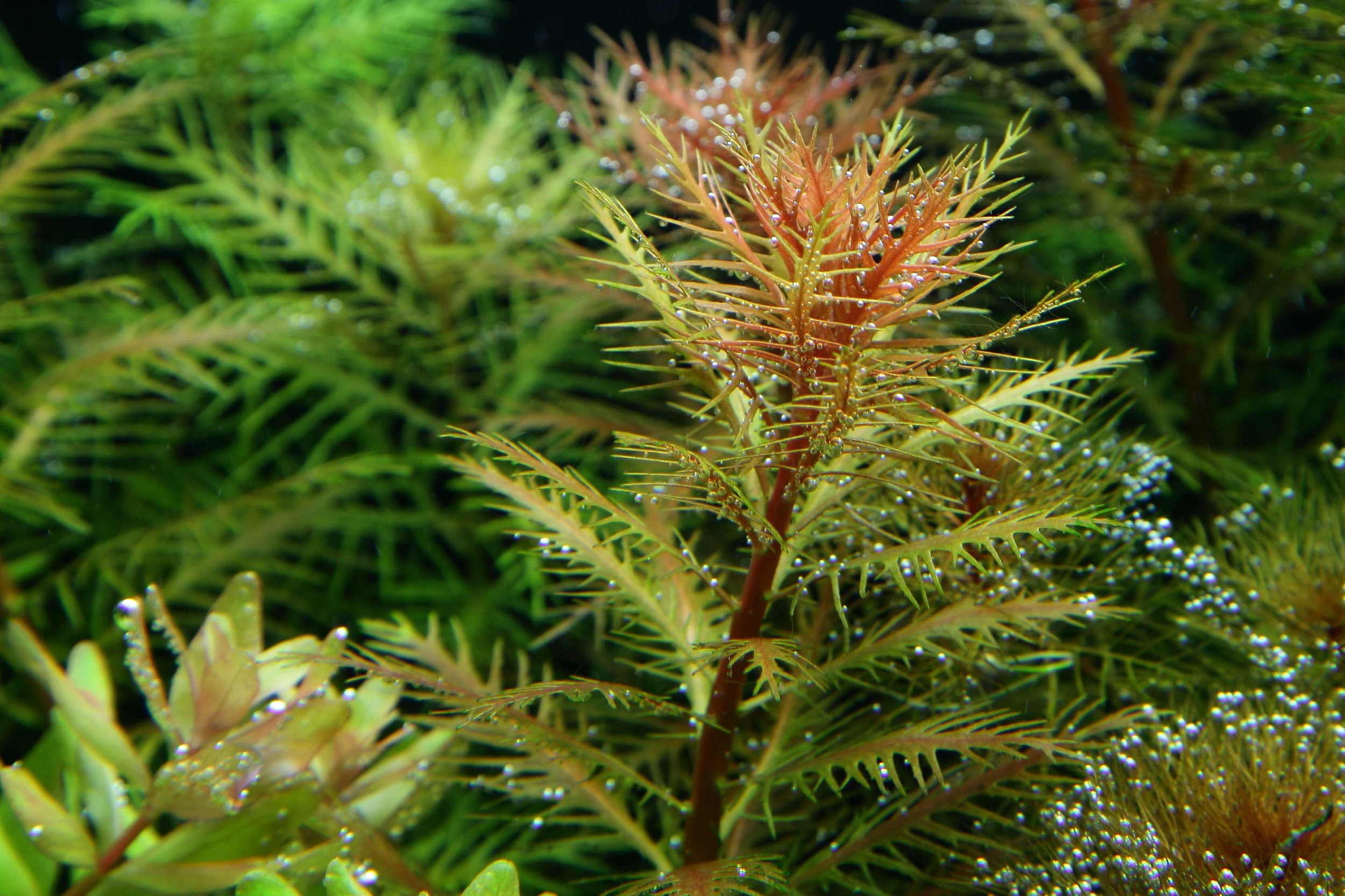
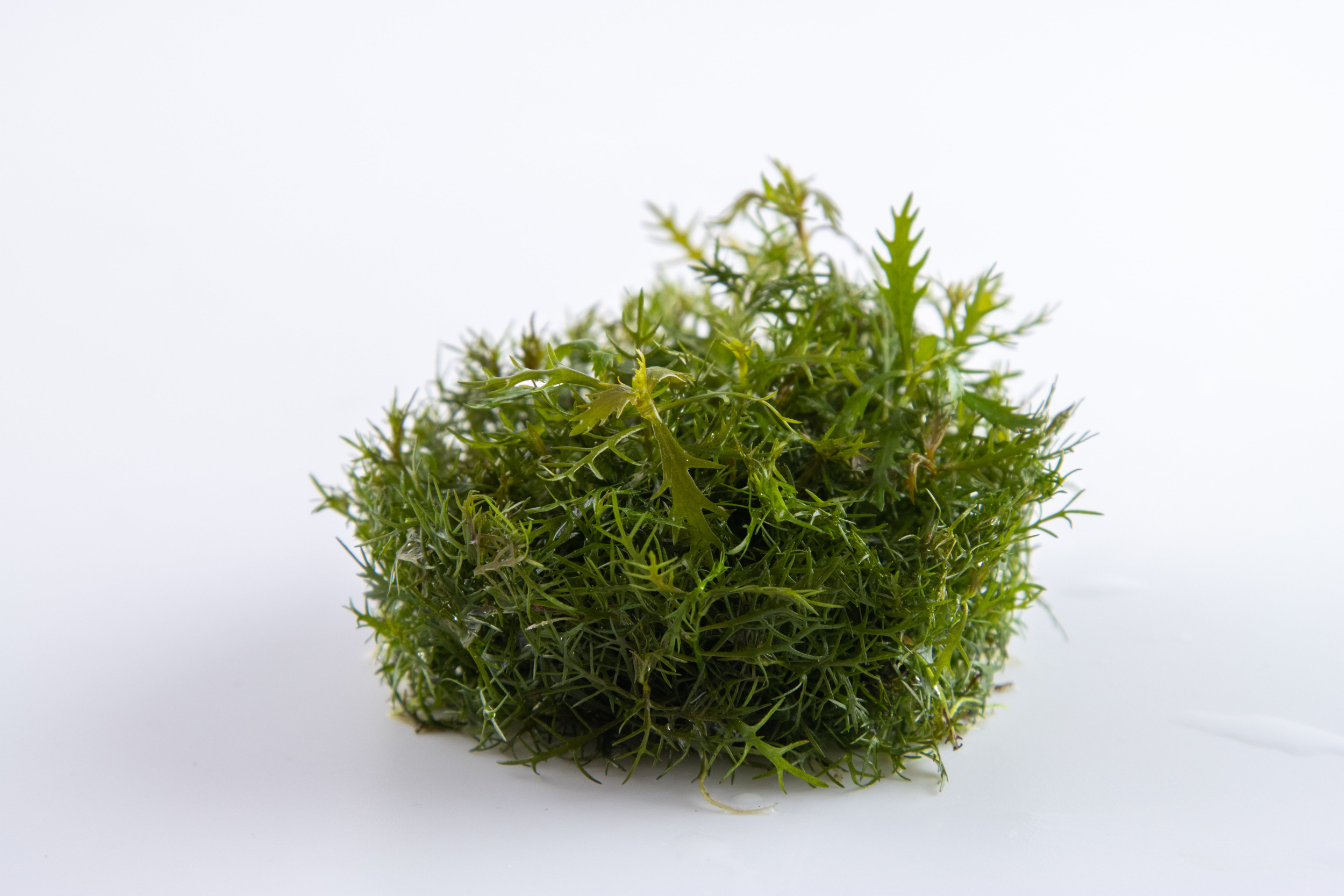
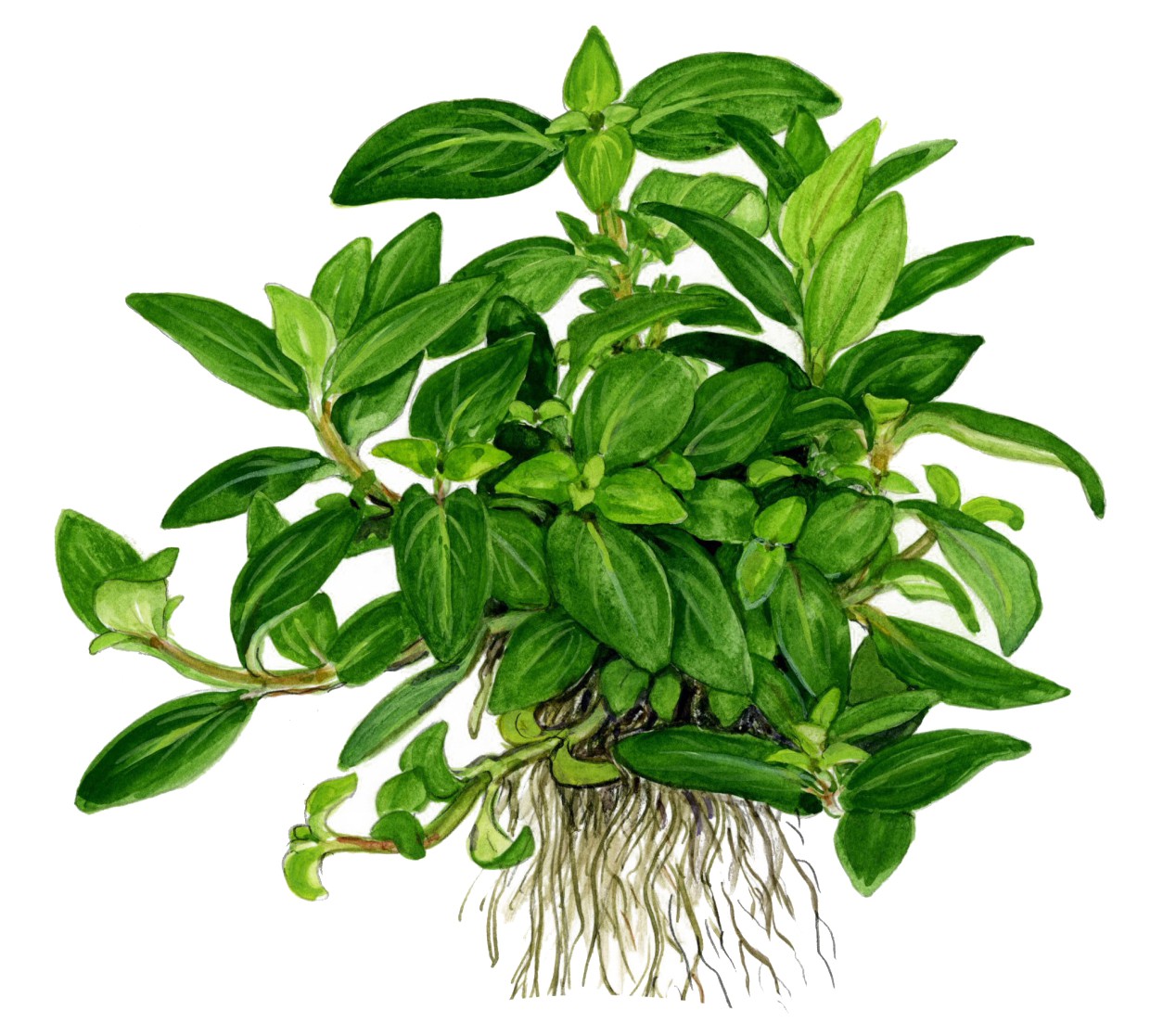
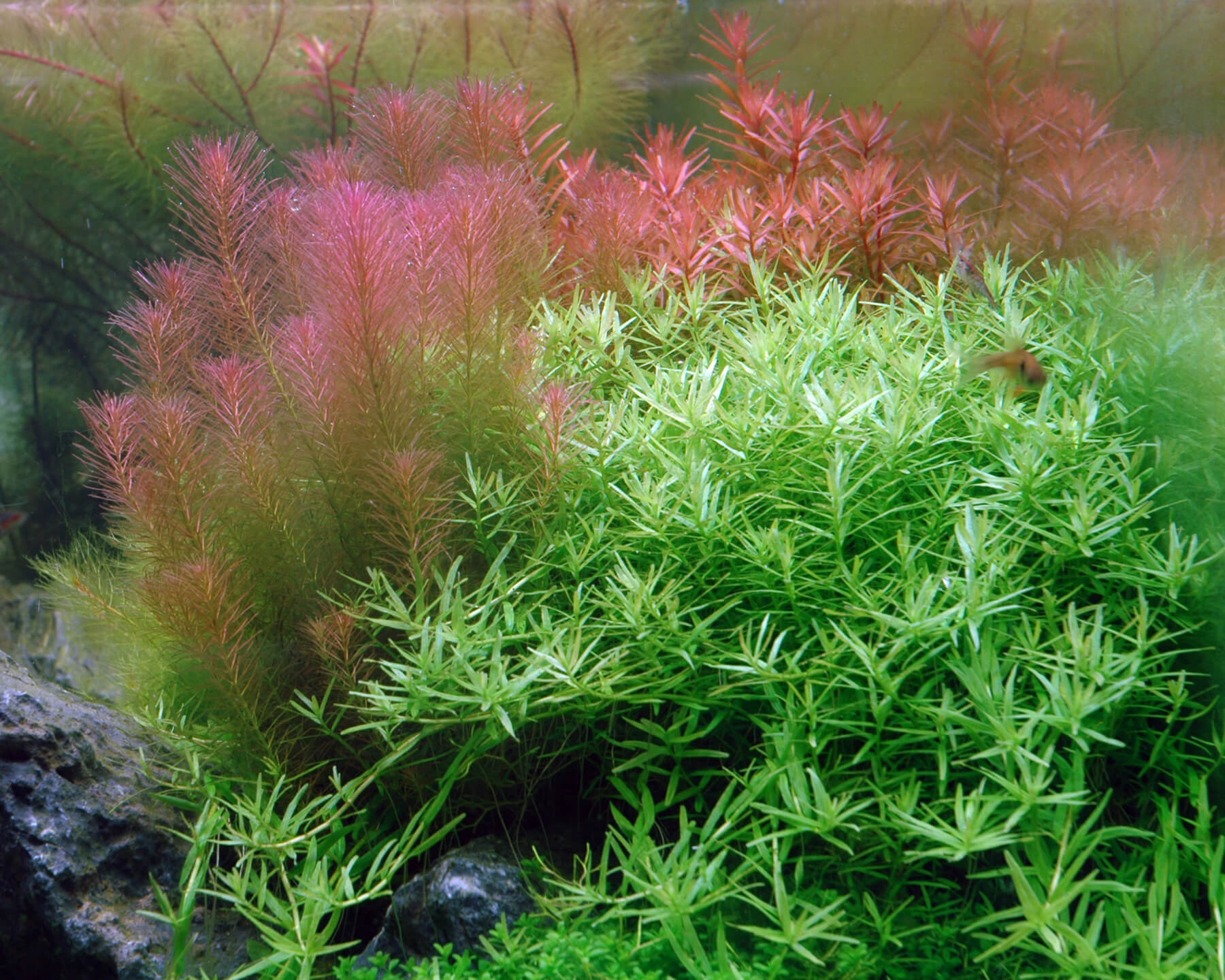
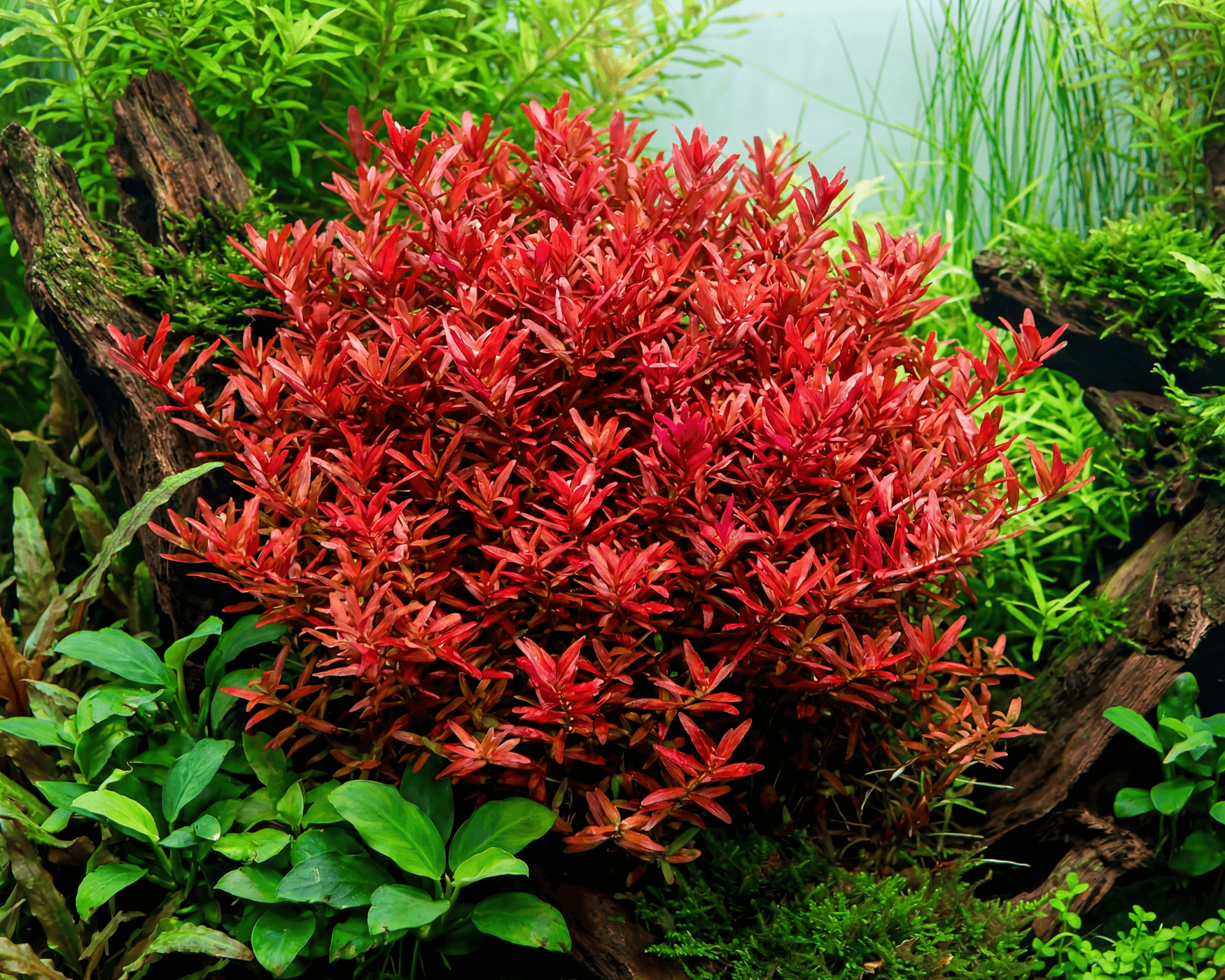
Underwater growth produces upright stems with sharply toothed or comb-like leaves. New growth may be green, bronze, orange or red, while lower-light growth is usually greener and less compact. The leaves may look broader or less divided during emersed production, then change after the plant adapts to submerged conditions.
Planting and placement
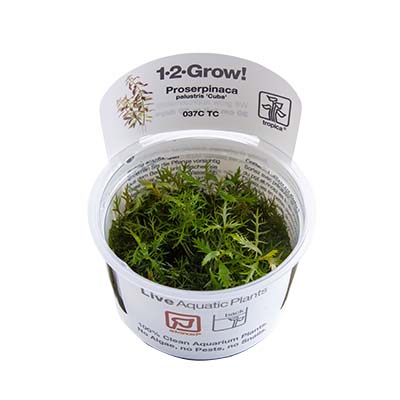
Separate the culture into small portions, remove the growing medium thoroughly, and plant individual stems into nutrient-bearing substrate. Leave space between portions for water circulation and branching. Place it in the middle or rear part of the aquarium, depending on tank height. Avoid burying the entire stem; only the lower section needs to be anchored.
Light, carbon and nutrients
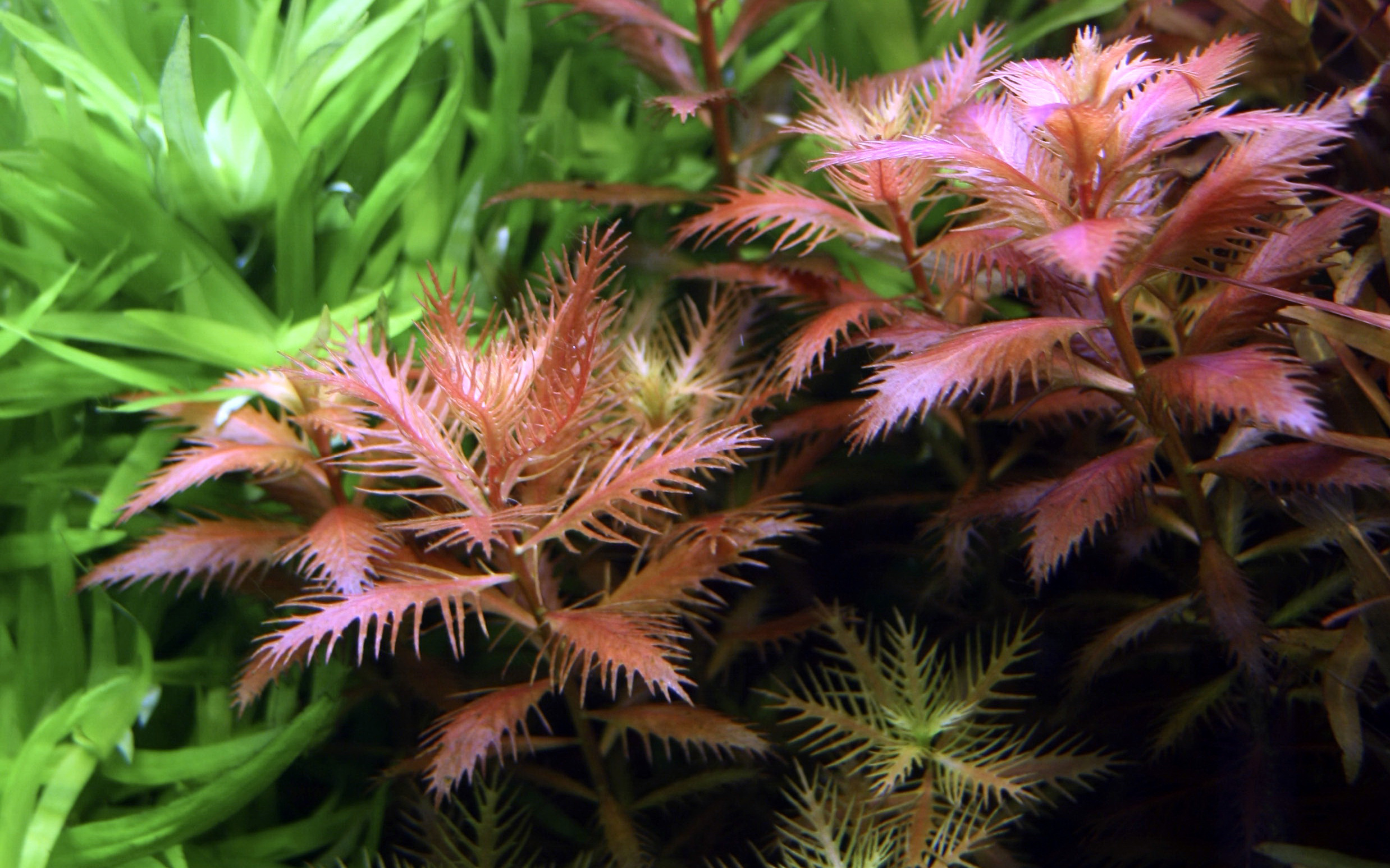
Strong, consistent lighting is important for dense growth and stronger warm coloration. Reliable carbon dioxide availability improves adaptation, leaf development and growth, while fluctuations can encourage algae and leaf loss. Provide a complete aquarium fertiliser with nitrogen, phosphorus, potassium and trace elements, adjusted to the aquarium's plant and livestock load. A nutrient-rich substrate can support the roots, although the plant also uses nutrients from the water.
Trimming and propagation
Trim the stem above a healthy leaf node when it reaches the desired height. Replant healthy cuttings as new stems and remove weak or shaded lower sections. Frequent topping encourages a fuller group, but excessive trimming at once can slow recovery. Newly purchased emersed material may shed its original leaves as submerged foliage develops; this is not necessarily a sign of failure.
Practical assessment
This plant is best for experienced aquarists because its fine foliage, colour and compact form depend on strong light, stable carbon dioxide and balanced nutrition. It can survive less intensive conditions, but growth is typically greener, more open and less vigorous. The identification is reasonably supported by the supplied trade name and images, but confidence is not absolute because no specimen-level botanical verification is available.
Leave your comments