Identification
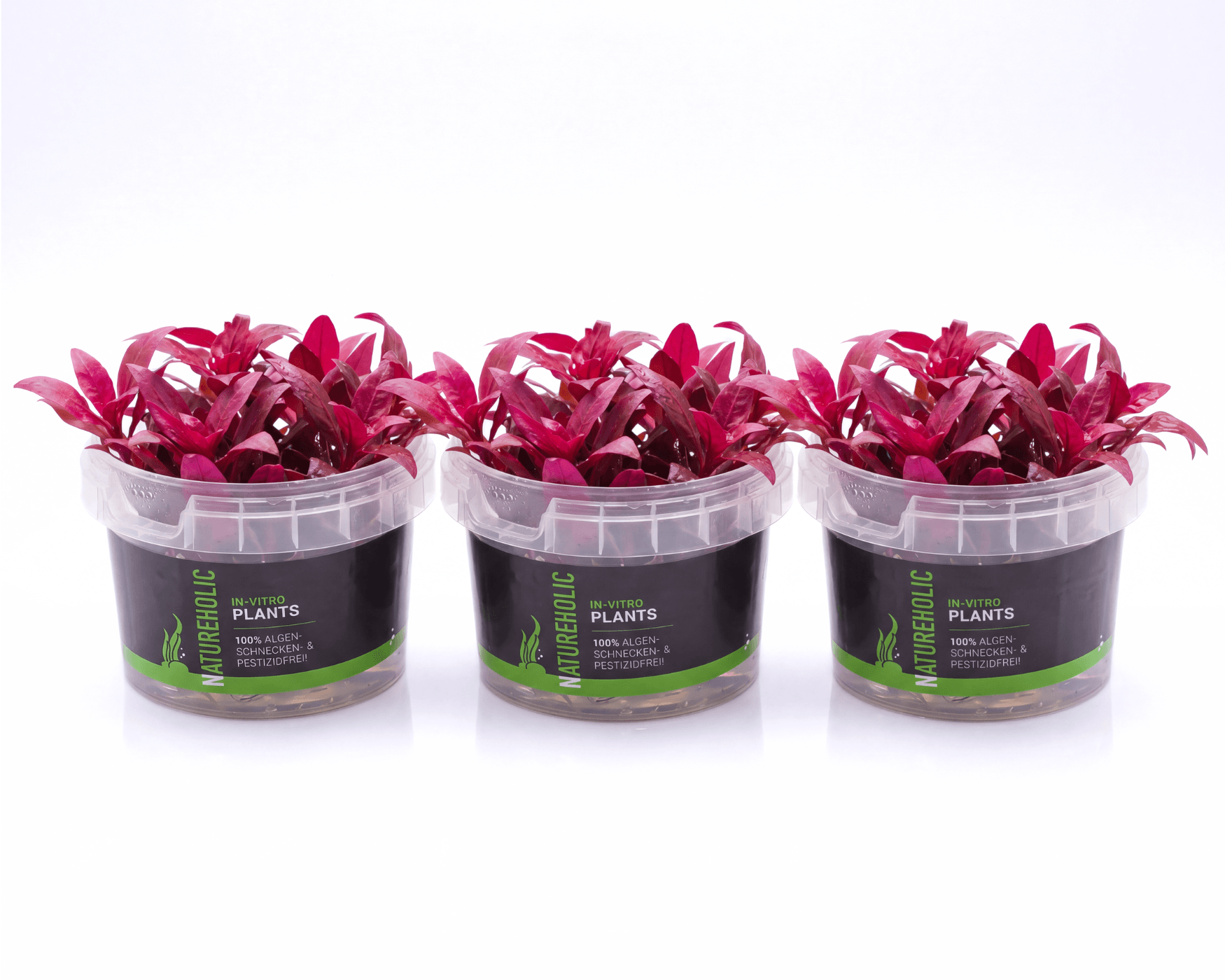
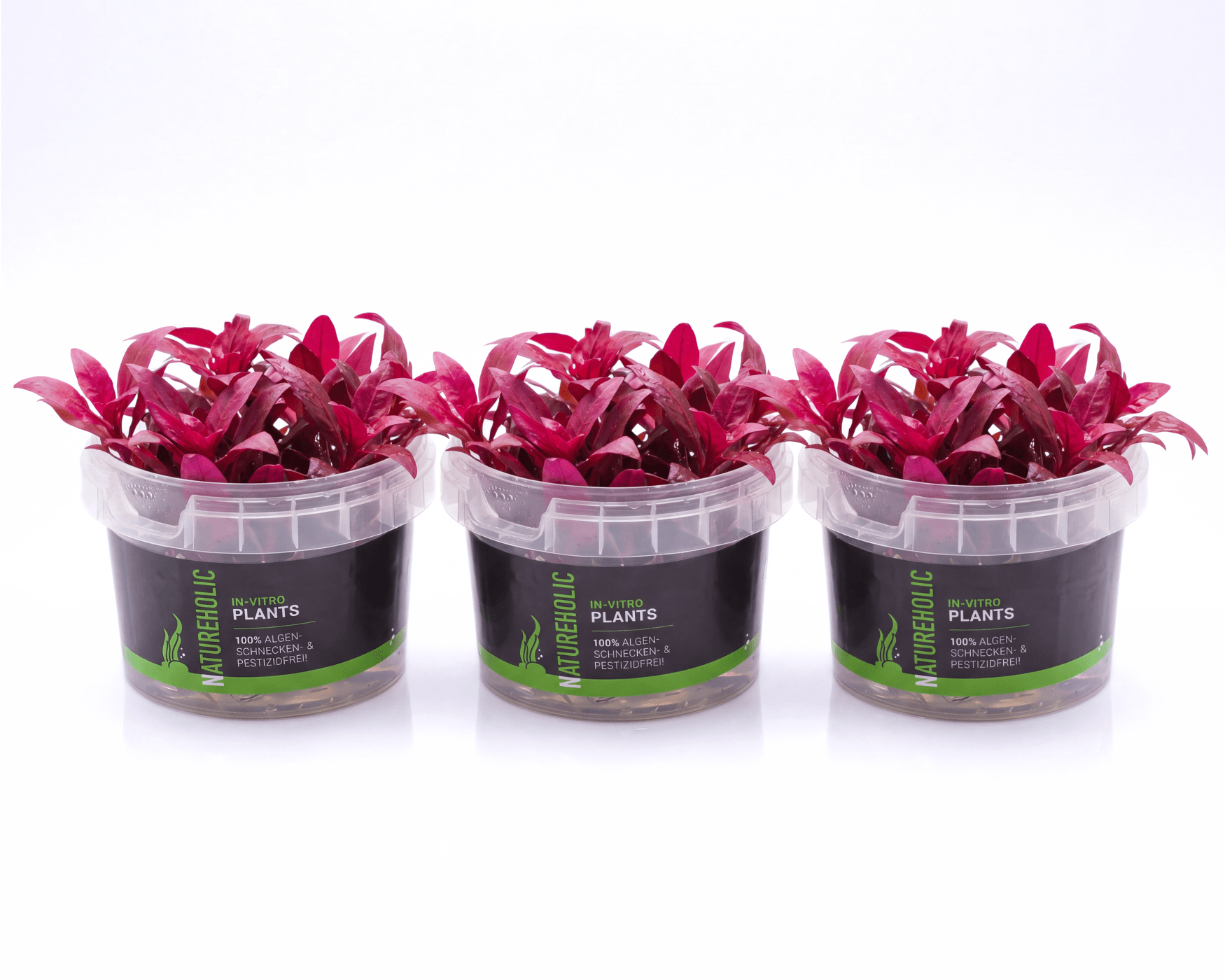
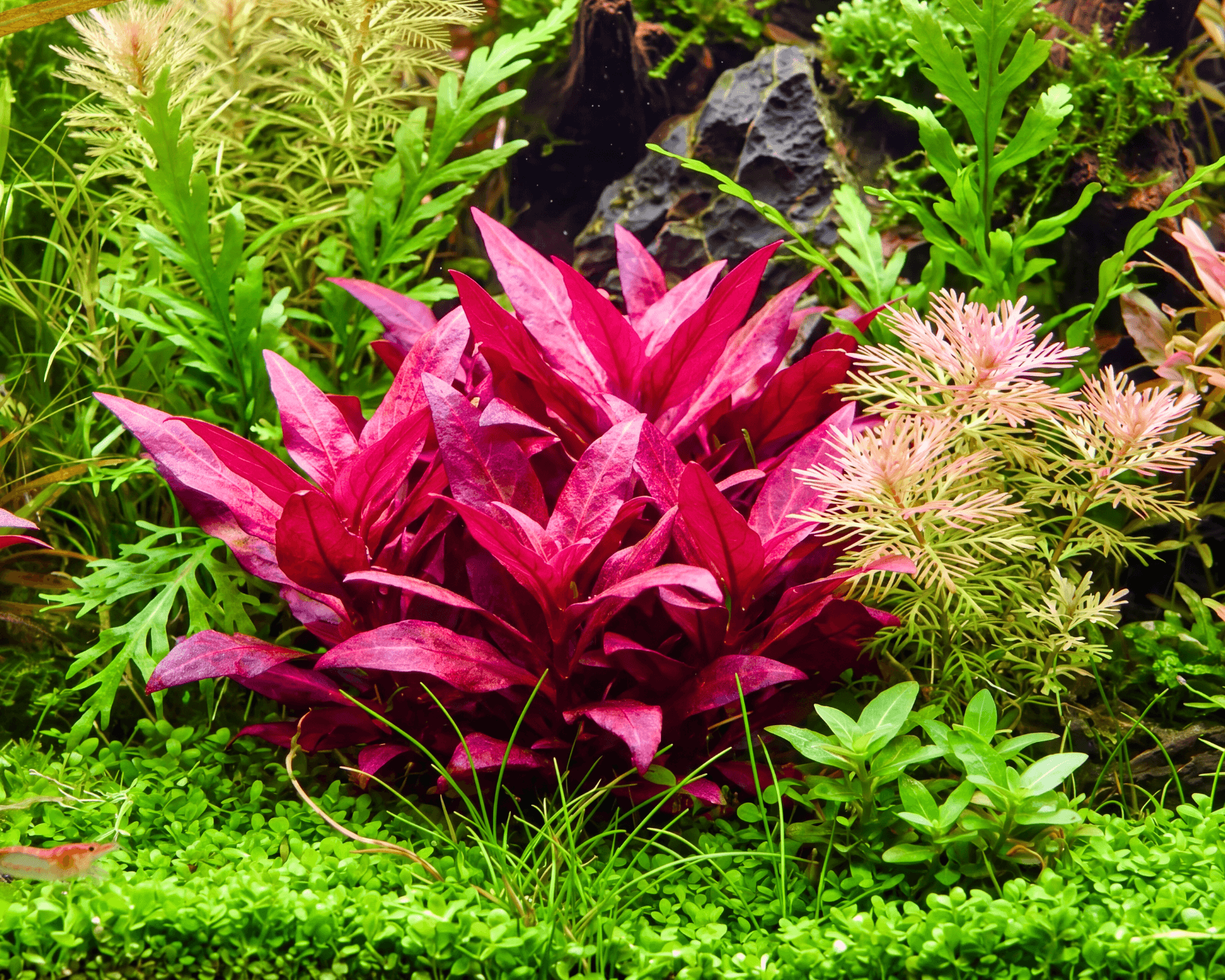
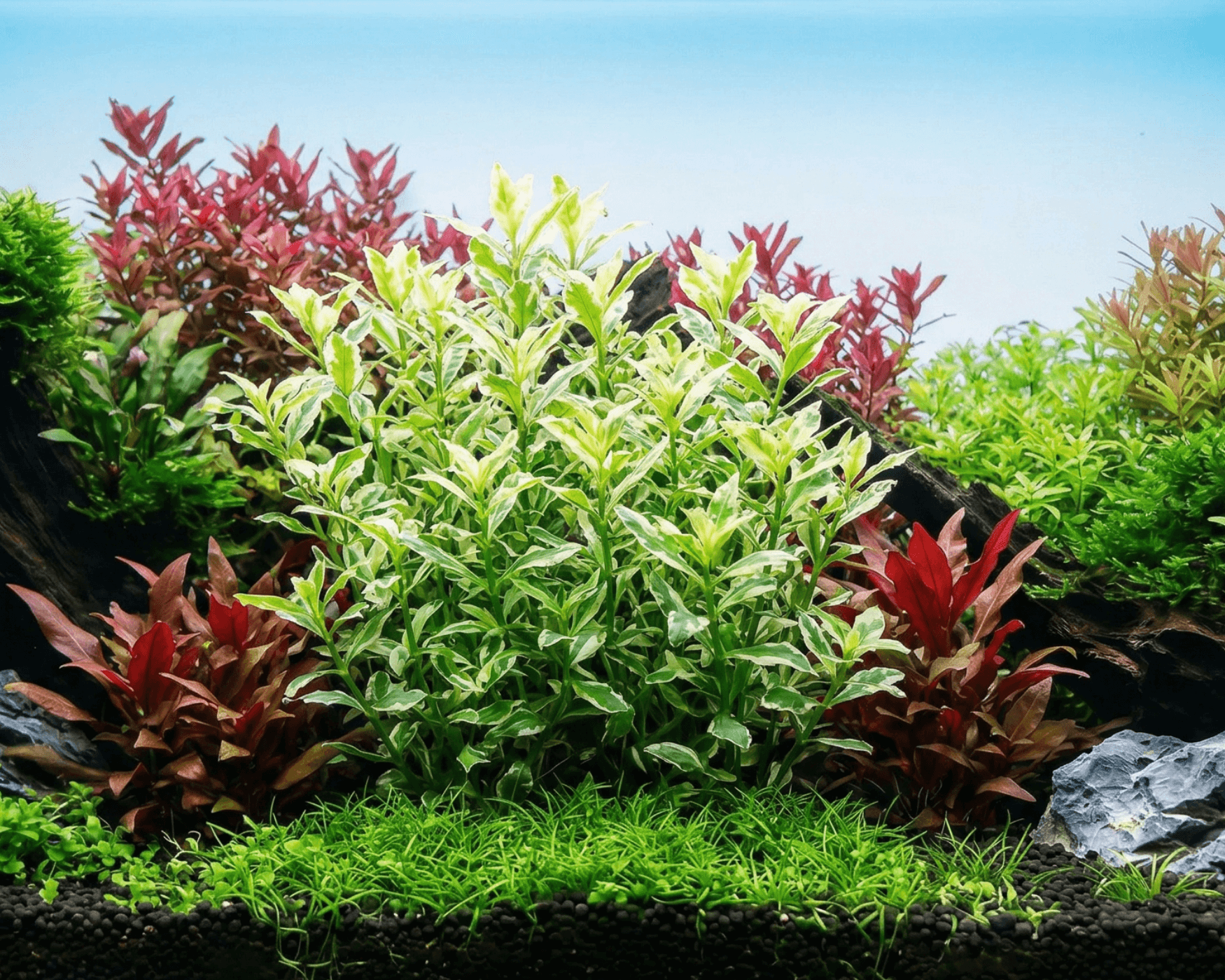
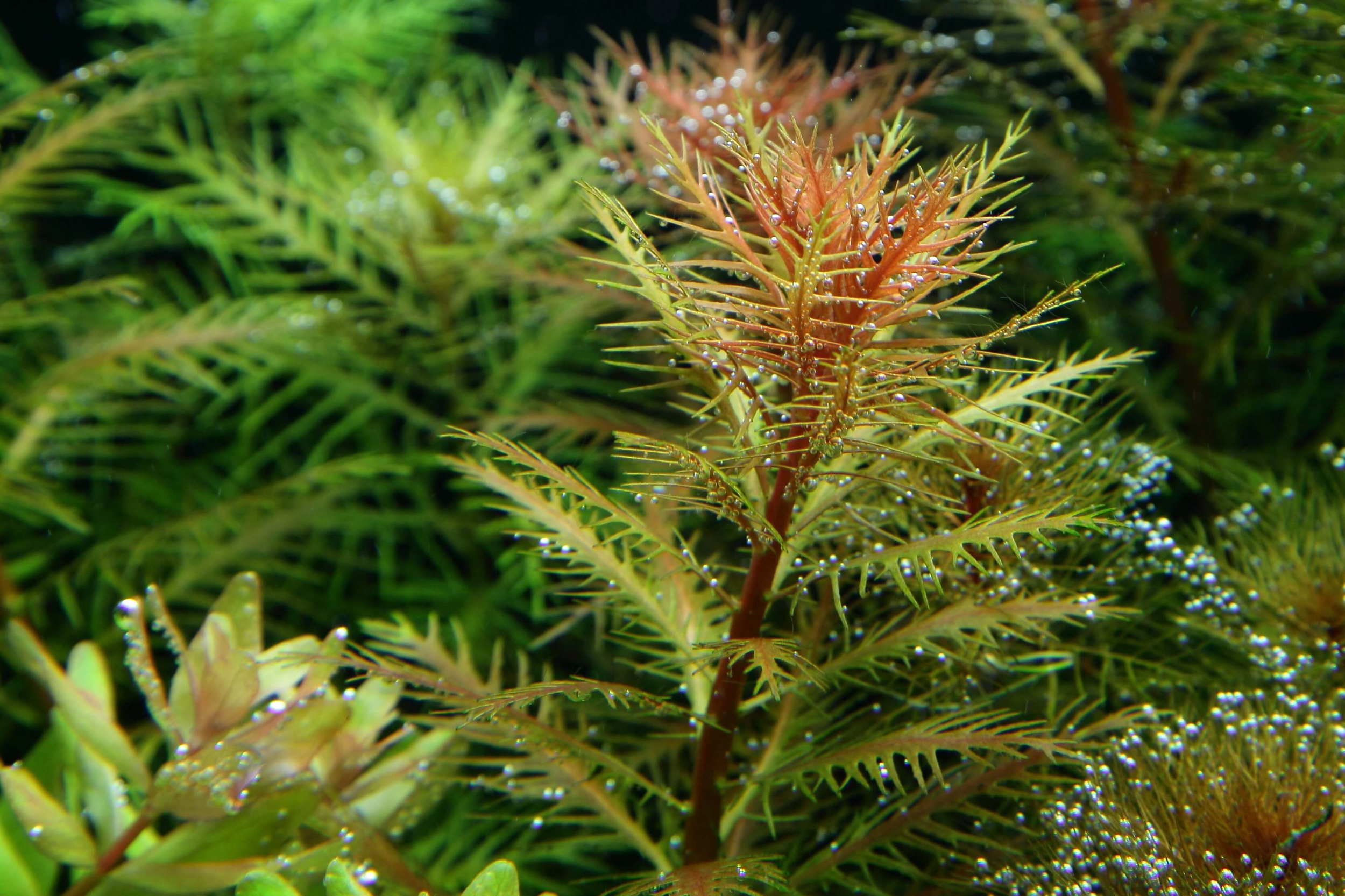
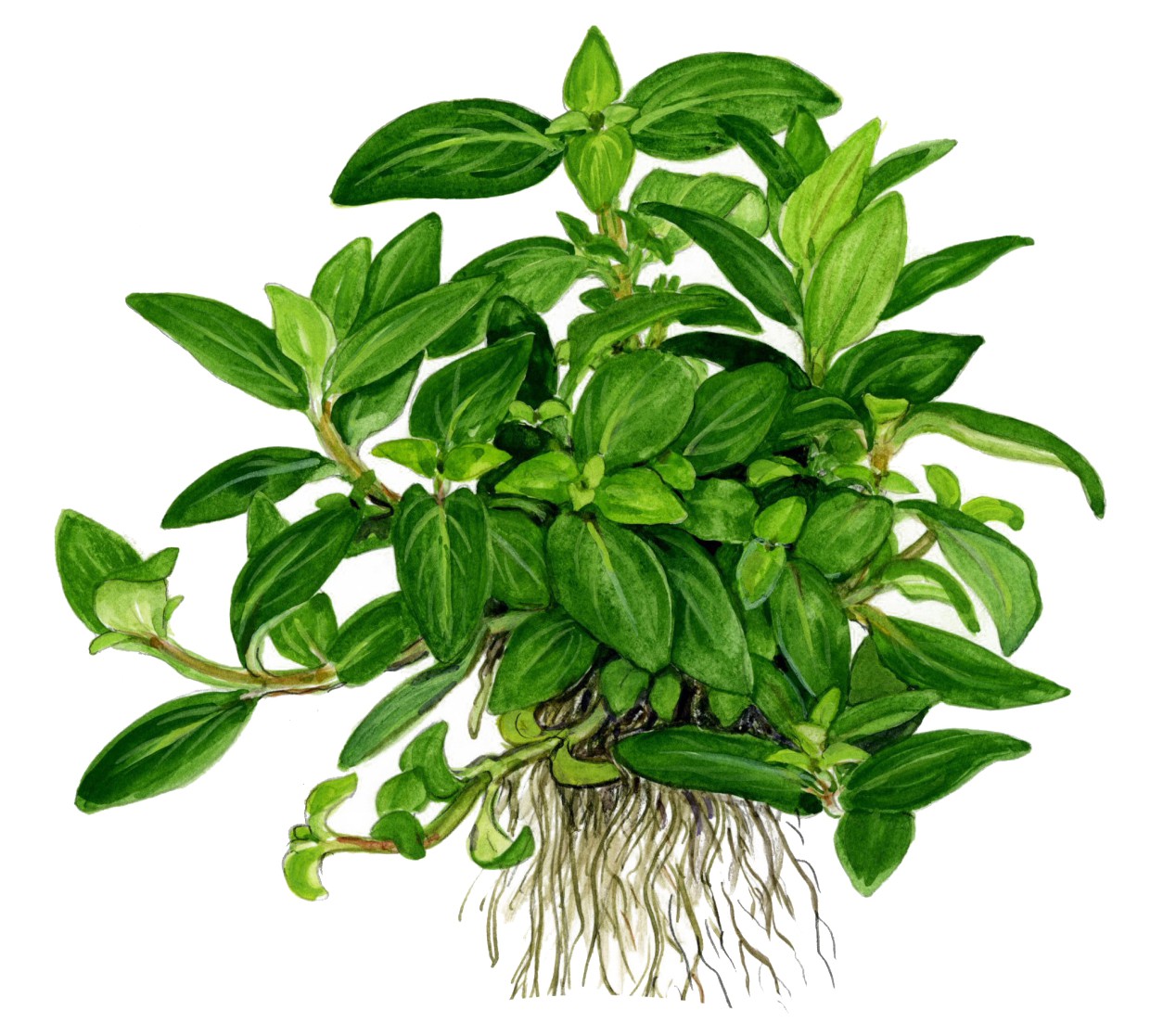
The supplied product name identifies the plant as Alternanthera reineckii 'Mini', a compact aquarium cultivar of Alternanthera reineckii. The plant forms upright stems with opposite, pointed leaves. Aquarium-grown foliage is commonly red, pink, or burgundy, but the exact shade depends on light, nutrition, carbon supply, and the growing form. Commercial plants sold under this name may not be genetically identical, so the cultivar identification should be treated as probable rather than independently verified.
Placement and growth
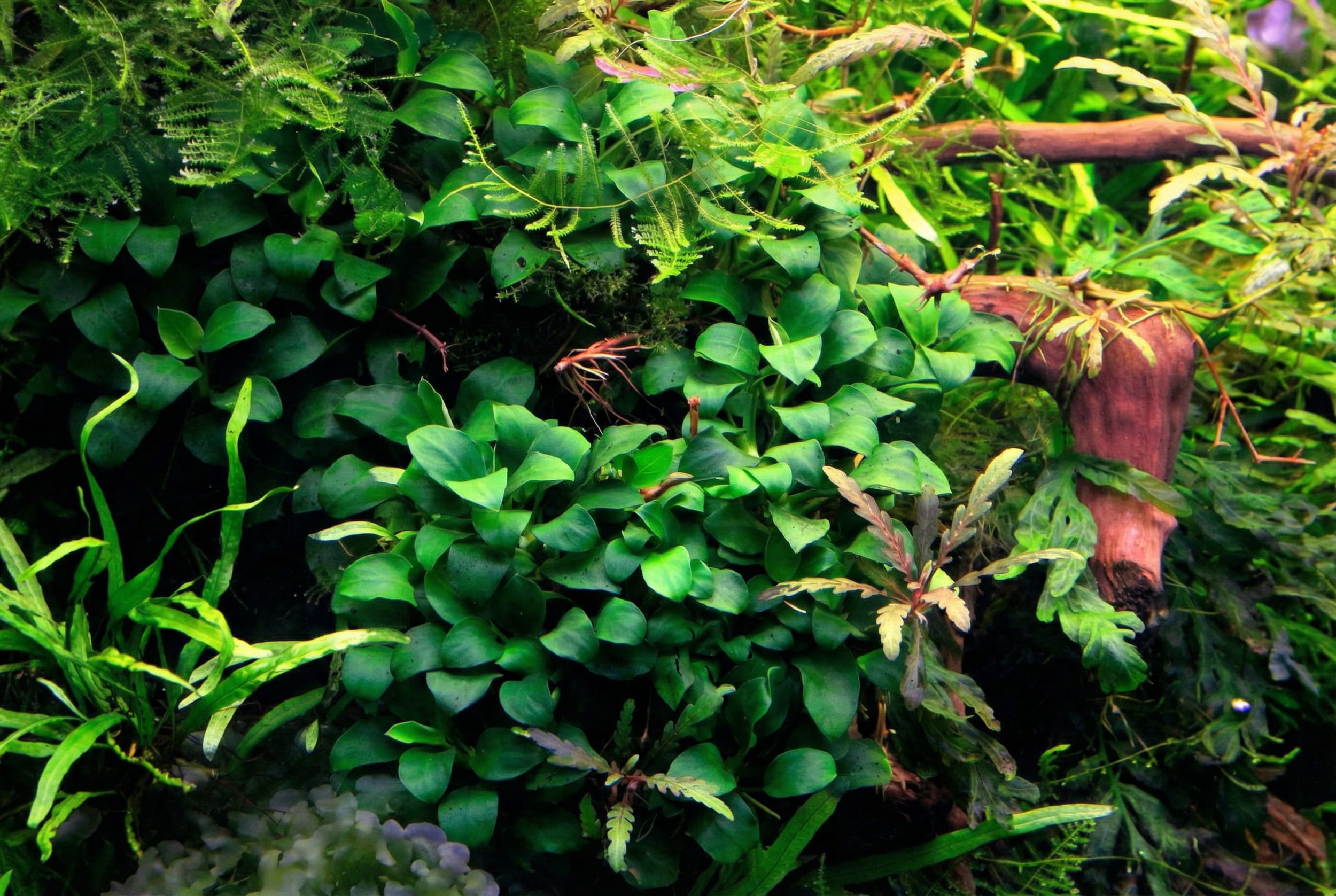
Use it as a foreground or low middleground accent, planting several separated stems to form a dense group. It is a rooted stem plant rather than a carpeting species. Growth is generally slow to moderate compared with many green stem plants, and mature height is usually kept compact by regular trimming.
Light and carbon
Provide medium to high-quality aquarium lighting, with high light generally helping maintain compact growth and red coloration. Stable carbon availability is beneficial, especially in strongly lit aquariums. Carbon dioxide injection is not always essential for survival, but inconsistent or very low carbon can result in slower growth, larger spacing between leaves, and less intense coloration.
Planting and maintenance
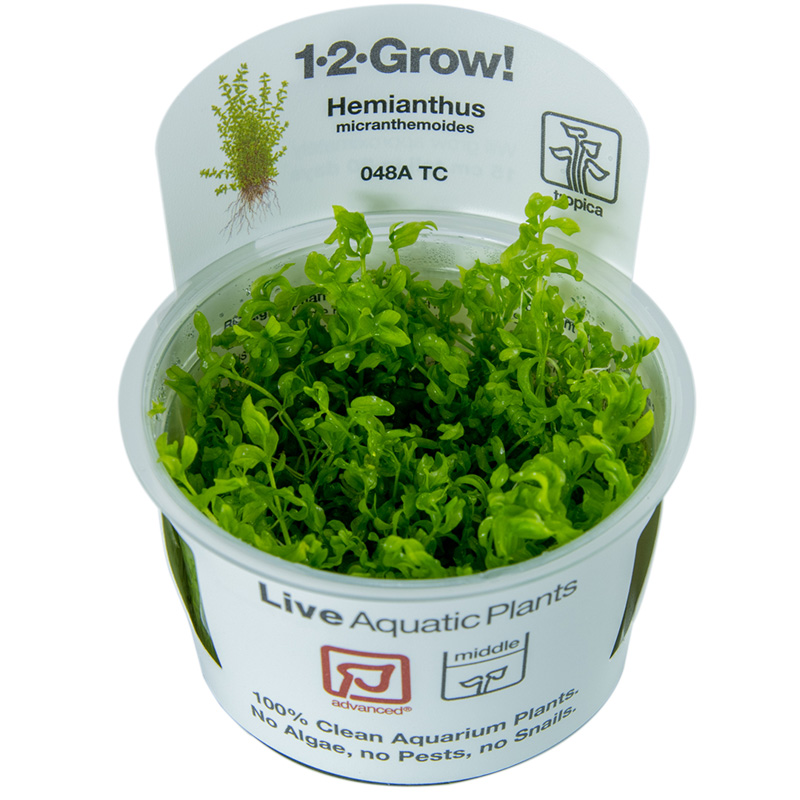
Remove the nutrient gel from in-vitro material and rinse the plant carefully before planting. Divide the mass into small portions and insert each portion into the substrate with space between groups. Trim the tops when stems become leggy, then replant healthy cuttings to renew the group. Avoid burying the leaves or packing the entire culture clump into one hole, as this can restrict circulation and encourage decay.
Nutrition and water conditions
Supply a balanced aquarium fertilizer according to plant demand, including micronutrients and an appropriate source of nitrogen, phosphorus, and potassium. A nutrient-bearing substrate can support root development, although water-column feeding also contributes to growth. Maintain stable, clean aquarium conditions and avoid sudden changes in lighting, carbon availability, or fertilization. The plant is generally adaptable to ordinary tropical planted-aquarium temperatures, but no exact temperature or water-chemistry range is confirmed by the supplied source.
Propagation
Propagation is normally by stem cuttings. Cut a healthy upper section below a node, remove lower leaves, and plant the cutting in the substrate. Side shoots may also be separated once they have their own roots or several established nodes.
Leave your comments