It’s time to help contribute for biggest aquarium gallery online

SUBMIT HEREVIEW GALLERY

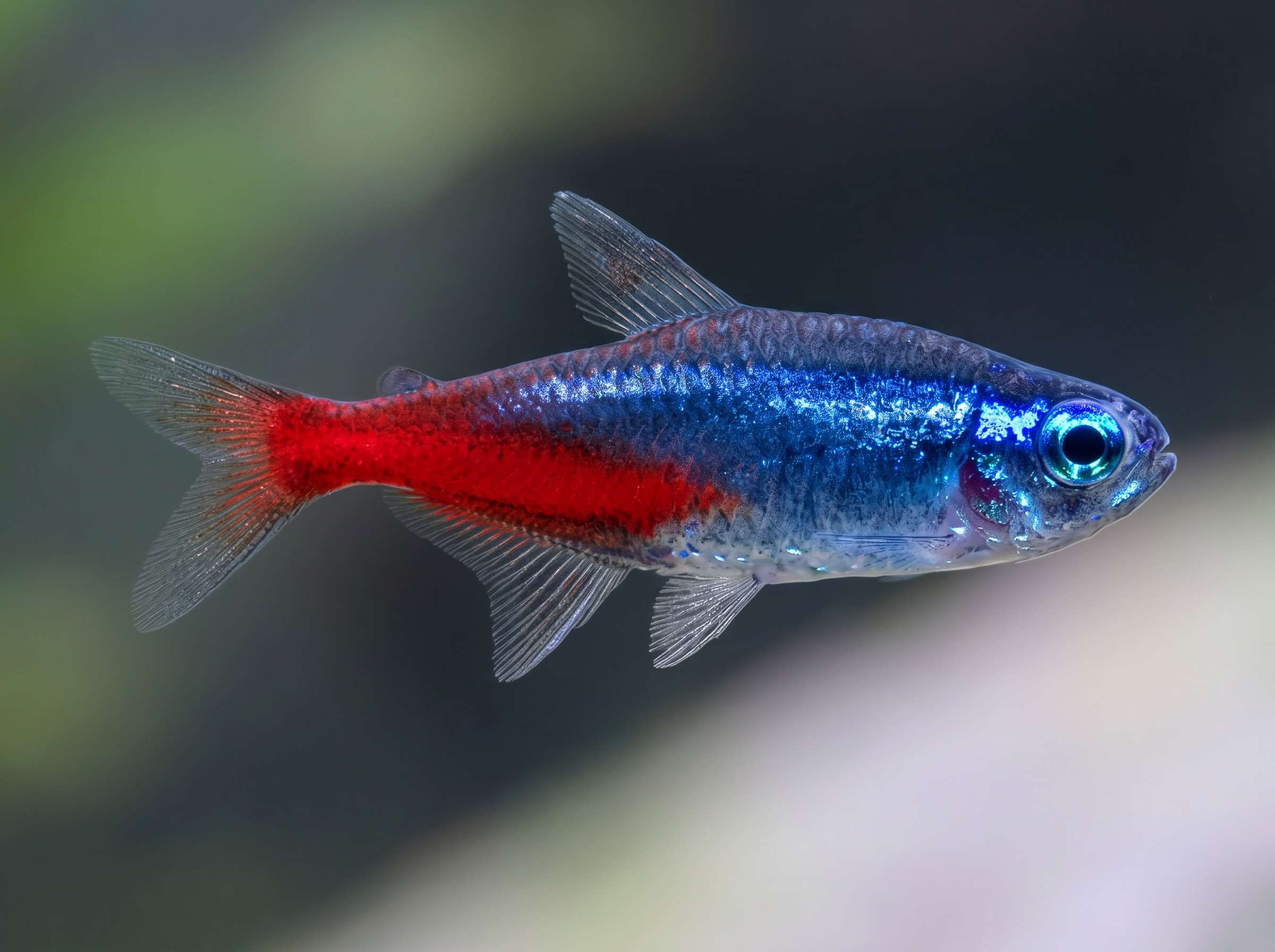
Neon Tetra

Native to the clear water streams of South America, the Neon Tetra prefers densely planted systems with plenty of low light areas to hide. To best recreate its natural habitat, place rocks and driftwood amongst the plants for added areas of refuge. Though the Neon Tetra appreciates a sheltered environment, it will tend to swim or remain suspended in the water column in schools to create a breathtaking display of color. Extremely peaceful, the Neon Tetra should be kept with similarly non-aggressive tankmates of a similar size.

This member of the Characidae family thrives in slightly acidic water with stable water parameters. To breed Neon Tetras, separate a pair into a "breeding tank" with no lighting at first, and gradually increase lighting until spawning occurs. Water hardness should be less than 4 dH and live foods such as mosquito larvae are great inducers. Be sure to remove the adults after the eggs have been laid, as the adults will eat them. The eggs should hatch within 30 hours.

Neon Tetras will accept many small foods such as brine shrimp or daphnia, freeze-dried bloodworms and tubifex, micro pellet food, and a high quality flake food.
Fish info

Care level: Easy
Temperament: Peaceful
Adult size: 3.175
Life expectancy: 6
Fish type: Characidae
Color Form: Blue, Red
Leave your comments
Lastest on Fishs
  • Hyphessobrycon bentosi (Jewel Tetra)

    Easy
    Characidae
    The Jewel Tetra (Hyphessobrycon bentosi), often captive-bred for optimal health, is a stunning freshwater fish native to the Amazon basin. Known for its deep, rosy-red body and striking white-tipped fins, this peaceful schooling fish adds vibrant color and lively, yet gentle, activity to any planted community aquarium.
  • Pseudomugil ivantsoffi (Ivantsoff's Blue Eye)

    Moderate
    Characidae
    Hailing from the pristine rainforest streams of West Papua and Papua New Guinea, Ivantsoff's Blue Eye is a captivating micro-predator. Known for its energetic schooling behavior and stunning neon-blue eyes contrasting with a vibrant golden-orange body, this peaceful nano fish is highly sought after by planted aquarium enthusiasts.
  • Carinotetraodon travancoricus (Pea Puffer)

    Moderate
    Characidae
    Endemic to the Western Ghats of India, the Pea Puffer (Carinotetraodon travancoricus) is a highly popular, fully freshwater micro-predator. Despite their tiny size, these intelligent fish boast massive personalities. Known for their helicopter-like swimming and insatiable appetite for pest snails, they make captivating additions to heavily planted, species-only aquariums.
  • Parambassis ranga (Indian Glass Perch)

    Moderate
    Characidae
    The Indian Glass Perch, native to South Asia, is a captivating schooling fish famous for its remarkably transparent body that reveals its internal organs. Peaceful but somewhat shy, this unique species adds a fascinating, ghostly elegance to freshwater and slightly brackish aquariums, making it highly popular among dedicated aquarists.
  • Ctenolucius hujeta (Hujeta Pike Characin)

    Moderate
    Characidae
    The Hujeta Pike Characin, or Freshwater Barracuda, is a fascinating predatory fish native to South America. Known for its elongated, gar-like body and stealthy hunting behavior, it is a popular rarity among advanced aquarists. Despite its fearsome appearance, it is relatively peaceful with appropriately sized tank mates.
  • Dermogenys pusillus (Half Billed Pike)

    Moderate
    Characidae
    The Half Billed Pike, or Wrestling Halfbeak, is a fascinating surface-dwelling livebearer native to Southeast Asia. Known for its unique elongated lower jaw and the males' combative 'wrestling' behavior, this slender fish adds dynamic top-level activity to planted or slightly brackish aquariums, captivating aquarists with its distinctive appearance.
  • Hyphessobrycon hyanuary (Costello Tetra)

    Easy
    Characidae
    The Costello Tetra, scientifically known as Hyphessobrycon hyanuary, is a peaceful and active schooling fish native to the Amazon basin. Known for its subtle greenish-gold lateral stripe and distinctive black tail spot, this hardy tetra is a popular and undemanding choice for community aquariums.
  • Pethia canius (Green Dwarf Barb)

    Easy
    Characidae
    The Green Dwarf Barb (Pethia canius) is a captivating, peaceful micro-fish native to the densely vegetated waters of India and Bangladesh. Known for its shimmering golden-green scales and distinct black spots, this active schooling cyprinid adds life and vibrant color to any well-planted nano or community aquarium.
  • Tetraodon nigroviridis (Green Spotted Puffer)

    Difficult
    Characidae
    Hailing from the coastal estuaries of Southeast Asia, the Green Spotted Puffer is a highly intelligent and interactive fish. Famous for its vibrant green-yellow coloration and distinct black spots, this brackish-water species demands specialized care but rewards dedicated aquarists with its unique, puppy-like personality and fascinating hunting behaviors.
  • Leporinus affinis (Banded Leporinus)

    Moderate
    Characidae
    The Banded Leporinus (Leporinus affinis) is a striking, torpedo-shaped freshwater fish native to the vibrant rivers of South America. Known for its bold black and yellow stripes, this active and intelligent species adds a dynamic presence to large aquariums, captivating aquarists with its unique head-down swimming behavior and energetic personality.
  • Epalzeorhynchos frenatum (Green Fringe Lark / Rainbow Shark)

    Moderate
    Characidae
    The Green Fringe Lark, widely known as the Rainbow Shark, is a striking freshwater cyprinid native to Southeast Asia. Famous for its vibrant red fins contrasting against a dark body, this semi-aggressive bottom-dweller brings dynamic activity to large aquariums, though its territorial nature requires careful tank mate selection.
  • Tetraodon mbu (Mbu Pufferfish)

    Expert Only
    Characidae
    The Mbu Pufferfish, native to the Congo River basin, is a true freshwater giant known for its striking maze-like patterns and highly intelligent, interactive personality. Due to their massive adult size and specialized diet, they are highly sought after but require expert care and enormous aquariums to thrive.
  • Osteoglossum bicirrhosum (Golden Arowana)

    Expert Only
    Characidae
    The Golden Arowana, a rare color variant of the South American Silver Arowana (Osteoglossum bicirrhosum), is a breathtaking centerpiece for giant aquariums. Known for its predatory prowess and incredible jumping ability, this surface-dwelling giant demands pristine water, massive tank space, and expert care, making it highly prized among advanced aquarists.
  • Brachydanio rerio (Golden Zebra Danio)

    Easy
    Characidae
    The Golden Zebra Danio is a striking, active color morph of the classic Zebra Danio. Originating from selective breeding of wild populations in South Asia, this energetic schooling fish is highly popular among aquarists for its hardiness, peaceful nature, and beautiful golden stripes, making it perfect for community tanks.
  • Aplocheilus lineatus (Golden Striped Pike)

    Easy
    Characidae
    The Golden Striped Pike, a stunning gold morph of the Striped Panchax, is a hardy and vibrant top-dwelling killifish. Originating from India but widely captive-bred in Europe, this active predator boasts a striking metallic yellow body. Its peaceful yet opportunistic nature makes it a fascinating addition to community aquariums.
  • Hemigrammus bleheri (Golden Redhead Tetra)

    Moderate
    Characidae
    Hailing from the blackwater rivers of South America, the Golden Redhead Tetra is a striking variant of the classic Rummy-nose Tetra. Renowned for its brilliant ruby-red facial coloration and shimmering golden body, this peaceful schooling fish adds vibrant energy and captivating beauty to any well-planted community aquarium.