AquaLibs presents AquaRank Discover the world’s leading aquascapers

Explore transparent rankings built from published results across the world’s leading aquascaping contests.

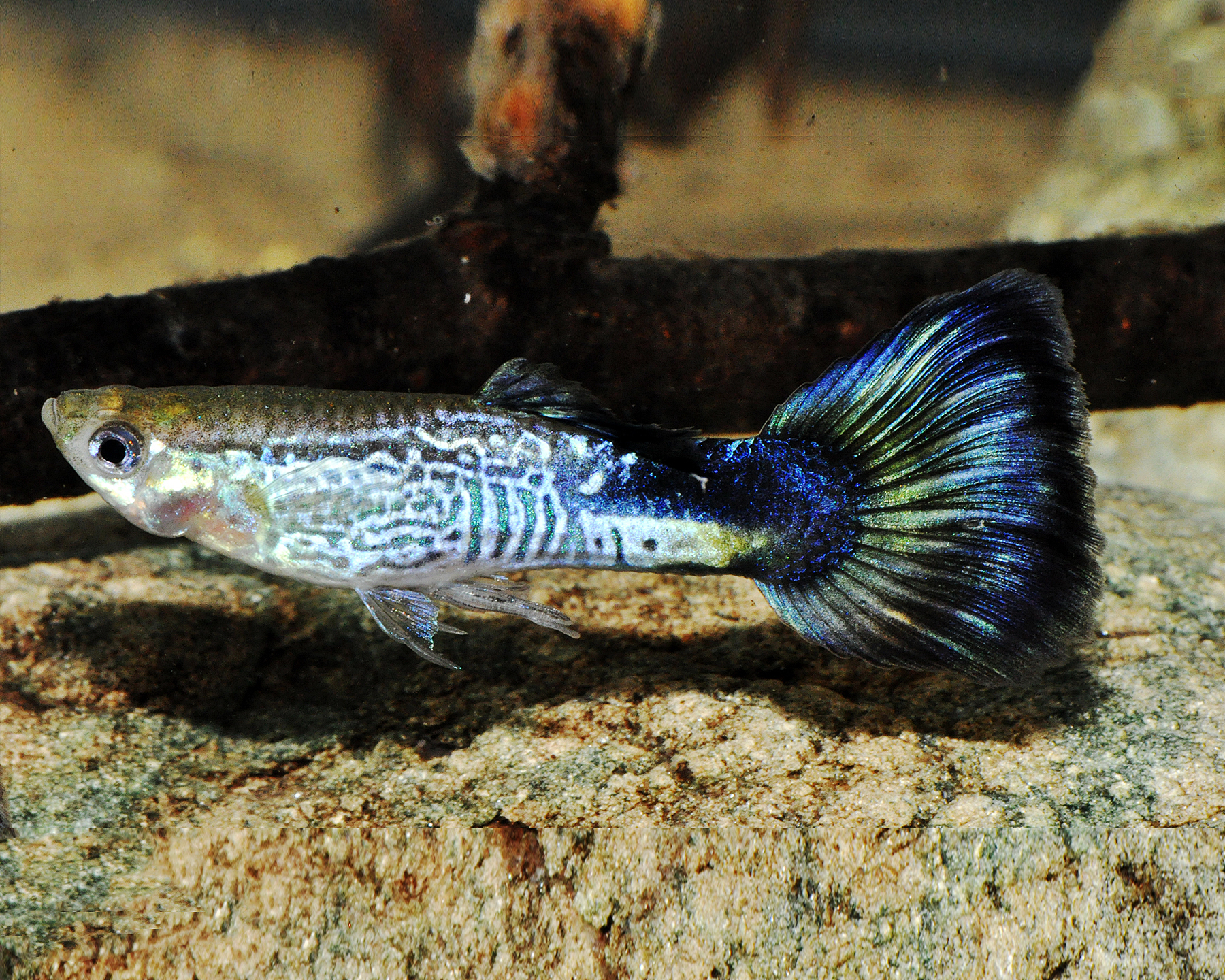
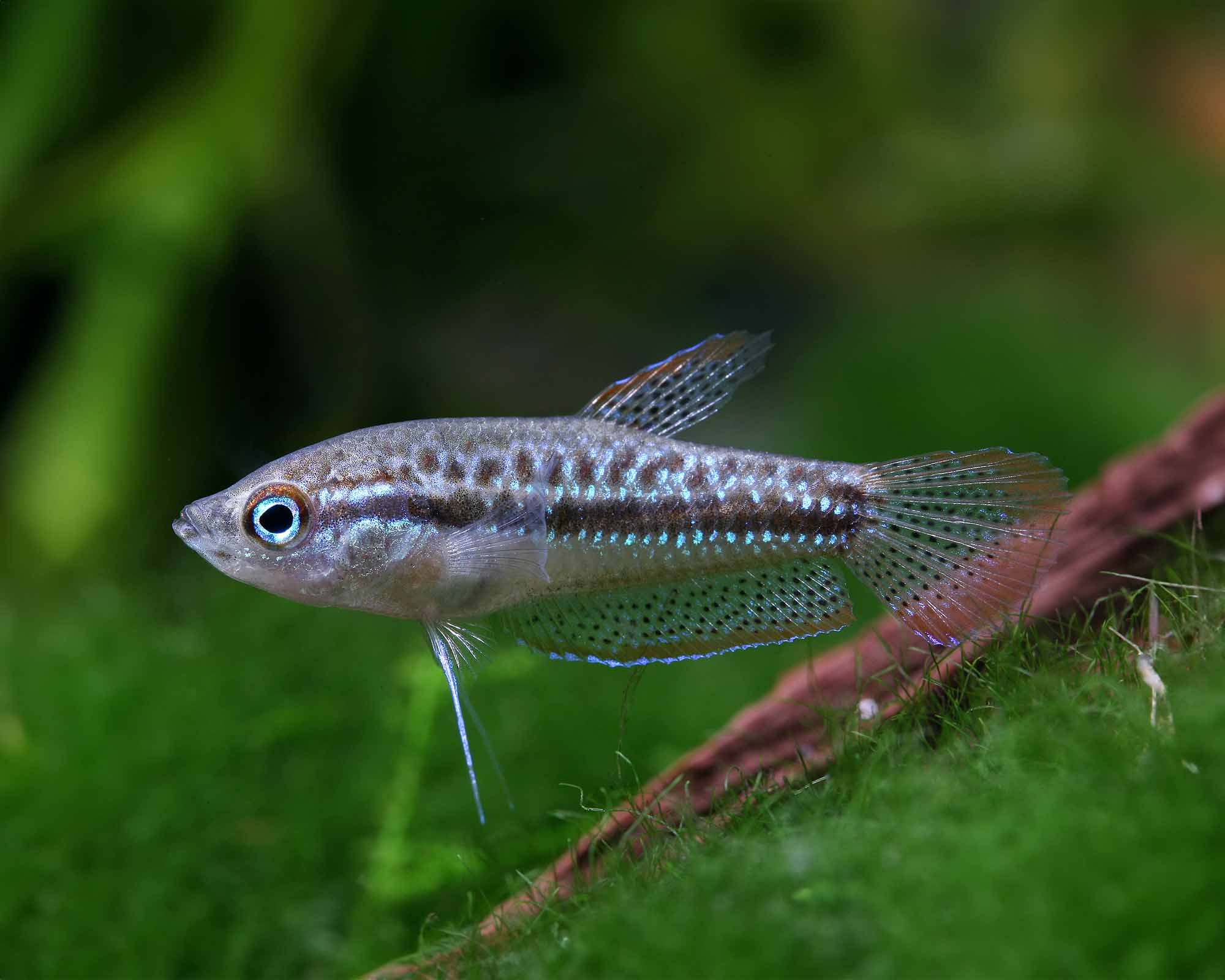
Lyretail Guppy, Male

The coloration of the Lyretail Guppy is highly variable with confetti-like patches of green, yellow, and red coloration that playfully decorates a pale, silver-gray body color. This unique guppy variety makes a fantastic addition sure to add character to any freshwater community aquarium.

The Lyretail Guppy requires an aquarium of at least 10 gallons in size. It is a very peaceful fish and should be housed with tankmates of similar temperament. Though the Lyretail Guppy is a hardy fish tolerant of small changes in water parameters, care should be taken to keep water temperature, pH, and nutrient levels in check. This hardy and energetic fish makes an excellent fish for beginning hobbyists.

Guppies are relatively easy to breed even for the beginning aquarists. If you are interested in breeding guppies, the ideal aquarium should have a covering of floating plants and a breeding box to protect the fry. Adults may eat the fry if left to fend for themselves without the breeding box. The fry should be fed brine shrimp, micro food and pulverized flakes.

The Lyretail Guppy is an omnivore and requires both algae-based foods as well as meaty foods. An algae-based flake food, along with freeze-dried bloodworms, tubifex, and brine shrimp will provide guppies with the proper nutrition.
Fish info

  • Care level: Easy
  • Temperament: Peaceful
  • Adult size: 5.08
  • Life expectancy: 3
  • Fish type: Poeciliidae
  • Color Form: Green, Red, White, Yellow
Leave your comments
Latest on Fishs
  • Growling Dwarf Gourami Trichopsis pumila

    Growling Dwarf Gourami Trichopsis pumila

    Moderate
    Small anabantoid labyrinth fish
    The growling dwarf gourami, more accurately known as Trichopsis pumila, is a tiny Southeast Asian labyrinth fish valued for its intricate patterning and soft clicking or croaking sounds. It inhabits quiet, densely vegetated waters and does best in a mature, peaceful aquarium with gentle filtration, cover and stable conditions. The trade name “growling gourami” is sometimes applied loosely, but the supplied fish are consistent with T. pumila. This species is peaceful overall, although males may defend small breeding territories.
  • Zebra Cichlid (Maylandia estherae) Care Guide

    Zebra Cichlid (Maylandia estherae) Care Guide

    Moderate
    Lake Malawi mbuna cichlid
    The Zebra Cichlid, commonly traded as Pseudotropheus estherae and also classified as Maylandia estherae, is a robust Lake Malawi mbuna. It is a rock-dwelling mouthbrooder with strong territorial behavior and a primarily algae-based diet. Blue and orange-red forms are traded, while the supplied images chiefly show blue fish with yellow egg spots. This species is best kept in a carefully structured African cichlid aquarium rather than a peaceful community tank.
  • Brass Mouthbrooder (Pseudocrenilabrus philander dispersus)

    Brass Mouthbrooder (Pseudocrenilabrus philander dispersus)

    Moderate
    African riverine cichlid
    The brass mouthbrooder is a small African cichlid valued for its metallic body colors and distinctive maternal mouthbrooding. The supplied fish are identified as Pseudocrenilabrus philander dispersus, offered as a trio of two females and one male at approximately 4 cm. Taxonomic treatment of regional forms can vary, so the subspecies identification should be regarded as provisional unless supported by locality data. It is best kept in a structured aquarium with clean, moderately hard water and sheltered areas for females.
  • Chindongo demasoni: Demason’s Mouthbrooder Care Guide

    Chindongo demasoni: Demason’s Mouthbrooder Care Guide

    Moderate - Difficult
    Lake Malawi mbuna cichlid
    Chindongo demasoni is a small, vividly striped mbuna from Lake Malawi. Its blue-and-black pattern is distinctive, but its confident temperament and persistent territorial behavior require thoughtful stocking and abundant rockwork. Keep a group rather than a pair, provide strongly filtered alkaline water, and offer a predominantly algae-based diet. Females are maternal mouthbrooders, carrying eggs and fry in the mouth after spawning. The supplied identification is consistent with Chindongo demasoni, although photographs alone cannot confirm locality or sex.
  • Pseudotropheus acei (Acei Cichlid)

    Pseudotropheus acei (Acei Cichlid)

    Moderate
    Lake Malawi mbuna cichlid
    Pseudotropheus acei is a Lake Malawi mbuna recognized for its blue to violet body and contrasting pale or bluish fins. It is generally less aggressive than many rock-dwelling mbuna, but it remains territorial and should be kept in a spacious, structured aquarium. The supplied trade description identifies a trio of two females and one male at approximately 4 cm; sex and exact locality cannot be confirmed from the available evidence. Adult coloration may develop considerably with age and condition.
  • Melanochromis auratus: Golden Mbuna Care Guide

    Melanochromis auratus: Golden Mbuna Care Guide

    Moderate
    Lake Malawi mbuna cichlid
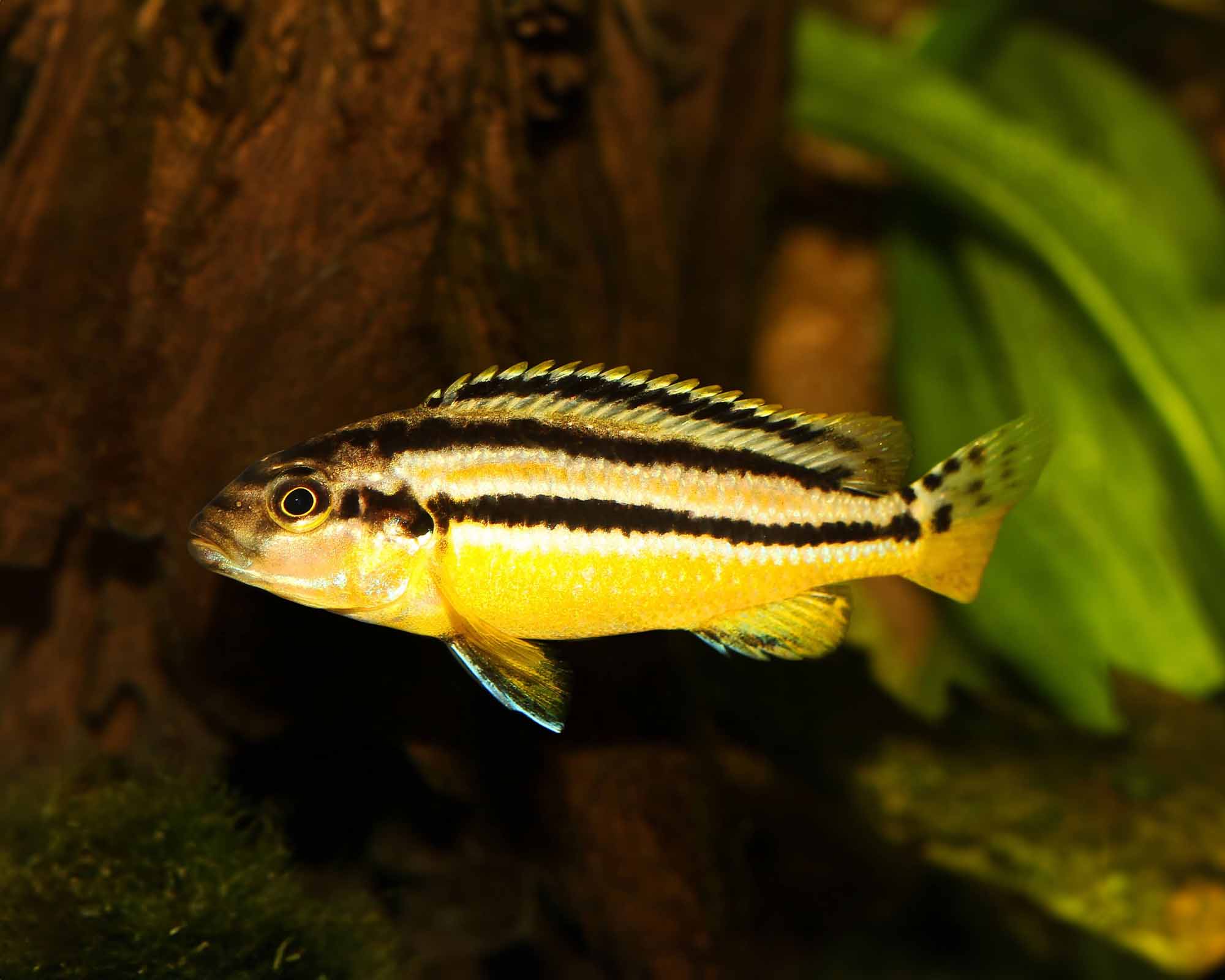
    Melanochromis auratus is a Lake Malawi mbuna commonly known as the auratus cichlid or golden mbuna, not a goldfish. Its yellow-gold and black horizontal striping is especially vivid in females and juveniles, while mature males commonly become dark blue-black with pale stripes. This territorial herbivore is best kept in a spacious, rocky African cichlid aquarium with carefully selected tank mates. The supplied source label is contradictory, so identification here follows the scientific name and the pictured fish rather than the “turquoise goldfish” wording.
  • Gold Shell-Dwelling Cichlid (Lamprologus ocellatus)

    Gold Shell-Dwelling Cichlid (Lamprologus ocellatus)

    Easy - Moderate
    Lake Tanganyika shell-dwelling cichlid
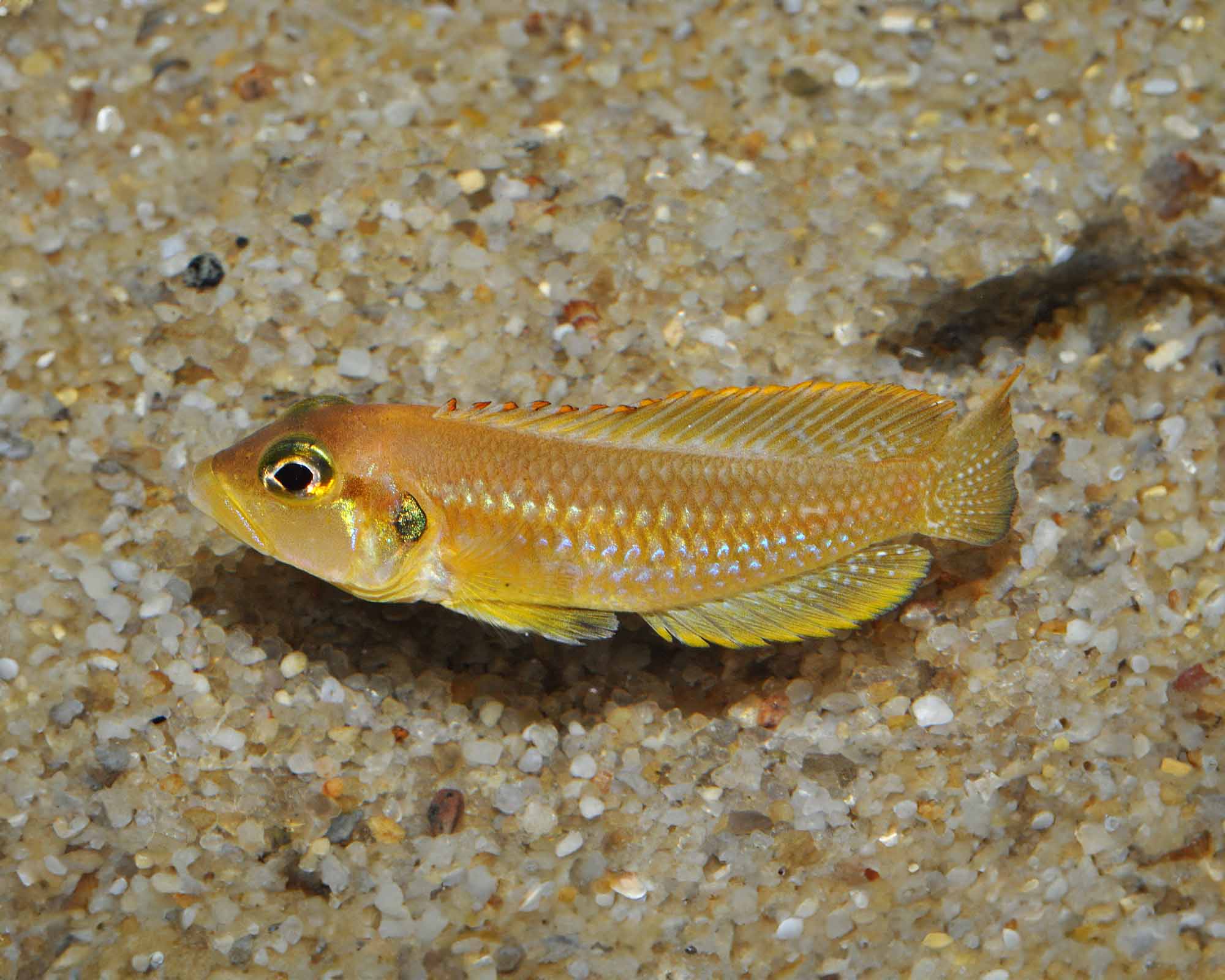
    Lamprologus ocellatus is a small Tanganyikan cichlid that shelters, breeds and defends territory around empty snail shells. The supplied source identifies a gold pair, and the images are consistent with the golden color form, although photographs cannot confirm sex, health or that the fish are an established pair. This species is manageable for aquarists who can provide alkaline, mineral-rich water, a fine sandy substrate and several suitable shells. Its small size contrasts with strong territorial behavior, especially around breeding sites.
  • Salvin's Cichlid (Trichromis salvini)

    Salvin's Cichlid (Trichromis salvini)

    Moderate - Difficult
    Central American cichlid
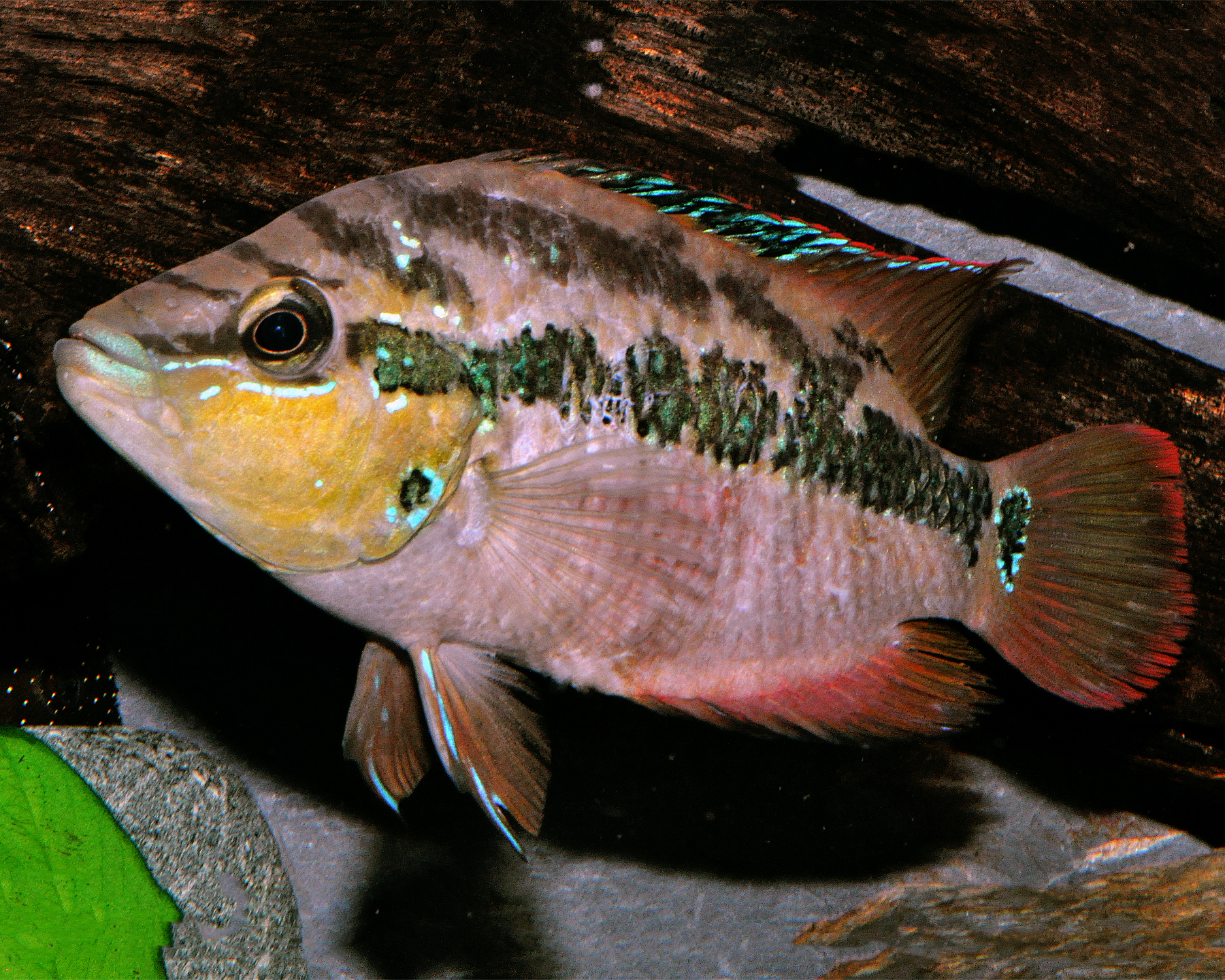
    Salvin's cichlid is a colorful Central American cichlid known for its yellow, red and blue-green markings and strongly territorial behavior. The supplied source identifies a pair as Cichlasoma salvini; the species is generally treated in current references as Trichromis salvini, although aquarium literature still commonly uses the older name. It is best kept as a dedicated pair or with carefully selected robust tank mates.
  • Striped Snail Cichlid (Neolamprologus multifasciatus)

    Striped Snail Cichlid (Neolamprologus multifasciatus)

    Easy - Moderate
    Lake Tanganyika shell-dwelling cichlid
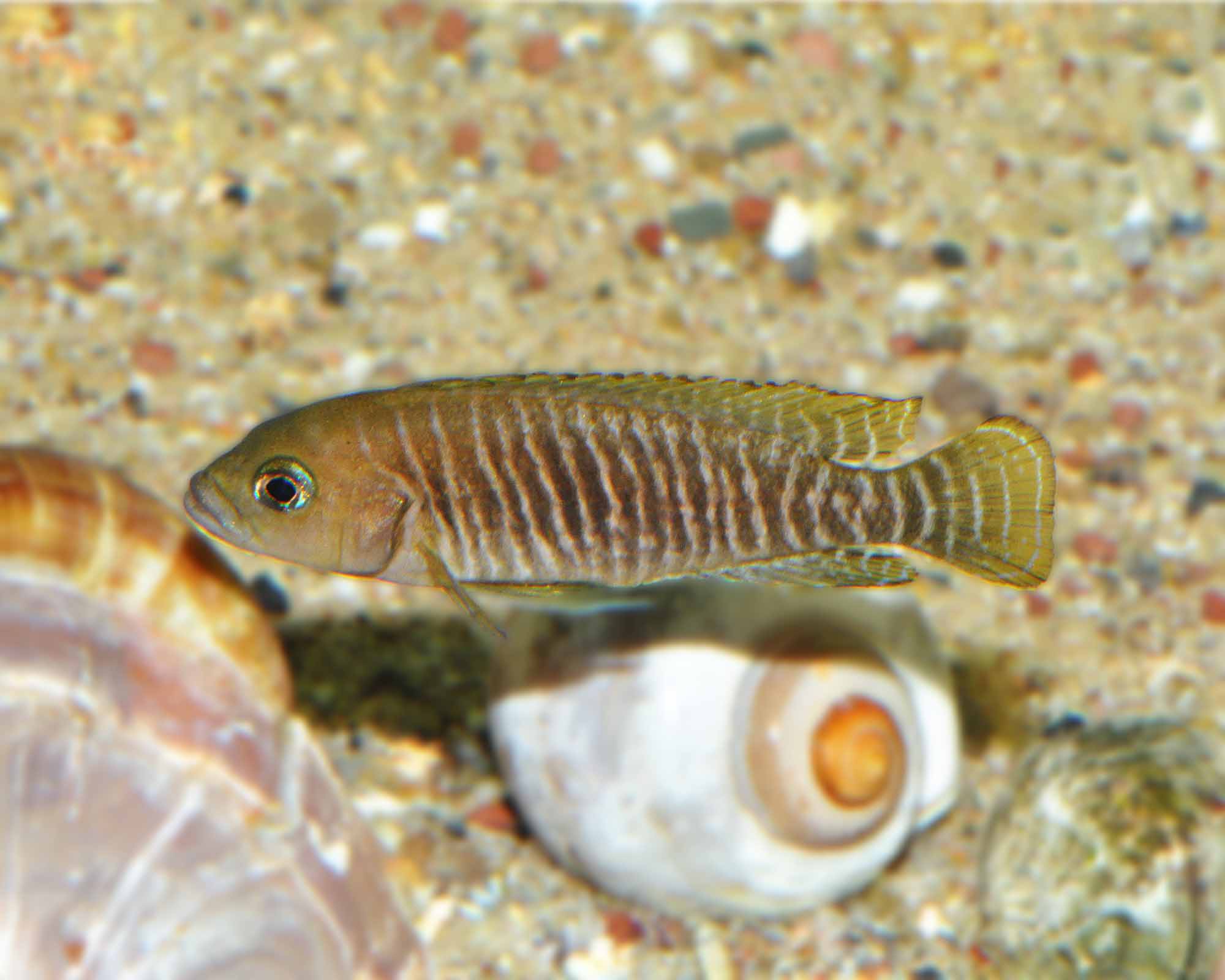
    Neolamprologus multifasciatus is a very small shell-dwelling cichlid from Lake Tanganyika. It lives among empty snail shells, excavates sand, and defends a small territory while forming active colonies. Despite its size, it displays complex social and breeding behavior. The supplied source identifies these fish as N. multifasciatus; photographs alone can be difficult to distinguish from closely related shell-dwelling Neolamprologus, so identification should be confirmed from provenance or examination by an experienced aquarist.
  • Dickfeld’s Julidochromis (Julidochromis dickfeldi)

    Dickfeld’s Julidochromis (Julidochromis dickfeldi)

    Moderate
    Lake Tanganyika rock-dwelling cichlid
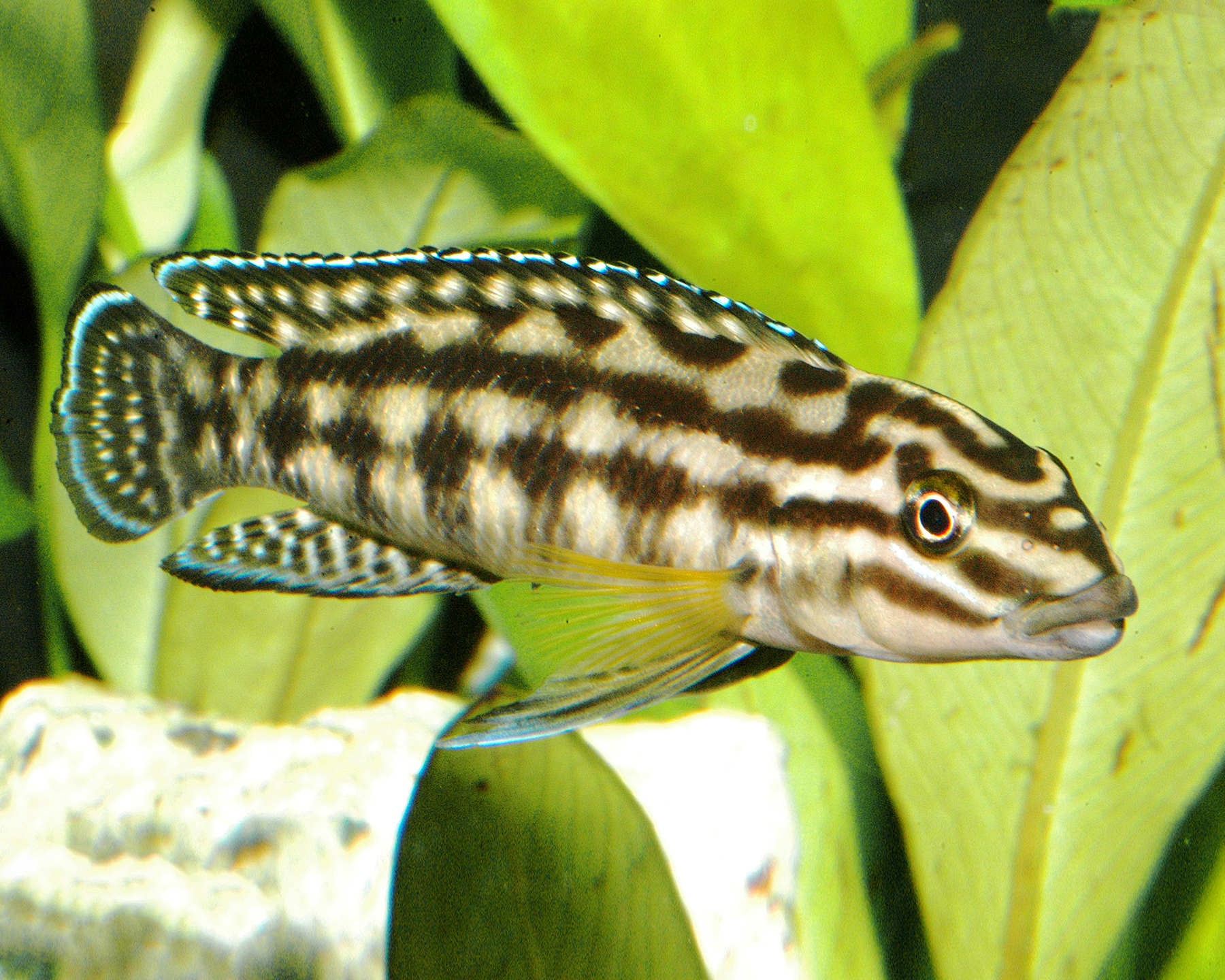
    Dickfeld’s Julidochromis is a small, elongated shell- and rock-dwelling cichlid endemic to Lake Tanganyika in East Africa. It is recognized by a pale cream to silvery body marked with dark longitudinal stripes and blue edging on the fins. Although modest in size, it is territorial, especially when paired or spawning. A carefully structured aquarium with hard, alkaline water, numerous rock crevices and stable maintenance provides the conditions needed for long-term success.
  • Apistogramma agassizii Red Dwarf Cichlid

    Apistogramma agassizii Red Dwarf Cichlid

    Moderate
    South American dwarf cichlid
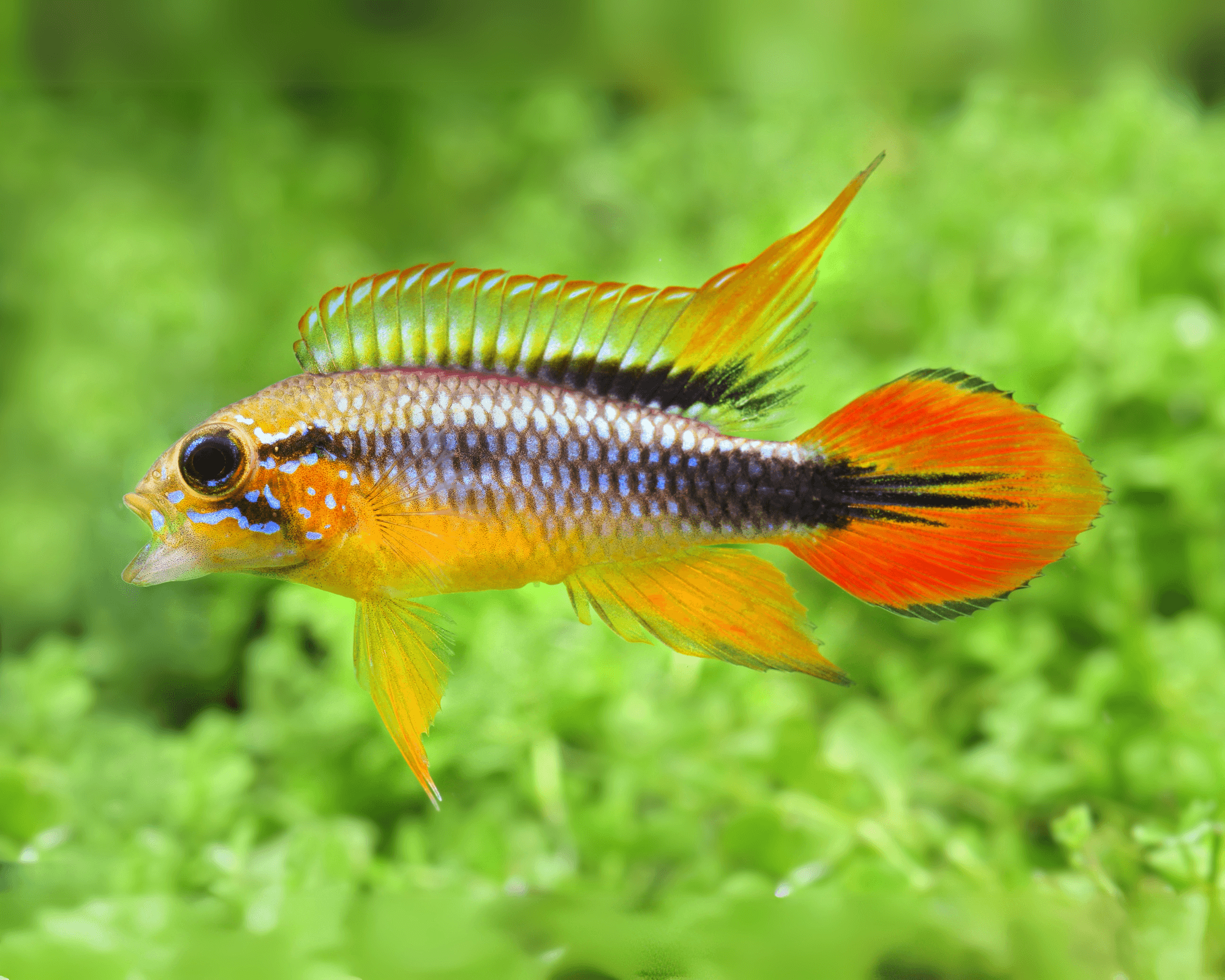
    Apistogramma agassizii is a small South American freshwater cichlid valued for its elongated fins, iridescent markings and territorial breeding behavior. The supplied trade label identifies these fish as a red color form and a pair, although sex and exact line cannot be confirmed solely from the listing or images. They suit mature, structured aquariums with soft to moderately hard, clean water, gentle flow and plenty of caves or plant cover.
  • Red Jewel Cichlid (Hemichromis lifalili)

    Red Jewel Cichlid (Hemichromis lifalili)

    Moderate - Difficult
    African riverine cichlid
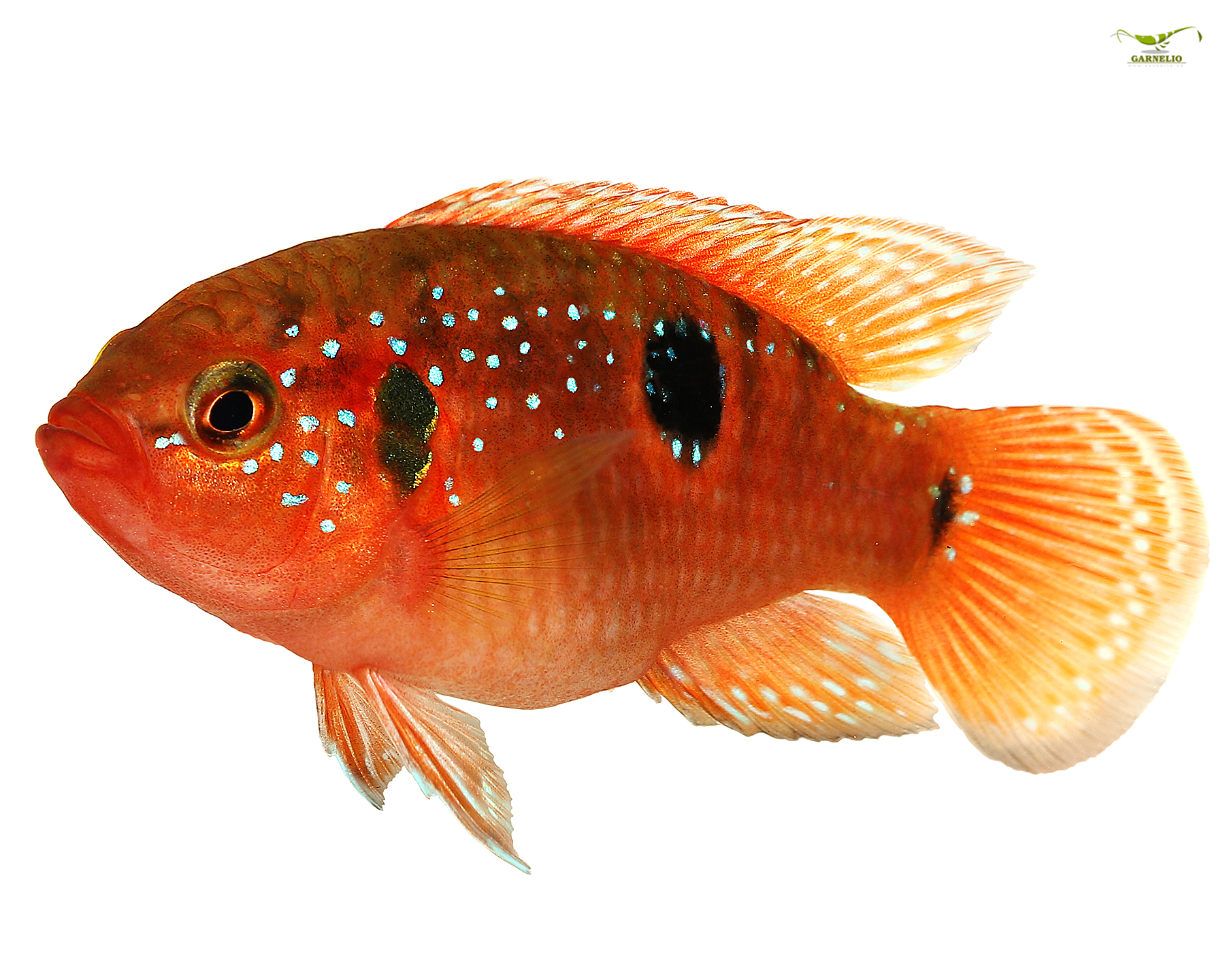
    Hemichromis lifalili, commonly called the red jewel cichlid, is a small but strongly territorial African cichlid recognized for its red body, blue-green spotting and dark lateral markings. It is often confused in the aquarium trade with related Hemichromis species, especially H. bimaculatus, so identification from photographs or trade labels is not always certain. A pair needs a carefully arranged aquarium, stable water quality and a plan for managing aggression during breeding.
  • Redhump Eartheater (Geophagus steindachneri)

    Redhump Eartheater (Geophagus steindachneri)

    Moderate
    South American eartheater cichlid
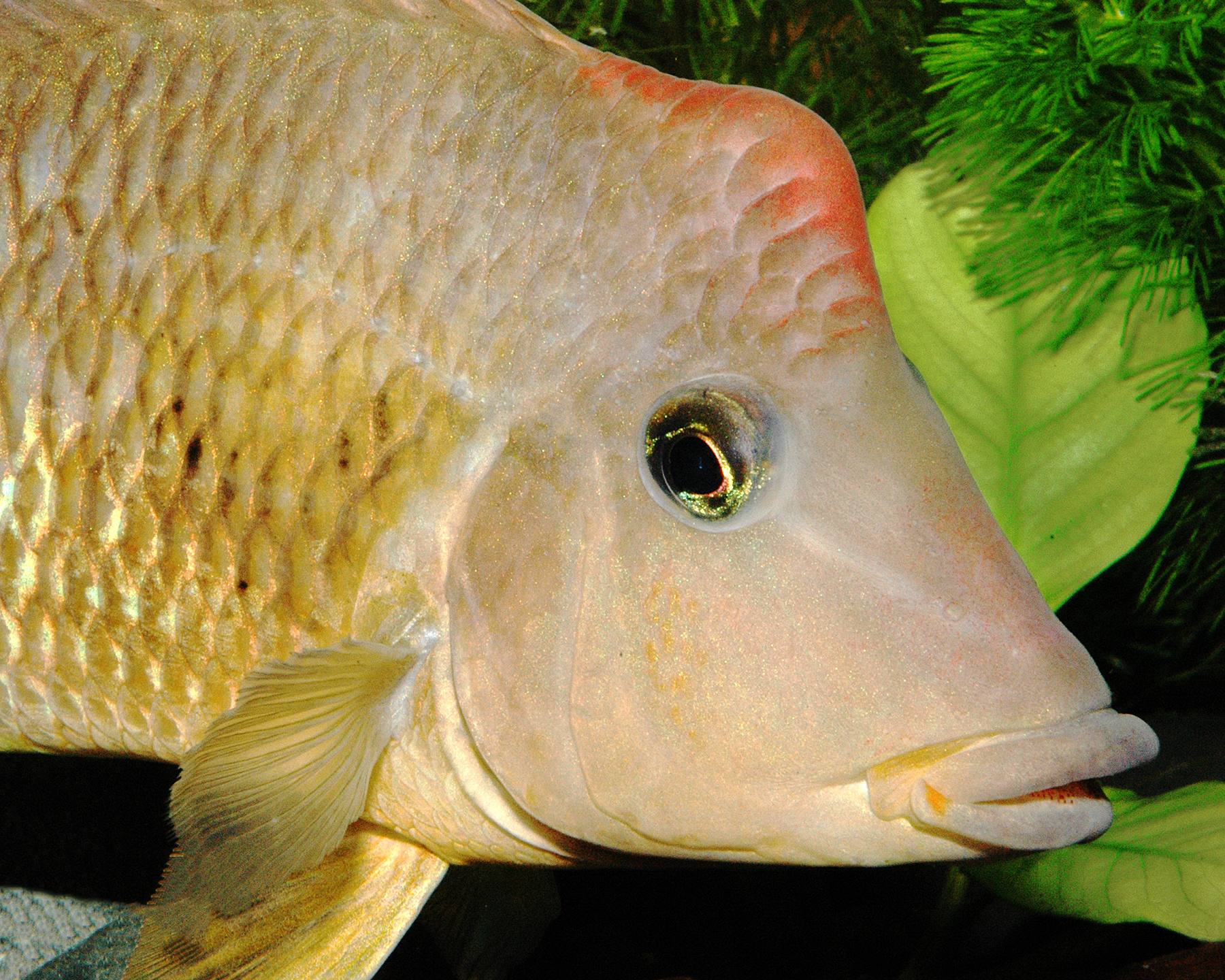
    Geophagus steindachneri is a South American eartheater distinguished by its sloping forehead, browsing mouth and habit of sifting fine substrate for food. Adults become substantial, active cichlids that need generous floor space, clean water and a soft sand bed. The supplied fish are identified as Redhump Eartheaters, but locality and sex cannot be confirmed from the listing alone. They are generally peaceful for their size, though territorial behavior increases during spawning.
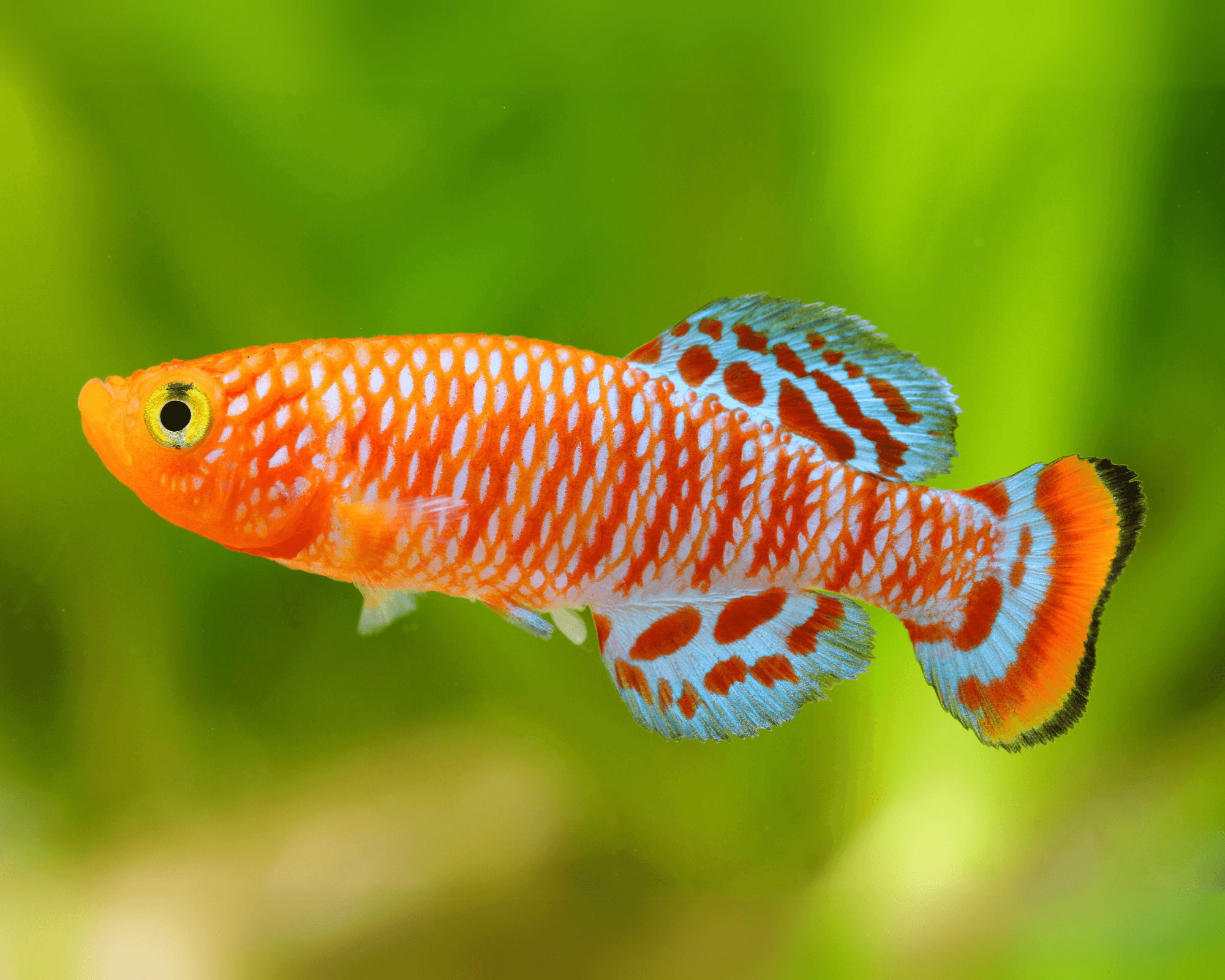
  • Rachow's Splendour Ground Carp (Nothobranchius rachovii)

    Rachow's Splendour Ground Carp (Nothobranchius rachovii)

    Moderate - Difficult
    Annual killifish
    Rachow's splendour ground carp is a brightly marked annual killifish from seasonal freshwater habitats in Mozambique. Males display intense orange, red, blue and white coloration, while females are usually much plainer. It is best maintained in a species-focused aquarium with gentle filtration, a covered top and soft spawning material. The fish has a short natural lifespan, but careful feeding and egg management make it a rewarding specialist species. Aquarium specimens may represent different geographic forms, so locality information is valuable when available.
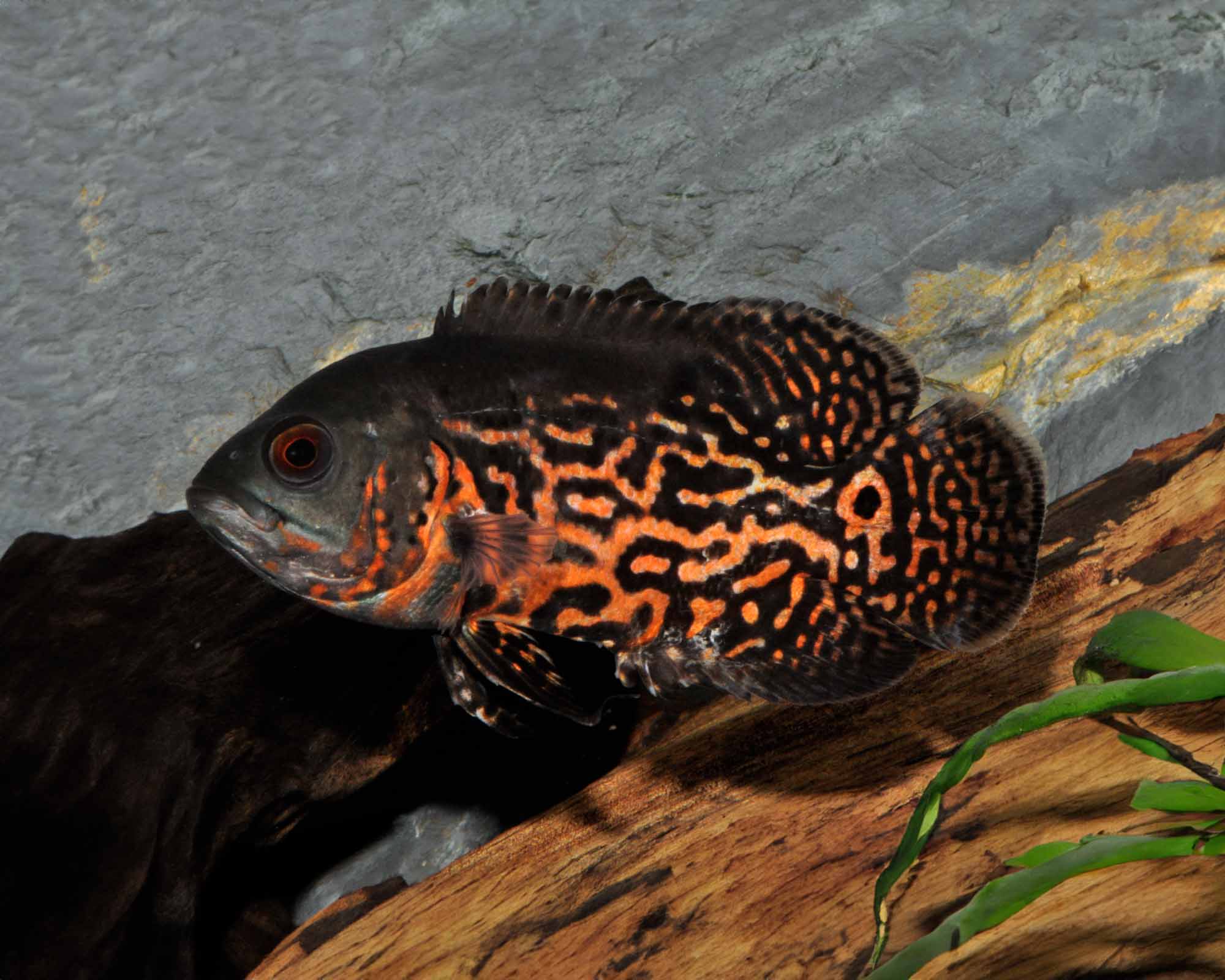
  • Red Tiger Oscar Cichlid (Astronotus ocellatus)

    Red Tiger Oscar Cichlid (Astronotus ocellatus)

    Difficult
    Large South American cichlid
    The Red Tiger Oscar is a selectively bred color form of Astronotus ocellatus, a large South American cichlid known for intelligence, bold feeding behavior, and strong individual personality. The supplied source describes a pair, but sex and true pair-bond status cannot be confirmed from the images alone. Oscars require a spacious, strongly filtered aquarium, careful tankmate selection, and a varied diet. They are rewarding display fish, but their adult size, territorial behavior, waste production, and tendency to rearrange décor make them unsuitable for most community aquariums.
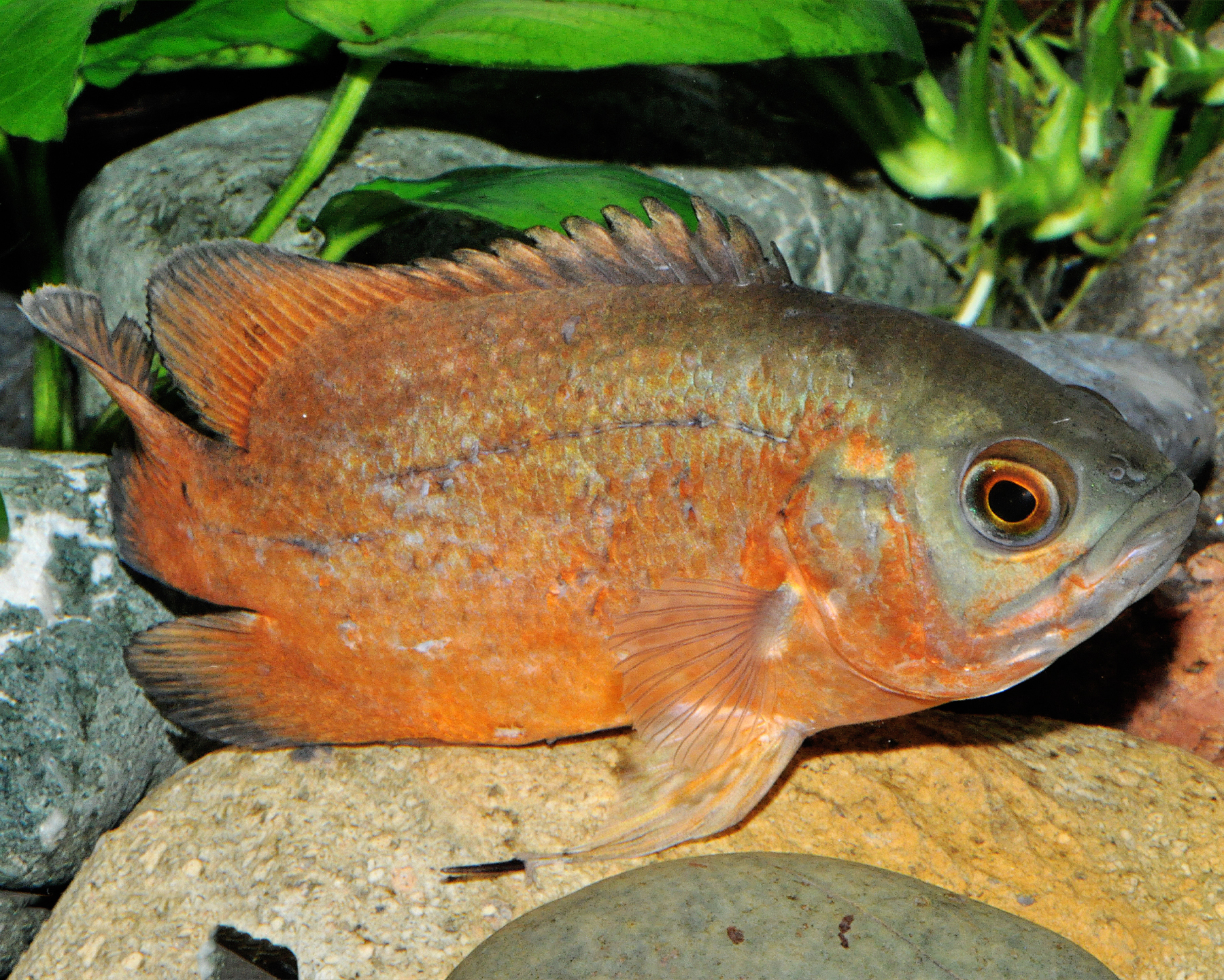
  • Red Oscar Cichlid (Astronotus ocellatus)

    Red Oscar Cichlid (Astronotus ocellatus)

    Difficult
    Large South American cichlid
    The red Oscar is a selectively bred color form of Astronotus ocellatus, a large South American cichlid valued for its intelligence, interactive behavior, and bold appearance. The supplied source describes a pair, while the images show Oscar-like fish with predominantly orange-red bodies. Exact strain and sex cannot be confirmed from the images alone. This is a powerful, messy-eating species that requires a spacious aquarium, strong filtration, and careful planning for compatibility.