AquaLibs presents AquaRank Discover the world’s leading aquascapers

Explore transparent rankings built from published results across the world’s leading aquascaping contests.

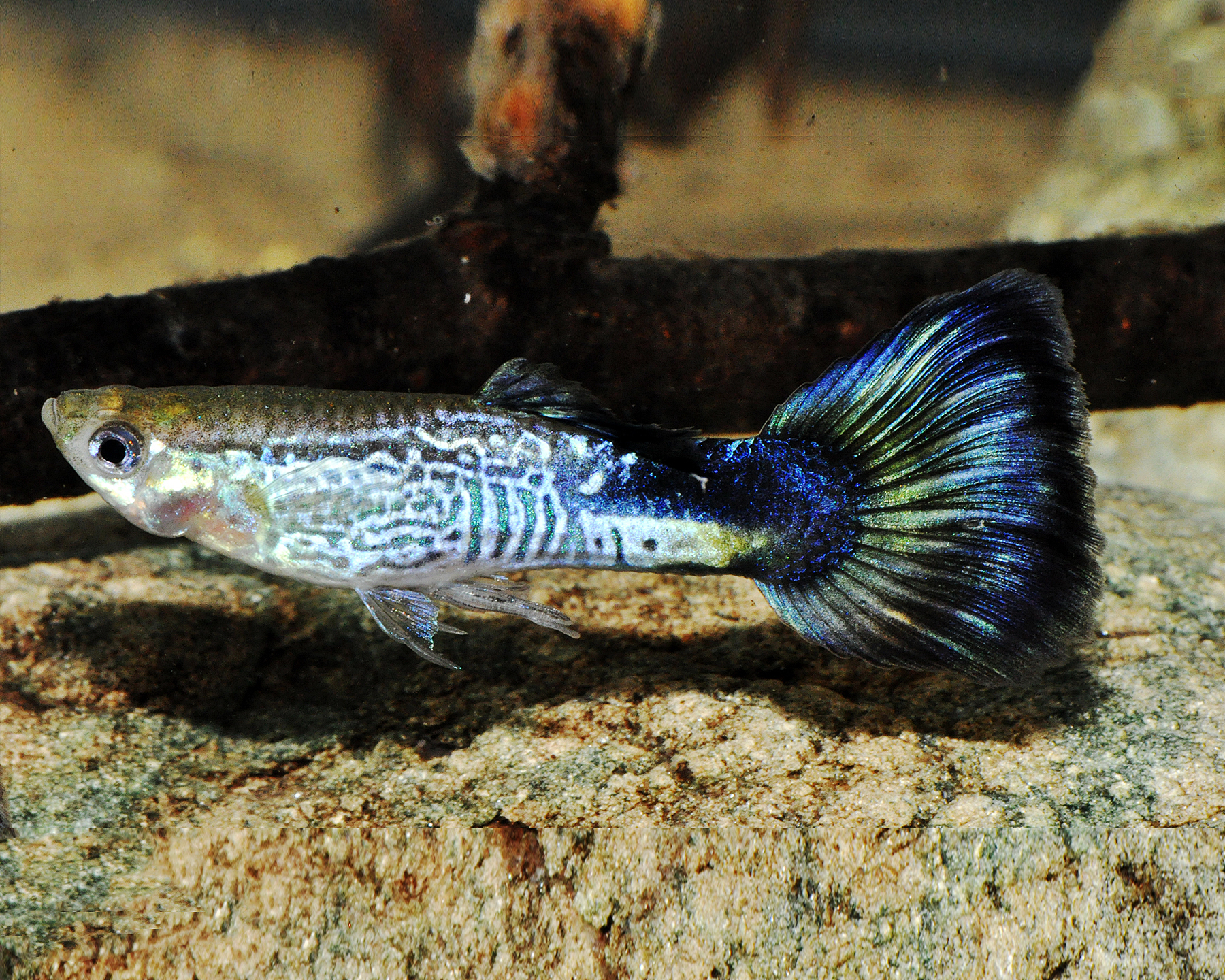
Green Cobra Guppy, Male

The Green Cobra Guppy requires an aquarium of at least 10 gallons in size. It is a very peaceful fish and should be housed with tankmates of similar temperament. Though the Green Cobra Guppy is a hardy fish tolerant of small changes in water parameters, care should be taken to keep water temperature, pH, and nutrient levels in check. This hardy and energetic fish makes an excellent fish for beginning hobbyists.

Guppies are relatively easy to breed even for the beginning aquarists. If you are interested in breeding guppies, the ideal aquarium should have a covering of floating plants and a breeding box to protect the fry. Adults may eat the fry if left to fend for themselves without the breeding box. The fry should be fed brine shrimp, micro food and pulverized flakes.

The Green Cobra Guppy is an omnivore and requires both algae-based foods as well as meaty foods. An algae-based flake food, along with freeze-dried bloodworms, tubifex, and brine shrimp will provide guppies with the proper nutrition.
Fish info

  • Care level: Easy
  • Temperament: Peaceful
  • Adult size: 5.08
  • Life expectancy: 3
  • Fish type: Poeciliidae
  • Color Form: Black, Green, Yellow
Leave your comments
Latest on Fishs
  • Red Tiger Oscar Cichlid (Astronotus ocellatus)

    Red Tiger Oscar Cichlid (Astronotus ocellatus)

    Difficult
    Large South American cichlid
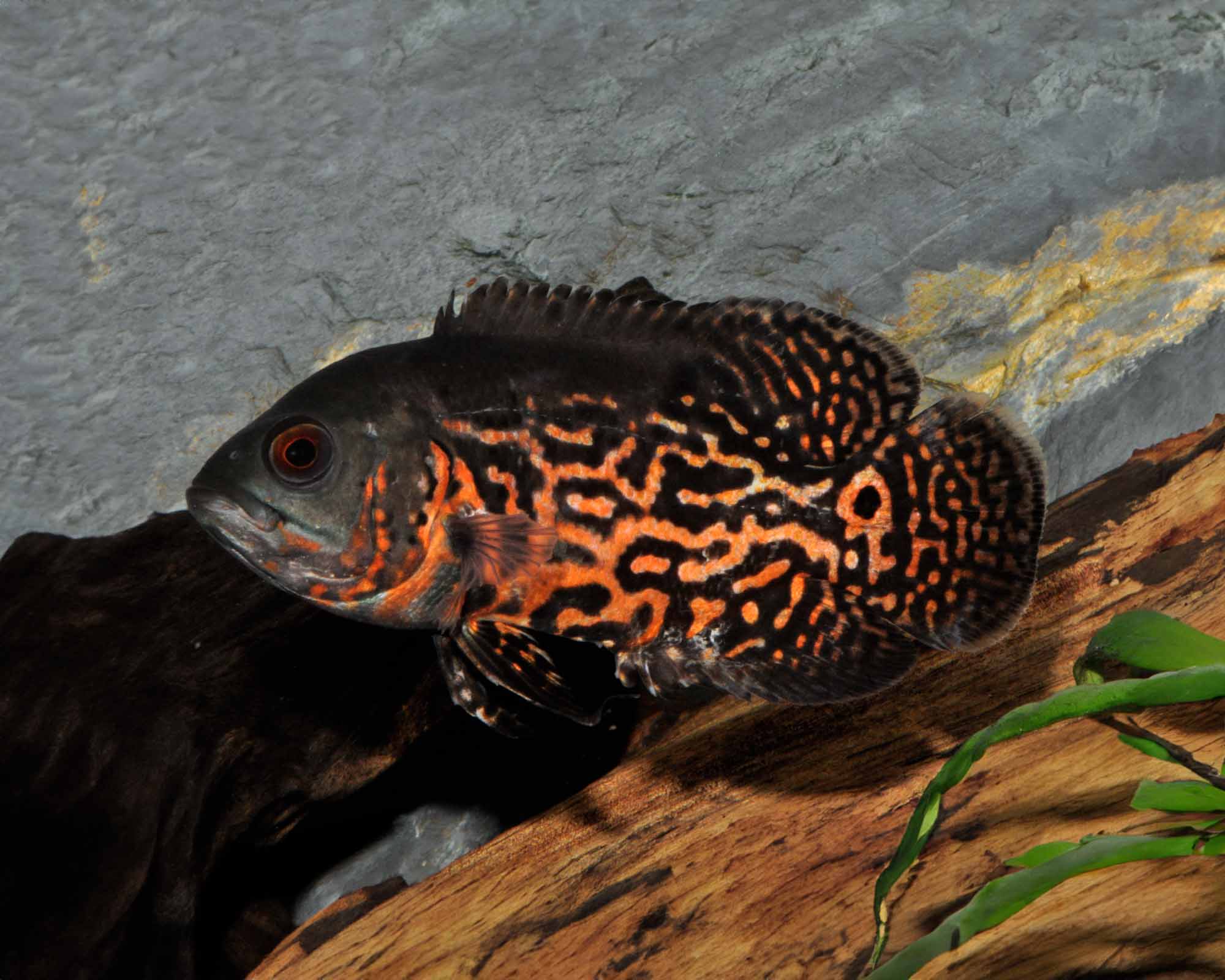
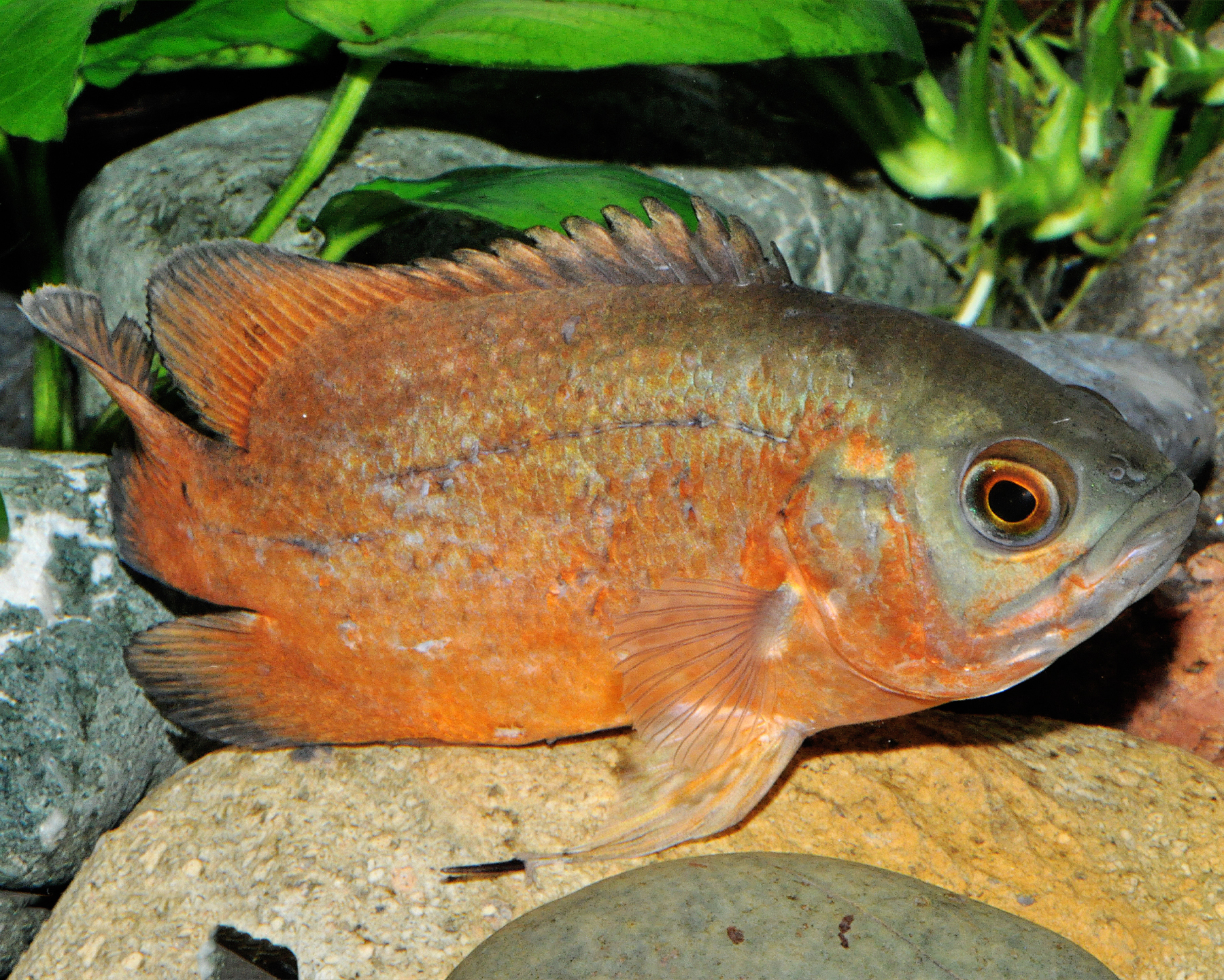
    The Red Tiger Oscar is a selectively bred color form of Astronotus ocellatus, a large South American cichlid known for intelligence, bold feeding behavior, and strong individual personality. The supplied source describes a pair, but sex and true pair-bond status cannot be confirmed from the images alone. Oscars require a spacious, strongly filtered aquarium, careful tankmate selection, and a varied diet. They are rewarding display fish, but their adult size, territorial behavior, waste production, and tendency to rearrange décor make them unsuitable for most community aquariums.
  • Red Oscar Cichlid (Astronotus ocellatus)

    Red Oscar Cichlid (Astronotus ocellatus)

    Difficult
    Large South American cichlid
    The red Oscar is a selectively bred color form of Astronotus ocellatus, a large South American cichlid valued for its intelligence, interactive behavior, and bold appearance. The supplied source describes a pair, while the images show Oscar-like fish with predominantly orange-red bodies. Exact strain and sex cannot be confirmed from the images alone. This is a powerful, messy-eating species that requires a spacious aquarium, strong filtration, and careful planning for compatibility.
  • Kenyi Cichlid (Maylandia lombardoi)

    Kenyi Cichlid (Maylandia lombardoi)

    Moderate - Difficult
    Lake Malawi mbuna cichlid
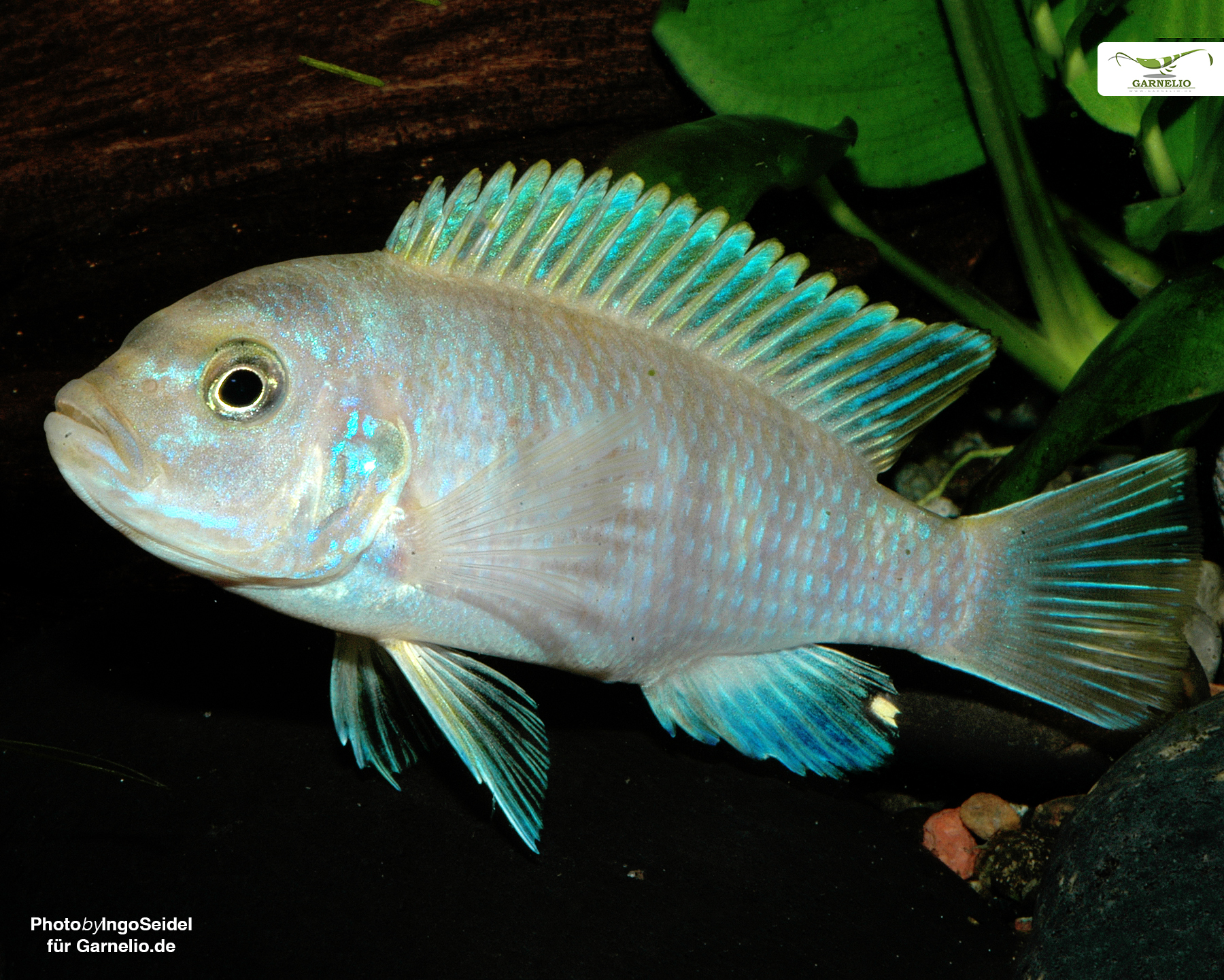
    The fish sold as Pseudotropheus lombardoi is now generally treated as Maylandia lombardoi, a Lake Malawi mbuna commonly known as the Kenyi cichlid. It is a robust, territorial algae grazer that needs hard, alkaline water, abundant rockwork and carefully planned tank-mate selection. Adult coloration is strongly sex- and mood-dependent, and the supplied images show a blue to turquoise fish with pale yellow tones rather than proving a particular sex or commercial color form. Identification and the claimed pair status should therefore be confirmed by the seller.
  • Betta imbellis: Peaceful Fighting Fish Care Guide

    Betta imbellis: Peaceful Fighting Fish Care Guide

    Moderate
    Osphronemid labyrinth fish
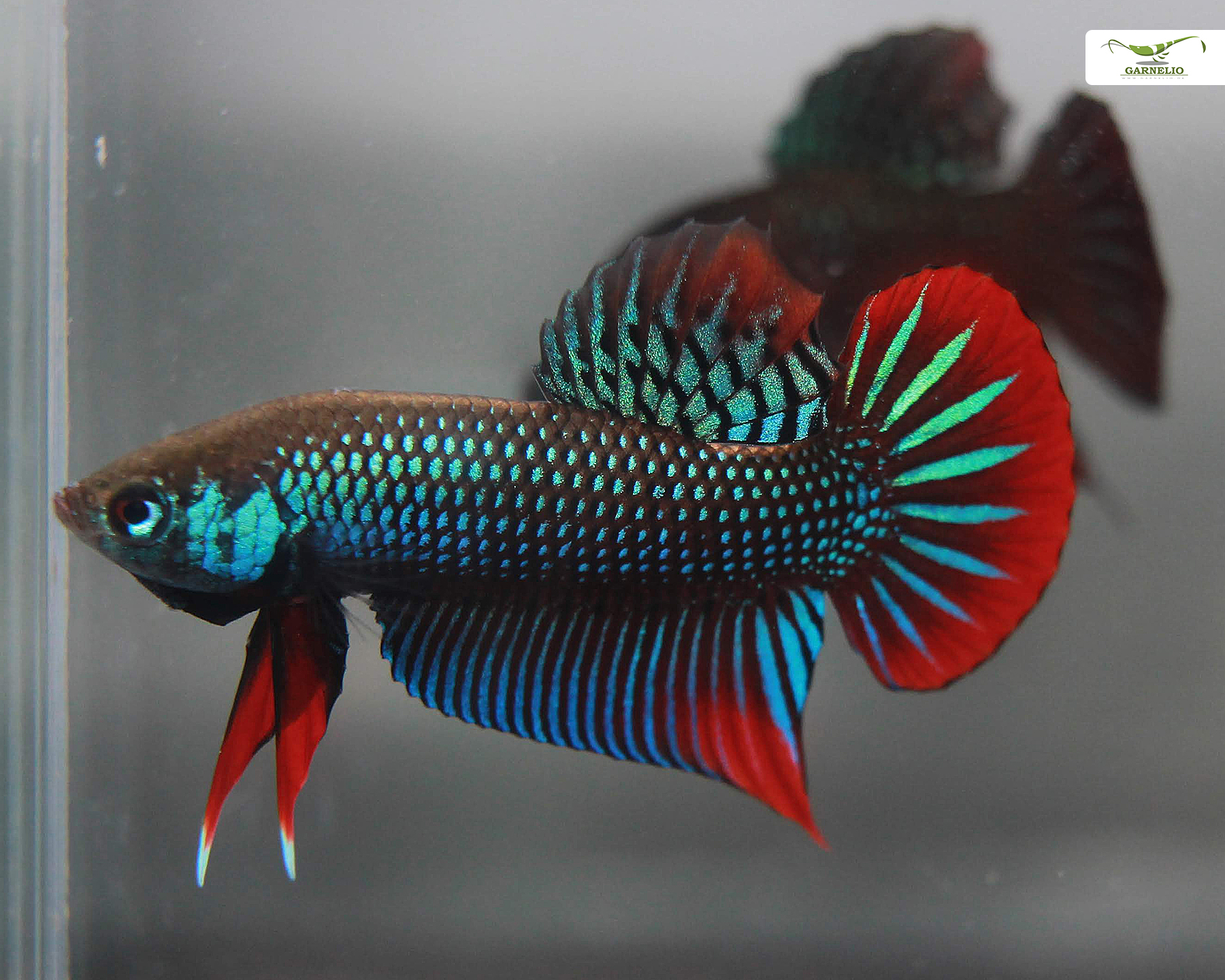
    Betta imbellis, commonly called the peaceful fighting fish, is a small labyrinth fish from shallow, slow-moving waters of the Malay Peninsula and nearby parts of Sumatra. It is generally less combative than Betta splendens, although males remain territorial and should not be assumed to be universally peaceful. This guide covers identification, habitat, aquarium care, feeding, tank mates and bubble-nest breeding. The pictured fish appears consistent with a selectively bred, long-finned Betta imbellis, but image-only identification cannot confirm its lineage or locality.
  • Nicaraguan Cichlid (Hypsophrys nicaraguensis)

    Nicaraguan Cichlid (Hypsophrys nicaraguensis)

    Moderate - Difficult
    Large Central American cichlid
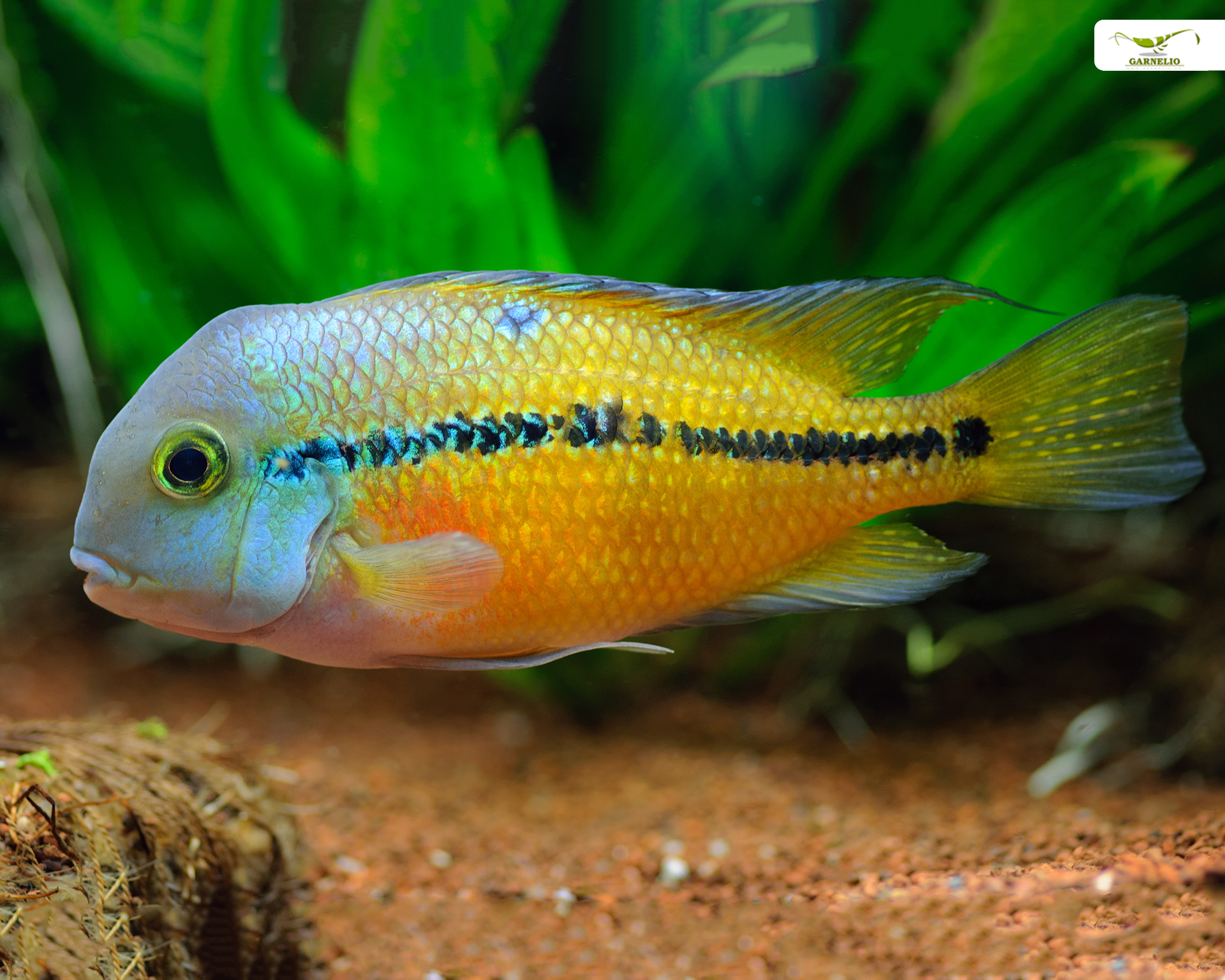
    The Nicaraguan cichlid is a robust Central American species known for its changing gold, orange, blue and black patterning. It is often sold under the older name Cichlasoma nicaraguense, while Hypsophrys nicaraguensis is the generally accepted current placement. This is a territorial fish requiring substantial space, strong filtration and carefully planned tank mates. The supplied listing describes a pair, but sex, compatibility and breeding condition cannot be independently verified from the source image alone.
  • Pearl Gourami (Trichogaster leerii)

    Pearl Gourami (Trichogaster leerii)

    Easy - Moderate
    Peaceful freshwater labyrinth fish
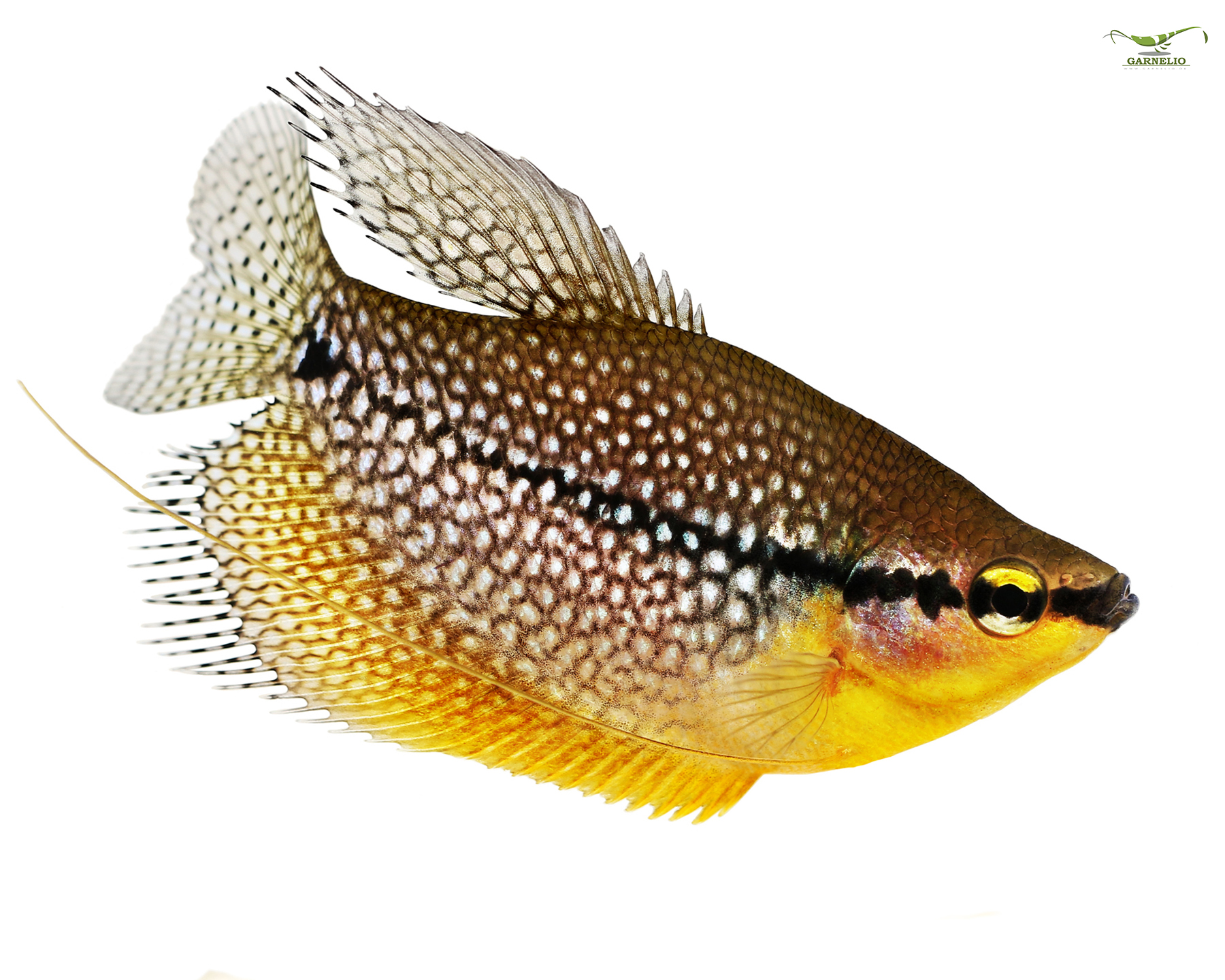
    The pearl gourami is a peaceful, labyrinth fish recognized by its pearly spots, dark midlateral stripe, and warm orange throat. It originates in vegetated, slow-moving waters of Southeast Asia and is generally suitable for a calm community aquarium. A pair needs stable, warm water, dense cover, gentle flow, and access to atmospheric air at the surface.
  • Moonlight Gourami (Trichogaster microlepis)

    Moonlight Gourami (Trichogaster microlepis)

    Moderate
    Southeast Asian labyrinth fish
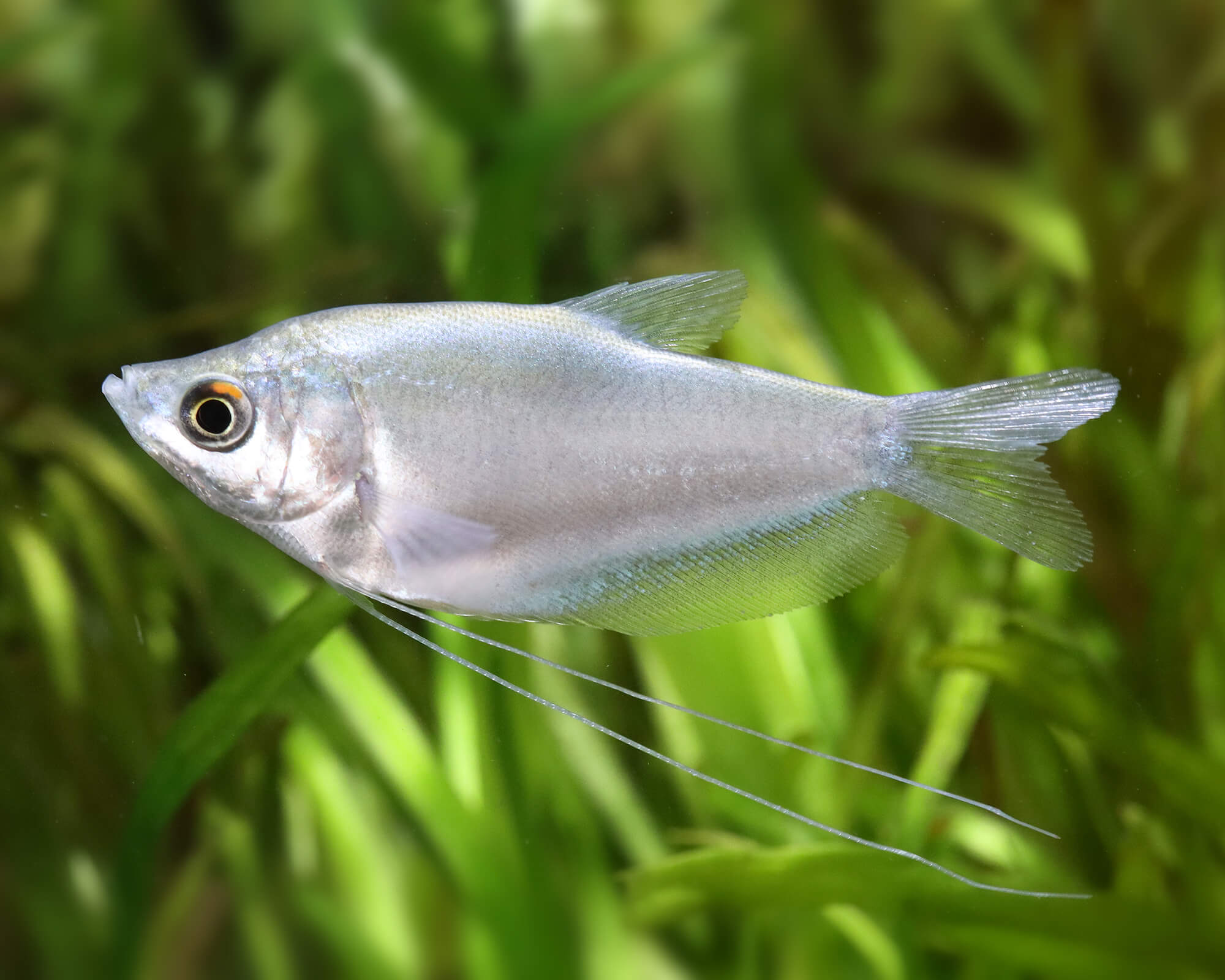
    The moonlight gourami is a peaceful, laterally compressed labyrinth fish from mainland Southeast Asia. Its silvery body, long thread-like pelvic fins and calm, deliberate swimming make it a distinctive community-aquarium species. Although the supplied source identifies a pair, sex cannot be confirmed reliably from the images alone. Provide a spacious, mature aquarium with gentle flow, dense planting and access to humid air above the water. It is generally hardy once acclimated, but it appreciates stable conditions and should not be housed with fin-nipping or highly aggressive tank mates.
  • Keyhole Cichlid (Aequidens maronii)

    Keyhole Cichlid (Aequidens maronii)

    Moderate
    South American freshwater cichlid
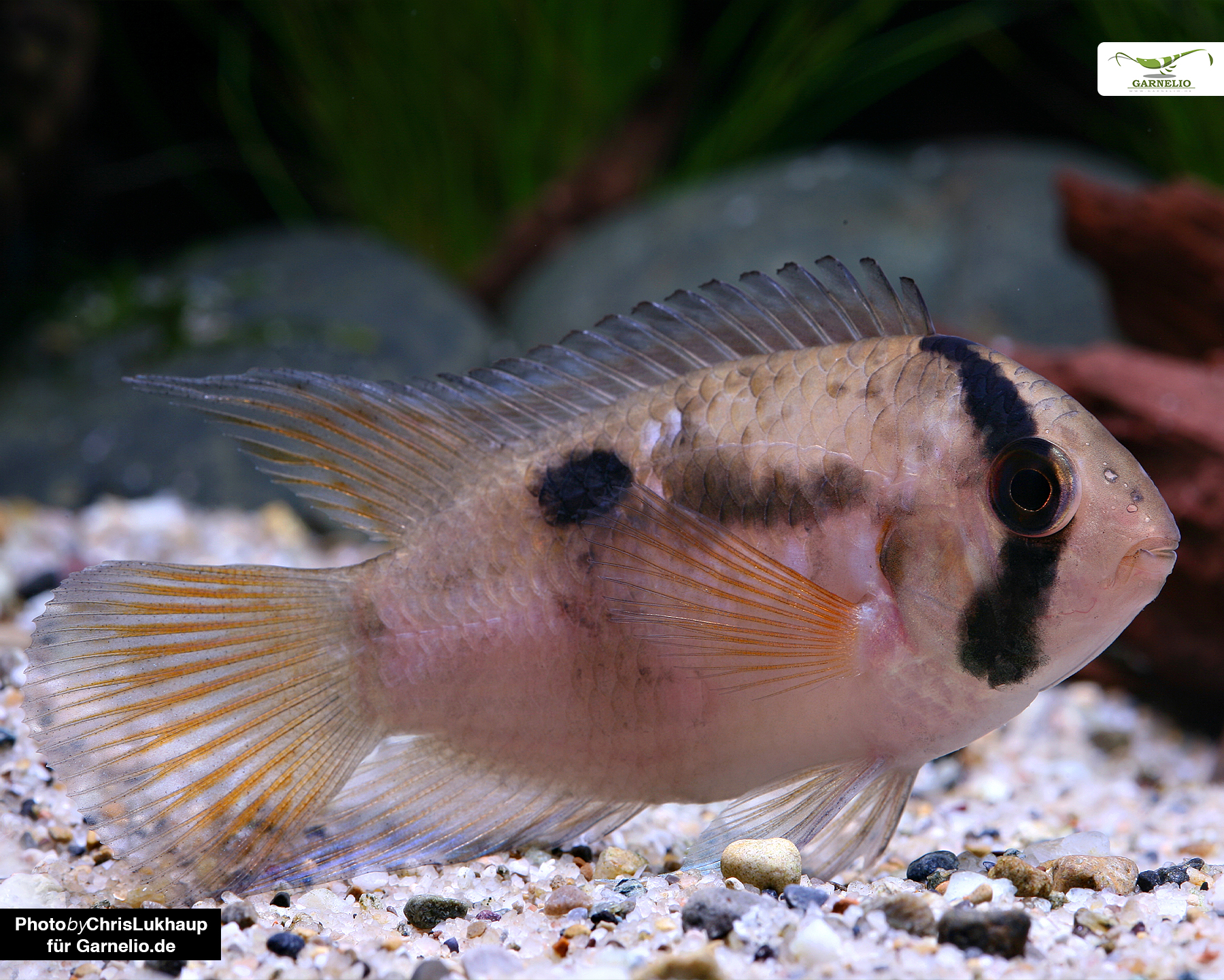
    The fish supplied is consistent with the keyhole cichlid, commonly listed as Aequidens maronii and currently placed by many authorities in the genus Cleithracara. It is a relatively peaceful South American cichlid recognized by its dark keyhole-shaped marking, subdued body coloration and interesting parental care. A pair needs a mature, well-filtered aquarium with soft surroundings, hiding places and stable water quality. Although generally manageable, it becomes territorial while spawning and should not be kept with boisterous or fin-nipping tank mates.
  • Marble Gourami (Cosby Gourami), Trichopodus trichopterus

    Marble Gourami (Cosby Gourami), Trichopodus trichopterus

    Easy - Moderate
    Freshwater labyrinth fish
    The marble gourami, commonly sold as the Cosby gourami, is a selectively bred color form of the three-spot gourami, Trichopodus trichopterus. It is a labyrinth fish that can breathe atmospheric air and generally occupies the upper and middle levels of a planted aquarium. This species is usually hardy, but adult males may become territorial, particularly when spawning. The supplied images show several color forms, so exact strain identification is not certain; the fish are best treated as marble or related cultivated forms of T. trichopterus.
  • Marble Gourami, Gold-Orange Form (Trichogaster trichopterus)

    Marble Gourami, Gold-Orange Form (Trichogaster trichopterus)

    Easy - Moderate
    Freshwater labyrinth fish
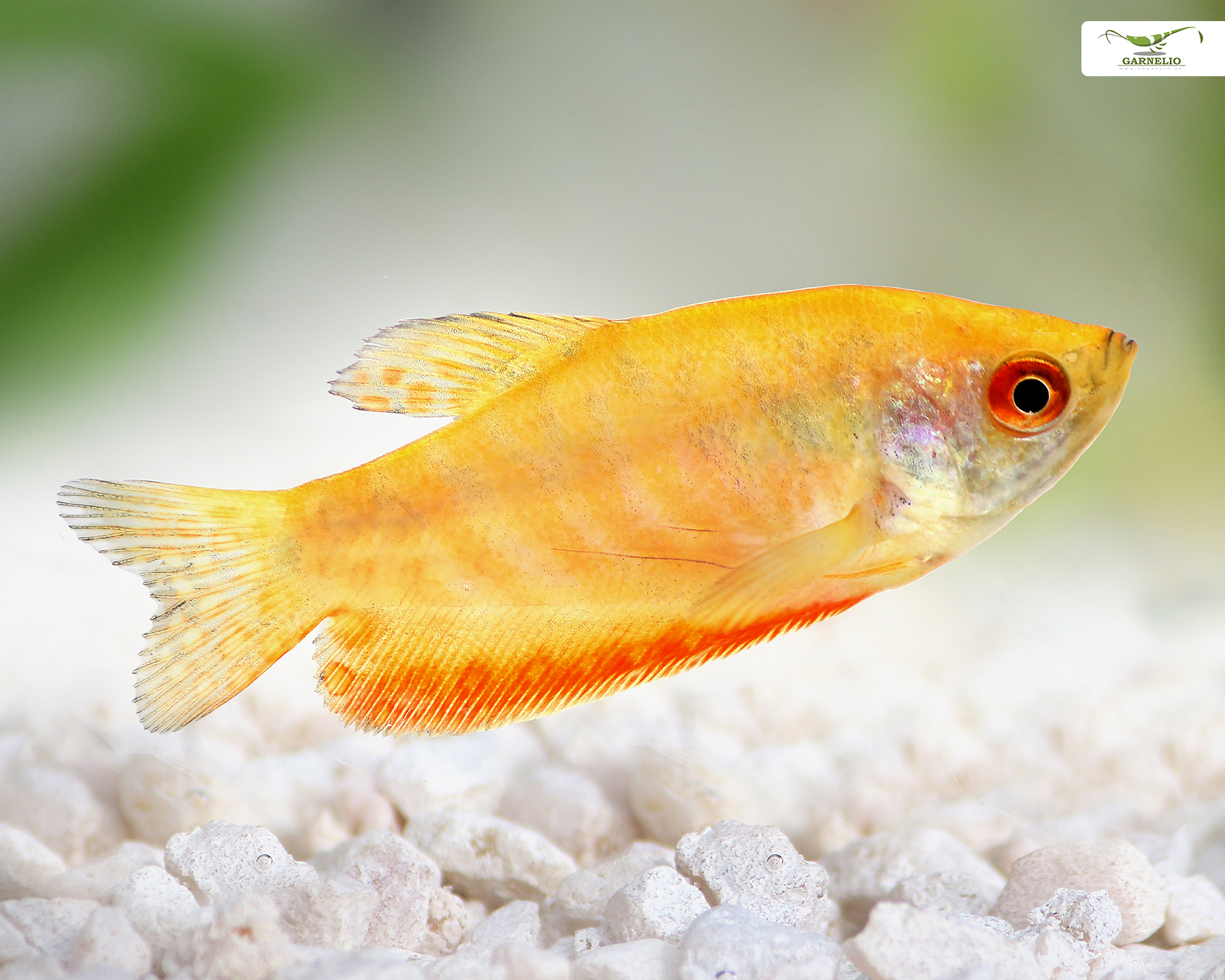
    The marble gourami is a selectively bred color form of the three-spot gourami, a labyrinth fish from mainland and island Southeast Asia. The supplied trade label identifies these fish as a gold-orange pair, although commercial names and appearance can vary, so the exact cultivated form is not fully certain. They are generally hardy community fish, but males may become territorial, especially when spawning. Provide warm, stable water, surface access, dense planting, and gentle filtration.
  • Honey Gourami Gold (Trichogaster chuna)

    Honey Gourami Gold (Trichogaster chuna)

    Easy - Moderate
    Small freshwater labyrinth fish
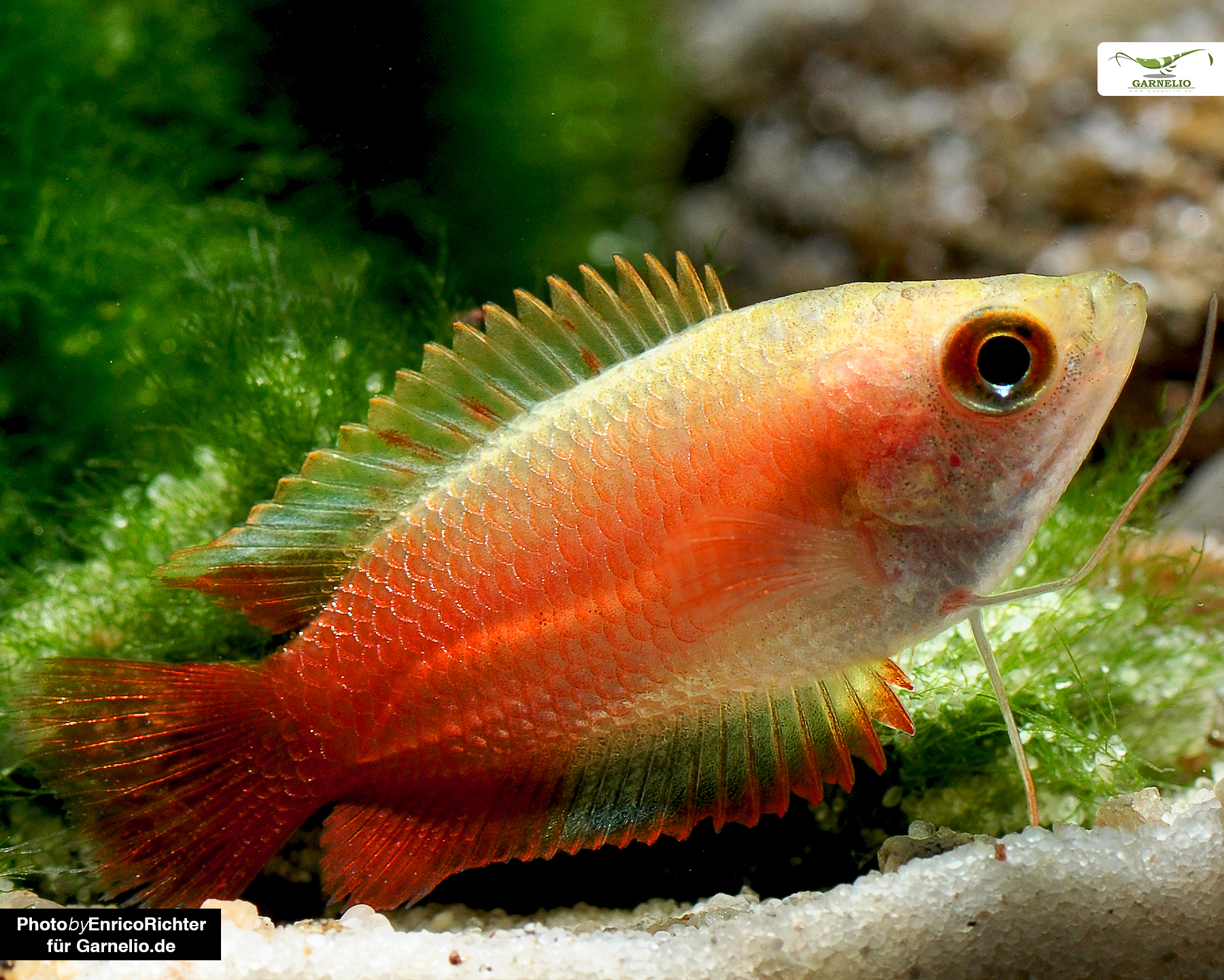
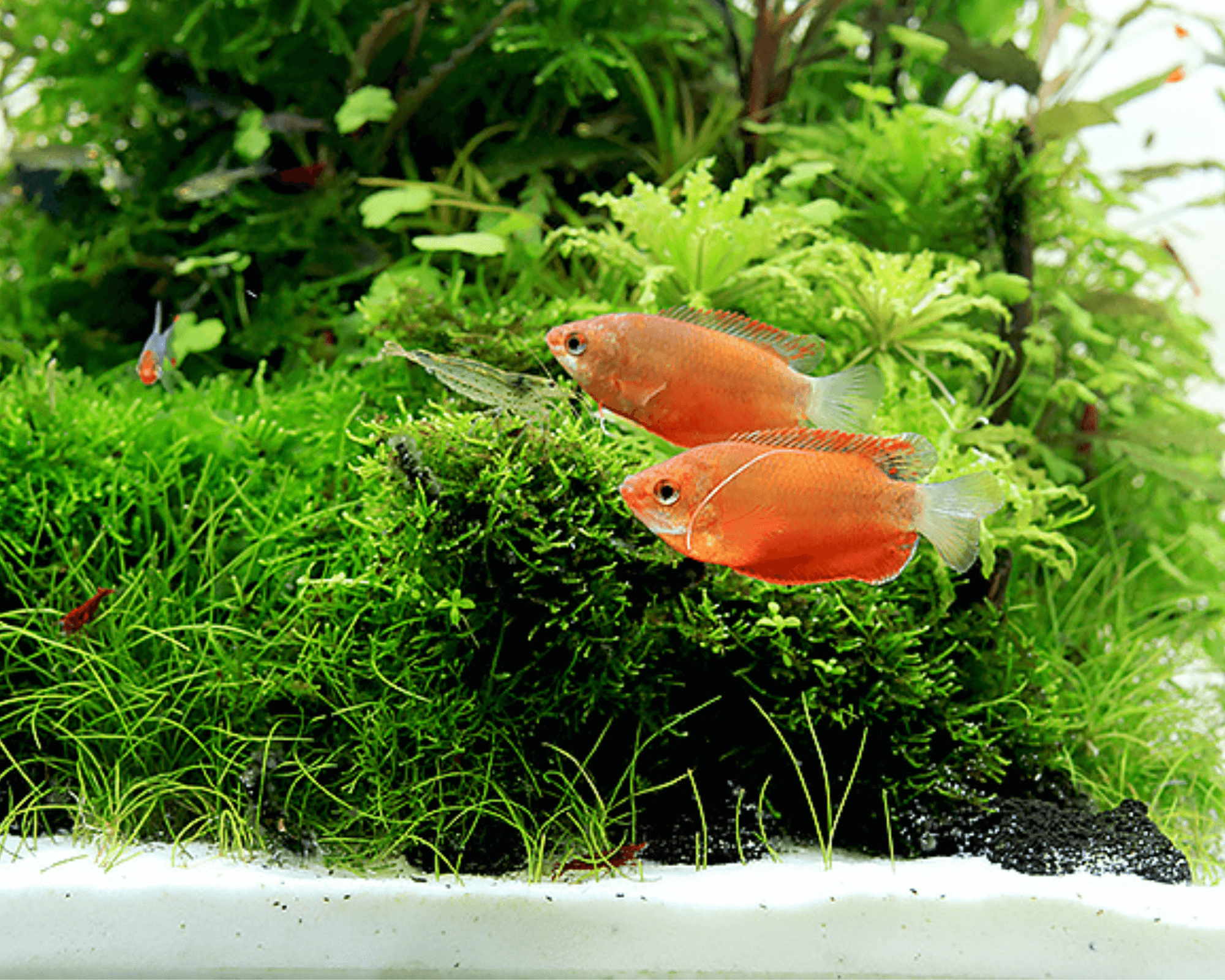
    The honey gourami is a small, peaceful labyrinth fish suited to planted freshwater aquariums. The supplied source identifies a gold pair as Colisa chuna, an older name now generally treated as Trichogaster chuna. The photographs show orange-gold individuals, but sex and exact variety cannot be confirmed from the images alone. Provide gentle flow, surface access, dense cover and calm tank mates for best results.
  • Honey Gourami (Colisa chuna) Care Guide

    Honey Gourami (Colisa chuna) Care Guide

    Easy - Moderate
    Small freshwater labyrinth fish
    The honey gourami is a small, peaceful labyrinth fish from the slow-moving waters of South Asia. Aquarium specimens may be natural honey-colored fish or selectively bred red and orange forms, like those shown here. The supplied images appear consistent with honey gourami, although sex cannot be confirmed reliably from the photographs. A planted aquarium with gentle flow, surface cover, stable warm water and calm tank mates suits this species well.
  • Blue Gourami (Trichogaster trichopterus) Care Guide

    Blue Gourami (Trichogaster trichopterus) Care Guide

    Easy - Moderate
    Labyrinth fish; freshwater anabantoid
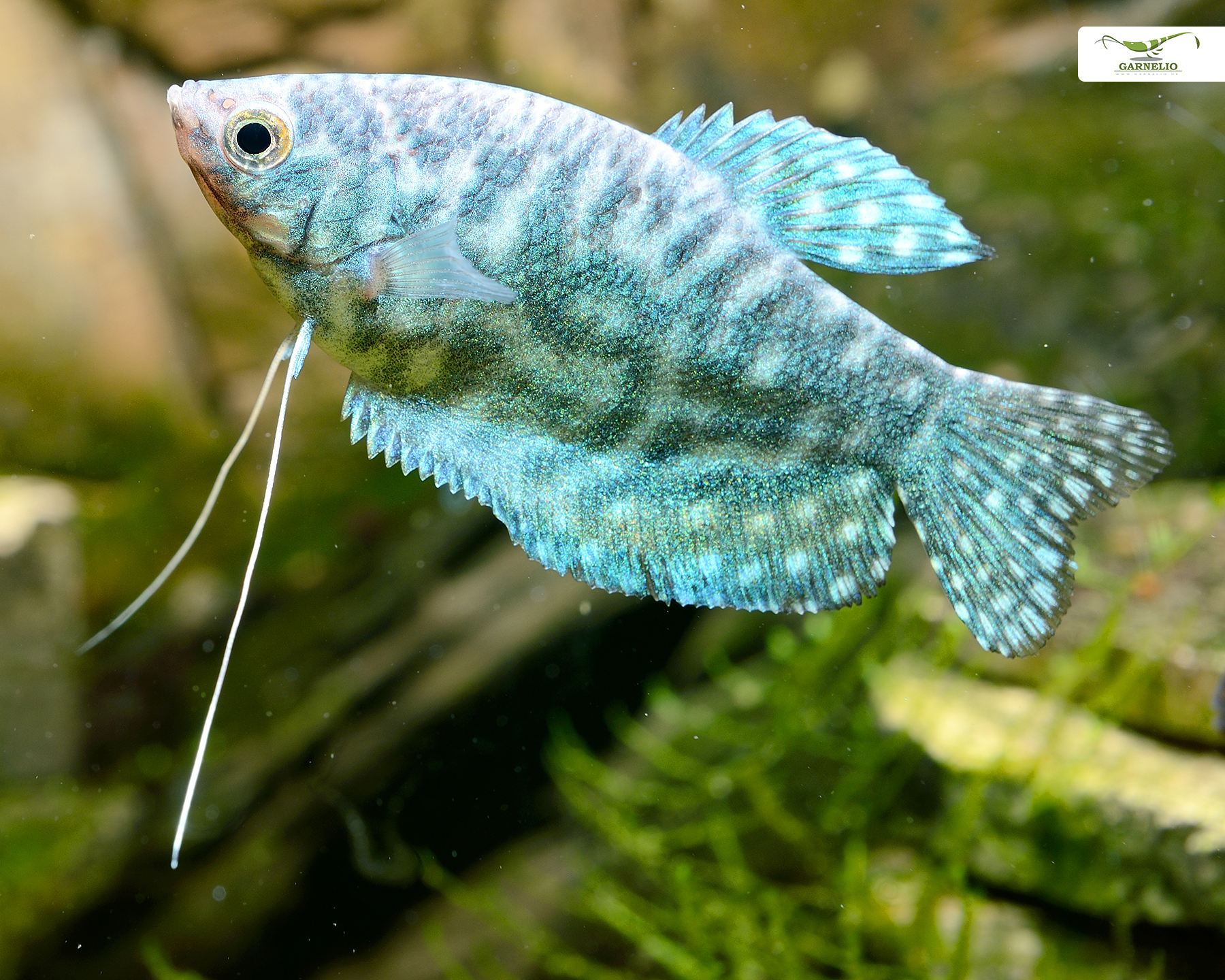
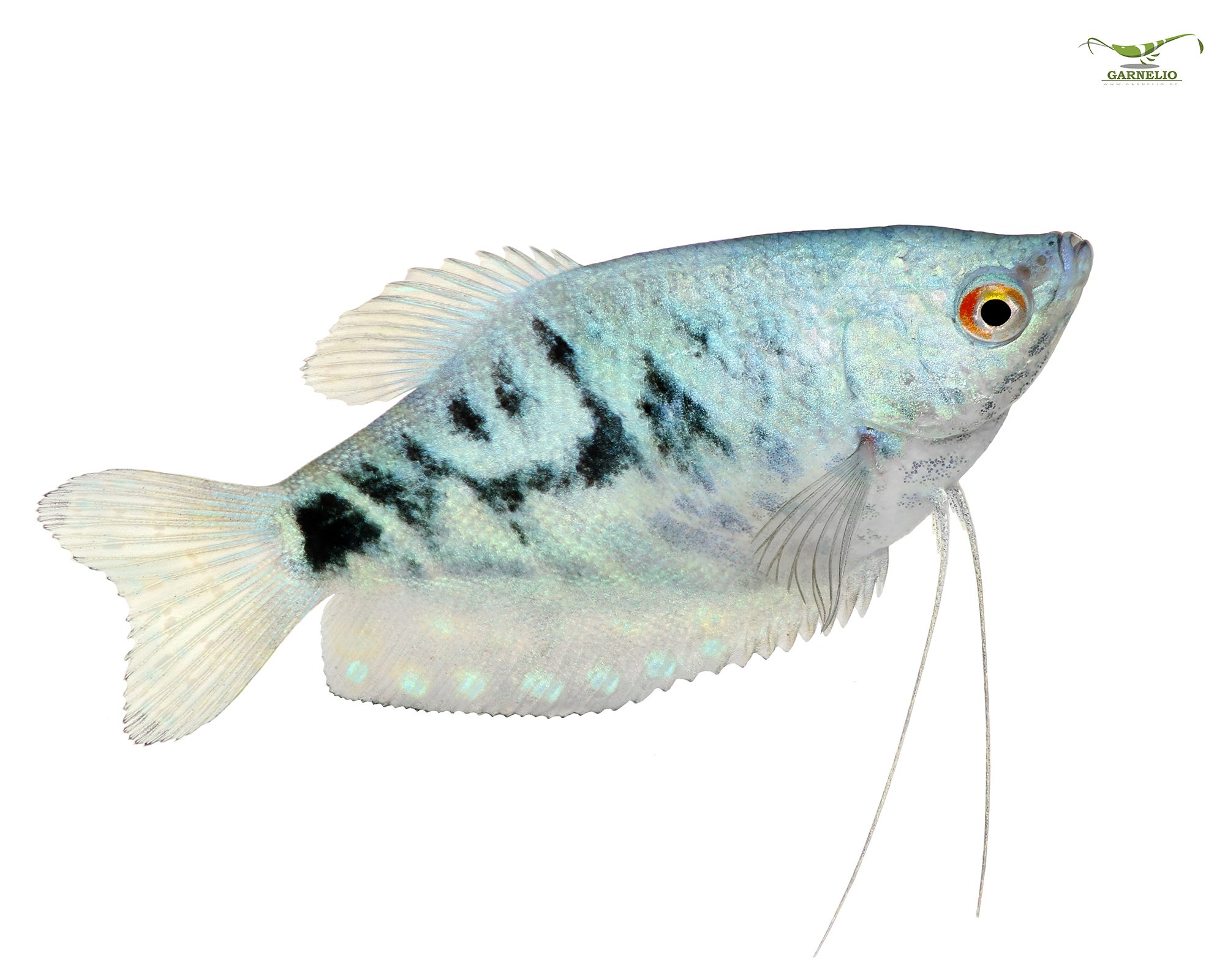
    The blue gourami is a hardy labyrinth fish suited to a spacious, planted community aquarium. It is the blue color form of the three-spot gourami, a species that can become territorial, particularly when males mature or spawn. Provide gentle filtration, access to warm humid air above the water, hiding places, and a varied diet. The supplied images clearly show blue gouramis, although photographs alone cannot confirm sex or verify that every pictured fish belongs to the same color form.
  • Giraffe Perch (Nimbochromis venustus) Care Guide

    Giraffe Perch (Nimbochromis venustus) Care Guide

    Difficult
    Lake Malawi predatory haplochromine cichlid
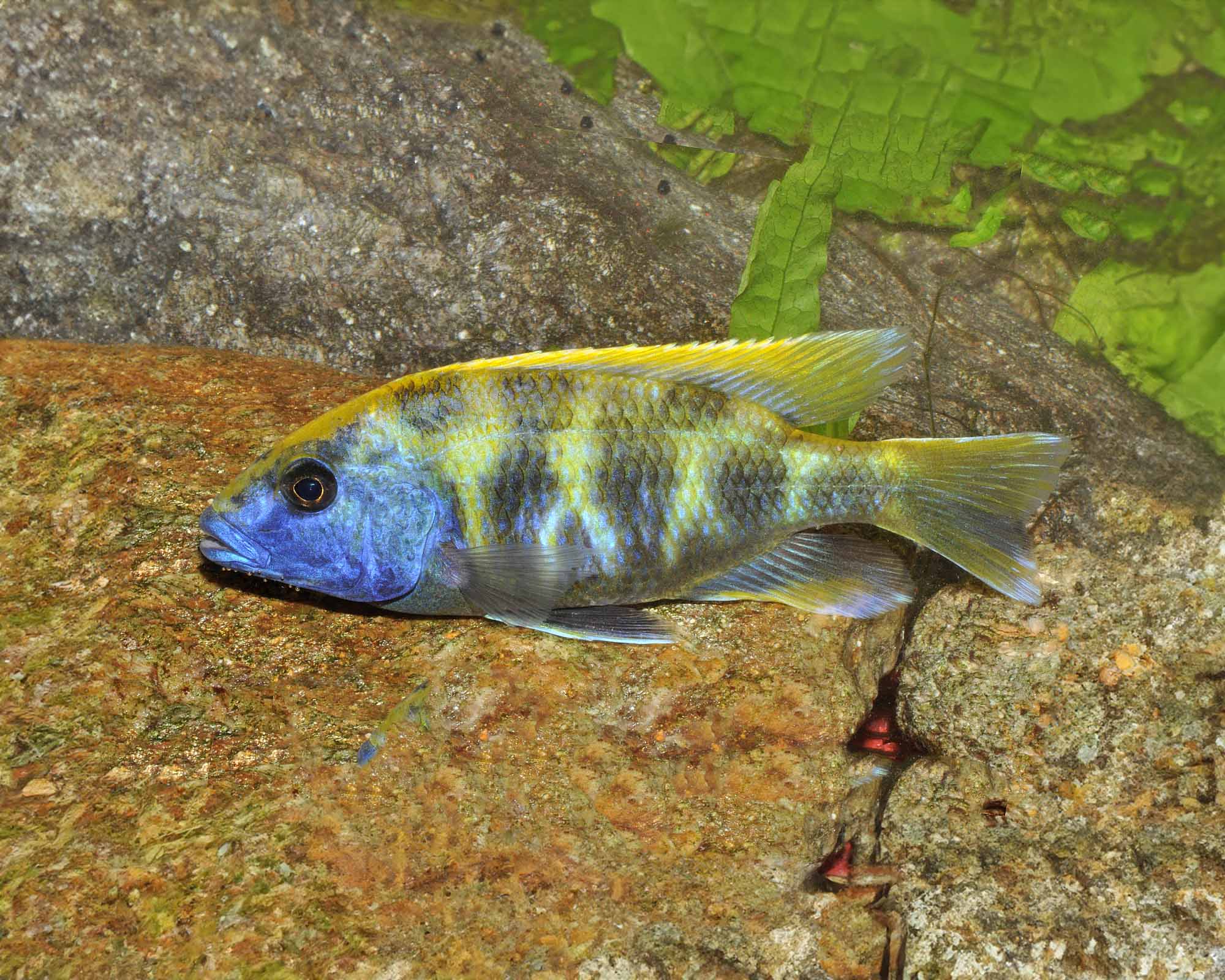
    Nimbochromis venustus is a large predatory haplochromine cichlid from Lake Malawi, known in aquariums as the giraffe perch or giraffe cichlid. Juveniles are comparatively subdued, while adults develop blue facial tones and yellow, olive or gold body coloration with darker markings. The supplied listing describes two 4 cm fish as a pair, but sex cannot be confirmed reliably at that size. This species requires a spacious, rocky aquarium and carefully selected tank mates.
  • Dwarf Gourami (Trichogaster lalius)

    Dwarf Gourami (Trichogaster lalius)

    Moderate
    Small freshwater labyrinth fish
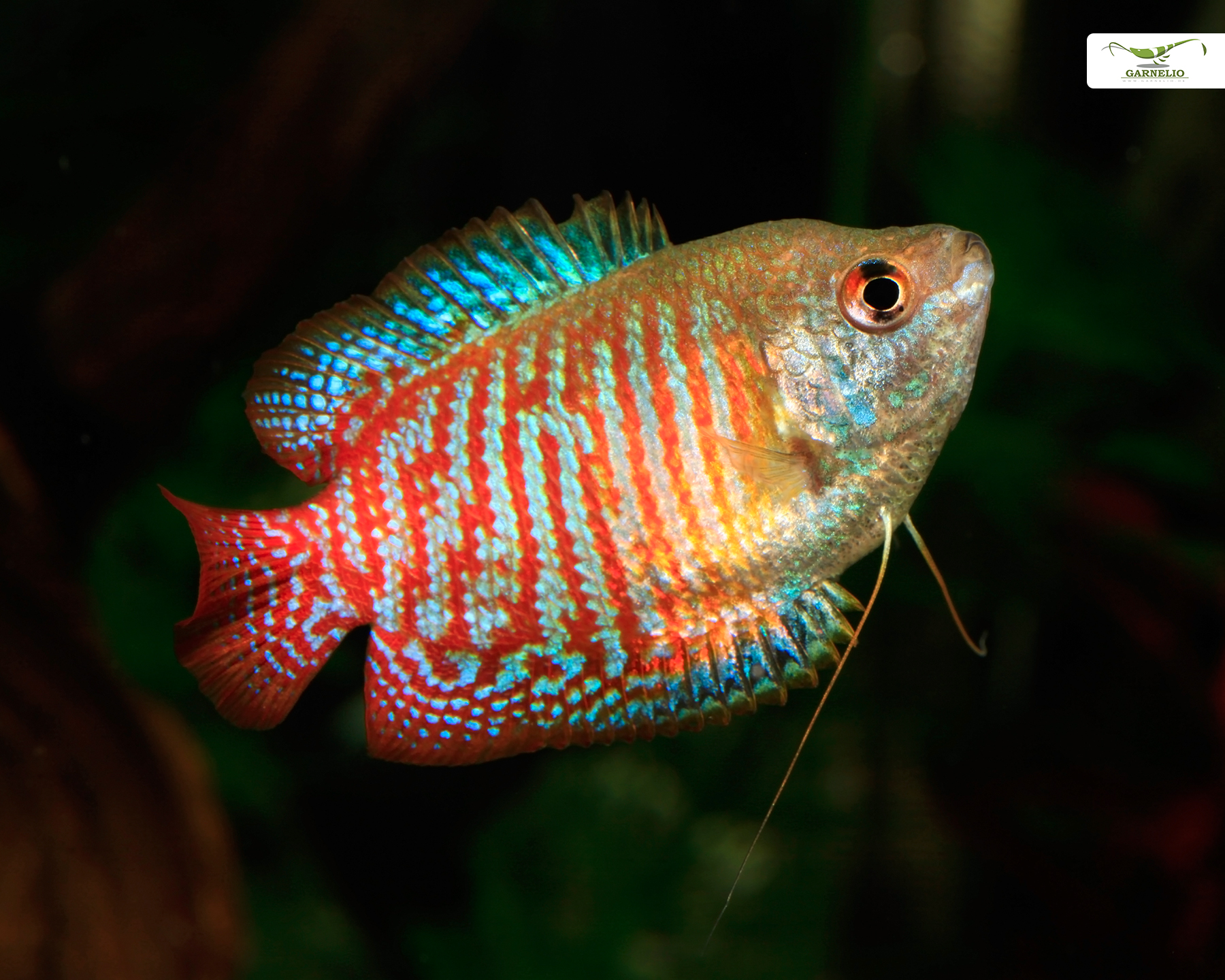
    The dwarf gourami is a small labyrinth fish from vegetated, slow-moving waters of South Asia. Trichogaster lalius is generally peaceful, colorful and suitable for a planted community aquarium, although males can become territorial, especially around a bubble nest. A pair needs warm, stable water, gentle circulation, surface access and plenty of cover. The supplied identification is consistent with dwarf gourami, though color varieties and sex should be confirmed by physical examination.
  • Five-Bar Cichlid (Neolamprologus tretocephalus)

    Five-Bar Cichlid (Neolamprologus tretocephalus)

    Difficult
    Lake Tanganyika rock-dwelling cichlid
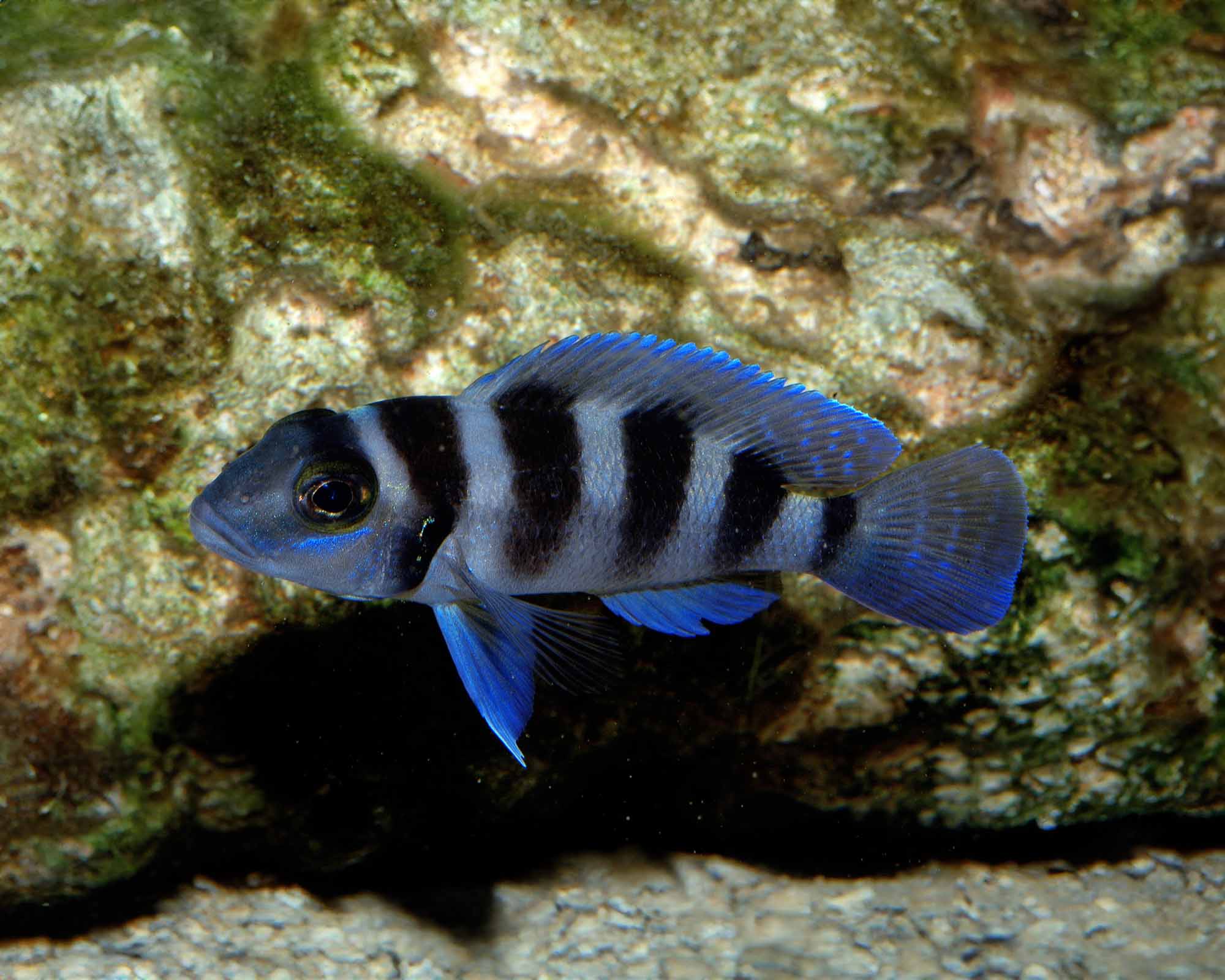
    The five-bar cichlid, also called the five-striped cichlid, is a robust Lake Tanganyika predator with a dark blue-gray body marked by five broad black bars. Neolamprologus tretocephalus is territorial and can become highly aggressive, particularly when spawning. It suits experienced aquarists who can provide a spacious, rock-structured aquarium, alkaline hard water, and carefully selected tank mates. The supplied label identifies this fish as a pair, but sex and exact locality cannot be confirmed from the available information.