AquaLibs presents AquaRank Discover the world’s leading aquascapers

Explore transparent rankings built from published results across the world’s leading aquascaping contests.

Gestreifte Turmdeckelschnecke (Tarebia granifera)

Taxonomy and identification

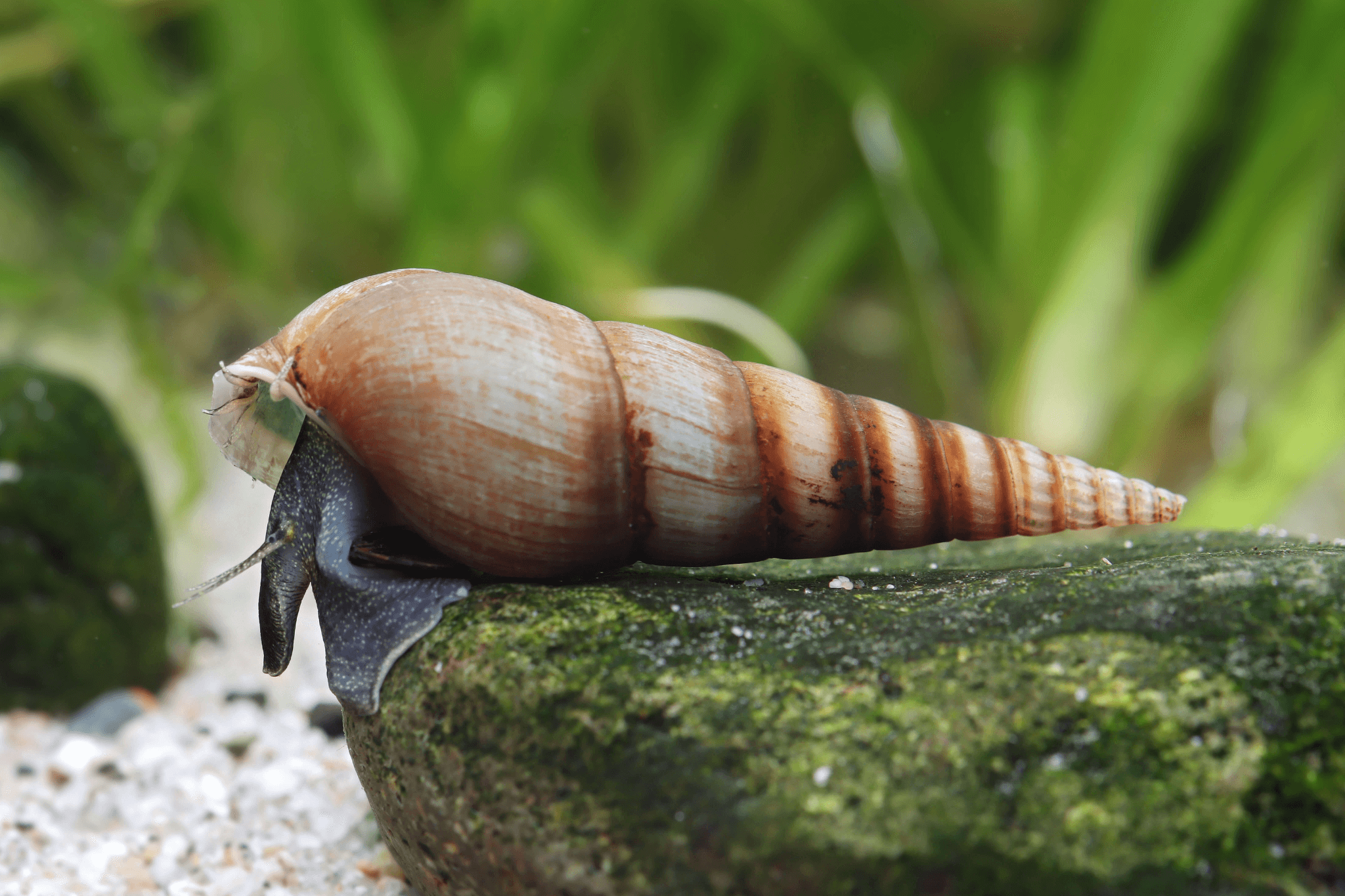
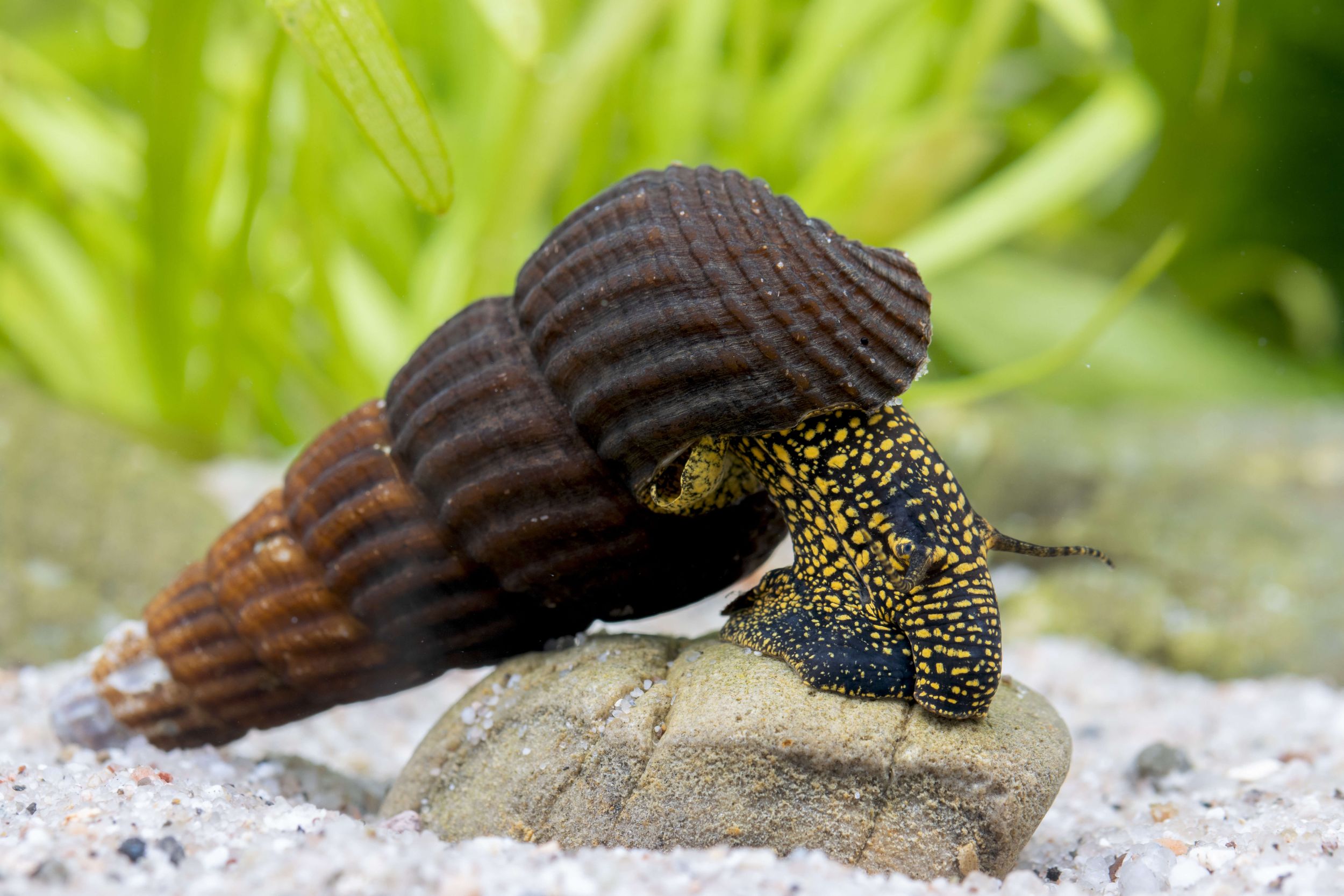
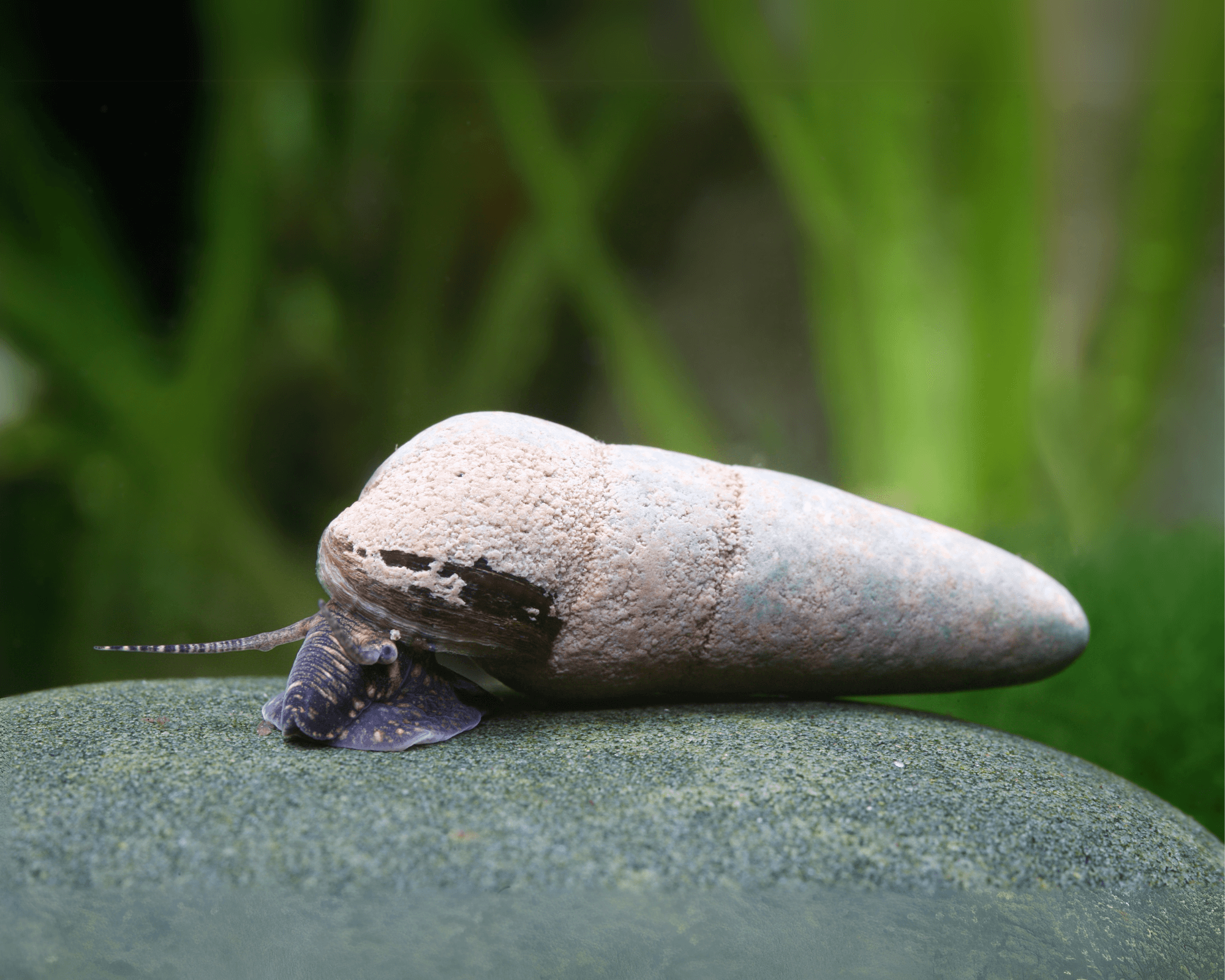
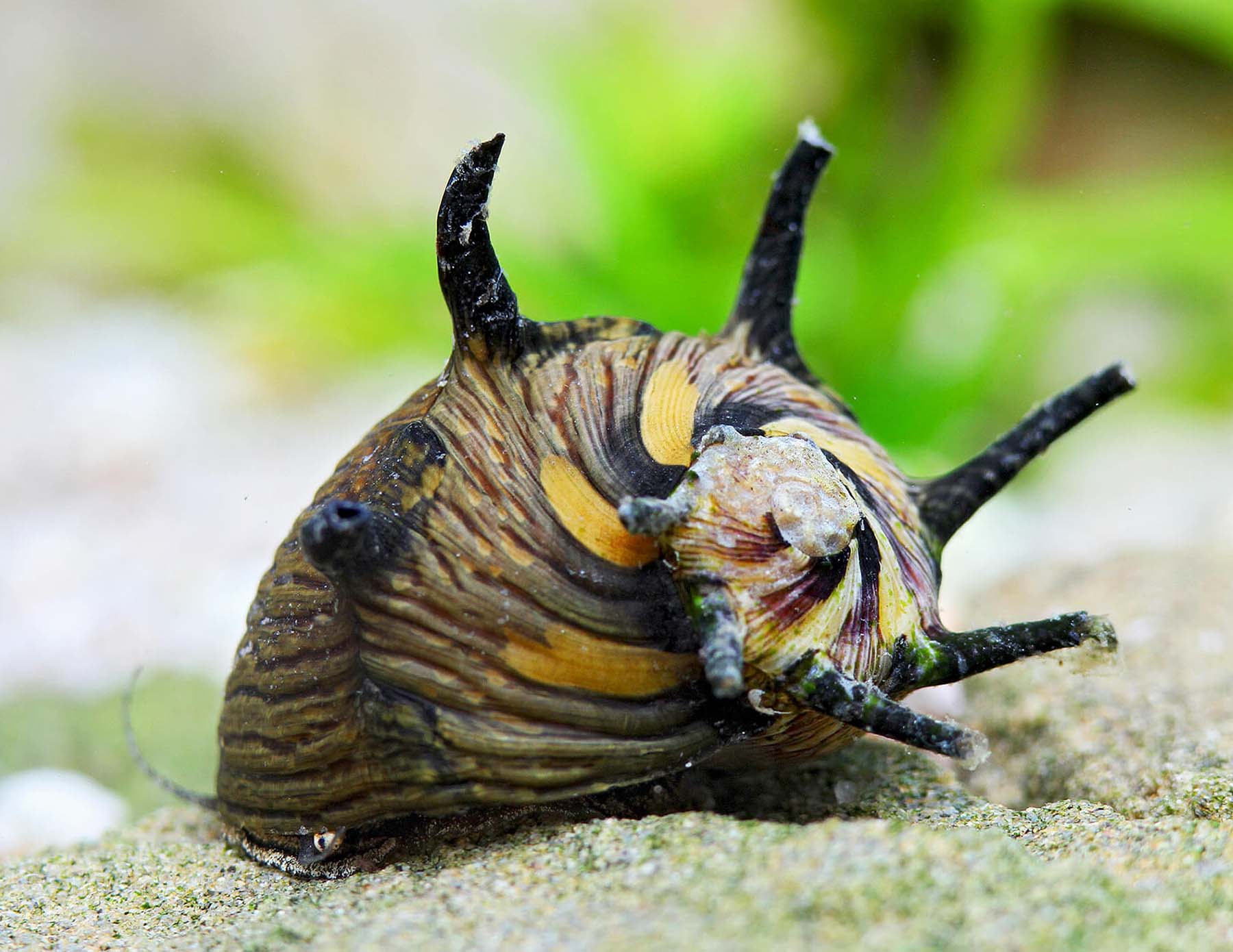
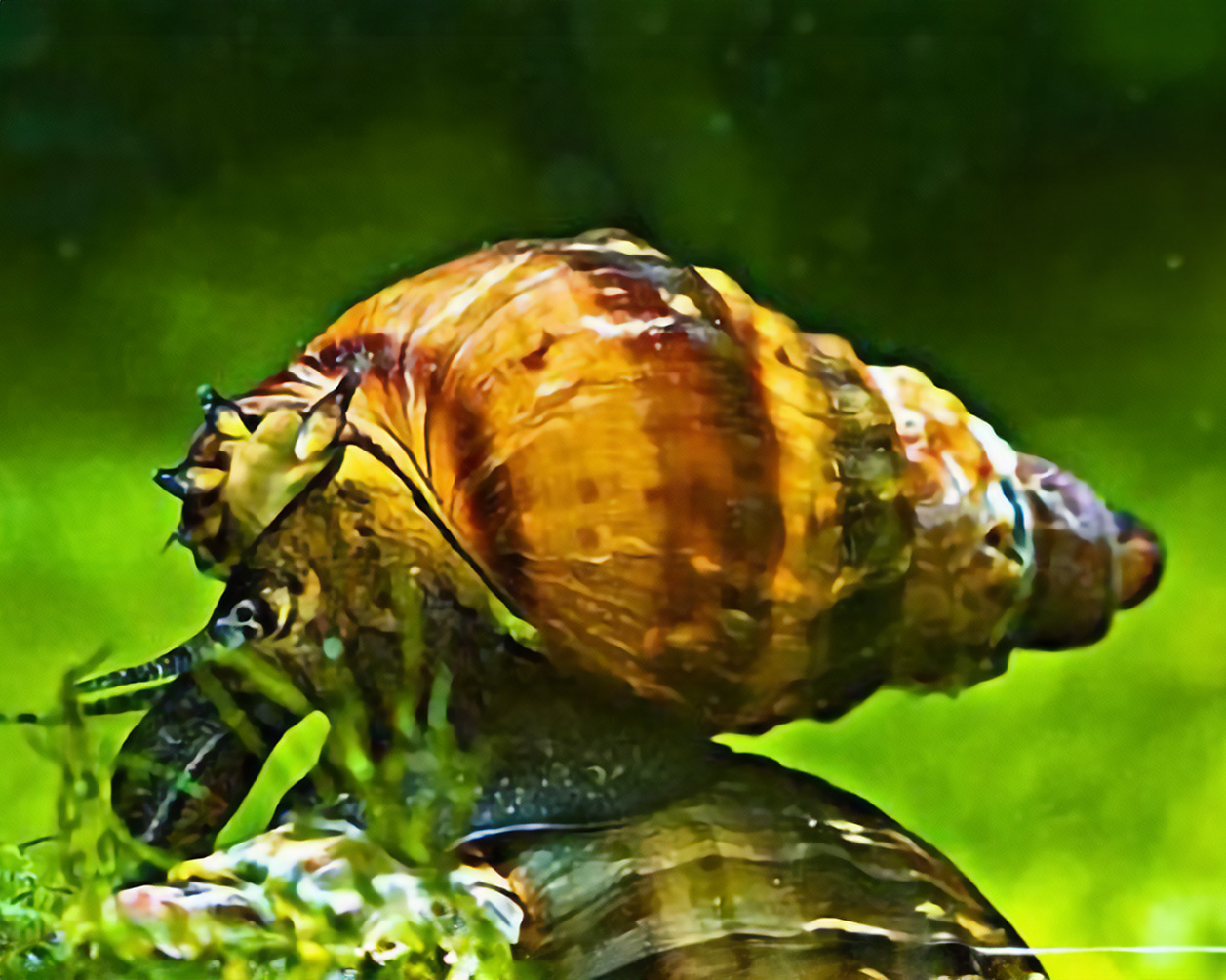
Tarebia granifera is a freshwater gastropod in the family Thiaridae. It is commonly called the quilted melania, Malaysian trumpet snail, or tower snail, although common names can be shared with related species. The shell is elongated and tapered, with pronounced whorls, ridges and frequently darker bands or mottling. The supplied source label includes “NФppi”, which is not sufficient to establish a separate taxon. Identification from the supplied image is therefore provisional because shell pattern and shape can overlap with other thiarids.
Taxonomy and identification

Natural habitat

The species is associated with tropical and subtropical freshwater habitats, including streams, ponds, canals and areas of slow-moving water. It usually burrows into sand or fine gravel and emerges more actively at night or when food is available. In aquaria it benefits from a mature substrate, stable water chemistry and some sheltered surfaces for grazing.

Water and aquarium conditions

Keep the water warm, clean and well oxygenated, with moderate to hard mineral content. A pH around 7.0–8.4 supports shell maintenance; very soft or acidic water can cause erosion and poor growth. Avoid sudden changes in temperature, pH or hardness. Provide sand or smooth fine gravel where possible, and maintain calcium and carbonate availability through suitable mineral content rather than relying on uncontrolled supplements.

Feeding

Tarebia granifera grazes on biofilm, algae and microorganisms and also consumes uneaten food and decaying organic matter. In a mature aquarium it may obtain much of its diet naturally, but it should not be treated as a complete waste-disposal system. Offer small amounts of sinking food such as algae wafers or vegetable-based foods when natural growth is limited. Remove excess food to avoid accelerating reproduction and degrading water quality.

Plant safety

Healthy, established aquatic plants are generally safe. The snail mainly scrapes surfaces and processes soft organic material rather than deliberately cutting robust living leaves. Tender, damaged or dying foliage may be rasped, especially when other food is scarce. Inspect new plants and hardscape for attached snails or egg-carrying individuals before introduction, because accidental transfers are a common way populations become established.

Reproduction

This species is live-bearing and females can release developed young rather than laying conspicuous egg clusters. Reproduction may occur without a visibly mixed-sex breeding group, and juveniles can remain hidden in substrate or among plants. Warm conditions, abundant food and mature biofilm encourage faster population growth. Young snails may be difficult to detect until they begin appearing on glass and decor.

Population control

Control begins with restrained feeding, regular removal of excess food and occasional manual collection, especially after dark. Siphon the substrate carefully during maintenance to remove hidden juveniles, while avoiding excessive disturbance of beneficial biological filtration. Keep newly purchased plants and decorations under observation or quarantine. Do not release surplus snails into natural waterways; the species has invasive potential in some regions. Chemical snail treatments can harm shrimp, other invertebrates and filtration organisms, so prevention and removal are safer first choices.
Snail info

  • Temperature : 22–28 °C
  • pH: 7.0–8.4
Leave your comments
Latest on Snails
  • Zebra Racing Snail (Vittina turrita)

    Zebra Racing Snail (Vittina turrita)

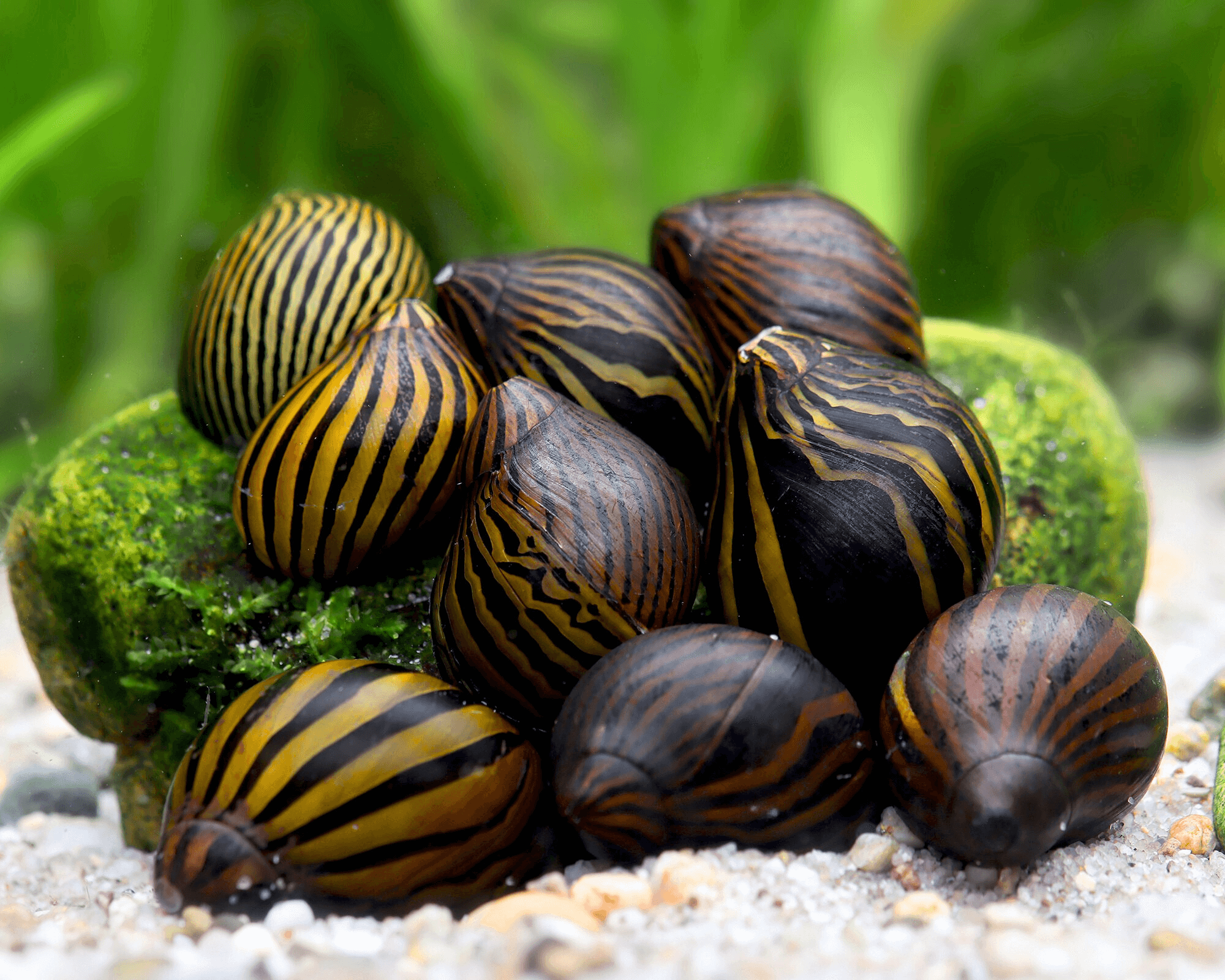
    The zebra racing snail, Vittina turrita, is a striking nerite valued for grazing algae and biofilm from aquarium surfaces. Its dark shell with yellow to golden striping makes it easy to recognize, although similarly patterned Vittina and Neritina species can be confused in the aquarium trade. It is generally peaceful, plant-safe and unlikely to overpopulate a freshwater aquarium because its larvae require different conditions from adults.
  • Zebra Apple Snail (Asolene spixi)

    Zebra Apple Snail (Asolene spixi)

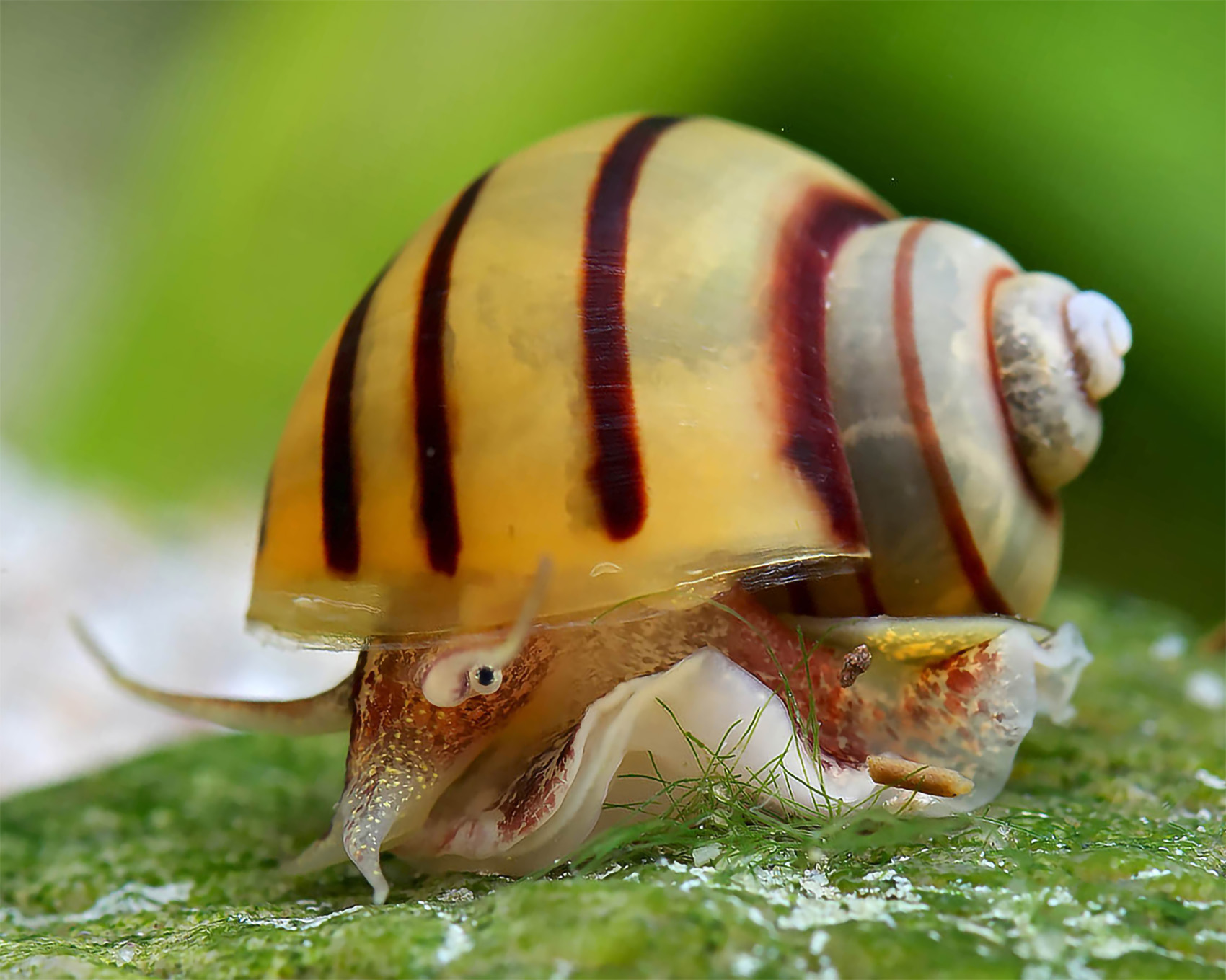
    The zebra apple snail, Asolene spixi, is a freshwater apple snail recognized by its rounded yellow to cream shell and dark longitudinal stripes. It inhabits warm, generally calm South American waters and can breathe atmospheric air, so an aquarium must have access to the surface. It is an effective scavenger, but it may also damage soft aquarium plants when food is scarce. Identification from photographs alone is not completely certain.
  • Yoda Snail (Egg-Shaped Mud Snail), Radix balthica

    Yoda Snail (Egg-Shaped Mud Snail), Radix balthica

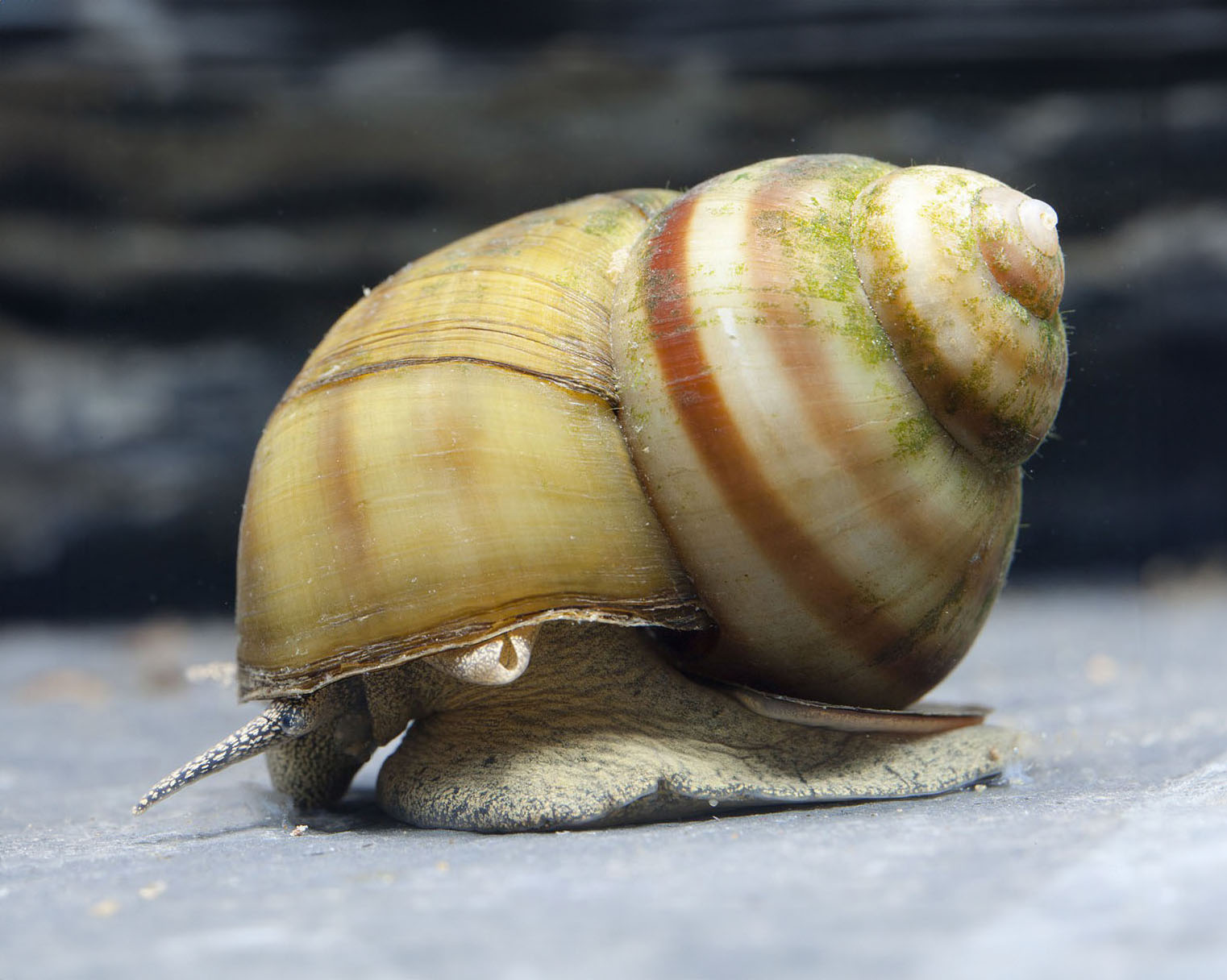
    Radix balthica is a freshwater lymnaeid commonly called the Yoda snail or egg-shaped mud snail in aquarium settings. It has a broad, thin, amber-brown shell and a large, visibly lobed mantle and foot. Identification from photographs alone can be uncertain because several Radix and related pond-snail species have similar forms. It is generally peaceful, useful as a grazer, and capable of reproducing readily in suitable aquaria.
  • XXL Malaysian Trumpet Snail (Melanoides tuberculata)

    XXL Malaysian Trumpet Snail (Melanoides tuberculata)

    The XXL Malaysian trumpet snail is a large trade-selected form or size designation of Melanoides tuberculata, commonly kept in freshwater aquariums for its burrowing behavior and ability to consume leftover food and organic debris. It is generally peaceful and plant-safe, but can reproduce quickly when food is abundant. The supplied images show a strongly elongated, banded shell and variable body coloration; exact identification of the marketed XXL form cannot be confirmed from images alone.
  • Tylomelania sp. Yellow Antenna

    Tylomelania sp. Yellow Antenna

    Tylomelania sp. Yellow Antenna is a large freshwater snail sold under a trade name rather than a confirmed species identification. It is recognized by its elongated, ridged shell and contrasting yellow to orange antennae. These snails are generally peaceful, useful scavengers that need warm, mineral-rich, alkaline water and a steady supply of food. They are livebearers and usually reproduce slowly, although population growth depends on food availability and the identity of the particular Tylomelania strain.
  • Turmdeckelschnecke Perlhuhn yellow (Tylomelania patriarchalis)

    Turmdeckelschnecke Perlhuhn yellow (Tylomelania patriarchalis)

    Tylomelania patriarchalis is a large, live-bearing freshwater snail associated with the ancient lakes of Sulawesi, Indonesia. The “Perlhuhn yellow” trade form is recognized by a dark, strongly ridged shell and a dark body covered with yellow spots. Because aquarium trade names can be applied inconsistently, visual appearance alone cannot guarantee species-level identification. It needs warm, clean, mineral-rich, alkaline water and a steady supply of edible biofilm and supplementary food.
  • Thunderbolt Snail (Tylomelania perfecta)

    Thunderbolt Snail (Tylomelania perfecta)

    The Thunderbolt snail is a large, attractive freshwater gastropod associated with Sulawesi’s distinctive Tylomelania fauna. It has a long, heavy shell and a dark, strongly textured body, and it usually spends much of its time grazing surfaces or searching through the substrate. Aquarium specimens should receive stable, mineral-rich water, regular vegetable or prepared foods, and protection from copper-based medications. Trade identification can be difficult because several Tylomelania species and forms are sold under overlapping common names.
  • Staghorn Sun Snail (Clithon corona)

    Staghorn Sun Snail (Clithon corona)

    The Staghorn Sun Snail, Clithon corona, is a horned nerite from tropical Indo-Pacific waters. Its ridged shell and prominent projections make it distinctive, although shell color and horn development vary considerably. It grazes algae and biofilm from hard surfaces while generally leaving healthy plants alone. Adults can live in freshwater aquariums, but their marine or brackish larval stage means sustained captive breeding is uncommon. Identification from photographs alone can be uncertain because several Clithon and related nerite species have similar forms.
  • Swamp cover snail (Viviparus viviparus)

    Swamp cover snail (Viviparus viviparus)

    Viviparus viviparus is a temperate freshwater operculate snail associated with lakes, canals, ponds, and slow-flowing waters. It is a grazing and suspension-feeding species that consumes algae, fine organic particles, and other small food resources. The supplied photographs appear to show terrestrial snails rather than Viviparus viviparus, so they should not be used for identification. Aquarium specimens require cool, well-oxygenated water, adequate mineral availability, and careful feeding to prevent poor water quality.
  • Staghorn Snails Mix

    Staghorn Snails Mix

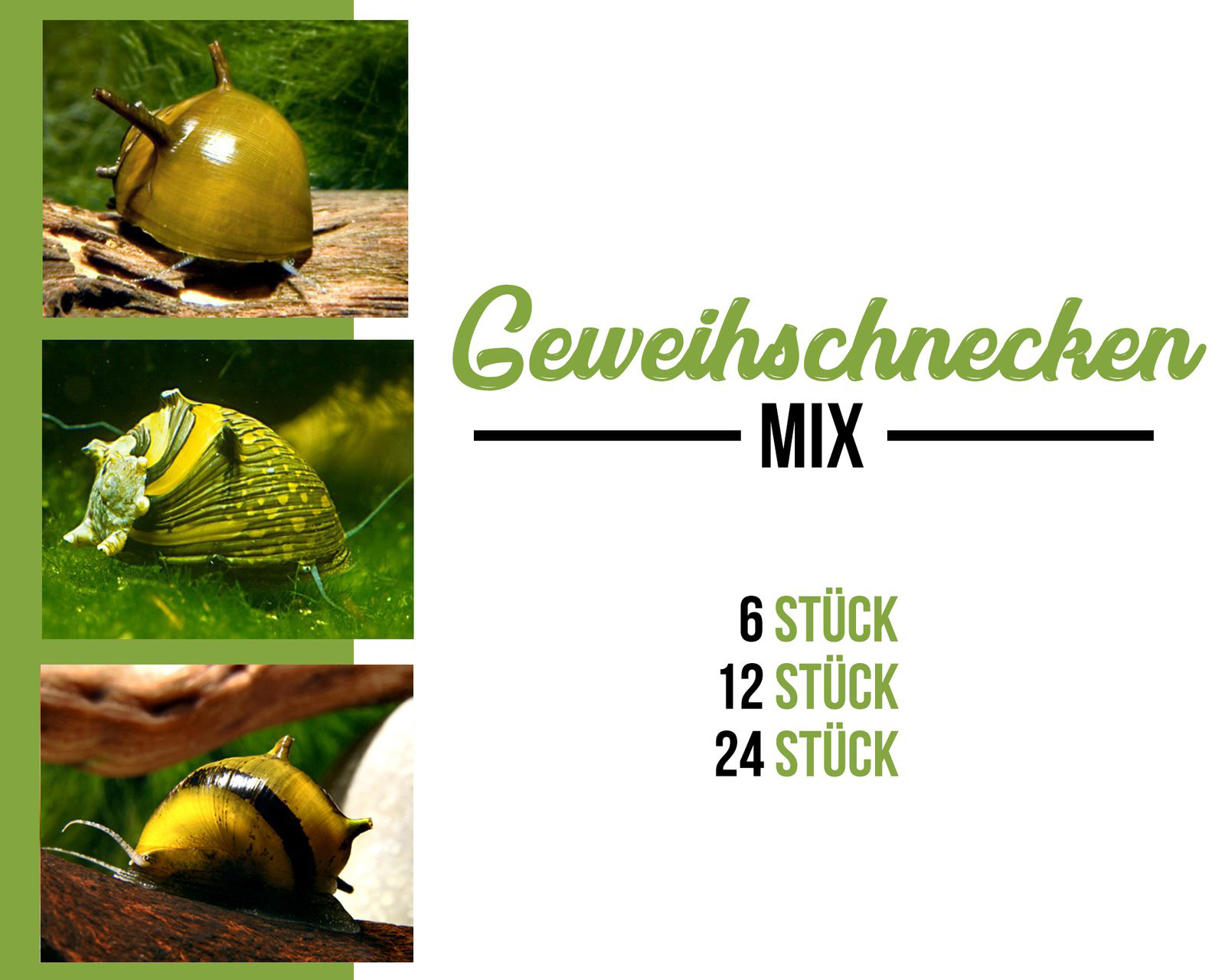
    Staghorn snails are a trade mix of small horned nerite snails, usually associated with Clithon species in the family Neritidae. The supplied images show several shell patterns and colors, so exact species identification is uncertain. They graze algae and biofilm from aquarium surfaces without normally damaging healthy plants. Adults may lay eggs in freshwater, but their larvae generally require brackish or marine conditions, making sustained freshwater breeding unlikely.
  • Red Widow Rennschnecke (Vittina waigiensis)

    Red Widow Rennschnecke (Vittina waigiensis)

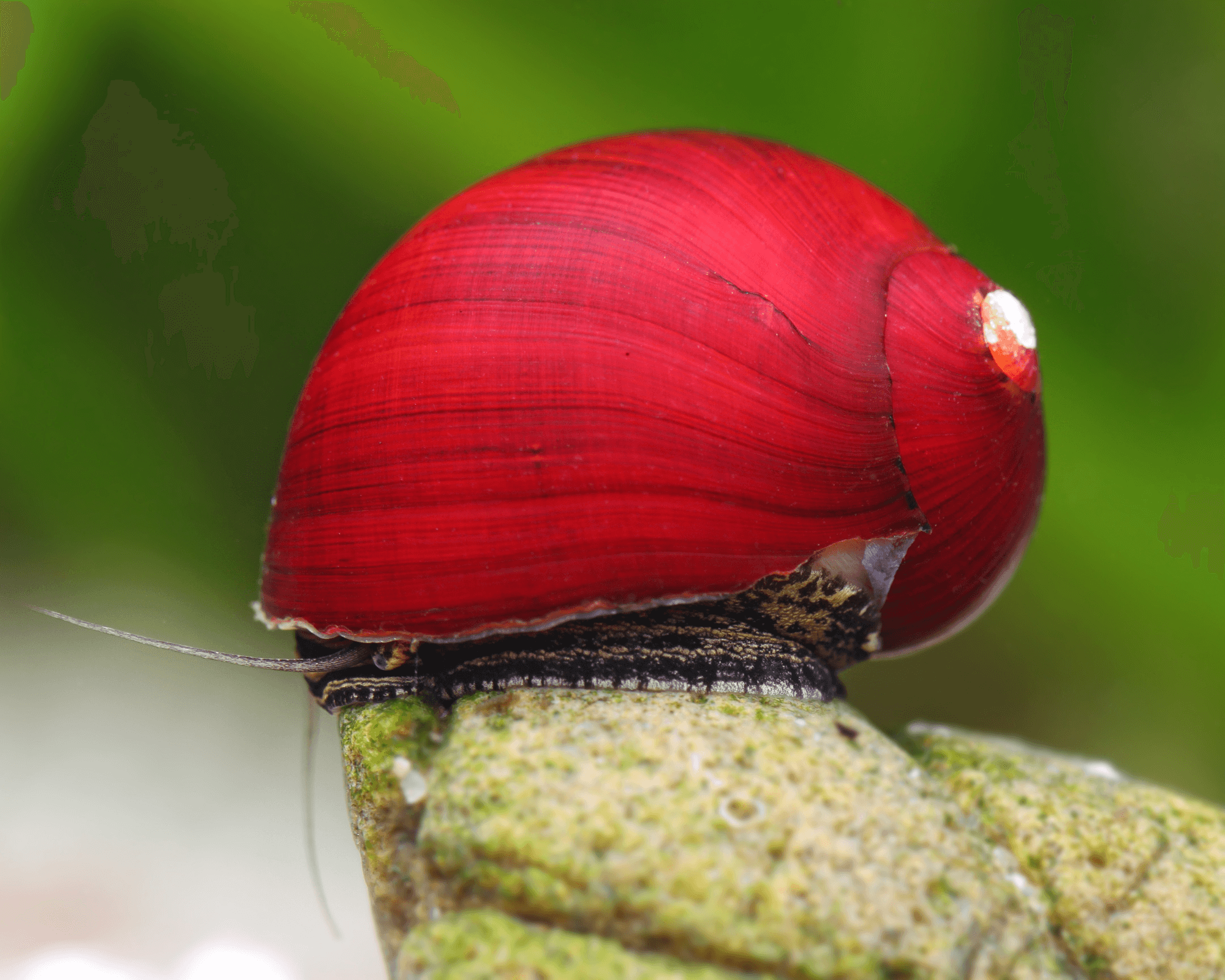
    Vittina waigiensis is a nerite snail kept for its grazing activity and striking red shell forms. It is generally peaceful, plant-safe and suited to mature freshwater aquariums with stable, mineral-rich water. Like other amphidromous nerites, it may lay eggs in freshwater, but its larvae normally require brackish or marine conditions, so routine freshwater breeding is not expected. The trade name “Red Widow” may cover a selectively colored form rather than a formally recognized taxonomic variety.
  • Red racing snail (Vittina waigiensis)

    Red racing snail (Vittina waigiensis)

    The red racing snail, Vittina waigiensis, is a striking nerite kept mainly for grazing algae from aquarium glass, rocks and decor. Adults are generally peaceful, plant-safe and suited to mature freshwater aquariums, but successful captive breeding is uncommon because the larvae require different conditions from the adults. Shell colors and markings vary considerably, and trade names can overlap with other nerite species, so identification from appearance alone is not completely certain.
  • Mixed Aquarium Snails: Algae Eaters and Clean-Up Crew

    Mixed Aquarium Snails: Algae Eaters and Clean-Up Crew

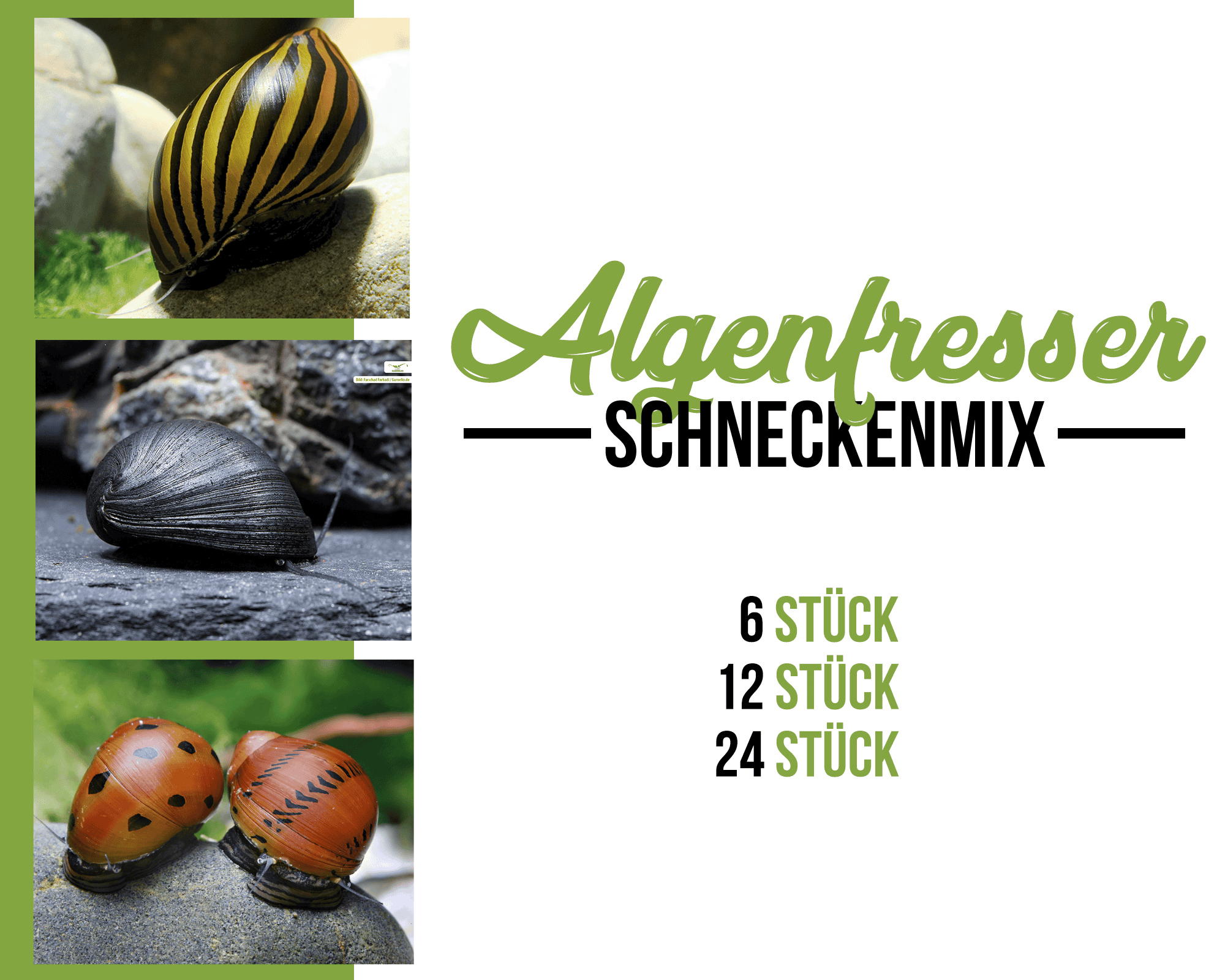
    This mixed snail selection appears to include nerite-type algae grazers, ramshorn snails, and possibly Malaysian trumpet snails. Exact species and proportions cannot be confirmed from the supplied images, so care requirements may differ between batches. These peaceful invertebrates consume algae, biofilm, leftover food, and detritus, but they still need stable, mineral-rich water and responsible population management.
  • Red and Yellow Stripe Rennschnecke (Vittina waigiensis)

    Red and Yellow Stripe Rennschnecke (Vittina waigiensis)

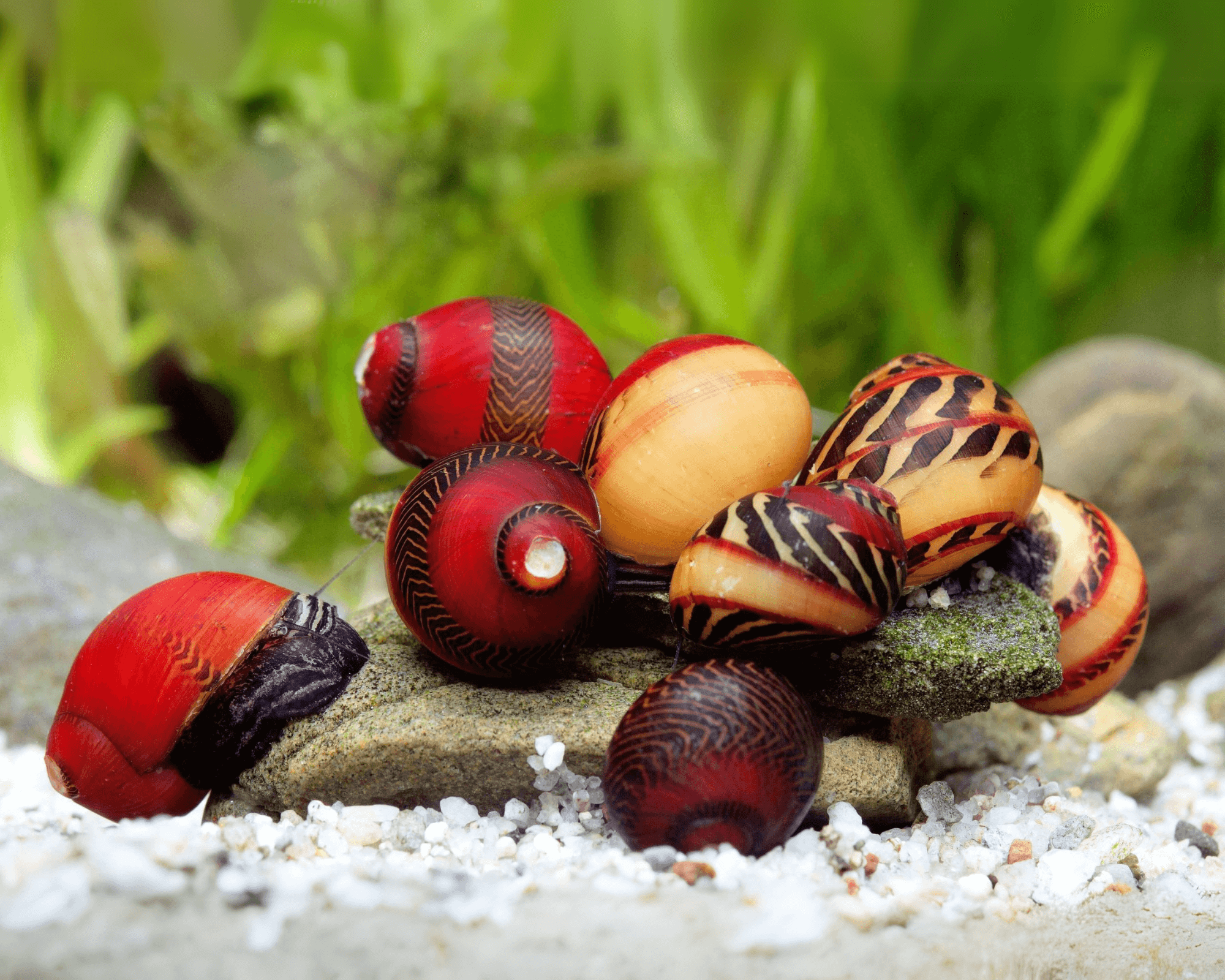
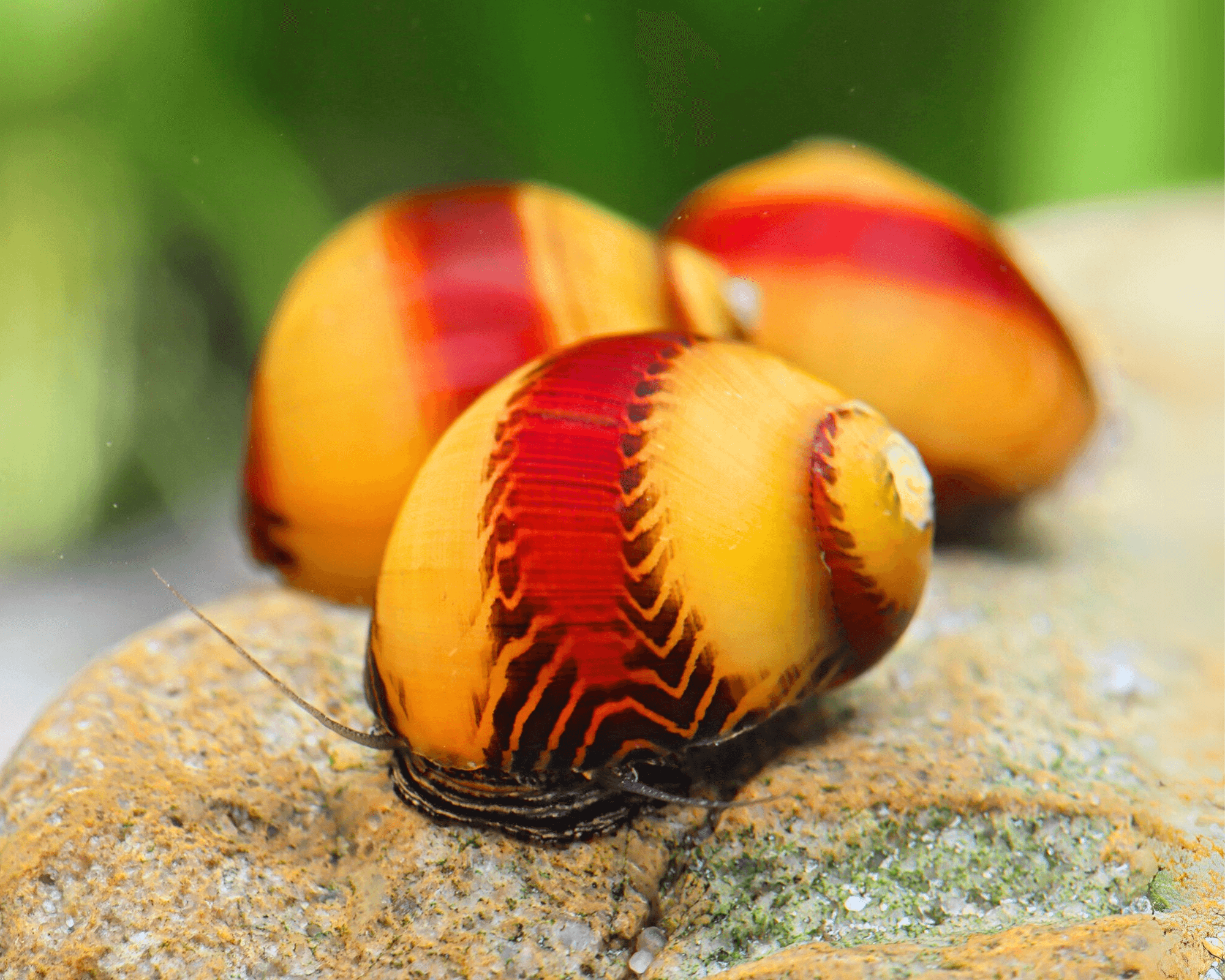
    Vittina waigiensis is a striking nerite snail recognized by a rounded shell with red, yellow, orange, and dark patterning. It is primarily a freshwater grazer as an adult but has a life cycle that normally requires brackish or marine conditions for larval development. This makes it suitable for planted aquariums without normally becoming numerous. The supplied trade name and images are consistent with this identification, although shell patterns overlap among Vittina and related nerite species, so visual identification should be treated as provisional.
  • Ramshorn Snails Mix Rainbow

    Ramshorn Snails Mix Rainbow

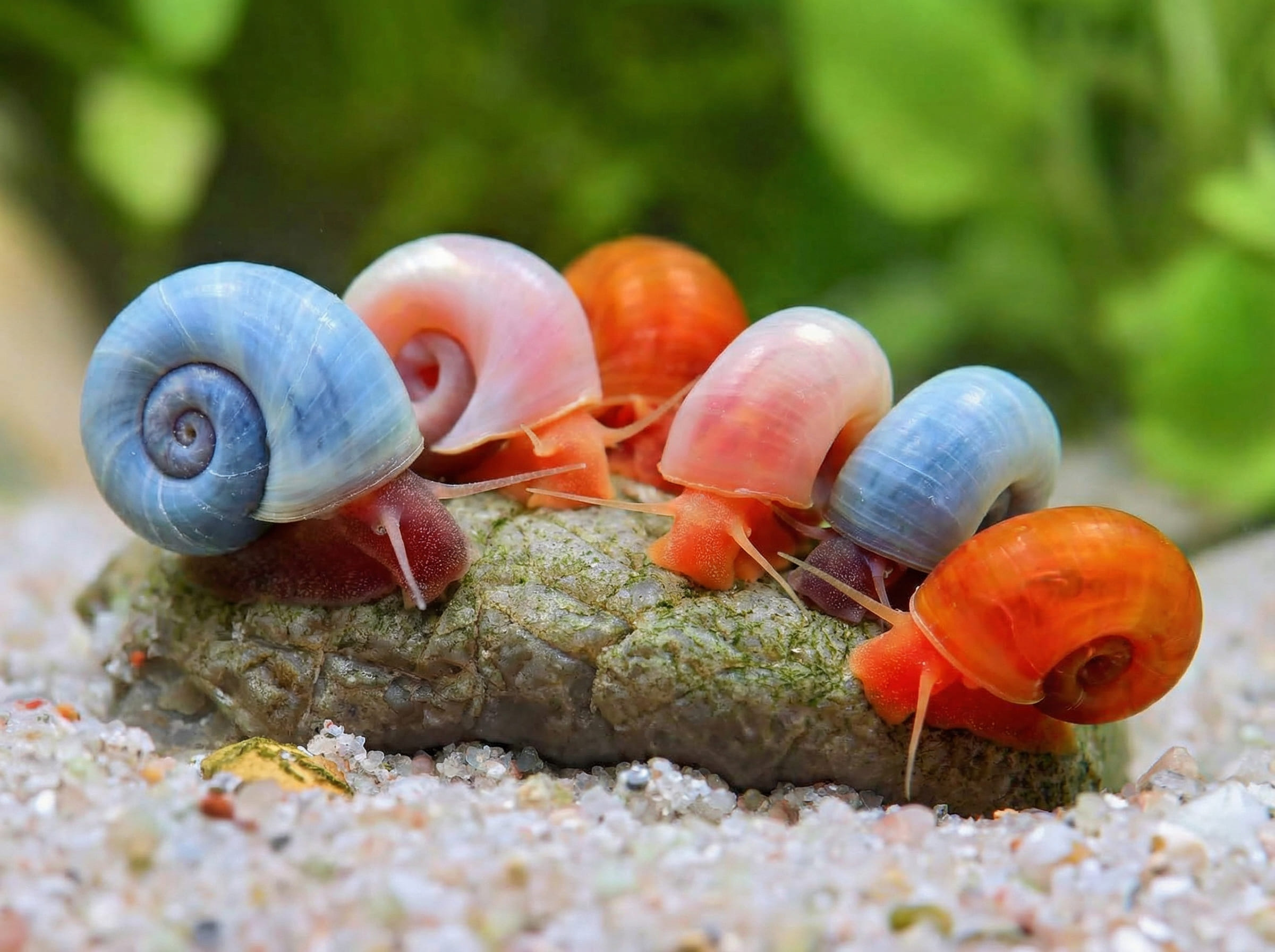
    Rainbow ramshorn snails are a mixed-color freshwater aquarium form sold under a trade name rather than a single precisely identified species. The pictured animals have the characteristic planispiral shell and include blue, pink, pale and orange-red forms. They are peaceful scavengers that graze on biofilm and leftover food. Exact species and strain lineage cannot be confirmed from the supplied images alone, so care guidance is provided for commonly kept aquarium ramshorn snails.
  • Predatory Snail: Clea helena (Anentome helena)

    Predatory Snail: Clea helena (Anentome helena)

    Clea helena, also widely sold under the name Anentome helena, is a freshwater predatory snail from Southeast Asia. Its banded, cone-shaped shell and active hunting behavior distinguish it from common algae-grazing snails. It feeds mainly on other snails but also accepts meaty foods and carrion. In a mature aquarium it is generally safe with healthy plants, although it can reduce or eliminate desirable snail populations. Identification and classification may vary between sources, so both commonly used scientific names are included.