Taxonomy and identification
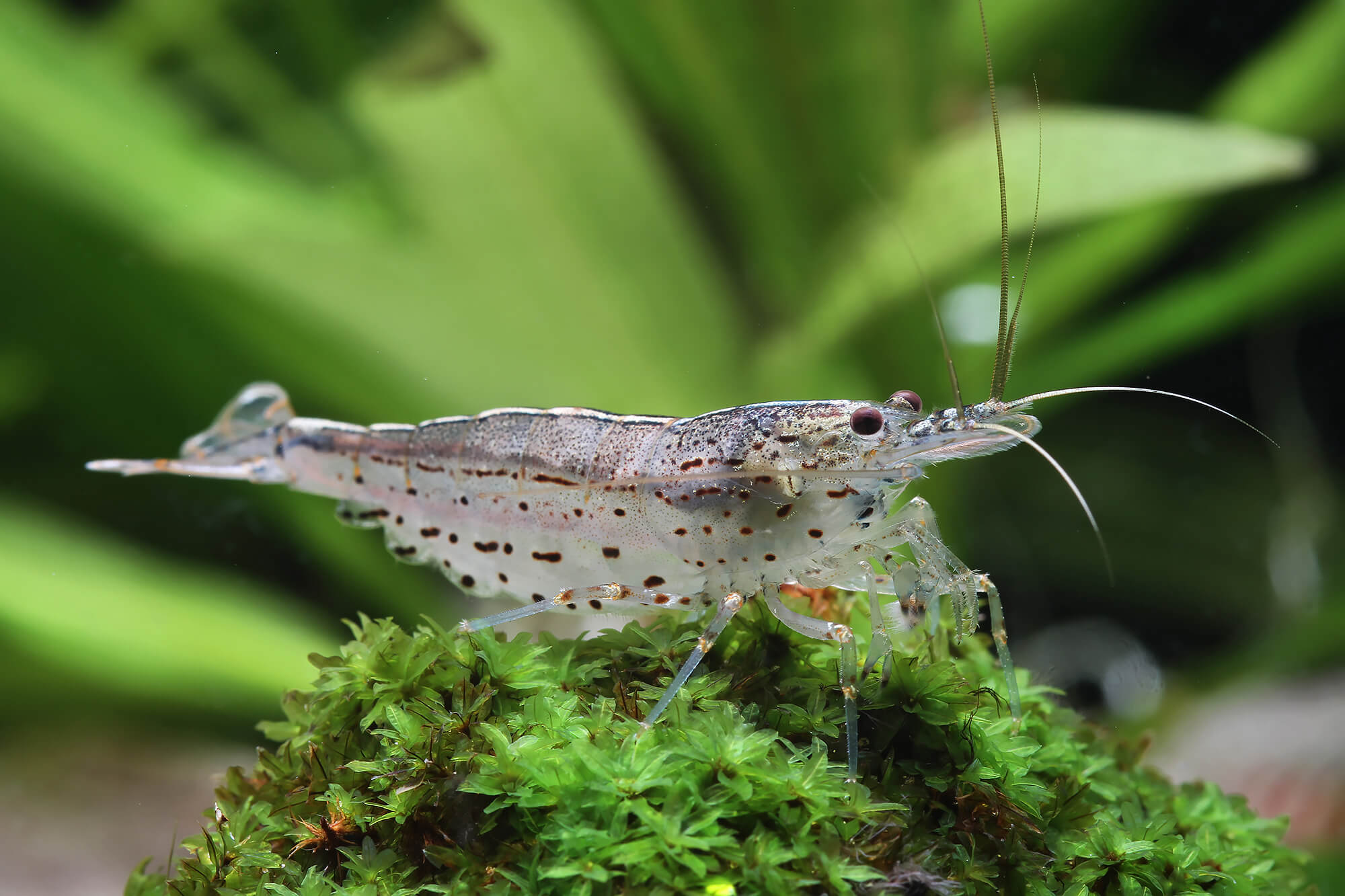
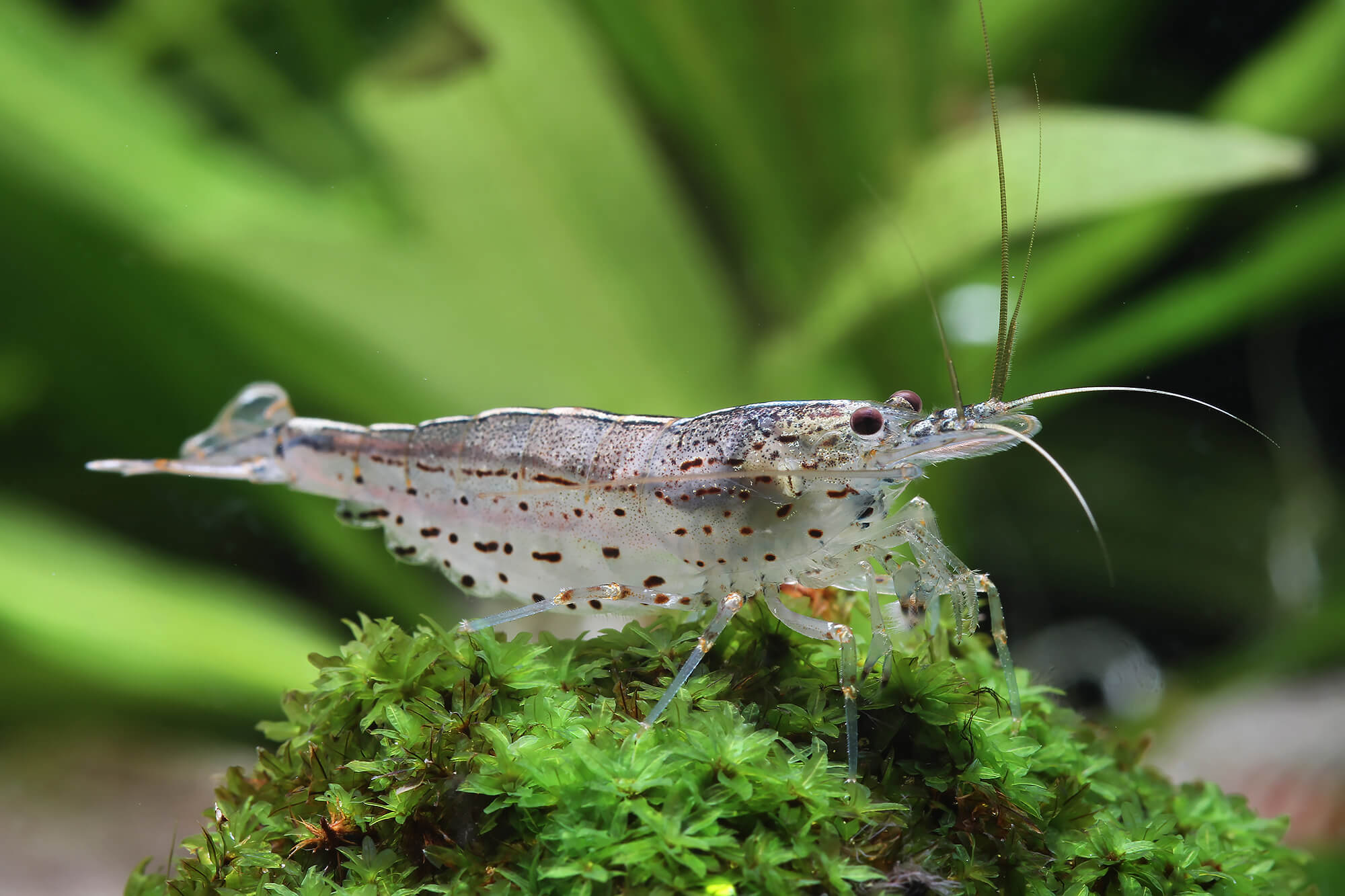
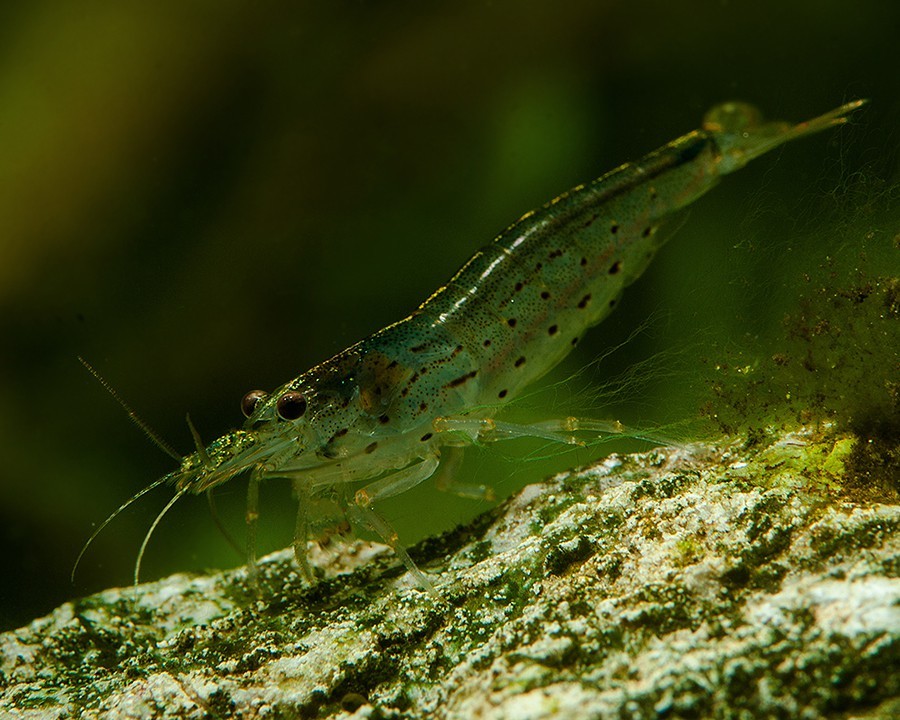
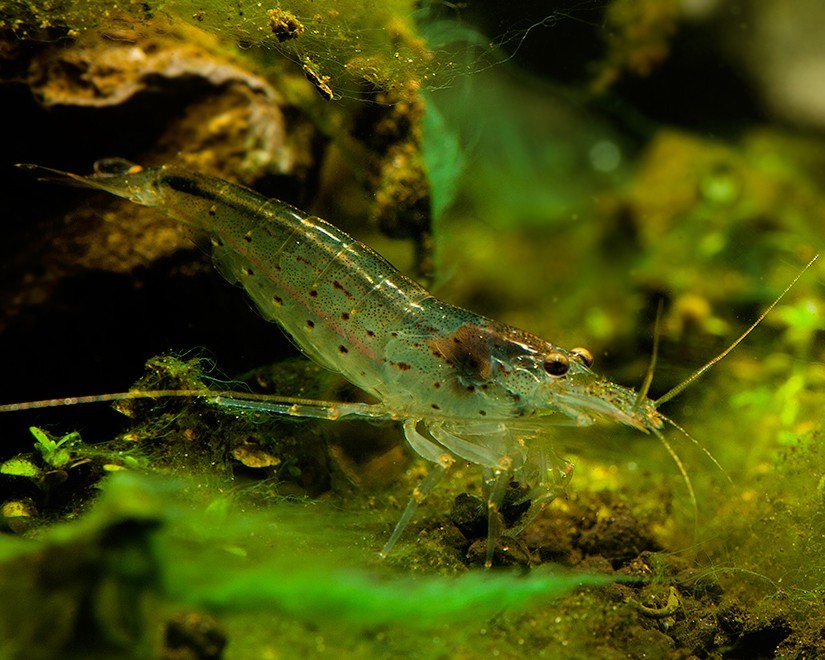
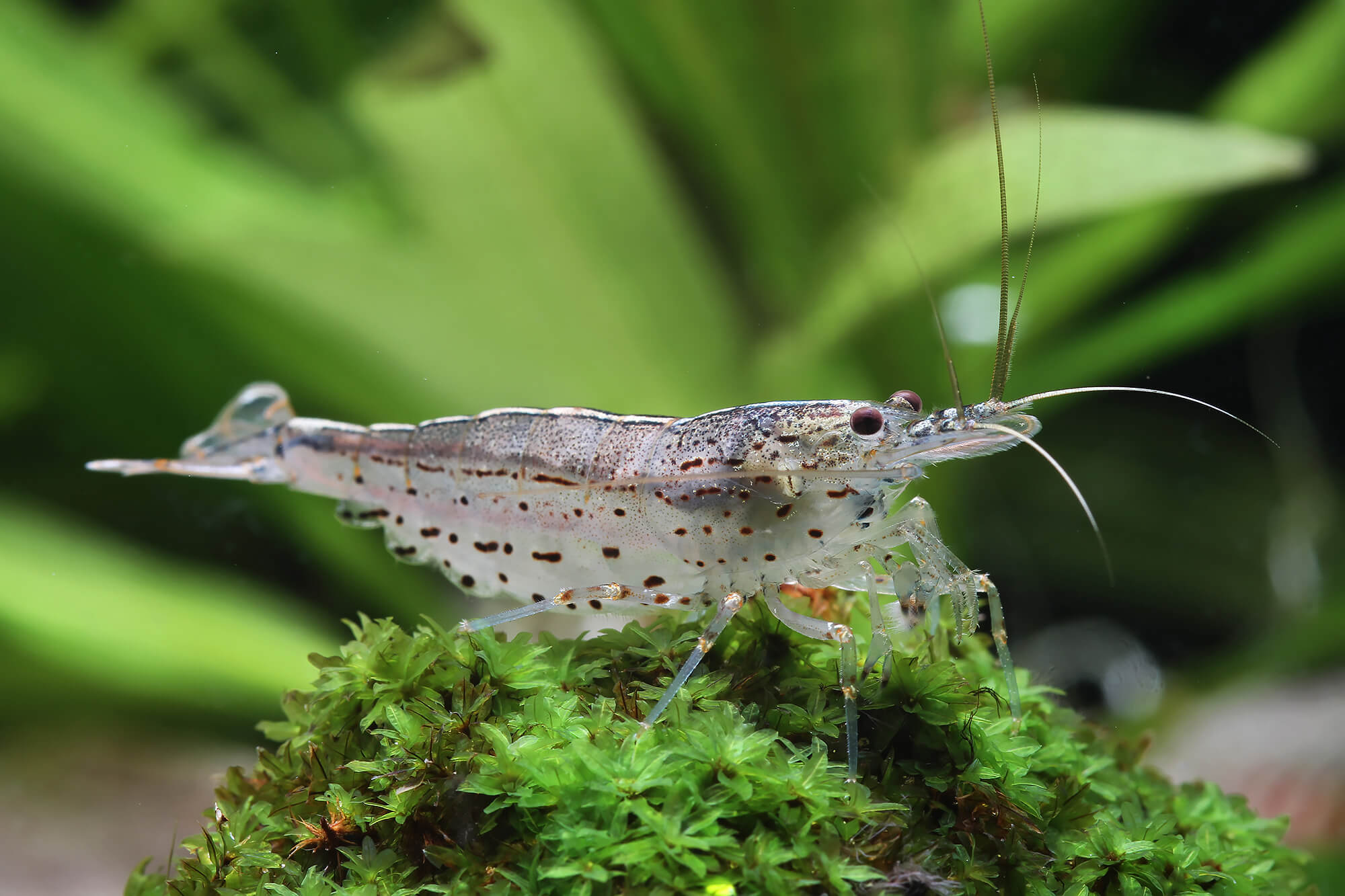
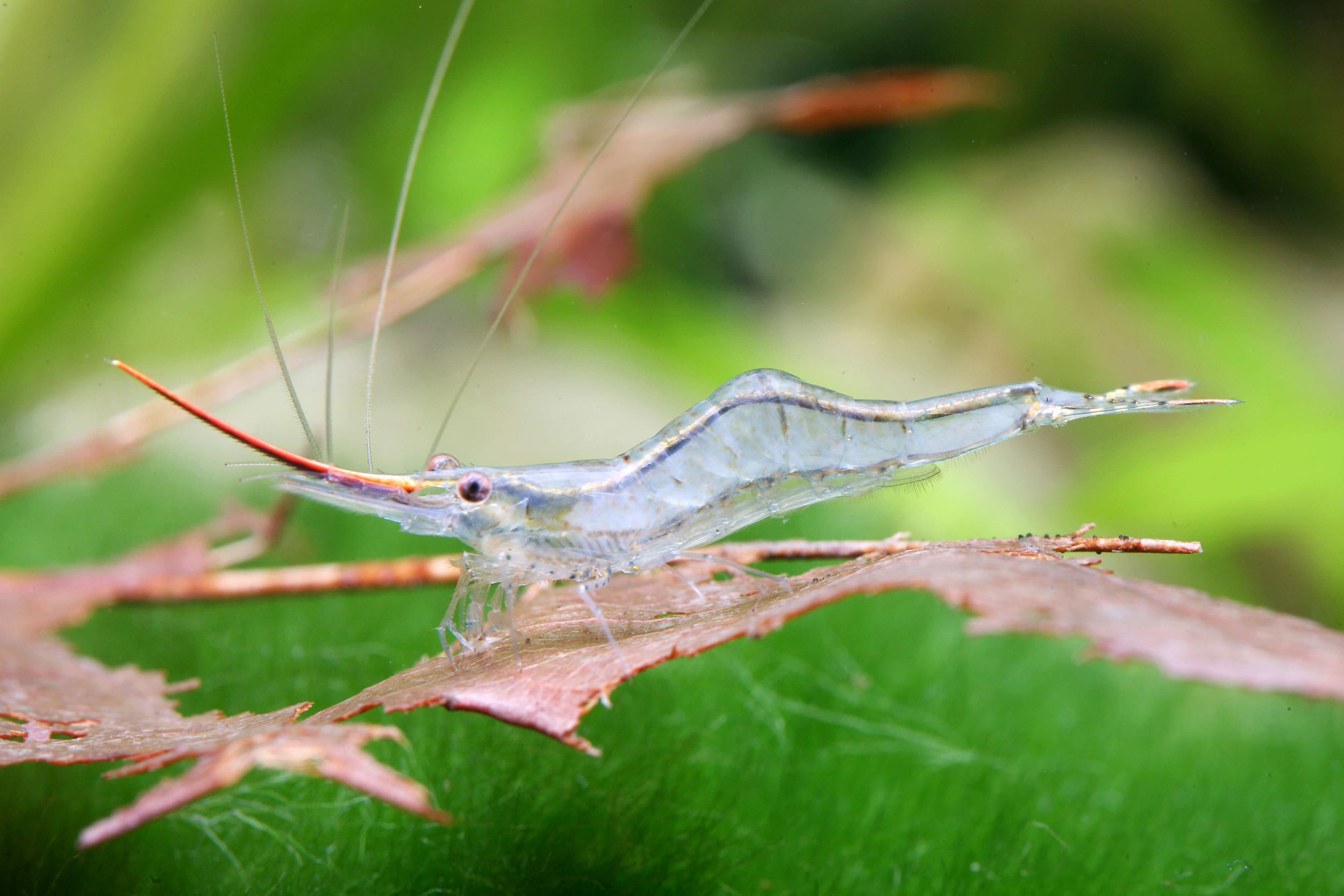
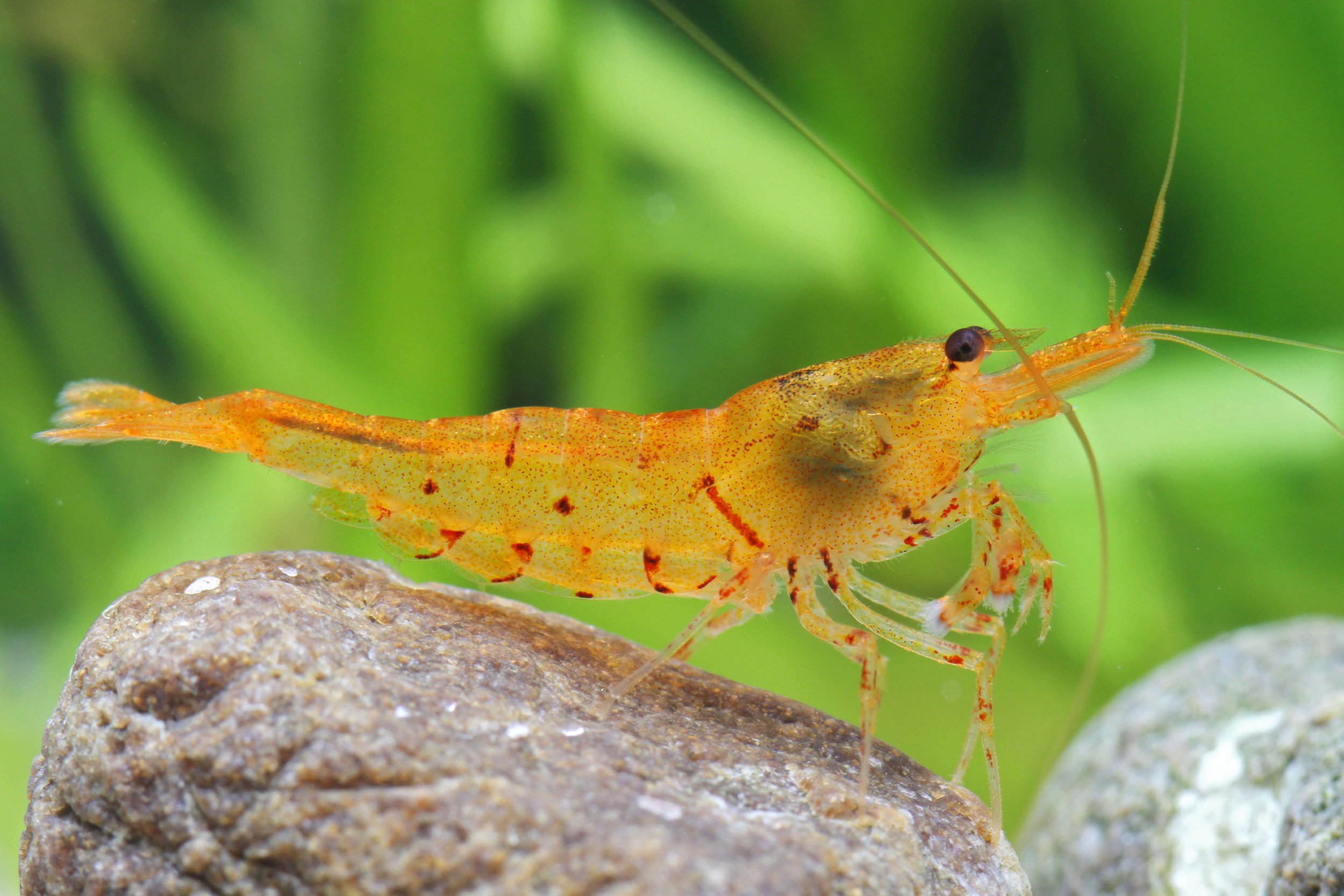
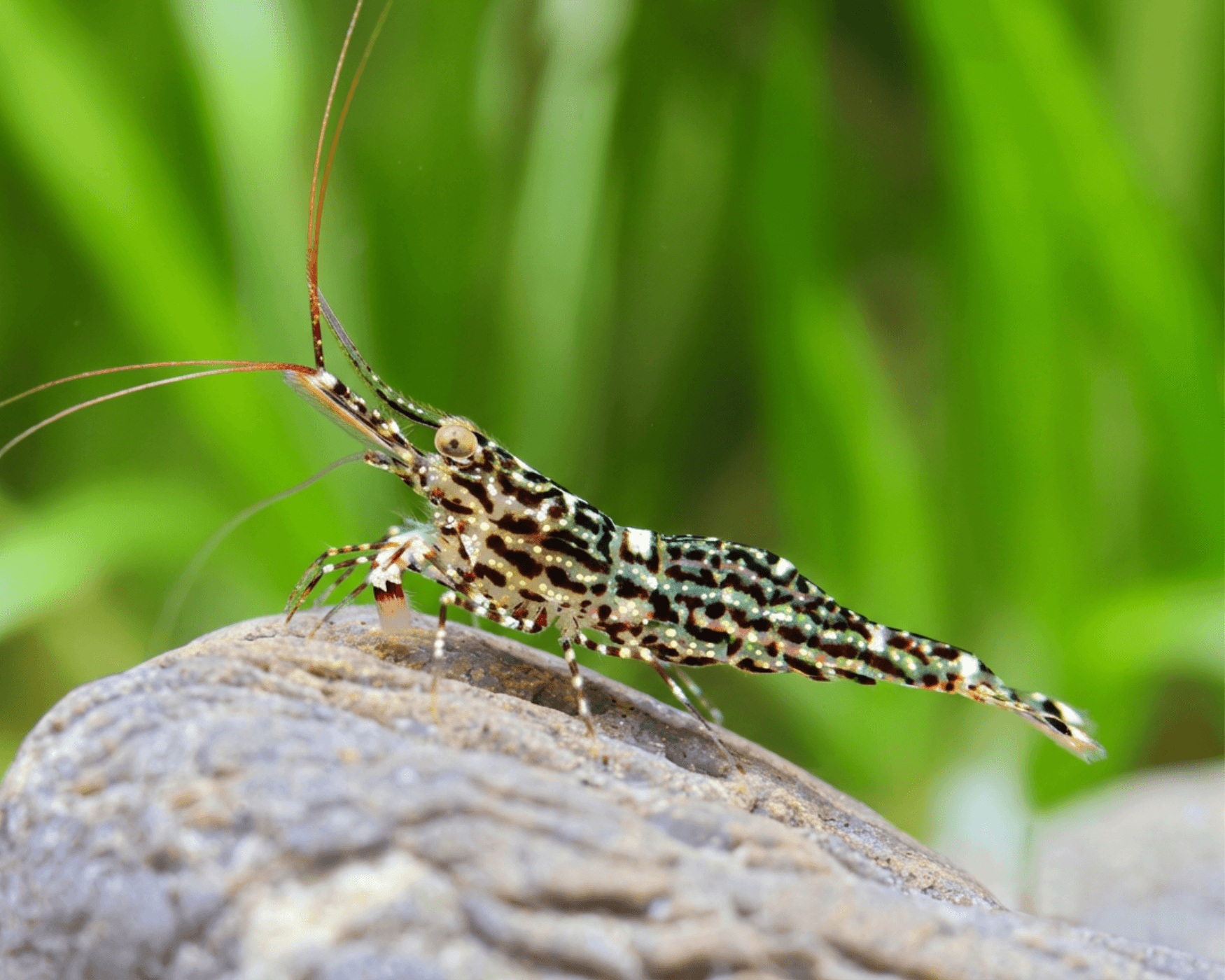
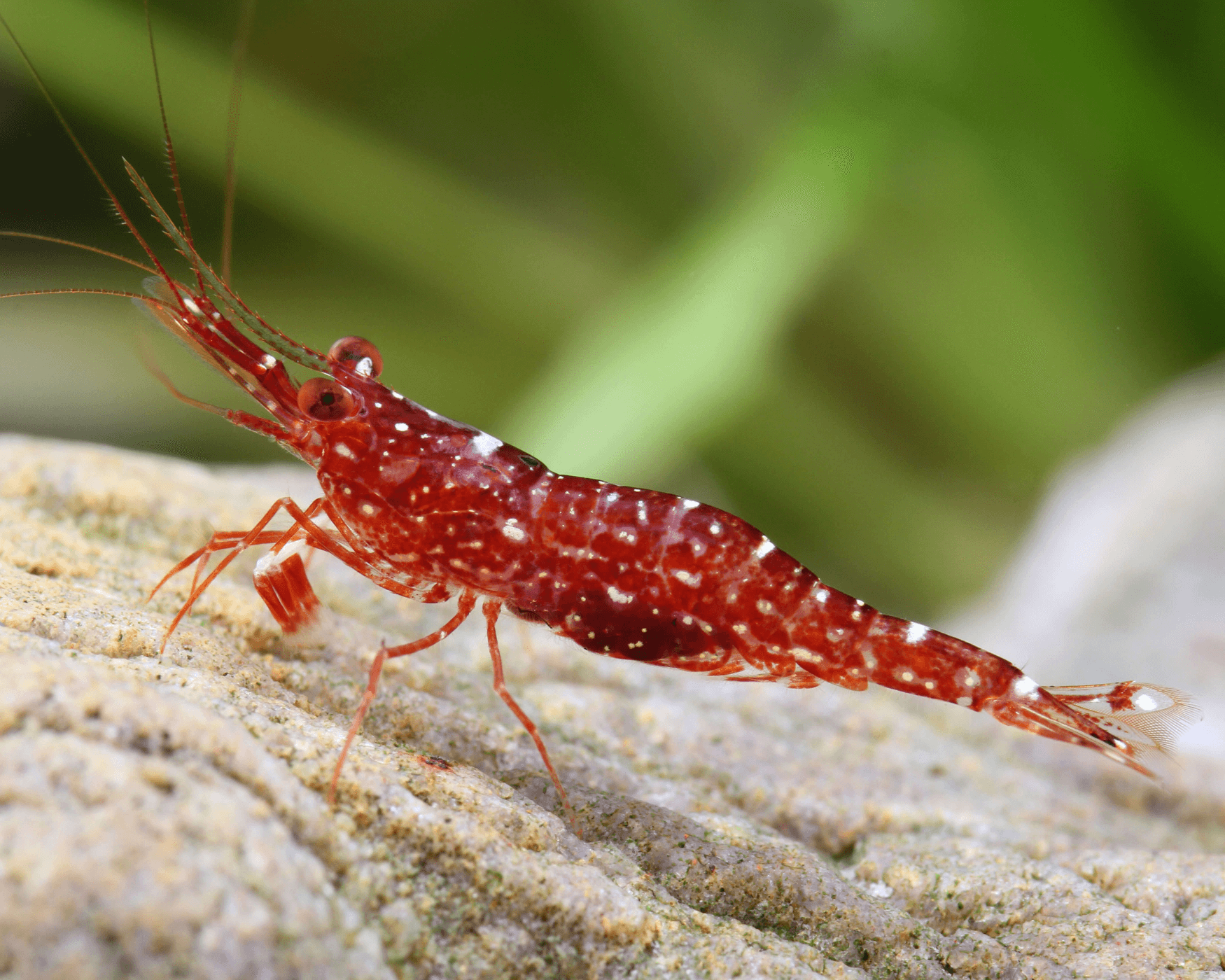
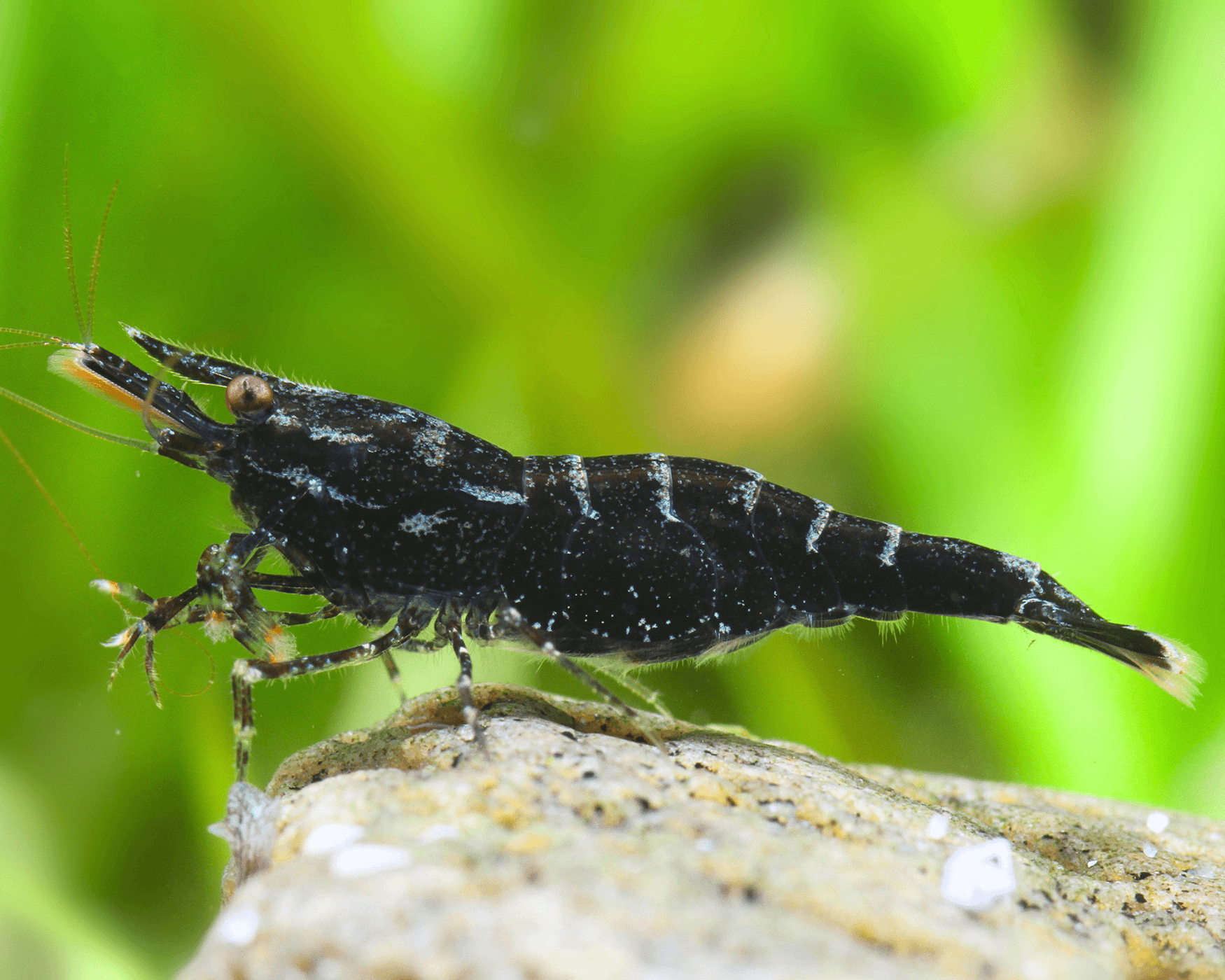
Amano shrimp are Caridina multidentata, a decapod crustacean in the family Atyidae. The older trade name Caridina japonica remains common in aquarium literature. The body is mostly translucent or grayish, commonly marked with brown or reddish-brown spots and broken lateral dashes. Color intensity can vary with background, diet, stress and lighting. The supplied source label identifies these animals as Amano shrimp; individual identification from photographs alone should still be treated as approximate.
Natural habitat
This species is associated with clear, flowing freshwater streams and rivers in Japan and Taiwan. Adults live among stones, leaf litter, wood and aquatic vegetation, where they graze on algae, biofilm and organic particles. Reproduction involves a migration between freshwater adult habitat and more saline downstream water, because the larvae require brackish to marine conditions for development.
Aquarium and water parameters
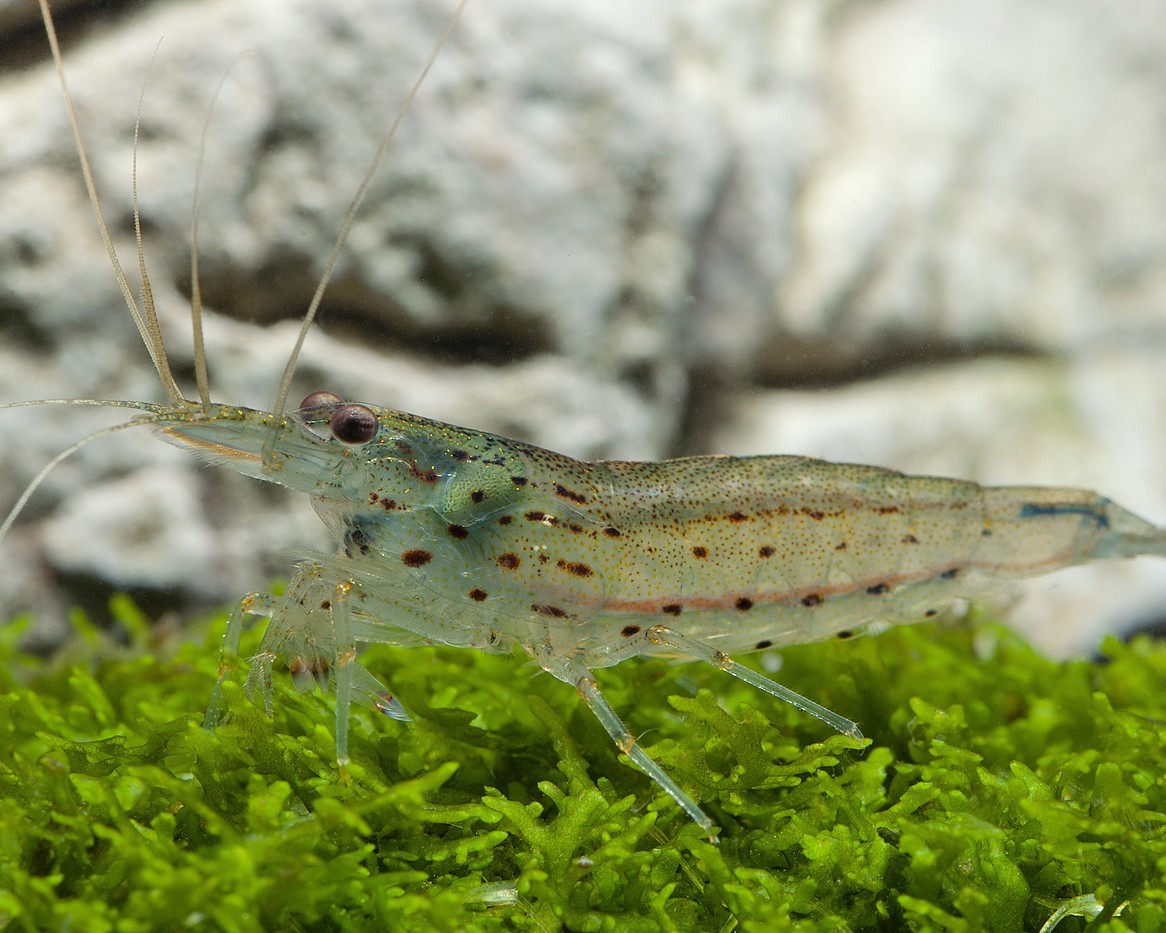
Use a mature, fully cycled aquarium with stable conditions, gentle to moderate circulation and abundant surfaces for grazing. Plants, mosses, wood and porous rock provide shelter and biofilm. A practical range is 18-28 °C and pH 6.5-8.0, with low ammonia and nitrite and controlled nitrate. Moderate mineral content is useful for the exoskeleton, but stability is more important than chasing an exact value. Avoid sudden changes, copper-based medications and untreated tap water containing toxic contaminants.
Feeding
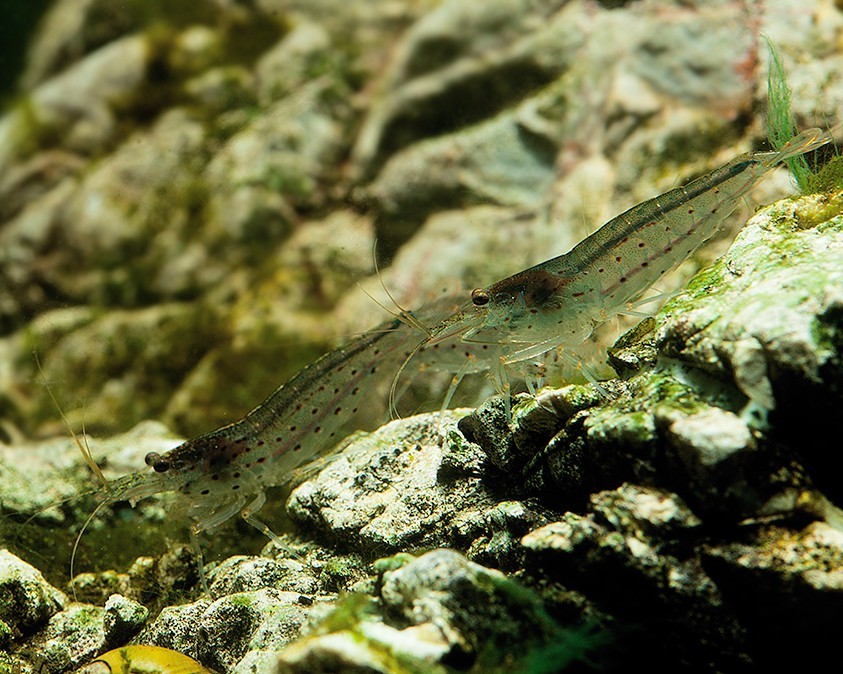
Amano shrimp should graze naturally on algae and biofilm, but they also benefit from occasional supplemental food. Offer small portions of shrimp pellets, algae wafers, blanched vegetables or other sinking foods. They are opportunistic scavengers rather than a complete substitute for aquarium maintenance, and they should not be deliberately starved to control algae. Remove uneaten food so it does not degrade water quality.
Tank mates
Choose peaceful community fish and invertebrates. Small rasboras, tetras, danionins, livebearers, small peaceful loaches and other non-predatory shrimp can be suitable, depending on the individual species. Avoid large fish, predatory cichlids, crayfish and aggressive bottom dwellers. Adults are relatively resilient, but freshly molted shrimp and young larvae are vulnerable to predation. Provide dense plants, moss and crevices to increase security.
Molting and health
Growth occurs through periodic molting, when the shrimp leaves its old exoskeleton and forms a larger one. It may hide and become less active before and after the molt, when the new shell is soft. Stable temperature, clean water, adequate minerals and a varied diet support successful molting. Leave shed exoskeletons in the aquarium unless they decay; shrimp often consume them and reclaim minerals. Sudden changes, poor oxygenation, toxic metals and failed molts are common risks.
Breeding
Amano shrimp may mate in freshwater, and females carry many small eggs beneath the abdomen. The eggs hatch into planktonic larvae that need brackish or marine water, appropriate food and careful rearing. The larvae cannot normally complete development in an ordinary freshwater aquarium. Breeding therefore requires a dedicated setup, gradual salinity management and a plan to acclimate juveniles back to freshwater. Routine freshwater colony reproduction should not be expected.
Leave your comments