Taxonomy and identification
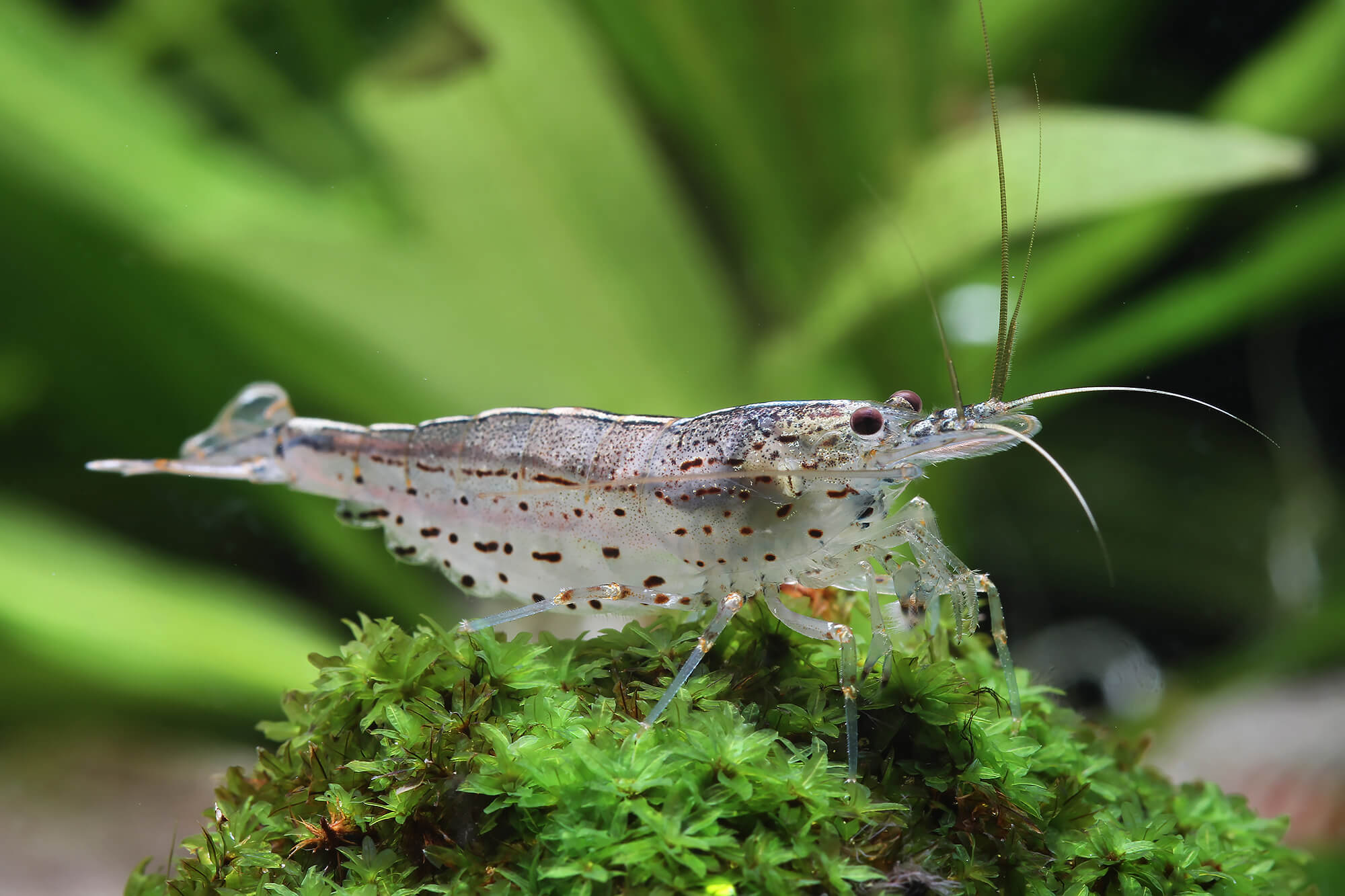
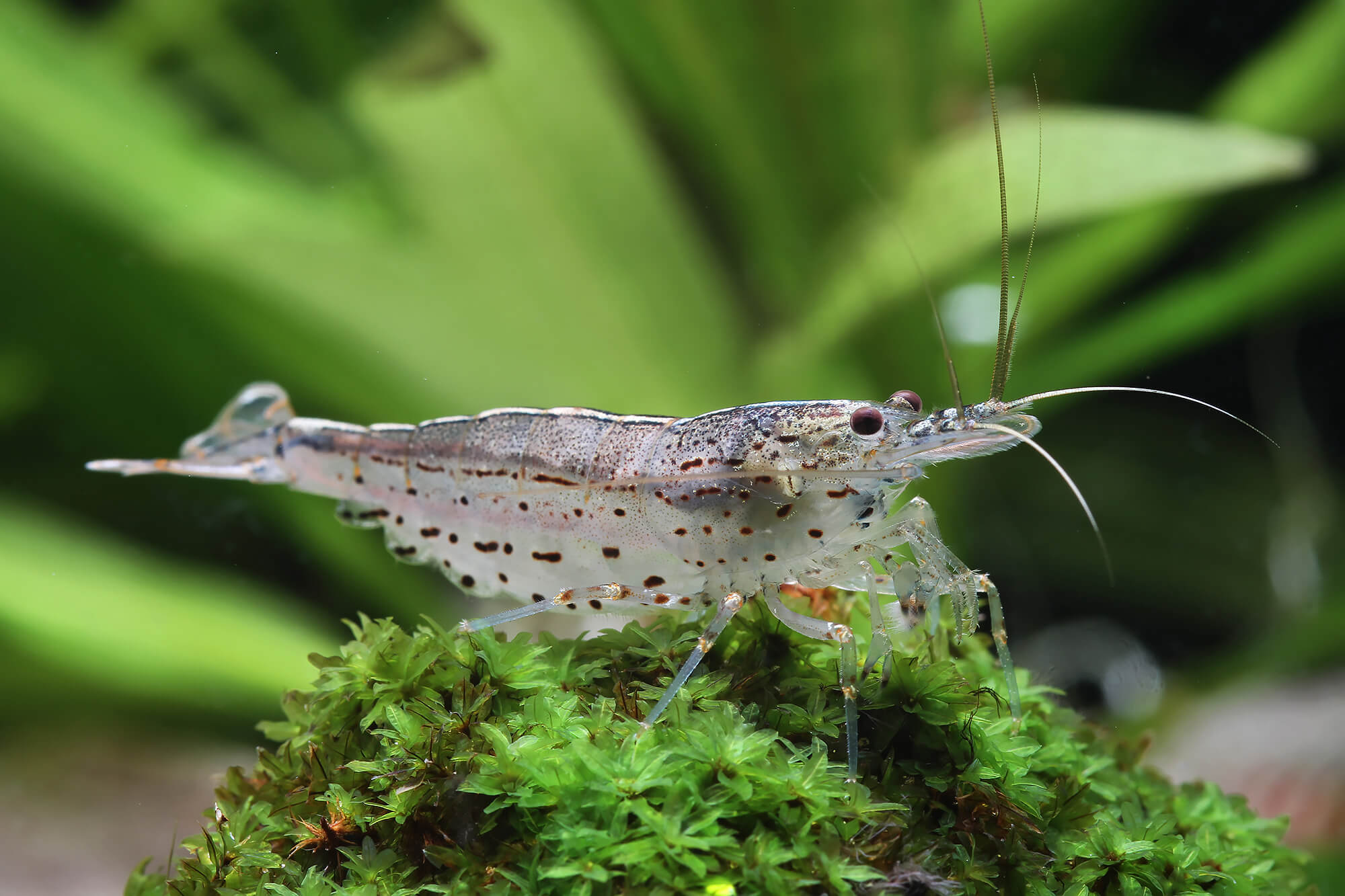
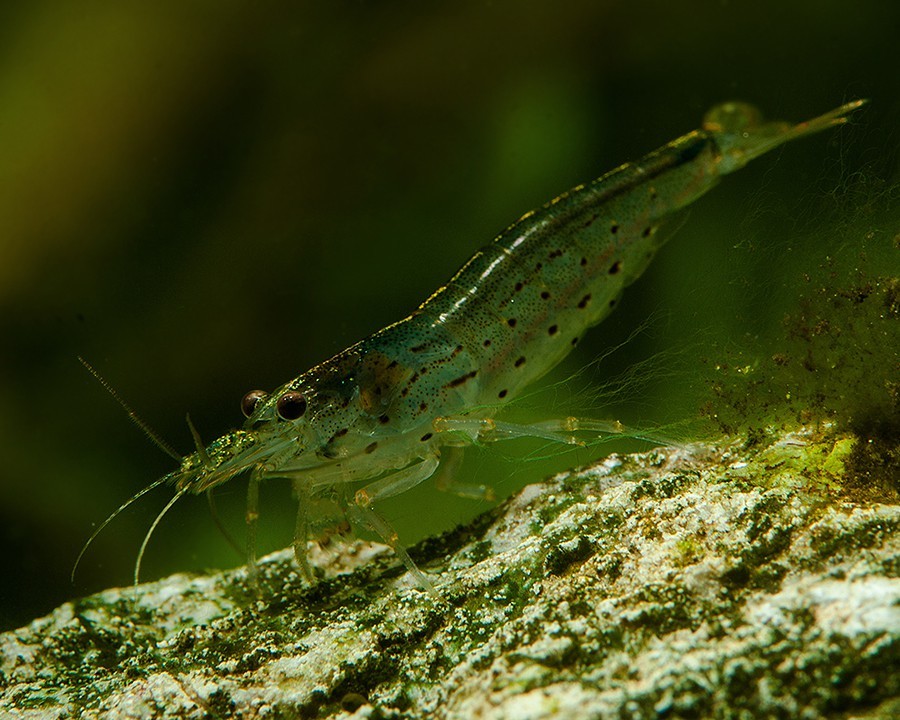
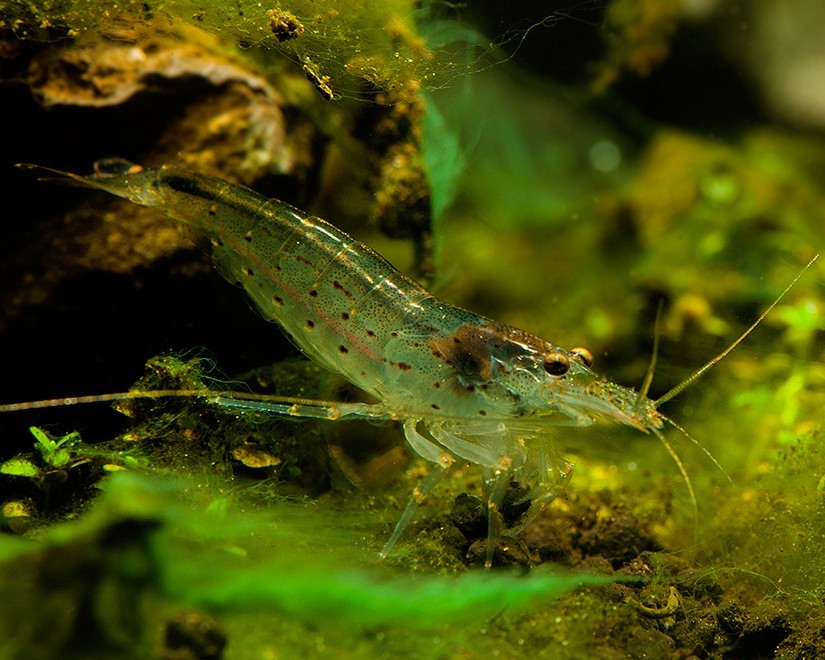
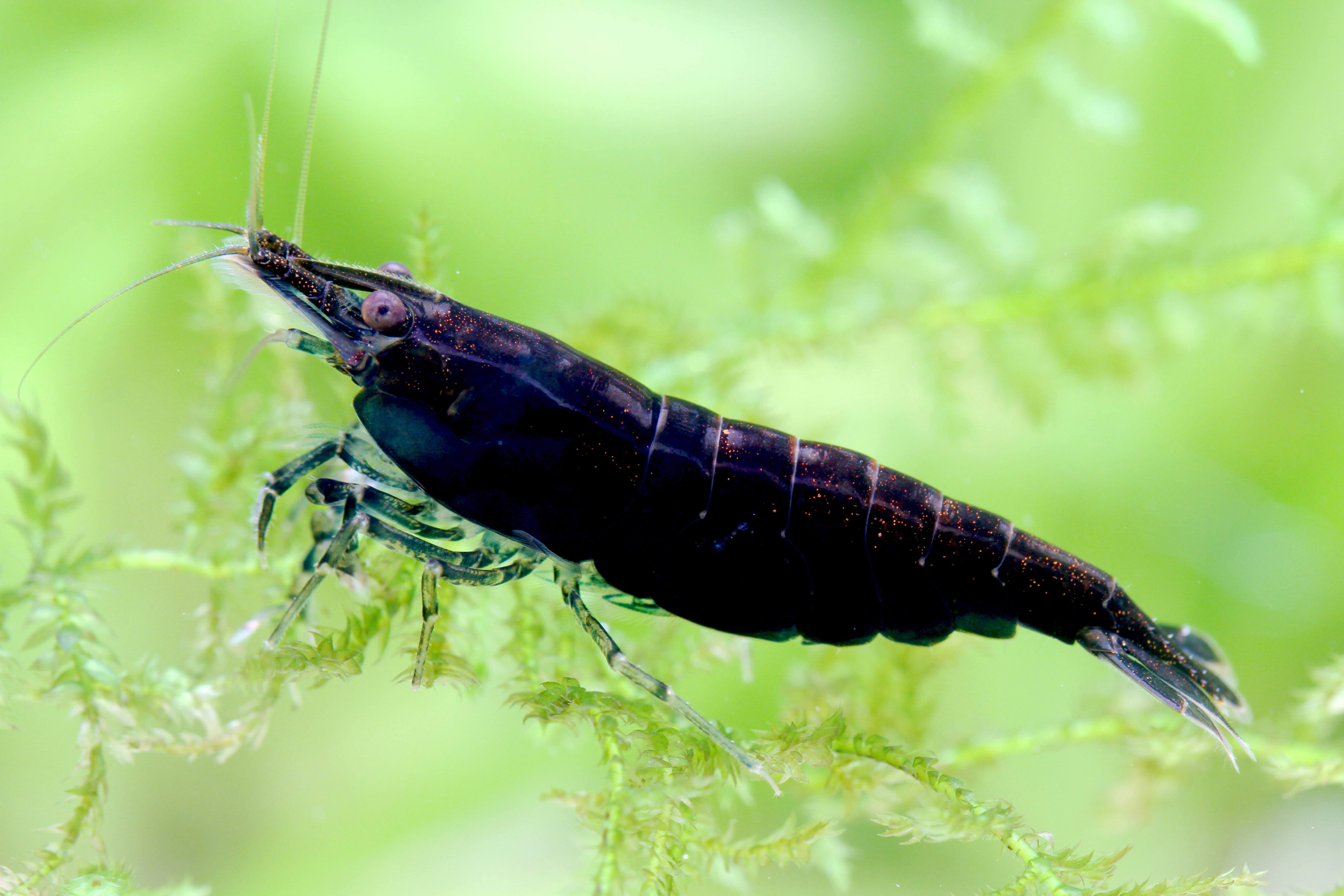
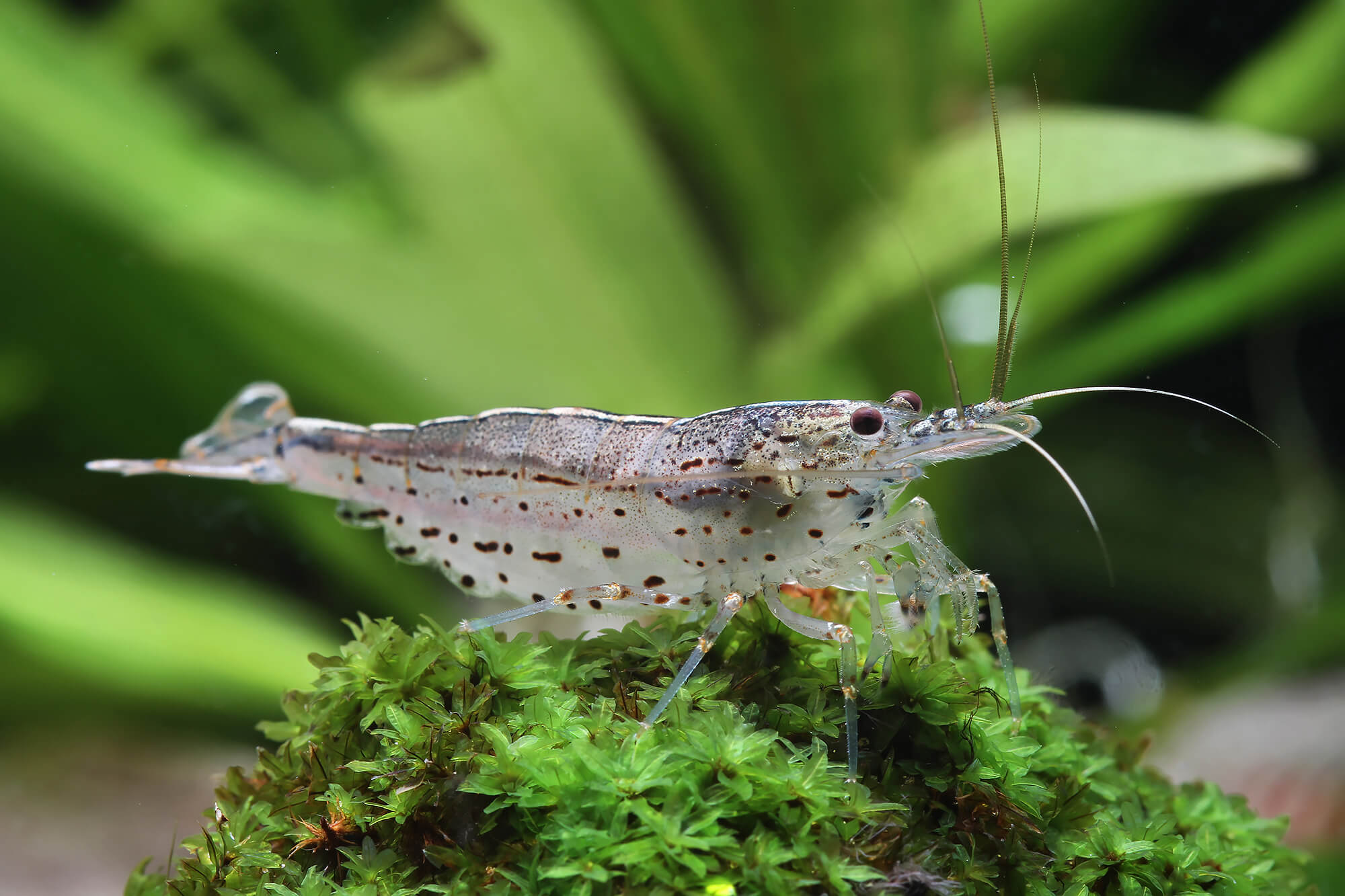
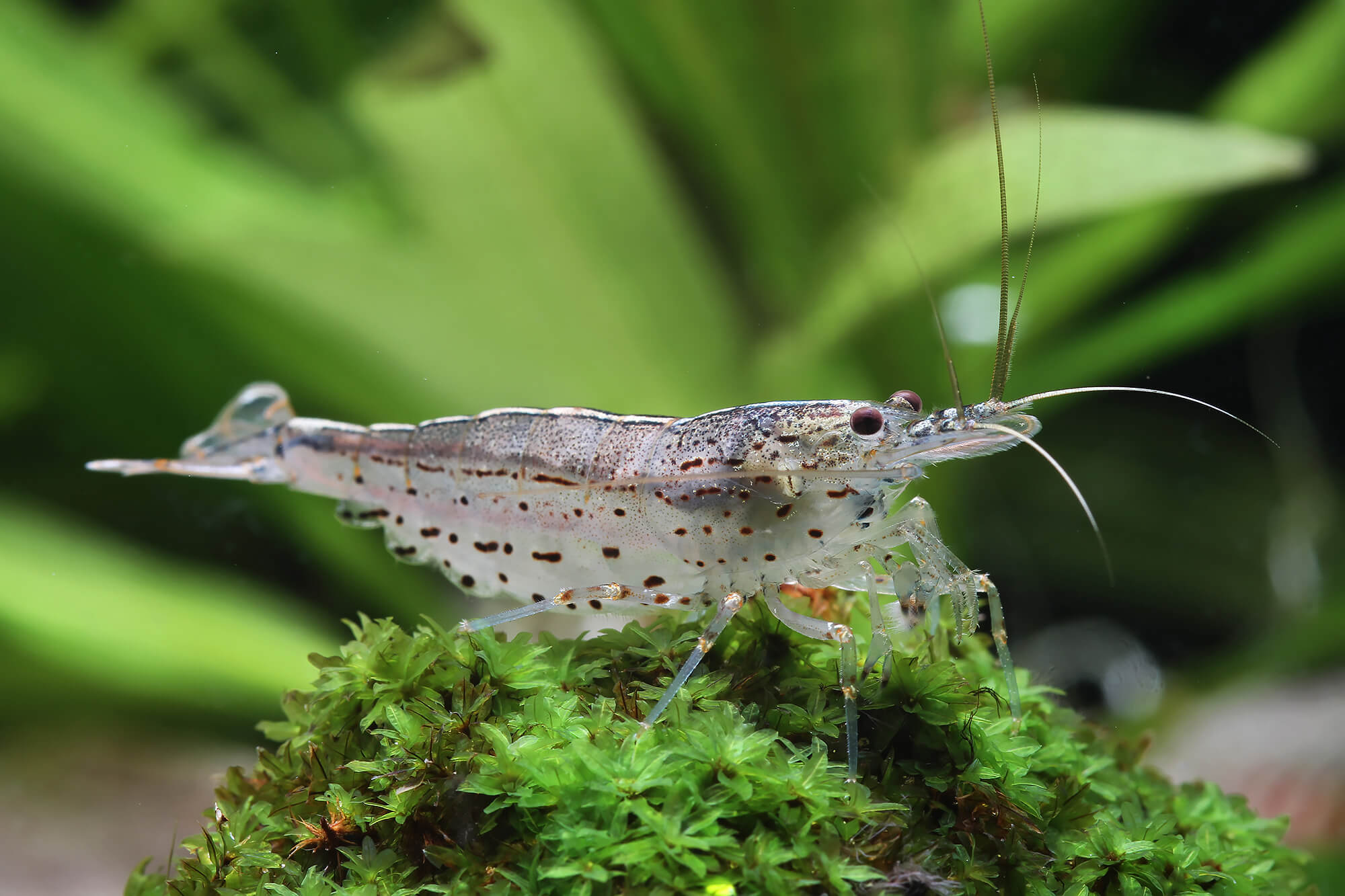
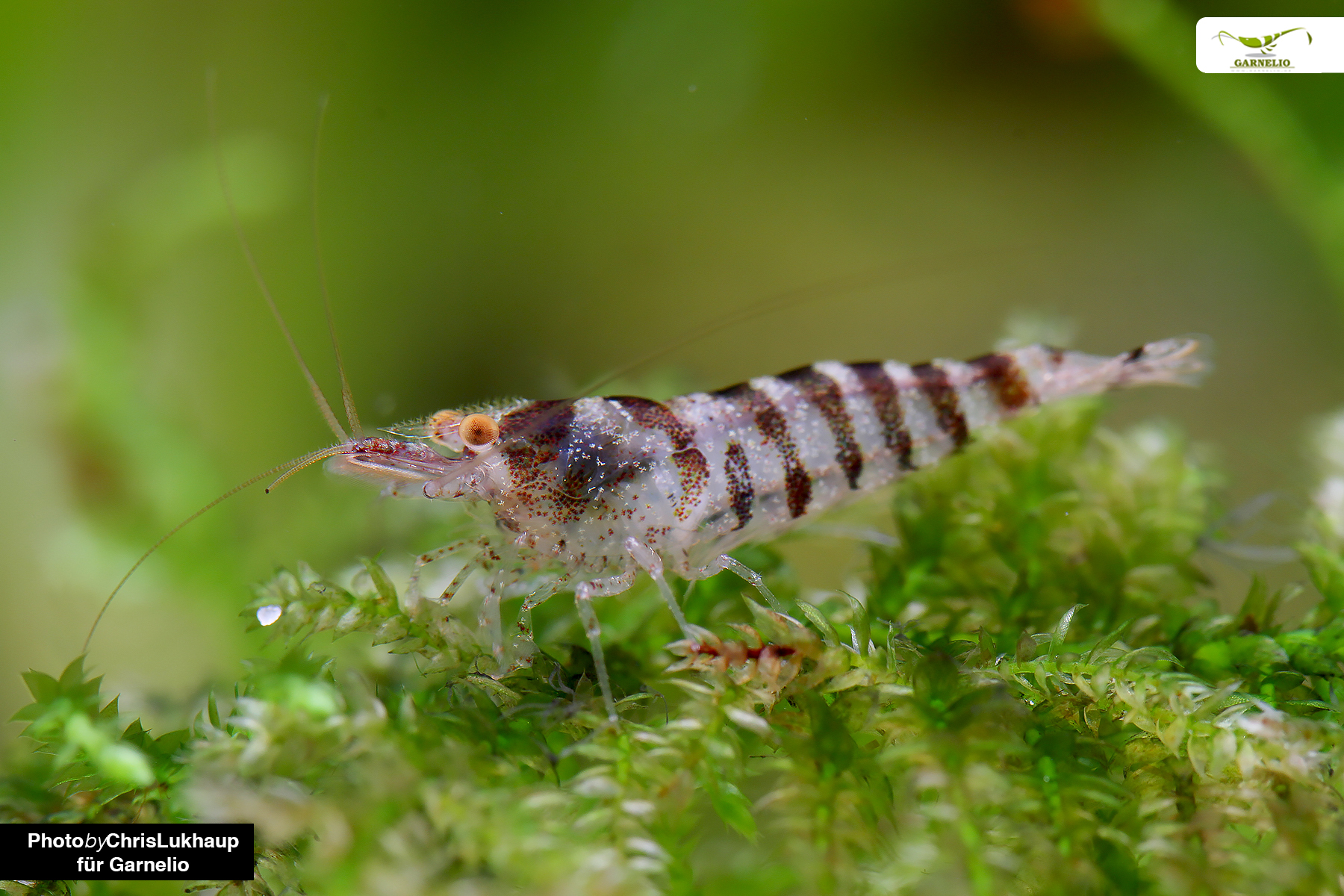
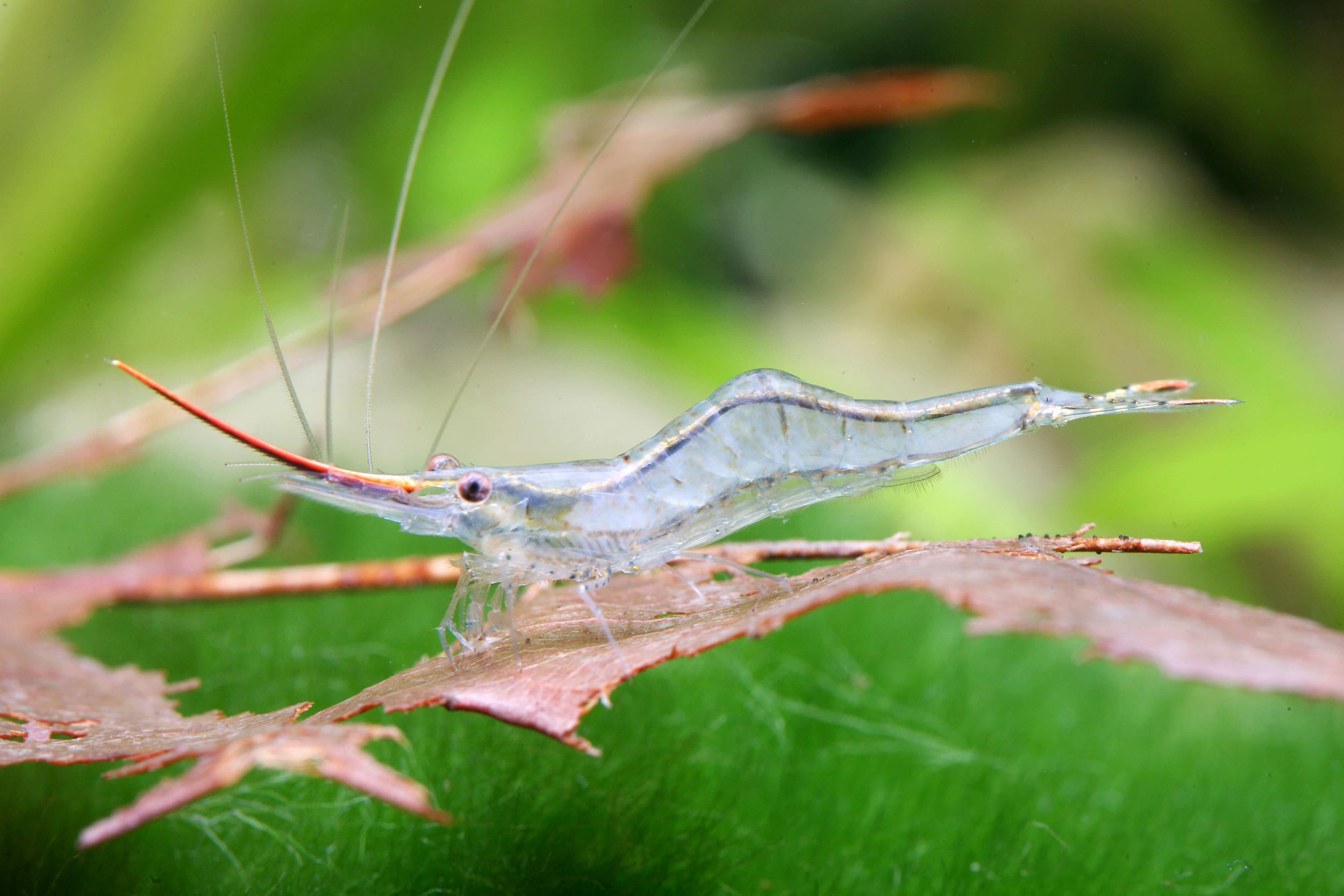
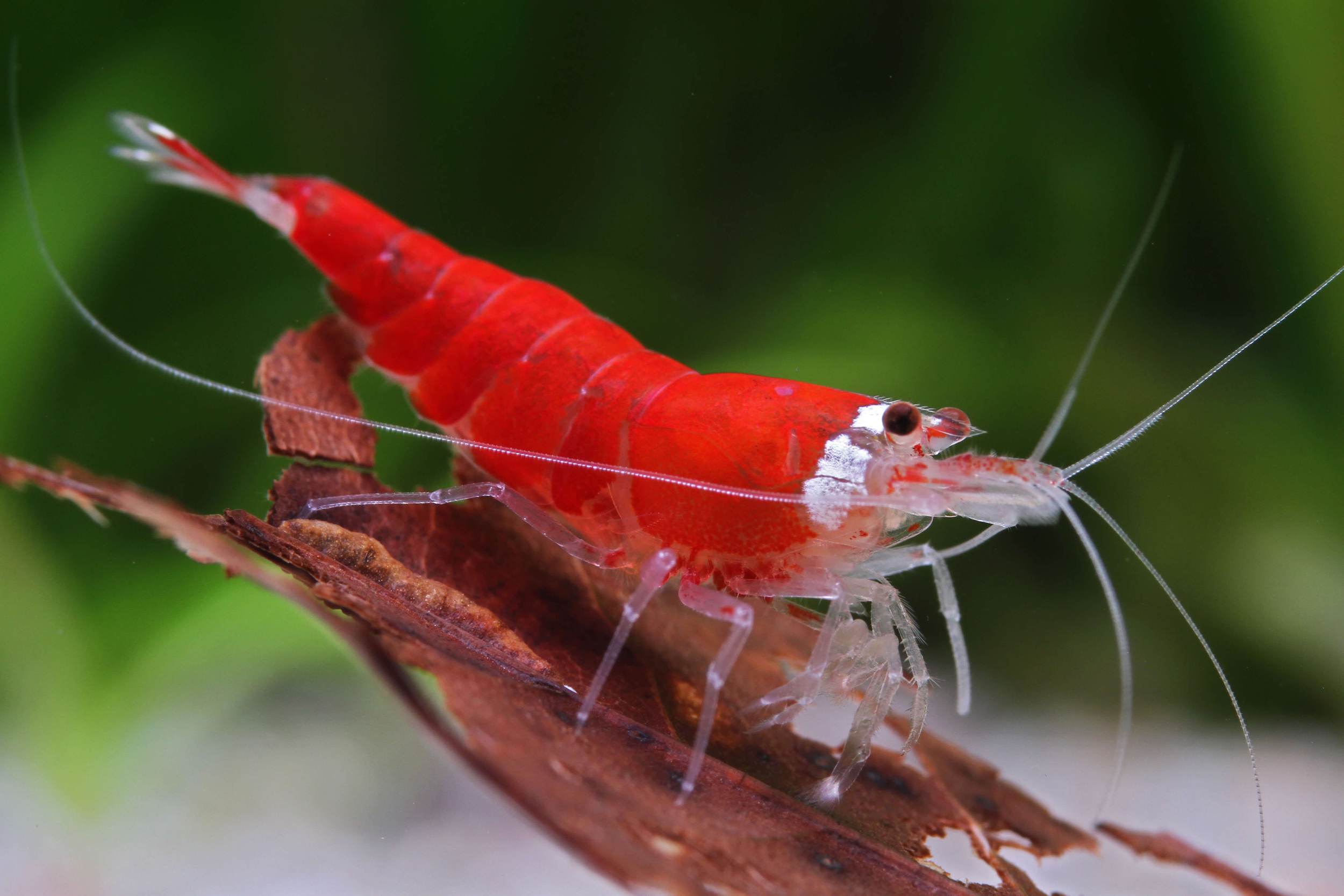
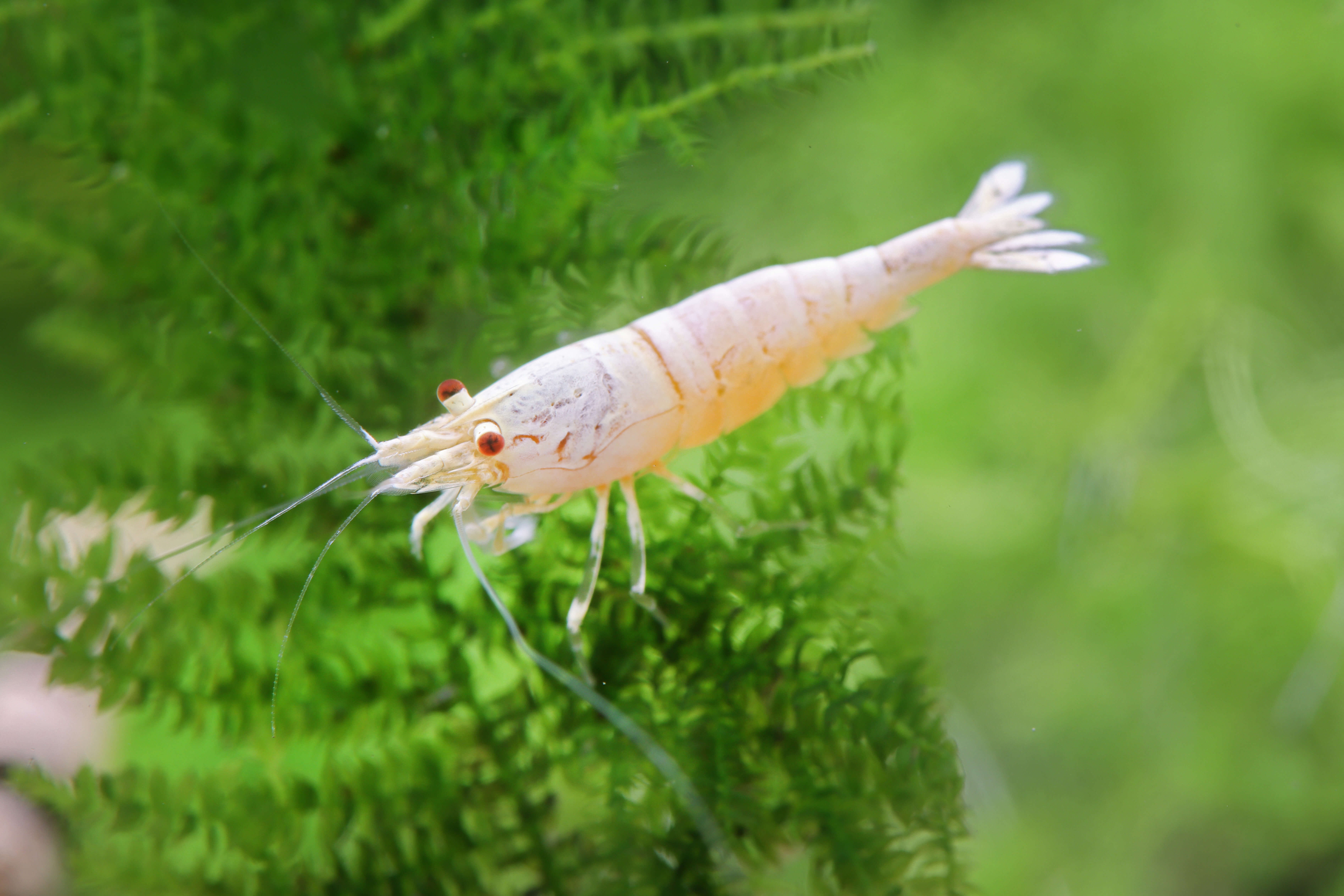
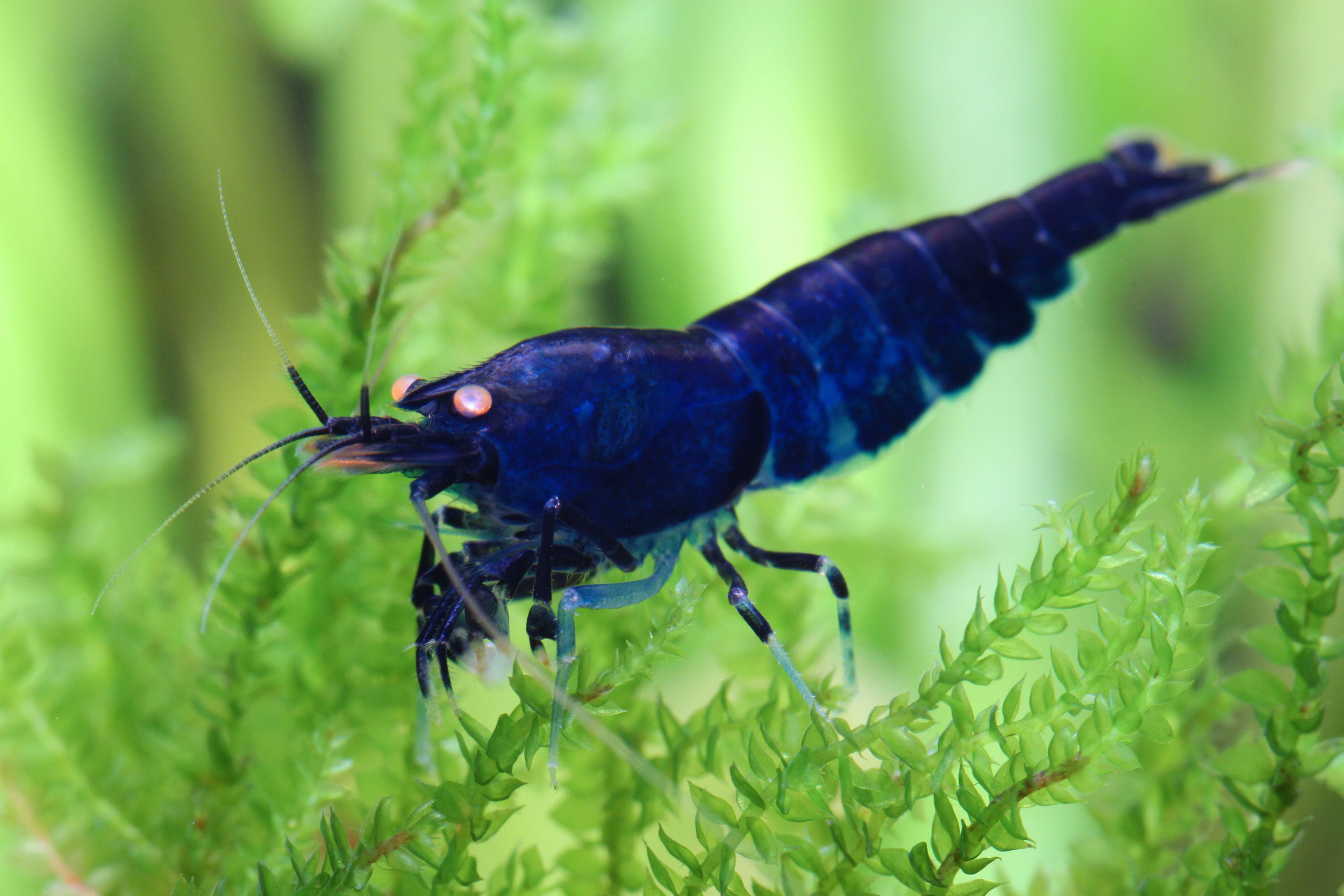
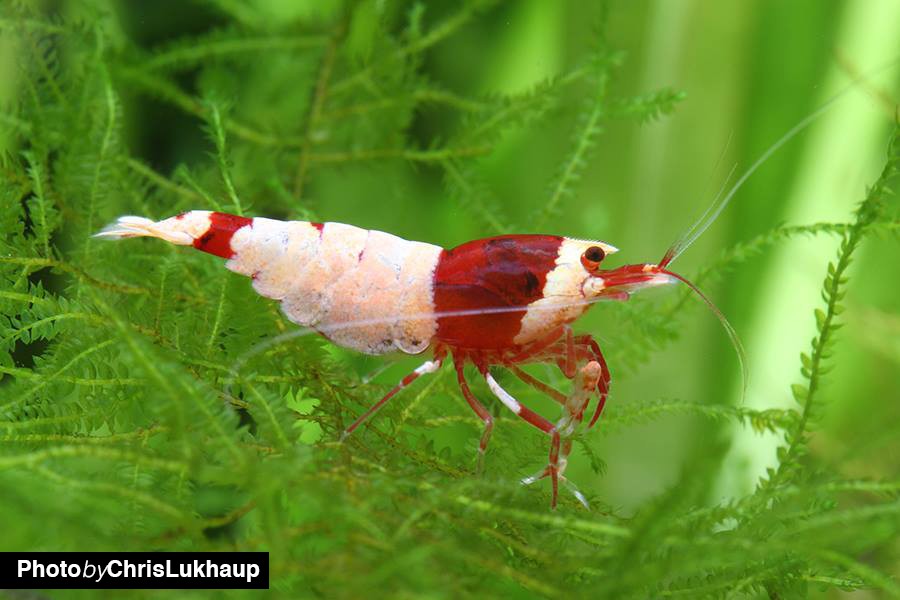
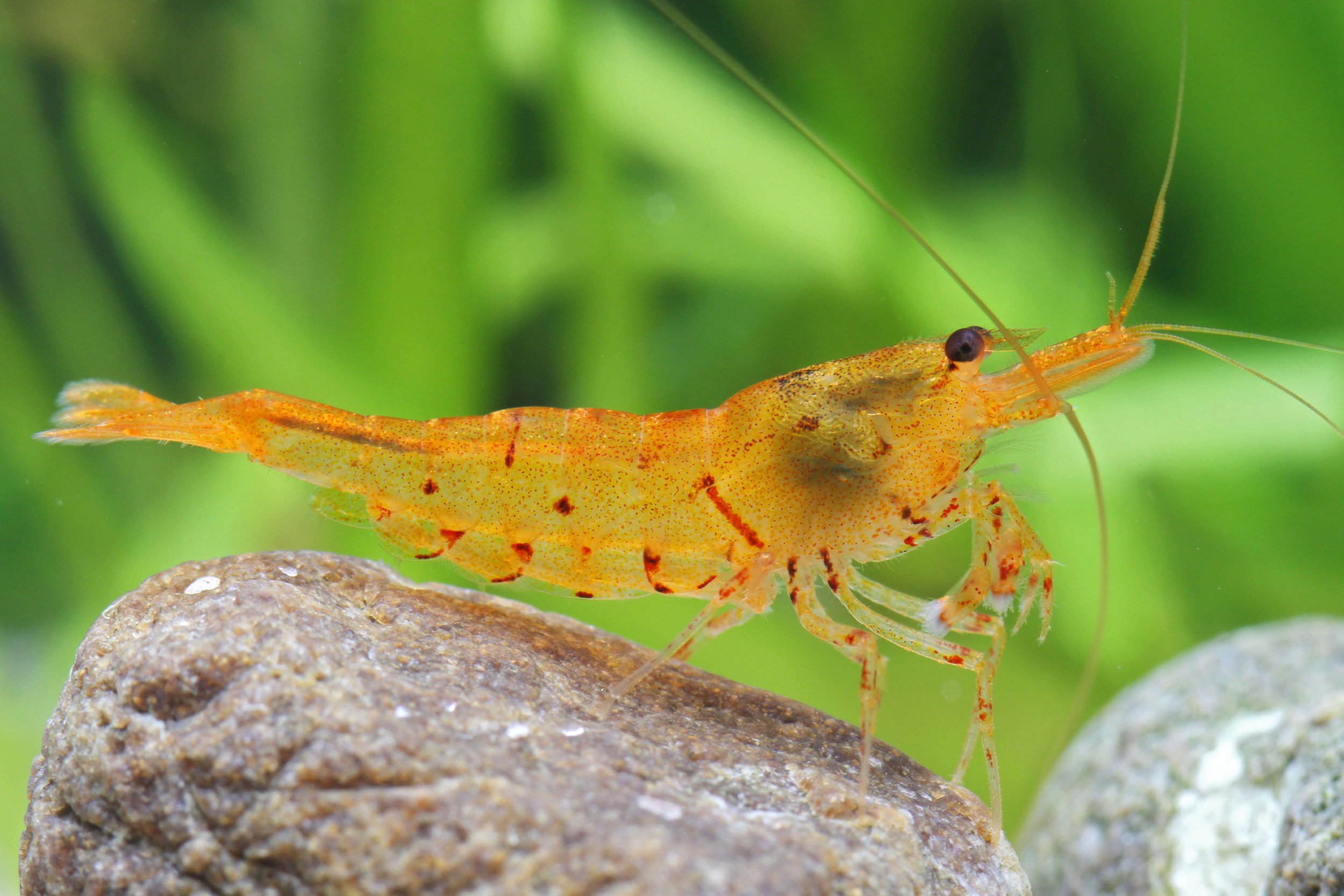
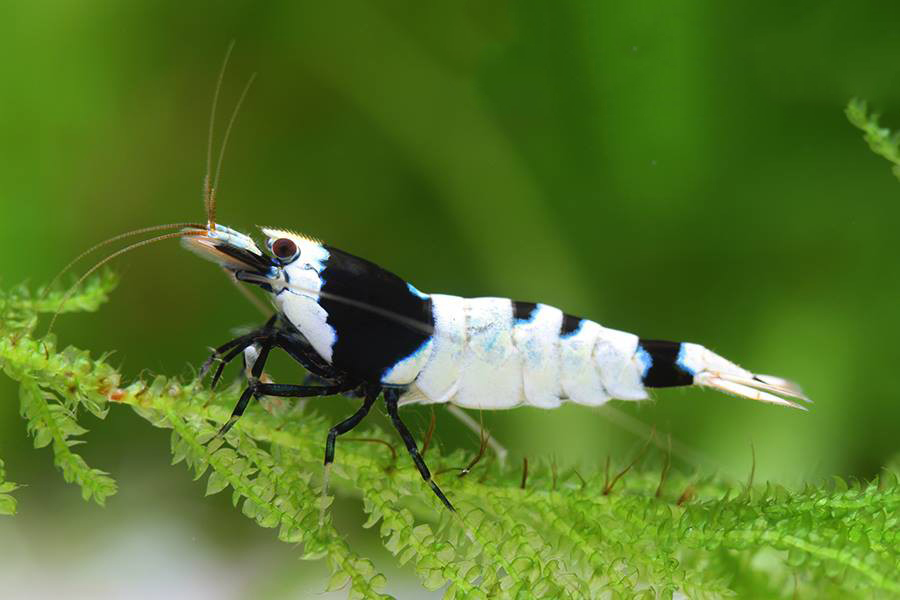
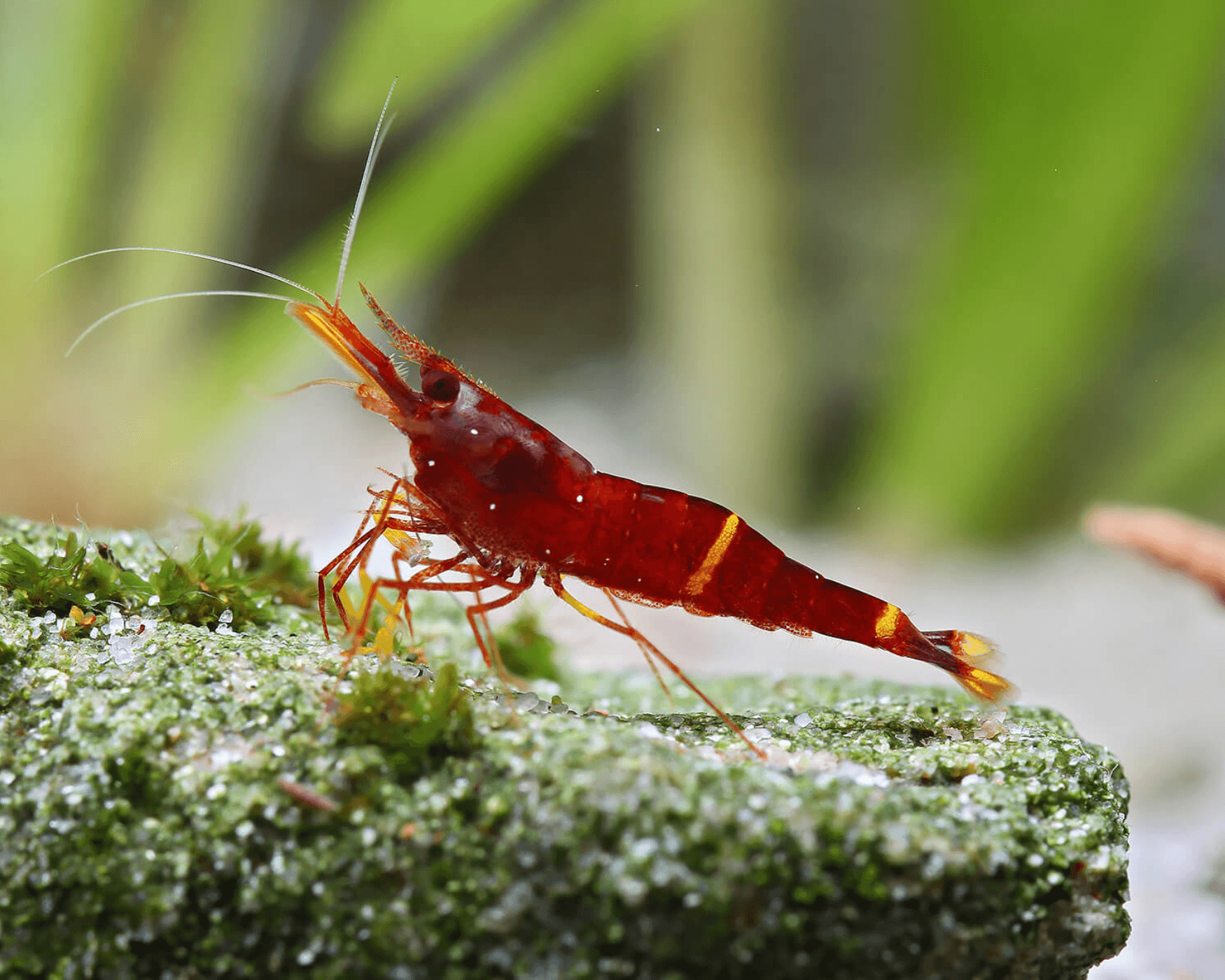
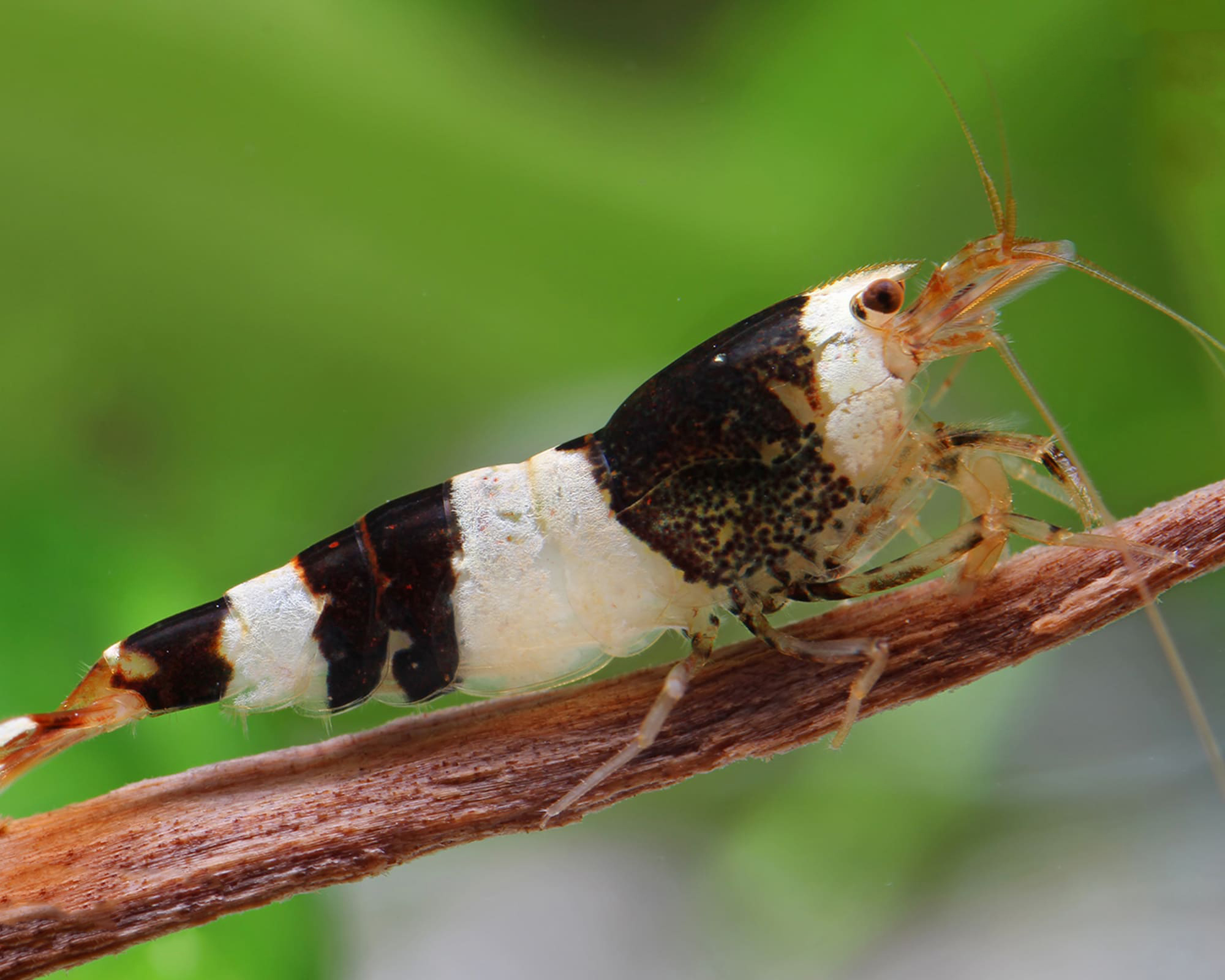
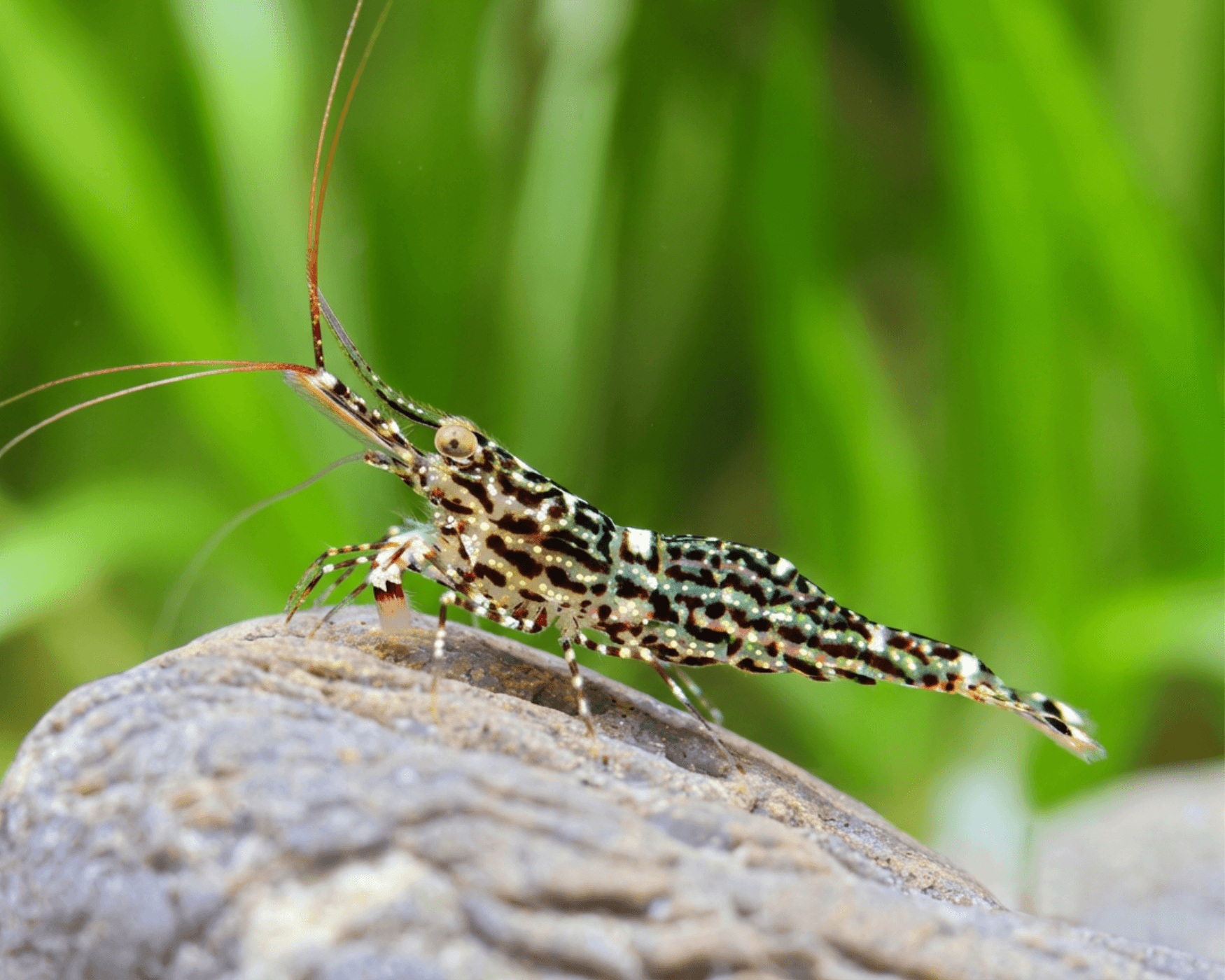
The aquarium Amano shrimp is commonly identified as Caridina multidentata, a decapod crustacean in the family Atyidae. It has a mostly translucent body, a pale gray to greenish cast, and rows of reddish-brown to dark brown spots and short markings along the sides. Color and pattern can vary with age, stress, diet, background, and lighting. The supplied images support an Amano shrimp identification, but photographs alone cannot guarantee species-level confirmation.
Natural habitat
Caridina multidentata is associated with clear, flowing freshwater streams and rivers in Japan and nearby parts of East Asia. Adults graze on biofilm, algae, and organic particles on submerged surfaces. In nature, females release larvae that are carried downstream toward brackish or marine-influenced water, where early development takes place before juveniles migrate back into freshwater.
Aquarium and water parameters
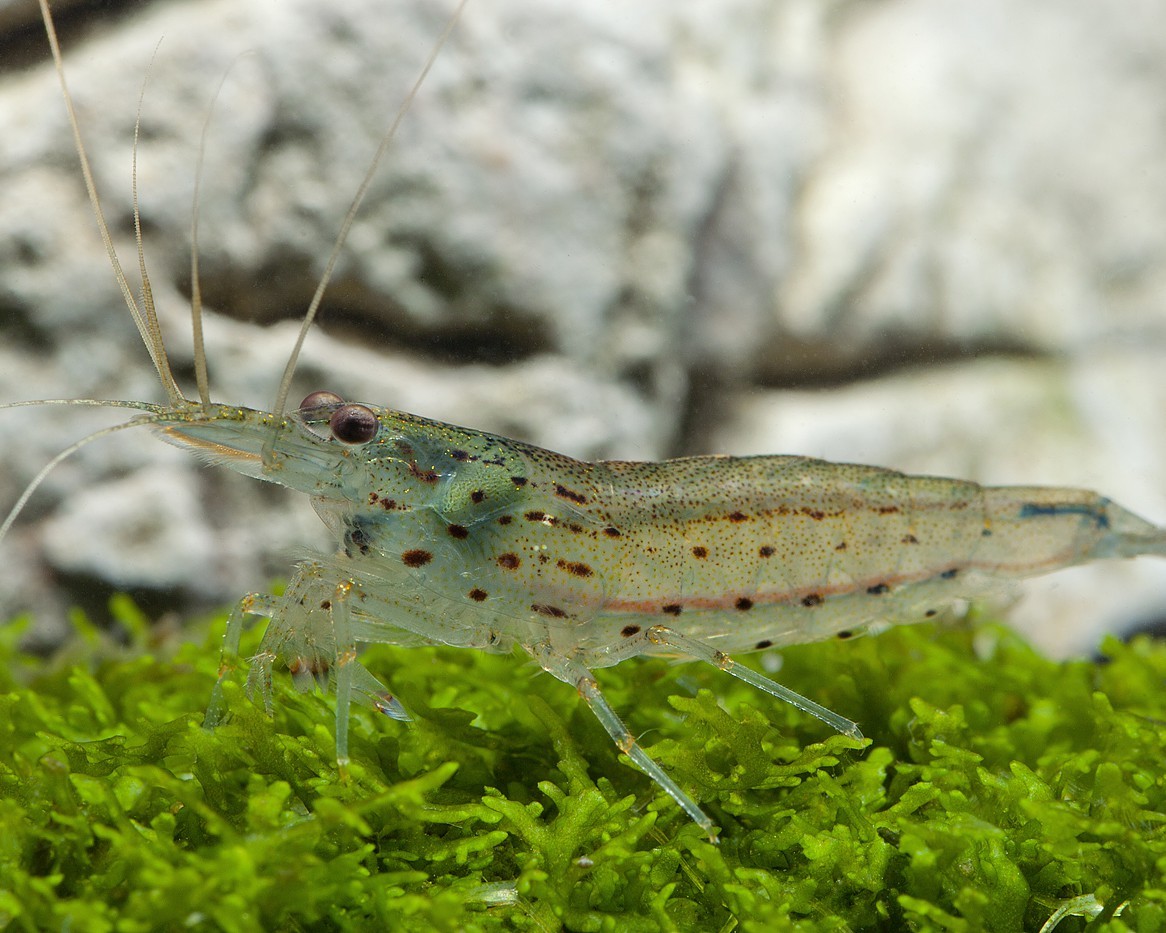
Use a mature, fully cycled aquarium with stable conditions, gentle to moderate circulation, and plenty of plants, wood, rock, moss, and other surfaces for grazing and shelter. A practical range is 18–28 °C and pH 6.5–8.0. Avoid ammonia and nitrite, sudden changes in temperature or mineral content, and copper-based medications. A tight-fitting lid is useful because shrimp may climb out of open tanks.
Feeding
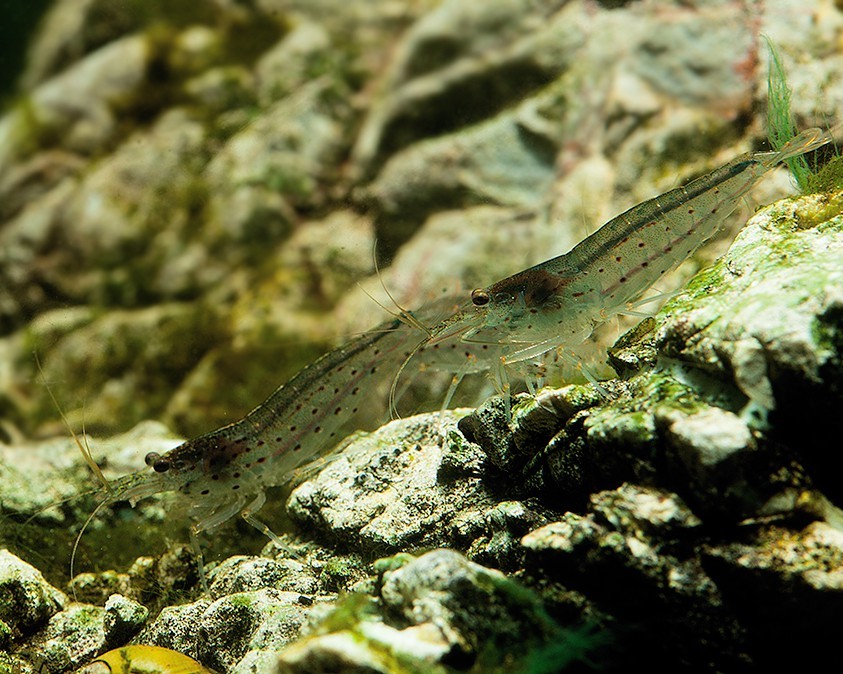
Amano shrimp should receive a varied diet rather than relying only on visible algae. They graze on biofilm, soft algae, and microorganisms, and may accept sinking shrimp foods, algae wafers, blanched vegetables, and occasional protein-rich foods. Feed small portions and remove leftovers before they decay. A mature aquarium with natural grazing surfaces is especially important in groups or heavily stocked tanks.
Tank mates
They are peaceful and can be kept with similarly peaceful community fish and other non-aggressive shrimp. Small rasboras, many small tetras, peaceful livebearers, and compatible snails are commonly considered safer choices, although fish may eat newly molted or very small shrimp. Avoid large, predatory, boisterous, or fin-nipping species. Provide dense plants and crevices so shrimp can retreat during vulnerable periods.
Molting and mineral needs
Amano shrimp periodically shed their exoskeleton to grow. They may hide and eat less before molting, then remain vulnerable until the new shell hardens. Stable water chemistry, adequate dietary minerals, and low stress support successful molts. Do not routinely remove a freshly shed exoskeleton; it can be eaten and recycled. Repeated failed molts can indicate unsuitable parameters, poor nutrition, contamination, or an abrupt water change.
Breeding
Adults may mate and carry eggs beneath the abdomen, but completing the life cycle in ordinary freshwater is unlikely. The eggs hatch into planktonic larvae that require carefully managed brackish or marine salinity, suitable food, clean water, and gradual acclimation. After metamorphosis, juveniles must be moved or acclimated back to freshwater. For this reason, Amano shrimp are much easier to maintain than to breed successfully in captivity.
Leave your comments