Taxonomy and identification
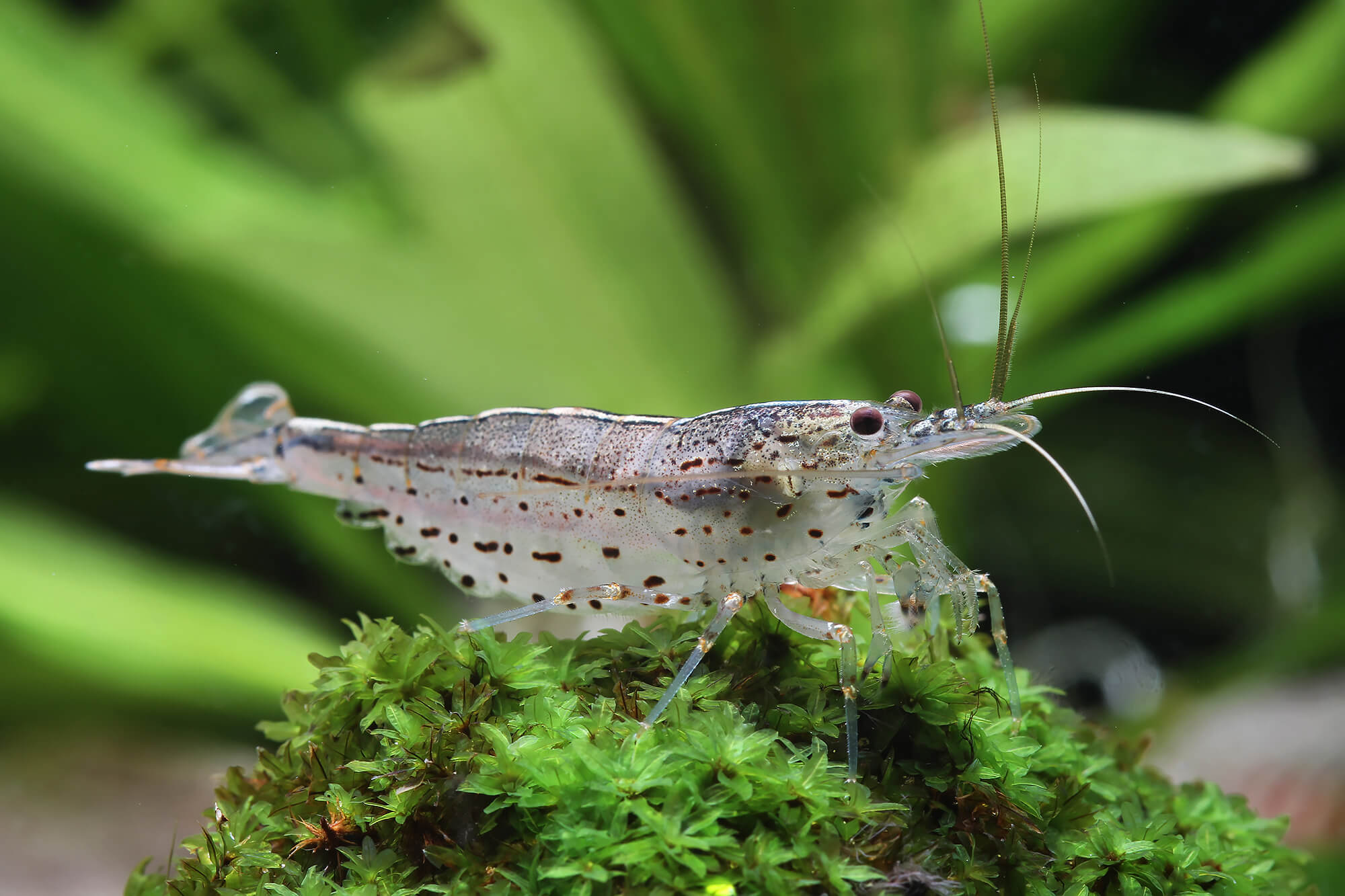
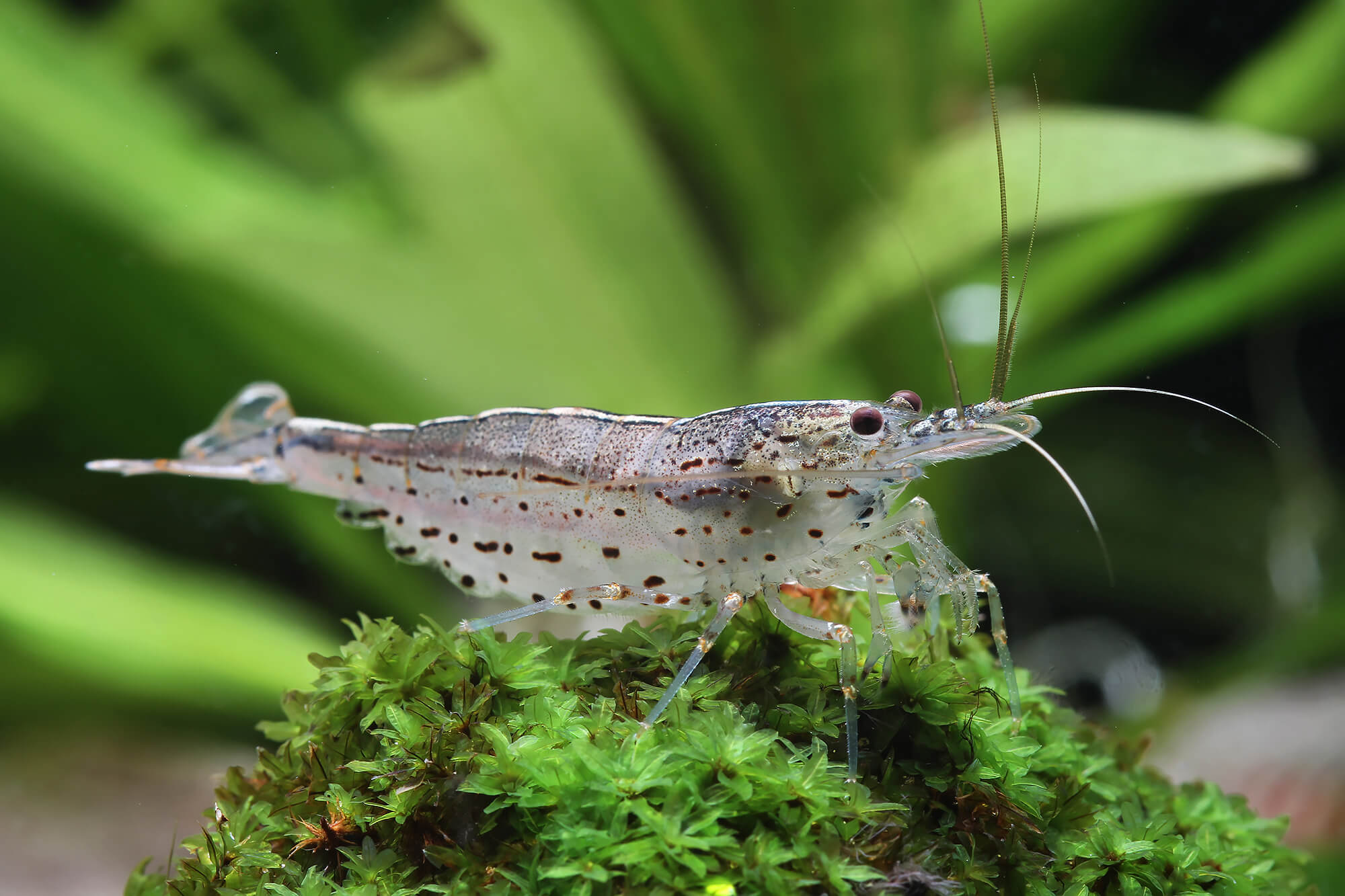
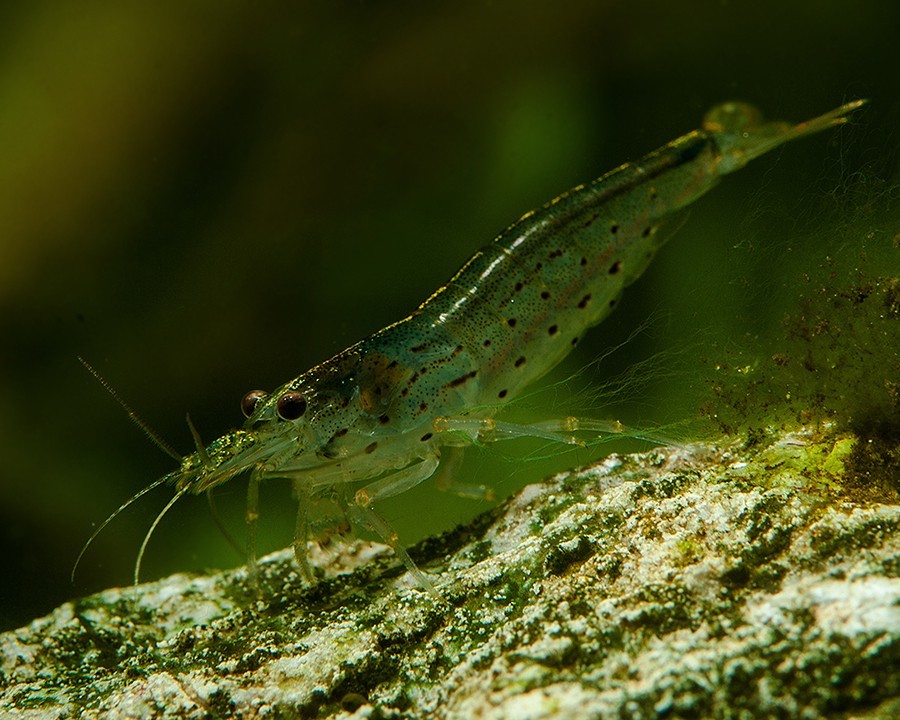
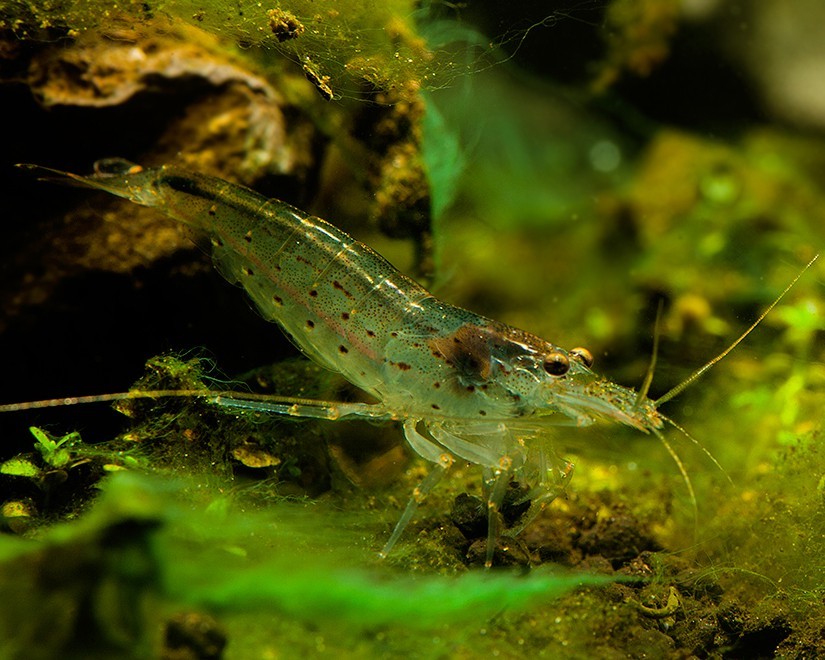
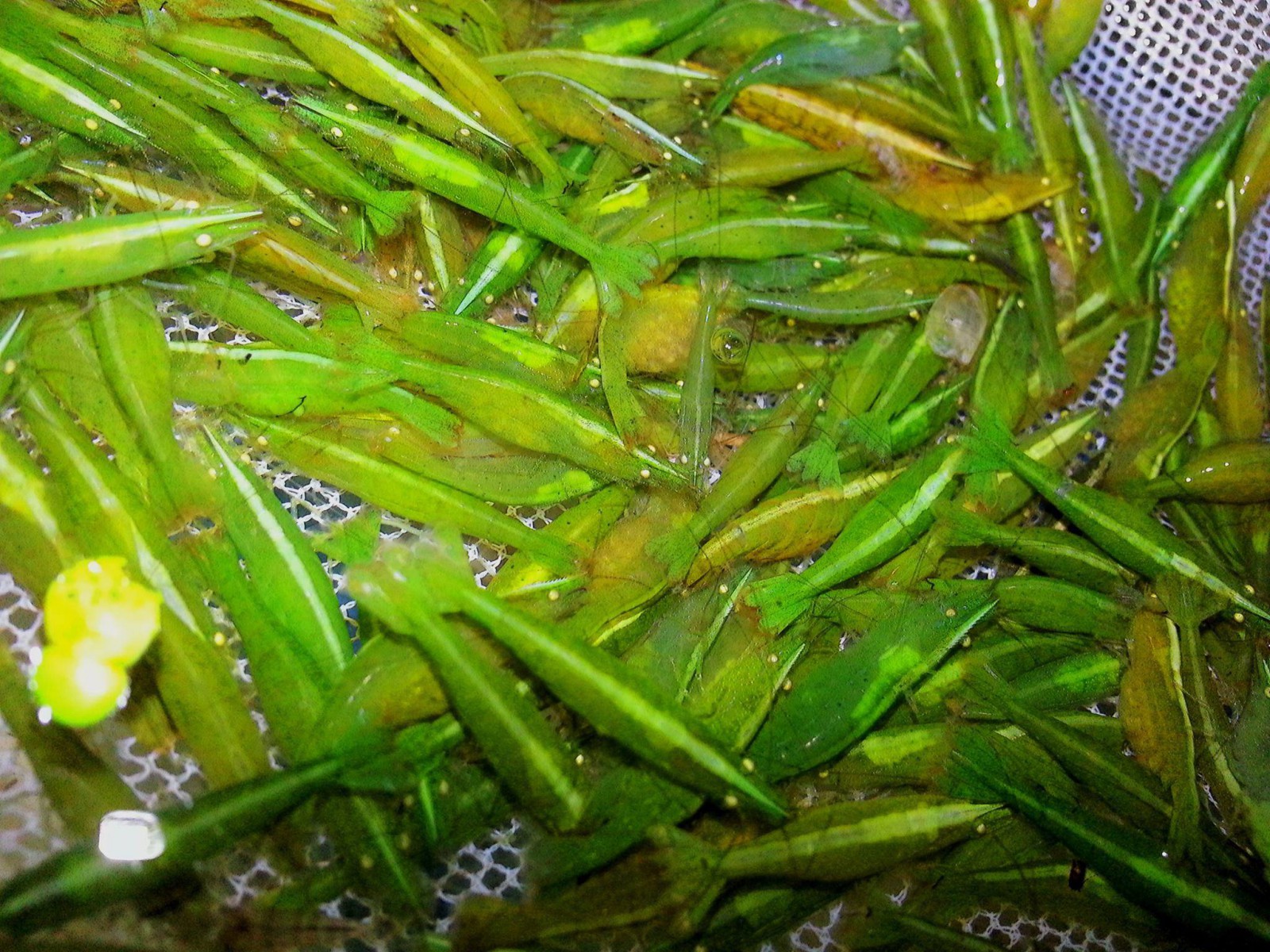
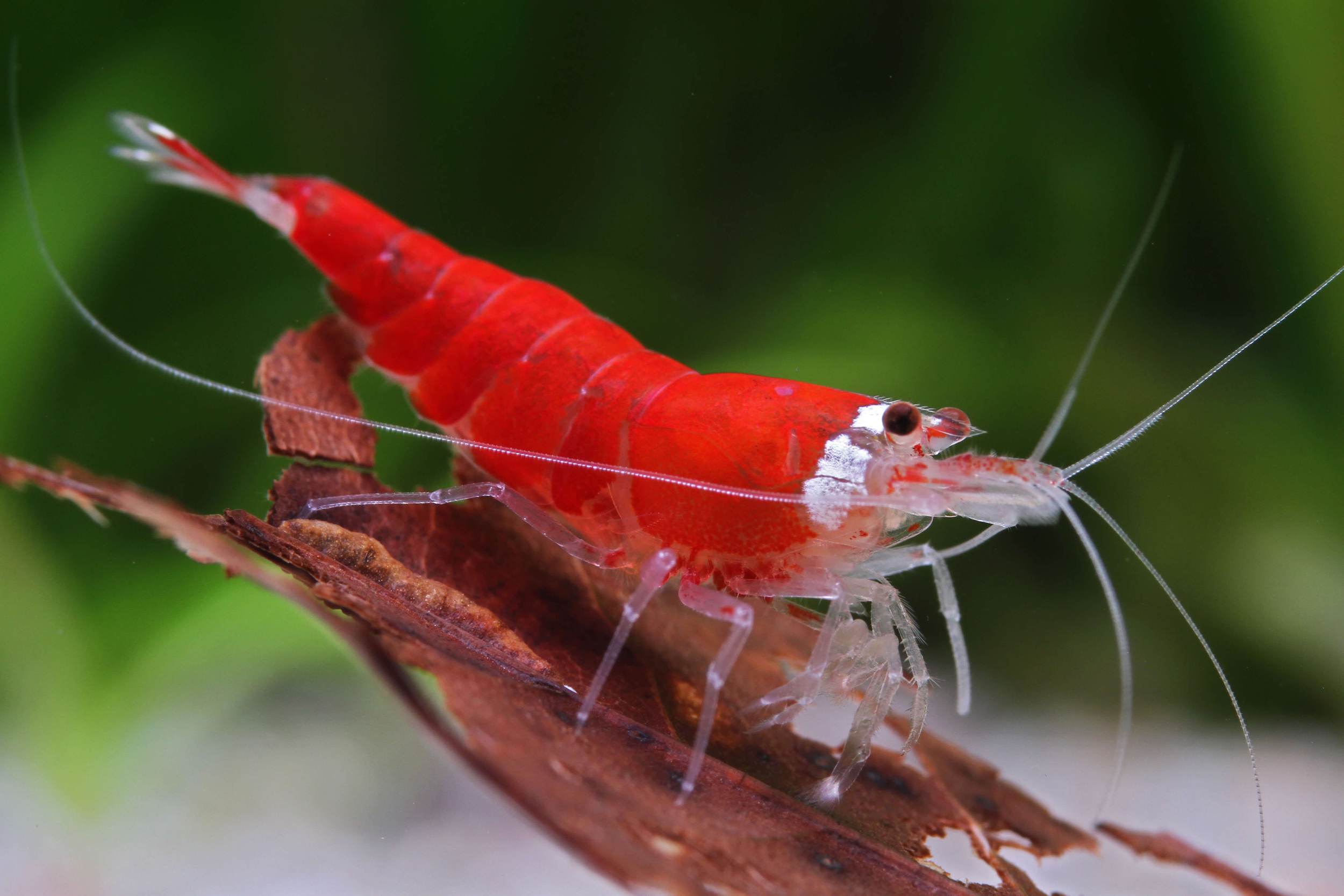
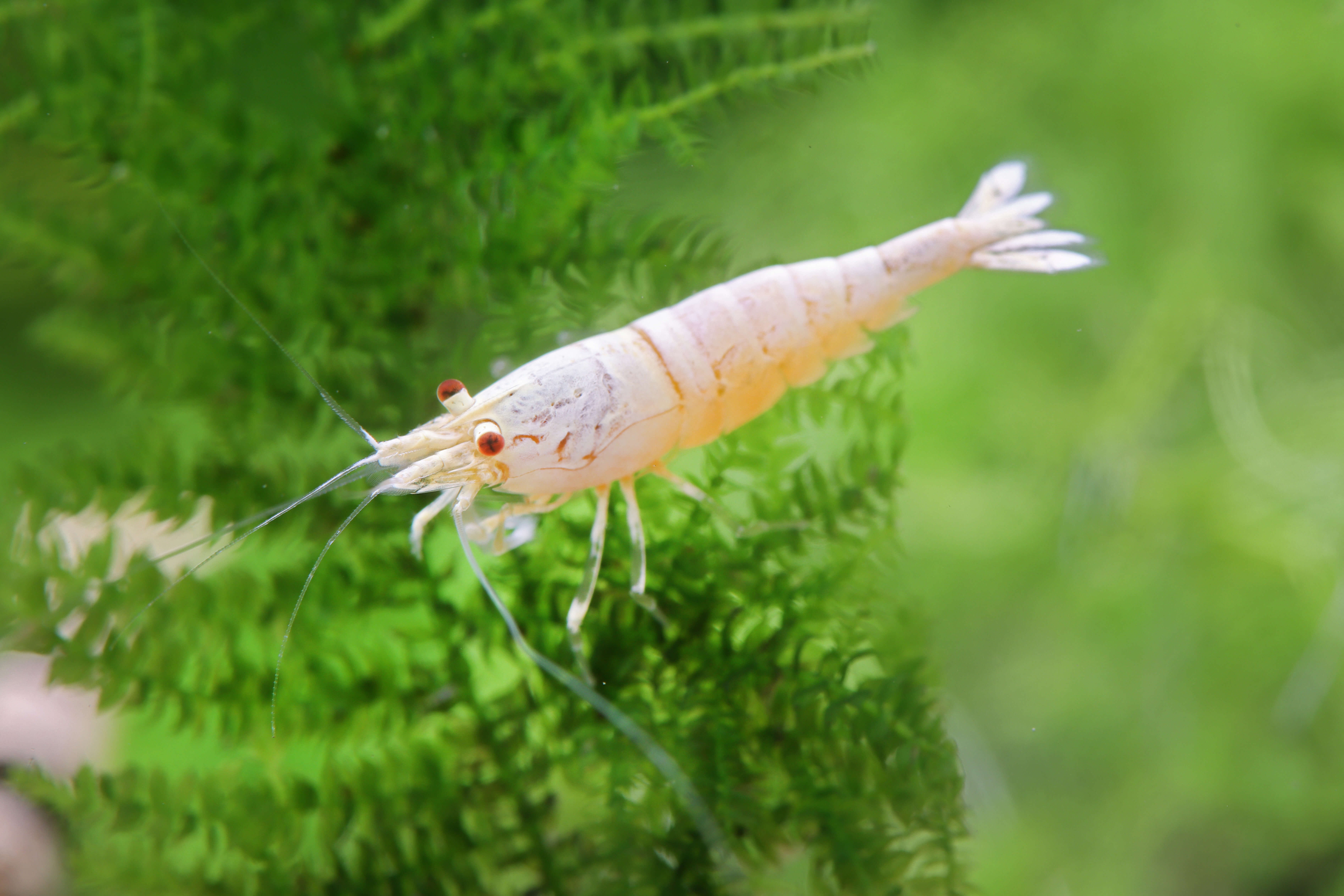
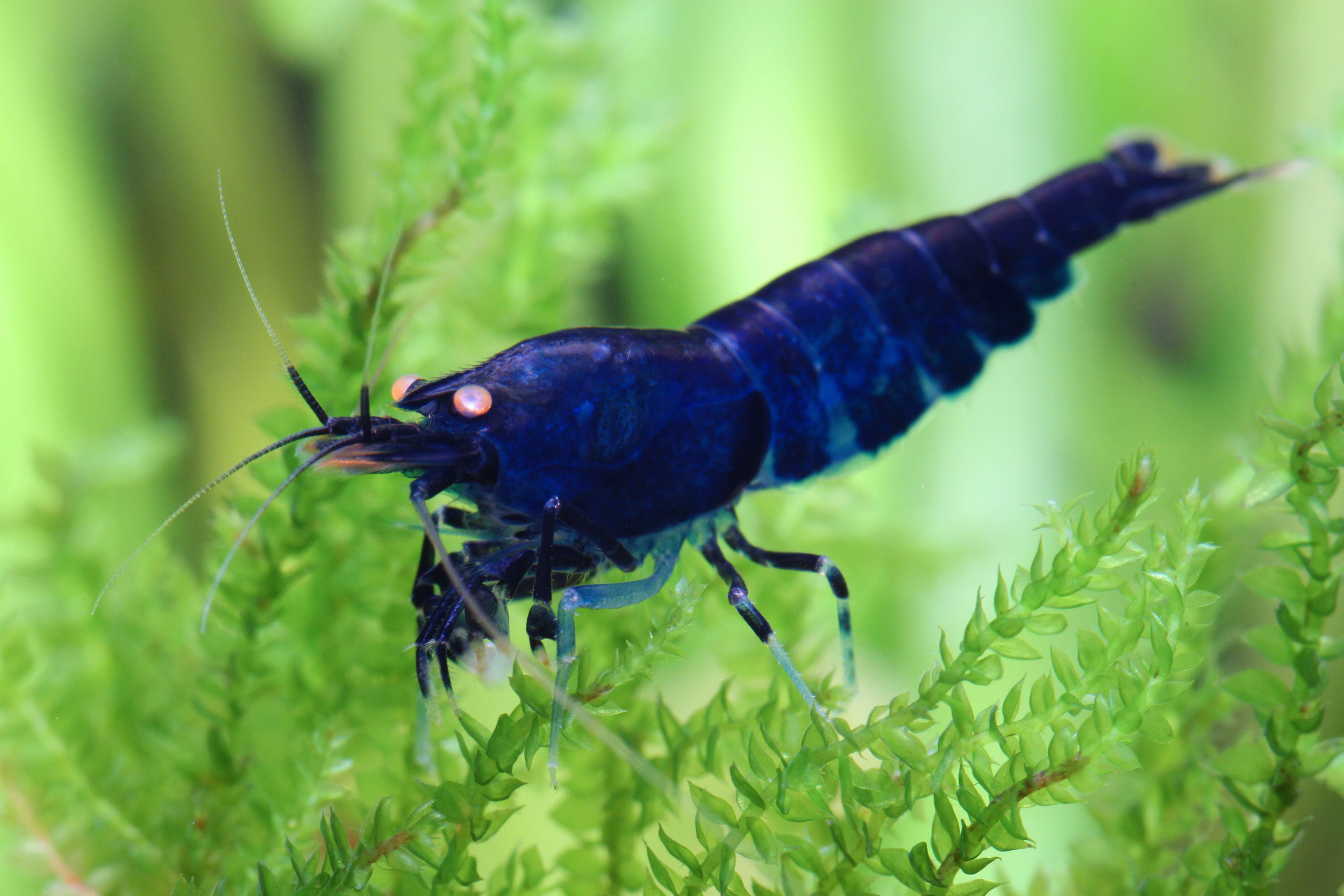
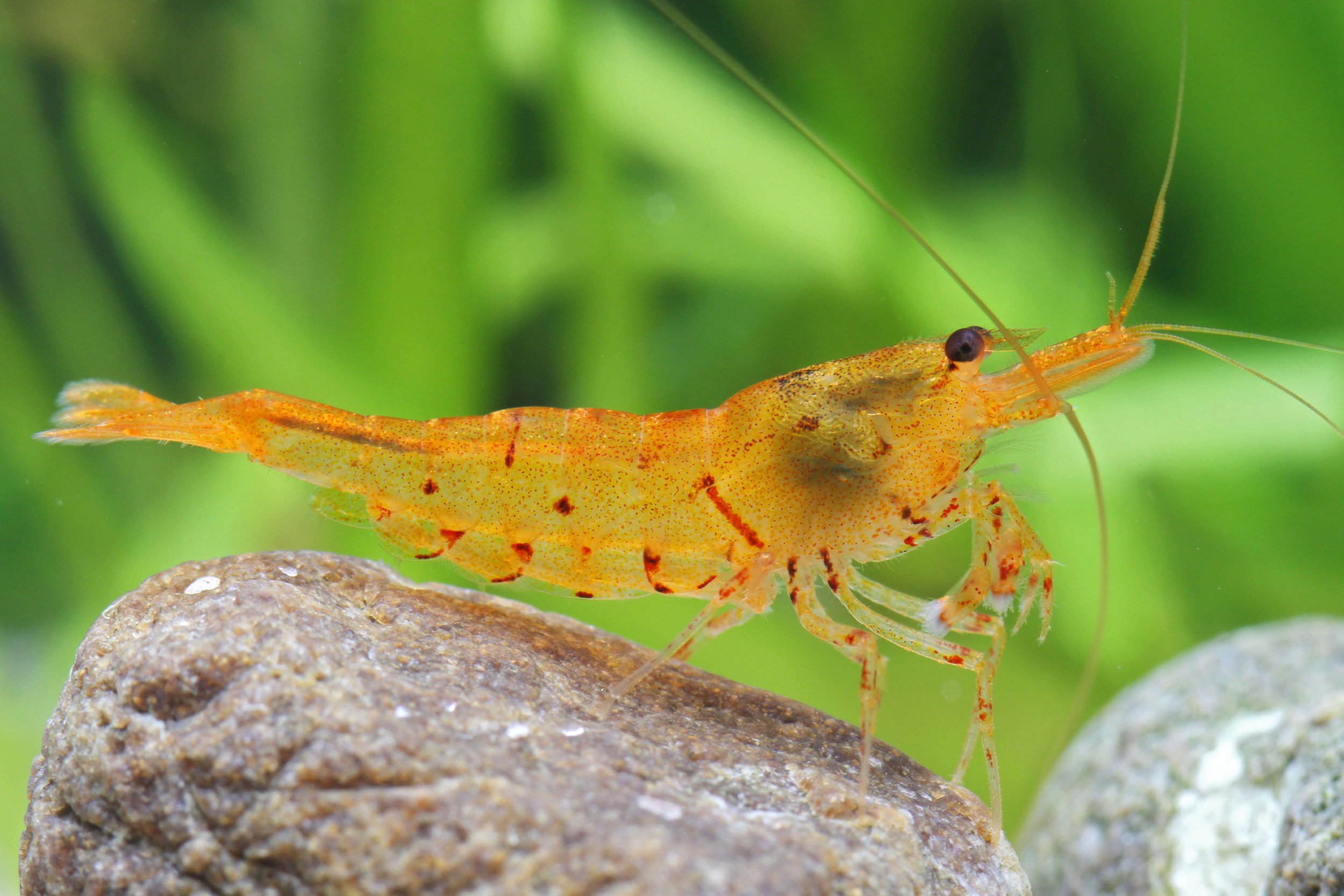
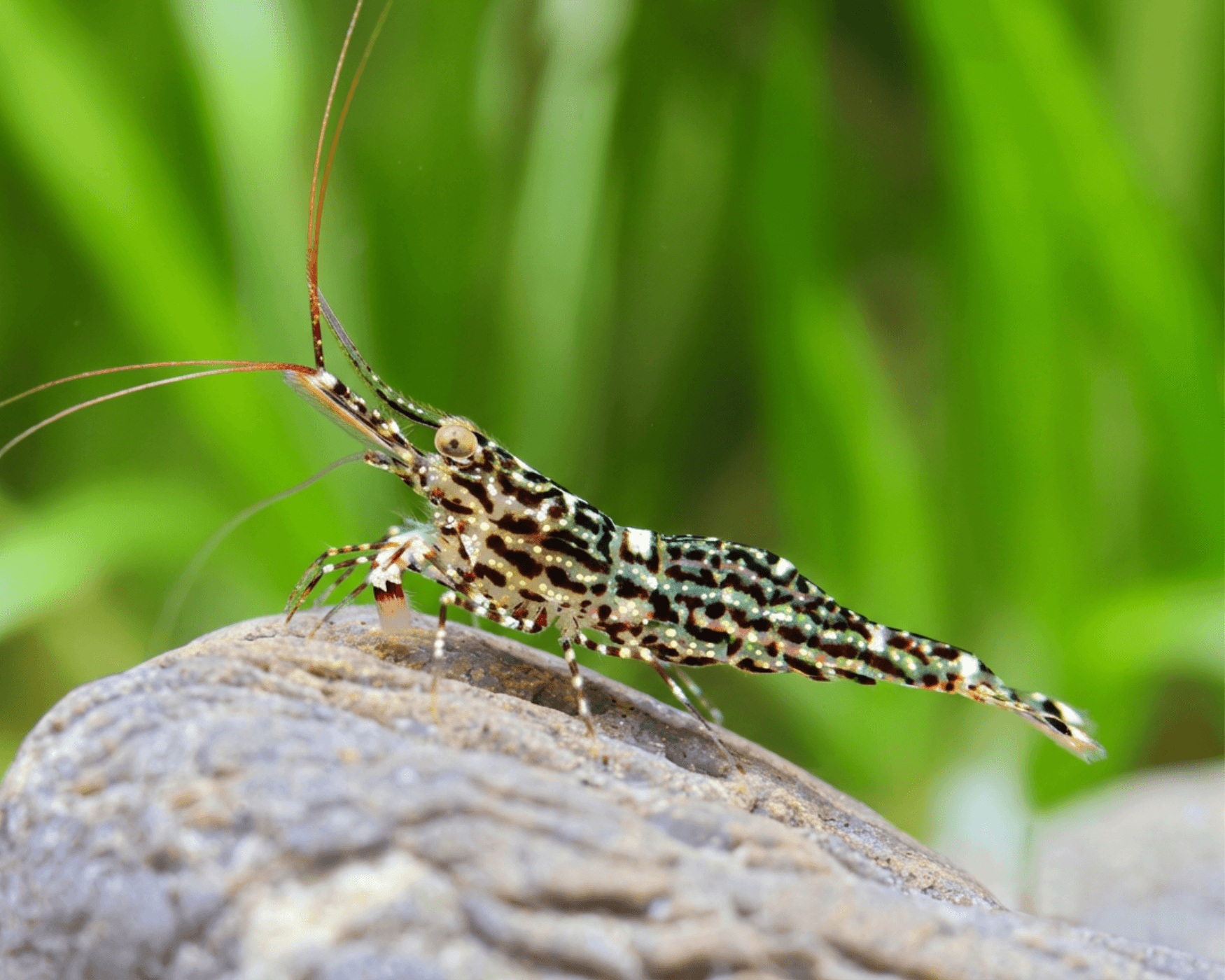
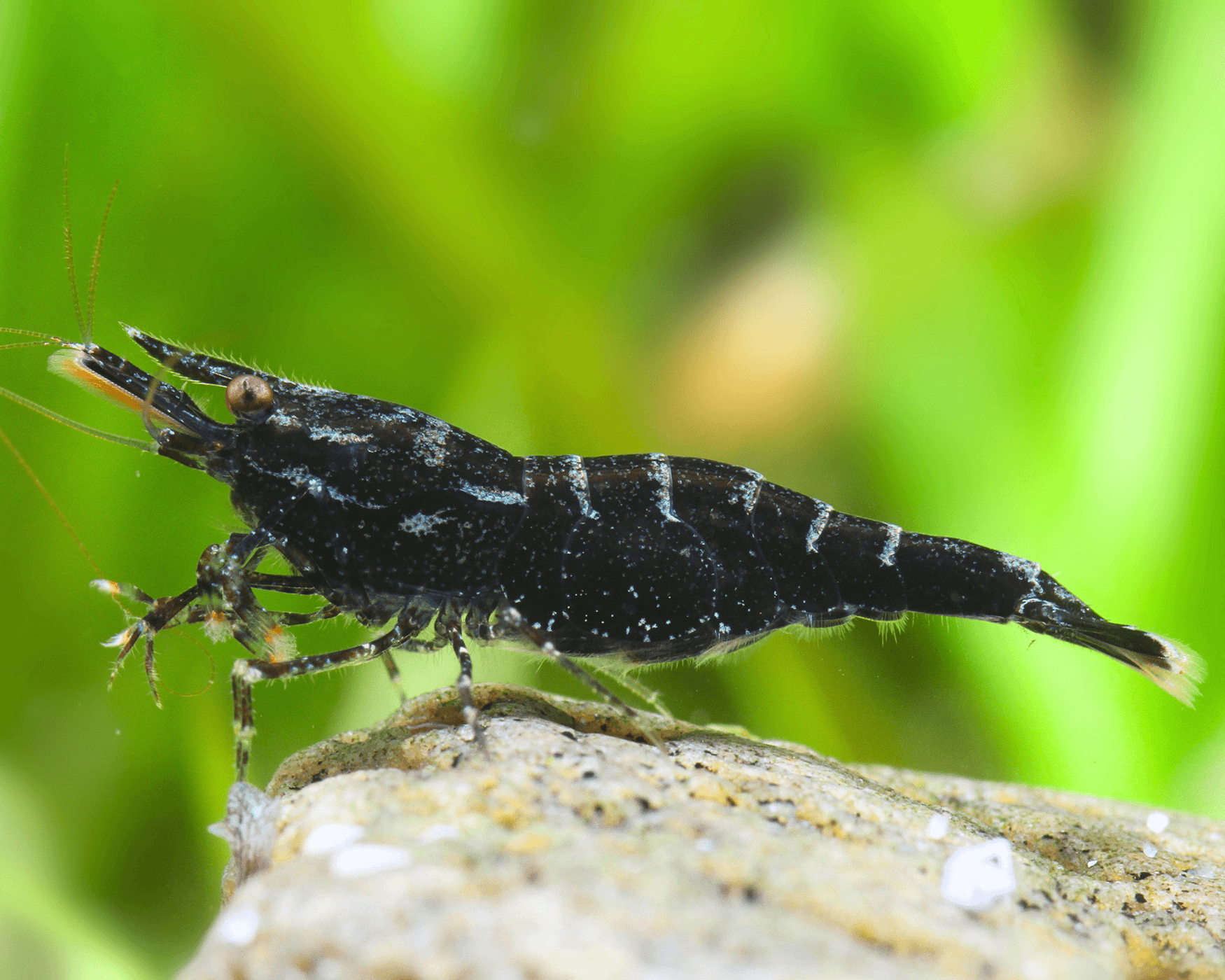
The Amano shrimp is commonly identified as Caridina multidentata. It was formerly widely known in the aquarium trade as Caridina japonica. The body is mostly translucent or grayish, often with brown to reddish-brown dots and short markings along the sides. Females are usually larger and deeper-bodied than males. Because the supplied label is a trade description rather than a taxonomic record, identification should be treated as probable rather than independently confirmed.
Natural habitat
Caridina multidentata occurs in flowing freshwater habitats associated with rivers and streams in Japan and Taiwan. Adults live in freshwater, while reproduction involves downstream movement of larvae into more mineral-rich coastal or brackish water. In aquaria, they benefit from mature surfaces, plants, wood, rocks and other cover where biofilm can develop.
Aquarium conditions
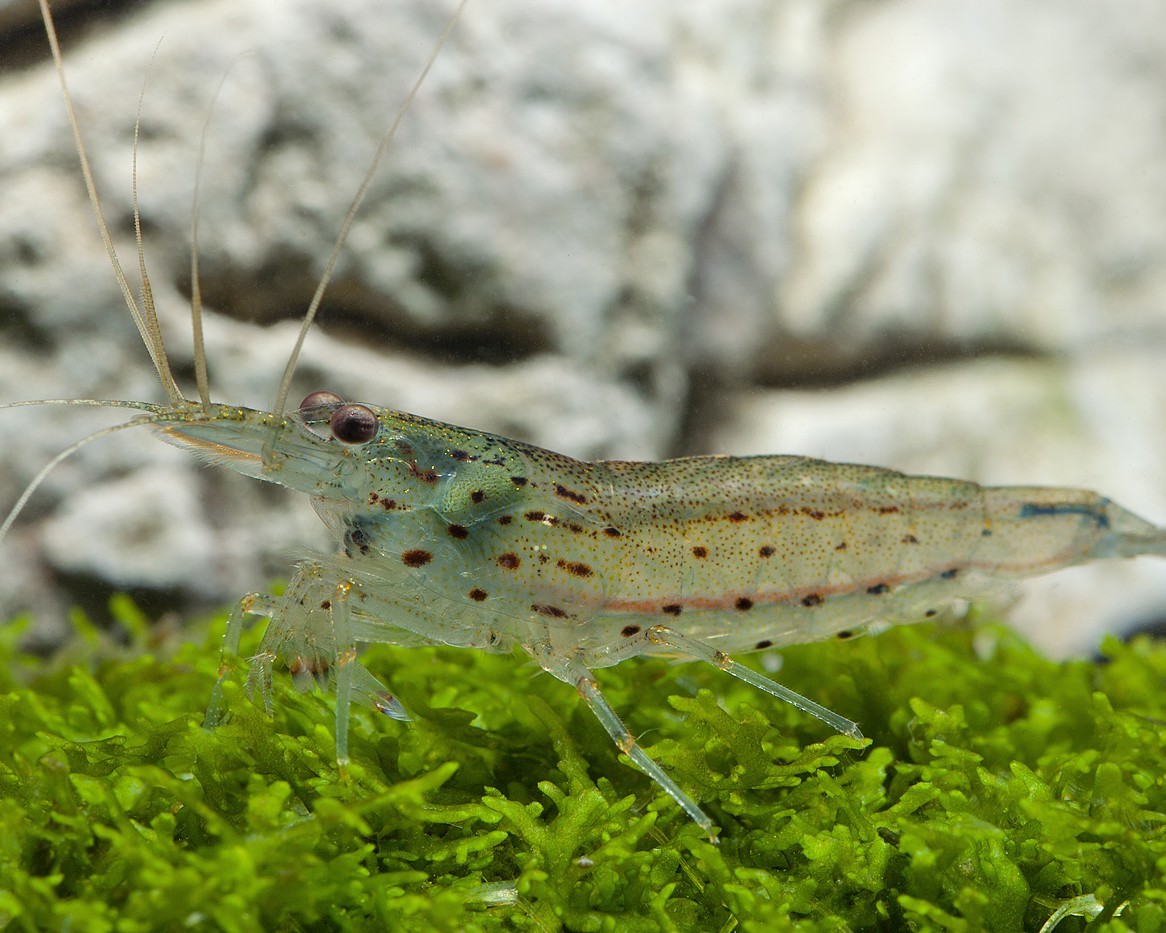
Provide stable, well-filtered water with good oxygenation and gentle to moderate circulation. A temperature of 18–28 °C and pH of 6.5–7.5 are suitable broad targets. Avoid sudden changes in temperature, pH, hardness or conductivity, and keep ammonia and nitrite at zero. Use an intake sponge or other pre-filter so shrimp cannot be drawn into the filter. A covered aquarium is useful because shrimp may climb out, especially during stress or poor water quality.
Feeding
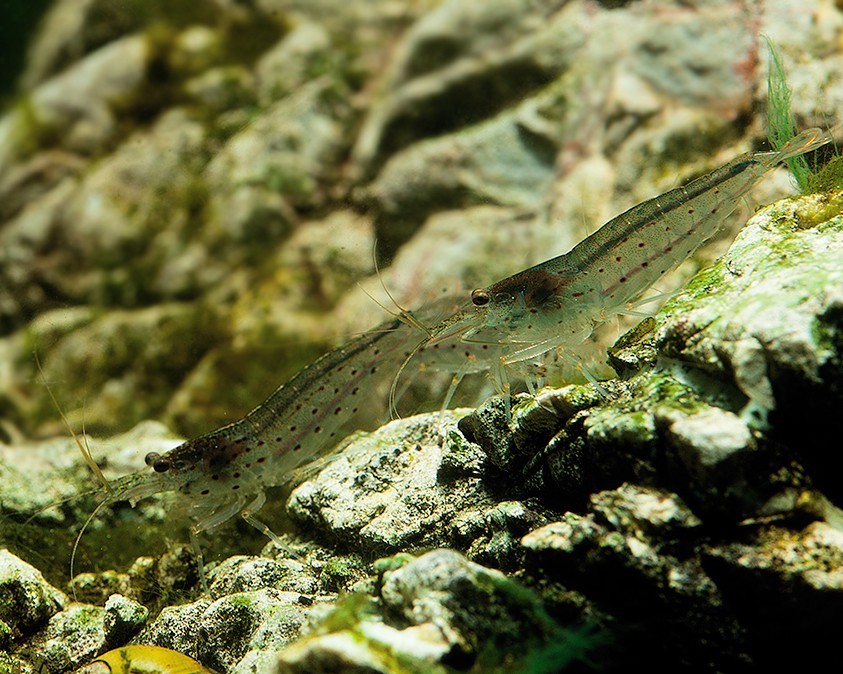
Amano shrimp graze continuously on algae, aufwuchs and biofilm from plants, wood, rocks and other surfaces. Supplement established aquariums with small portions of sinking shrimp foods, algae-based foods or blanched vegetables. They also consume uneaten fish food and animal matter, but should not be relied on as a substitute for maintenance. Feed sparingly and remove leftovers before they decay. A varied diet containing plant matter and suitable minerals supports growth and molting.
Tank mates
They are peaceful with other Amano shrimp and with similarly peaceful freshwater invertebrates. Suitable companions can include small, non-predatory community fish and peaceful snails, provided the aquarium is stable and well planted. Avoid large, aggressive or strongly predatory fish, which may eat adult shrimp or harass them. Newly molted shrimp and very small individuals are especially vulnerable. Amano shrimp generally do not reproduce successfully in ordinary freshwater community tanks, so they are less likely than many dwarf shrimp to overpopulate a display.
Molting and mineral needs
Growth requires periodic molting, during which the shrimp sheds its old exoskeleton. It may hide before and after molting and is particularly vulnerable at this time. Provide plants, moss, wood, rock crevices and other refuge, and avoid disturbing or handling the shrimp. Stable mineral content and adequate dietary minerals help support a new shell, but abrupt increases in hardness or mineral supplements can be harmful. A discarded exoskeleton is normally harmless and may be eaten.
Breeding
Amano shrimp mate in freshwater, and females carry numerous eggs beneath the abdomen. The eggs hatch into planktonic larvae that require brackish water and suitable microscopic food; they do not develop directly into miniature freshwater shrimp. Captive breeding therefore requires a separate, carefully managed larval system with controlled salinity, aeration and feeding, followed by gradual acclimation of developed juveniles to freshwater. Eggs may be carried in a freshwater aquarium, but larvae released into ordinary freshwater usually fail to complete development.
Leave your comments