AquaLibs presents AquaRank Discover the world’s leading aquascapers

Explore transparent rankings built from published results across the world’s leading aquascaping contests.

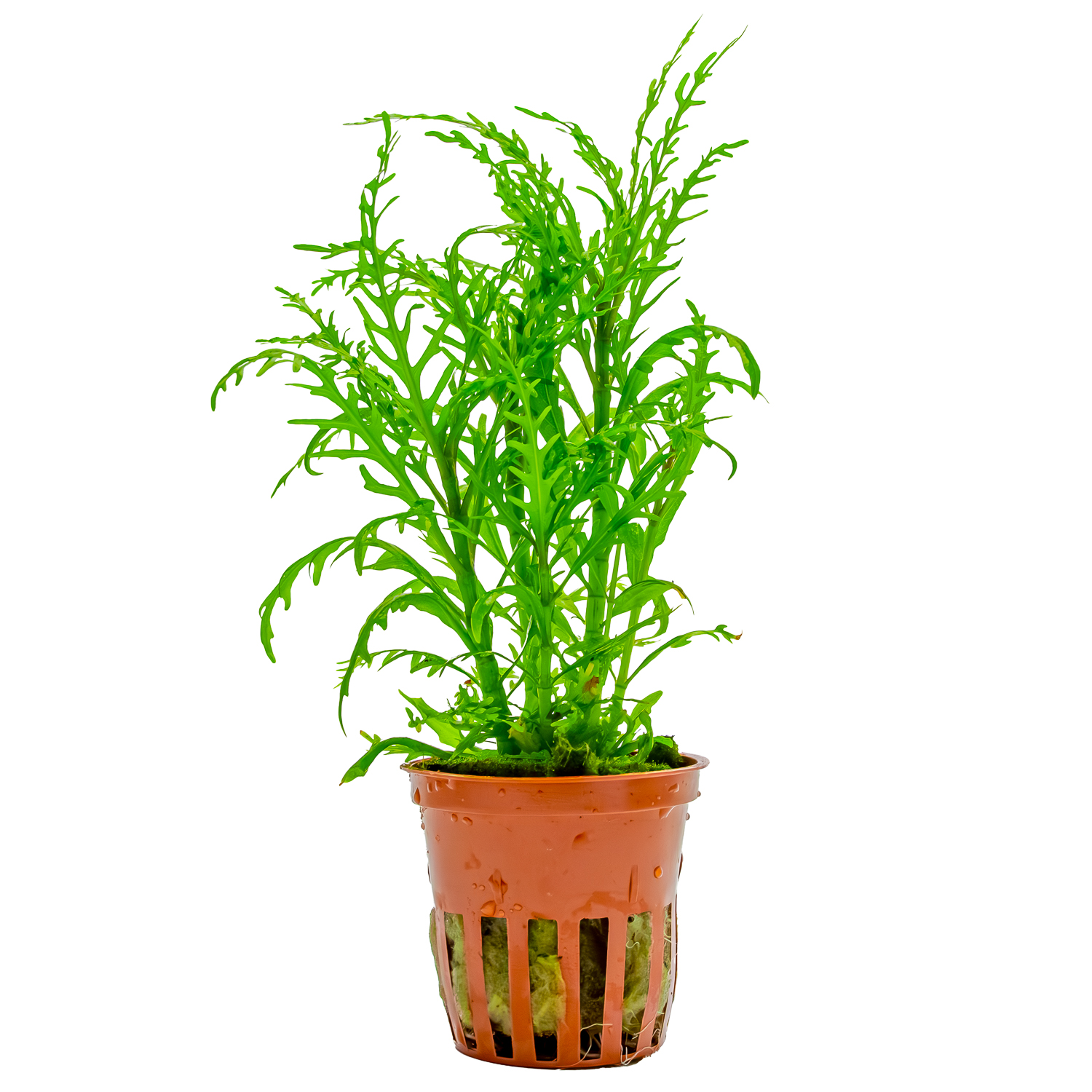
Hygrophila difformis
  • One of the easiest plants for beginners
  • Great as auxiliary plant when starting a tank
  • Pretty, light green, lobed leaves

Stems becomes 20-30 cm tall and 6-12 cm wide. A plant for beginners, which will help create balance in the aquarium from the start. Its rapid growth helps prevent algae because the plant absorbs a great number of nutrients from the water. The shortage of micronutrients leads to pale leaves, which may be an indication that the aquarium needs fertiliser.
In large aquariums its lobed leaves can create a distinctive group.

A bundle of stems or young plants gathered in an anchor. Remove the anchor and split into separate plants. Regarding stem plants, remove the leaves from the lowest 5 cm (2“). Remove any damaged leaves. Plant the individual plants with some distance into the bottom substrate. Roots will develop soon and the plant start growing.
Plant info

  • Colors: Green
  • Difficulty: Easy
  • Origin: Asia
  • Usage: Supporting plants
  • Type: Stem
  • Growth rate: High
  • Height: 20 - 30+
  • Light demand: Low
  • CO2: Low
Leave your comments
Latest on Plants
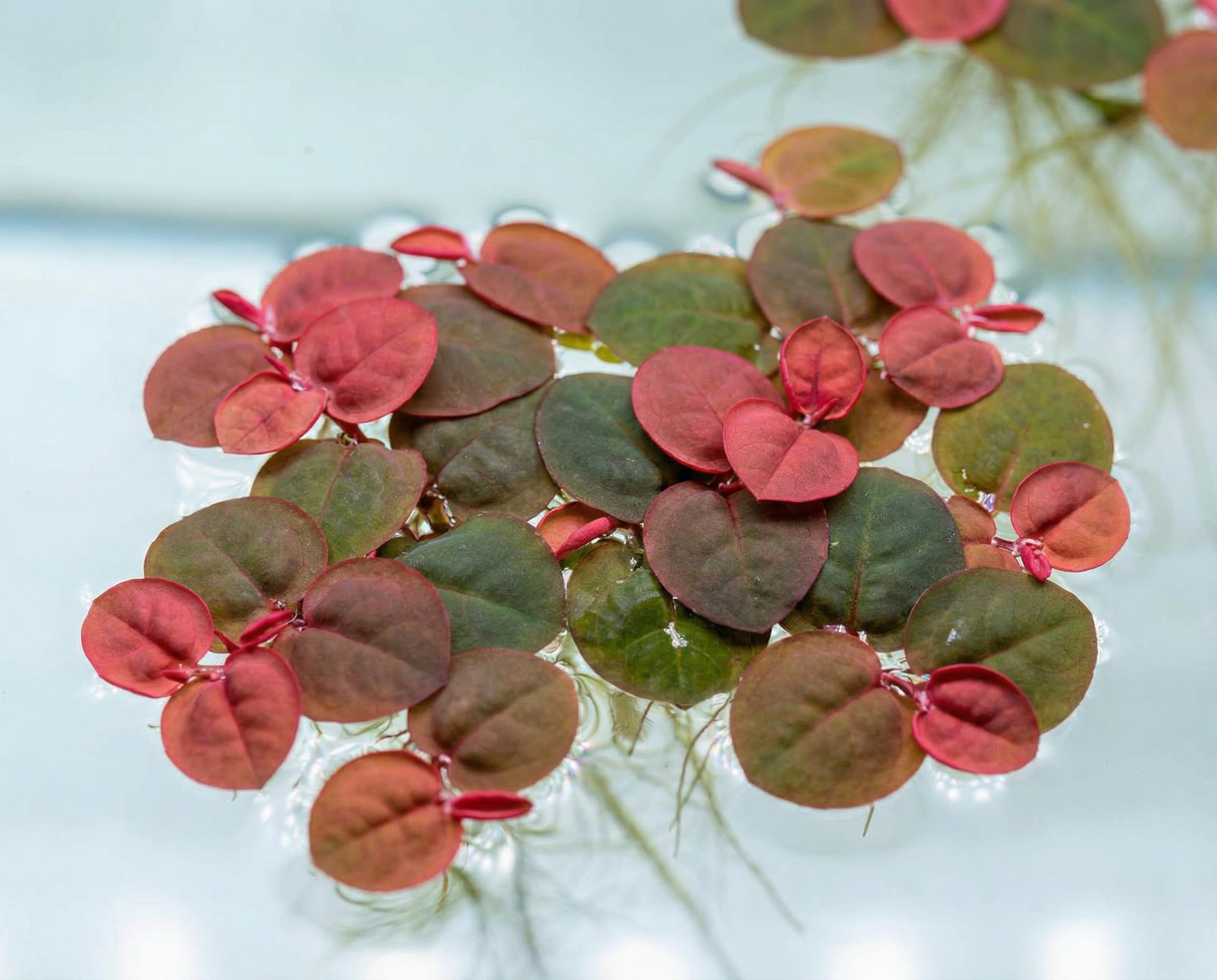
  • Phyllanthus fluitans (Red Root Floater)

    Phyllanthus fluitans (Red Root Floater)

    Easy
    Supporting plants
    Phyllanthus fluitans is a free-floating South American aquatic plant with rounded, slightly swollen leaves and fine hanging roots. Under strong light, mature leaves may develop red or pink tones, while lower light generally produces greener growth. It is useful for absorbing nutrients, providing shade and offering cover near the surface. The supplied images show characteristic features, but coloration varies with light and growing conditions.
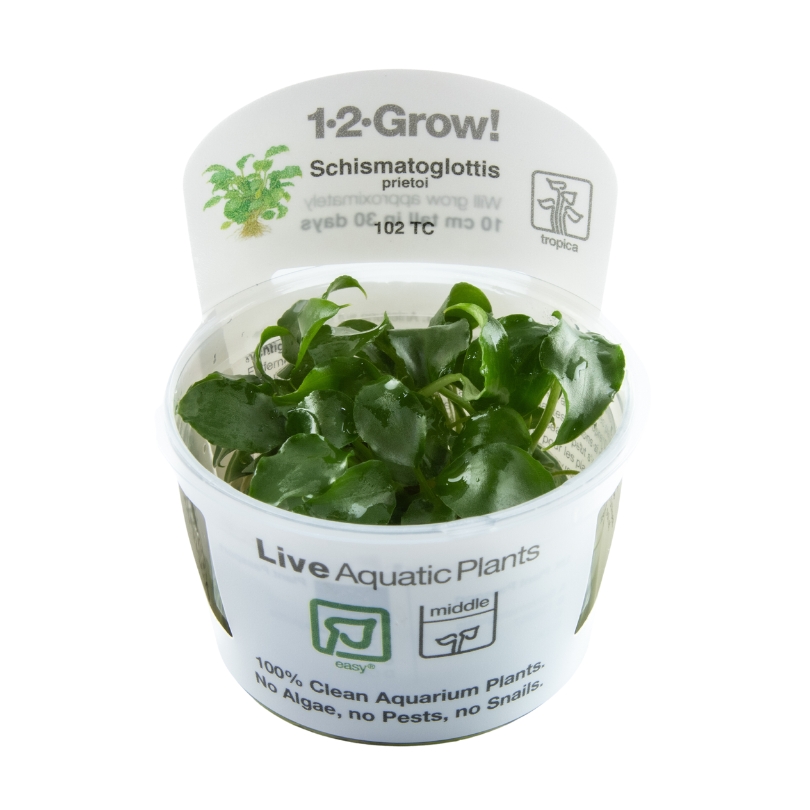
  • Schismatoglottis prietoi

    Schismatoglottis prietoi

    Easy
    Middleground
    Schismatoglottis prietoi is a compact, green aroid with thick, gently wavy leaves and a clumping growth habit. It is suitable for the middle area of smaller or medium-sized aquariums, where its textured foliage provides contrast without dominating the layout. The supplied material supports identification as S. prietoi, although aquarium-trade plants can sometimes be confused with related Schismatoglottis species.
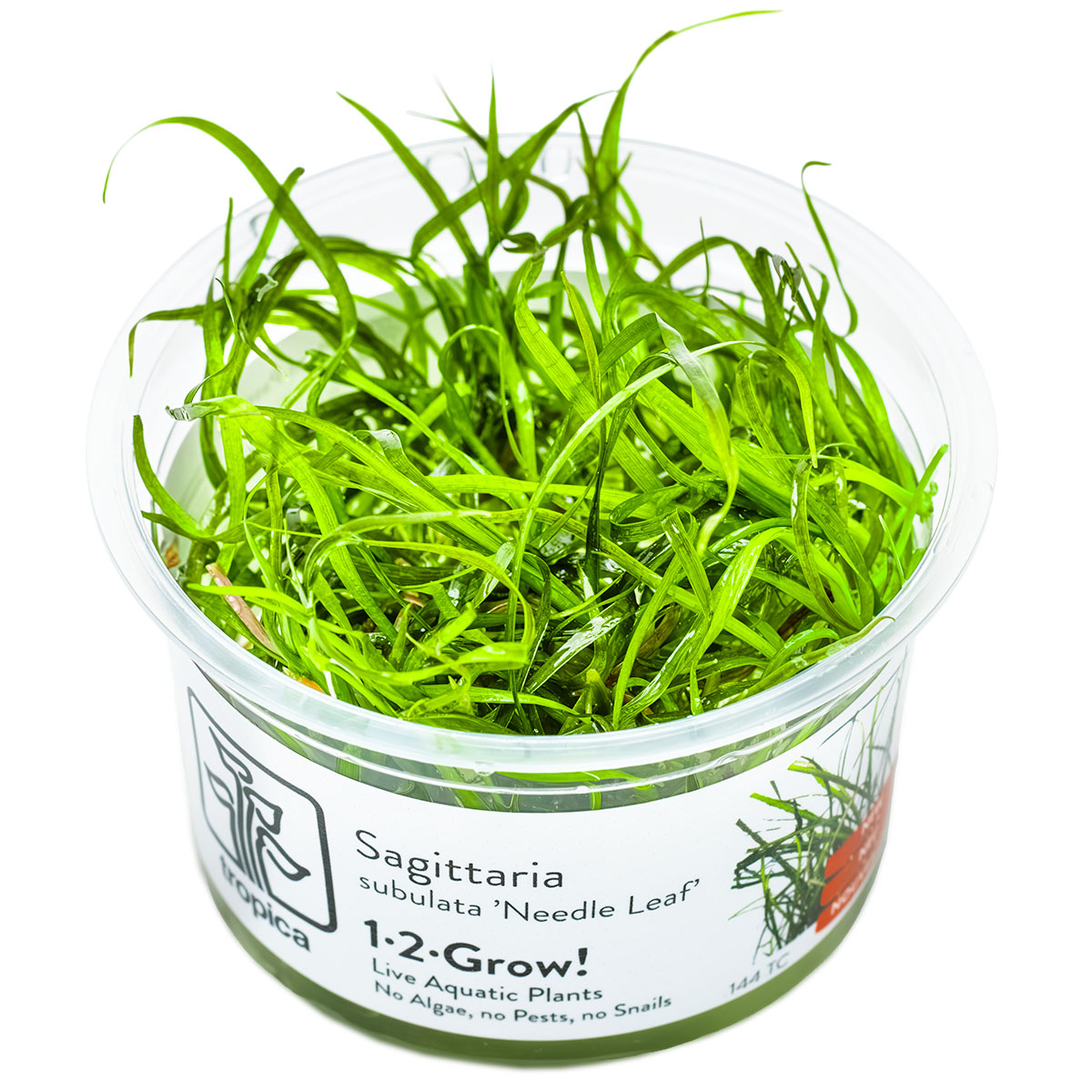
  • Sagittaria subulata (Needle Leaf)

    Sagittaria subulata (Needle Leaf)

    Easy
    Foreground
    Sagittaria subulata is a grass-like, rosette-forming aquarium plant sold as Needle Leaf or Dwarf Sagittaria. Its narrow leaves arise from a basal crown and it spreads by runners, forming a low to medium-height patch when grown submerged. The exact form can vary considerably: some specimens remain compact, while others produce taller leaves under aquarium conditions. Identification is reasonably clear from the supplied label and plant appearance, but cultivar or commercial-form distinctions cannot be confirmed from images alone.
  • Rotala wallichii (Wallich's Rotala)

    Rotala wallichii (Wallich's Rotala)

    Advanced
    Background
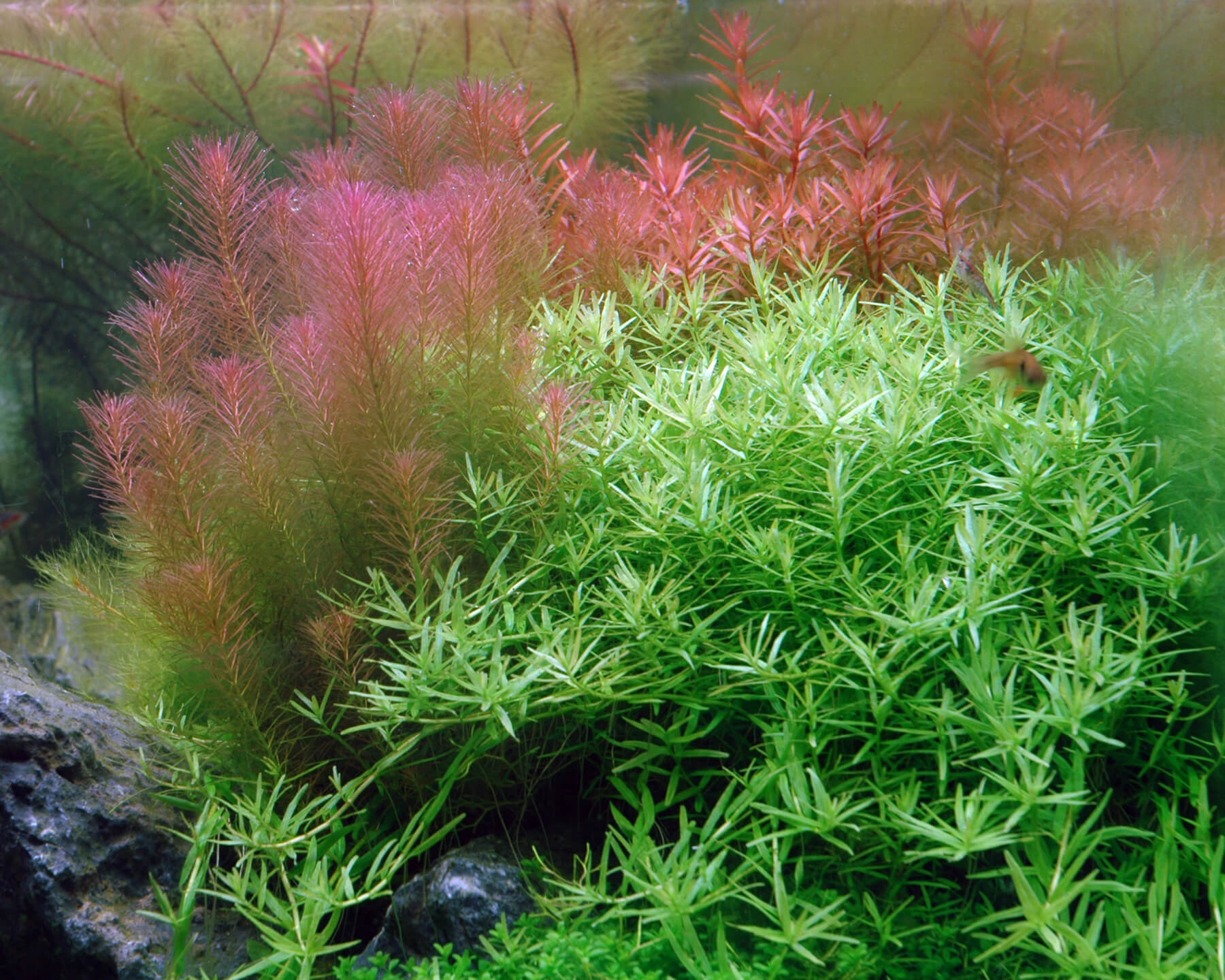
    Rotala wallichii is a delicate, fine-leaved stem plant from Asia that can develop pink to red growth tips under strong light and stable carbon dioxide. The supplied source identifies the plant as this species, although a definitive identification from a photograph alone is limited. It is best suited to experienced aquarists and is commonly used as a detailed background or midground accent.
  • Rotala rotundifolia 'Blood Red' (Blood Red Rotala)

    Rotala rotundifolia 'Blood Red' (Blood Red Rotala)

    Medium
    Background
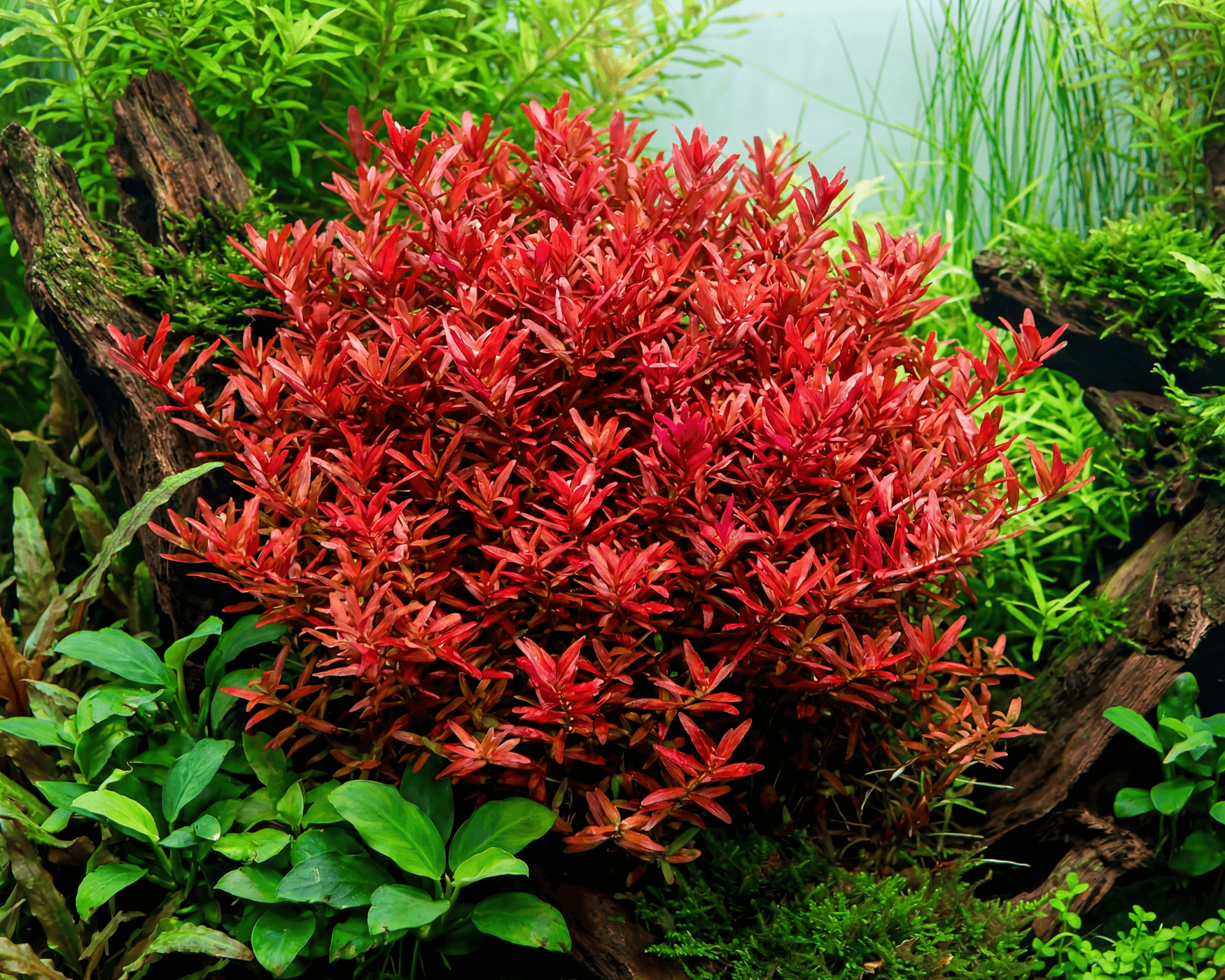
    Rotala rotundifolia 'Blood Red' is a red stem-plant selection of the highly variable Rotala rotundifolia complex. It forms dense, upright shoots with narrow leaves and can become intensely red under strong light, adequate carbon dioxide, and balanced fertilisation. The trade name identifies the aquarium form, but appearance can vary between cultivated lines, so exact clonal identity cannot be confirmed from images alone.
  • Sagittaria subulata (Dwarf Sagittaria)

    Sagittaria subulata (Dwarf Sagittaria)

    Easy
    Foreground
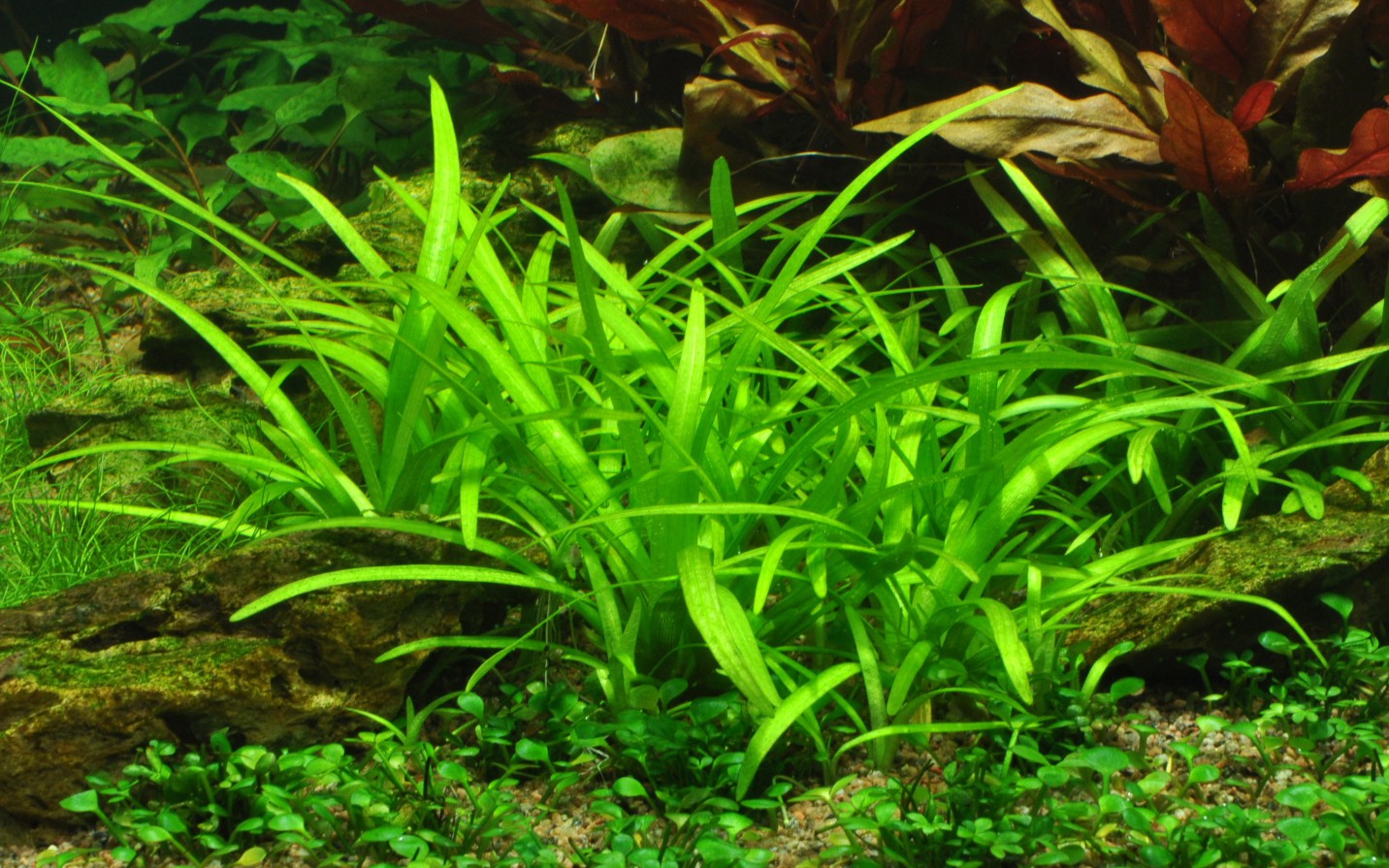
    Sagittaria subulata is a grass-like, stolon-forming rosette plant commonly used to create a low, natural-looking foreground or transition. Its narrow leaves vary in height according to conditions and may become taller in deeper water or weaker light. It is generally adaptable and suitable for planted community aquariums. The supplied images are consistent with this identification, although aquarium-grown forms can vary in size and appearance.
  • Rotala rotundifolia 'H'ra' (H'ra Rotala)

    Rotala rotundifolia 'H'ra' (H'ra Rotala)

    Advanced
    Background
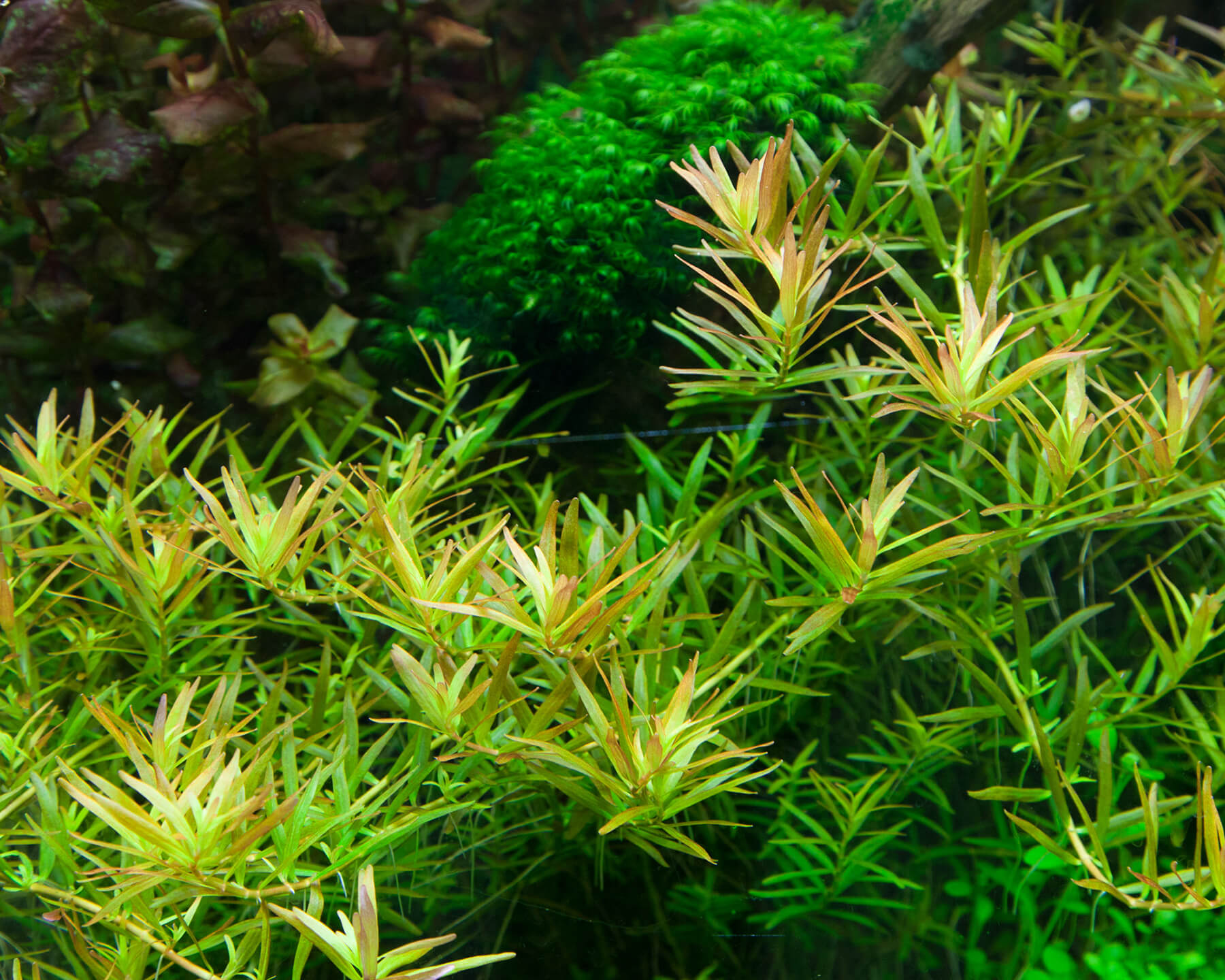
    Rotala rotundifolia 'H'ra' is a colorful stem-plant cultivar grown for its narrow leaves and warm orange, pink, or reddish tones under strong aquarium lighting. It is generally sold as a cultivated form of Rotala rotundifolia, although the exact lineage and selection history are not established here. With adequate carbon dioxide, nutrients, and regular trimming, it can form a dense background group. Color intensity varies with light, nutrient availability, and general aquarium conditions.
  • Riccardia chamedryfolia (Coral Moss)

    Riccardia chamedryfolia (Coral Moss)

    Advanced
    On rock or root
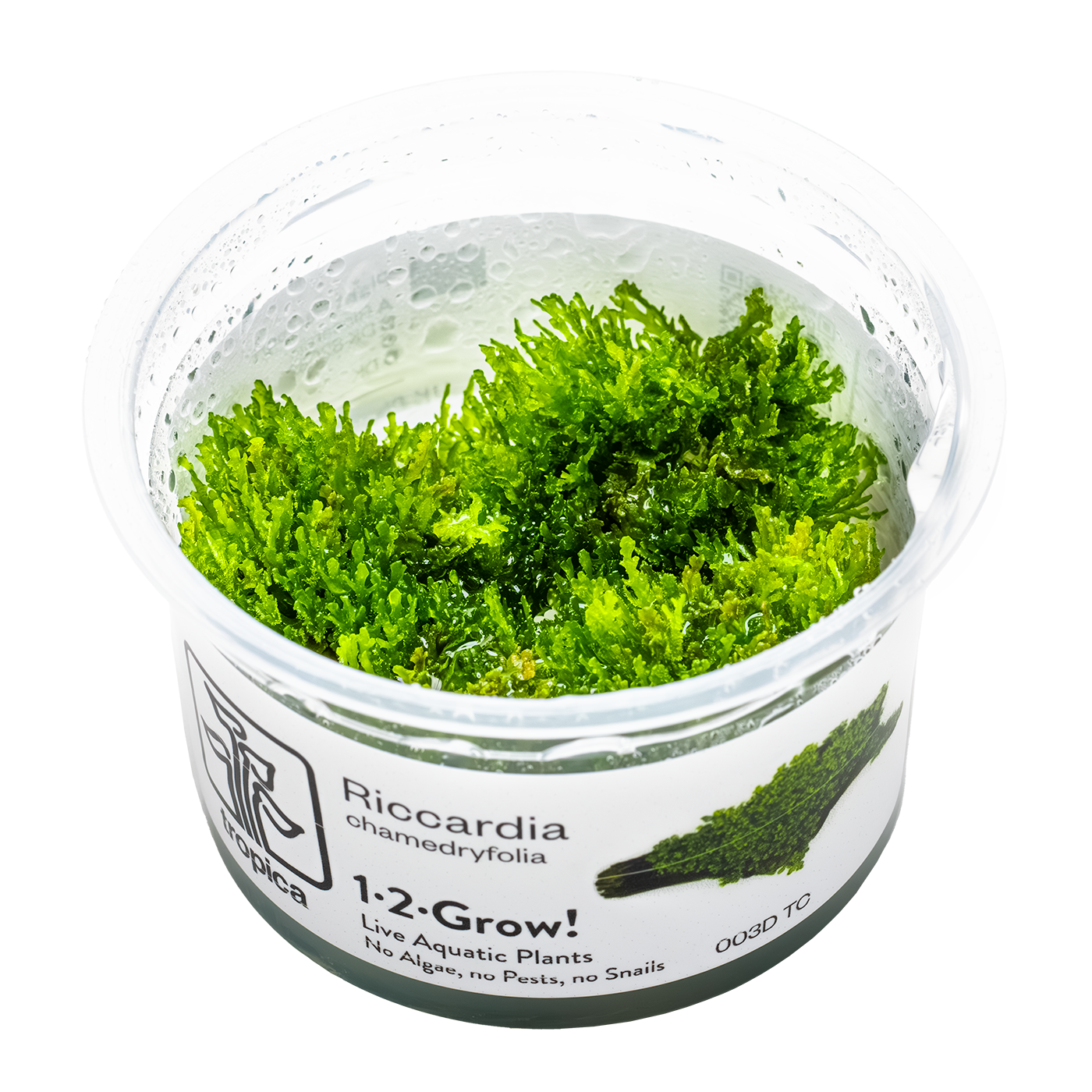
    Riccardia chamedryfolia is a compact, branching liverwort commonly sold in aquascaping as coral moss or mini pellia. It forms dense, cushion-like green growth with a finely divided, coral-like texture. This identification follows the supplied source label, although commercial liverwort names can sometimes be applied inconsistently. It is best used attached to hardscape rather than planted deeply in substrate, where good water movement and stable conditions help maintain healthy growth.
  • Riccia fluitans (Pond liverwort)

    Riccia fluitans (Pond liverwort)

    Medium
    Supporting plants
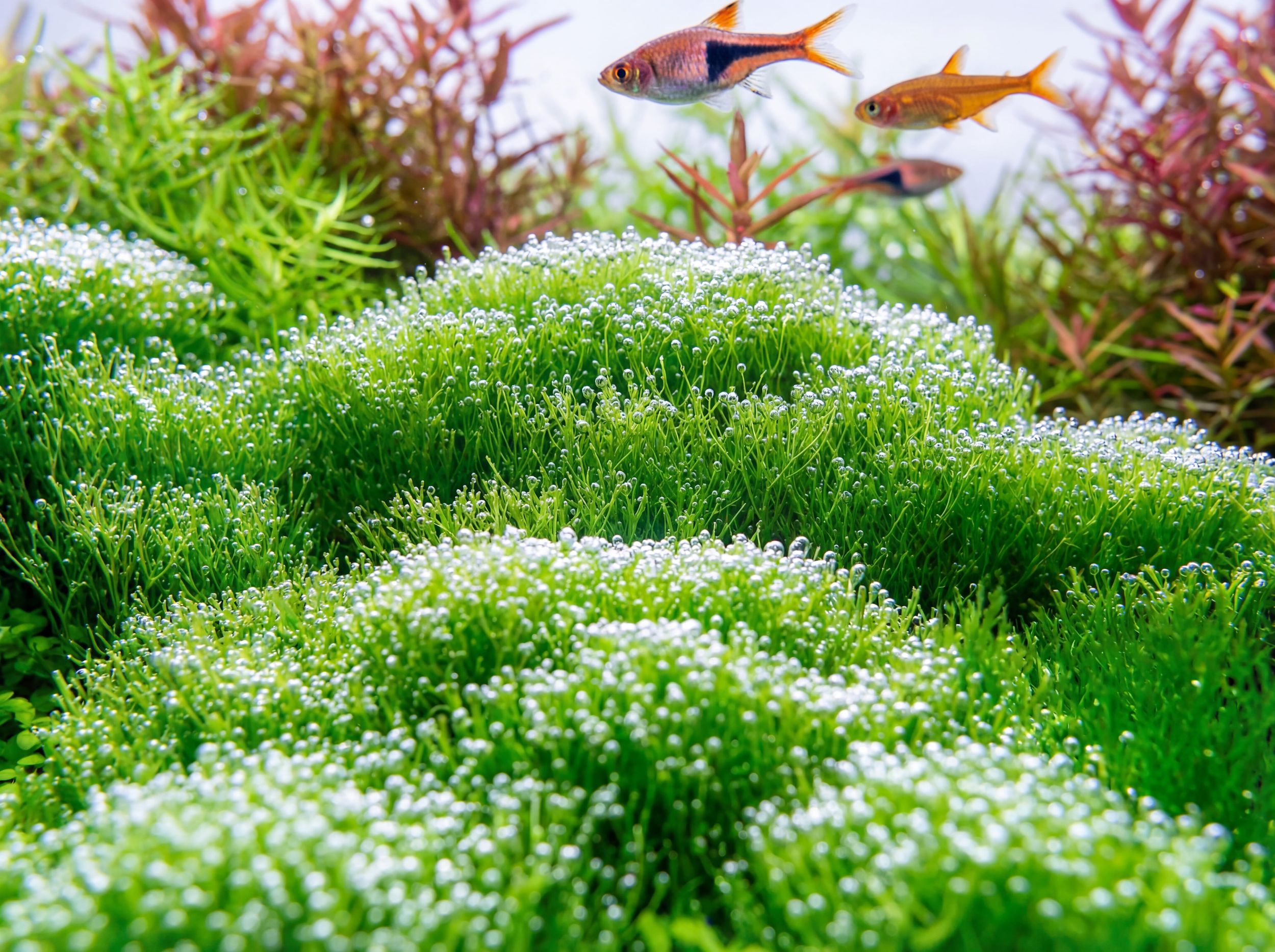
    Riccia fluitans is a small, floating thalloid liverwort that can also be cultivated underwater as a bright green cushion. It has no true leaves, stems, or roots, and spreads by branching and fragmentation. Aquarium specimens need to be secured because they naturally rise to the surface. The supplied images appear to show several different moss-like plants, so identification is based primarily on the stated source name.
  • Ranunculus inundatus (River Buttercup)

    Ranunculus inundatus (River Buttercup)

    Medium
    Foreground
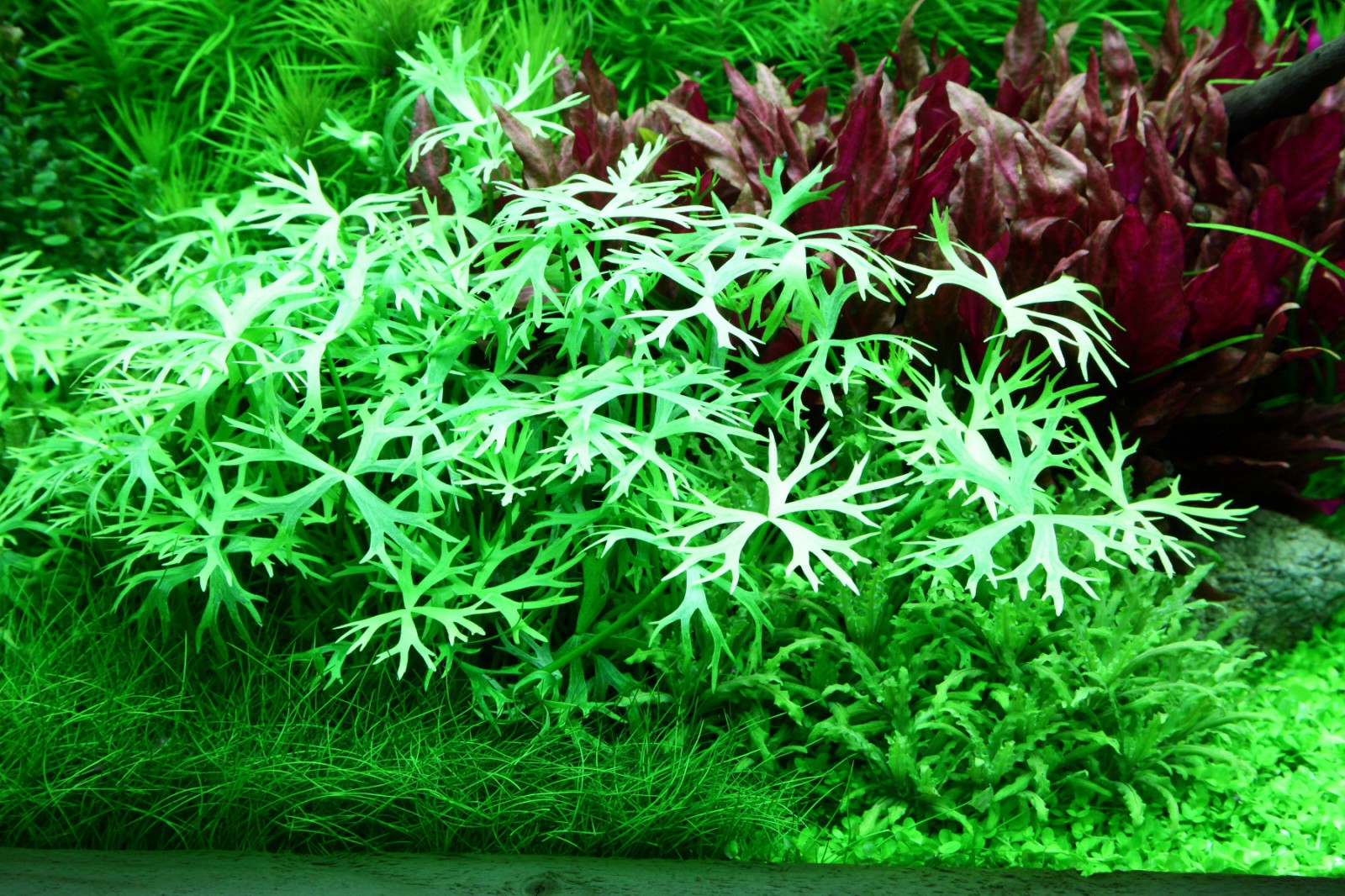
    Ranunculus inundatus is an Australian amphibious buttercup valued in aquariums for its distinctive, deeply divided leaves. Underwater, it forms a low to medium-height planting from creeping stems and can produce a spreading group when conditions are suitable. It is generally suitable for the foreground or lower middle ground, although strong light and regular trimming may be needed to keep growth compact. Identification is reasonably secure from the supplied source name, but cultivated forms can vary in leaf size and habit.
  • Pogostemon helferi (Small water star)

    Pogostemon helferi (Small water star)

    Medium
    Foreground
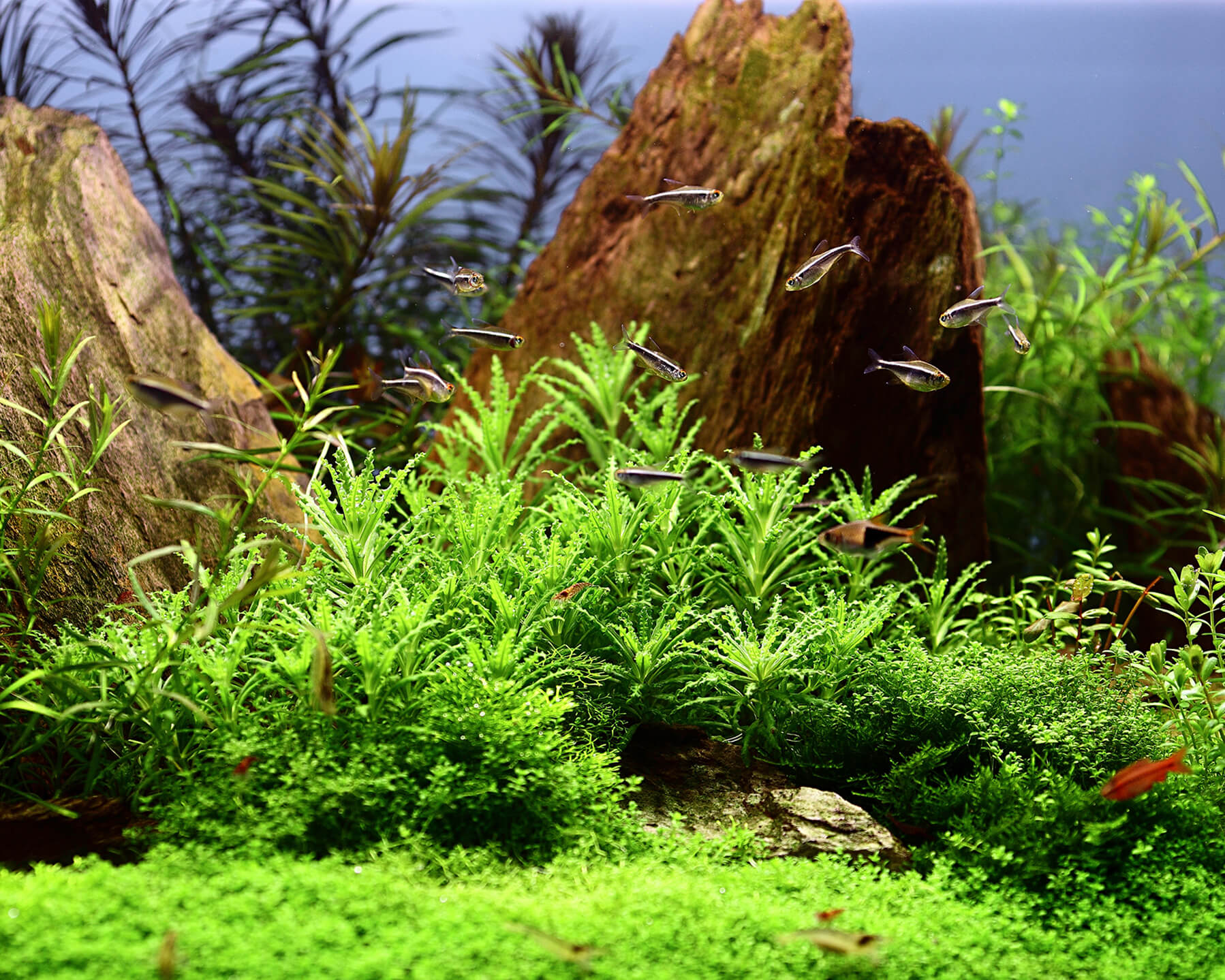
    Pogostemon helferi is a compact aquatic plant with bright green, strongly crinkled leaves arranged in dense rosettes. It is widely used as a foreground plant because it remains relatively short and can form groups over time. The species is associated with Southeast Asia, but exact locality information for aquarium-grown material may vary. Stable conditions, adequate light, nutrients, and carbon availability support compact growth and healthy new leaves.
  • Micranthemum tweediei (Monte Carlo Pearlwort)

    Micranthemum tweediei (Monte Carlo Pearlwort)

    Medium
    Foreground
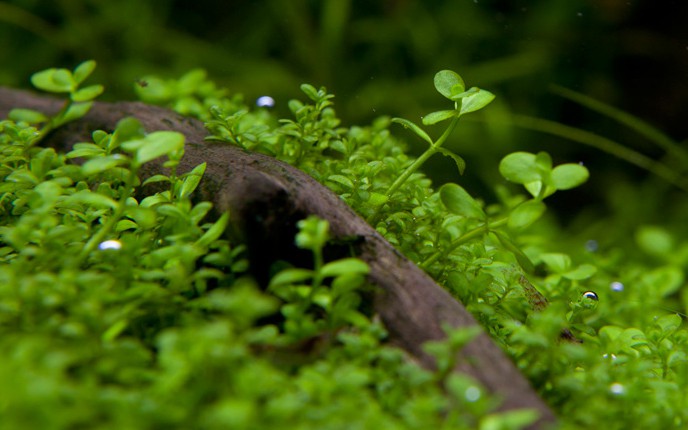
    Micranthemum tweediei is a small, creeping South American stem plant widely used to form a foreground carpet in freshwater aquariums. Its rounded, light-green leaves are larger than those of dwarf baby tears, making it comparatively forgiving while still benefiting from strong light, reliable carbon dioxide and adequate nutrition. Plant small portions separately in moist substrate so they can root and spread without lifting.
  • Alternanthera reineckii 'Mini' (Mini parrot leaf)

    Alternanthera reineckii 'Mini' (Mini parrot leaf)

    Medium
    Foreground
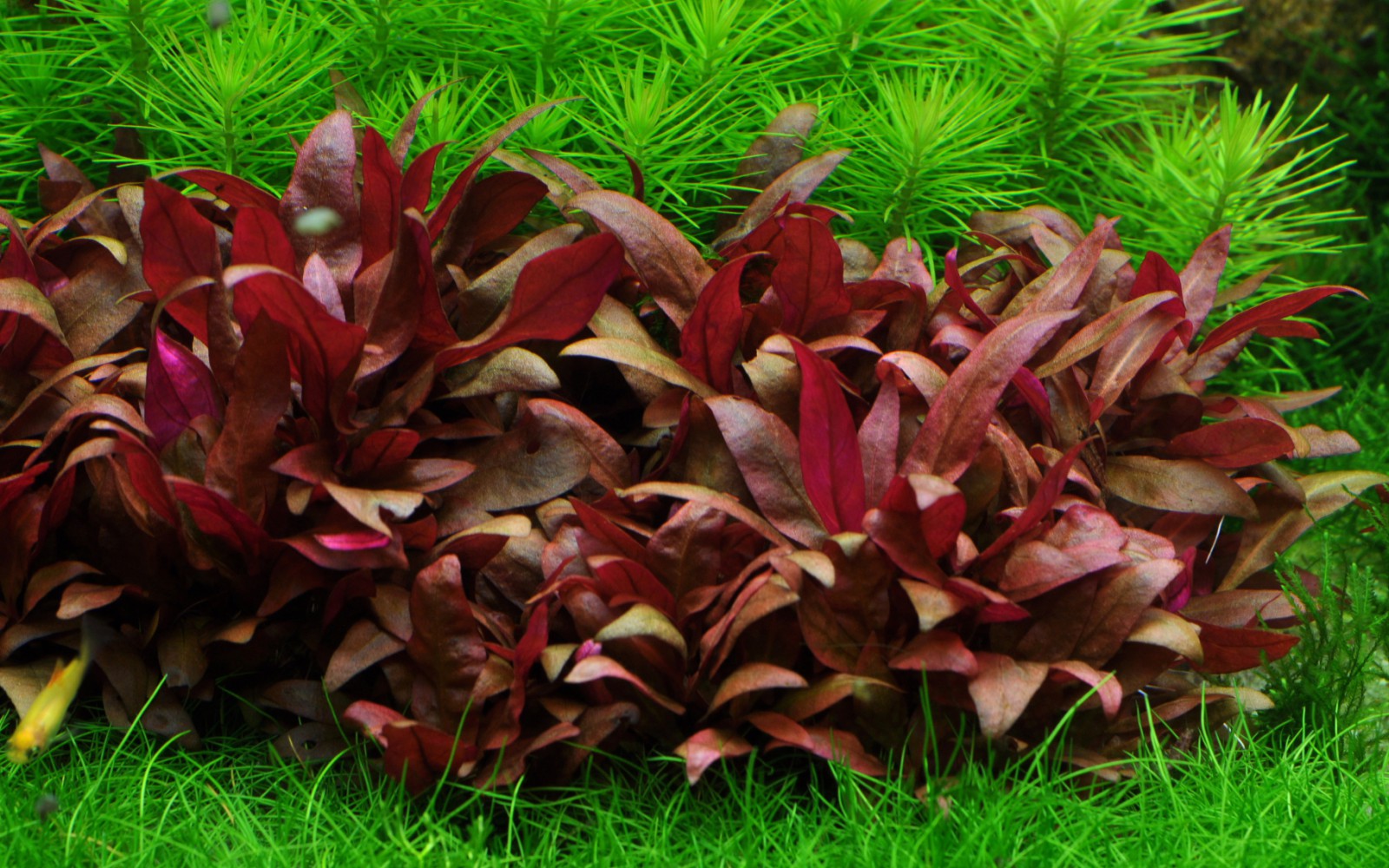
    Alternanthera reineckii 'Mini' is a compact cultivated form of the South American stem plant Alternanthera reineckii. It develops short, densely packed shoots with red, burgundy, and pink leaves when grown submerged. The supplied identification is consistent with this cultivar, although cultivar names are commercial rather than formal botanical ranks. It is well suited to the foreground or lower middle of a planted aquarium.
  • Microsorum pteropus 'Narrow' (Narrow Java Fern)

    Microsorum pteropus 'Narrow' (Narrow Java Fern)

    Easy
    On rock or root
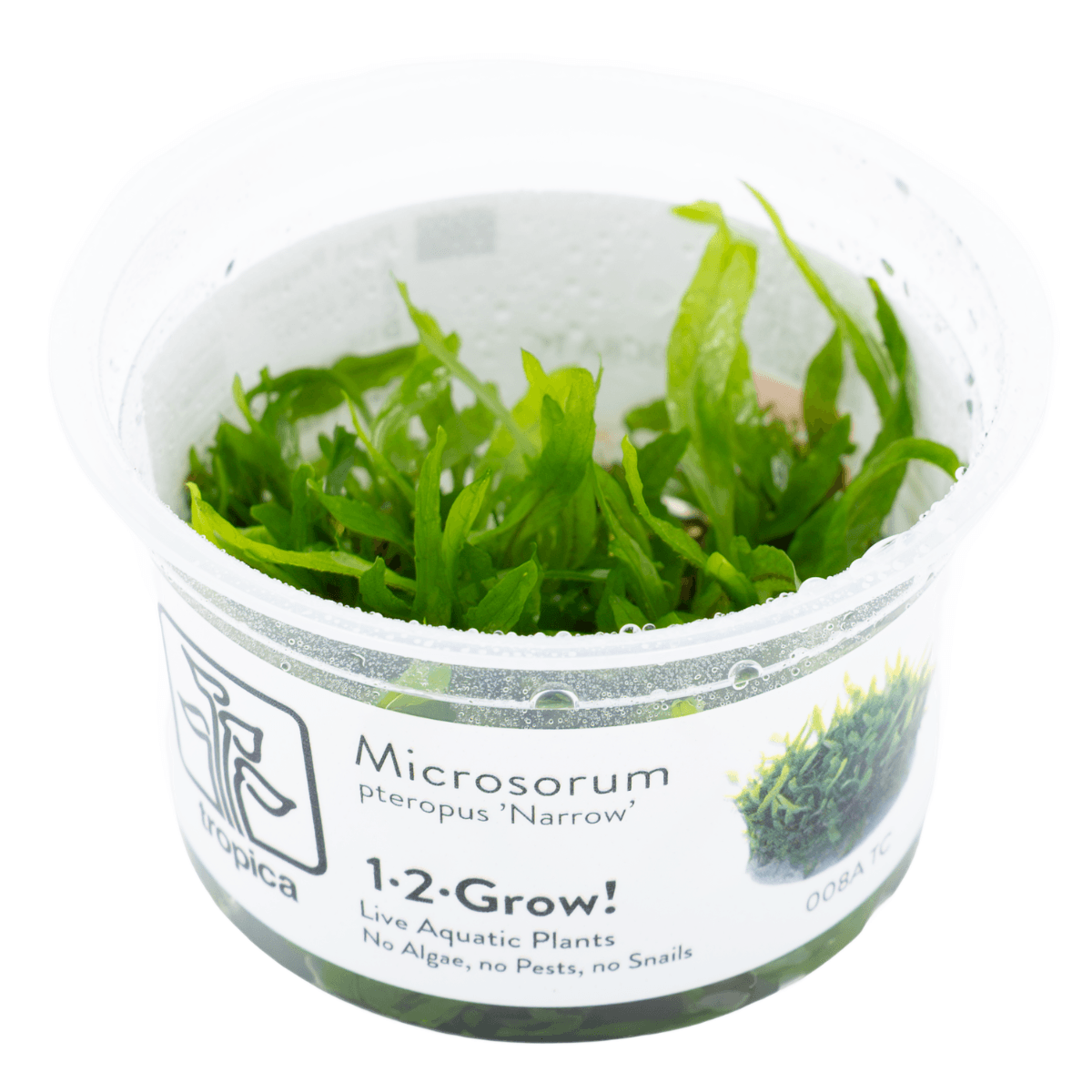
    Microsorum pteropus 'Narrow' is a narrow-leaved aquarium form of Java fern, supplied here as a Tropica InVitro plant. It forms tough green fronds from a creeping rhizome and is well suited to attachment on wood or rock. The trade name supports identification, but the precise cultivar lineage cannot be independently verified from the supplied material. It is a slow-growing, undemanding fern that tolerates modest lighting and does not require carbon dioxide supplementation.
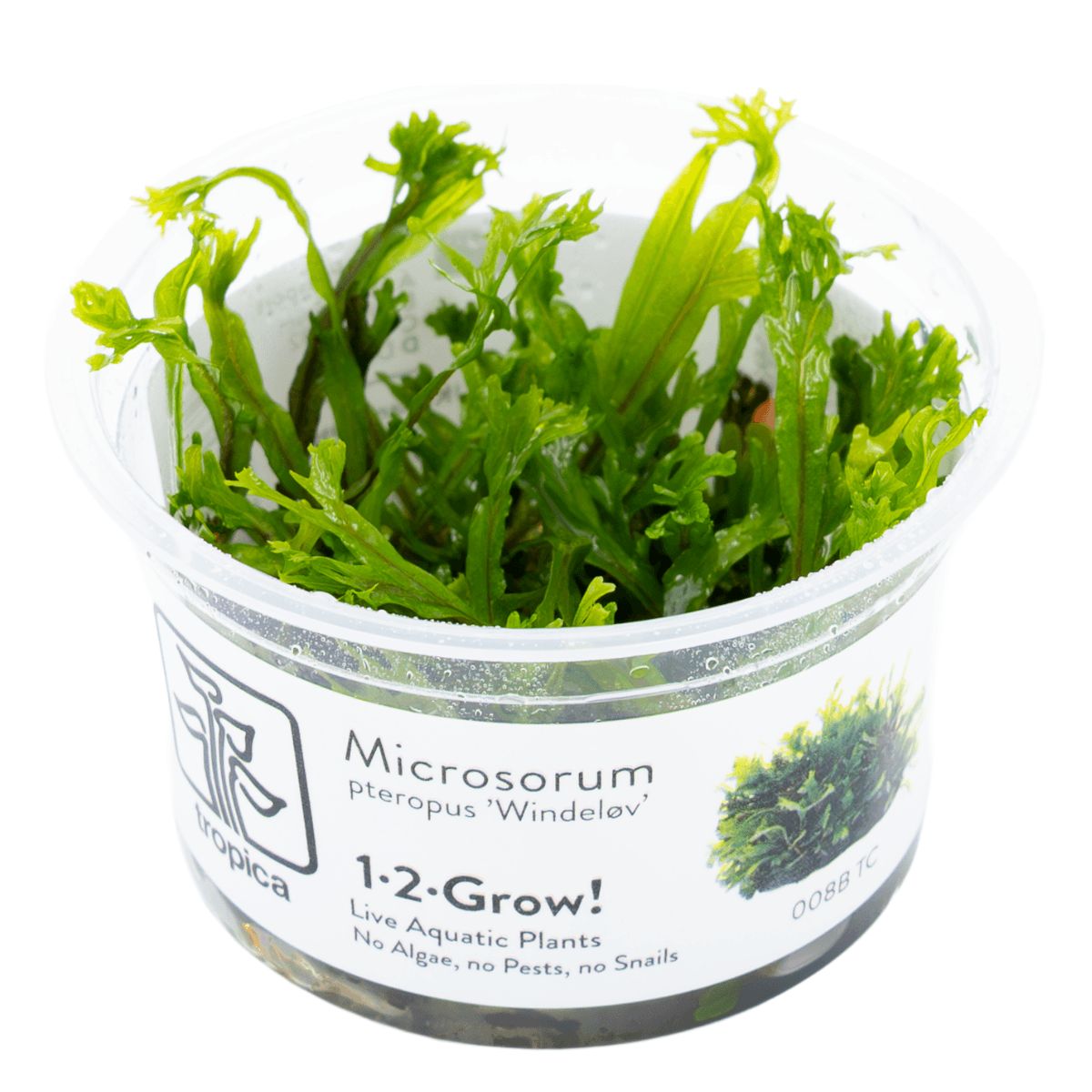
  • Microsorum pteropus 'Windeløv' (Windeløv Java fern)

    Microsorum pteropus 'Windeløv' (Windeløv Java fern)

    Easy
    On rock or root
    Microsorum pteropus 'Windeløv' is a cultivated Java fern form recognized by its finely branched leaf tips. It is a hardy rhizome plant suited to low-tech aquariums and is commonly attached to wood or rock rather than planted deeply in substrate. The supplied label and images support identification as this cultivar, although individual leaves can vary with growing conditions. It grows slowly and tolerates a broad range of aquarium conditions when kept stable.
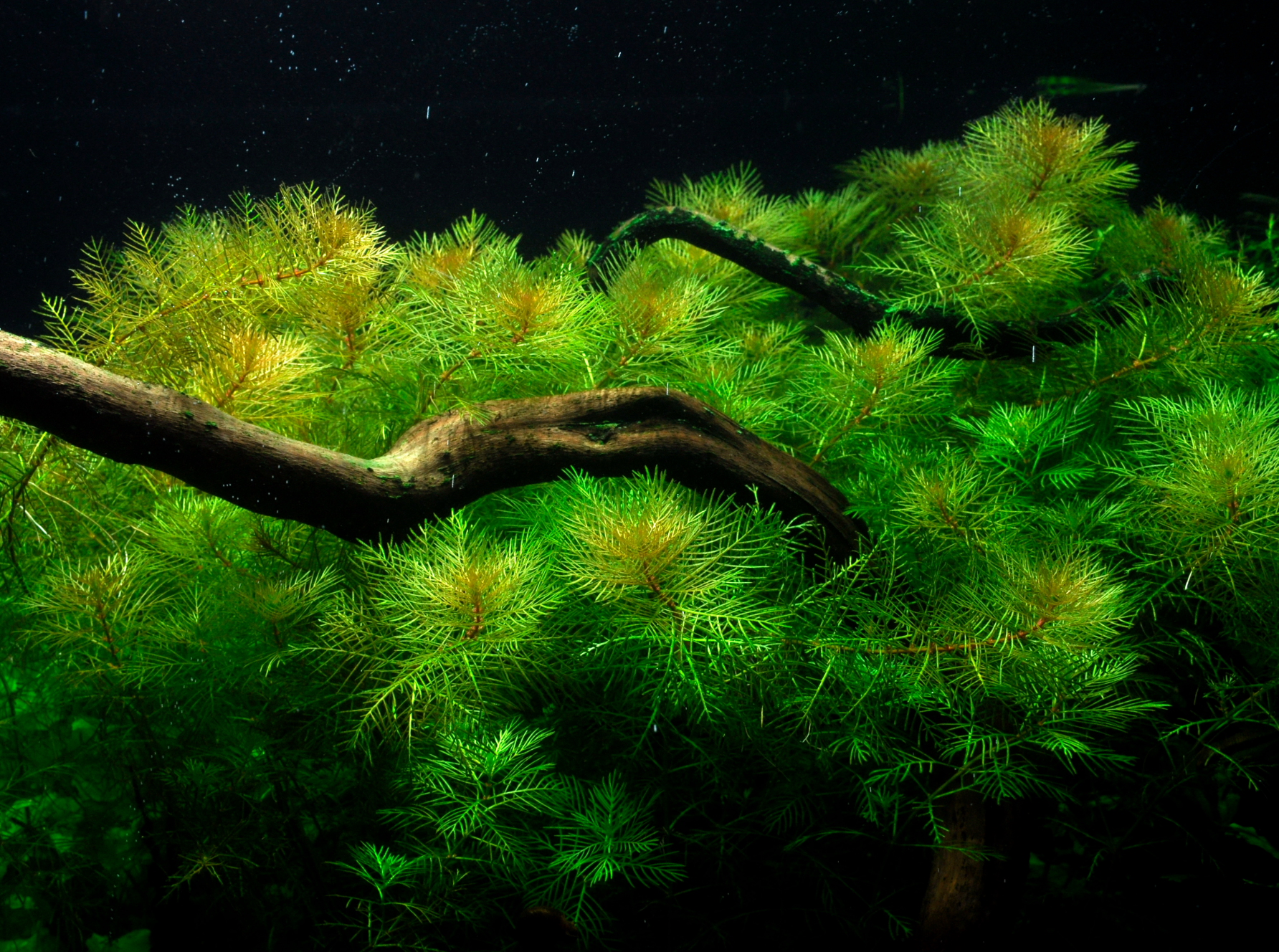
  • Myriophyllum mattogrossense (Matto Grosso Water Milfoil)

    Myriophyllum mattogrossense (Matto Grosso Water Milfoil)

    Medium
    Background
    Myriophyllum mattogrossense is a fast-growing South American stem plant with finely divided, feathery leaves arranged around upright shoots. It is commonly used to create dense background growth and provides cover for small aquarium inhabitants. The supplied product label identifies this plant as M. mattogrossense; cultivated specimens can vary in leaf density and color, so visual identification alone should be treated cautiously.