Taxonomy and identification
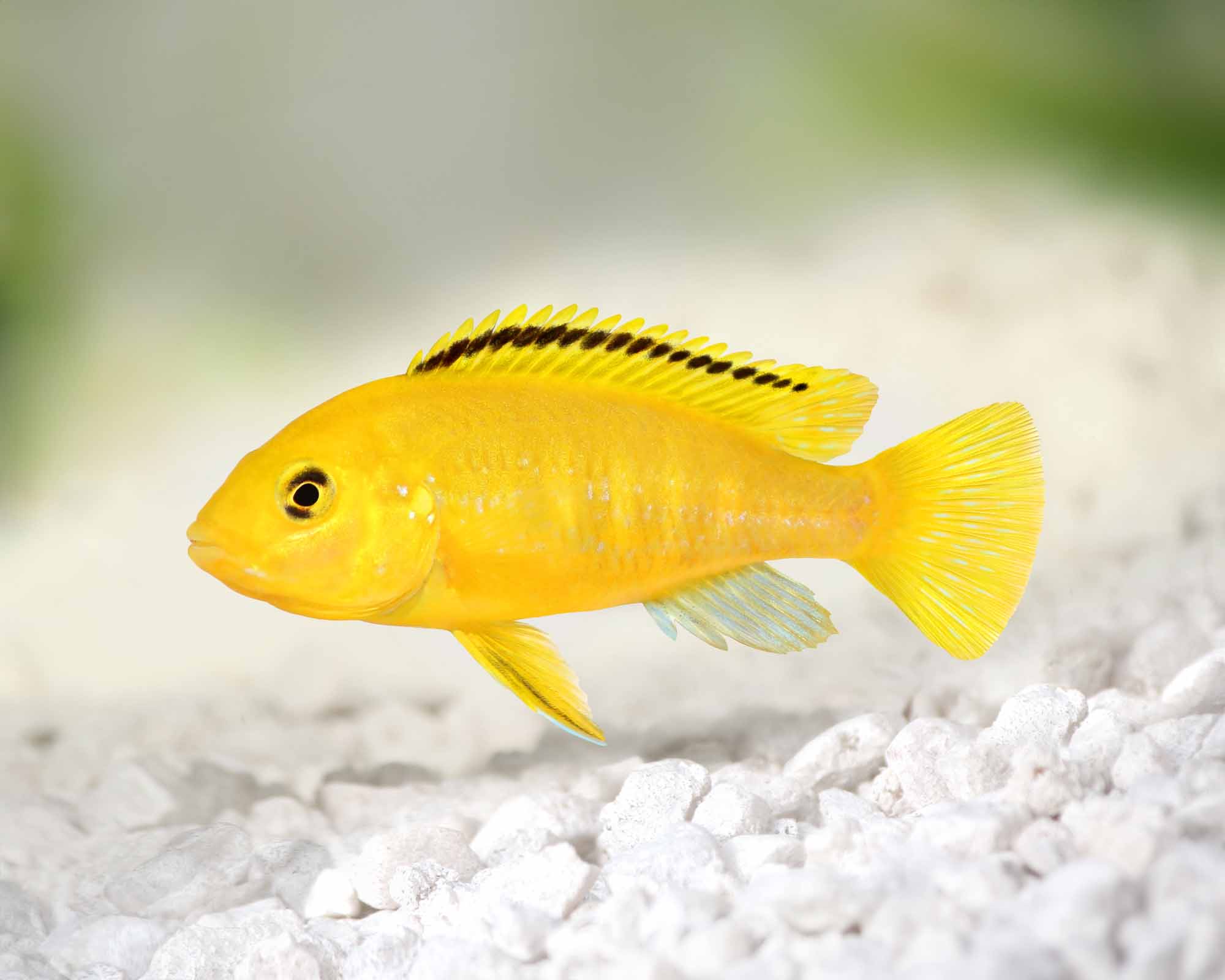
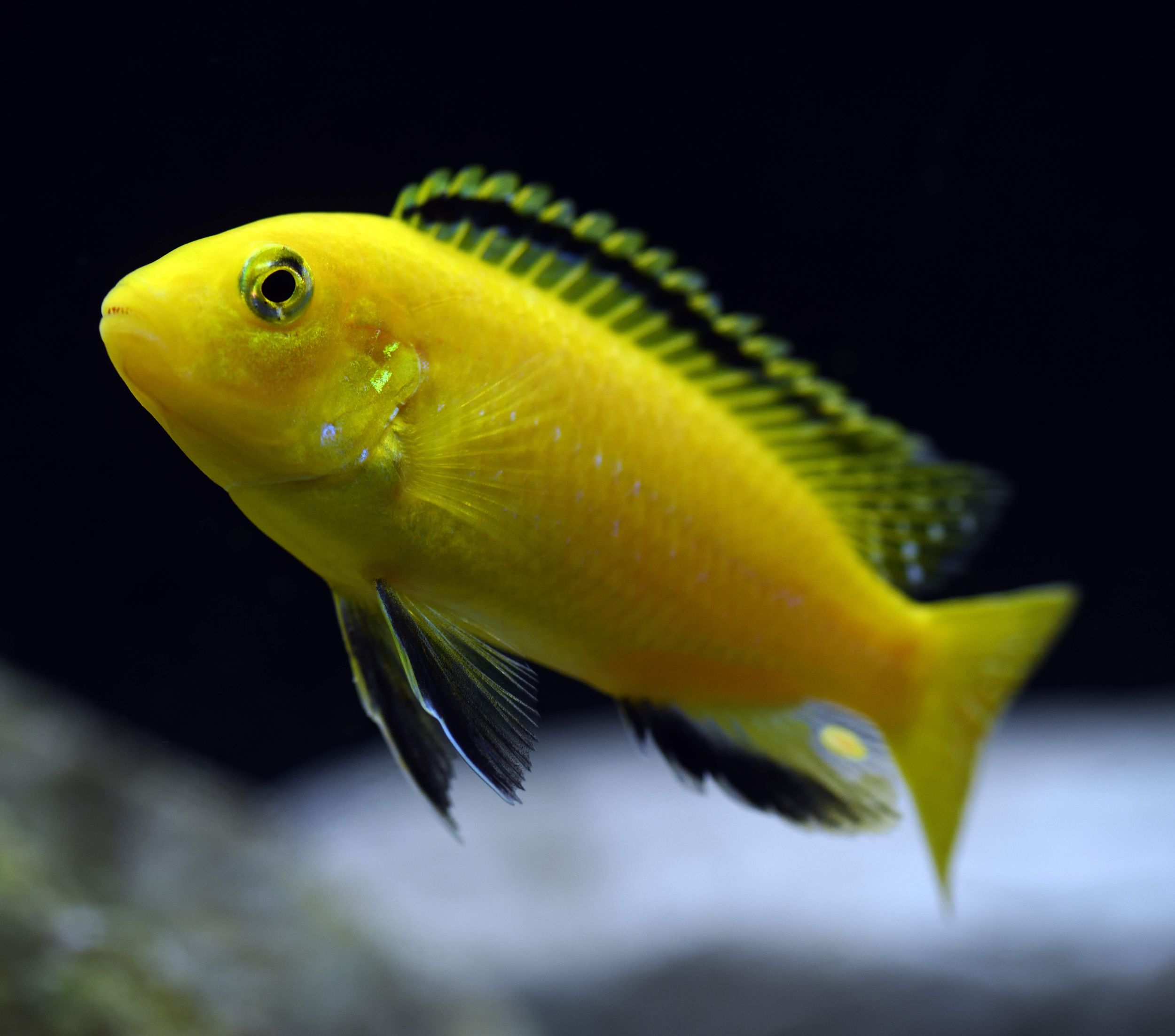
The Yellow Labidochromis is Labidochromis caeruleus, a cichlid in the family Cichlidae. It has a compact, laterally compressed body, a pointed head, and a continuous dorsal fin. The commonly traded yellow form is mostly bright yellow, often with black edging or markings on the dorsal fin. Color intensity can vary with locality, sex, age, mood, and aquarium conditions. The images support identification as a yellow Labidochromis, but they do not establish the sex of either fish or confirm that the two specimens form a bonded pair.
Distribution and habitat
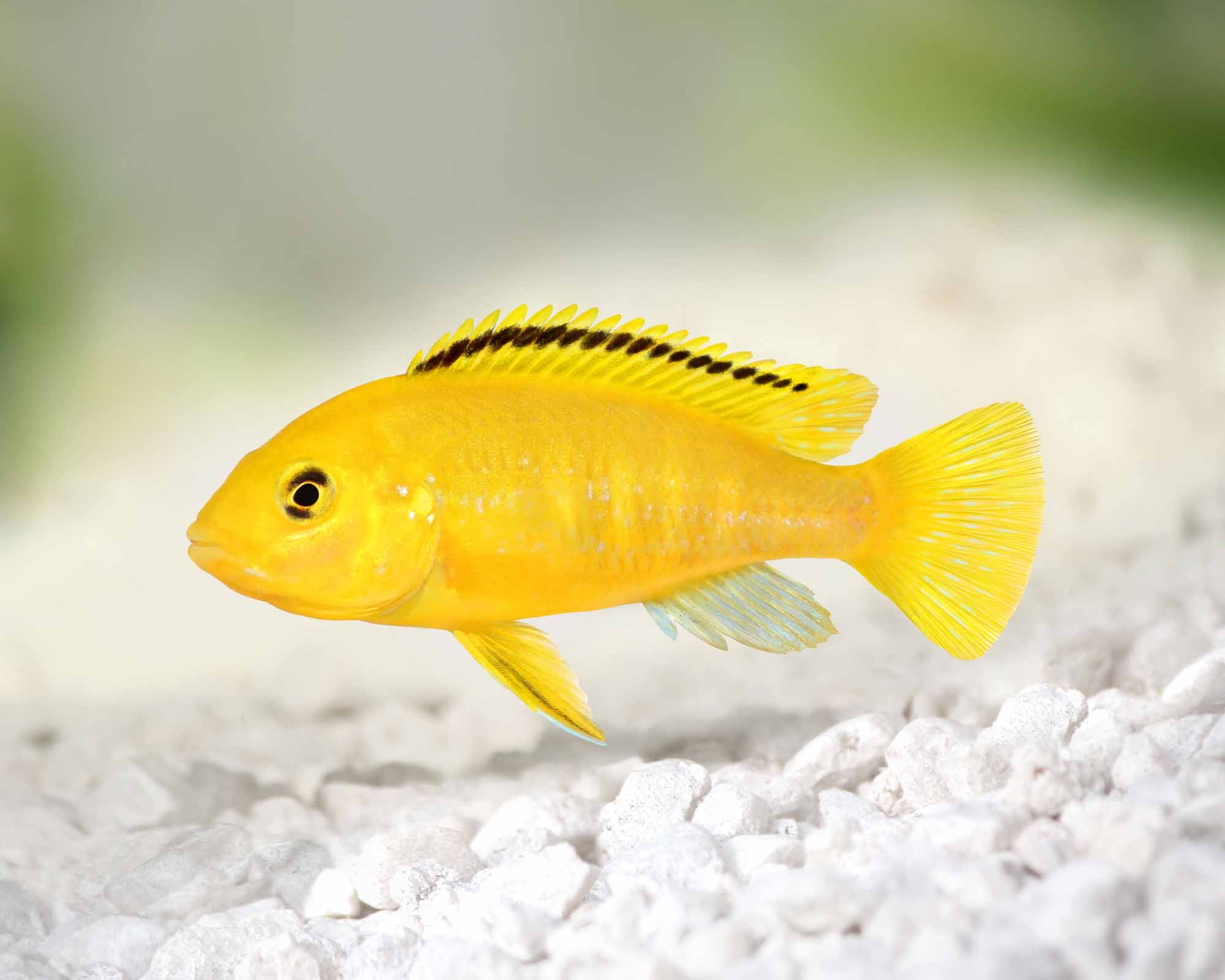
Labidochromis caeruleus is endemic to Lake Malawi in East Africa. It is associated with rocky shoreline habitats where it picks food from surfaces and uses crevices for shelter. Aquarium populations may represent different geographic forms, and locality-specific fish can vary in coloration. Provide rounded rocks, caves, and several visual barriers over a stable substrate. Secure all rocks directly on the tank base before adding substrate so digging cannot cause a collapse.
Behavior
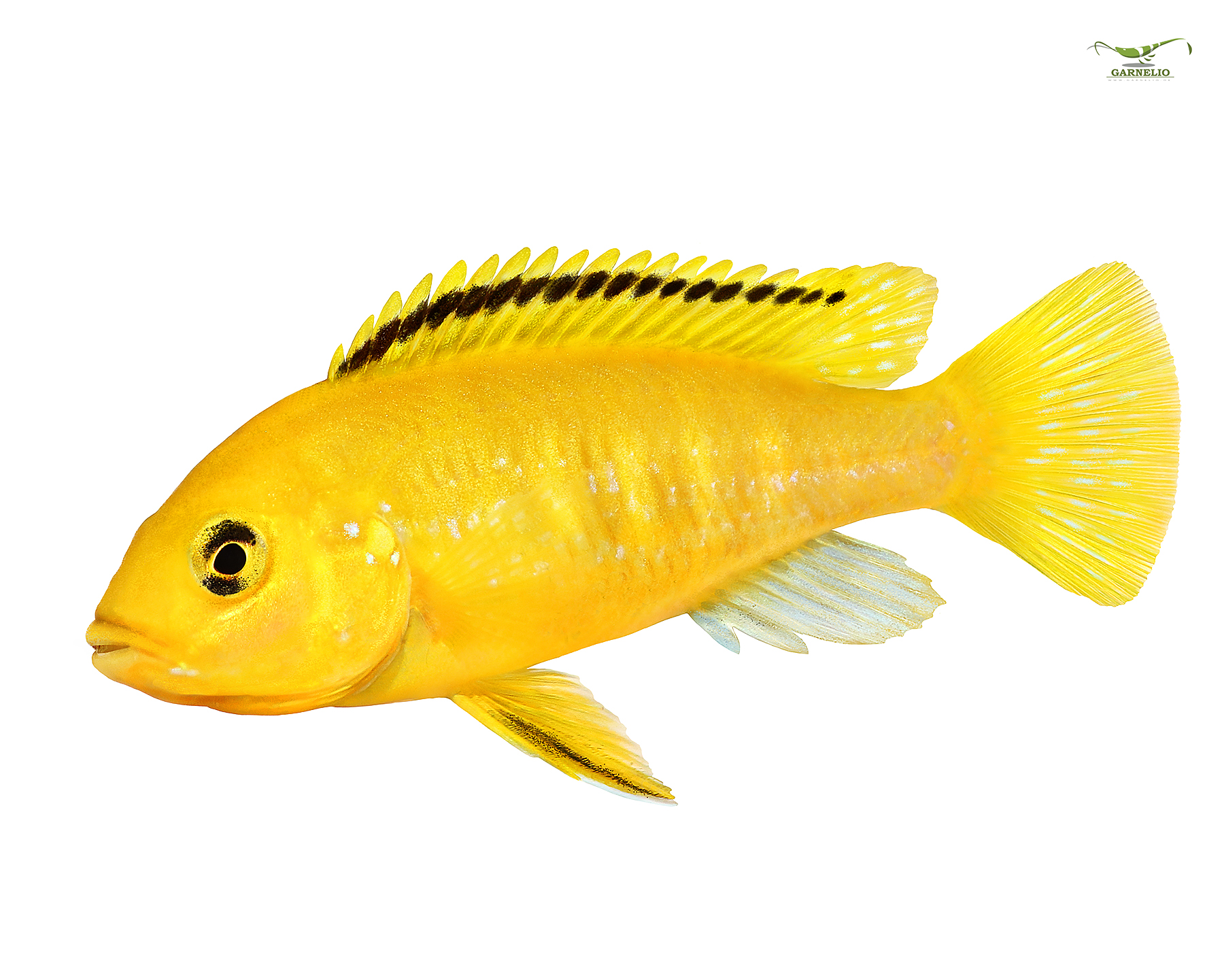
This is a relatively mild mbuna, but it is still territorial, particularly around caves and spawning sites. Individuals establish a social order and may chase weaker or newly introduced fish. A pair can work in a carefully arranged aquarium, although a single male may repeatedly pressure one female. More reliable group management uses a larger aquarium with several females per male, abundant rockwork, and enough space for subordinate fish to escape attention.
Aquarium size and setup
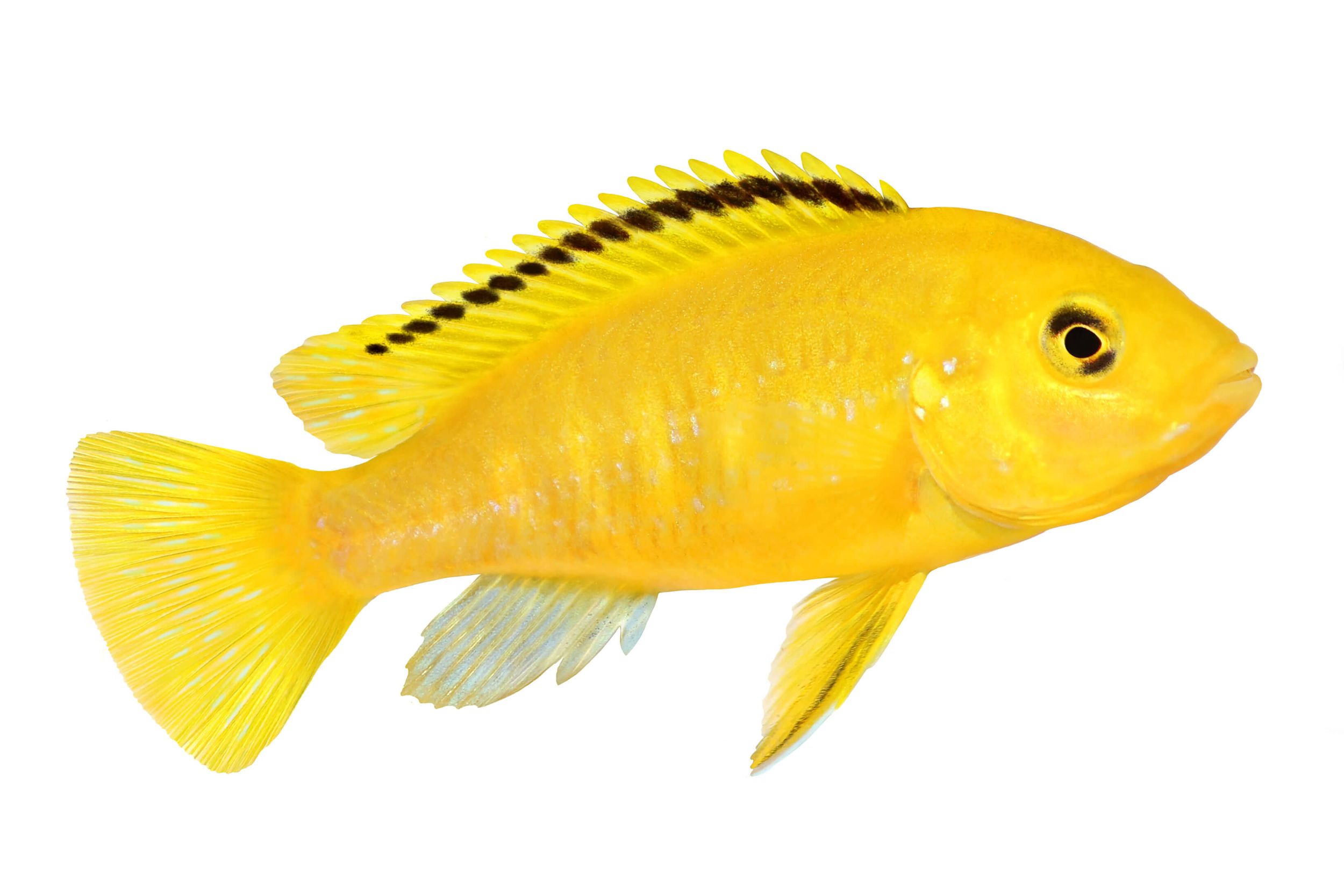
For two adults, a well-structured aquarium of about 200 litres is a practical minimum, with a larger tank preferable if other mbuna are included. A Malawi community should generally be planned from about 250 litres upward, depending on dimensions, filtration, and stocking. Use strong biological filtration, vigorous surface agitation, open swimming space, and numerous caves. Maintain excellent water quality with regular partial water changes and avoid sudden changes in hardness, temperature, or pH.
Water parameters
Keep the water warm, hard, alkaline, and stable: 24-28 °C and pH 7.6-8.6 are suitable targets. Moderate to high carbonate hardness and general hardness are normally appropriate for Lake Malawi aquaria. Ammonia and nitrite should remain undetectable, while nitrate should be kept low through maintenance and sensible stocking. Do not rely on pH-raising chemicals to compensate for poor filtration or infrequent water changes.
Diet
Feed a predominantly vegetable-based diet. Suitable staples include quality spirulina or algae-based flakes and pellets, supplemented with small portions of blanched leafy vegetables or other appropriate plant matter. Offer small meals once or twice daily and remove uneaten food. Avoid making fatty, meat-rich foods a regular part of the diet, because mbuna are adapted to grazing algae and aufwuchs and may suffer digestive problems when overfed rich animal protein.
Compatibility
Choose similarly sized Lake Malawi cichlids with comparable water requirements and moderate temperament. Avoid very aggressive mbuna, large predatory cichlids, slow long-finned fish, and species that closely resemble the Yellow Lab in shape or coloration if territorial conflict is a concern. Introduce compatible fish together where possible, rearrange rockwork when adding new stock, and monitor for persistent hiding, torn fins, weight loss, or repeated cornering. Be prepared to separate an incompatible individual.
Breeding
This species is a maternal mouthbrooder. During spawning, the female releases eggs, picks them up, and fertilizes them as she collects the male's sperm from the spawning area. She then incubates the eggs and developing fry in her mouth for several weeks, usually eating little or nothing during this period. Provide caves and calm areas for holding females. Fry can be raised on finely powdered quality food, but adults and other tankmates may eat them, so a separate rearing setup improves survival.
Leave your comments