Taxonomy and identification
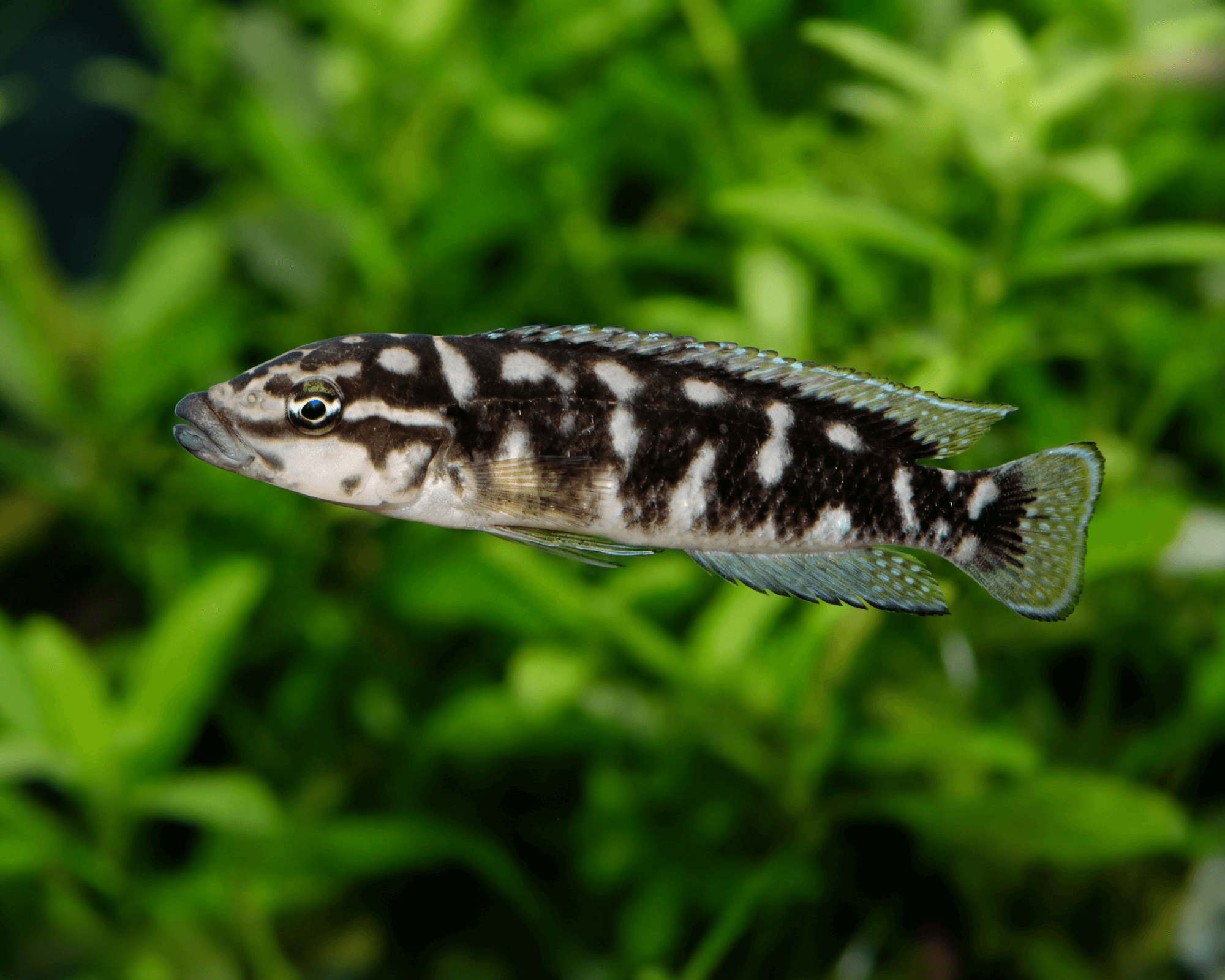
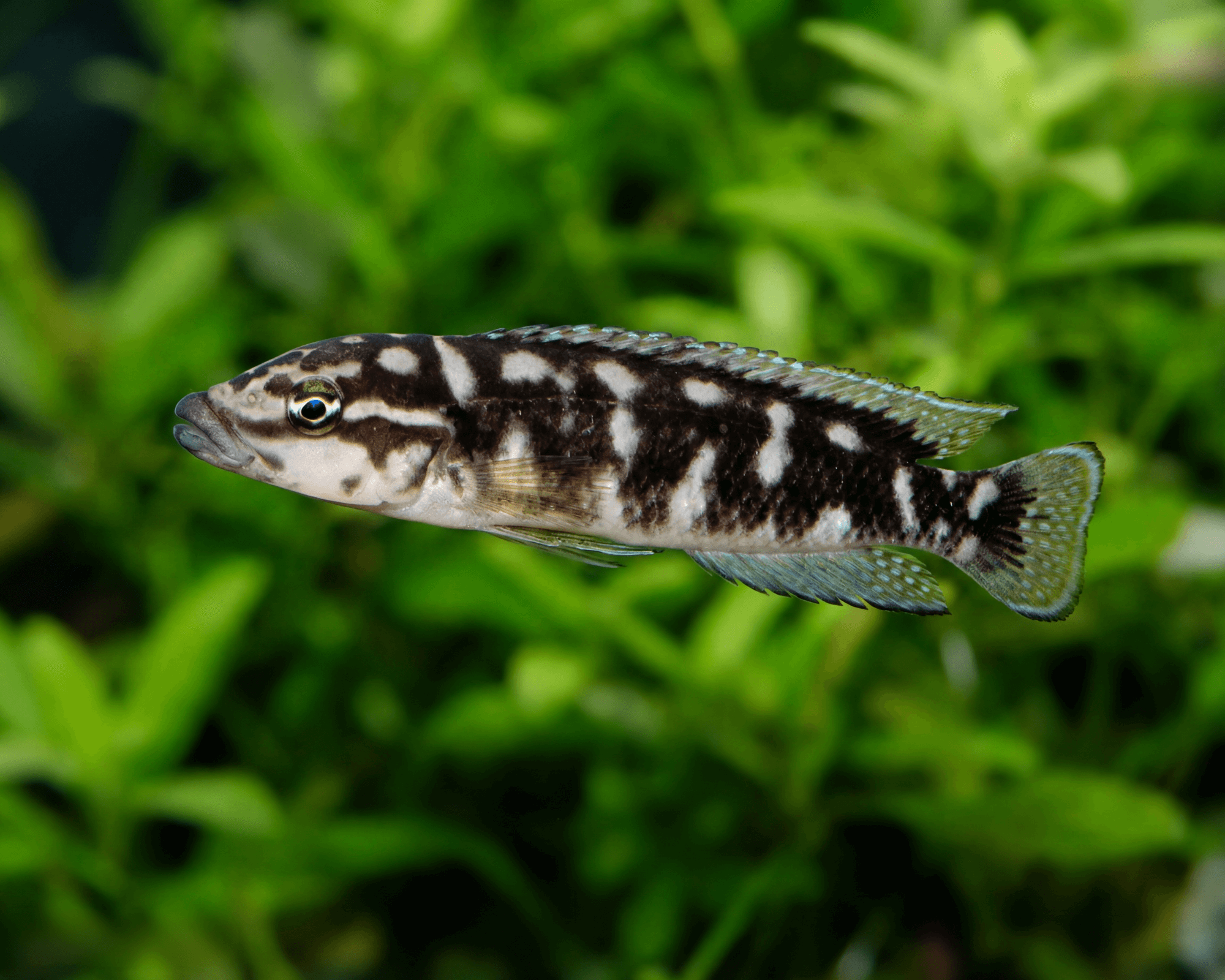
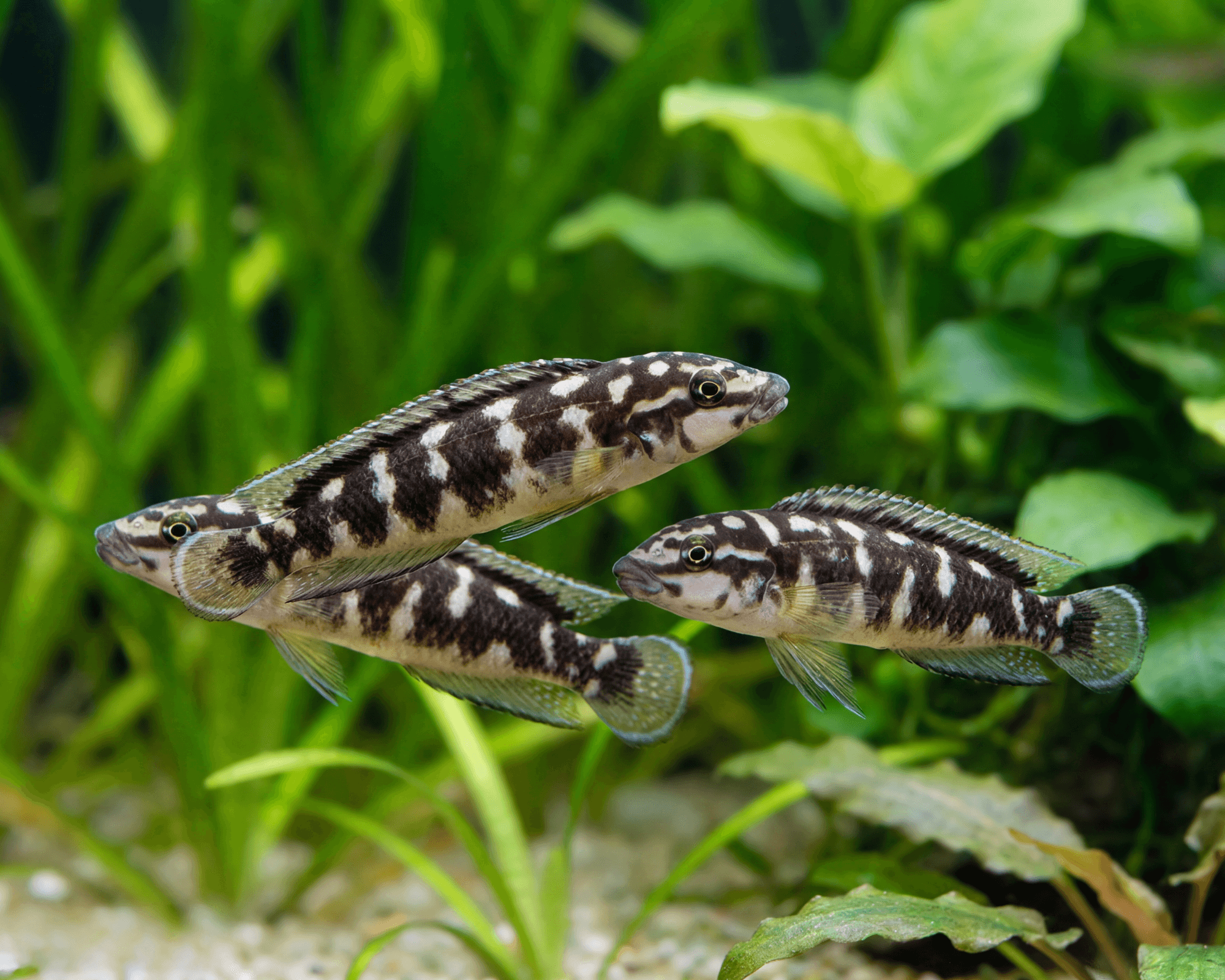
Julidochromis transcriptus is a member of the family Cichlidae and the genus Julidochromis. It is commonly called the black-and-white slender cichlid or masked Julie. The species has a relatively narrow body, pointed head, and dark irregular markings over a pale base. The commercial designation DNZ is treated here as a stock or locality designation rather than a formal taxonomic rank. The exact form and sex of the supplied pair cannot be confirmed solely from the images and source label.
Distribution and habitat
This species is endemic to Lake Tanganyika in East Africa. It inhabits rocky coastal areas, where crevices and narrow cavities provide shelter and spawning sites. Aquarium décor should therefore emphasize stable piles of rounded rock, caves, and broken sight lines rather than open swimming space. Use rockwork that rests securely on the tank base so digging cannot undermine it.
Aquarium size and setup
A pair can be maintained in an aquarium of about 75 litres, provided it has a generous footprint and abundant rock structure; approximately 100 litres or more is preferable for long-term stability or a community setting. Provide several caves with entrances of different sizes, open areas for feeding, and a tightly fitted lid. Strong filtration, good oxygenation, and regular maintenance are important in alkaline Tanganyikan water.
Water parameters
Maintain stable, hard, alkaline water at 24-28 °C, with a pH of about 8.0-9.0. Moderate to high carbonate hardness is appropriate, although hardness should be adjusted gradually rather than through abrupt chemical changes. Ammonia and nitrite must remain undetectable, and nitrate should be kept low through routine partial water changes. Match replacement water closely to the aquarium's temperature and chemistry.
Behavior and temperament
Julidochromis transcriptus is active, observant, and strongly territorial around a chosen cave. A compatible pair may defend a small breeding territory continuously, especially after spawning. It is not usually a threat to similarly sized fish outside its immediate territory, but confined tanks can produce persistent chasing and fin damage. Stable pairs are generally more harmonious than newly assembled adults, and extra hiding places help reduce conflict.
Diet
Offer a varied diet based on quality small cichlid pellets, spirulina-containing foods, and finely sized prepared foods. Frozen or live foods such as small crustaceans can be offered occasionally, but rich animal foods should not dominate the diet. Feed small portions once or twice daily, removing uneaten food promptly. Grazing on algae and biofilm from rockwork can supplement, but not replace, regular feeding.
Compatibility
The safest arrangement is a species-focused aquarium containing one established pair. In a larger Tanganyika community, possible companions include other peaceful to moderately territorial species occupying different parts of the habitat, provided the aquarium has sufficient rockwork and territory boundaries. Avoid mixing several Julidochromis pairs in a small tank, and avoid large, boisterous, or highly aggressive cichlids that may outcompete or injure them.
Breeding
This is a cave-spawning cichlid that commonly forms a pair bond. The female deposits a relatively small number of eggs inside a concealed cavity, where the pair guards the site and nearby territory. Condition adults with varied, high-quality food and provide several narrow caves. Spawning may occur without dramatic changes in water chemistry. Once free-swimming, fry can be fed newly hatched brine shrimp and finely powdered foods. Parents may continue guarding young, but other fish can consume fry, so a separate breeding aquarium gives the best survival.
 - pair - 1.webp)
Leave your comments