Overview

The Copper Tetra, scientifically known as Hasemania nana and frequently referred to in the hobby as the Silvertip Tetra, is an incredibly popular freshwater fish. Loved for their energetic swimming patterns and contrasting colors, they are a staple in many community aquariums. They are exceptionally hardy, making them a fantastic choice for both beginner and experienced aquarists looking to add life and movement to their tanks.
Distribution and Habitat
Endemic to South America, the Copper Tetra is primarily found in the São Francisco River basin in Brazil. They inhabit small tributaries, creeks, and areas of flooded forests. These natural waters are typically soft, slightly acidic, and stained with tannins from decaying organic matter like fallen leaves and branches. The environment is usually shaded by dense rainforest canopies, creating a dimly lit habitat.
Description of Copper Tetra
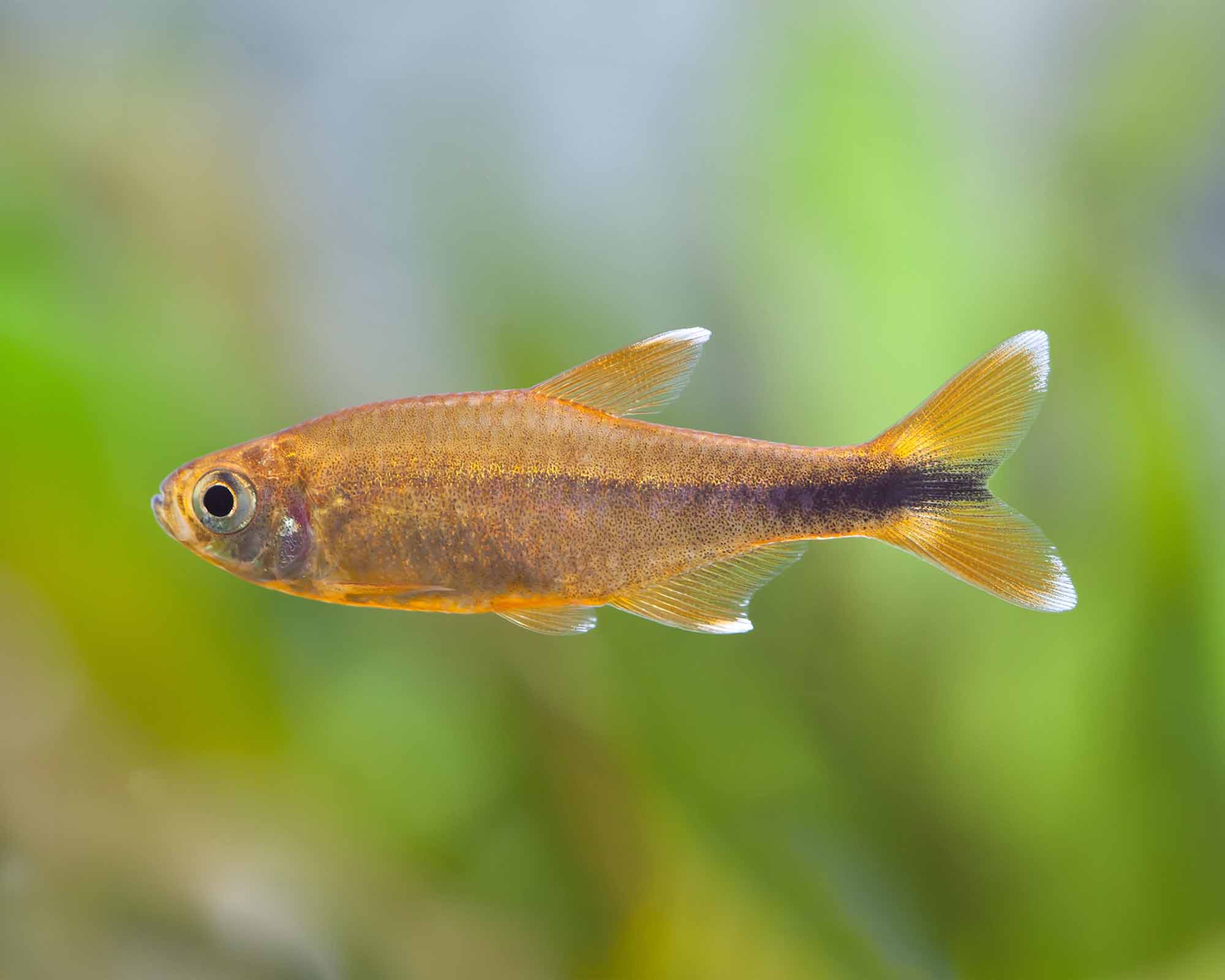
The Copper Tetra is a small but robust fish that boasts a range of subtle but striking physical characteristics that make it stand out in a planted aquarium.
Body shape:
They possess a classic, streamlined, torpedo-shaped body typical of many energetic tetra species, designed for quick, darting movements through the water.
Color:
Sexual dimorphism is highly apparent in their coloration. Males display a brilliant, deep copper to rich golden-orange hue, while females are noticeably paler, exhibiting a more subdued silvery-yellow or olive coloration.
Barbels:
Like other characins, the Copper Tetra does not possess any barbels.
Snout:
They have a relatively short snout with a terminal mouth, well-adapted for feeding on small insects and zooplankton in the water column.
Eyes:
Their eyes are proportionally large with a dark pupil surrounded by a slightly metallic, reflective iris.
Fins:
Uniquely among many tetras, Hasemania nana lacks an adipose fin. Their dorsal, anal, and pelvic fins are translucent but are punctuated by brilliant, stark white or silver tips, which give the fish its alternate common name (Silvertip Tetra).
The Tail:
The caudal (tail) fin is deeply forked. A distinct, dark horizontal stripe runs through the caudal peduncle and into the center of the tail, contrasting beautifully with the silver-white tips on the outer lobes.
Temper
While generally considered peaceful, Copper Tetras can be somewhat boisterous. If kept in numbers that are too small, they may exhibit mild fin-nipping behavior toward slow-moving or long-finned tank mates. Keeping them in a proper school disperses this energy.
Sociality
They are highly gregarious, schooling fish. To ensure they feel secure and display their best natural behaviors and colors, they must be kept in groups of at least 6 individuals, though a school of 10 or more is highly recommended.
Activity
Copper Tetras are incredibly active and fast swimmers. They will constantly dart around the middle and upper levels of the aquarium, rarely staying still during daylight hours.
Keeping and Caring for Copper Tetra
Caring for Copper Tetras is quite straightforward as long as their basic need for clean water and swimming space is met.
Tank size:
A minimum tank size of 15 gallons (approx. 60 liters) is required, but a 20-gallon long aquarium is much better to accommodate their hyperactive swimming habits.
Water Parameters:
They are highly adaptable but thrive best when kept in conditions that mimic their natural South American habitat.
Temperature
Keep the water temperature between 22-28°C (72-82°F).
pH
They prefer slightly acidic to neutral water, with a pH range of 6.0 to 8.0 being perfectly acceptable.
Hardness
Water hardness should ideally be maintained between 5 and 20 dGH.
Ammonia, Nitrite, Nitrate
Ammonia and Nitrite must always be at 0 ppm. Nitrates should be kept as low as possible, ideally below 20 ppm, through regular water changes.
Lighting
Moderate to dim lighting is preferred. Bright lights can wash out their coppery colors and make them skittish. Floating plants are a great way to diffuse strong aquarium lights.
Water flow
They enjoy a moderate water flow which simulates the gentle currents of their native creeks and streams.
Decorations and Plants
A dark substrate will beautifully contrast their colors. The tank should be densely planted around the edges and background, leaving plenty of open swimming space in the center. Driftwood, twisted roots, and dried leaf litter will help replicate their natural biotope.
Diet
Copper Tetras are omnivorous micro-predators. In the aquarium, they are not fussy and will eagerly accept high-quality dry flakes and micro-pellets. To ensure peak coloration and health, supplement their diet with live or frozen foods such as daphnia, brine shrimp, and bloodworms.
Some Feeding Tips
Feed them small amounts 1 to 2 times a day—only what they can consume within a couple of minutes. Because they are fast mid-water feeders, ensure that food doesn't sink too quickly before they get a chance to eat it.
Breeding
Breeding Copper Tetras is relatively easy. They are egg-scatterers that exhibit no parental care. To breed them, set up a separate dimly lit breeding tank with soft, slightly acidic water and line the bottom with fine-leaved plants like Java Moss or a spawning mop. Condition the breeders with plenty of live foods. Once spawning occurs (usually at dawn), the parents will eat the eggs if given the chance, so they must be removed immediately. The eggs will hatch in about 24-36 hours, and the fry can be fed infusoria until they are large enough to accept baby brine shrimp.
Conclusion
The Copper Tetra is a lively, beautiful, and resilient fish that brings a non-stop flurry of activity to the freshwater aquarium. Their easy care requirements and stunning metallic coloration make them a highly rewarding species for aquarists of all skill levels, provided they are kept in appropriate schools and given plenty of room to swim.
 - pair - 1.webp)
Leave your comments