Overview

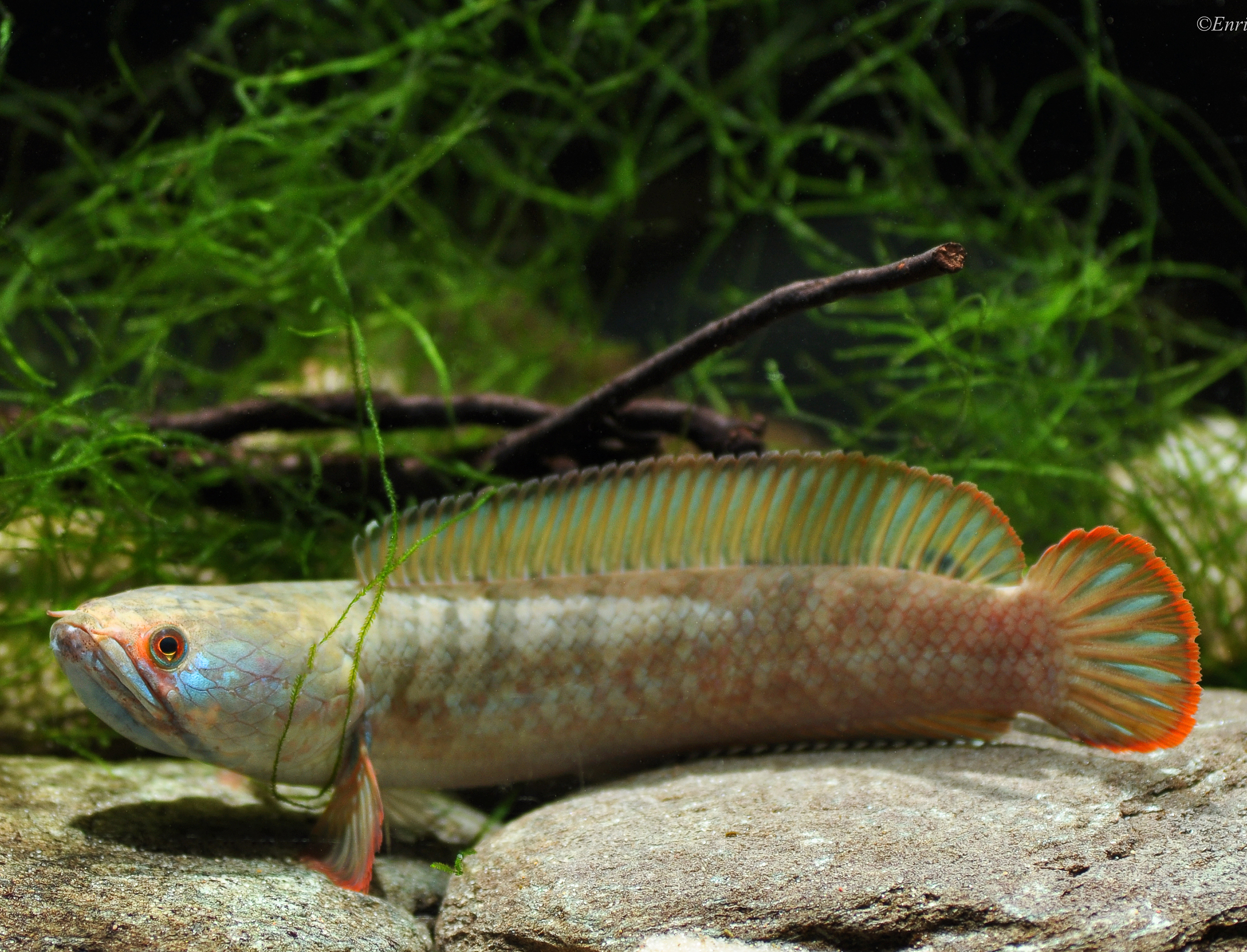
The Dwarf Snakehead (Channa gachua), particularly the 'Blue Bengalen' variant, is a stunning and intelligent predatory fish. Unlike the massive monster fishes of the Channidae family, this dwarf species stays relatively small, making it a feasible and highly rewarding pet for home aquaria. They are obligate air breathers, possessing a labyrinth organ that allows them to survive in oxygen-deprived waters.
Distribution and Habitat
This species is widely distributed across Southern Asia, with the 'Blue Bengalen' variant originating from the Bengal region. They inhabit a variety of environments, from slow-moving rivers and streams to swamps, ponds, and flooded rice paddies. These habitats are often heavily vegetated with dim lighting and fluctuating seasonal temperatures.
Description of Dwarf Snakehead

Body shape:
They possess an elongated, cylindrical, and torpedo-like body built for sudden bursts of speed when ambushing prey.
Color:
The body features a tan to brown base with darker chevron-like banding. The 'Blue Bengalen' variant is prized for the brilliant turquoise to blue iridescence on its cheeks and flanks, beautifully contrasted by bright red or orange margins on the fins.
Barbels:
This species does not possess barbels.
Snout:
The snout is relatively short and blunt, giving the face its characteristic snake-like appearance.
Eyes:
The eyes are positioned forward and slightly upward on the head, perfectly adapted for spotting prey near the water's surface.
Fins:
They feature long, continuous dorsal and anal fins that run along the majority of the body. The pectoral fins often display distinct, attractive concentric banding.
The Tail:
The caudal fin is rounded and paddle-like, heavily marked with blueish-green webbing and edged in a striking red or orange border.
Temper
While considered one of the more peaceful snakeheads, they are still predatory and territorial. They will readily consume any tank mate small enough to fit in their mouths and can exhibit conspecific aggression if not properly paired.
Sociality
They are best kept in a species-only tank, ideally as a single specimen or a bonded pair. Keeping them with other fish is risky, though robust, fast-moving, and similarly sized bottom-dwellers or mid-water fish are sometimes ignored.
Activity
Dwarf Snakeheads are diurnal but spend a significant amount of time resting on the substrate, perched on driftwood, or hiding among plants. When food is introduced, they become highly active and alert.
Keeping and Caring for Dwarf Snakehead
Because they are capable of breathing atmospheric air and are notorious jumpers, a completely secure and tight-fitting aquarium lid is absolutely mandatory. Any gaps must be sealed.
Tank size:
A minimum of 80 to 100 liters (20-30 gallons) is required for a single adult or a bonded pair. A larger footprint is always preferred over depth.
Water Parameters:
They are highly adaptable but thrive in clean, stable water conditions that mimic their natural seasonal environments.
Temperature
18-25°C. They benefit greatly from a seasonal temperature drop in the winter (around 18-20°C) to rest and prepare for breeding.
pH
6.0-7.5 is ideal, though they can tolerate slightly outside this range if acclimated properly.
Hardness
5-15 dGH.
Ammonia, Nitrite, Nitrate
Ammonia and Nitrite must always be 0 ppm. Keep Nitrates below 20 ppm through regular water changes.
Lighting
Dim to moderate lighting is preferred. Floating plants are highly recommended to diffuse the light and provide a sense of security.
Water flow
Low to moderate. They prefer sluggish waters and will struggle in high-flow environments.
Decorations and Plants
Provide plenty of hiding spots using driftwood, PVC pipes, or rock caves. Dense planting, including both rooted and floating plants, along with leaf litter (like Indian Almond leaves), will replicate their natural habitat perfectly.
Diet
They are obligate carnivores. In the aquarium, they should be fed a varied diet of meaty foods such as earthworms, crickets, mealworms, frozen bloodworms, and high-quality carnivore pellets. Feeder fish should be avoided unless quarantined properly to prevent disease.
Some Feeding Tips
Do not overfeed. Snakeheads have a slow metabolism, especially in cooler temperatures. Feeding adults 2 to 3 times a week is usually sufficient to maintain optimal health and prevent obesity.
Breeding
Channa gachua is a paternal mouthbrooder. Breeding usually occurs after a cooler winter resting period followed by a slight temperature increase and large water changes. The male will gather the fertilized eggs into his mouth and incubate them for several days. Once the fry are released, both parents fiercely guard them, with the female often producing unfertilized trophic eggs to feed the growing fry.
Conclusion
The Dwarf Snakehead 'Blue Bengalen' is a visually stunning and behaviorally complex fish that makes a phenomenal pet for the dedicated aquarist. With proper care, a secure lid, and a well-structured habitat, they will provide years of interactive and fascinating aquatic keeping.
 - pair - 1.webp)
Leave your comments