Overview
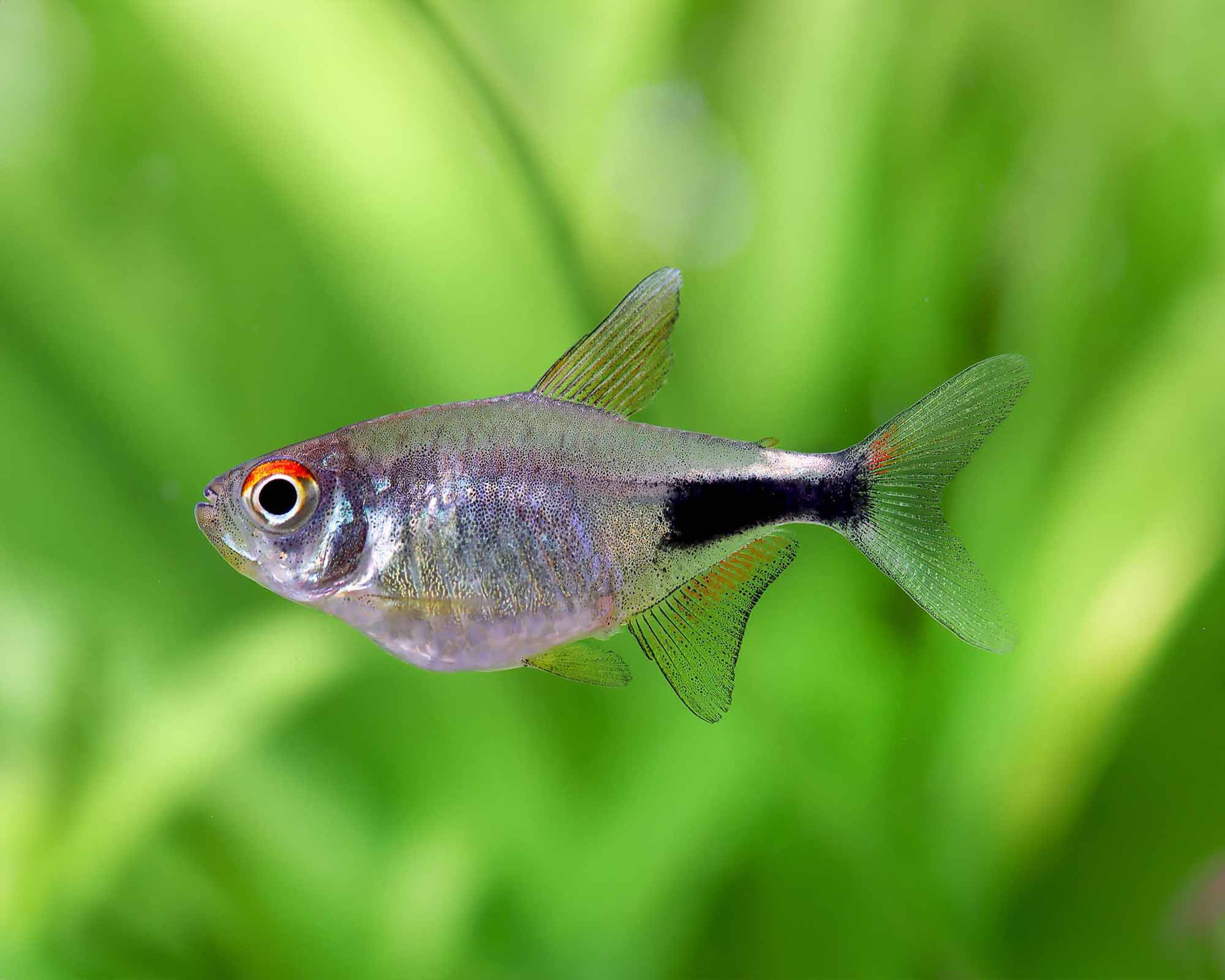
The Carbuncle Tetra, widely known in the aquarium hobby as the Garnet Tetra or Pretty Tetra (Hemigrammus pulcher), is a robust and visually charming freshwater fish. Known for its distinct markings and peaceful nature, it has been a staple in community aquariums for decades. Its hardiness and schooling behavior make it an excellent choice for both novice and experienced aquarists looking to add dynamic movement to their tanks.

Distribution and Habitat
This species originates from the upper Amazon River basin, specifically found in Peru, Colombia, and parts of Brazil. They primarily inhabit slow-moving tributaries, forest streams, and oxbow lakes. These environments are often heavily shaded by dense jungle canopy and feature blackwater conditions—water tinted dark brown by decaying leaf litter and submerged wood, which releases tannins and keeps the water soft and acidic.
Description of Carbuncle Tetra
Body shape:
Compared to many other tetras, the Carbuncle Tetra is relatively deep-bodied and laterally compressed, giving it a somewhat stocky appearance as it matures.
Color:
The body exhibits a silvery-grey base with subtle iridescent greenish or purplish reflections. Its most distinguishing feature is a broad, dark black wedge or teardrop shape located at the caudal peduncle (base of the tail). Immediately above this black mark lies a striking, glowing reddish-gold spot—the "carbuncle" or "garnet" that gives the fish its common names.
Barbels:
Like all characins, they do not possess barbels.
Snout:
They have a relatively short snout with a small, terminal mouth designed for picking tiny invertebrates from the water column.
Eyes:
The eyes are large in proportion to the head, featuring a brilliant red or intense orange upper iris that contrasts beautifully with their silver bodies.
Fins:
The fins are predominantly clear or transparent, though the dorsal and anal fins may occasionally show faint hints of yellow or red depending on the fish's diet and maturity.
The Tail:
The caudal fin (tail) is deeply forked and completely transparent, ensuring that the black wedge at the peduncle stands out prominently.
Temper
This species is highly peaceful and completely non-aggressive. They will not bother other tank mates and are generally quite timid if not kept in appropriate numbers or if housed with boisterous species.
Sociality
The Carbuncle Tetra is a true schooling fish. They must be kept in groups of at least 6 to 8 individuals, though larger groups of 10 or more are highly recommended. A proper school makes them feel secure, encourages their best coloration, and displays their natural synchronized swimming behaviors.
Activity
They are active mid-level swimmers. While they spend much of their time elegantly hovering or darting through the middle strata of the aquarium, they will readily venture to the surface during feeding time.
Keeping and Caring for Carbuncle Tetra
Tank size:
A minimum tank size of 60 liters (15 gallons) is recommended for a small school, though a 20-gallon long tank is ideal to provide them with ample horizontal swimming space.
Water Parameters:
Temperature
They thrive in tropical temperatures ranging from 23-27°C (73-81°F).
pH
To mimic their natural blackwater habitat, the pH should be kept slightly acidic to neutral, ideally between 5.5 and 7.0.
Hardness
Soft water is preferred, with a general hardness (dGH) ranging from 2 to 12.
Ammonia, Nitrite, Nitrate
Ammonia and Nitrite must always be at 0 ppm. Nitrates should be kept as low as possible, ideally below 20 ppm, through regular water changes and plant filtration.
Lighting
Dim to moderate lighting is best. Bright lights can wash out their colors and make them skittish. Floating plants are an excellent way to diffuse strong aquarium lights.
Water flow
They prefer gentle to moderate water flow, simulating the sluggish streams of their native habitat.
Decorations and Plants
A heavily planted aquarium with a dark substrate will make their colors pop. Driftwood branches, tangled roots, and dried botanicals (like Indian almond leaves) will recreate their natural environment and release beneficial tannins.
Diet
Carbuncle Tetras are omnivorous micro-predators. In the wild, they feed on tiny worms, crustaceans, and plant matter. In captivity, they will eagerly accept high-quality dry foods like micro-pellets and crushed flakes. To ensure optimal health and coloration, supplement their diet with live or frozen foods such as daphnia, brine shrimp, and bloodworms.
Some Feeding Tips
Feed them small portions once or twice a day—only what they can consume within two minutes. Because they have small mouths, ensure that the food particles are appropriately sized.
Breeding
Breeding the Carbuncle Tetra can be moderately challenging. They are egg scatterers and exhibit no parental care. To breed them, set up a separate dimly lit breeding tank with very soft, acidic water and fine-leaved plants (like Java Moss) or a spawning mop. Condition the adults with live foods. After spawning occurs, usually in the early morning, the parents must be removed immediately, or they will eat the eggs. The fry hatch in about 24-36 hours and become free-swimming a few days later, requiring infusoria or specialized liquid fry food until they are large enough to eat baby brine shrimp.
Conclusion
The Carbuncle Tetra is a delightful, undemanding species that brings subtle elegance and a splash of unique color to the freshwater aquarium. Their peaceful disposition, schooling nature, and adaptability make them a highly rewarding choice for any aquarist aiming to create a beautiful, harmonious South American biotope or a diverse community tank.
 - pair - 1.webp)
Leave your comments