Overview
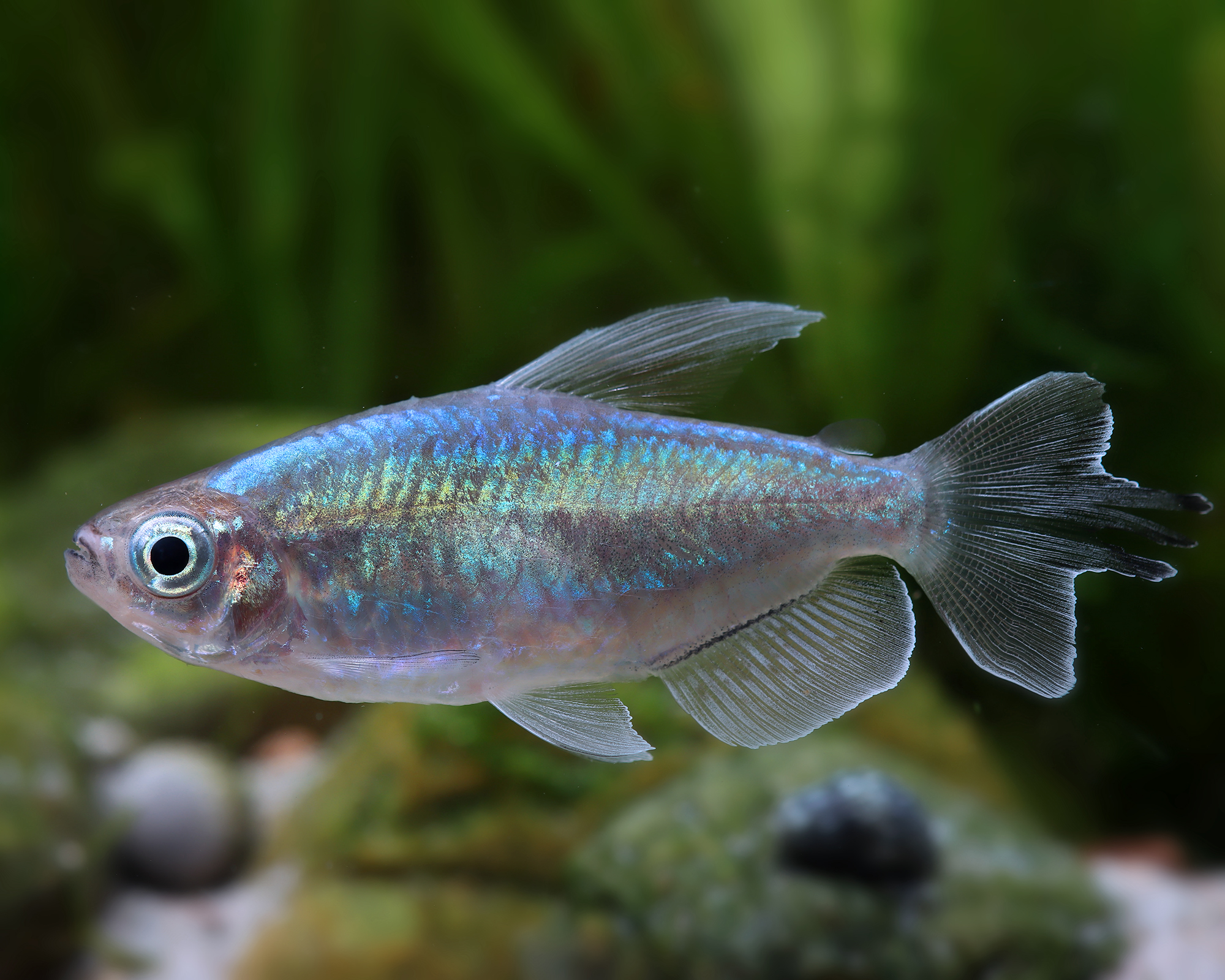
The Congo Tetra (Phenacogrammus interruptus) is widely regarded as one of the most magnificent freshwater fish available in the aquarium hobby. Unlike many of the smaller South American tetras, this African species boasts a larger, more robust profile, complemented by spectacular iridescent coloration and beautifully elongated finnage in mature males. They are an excellent choice for aquarists looking to add a vibrant, active school of fish to a medium-to-large planted community tank.

Distribution and Habitat
Endemic to the central Congo River basin in Africa, these fish are primarily found in the Democratic Republic of the Congo. They inhabit the murky, slightly acidic, and heavily vegetated streams, tributaries, and pools of the region. The natural waters they swim in are typically shaded by dense rainforest canopies, providing a dimly lit environment rich in organic matter and insect life.
Description of Congo Tetra
The Congo Tetra is a sexually dimorphic species where males are significantly larger, more colorful, and possess extended finnage compared to the females. When kept in optimal conditions, they display a breathtaking array of shimmering colors that shift depending on the viewing angle and lighting.
Body shape:
They feature a classic, laterally compressed, and somewhat deep-bodied tetra profile, though they are noticeably bulkier and larger than most common aquarium tetras.
Color:
Their scales are highly iridescent, flashing luminous shades of blue, turquoise, green, and gold along the lateral line, fading into a silvery-violet belly.
Barbels:
They do not possess any barbels.
Snout:
The snout is relatively short and slightly rounded, equipped with small but sharp teeth adapted for eating insects and plant matter.
Eyes:
They have large, prominent eyes featuring a dark pupil surrounded by a striking, reflective silver-to-golden ring.
Fins:
Mature males develop stunning, flowing dorsal, anal, and pelvic fins that often have distinct white or violet edging. Females have shorter, more rounded fins.
The Tail:
The caudal (tail) fin is deeply forked. In adult males, the central rays of the tail fin extend outward, creating a unique, feathery appendage.
Temper
Congo Tetras are remarkably peaceful fish. Despite their larger size, they are easily startled and can be somewhat skittish if kept with boisterous or aggressive tank mates. They do best when surrounded by other calm, similarly sized species.
Sociality
This is a highly social, schooling species. They must be kept in groups of at least six individuals, though a school of eight to twelve or more will make them feel much more secure and result in a more impressive, synchronized swimming display.
Activity
They are active, mid-to-top water swimmers. During the day, they will constantly cruise back and forth across the open swimming spaces of the aquarium, frequently interacting with one another.
Keeping and Caring for Congo Tetra
While relatively hardy, Congo Tetras require pristine water conditions to truly thrive and display their best colors. They are sensitive to poor water quality and sudden fluctuations in parameters, making regular maintenance essential.
Tank size:
Due to their adult size and active swimming behavior, a minimum tank size of 30 gallons is required for a small school, though a 55-gallon aquarium or larger is highly recommended to give them ample horizontal swimming space.
Water Parameters:
Originating from river basins, they appreciate clean, well-oxygenated water that leans towards the softer, slightly acidic side.
Temperature
Maintain a stable temperature between 23-28°C (73-82°F).
pH
The ideal pH range is between 6.0 and 7.5.
Hardness
Water hardness should be kept between 3 and 18 dGH.
Ammonia, Nitrite, Nitrate
Ammonia and Nitrite must always be at 0 ppm. Nitrates should be kept as low as possible, ideally below 20 ppm, through regular water changes.
Lighting
Moderate to dim lighting is best. Bright lights can make them skittish and wash out their colors. Floating plants can be used to diffuse harsh lighting.
Water flow
They appreciate a moderate water flow that simulates the gentle currents of their native streams, providing them with exercise and well-oxygenated water.
Decorations and Plants
A dark substrate will beautifully contrast and highlight their iridescent colors. The tank should be densely planted along the back and sides to provide hiding spots, leaving a large, unobstructed open swimming area in the center. Driftwood and dried leaf litter can also be added to mimic their natural habitat.
Diet
Congo Tetras are omnivorous and generally unfussy eaters. In the wild, they feed on small insects, worms, crustaceans, and plant matter. In the aquarium, they will readily accept high-quality flakes and granules. To ensure optimal health and coloration, supplement their diet with live or frozen foods such as bloodworms, daphnia, and brine shrimp, as well as occasional vegetable matter.
Some Feeding Tips
Feed them small amounts 2 to 3 times a day—only what they can consume in a few minutes. Because they are mid-water feeders, they may ignore food once it hits the substrate, so sinking pellets or slow-sinking granules are excellent choices.
Breeding
Breeding Congo Tetras is possible but moderately difficult. They are egg scatterers and exhibit no parental care. A separate, dimly lit breeding tank with soft, acidic water and a substrate of marbles or dense moss is required to prevent the parents from eating the eggs. After conditioning the pair with live foods, spawning usually occurs in the early morning. Once eggs are scattered, the parents must be removed immediately. The fry are very small and will need infusoria or liquid fry food until they are large enough to take baby brine shrimp.
Conclusion
The Congo Tetra is a crown jewel among freshwater aquarium fish. Their dynamic schooling behavior, combined with their mesmerizing, rainbow-like iridescence and elegant fins, makes them a captivating addition to any large, peaceful community tank. With proper space, clean water, and a balanced diet, they will provide years of vibrant activity and beauty to your aquatic display.
 - pair - 1.webp)
Leave your comments