Overview
The Silver Dollar (Metynnis hypsauchen) is a fascinating and popular freshwater fish belonging to the family Serrasalmidae. Often referred to by its German name "Dickkopf-Scheibensalmler" in European trades, this species is closely related to pacus and piranhas but is entirely peaceful and primarily herbivorous. They are beloved for their schooling behavior and shimmering, metallic appearance.

Distribution and Habitat
Native to the extensive Amazon and Paraguay River basins in South America, Metynnis hypsauchen thrives in heavily vegetated rivers and tributaries. They prefer warm, slightly acidic, and tannin-stained waters with plenty of overhanging vegetation where they can forage for plant matter and find refuge from predators.
Description of Silver Dollar
Body shape:
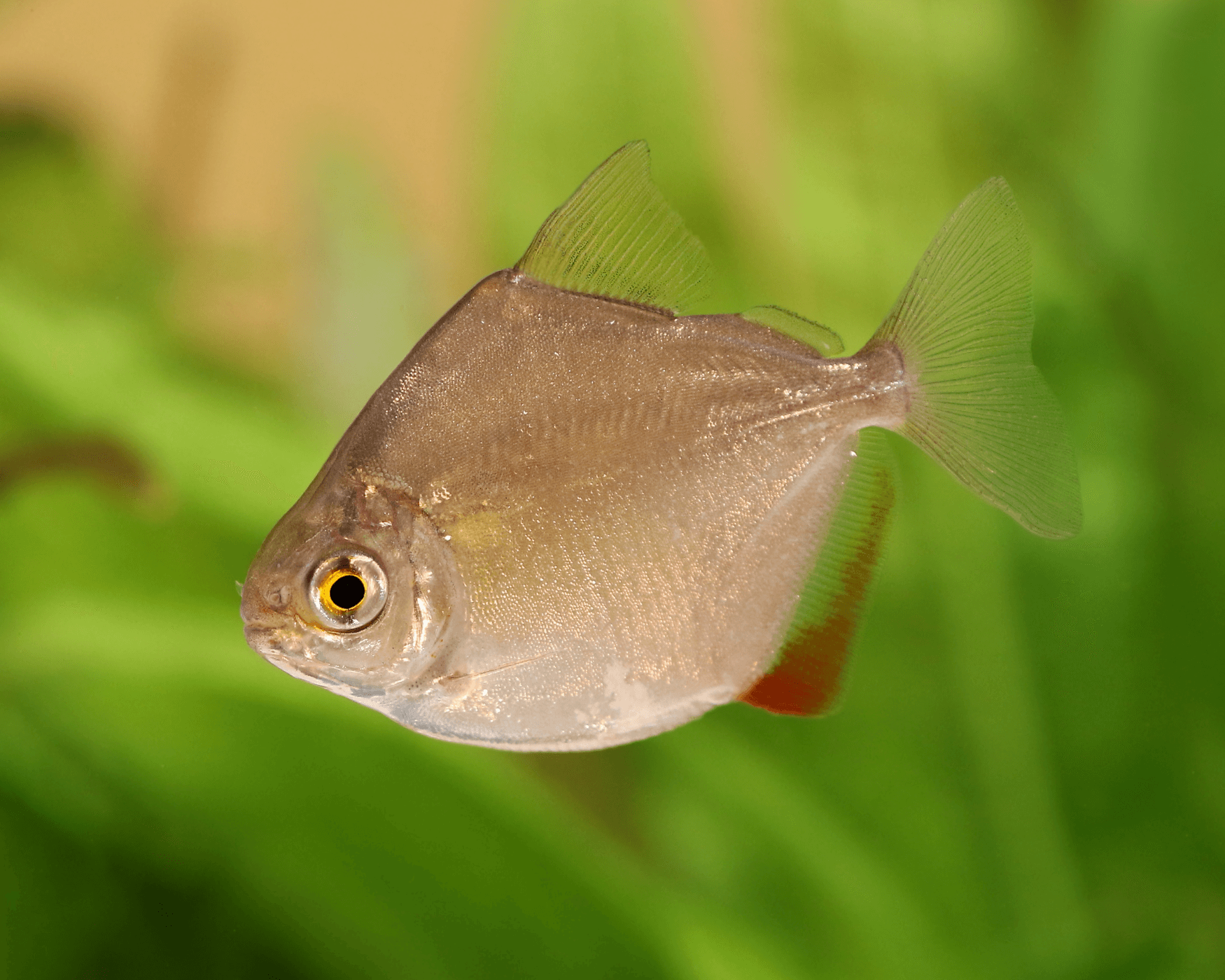
They possess a highly compressed, laterally flattened, and almost perfectly round disc-like body, which gives them their common name.
Color:
The body is predominantly shimmering silver. Depending on the lighting and the fish's mood, faint vertical bars or spots may appear, and males often show a red tinge on their anal fin.
Barbels:
They do not have barbels.
Snout:
The snout is blunt and relatively short, equipped with strong jaws and teeth designed for shearing plant material.
Eyes:
They have relatively large eyes, which aid in navigating the murky, tannin-stained waters of their natural habitat.
Fins:
The dorsal fin is tall, and the anal fin is elongated. In adult males, the anal fin is often edged with red or black and has a more curved shape compared to females.
The Tail:
The caudal fin is moderately forked, providing them with short bursts of speed when startled.

Temper
Silver Dollars are generally peaceful and somewhat skittish. They are easily startled by sudden movements or lighting changes outside the aquarium.
Sociality
They are highly social, schooling fish. They must be kept in groups of at least five or more to feel secure and exhibit their natural behaviors. They do well in large community tanks with other similarly sized, peaceful fish.
Activity
They are active mid-level swimmers. They spend most of their time cruising together in a school, grazing on available plant matter, and exploring their environment.
Keeping and Caring for Silver Dollar
Tank size:
Due to their adult size and schooling nature, a minimum tank size of 280 liters (75 gallons) is required, though larger is always better to provide ample swimming space.
Water Parameters:
They are quite adaptable but thrive best in conditions that mimic their Amazonian origin.
Temperature
Maintain the water temperature between 24-28°C (75-82°F).
pH
The ideal pH range is slightly acidic to neutral, between 6.0 and 7.0.
Hardness
They prefer soft water, ideally between 4 and 15 dGH.
Ammonia, Nitrite, Nitrate
Ammonia and Nitrite must always be at 0 ppm. Nitrates should be kept below 20 ppm through regular water changes.
Lighting
Moderate to dim lighting is preferred. Bright lights can make them skittish, so floating plants or tannin-stained water can help diffuse the light.
Water flow
A moderate water flow is ideal, simulating the gentle currents of their native rivers.
Decorations and Plants
Decorate with smooth river rocks, driftwood, and roots. Be cautious with live plants, as Silver Dollars are avid herbivores and will eat most aquatic vegetation. Tough plants like Anubias or Java Fern might survive, but plastic or silk plants are often recommended to keep the tank looking lush.
Diet
In the wild, they are primarily herbivores, feeding on aquatic plants, fallen leaves, and fruits. In the aquarium, they should be fed a high-quality herbivore flake or pellet, supplemented with fresh vegetables like zucchini, cucumber, spinach, and peas.
Some Feeding Tips
Feed them two to three times a day in amounts they can consume within a few minutes. Offer occasional meaty treats like bloodworms or brine shrimp for balanced nutrition, but keep their diet mostly plant-based.
Breeding
Breeding Metynnis hypsauchen in captivity is possible but requires a large, dedicated breeding tank. They are egg scatterers. Providing soft, slightly warmer water and dim lighting can trigger spawning. The female will release up to 2,000 eggs among fine-leaved plants or spawning mops. Parents should be removed after spawning to prevent them from eating the eggs, which hatch in about three days.
Conclusion
The Silver Dollar is a magnificent, peaceful schooling fish that brings dynamic movement and a flash of silver to large aquariums. While their appetite for live plants can be challenging for aquascapers, their hardiness and striking appearance make them a highly rewarding species for intermediate aquarists.
 - pair - 1.webp)
Leave your comments