AquaLibs presents AquaRank Discover the world’s leading aquascapers

Explore transparent rankings built from published results across the world’s leading aquascaping contests.

Atractosteus spatula (Alligator Gar)

Overview

The Alligator Gar is one of the most magnificent and ancient freshwater fish species available to the most dedicated aquarists. Known for its prehistoric appearance and crocodilian features, this apex predator requires an immense commitment due to its colossal adult size and incredibly long lifespan.

Image of aligatorhecht atractosteus spatula 40 50cm raritaet xxl

Distribution and Habitat

Native to the southern United States and parts of Mexico, the Alligator Gar inhabits large, slow-moving rivers, swamps, bayous, and estuaries. They are highly adaptable and can even tolerate brackish waters, often found lurking in murky, heavily vegetated environments.

Description of Alligator Gar

Body shape:

They possess a heavily armored, elongated, and torpedo-shaped body built for sudden bursts of speed during an ambush.

Color:

Juveniles, as seen in the 40-50cm range, display a beautiful mottled pattern of black spots over a grey, silver, or brownish base. Adults tend to become more solid olive or dark brown.

Barbels:

This species does not possess any barbels.

Snout:

The most defining feature is its broad, short, alligator-like snout equipped with a double row of large, sharp teeth in the upper jaw.

Eyes:

Their eyes are relatively small, positioned to help them spot prey above and around them in murky waters.

Fins:

The dorsal and anal fins are positioned very far back on the body, near the tail, providing explosive propulsion for striking.

The Tail:

The caudal fin is rounded and slightly heterocercal, giving it a distinct, primitive appearance.

Temper

While they are apex predators, they are generally sluggish and not overtly aggressive toward fish they cannot swallow. However, absolutely anything that fits into their massive mouths will be considered food.

Sociality

They can be kept with other similarly sized, robust monster fish such as large catfish or pacus, provided the tank is exceptionally large and their tank mates cannot be eaten.

Activity

Alligator Gars are classic ambush predators. They spend much of their time hovering motionless near the surface or resting at the bottom, waiting patiently for prey to swim by.

Image of aligatorhecht atractosteus spatula 40 50cm raritaet xxl

Keeping and Caring for Alligator Gar

Keeping an Alligator Gar is a monumental task reserved for public aquariums or extreme monster fish keepers. Their care is relatively easy in terms of water quality, but the sheer volume of water and filtration required is staggering.

Tank size:

A juvenile can be grown out in a 200-gallon tank, but a fully grown adult requires a massive custom indoor pond or tank of at least 1,000 to 3,000 gallons.

Water Parameters:

They are incredibly hardy and can tolerate a wide range of water conditions, including low oxygen levels thanks to their modified swim bladder which allows them to gulp atmospheric air.

Temperature

They thrive in temperatures ranging from 15°C to 30°C.

pH

A pH level between 6.0 and 8.0 is ideal.

Hardness

They are adaptable, but a general hardness of 5-20 dGH is recommended.

Ammonia, Nitrite, Nitrate

Ammonia and Nitrite must be strictly 0 ppm. Nitrates should be kept below 40 ppm through massive water changes and heavy-duty filtration systems.

Lighting

Moderate to dim lighting is preferred to mimic their natural murky habitats and reduce stress.

Water flow

Moderate water flow is sufficient. They do not require strong currents.

Decorations and Plants

Open swimming space is the absolute priority. Large, heavy pieces of driftwood can be used, but avoid sharp rocks that could injure the fish during sudden dashes.

Diet

They are strict carnivores. In captivity, they should be fed a varied diet of whole fish (like tilapia or smelt), large shrimp, and high-quality carnivore pellets.

Some Feeding Tips

Use long feeding tongs to offer food, as their strike is lightning-fast and their teeth are razor-sharp. Avoid feeding live feeder fish to prevent the introduction of diseases.

Breeding

Breeding the Alligator Gar in a home aquarium is virtually impossible due to the immense space required and the specific seasonal flooding triggers needed for spawning in the wild.

Conclusion

The Alligator Gar is a true living fossil and a spectacular centerpiece for a colossal, custom setup. While their hardiness makes them easy to keep alive, their astronomical size and long lifespan mean they are strictly for expert aquarists with unlimited space and resources.
Fish info

  • Care level: Expert Only
  • Temperament: Semi-aggressive
  • Adult size: 150-300 cm
  • Life expectancy: 50+ years
  • Fish type: Gar
  • Temperature : 15-30°C
  • pH: 6.0-8.0
  • Color Form: Black, Brown, Grey, Silver
Leave your comments
Latest on Fishs
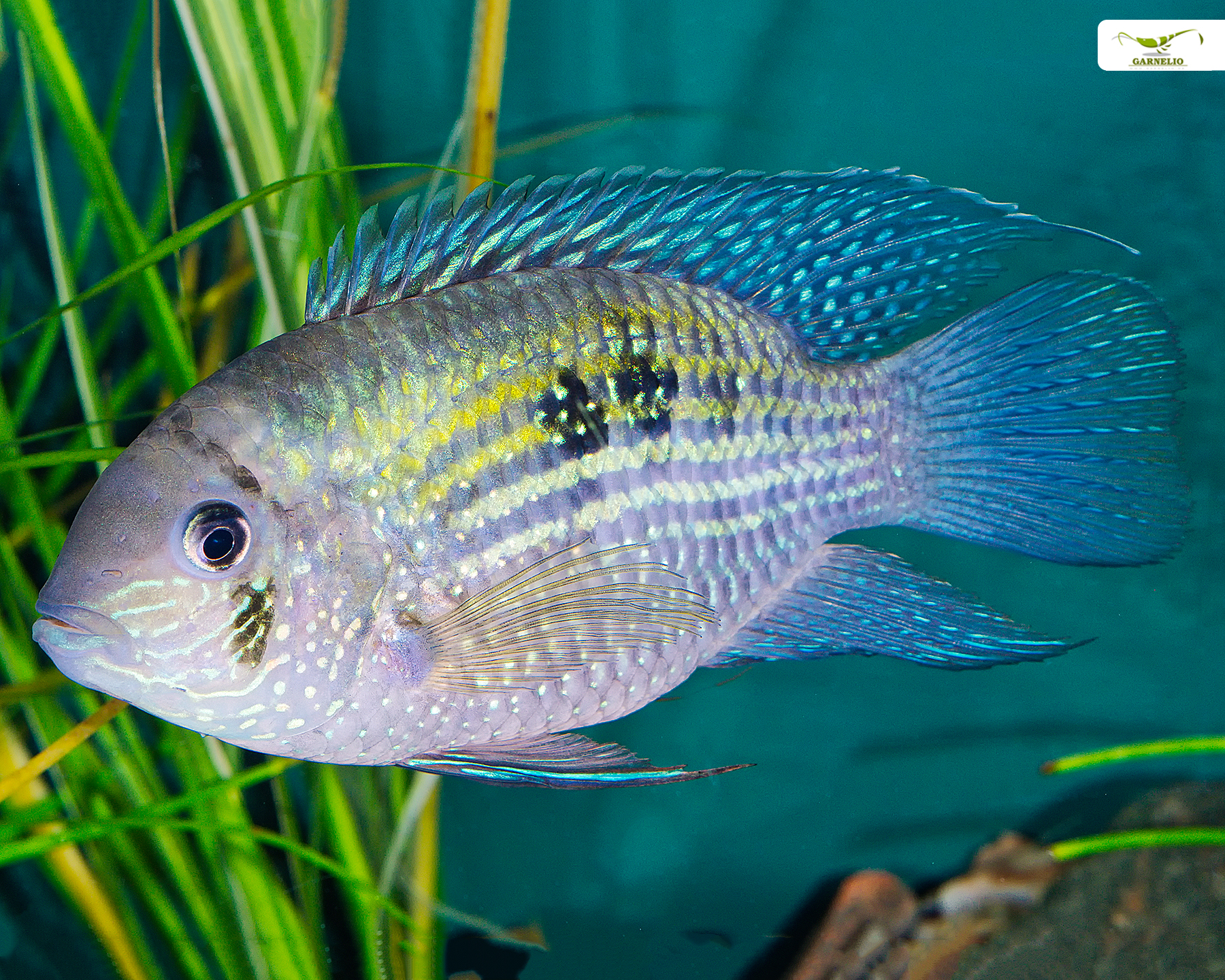
  • Blue Acara (Aequidens pulcher)

    Blue Acara (Aequidens pulcher)

    Moderate
    South American freshwater cichlid
    The supplied label identifies these fish as Blue Acara, Aequidens pulcher, a South American freshwater cichlid often placed in the genus Andinoacara in current aquarium literature. The photograph is consistent with a blue acara, although a definitive identification cannot be confirmed from one image alone. This pair requires a spacious aquarium, stable water quality, hiding places and careful observation during breeding, when territorial behavior becomes stronger.
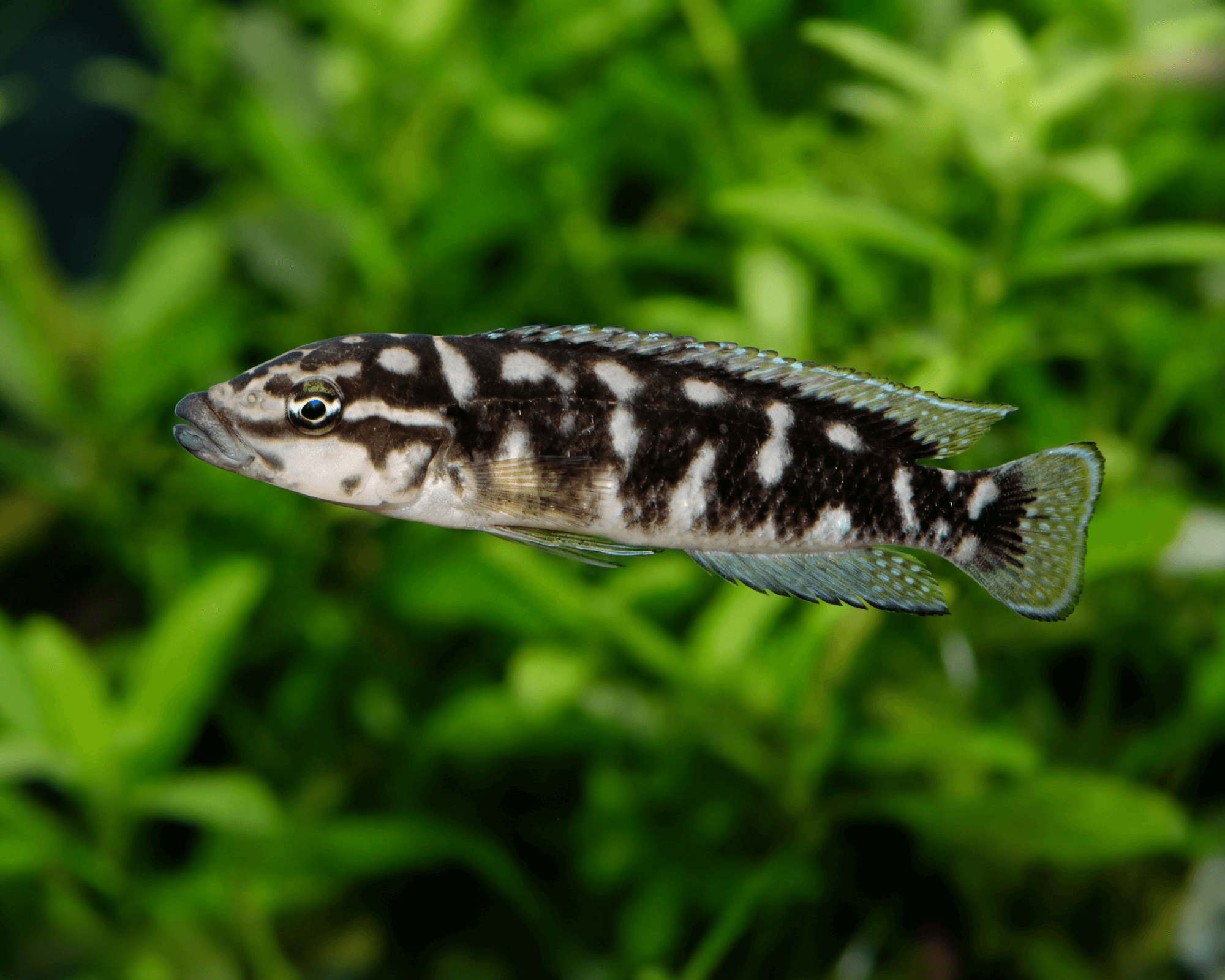
  • Julidochromis transcriptus: Black-and-White Slender Cichlid

    Julidochromis transcriptus: Black-and-White Slender Cichlid

    Moderate
    Lake Tanganyika rock-dwelling cichlid
    Julidochromis transcriptus is a small rock-dwelling cichlid from Lake Tanganyika, recognized by its compact, elongated body and irregular black-and-white pattern. It is a territorial cave dweller that is best kept as an established pair in a carefully structured aquarium. The supplied fish are identified as a DNZ pair, although sex, collection locality, and precise geographic form cannot be verified from the supplied material alone.
  • Azur Cichlid (Sciaenochromis fryeri) Care Guide

    Azur Cichlid (Sciaenochromis fryeri) Care Guide

    Moderate
    Lake Malawi haplochromine cichlid
    The Azur cichlid is commonly sold as Sciaenochromis fryeri, a predatory haplochromine cichlid from Lake Malawi. Mature males develop vivid electric-blue coloration, while females and juveniles are generally less intensely colored. This fish is moderately aggressive and needs a spacious aquarium with rocky structure, alkaline, mineral-rich water, and carefully selected tank mates. The supplied source describes a DNZ pair, but sex and exact locality cannot be confirmed from the images alone. Identification confidence is therefore good but not absolute.
  • Marble Angelfish (Pterophyllum scalare)

    Marble Angelfish (Pterophyllum scalare)

    Moderate
    South American freshwater cichlid
    The marble angelfish is a captive-bred color form of Pterophyllum scalare, a tall-bodied South American cichlid valued for its elegant fins and distinctive irregular black patterning. It needs a mature, spacious aquarium with excellent water quality, warm water and suitable tank mates. Although generally manageable, adults establish territories and may become assertive when pairing or spawning. The supplied source identifies two marble angelfish; exact lineage and strain details cannot be confirmed from the available information.
  • Gold Angelfish, Pterophyllum scalare

    Gold Angelfish, Pterophyllum scalare

    Moderate
    Freshwater South American cichlid
    The Gold Angelfish is an ornamental colour form of Pterophyllum scalare, a tall-bodied South American cichlid valued for its graceful movement and parental care. It needs a mature, spacious aquarium with substantial vertical clearance, stable warm water and carefully chosen tank mates. The supplied source identifies two fish as Gold Angelfish, although the accompanying images show several angelfish colour and fin forms, so the exact appearance of the supplied specimens cannot be confirmed from the images alone.
  • Zebra Angelfish (Pterophyllum scalare)

    Zebra Angelfish (Pterophyllum scalare)

    Moderate
    South American freshwater cichlid
    The Zebra Angelfish is a selectively bred form of Pterophyllum scalare, recognised by a silvery body with several dark vertical bars and the tall, laterally compressed shape typical of freshwater angelfish. The supplied images also show other angelfish colour forms, so the exact appearance of the listed pair cannot be confirmed from the image set alone. This South American cichlid is generally manageable for experienced community keepers, but its size, territorial breeding behaviour and need for a tall aquarium should be planned for carefully.
  • Black Angelfish (Pterophyllum scalare)

    Black Angelfish (Pterophyllum scalare)

    Moderate
    South American freshwater cichlid
    The supplied record identifies two black angelfish, most likely a domestic color form of Pterophyllum scalare. The photographs show several angelfish color patterns, so they should not be treated as proof that every pictured fish is black or that all belong to the same strain. Black angelfish retain the tall, laterally compressed body and extended fins typical of freshwater angelfish. They need a tall, mature aquarium, stable warm water, a varied diet, and carefully selected tank mates.
  • White Marble Angelfish (Pterophyllum scalare)

    White Marble Angelfish (Pterophyllum scalare)

    Moderate
    Freshwater cichlid
    The white marble angelfish is a selectively bred aquarium color form of Pterophyllum scalare, a tall-bodied South American cichlid valued for its elegant fins and distinctive irregular dark marbling. It is generally peaceful when young but can become territorial, especially when paired for spawning. Successful care depends on a tall aquarium, excellent water quality, suitable tank mates, and a varied carnivorous-omnivorous diet. The exact genetic strain shown cannot be confirmed from photographs alone.
  • Freshwater Angelfish Mix (Pterophyllum scalare)

    Freshwater Angelfish Mix (Pterophyllum scalare)

    Moderate
    Freshwater cichlid
    Freshwater angelfish are tall-bodied South American cichlids valued for their graceful movement and wide range of captive color forms. The supplied source identifies a mixed group as Pterophyllum scalare; the photographs show several forms, including striped, black, orange, white, silver and blue-toned fish. They are manageable for experienced beginners, but their adult height, territorial breeding behavior and tendency to eat small tank mates require thoughtful aquarium planning.
  • Leopard Angelfish (Pterophyllum scalare)

    Leopard Angelfish (Pterophyllum scalare)

    Moderate
    South American freshwater cichlid
    The leopard angelfish is a domestic color form of Pterophyllum scalare, a tall-bodied freshwater cichlid from tropical South America. Its silver to yellowish body is marked with irregular dark spots or broken vertical bars, although pattern intensity varies with age, mood and breeding line. It is generally peaceful in a suitably spacious community aquarium, but pairs become territorial when spawning. This fish needs warm, clean water, generous vertical swimming space and tank mates too large to swallow.
  • Yellow Labidochromis (Labidochromis caeruleus)

    Yellow Labidochromis (Labidochromis caeruleus)

    Easy - Moderate
    Lake Malawi mbuna cichlid
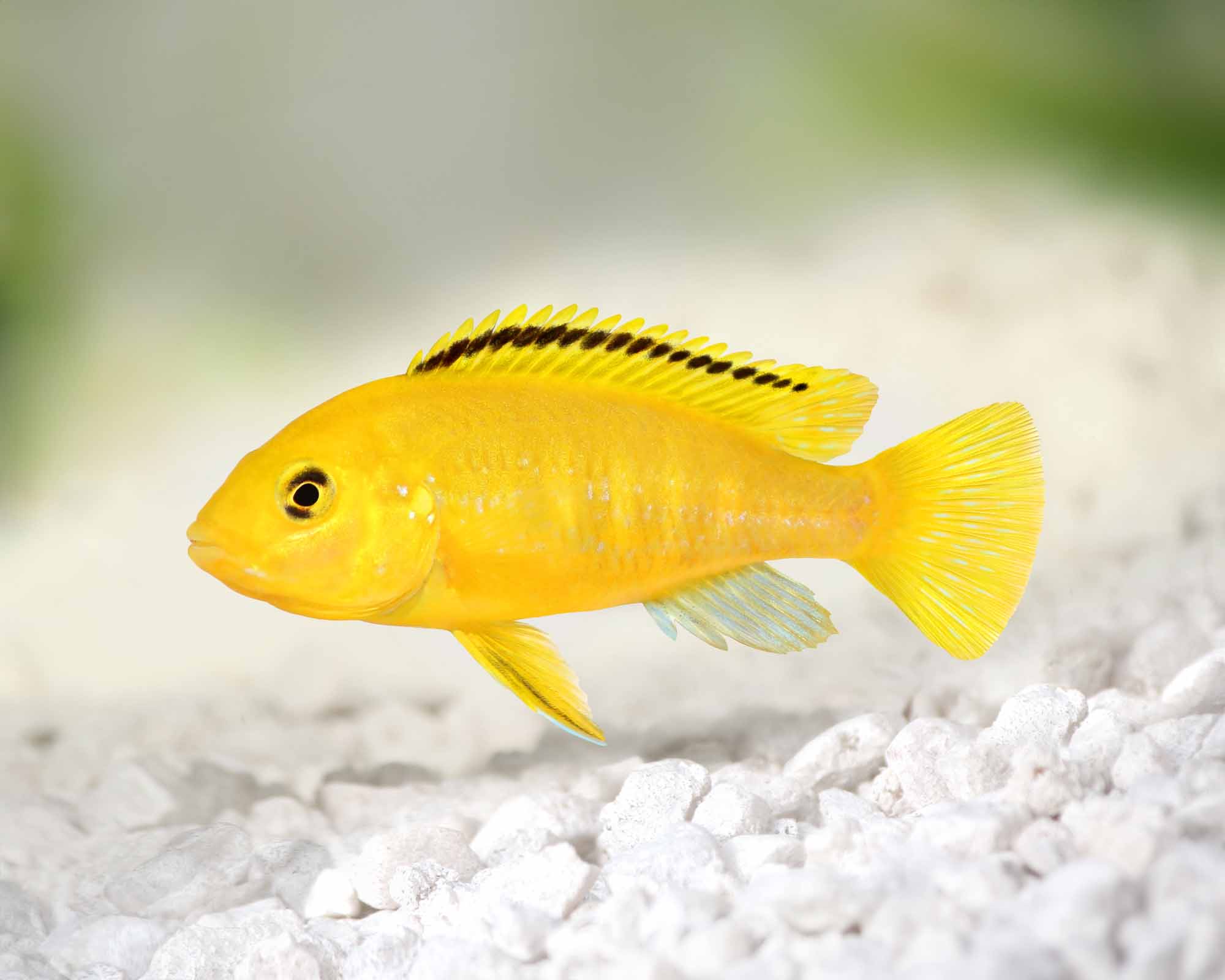
    The Yellow Labidochromis is a bright yellow mbuna cichlid from Lake Malawi. Labidochromis caeruleus is generally manageable for an African cichlid, but it remains territorial and needs hard, alkaline water, rockwork, and carefully chosen companions. The supplied source identifies two fish as a pair; sex and pair bonding cannot be confirmed from the available images. This species is an adaptable algae grazer, a maternal mouthbrooder, and a rewarding choice for an appropriately planned Malawi cichlid aquarium.
  • Blue Pearl Angelfish (Pterophyllum scalare)

    Blue Pearl Angelfish (Pterophyllum scalare)

    Moderate
    Freshwater cichlid
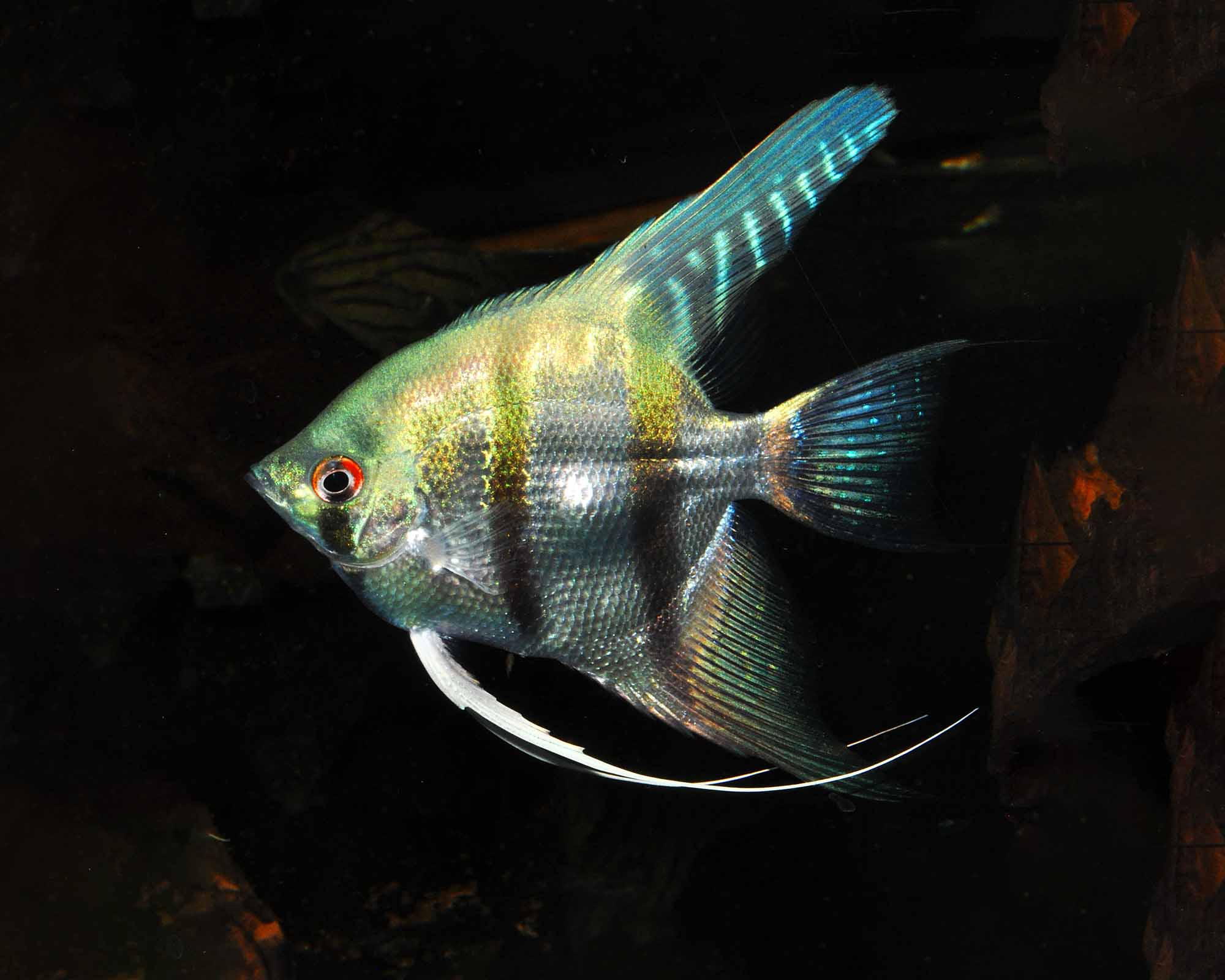
    The Blue Pearl Angelfish is a selectively bred colour form of Pterophyllum scalare, the freshwater angelfish. Its laterally compressed body, extended fins and tall profile make it a striking inhabitant of a planted community aquarium. The supplied trade label supports identification as this species and colour form, although individual colour intensity can vary. It requires warm, stable, clean water, generous vertical swimming space and thoughtful tank-mate selection, especially as adults become territorial when pairing or spawning.
  • Villavicencio Dwarf Cichlid Apistogramma macmasteri

    Villavicencio Dwarf Cichlid Apistogramma macmasteri

    Moderate
    South American dwarf cichlid
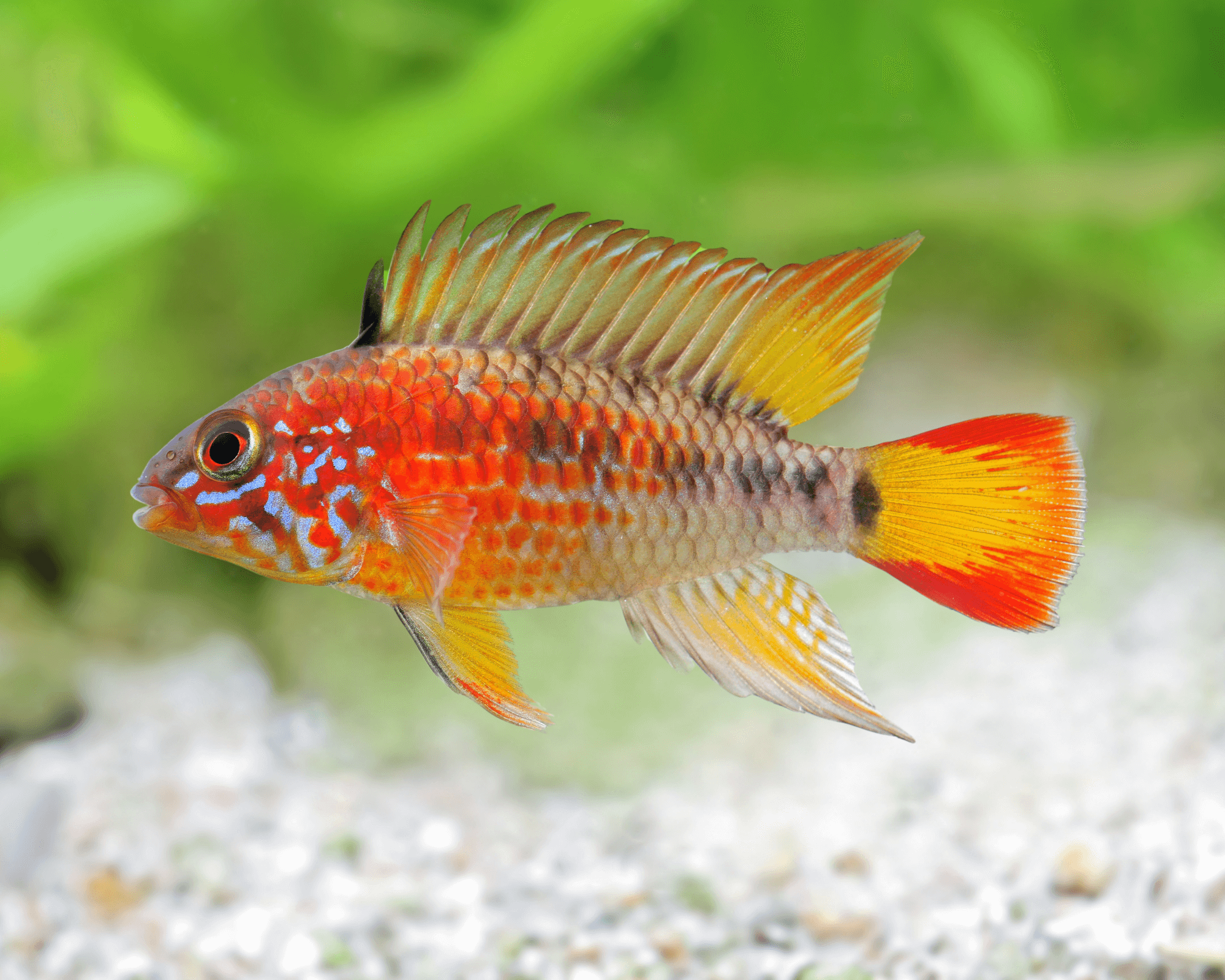
    Apistogramma macmasteri, commonly called the Villavicencio dwarf cichlid, is a small South American cichlid associated with the Río Orinoco drainage of Colombia. It is valued for its compact size, elaborate finnage and interesting courtship behavior. A bonded pair can be kept in a carefully structured aquarium with soft, clean water, sand, cover and several potential spawning sites. Although manageable for an experienced community aquarist, territorial behavior increases during breeding, so tank layout and tankmate selection are important.
  • Neolamprologus leleupi (Tanganyika Golden Cichlid)

    Neolamprologus leleupi (Tanganyika Golden Cichlid)

    Moderate
    Lake Tanganyika rock-dwelling cichlid
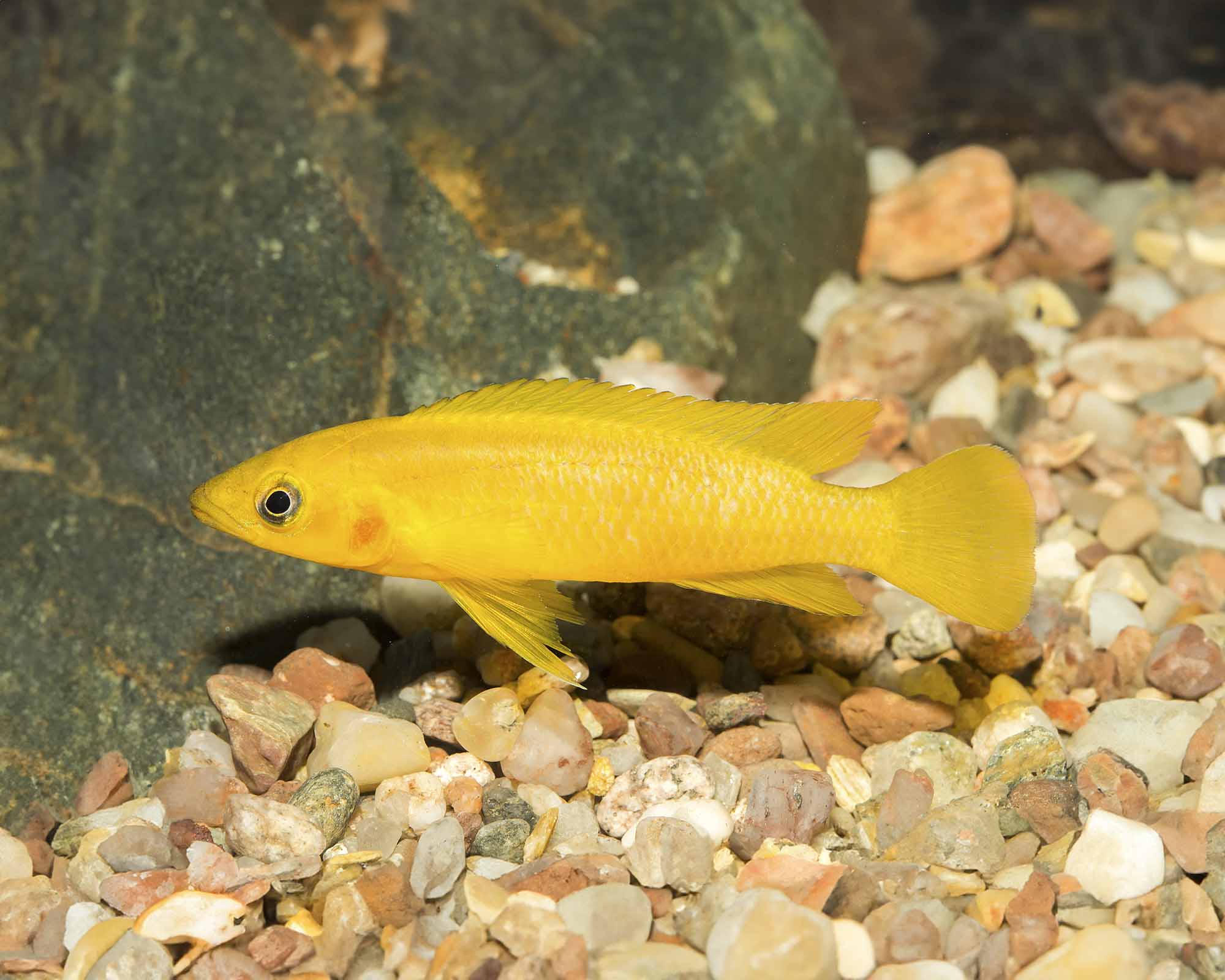
    Neolamprologus leleupi is a small, brightly coloured cichlid endemic to Lake Tanganyika in East Africa. It inhabits rocky coastal areas and uses crevices for shelter, feeding and spawning. Despite its modest size, it can be strongly territorial, particularly when paired or breeding. The supplied source identifies these fish as a golden colour form and a pair, although sex cannot be confirmed reliably from the image alone. Successful care depends on alkaline, mineral-rich water, abundant rockwork and carefully chosen tank mates.
  • Maingano Cichlid (Melanochromis cyaneorhabdos)

    Maingano Cichlid (Melanochromis cyaneorhabdos)

    Moderate - Difficult
    Lake Malawi mbuna cichlid
    The Maingano, or Johanni Maingano, is a Lake Malawi mbuna recognized for its intense steel-blue body and dark horizontal markings. The supplied label combines “Johanni” with the scientific name Melanochromis cyaneorhabdos; these are distinct species, so identification should be confirmed from the seller or locality. This territorial mouthbrooding cichlid needs hard, alkaline water, abundant rockwork, a predominantly algae-based diet, and careful stocking to limit aggression.
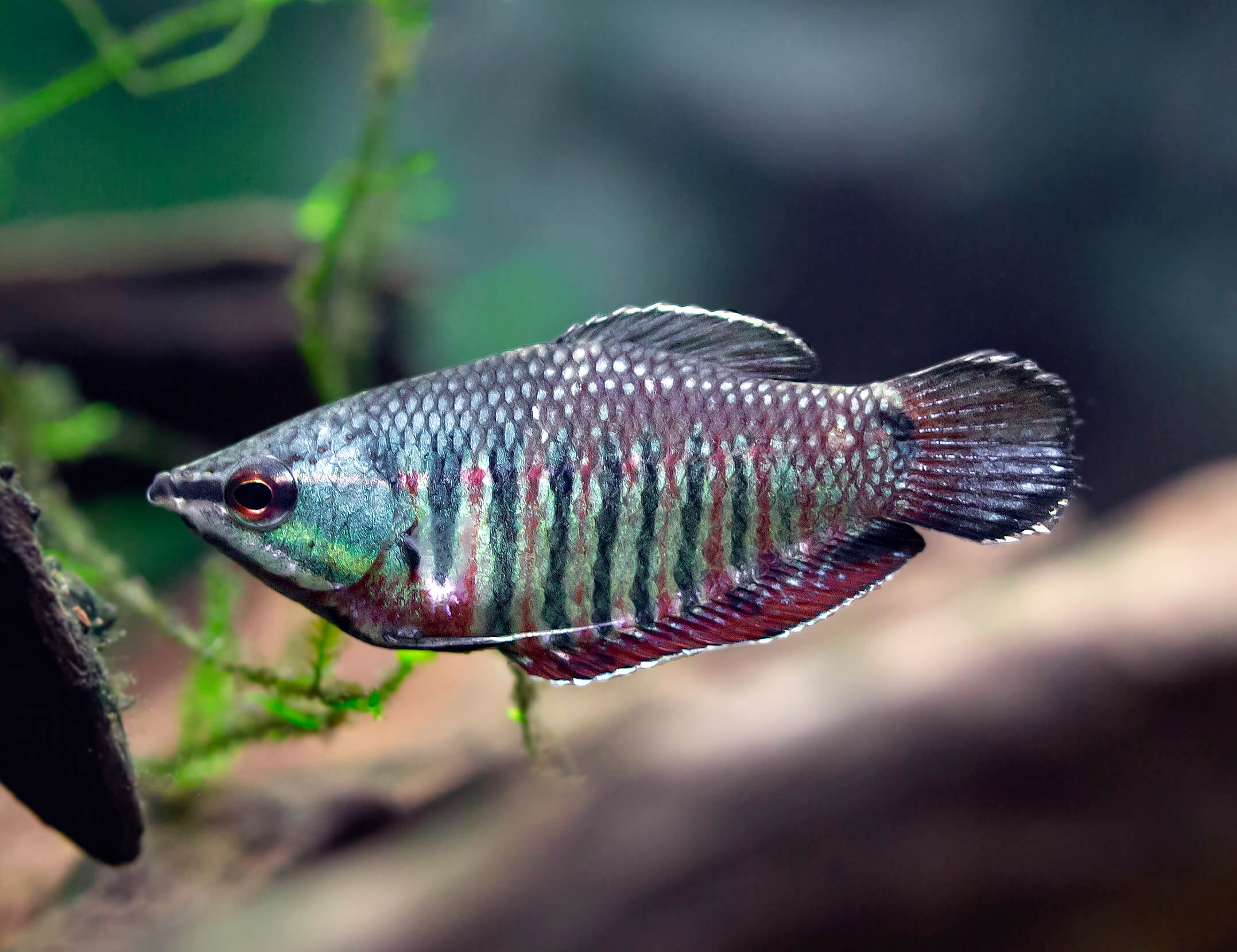
  • Red Chocolate Gourami (Sphaerichthys vaillanti)

    Red Chocolate Gourami (Sphaerichthys vaillanti)

    Difficult
    Blackwater labyrinth fish
    The red chocolate gourami, Sphaerichthys vaillanti, is a specialized Southeast Asian labyrinth fish suited to mature, soft, acidic blackwater aquariums. It is peaceful but easily stressed by bright lighting, strong currents and boisterous tank mates. The supplied source identifies these fish as a pair; sex and exact identity cannot be confirmed from the image alone, so identification should be checked against a reliable specimen reference. Stable water quality, cover and a varied small-food diet are central to long-term success.