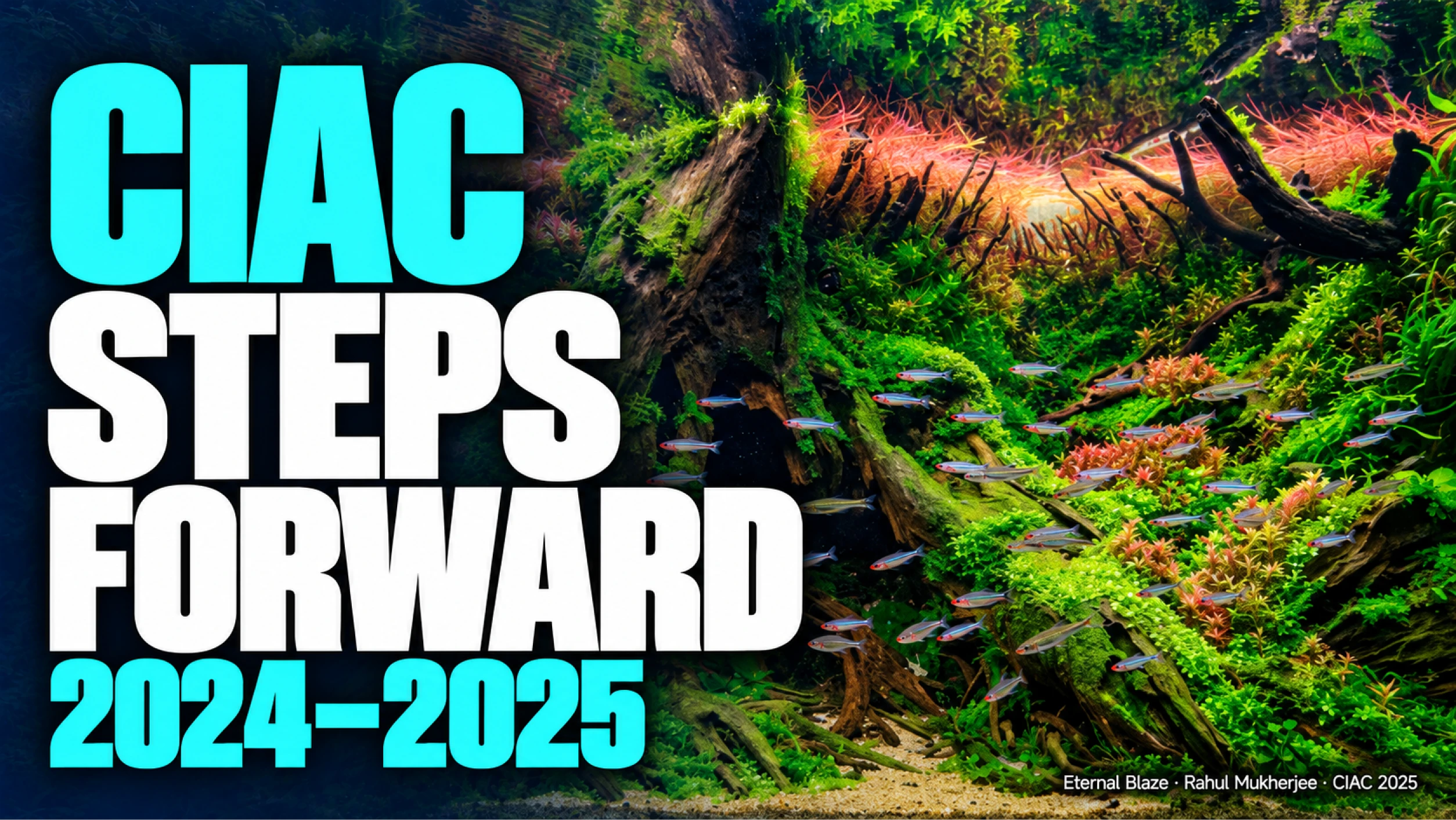
As the CIAC 2026 results approach on October 10, the previous two editions offer a useful perspective on competition careers. The champion's photograph captures one moment; a sequence of works reveals a creator's changing choices in structure, planting, light and atmosphere.
For this comparison of CIAC 2024–2025 results, we selected five aquascapers with verified entries in both editions and a higher finish in 2025. Their journeys include a move into the Top 10, three advances into the Top 30 and the final step from the Top 7 to the championship.
Each story includes the original artwork photographs from both years and an AquaRank profile, so readers can continue exploring beyond these two results.
Five advances between CIAC 2024 and 2025
| Aquascaper | Country | CIAC 2024 | CIAC 2025 | Places gained | 2025 work |
|---|---|---|---|---|---|
| Rahul Mukherjee | India | 63 | 6 | 57 | Eternal Blaze |
| Debraj Ghosh | India | 69 | 23 | 46 | Tempest |
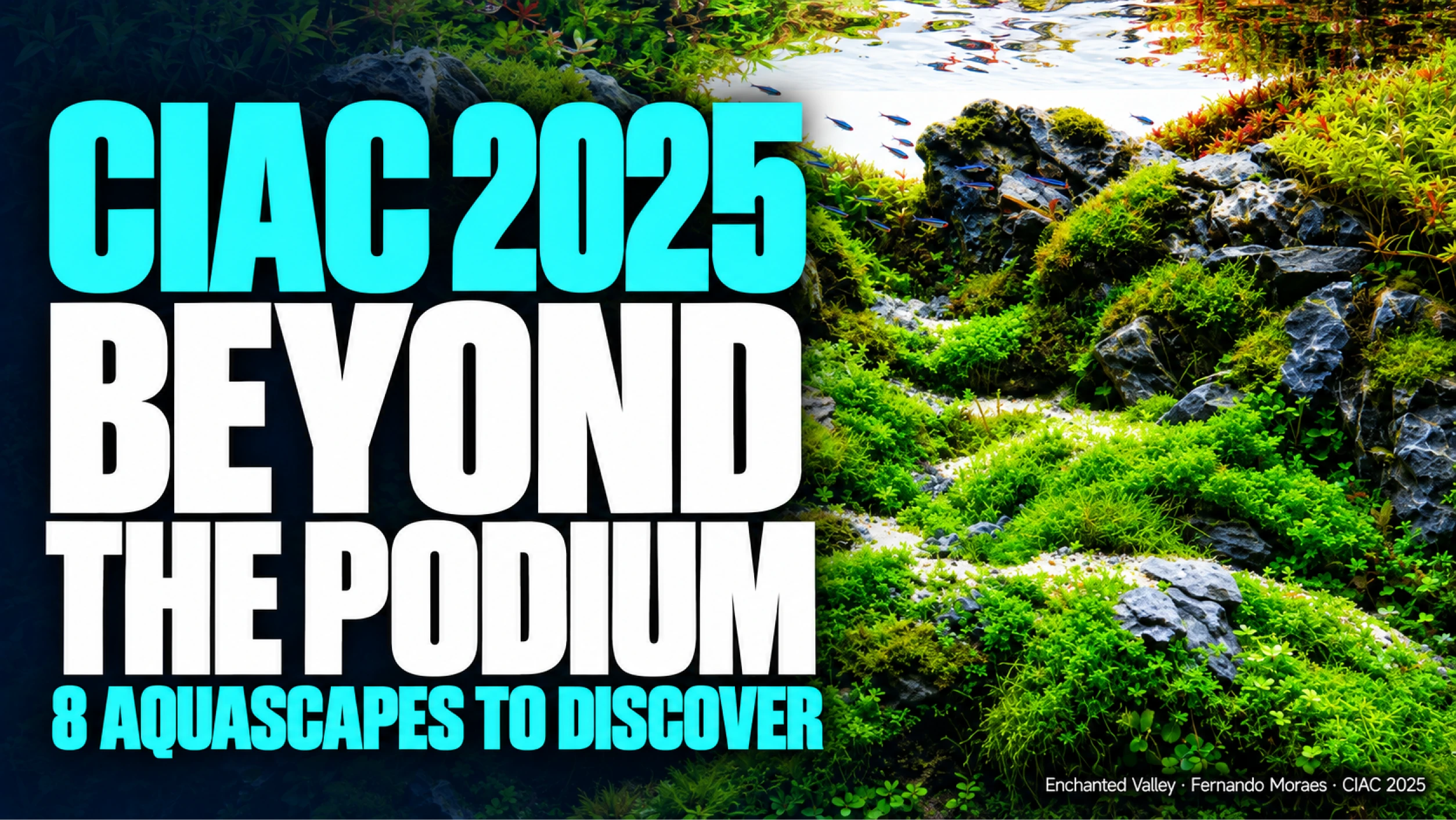
| Fernando Moraes | Brazil | 68 | 24 | 44 | Enchanted Valley |
| Lich Do | Vietnam | 45 | 15 | 30 | The Returning Breeze |
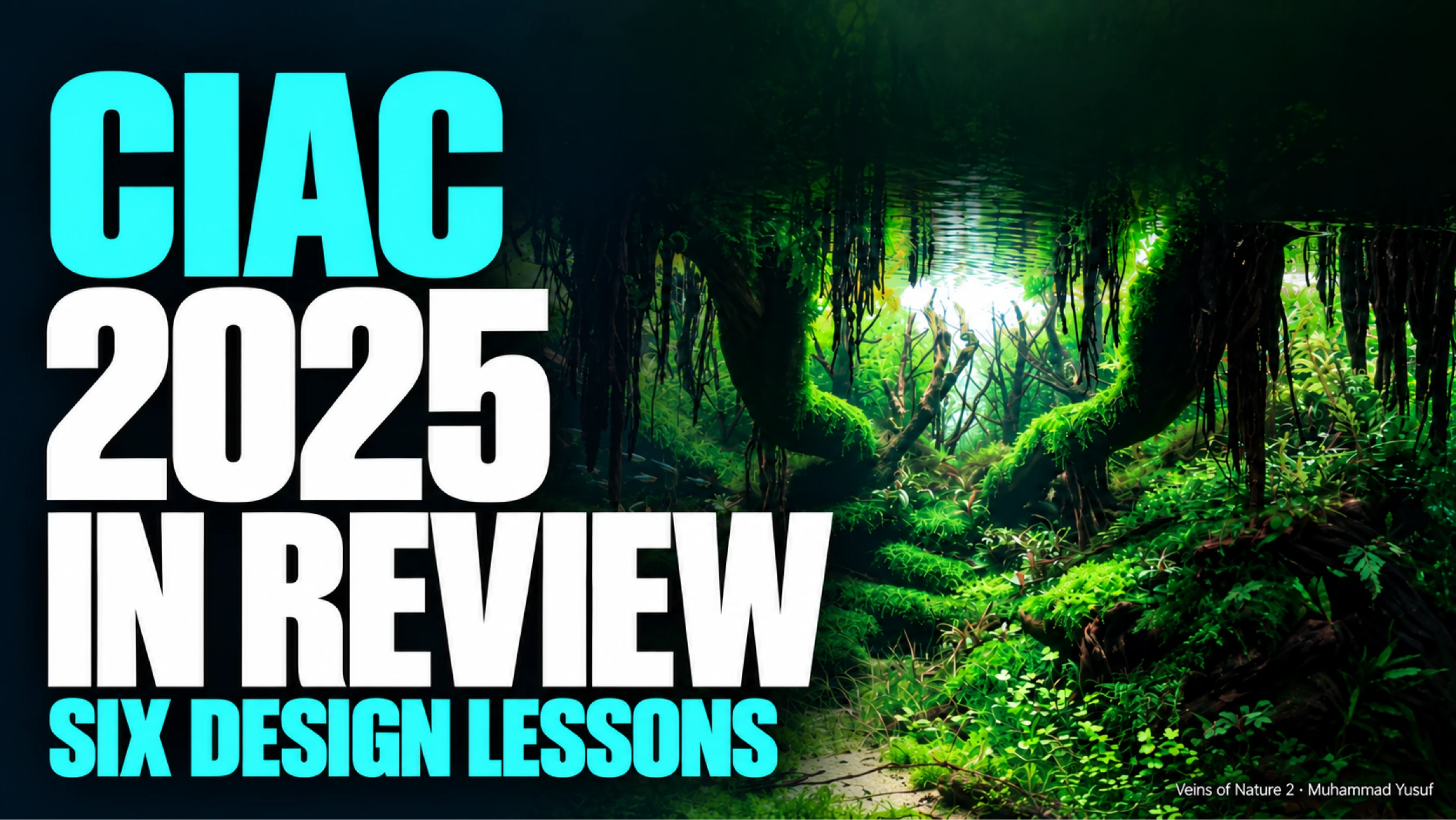
| Muhammad Yusuf | Indonesia | 7 | 1 | 6 | Veins of Nature 2 |
How to read the comparison: Places gained equals the 2024 rank minus the 2025 rank. Both columns refer to the Aquascaping Group. The 2024 figures follow CIPS' final published results, which revised the earlier list after disqualifications. This is an editorial selection, ordered by places gained.
A higher placement records a stronger finish in that year's field. The photographic comparisons below explore visible changes between works; they do not establish which changes caused the judges to award a higher rank.
1. Rahul Mukherjee: 63rd to sixth
India · 57 places gained · Estuarine → Eternal Blaze

2024: Estuarine — Rahul Mukherjee, India — Rank 63.

2025: Eternal Blaze — Rahul Mukherjee, India — Rank 6. Both images are archived contest photographs.
The move from Estuarine to Eternal Blaze brings a striking change of emphasis. In the 2024 photograph, substantial pieces of dark wood extend across a broad, shaded interior. Low green planting and a bright opening toward the back leave much of the visual weight with the hardscape.
In 2025, a prominent trunk near the middle becomes a stronger point of orientation. Green growth covers its surrounding ledges, while warm-coloured plants form ribbons through the scene and gather toward the upper background. The fish remain conspicuous in the space around the main structure.
Wood, shelter and layered planting connect the two images. Their different arrangements produce distinct moods: Estuarine feels spacious and subdued; Eternal Blaze presents a more concentrated interplay of green growth, warm colour and exposed wood.
A sixth-place finish gives the 2025 work a substantial milestone. Looking at both photographs also makes the creator's range easier to appreciate. Follow Rahul Mukherjee on AquaRank to explore the wider record behind this two-season advance.
2. Debraj Ghosh: 69th to 23rd
India · 46 places gained · Harmony → Tempest
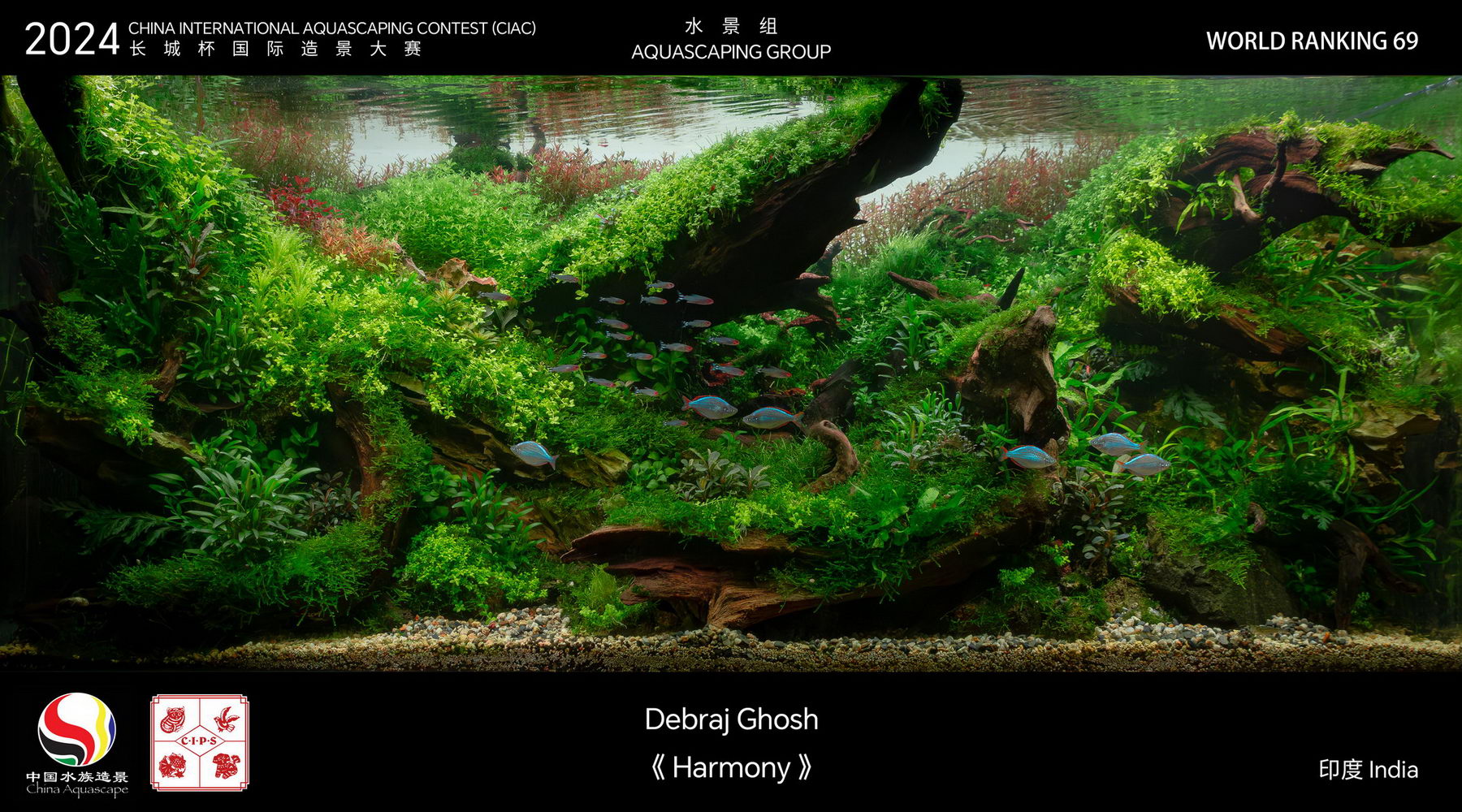
2024: Harmony — Debraj Ghosh, India — Rank 69.

2025: Tempest — Debraj Ghosh, India — Rank 23. Both images are archived contest photographs.
Harmony has a broad, open upper area and several substantial wood forms, with dense planting between them. Fish spread across the middle of the photograph, reinforcing the sense of a planted underwater habitat.
The following year's Tempest places greater emphasis on an intricate network of branches. Curved and diagonal forms overlap at several heights, creating an enclosed interior with small openings that invite the eye further into the scene. Exposed reddish-brown wood remains visible throughout the greens.
The comparison is especially interesting at the centre. In Harmony, a heavy diagonal form carries considerable weight. In Tempest, attention moves through several connected branches and pockets of planting. The later photograph gives us more structural relationships to trace as we look around it.
The 46-place gain brought Ghosh into CIAC's published Top 30 in 2025. His AquaRank profile places this result alongside earlier competition records, showing that a notable advance can belong to a creator with a much longer history.
3. Fernando Moraes: 68th to 24th
Brazil · 44 places gained · Gruta da Lapa Doce → Enchanted Valley
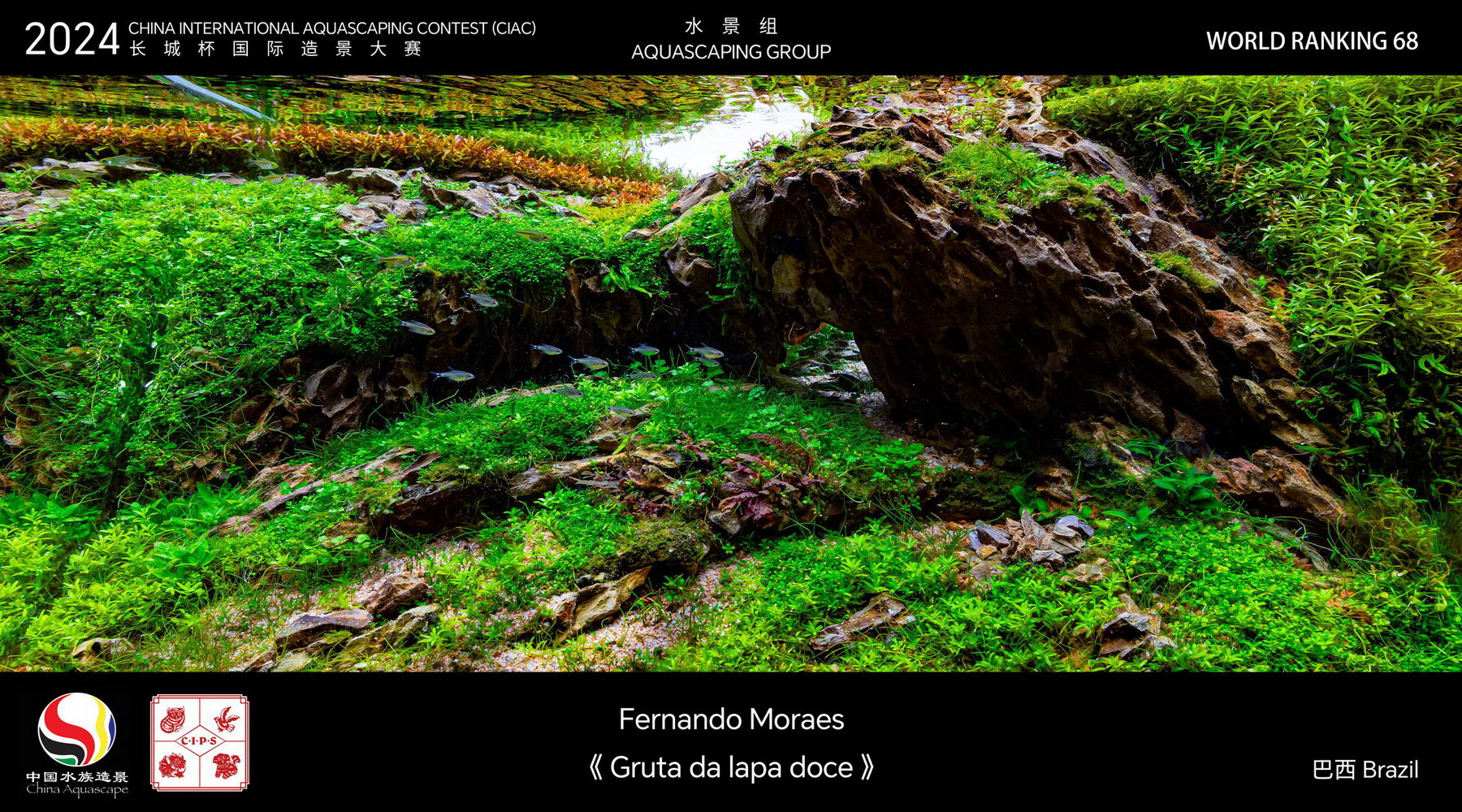
2024: Gruta da Lapa Doce — Fernando Moraes, Brazil — Rank 68.

2025: Enchanted Valley — Fernando Moraes, Brazil — Rank 24. Both images are archived contest photographs.
Rock and green planting give both works a recognisable landscape character. Their principal structures, however, lead the viewer in different ways.
In Gruta da Lapa Doce, a substantial rock arch on the right dominates the scene. Its opening becomes a natural place to pause, while low growth spreads over the surrounding slopes. The hardscape gives the landscape a strong sense of enclosure.
Enchanted Valley distributes that interest across opposing rock faces and smaller foreground stones. A pale, irregular route threads through the low planting toward the rear. Warm and yellow-green foliage near the upper right introduces another layer of variation.
Viewed together, the photographs offer two ways to build a rock-led composition: one organised around a large opening, the other around a route through a valley. Moraes' move into the Top 30 provides the numerical milestone; the images reveal the breadth of the design choices behind these entries.
Explore Fernando Moraes on AquaRank to continue through his gallery and compare further examples of his work.
4. Lich Do: 45th to 15th
Vietnam · 30 places gained · Millennium → The Returning Breeze

2024: Millennium — Lich Do, Vietnam — Rank 45.

2025: The Returning Breeze — Lich Do, Vietnam — Rank 15. Both images are archived contest photographs.
The change between these photographs is clear even before looking closely at the plants. Millennium relies heavily on tall, dark forest forms. Large masses at the sides frame a narrower illuminated space, giving the composition an upright, sheltered feeling.
In The Returning Breeze, the main visual movement becomes more diagonal. A green-covered wood structure crosses the middle, and a bright opening toward the upper left draws attention along it. Smaller branches and planted layers give the viewer a succession of forms to follow.
The two works share a fondness for shadow and forest atmosphere. The 2025 photograph develops those interests through a different direction of movement, shifting attention from tall framing forms toward a sweeping interior structure.
The 30-place advance to 15th offers Vietnam's aquascaping community another career story worth following. Visit Lich Do's AquaRank profile, listed as Do Lich, to connect the two CIAC entries with his broader competition history.
5. Muhammad Yusuf: seventh to champion
Indonesia · Six places gained · Veins of Nature → Veins of Nature 2
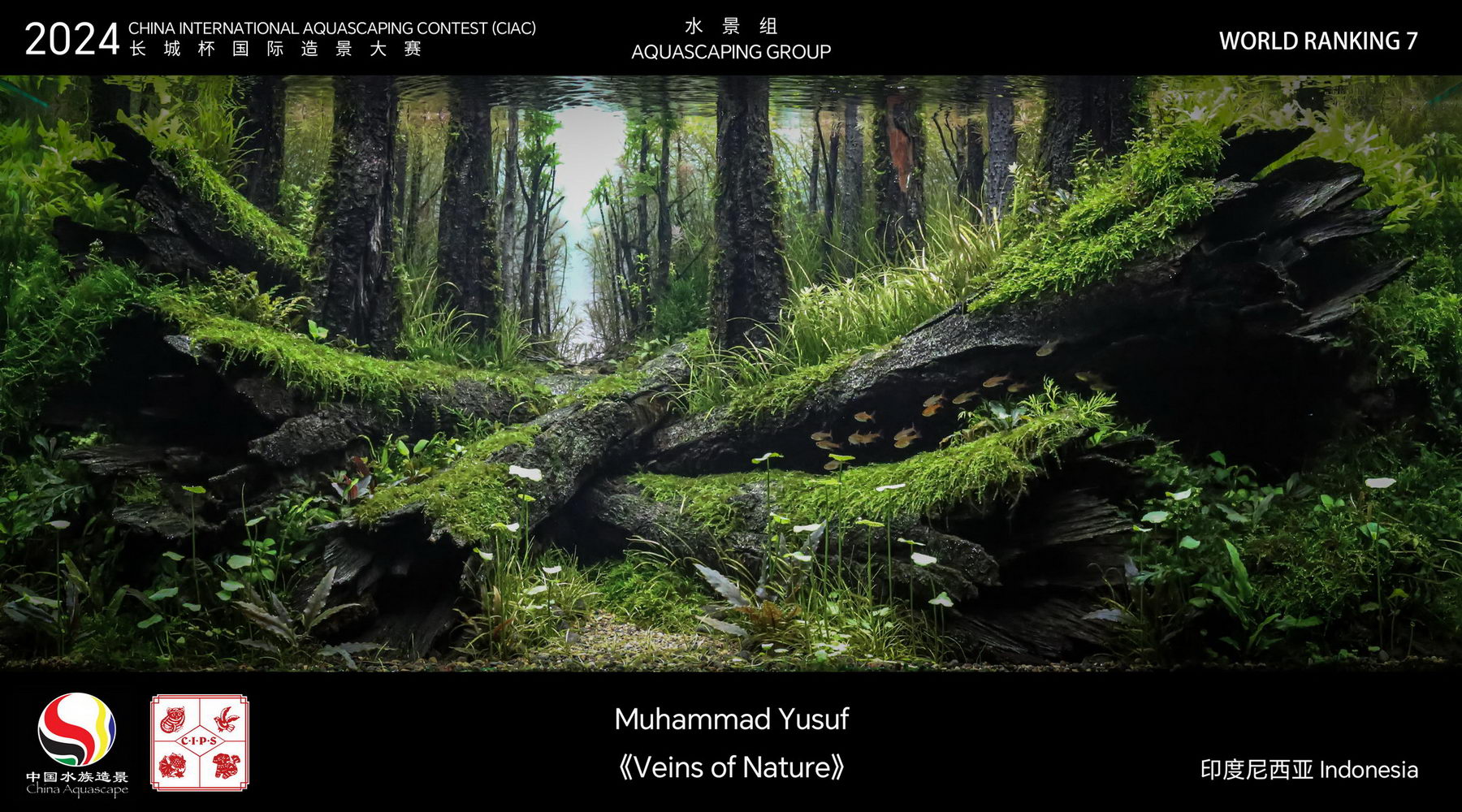
2024: Veins of Nature — Muhammad Yusuf, Indonesia — Rank 7.

2025: Veins of Nature 2 — Muhammad Yusuf, Indonesia — Rank 1. Both images are archived contest photographs.
A six-place rise near the top of the results can represent a major career milestone. For Yusuf, it carried him from seventh place to the CIAC championship.
The two photographs make an absorbing comparison. Veins of Nature presents broad diagonal wood forms around a relatively bright central opening, with fine vertical forms visible toward the back. Much of the foreground interest comes from the exposed surfaces of the wood and the planting around them.
In Veins of Nature 2, curved, green-covered structures occupy more of the middle and upper scene. Hanging roots deepen the impression of an overhead canopy, while a pale lower passage leads into the forest interior. The later photograph has a more enveloping relationship between foreground structure and the space beyond it.
The titles connect the works, but the visible differences give the pair its editorial interest. A championship becomes more meaningful to follow when the preceding season is still available to explore.
Visit Muhammad Yusuf's AquaRank profile to view both CIAC entries and follow the other milestones in his competition record.
What two seasons can tell us about an aquascaping career
These five stories show that an advance in the results can accompany very different creative choices. One designer changes the role of colour; another explores more intricate branches. A rock composition shifts from an arch to a valley, while a forest scene finds a new direction of movement.
The numbers help us notice a milestone. The photographs give us something richer to discuss: the choices a creator brings to the next work, and the interests that remain recognisable across seasons.
There are limits to the comparison. Each result belongs to its own field of entries, and photographs alone cannot establish changes in maintenance skill or explain a judging decision. The five advances provide evidence of higher placements in 2025, alongside visible examples of evolving work.
That is why AquaRank is useful beyond the headline positions. Its profiles bring published competition records and available photographs together, allowing readers to revisit a creator's earlier work and keep following the career behind a familiar name. AquaRank is an independent project; its career rankings are separate from CIAC's official results.
Which career story will the 2026 results reveal?
The official CIAC schedule lists October 10 for the 2026 results. This historical selection does not confirm that any of the five featured aquascapers entered the new edition.
When the new gallery arrives, there will be plenty to celebrate in the winning works. There will also be stories further down the list: a first notable finish, a return after a difficult season or a creator whose latest photograph opens an unexpected new direction.
Until then, explore the CIAC 2024 gallery and CIAC 2025 gallery, or revisit our six design lessons from CIAC 2025. Following two works by the same person gives the next results page a much more personal connection.
Which of these two-season journeys interests you most? Share the creator's name and the change you noticed between their photographs.
Editorial note: Names, ranks and countries were checked against the final CIAC results and archived artwork captions. Entry titles shown on the photographs are retained, with capitalisation standardised for readability. Visual comparisons are AquaLibs' editorial observations, not quotations from the judging panel.
Leave your comments