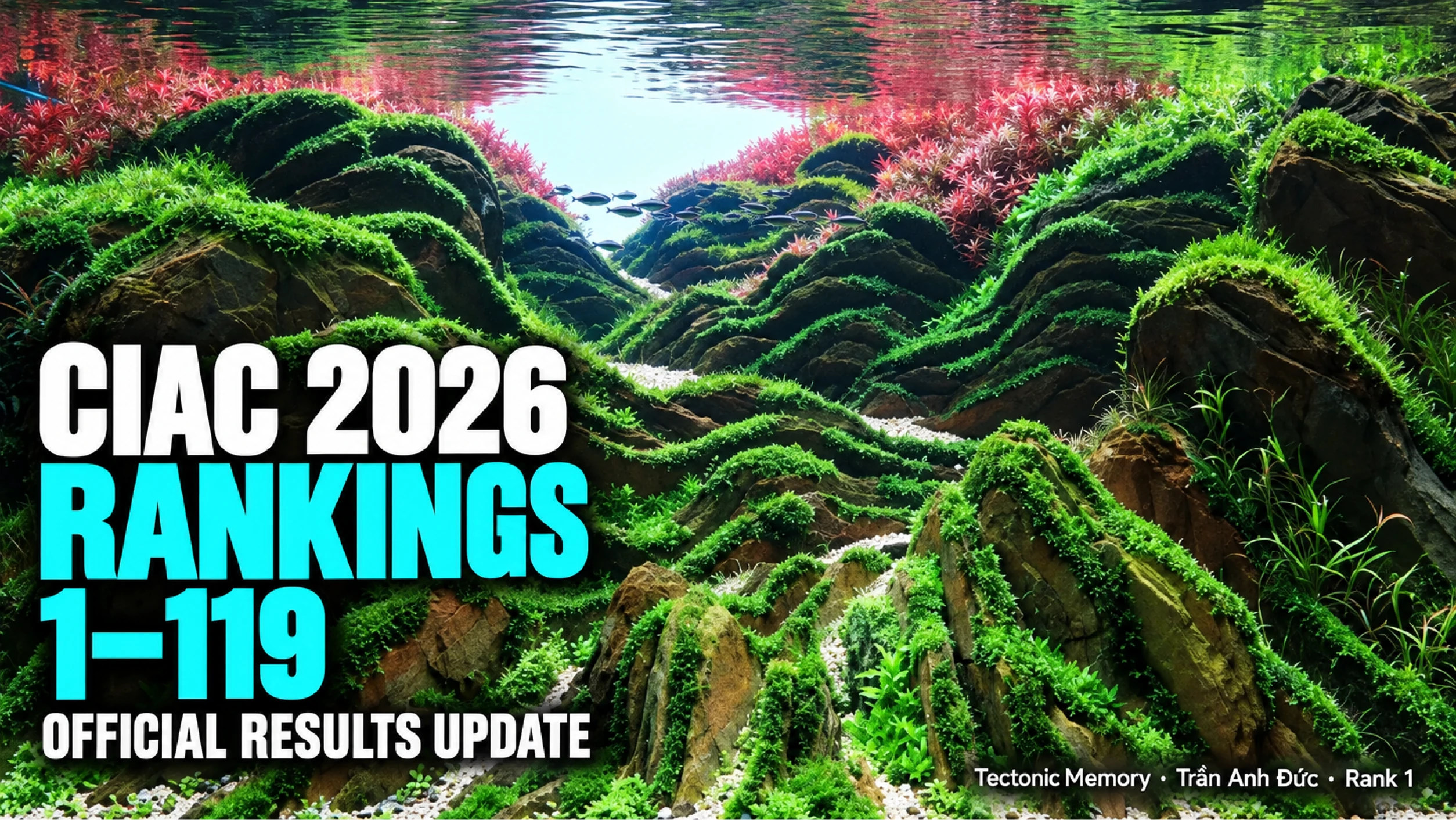
The new document gives readers a broader view of this year's competition. It also provides a firmer reference for names, countries and ranking positions, including one discrepancy in the earlier image cards around places 30 and 31.
This article brings together the scope of the official announcement, a consolidated ranking table from 1 to 119 and the implications for our earlier coverage. Our CIAC 2026 Top 30 report remains a starting point for exploring the leading works and their photographs.
What the official announcement confirms
The organising committee's email, sent to contestants on 14 October, identifies the attachment as the results of the 2026 Great Wall Cup International Aquascaping Competition's Aquascaping Category. The attached table begins at rank 14 and ends at rank 119.
That scope matters: 119 is the last ranking position in this attachment. The document does not establish the total number of submissions, and it does not contain ranks 1–13. We therefore distinguish the newly supplied official table from the earlier contest image cards used in our initial reports.
The attachment lists rank, contestant name and country or region. It does not include work titles, scores, judging comments or aquarium photographs. Those details should not be inferred from the table.
Vietnam: confirmed places at 45 and 52
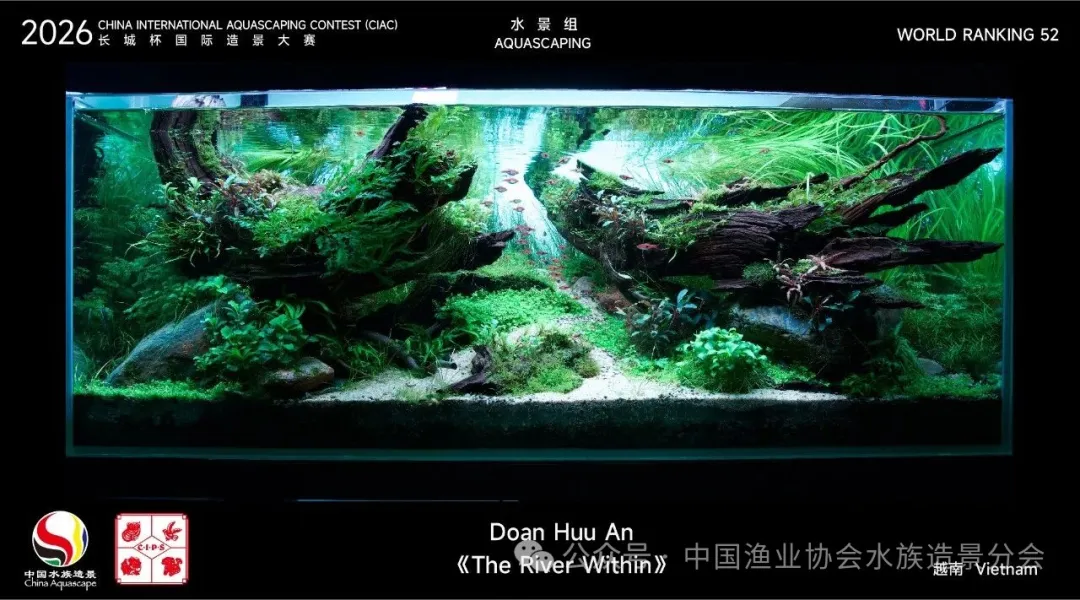
The official sheet places Pham Đức Mạnh at rank 45 and Doan Huu An at rank 52, both representing Vietnam. Their earlier image cards identify the works as DRIFT and The River Within, respectively; the work titles come from those cards rather than from the new results sheet.
These results add context beyond the podium story in our initial report. They also show why coverage of an international competition benefits from following the wider field: each ranking belongs to an aquascaper whose season extends beyond the handful of works most often shared.
Clarification: ranks 30 and 31
Our earlier review found that the image cards labelled 30 and 31 both carried Danang Cahyo Nugroho's name and the title Anchor. We flagged that duplication rather than treating the two cards as independently verified results.
The official sheet now lists 梁健聪 — China at rank 30 and Danang Cahyo Nugroho — Indonesia at rank 31. AquaLibs will use these official ranking assignments when referencing those positions. The new table does not supply the title or photograph of the rank-30 work, so the duplicated card should not be used to identify it.
CIAC 2026: ranking list 1–119
This consolidated table combines ranks 1–13 from the earlier published contest image cards, as transcribed in our Top 30 report, with ranks 14–119 from the organising committee’s 14 October results sheet. Names for places 14–119 retain the official sheet’s spelling, including shortened names; country and region labels are translated into English. Repeated names are retained at their listed positions and have not been merged into unique contestants.
| Rank | Contestant | Country / region |
|---|---|---|
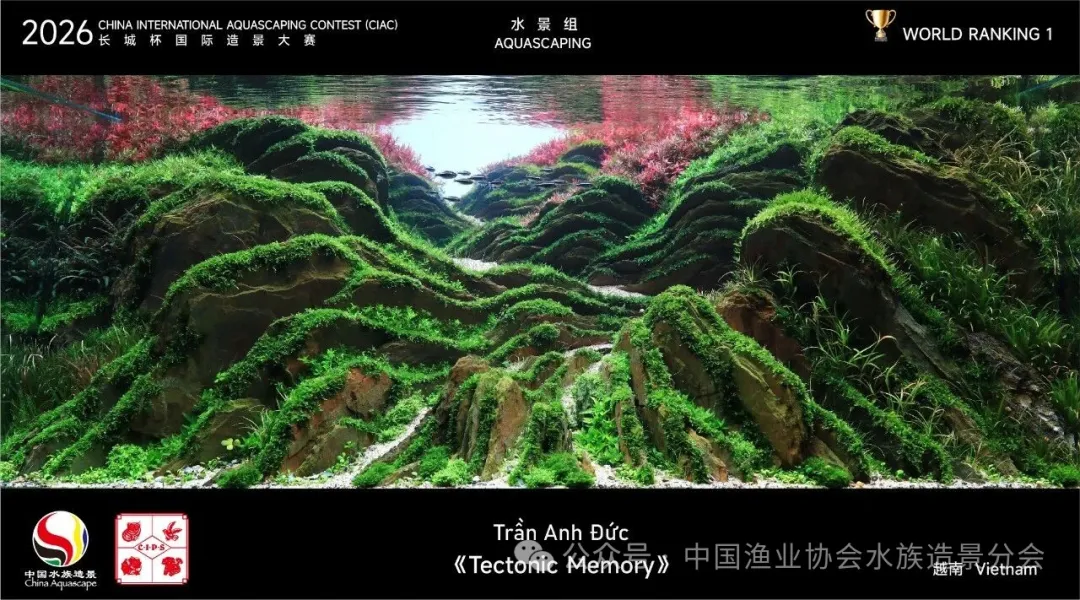
| 1 | Trần Anh Đức | Vietnam |
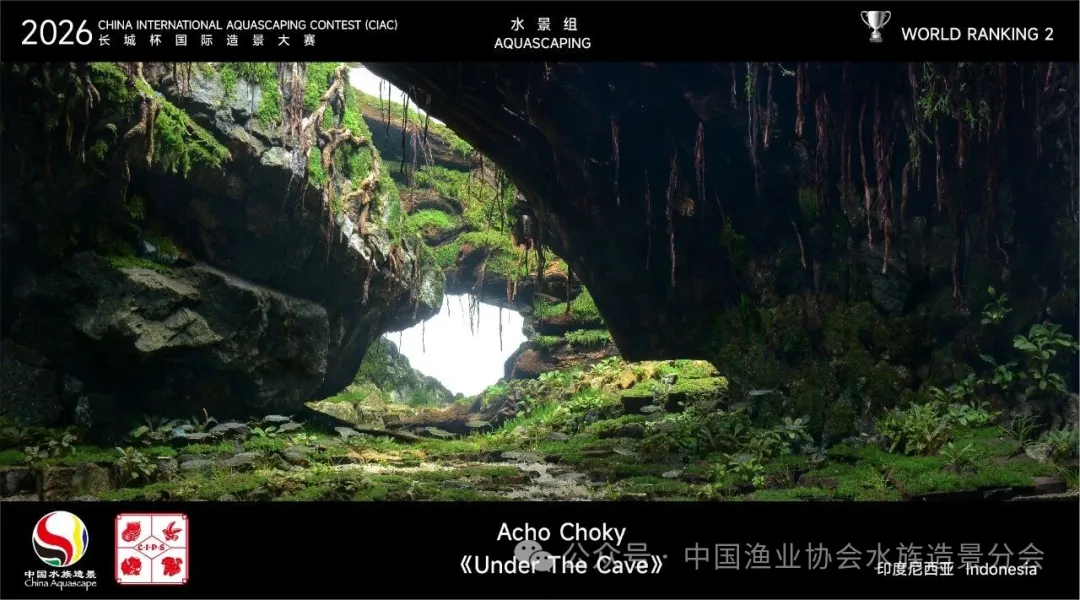
| 2 | Acho Choky | Indonesia |
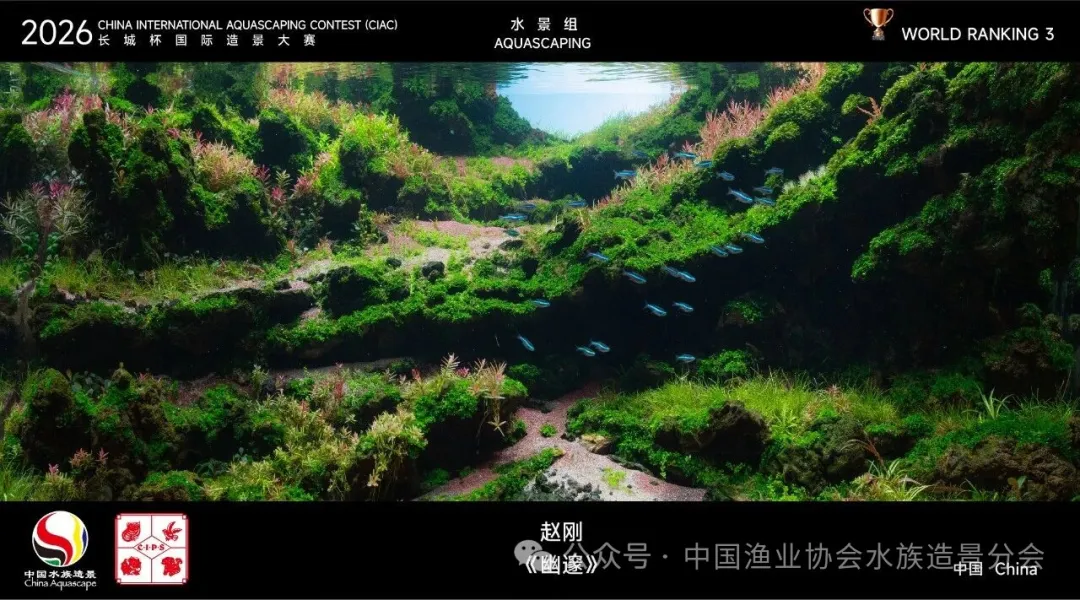
| 3 | 赵刚 | China |
| 4 | Rahul Mukherjee | India |
| 5 | Muhammad Yusuf | Indonesia |
| 6 | 关利伟 | China |
| 7 | Efrain Sequera | Spain |
| 8 | Rubens Gadelha | Brazil |
| 9 | 余传威 | China |
| 10 | Eduardo Hidalgo | Brazil |
| 11 | Adam Dziadek | Poland |
| 12 | Albert Escrihuela Cáceres | Spain |
| 13 | 王胜龙 | China |
| 14 | Luis Cardoso | Portugal |
| 15 | Gustavo Pimenta do Nascimento | Brazil |
| 16 | Carlos Souza | Brazil |
| 17 | 廖國宏 | Taiwan (China) |
| 18 | Roberto Buenadicha | Spain |
| 19 | Bahtiar gigi | Indonesia |
| 20 | 梁健聪 | China |
| 21 | CLIVERTON DANTAS DA SILVA | Brazil |
| 22 | Marco iskandar | Indonesia |
| 23 | Marcin Biedal | Poland |
| 24 | Ismael Aguilar Soria | Spain |
| 25 | Adrian Asaftei | Romania |
| 26 | 黄 | China |
| 27 | Marhasan | Indonesia |
| 28 | 张光阳 | China |
| 29 | Jose luis Catedra Martinez | Spain |
| 30 | 梁健聪 | China |
| 31 | Danang Cahyo Nugroho | Indonesia |
| 32 | Fernando Moraes | Brazil |
| 33 | mohammad yoosefi | Iran |
| 34 | Ali Rezaee | Canada |
| 35 | Gueguen Thomas | France |
| 36 | Jeon Hyoungjoo | South Korea |
| 37 | 邓涛 | China |
| 38 | Paryo Prayogi | Indonesia |
| 39 | Hepri Prasetio Harmandi Putra | Indonesia |
| 40 | Willian Coutrin | Brazil |
| 41 | Choi SeungJin | South Korea |
| 42 | 李 | China |
| 43 | Dion Lee | Singapore |
| 44 | SOMEN BANERJEE | India |
| 45 | Pham Đức Mạnh | Vietnam |
| 46 | Amir Valadkhani | Iran |
| 47 | Raúl Gargallo | Spain |
| 48 | Mawan huda | Indonesia |
| 49 | Saiful Hadi | Indonesia |
| 50 | 韦力子 | China |
| 51 | 李陶然 | China |
| 52 | Doan Huu An | Vietnam |
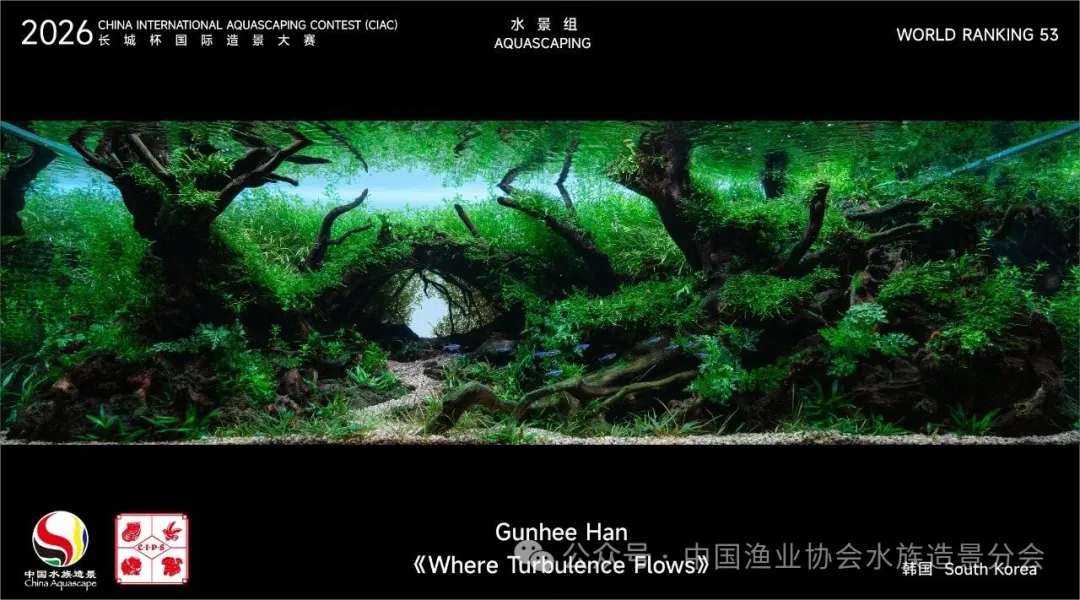
| 53 | Gunhee Han | South Korea |
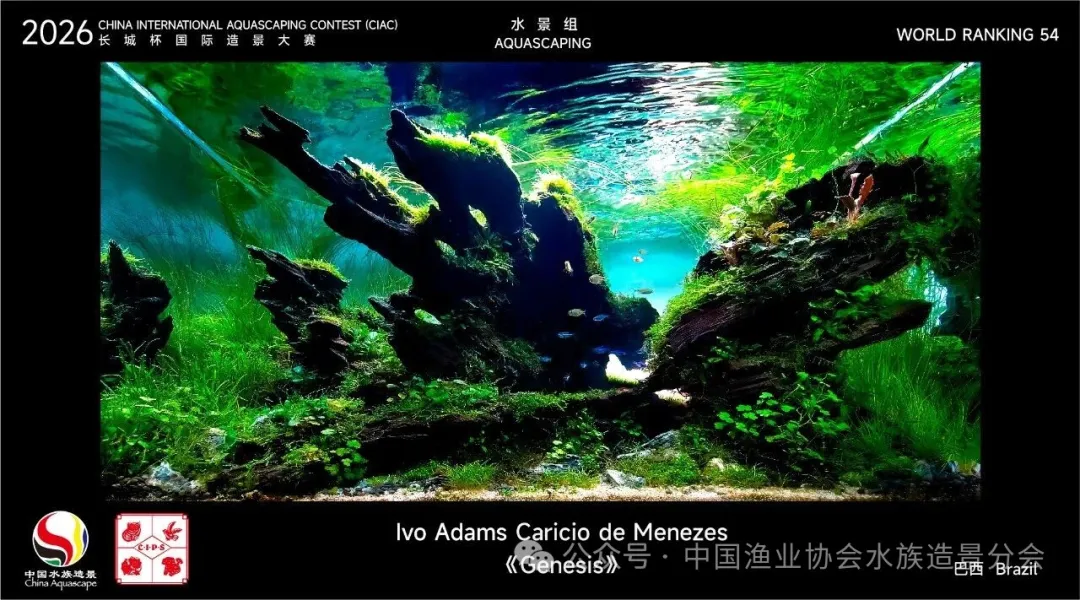
| 54 | Ivo Adams Caricio de Menezes | Brazil |
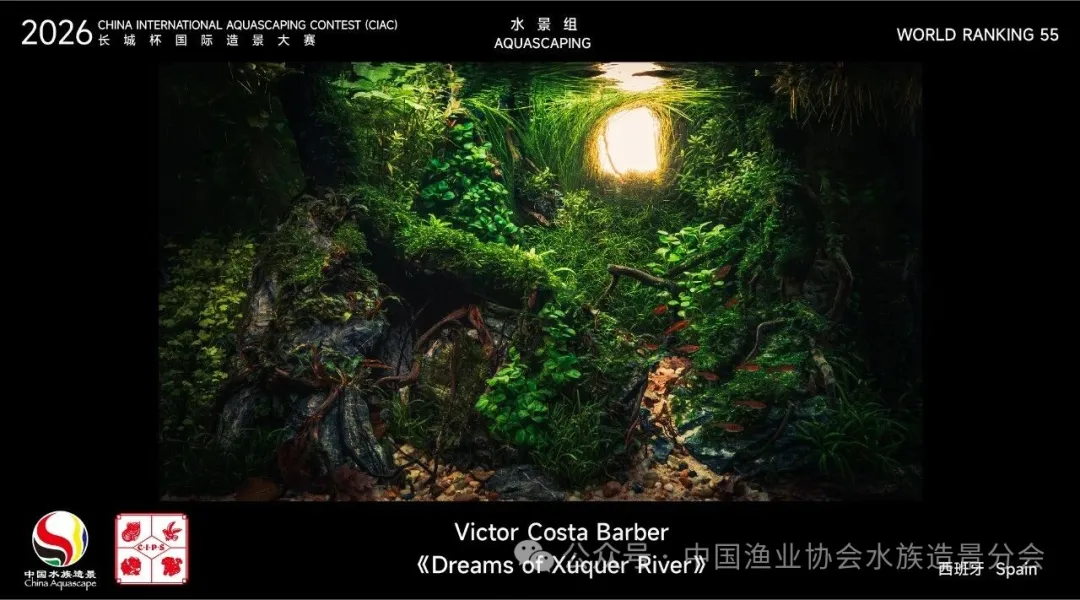
| 55 | Victor Costa Barber | Spain |
| 56 | 张宇凡 | China |
| 57 | Adnov Aquatic | Indonesia |
| 58 | dokyun lim | South Korea |
| 59 | chonlatee jaturonrusmee | Thailand |
| 60 | Ricardo Dalla Valle Vieira | Brazil |
| 61 | Tianxu Yang | USA |
| 62 | Michiel van den Berg | Netherlands |
| 63 | Nemekhbayar | Mongolia |
| 64 | 李杰锋 | China |
| 65 | 梁仲衡 | Hong Kong (China) |
| 66 | Evandro Rinolfi Marin | Brazil |
| 67 | Bartlomiej | Poland |
| 68 | Hanson Leung | Hong Kong (China) |
| 69 | 靳志鑫 | China |
| 70 | 曹正 | China |
| 71 | 许先生 | China |
| 72 | Kuan C | China |
| 73 | Naadir Esmail | Mozambique |
| 74 | Vishnuvarthan P | India |
| 75 | George Nobre | Brazil |
| 76 | Nobphacha Yimyou | Thailand |
| 77 | Breogan Perez Fernandez | Spain |
| 78 | 刘声琛 | China |
| 79 | 小猫爱吃鱼 | China |
| 80 | Ariyanto | Indonesia |
| 81 | 余帅 | China |
| 82 | 梁健聪 | China |
| 83 | Josh Vieritz | Australia |
| 84 | 林金飞 | China |
| 85 | 余锟 | China |
| 86 | 史佳卓 | China |
| 87 | Raúl Tules | Spain |
| 88 | 徐文陶 | China |
| 89 | 哈承旭 | China |
| 90 | 潘岗 | China |
| 91 | 黄典杰 | China |
| 92 | 崔赛 | China |
| 93 | ong yih song | Malaysia |
| 94 | 胡 | China |
| 95 | 陈博睿 | China |
| 96 | Debayan Das | India |
| 97 | 聂蔚棠 | China |
| 98 | Arthur Carvalho Valgueiro | Brazil |
| 99 | Narongrit Dantragoon | Thailand |
| 100 | 刘宇瀚 | China |
| 101 | David Pérez | Spain |
| 102 | Júnior Seimetz | Brazil |
| 103 | 陈东 | China |
| 104 | Claud Ken | Singapore |
| 105 | Fabricio Simbana Arias | Ecuador |
| 106 | Caio Honorio | Brazil |
| 107 | Ko Seok Joon | South Korea |
| 108 | 叶泽阳 | China |
| 109 | Abdul Sulik | Mexico |
| 110 | KIM YEON SOO | South Korea |
| 111 | Odi Kurniawan | Indonesia |
| 112 | 陈兴荣 | China |
| 113 | nawawi | Indonesia |
| 114 | Muh. Syahrul falah | Indonesia |
| 115 | Frank Bojacá Uribe | Colombia |
| 116 | Matt Iannucci | Australia |
| 117 | Andres Gonzalez Cervera | Spain |
| 118 | 阳帆 | China |
| 119 | Marco Schwarzer | Germany |
Explore CIAC 2026
Continue beyond the podium to discover the other aquascapes in this release. Open each photograph to view the original contest card, including its published rank and creator credit.
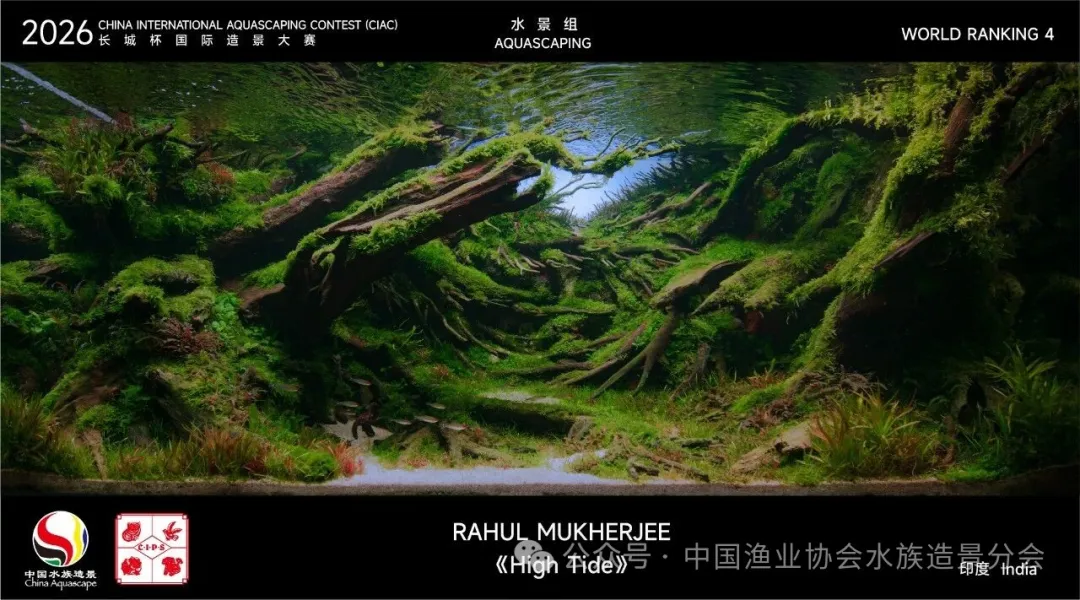
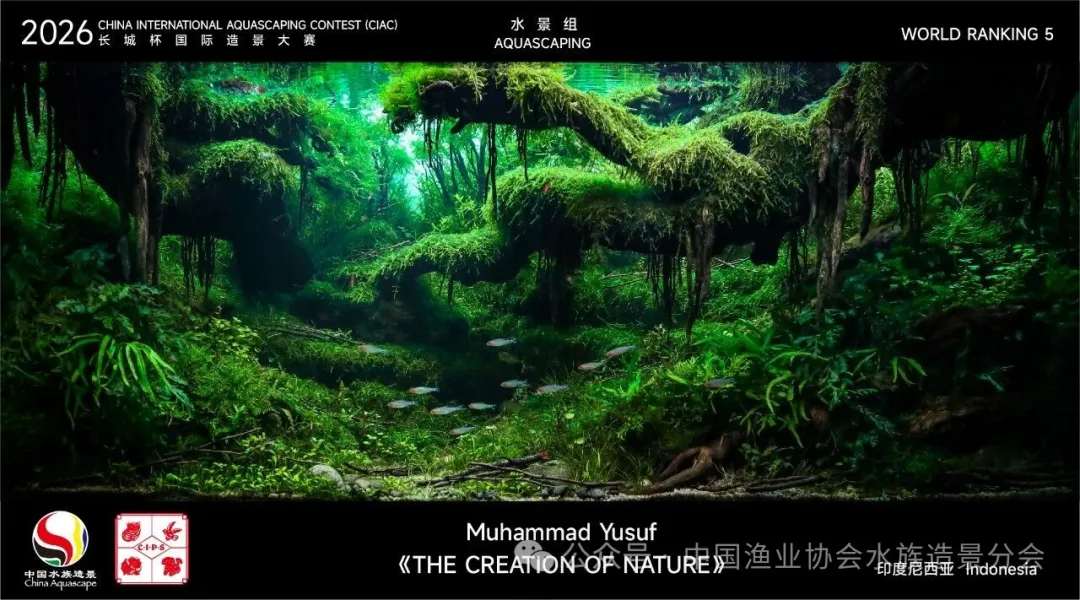
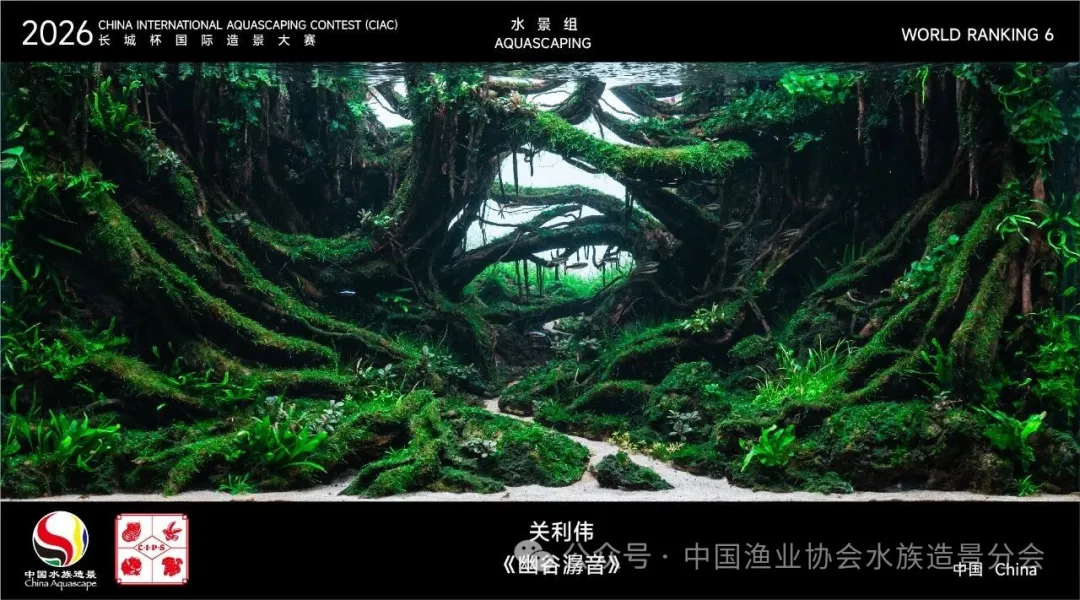
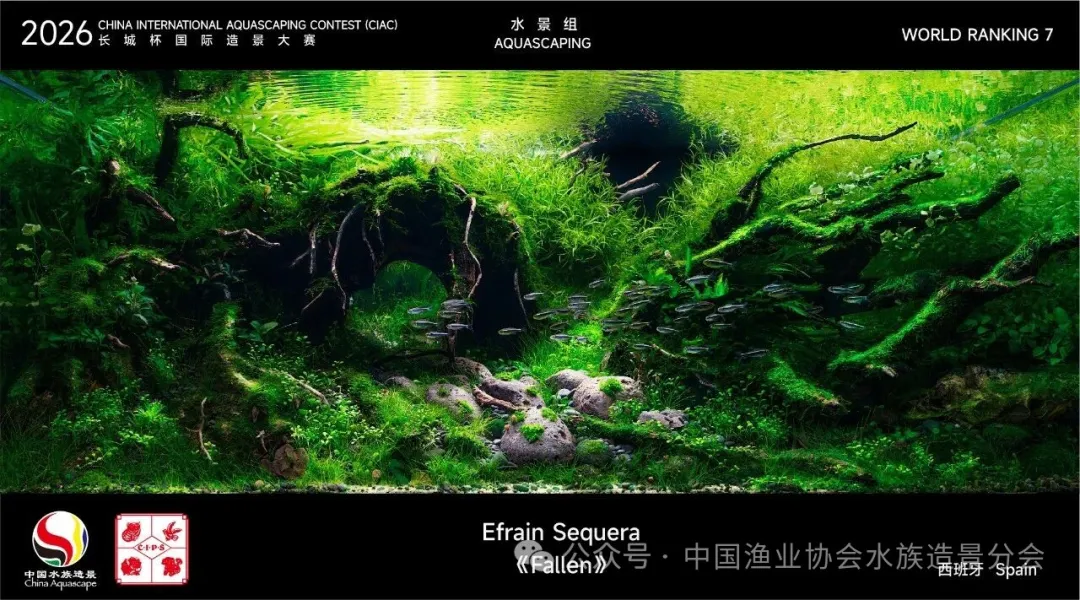
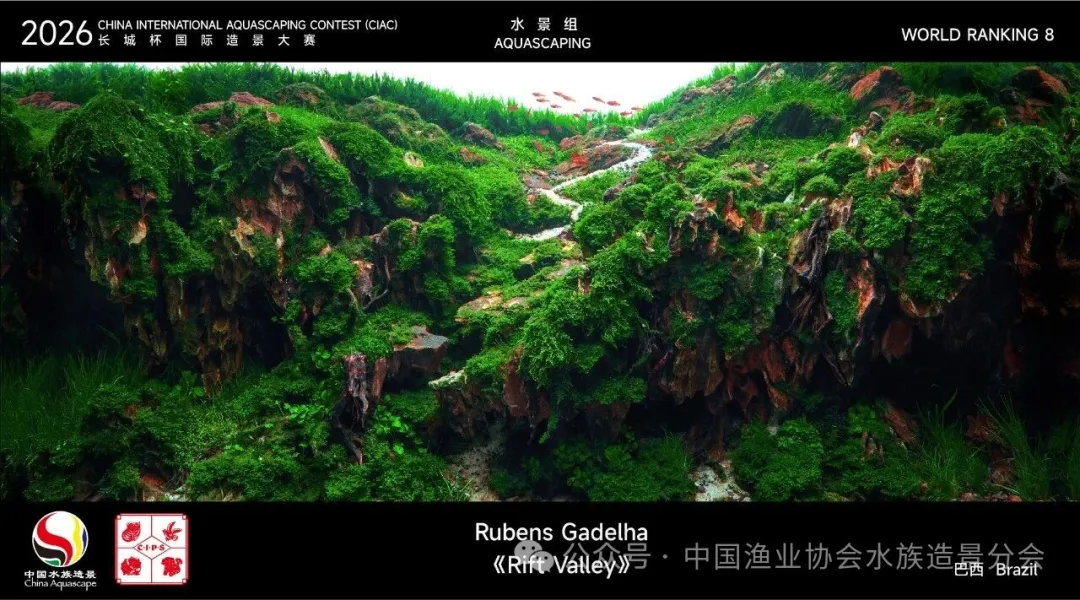
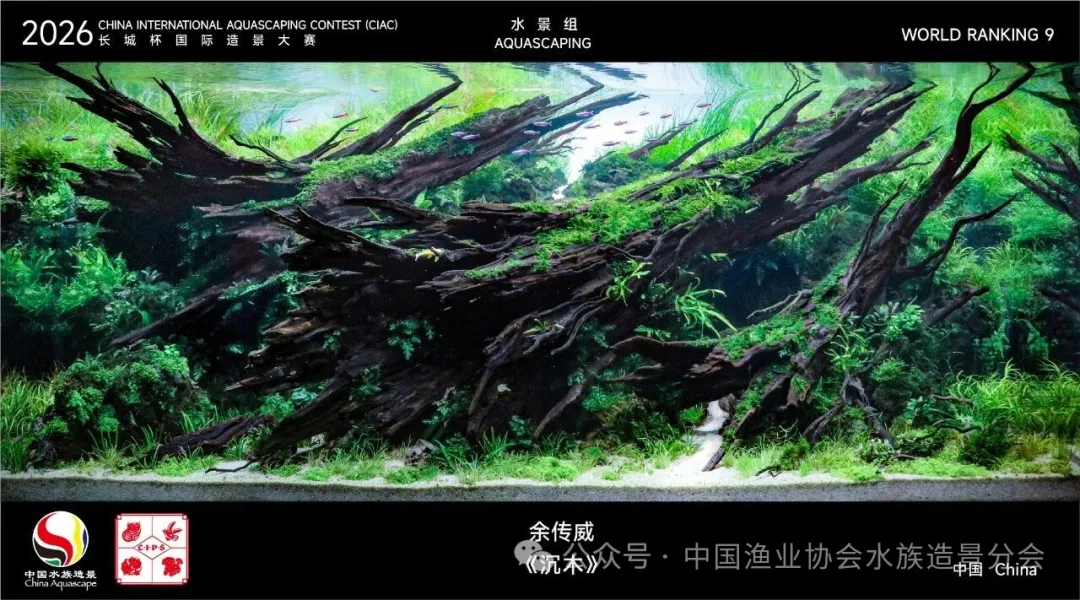
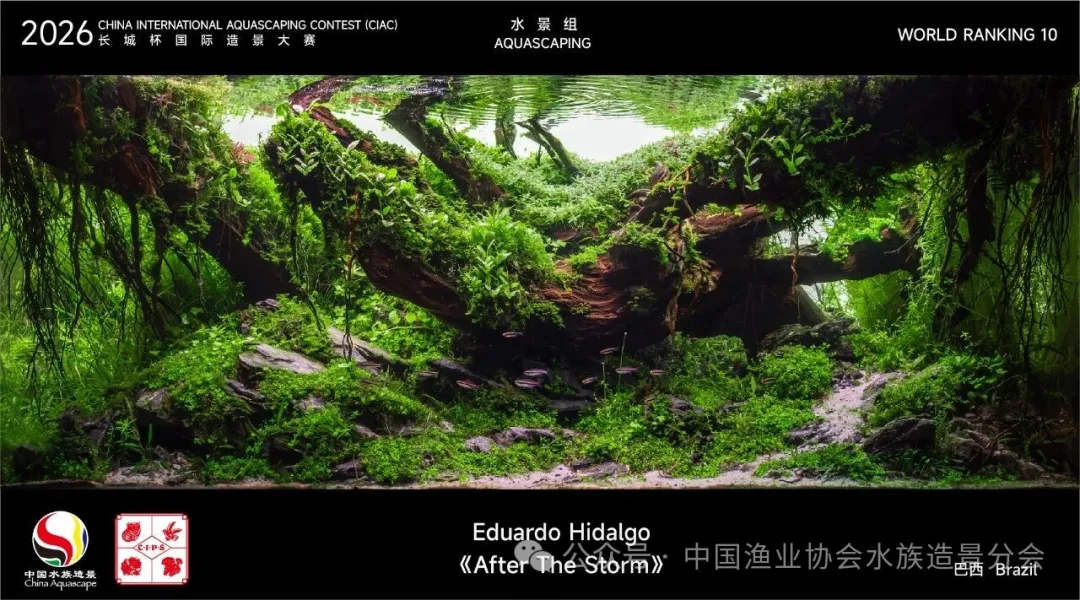
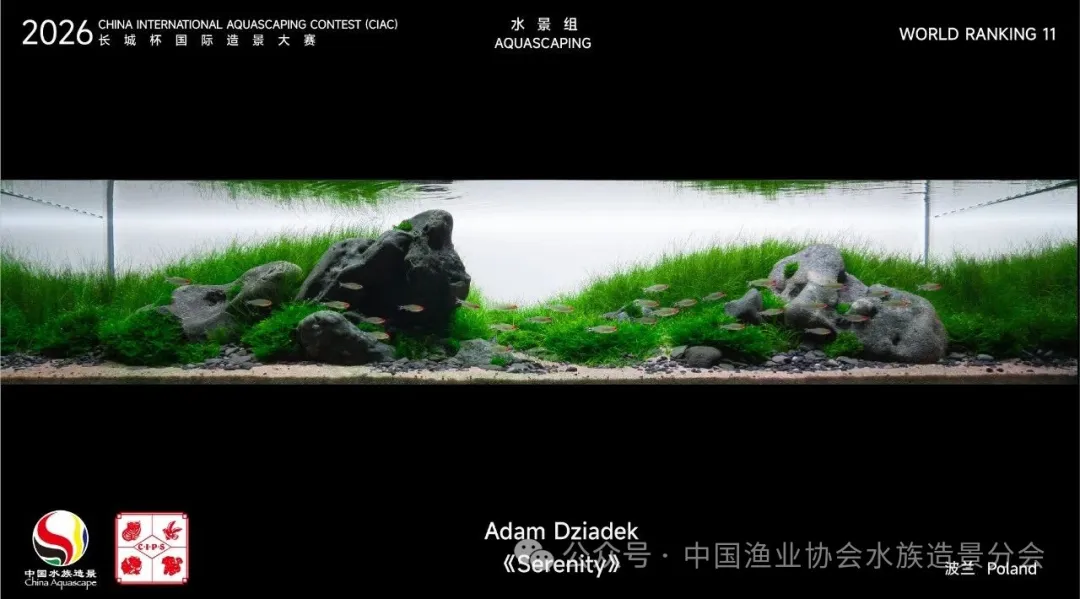
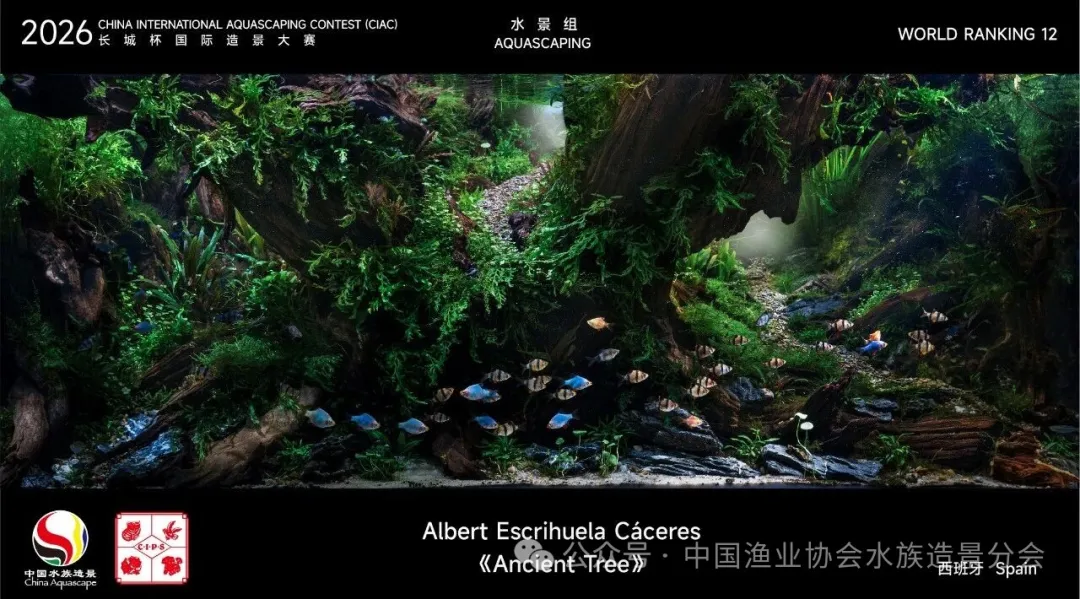
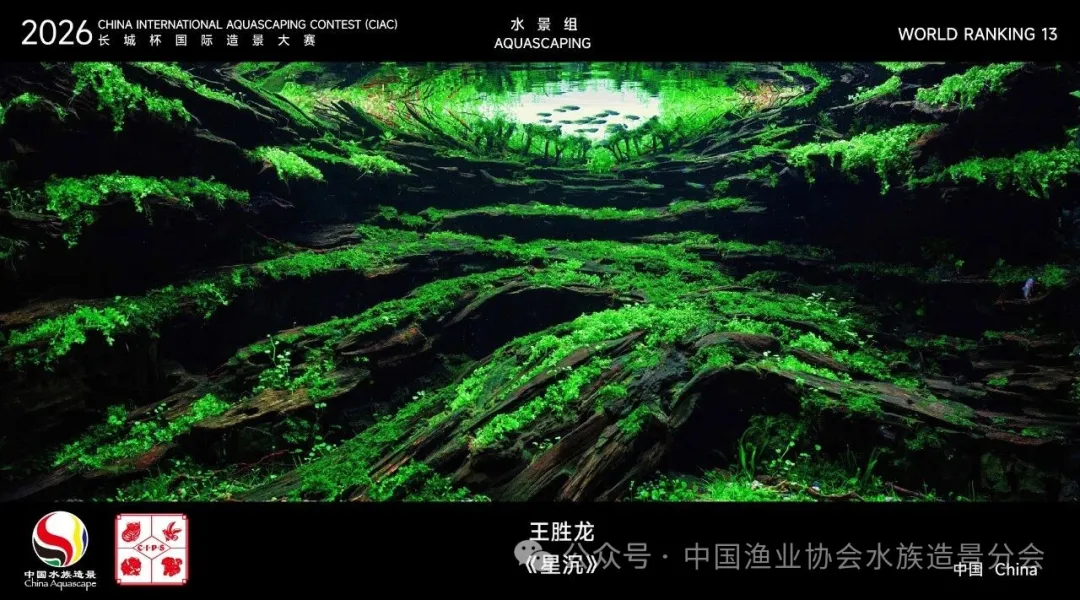
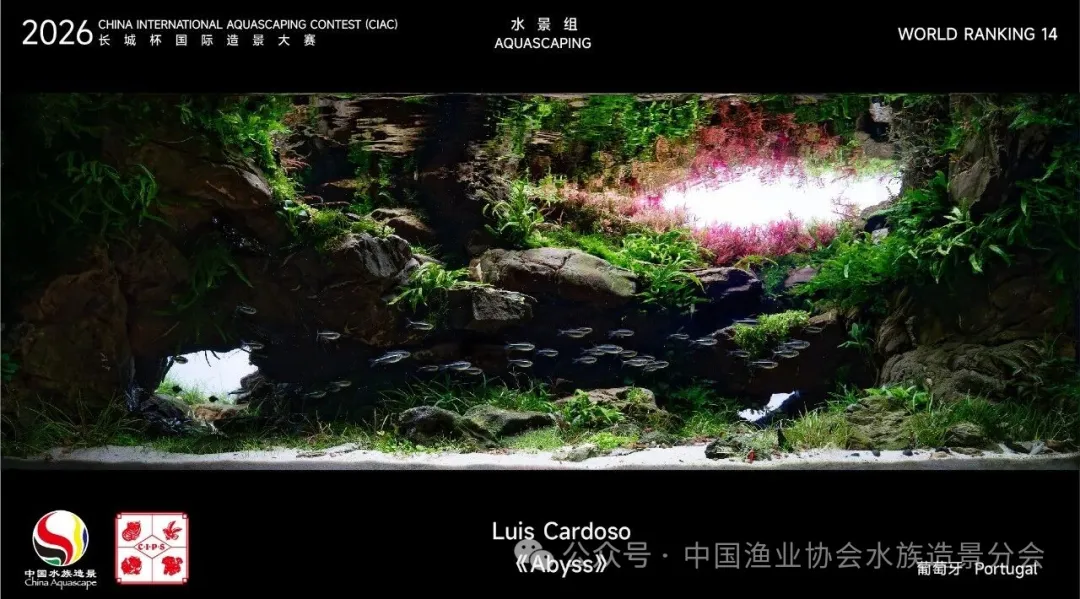
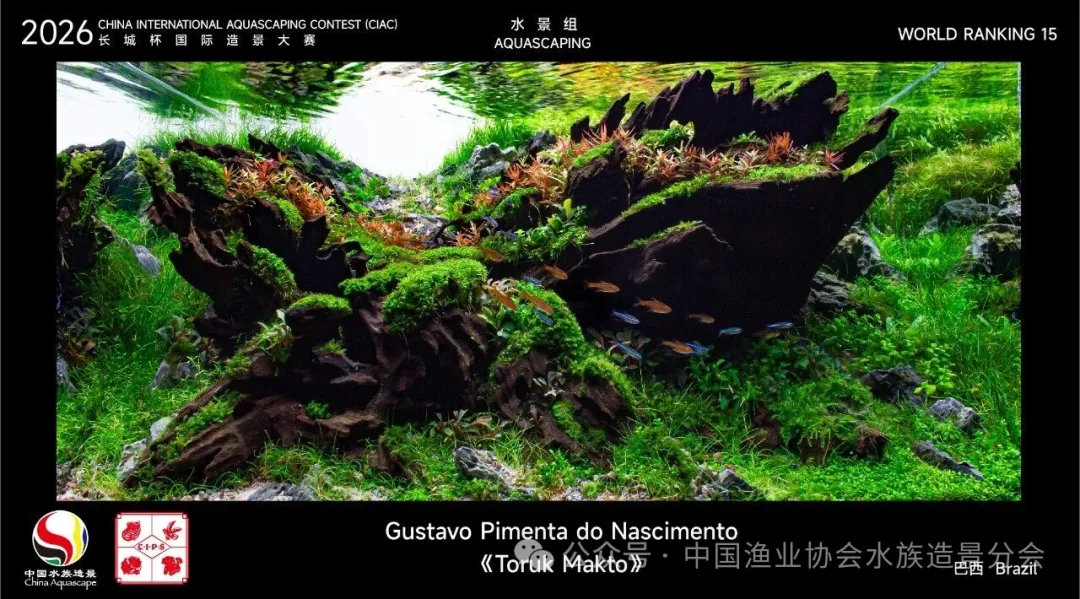
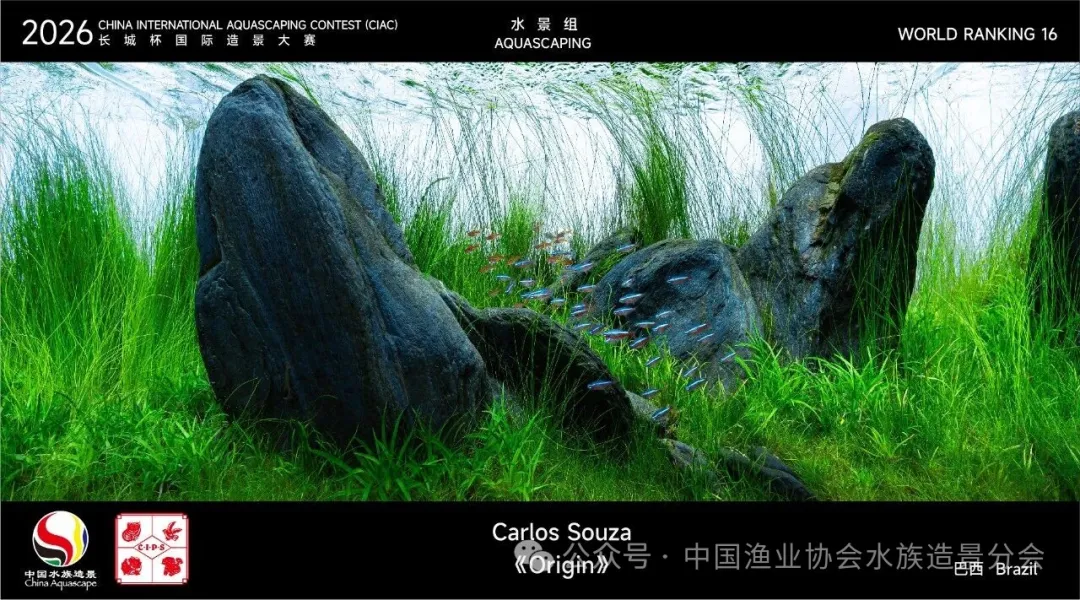
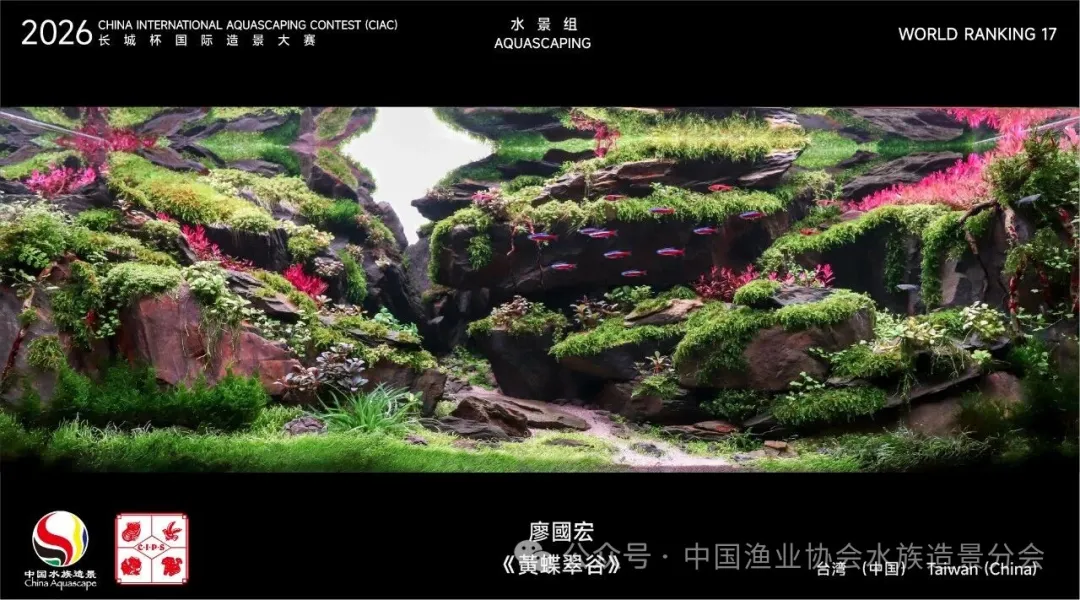
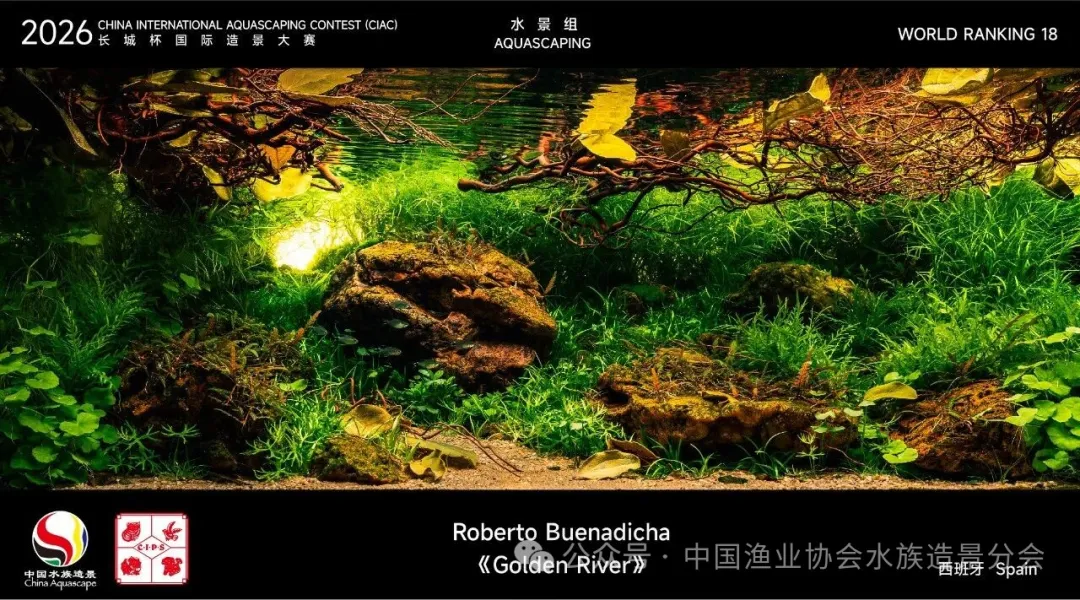
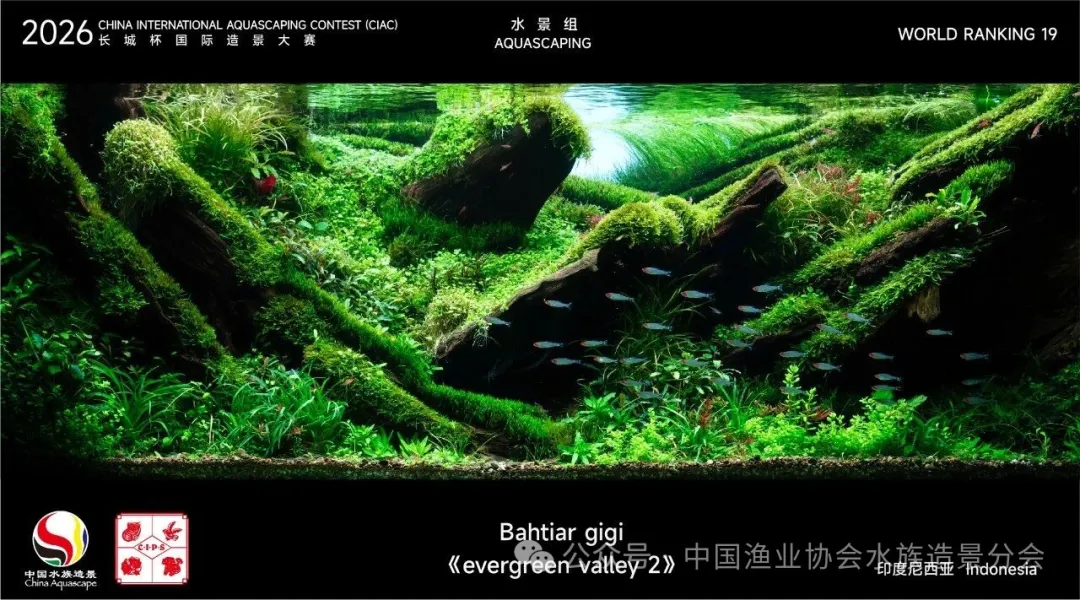
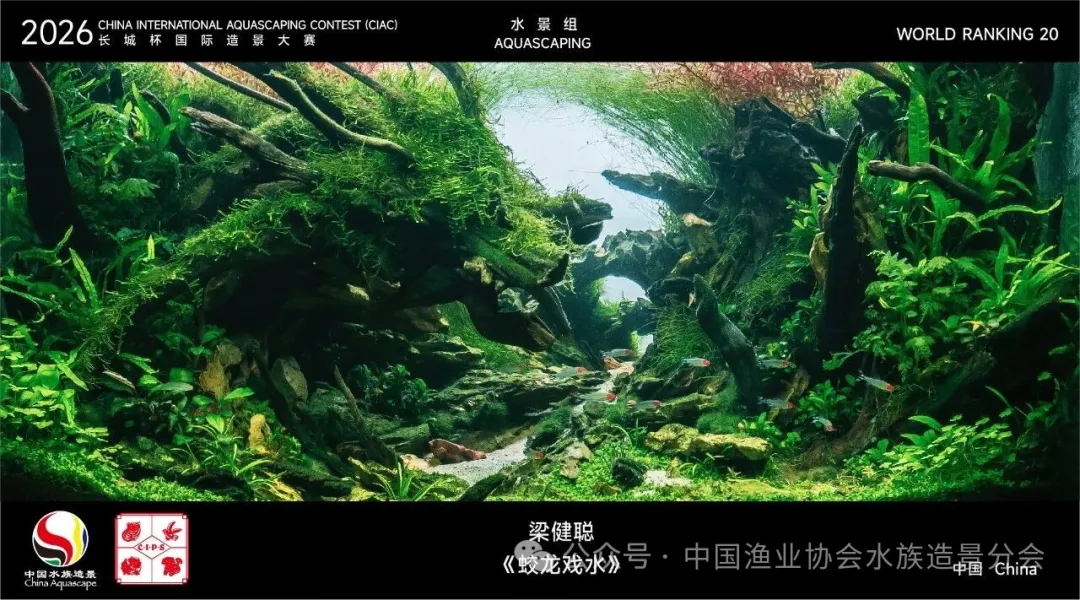
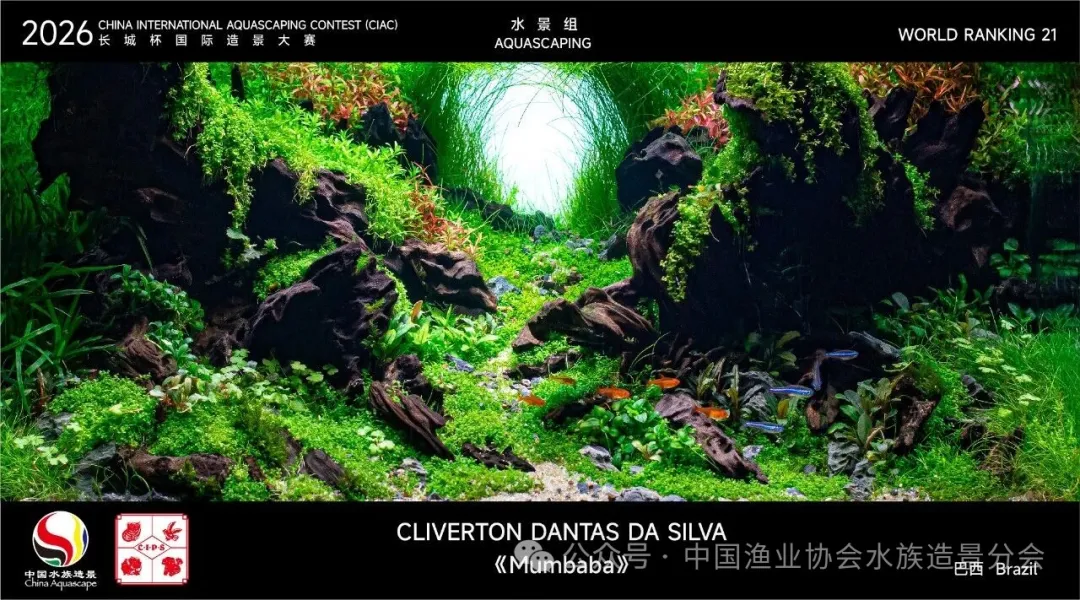
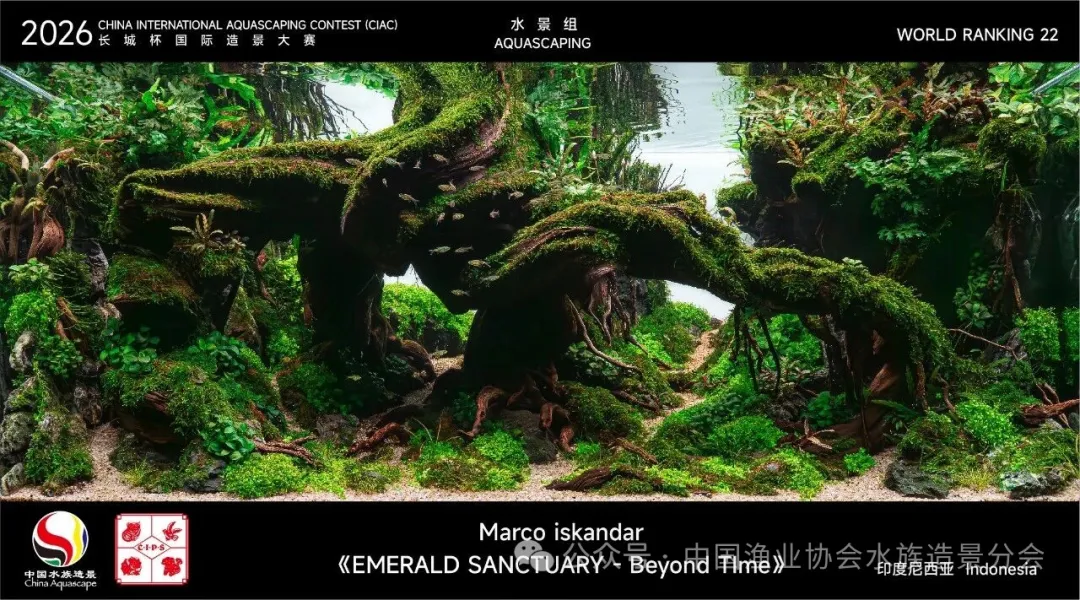
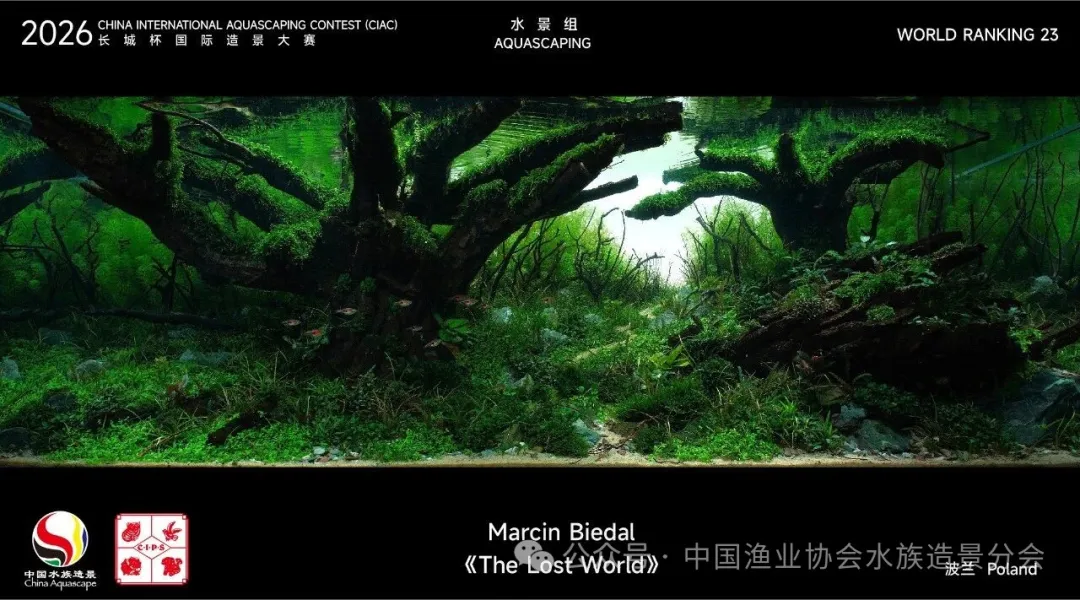
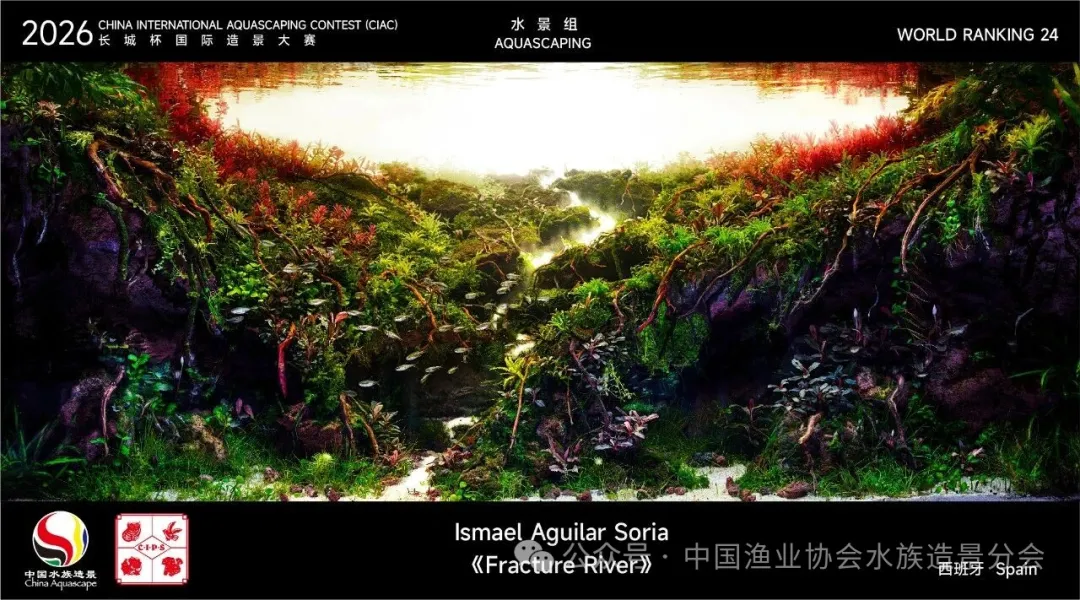
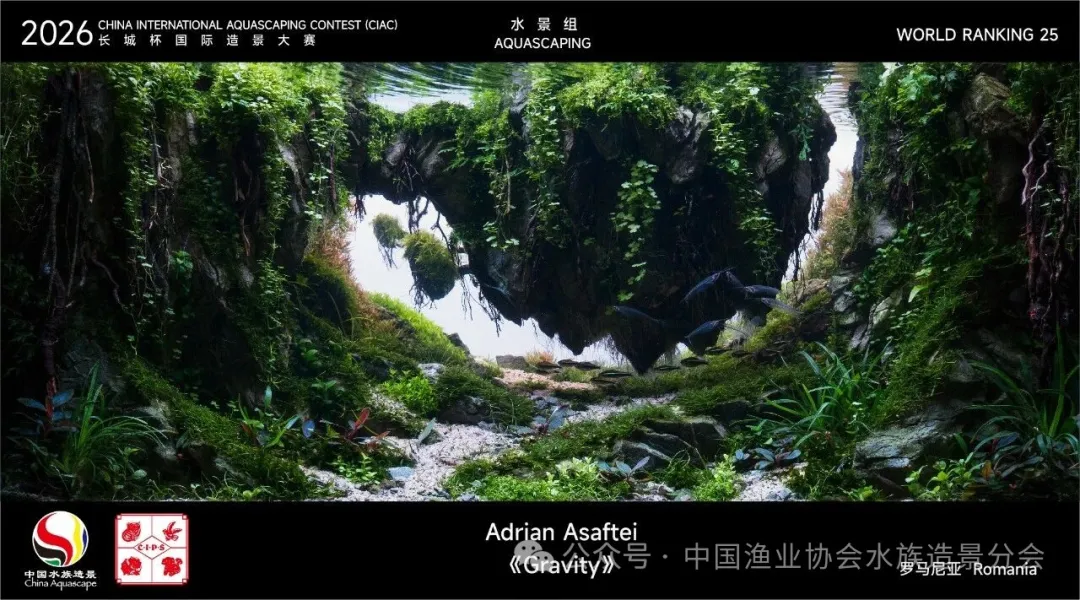
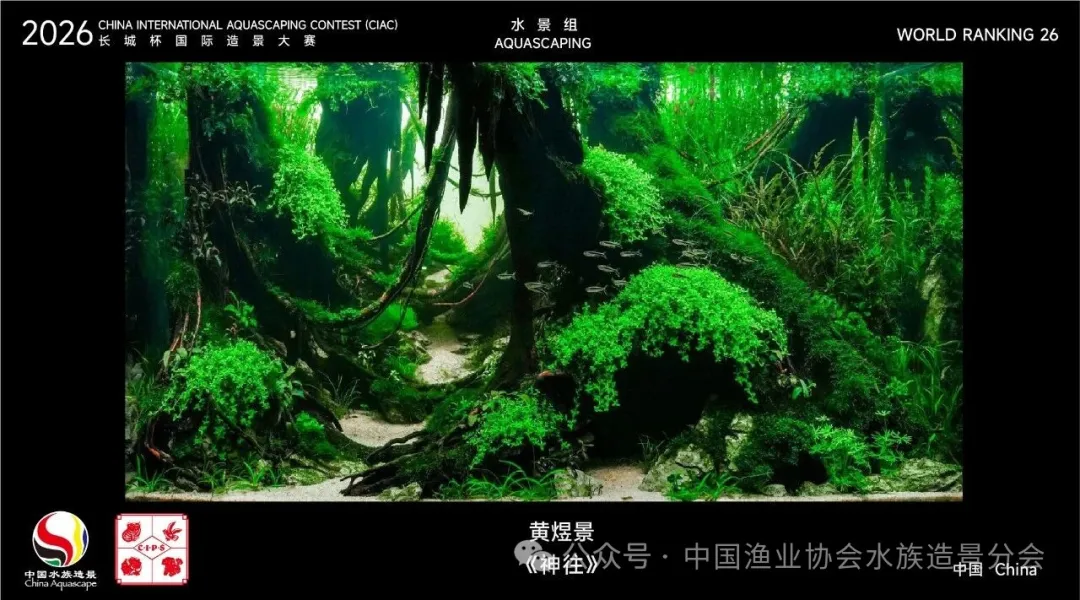
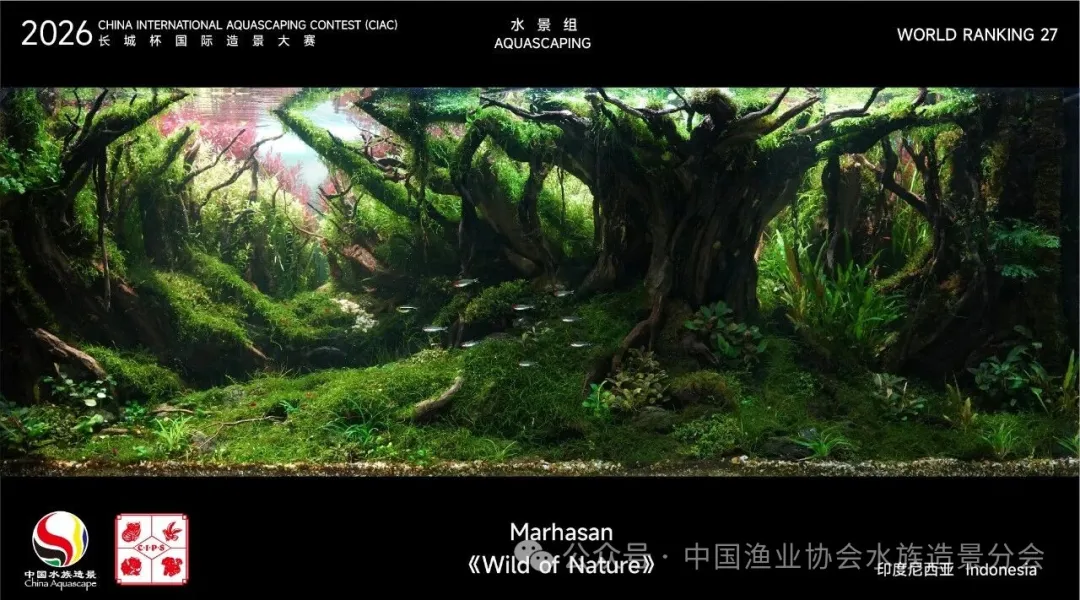
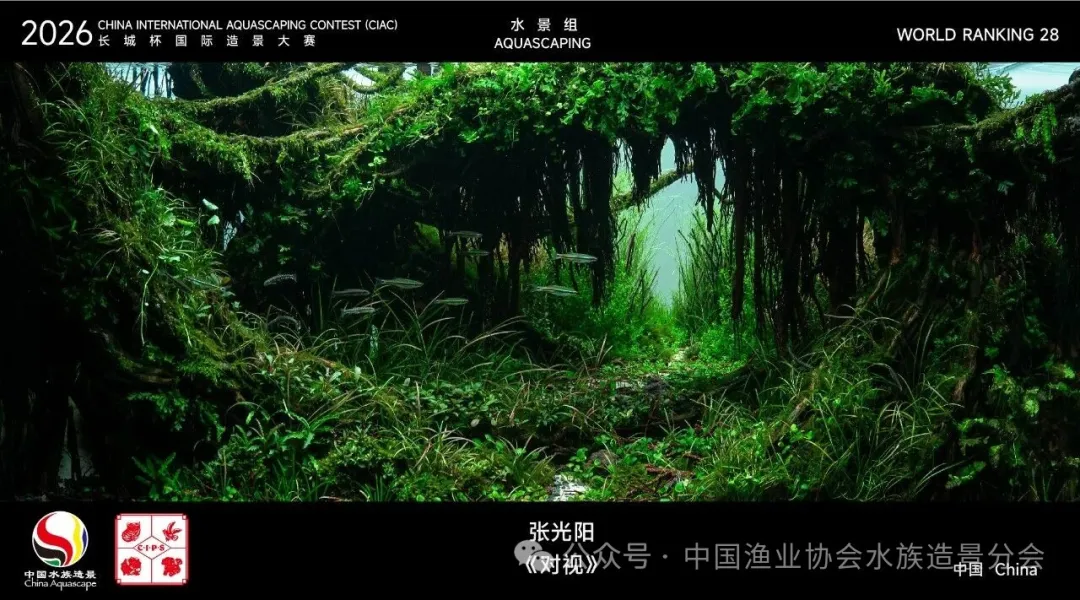
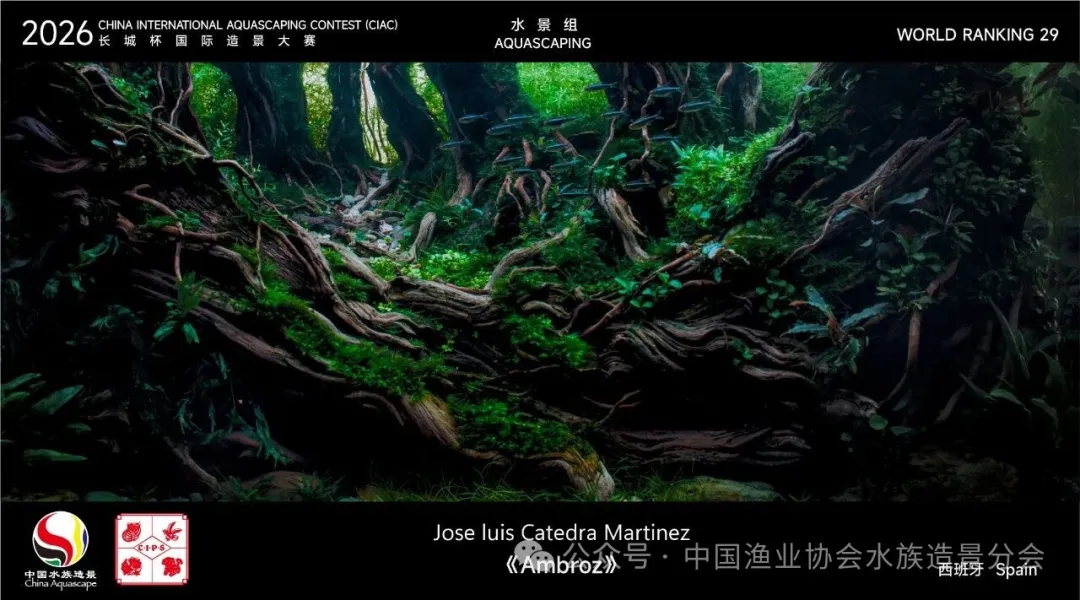
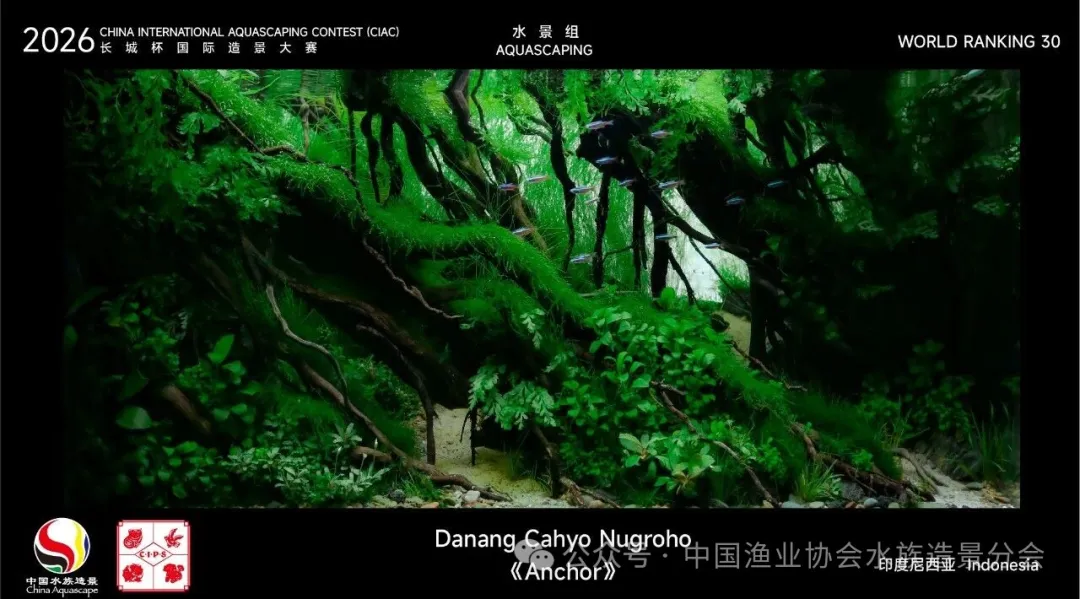
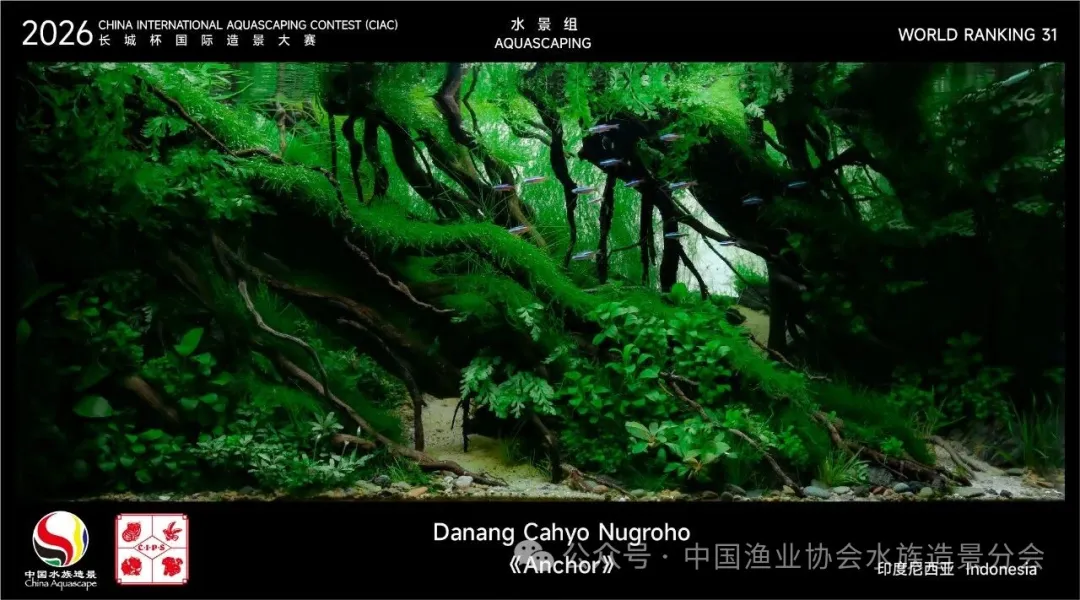
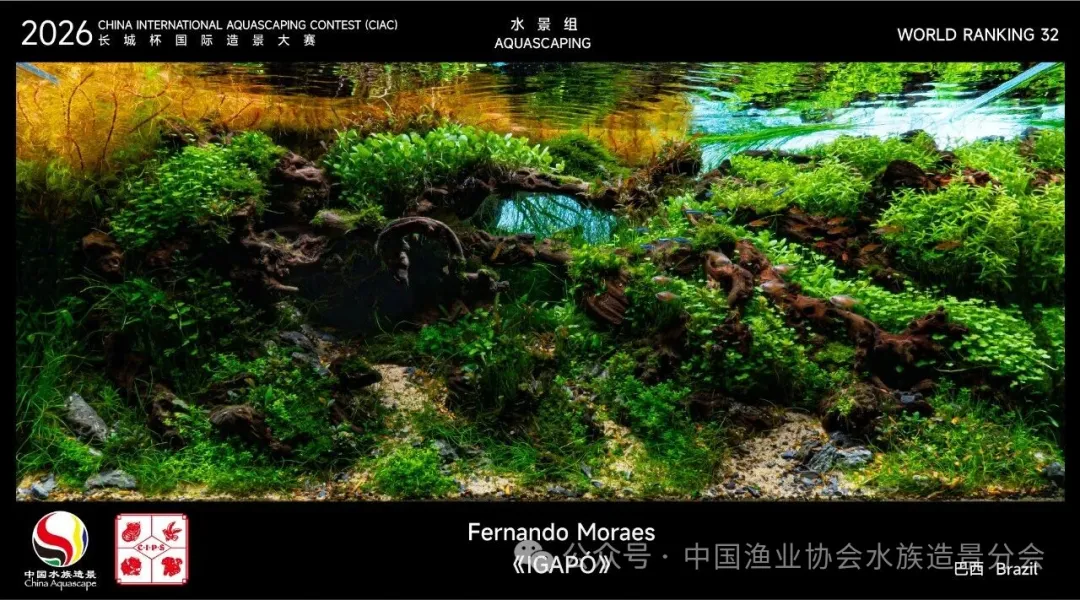
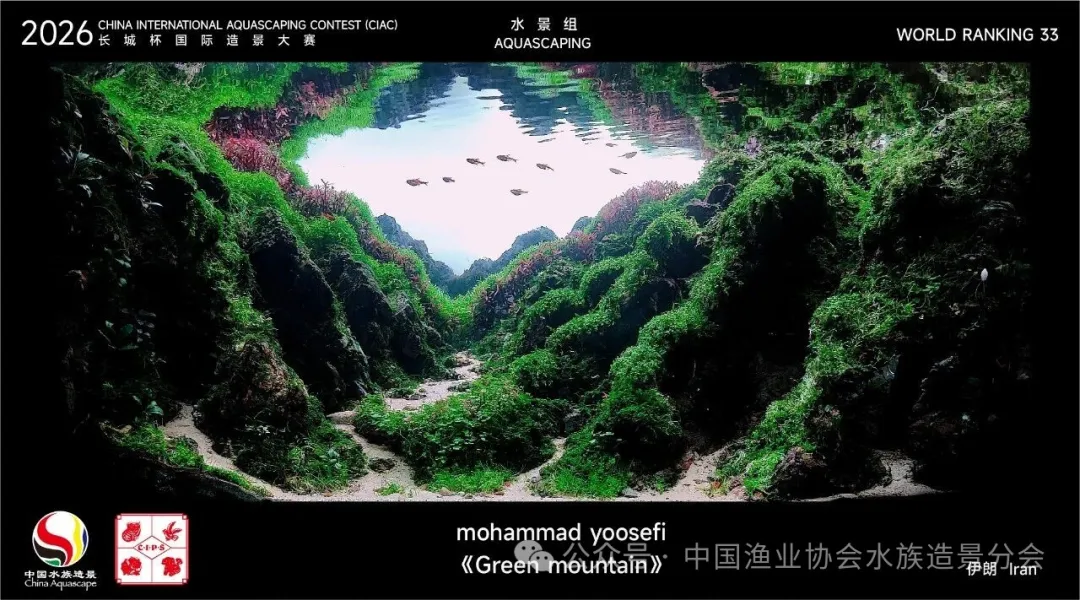
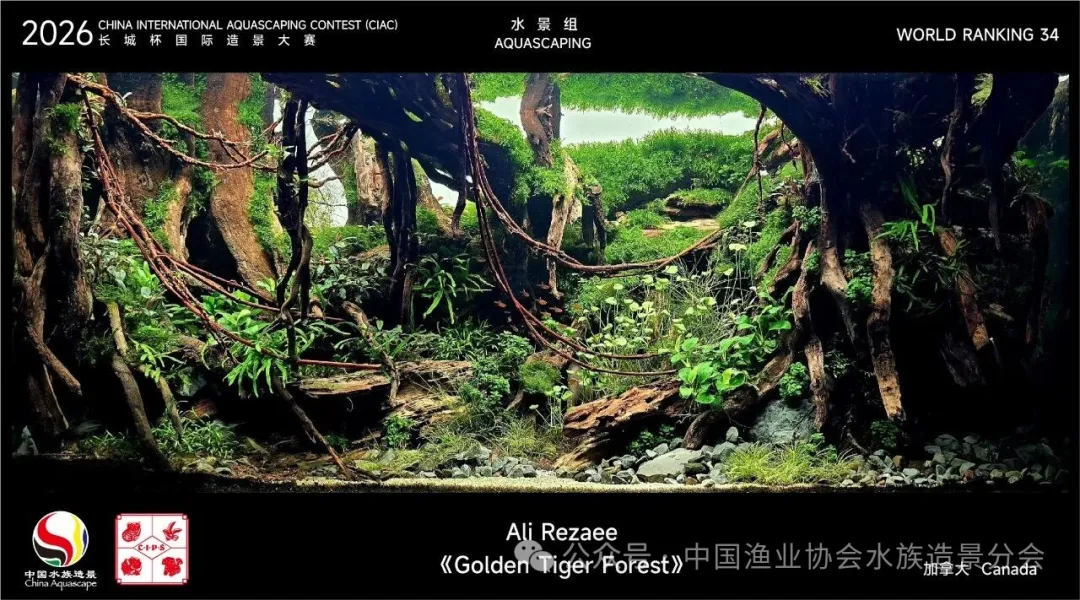
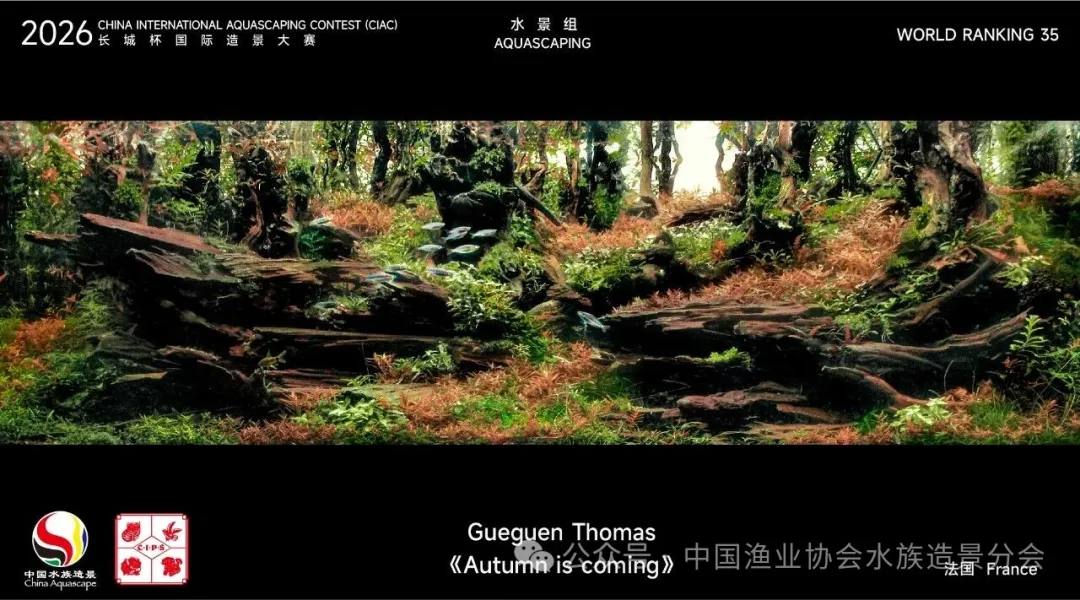
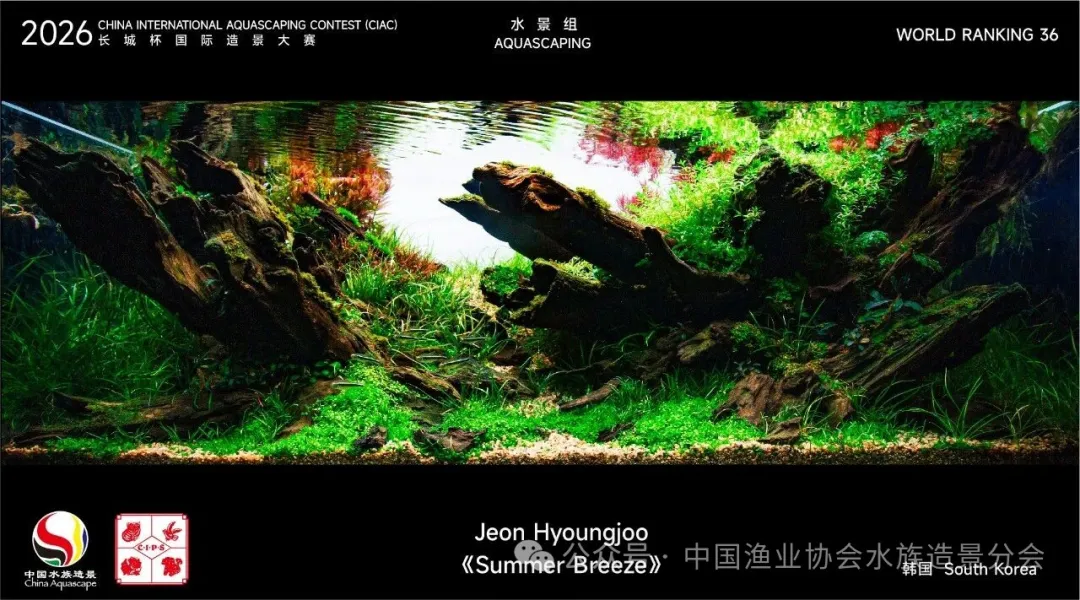
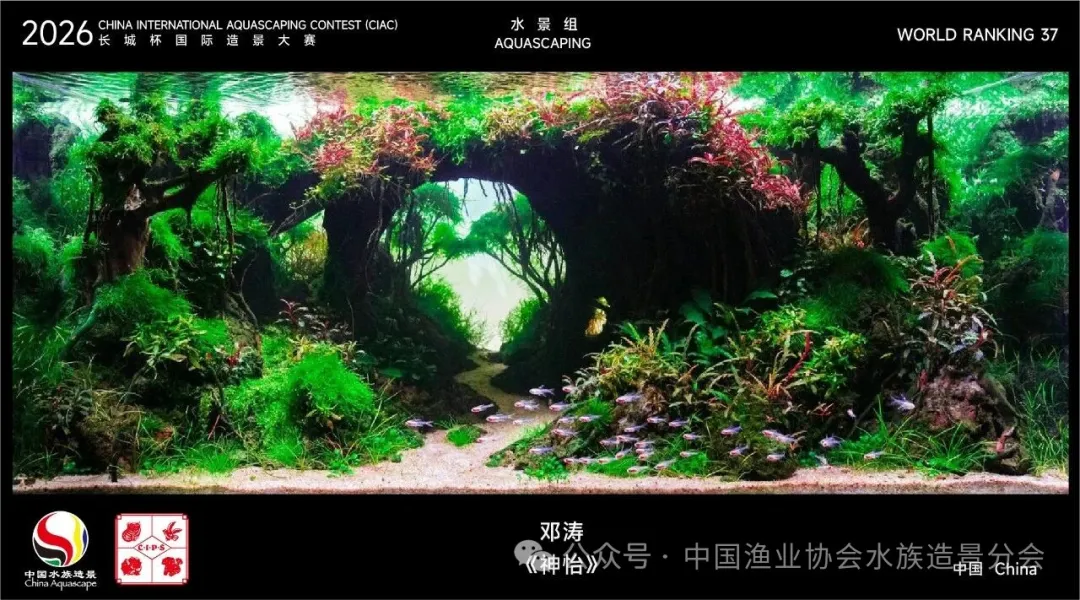
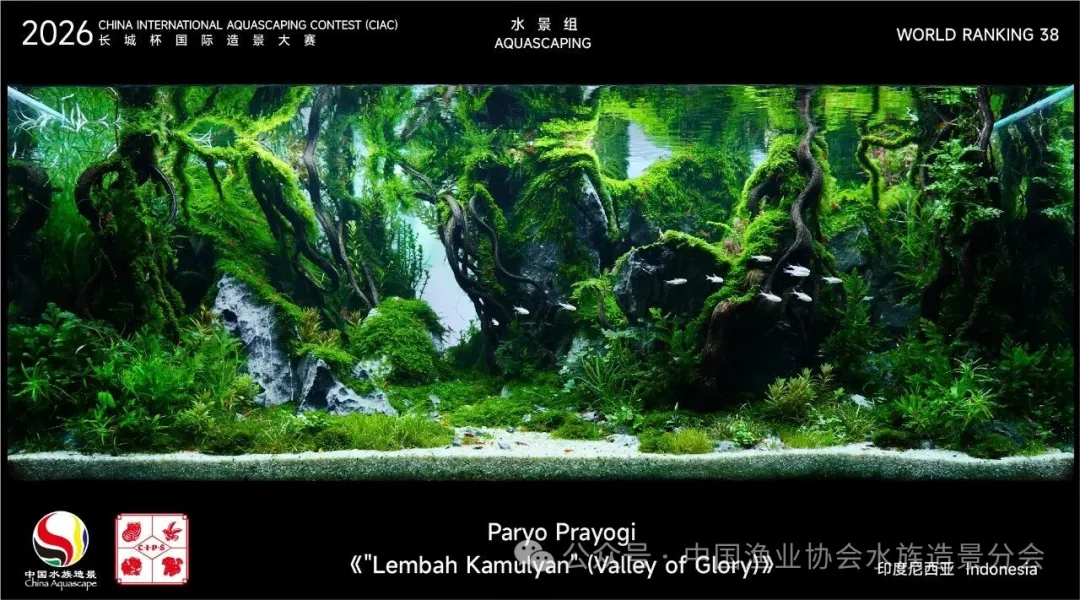
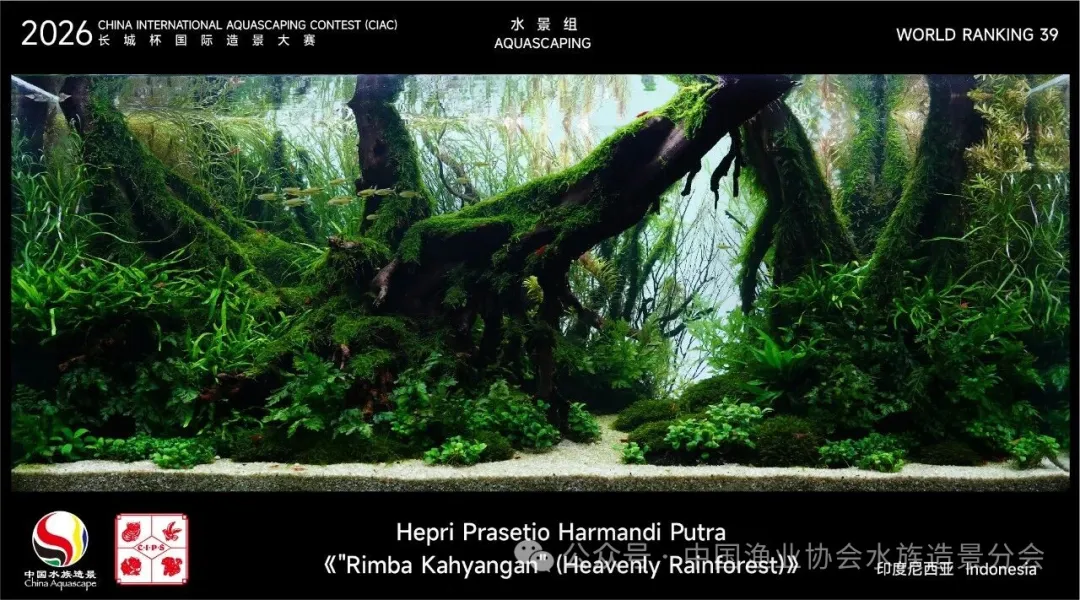
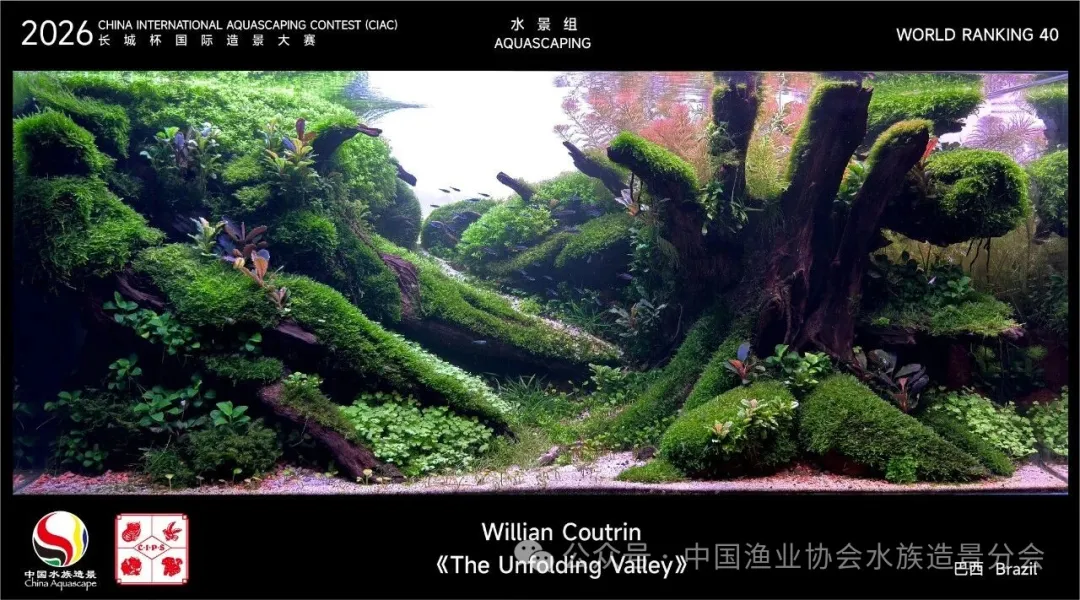
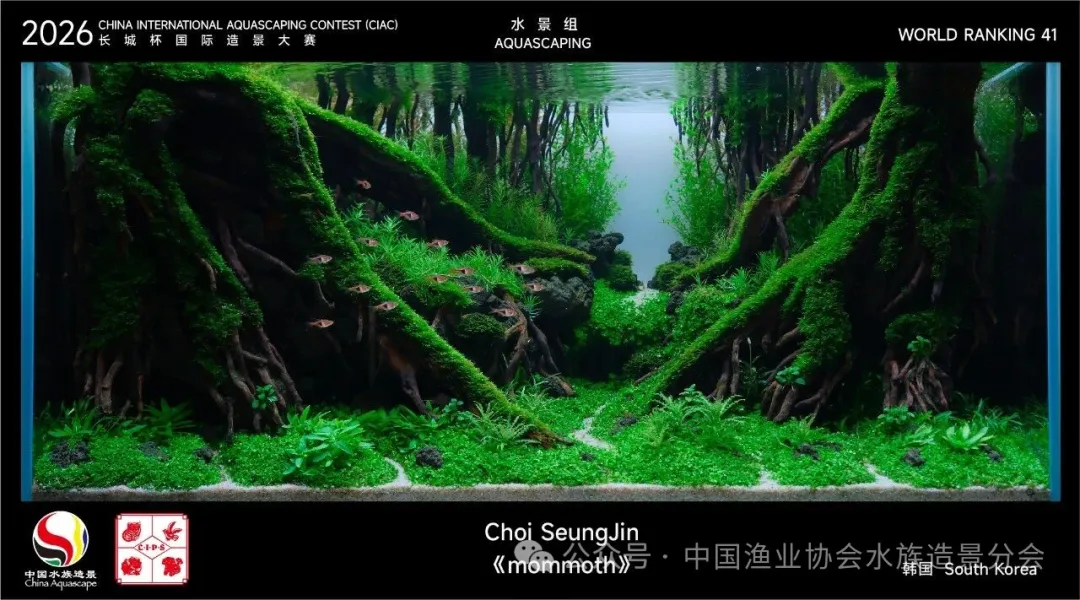
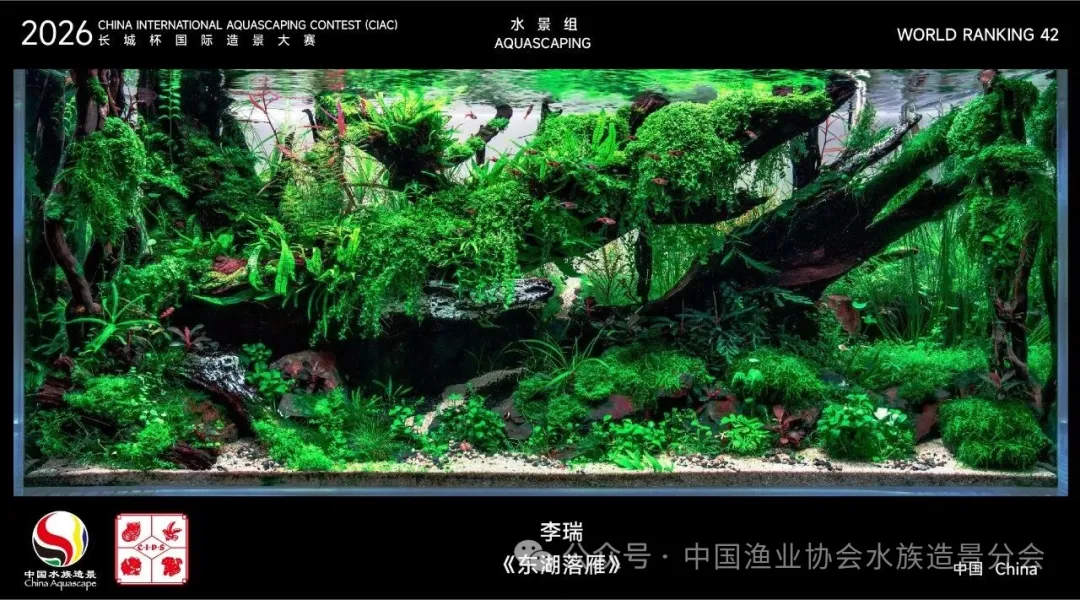
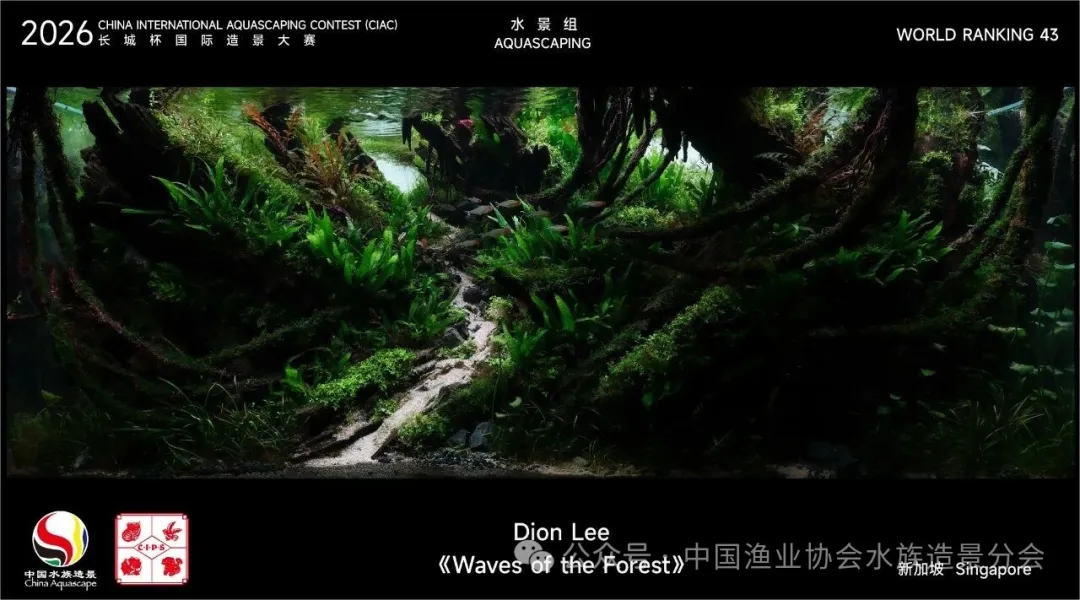
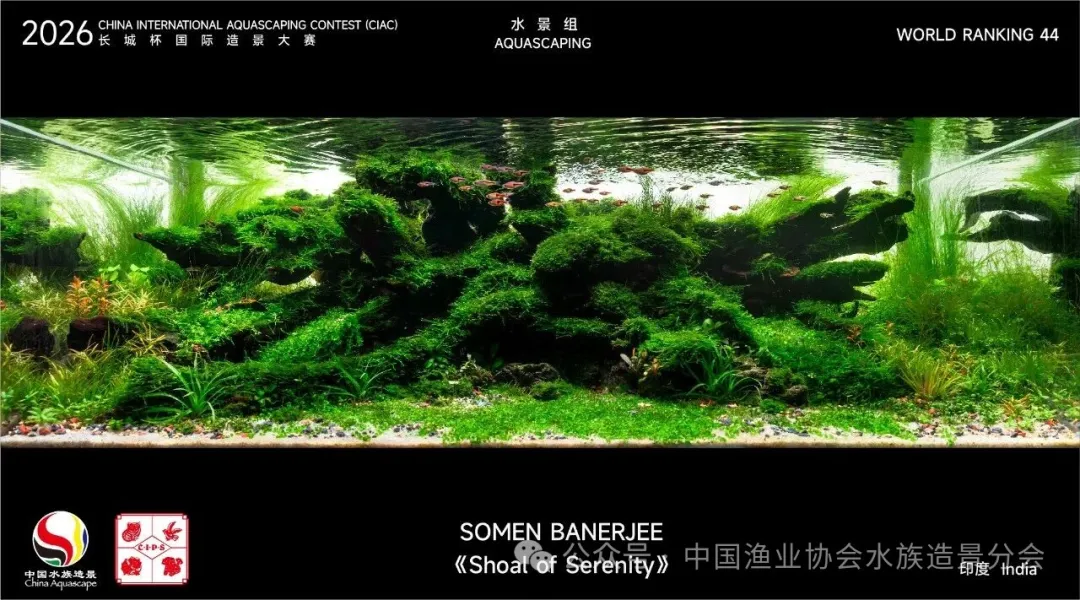
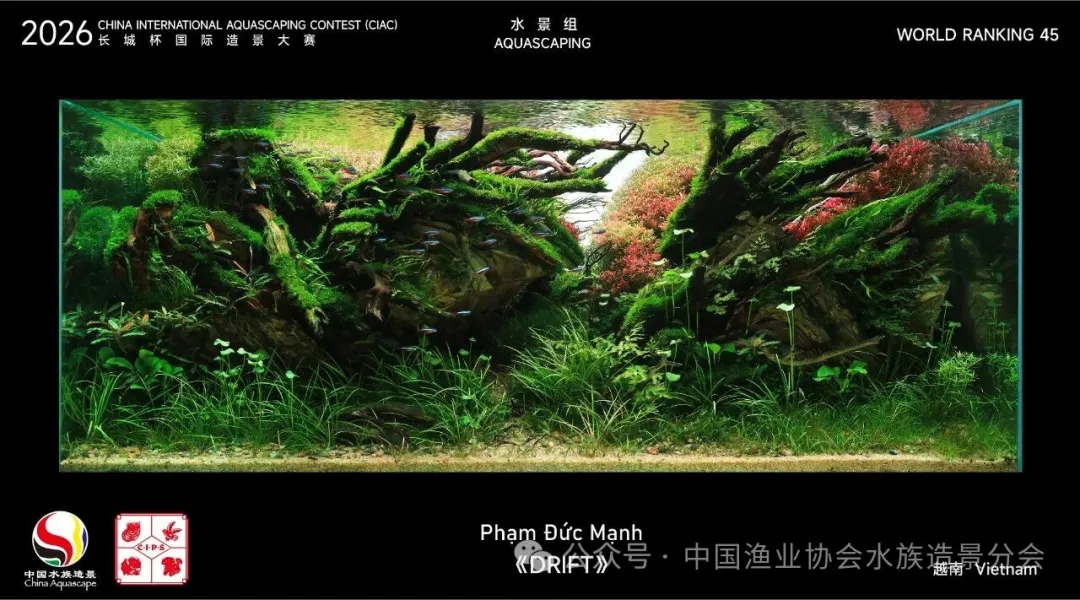
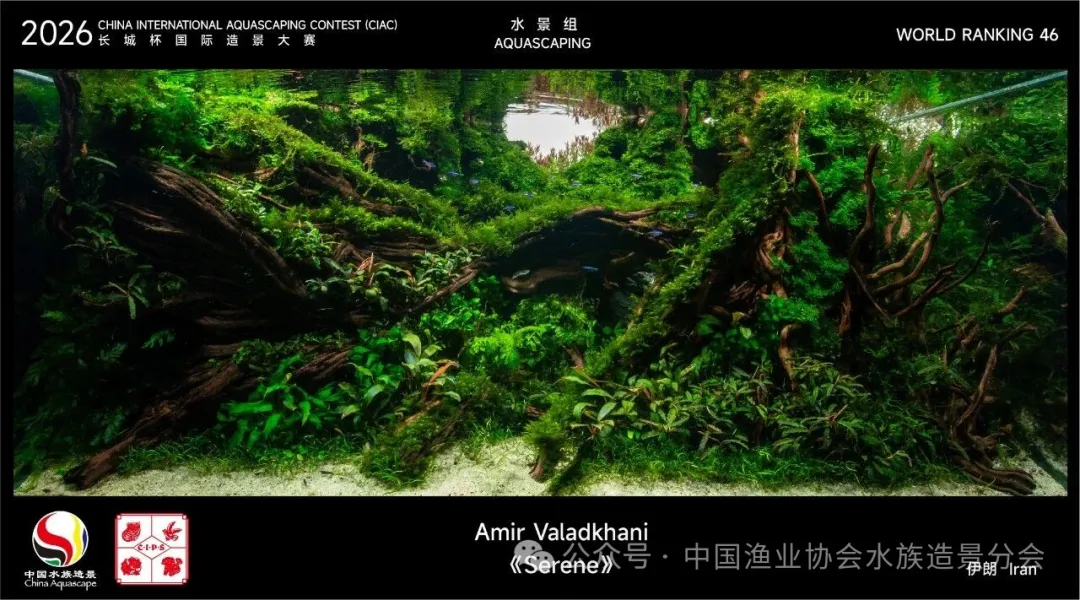
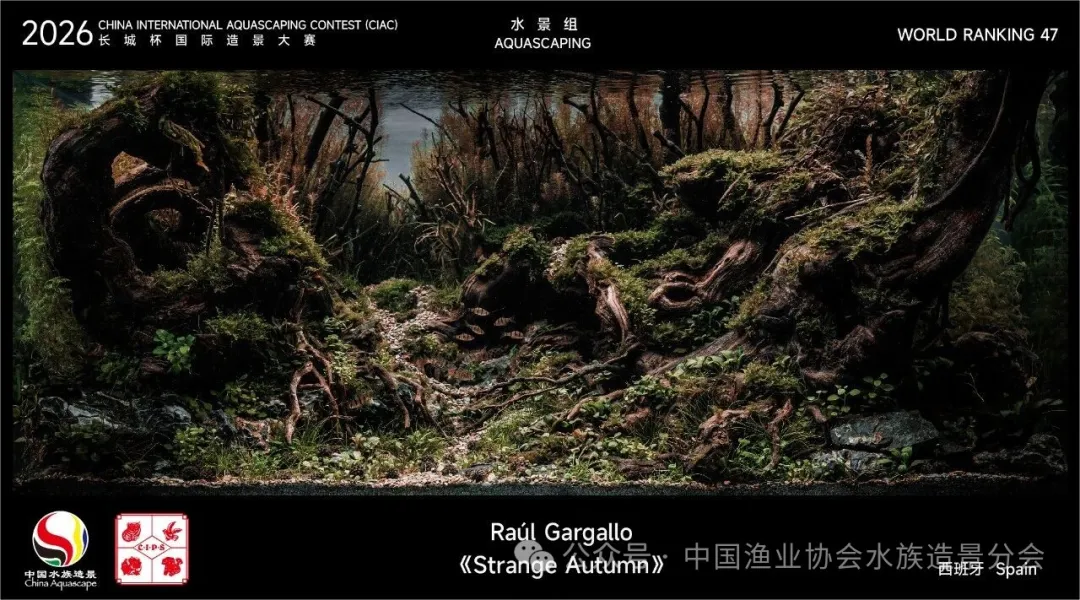
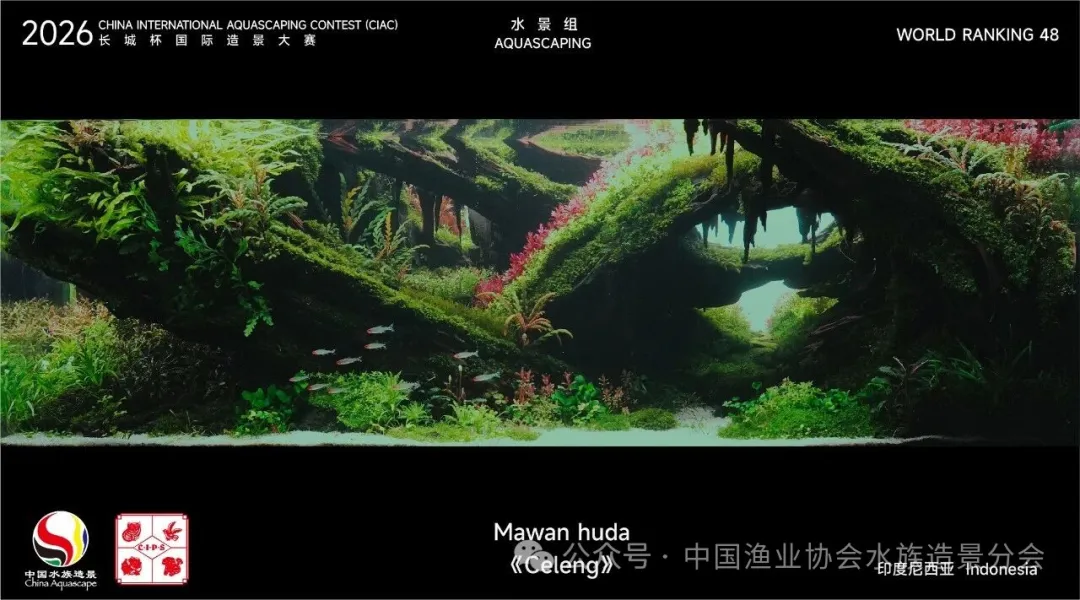
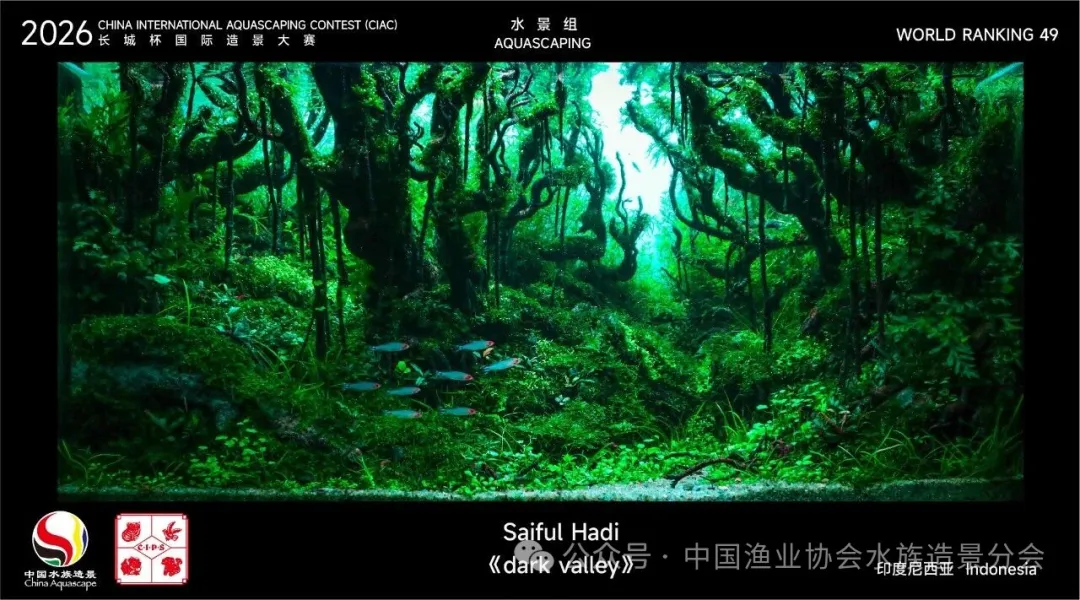
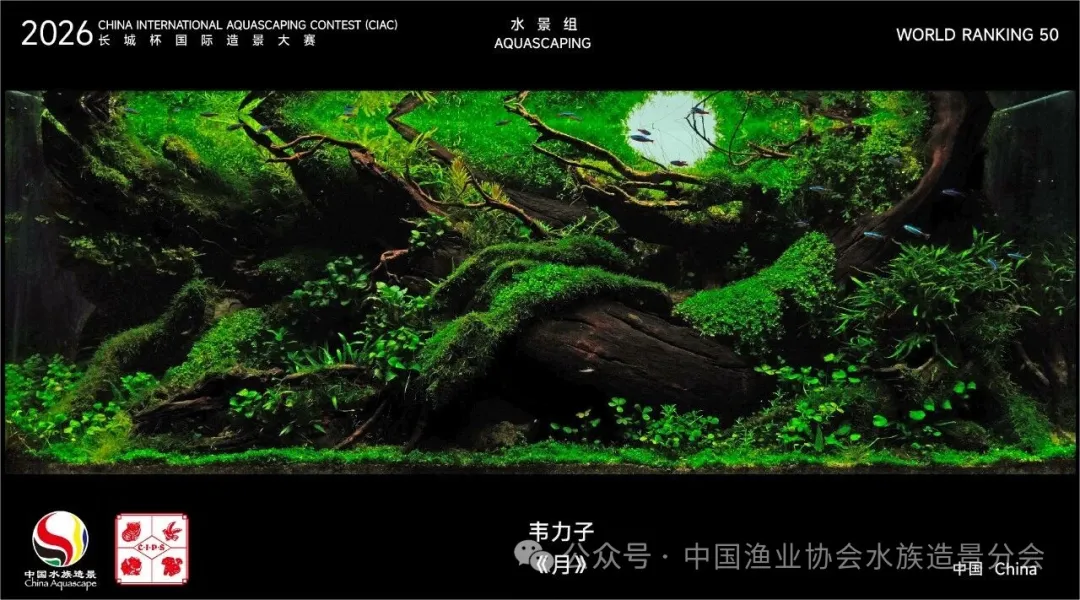
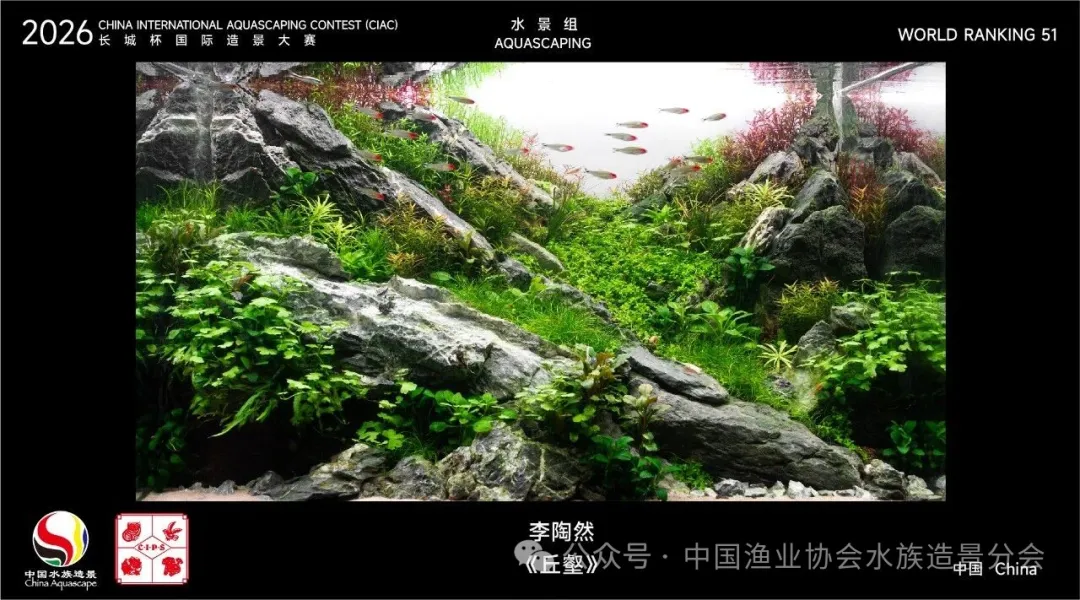
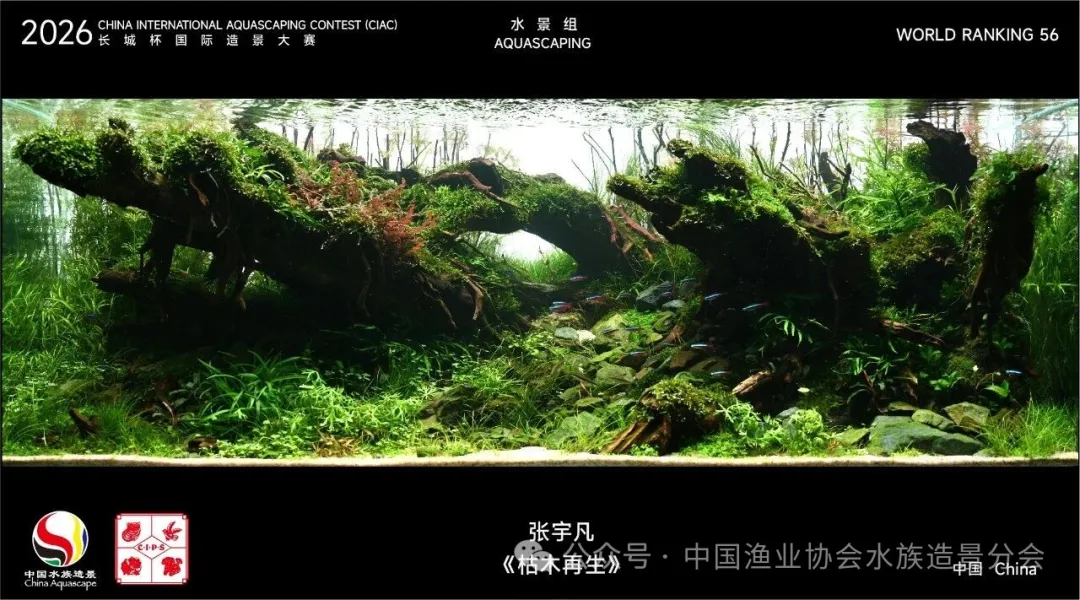
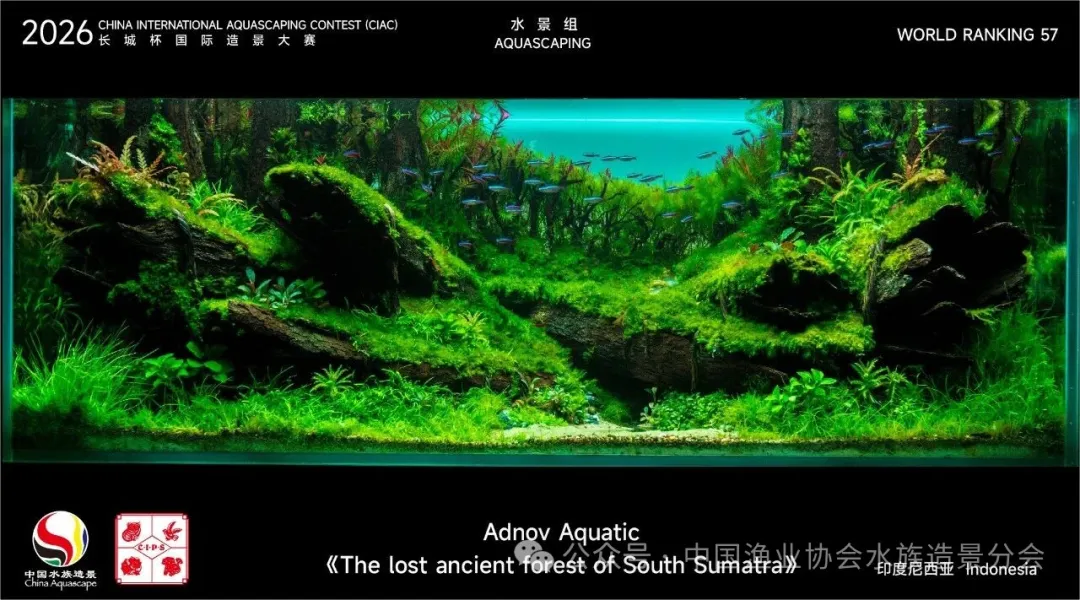
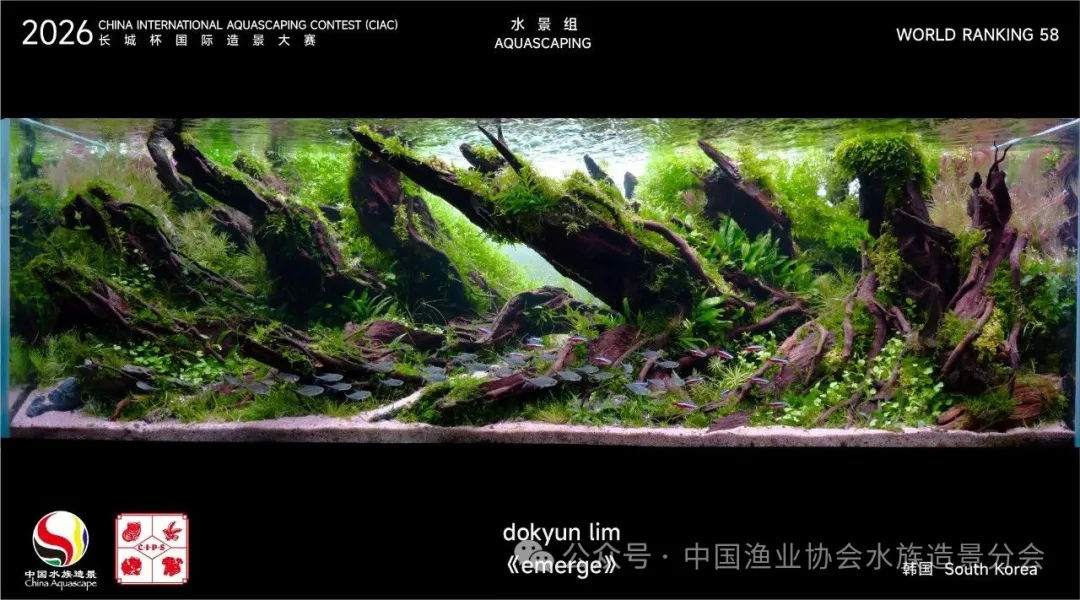

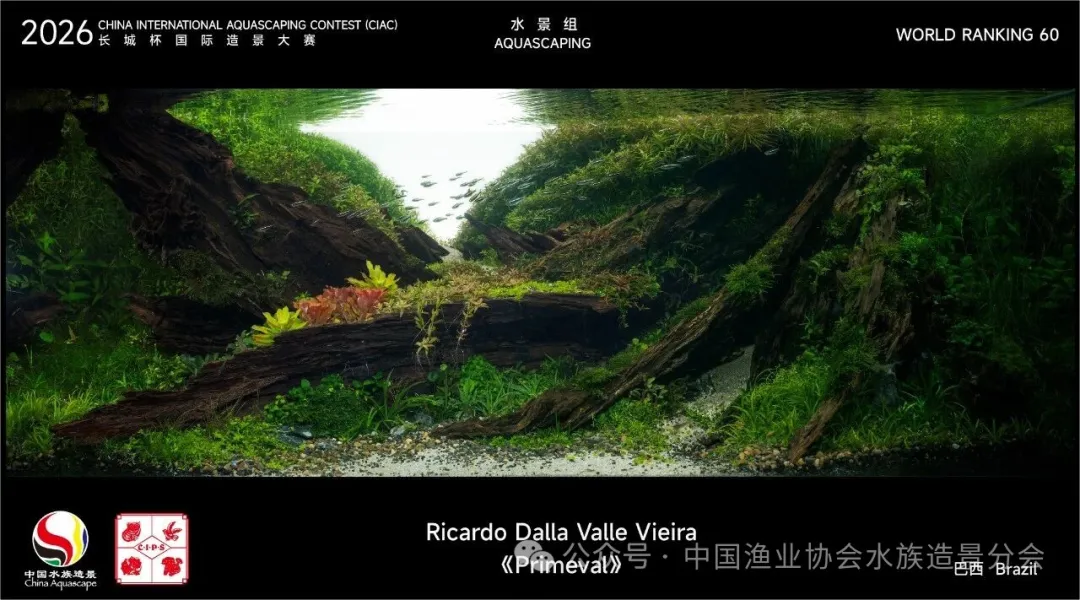
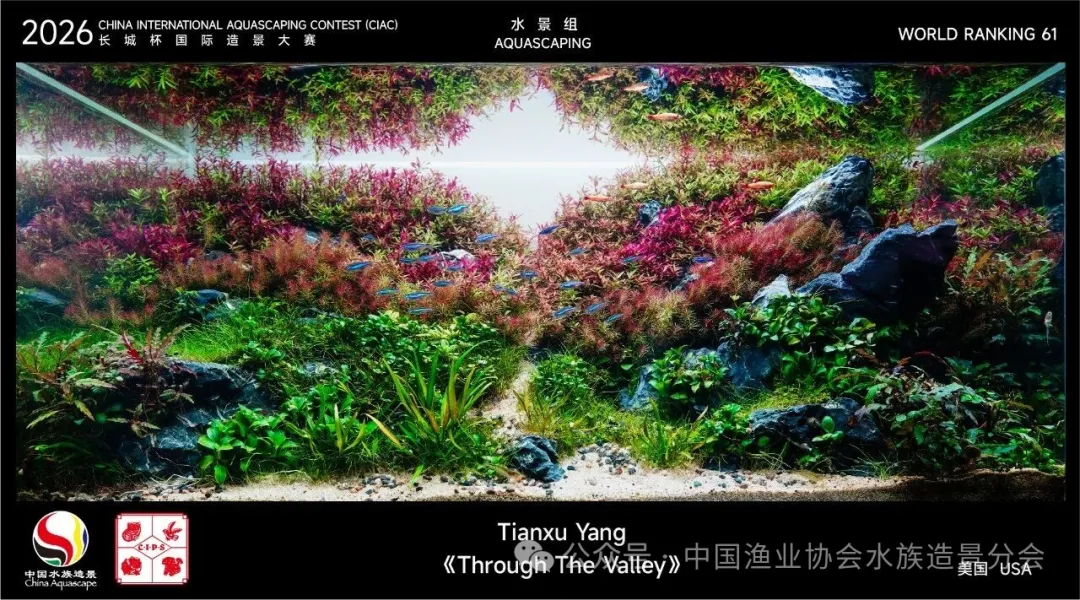
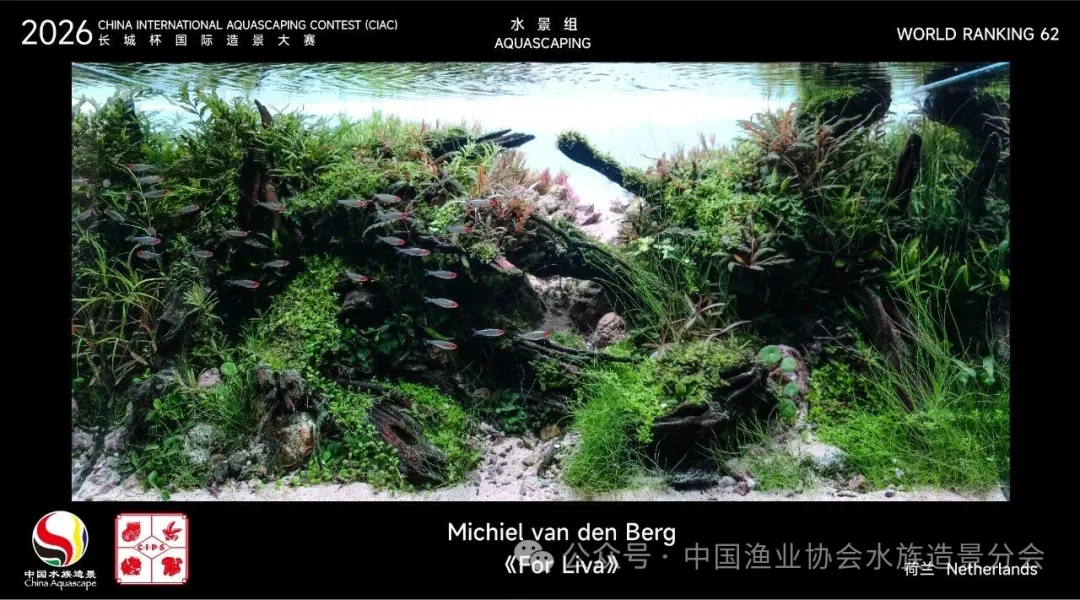
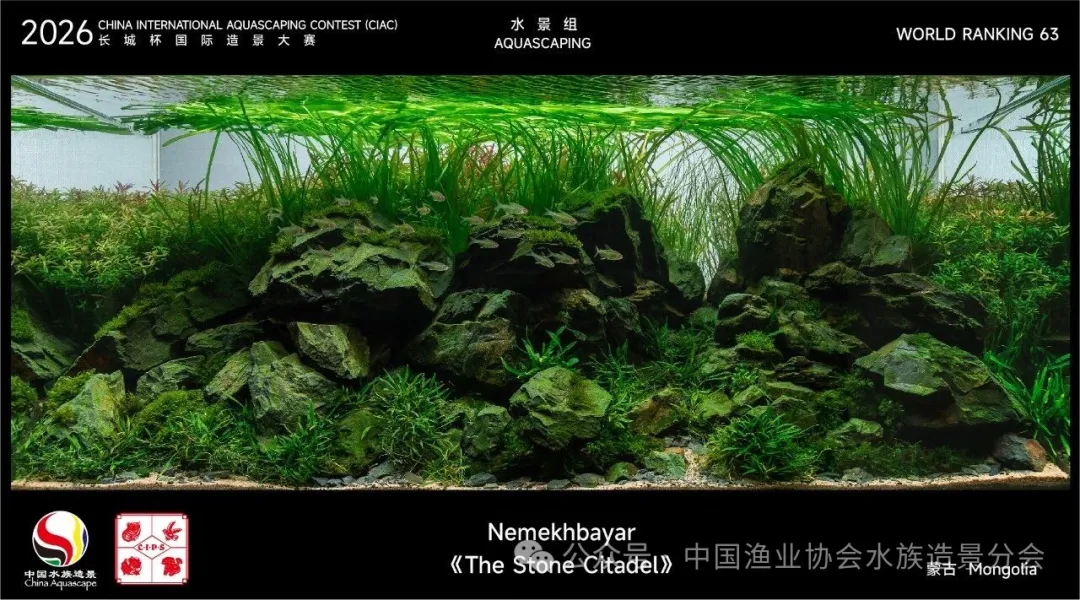
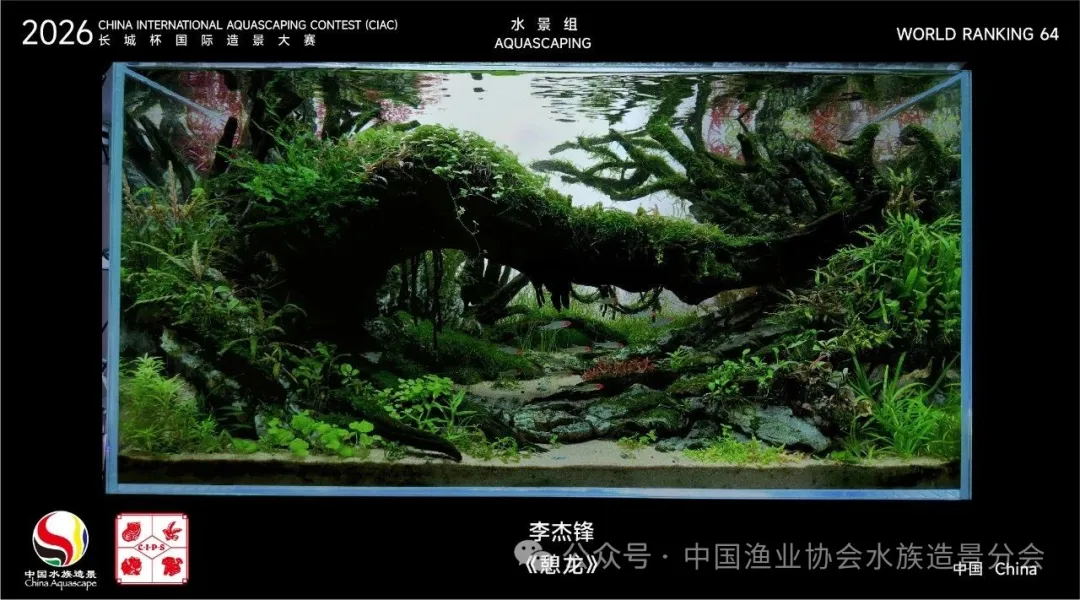
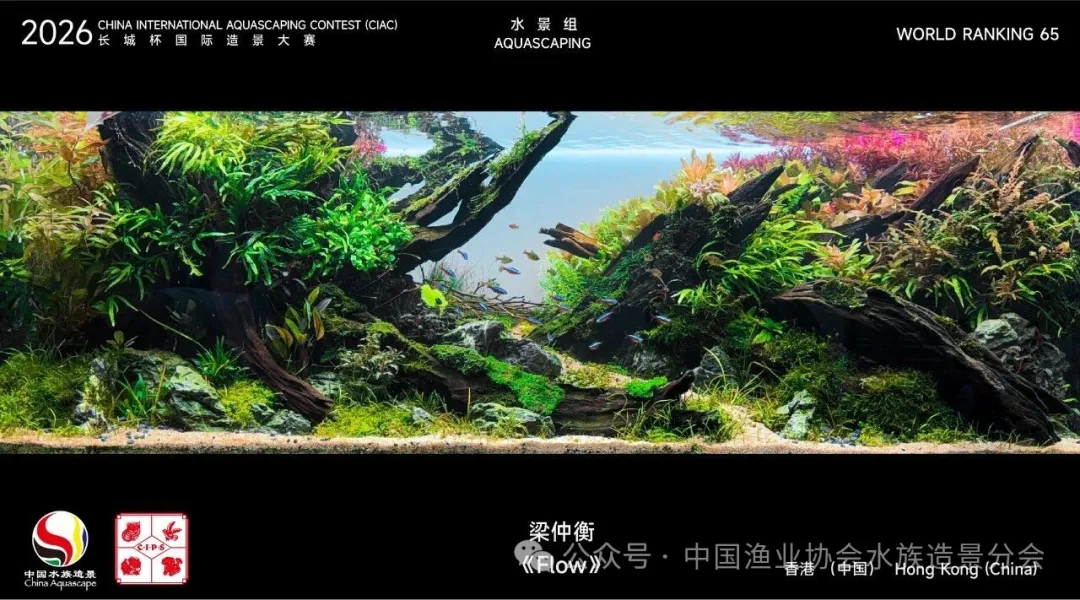
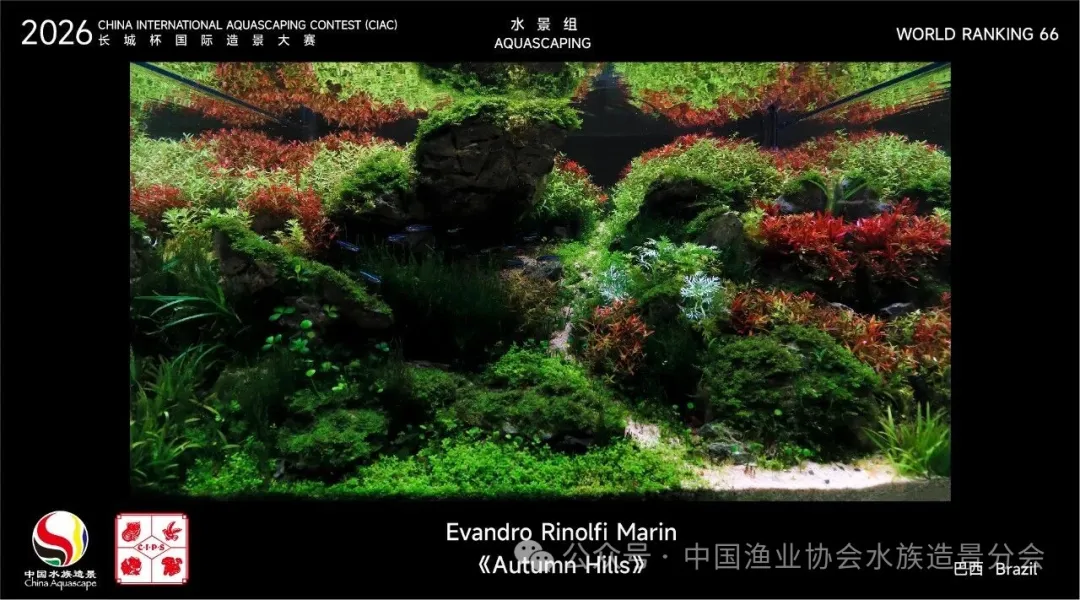
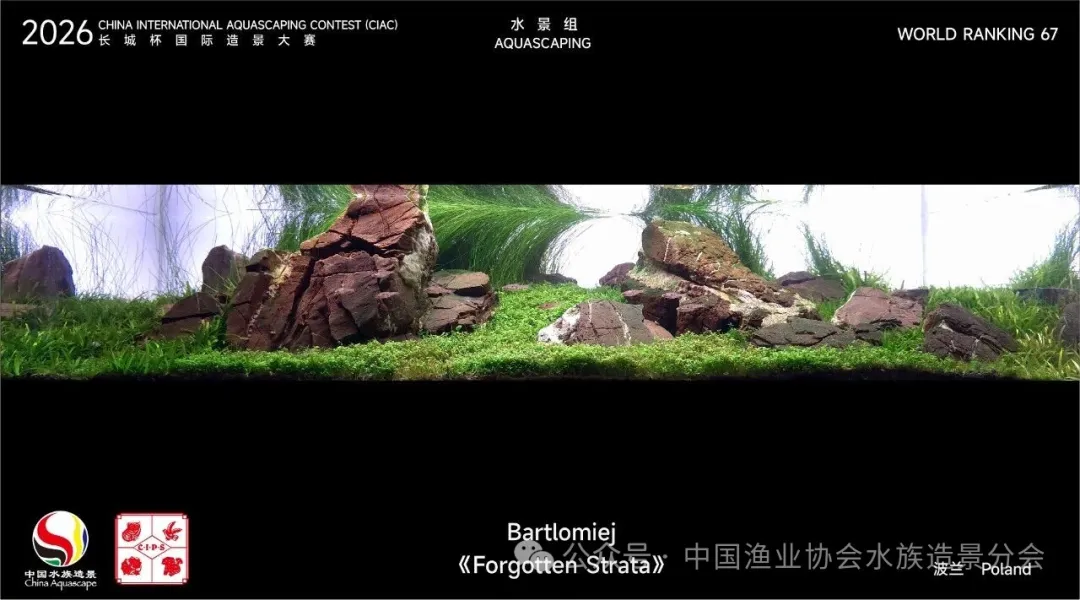
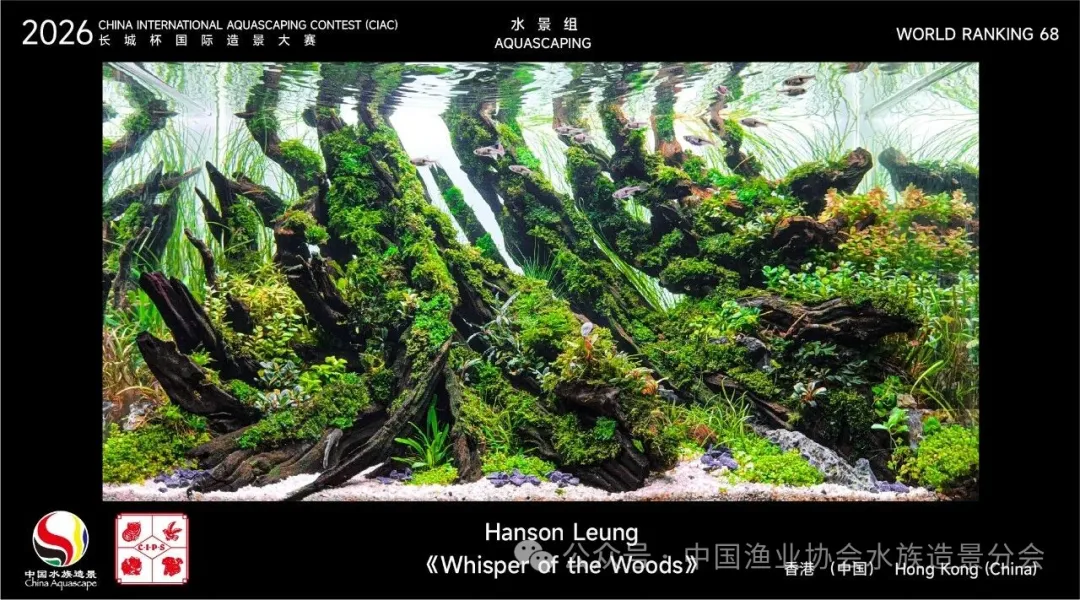

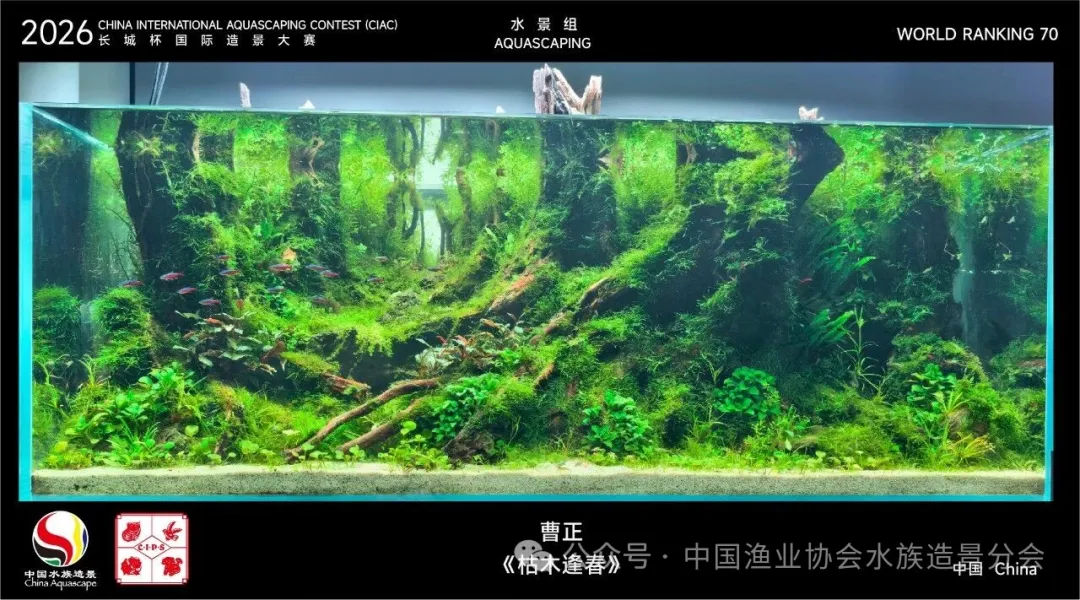
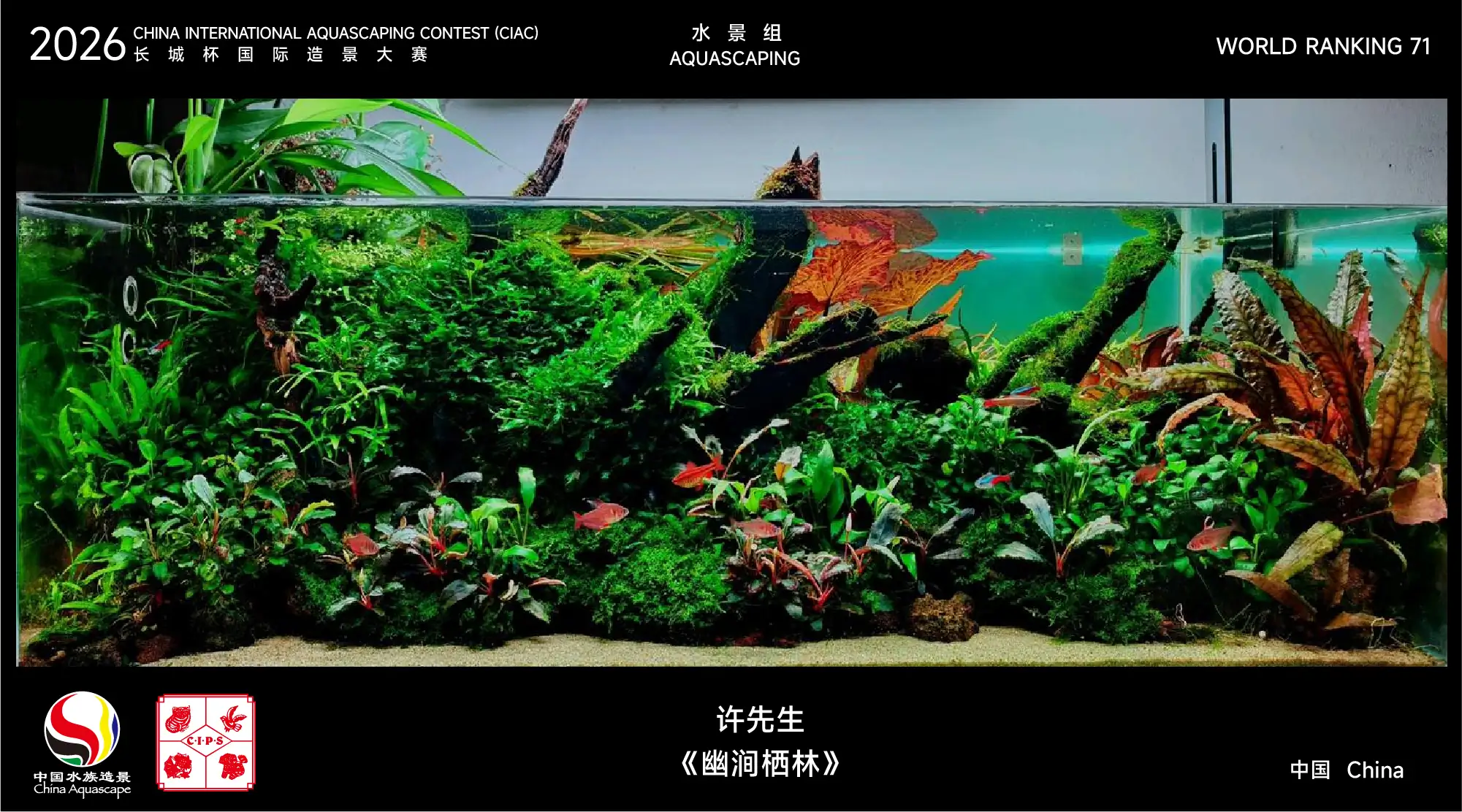
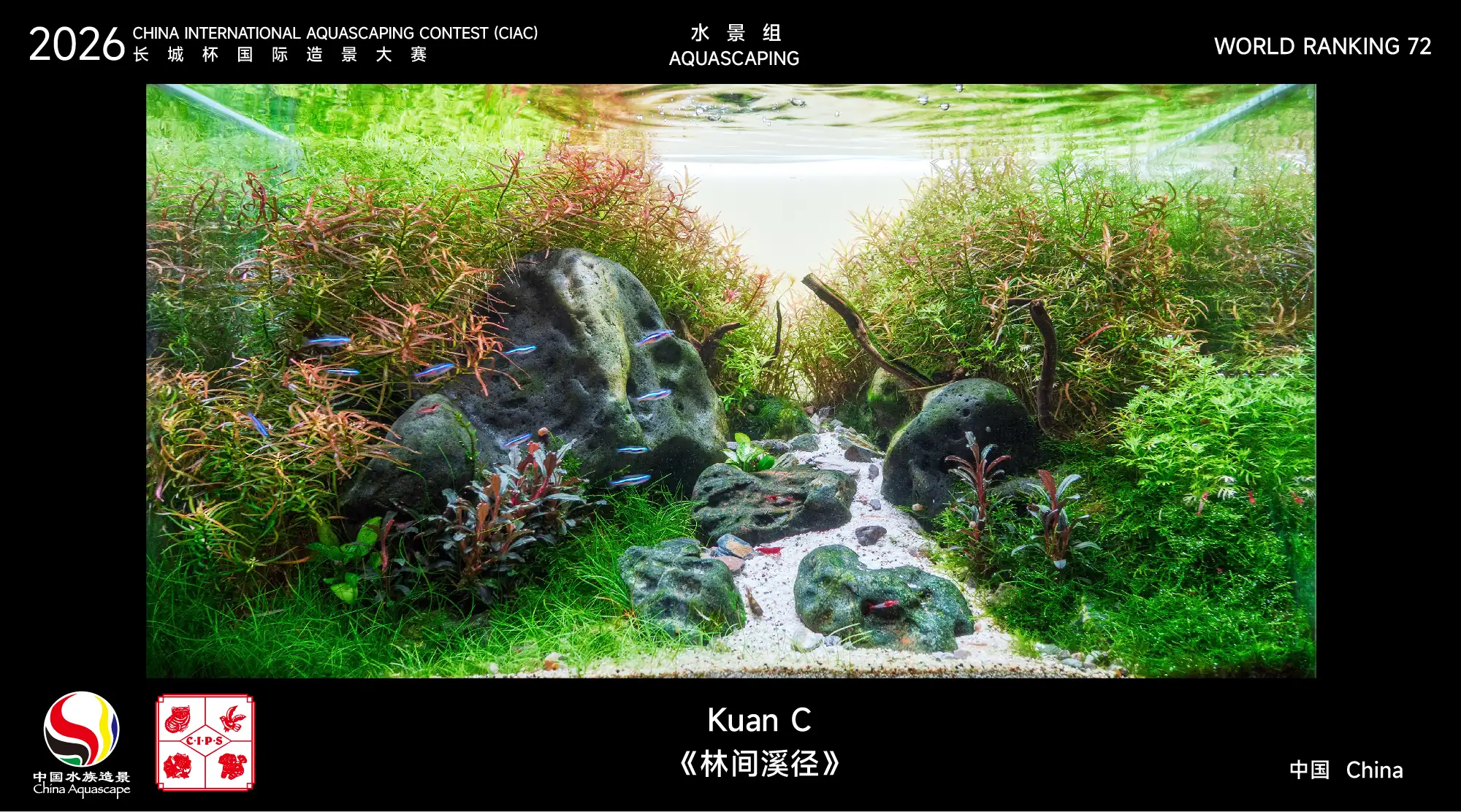
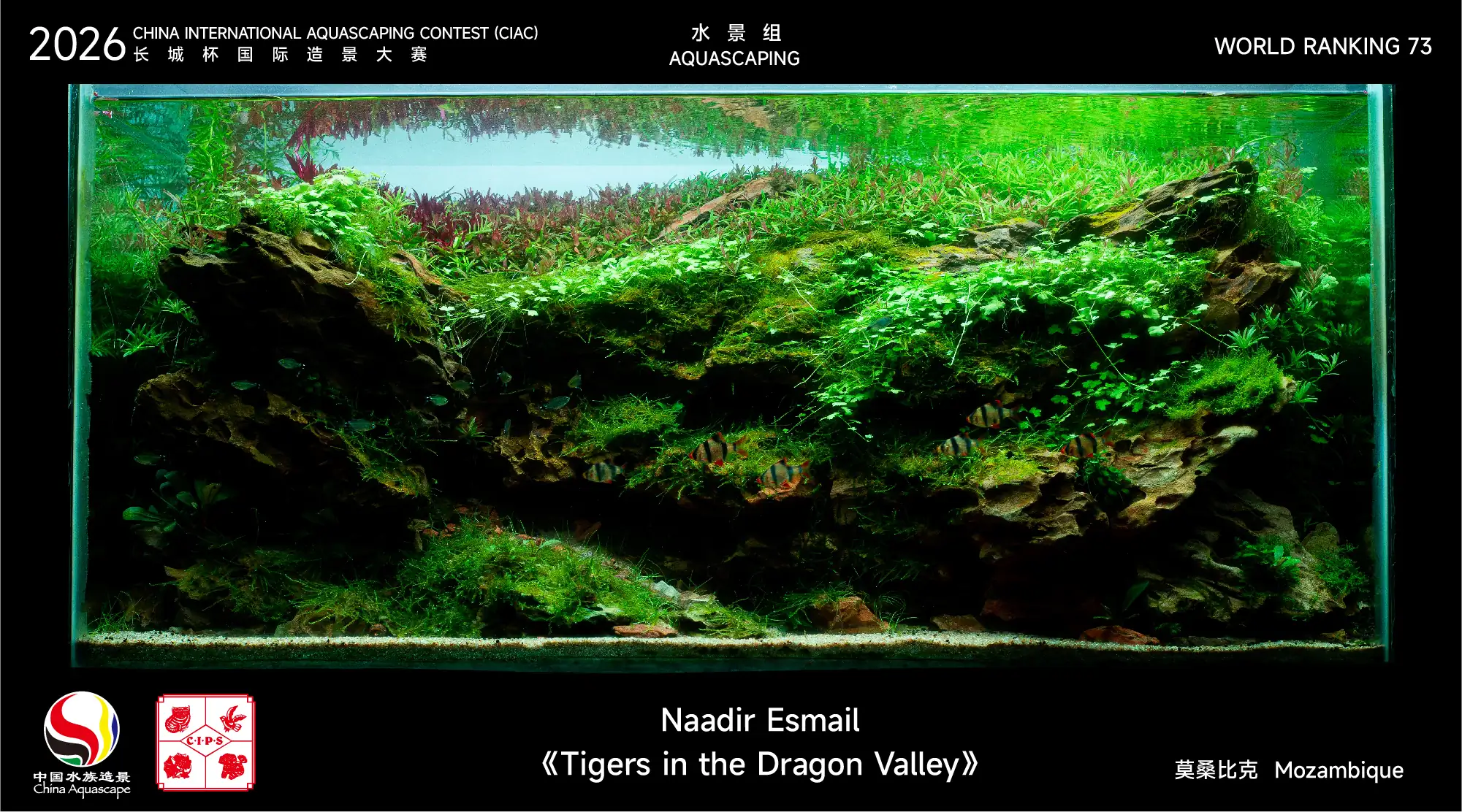
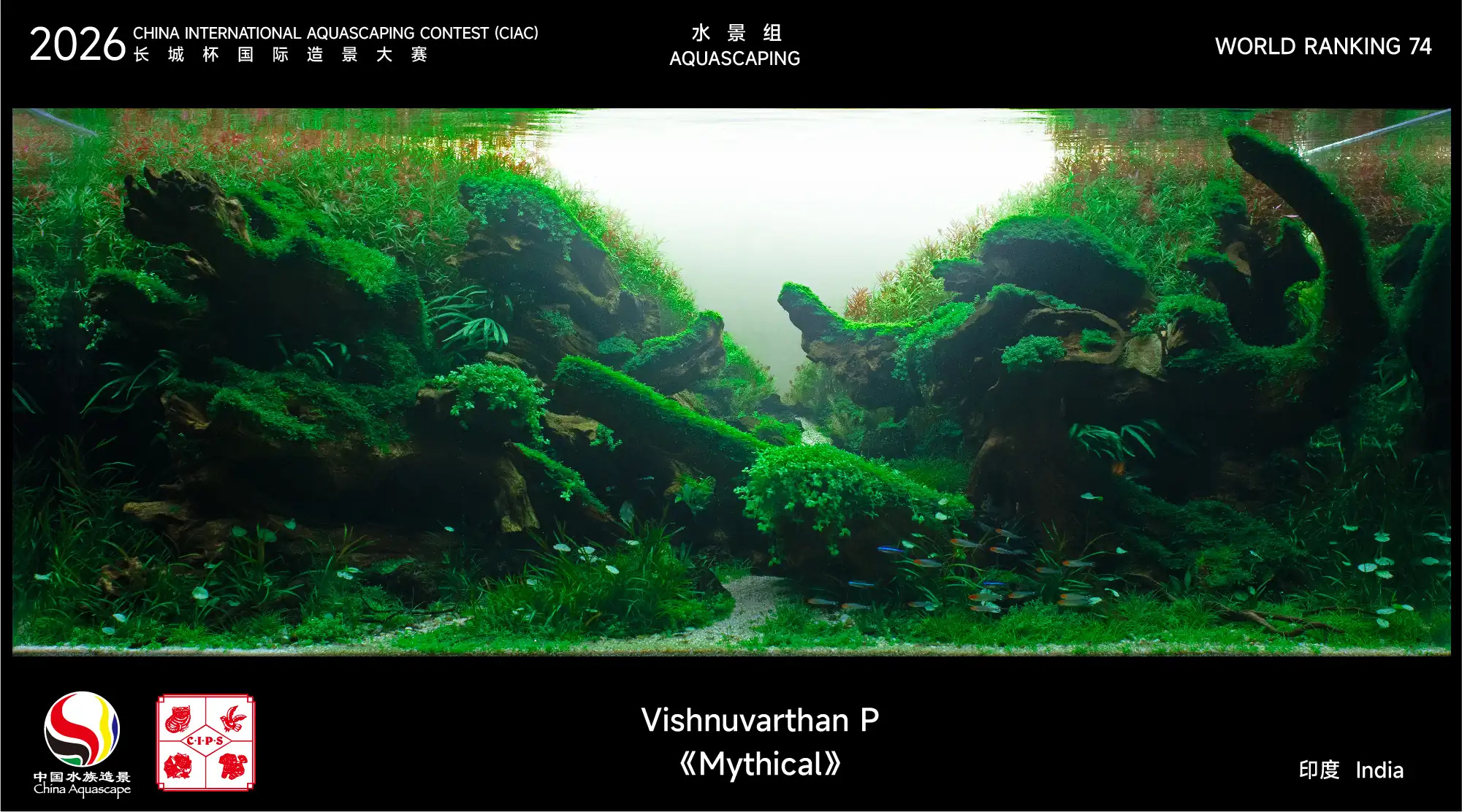
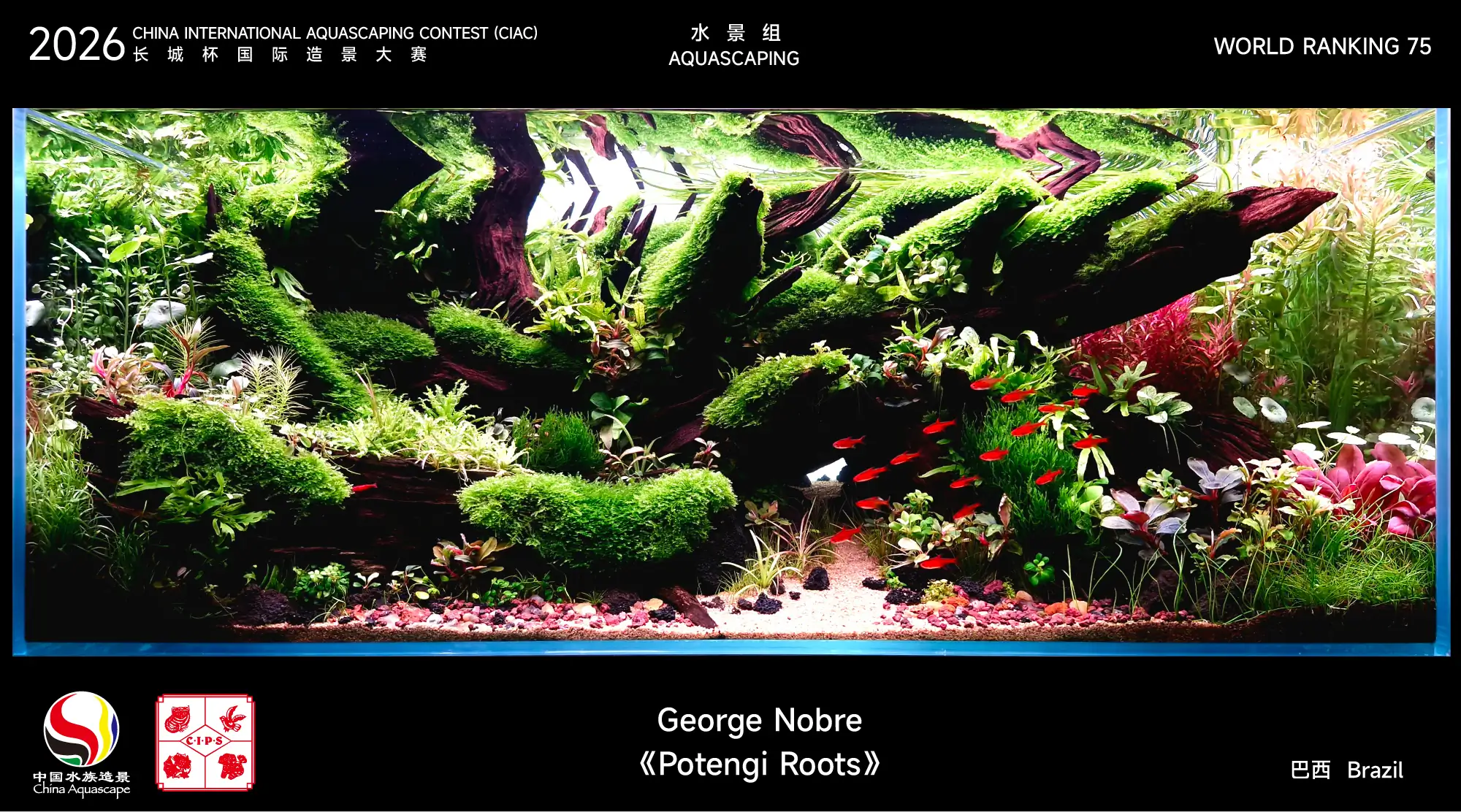
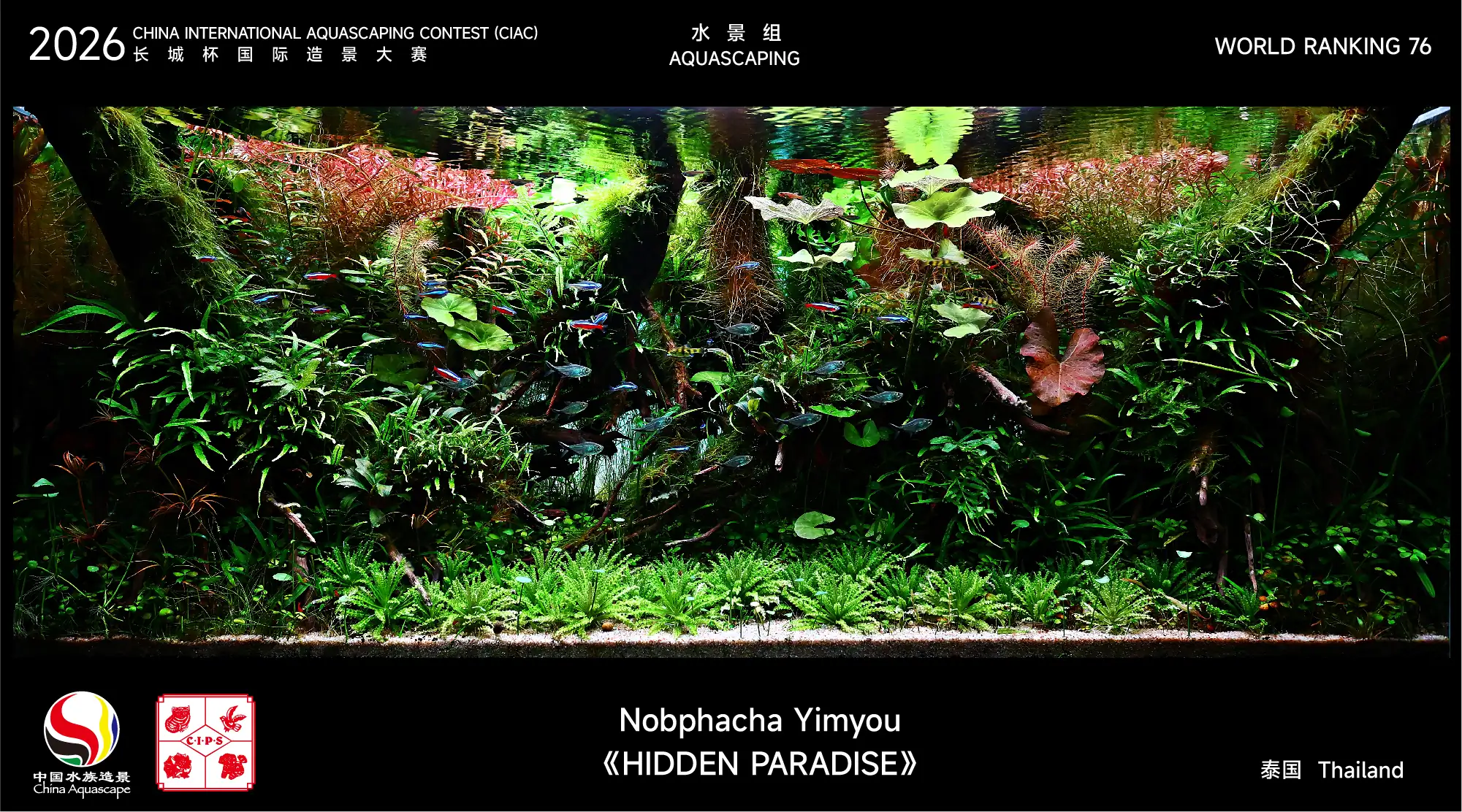
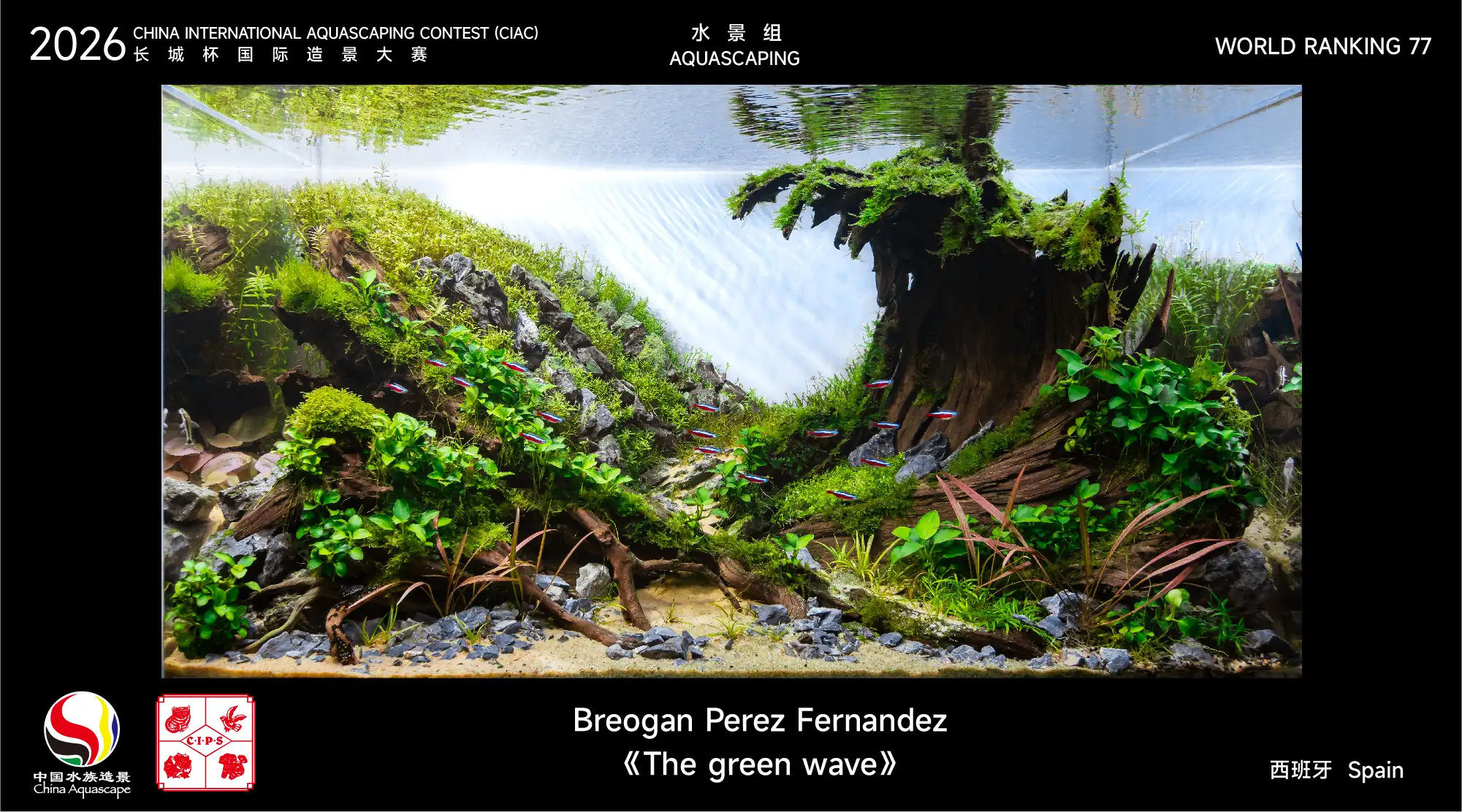
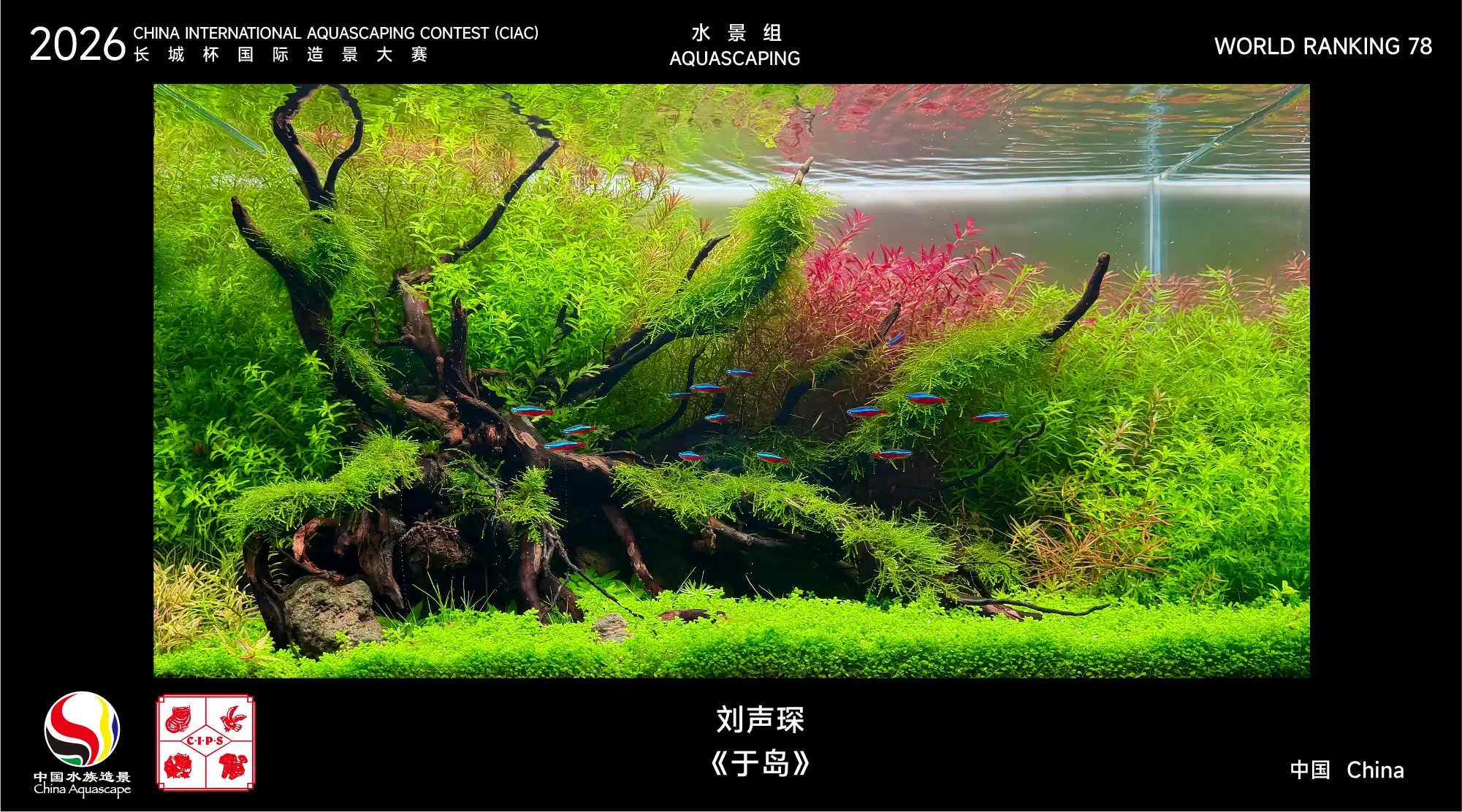
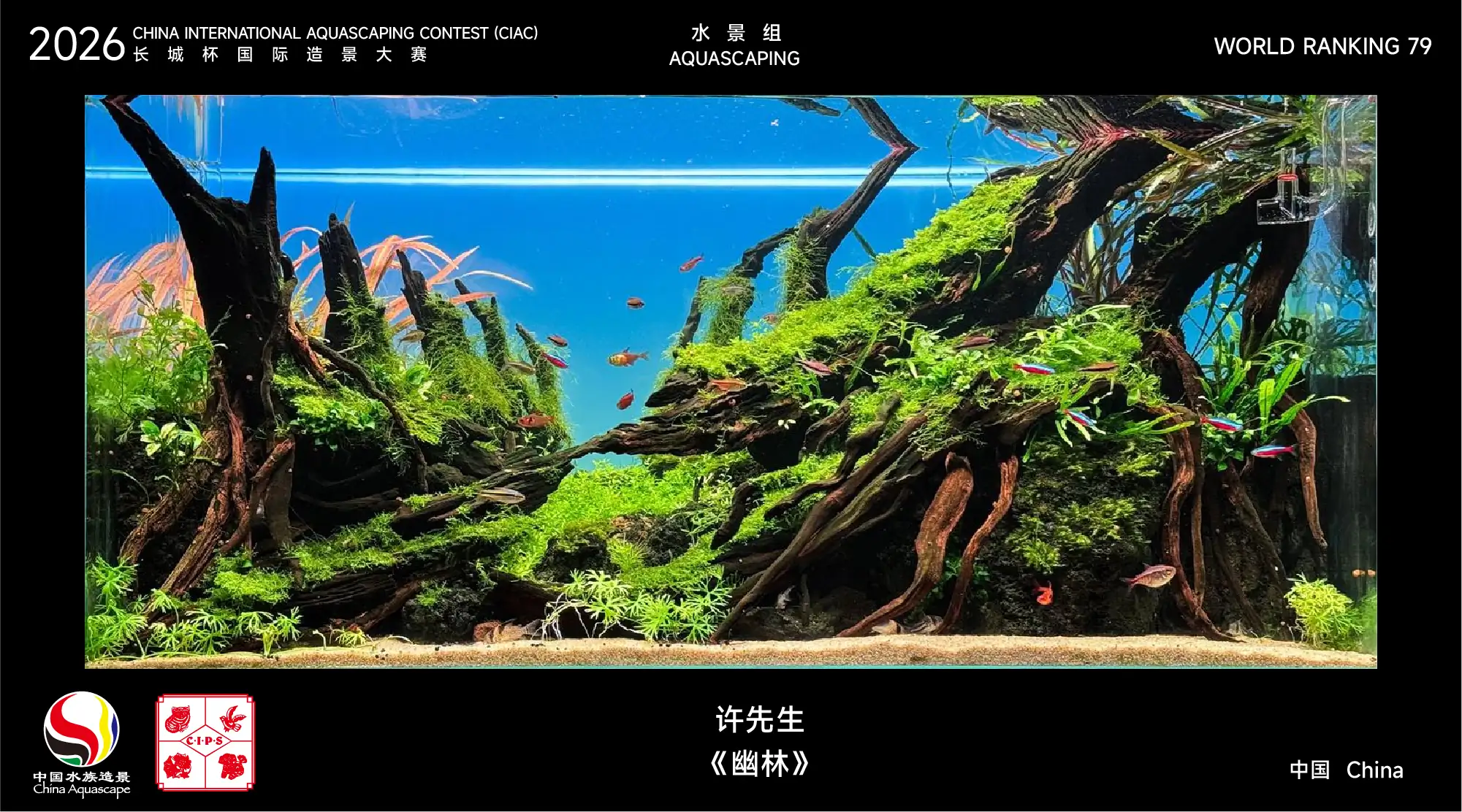
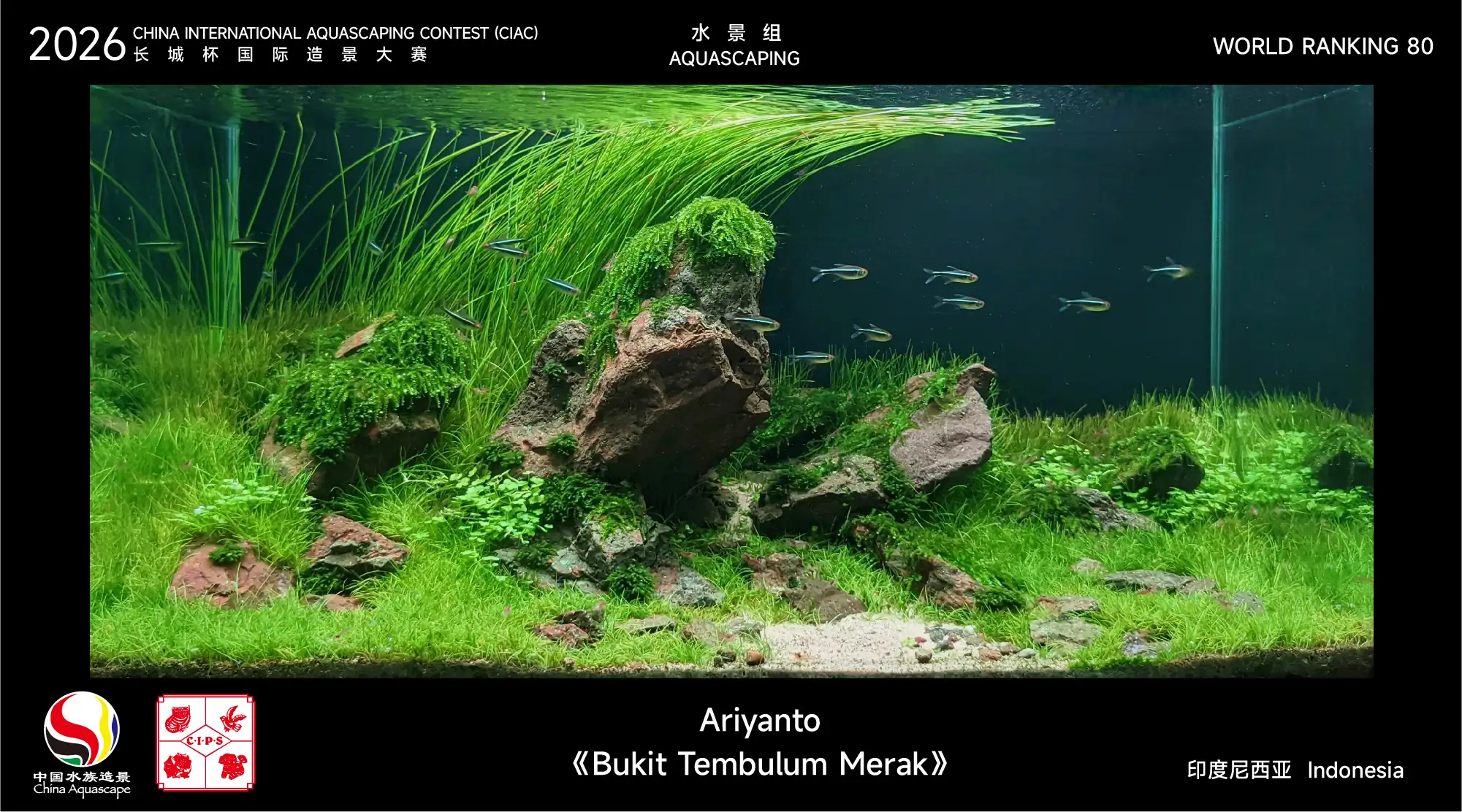

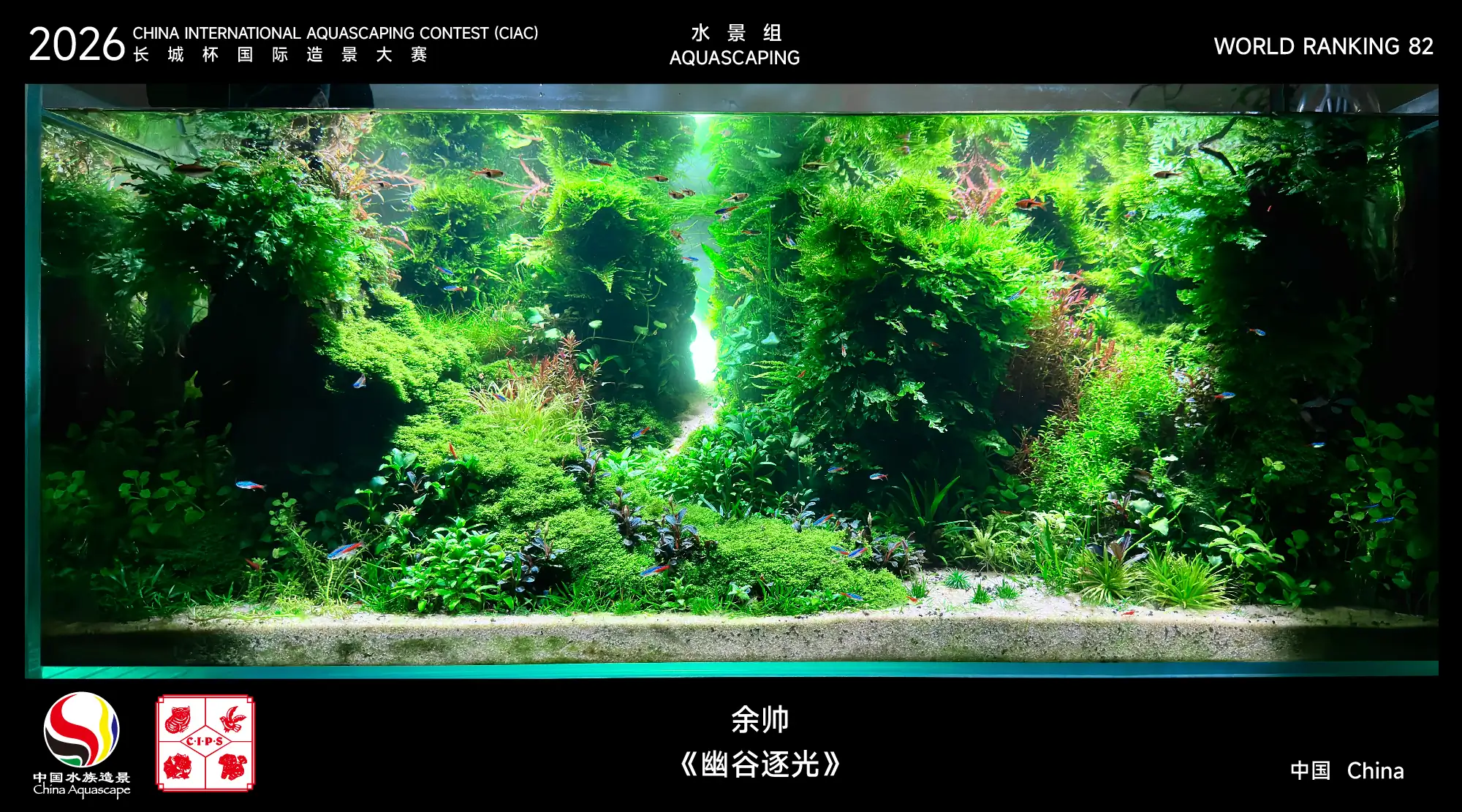
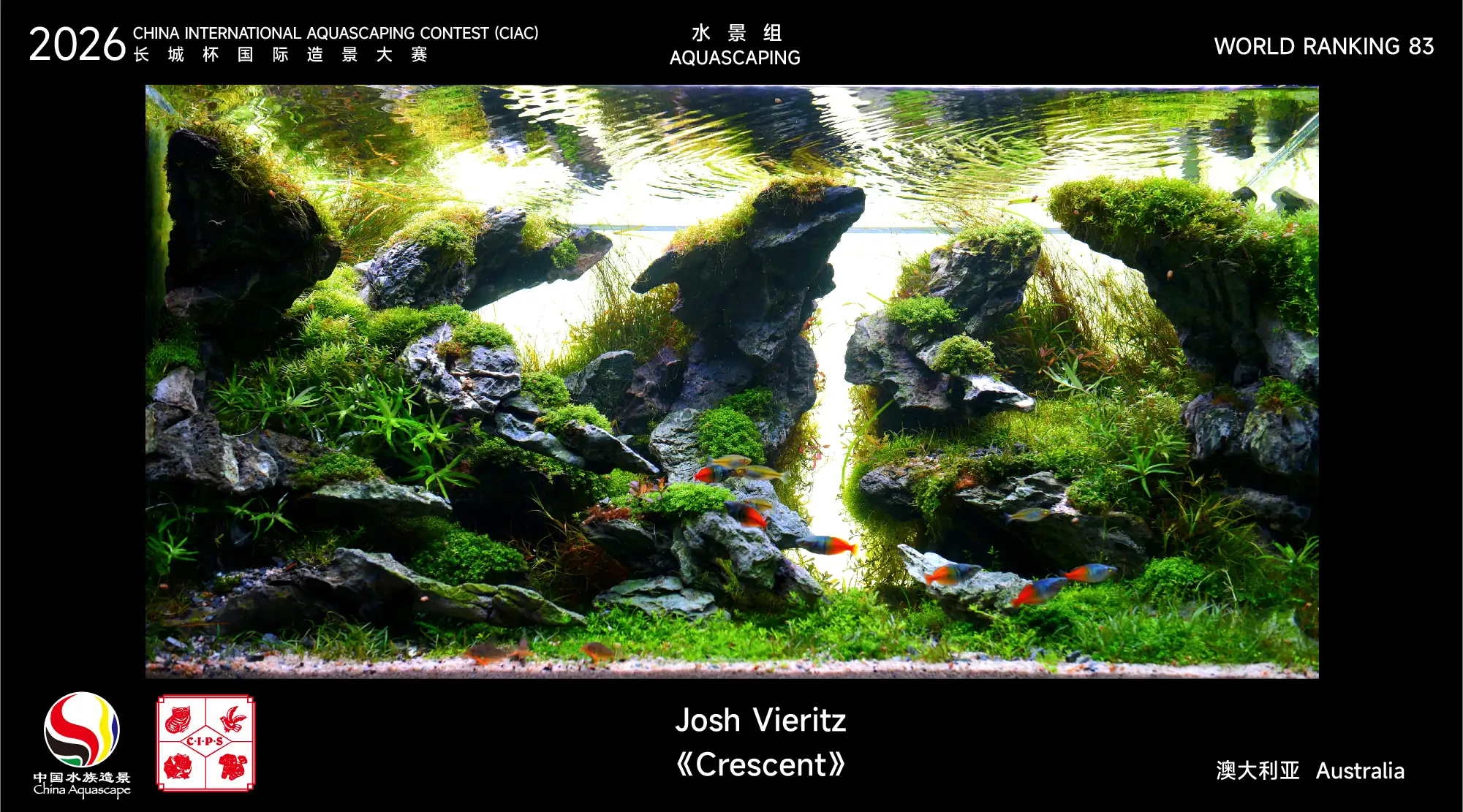
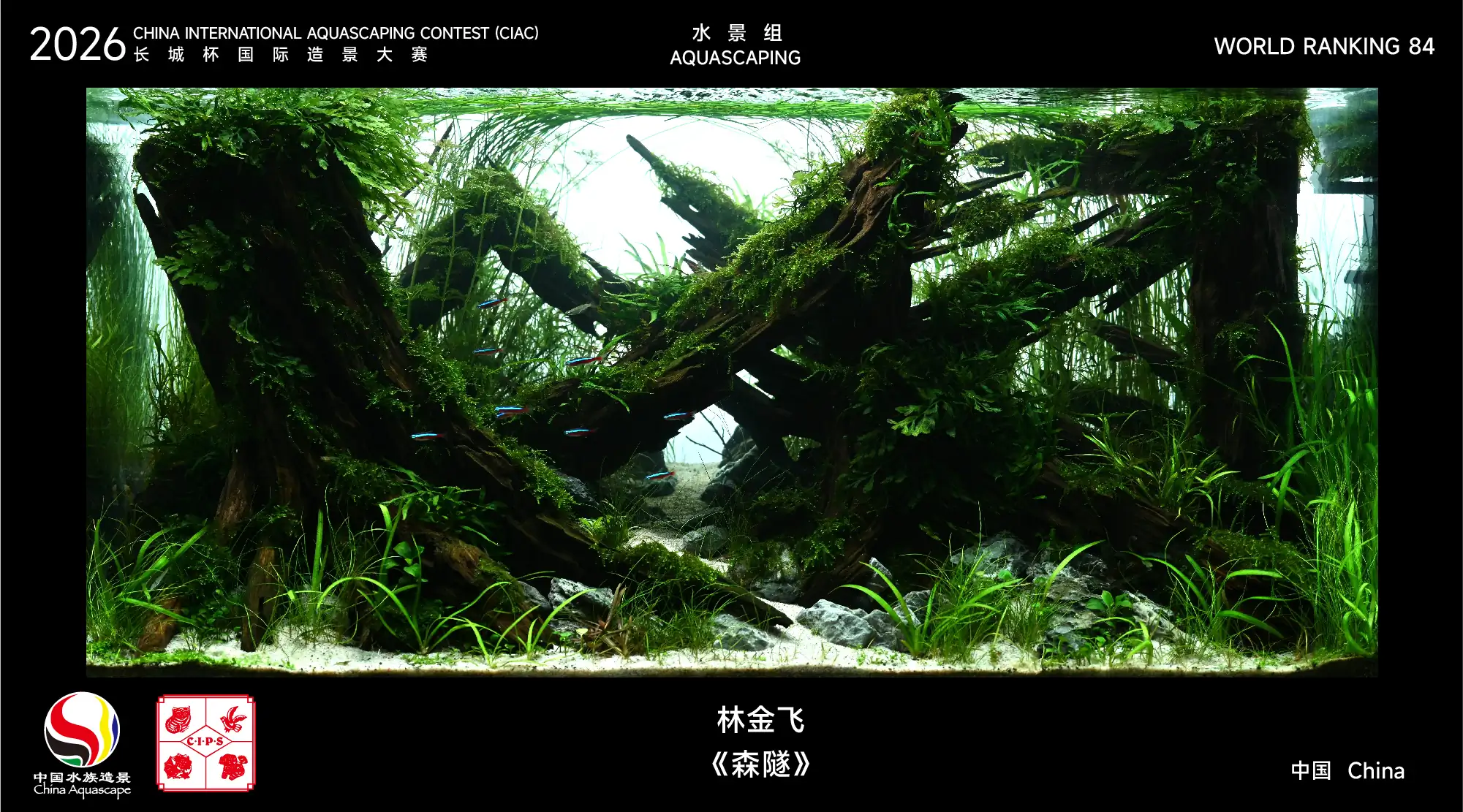
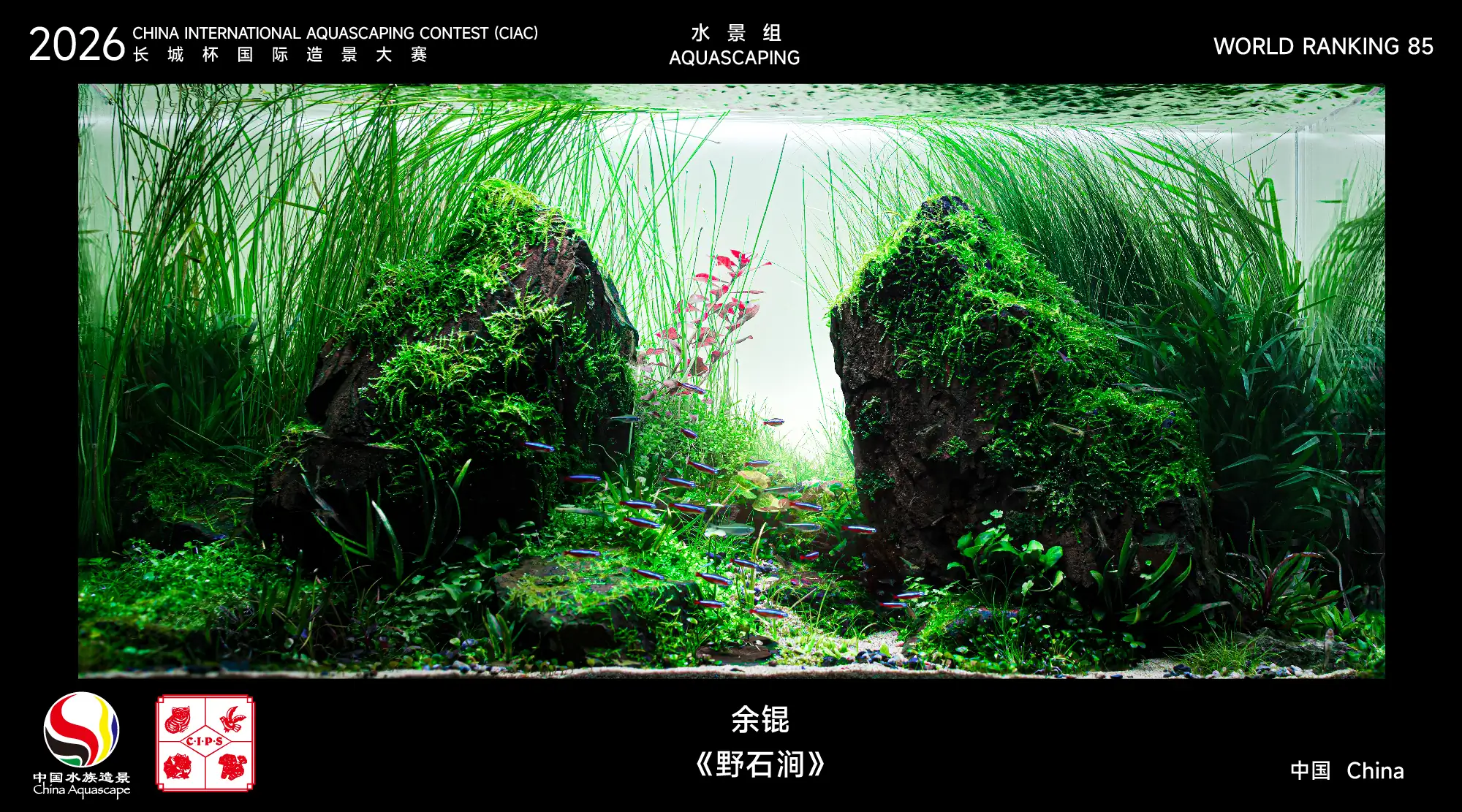
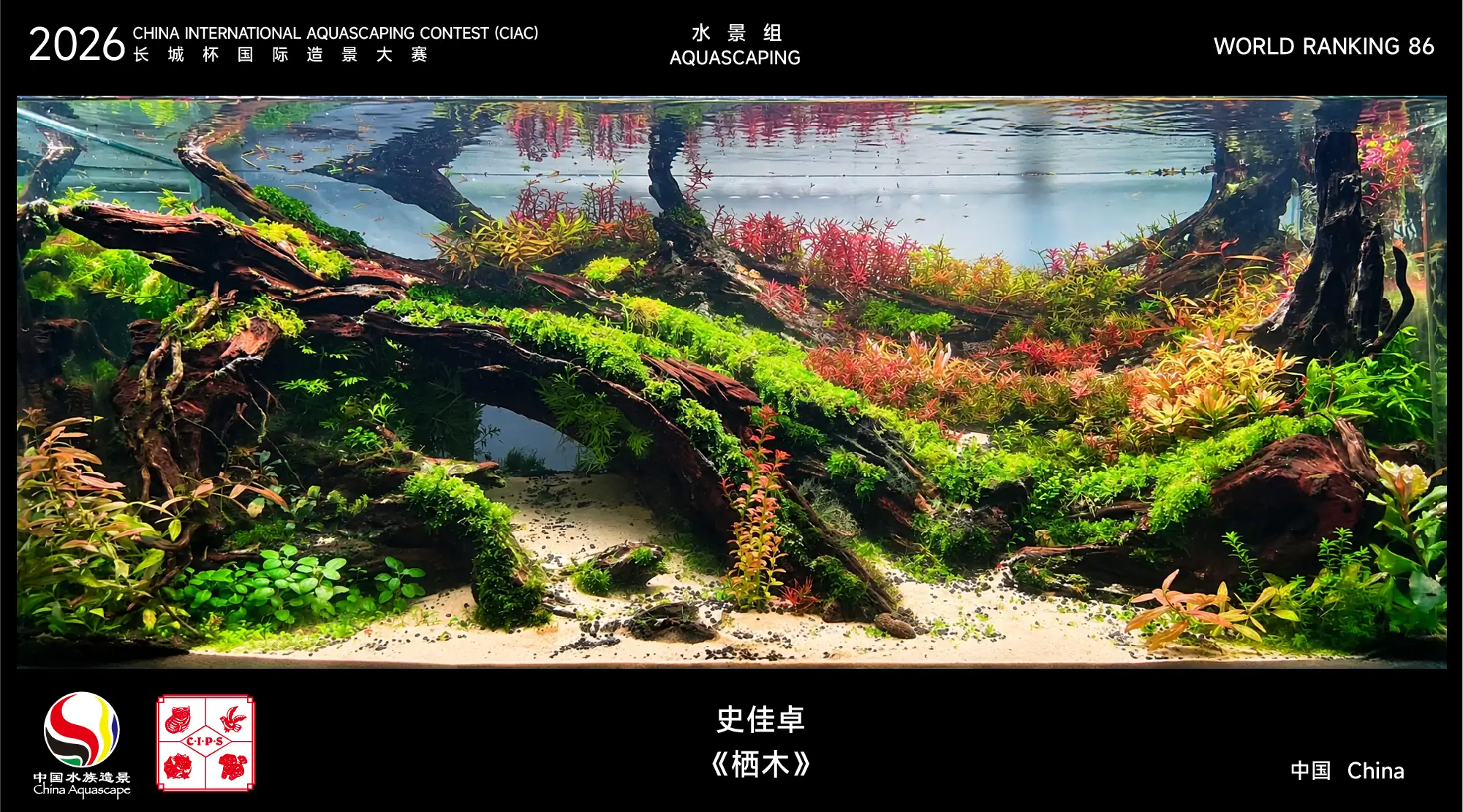
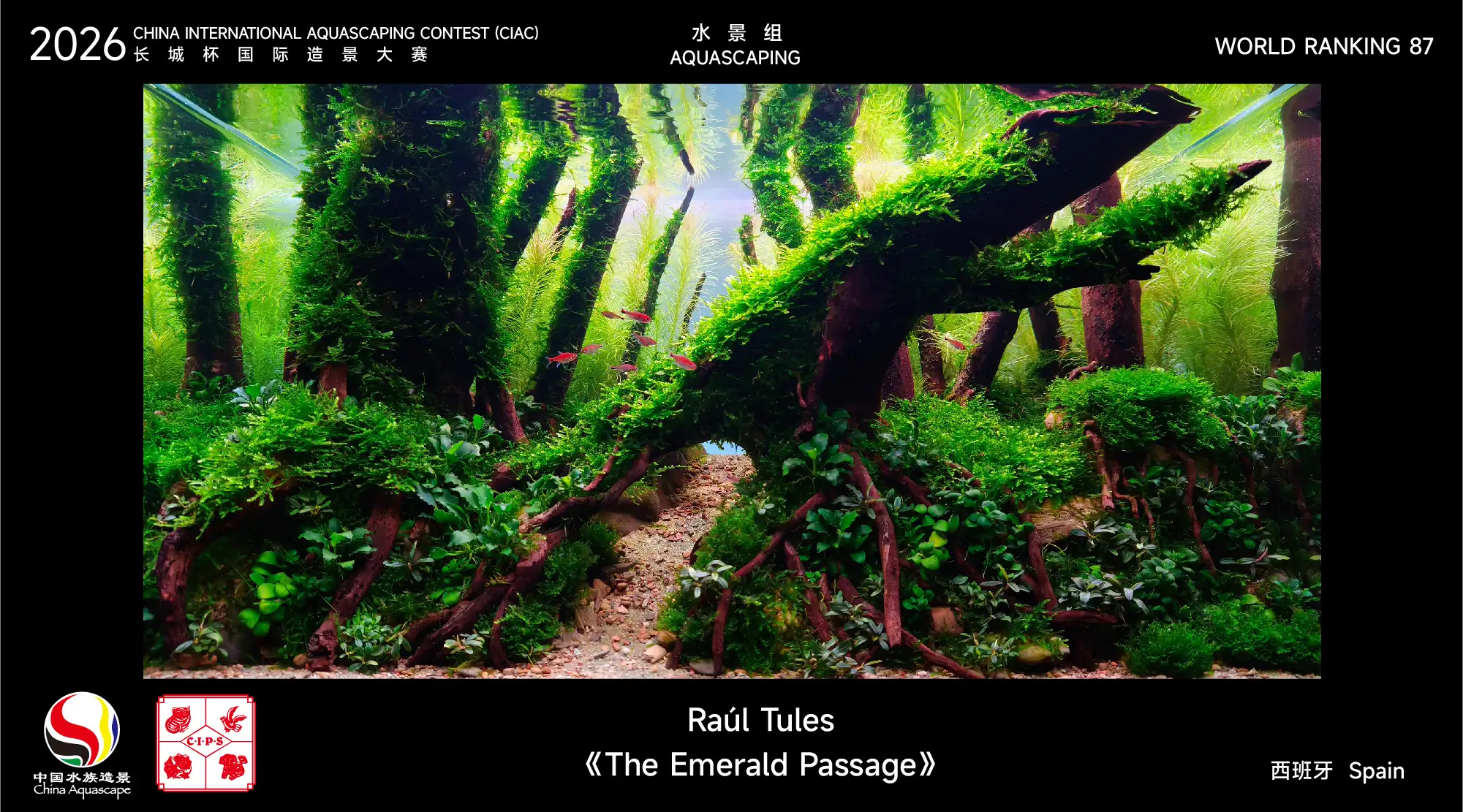
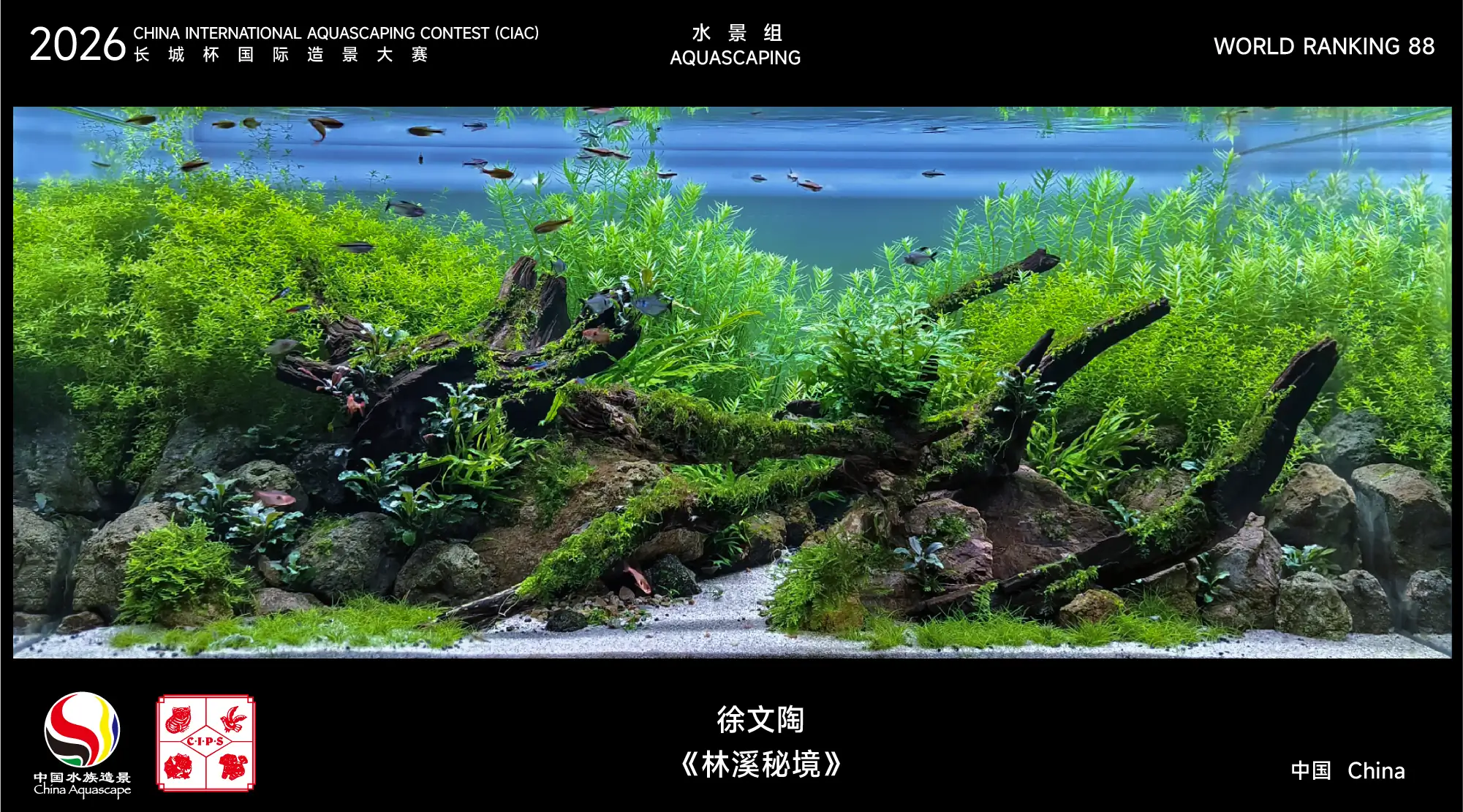
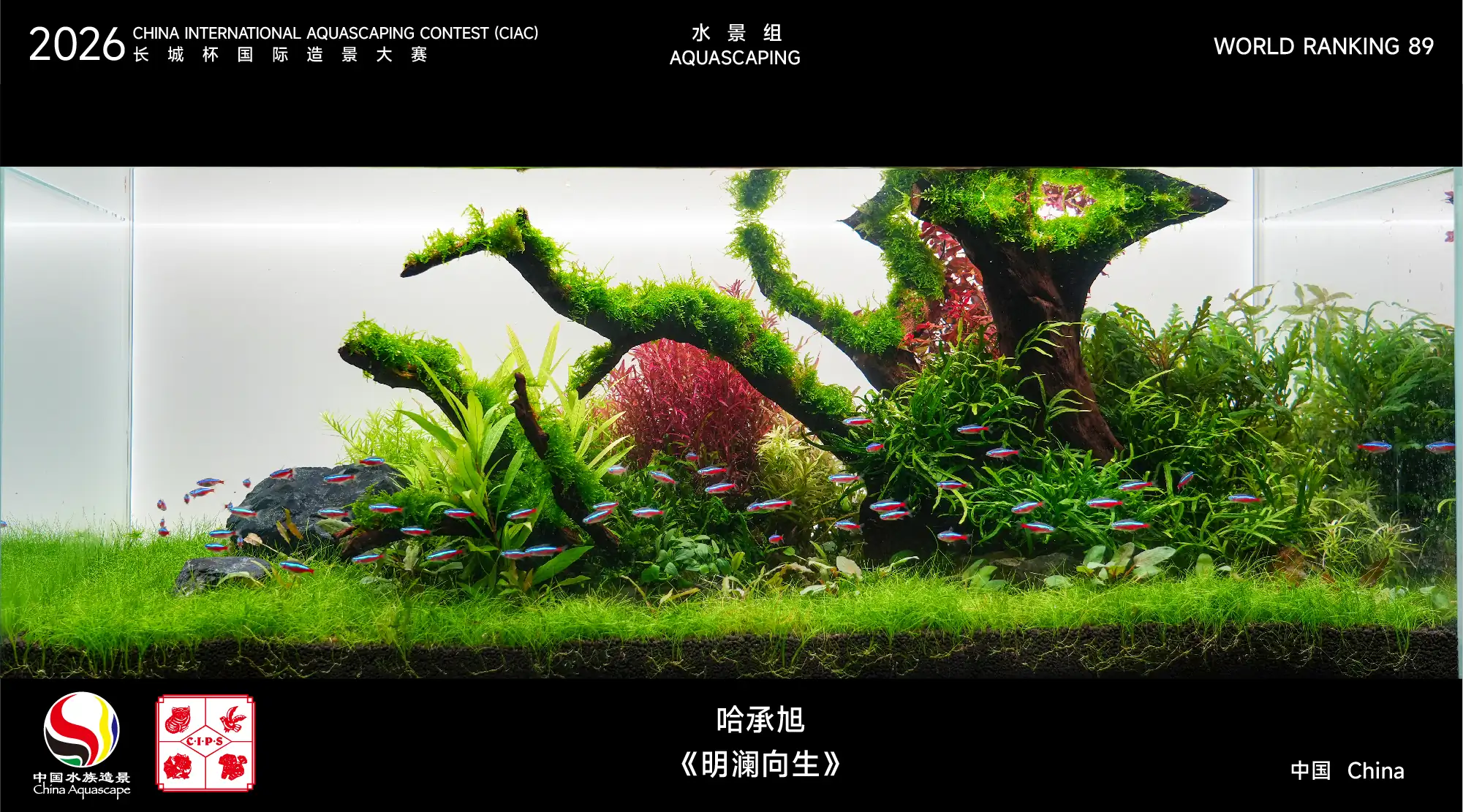
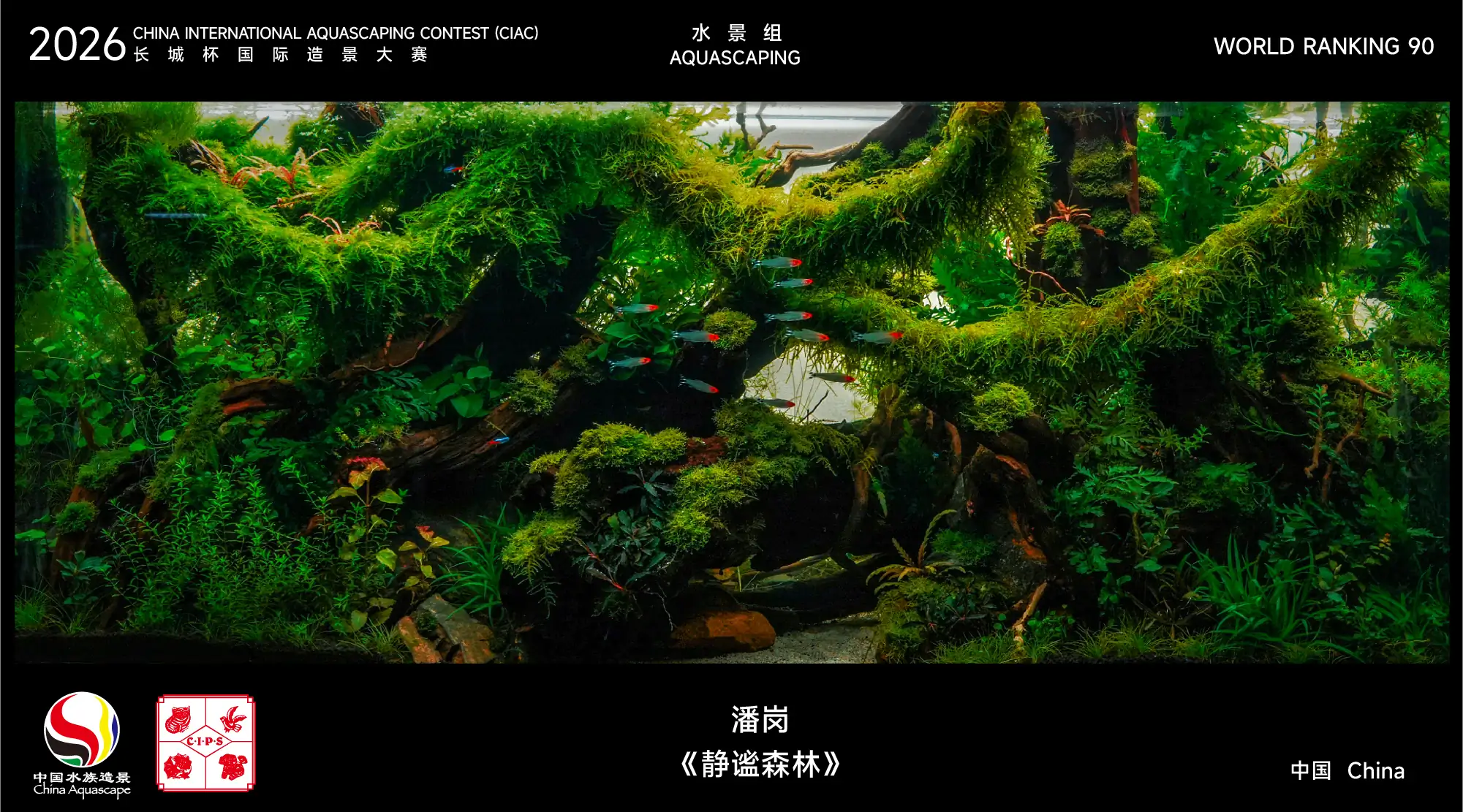
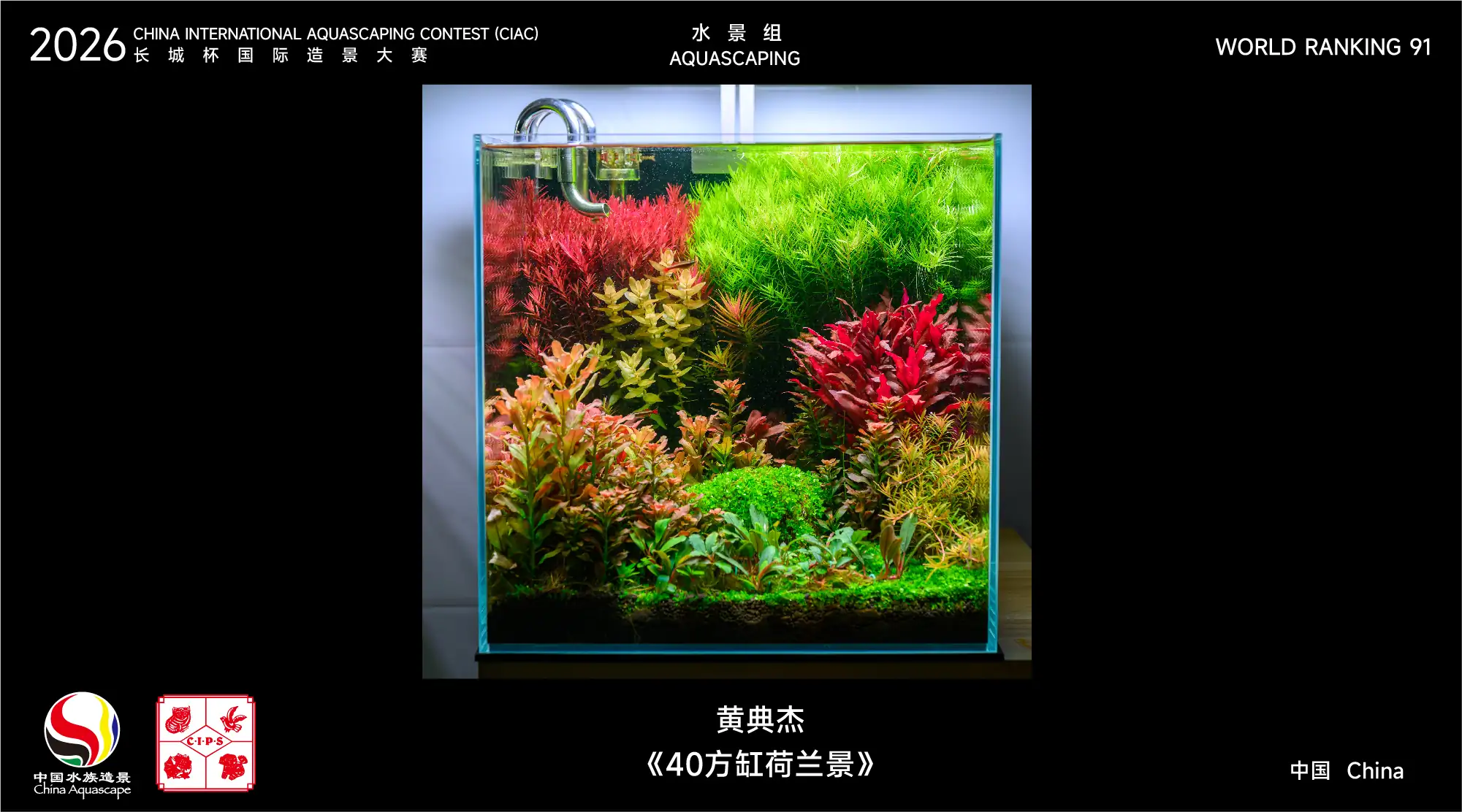
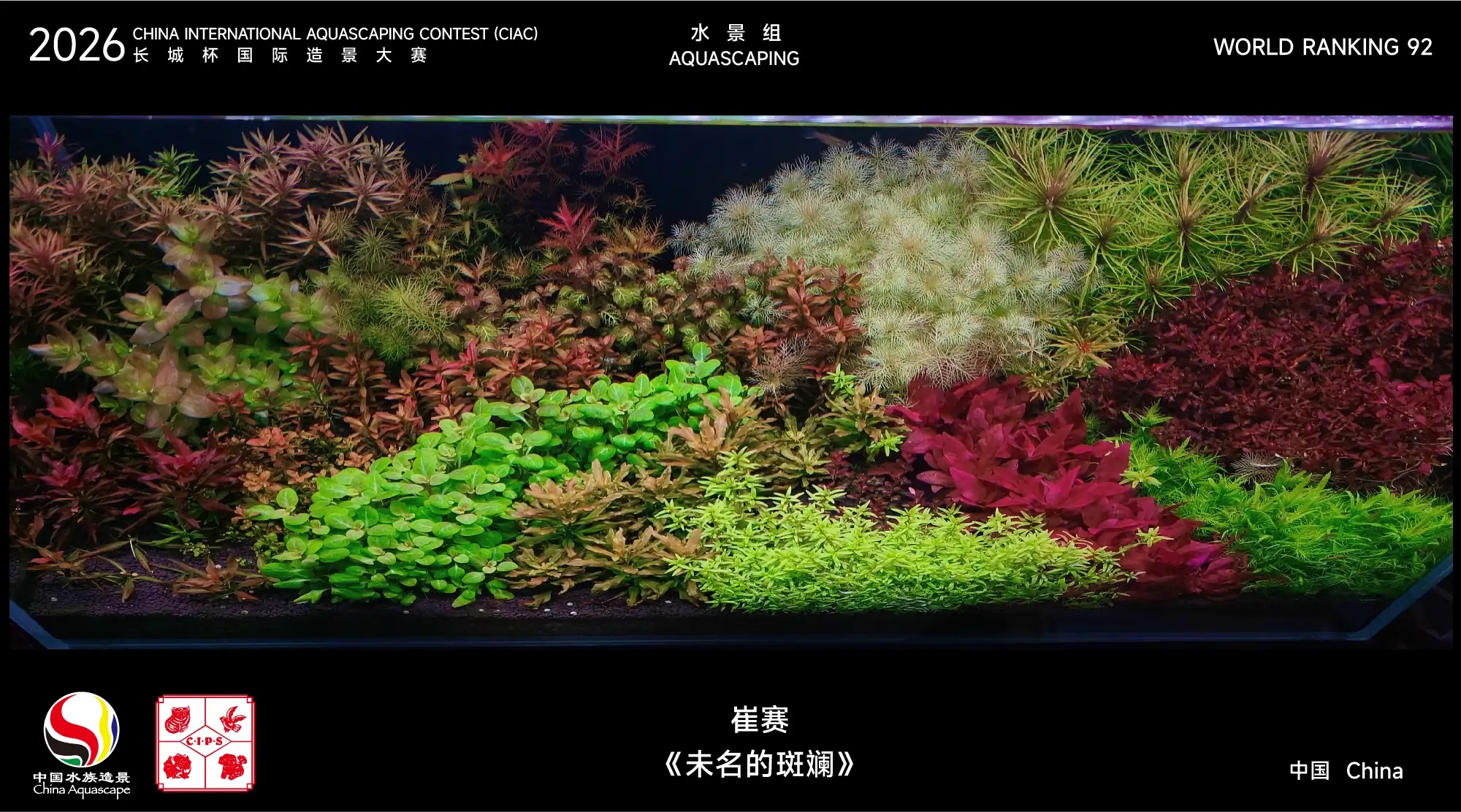
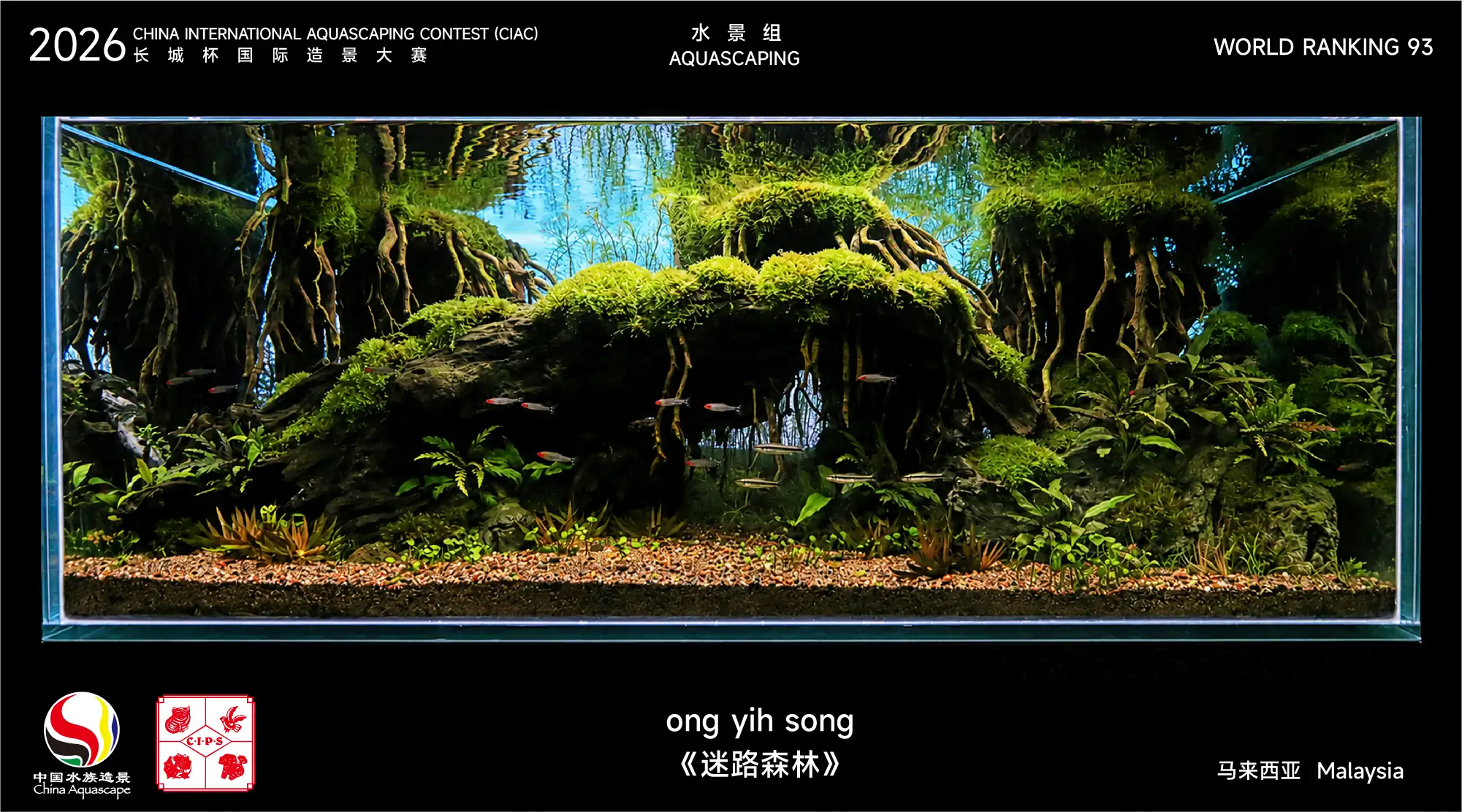
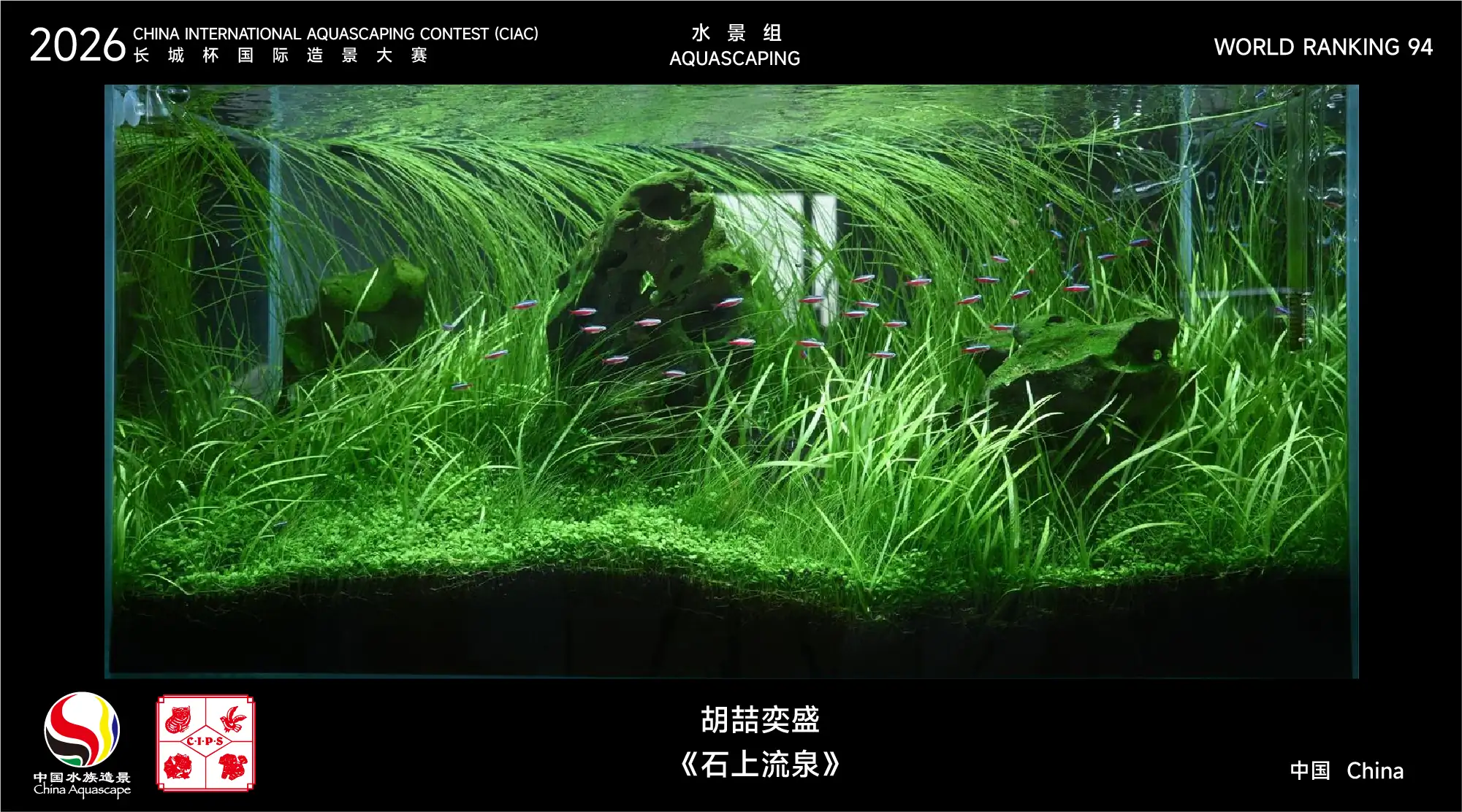
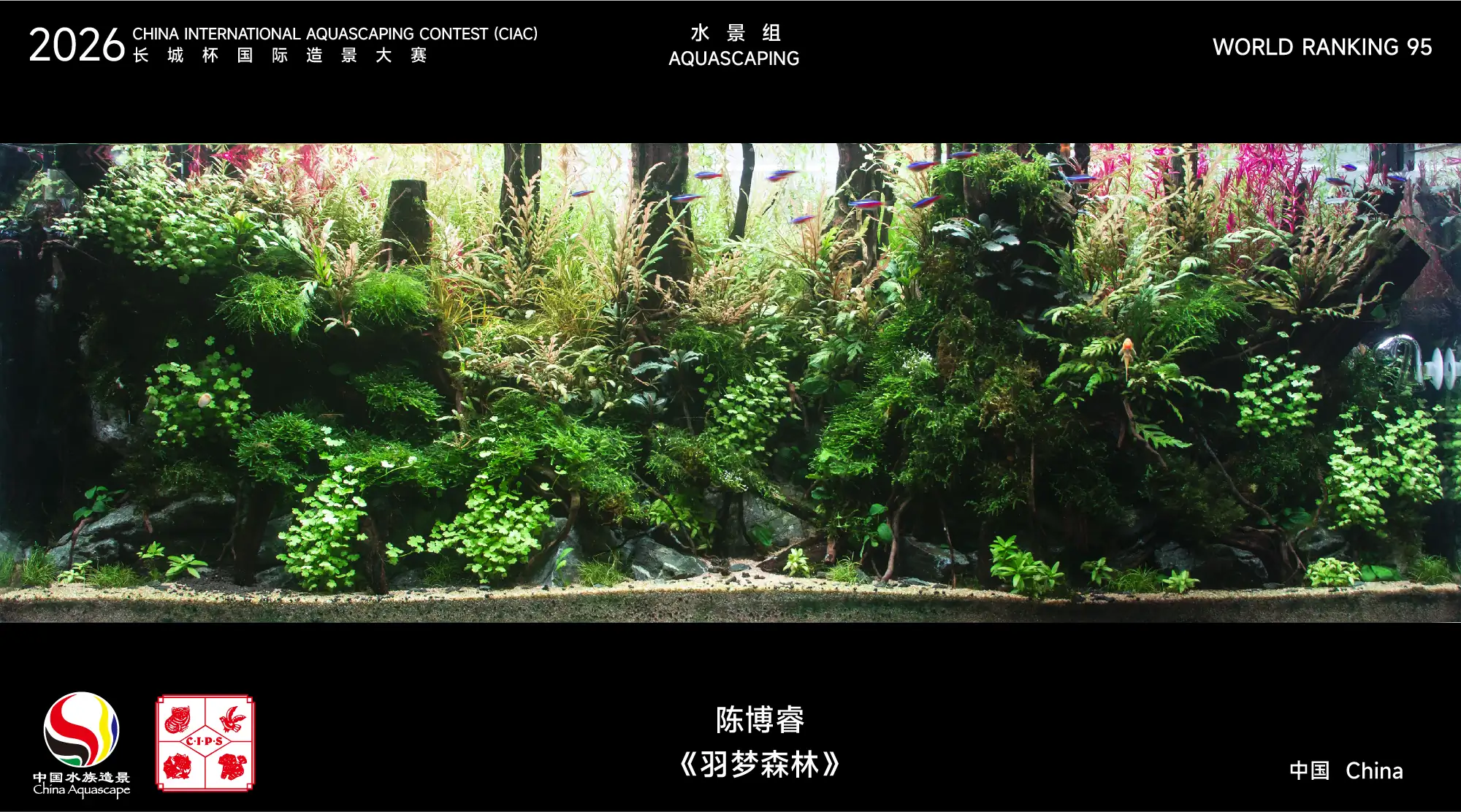
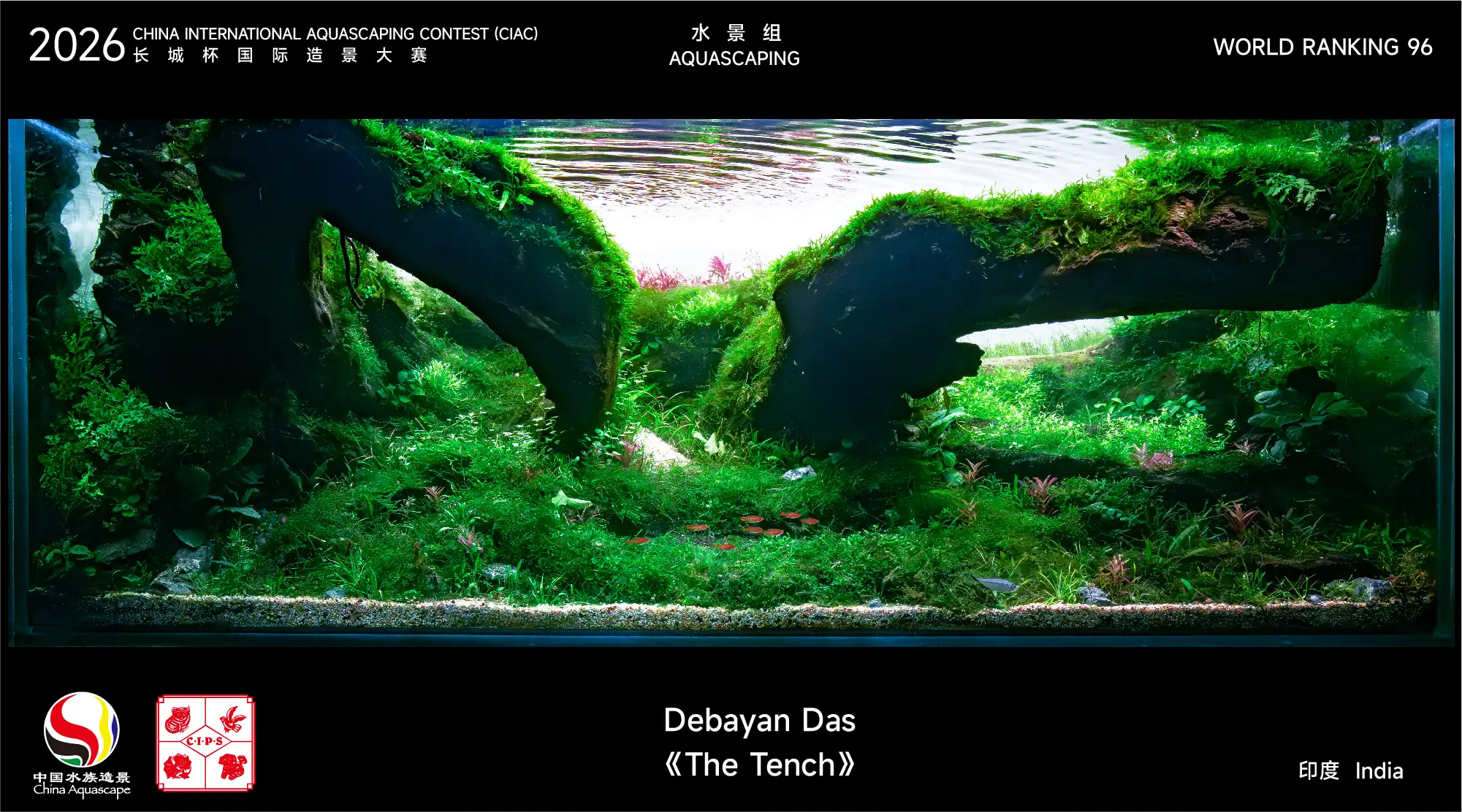
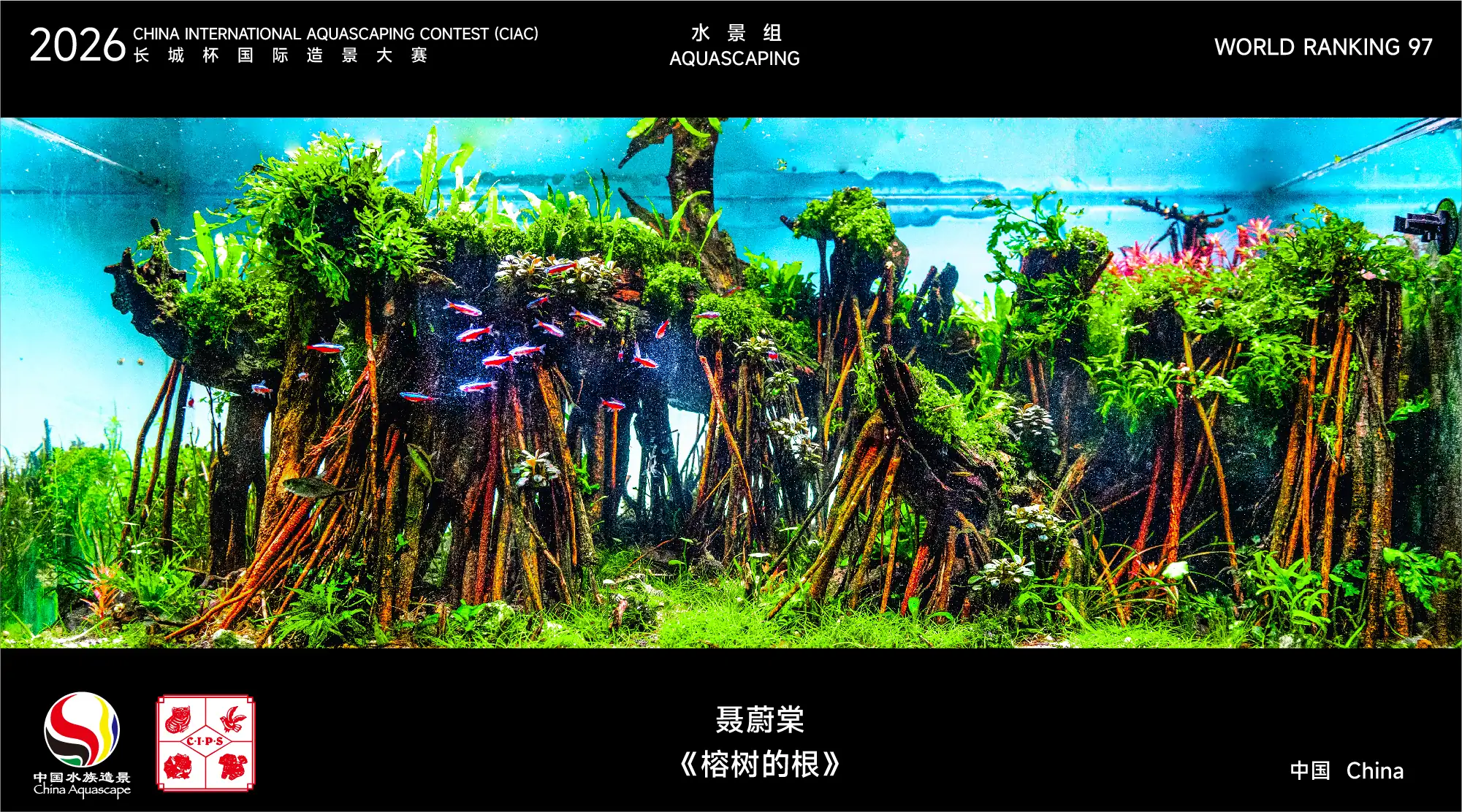
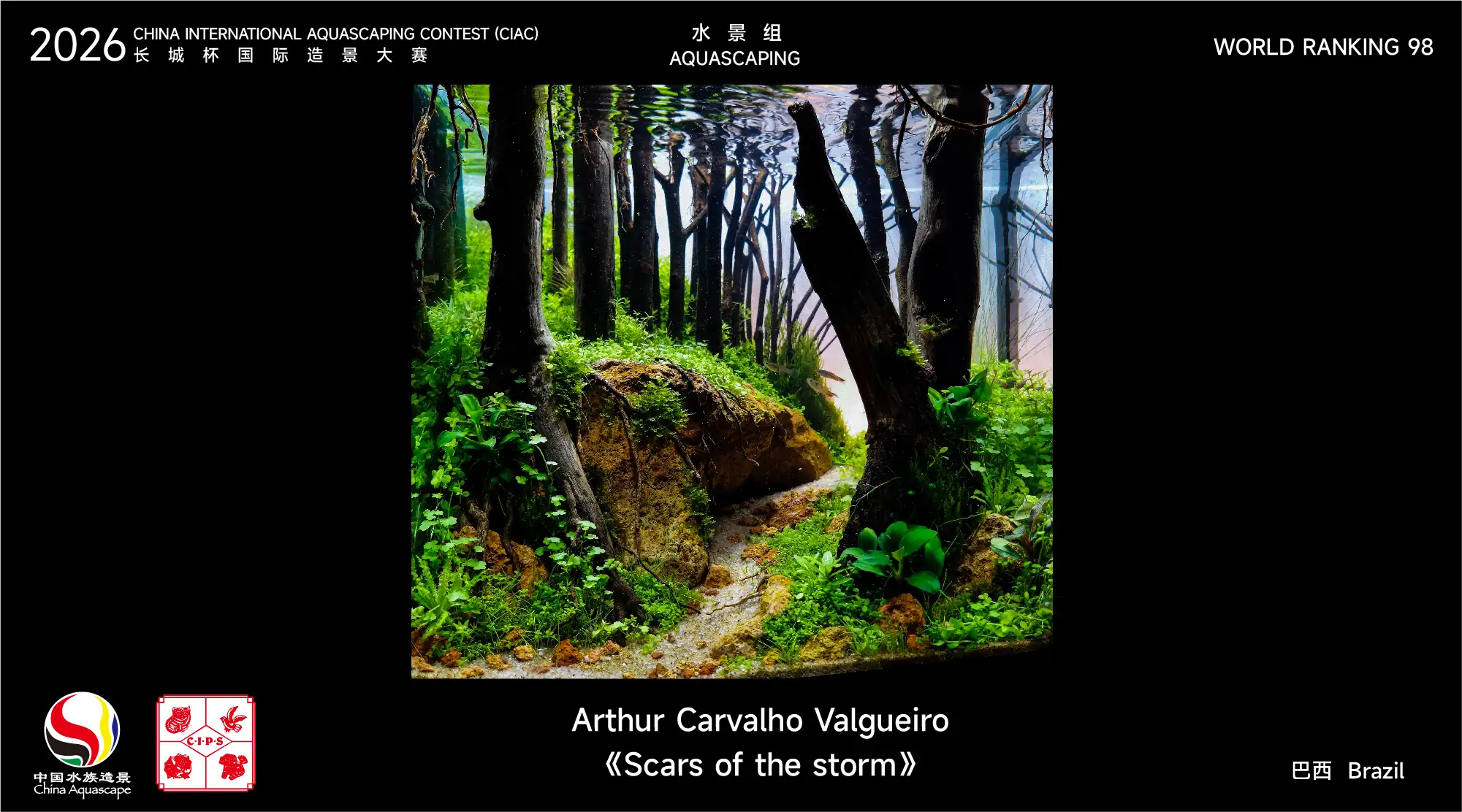
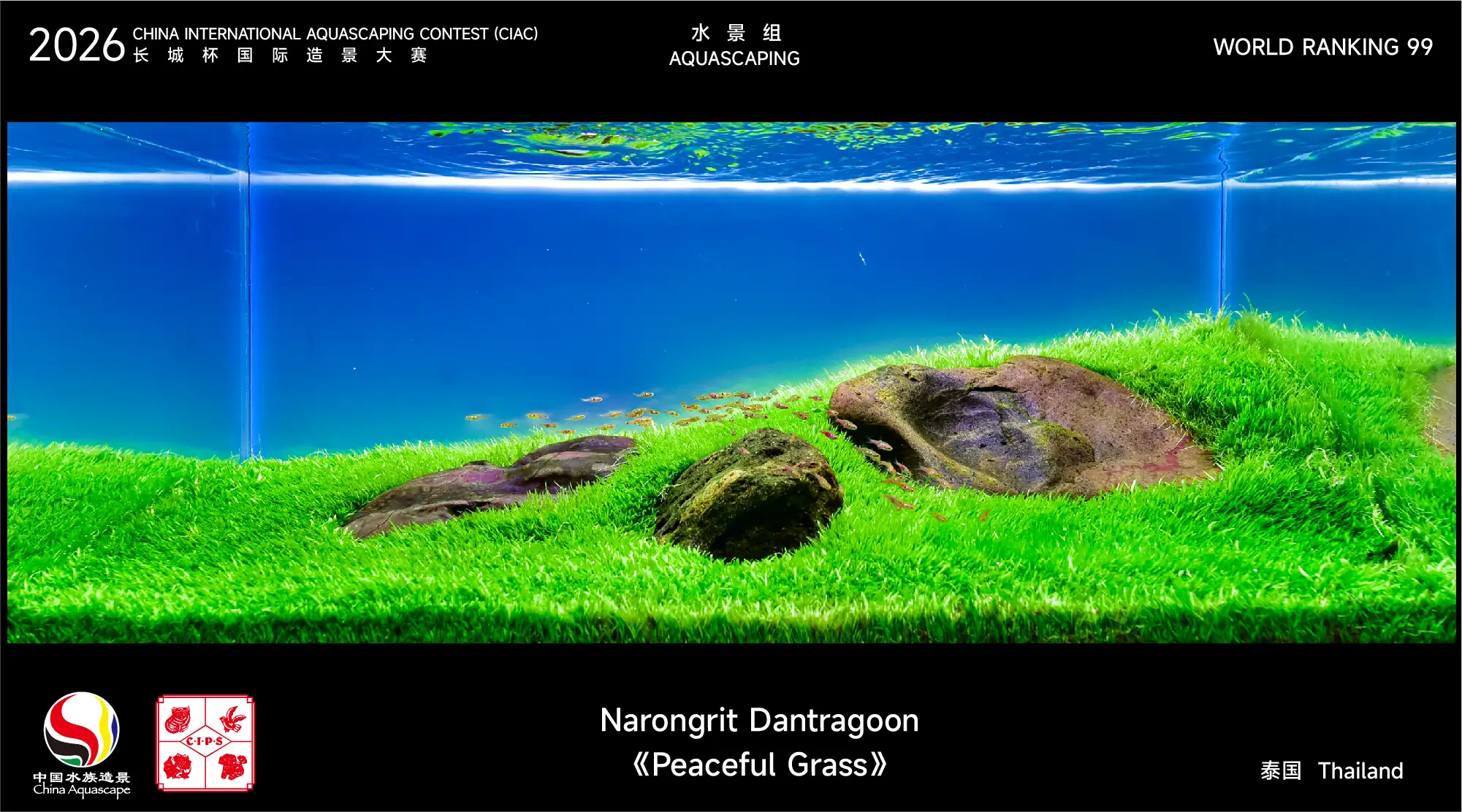
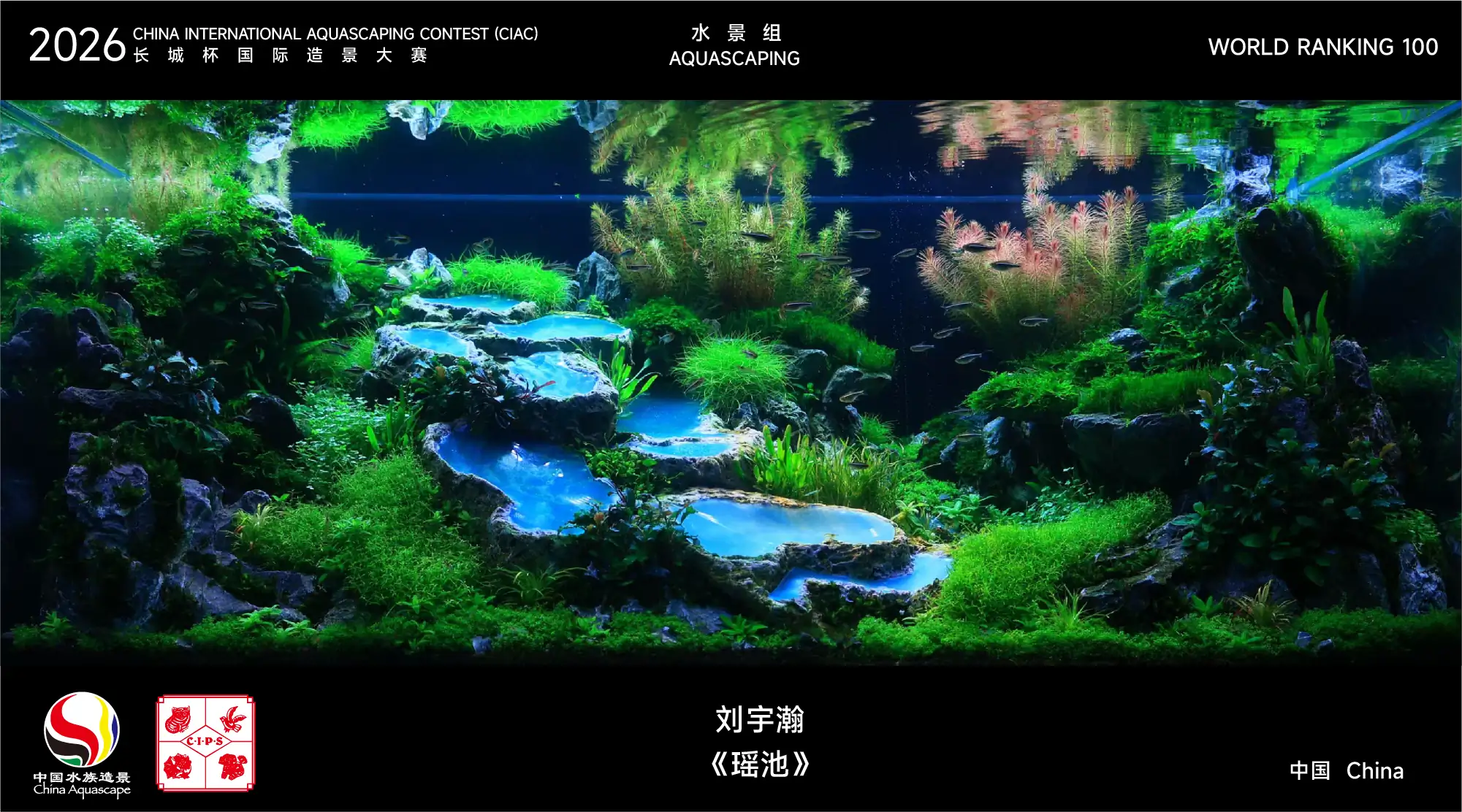
A wider field to explore
The additional positions include aquascapers from Asia, Europe, the Americas, Africa and Oceania. The ranking gives those names a place in the season's record even where photographs are not yet available in our gallery.
A name and a position, however, are not enough to analyse an aquarium. We will keep visual commentary tied to photographs we can actually inspect, and distinguish AquaLibs' observations from any comments released by the judges.
Certificate information for contestants
In the same email, the organising committee asks contestants ranked 14–30 to confirm arrangements for collecting or receiving their certificates. The options described include collection in person, collection by a representative, mailing and an electronic certificate where mailing is inconvenient. The requested reply deadline is 16 October 2026. Affected contestants should check their own notification for instructions.
Continue exploring on AquaLibs
Visit our Top 30 results report for the leading works, and explore AquaRank to follow aquascapers' results across competition seasons. The official update extends the record; the photographs and individual profiles help put those positions into context.

Leave your comments