AquaLibs presents AquaRank Discover the world’s leading aquascapers

Explore transparent rankings built from published results across the world’s leading aquascaping contests.

Betta splendens (24K Gold Betta Male)

Overview

The 24K Gold Betta Male is a highly sought-after ornamental fish, celebrated for its brilliant, iridescent gold scales and often dramatic fin structures. A product of generations of selective breeding from the wild Betta splendens, this particular morph exhibits a captivating metallic sheen that truly lives up to its '24K Gold' moniker. While the species is known for its aggressive nature, especially between males, a single 24K Gold Betta Male makes an exquisite centerpiece in a well-maintained aquarium, showcasing its intelligence and vibrant personality.

Image of 24K Gold Betta Male

Distribution and Habitat

The wild ancestors of the 24K Gold Betta Male, Betta splendens, originate from the shallow, slow-moving, and often oxygen-poor waters of Southeast Asia, specifically Thailand, Cambodia, Laos, and Vietnam. They inhabit rice paddies, canals, and floodplains, where they are accustomed to fluctuating water conditions and dense vegetation. Their labyrinth organ allows them to breathe atmospheric air, an adaptation crucial for survival in these environments.

Description of 24K Gold Betta Male

The 24K Gold Betta Male is characterized by its robust body and, in males, often elaborate finnage. This specific variety is prized for its unique coloration.

Body shape:

Bettas possess a torpedo-shaped body, slightly compressed laterally. Males tend to be more robust and muscular than females, especially when displaying. The head is relatively small with an upward-pointing mouth, adapted for surface feeding.

Color:

As the name suggests, the defining feature of this Betta is its stunning gold coloration. This can range from a pale, almost platinum gold to a deep, rich, metallic yellow-gold, often with iridescent qualities that shimmer under light. The scales typically exhibit a strong metallic sheen, contributing to the '24K' appearance.

Barbels:

Absent.

Snout:

The snout is relatively short and pointed, with an upturned mouth, indicative of its surface-feeding habits.

Eyes:

Their eyes are prominent and dark, providing good vision, which they use to spot prey and potential rivals.

Fins:

Male 24K Gold Bettas typically exhibit long, flowing fins, which can come in various forms such as Halfmoon, Super Delta, Veiltail, or Plakat (short-finned). The fins are usually a continuation of the body's gold color, sometimes with translucent or lighter edges, or a subtle iridescence. The dorsal, caudal, and anal fins are particularly large and contribute significantly to their majestic appearance.

Image of 24K Gold Betta Male

The Tail:

The tail (caudal fin) is often the most striking feature of a male Betta. In the 24K Gold variety, it is typically broad and fan-like, displaying the same brilliant gold hue as the body. Depending on the fin type, it can spread to 180 degrees (Halfmoon) or even beyond, creating a spectacular display.

Temper

Male 24K Gold Bettas are highly aggressive, especially towards other male Bettas, which they will fight to the death. They can also be aggressive towards fish with similar long, flowing fins or bright colors, mistaking them for rivals. However, a single male Betta can be peaceful with appropriately chosen tank mates that are not fin-nippers, too large, or too boisterous.

Sociality

These fish are best kept singly in a dedicated aquarium. While some aquarists attempt 'Betta sororities' with multiple females, this is not recommended for males. A male 24K Gold Betta will thrive as the sole Betta in its tank, where it can establish its territory and display its full splendor without stress from rivals.

Activity

Bettas are generally active and curious fish. They spend their time exploring their environment, resting among plants, and occasionally coming to the surface for air. They are known for their interactive behavior with their owners, often recognizing them and responding to their presence.

Keeping and Caring for 24K Gold Betta Male

Proper care is essential to ensure the longevity and vibrant health of your 24K Gold Betta Male.

Tank size:

A minimum of 5 gallons (approximately 19 liters) is recommended for a single male Betta. Larger tanks (10 gallons or more) are even better, providing more stable water parameters and room for exploration.

Water Parameters:

Temperature

Maintain a stable temperature between 24-28°C (75-82°F). A reliable heater is crucial.

pH

A slightly acidic to neutral pH range of 6.0-7.5 is ideal.

Hardness

Soft to moderately hard water, 5-15 dGH, is preferred.

Ammonia, Nitrite, Nitrate

Ammonia and Nitrite should always be 0 ppm. Nitrates should be kept below 20 ppm through regular partial water changes (25-50% weekly).

Lighting

Moderate lighting is suitable. Bettas appreciate shaded areas provided by plants or decor.

Water flow

Bettas prefer very gentle water flow. Strong currents can stress them and make it difficult for them to swim, especially those with long fins. Sponge filters or filters with adjustable flow are excellent choices.

Decorations and Plants

Provide plenty of hiding spots and resting places using live or silk plants (avoid plastic plants with sharp edges that can tear fins), caves, and smooth driftwood. Ensure all decor is smooth and free of sharp edges. Floating plants can also help diffuse light and provide cover.

Image of 24K Gold Betta Male

Diet

24K Gold Betta Males are primarily carnivorous. A varied diet is crucial for their health and vibrant coloration.

Offer high-quality Betta pellets or flakes as a staple. Supplement their diet with frozen or live foods such as bloodworms, brine shrimp, daphnia, and mosquito larvae. These provide essential nutrients and mimic their natural diet.

Some Feeding Tips

  • Feed small amounts 1-2 times a day, only what they can consume in 2-3 minutes.
  • Avoid overfeeding, as this can lead to digestive issues and poor water quality.
  • Fasting one day a week can aid digestion.

Breeding

Breeding 24K Gold Bettas can be a rewarding but challenging endeavor. Males are bubble nest builders. The male constructs a nest of bubbles at the water surface, often under a leaf or floating plant. He then entices a receptive female to spawn beneath it. After the eggs are laid and fertilized, the male carefully collects them and places them in the bubble nest. He then guards the nest and cares for the eggs and fry, while the female should be removed to prevent aggression. Fry are tiny and require specialized feeding with infusoria or microscopic foods initially.

Image of 24K Gold Betta Male

Conclusion

The 24K Gold Betta Male is a truly magnificent fish that brings a touch of living gold to any aquarium. With its striking coloration, elegant fins, and engaging personality, it's a captivating addition for both novice and experienced aquarists. Providing a solitary, well-maintained environment with appropriate water parameters and a rich diet will ensure your golden jewel thrives and displays its full, spectacular beauty for years to come.
Fish info

  • Care level: Easy - Moderate
  • Temperament: Aggressive
  • Adult size: 6-7 cm
  • Life expectancy: 3-5 years
  • Fish type: Labyrinth Fish
  • Temperature : 24-28°C
  • pH: 6.0-7.5
  • Color Form: Gold, Platinum, Yellow
Leave your comments
Latest on Fishs
  • Blue Acara (Aequidens pulcher)

    Blue Acara (Aequidens pulcher)

    Moderate
    South American freshwater cichlid
    The supplied label identifies these fish as Blue Acara, Aequidens pulcher, a South American freshwater cichlid often placed in the genus Andinoacara in current aquarium literature. The photograph is consistent with a blue acara, although a definitive identification cannot be confirmed from one image alone. This pair requires a spacious aquarium, stable water quality, hiding places and careful observation during breeding, when territorial behavior becomes stronger.
  • Julidochromis transcriptus: Black-and-White Slender Cichlid

    Julidochromis transcriptus: Black-and-White Slender Cichlid

    Moderate
    Lake Tanganyika rock-dwelling cichlid
    Julidochromis transcriptus is a small rock-dwelling cichlid from Lake Tanganyika, recognized by its compact, elongated body and irregular black-and-white pattern. It is a territorial cave dweller that is best kept as an established pair in a carefully structured aquarium. The supplied fish are identified as a DNZ pair, although sex, collection locality, and precise geographic form cannot be verified from the supplied material alone.
  • Azur Cichlid (Sciaenochromis fryeri) Care Guide

    Azur Cichlid (Sciaenochromis fryeri) Care Guide

    Moderate
    Lake Malawi haplochromine cichlid
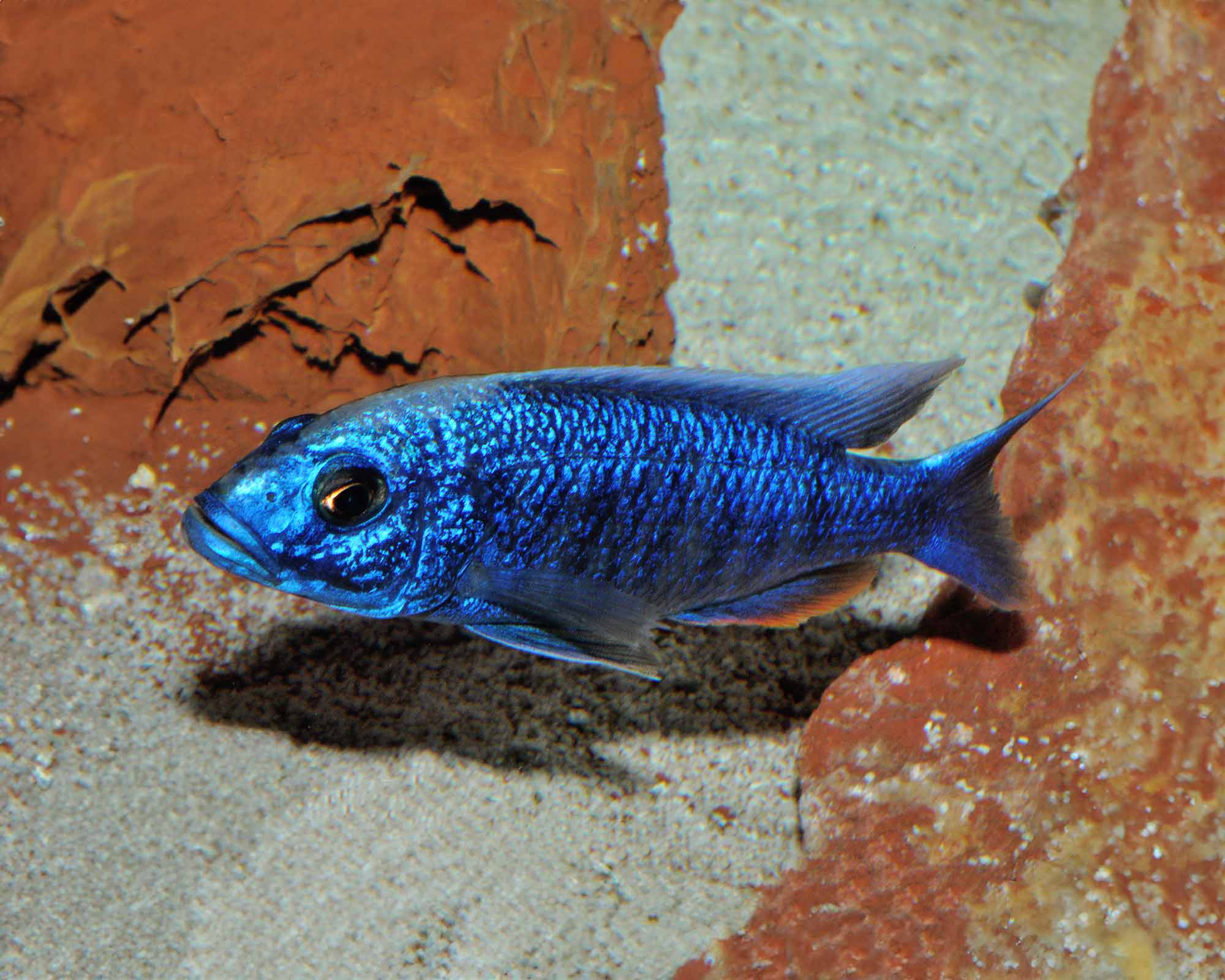
    The Azur cichlid is commonly sold as Sciaenochromis fryeri, a predatory haplochromine cichlid from Lake Malawi. Mature males develop vivid electric-blue coloration, while females and juveniles are generally less intensely colored. This fish is moderately aggressive and needs a spacious aquarium with rocky structure, alkaline, mineral-rich water, and carefully selected tank mates. The supplied source describes a DNZ pair, but sex and exact locality cannot be confirmed from the images alone. Identification confidence is therefore good but not absolute.
  • Marble Angelfish (Pterophyllum scalare)

    Marble Angelfish (Pterophyllum scalare)

    Moderate
    South American freshwater cichlid
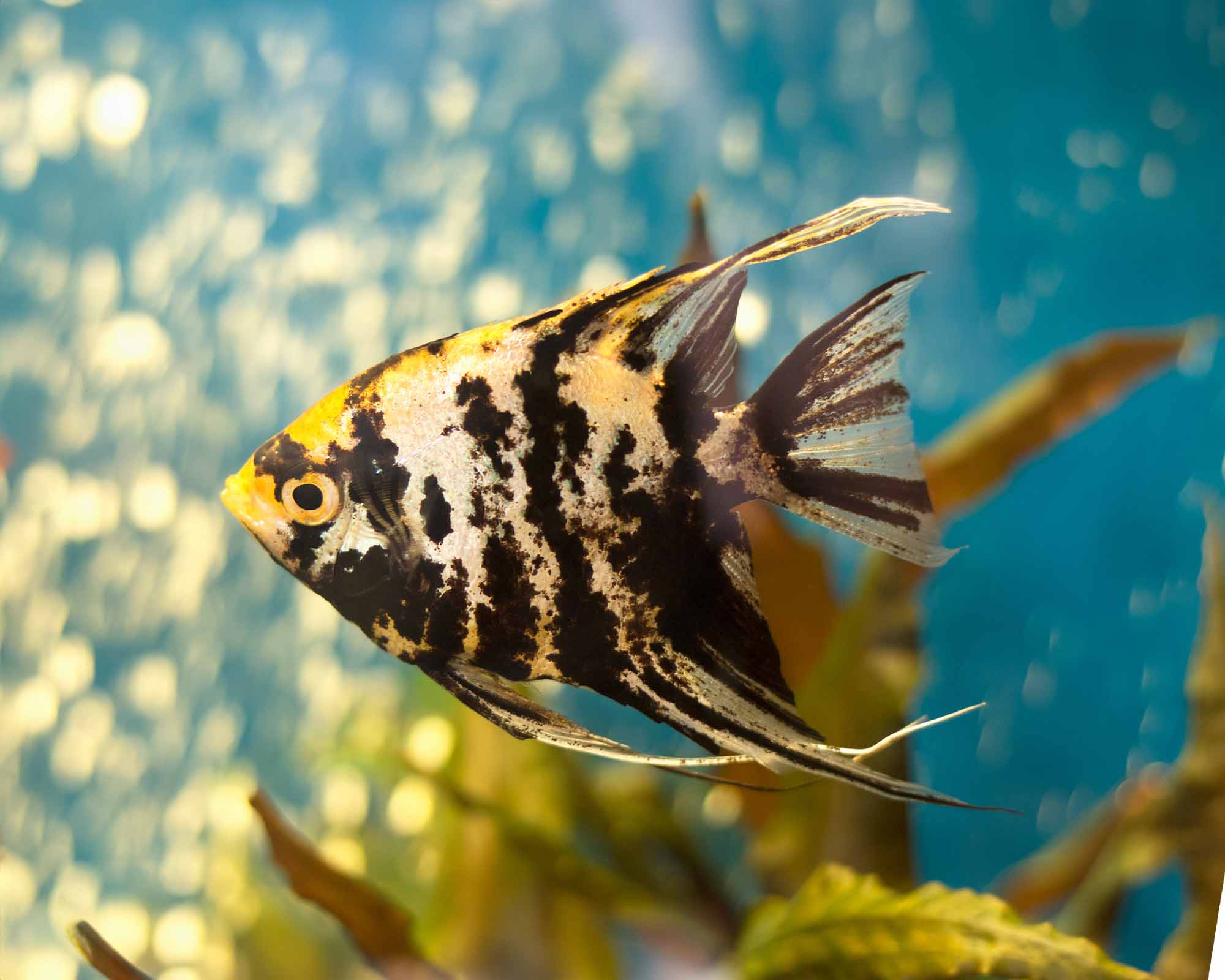
    The marble angelfish is a captive-bred color form of Pterophyllum scalare, a tall-bodied South American cichlid valued for its elegant fins and distinctive irregular black patterning. It needs a mature, spacious aquarium with excellent water quality, warm water and suitable tank mates. Although generally manageable, adults establish territories and may become assertive when pairing or spawning. The supplied source identifies two marble angelfish; exact lineage and strain details cannot be confirmed from the available information.
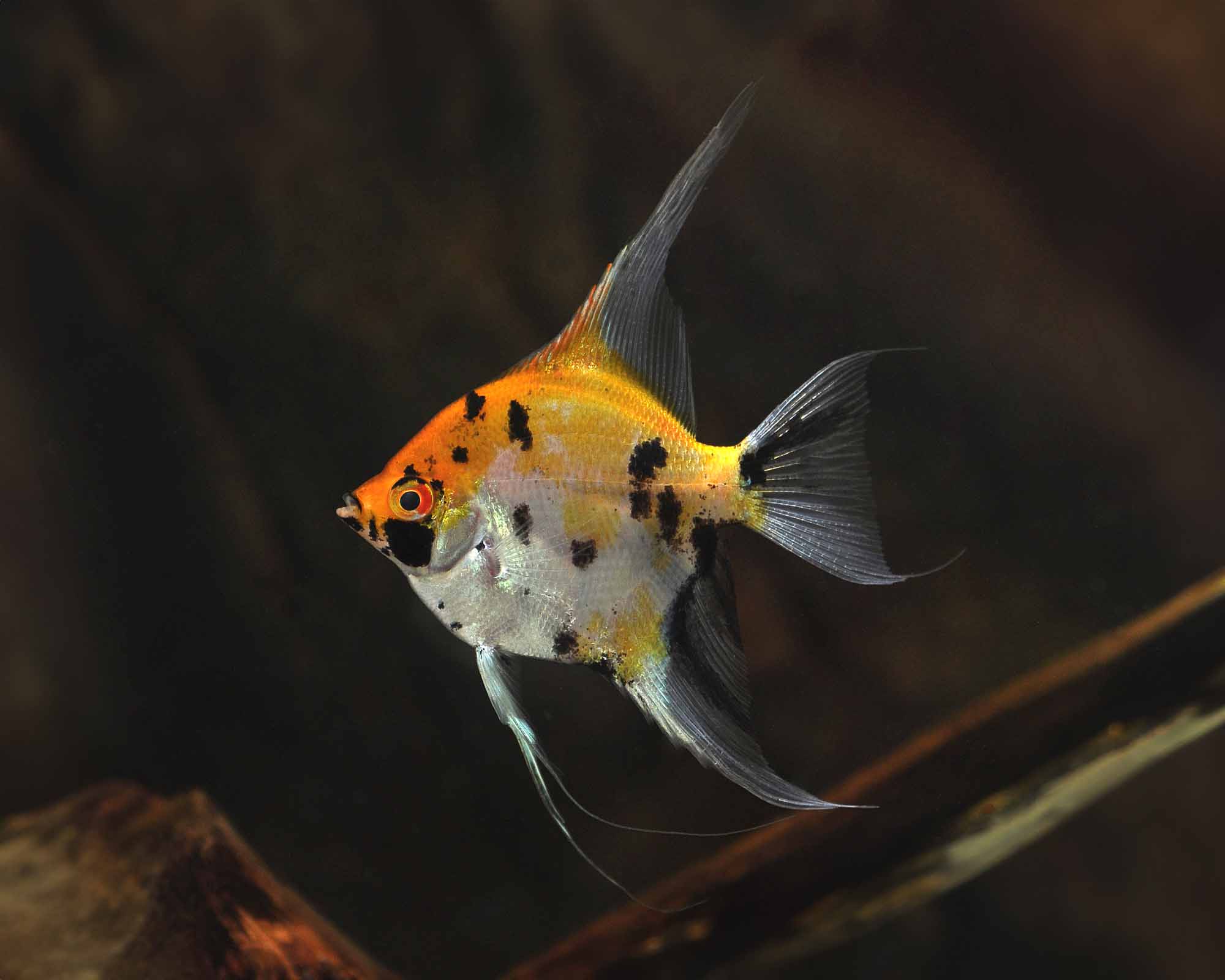
  • Gold Angelfish, Pterophyllum scalare

    Gold Angelfish, Pterophyllum scalare

    Moderate
    Freshwater South American cichlid
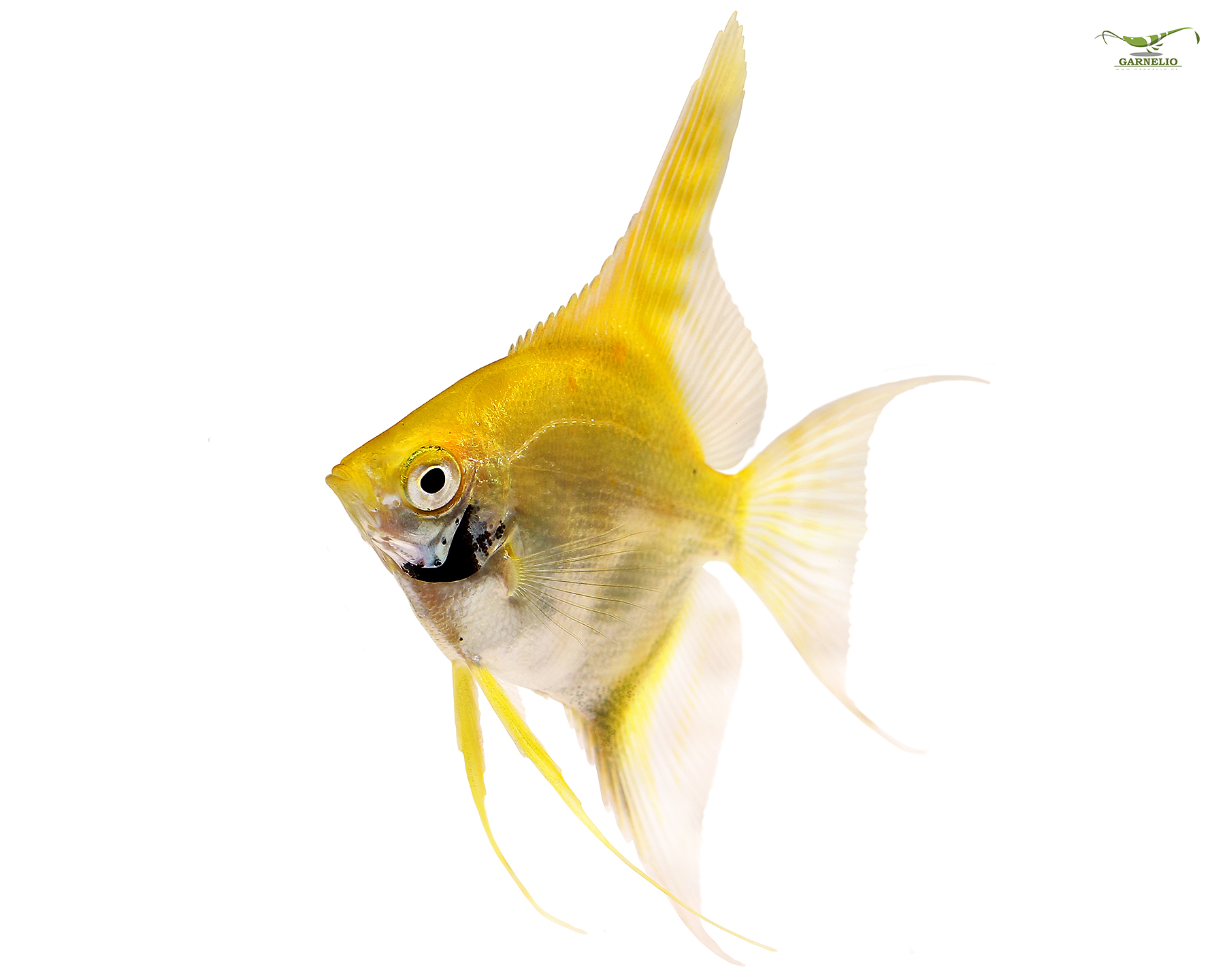
    The Gold Angelfish is an ornamental colour form of Pterophyllum scalare, a tall-bodied South American cichlid valued for its graceful movement and parental care. It needs a mature, spacious aquarium with substantial vertical clearance, stable warm water and carefully chosen tank mates. The supplied source identifies two fish as Gold Angelfish, although the accompanying images show several angelfish colour and fin forms, so the exact appearance of the supplied specimens cannot be confirmed from the images alone.
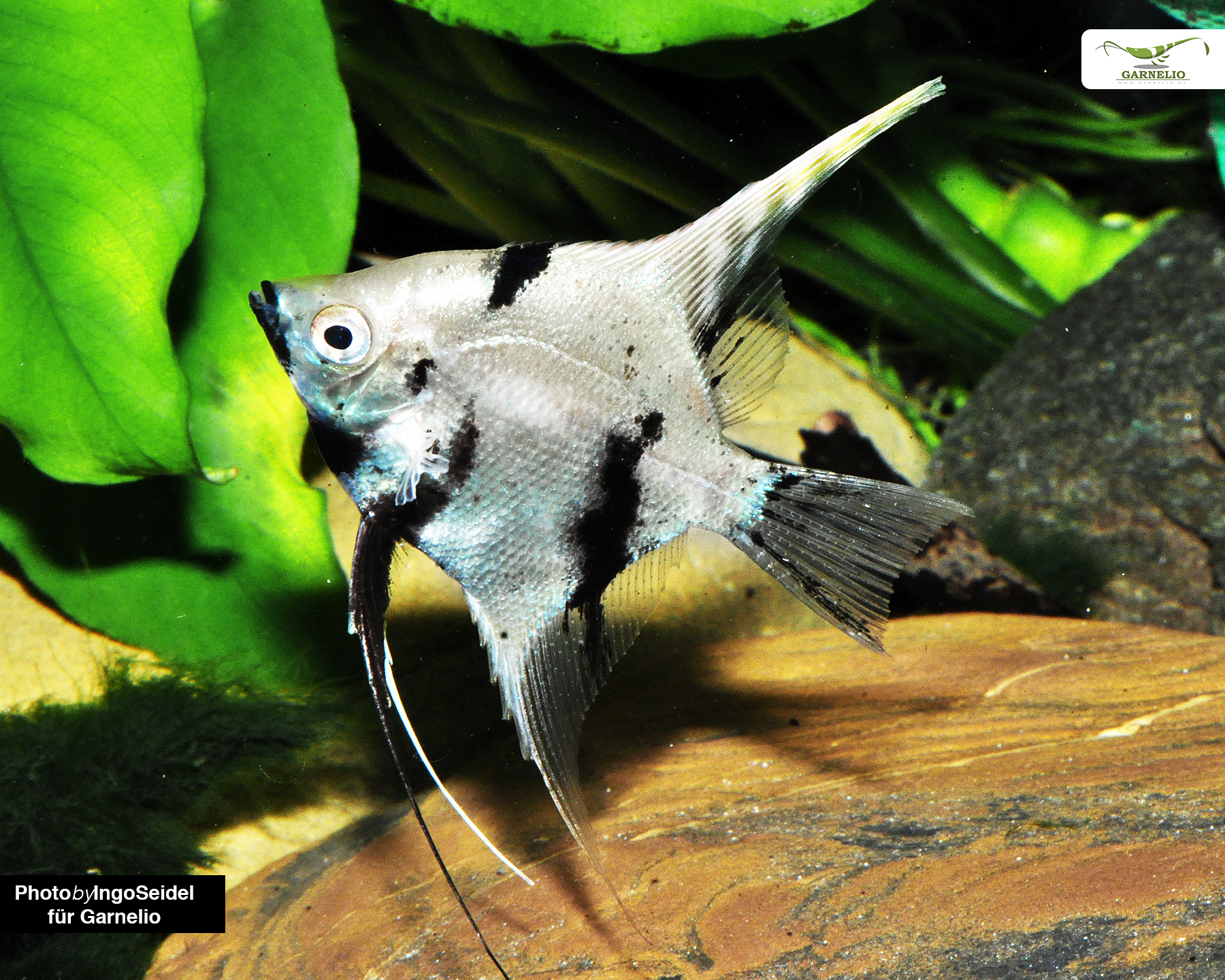
  • Zebra Angelfish (Pterophyllum scalare)

    Zebra Angelfish (Pterophyllum scalare)

    Moderate
    South American freshwater cichlid
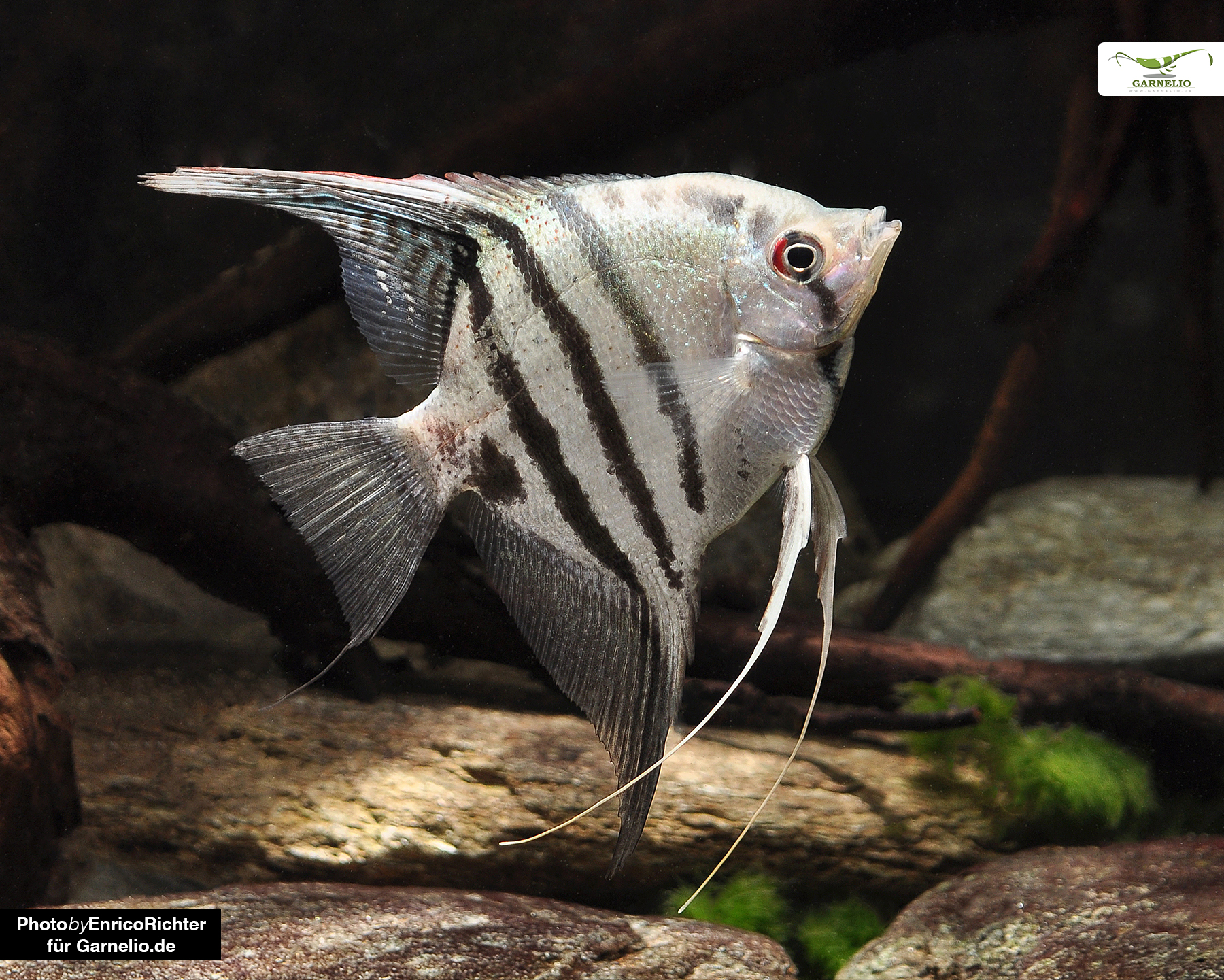
    The Zebra Angelfish is a selectively bred form of Pterophyllum scalare, recognised by a silvery body with several dark vertical bars and the tall, laterally compressed shape typical of freshwater angelfish. The supplied images also show other angelfish colour forms, so the exact appearance of the listed pair cannot be confirmed from the image set alone. This South American cichlid is generally manageable for experienced community keepers, but its size, territorial breeding behaviour and need for a tall aquarium should be planned for carefully.
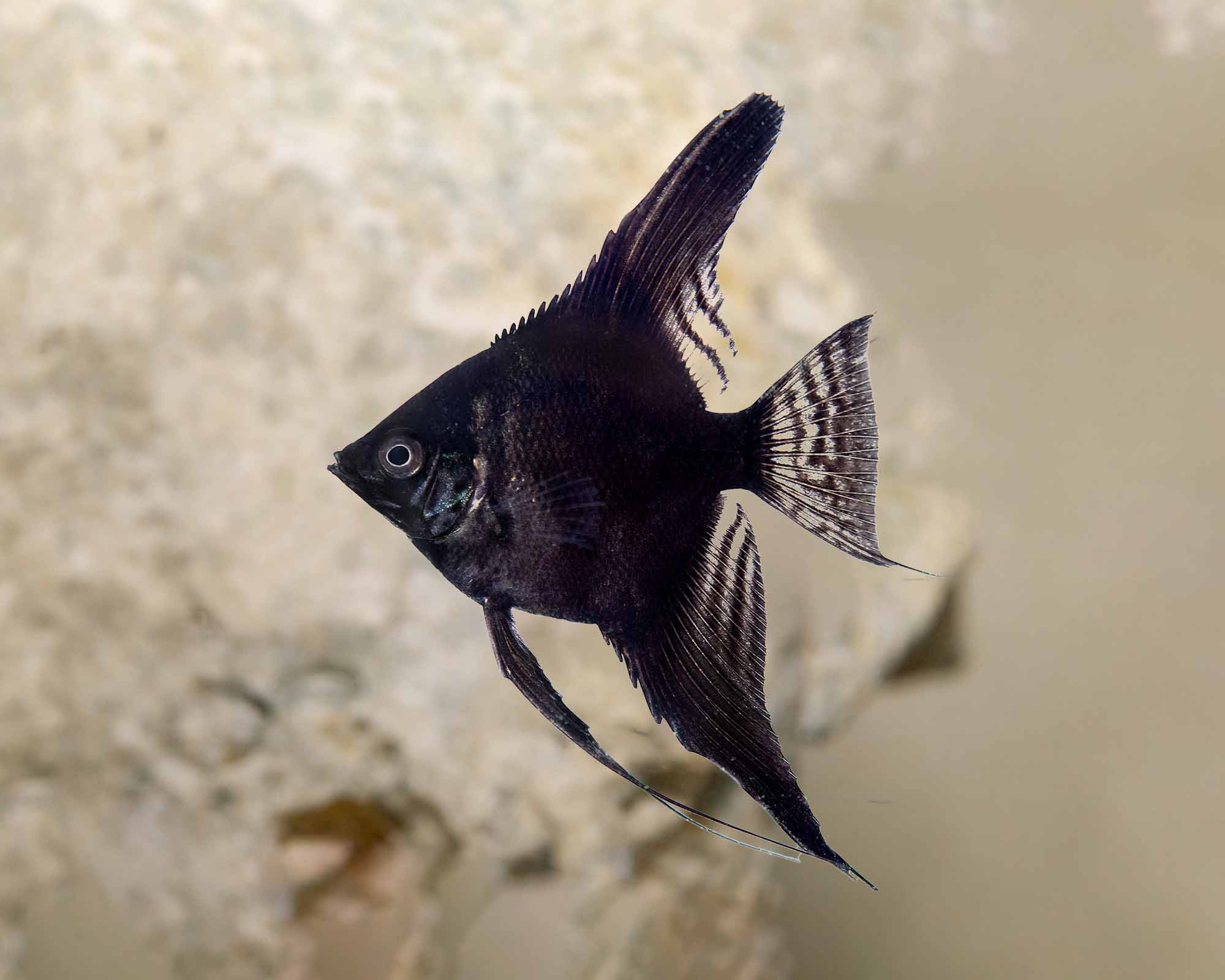
  • Black Angelfish (Pterophyllum scalare)

    Black Angelfish (Pterophyllum scalare)

    Moderate
    South American freshwater cichlid
    The supplied record identifies two black angelfish, most likely a domestic color form of Pterophyllum scalare. The photographs show several angelfish color patterns, so they should not be treated as proof that every pictured fish is black or that all belong to the same strain. Black angelfish retain the tall, laterally compressed body and extended fins typical of freshwater angelfish. They need a tall, mature aquarium, stable warm water, a varied diet, and carefully selected tank mates.
  • White Marble Angelfish (Pterophyllum scalare)

    White Marble Angelfish (Pterophyllum scalare)

    Moderate
    Freshwater cichlid
    The white marble angelfish is a selectively bred aquarium color form of Pterophyllum scalare, a tall-bodied South American cichlid valued for its elegant fins and distinctive irregular dark marbling. It is generally peaceful when young but can become territorial, especially when paired for spawning. Successful care depends on a tall aquarium, excellent water quality, suitable tank mates, and a varied carnivorous-omnivorous diet. The exact genetic strain shown cannot be confirmed from photographs alone.
  • Freshwater Angelfish Mix (Pterophyllum scalare)

    Freshwater Angelfish Mix (Pterophyllum scalare)

    Moderate
    Freshwater cichlid
    Freshwater angelfish are tall-bodied South American cichlids valued for their graceful movement and wide range of captive color forms. The supplied source identifies a mixed group as Pterophyllum scalare; the photographs show several forms, including striped, black, orange, white, silver and blue-toned fish. They are manageable for experienced beginners, but their adult height, territorial breeding behavior and tendency to eat small tank mates require thoughtful aquarium planning.
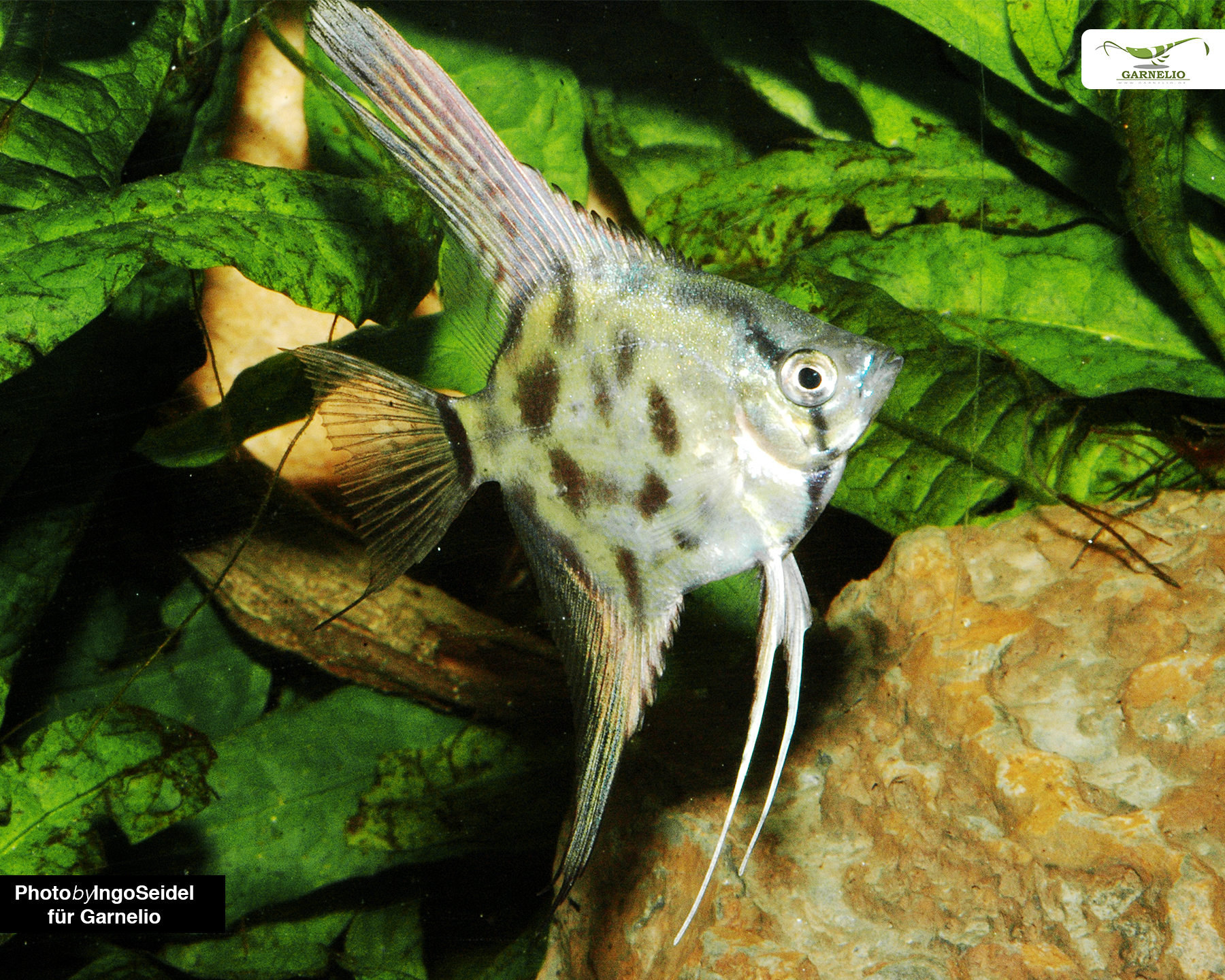
  • Leopard Angelfish (Pterophyllum scalare)

    Leopard Angelfish (Pterophyllum scalare)

    Moderate
    South American freshwater cichlid
    The leopard angelfish is a domestic color form of Pterophyllum scalare, a tall-bodied freshwater cichlid from tropical South America. Its silver to yellowish body is marked with irregular dark spots or broken vertical bars, although pattern intensity varies with age, mood and breeding line. It is generally peaceful in a suitably spacious community aquarium, but pairs become territorial when spawning. This fish needs warm, clean water, generous vertical swimming space and tank mates too large to swallow.
  • Yellow Labidochromis (Labidochromis caeruleus)

    Yellow Labidochromis (Labidochromis caeruleus)

    Easy - Moderate
    Lake Malawi mbuna cichlid
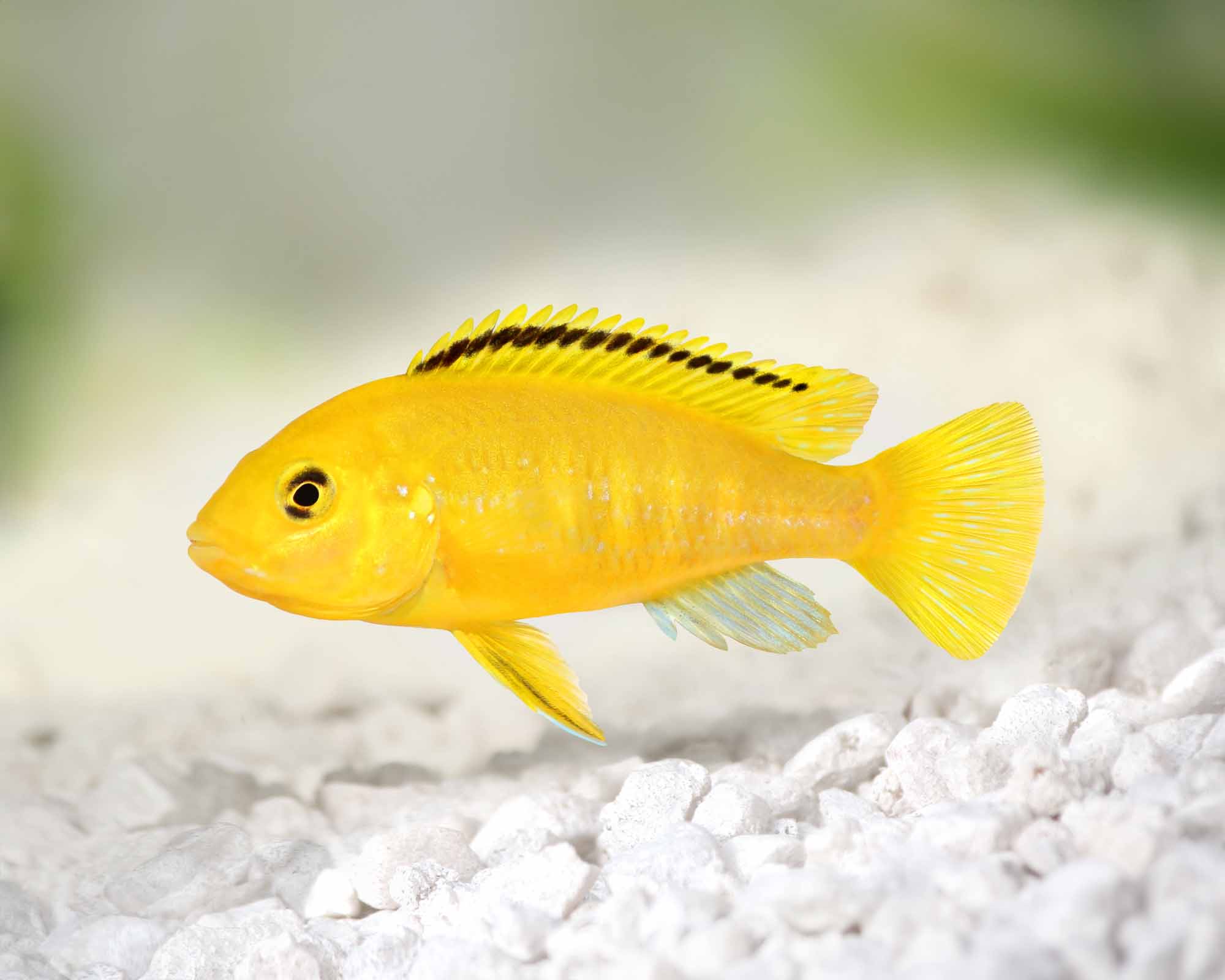
    The Yellow Labidochromis is a bright yellow mbuna cichlid from Lake Malawi. Labidochromis caeruleus is generally manageable for an African cichlid, but it remains territorial and needs hard, alkaline water, rockwork, and carefully chosen companions. The supplied source identifies two fish as a pair; sex and pair bonding cannot be confirmed from the available images. This species is an adaptable algae grazer, a maternal mouthbrooder, and a rewarding choice for an appropriately planned Malawi cichlid aquarium.
  • Blue Pearl Angelfish (Pterophyllum scalare)

    Blue Pearl Angelfish (Pterophyllum scalare)

    Moderate
    Freshwater cichlid
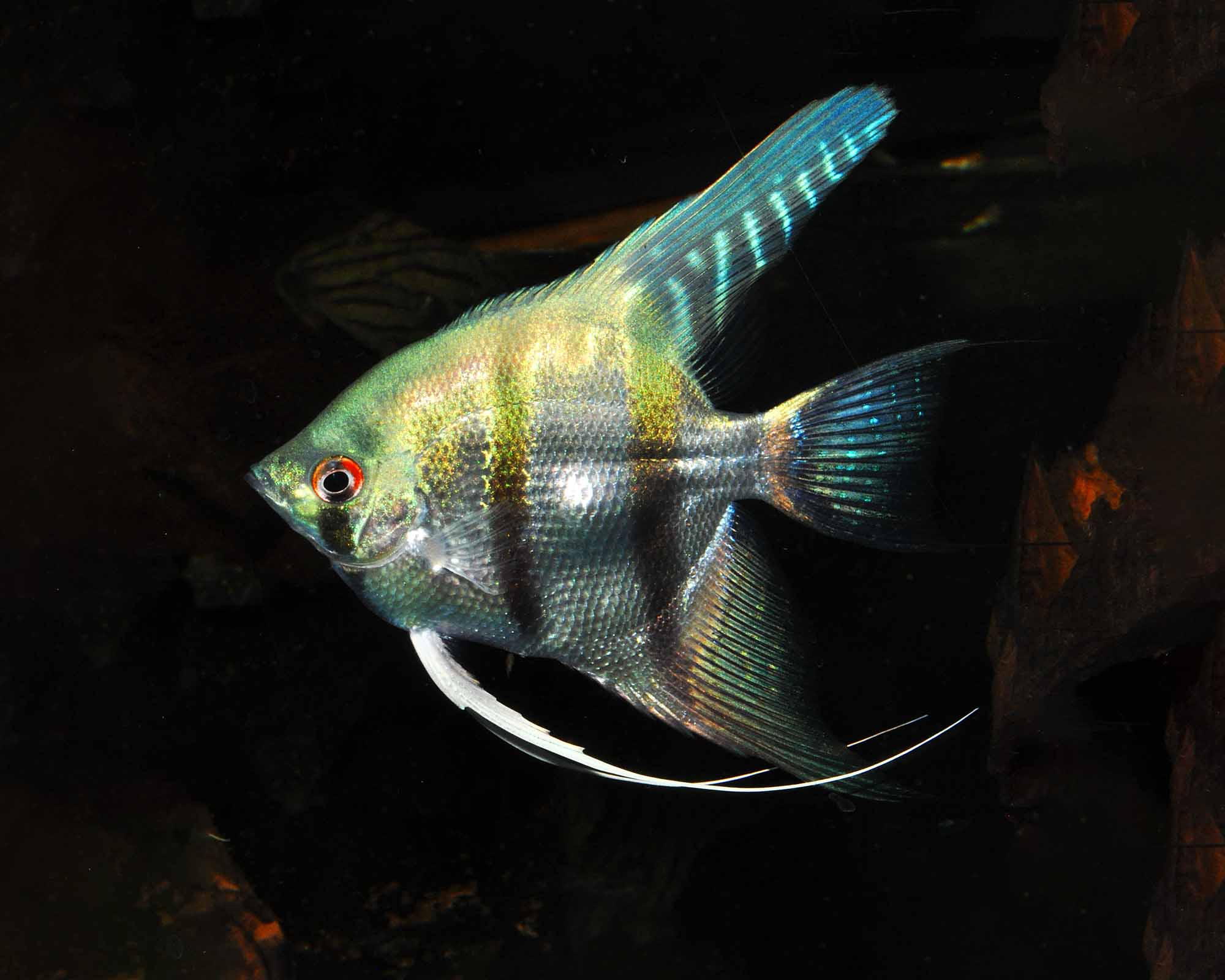
    The Blue Pearl Angelfish is a selectively bred colour form of Pterophyllum scalare, the freshwater angelfish. Its laterally compressed body, extended fins and tall profile make it a striking inhabitant of a planted community aquarium. The supplied trade label supports identification as this species and colour form, although individual colour intensity can vary. It requires warm, stable, clean water, generous vertical swimming space and thoughtful tank-mate selection, especially as adults become territorial when pairing or spawning.
  • Villavicencio Dwarf Cichlid Apistogramma macmasteri

    Villavicencio Dwarf Cichlid Apistogramma macmasteri

    Moderate
    South American dwarf cichlid
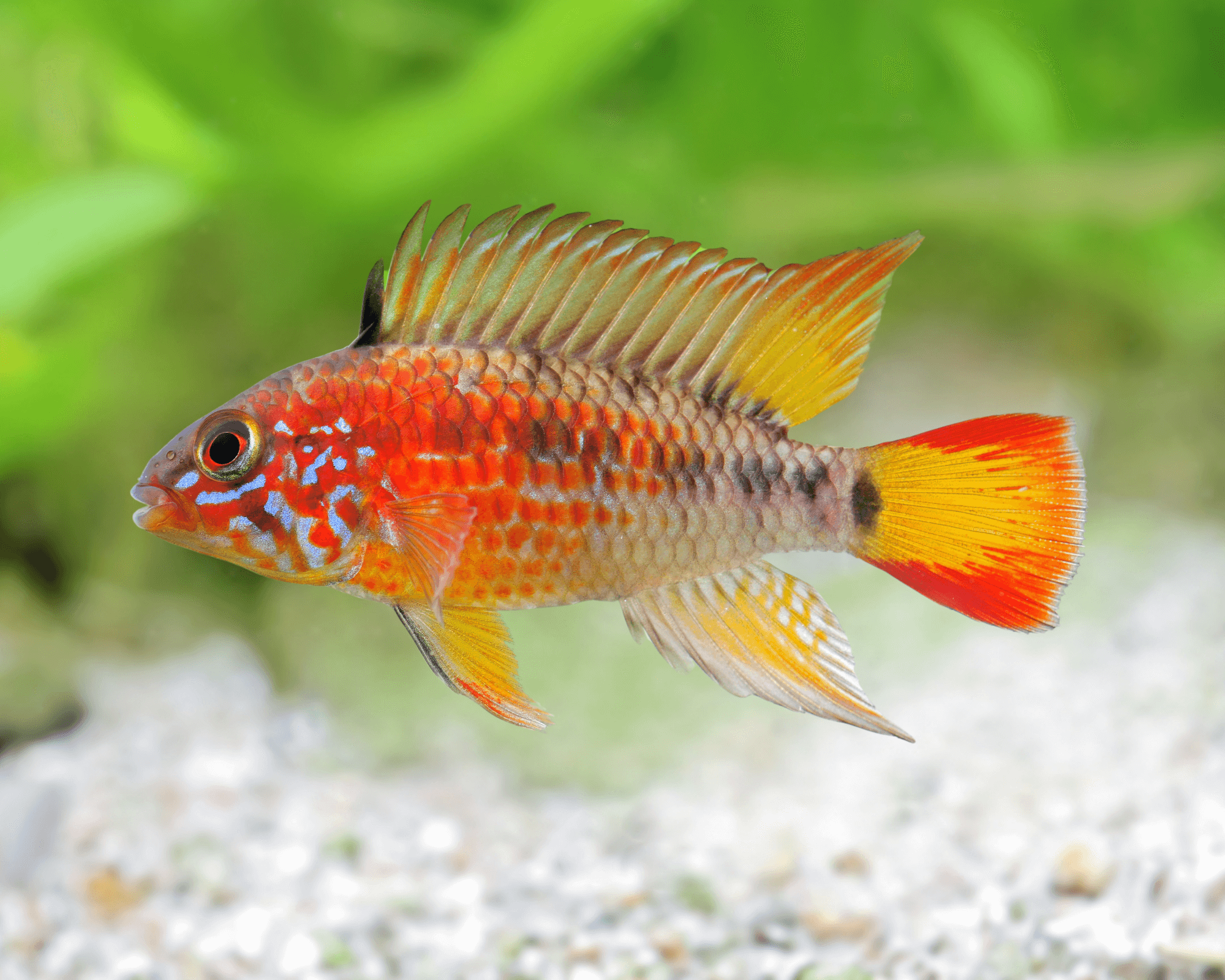
    Apistogramma macmasteri, commonly called the Villavicencio dwarf cichlid, is a small South American cichlid associated with the Río Orinoco drainage of Colombia. It is valued for its compact size, elaborate finnage and interesting courtship behavior. A bonded pair can be kept in a carefully structured aquarium with soft, clean water, sand, cover and several potential spawning sites. Although manageable for an experienced community aquarist, territorial behavior increases during breeding, so tank layout and tankmate selection are important.
  • Neolamprologus leleupi (Tanganyika Golden Cichlid)

    Neolamprologus leleupi (Tanganyika Golden Cichlid)

    Moderate
    Lake Tanganyika rock-dwelling cichlid
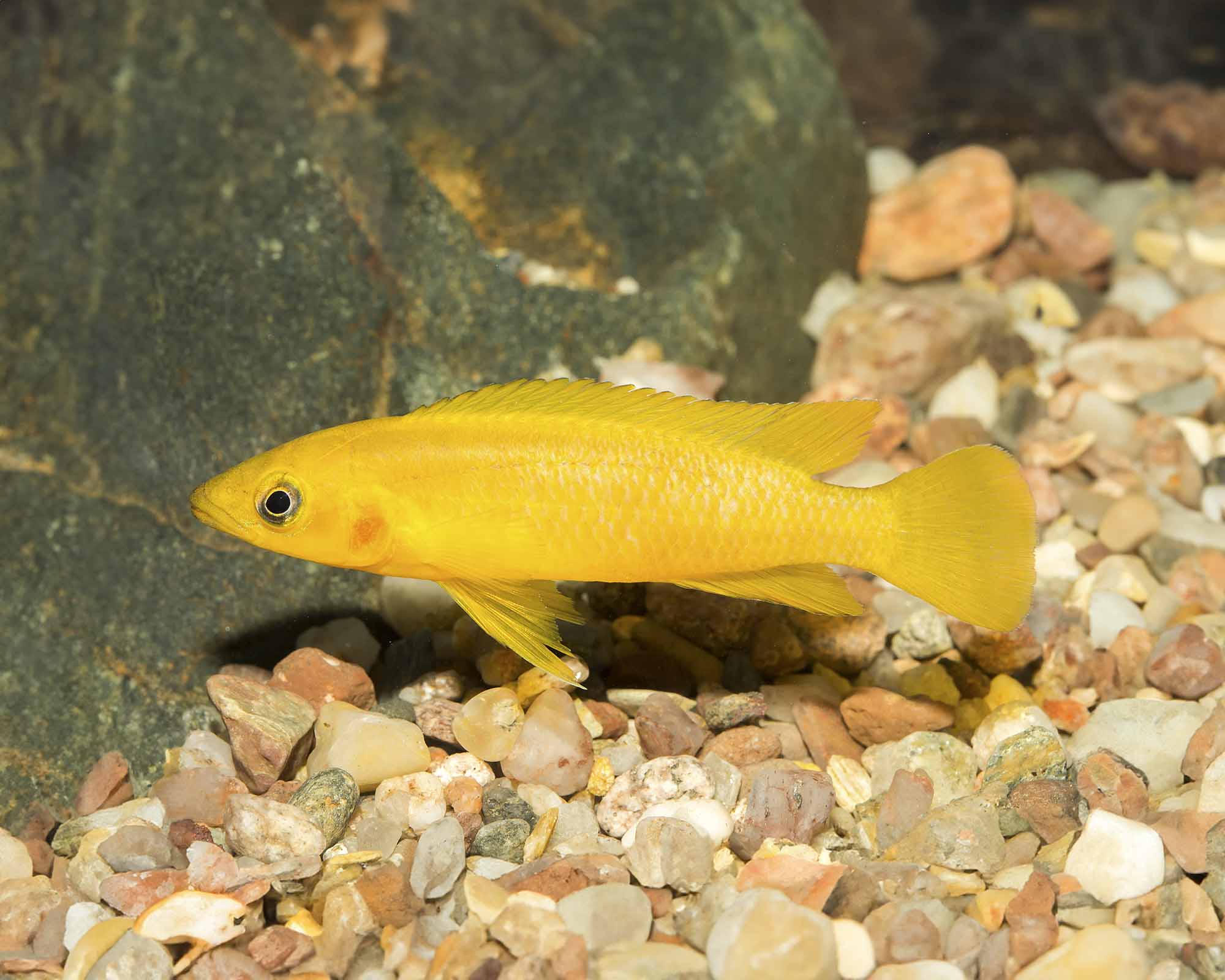
    Neolamprologus leleupi is a small, brightly coloured cichlid endemic to Lake Tanganyika in East Africa. It inhabits rocky coastal areas and uses crevices for shelter, feeding and spawning. Despite its modest size, it can be strongly territorial, particularly when paired or breeding. The supplied source identifies these fish as a golden colour form and a pair, although sex cannot be confirmed reliably from the image alone. Successful care depends on alkaline, mineral-rich water, abundant rockwork and carefully chosen tank mates.
  • Maingano Cichlid (Melanochromis cyaneorhabdos)

    Maingano Cichlid (Melanochromis cyaneorhabdos)

    Moderate - Difficult
    Lake Malawi mbuna cichlid
    The Maingano, or Johanni Maingano, is a Lake Malawi mbuna recognized for its intense steel-blue body and dark horizontal markings. The supplied label combines “Johanni” with the scientific name Melanochromis cyaneorhabdos; these are distinct species, so identification should be confirmed from the seller or locality. This territorial mouthbrooding cichlid needs hard, alkaline water, abundant rockwork, a predominantly algae-based diet, and careful stocking to limit aggression.
  • Red Chocolate Gourami (Sphaerichthys vaillanti)

    Red Chocolate Gourami (Sphaerichthys vaillanti)

    Difficult
    Blackwater labyrinth fish
    The red chocolate gourami, Sphaerichthys vaillanti, is a specialized Southeast Asian labyrinth fish suited to mature, soft, acidic blackwater aquariums. It is peaceful but easily stressed by bright lighting, strong currents and boisterous tank mates. The supplied source identifies these fish as a pair; sex and exact identity cannot be confirmed from the image alone, so identification should be checked against a reliable specimen reference. Stable water quality, cover and a varied small-food diet are central to long-term success.