AquaLibs presents AquaRank Discover the world’s leading aquascapers

Explore transparent rankings built from published results across the world’s leading aquascaping contests.

Where Should the Eye Land? A Practical Depth Plan for Planted Aquariums

Start with three visual distances, not three plant colors

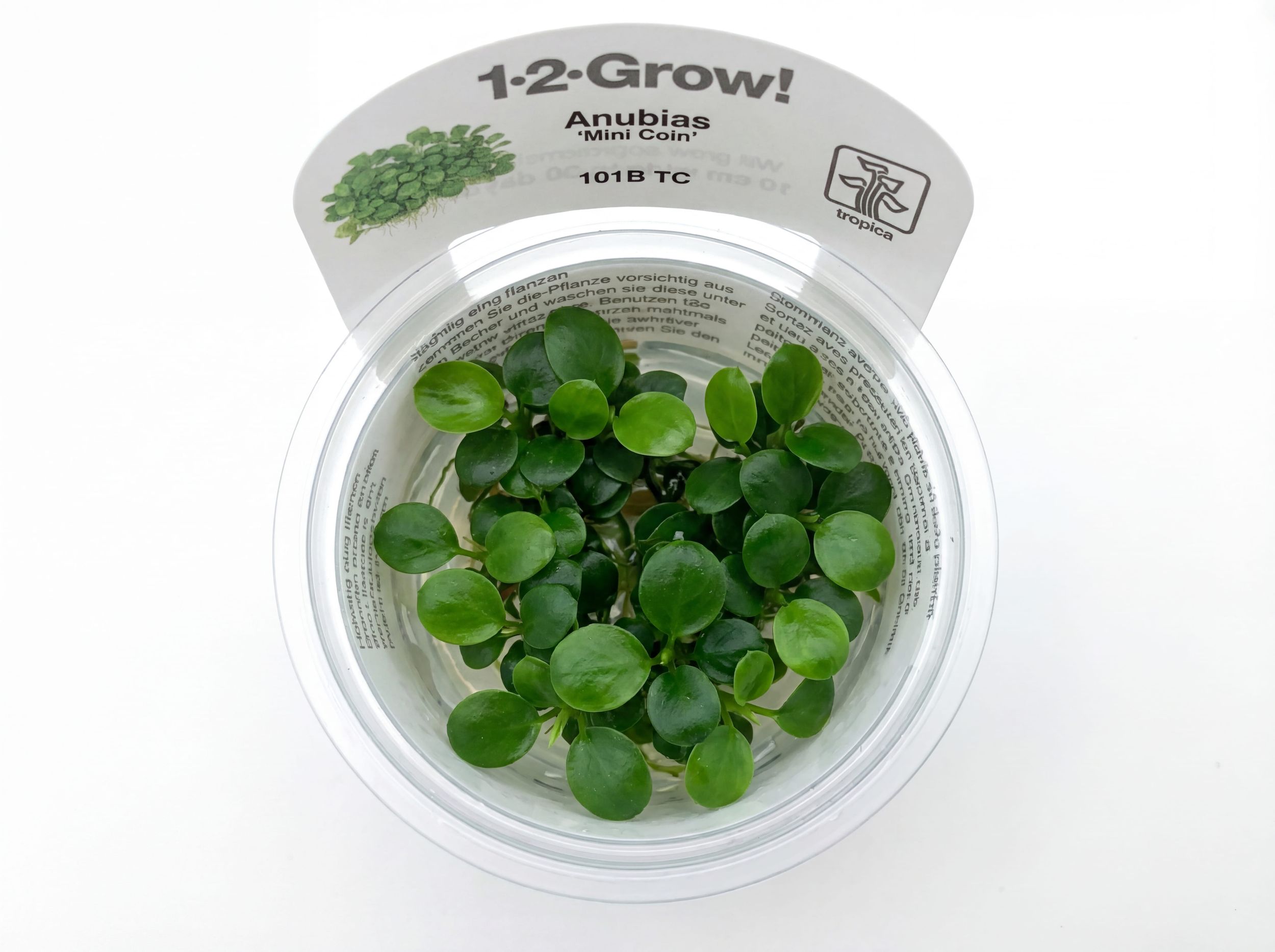
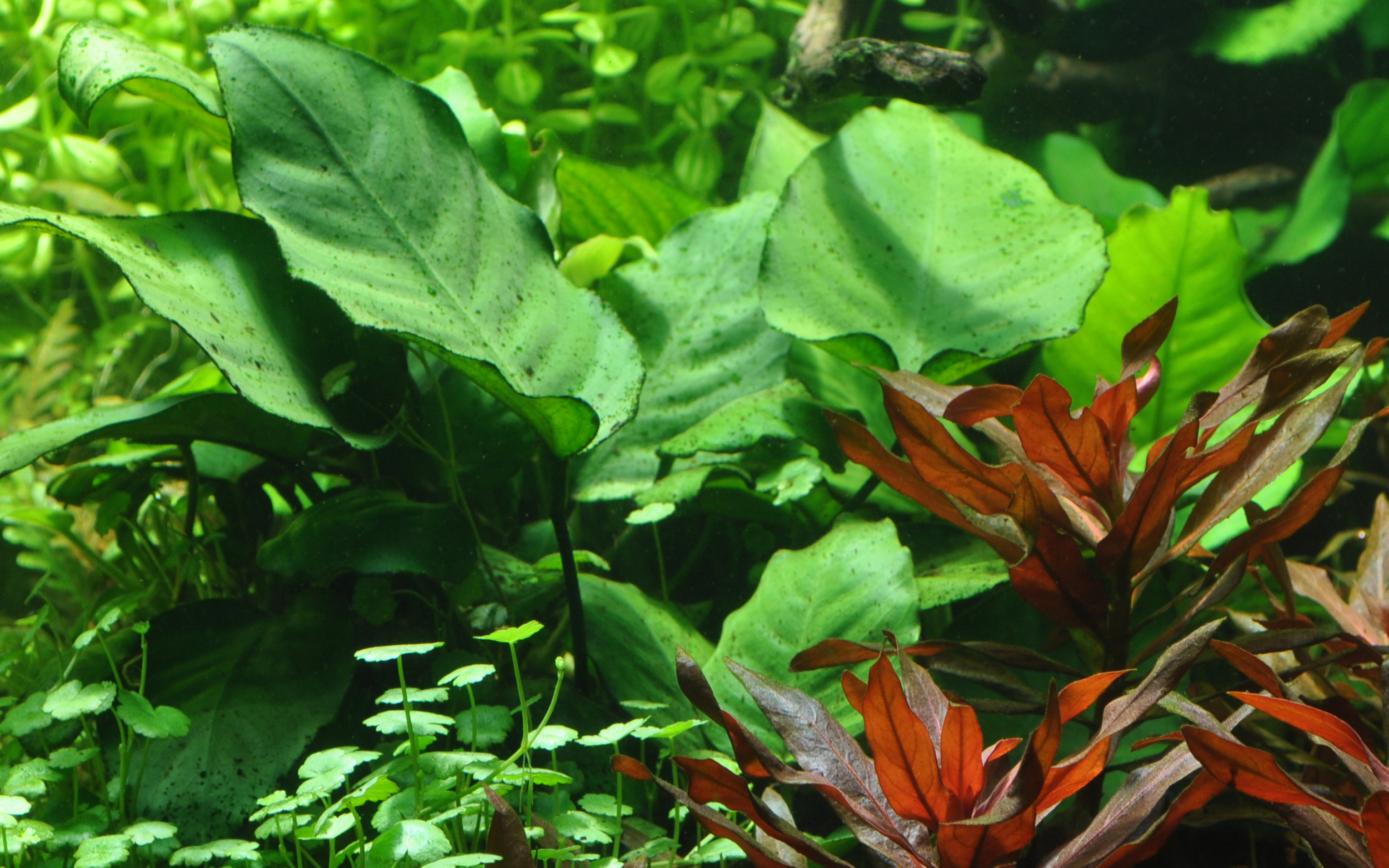
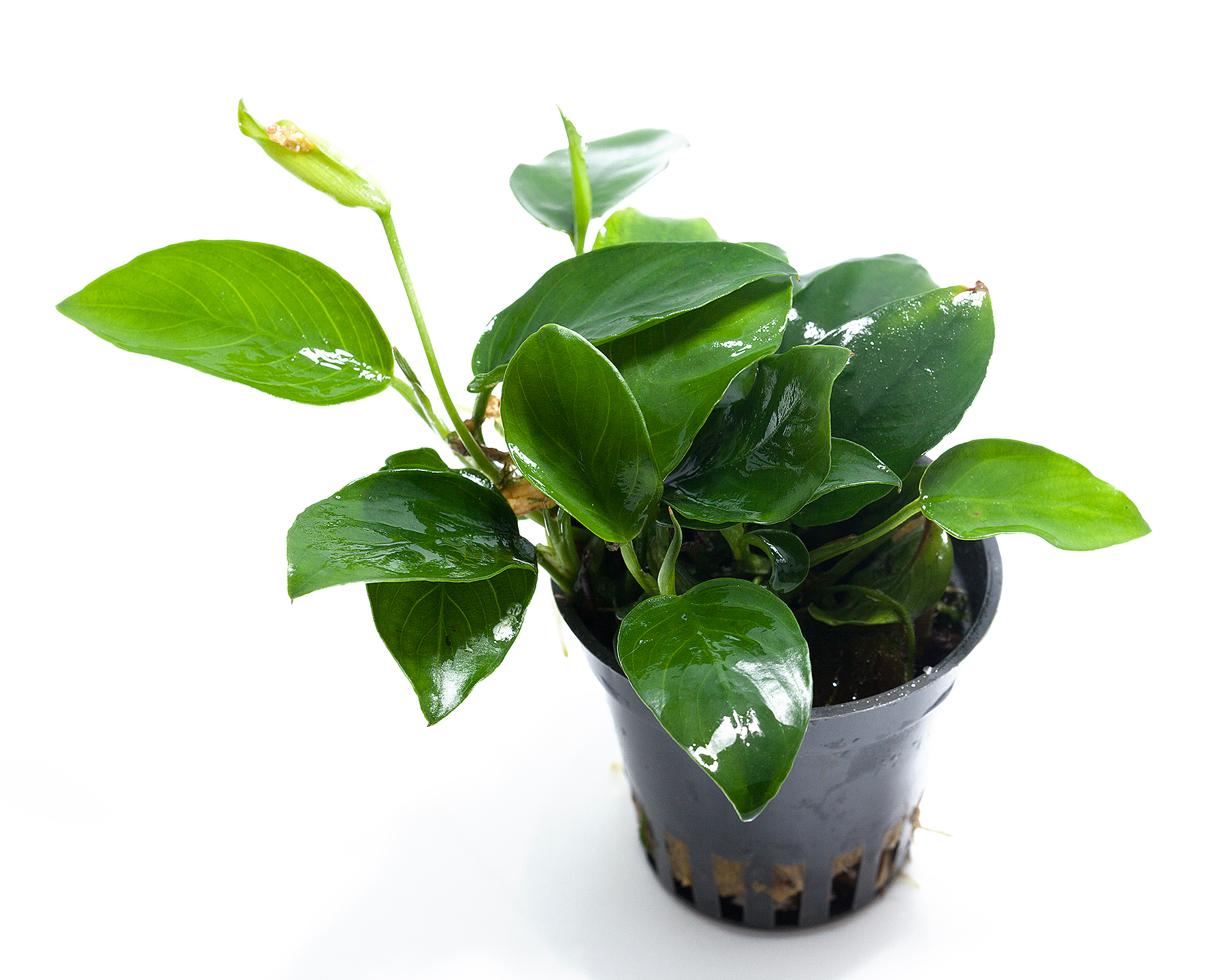
Build depth by dividing the aquarium into foreground, middle ground, and background before choosing a color palette. The foreground should stay low and visually open. The middle ground can contain rounded or broad-leaved plants that break up the hardscape. The background should provide vertical rhythm without blocking the entire rear pane. Anubias nana works well in the middle ground because its compact, sturdy leaves create a clear scale reference on wood or rock. It is also useful in shrimp and snail aquariums, where attached plants are less likely to be uprooted. Keep the rhizome exposed, and avoid placing it where tall growth will shade it completely.
Start with three visual distances, not three plant colors

Use fine texture to make open water feel farther away

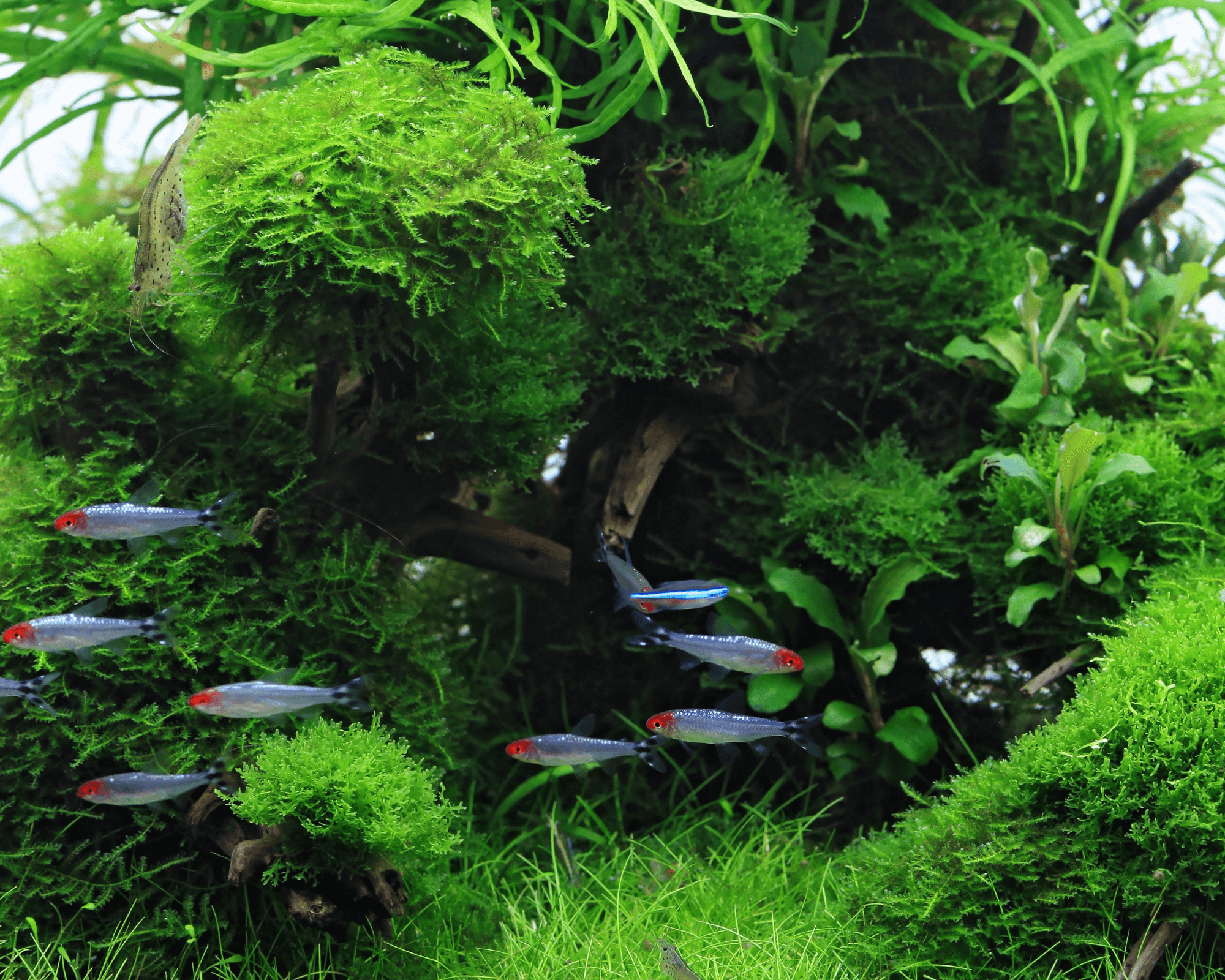
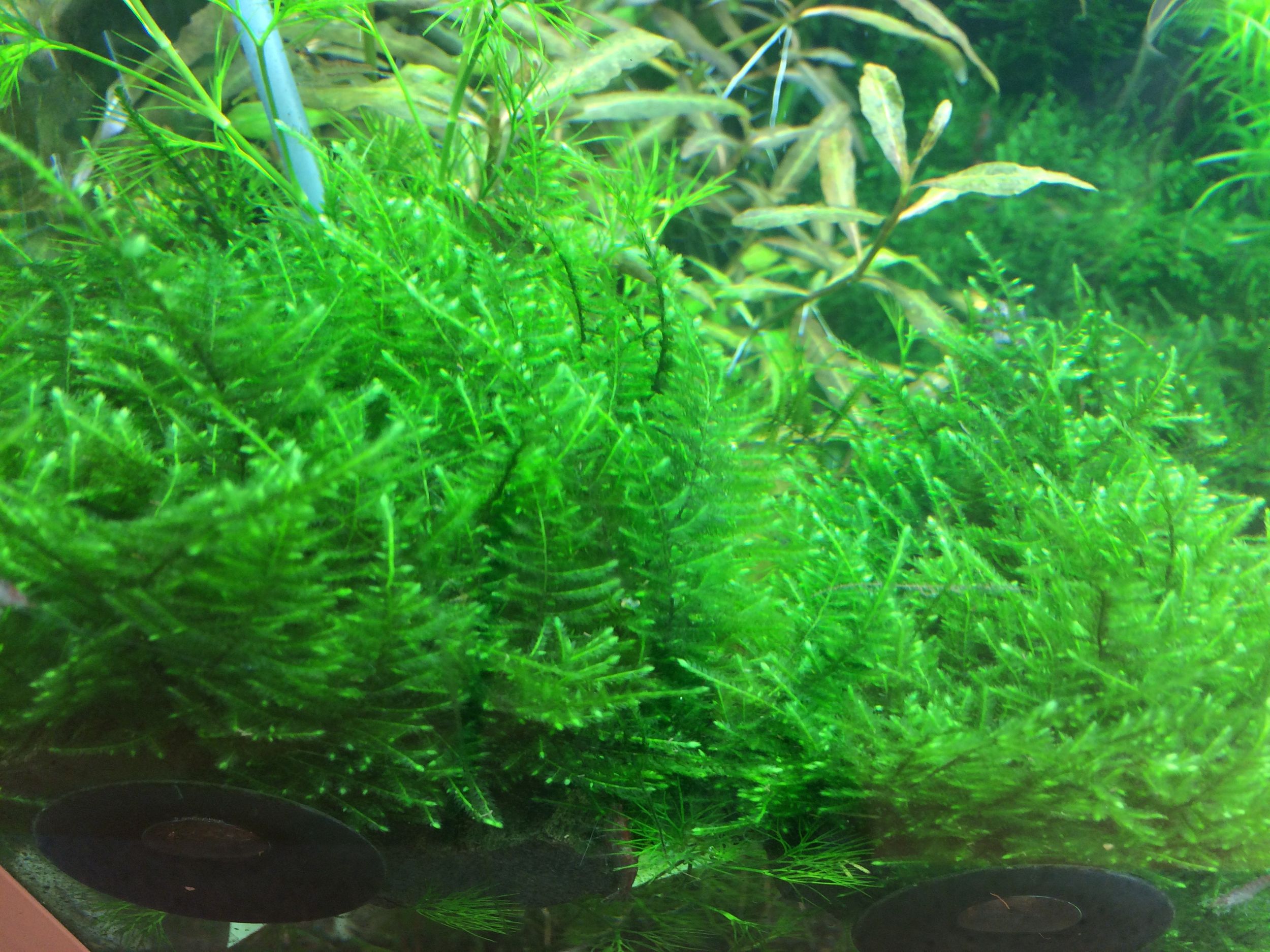
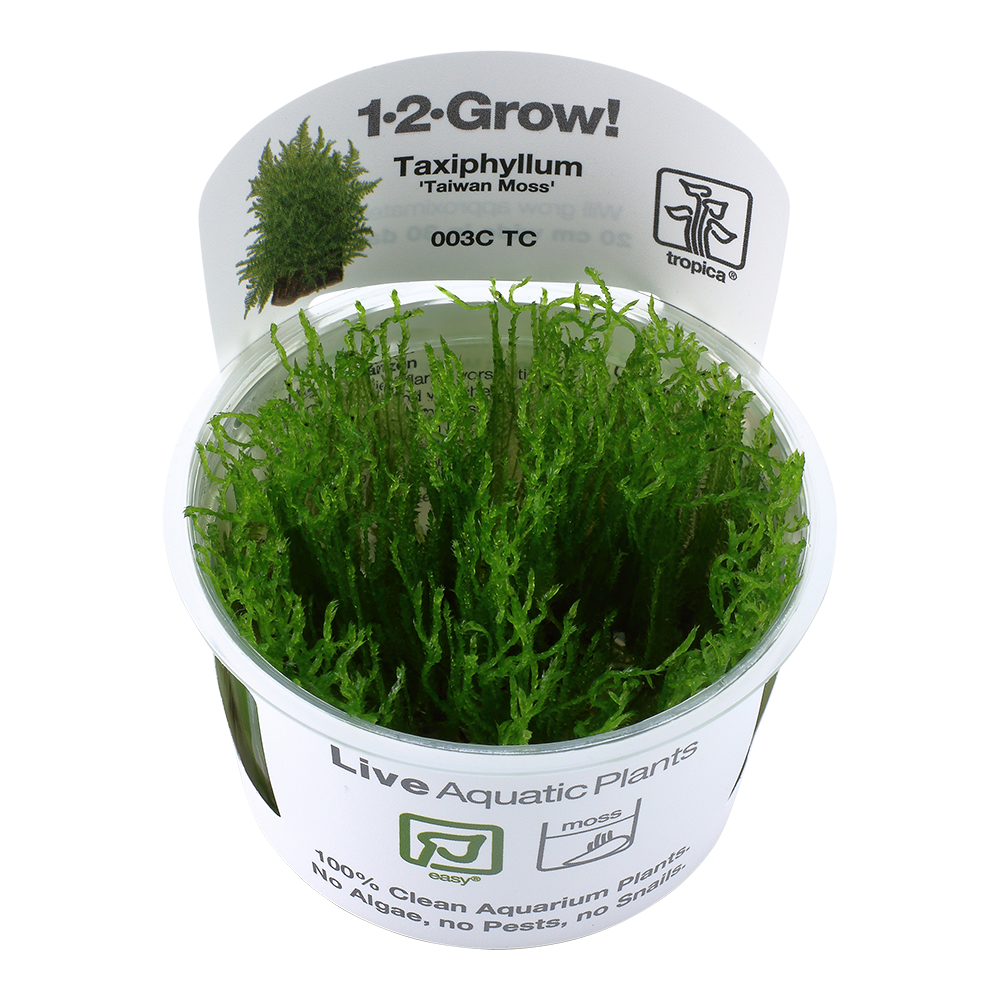
Fine leaves and branching growth can suggest distance, but dense texture should not fill every gap. A small group of Taiwan moss attached to a branch or stone creates a soft transition between hardscape and open water. Shrimp can graze across its surface, while tiny fish may use it as visual cover. The trade-off is maintenance: moss collects detritus when water movement is weak, so leave enough circulation to move debris past the growth. Trim the outside edge rather than cutting the entire clump flat. In a nano aquarium, one controlled moss island usually creates more depth than several loose portions scattered across the substrate.
Use fine texture to make open water feel farther away

Let the foreground frame the livestock instead of hiding it

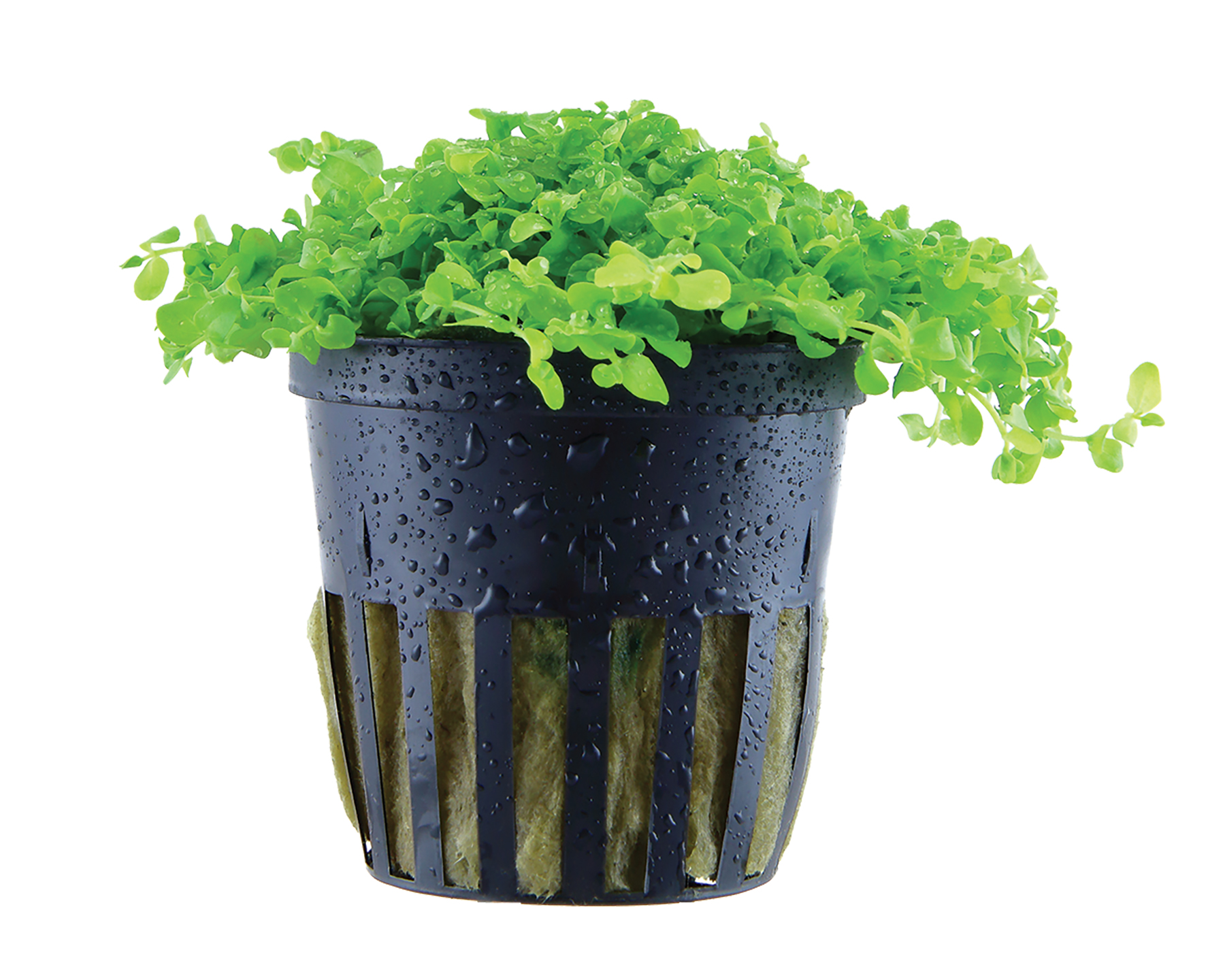
A low carpet or creeping plant can make the front of the aquarium read as a separate plane, but a complete carpet is not always the easiest beginner choice. Monte Carlo can provide a soft, small-leaved foreground when light, planting technique, and maintenance are suitable. Plant it in small separated portions so it can spread without forming a thick mat that traps waste. Leave a visible patch of substrate or sand in front of the main group. That open strip gives colorful shrimp a place to stand out and gives bottom-oriented snails room to move. If the plant stalls, the design still works because the empty space remains intentional.
Let the foreground frame the livestock instead of hiding it

Choose a midground plant with a different leaf scale

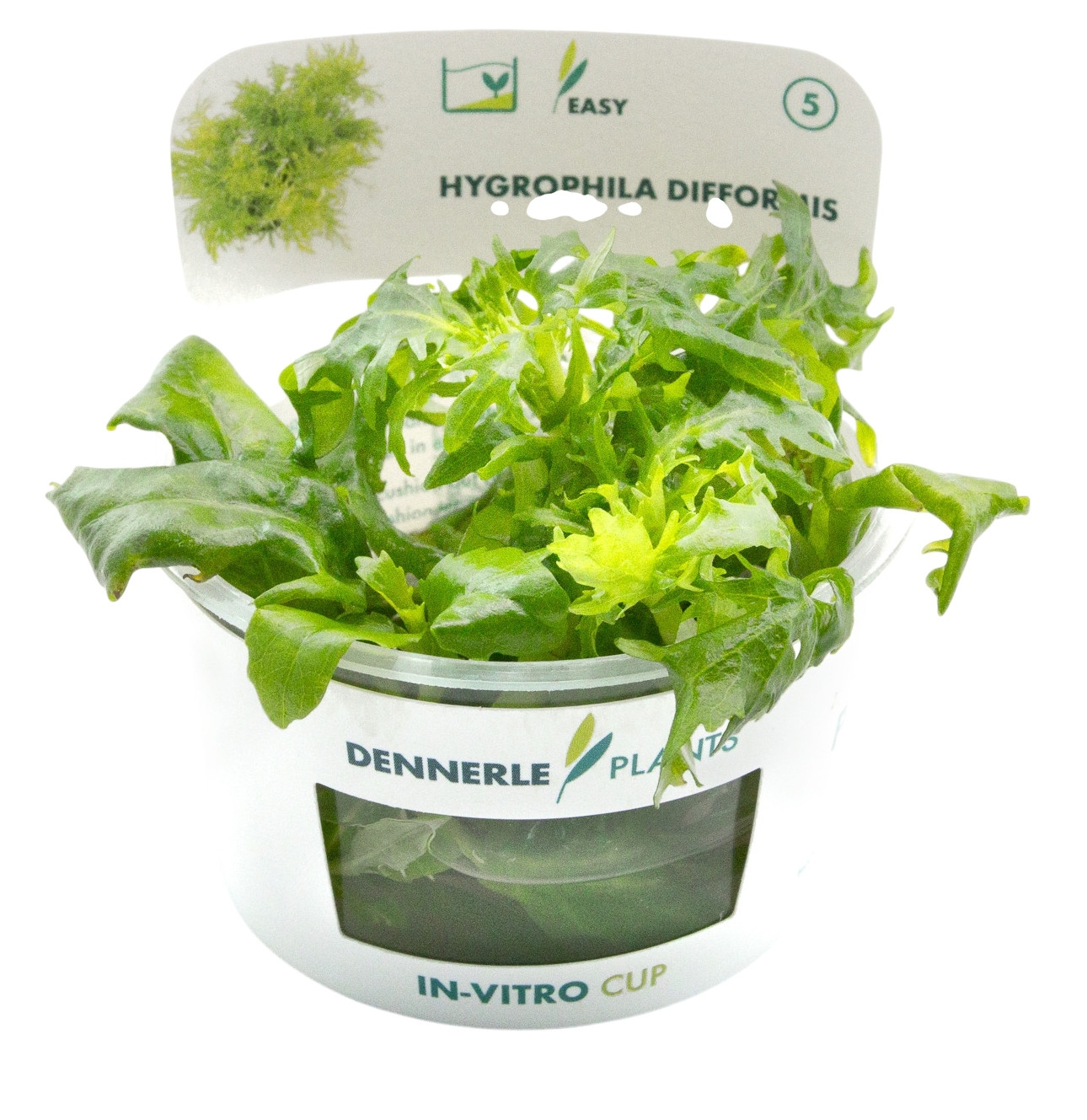
Depth becomes easier to read when the middle ground does not repeat the background texture. Water wisteria, commonly sold as Hygrophila difformis, has divided leaves that contrast with rounded Anubias or narrow stems. Use a small clump behind a rock or at the bend of a planting path rather than spreading it evenly across the tank. Its faster growth can help absorb nutrients, but it also means regular trimming may be needed. Cut and replant healthy tops when the stems reach the surface. Keep one side lower if you are housing schooling nano fish, so they retain a clear route through the aquarium.
Choose a midground plant with a different leaf scale

Make red or warm foliage a depth marker, not a background wall

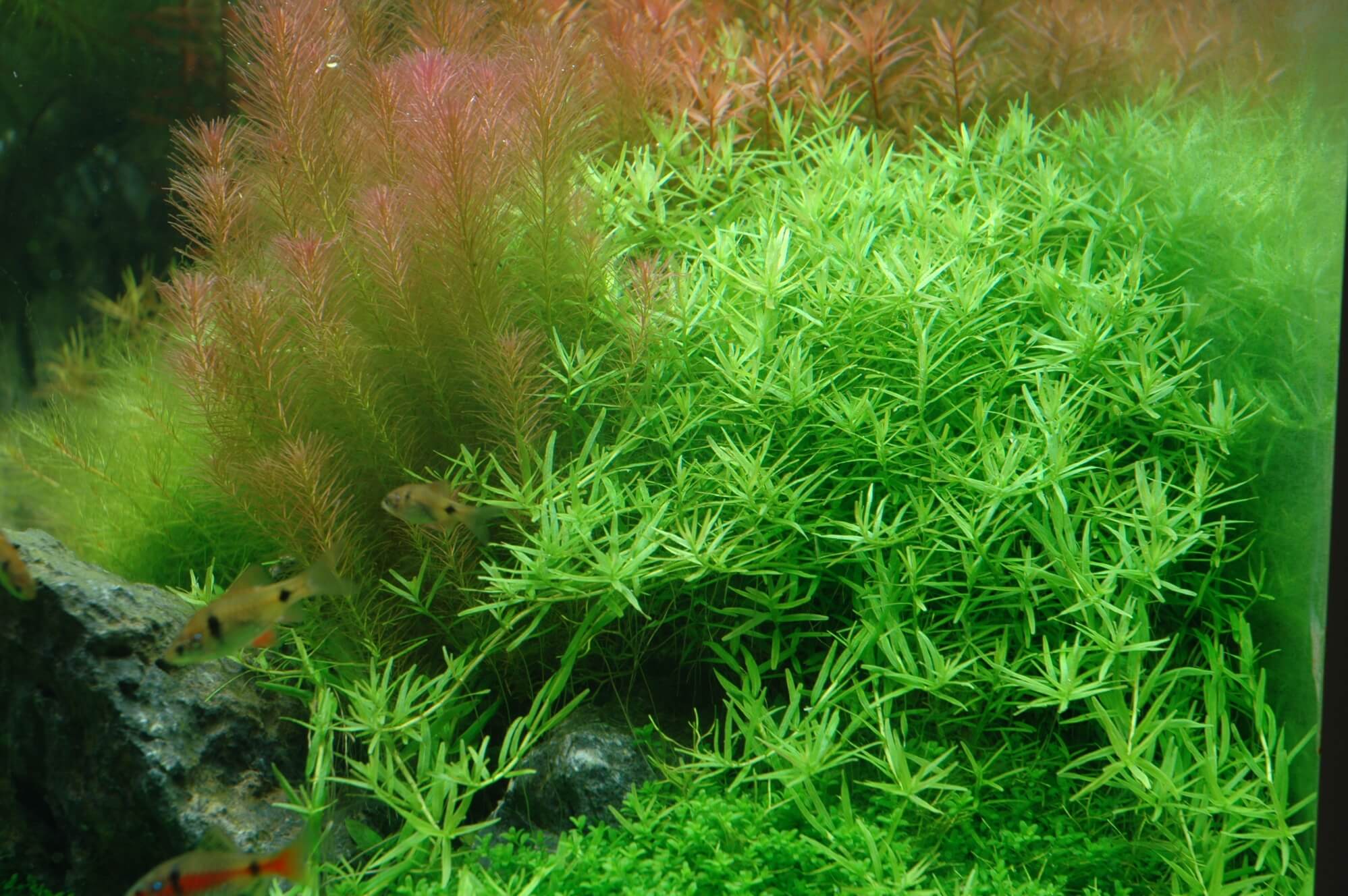
A warm-toned plant can draw attention to a chosen point, but too much red makes the aquarium visually shallow because every area competes for attention. Rotala rotundifolia can be used as a controlled rear or side accent, especially when green plants occupy most of the layout. Place the colored group behind or beside a neutral hardscape element, then leave open water in front of it. This gives the eye a sequence: foreground, obstruction, colored distance. Strong coloration depends on the aquarium’s light and nutrient balance, so do not design around an exact shade. Treat the plant as an accent that may change over time.
Make red or warm foliage a depth marker, not a background wall

Use broad leaves to show how small the fish really are

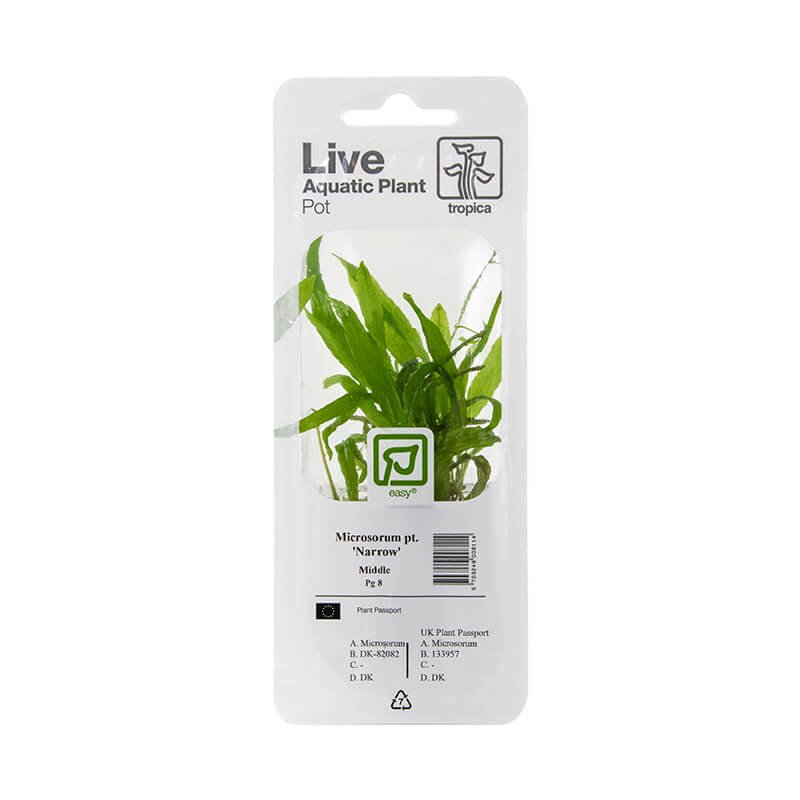
Scale is easier to judge when at least one plant has leaves noticeably larger than the fine foreground or moss. A Java fern with narrow or forked leaves can provide that contrast without demanding a planted substrate, because it is normally attached to wood or rock. Its leaves also create perches and cover for shrimp, although fish may still pick off exposed young shrimp. Keep the plant away from the front glass if the aquarium is very small; otherwise its mature shape can dominate the view. Remove damaged leaves at the base and make sure the crown remains above the substrate.
Use broad leaves to show how small the fish really are

Create a visual path with repeated shapes, not repeated specimens

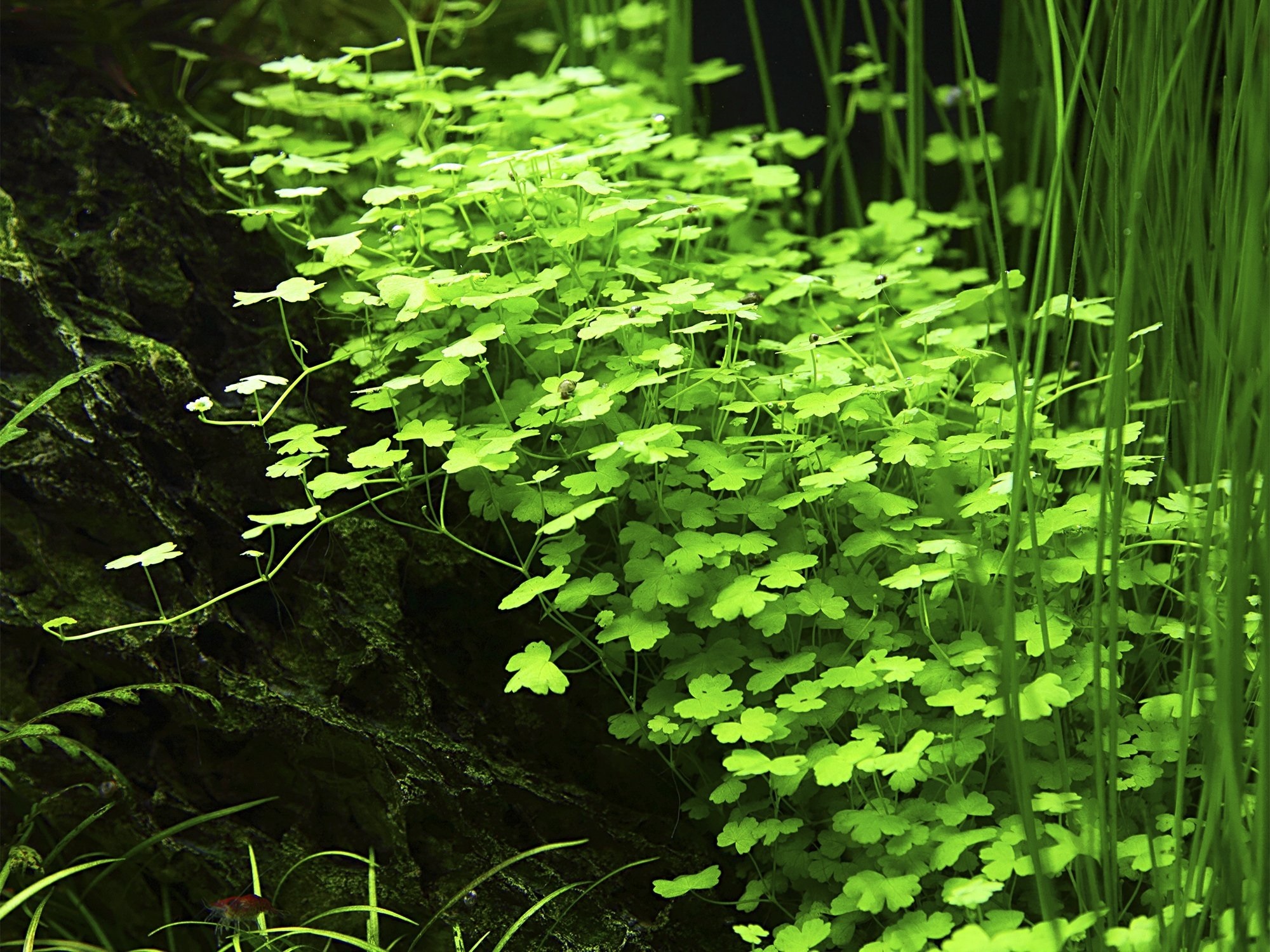
A depth cue can travel through the aquarium when one shape appears in more than one area. Hydrocotyle tripartita has small rounded leaves that can connect a foreground patch to a midground mound. Use repetition sparingly: two or three related clusters are usually easier to read than a continuous blanket. Its creeping stems can spread into open areas, so guide or trim them before they cover the substrate. The plant is a useful choice when you want a softer transition for shrimp and snails, but it should not be allowed to block filter intakes or create stagnant pockets. Think of the growth as a path for the eye, not a hedge.
Create a visual path with repeated shapes, not repeated specimens

Treat floating plants as a ceiling, not another foreground layer

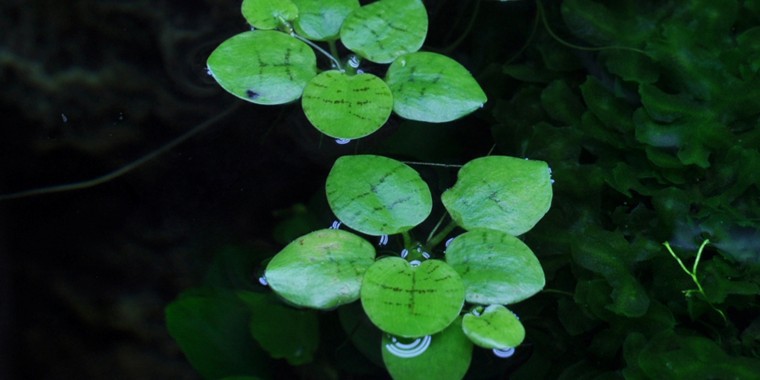
Floating plants change the aquarium’s depth from above by lowering the visual ceiling and breaking harsh light. Frogbit can offer shade and hanging roots that make shrimp feel less exposed, while peaceful fish may use the darker upper zone. Keep an open area at the surface so gas exchange, feeding, and observation remain easy. Thin the floaters before they cover the entire waterline, particularly in a nano aquarium where light loss can affect lower plants. Floating roots can also collect surface debris. A practical layout leaves one shaded corner, one open feeding zone, and enough light reaching the midground to keep the planted structure balanced.
Treat floating plants as a ceiling, not another foreground layer

Use crypts to anchor the transition between substrate and hardscape

Cryptocoryne beckettii can anchor a visual transition because its leaves form a low, substantial rosette rather than a thin stem cluster. Place it beside wood or stone, not directly in front of the entire hardscape. This creates a layered edge while preserving a clear route for fish. Crypts may shed older leaves after planting or when conditions change, so avoid disturbing them repeatedly while they establish. Their root-feeding habit makes a suitable substrate or occasional root nutrition helpful. In a shrimp-and-snail setup, the broad lower leaves can collect biofilm, but remove decaying material before it accumulates in a tight cluster.
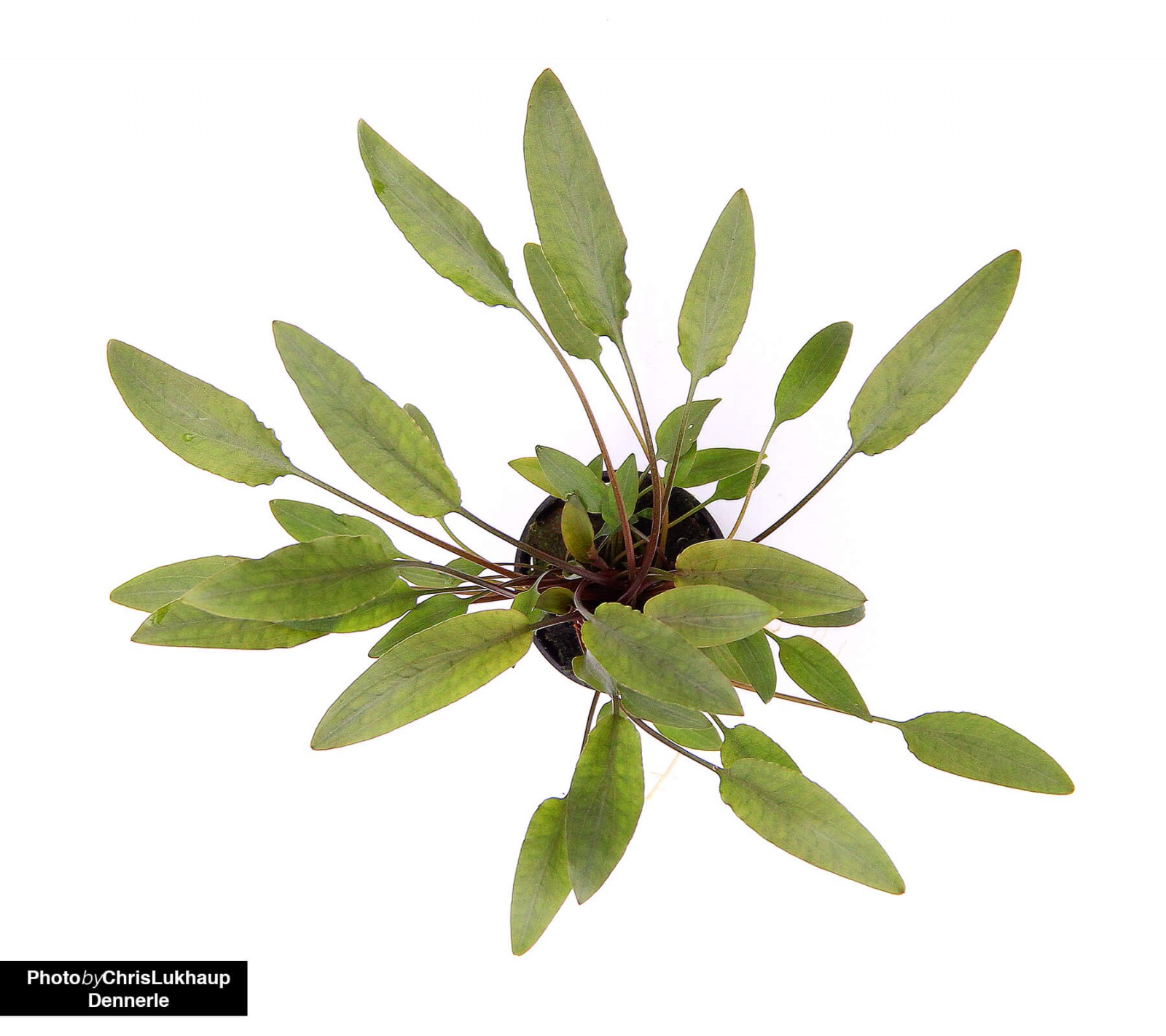
Use crypts to anchor the transition between substrate and hardscape

Reserve the brightest color for a place your livestock can use

A red foreground plant such as Alternanthera reineckii Mini can become an effective focal point, but it is less forgiving than many green beginner plants. Use it as a small island near the front or side, surrounded by calmer green textures. Do not hide it under floating plants or a tall canopy, and expect its color to depend on light and overall plant health. The focal area should still be functional: leave nearby space for shrimp to forage and fish to turn. If the plant struggles, replace it with a green or bronze accent rather than increasing light abruptly and risking algae or livestock stress.
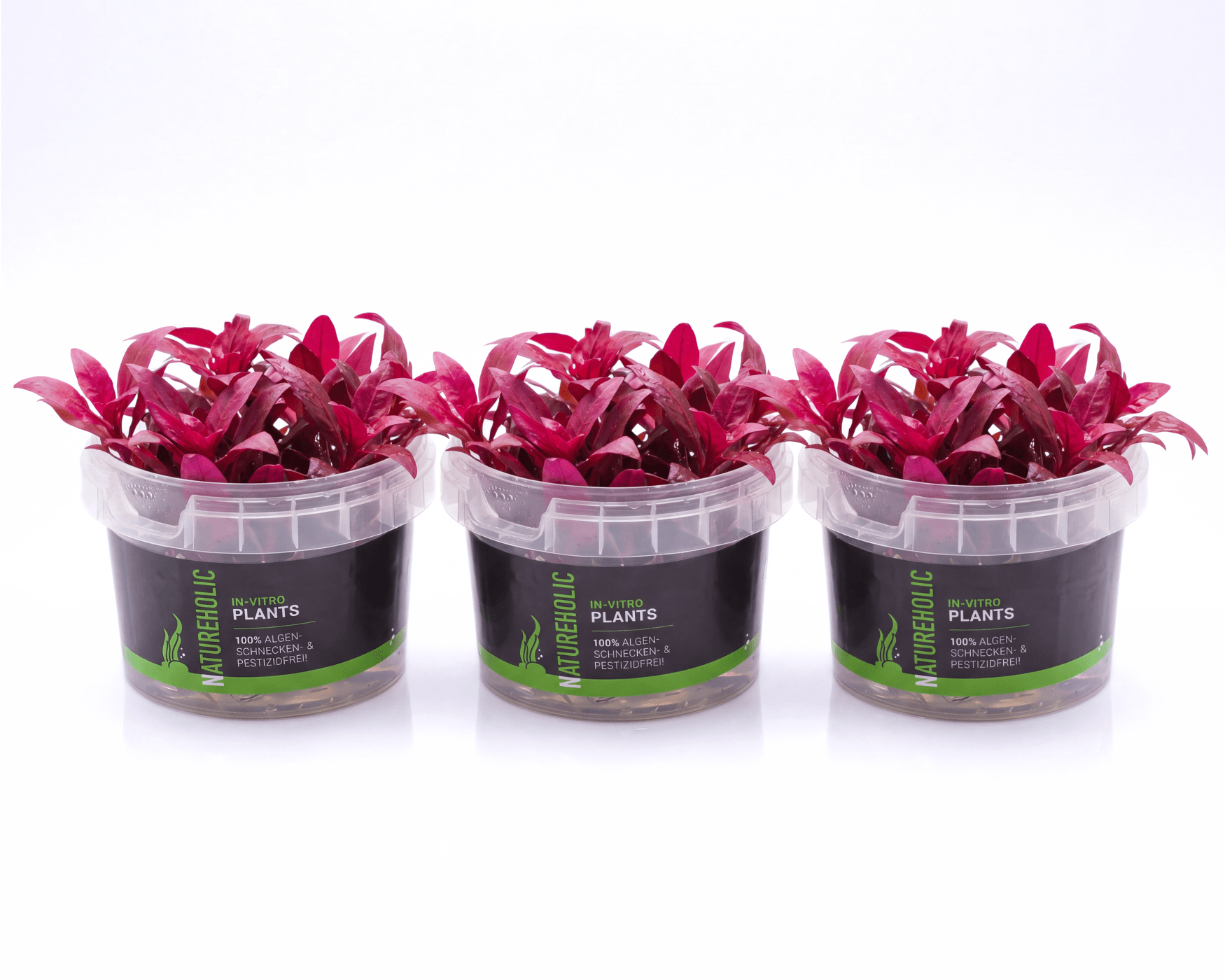
Reserve the brightest color for a place your livestock can use

Frequently Asked Questions

How many plant textures are enough for a small planted aquarium?

Start with three clear textures: one fine, one broad or rounded, and one vertical or branching. Add color only after the shapes are working together. Too many textures in a nano aquarium can make the layout look busy rather than deep.

Can colorful freshwater fish, shrimp, and snails share this type of layout?

Sometimes, but compatibility depends on species, tank size, temperature, water chemistry, adult fish behavior, and the survival of young shrimp. Peaceful nano fish may coexist with adult dwarf shrimp, but many will eat shrimplets. Shrimp and peaceful snails are generally a lower-risk combination when the aquarium is mature and stable.

Which plants are easiest for a beginner using this design approach?

Anubias, Java fern, mosses, many Cryptocoryne varieties, and selected Hygrophila are common starting points. Match each plant to the aquarium’s light, substrate, flow, and maintenance schedule rather than choosing solely by appearance.

Does a planted aquarium need a red plant to have depth?

No. Depth can come entirely from leaf size, plant height, hardscape placement, and open-water spacing. Green, bronze, and muted tones often create a calmer result and may be easier to maintain in a low-tech aquarium.

How do I keep dense planting from trapping waste?

Leave pathways through the foliage, maintain gentle circulation, thin floating plants, and remove decaying leaves promptly. During water changes, lightly siphon exposed substrate without repeatedly disturbing rooted plants or uprooting moss-covered hardscape.
Leave your comments
Latest on Aquarium Base
  • A Livestock Load Sheet for Planted Aquariums: Turn Fish Choices Into a Care Plan

    A Livestock Load Sheet for Planted Aquariums: Turn Fish Choices Into a Care Plan

    A planted aquarium can look low-maintenance while quietly becoming difficult to feed, clean, and stabilize. The key question is not simply how many colorful fish fit in the glass. It is how much food the livestock will require, how quickly that food becomes waste, whether tank mates compete or prey, and how much weekly work remains after the plants grow in. Use this livestock load sheet before purchase: choose a manageable centerpiece, school, bottom group, shrimp, or snail crew, then check whether the combined feeding and maintenance routine fits your time, equipment, and tank size.
  • The Shell Ledger: Match Freshwater Snails to Minerals, Buffering, and Maintenance

    The Shell Ledger: Match Freshwater Snails to Minerals, Buffering, and Maintenance

    A planted aquarium can look mature while quietly wearing down a snail’s shell. Soft source water, active aquasoil, acidic driftwood, heavy plant growth, neglected water changes, and insufficient food can all shape long-term shell health. The answer is not simply to add calcium. First match the snail group to the chemistry your fish, shrimp, plants, and maintenance routine can support. Then manage minerals gradually, watch new shell growth, and control waste before adding more livestock. This guide uses common snail types as decision points, helping you build a planted tank that remains attractive, compatible, and chemically stable over time.
  • What Happens After the Eggs Hatch? A Tank-Mate Plan for Freshwater Shrimp

    What Happens After the Eggs Hatch? A Tank-Mate Plan for Freshwater Shrimp

    A planted aquarium can look peaceful while quietly losing every young shrimp. Adult Neocaridina may thrive beside small fish, yet newly released shrimplets are tiny enough to become opportunistic food. The right tank-mate decision depends on your goal: displaying a few colorful adults, or building a colony that regularly produces survivors. This guide ranks common companions by practical risk, explains how plants and feeding change the odds, and separates shrimp-safe behavior from simple marketing claims. It also highlights an important boundary: Neocaridina, bee shrimp, and Sulawesi shrimp do not share identical water requirements, even when they are all sold as freshwater aquarium shrimp.
  • Which Plant Shapes Make a Nano Community Aquarium Feel Larger?

    Which Plant Shapes Make a Nano Community Aquarium Feel Larger?

    A small planted aquarium can look crowded even when it is lightly stocked. The usual problem is not a lack of color; it is that every plant has the same visual weight, the livestock occupy the same level, and the foreground becomes a wall of leaves. A better approach is to design in layers. Use fine textures to suggest distance, broad leaves to anchor the middle, taller stems to frame open swimming space, and color only where you want the eye to pause. This also makes compatibility easier: fish retain a clear route, shrimp gain cover, and snails can graze without turning the layout into an impenetrable thicket.
  • Will Your Colorful Planted Aquarium Stay Manageable? Count Food, Waste, and Work First

    Will Your Colorful Planted Aquarium Stay Manageable? Count Food, Waste, and Work First

    A planted aquarium can make a mixed community look effortless, but plants do not erase the consequences of feeding livestock. Every fish meal becomes waste, every growing population adds pressure, and every algae-eating animal still needs suitable food when the glass is clean. Before buying colorful fish, shrimp, or snails, decide how much feeding, testing, pruning, and water changing you can sustain. The most attractive stocking plan is not always the easiest one. This guide compares practical combinations for planted aquariums, explains where compatibility breaks down, and shows how easy plants can reduce work without turning the tank into a maintenance-free system.
  • The Planted-Tank Mineral Budget: Choose Aquarium Snails That Can Keep Their Shells

    The Planted-Tank Mineral Budget: Choose Aquarium Snails That Can Keep Their Shells

    A planted aquarium can look mature, stable, and biologically active while still being a poor long-term home for some snails. Shell health depends on more than algae: dissolved minerals, carbonate buffering, acidity, diet, source-water consistency, and the chemistry created by plants, wood, aquasoil, and water changes all matter. The practical question is not simply which snail cleans best. It is whether your tank can supply minerals and maintain stable conditions without undermining your plants, shrimp, or fish. This guide compares several common freshwater snail groups and builds a maintenance plan around shell growth, erosion prevention, feeding, and long-term water-quality control.
  • The Mouth-Size Test: Choosing Planted-Aquarium Companions Around Shrimplet Survival

    The Mouth-Size Test: Choosing Planted-Aquarium Companions Around Shrimplet Survival

    A planted aquarium can look peaceful while still being dangerous to newborn shrimp. Adult Neocaridina may graze openly beside small fish, yet their newly hatched young can disappear within hours. The key question is not simply whether a tank mate is peaceful or small. It is whether the smallest shrimp can avoid its feeding path, fit through its mouth, and find enough biofilm-rich cover to grow. This guide uses a practical risk test for freshwater shrimp tank mates, from fish and snails to larger shrimp, while keeping water chemistry and stocking goals in view.
  • A Layered Look for Planted Aquariums: Match Texture, Scale, and Color to Your Livestock

    A Layered Look for Planted Aquariums: Match Texture, Scale, and Color to Your Livestock

    A planted aquarium can contain plenty of color and still look shallow. The usual problem is not a lack of red leaves or bright livestock; it is that every plant has the same visual weight. Fine stems, broad leaves, low carpets, moss, open water, and dark gaps all create different layers for the eye to read. This approach also helps livestock look more intentional. Small schooling fish need clear swimming lanes, shrimp need textured cover, and snails need surfaces where food actually collects. Use the plant groups below as a design framework for building depth without turning a nano aquarium into an overcrowded thicket.
  • The Fish You Choose Sets the Chore List: Feeding and Bioload in a Planted Aquarium

    The Fish You Choose Sets the Chore List: Feeding and Bioload in a Planted Aquarium

    A planted aquarium can look like a self-cleaning ecosystem, but every fish still turns food into waste, and every feeding decision affects water quality. The most useful question is not which species looks best beside your plants. It is which livestock plan fits the time, food, filtration, and maintenance you can provide every week. A small school may need carefully sized meals, a livebearer group may produce unexpected fry, and a bottom-feeding community can require extra food that is easy to overprovide. Use the fish profiles below as planning lanes, then add shrimp, snails, and plants only after the primary feeding and bioload plan makes sense.
  • A Snail Census for Planted Tanks: Match Reproduction to Food, Space, and Tank Mates

    A Snail Census for Planted Tanks: Match Reproduction to Food, Space, and Tank Mates

    A few aquarium snails can be useful residents, but a sudden wave of juveniles changes the maintenance needs of a planted aquarium. The solution is not always removing every snail. First determine what is driving reproduction: excess food, decaying plant matter, heavy mulm, or a species that naturally breeds readily in freshwater. Then match the response to your livestock. A shrimp-first nano tank may need feeding adjustments and manual removal, while a larger planted display may accommodate burrowing snails or a carefully selected predator. This visual guide helps you build a population-control plan without sacrificing healthy plants, peaceful tank mates, or useful cleanup behavior.
  • Read the Shell, Not the Color: A Mineral and Water-Change Guide to Freshwater Shrimp Survival

    Read the Shell, Not the Color: A Mineral and Water-Change Guide to Freshwater Shrimp Survival

    A freshwater shrimp can look healthy, graze actively, and still fail during its next molt. The danger is often hidden in the water: insufficient hardness, unstable pH, sudden TDS changes, depleted minerals, or a tank mate that finds a freshly molted shrimp before its shell hardens. This guide turns molting into a practical aquarium decision. You will learn how to match shrimp types to water chemistry, read the warning signs around a failed molt, plan safer water changes, and build a planted tank where adults, juveniles, snails, and easy plants can coexist without competing for stability.
  • The Planting Map for a Planted Aquarium: Give Every Cluster a Visual Job

    The Planting Map for a Planted Aquarium: Give Every Cluster a Visual Job

    A planted aquarium can contain good plants and still look disorganized if every cluster is asked to do the same job. The more useful question is not simply “Which plant should I buy?” but “What should this plant do from the front glass?” Assign some plants to create a low visual floor, others to frame the focal point, soften equipment, or provide cover for shrimp and snails. This approach works especially well in nano and beginner aquariums, where a single fast-growing stem or oversized rosette can dominate the entire view. Use the planting map below to connect plant height, texture, color, swimming space, and livestock behavior before you start digging in the substrate.
  • Which Nano School Should Lead Your Planted Aquarium? A Side-by-Side Fish Selection Guide

    Which Nano School Should Lead Your Planted Aquarium? A Side-by-Side Fish Selection Guide

    Choosing between small schooling fish is harder than comparing colors at the store. Ember tetras, kubotai rasboras, neon tetras, dwarf rasboras, and other nano species may all look suitable for a planted aquarium, yet they create very different displays. Some are calm and warm-toned, some flash across open water, and some are so tiny that larger tank mates become a serious risk. This practical comparison focuses on the decision that matters: which school best fits your aquarium’s size, planting style, water conditions, and invertebrate plans? Use the guide to choose one strong centerpiece school instead of mixing several undersized groups.
  • A Planted Tank’s Snail Shift: Compare Grazers, Burrowers, Scavengers, and Predators

    A Planted Tank’s Snail Shift: Compare Grazers, Burrowers, Scavengers, and Predators

    Aquarium snails do not all perform the same cleanup job. One type may polish hardscape and glass, another may disappear into the substrate, while a third can reduce a population of unwanted snails. The useful question is not simply which snail eats algae. It is what kind of work you want done, how visible you want the animal to be, and whether you can manage its breeding or feeding demands. This guide compares common freshwater snail behaviors for planted aquariums, with special attention to nano tanks, shrimp compatibility, plant safety, shell care, and the trade-offs that are easy to miss at the store.
  • Design the Scape Around the Shrimp: A Color-Contrast Guide for Planted Aquariums

    Design the Scape Around the Shrimp: A Color-Contrast Guide for Planted Aquariums

    A shrimp can look brilliant in a store photograph and nearly disappear in your aquarium. The difference is often not the animal but the visual field around it: substrate tone, background, plant color, rock texture, driftwood, and open viewing space. Designing around shrimp color does not mean sacrificing water quality or plant health. It means choosing a compatible shrimp group first, then building contrast that makes its markings readable. This guide compares practical color-line choices and shows how hardscape can either frame a colony or camouflage it. Use the visual recommendations as a design tool, while treating water chemistry, stability, cover, and tank mates as non-negotiable care requirements.
  • Why Your Planted Aquarium Looks Flat—and How to Rebuild Its Depth

    Why Your Planted Aquarium Looks Flat—and How to Rebuild Its Depth

    A planted aquarium can contain plenty of color and still look surprisingly flat. The missing ingredient is usually visual layering: fine leaves need a broad counterpoint, small plants need a larger form behind them, and bright livestock need calmer areas that let them stand out. This approach helps you choose easy aquarium plants, colorful freshwater fish, shrimp, and snails as parts of one readable composition rather than as unrelated purchases. The goal is not to fill every gap. It is to create a foreground, middle distance, background, and open-water route that remain attractive as plants grow and livestock move through the layout.