
Taxonomy and identification
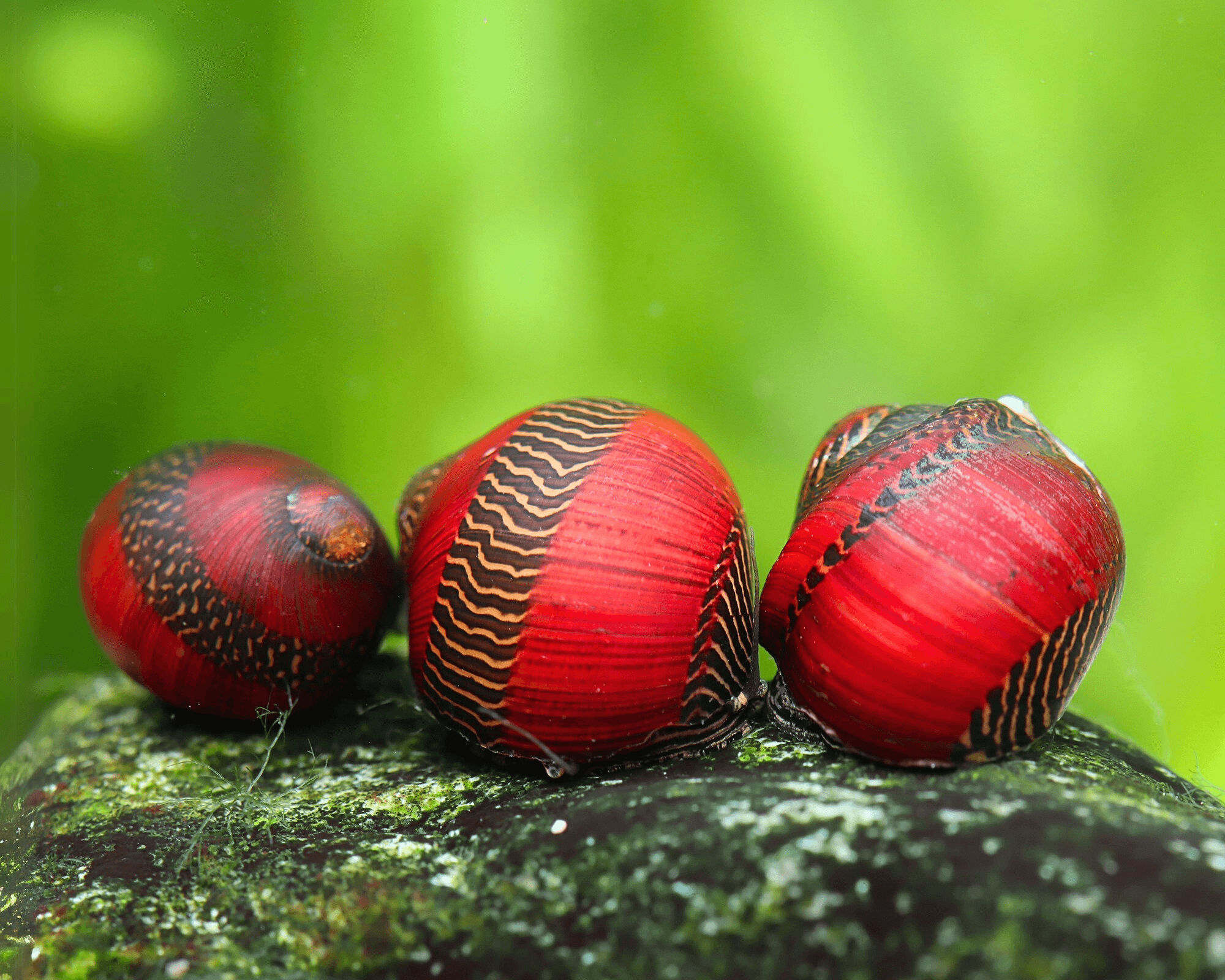
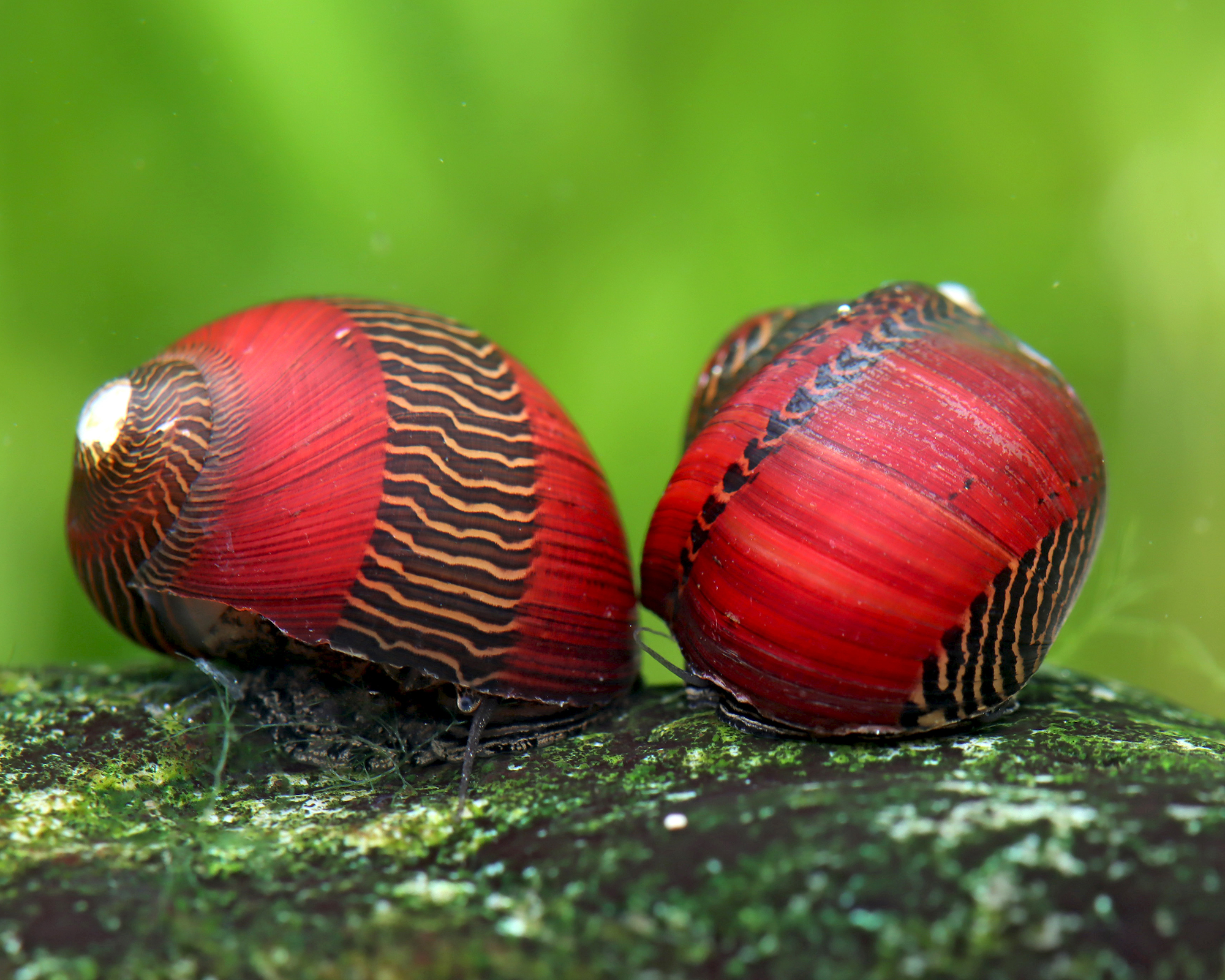
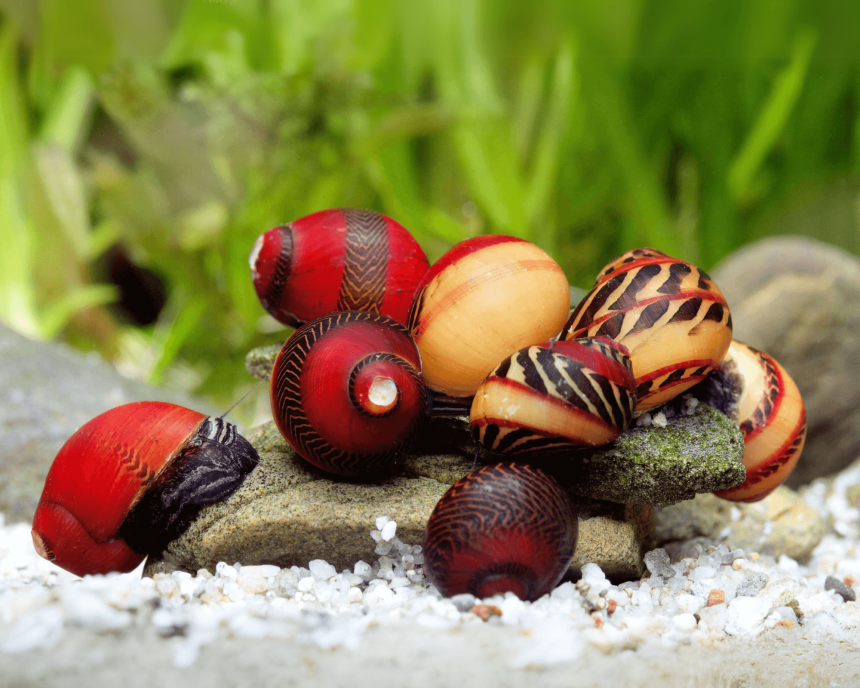
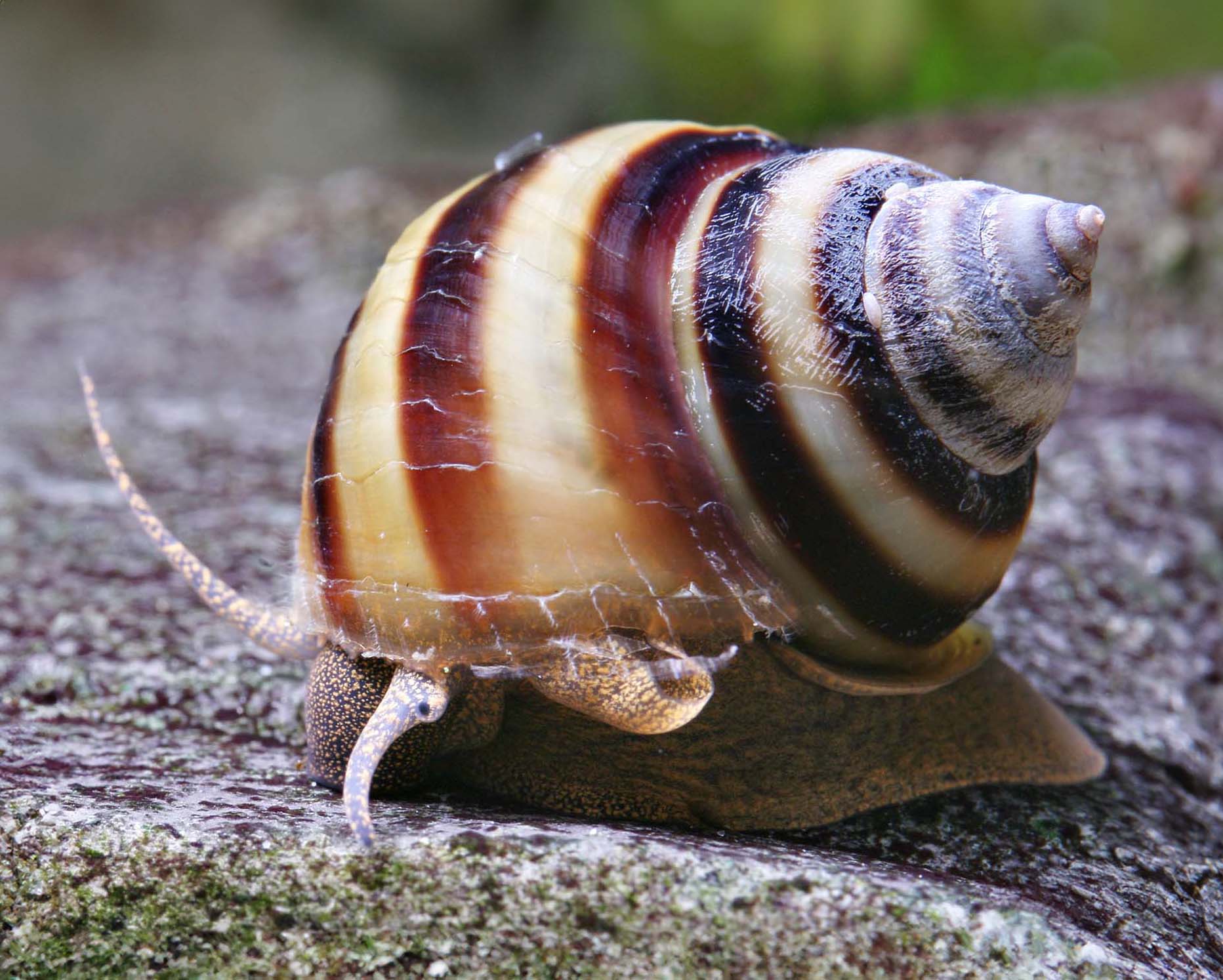
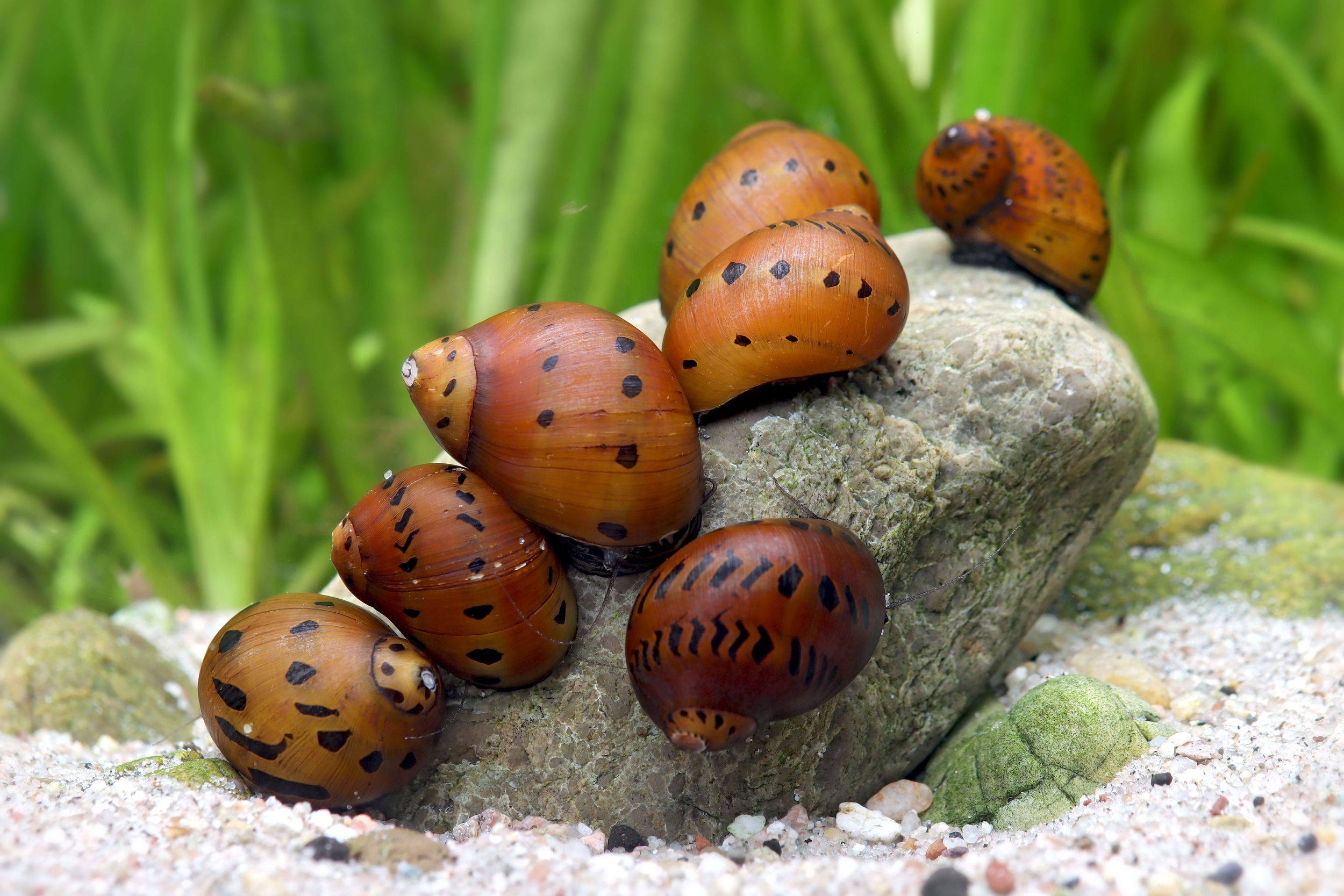
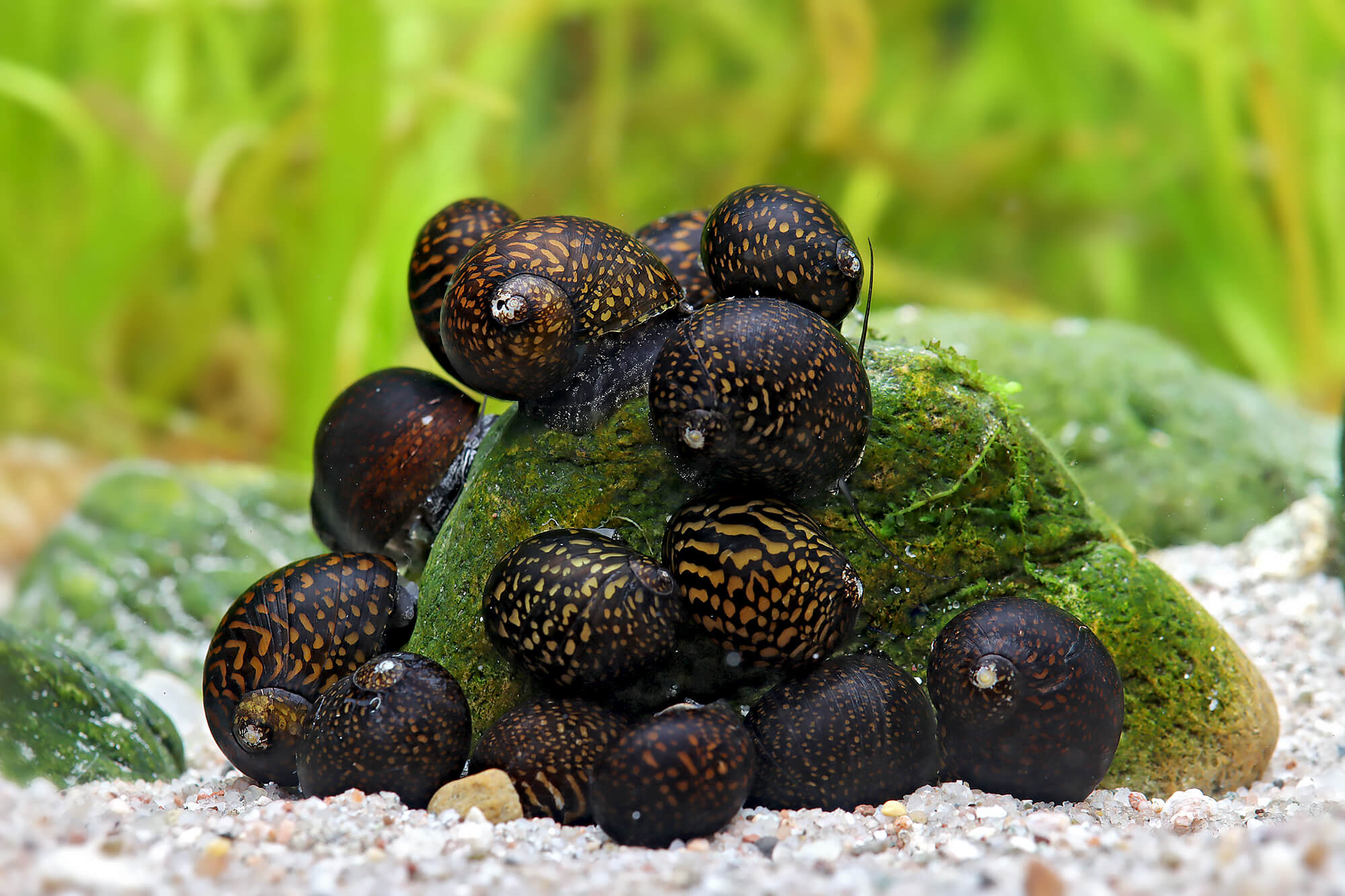
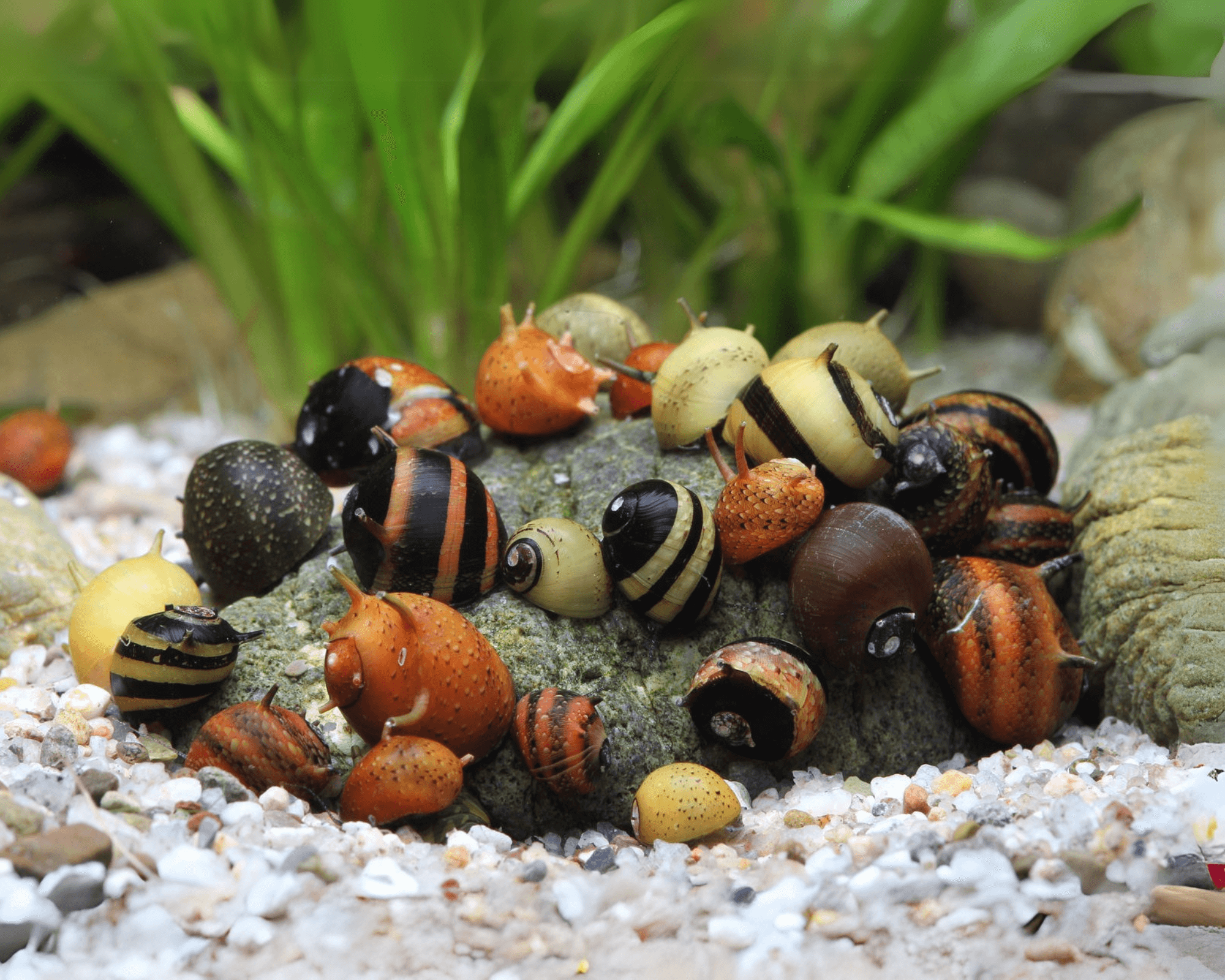
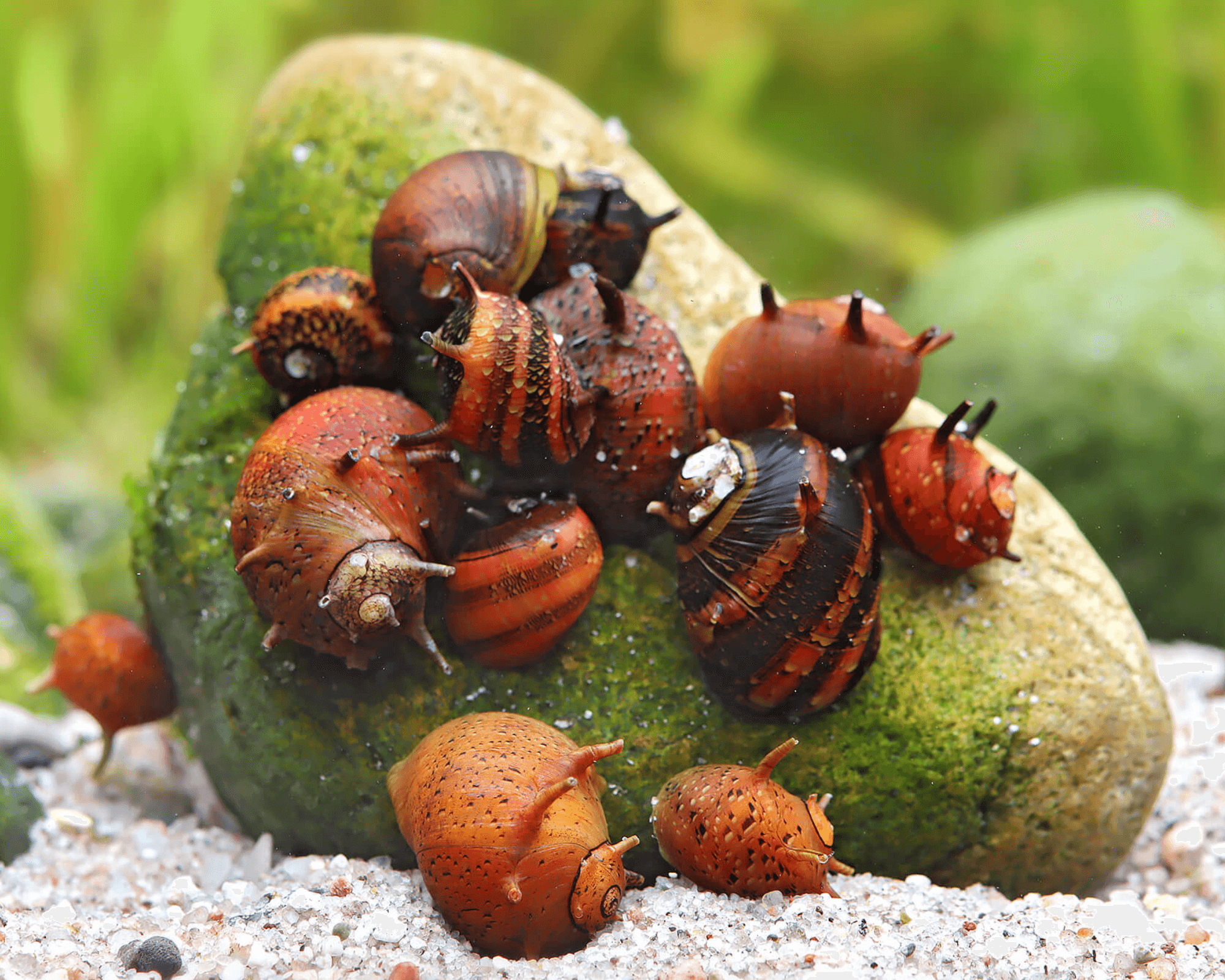
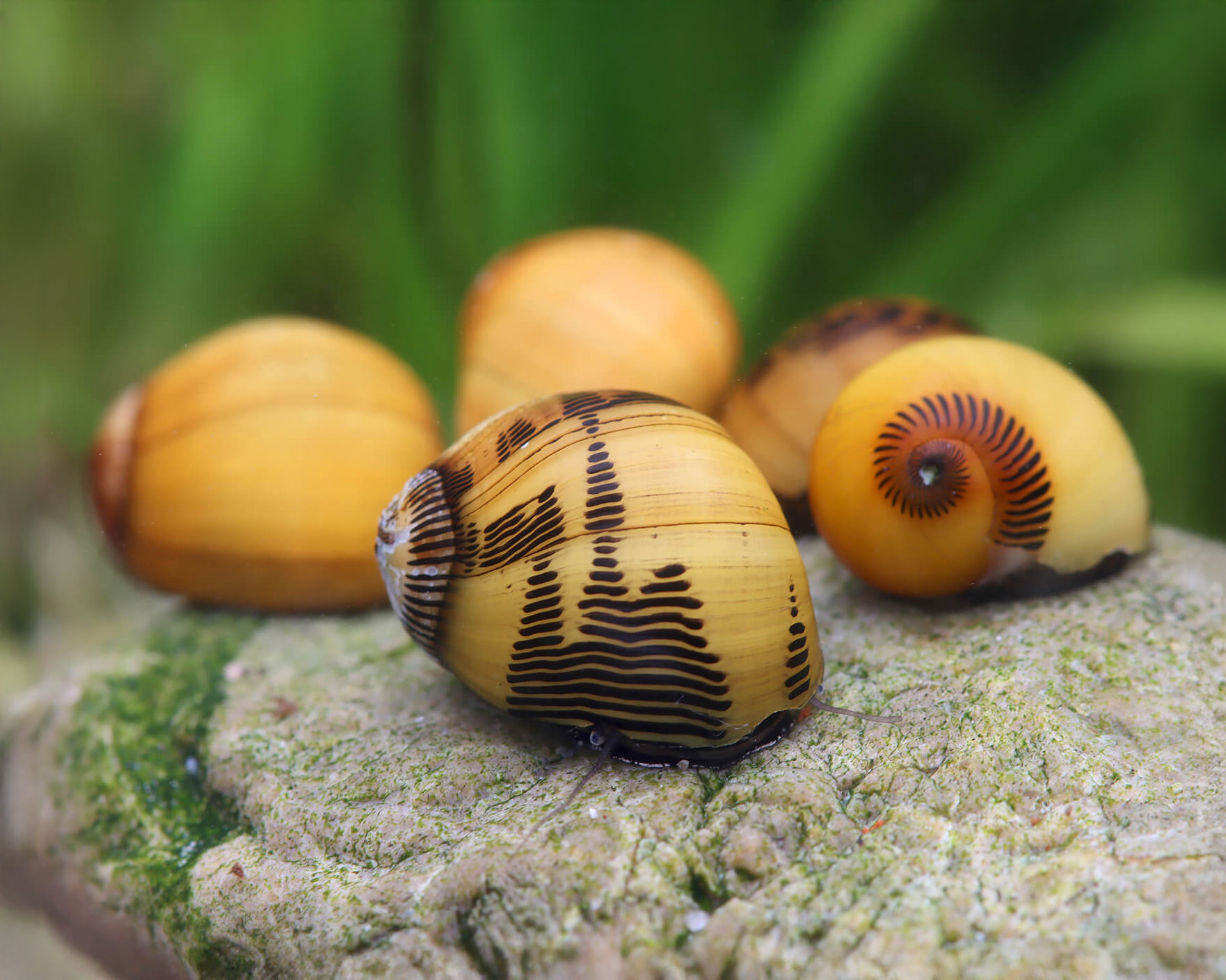
The supplied scientific name is Vittina waigiensis, a nerite snail in the family Neritidae. Deadpool Rennschnecke is a trade name rather than a formal taxon and may describe a selected shell pattern. The pictured red, dark, cream and yellow pattern is consistent with the trade designation, but shell color alone cannot guarantee species-level identification.
Natural habitat and aquarium setup
Vittina nerites are associated with shallow tropical waters, hard surfaces and areas where algae and biofilm grow. Provide a mature aquarium with established rocks, wood or other grazing surfaces, secure cover and good oxygenation. Avoid sudden changes in salinity, temperature and water chemistry. The aquarium must have a lid because nerite snails may climb above the waterline.
Water parameters
Keep the water stable, clean and moderately hard to hard, with sufficient calcium and alkalinity for shell maintenance. A practical target is 22–28 °C and pH 7.0–8.3. Avoid persistently acidic, very soft water, copper-based medications and detectable ammonia or nitrite. Calcium-rich water or an appropriate mineral supplement can help limit shell erosion, but additions should be based on measured hardness.
Feeding
The main food is naturally growing algae and biofilm on glass, stones, wood and other surfaces. In a clean or newly established aquarium, supplement with algae wafers or prepared foods suitable for herbivorous snails, and occasionally offer softened vegetables such as blanched zucchini. Remove uneaten food promptly. Do not assume that a tank contains enough algae for a large group; starvation is a common risk.
Plant safety and tank mates
This snail is generally plant-safe and grazes surface algae rather than healthy plant tissue. It may feed on weakened or decaying leaves. Choose peaceful tank mates that do not attack or repeatedly harass snails. Avoid predatory loaches, pufferfish and other known snail-eating animals. Ensure that the snail can right itself if it falls, since prolonged inability to reach a surface can be harmful.
Reproduction and young
Vittina waigiensis has separate sexes, and females may deposit small, pale egg capsules on hard surfaces. In ordinary freshwater aquariums, eggs may be seen but the larvae normally cannot complete development. Nerite reproduction involves a free-swimming larval stage that requires brackish or marine conditions and specialized food, so routine population growth in freshwater is unlikely. Do not scrape eggs aggressively from delicate surfaces; remove them carefully if their appearance is unwanted.
Population control
Because freshwater breeding is usually unsuccessful, population control mainly involves limiting the number introduced and preventing accidental additions with plants, décor or equipment. Count snails during maintenance, remove unwanted adults by hand and avoid overfeeding. Do not use copper or chemical snail killers, which can contaminate the aquarium and harm desirable invertebrates. If attempting breeding, keep any brackish culture separate from the freshwater display and plan for larval care before collecting eggs.
 - 1.webp)

 DNZ - 1.webp)
Leave your comments