Taxonomy and identification
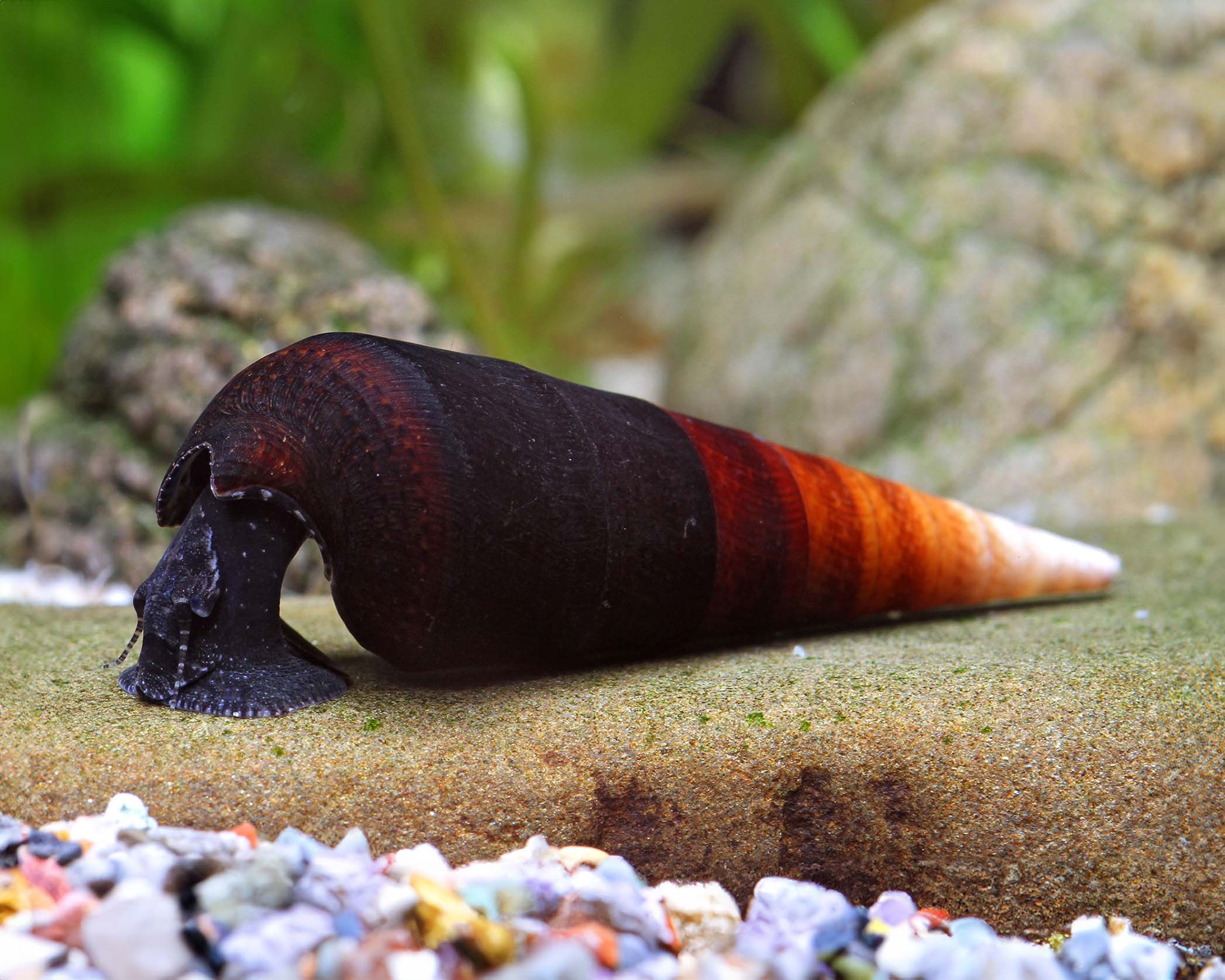
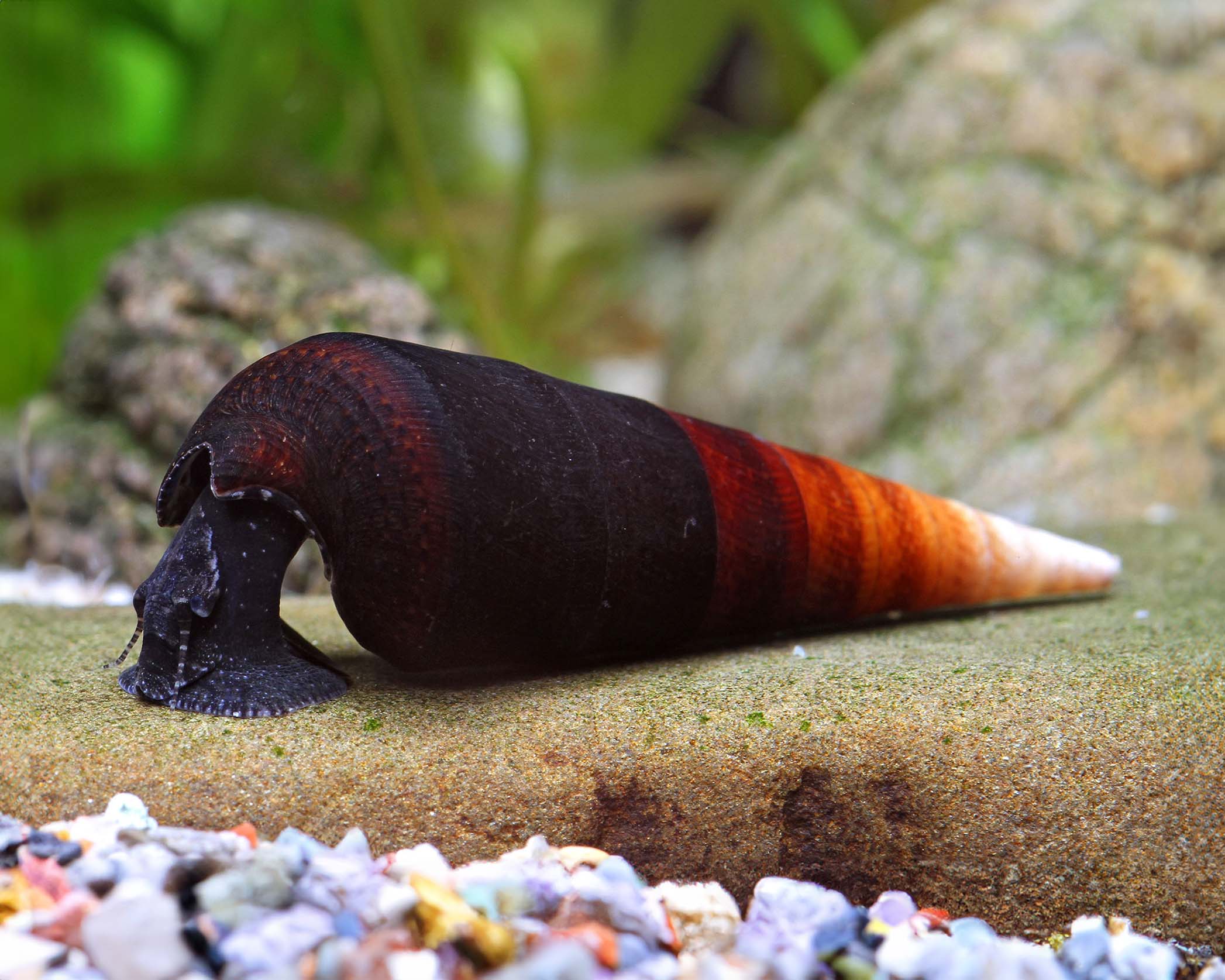
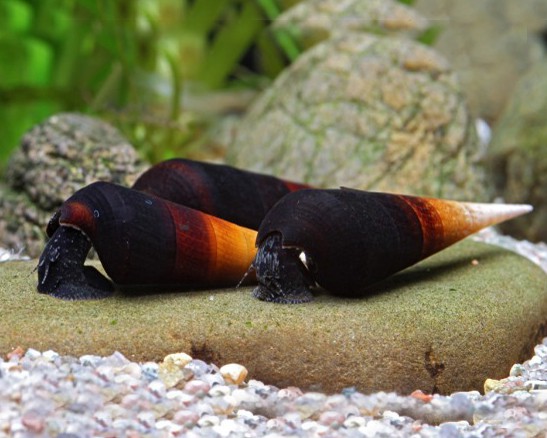
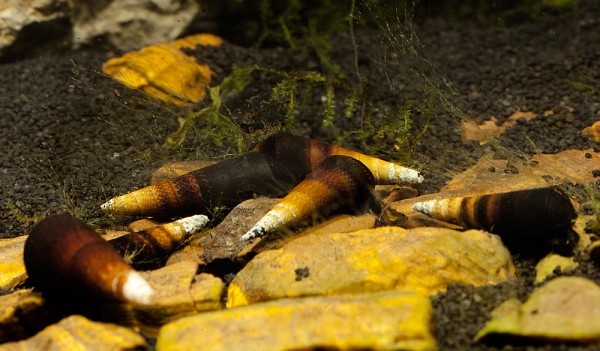
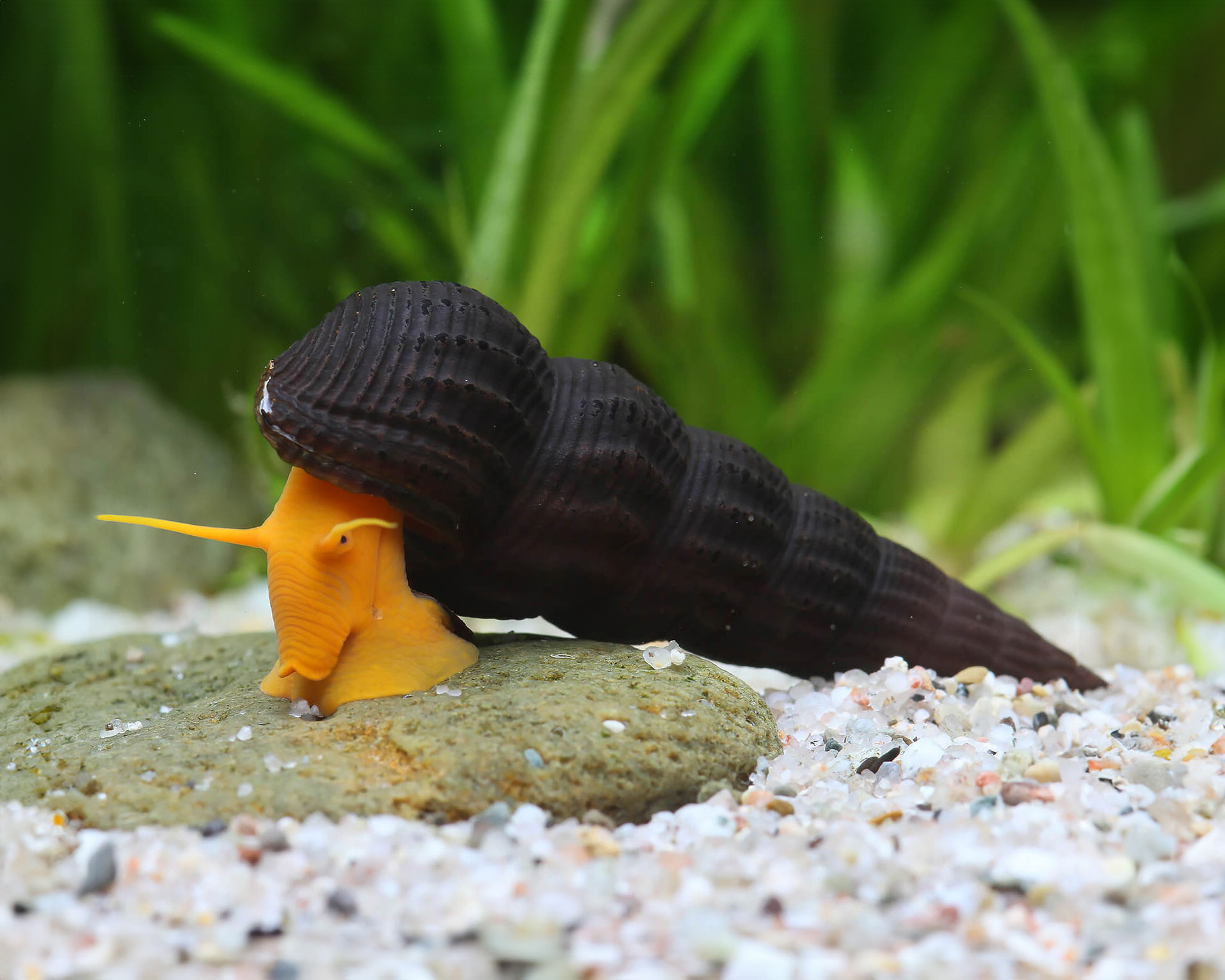
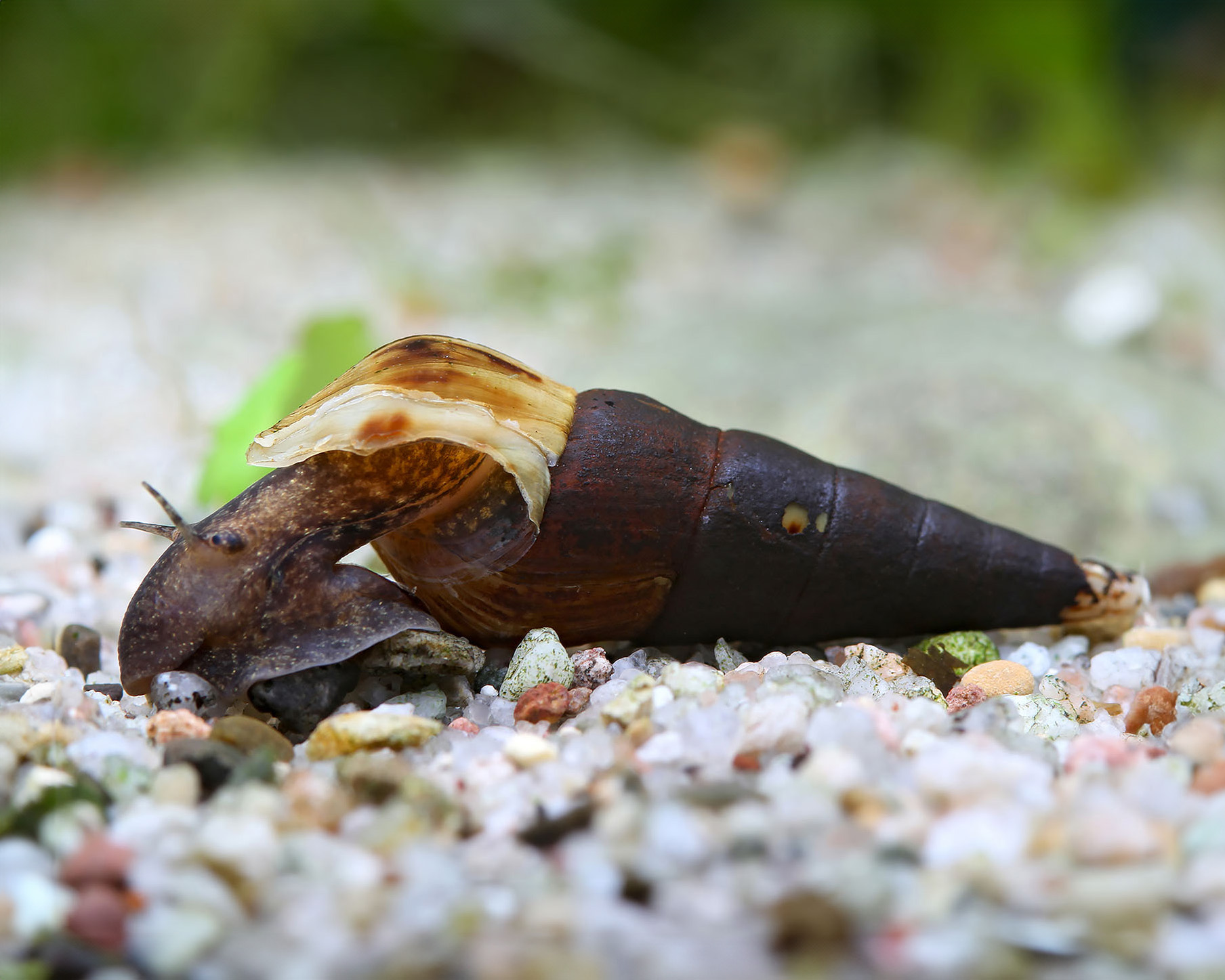
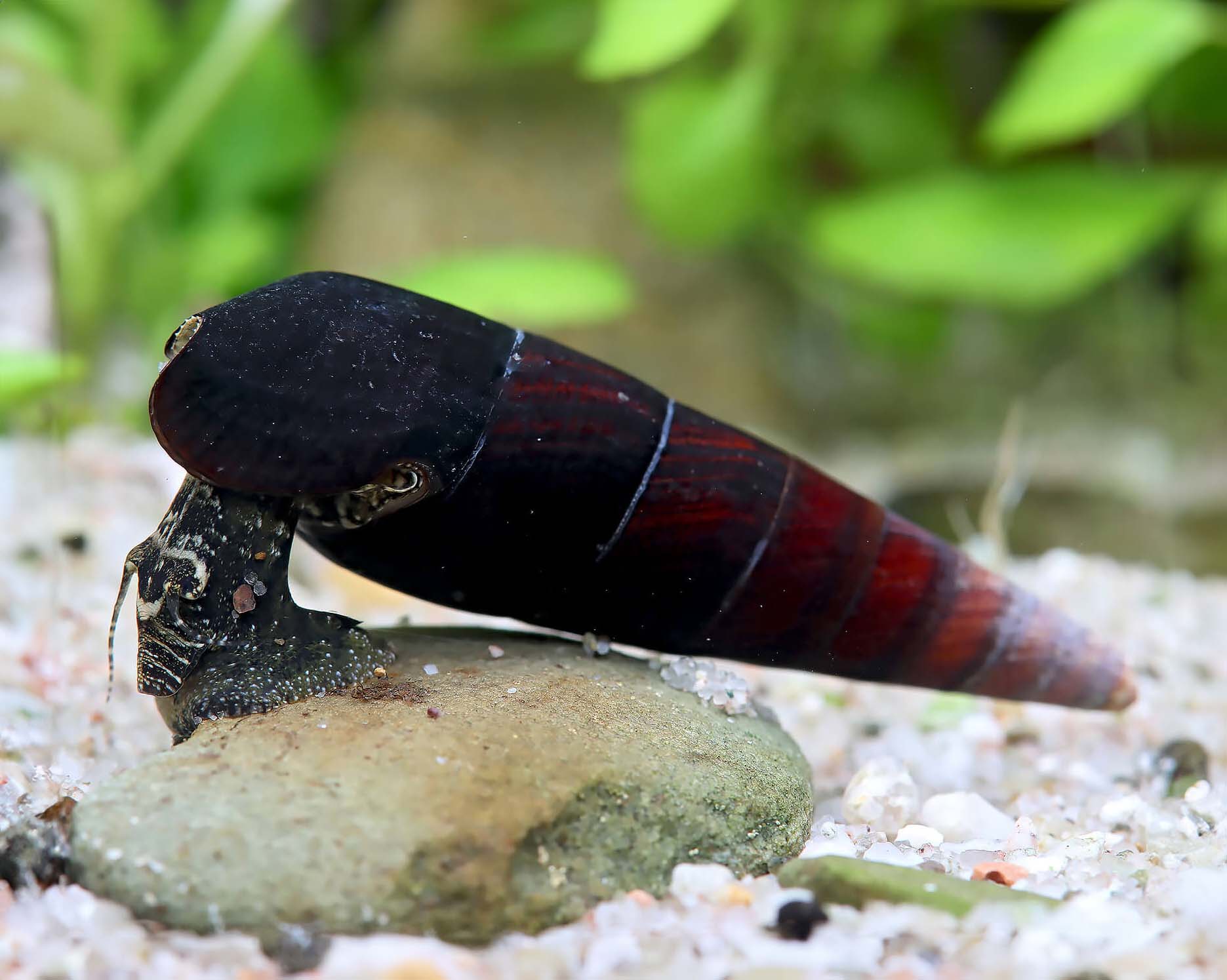
The cappuccino snail is Faunus ater, a gastropod in the family Pachychilidae. It has a long, conical, relatively heavy shell and a dark foot. Shell coloration varies, but dark brown to nearly black areas with warmer reddish, orange or pale tones are characteristic of aquarium specimens. Common names are used inconsistently in the trade, so a photograph or label alone should not be treated as definitive identification; the species attribution here follows the supplied source name.
Natural habitat
Faunus ater occurs in tropical parts of the Indo-Pacific, particularly in streams, rivers and estuarine or river-mouth habitats. It can encounter both fresh and mildly brackish conditions in nature. Provide clean, well-oxygenated water, moderate flow, a secure substrate and shaded areas. A covered aquarium is advisable because large snails may reach the waterline and crawl out.
Aquarium water
Maintain stable, mature water at approximately 22–28 °C and pH 7.5–8.5. Moderate to hard water is preferable because calcium and alkalinity support shell maintenance; the exact hardness should be kept stable rather than changed abruptly. Ammonia and nitrite must remain undetectable, and nitrate should be controlled with regular maintenance. Some individuals tolerate mildly brackish water, but salt should not be added routinely without considering the requirements of all tank inhabitants.
Feeding
This snail grazes on algae, aufwuchs, biofilm and organic material on surfaces. In a clean aquarium, supplement its natural grazing with sinking algae wafers, formulated invertebrate foods and occasional blanched vegetables such as zucchini or spinach. Remove uneaten food to protect water quality. Provide a reliable calcium source through mineral-rich food or suitable aquarium minerals rather than relying on shell fragments alone.
Plant safety and tank mates
Faunus ater is generally plant-safe and is not normally considered a specialist eater of healthy aquatic plants. It may climb over delicate leaves and can consume decaying plant tissue or associated biofilm. Avoid copper-containing medications and investigate any aggressive or predatory tank mates before adding this snail. Its substantial adult size also requires enough floor space and stable surfaces.
Reproduction
The species has separate sexes, and reproduction is not usually rapid in standard freshwater aquaria. Its life cycle includes planktonic larvae, commonly described as requiring particular conditions associated with freshwater-to-estuarine environments. Consequently, adults may live for a long time without producing surviving young in a typical community tank. Do not assume that a lack of juveniles indicates poor health.
Population control
Population increases are usually limited by the species' life cycle, but avoid overfeeding because excess food can attract unwanted pest snails and degrade water quality. If numbers must be reduced, remove surplus adults by hand and rehome them responsibly. Never release aquarium snails or water outdoors. Keep the aquarium covered, inspect plants and equipment for hitchhikers, and avoid chemical snail killers that can harm other invertebrates and pollute the tank.
 - 1.webp)

 DNZ - 1.webp)

Leave your comments