Taxonomy and identification
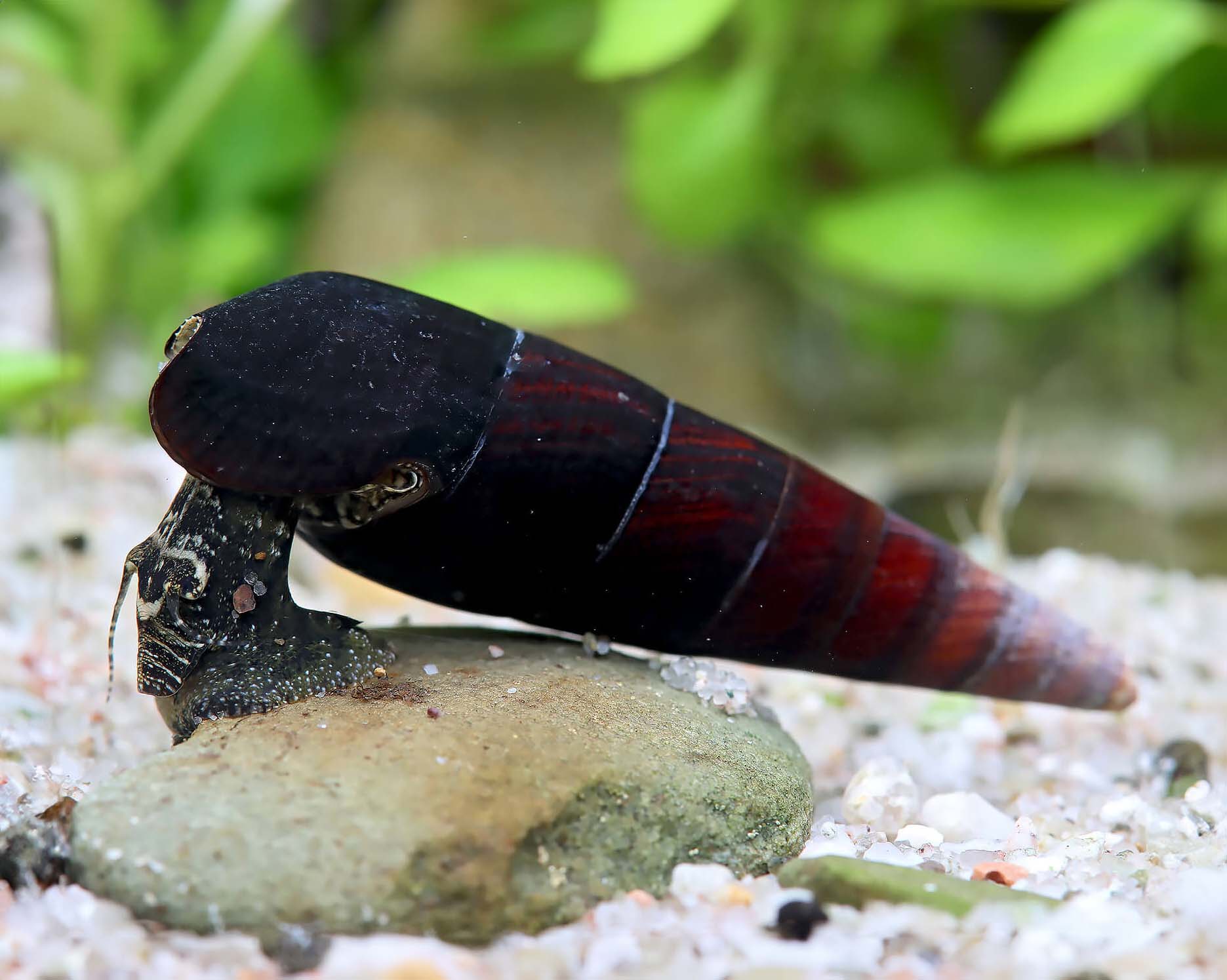
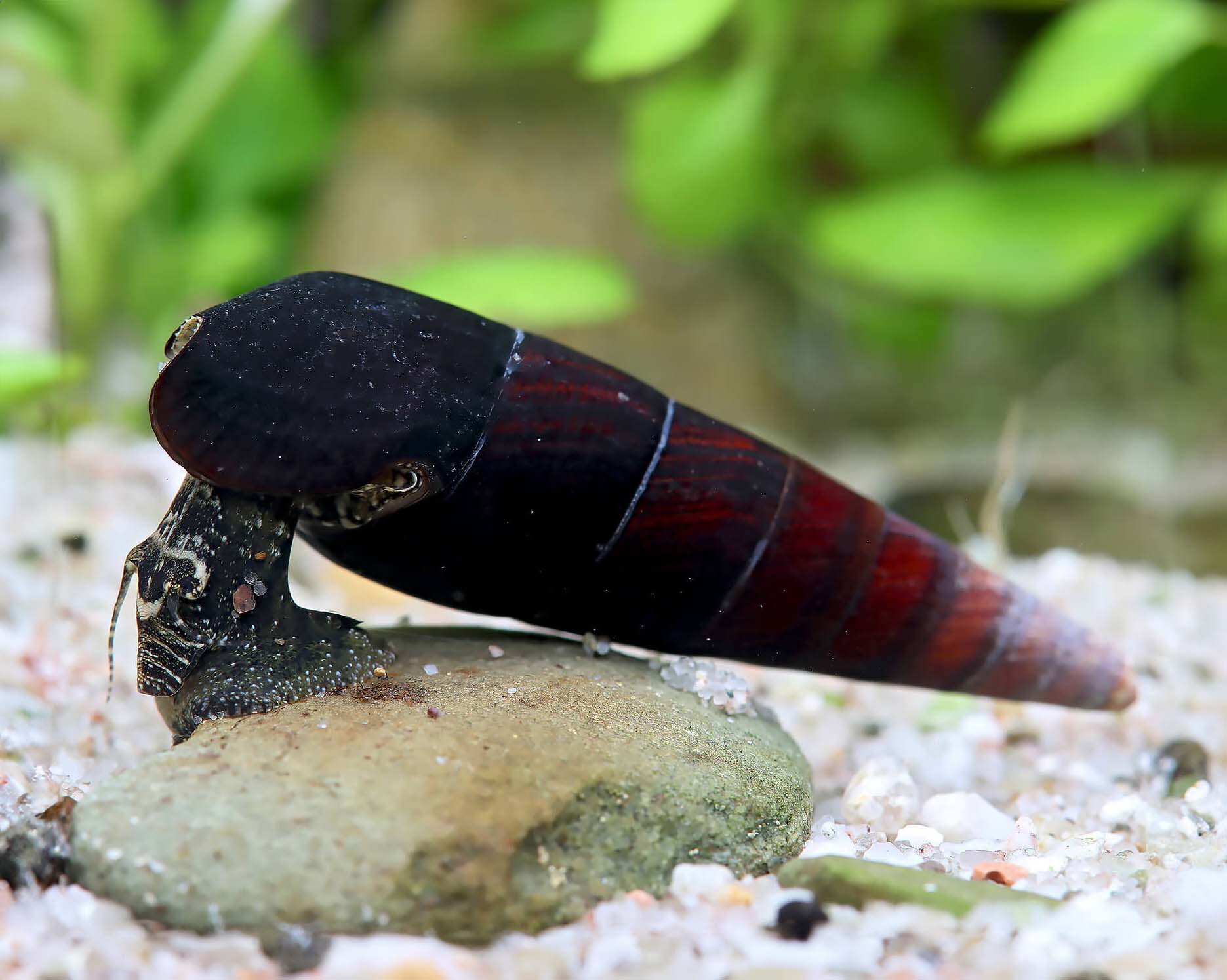
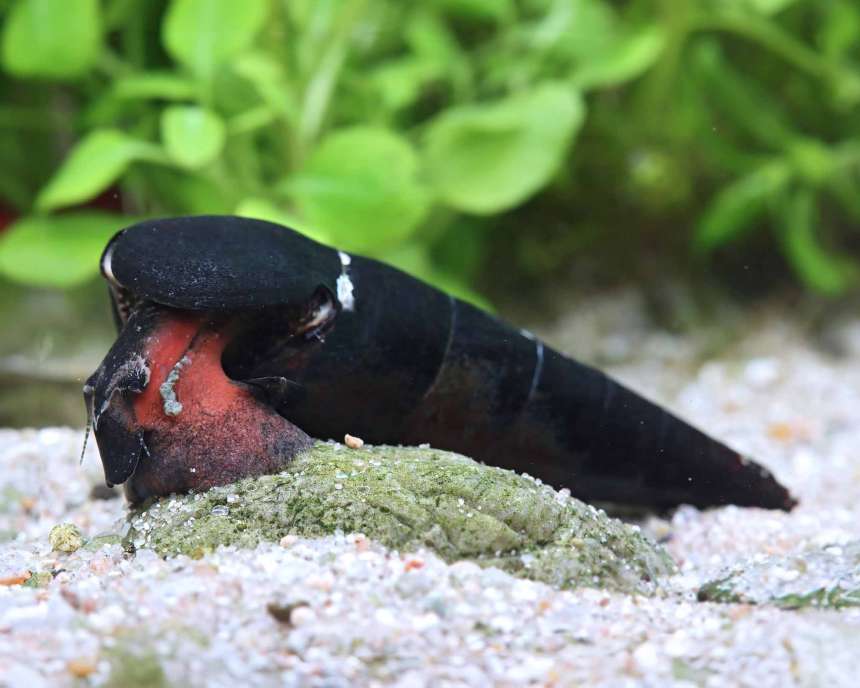
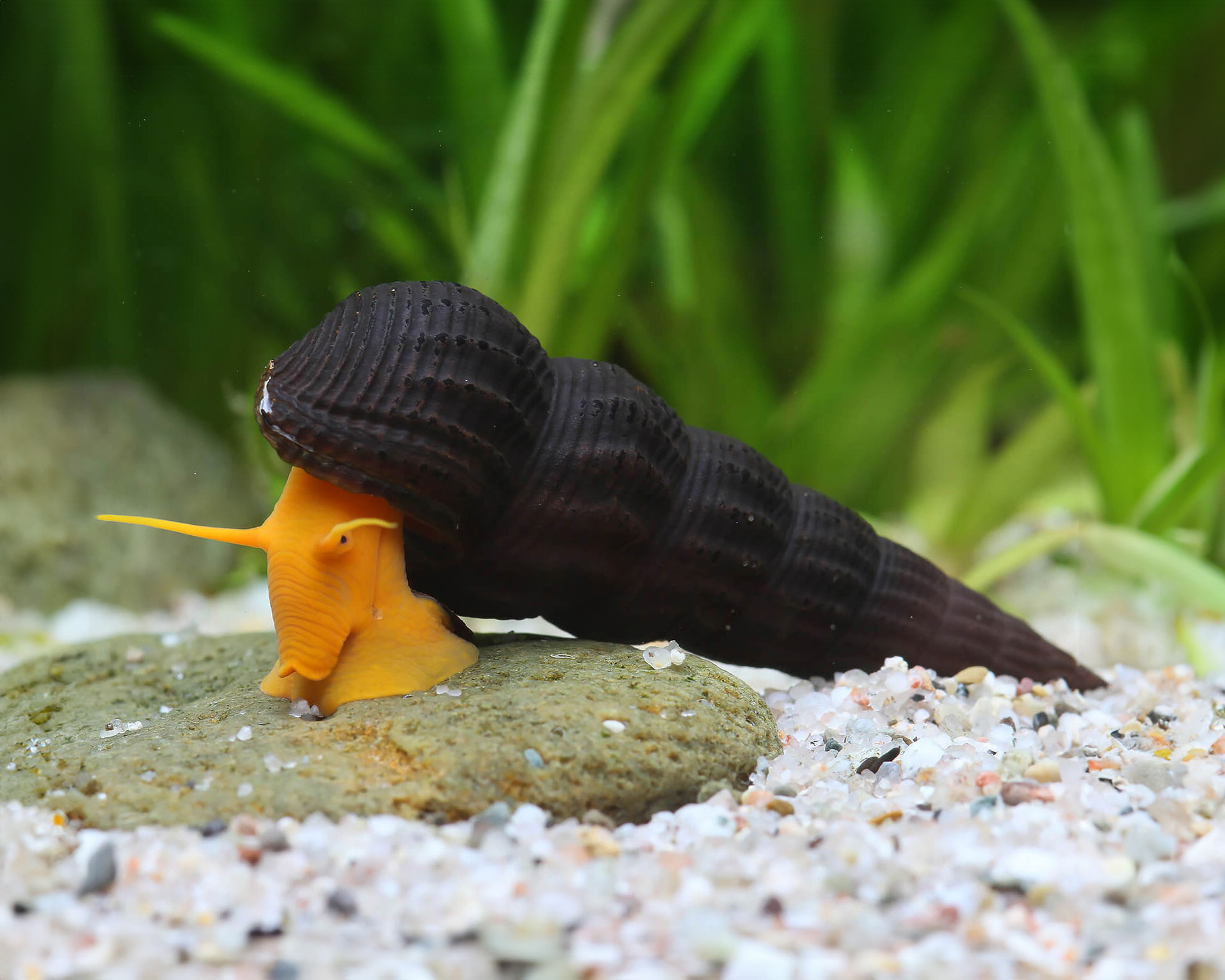
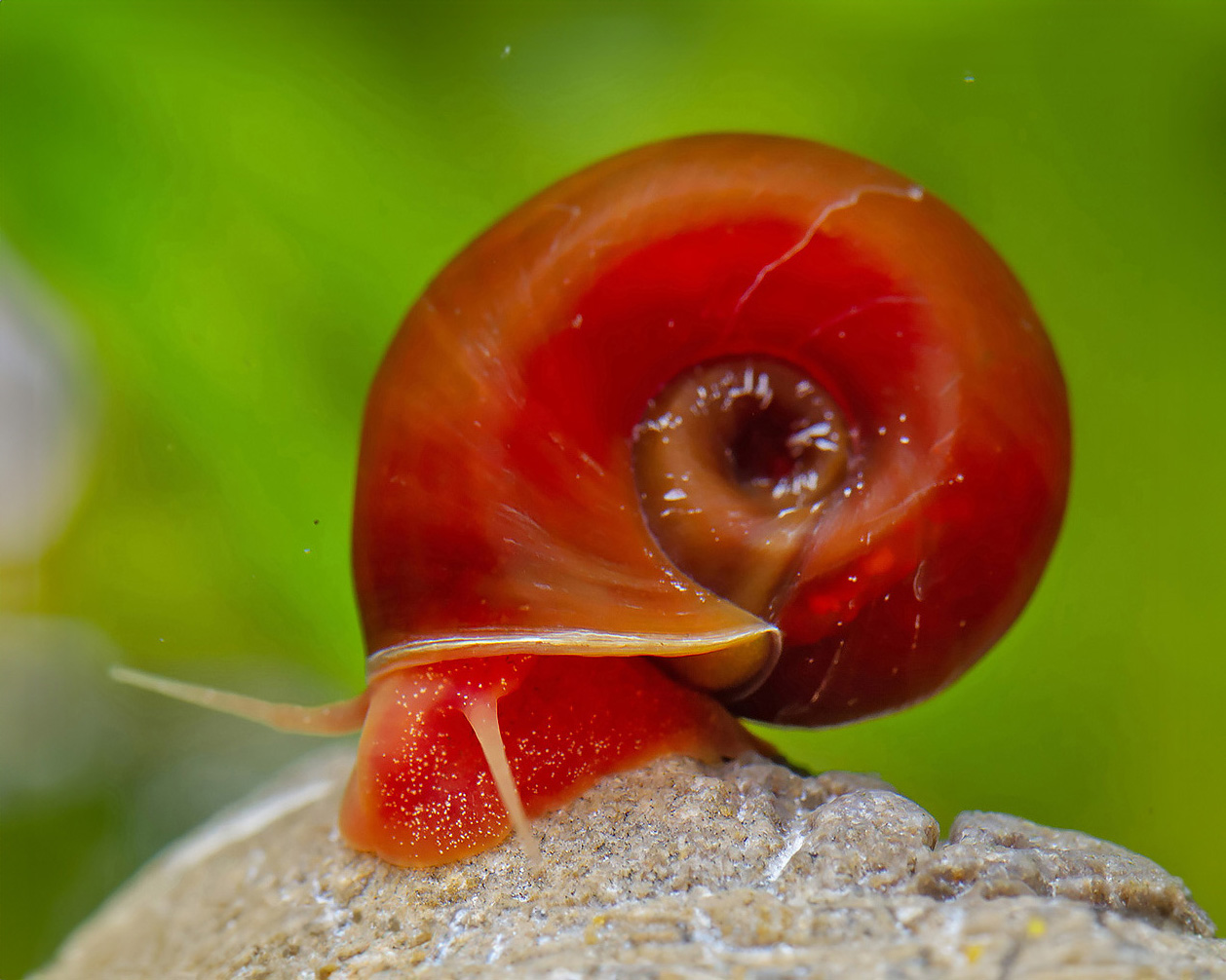
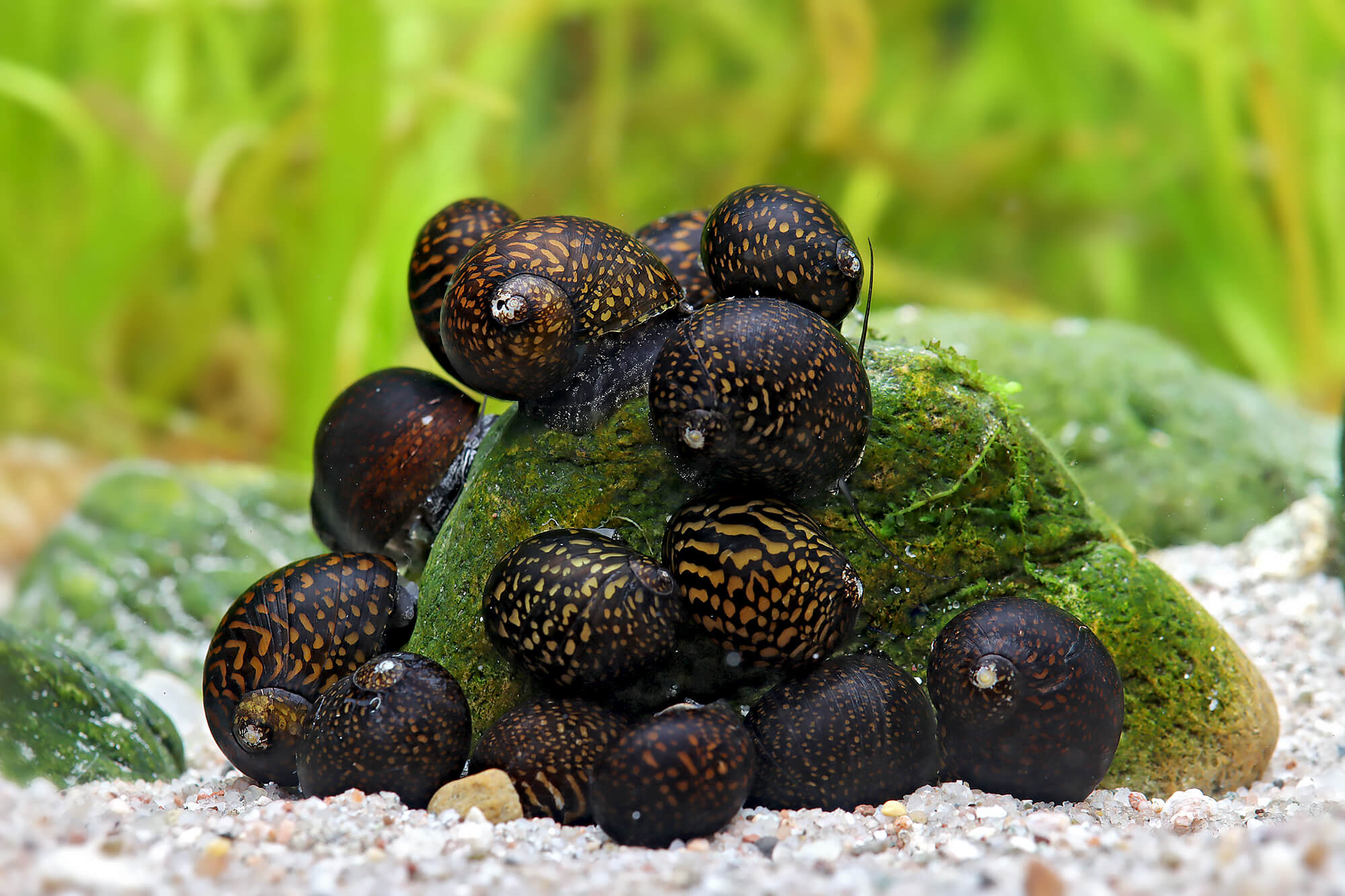
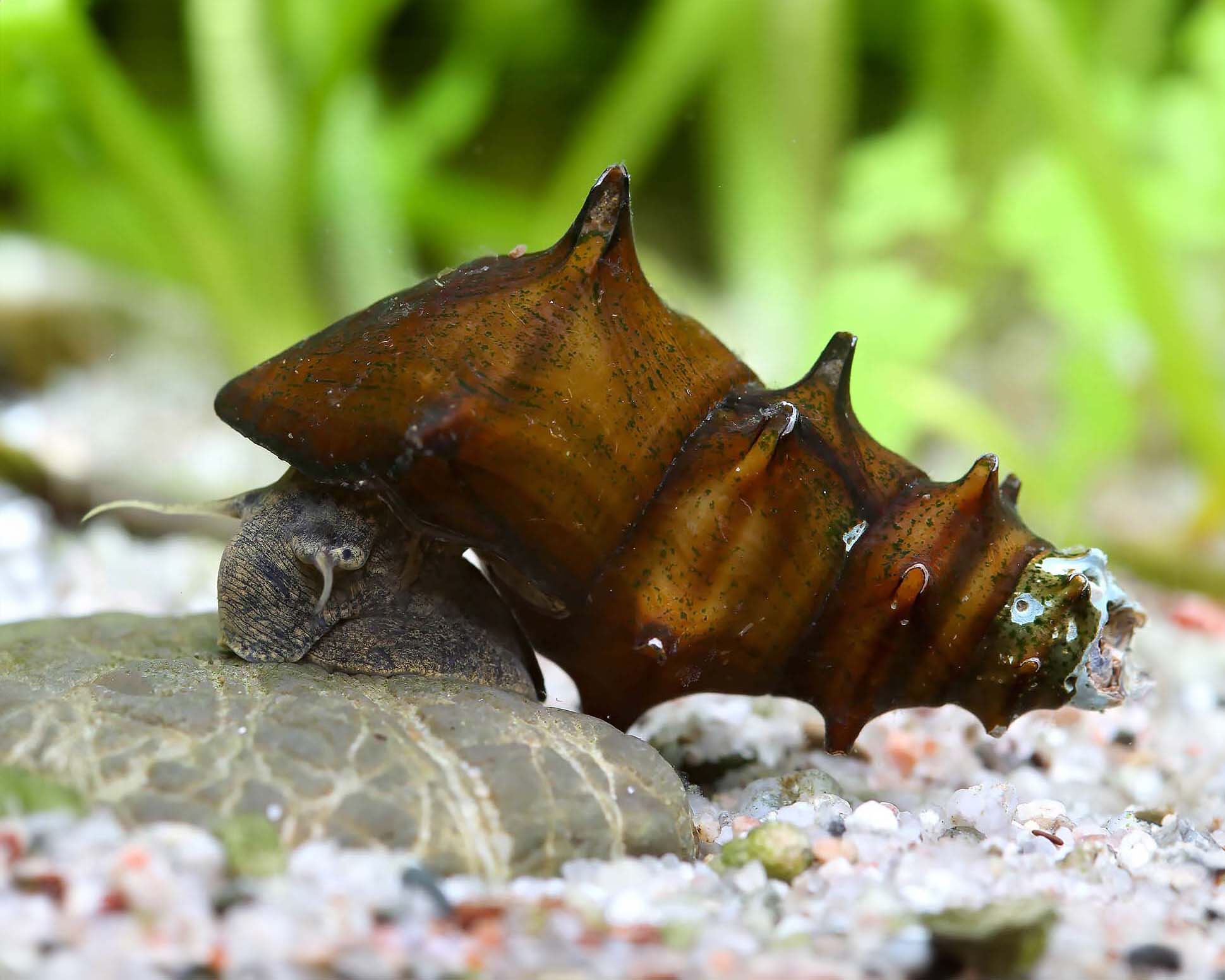
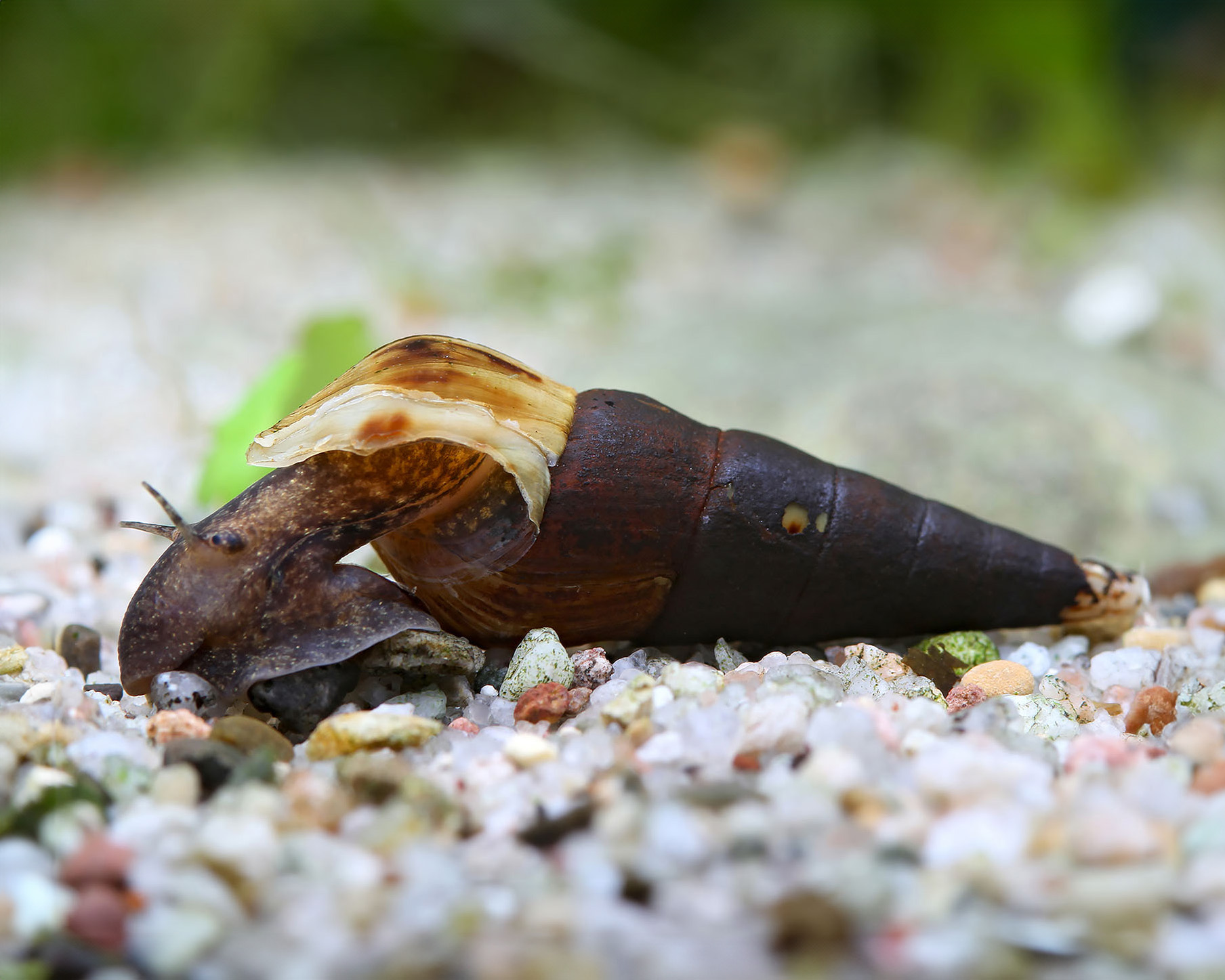
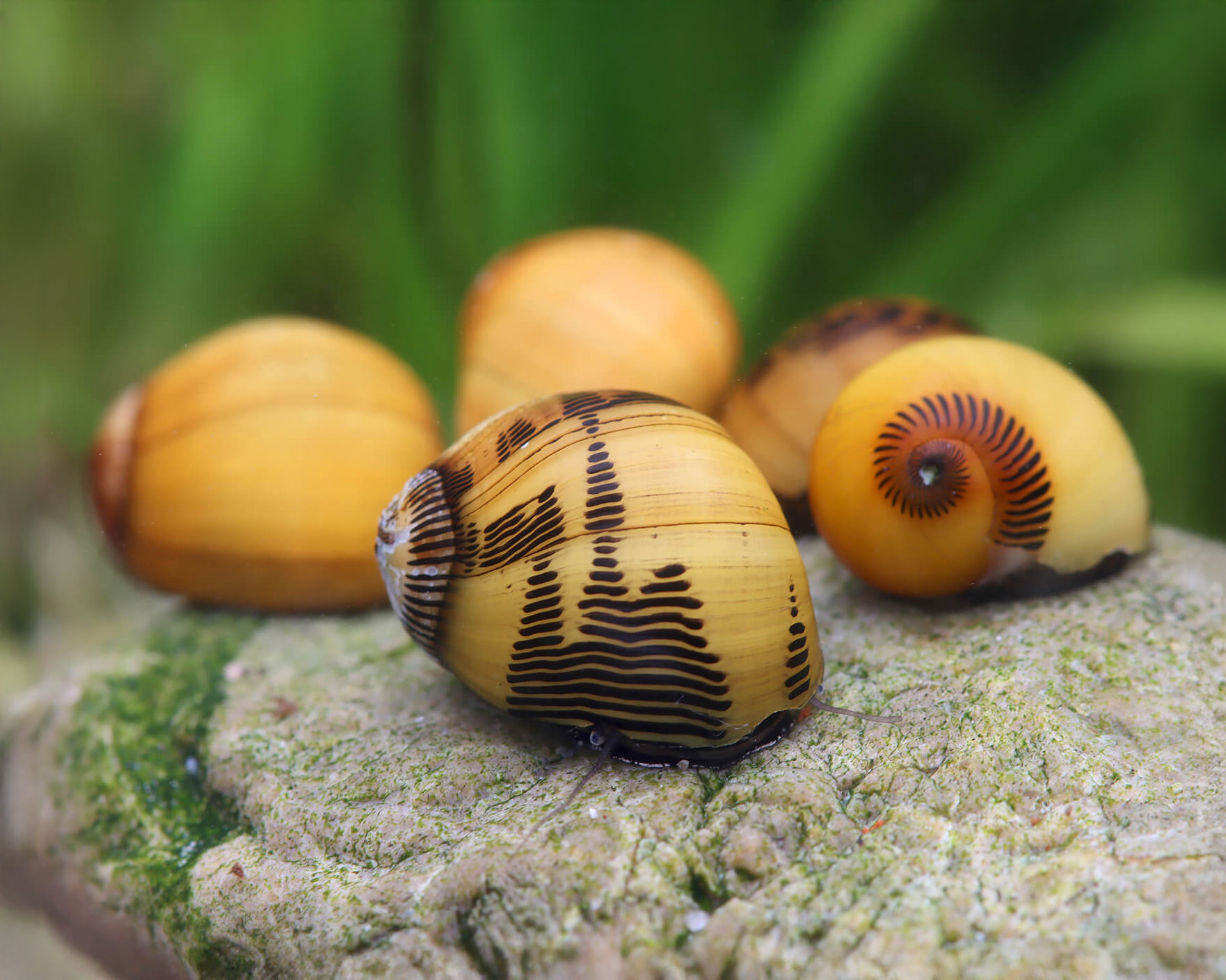
The Devil's Thorn Snail is Faunus ater, a gastropod in the family Pachychilidae. It has a long, tapered, heavy shell with a dark brown to black base and may show reddish, orange-brown or paler growth bands. The common name is also used loosely in the aquarium trade, so exact identification should not be based on shell colour alone; the supplied photographs are consistent with F. ater but do not establish identity with complete certainty.
Natural habitat
Faunus ater occurs in tropical Indo-West Pacific regions, including freshwater rivers and streams connected to estuaries. It is commonly associated with sand, mud, stones, submerged wood and plant-covered surfaces. Flowing, well-oxygenated water and mineral-rich conditions suit it. Its life cycle can involve brackish or marine water, which is important when considering breeding.
Aquarium conditions
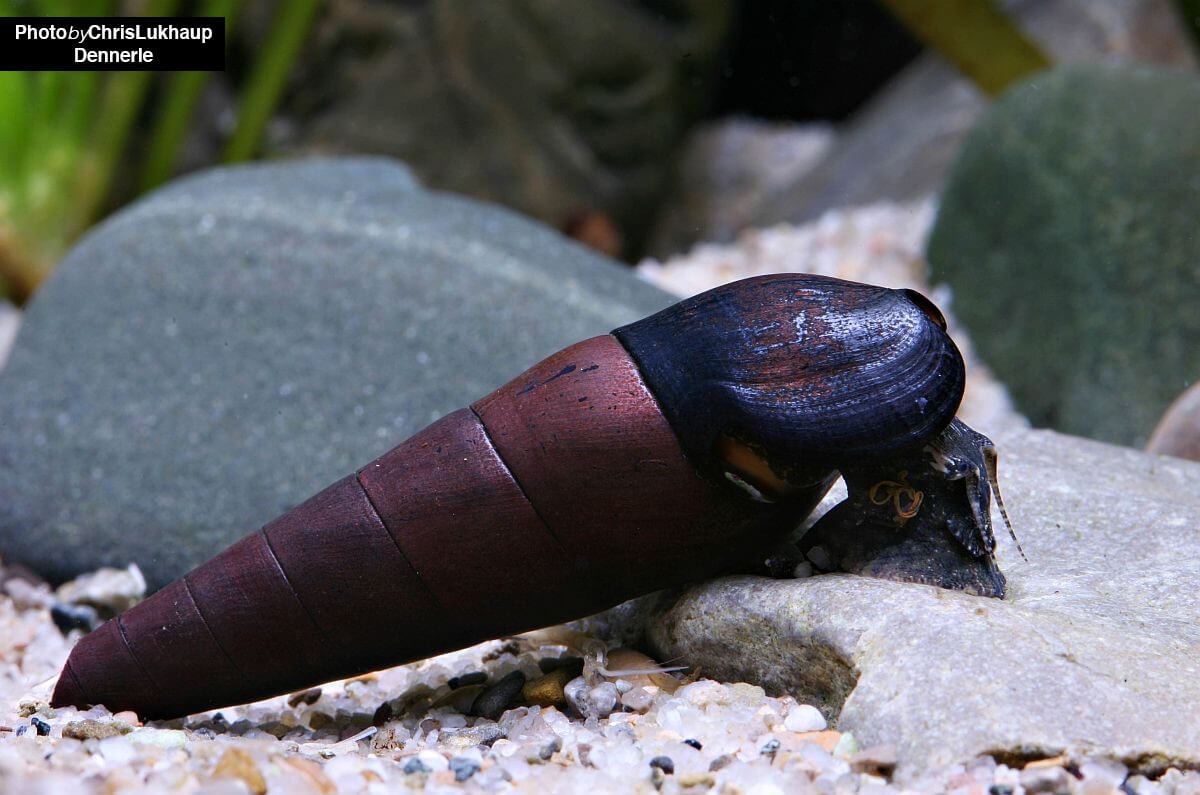
Keep this snail in a mature, stable aquarium with clean, oxygenated water and a secure cover because it may climb above the waterline. Use sand or smooth gravel and provide stones, wood or other surfaces for grazing. Maintain moderate hardness and an alkaline to neutral pH so the shell is not gradually eroded. Avoid copper-based medications and sudden changes in salinity, temperature or pH. The temperature and pH ranges listed are practical husbandry ranges rather than precise limits for every population.
Feeding
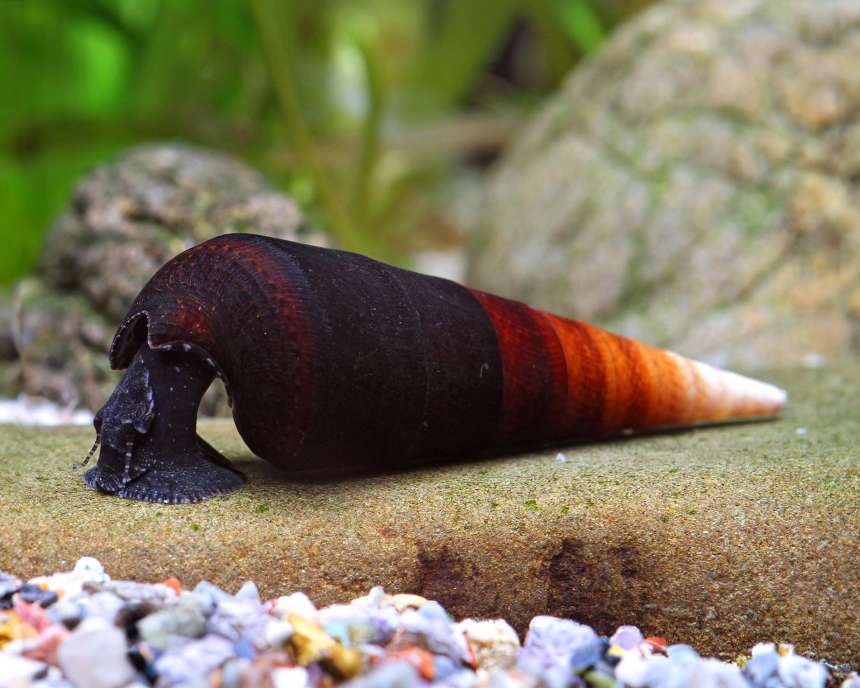
This species grazes on algae, biofilm and organic deposits on hard surfaces, but a clean aquarium may not provide enough food. Supplement with sinking foods such as algae wafers or other invertebrate-safe tablets, and offer occasional blanched vegetables. Remove uneaten food before it decays. A varied diet and adequate calcium in the water and food support shell maintenance.
Plant safety
Faunus ater is generally safe with healthy aquatic plants. It mainly grazes surfaces and scavenges rather than cutting living leaves. It may crawl over delicate plants or disturb newly planted specimens while moving, particularly in loose substrate, but significant plant damage is not expected. Protect very young plants until their roots are established.
Reproduction
Faunus ater has separate sexes, and successful reproduction is not usually expected in ordinary freshwater aquaria. The species is associated with a larval stage that requires suitable brackish or marine conditions, so adults may coexist without producing a self-sustaining freshwater population. Reproductive details can vary among populations, and aquarium trade reports should not be assumed to apply to every specimen.
Population control
Population growth is normally limited by reproduction and food availability, but inspect new plants and equipment for unwanted snails. If numbers increase, remove surplus adults by hand, reduce excess feeding and maintain a consistent cleaning routine. Do not use copper or unverified snail-killing chemicals in a display aquarium, since they can harm other invertebrates and contaminate the system. Never release Faunus ater or aquarium water into natural waterways.
 - 1.webp)

 DNZ - 1.webp)

Leave your comments