Overview
The Glowlight Tetra, scientifically known as Hemigrammus erythrozonus, is a staple in the freshwater aquarium hobby. Admired for its hardiness, peaceful demeanor, and stunning neon-like stripe, this small characin is an excellent choice for both beginner and expert aquarists alike. The "DNZ" designation often found in the trade stands for "Deutsche Nachzucht," indicating high-quality, captive-bred specimens from Germany, which are typically more adaptable to standard aquarium conditions than wild-caught counterparts.
Distribution and Habitat
This species is strictly endemic to the Essequibo River basin in Guyana, South America. In its natural habitat, the Glowlight Tetra inhabits slow-moving, forested streams. These waters are typically heavily shaded by overhanging canopy and stained with tannins from decaying leaf litter, creating a soft, acidic, and dimly lit blackwater environment.
Description of Glowlight Tetra
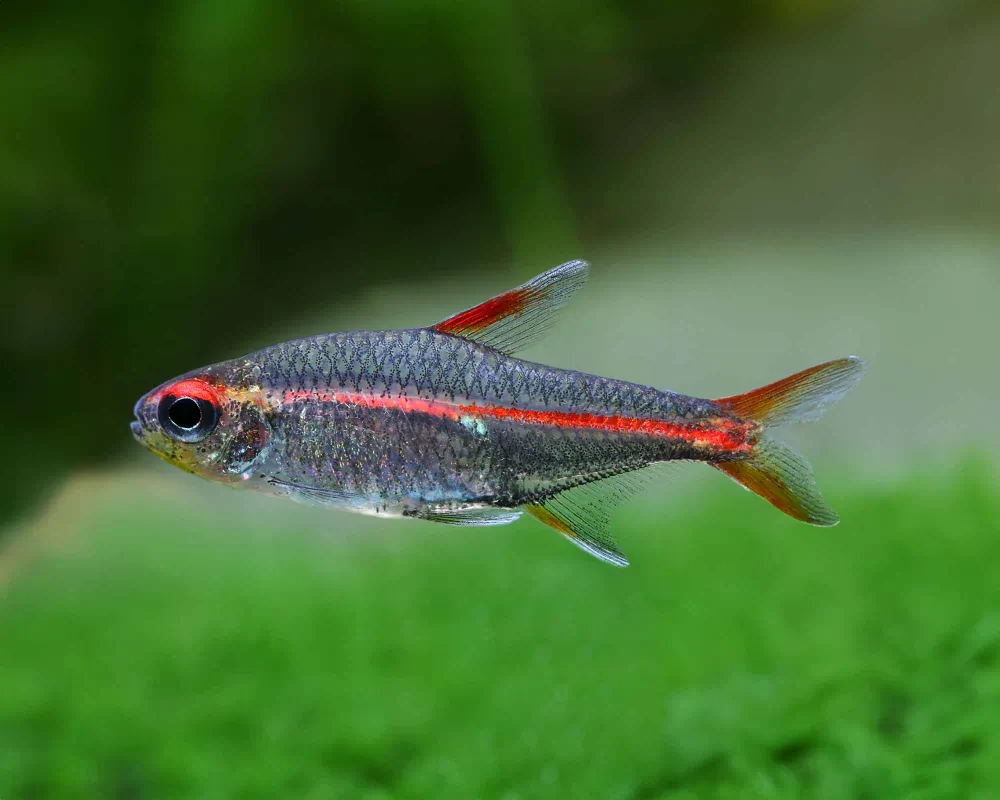
The Glowlight Tetra is instantly recognizable by the glowing line that runs laterally down its body, making it appear as though it is illuminated from within.
Body shape:
They possess a classic tetra profile—a torpedo-shaped body that is somewhat laterally compressed, allowing for quick, agile movements through densely vegetated waters.
Color:
The base body coloration is semi-transparent or clear-silver, sometimes with a faint peach hue. Its defining feature is a brilliant, iridescent red-to-orange stripe extending from the snout, through the eye, and all the way to the base of the tail.
Barbels:
Like other characins, the Glowlight Tetra does not possess any barbels.
Snout:
The snout is relatively short and slightly rounded, featuring a small, terminal mouth designed for capturing small aquatic invertebrates.
Eyes:
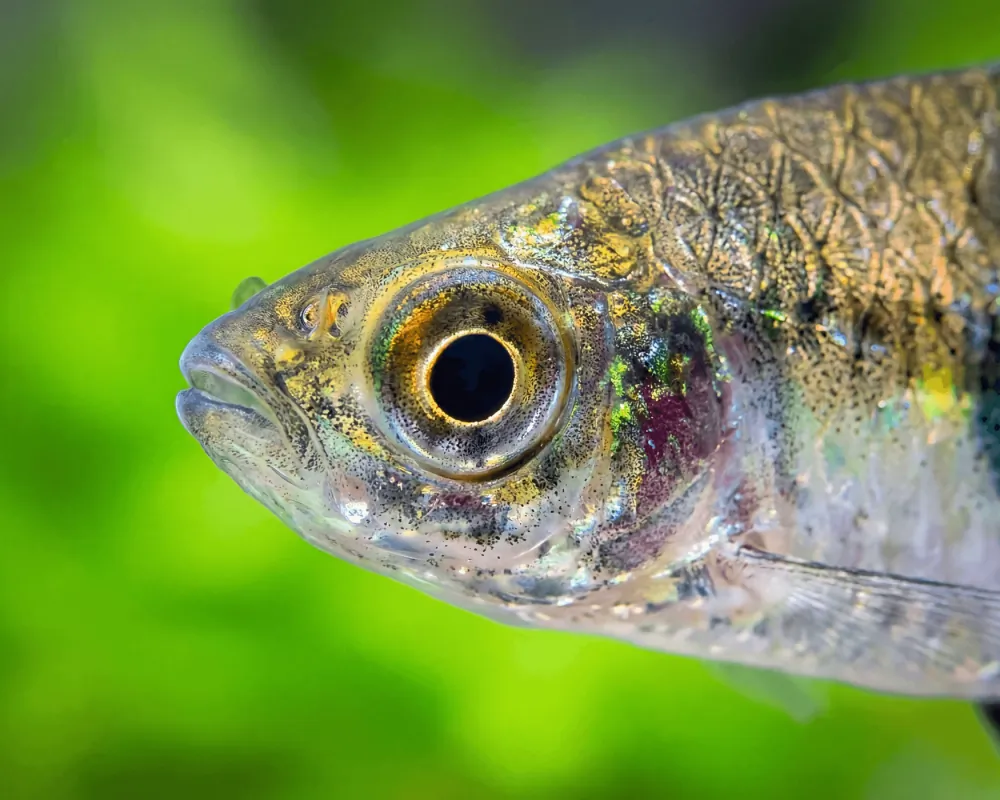
The eyes are comparatively large. The upper half of the iris shares the same intense red-orange coloration as the lateral stripe, while the lower half is usually silver.
Fins:
The fins are mostly transparent, though the dorsal fin boasts a prominent red or orange streak along its anterior edge. The anal fin may occasionally show a slight white tipping.
The Tail:
The caudal (tail) fin is deeply forked and generally transparent, allowing the bright stripe at the caudal peduncle to stand out prominently.
Temper
This is a remarkably peaceful fish. It rarely bothers tank mates and is easily intimidated by larger, boisterous species. Their gentle nature makes them an ideal candidate for a tranquil community aquarium.
Sociality
Glowlight Tetras are highly social, obligate schooling fish. They must be kept in groups of at least six, though larger shoals of ten or more will encourage more natural behaviors, better coloration, and a greater sense of security.
Activity
They are active swimmers that typically occupy the middle to lower levels of the water column. When kept in a proper school, they will spend much of their day darting playfully among plants and exploring their environment together.
Keeping and Caring for Glowlight Tetra
Caring for Glowlight Tetras is relatively straightforward. Because captive-bred specimens are highly adaptable, they can thrive in a variety of setups, provided the water is kept clean and stable.
Tank size:
A minimum tank size of 60 liters (15 gallons) is recommended for a small school. A longer footprint is preferred over a tall tank, as it provides more horizontal swimming space.
Water Parameters:
While adaptable, mimicking their natural habitat will yield the best health and coloration.
Temperature
Maintain the water temperature between 24-28°C (75-82°F).
pH
They prefer slightly acidic to neutral water, with a pH range of 5.8 to 7.5.
Hardness
Soft to moderately hard water is acceptable, ideally between 2 and 15 dGH.
Ammonia, Nitrite, Nitrate
Ammonia and Nitrite must always be at 0 ppm. Nitrates should be kept as low as possible, ideally below 20 ppm, through regular water changes.
Lighting
Subdued or dim lighting is highly recommended. Floating plants can be used to diffuse harsh overhead lights, which will also make the tetra's glowing stripe stand out much more vividly.
Water flow
A gentle to moderate water flow is ideal, simulating the slow-moving streams of their native habitat.
Decorations and Plants
A dark substrate will beautifully highlight their colors. The tank should be heavily planted around the edges with plenty of open swimming space in the center. Driftwood, twisted roots, and dried botanicals (like Indian almond leaves) will recreate their natural environment and release beneficial tannins.
Diet
Glowlight Tetras are omnivorous micro-predators. In the aquarium, they will readily accept high-quality dry flakes and micro-pellets. To ensure optimal health and coloration, their diet should be supplemented with small live or frozen foods such as daphnia, brine shrimp, and bloodworms.
Some Feeding Tips
Because of their small mouths, ensure all food is appropriately sized. Feed them small amounts once or twice a day—only what they can consume within a couple of minutes—to prevent overfeeding and water degradation.
Breeding
Breeding Glowlight Tetras is a rewarding experience. They are egg-scatterers and exhibit no parental care. To breed them, set up a separate, dimly lit breeding tank with very soft, acidic water and a substrate of marbles or dense fine-leaved plants like Java moss where the eggs can fall out of reach of the hungry parents. Condition the adults with high-quality live foods. Spawning usually occurs in the morning. Once eggs are spotted, remove the adult fish immediately. The fry will hatch in 24-36 hours and will require infusoria or specialized liquid fry food until they are large enough to accept baby brine shrimp.
Conclusion
The Glowlight Tetra is an absolute gem in the freshwater aquarium hobby. Its undemanding nature, peaceful temperament, and breathtaking iridescent stripe make it a perfect addition to any planted community tank. By providing them with a proper school, a balanced diet, and stable water conditions, you can enjoy the mesmerizing beauty of these little fish for years to come.










Leave your comments