Overview
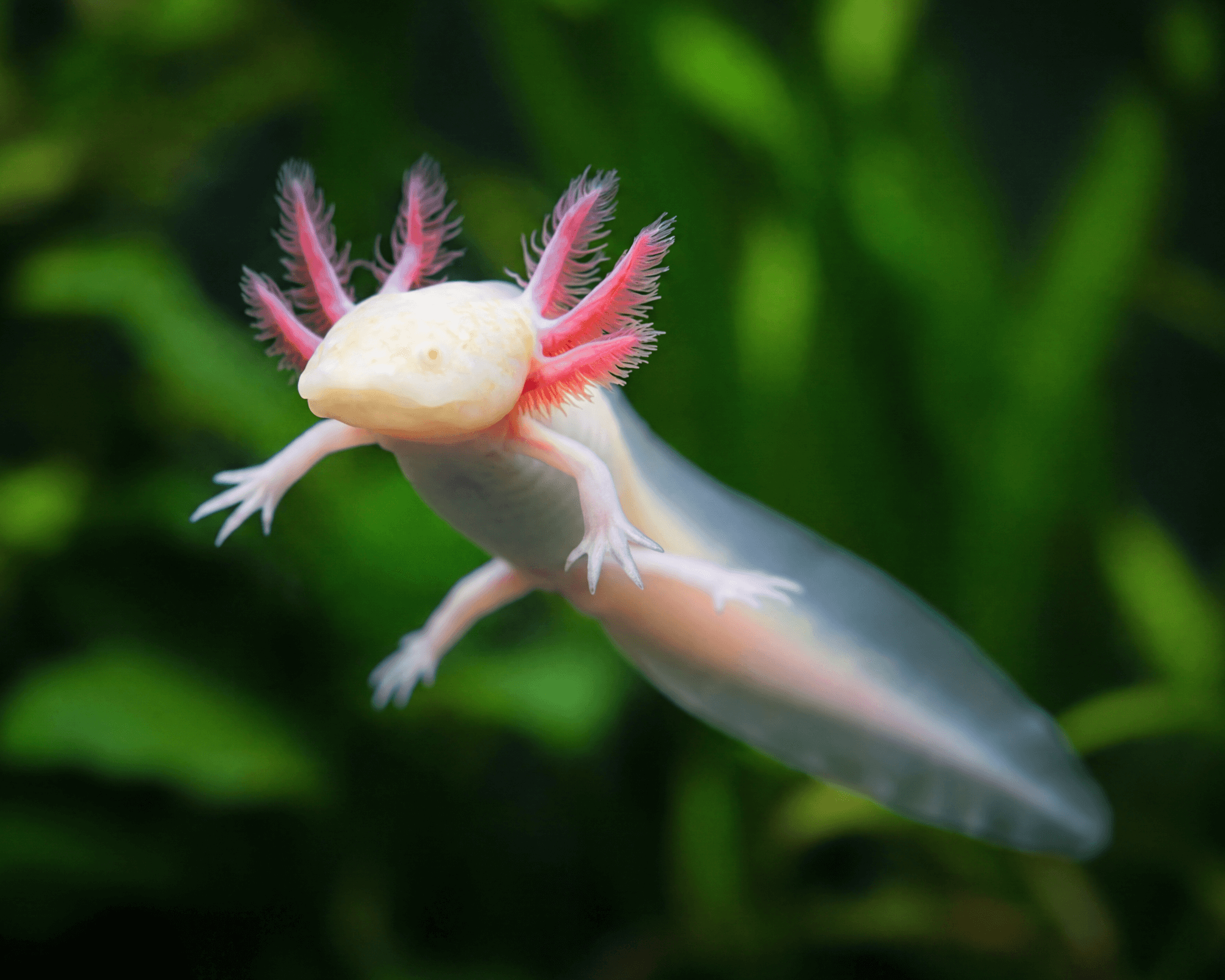
The Albino Axolotl (Ambystoma mexicanum) is a fascinating aquatic amphibian that has captured the hearts of aquarists worldwide. Unlike most salamanders, axolotls exhibit neoteny, meaning they reach sexual maturity without undergoing metamorphosis. They spend their entire lives in water, retaining their larval features, such as external gills and a finned tail. The albino variety is particularly striking, lacking melanin and displaying a beautiful white or pale pink body with vibrant red or pink gills.

Distribution and Habitat
In the wild, Axolotls are native exclusively to the lake complex of Xochimilco near Mexico City. These high-altitude waters are naturally cool. Unfortunately, due to urbanization, pollution, and the introduction of invasive fish species, wild populations are critically endangered. The vast majority of Axolotls in the pet trade, including the "DNZ" (Deutsche Nachzucht - German captive-bred) specimens, are entirely captive-bred.
Description of Albino Axolotl
Body shape:
They possess a robust, elongated body with four relatively small, lizard-like legs and a broad, flat head.
Color:
The albino morph lacks dark pigments. Their bodies are typically white or light pink, with prominent bright pink to red gill stalks.
Barbels:
They do not have barbels.
Snout:
The snout is wide and blunt, giving them a characteristic "smiling" appearance.
Eyes:
Albino axolotls have clear or pinkish eyes with no dark pigmentation, making them somewhat sensitive to bright light.
Fins:
They have a continuous fin extending from the back of the head, down the spine, and wrapping around the tail.
The Tail:
The tail is laterally compressed and finned, designed for powerful swimming bursts.
Temper
Axolotls are generally peaceful and solitary creatures. However, they are opportunistic feeders and will try to swallow anything that fits in their mouths, including smaller tank mates or even the limbs of other axolotls if they are underfed or overcrowded.
Sociality
They are not social animals and do not require companions. If housed together, they must be of similar size and provided with ample space and hiding spots to prevent accidental nipping or cannibalism, especially when young.
Activity
Axolotls are relatively inactive, spending much of their time resting on the bottom of the tank or hiding. They may occasionally swim to the surface to gulp air. They are most active during feeding times or in the evening.

Keeping and Caring for Albino Axolotl
Tank size:
A minimum of 80 liters (20 gallons) is recommended for a single adult axolotl. Floor space is more important than water height, as they are bottom dwellers.
Water Parameters:
Temperature
15-20°C (59-68°F). Keeping the water cool is absolutely critical for their health and immune system. Temperatures above 22°C can cause severe stress and illness.
pH
7.4-7.6 is ideal, though they can tolerate a range of 6.5 to 8.0.
Hardness
They prefer moderately hard to hard water (7-14 dGH).
Ammonia, Nitrite, Nitrate
Ammonia and Nitrite must be 0 ppm. Nitrates should be kept below 20 ppm through regular water changes.
Lighting
Low to moderate lighting is best. Albinos are particularly sensitive to bright light, so ensure plenty of shaded areas are available.
Water flow
Axolotls originate from still lakes and are stressed by strong currents. Filtration should be gentle, using spray bars or sponge filters to minimize water movement.
Decorations and Plants
Substrate must be either bare-bottom, very fine sand, or large river rocks bigger than their heads to prevent impaction. Provide numerous hides using PVC pipes, terracotta pots, or smooth caves. Sturdy, cold-water plants like Anubias, Java Fern, or floating plants are excellent additions.
Diet
Axolotls are strict carnivores. Their diet should primarily consist of high-quality sinking pellets, earthworms (nightcrawlers), and bloodworms. Occasional treats can include brine shrimp or small pieces of lean freshwater fish.
Some Feeding Tips
Feed adults 2-3 times a week. Use feeding tongs to offer food directly to them, as their eyesight is poor and they rely heavily on smell and movement to hunt. Remove any uneaten food promptly to maintain water quality.
Breeding
Breeding is relatively straightforward if conditions are optimal. A cooling period followed by a slight warming can trigger spawning. The male deposits spermatophores, which the female takes up. She will then lay hundreds of individual eggs on plants or decorations. The eggs hatch in about two weeks, and the tiny larvae require live food like newly hatched brine shrimp or daphnia.
Conclusion
The Albino Axolotl is a truly unique and rewarding pet for those willing to meet its specific cold-water requirements. Its endearing appearance and fascinating biology make it a standout addition to a specialized aquatic setup. With proper care, these remarkable amphibians can provide years of enjoyment.
 - pair - 1.webp)
Leave your comments