Overview
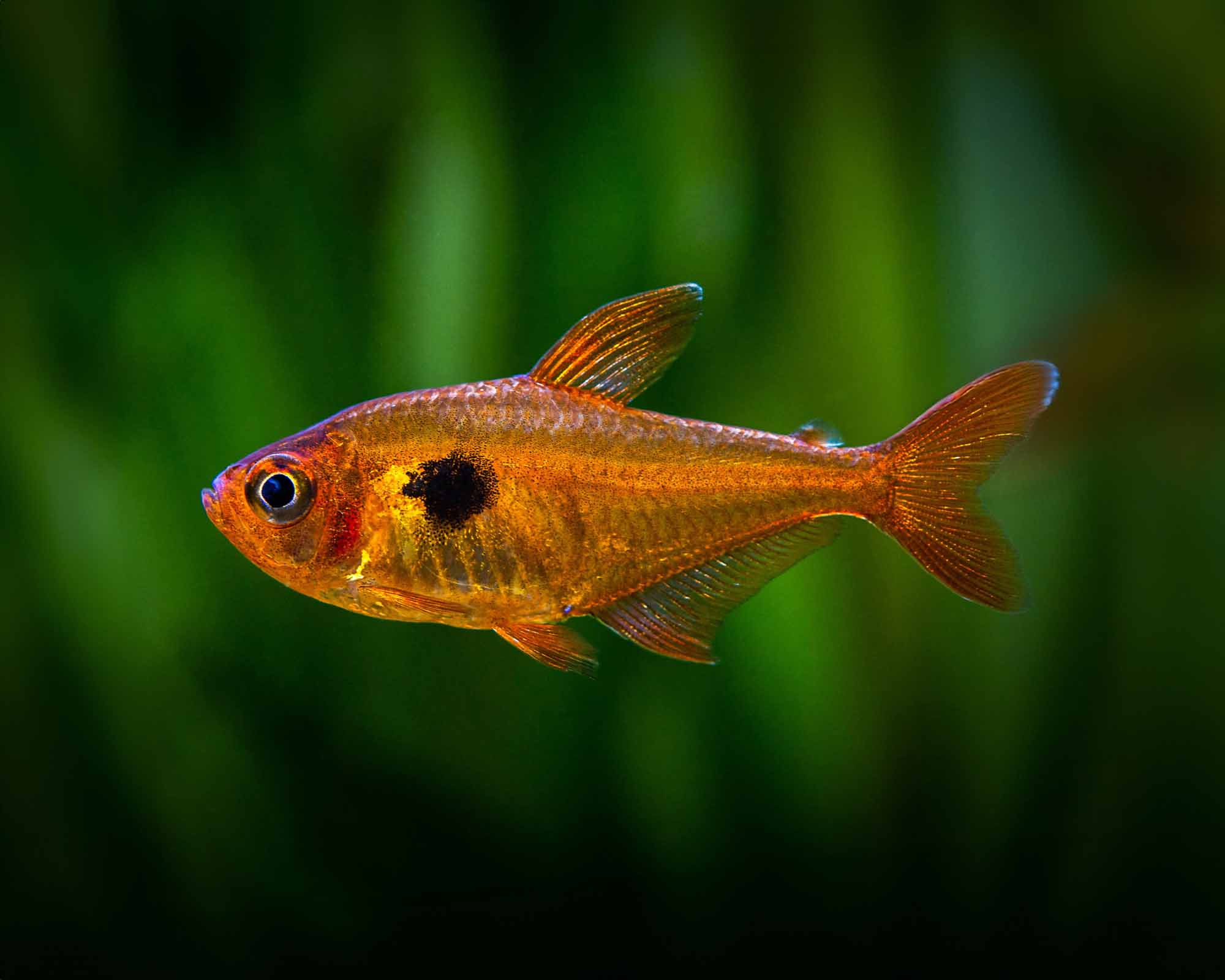
The Serpae Tetra (often scientifically classified as Hyphessobrycon eques or Hyphessobrycon serpae) is a popular freshwater fish belonging to the Characidae family. Known for its brilliant reddish-orange hue and active nature, it is a staple in the aquarium hobby.
Distribution and Habitat
Native to South America, they inhabit the Guaporé and Paraguay River basins, as well as parts of the Amazon. They prefer slow-moving backwaters, ponds, and small lakes with dense vegetation and tinted, tannin-rich blackwater environments.
Description of Serpae Tetra
Body shape:
They feature a deep, laterally compressed, and somewhat oval-shaped body typical of many deep-bodied tetras.
Color:
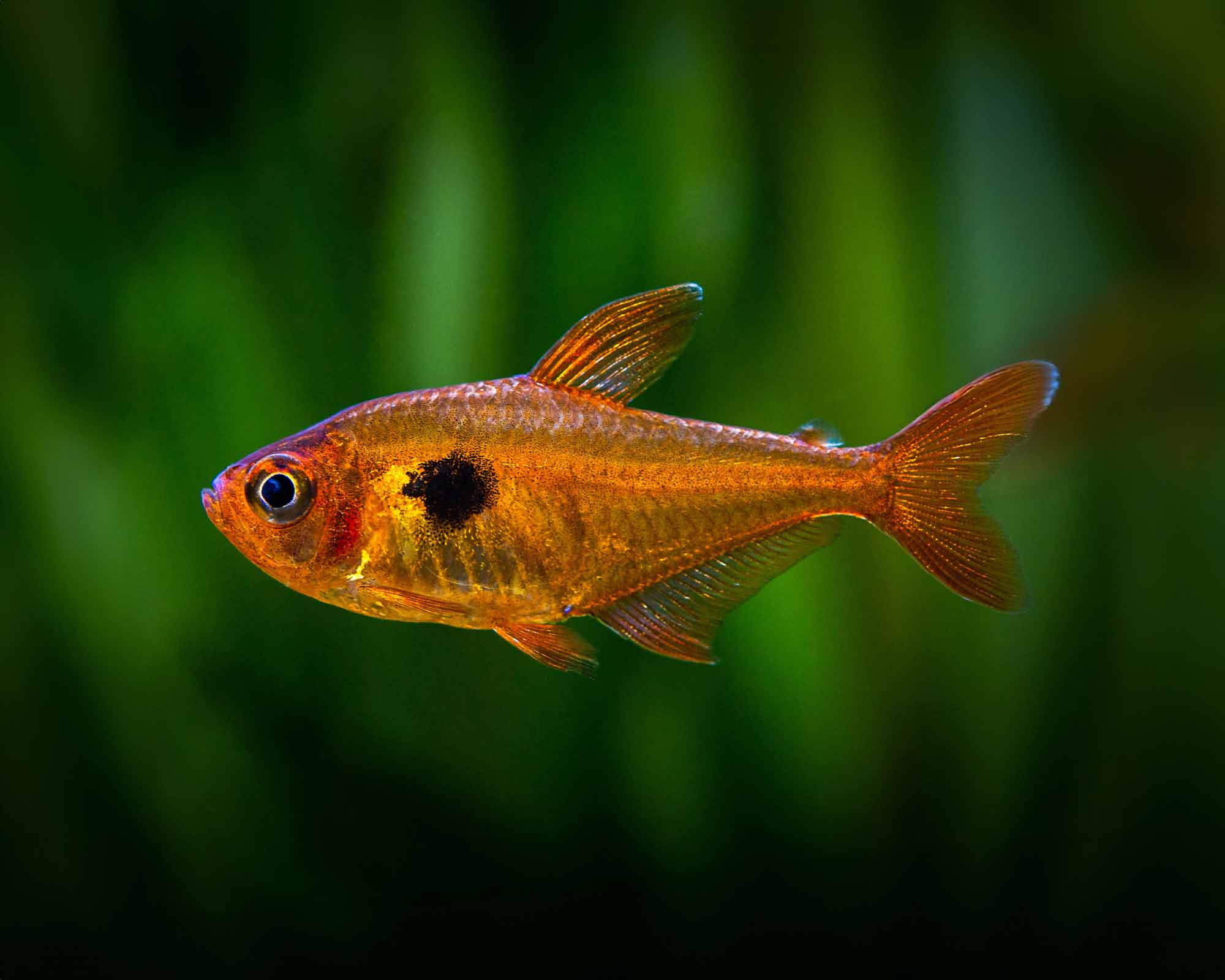
The body is a rich, fiery red or deep orange. A distinct black, comma-shaped spot sits just behind the gills. The dorsal fin is predominantly black with a white edge, while the anal fin is red with a black margin and white tip.
Barbels:
They do not possess barbels.
Snout:
The snout is short and blunt, leading to a small, terminal mouth equipped with tiny teeth.
Eyes:
The eyes are relatively large with a dark pupil and a reflective, sometimes reddish-gold iris.
Fins:
They have a tall, prominent dorsal fin, a long anal fin stretching along the ventral side, and small pectoral and pelvic fins. A small adipose fin is also present between the dorsal and caudal fins.
The Tail:
The caudal (tail) fin is deeply forked and typically a translucent red or orange.
Temper
While generally peaceful in a well-structured environment, they have a notorious reputation as fin-nippers, especially if kept in numbers that are too small or in cramped quarters.
Sociality
They are highly social schooling fish. To mitigate their nipping behavior and reduce stress, they must be kept in groups of at least 6 to 8, though 10 or more is ideal. They establish a pecking order within their school.
Activity
Serpae Tetras are highly active mid-level swimmers. They are constantly on the move, darting around the tank, exploring plants, and interacting with their conspecifics.
Keeping and Caring for Serpae Tetra
Tank size:
A minimum of 20 gallons (75 liters) is recommended to provide ample swimming space for a proper school and to curb aggression.
Water Parameters:
Temperature
22-26°C (72-79°F).
pH
5.0-7.8, ideally kept slightly acidic to closely mimic their natural habitat.
Hardness
5-15 dGH.
Ammonia, Nitrite, Nitrate
Ammonia and Nitrite must be 0 ppm. Nitrates should be kept below 20 ppm through regular water changes and proper tank maintenance.
Lighting
They prefer subdued lighting. Floating plants can help diffuse bright aquarium lights and mimic their natural, shaded habitat.
Water flow
Gentle to moderate water flow is ideal, replicating the slow-moving streams of their origin.
Decorations and Plants
A dark substrate and dense planting around the perimeter will make their colors pop and provide vital hiding spots. Driftwood and dried leaf litter (like Indian almond leaves) can recreate blackwater conditions and lower the pH naturally.
Diet
They are omnivorous and not fussy eaters. In the wild, they feed on small insects, worms, and plant matter. In captivity, they will readily accept high-quality flakes, micro-pellets, and frozen or live foods like daphnia, brine shrimp, and bloodworms.
Some Feeding Tips
Feed them small amounts 1-2 times daily, only what they can consume in a few minutes. Offering a varied diet ensures optimal coloration, strong immunity, and overall health.
Breeding
Breeding is relatively easy. They are egg-scatterers that exhibit no parental care. A separate breeding tank with dim lighting, soft and acidic water, and fine-leaved plants (like Java Moss) or a spawning mop is required. After spawning, the parents must be removed immediately to prevent them from eating the eggs. The fry hatch in a few days and require infusoria or liquid fry food before graduating to baby brine shrimp.
Conclusion
The Serpae Tetra is a captivating, hardy species that brings a beautiful splash of red to the community tank. Provided they are kept in a large enough school to manage their fin-nipping tendencies and given a well-planted environment, they make a lively and rewarding addition to any aquarium.
 - pair - 1.webp)
Leave your comments