Start with the tank footprint, not the water volume
Two aquariums can hold the same number of gallons yet provide very different living space. A long tank gives schooling fish a usable route for repeated horizontal movement, while a tall cube offers more height but less cruising distance. This distinction matters before you choose plants or livestock. Small rasboras and danios often look more natural in a longer footprint with an unobstructed central lane. A compact cube is usually easier to design around a betta, shrimp colony, or snails than around an active school. Measure the open swimming path after hardscape and substrate are installed. Stock the remaining space, not the manufacturer’s stated volume alone.
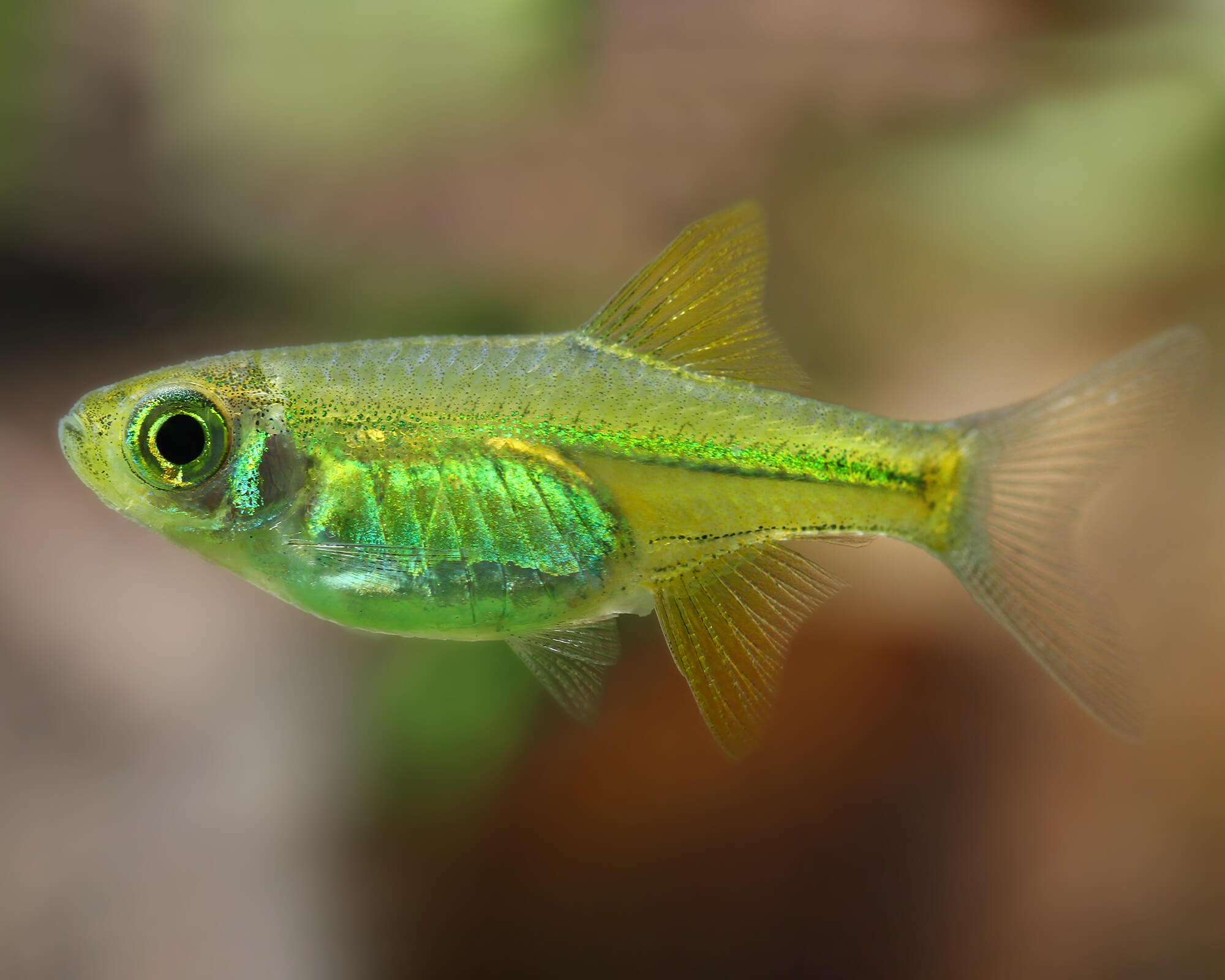
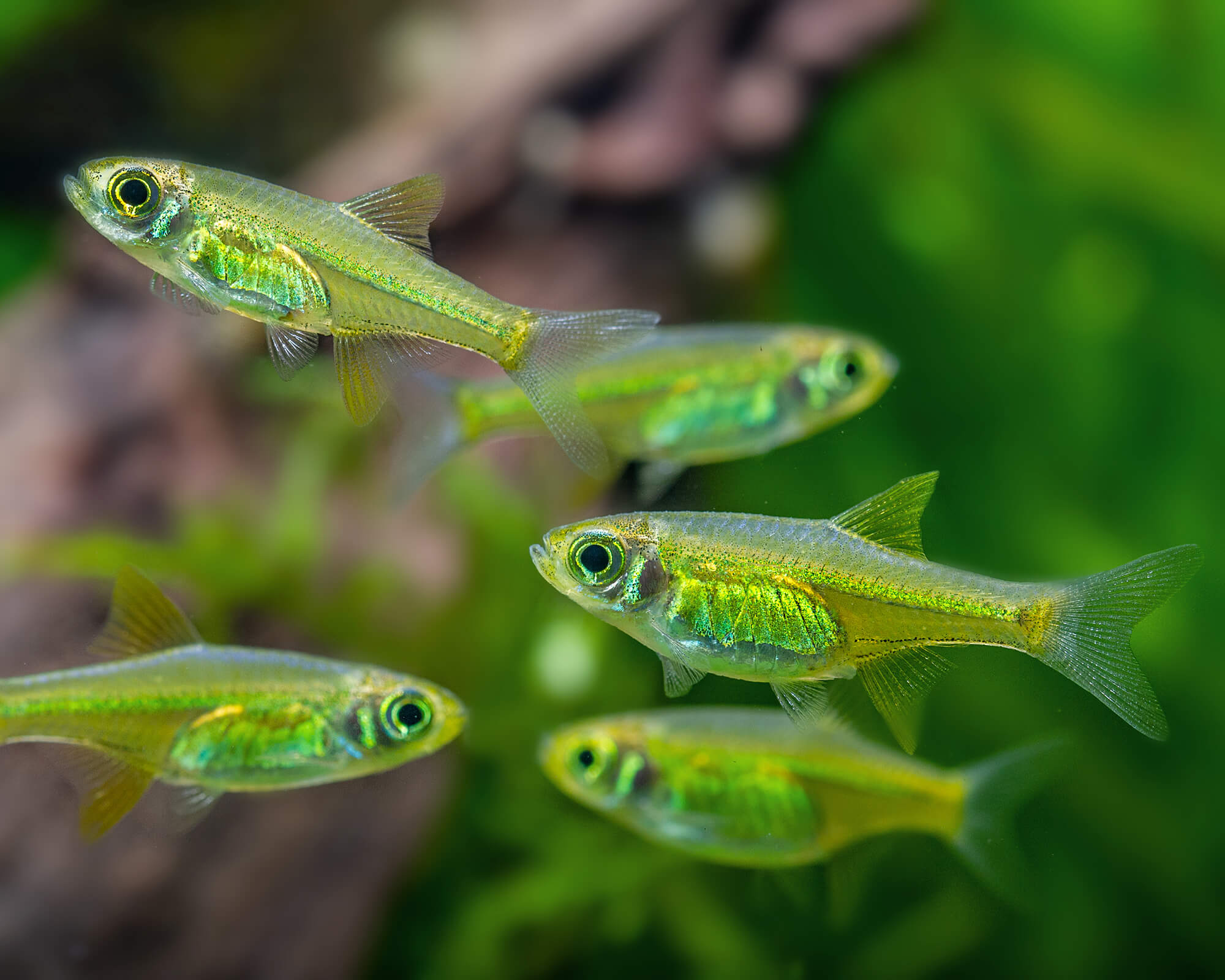
Give schooling fish a continuous route through the middle
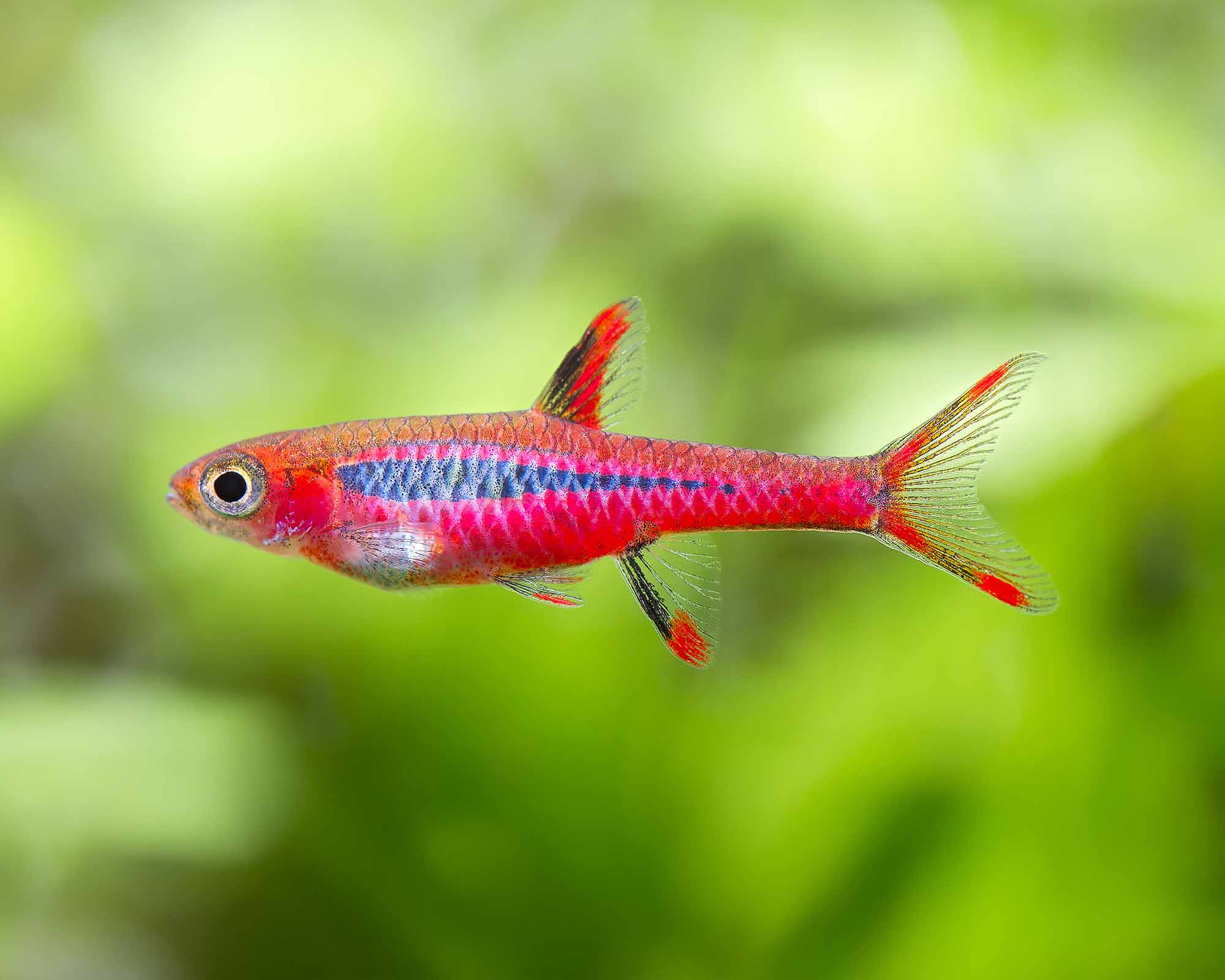
Green neon-style schooling fish such as Microdevario kubotai are most engaging when they can move as a group across the tank rather than weave through a wall of stems. Build one clear midwater corridor from one end to the other, then place plants and wood toward the rear corners. Fine-leaved plants can provide security without occupying the entire route. Keep filter output from creating a constant blast across the school, but maintain enough circulation to prevent stagnant pockets. A small group should be chosen only when the aquarium can support the species’ social needs and adult activity level. More individuals do not compensate for inadequate horizontal space.
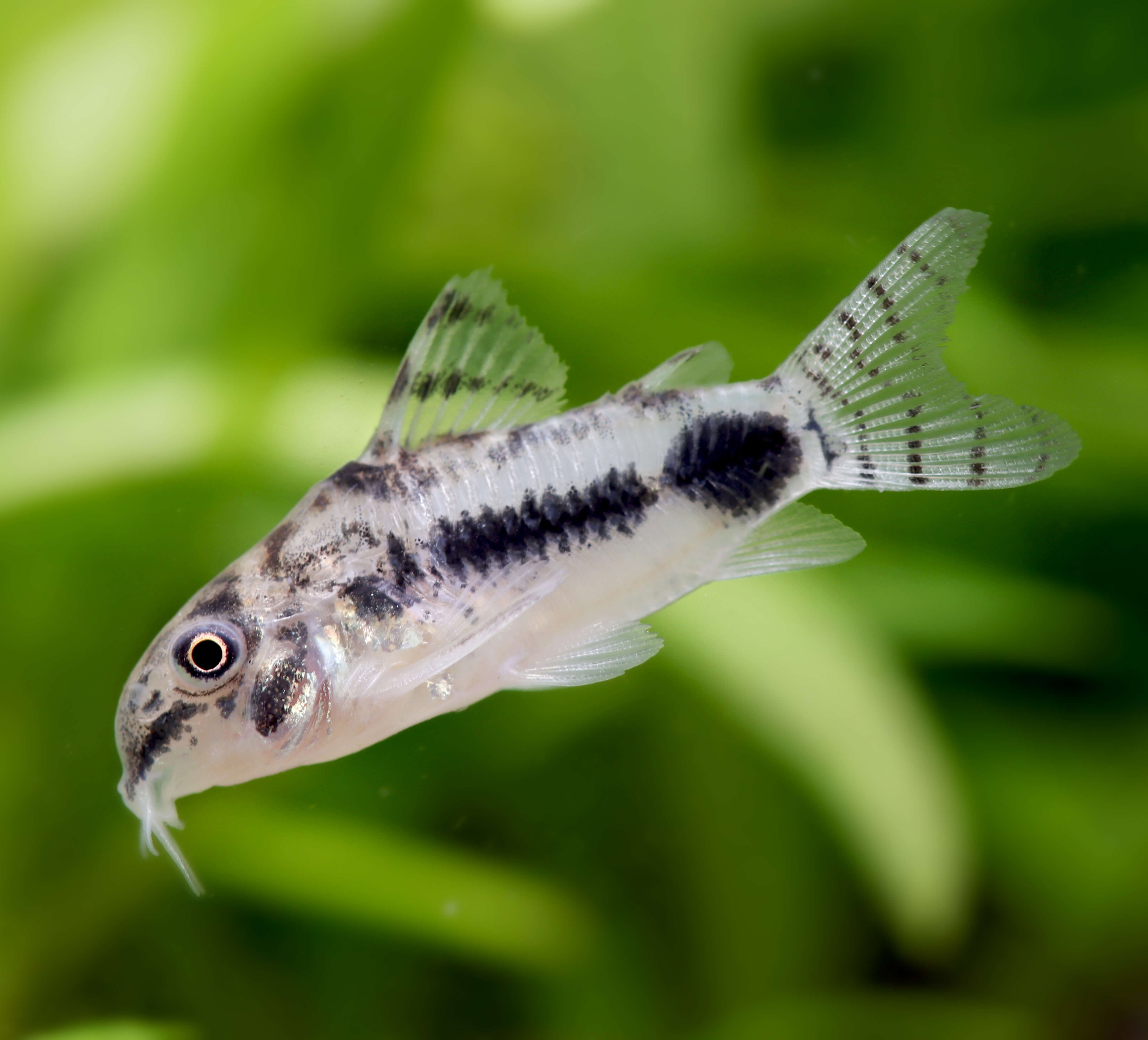
Use bottom space as a feeding area, not leftover decoration
Dwarf Corydoras such as Corydoras habrosus spend much of their time searching the substrate, resting under cover, and moving in small groups across the bottom. Their usable habitat disappears when carpeting plants, large stones, and heavy wood occupy every open patch. Leave several connected sand or fine-substrate areas for foraging, especially near the front glass. Low plants can frame these spaces, but avoid sharp gravel and unstable décor. Bottom fish also need a social group, so the aquarium must provide both floor area and shelter. If you want dense hardscape, choose fewer bottom dwellers or move to a wider tank rather than crowding the same footprint.
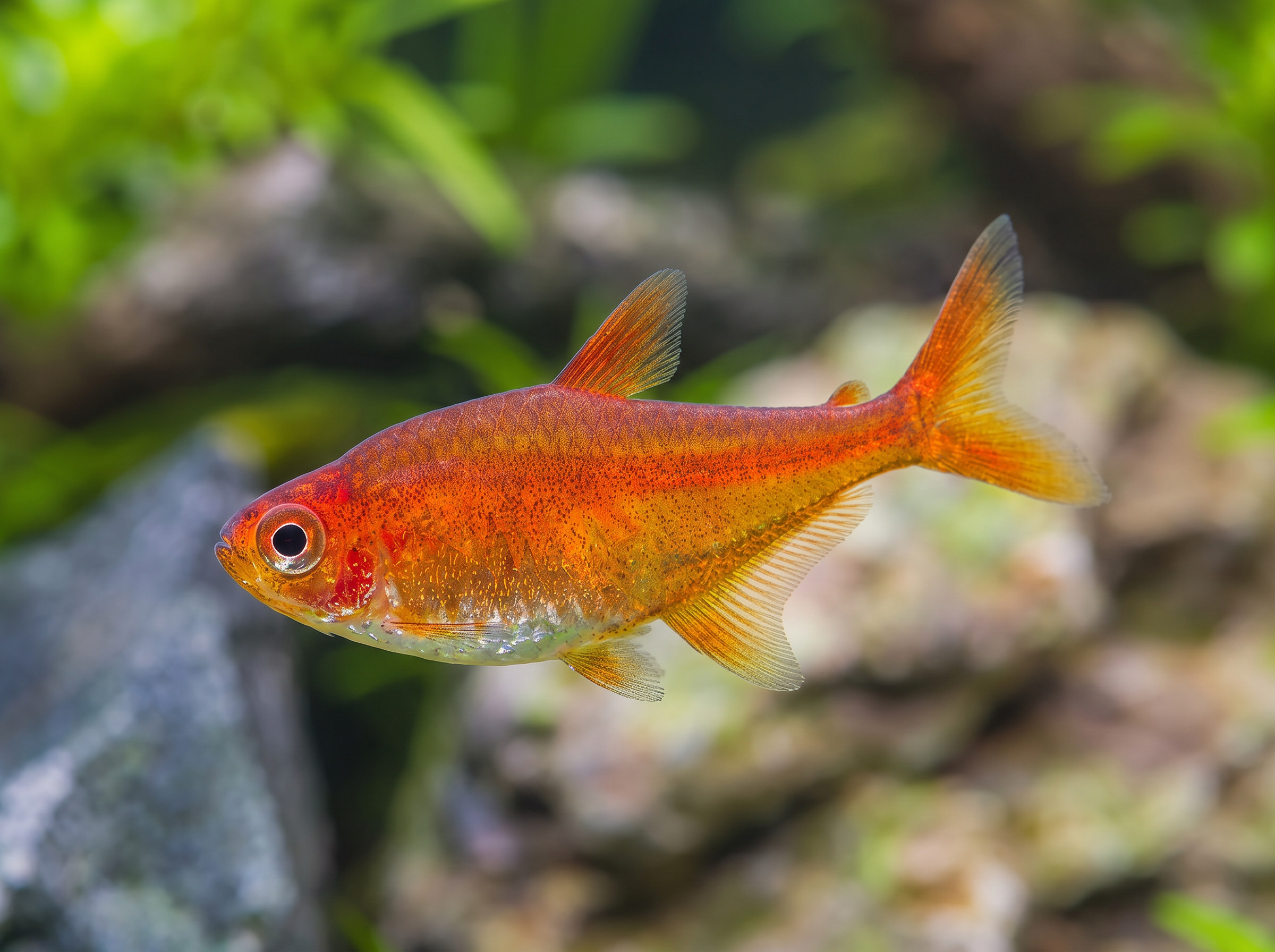
Treat livebearers as active surface and midwater fish
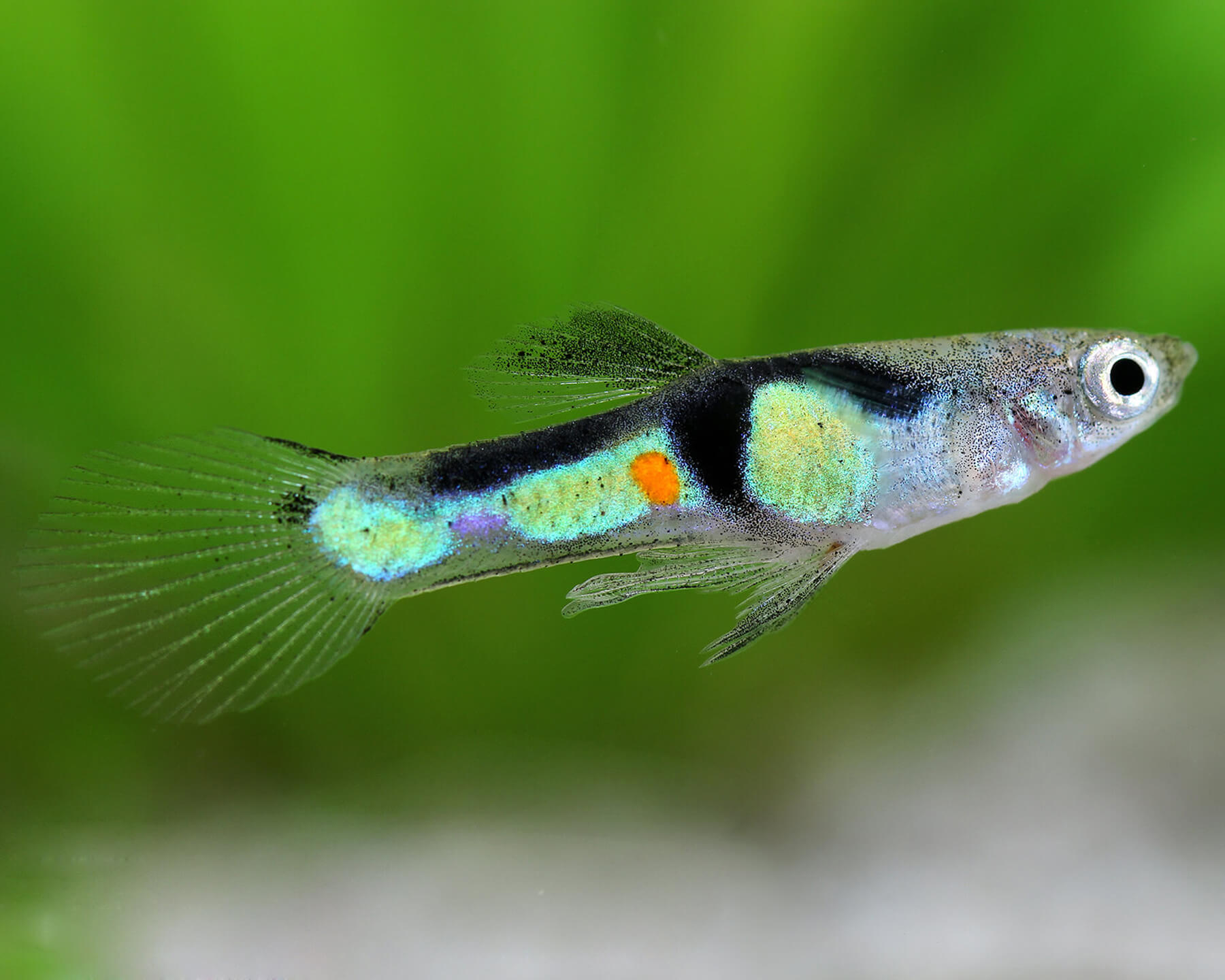
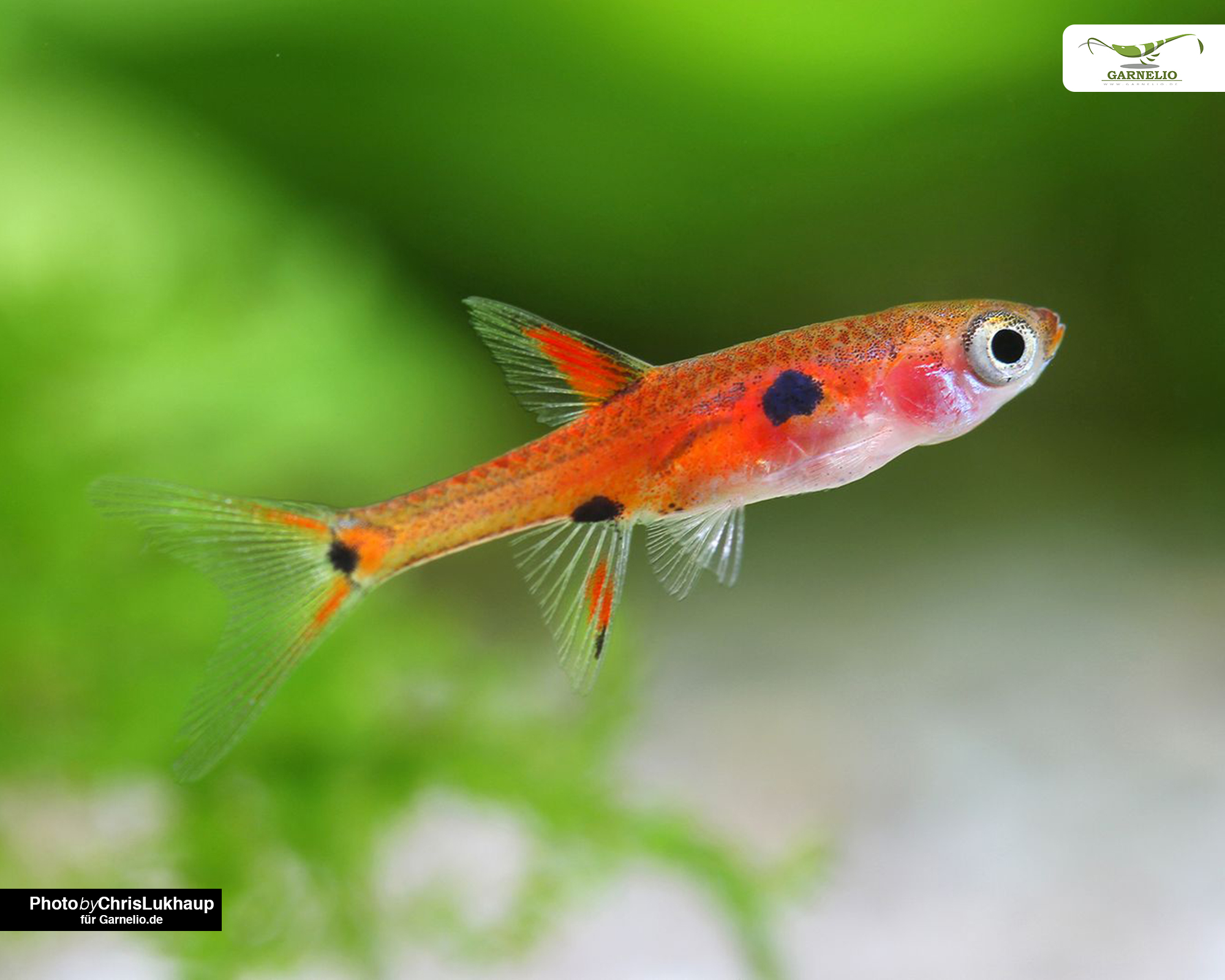
Endler-type livebearers bring constant movement to the upper half of a planted aquarium. Their activity can make a layout feel lively, but it also exposes a common mistake: filling the entire surface with floating plants and tall stems. Keep a clear upper lane for swimming, with floating cover limited to a portion of the tank. Dense plants are useful for fry, yet a mixed-sex group may reproduce quickly and change the bioload faster than expected. An all-male group avoids that problem, although individual temperament and long-term welfare still matter. Choose livebearers only when your water chemistry and maintenance routine suit them.
Design a betta layout around calm water and retreat zones
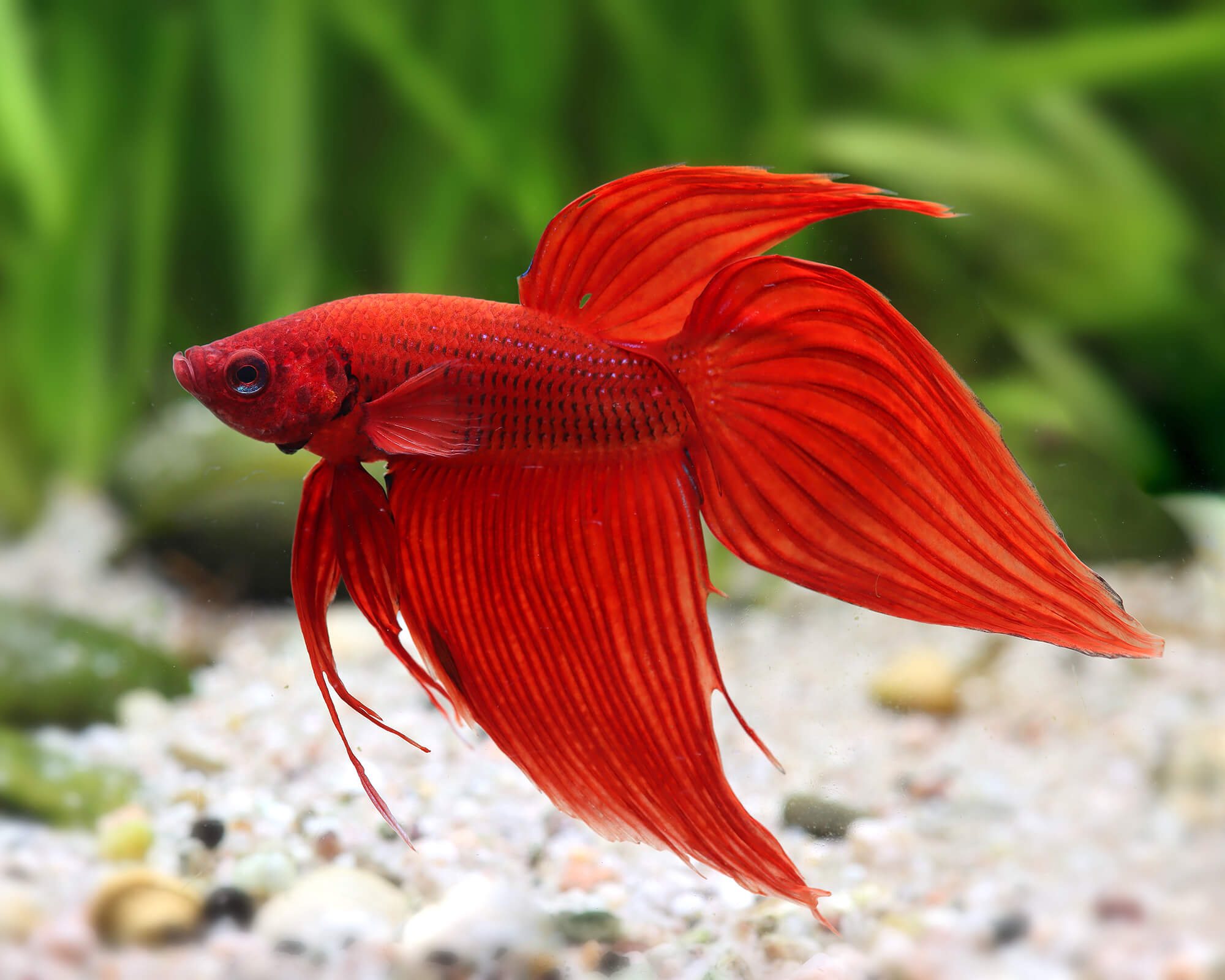
A betta does not need a long open raceway like an active schooling fish, but it does need access to the surface, gentle flow, resting places, and visual breaks. Use broad-leaved plants such as Anubias or Java fern, positioned so leaves sit below the surface without sealing it off. Add floating plants sparingly and leave a clear route to breathe. A betta may tolerate shrimp or snails, but compatibility is individual and predation is possible. Avoid combining a betta with fast, fin-nipping, or highly active tank mates simply because the aquarium has enough gallons. Behavior should determine the community, not volume alone.
Build a bottom community around connected cover
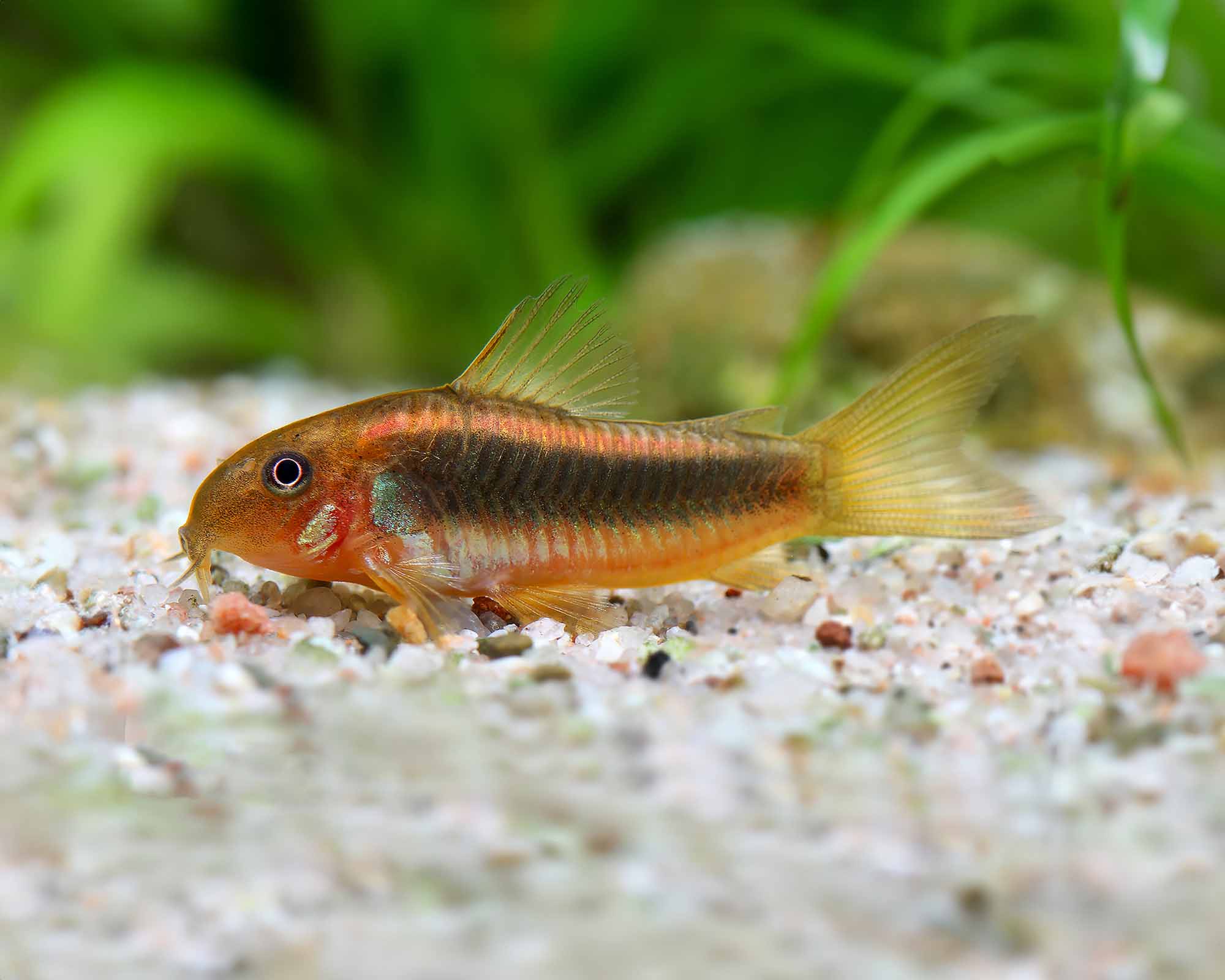
Corydoras with metallic markings, including many bronze or gold forms, are active bottom fish that benefit from open substrate linked to shaded resting places. Place wood or plants along the back and sides, then create two or three visible routes across the foreground. This arrangement lets the group forage without forcing every fish into one crowded corner. Avoid treating a single Corydoras as a cleanup animal; these fish need an appropriate social group and regular food that reaches the bottom. They can share peaceful community aquariums, but their needs should be planned before adding a centerpiece fish or dense carpet.
Reserve the longest lane for faster midwater swimmers
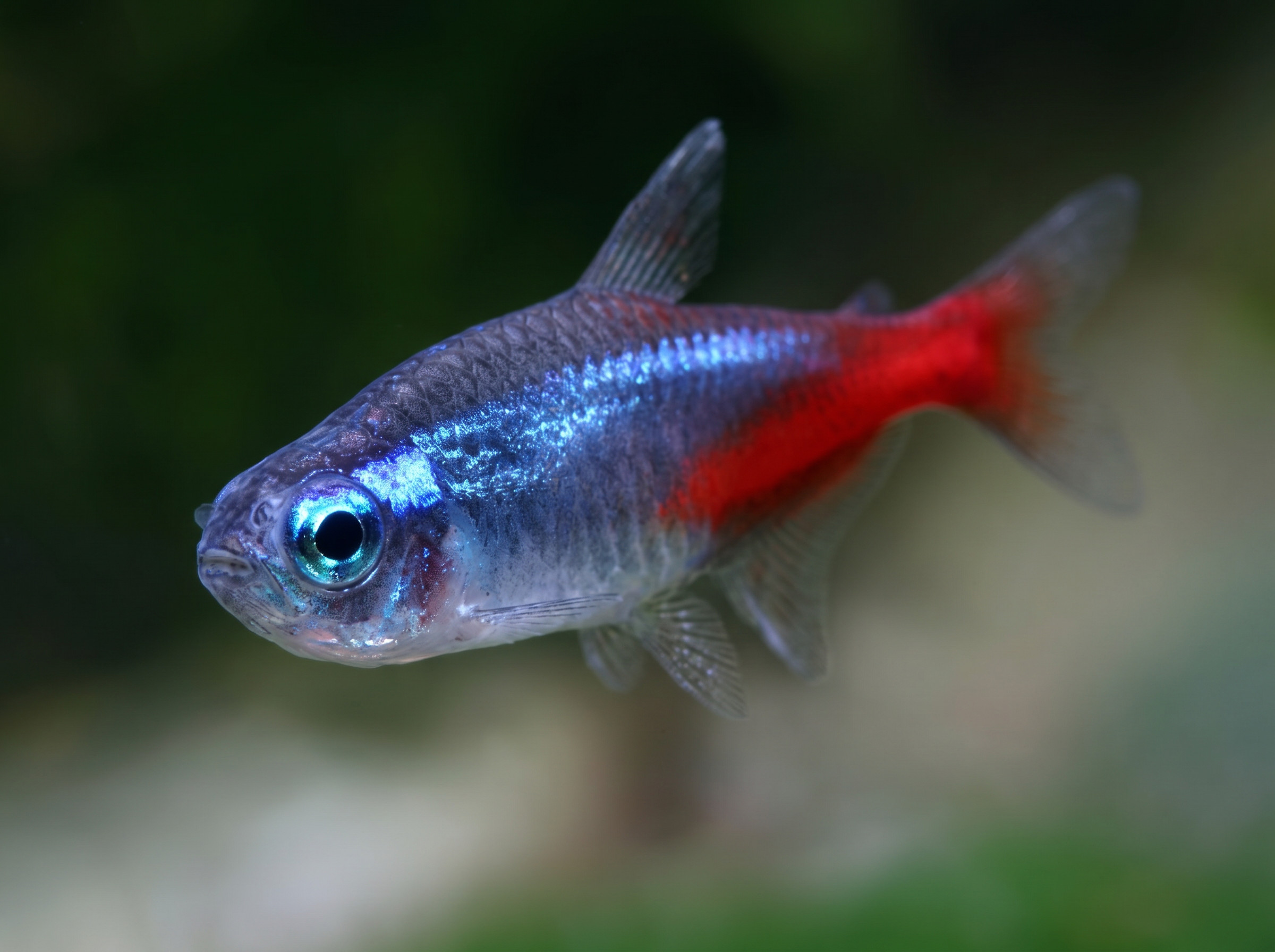
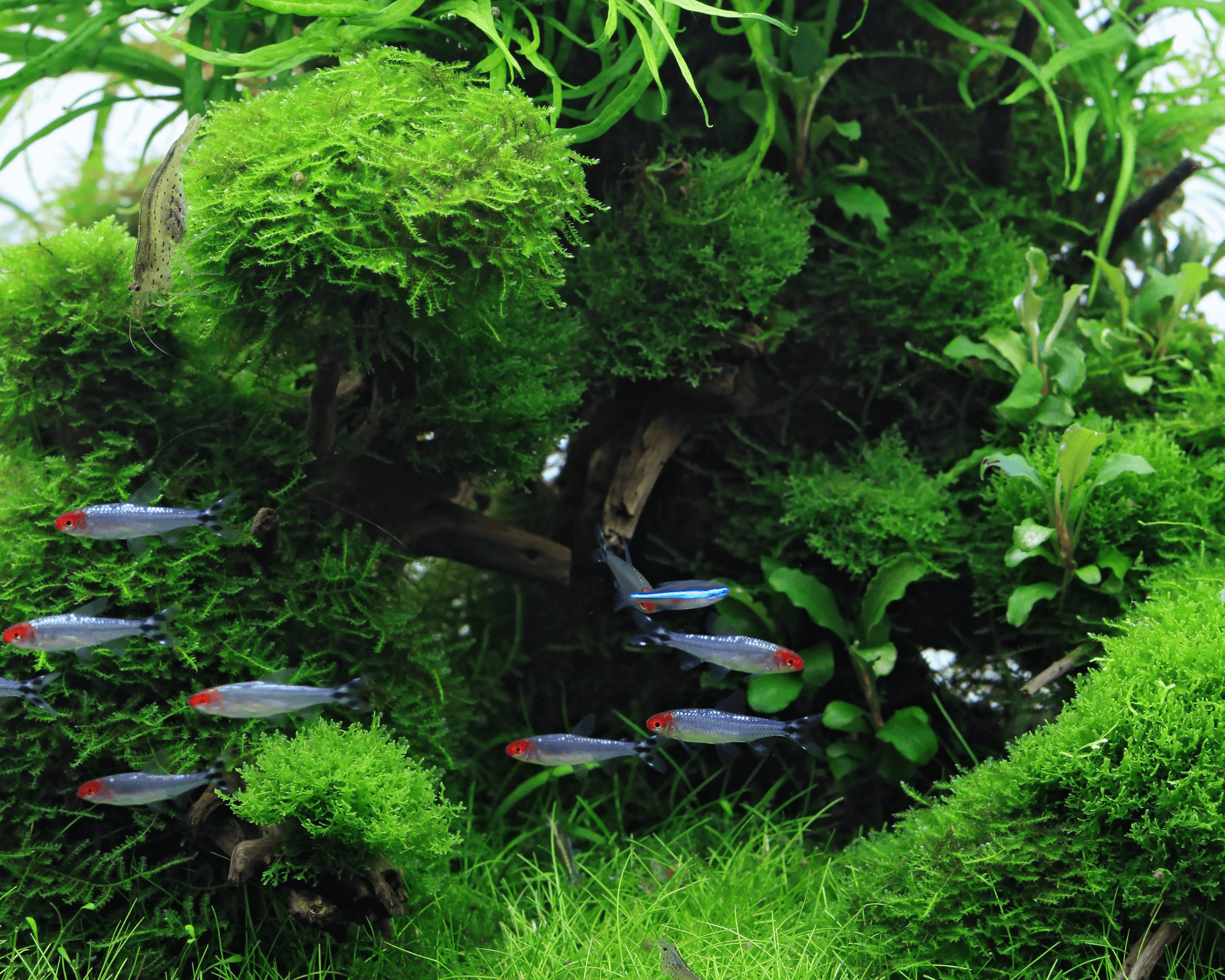
Neon tetras are small, but their schooling behavior still uses more horizontal distance than their size suggests. A planted aquarium for them should have a continuous midwater lane with shaded edges, rather than isolated gaps between decorations. Darker background plants can make their reflective markings easier to see while giving the group a sense of security. Avoid pairing them with fish large enough to view them as prey or with boisterous species that constantly disrupt the school. In a smaller aquarium, one appropriately sized school is often more coherent than several tiny groups competing for the same central space.
Use dense plants to divide sightlines, not erase swimming room
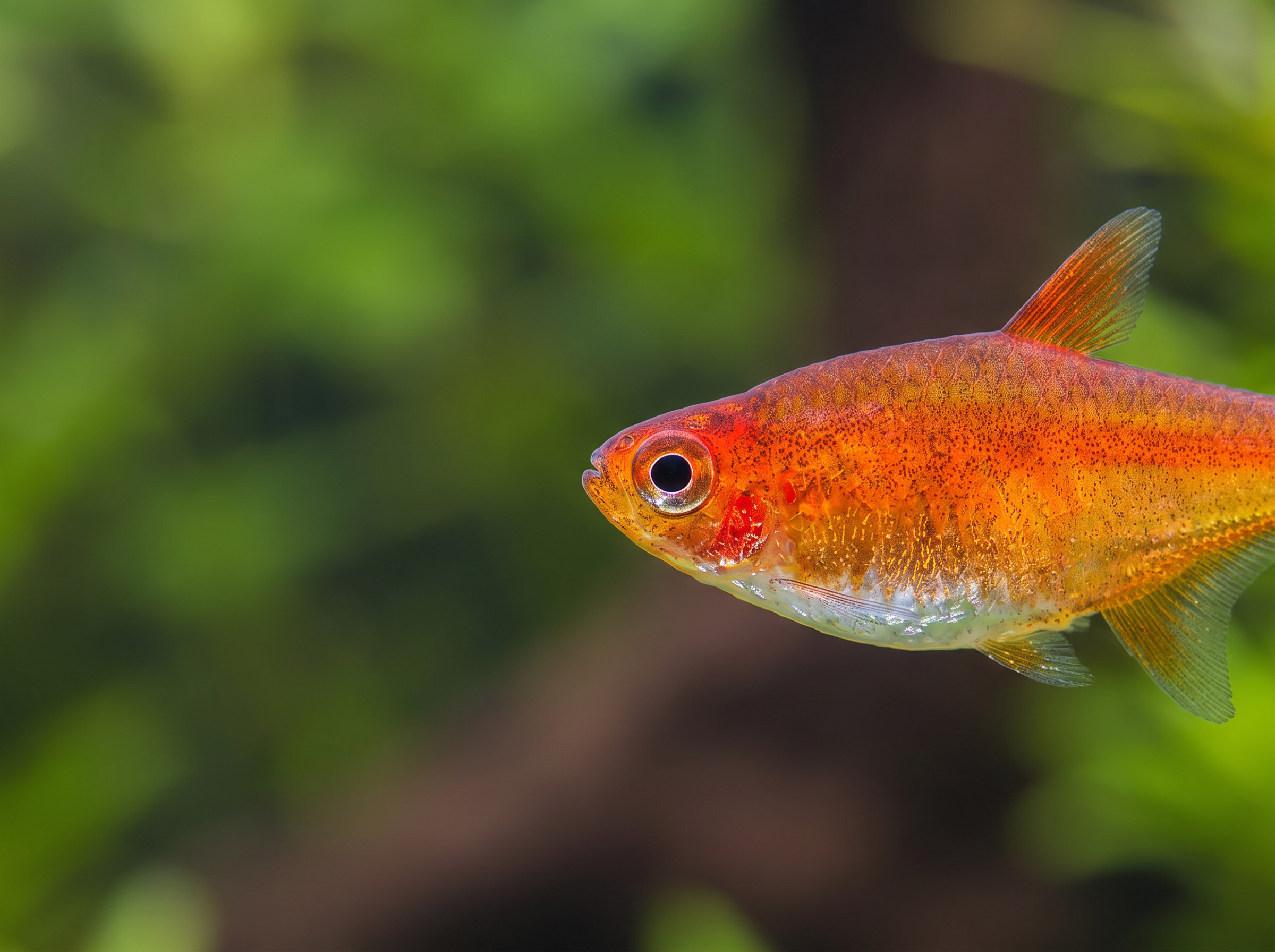
Chili rasboras and other very small schooling fish appreciate fine cover, especially in a mature planted aquarium with gentle flow. However, a dense thicket can become a maze that hides the fish and makes maintenance difficult. Create a planted rear zone, a broken midground, and a modest open foreground. Moss, floating roots, and fine stems can provide security for shrimp and young fish, while small gaps allow the school to remain visible. This layout also reduces direct sightlines between timid fish and larger tank mates. Cover works best when it creates choices: open water, shade, and narrow retreat spaces.
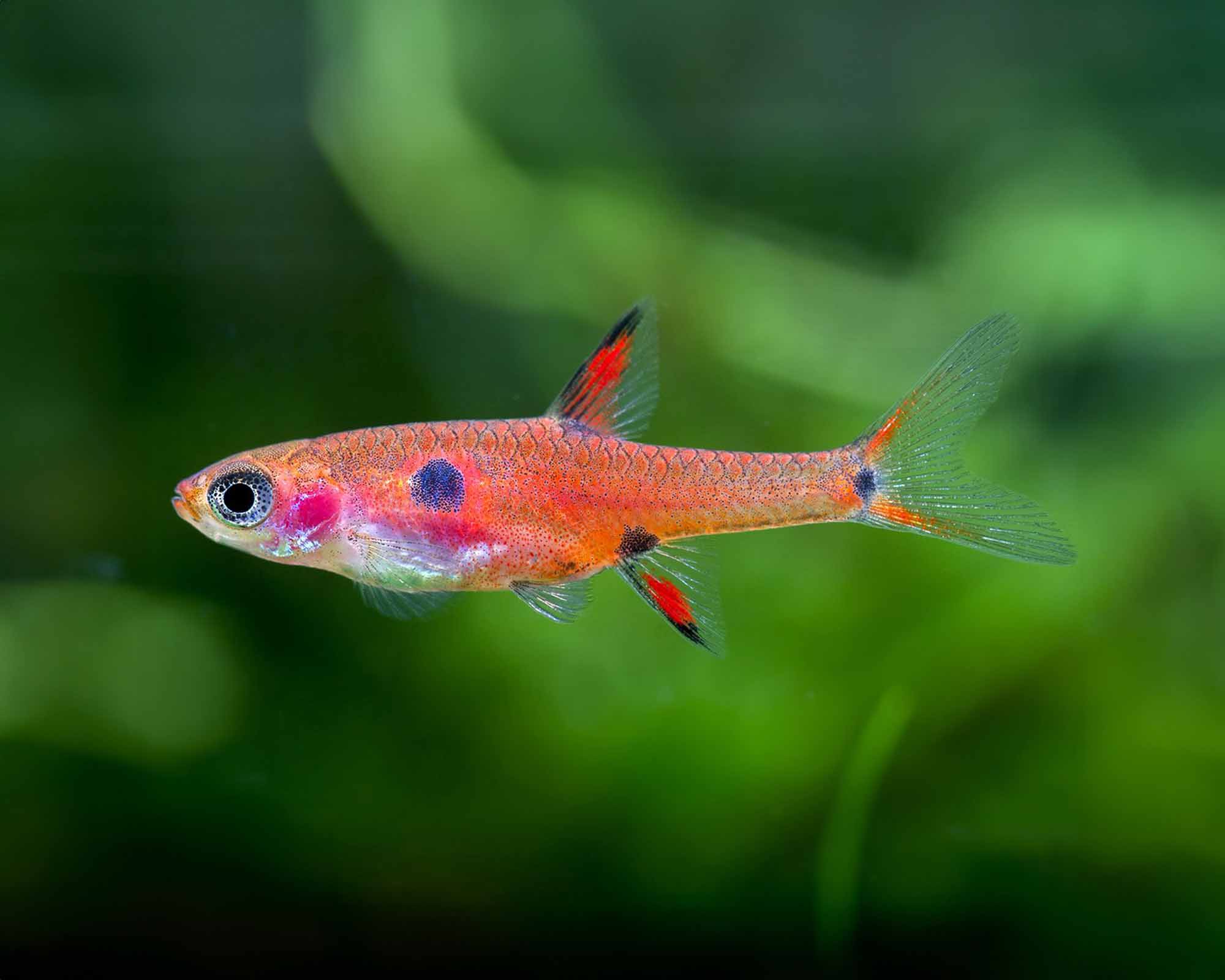
Match the layout to fish that patrol open water
Harlequin rasboras are more active and visually substantial than many nano species, so they benefit from a longer aquarium with open midwater space. Use a sloping arrangement: taller plants and wood at the back, lower growth toward the front, and a clear central route. This creates depth without sacrificing the swimming area the school actually uses. Keep the group large enough to display normal social behavior, and avoid mixing several active schooling species in a short tank. If the aquarium cannot provide a meaningful cruising lane, choose a less active stocking concept instead of compensating with extra plants.
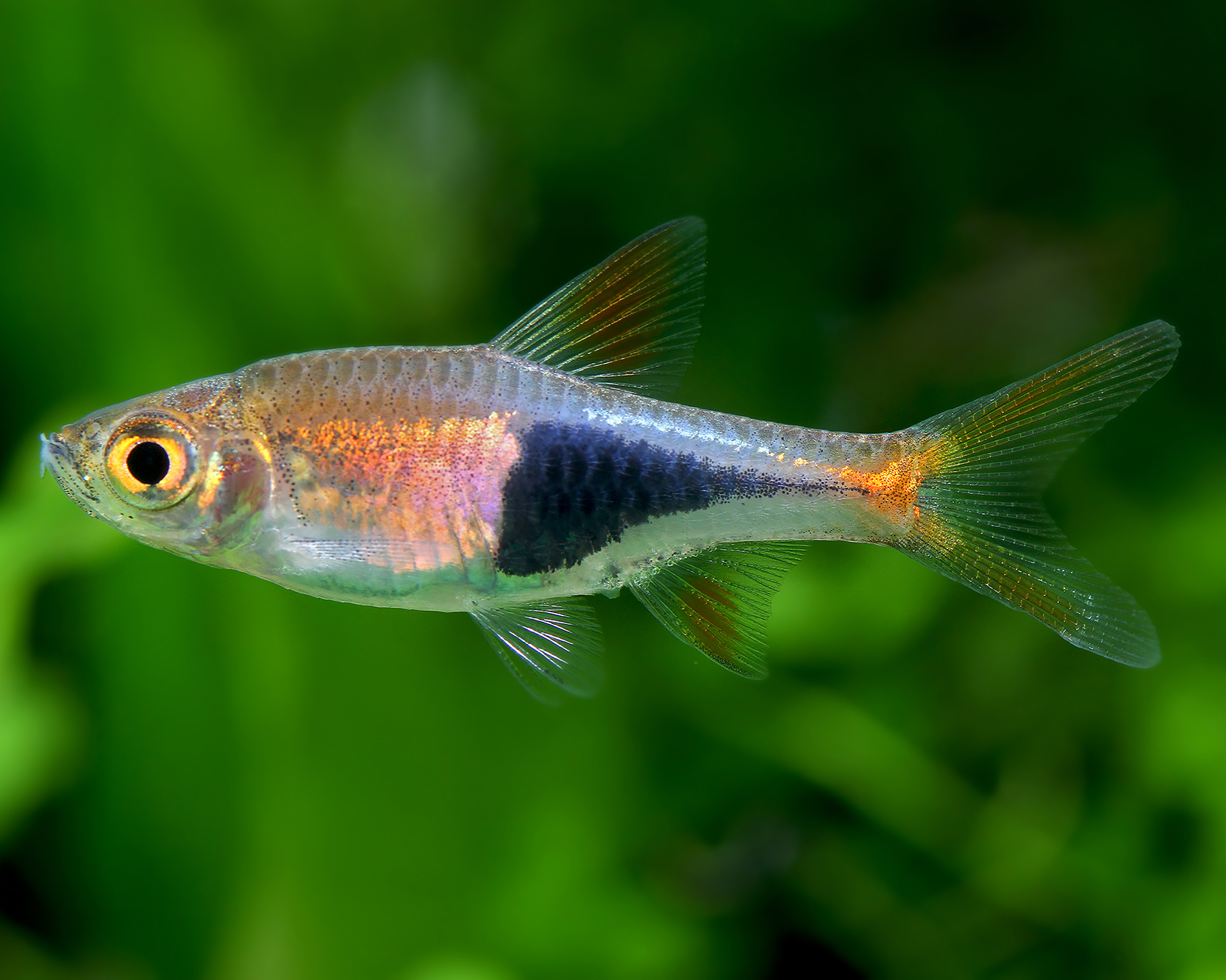
Let fish movement decide where shrimp and snails belong
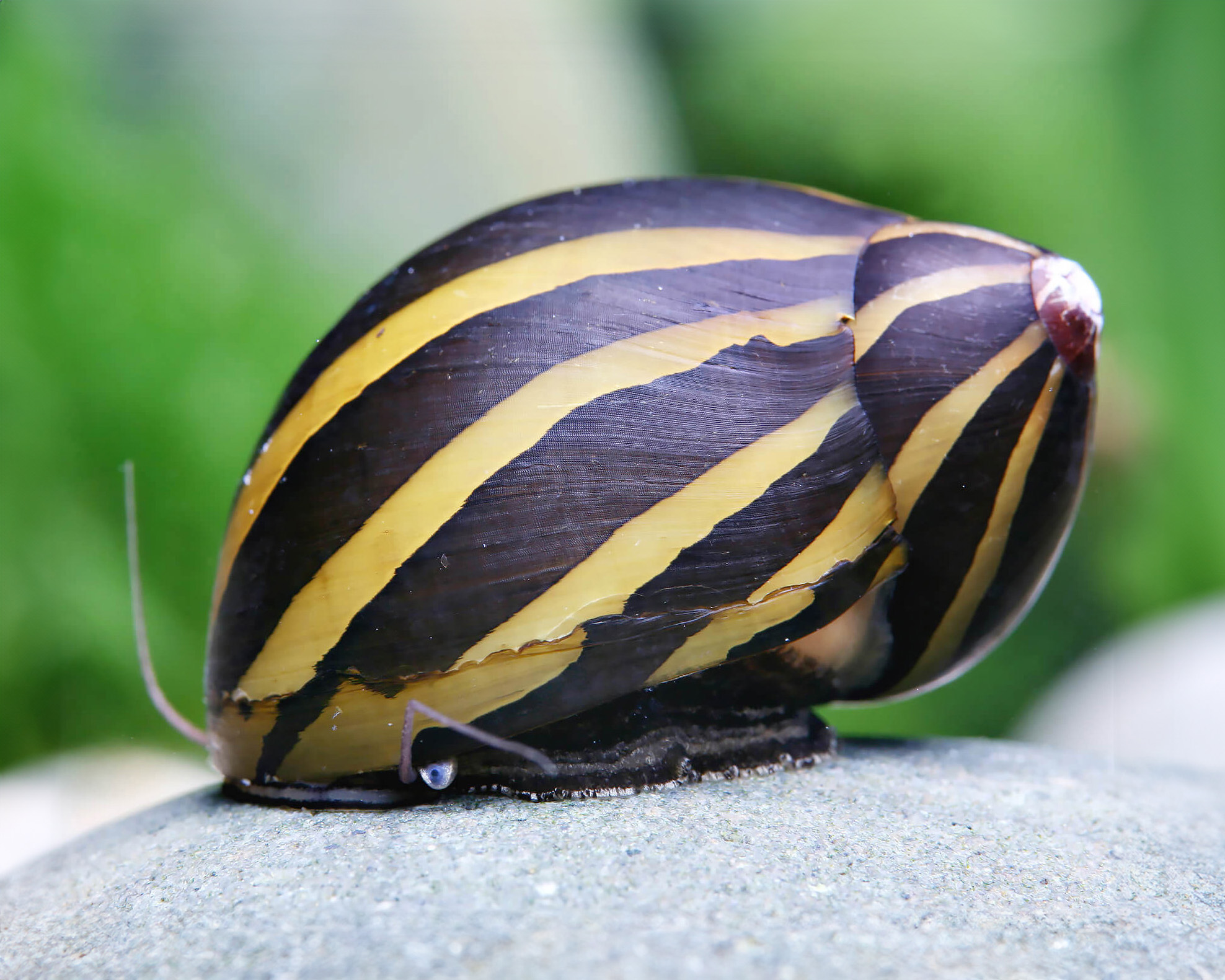
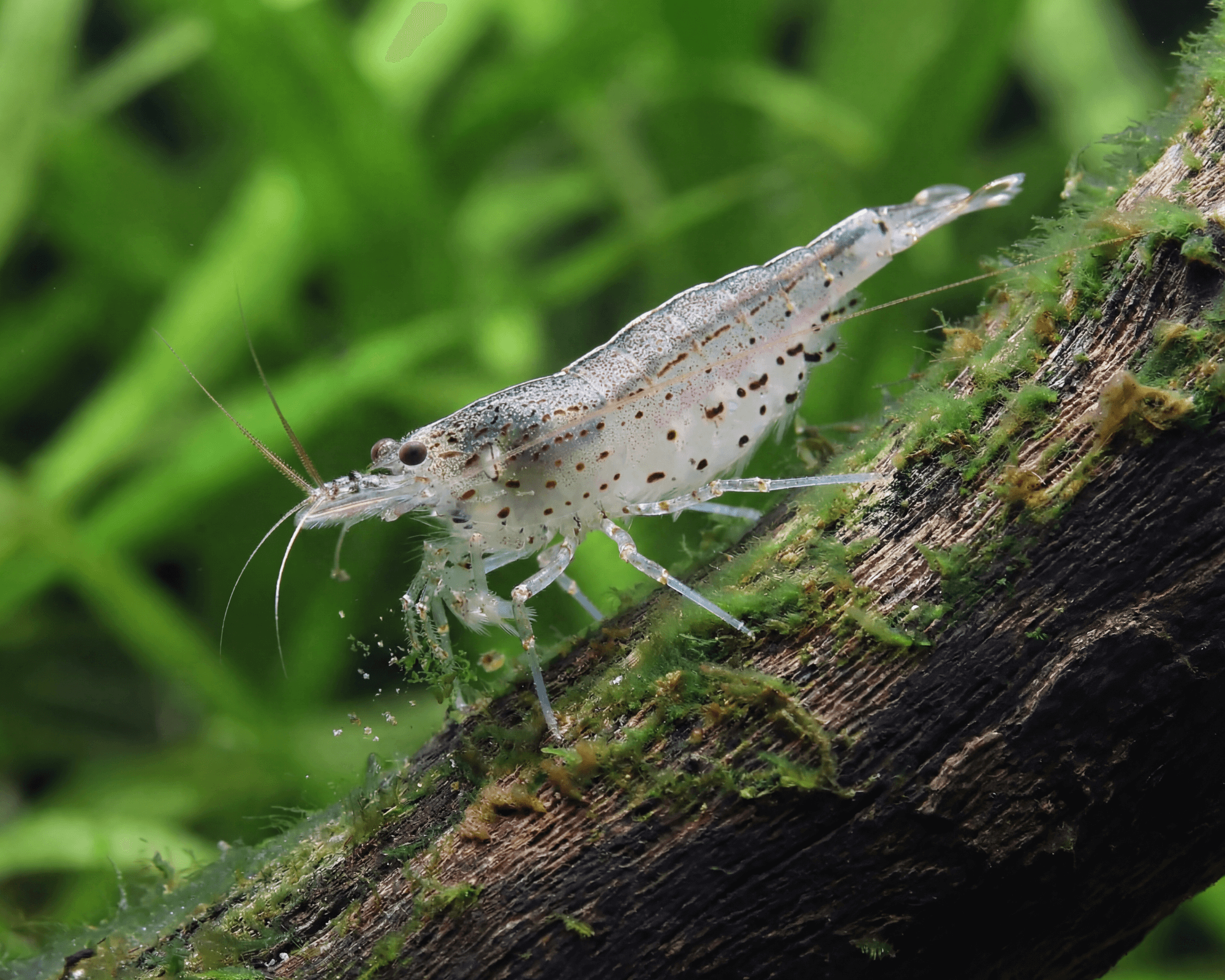
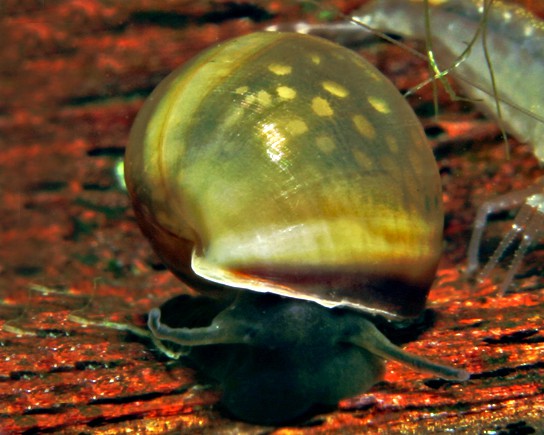
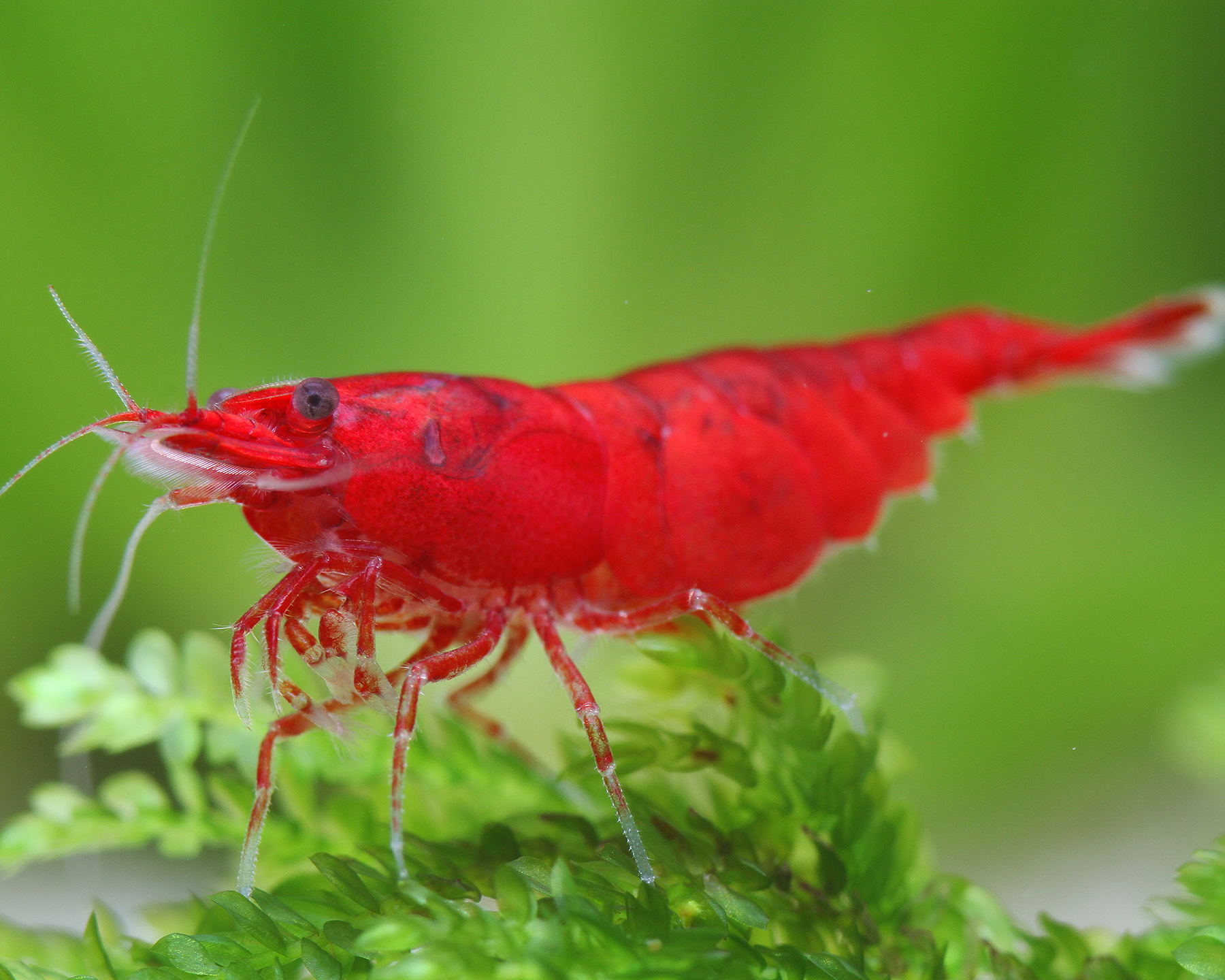
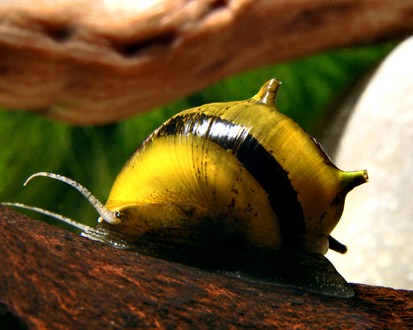
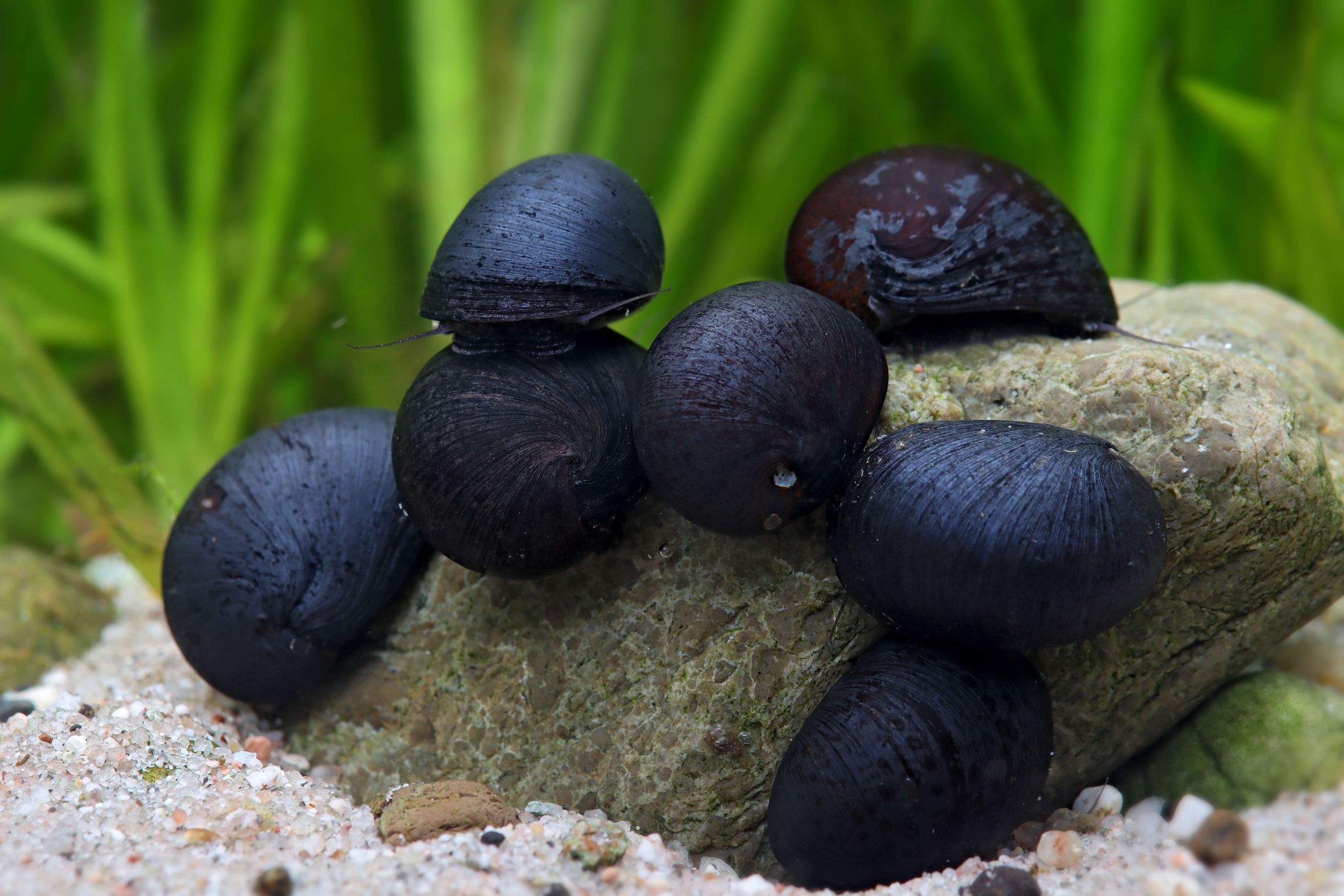
Freshwater shrimp and aquarium snails use surfaces more than swimming lanes. Shrimp graze on plant leaves, wood, and biofilm-rich hardscape, while snails move across glass, substrate, and décor. They can therefore fit layouts that are unsuitable for active fish, provided the tank is mature, stable, and free from predators. Small fish may eat shrimplets, and some bettas or larger community fish may harass adult shrimp. Place moss, dense stem bases, and small crevices where shrimp can retreat, but keep enough open surface for observation and cleaning. Add snails according to available food; excess numbers usually indicate excess feeding rather than a need for more cleanup animals.
%20erythromicron%20-%201.webp)
Choose easy plants by the space they create
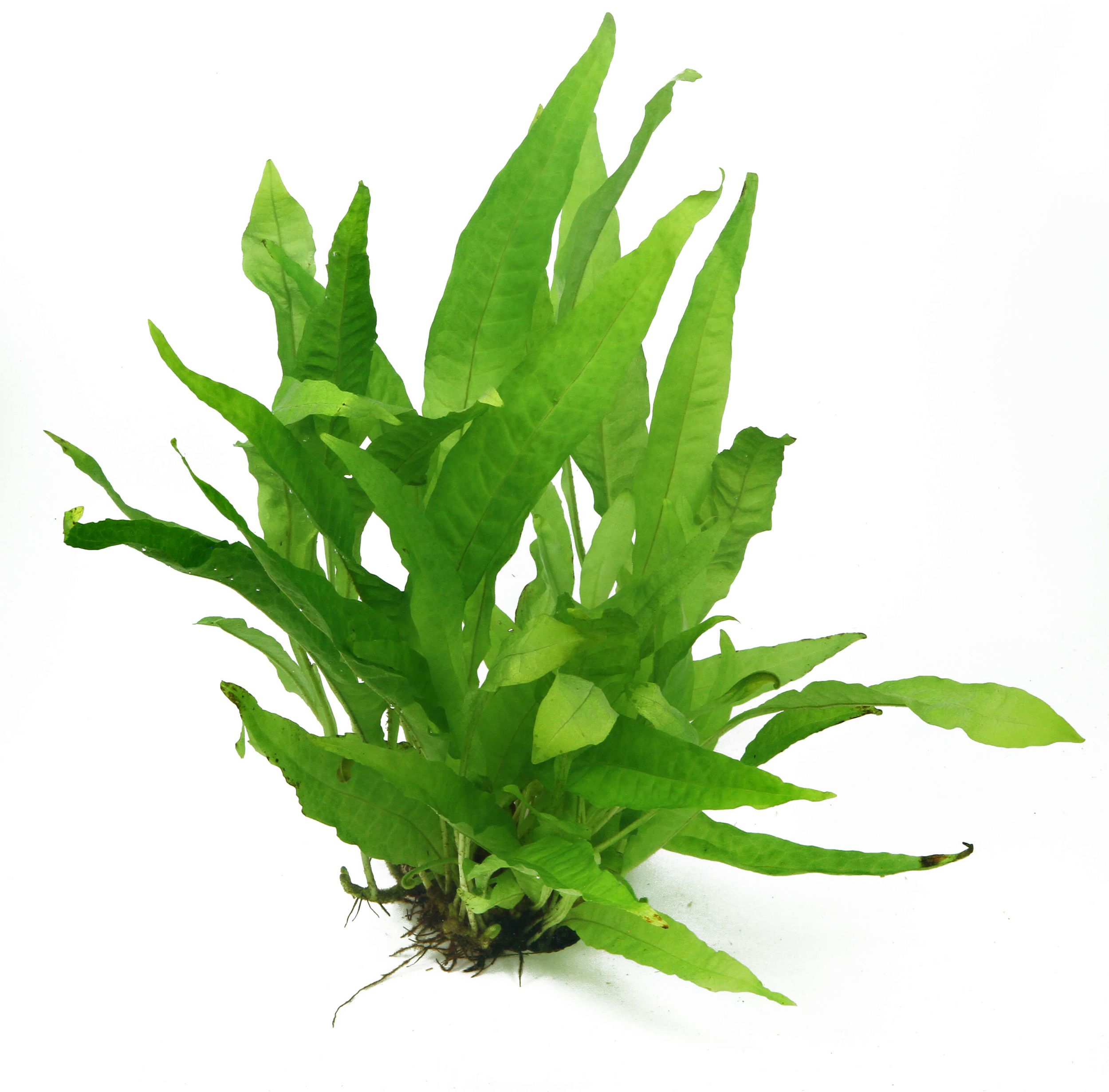
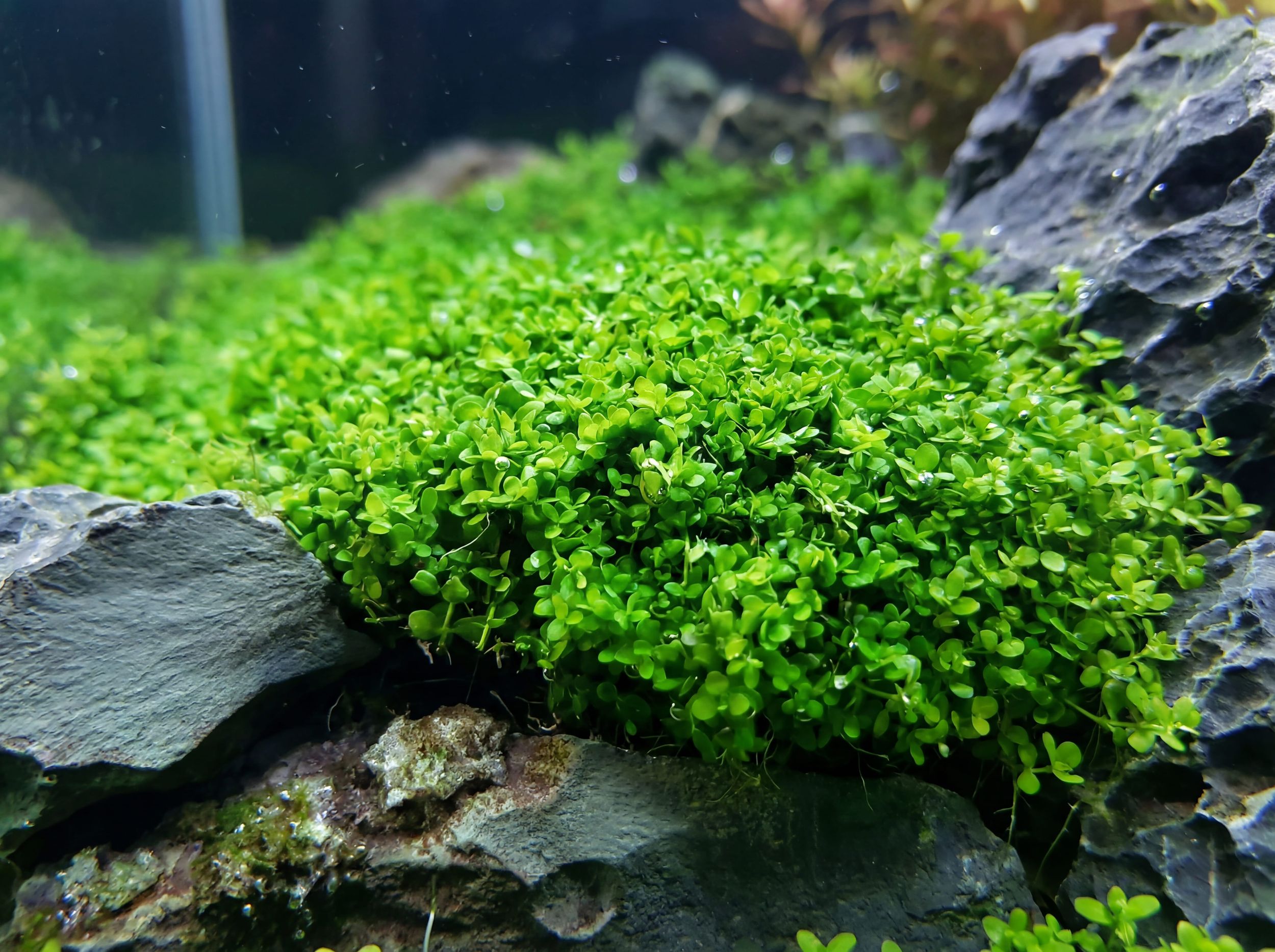
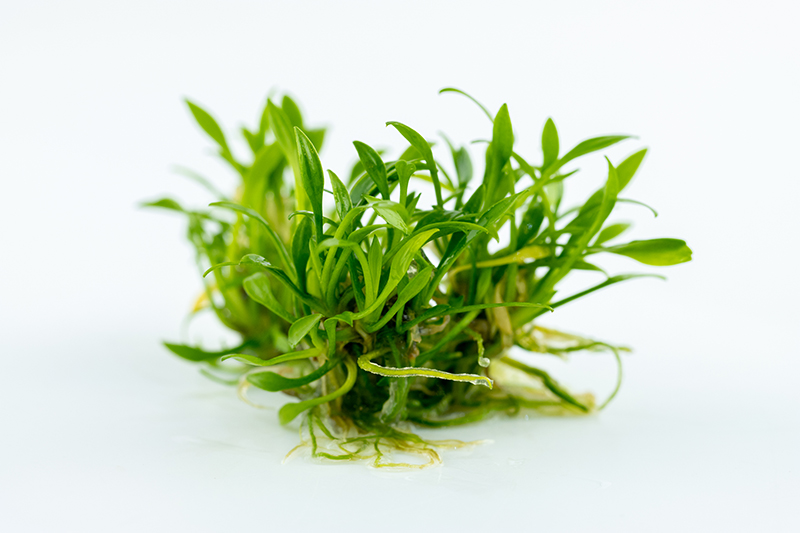
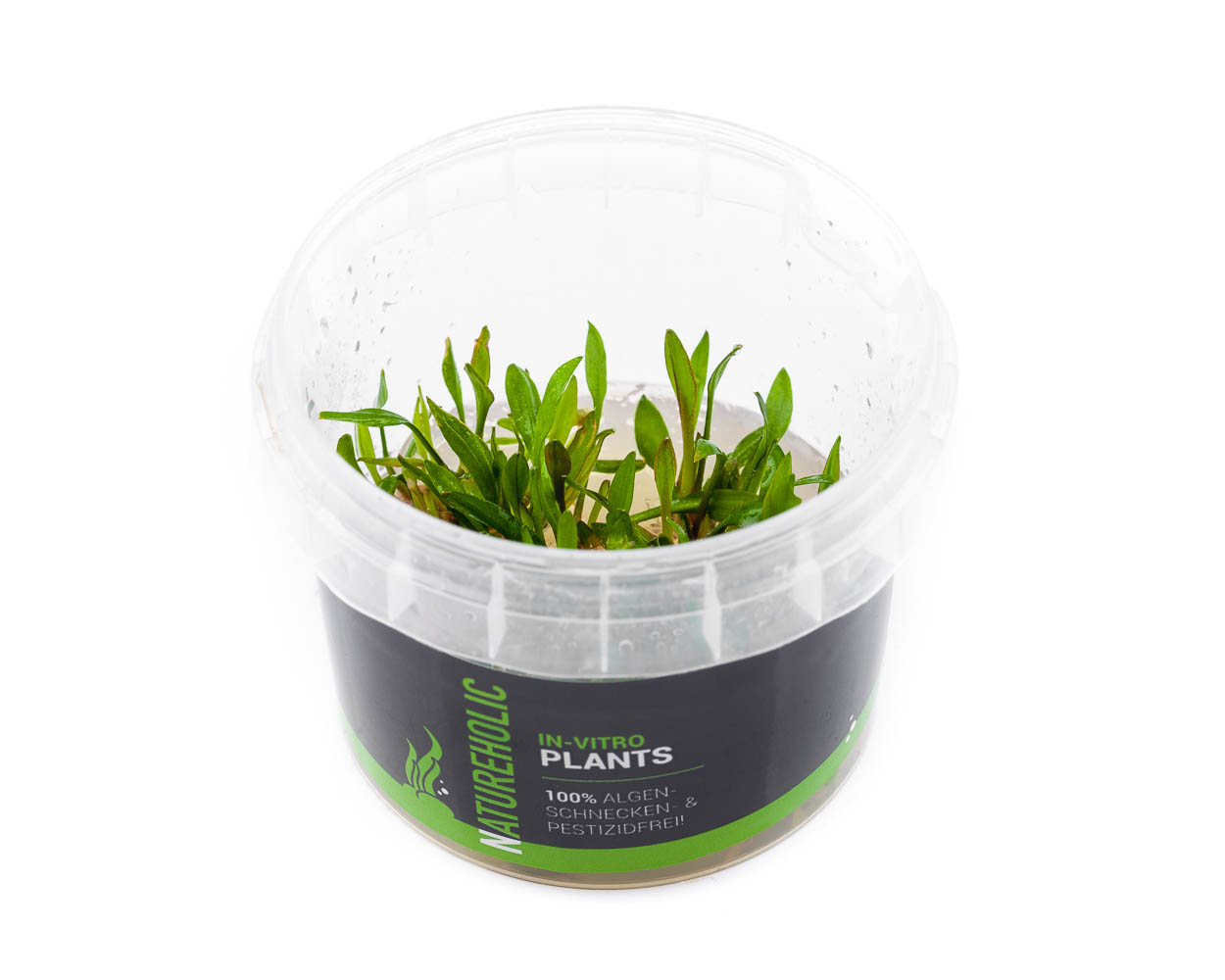
Beginner plants are most useful when they solve a layout problem. Anubias and Java fern can attach to wood or rock, leaving substrate open for bottom fish. Cryptocoryne can form low to medium-height cover without demanding constant trimming, although it may shed leaves after planting. Water sprite, hornwort, and other fast-growing plants can absorb nutrients and provide refuge, but they require regular thinning so they do not close the swimming lanes. Moss helps shrimp and fry, yet it can collect debris if packed too densely. Select plants by mature size, light, flow, and maintenance time—not only by appearance at the store.
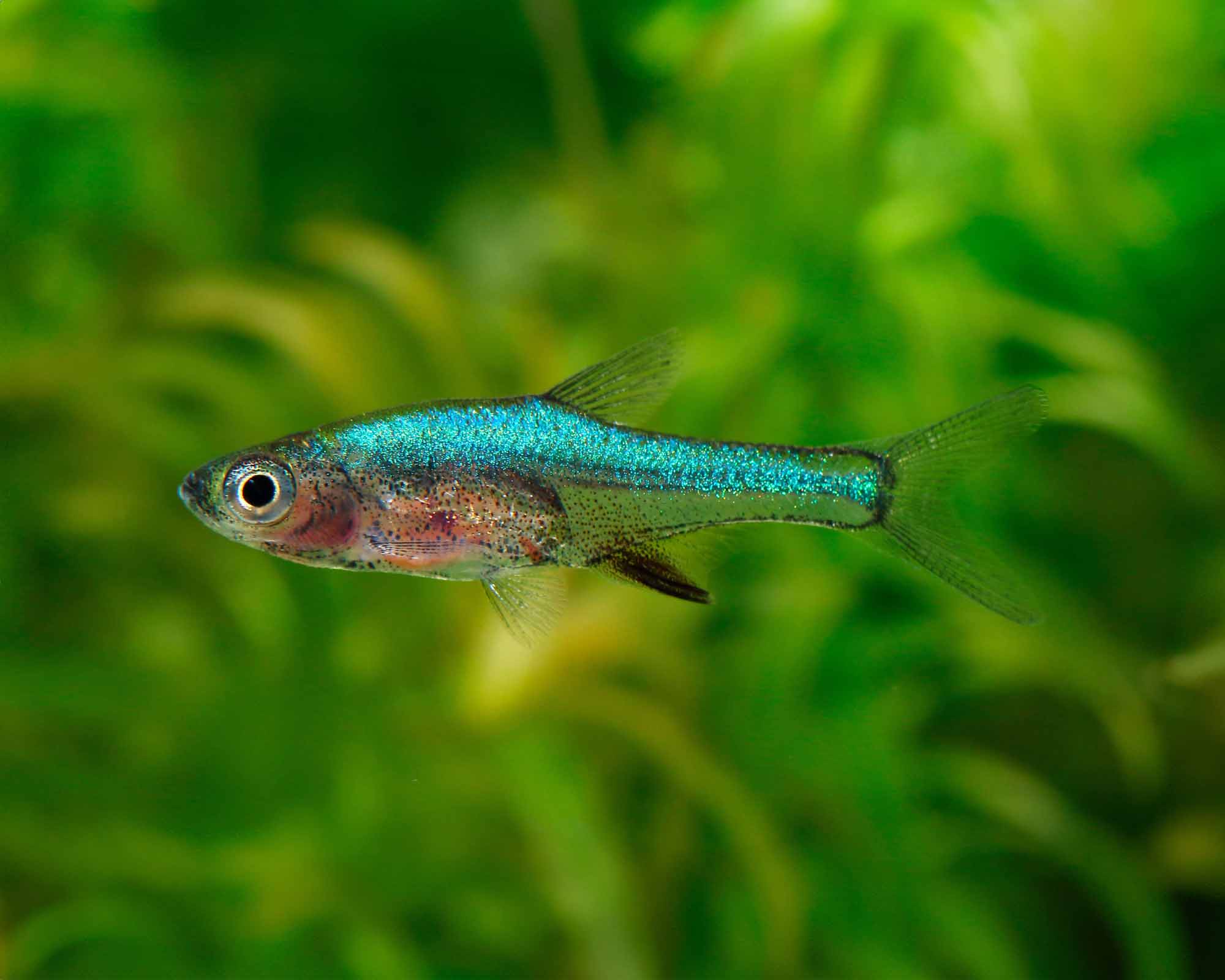
A practical compatibility test before you buy
Before adding livestock, write down four answers for each species: where it swims, how it reacts to tank mates, how much open space it needs, and whether it requires a group. Then compare those answers with the proposed layout. A peaceful school may still be unsuitable if it needs more length. A bottom group may be compatible in temperament but impossible to feed through dense carpeting. Shrimp and snails may fit the footprint but not the predator risk. Finally, check water temperature and chemistry ranges, adult size, diet, and breeding potential. If one species forces you to remove every retreat or open lane, it is the wrong addition.
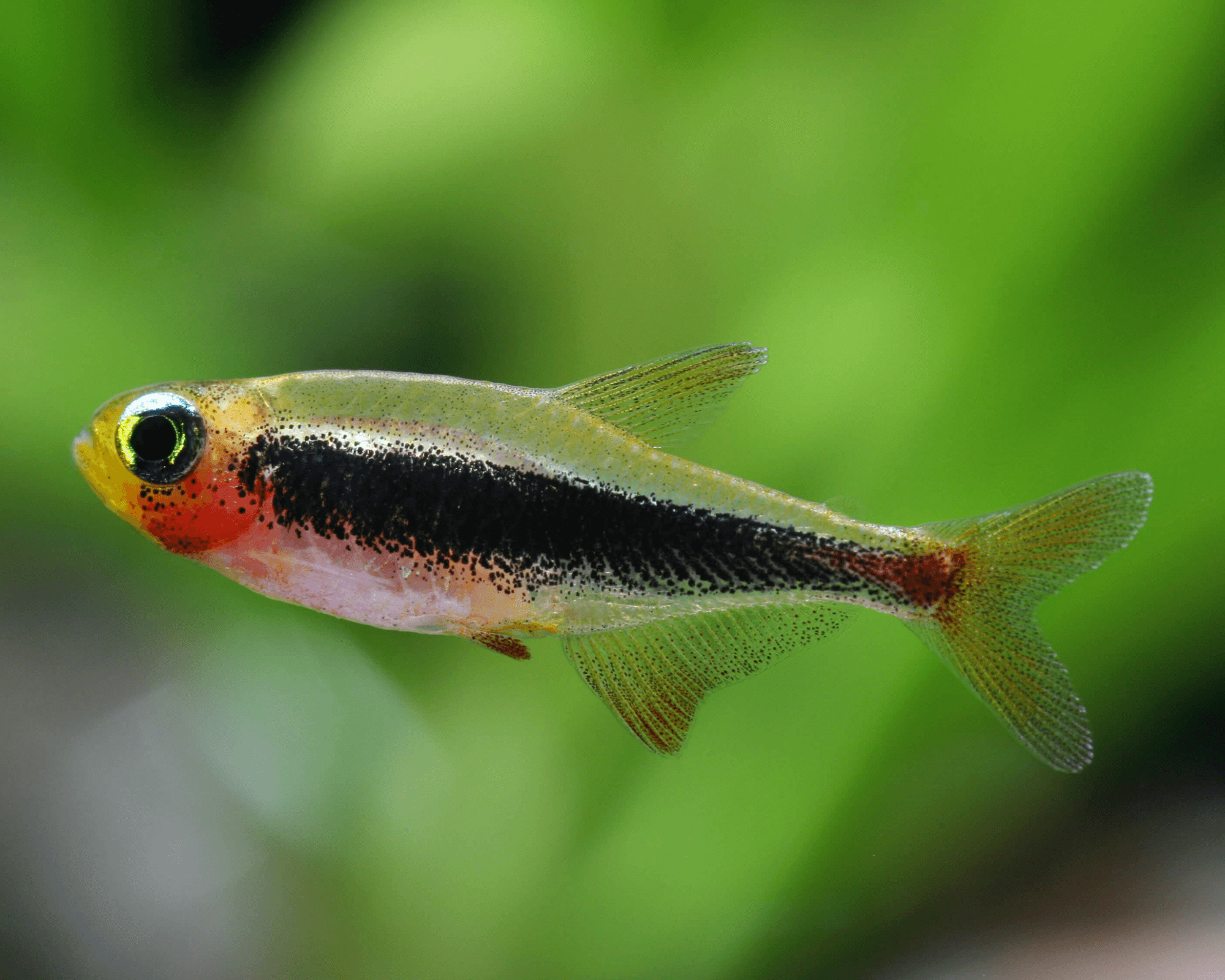
Frequently Asked Questions
Can a planted nano aquarium house both fish and shrimp?
Sometimes, but the outcome depends on the fish’s adult size, hunting behavior, temperament, and the amount of plant cover. Adult shrimp may survive with peaceful nano fish, while shrimplets are more vulnerable. A shrimp-only aquarium is usually more predictable in very small tanks.
Do more plants always make a community aquarium safer?
No. Plants can provide shelter, break sightlines, and support biofilm, but excessive growth can remove swimming space, trap debris, reduce visibility, or block surface access. Use plants to create distinct open, shaded, and retreat zones.
What is more important in a nano tank: gallons or swimming length?
Both matter, but footprint often determines whether a fish can perform normal movement. A long aquarium may suit a small school better than a taller aquarium with the same volume. For shrimp, snails, or a single betta, height and surface access may be less limiting.
Can aquarium snails live with planted-tank fish?
Many common freshwater snails can share peaceful planted aquariums, but fish may eat small snails or compete with them for food. Choose species according to adult size, shell needs, water chemistry, and available food. Do not add snails solely to solve an overfeeding problem.
 - 2.webp)
Leave your comments