
This article introduces 6 top candidates, providing a detailed breakdown of their difficulty, growth habits, and environmental requirements, enabling you to make an informed investment decision.
Table of contents
Top 10 Rarest and Most Beautiful Fish for Large Planted Aquariums (For Experienced Aquarists)
I. Group: Fish with Exceptional and Vivid Colors
1. Green Neon Tetra (Paracheirodon simulans)2. Red Emperor Tetra (Nematobrycon palmeri)3. Blue Diamond Discus (Symphysodon aequifasciatus)4. Costae's Tetra (Moenkhausia costae)
II. Group: Fish with Unique Form and Size
5. Peruvian Altum Angelfish (Pterophyllum altum 'Peru')6. L-46 Zebra Pleco (Hypancistrus zebra)7. Black Ghost Knifefish (Apteronotus albifrons)
III. Group: Solo Fish or Species Requiring Expert Care
8. Royal Clown Loach (Chromobotia macracanthus 'Gold')9. Apistogramma Agassizii 'Tefe' (Dwarf Cichlid)10. Fire Eel (Mastacembelus erythrotaenia)
IV. Summary Table and Final Investment Advice
I. Group: Fish with Exceptional and Vivid Colors
1. Green Neon Tetra (Paracheirodon simulans)
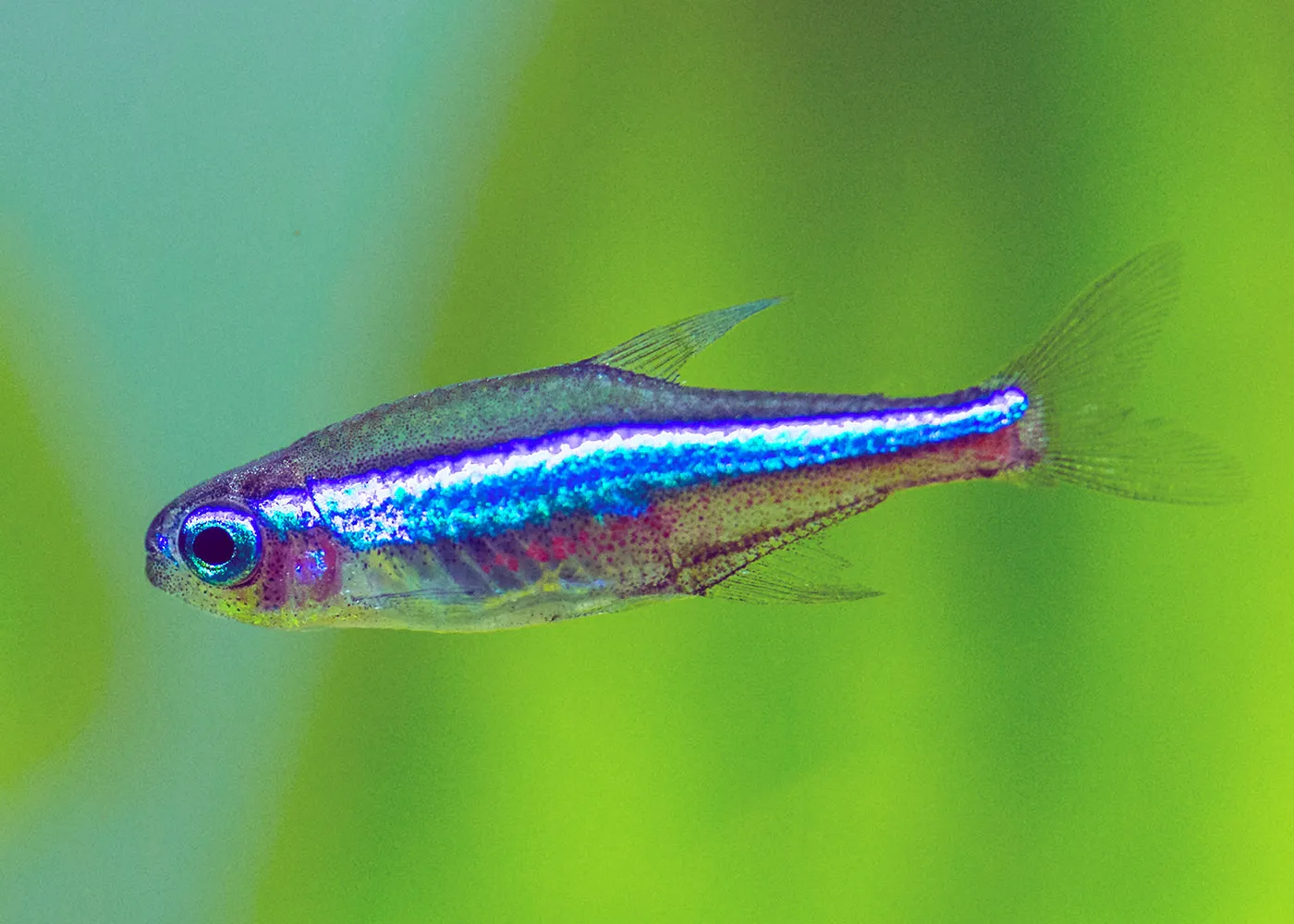
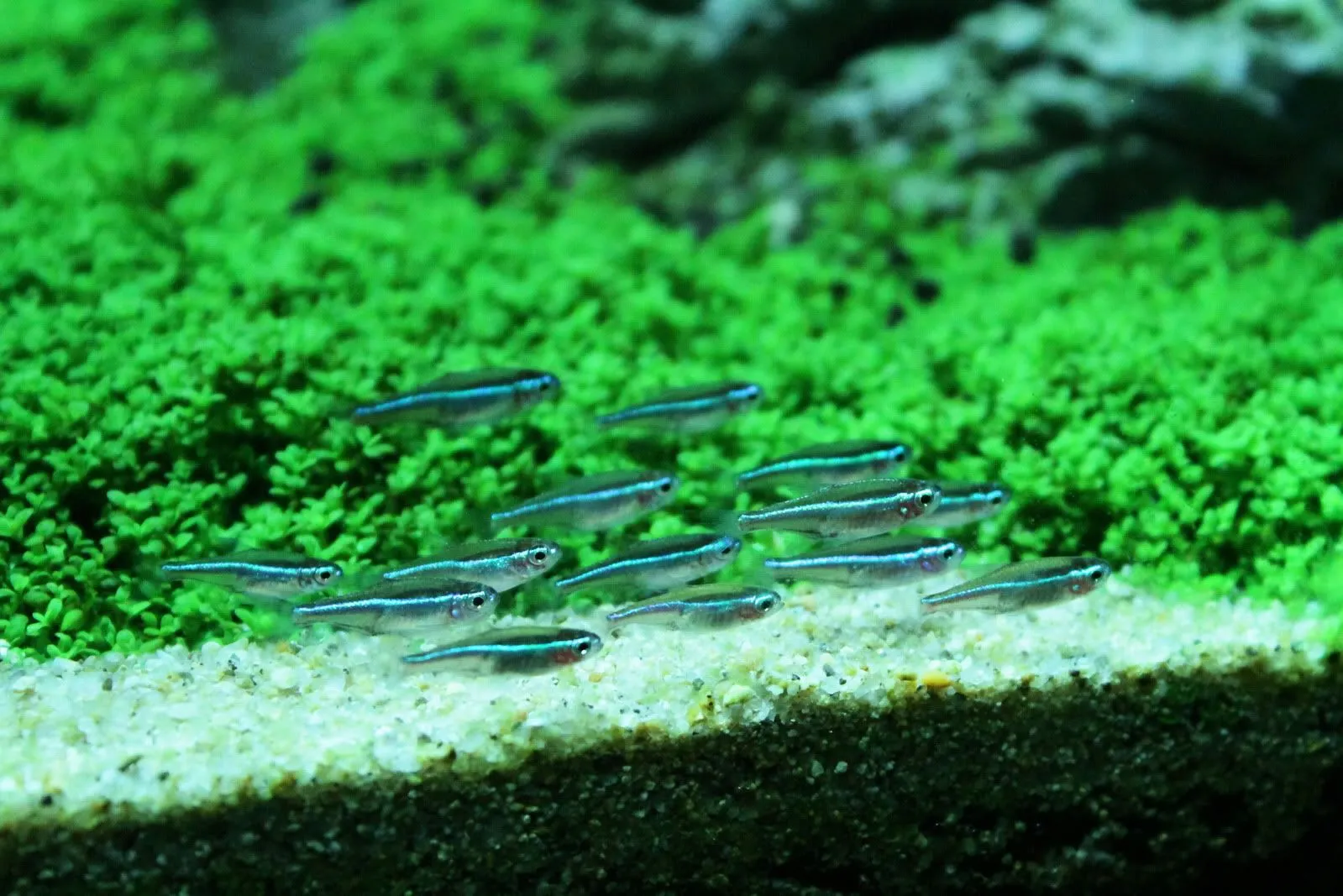
The Green Neon Tetra is a true standout in the aquascaping world, highly sought after by enthusiasts for its more refined and subtle glow compared to its cousin, the Cardinal Tetra. This tiny fish does not possess the bold red stripe; instead, it features a brilliant, almost luminous, emerald green stripe running along its body. When kept in large schools, the ethereal lighting effect they create swimming under dense aquatic foliage is unparalleled. However, do not let their delicate appearance fool you—they demand pristine and stable water quality to display their full potential beauty.
Rarity
Less common than Neon and Cardinal Tetras. Difficult to source a large, healthy school.
Difficulty
Medium/Hard. Sensitive to water quality changes; requires low acidic pH (5.0–6.5) and very soft water.
Behavior
Excellent schooling fish. Their dimmer blue/green iridescence creates a mystic effect when swimming.
Tank Requirements
Minimum 60L (ideally 200L for a large school). Needs densely planted areas, dim lighting, and gentle water flow.
Special Note
Never introduce them to a newly set up tank. Requires a biologically mature tank of at least 3-6 months.
2. Red Emperor Tetra (Nematobrycon palmeri)
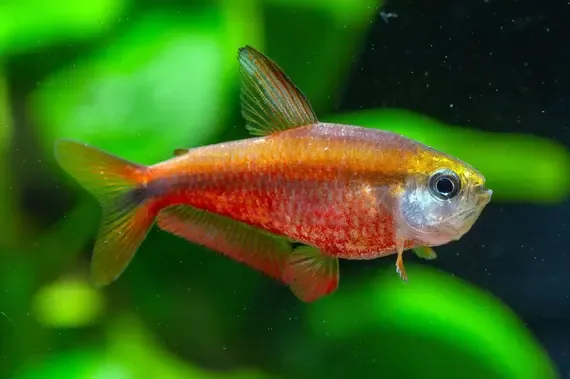
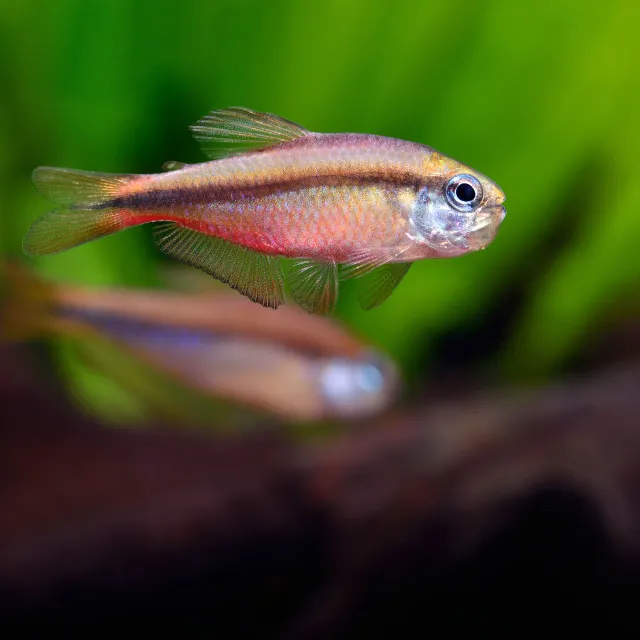
The Red Emperor Tetra is hailed as one of the most "personable" Tetra species. Mature males boast a regal color scheme: a smoky purple or gray body punctuated by bold stripes of ruby red or deep wine-red. Their signature feature is the majestic trident-shaped caudal fin and powerful iridescent blue eyes, giving them a commanding presence as they patrol their aquatic kingdom. This fish is a perfect choice if you desire a peaceful yet eye-catching species suitable for cohabitation in a large, planted tank.
Rarity
Not extremely rare, but the true Vivid Red/Purple strain (purebred) is hard to find.
Difficulty
Easy/Medium. Hardier than many other Tetra species; adapts well to varying water conditions (pH 6.0-7.5).
Behavior
Males have long fins and intense color when mature. Males may engage in minor, harmless competition.
Tank Requirements
Minimum 100L. Requires plenty of swimming space; suitable for keeping with other peaceful species.
Special Note
Males have a distinctive elongation on the tail fin (trident tail), giving them a stately appearance.
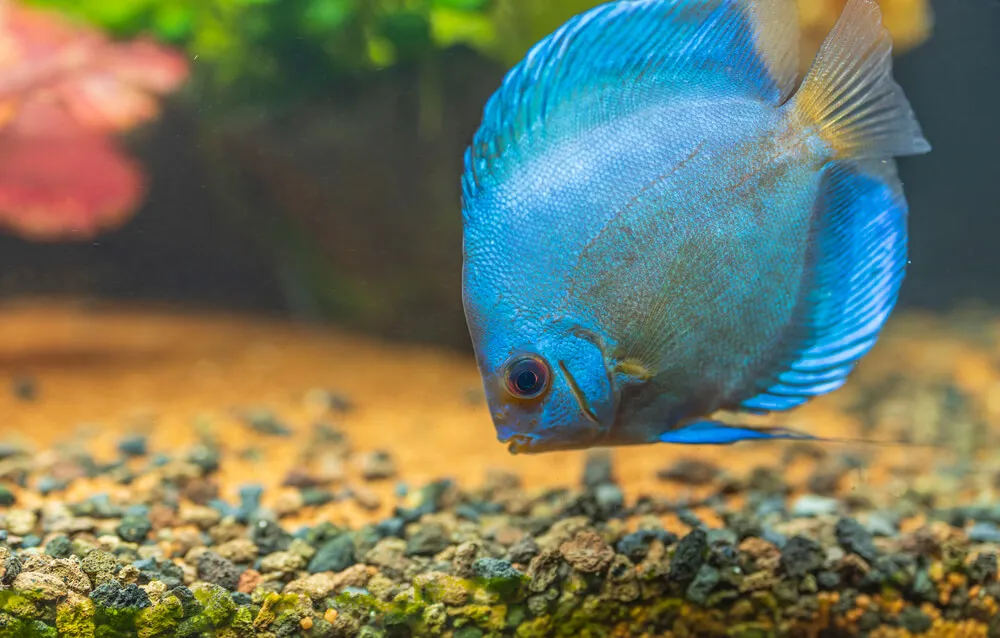
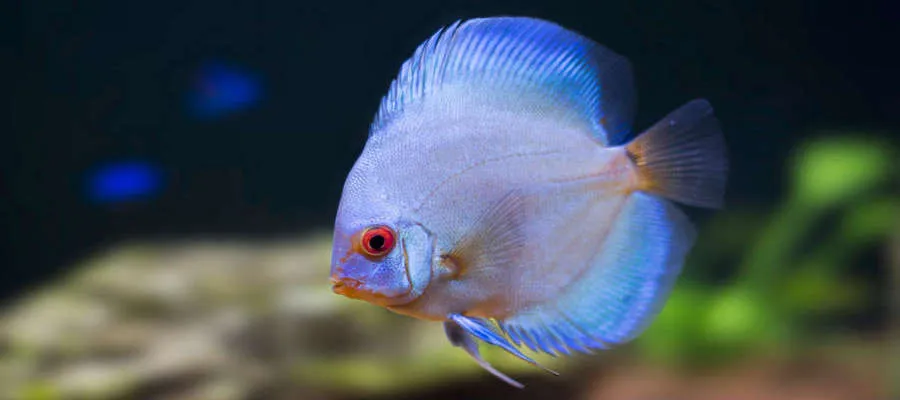
3. Blue Diamond Discus (Symphysodon aequifasciatus)
The Blue Diamond Discus is often called the "King of the Aquarium" for its majestic, perfectly round body shape and solid, vibrant blue coloration. Keeping Discus successfully in a planted tank is the ultimate challenge for aquarists. Their beauty comes at a price: they demand extremely high temperatures (28-30°C/82-86°F) and pristine, frequently changed water. When healthy, their deep blue color and calm demeanor make them an unparalleled centerpiece.
Rarity
Highly prized variety. Large, flawless specimens are rare and expensive.
Difficulty
Hard. Requires warm water (28-30°C), meticulous water changes, and high-quality food.
Behavior
Peaceful and slow-moving. Best kept in groups of 5 or more to spread out aggression and encourage feeding.
Tank Requirements
Minimum 300L (75 Gal). Requires exceptional filtration and heating.
Special Note
Do not combine with fish that prefer cooler temperatures or fast, aggressive eaters.
4. Costae's Tetra (Moenkhausia costae)
The Costae's Tetra is a rarer species of Tetra, beloved for its classic look and unique swimming behavior. When accelerating, they tend to "flicker" their yellow-green tail fin, creating the interesting "scissor" effect from which they get their common name. Their dominant color is a brilliant, shimmering silver, which becomes particularly striking under dim lighting or against dense green foliage. This is a hardy species and an excellent addition to a larger community tank.


Rarity
Quite rare, less frequently imported than common Tetra species.
Difficulty
Easy/Medium. Very hardy and adaptable, but requires excellent water quality to maintain color.
Behavior
Excellent schooling fish (keep 8 or more). Very active, swimming primarily in the mid-water column.
Tank Requirements
Minimum 200L (50 Gal). Requires ample open swimming space in the middle of the tank and planted areas for security.
Special Note
They will be more active and colorful when kept in a tank with gentle water flow.
II. Group: Fish with Unique Form and Size
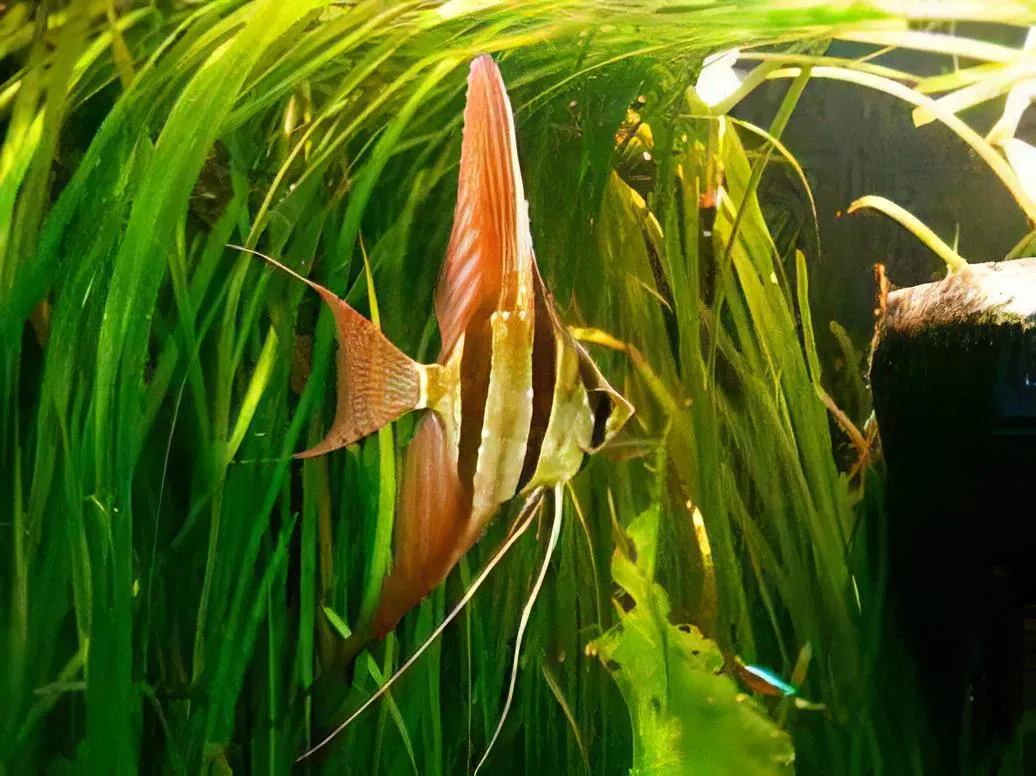
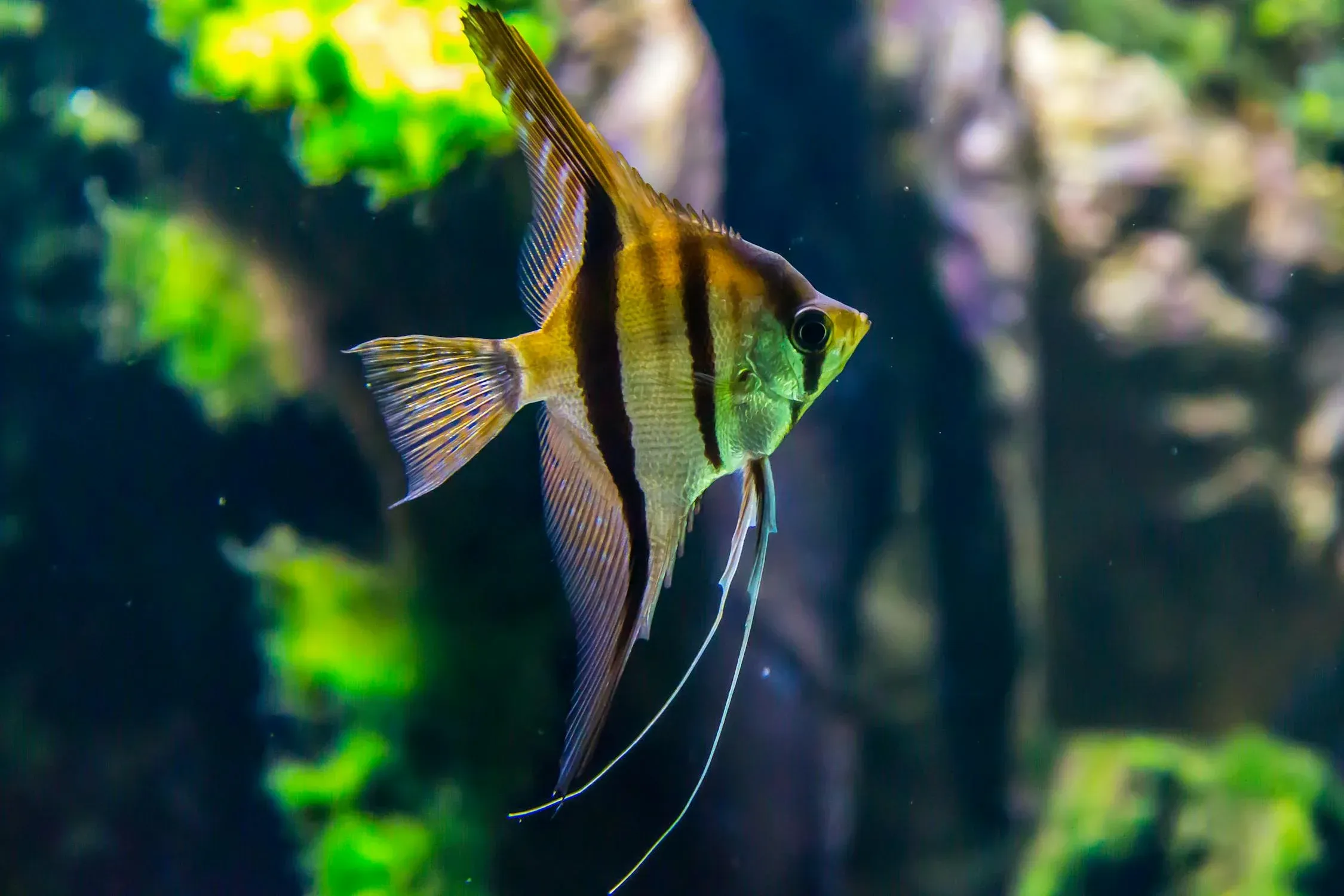
5. Peruvian Altum Angelfish (Pterophyllum altum 'Peru')
The Peruvian Altum Angelfish is the "royal" version of the standard Angelfish, highly desirable for its shape—closer to the true Altum (the tallest finned species)—but slightly easier to manage. The main appeal lies in its flat, graceful body and extended fins, which provide impressive verticality in the aquarium. In tall planted tanks (at least 60cm/24 inches high), this species swims slowly and elegantly like floating leaves, creating an artistic focal point worthy of the higher cost and intensive care they require.
Rarity
Rare and more expensive than standard Angels. Sought after for its impressive vertical height potential.
Difficulty
Hard. Very difficult to acclimate initially. Requires a large water column height (at least 60cm) for proper fin growth.
Behavior
Peaceful with smaller fish, but may eat Neon Tetras (choose appropriate fish size). Swims slowly and gracefully.
Tank Requirements
Minimum 300L. Requires stable temperature (26-29°C) and vertical swimming space
Special Note
As a Cichlid, it can be sensitive to stress when water parameters are unstable.
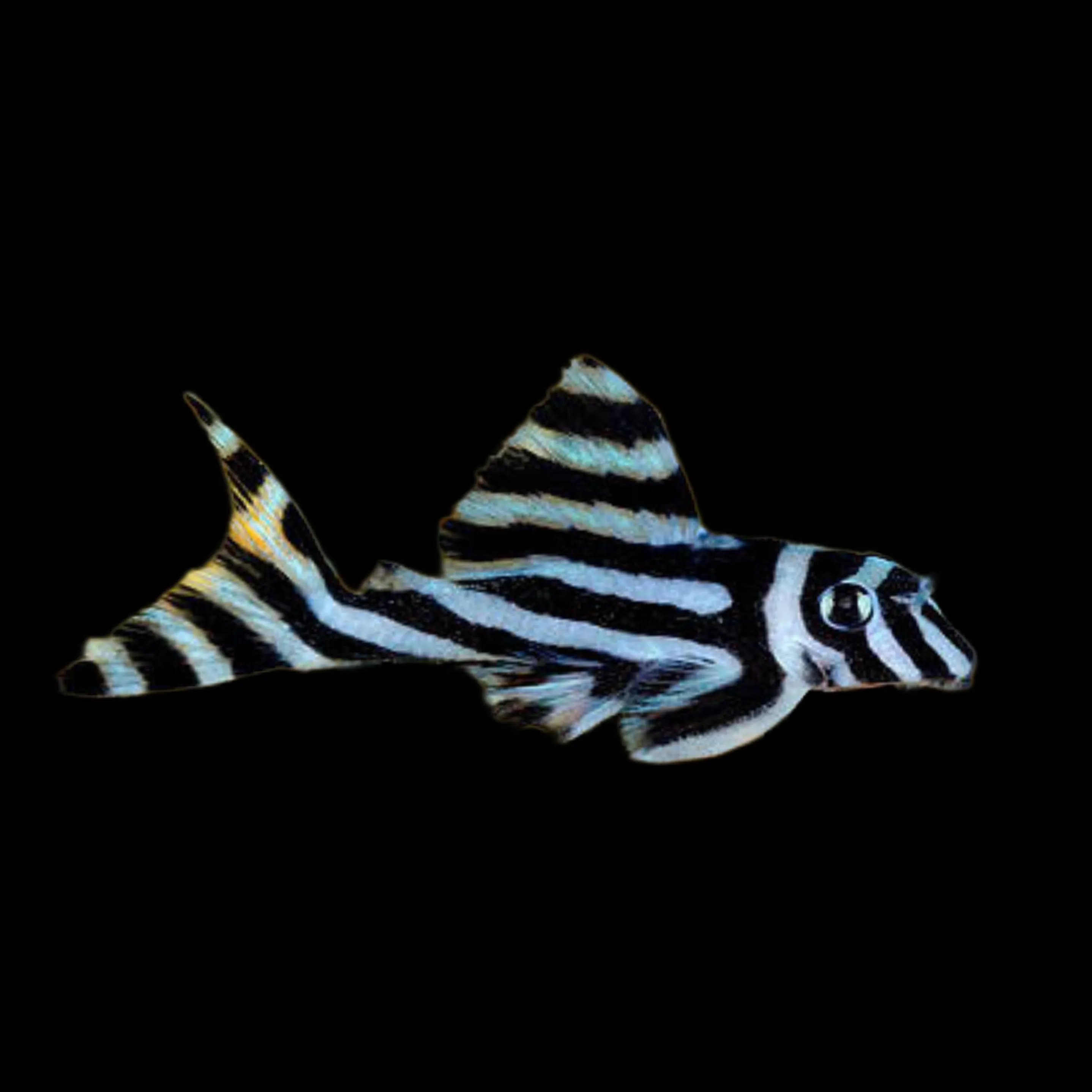
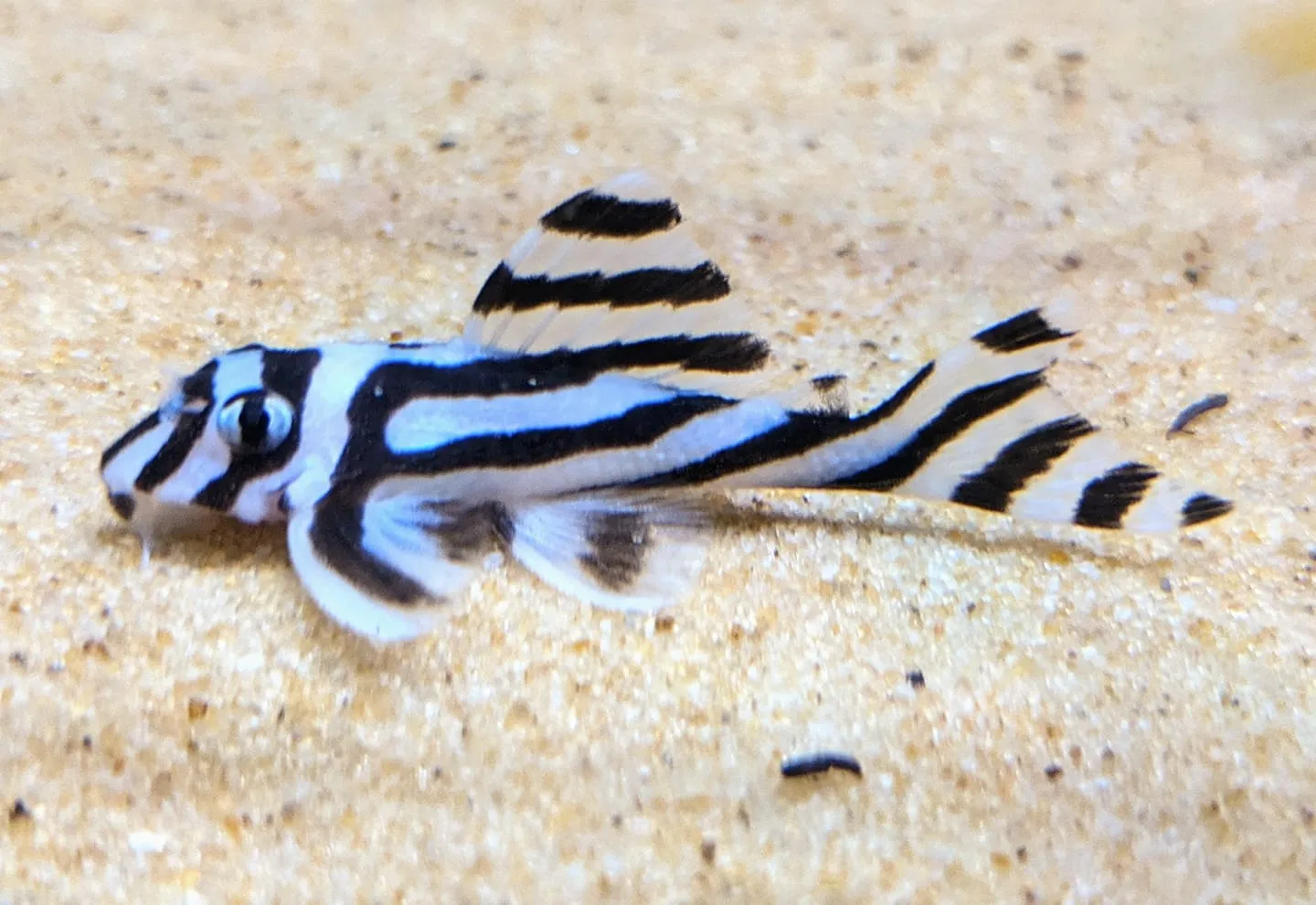
6. L-46 Zebra Pleco (Hypancistrus zebra)
If you seek an aesthetically superior bottom-dweller, the L-46 Zebra Pleco is the answer. This small but extremely valuable Pleco is famous for its crisp black and white (or pale yellow) stripes, creating a stunningly elegant and highly collectible zebra pattern. Unlike common algae-eating Plecos, the L-46 is a carnivore, primarily active in the dark, and is very sensitive to water quality. Successfully keeping and breeding the L-46 is a status symbol, demonstrating an aquarist's top-tier water management skills.
Rarity
Extremely Rare (often tank-bred). Has the highest collector value among Pleco species.
Difficulty
Hard. Sensitive to high Nitrates; requires strong water flow and high oxygen levels. It is a carnivore, not an algae eater.
Behavior
Primarily nocturnal. Stays hidden in caves/crevices; exhibits mild territorial behavior.
Tank Requirements
Minimum 150L. Needs many rock/ceramic caves for hiding. Requires strong aeration.
Special Note
Do not buy this species for algae removal. They require protein-rich foods (meat, shrimp...).
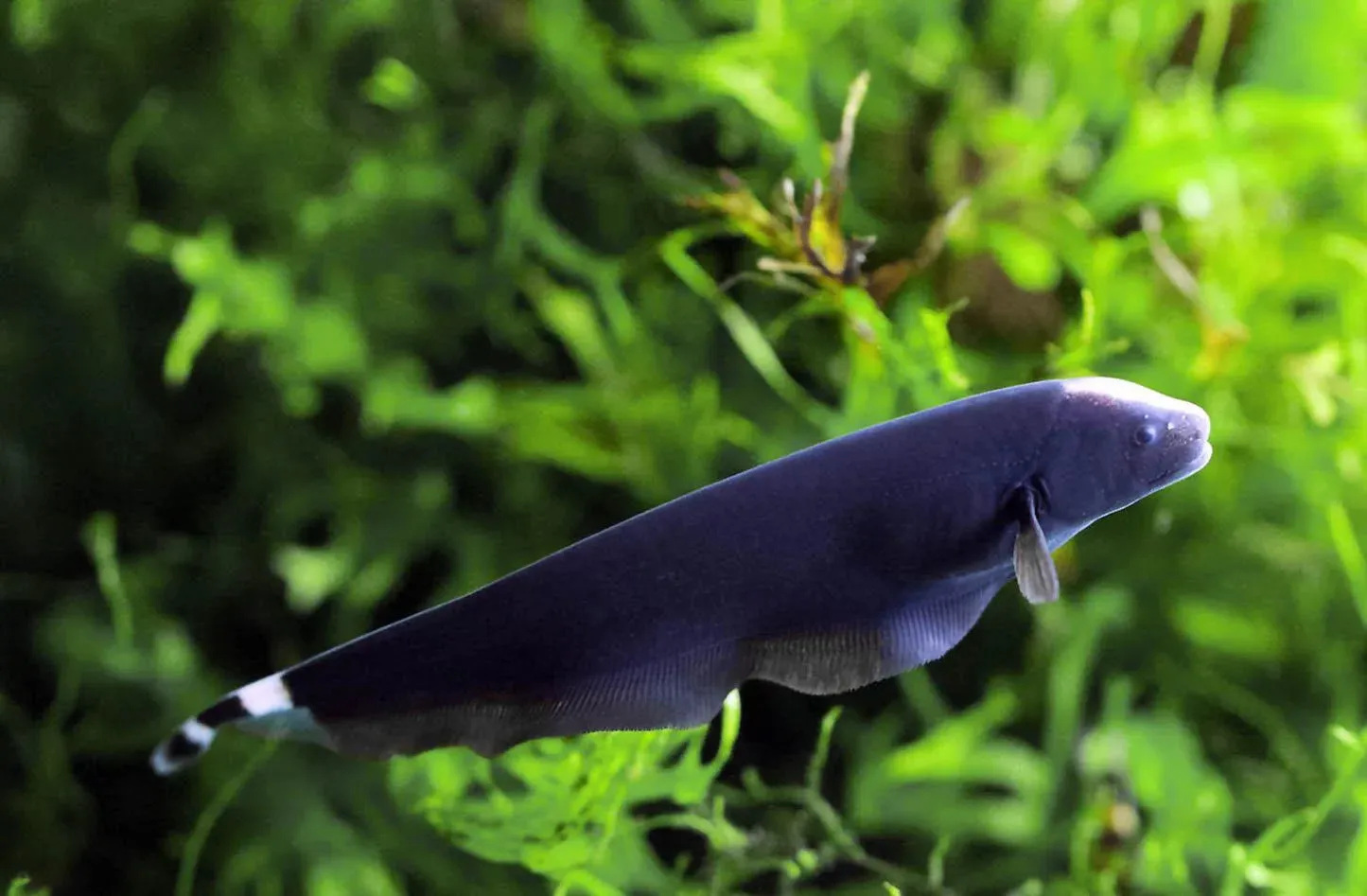
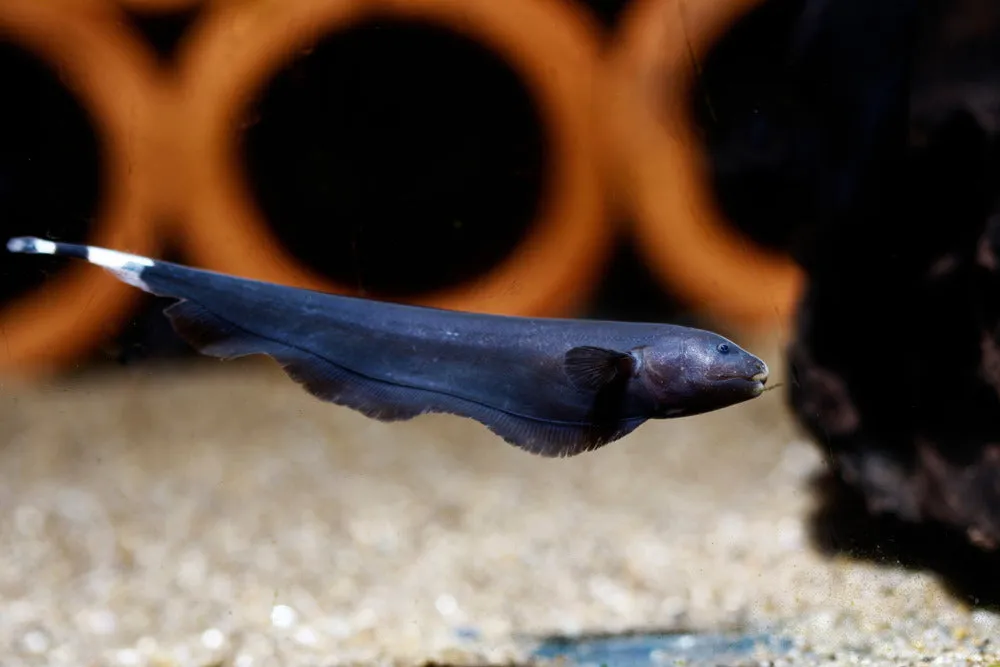
7. Black Ghost Knifefish (Apteronotus albifrons)
The Black Ghost Knifefish is a mesmerizing creature known for its long, flowing, electric knife-like body. It generates a weak electrical field to navigate and find prey, making its movement seem to defy physics. This large fish has a peaceful disposition but needs immense space to roam. Its unique silhouette and constant, undulating motion make it a fascinating, almost supernatural centerpiece for deep, dimly lit planted tanks.
Rarity
Common, but a healthy, large specimen is highly valued for its striking presence.
Difficulty
Medium/Hard. Grows very large (up to 50cm). Requires a long tank and high water quality.
Behavior
Nocturnal and peaceful, but highly territorial toward other Knifefish. They need hiding places (long PVC pipes or driftwood).
Tank Requirements
Minimum 500L (125 Gal). Requires a soft, sandy substrate and dim lighting.
Special Note
Feed frozen/live foods. Ensure the tank has no small fish that can fit in its mouth, despite its generally peaceful nature.
III. Group: Solo Fish or Species Requiring Expert Care
8. Royal Clown Loach (Chromobotia macracanthus 'Gold')
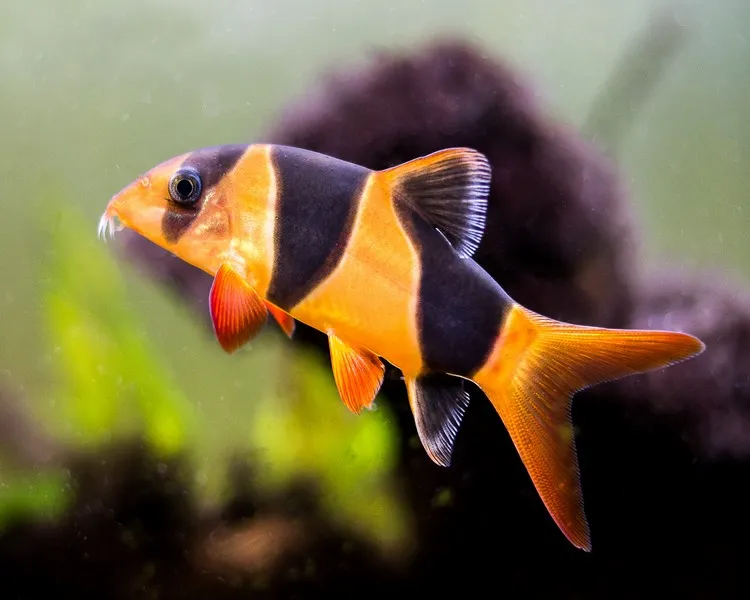
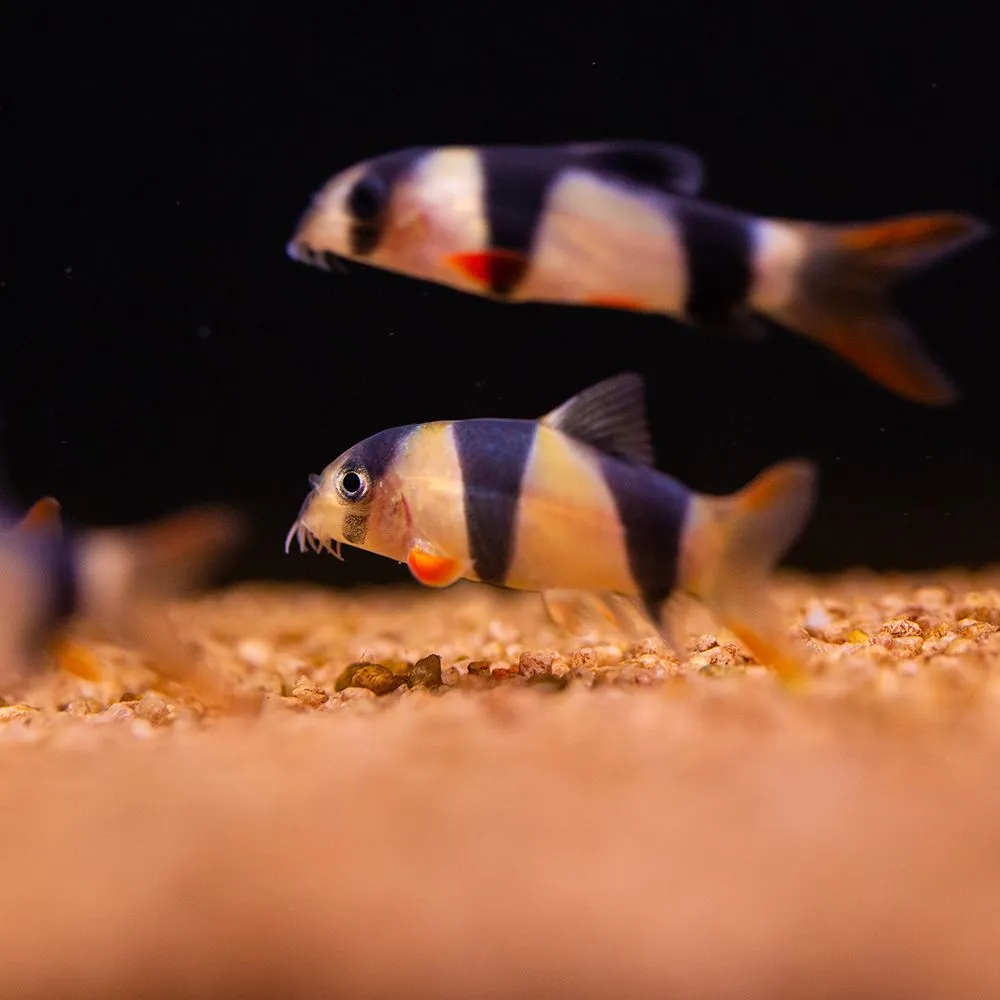
The Royal Clown Loach is a magnificent addition to your large tank, valued not just for its coloration but for its personality. The Gold/Albino mutation of the Clown Loach features a vibrant golden hue that beautifully accentuates its traditional dark stripes. Beyond their attractive appearance, they are highly intelligent, playful, and social (best kept in groups of five or more). However, they can reach a large size, requiring a high-volume tank. Crucially, they are excellent snail eradicators, a major plus for planted tank owners.
Rarity
The Gold/Albino genetic mutation is rare and significantly more expensive than the common Clown Loach.
Difficulty
Medium. Prone to Ich (white spot disease). Requires good aeration and neutral pH water.
Behavior
Social, should be kept in schools. Very curious, explores actively, and sleeps in strange, often titled positions.
Tank Requirements
Minimum 300L. They grow quickly and can reach 30-40cm. Requires ample space and hiding spots.
Special Note
Must be kept in a group to prevent stress. Excellent for controlling pest snails.
9. Apistogramma Agassizii 'Tefe' (Dwarf Cichlid)
The Apistogramma Agassizii 'Tefe' is a masterpiece of miniature beauty. Unlike larger Cichlids, this dwarf variety remains small, perfect for a peaceful planted tank. The Tefe variant is highly sought after for the male’s stunning "sunset" coloration—a fiery orange and red tail contrasting sharply with a metallic blue body. They are challenging due to their absolute requirement for extremely soft, acidic water (Blackwater conditions) to breed and maintain peak color. They serve as a small, magnificent centerpiece fish.


Rarity
The 'Tefe' or 'Double Red' variants are rare and high-value dwarf cichlids.
Difficulty
Medium/Hard. Requires extremely soft, acidic water (pH 4.5-6.0) and high temperatures.
Behavior
Semi-aggressive, territorial, but generally harmless to tankmates. Keep in a Harem (1 male, 2-3 females).
Tank Requirements
Minimum 80L. Needs dense leaf litter, coconut huts, and hiding spots.
Special Note
Use peat or Indian Almond leaves to achieve the necessary Blackwater conditions.
10. Dwarf Pea Puffer (Carinotetraodon travancoricus)
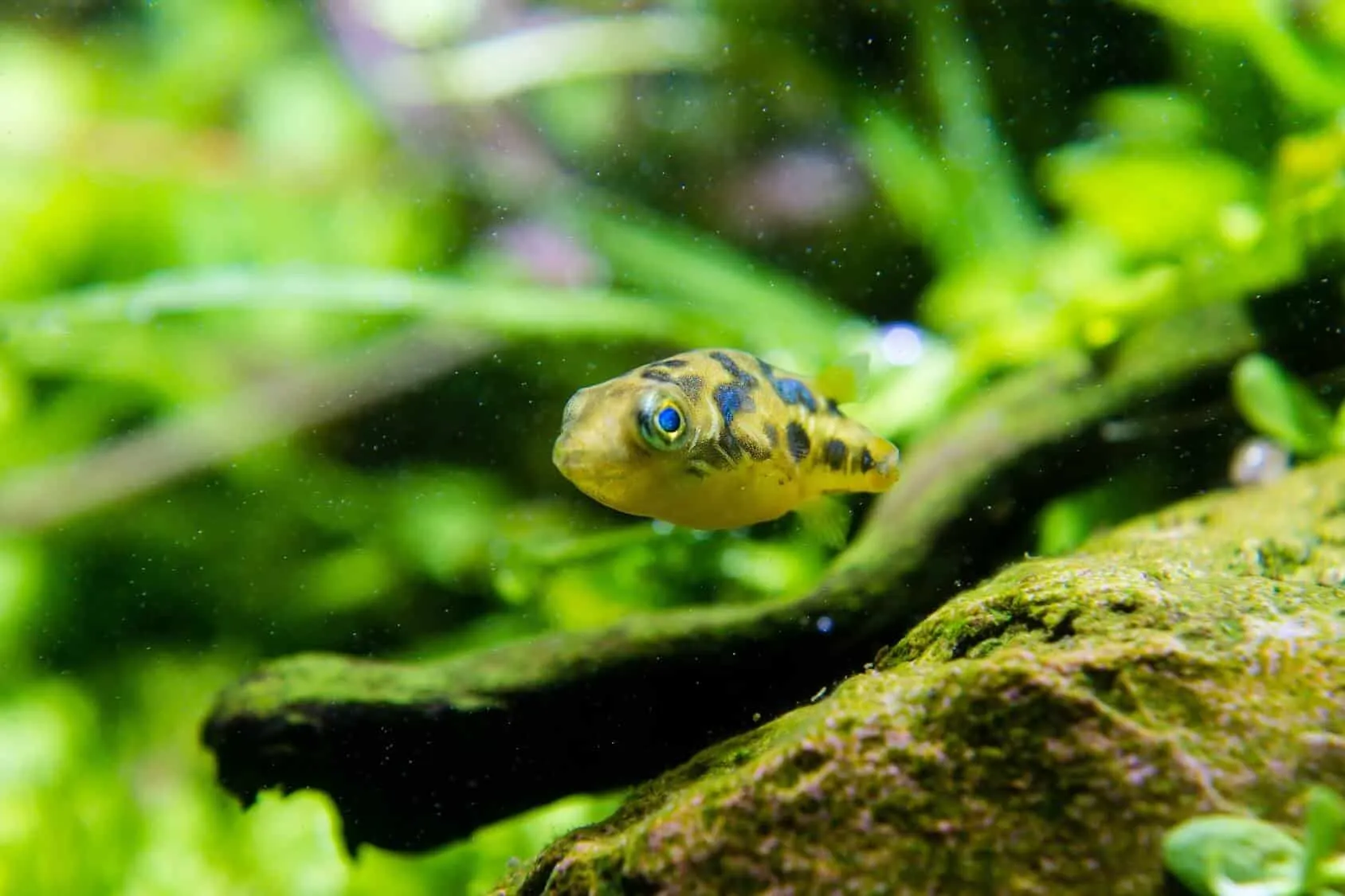
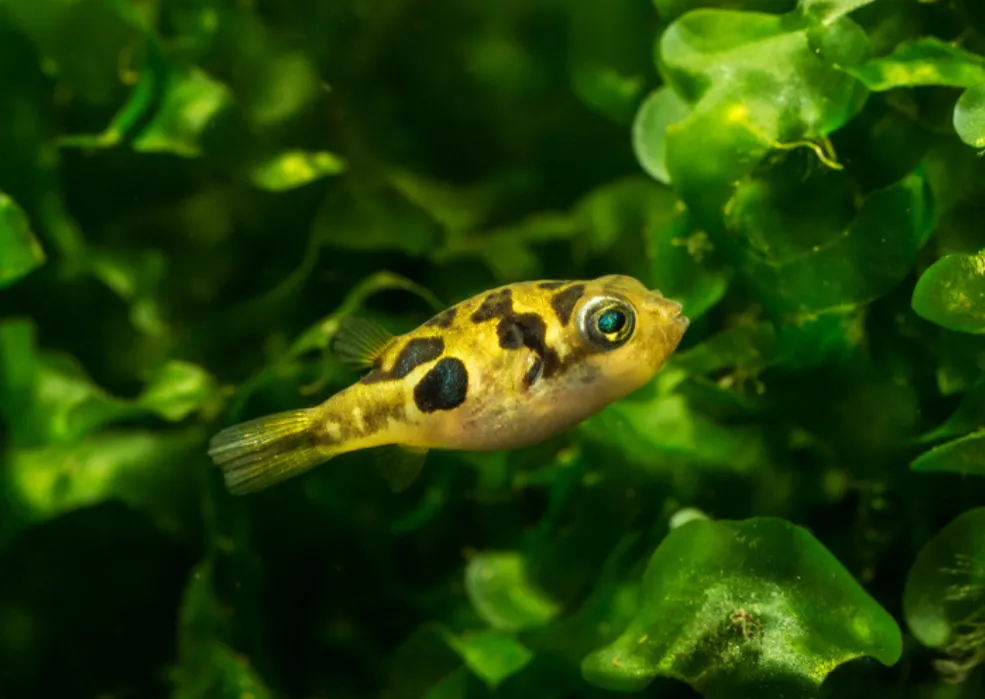
The Dwarf Pea Puffer is the world's smallest known pufferfish and one of the most charismatic. Measuring only about 2.5cm (1 inch), they have an endearing appearance but possess formidable hunting skills. They are an excellent solution for controlling pest snails. However, they are highly territorial and aggressive, meaning they can only be kept with certain fast-moving, non-flashy tankmates of a similar size. They are a unique, mesmerizing addition that requires specialized care commitment.
Rarity
Common, but rarely seen in community planted tanks due to aggression and specialized diet.
Difficulty
Hard. Strict carnivore (snails, bloodworms). Easily bullied if not the dominant mid-level fish.
Behavior
Highly curious, but extremely aggressive fin-nippers and territorial. Best kept in small groups (Harem).
Tank Requirements
Minimum 80L. Needs heavy planting and decor to create territorial boundaries and hiding spots.
Special Note
Never keep with slow-moving or long-finned fish. The most effective biological snail control.
IV. Summary Table and Final Investment Advice
| Species | Difficulty | Tank Size (Minimum) | Value/Risk |
| 1. Green Neon Tetra | Medium/Hard | 200L (50 Gal) | Requires a highly stable, mature tank. |
| 2. Red Emperor Tetra | Easy/Medium | 100L (25 Gal) | Easy to keep; value depends on pure red strain. |
| 3. Blue Diamond Discus | Hard | 300L (75 Gal) | High demands on temperature and water stability. |
| 4. Costae's Tetra | Easy/Medium | 200L (50 Gal) | Very active schooler; great aesthetic movement. |
| 5. Peruvian Altum | Hard | 300L (75 Gal) | Requires great tank height, high setup cost. |
| 6. L-46 Zebra Pleco | Hard | 150L (40 Gal) | Extremely rare and expensive; requires high oxygen flow. |
| 7. Black Ghost Knifefish | Medium/Hard | 500L (125 Gal) | Requires a large tank and specialized hiding spots |
| 8. Royal Clown Loach | Medium | 300L (75 Gal) | Must be kept in a group; grows quickly and large. |
| 9. Apistogramma 'Tefe' | Medium/Hard | 80L (20 Gal) | Requires strict Blackwater (soft, acidic) conditions. |
| 10. Dwarf Pea Puffer | Hard | 80L (20 Gal) | Highly specialized diet and territorial behavior. |
Conclusion: The Next Level of Aquascaping
The journey into keeping rare and specialized fish is what separates the dedicated aquascaper from the casual hobbyist. Selecting species like the Blue Diamond Discus, the graceful Altum Angelfish, or the stunning L-46 Zebra Pleco not only elevates the beauty of your tank but forces you to become a master of water chemistry and environment stability.
Remember that investment goes beyond the price tag of the fish. It includes the robust filtration, the high-quality food, and the patient commitment to maintenance.
Don't forget to check your tank size requirements. Whether you choose the tiny territorial Tefe Apistogramma or the swift Costae's Tetra, ensuring they have the volume and stability they need is key to seeing their true, rare beauty flourish.









Leave your comments