Overview
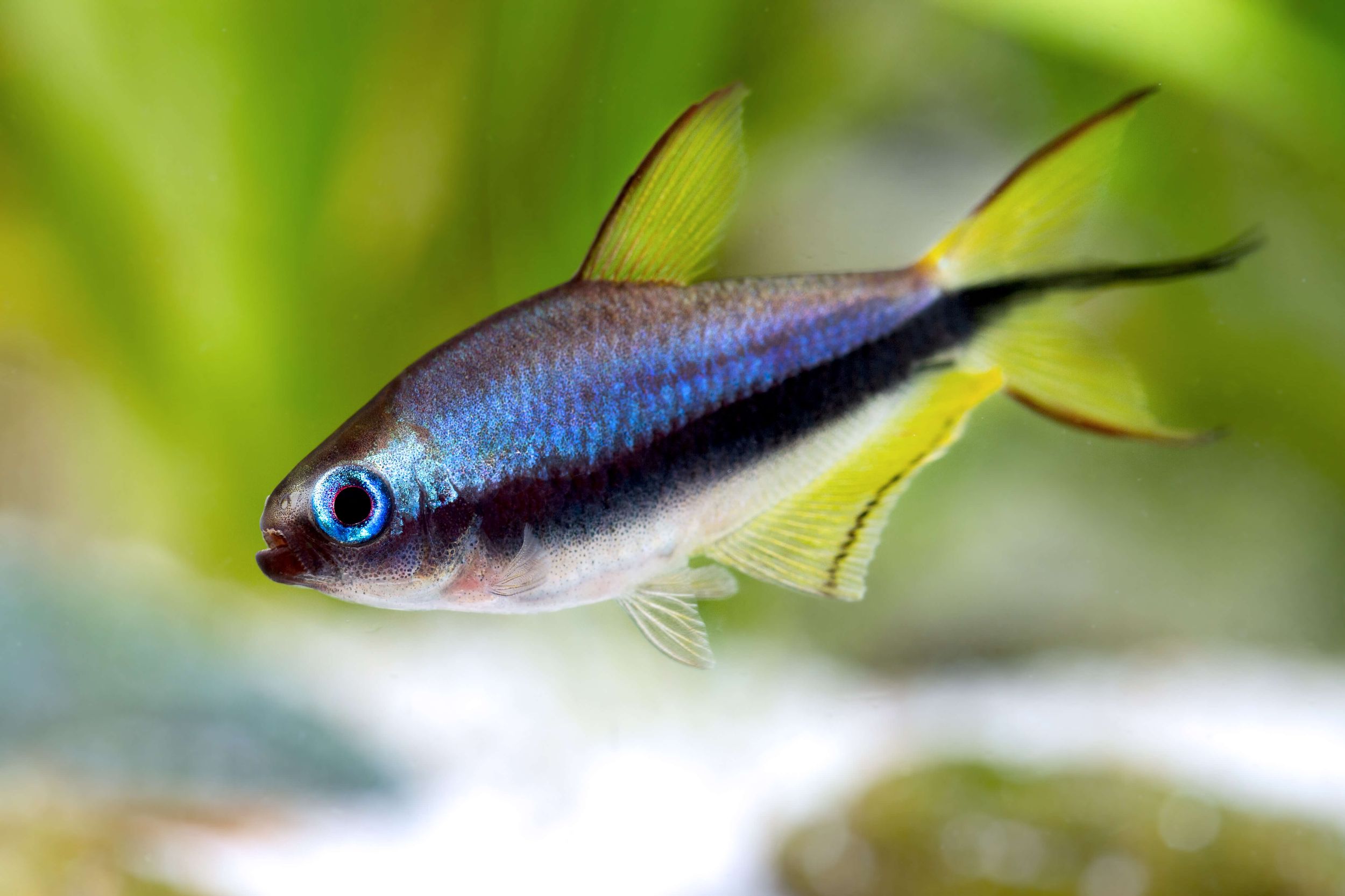
The Emperor Tetra is an elegant and robust tetra species that brings a touch of royalty to the freshwater aquarium. Unlike many other tetras, they do not need to be kept in massive schools to feel secure, though a small group is highly recommended. Their iridescent hues and the striking finnage of the males make them an eye-catching centerpiece for any planted setup.

Distribution and Habitat
Endemic to Colombia, the Emperor Tetra is predominantly found in the Atrato and San Juan river basins. They inhabit sluggish tributaries, small streams, and backwaters that are heavily shaded by dense rainforest canopies. The waters in their natural habitat are typically soft, slightly acidic, and rich in tannins from decaying leaf litter.
Description of Emperor Tetra
Body shape:
They possess an elongated and slightly deep body that is more robust than many typical slender tetras, giving them a substantial presence in the water.
Color:
Their coloration is spectacular, featuring a prominent, thick black lateral stripe running from the mouth to the tail. Above this stripe, the body reflects a stunning purplish-blue to silver iridescence.
Barbels:
They do not possess barbels.
Snout:
The snout is relatively short and pointed, equipped with a small, terminal mouth suited for picking small foods from the water column.
Eyes:
The eyes are large and striking, often featuring a metallic blue or green sheen on the upper part of the iris.
Fins:
The fins are generally a translucent yellow or greenish-yellow. In males, the dorsal fin is notably elongated and sickle-shaped.
The Tail:
The caudal fin is a defining feature, particularly in males, where the central black body stripe extends through the middle of the tail, creating a unique "trident" or three-pronged appearance.

Temper
The Emperor Tetra is generally a peaceful species, making it an excellent candidate for a community tank. Males will occasionally engage in mock battles to establish dominance and impress females, but these displays are harmless and rarely result in actual injury.
Sociality
While not as tightly schooling as some other tetras, they are a shoaling species and should be kept in groups of at least 5 to 6 individuals. A mixed-gender group allows for natural behaviors and vibrant coloration as males display to females.
Activity
They are active mid-to-top level swimmers. They spend much of their day exploring the tank, interacting with one another, and foraging for food among aquatic plants.
Keeping and Caring for Emperor Tetra
Tank size:
A minimum tank size of 20 gallons (approx. 75 liters) is recommended to provide ample swimming space and accommodate a proper shoal.
Water Parameters:
Temperature
Maintain the water temperature between 23-27°C (73-81°F).
pH
They thrive in slightly acidic to neutral water, with a pH range of 5.0 to 7.5.
Hardness
Soft to moderately hard water is ideal, ranging from 3 to 12 dGH.
Ammonia, Nitrite, Nitrate
Ammonia and Nitrite must be strictly maintained at 0 ppm. Nitrates should be kept below 20 ppm through regular water changes.
Lighting
Subdued to moderate lighting is preferred. Dimmer lighting not only mimics their shaded natural habitat but also brings out their best iridescent colors.
Water flow
A gentle to moderate water flow is best, simulating the sluggish streams they originate from.
Decorations and Plants
A heavily planted tank with dark substrate is ideal. Incorporate driftwood, floating plants to diffuse light, and dried leaf litter to provide tannins and natural hiding spots.

Diet
Emperor Tetras are omnivorous and not fussy eaters. In the aquarium, they will readily accept high-quality dry flakes and micro-pellets. To ensure optimal health and coloration, supplement their diet with live or frozen foods such as daphnia, bloodworms, and brine shrimp.
Some Feeding Tips
Feed them small amounts 1 to 2 times a day, offering only what they can consume within a couple of minutes to prevent water fouling.
Breeding
They are egg scatterers and relatively easy to breed. Set up a separate, dimly lit breeding tank with soft, acidic water and fine-leaved plants like Java Moss or spawning mops. Condition the pair with live foods. After spawning, the parents should be removed immediately as they will eat their own eggs. The fry typically hatch in 24-36 hours and become free-swimming a few days later, requiring infusoria or specialized fry food.
Conclusion
The Emperor Tetra is a magnificent and relatively hardy fish that rewards aquarists with dynamic behavior and breathtaking coloration. Whether you are a beginner or a seasoned hobbyist, a well-maintained planted tank featuring a shoal of these regal tetras is sure to be a captivating display.
Leave your comments