Overview
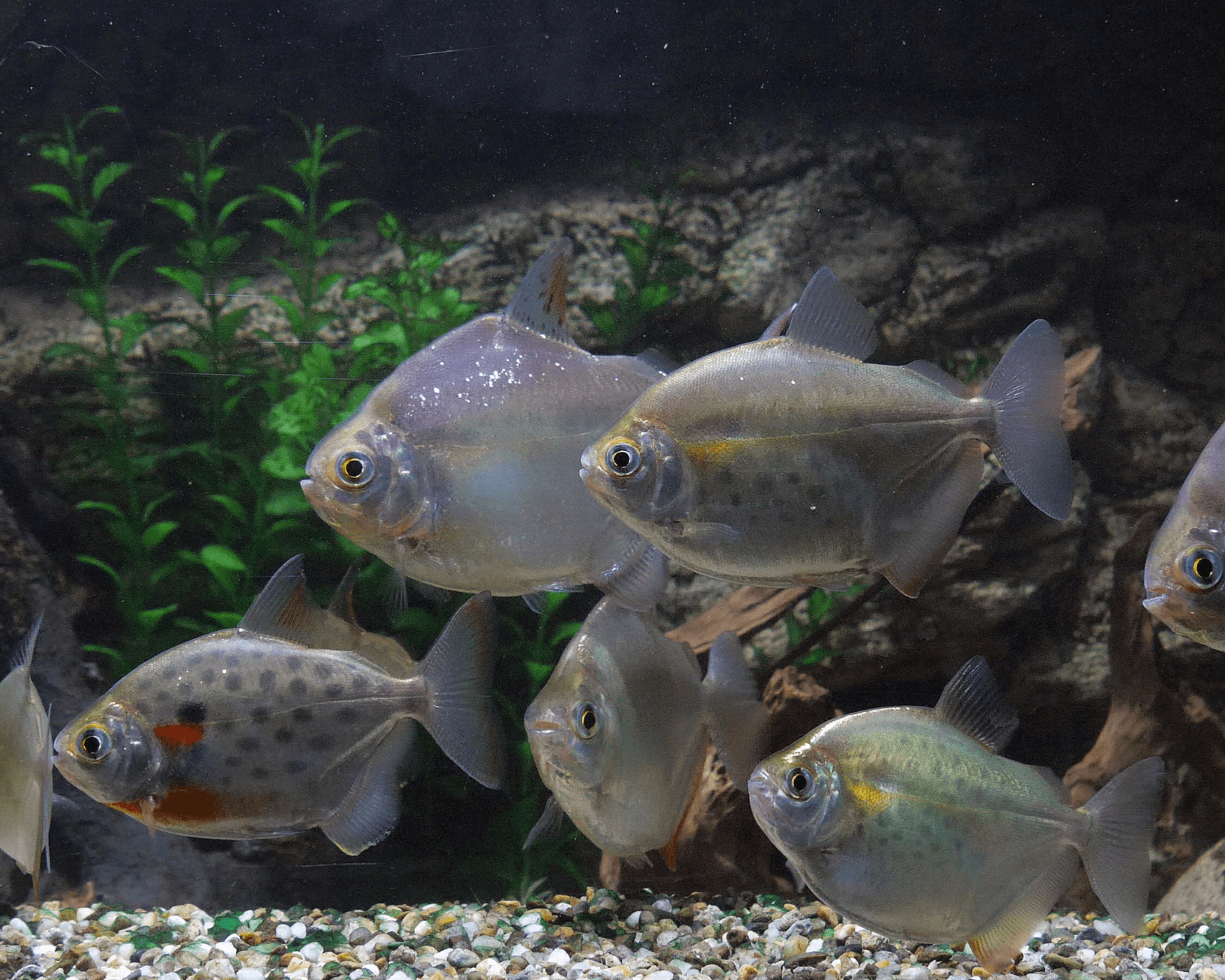
The Spotted Silver Dollar (Metynnis maculatus), often referred to in the German trade as the "gepunkteter scheibensalmler raritaet" due to its uncommon availability, is a spectacular freshwater fish belonging to the family Serrasalmidae. Unlike the common silver dollar, this species boasts a beautiful, speckled pattern that makes it a highly sought-after prize for aquarists. They are active, schooling fish that bring a lot of life and shimmering movement to large community aquariums.

Distribution and Habitat
This species is native to the tropical river basins of South America, particularly found in the Amazon and Paraguay river systems. They naturally inhabit heavily vegetated river tributaries, flooded forests, and slow-moving waters where they can easily forage for plant matter and find refuge among submerged roots and branches.
Description of Spotted Silver Dollar
Body shape:
They possess a highly laterally compressed, disc-like body that is nearly round, allowing them to navigate smoothly through dense underwater vegetation.
Color:
The base coloration is a brilliant metallic silver, heavily patterned with distinctive black or dark grey spots along the flanks. Males often display a striking red or orange tint on their anal fins, especially during breeding.
Barbels:
This species does not possess any barbels.
Snout:
The snout is short and blunt, featuring a slightly undershot jaw equipped with sharp teeth perfectly evolved for shearing tough plant material.
Eyes:
They have relatively large eyes, which help them navigate and spot predators in the dimly lit, tannin-stained waters of their natural habitat.
Fins:
The fins are generally translucent with subtle silver or grey hues. The anal fin of adult males is elongated and frequently edged with a vivid red or orange margin.
The Tail:
The caudal (tail) fin is deeply forked and muscular, providing the fish with the ability to execute rapid bursts of speed when startled.
Temper
The Spotted Silver Dollar is a peaceful but somewhat skittish fish. They are easily startled by sudden movements or turning on bright tank lights abruptly. Despite their relation to piranhas, they are gentle giants that will not bother tank mates that are too large to fit in their mouths.
Sociality
They are highly gregarious and must be kept in groups of at least five or more individuals. When kept in isolation or pairs, they become extremely stressed and reclusive. In a proper school, they display their natural, confident schooling behaviors.
Activity
These are active, mid-level swimmers that will constantly cruise back and forth across the aquarium during daylight hours. Their synchronized swimming in a school is a mesmerizing sight.
Keeping and Caring for Spotted Silver Dollar
Tank size:
Due to their adult size and active schooling nature, a minimum tank size of 75 gallons (approx. 280 liters) is required, though a 100+ gallon tank is highly recommended for a full-sized adult school.
Water Parameters:
Temperature
Maintain a stable water temperature between 24-28°C (75-82°F).
pH
They thrive in slightly acidic to neutral water, with a pH range of 6.0 to 7.5.
Hardness
Soft to moderately hard water is ideal, ranging from 4 to 15 dGH.
Ammonia, Nitrite, Nitrate
Ammonia and Nitrite must always be at 0 ppm. Nitrates should be kept below 20 ppm through regular water changes and excellent filtration.
Lighting
Moderate to dim lighting is preferred. Bright lighting can make them skittish, so floating plants (if they don't eat them) or a blackwater setup can help diffuse the light.
Water flow
A moderate water flow mimics their natural riverine environment and provides adequate oxygenation without exhausting the fish.
Decorations and Plants
Decorate with smooth river rocks, large pieces of driftwood, and tangled roots to provide hiding spots. Be warned: Spotted Silver Dollars are voracious herbivores. Most live plants will be eaten. If you want greenery, use robust plastic plants or try very tough live plants like Anubias or Java Fern, though even these are not entirely safe.
Diet
They are primarily herbivorous. In the aquarium, their diet should consist largely of vegetable matter. High-quality spirulina flakes, algae wafers, and herbivore pellets should form the staple of their diet. They will also eagerly accept blanched vegetables such as zucchini, cucumber, spinach, and romaine lettuce. Occasional protein treats like bloodworms or brine shrimp can be offered.
Some Feeding Tips
Provide fresh greens regularly to deter them from constantly grazing on any live plants you attempt to keep. Feeding them small amounts twice a day is optimal to match their active metabolism.
Breeding
Breeding the Spotted Silver Dollar in captivity is possible but requires a large, dedicated breeding tank. They are egg-scatterers that provide no parental care. To induce spawning, condition the pair or group with high-quality foods and perform a large water change with slightly cooler, softer water. The female will release hundreds of eggs among fine-leaved plants (or spawning mops), which the male will fertilize. Adults should be removed post-spawning to prevent them from eating the eggs. Fry hatch in a few days and can be fed infusoria and newly hatched brine shrimp.
Conclusion
The Spotted Silver Dollar (Metynnis maculatus) is a magnificent, peaceful schooling fish that acts as a fantastic centerpiece for large freshwater aquariums. While their appetite for plants requires some careful planning regarding tank decor, their striking spotted pattern, hardy nature, and active schooling dynamics make this "rarity" an absolute joy to keep for any dedicated aquarist.
 - pair - 1.webp)
Leave your comments