It’s time to help contribute for biggest aquarium gallery online

SUBMIT HEREVIEW GALLERY

Hyphessobrycon herbertaxelrodi (Black Neon Tetra)

Overview

The Black Neon Tetra is a stunning and hardy freshwater fish that brings a unique aesthetic to community tanks. The XL designation refers to fully grown, robust adult specimens.

Distribution and Habitat

Native to the Paraguay basin in southern Brazil, they inhabit small tributaries, creeks, and flooded forest areas characterized by acidic, tannin-stained waters.

Description of Black Neon Tetra

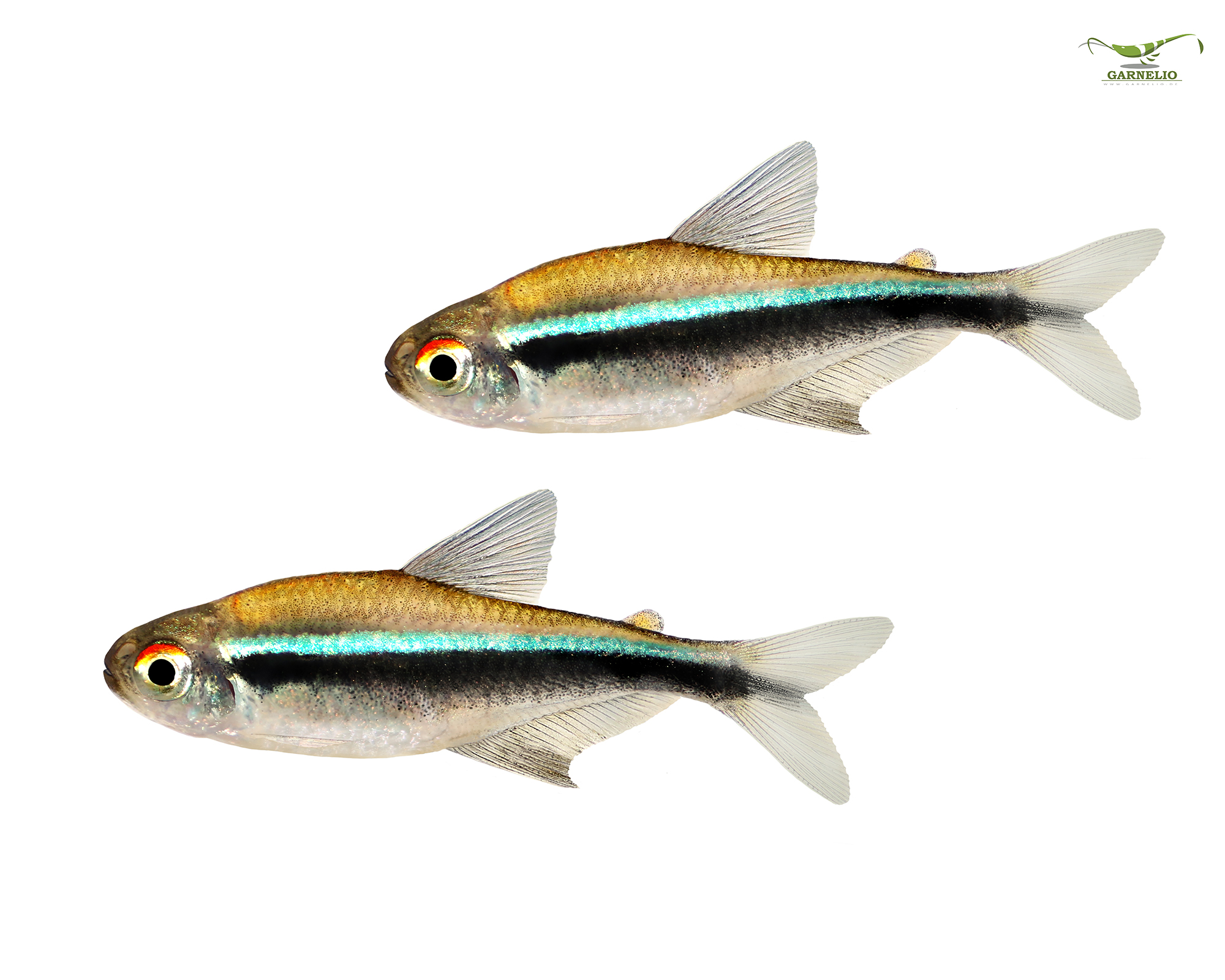
Image of black neon xl hyphessobrycon herbertaxelrodi

This species is easily recognizable by its distinct coloration and energetic swimming patterns.

Body shape:

Torpedo-shaped and laterally compressed, typical of many small characins.

Color:

Features a prominent black horizontal stripe running from the gills to the tail, bordered above by a striking iridescent greenish-white or silver line. The belly is pale silver.

Barbels:

None.

Snout:

Short and slightly rounded with a terminal mouth designed for grabbing mid-water morsels.

Eyes:

Large relative to body size, featuring a distinct, bright orange or red upper iris.

Fins:

Mostly transparent or clear, sometimes with a faint yellowish tint. The dorsal fin is tall, and a small adipose fin is present.

The Tail:

Forked and clear, aiding in rapid, darting movements.

Temper

Very docile, peaceful, and easygoing.

Sociality

Highly social schooling fish. They must be kept in groups of at least 6 to 10 individuals to feel secure and display their best colors.

Activity

Very active mid-level swimmers. They spend most of their day darting around the middle and upper water column.

Keeping and Caring for Black Neon Tetra

They are incredibly hardy, making them an excellent choice for beginners and experts alike.

Tank size:

A minimum of 60 liters (15 gallons) is recommended for a standard school.

Water Parameters:

They thrive in conditions that mimic their native Amazonian environment.

Temperature

23-27°C (73-81°F).

pH

5.5-7.5, preferring slightly acidic water.

Hardness

Soft to moderately hard water, ideally between 2-10 dGH.

Ammonia, Nitrite, Nitrate

Ammonia and Nitrite must strictly be 0 ppm. Nitrates should be kept below 20 ppm through regular water changes.

Lighting

Dim to moderate lighting is preferred to bring out their iridescent colors and reduce stress.

Water flow

Gentle to moderate flow is ideal, simulating the slow-moving creeks of their natural habitat.

Decorations and Plants

Heavily planted tanks with dark substrates, driftwood, and floating plants are perfect. Leaf litter can be added to create a blackwater environment.

Diet

Omnivorous and unfussy. They will readily accept high-quality flakes, micro-pellets, and frozen or live foods like daphnia, brine shrimp, and bloodworms.

Some Feeding Tips

Feed small amounts 1-2 times daily, only what they can consume in a couple of minutes. Ensure food pieces are small enough to fit in their mouths.

Breeding

Egg scatterers. To breed, set up a separate dimly lit breeding tank with soft, acidic water and fine-leaved plants or a spawning mop. Condition the parents with live foods. Remove the parents immediately after spawning to prevent them from eating the eggs.

Conclusion

The Black Neon Tetra is a fantastic, low-maintenance addition to any freshwater community aquarium. Their peaceful nature, combined with their striking contrast against green plants, makes them a timeless favorite among aquarists of all skill levels.
Fish info

Care level: Easy
Temperament: Peaceful
Adult size: 4 cm
Life expectancy: 3-5 years
Fish type: Tetra
Temperature : 23-27°C
pH: 5.5-7.5
Color Form: Black, Clear, Green, Silver
Leave your comments
Lastest on Fishs
  • Nematobrycon palmeri (Black Emperor Tetra)

    Easy - Moderate
    Tetra
    The Black Emperor Tetra is a striking, captive-bred melanistic variety of the classic Emperor Tetra. Originating from Colombian lineages, this peaceful, active fish is highly prized in the aquarium hobby for its deep, velvety black coloration and iridescent purple sheen, adding dramatic elegance to any planted community tank.
  • Puntius titteya (Albino Fire Red Cherry Barb)

    Easy
    Tetra
    The Albino Fire Red Cherry Barb is a stunning, selectively bred variation of the classic Cherry Barb. Originating from Sri Lanka's shaded streams, this peaceful cyprinid boasts vibrant red-orange hues and striking red eyes. Its hardy nature and active schooling behavior make it highly popular among freshwater aquarists.
  • Puntius titteya (Cherry Barb)

    Easy
    Tetra
    Native to the shaded streams of Sri Lanka, the Cherry Barb (Puntius titteya) is a remarkably peaceful and hardy schooling fish. Renowned for the male's vibrant, deep red breeding coloration, this active cyprinid is a highly popular, easy-to-care-for addition to heavily planted community aquariums worldwide.
  • Channa pulchra (Peacock Snakehead)

    Moderate
    Tetra
    Native to the fast-flowing streams of Myanmar, the Peacock Snakehead (Channa pulchra) is a stunning, subtropical species highly prized by aquarists. Known for its vibrant blue hues, striking black spots, and relatively peaceful demeanor for a snakehead, it makes a captivating and hardy addition to specialized predator setups.
  • Sawbwa resplendens (Sawbwa Barb)

    Moderate
    Tetra
    Endemic to Lake Inle in Myanmar, the Sawbwa Barb (or Asian Rummynose) is a striking, completely scaleless micro-cyprinid. Males boast a bright red head and tail tips against a silvery-blue body. Their peaceful schooling nature and unique appearance make them highly sought after by nano aquarium enthusiasts.
  • Channa bangkanensis (Bangka Snakehead)

    Moderate - Difficult
    Tetra
    The Bangka Snakehead (Channa bangkanensis) is a captivating, medium-sized predator native to the blackwater peat swamps of Southeast Asia. Known for its striking reddish-brown coloration and aggressive ambush behavior, this species is highly sought after by experienced aquarists looking for a unique, specialized, and interactive predatory fish.
  • Ambystoma mexicanum (White Axolotl)

    Moderate
    Tetra
    The White Axolotl, a captivating morph of Ambystoma mexicanum, is a fully aquatic salamander renowned for its neotenic traits and regenerative abilities. Originating from Mexico's high-altitude lakes, this captive-bred marvel has become incredibly popular in the aquarium hobby thanks to its unique, smiling appearance and fascinating, completely aquatic lifestyle.
  • Ambystoma mexicanum (Albino Axolotl)

    Moderate
    Tetra
    The Albino Axolotl is a captivating, fully aquatic salamander native to the ancient lake systems of Mexico. Renowned for its extraordinary regenerative abilities and perpetual larval stage, this peaceful amphibian is highly popular among aquarists for its unique appearance, striking feathery gills, and endearing, permanent smile.
  • Sundadanio axelrodi (Blue Sundadanio)

    Moderate - Difficult
    Tetra
    The Blue Sundadanio, scientifically known as Sundadanio axelrodi, is a stunning, miniature cyprinid native to the blackwater peat swamps of Southeast Asia. Known for its iridescent blue coloration and peaceful demeanor, it is a highly sought-after nano fish for advanced aquarists looking to create a specialized biotope aquarium.
  • Chelonodon patoca (Milk Spotted Puffer)

    Moderate - Difficult
    Tetra
    The Milk Spotted Puffer, also known as the Asian Parrot Puffer, is a fascinating but demanding species originating from the Indo-West Pacific. Known for its distinct white spots and highly intelligent behavior, it transitions from freshwater to brackish or marine environments as it matures, making it a unique challenge for dedicated aquarists.
  • Hyphessobrycon myrmex (Ant Tetra)

    Moderate
    Tetra
    The Ant Tetra, or Hyphessobrycon myrmex, is a captivating and relatively rare freshwater species native to the Rio Juruena basin in Brazil. Known for its striking sexual dimorphism—where males display vivid reddish-orange hues and females remain silvery-yellow—this peaceful schooling fish is highly sought after by dedicated aquarists.
  • Hyphessobrycon amapaensis (Amapa Glow Tetra)

    Easy
    Tetra
    Originating from the pristine streams of the Amapá state in Brazil, the Amapa Glow Tetra is a stunning, peaceful schooling fish. With its striking red and black lateral stripes, this active and hardy species adds a brilliant splash of color and lively movement to any planted community aquarium.
  • Atractosteus spatula (Alligator Gar)

    Expert Only
    Tetra
    The Alligator Gar (Atractosteus spatula) is a prehistoric, torpedo-shaped marvel native to North and Central America. Known for its distinct crocodilian snout and formidable size, this apex predator is highly sought after by expert aquarists seeking a rare, massive, and fascinating living fossil for truly colossal custom aquarium setups.
  • Atractosteus spatula (Alligator Gar)

    Expert Only
    Tetra
    The Alligator Gar is a formidable, prehistoric river monster native to North and Central America. Known for its crocodilian snout and massive growth potential, this apex predator is highly sought after by extreme monster fish keepers. Its fascinating ambush hunting behavior and rugged, armor-like scales make it a true aquatic marvel.
  • Parachanna obscura (African Snakehead)

    Moderate - Difficult
    Tetra
    The African Snakehead (Parachanna obscura) is a fascinating, elongated predatory fish native to the freshwater habitats of West and Central Africa. Highly prized as a rarity in the aquarium hobby, this species is known for its striking mottled pattern, remarkable intelligence, and unique ability to breathe atmospheric air.
  • Bryconalestes longipinnis (African Long-finned Tetra)

    Easy - Moderate
    Tetra
    The African Long-finned Tetra, native to fast-flowing streams across West Africa, is a stunning and highly active schooling fish. Known for its shimmering silver body, striking black tail stripe, and the male's impressive flowing fins, it is a popular choice for adding dynamic energy to large, peaceful community aquariums.