Overview
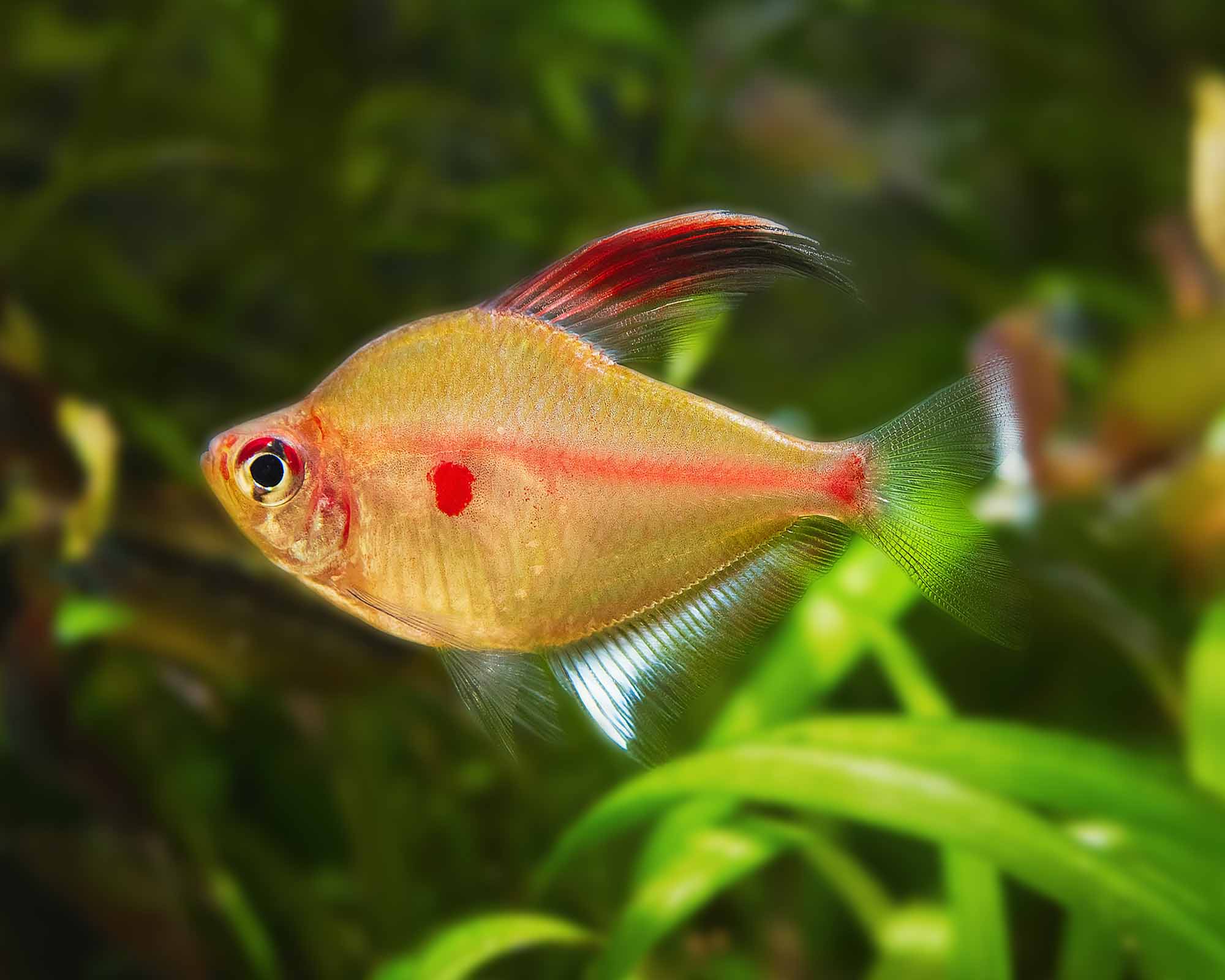
The Brazilian Cherry Spotted Tetra, scientifically known as Hyphessobrycon socolofi, is a beautiful and energetic freshwater fish. Known for its distinct "cherry" red spot, it is a favorite among aquarists looking to add a splash of color to their community tanks.

Distribution and Habitat
This species is native to the river basins of South America, particularly in the Rio Negro region of Brazil. In the wild, they inhabit slow-moving tributaries, backwaters, and flooded forest areas. These waters are typically stained brown with tannins from decaying organic matter, creating a slightly acidic and soft water environment.

Description of Brazilian Cherry Spotted Tetra
Body shape:
They possess a classic tetra profile—deep-bodied and laterally compressed, allowing for quick, agile movements through densely vegetated waters.
Color:
The body has a silvery to golden-tan base. Their namesake feature is a prominent, bright cherry-red spot located just behind the gill cover. A red lateral stripe often extends from this spot toward the tail.
Barbels:
Like other characins, this species does not possess barbels.
Snout:
The snout is relatively short and blunt, featuring a small, terminal mouth adapted for mid-water feeding.
Eyes:
They have large, expressive eyes that often feature a striking red arc across the upper half of the iris.
Fins:
The dorsal fin is particularly striking, showcasing a bold black patch that is often bordered by white and red. The anal fin frequently displays a bright white leading edge.
The Tail:
The caudal (tail) fin is deeply forked and generally translucent, sometimes with a faint reddish or silvery tint at the base.
Temper
The Brazilian Cherry Spotted Tetra is a remarkably peaceful species. They do not exhibit aggressive tendencies toward other tank mates, making them ideal residents for a harmonious community aquarium.
Sociality
This is a highly social, schooling fish. To ensure they feel secure and display their best natural behaviors and colors, they must be kept in groups of at least six, though larger schools of ten or more are highly recommended.

Activity
They are active swimmers that predominantly occupy the middle levels of the water column. They will spend much of their day playfully darting among plants and interacting with their conspecifics.
Keeping and Caring for Brazilian Cherry Spotted Tetra
Tank size:
A minimum tank size of 20 gallons (approx. 75 liters) is recommended to provide adequate swimming space for a proper school.
Water Parameters:
Temperature
They thrive in tropical temperatures ranging from 22°C to 28°C (72°F to 82°F).
pH
A slightly acidic to neutral pH between 6.0 and 7.5 is ideal.
Hardness
Soft to moderately hard water is preferred, typically between 2 and 15 dGH.
Ammonia, Nitrite, Nitrate
Ammonia and Nitrite must always be at 0 ppm. Nitrates should be kept as low as possible, ideally below 20 ppm, through regular water changes.
Lighting
Moderate to dim lighting replicates their natural shaded habitat. Floating plants can be used to diffuse bright aquarium lights.
Water flow
A gentle to moderate water flow is best, mimicking the sluggish streams they originate from without overwhelming them.
Decorations and Plants
A heavily planted tank with plenty of swimming space in the center is perfect. Driftwood, twisted roots, and dried botanicals (like almond leaves) will help simulate a natural blackwater environment and release beneficial tannins.
Diet
In the wild, they are micro-predators and omnivores. In captivity, they eagerly accept high-quality dry foods such as micro-pellets and crushed flakes. Their diet should be supplemented with live or frozen foods like daphnia, bloodworms, and brine shrimp to enhance their vivid red coloration.

Some Feeding Tips
Feed small amounts 2-3 times a day—only what they can consume in a few minutes. Offering a varied diet is the best way to keep their immune systems strong and their colors bright.
Breeding
Like many tetras, they are egg-scatterers that exhibit no parental care. To breed them, set up a separate, dimly lit breeding tank with soft, acidic water and fine-leaved plants like Java Moss or a spawning mop. Condition the breeders with high-quality live foods. Once spawning occurs (usually at dawn), remove the adult fish promptly to prevent them from eating the eggs. The fry will hatch in a couple of days and require infusoria until they are large enough to eat baby brine shrimp.
Conclusion
The Brazilian Cherry Spotted Tetra is a fantastic choice for both beginner and experienced aquarists. With their peaceful nature, dynamic schooling behavior, and the gorgeous ruby-red jewel on their flanks, they bring life and beauty to any planted freshwater aquarium.
 - pair - 1.webp)
Leave your comments