Start with the job, not the shell color
Before choosing a snail, identify the maintenance problem you want to solve. Green film on the glass calls for a surface grazer. Mulm collecting under rooted plants points toward a burrowing species. Uneaten food and soft debris favor an active scavenger. A planted shrimp tank may need only one low-impact algae grazer, while a community aquarium with sand and heavier feeding may benefit from a substrate worker. Also decide how much breeding you will tolerate. Some snails reproduce readily when food is abundant; others may lay eggs without producing freshwater offspring. Matching behavior to the problem keeps the aquarium more stable than adding several species that all compete for the same scraps.
Nerites are specialists for hard-surface algae
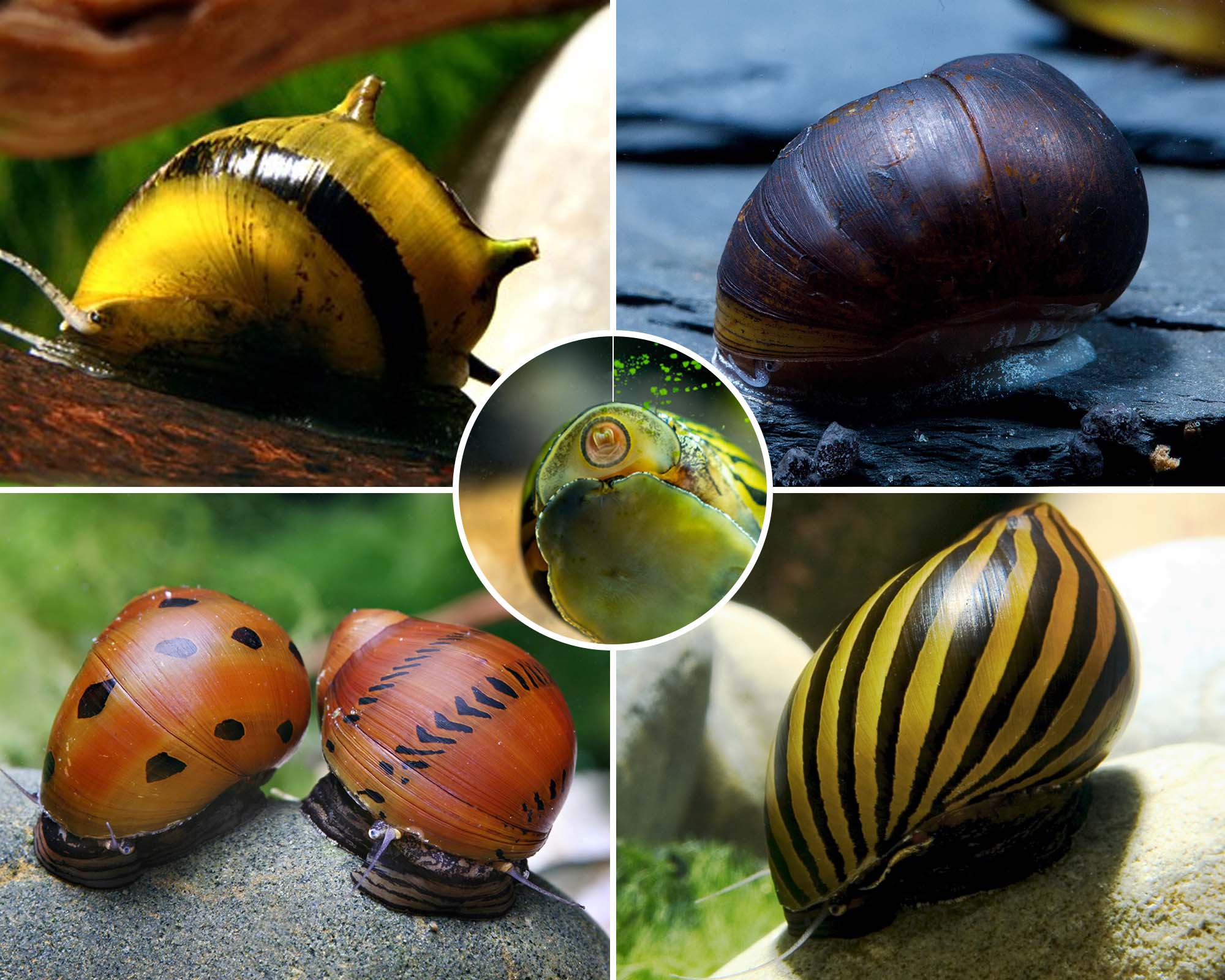
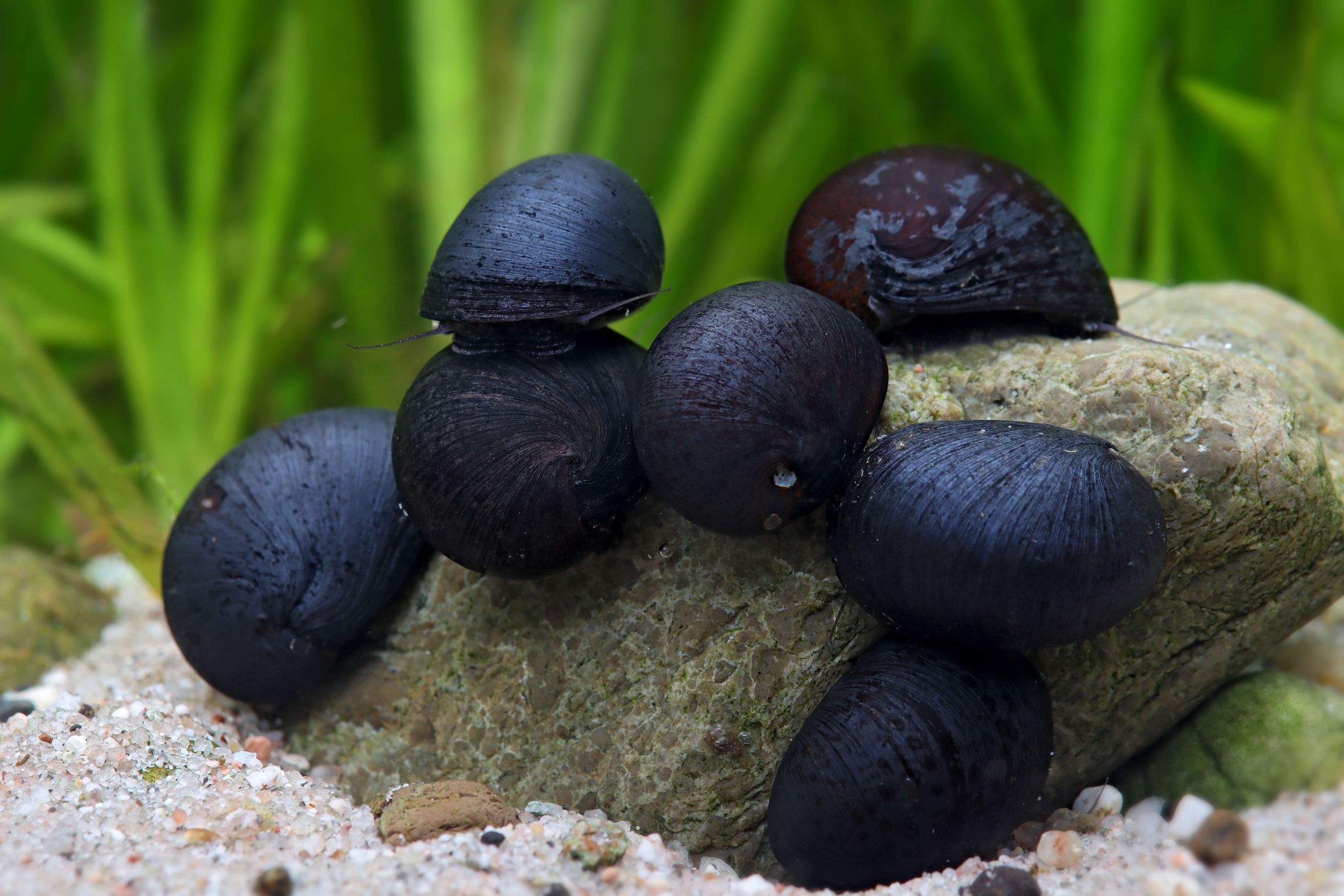
Nerite snails are usually the clearest choice when your main goal is scraping soft algae and diatoms from glass, rocks, wood, and other firm surfaces. Steel helmet and black racer types are attractive, compact, and generally plant-safe because they rasp growth from surfaces rather than feeding on healthy leaves. Their major trade-off is not population growth but egg capsules: females may leave small, pale dots on hardscape, equipment, or other snail shells. These eggs normally do not develop in ordinary freshwater, but they can be visually annoying and difficult to remove. Nerites also need a mature tank with enough natural grazing or supplemental food.
Horned nerites add control without adding a colony
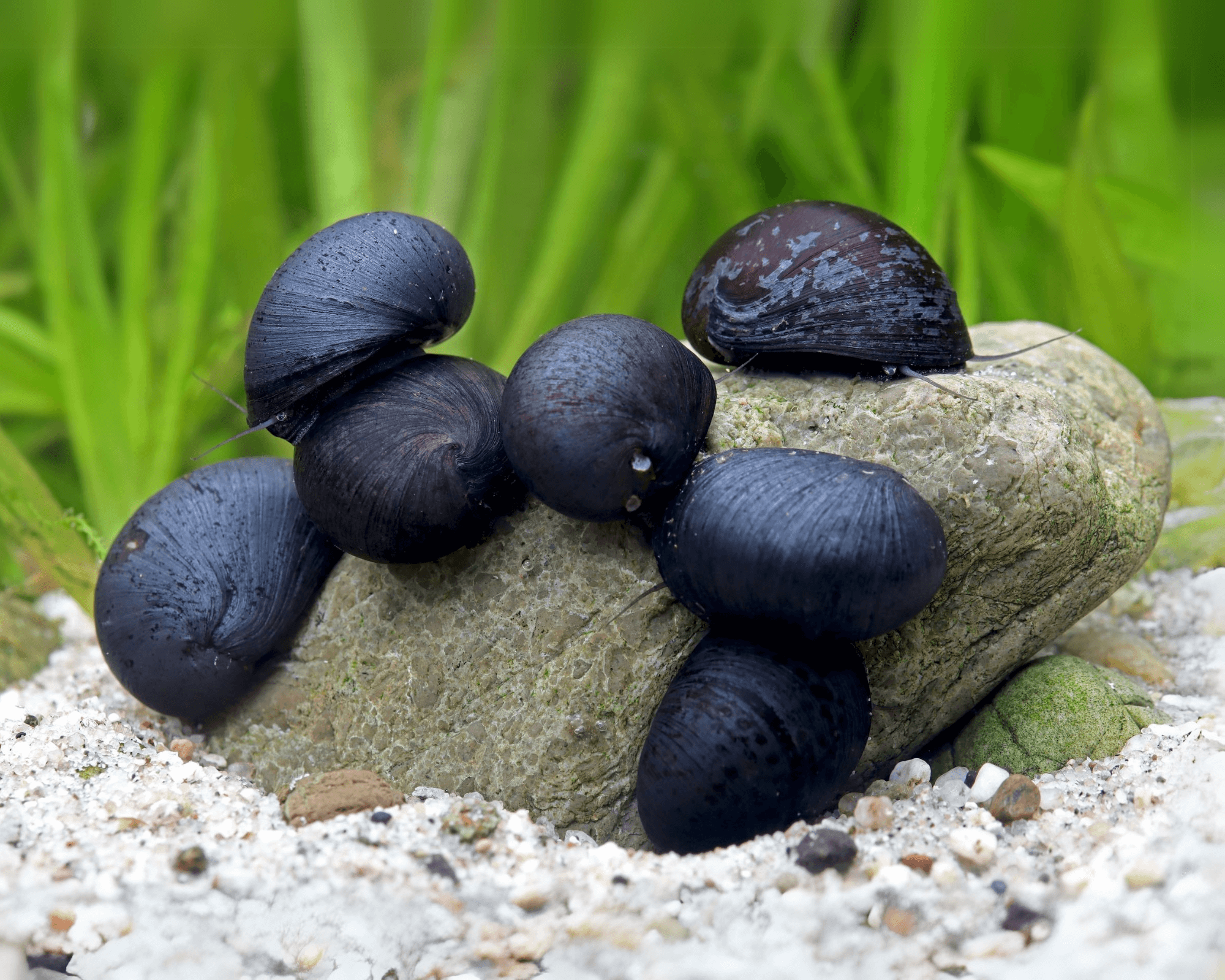
Clithon or horned nerites offer a similar algae-focused role in a smaller, more sculptural package. Their short projections can make them especially appealing in a carefully composed aquascape, where the snail itself is part of the visual design. They are useful on glass and hardscape, but they should not be treated as automatic solutions for every algae problem. If the tank is too clean, newly set up, or heavily shaded, a nerite may run short of food. If the aquarium contains delicate moss or loose stems, avoid assuming that every snail will stay perfectly in place. Choose this group when you want a visible algae grazer with little risk of a freshwater population explosion.
Ramshorns and bladder snails are flexible recyclers
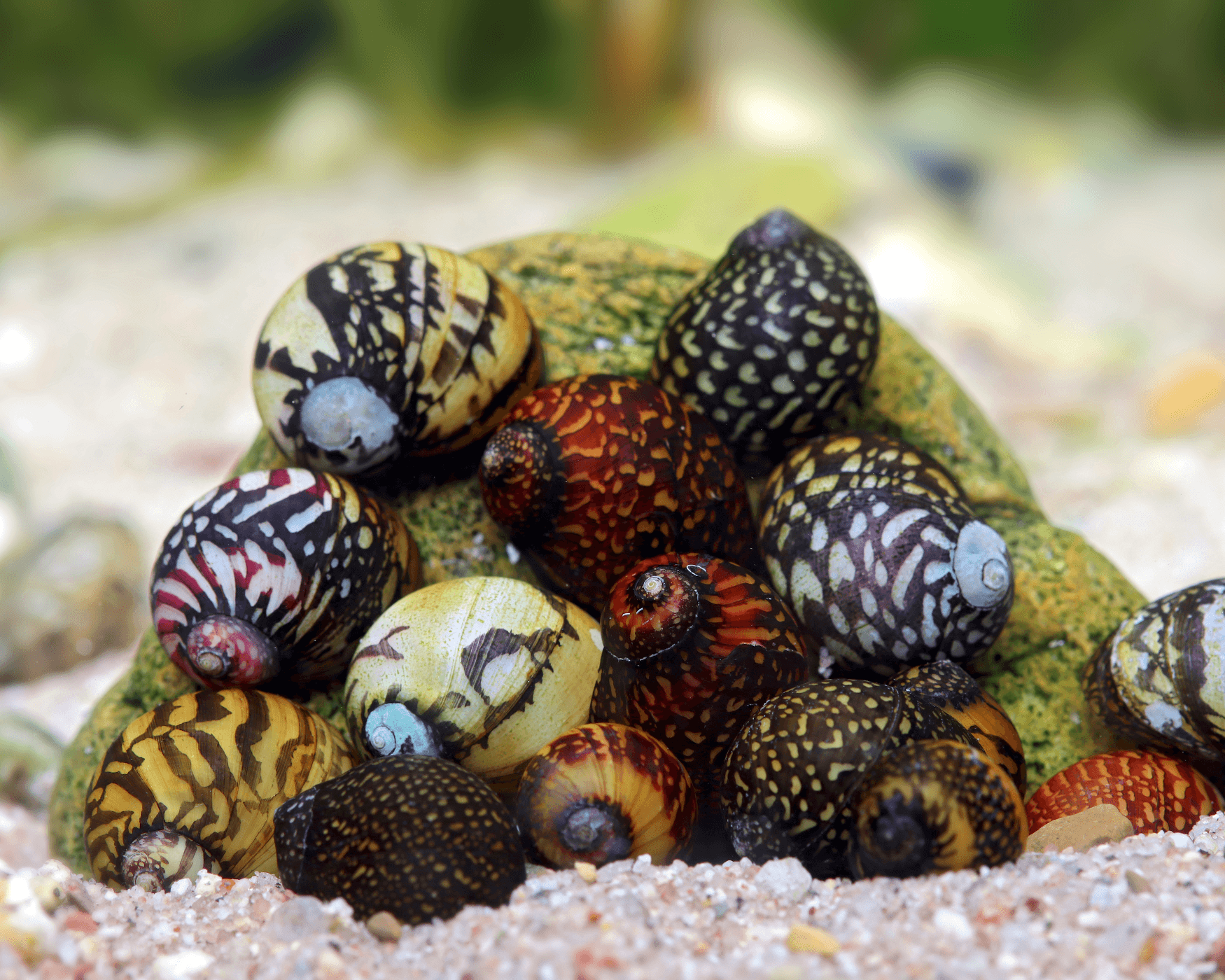
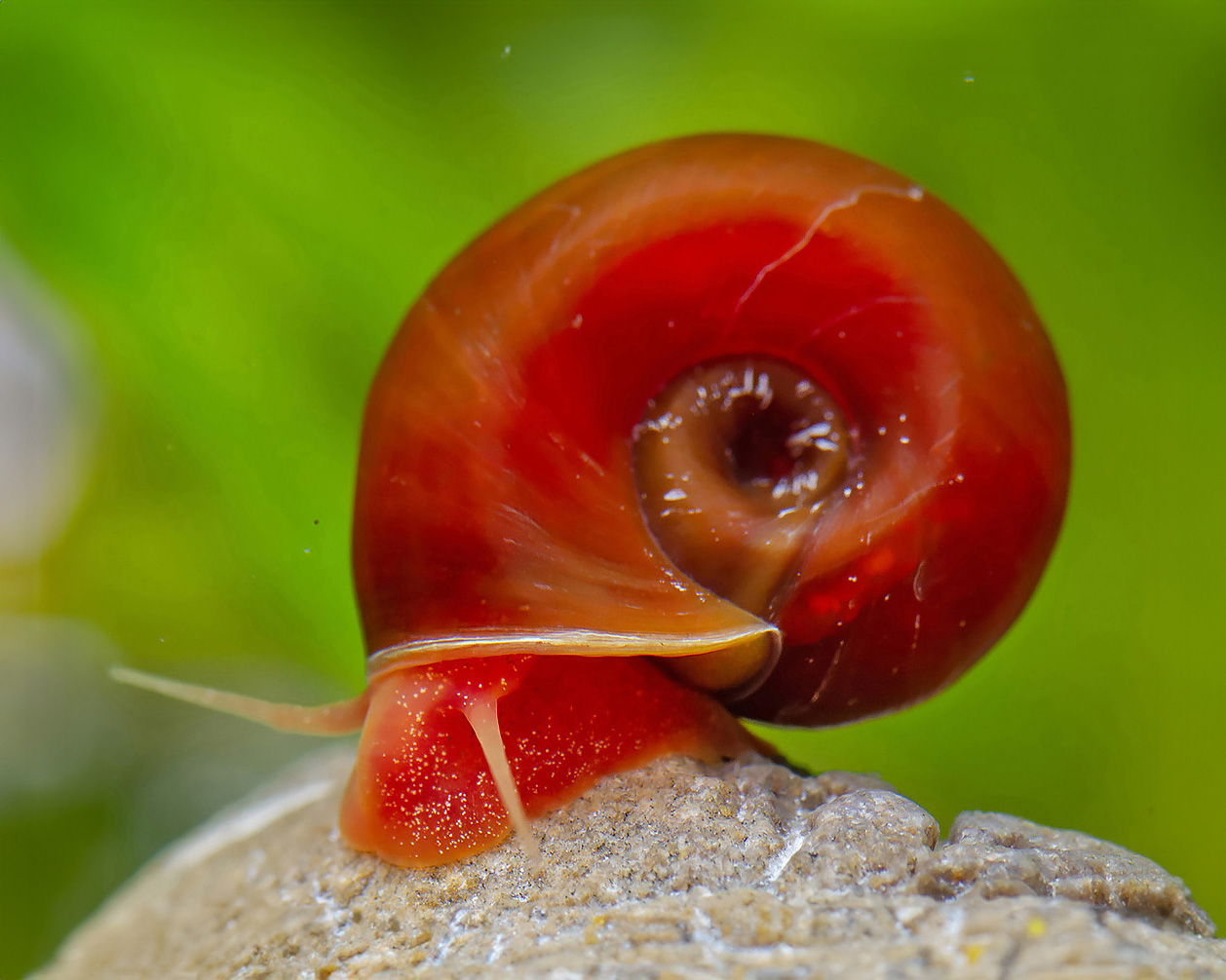
Ramshorn snails and small Physa-type snails are effective generalists. They graze biofilm, soft algae, uneaten food, and damaged plant tissue, often reaching narrow spaces that larger snails ignore. Their presence can be useful in a planted aquarium that produces small amounts of debris every day. The trade-off is reproduction. Both groups can increase quickly when excess food, dying leaves, or fish waste are consistently available. A sudden population increase is better read as a feeding and maintenance signal than as proof that the snails are poisoning the tank. If you like their activity, control numbers with lighter feeding, regular debris removal, and manual collection rather than relying on a predator by default.
Malaysian trumpet snails work below the surface
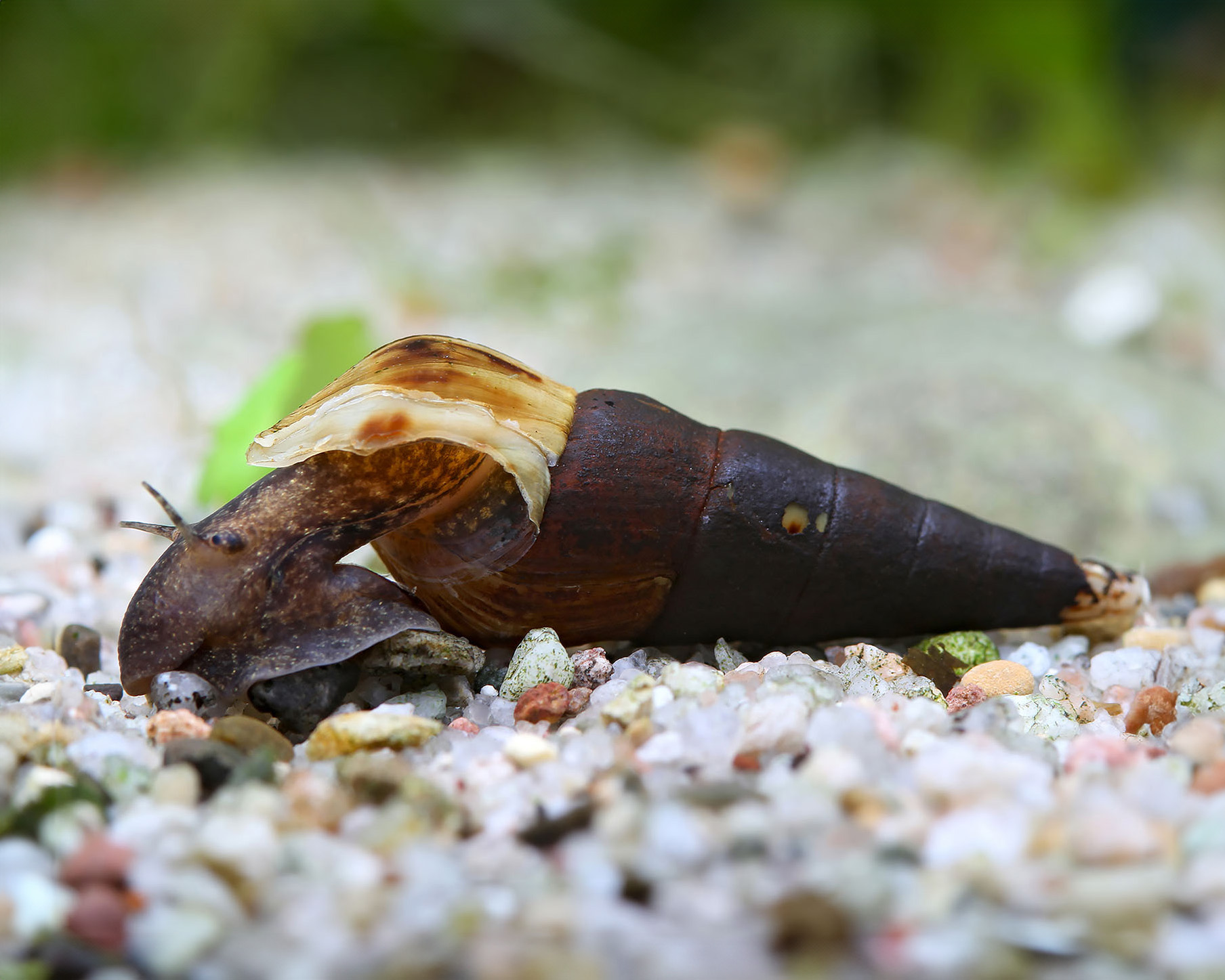
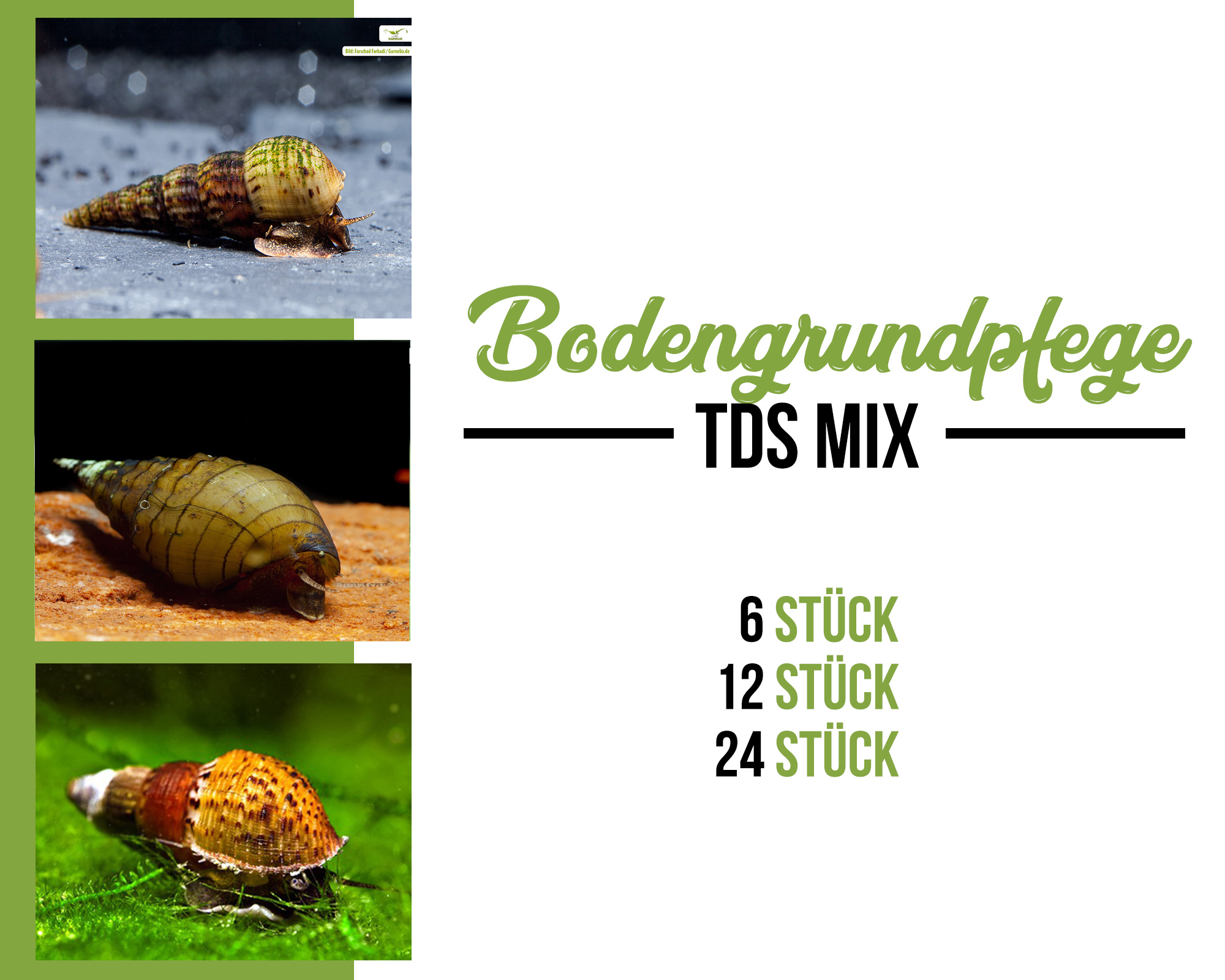
Malaysian trumpet snails spend much of the day moving through sand or fine substrate and often become more visible after lights out. Their burrowing behavior can help keep the upper substrate layer disturbed and expose trapped organic material to filtration and decomposition. That makes them useful in planted aquariums with rooted plants, but they are not a substitute for correct substrate depth, water circulation, or maintenance. Their live-bearing reproduction is the main trade-off: a few unnoticed snails can become a large nighttime population when feeding is generous. Choose them when substrate activity matters more than a tidy daytime display, and avoid adding them casually to tanks where future removal would be difficult.
Large Tylomelania types are display animals, not tiny cleaners
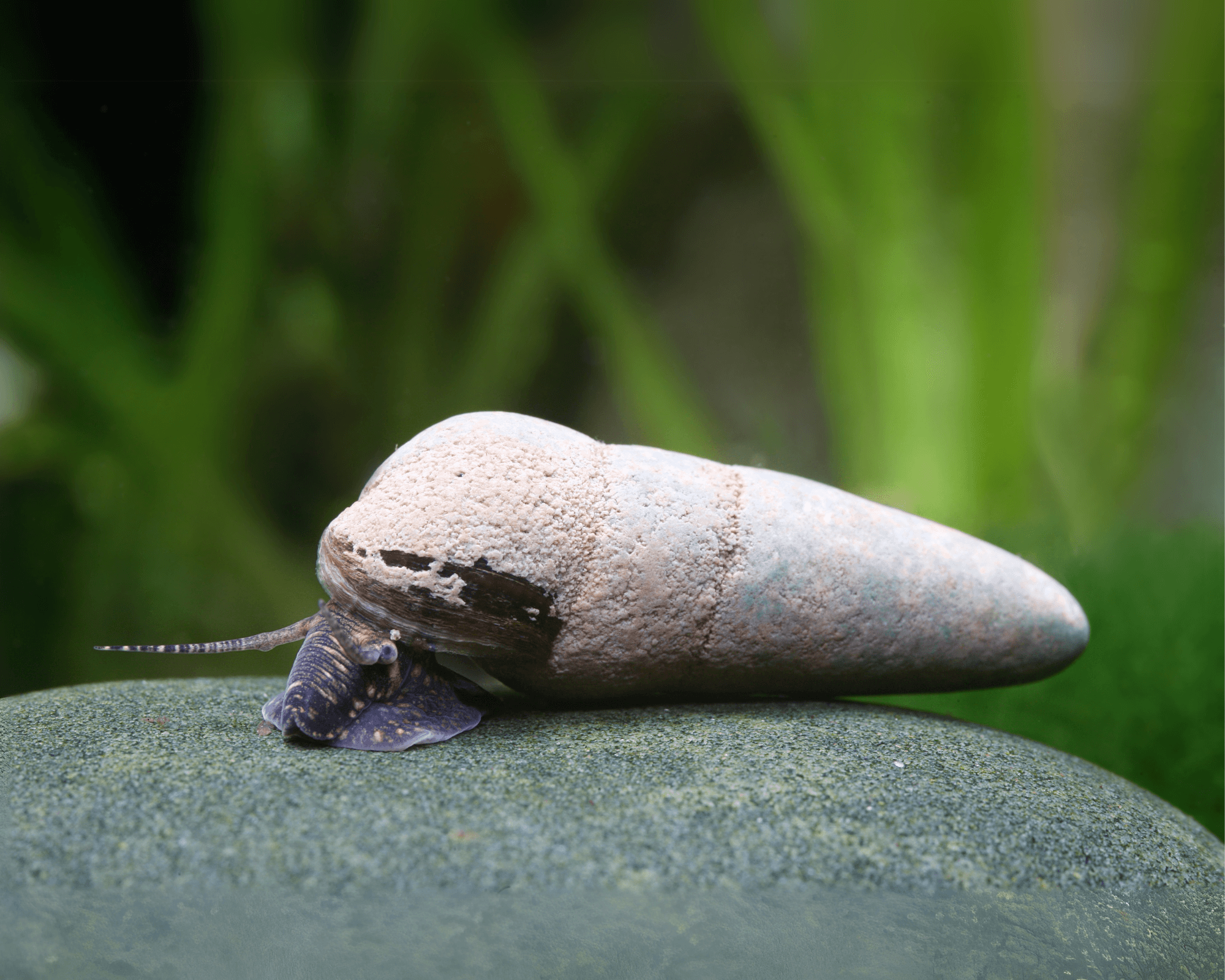
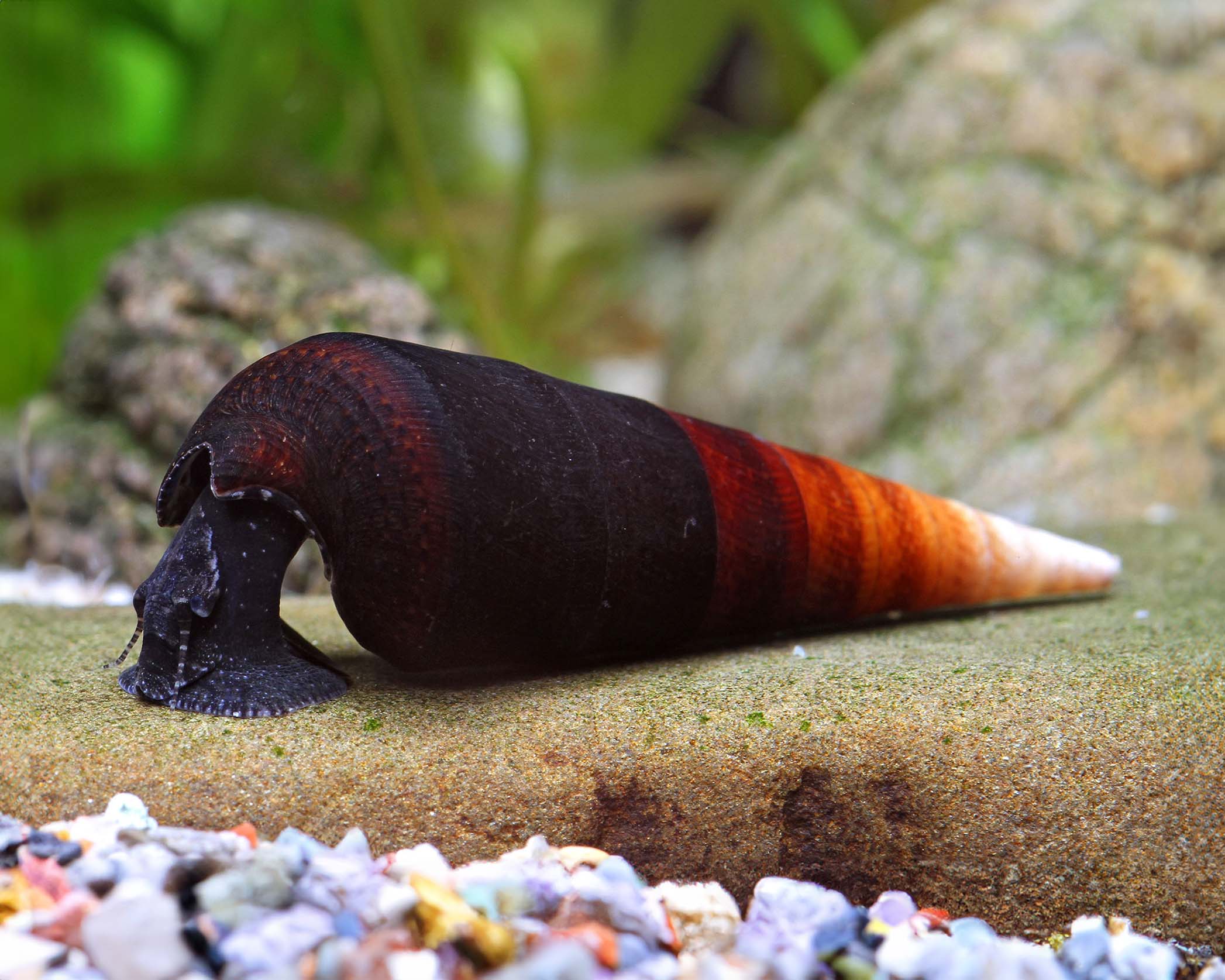
Tylomelania snails, including brightly marked Posos and rabbit-snail relatives, are better chosen as individual display livestock than as a miniature cleanup crew. Their size, movement, and shell pattern can give a planted aquarium a strong focal point, but they need more room and food than tiny hitchhiker snails. They may browse biofilm, soft algae, and organic matter, yet they should not be expected to keep a whole aquarium spotless. Their larger bodies also produce more waste and can disturb delicate foreground plants while moving. Use them in spacious, established setups with mineral support and a feeding plan, not as a first choice for a tightly stocked nano aquarium.
Assassin snails solve a population problem by creating another decision
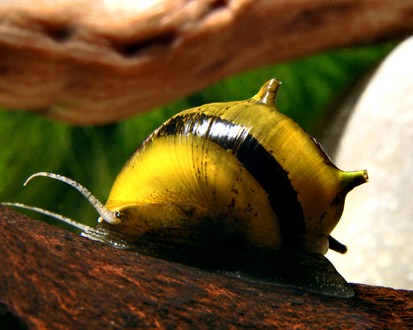
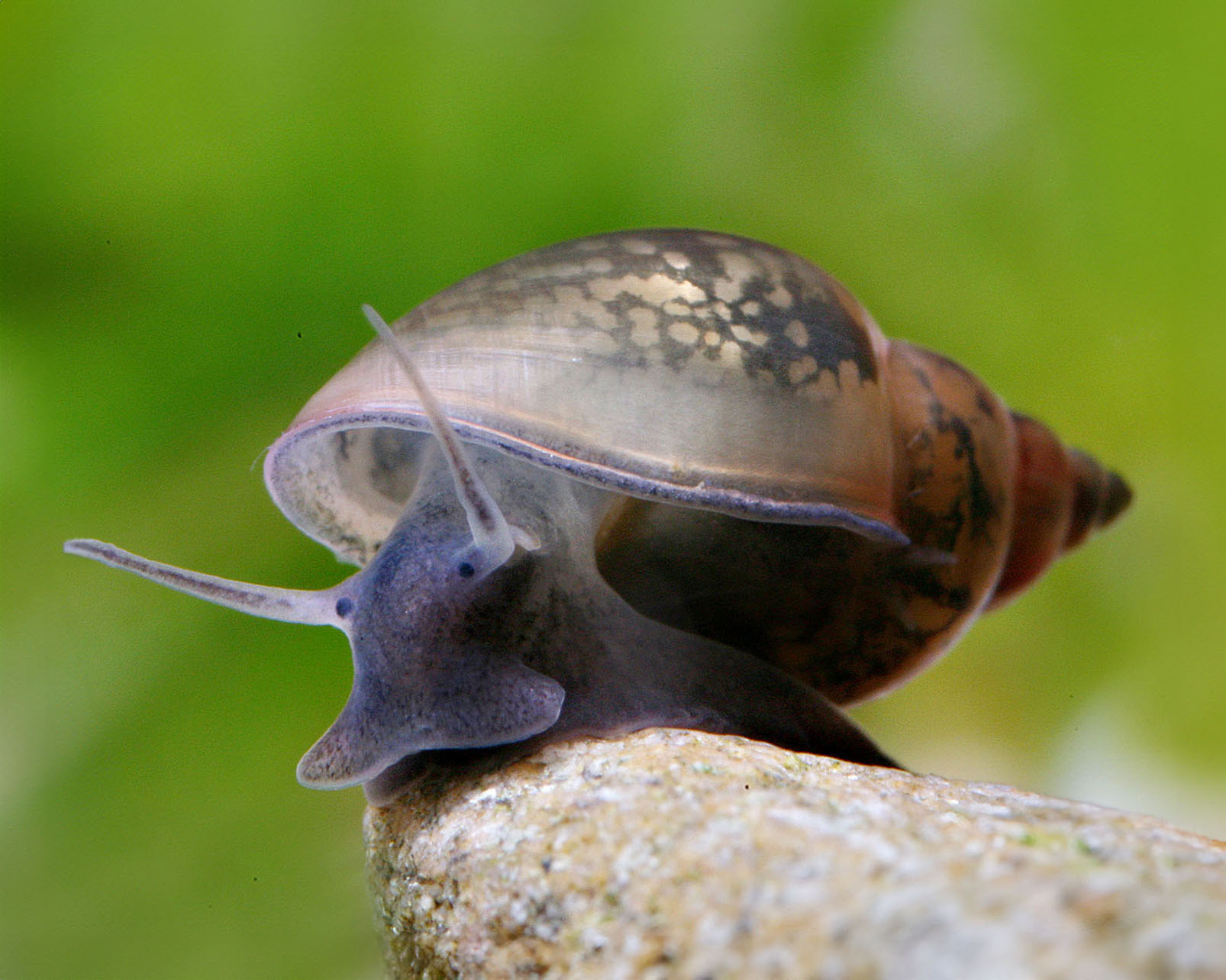
Assassin snails are predatory snails used to reduce unwanted ramshorn, bladder, pond, and sometimes trumpet-snail populations. They are useful when manual removal and feeding control are no longer enough, but their behavior changes the livestock plan. They may prey on small desirable snails, compete with other predators, and eventually need supplemental food after the target population declines. They are therefore a management tool rather than a universal cleanup addition. Do not add one to a mixed snail display without accepting that smaller snails may disappear. If you keep shrimp, remember that the assassin is focused on snails, but newly introduced or weakened invertebrates should still be monitored closely.
%20-%201.webp)
Shrimp compatibility depends more on competition than aggression
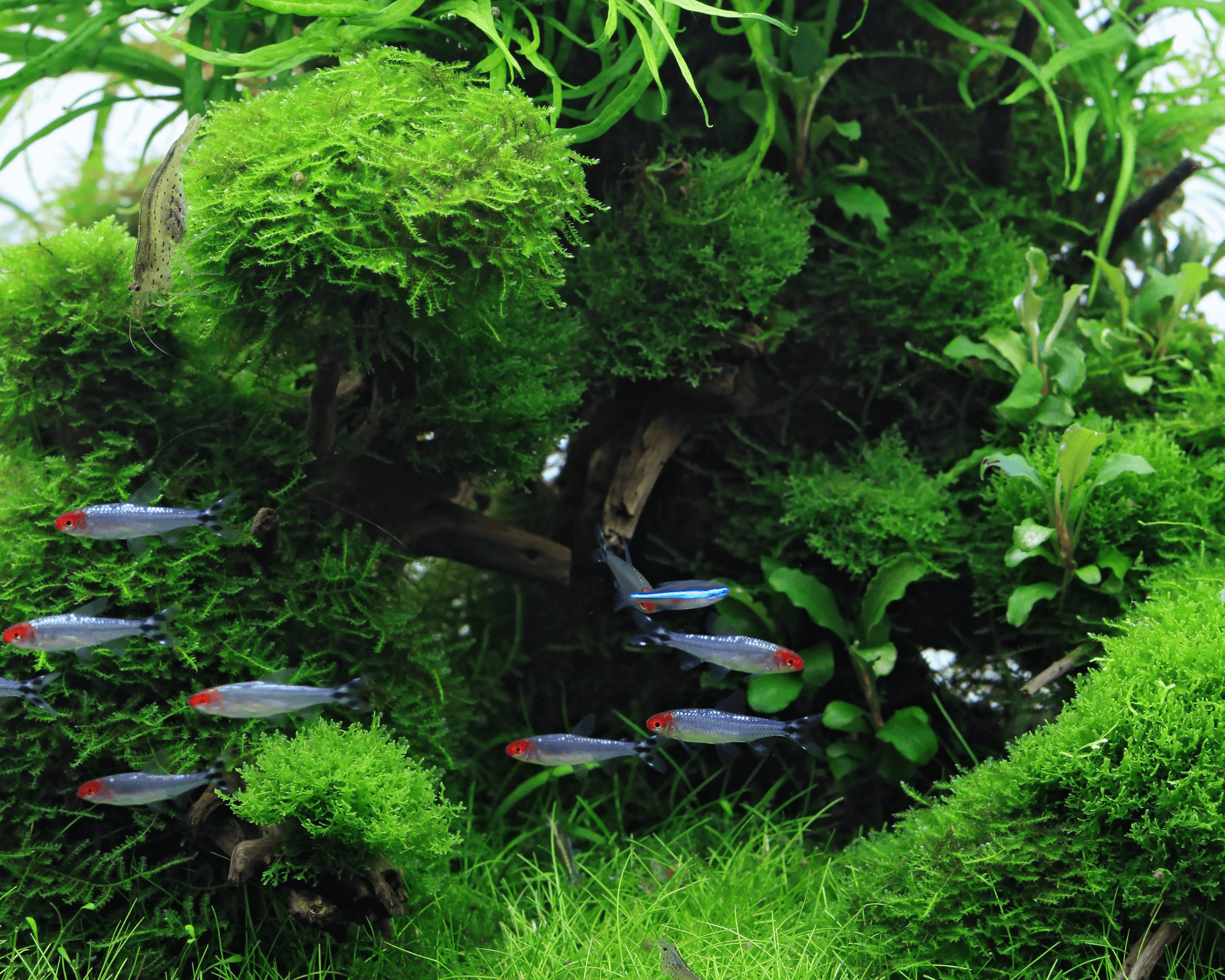
Most common algae-grazing and detritus-eating snails are peaceful with adult freshwater shrimp. The more important question is whether they compete for the same limited food. A dense population of ramshorns, bladder snails, or trumpet snails can consume shrimp foods quickly and make it harder to judge how much nutrition remains available. Nerites may be a lower-reproduction option, but they still need enough algae or supplemental feeding. Large snails can also occupy feeding areas and add bioload in a small tank. For a shrimp-first aquarium, start with one carefully observed snail type, feed sparingly, and add another species only when you can explain the separate job it will perform.
Plant safety is usually a food-supply question
Healthy, established aquarium plants are rarely the main target of common cleanup snails. Trouble often begins when leaves are already melting, plants are underfed, or the aquarium contains unusually tender new growth. Ramshorns and Physa snails may gather on damaged tissue because it is easier to consume, while larger species can rasp or tear soft leaves simply through their size and movement. Keep plants vigorous with suitable light, nutrients, and stable water, then remove dying leaves before they become a food source. If a snail population expands alongside plant damage, inspect the plant’s health and the feeding routine before blaming the species alone.
Use this decision framework before buying
Choose a nerite or horned nerite when hard-surface algae is the main issue and you want to avoid a self-expanding population. Choose ramshorns or Physa snails when you want small, active recyclers and are willing to manage numbers through feeding control. Choose Malaysian trumpet snails when substrate movement is valuable and nighttime abundance will not bother you. Choose Tylomelania when the snail itself is a display animal and the aquarium has room for its bioload. Choose an assassin only when reducing other snails is the priority. In every case, quarantine new plants when practical, inspect for egg clutches, and treat population changes as information about food entering the tank.
Frequently Asked Questions
Which aquarium snail is least likely to overpopulate a freshwater planted tank?
Nerites are usually the safest choice when freshwater population control is the priority because their eggs generally do not hatch in ordinary freshwater. They can still leave visible egg capsules and need enough algae or supplemental food.
Are Malaysian trumpet snails good for planted aquariums?
They can be useful in planted aquariums with sand or fine substrate because they burrow and process organic material below the surface. Their main drawback is rapid population growth when excess food is available, so feeding control is essential.
Can aquarium snails live with freshwater shrimp?
Most common nerites, ramshorns, Physa snails, and Malaysian trumpet snails are peaceful with adult freshwater shrimp. The main concerns are food competition, added bioload, and whether a predatory species such as an assassin snail is present.
Do aquarium snails eat healthy plants?
Most commonly kept cleanup snails prefer algae, biofilm, leftover food, and decaying plant matter. Damaged leaves and very tender growth may be grazed, and larger snails can disturb delicate plants. Persistent damage should also prompt a check of light, nutrients, and plant health.
Leave your comments