Start with the view, not the shopping list
Before buying plants, decide what you want the viewer to notice first. A piece of wood, a rock group, a red plant, or an open swimming lane can become the focal point. Keep that area partly visible instead of surrounding it with plants of equal height and color. In a nano aquarium, leave one clear route across the front or center so small schooling fish have room to move and shrimp remain easy to observe. Place heavier visual mass slightly off-center, then balance it with shorter growth or open substrate on the opposite side. This prevents the common beginner mistake of filling every corner and losing the shape of the aquascape.
Use the foreground to create a readable front edge
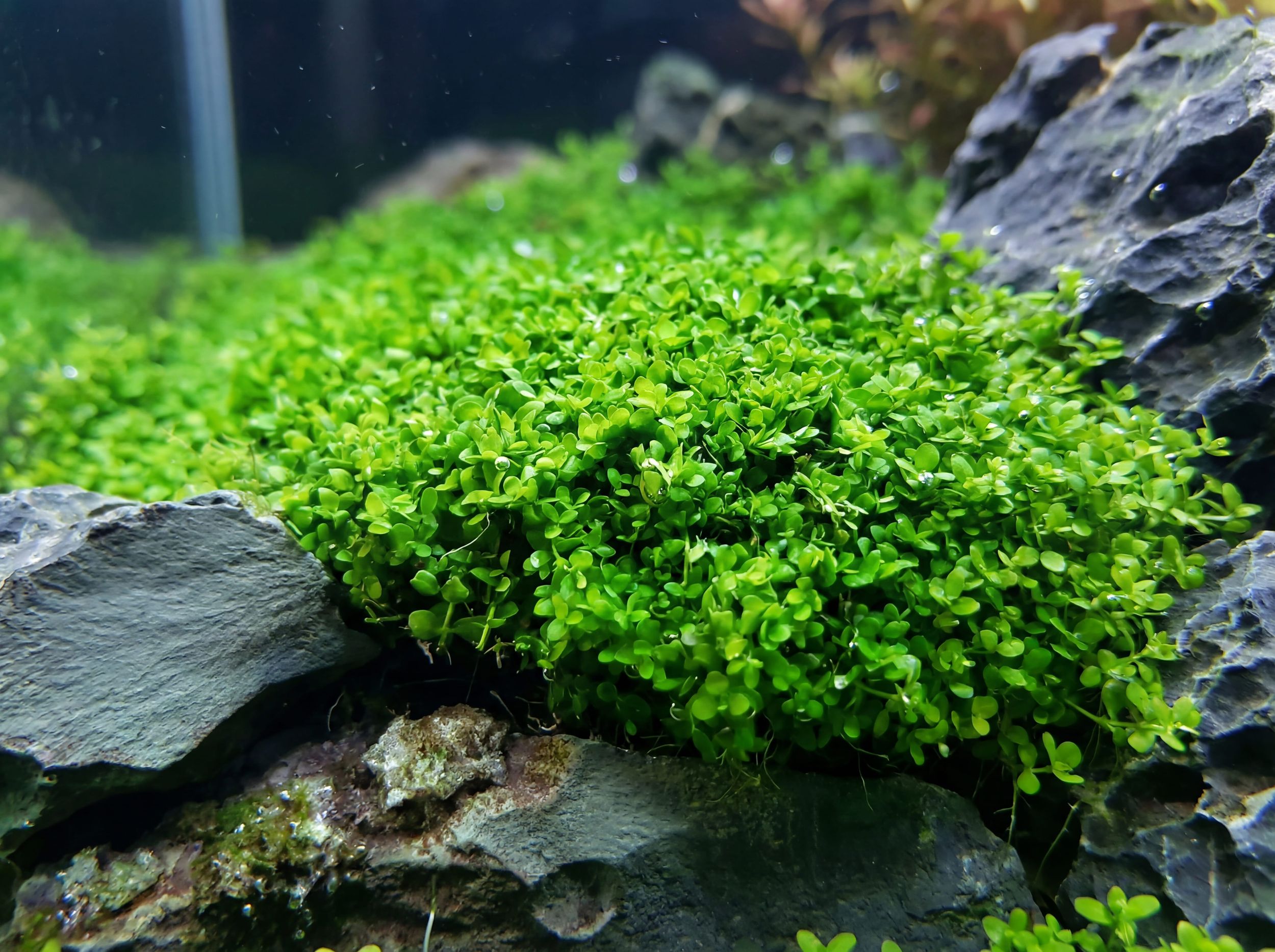
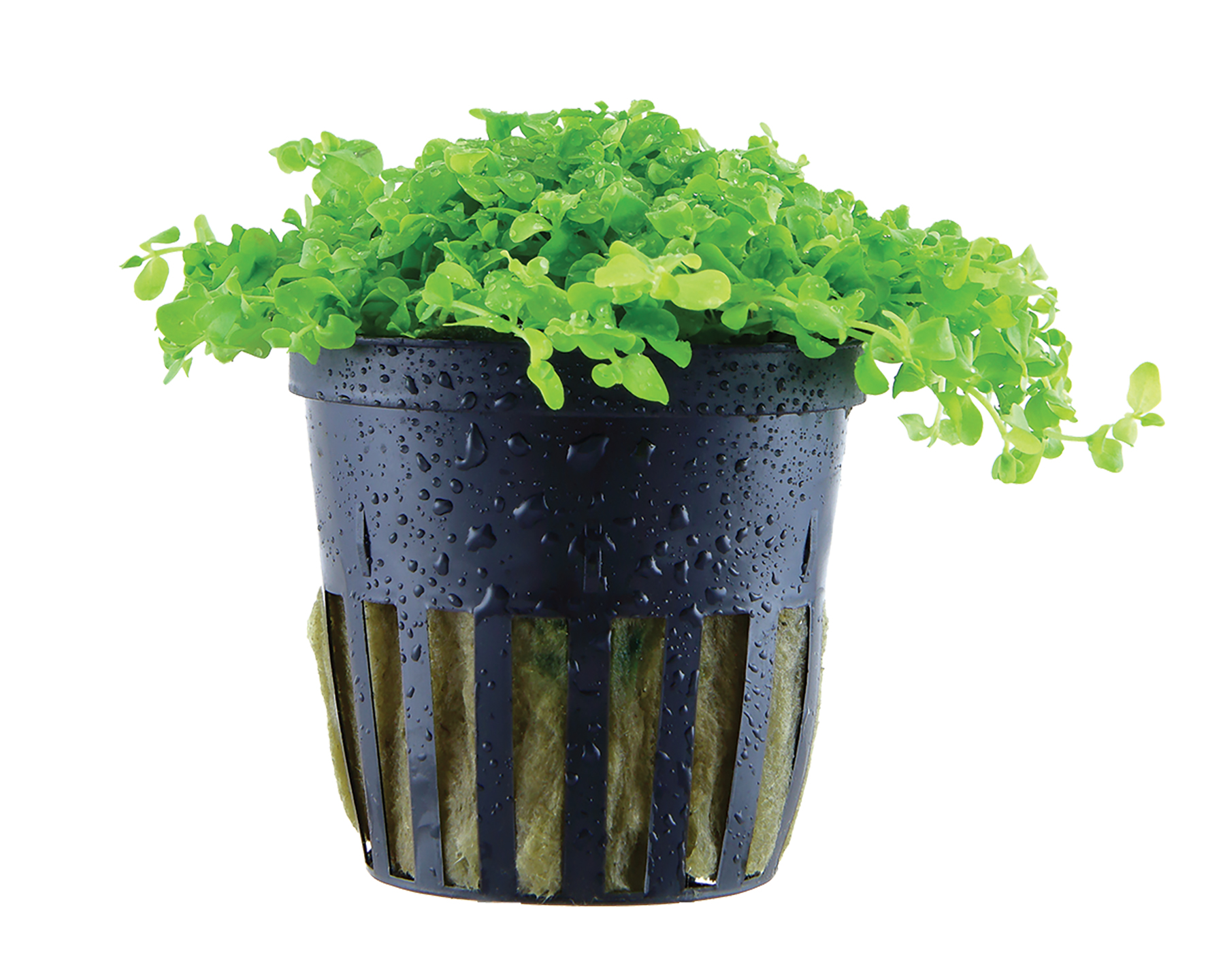
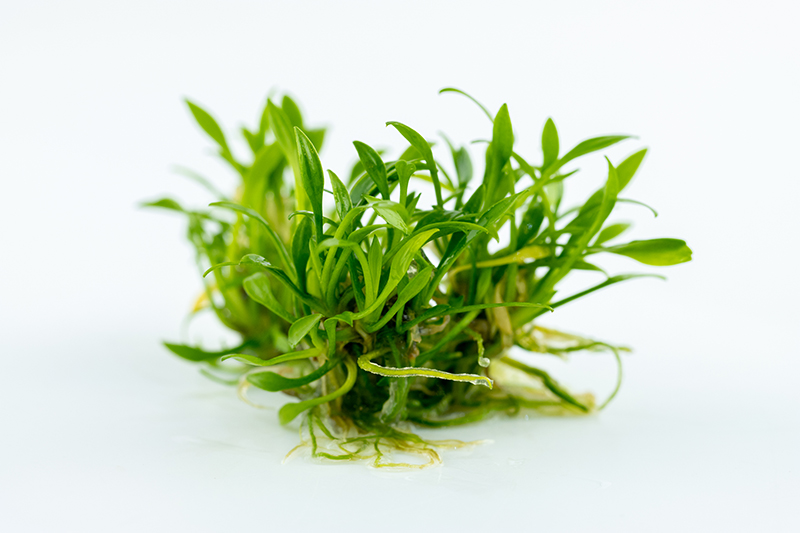
Foreground plants should stay low enough to preserve visibility across the lower portion of the aquarium. Micranthemum tweediei ‘Monte Carlo’ can form a soft transition between bare substrate and taller plants, but it is not automatically a low-effort carpet. It usually needs suitable light, regular trimming, and careful planting so loose pieces do not float away. For a lower-maintenance design, use a small planted patch rather than covering the entire front. Leave an open strip where bottom-oriented fish, shrimp, and snails can forage. A defined foreground also makes a small aquarium appear deeper because the eye can travel from open substrate into denser growth.
Choose midground plants to connect hardscape and open water
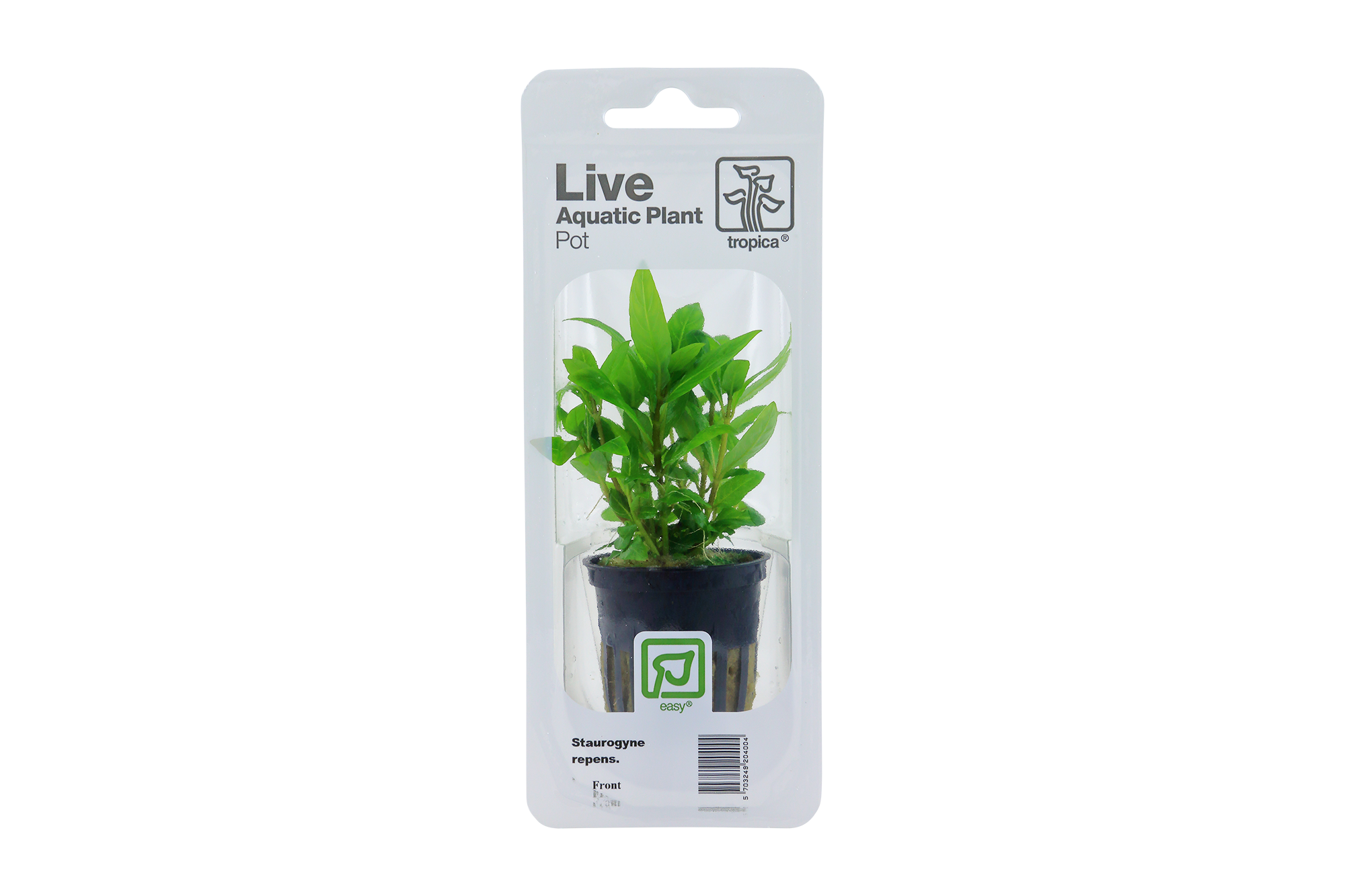
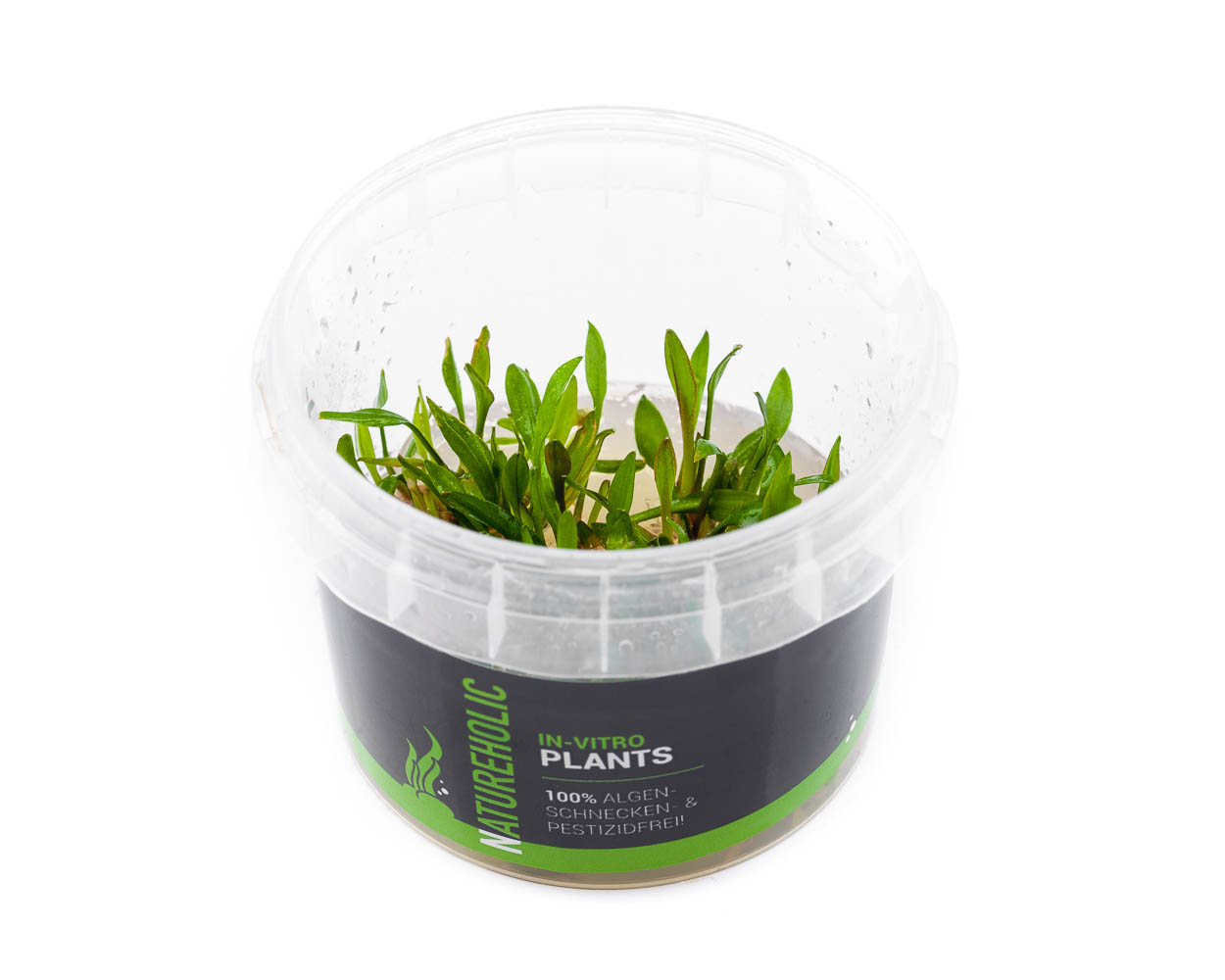
The midground is where an aquascape either becomes cohesive or looks like separate plant piles. Staurogyne repens works well as a low, spreading transition around rocks, wood, and the bases of taller plants. Group it in uneven clusters instead of forming a straight hedge. This creates hiding edges for shrimp without blocking the entire front glass. In a community aquarium, keep some gaps between clusters so fish can pass through and so you can reach the substrate during maintenance. If the plant begins to dominate the view, trim the outer stems and replant only the healthiest cuttings. The goal is a connected visual slope, not maximum density.
Make one attached plant the quiet focal point
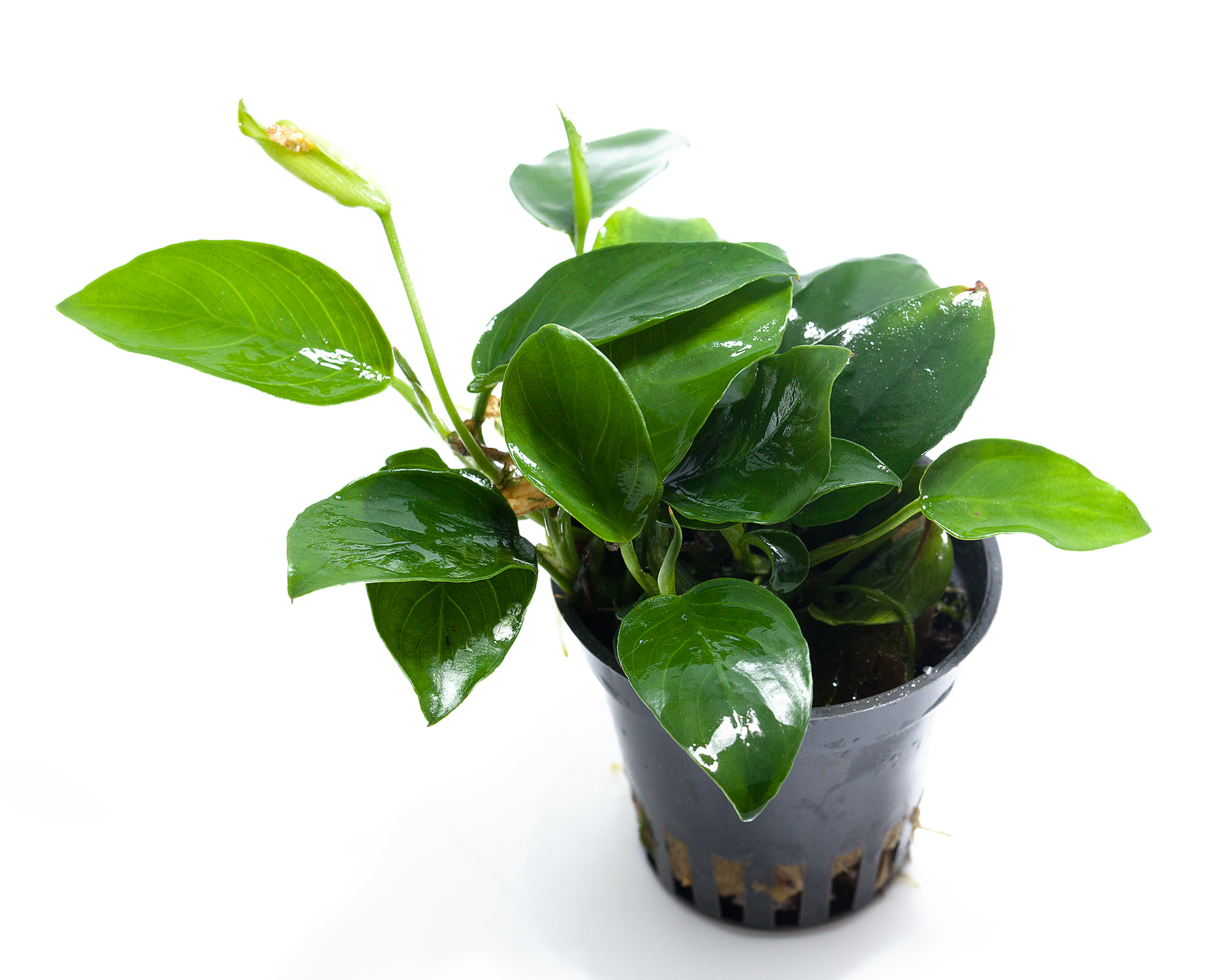
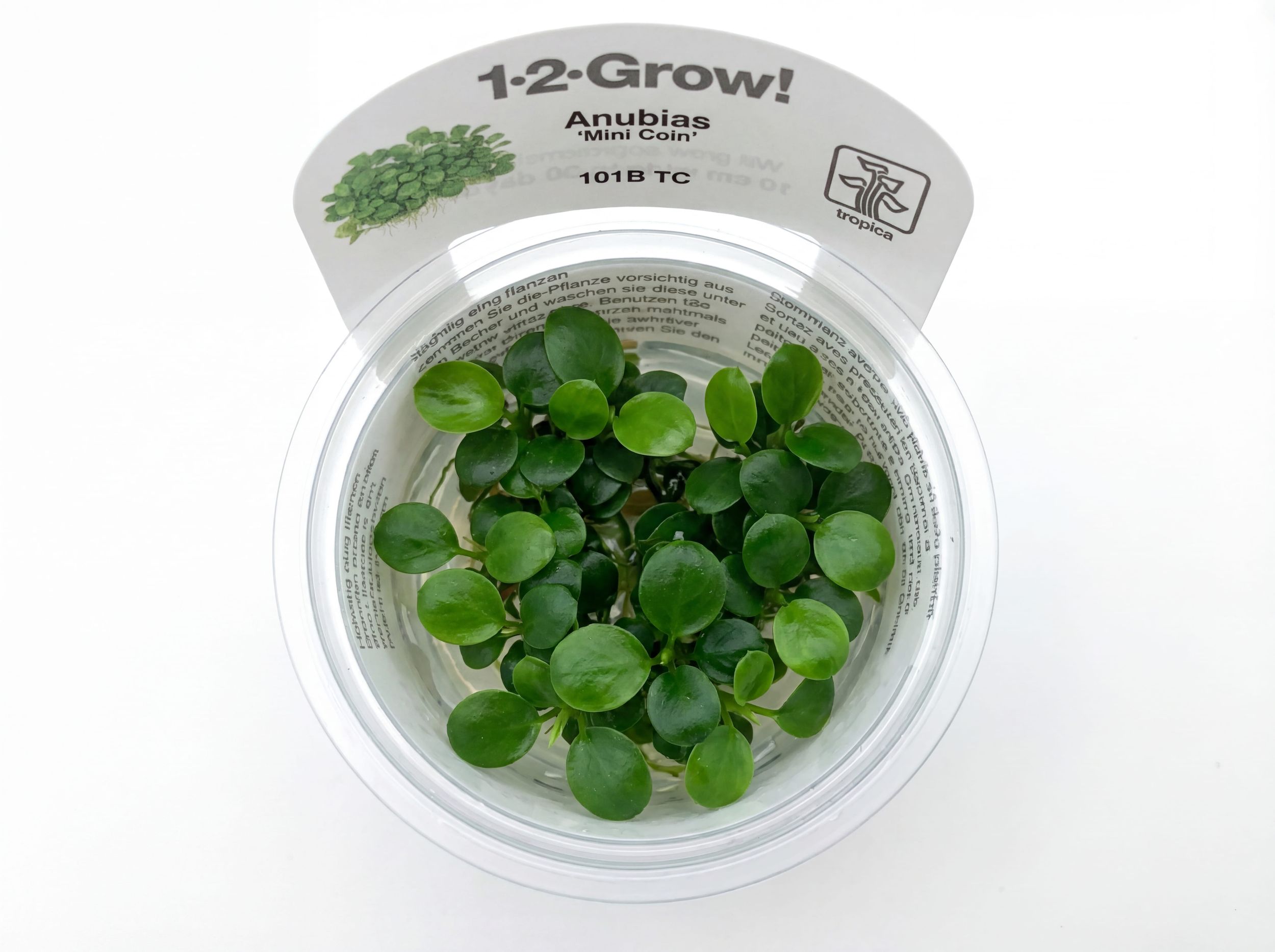
Anubias nana is useful when you want a strong plant shape without turning the substrate into a crowded planting bed. Attach it to wood or rock, keeping its rhizome above the substrate so it does not rot. Its broad leaves provide contrast against fine stems and can become a resting or grazing surface for shrimp and small snails. Place one larger clump near the focal hardscape, then keep nearby plants lower or finer in texture. Do not scatter identical clumps evenly across the aquarium; repetition can flatten the composition. In a nano tank, a single attached group often has more visual impact than several small plants competing for attention.
%20-%201.webp)
Use broad midground leaves to hide equipment and soften corners
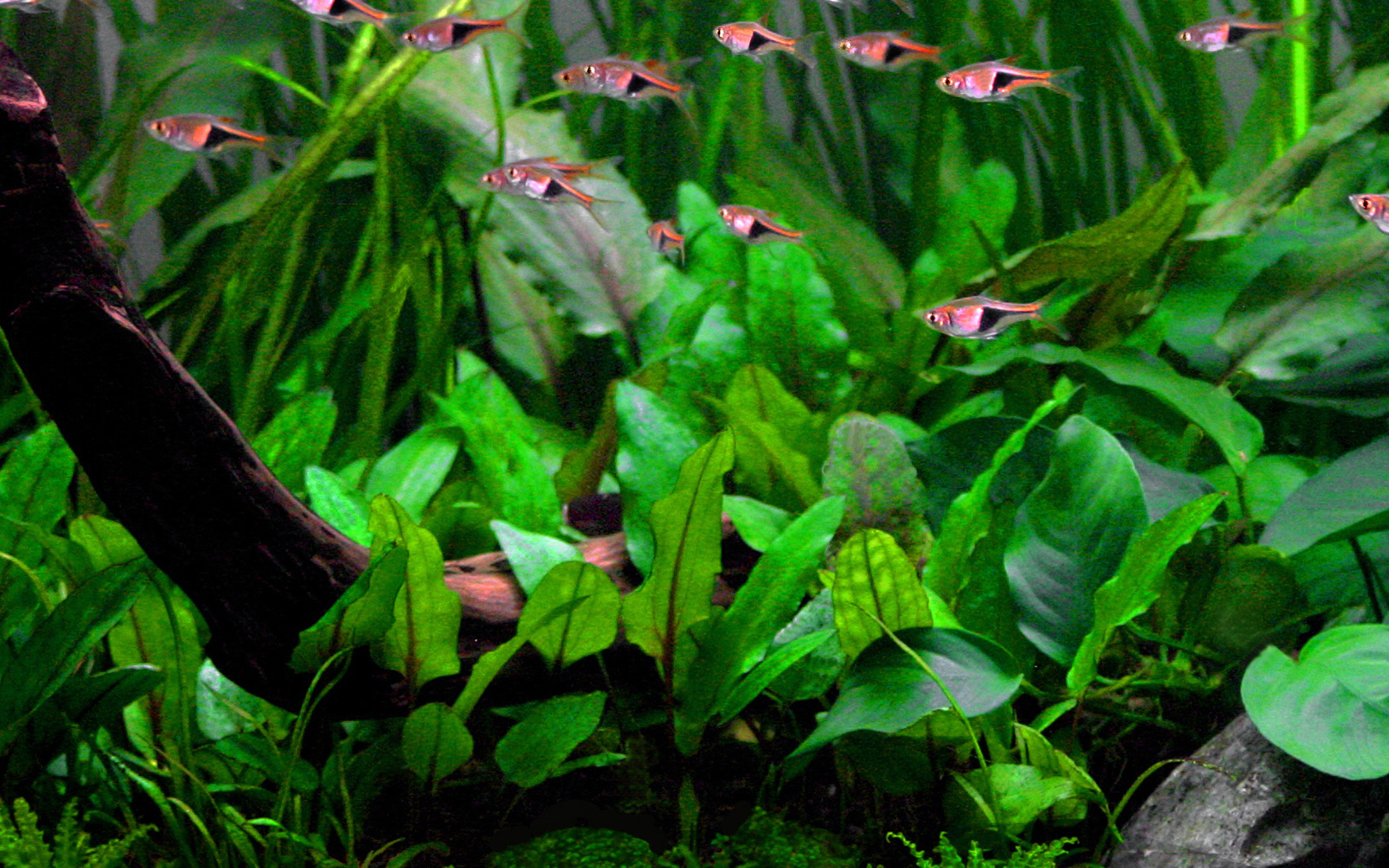
Cryptocoryne wendtii ‘Green’ gives the midground a fuller, more natural outline than many narrow-leaved plants. Place it near a rear corner, beside a stone, or at the base of wood where it can soften hard edges. Its slower, settled growth makes it useful for beginners who do not want to trim stems every week, although newly planted crypts may lose older leaves before regrowing. Avoid packing it tightly against the glass or filter intake. Leave enough space for circulation and maintenance access. A small group can shelter shrimp and provide cover for timid fish, while an open side of the tank preserves a clear swimming and viewing area.
Reserve the background for movement and height
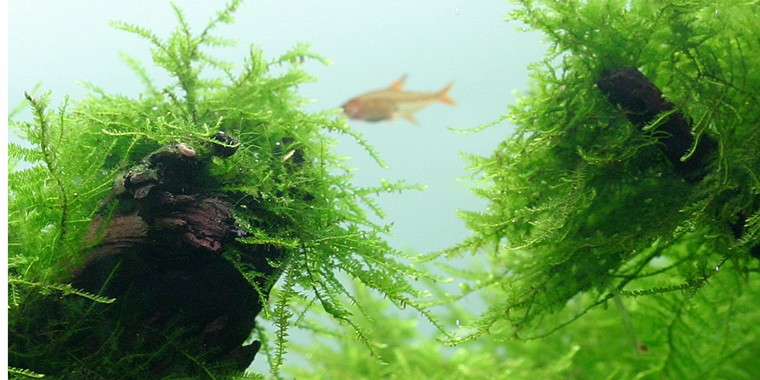
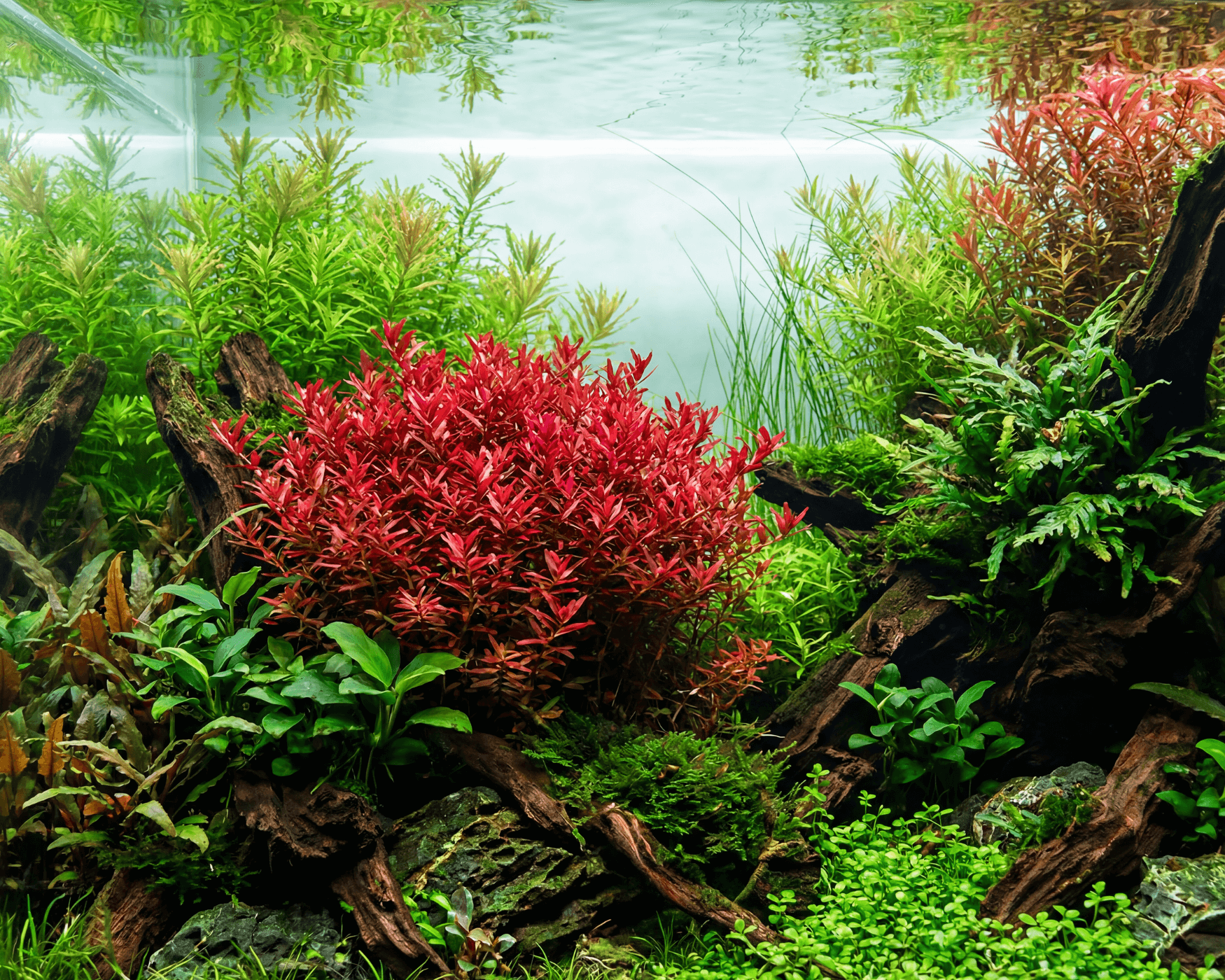
Rotala rotundifolia is best treated as a background plant rather than a plant for every open space. Plant several stems together behind hardscape or along one rear corner, then prune the group so it widens upward without forming a solid wall. Its fine foliage contrasts with broad Anubias and Cryptocoryne leaves, helping the aquarium read in layers. Keep the tallest growth away from the front viewing line and from equipment that needs regular access. If your light or nutrient routine is modest, expect greener growth and slower development rather than assuming the plant will display strong color. Background stems should frame livestock, not hide it.
Add a surface layer only when it supports the layout
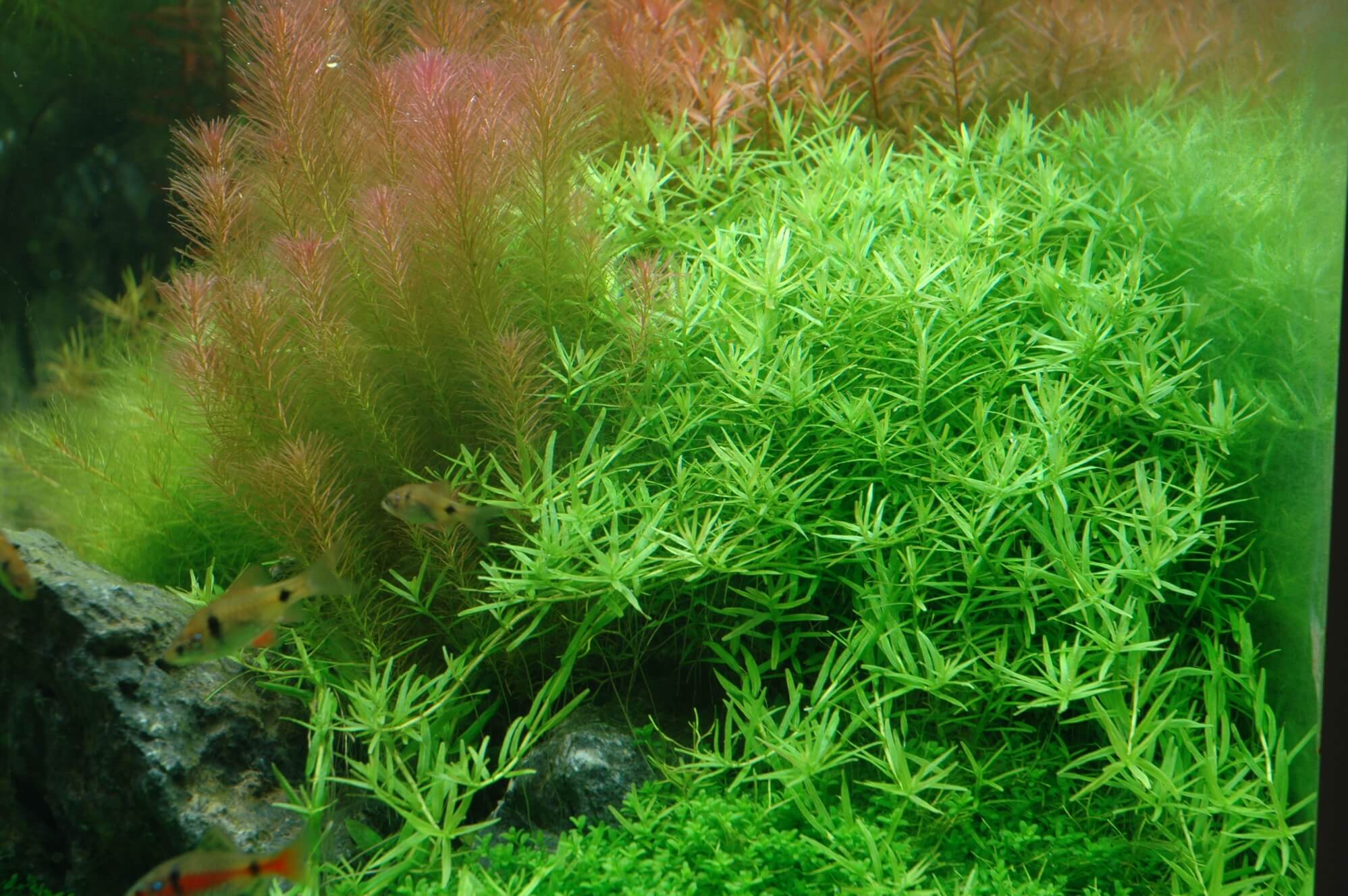
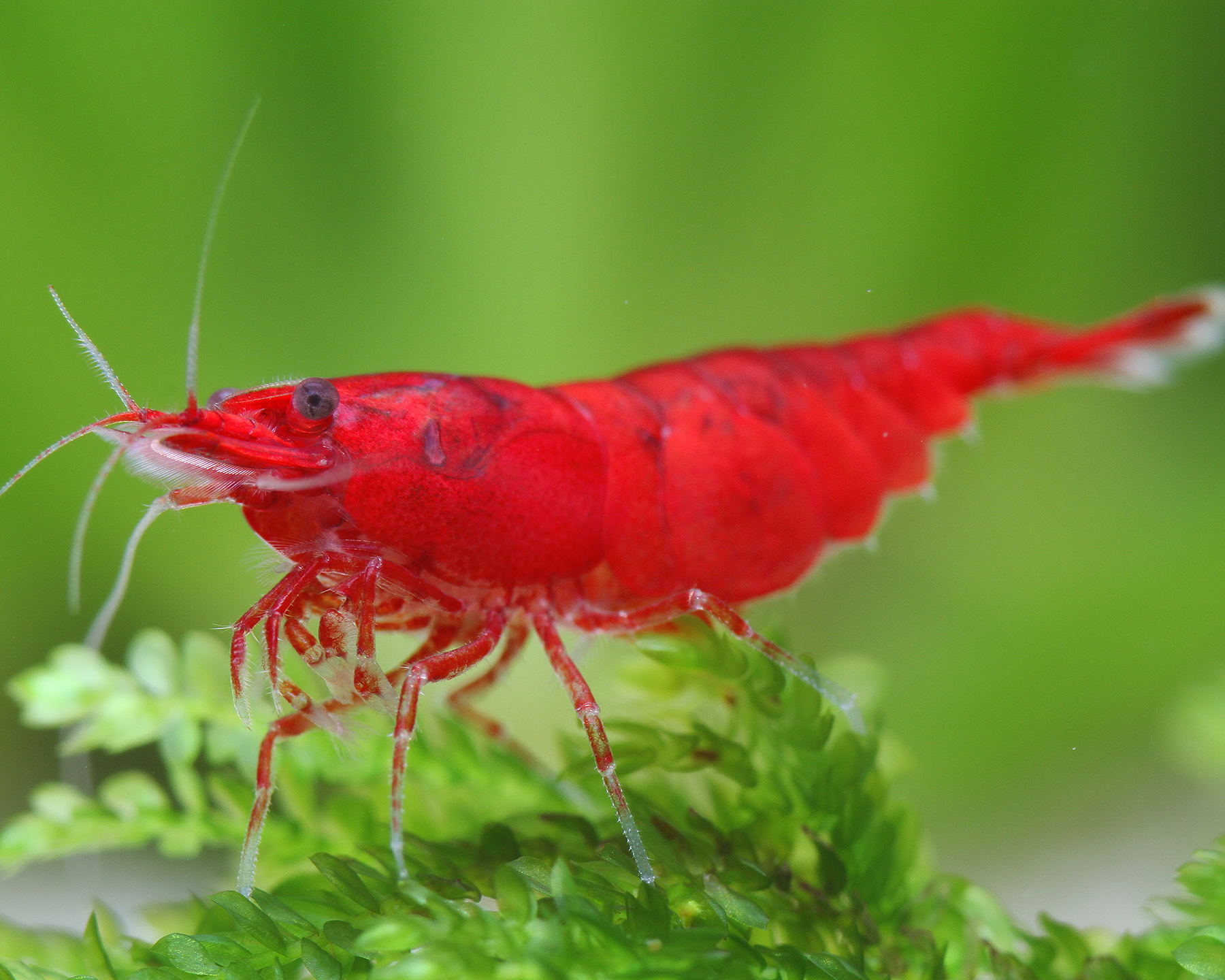
South American frogbit can add a gentle ceiling of shade and make a tank feel more enclosed, but floating plants should be placed deliberately. Keep part of the surface open for gas exchange, feeding, and a clear view of fish. In a shrimp-focused setup, floating roots may create extra grazing surfaces and cover, while in a small community tank they can reduce light reaching foreground plants. Corral the floaters to one side if possible instead of allowing them to spread evenly across the entire surface. Remove excess growth before it blocks circulation or causes lower plants to weaken. The surface layer should frame the aquascape, not erase the layers below it.
Turn moss into a shrimp and snail activity zone
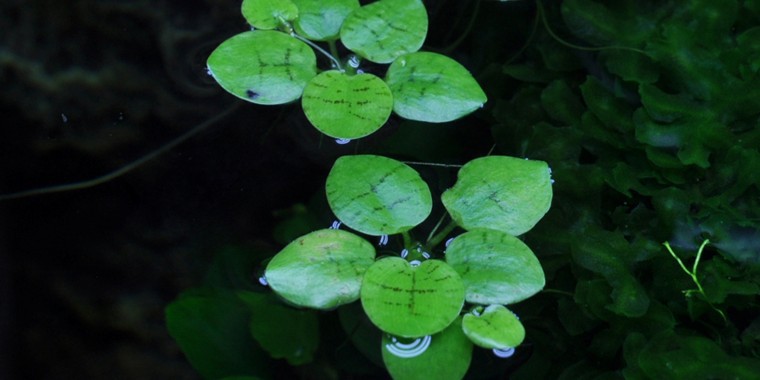
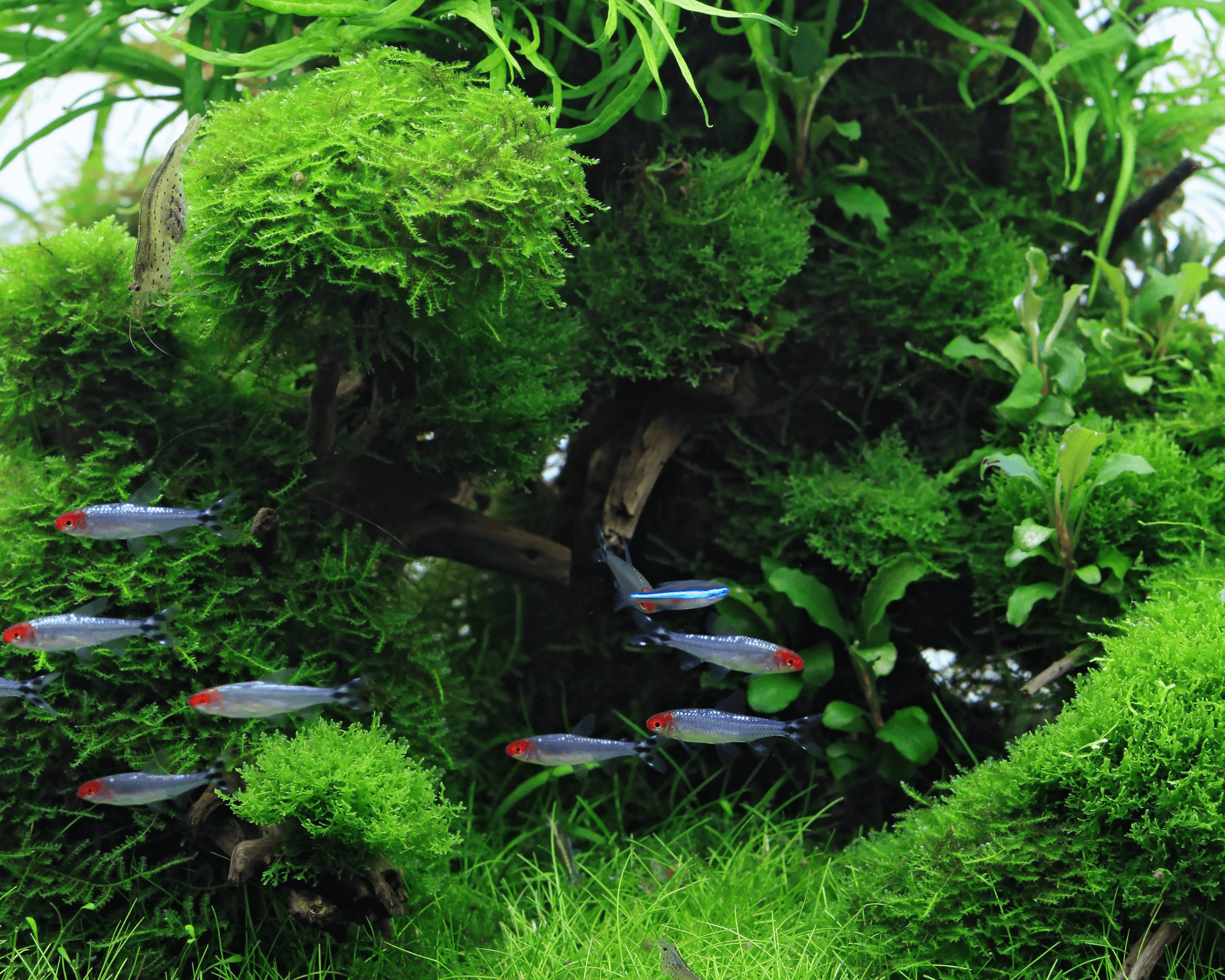
Java moss is most useful when it has a defined job: cover a branch, soften a stone, or create a small grazing patch. Attach it thinly so water can move through the clump and so it does not become a trapped-debris ball. Its fine structure gives young shrimp more places to browse and retreat, but it can also collect food and mulm if allowed to become too dense. Keep one edge accessible for gentle trimming. Place moss where you can see it from the front rather than hiding it behind tall stems. A small, intentional patch adds texture and livestock habitat without making the aquarium look overgrown.
Keep colorful plants as accents, not a background wall
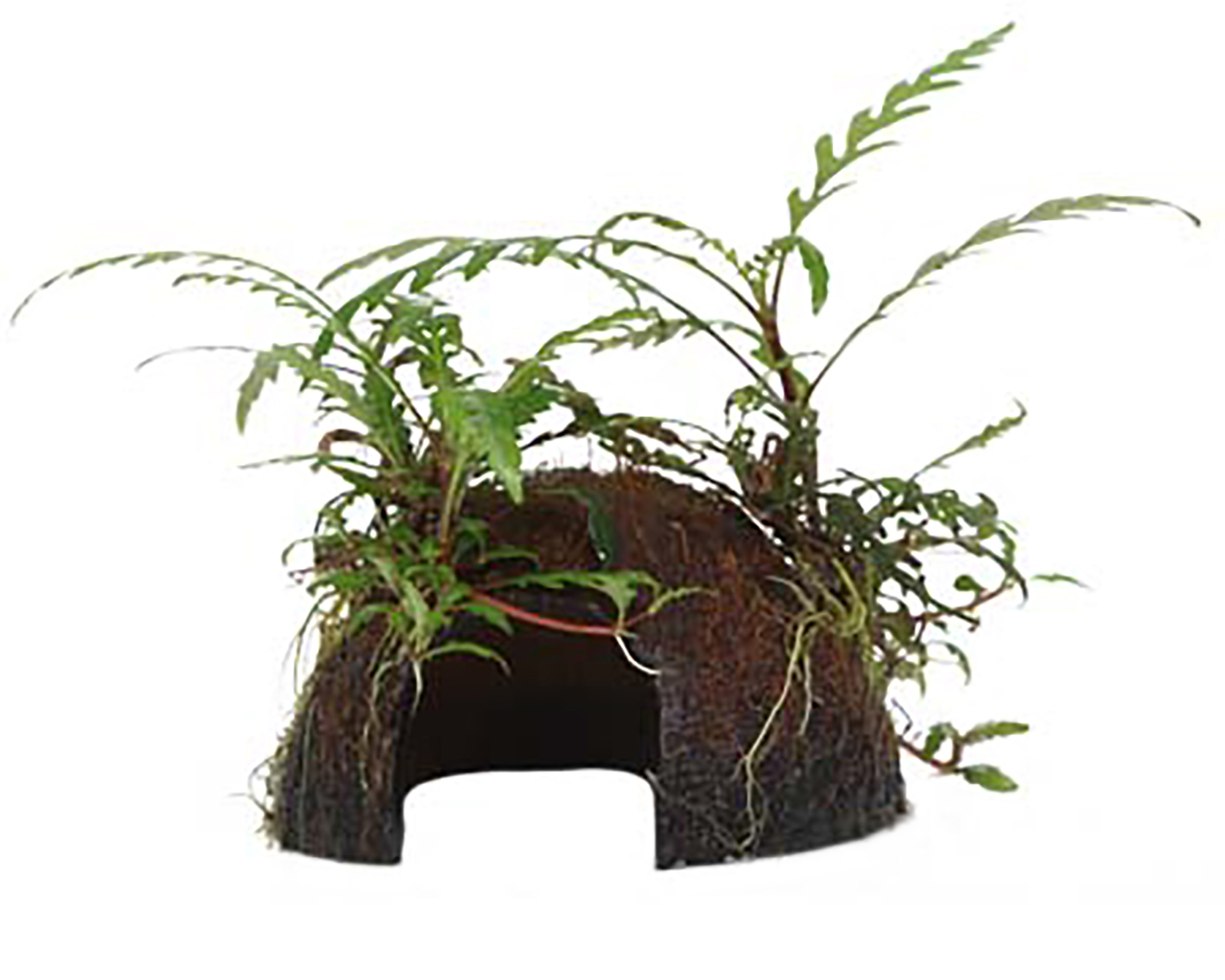
Red or bronze foliage works best when it has green plants around it for contrast. Hygrophila pinnatifida can serve as an attached or semi-attached accent near wood and rock, depending on how it is grown and secured. Use a small group near the focal area instead of distributing isolated red leaves throughout the tank. Its unusual leaf shape adds visual punctuation, while its darker tones can make bright shrimp or pale fish stand out. Watch its growth direction and prune stems that begin shading nearby plants. Color should guide the eye toward a feature, not compete with every other plant in the aquarium.
Leave a livestock corridor through the planting
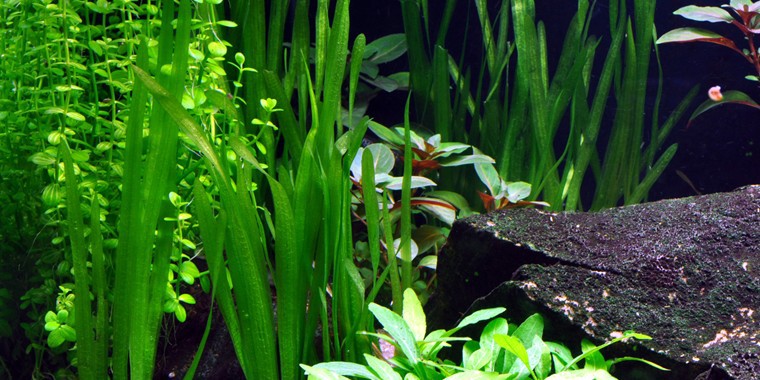
A planted aquarium still needs intentional open water. Use Vallisneria americana along the rear or side wall to create vertical movement while preserving a central or diagonal swimming corridor. Anchor the runners so they do not spread into the foreground too quickly, and trim older leaves at the base rather than cutting across the middle of a blade. Tall grass-like growth can make fish feel secure, but a dense wall may hide livestock and restrict circulation. For shrimp and snails, keep the front substrate visible enough to monitor feeding, molts, shell condition, and debris. The best layout gives plants somewhere to grow and animals somewhere to move.
Frequently Asked Questions
Which aquarium plants should go in the foreground?
Use low or spreading plants in the foreground, but match the choice to your lighting, substrate, carbon setup, and willingness to trim. A small foreground patch is often easier to maintain than a full carpet and leaves more room for shrimp and snails to forage.
Where should aquarium plants go in a nano tank?
Place low plants at the front, medium plants around the hardscape, and taller plants along one rear or side section. Keep at least one open swimming lane and avoid covering the entire surface with floating plants.
Can shrimp and snails share an aquascape with fish?
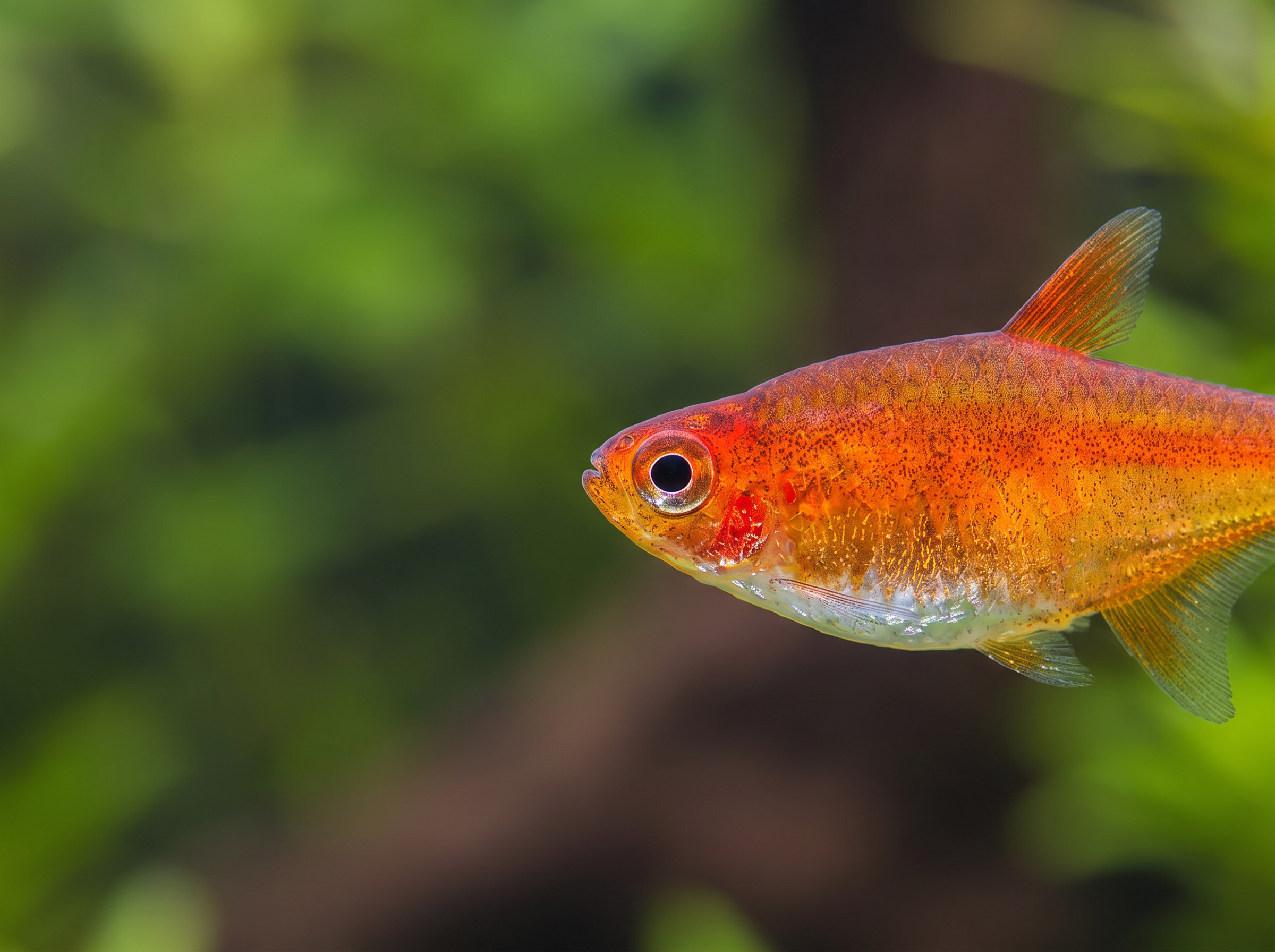
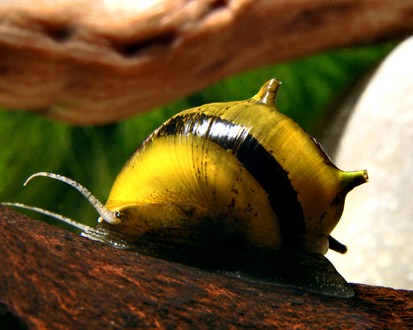
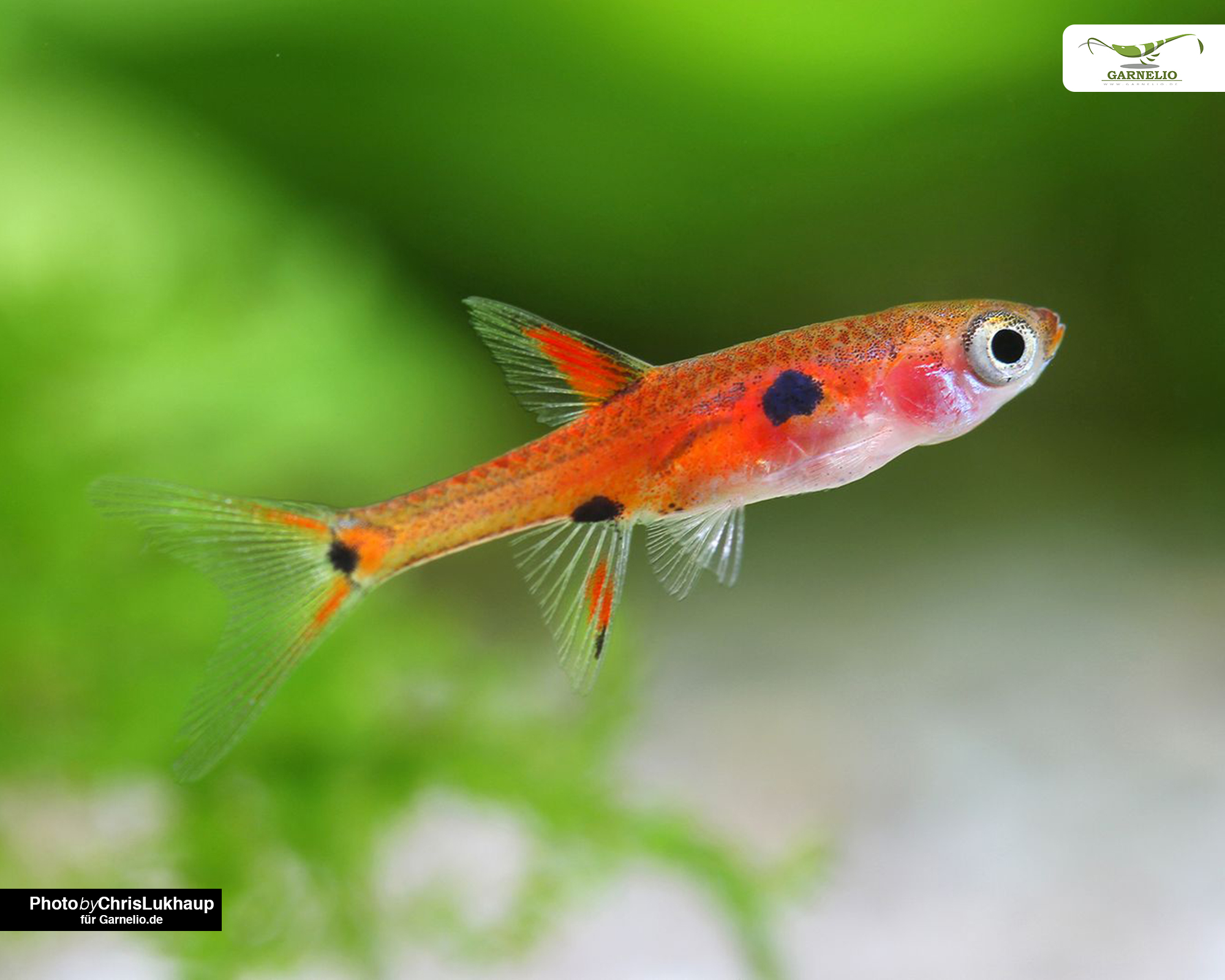
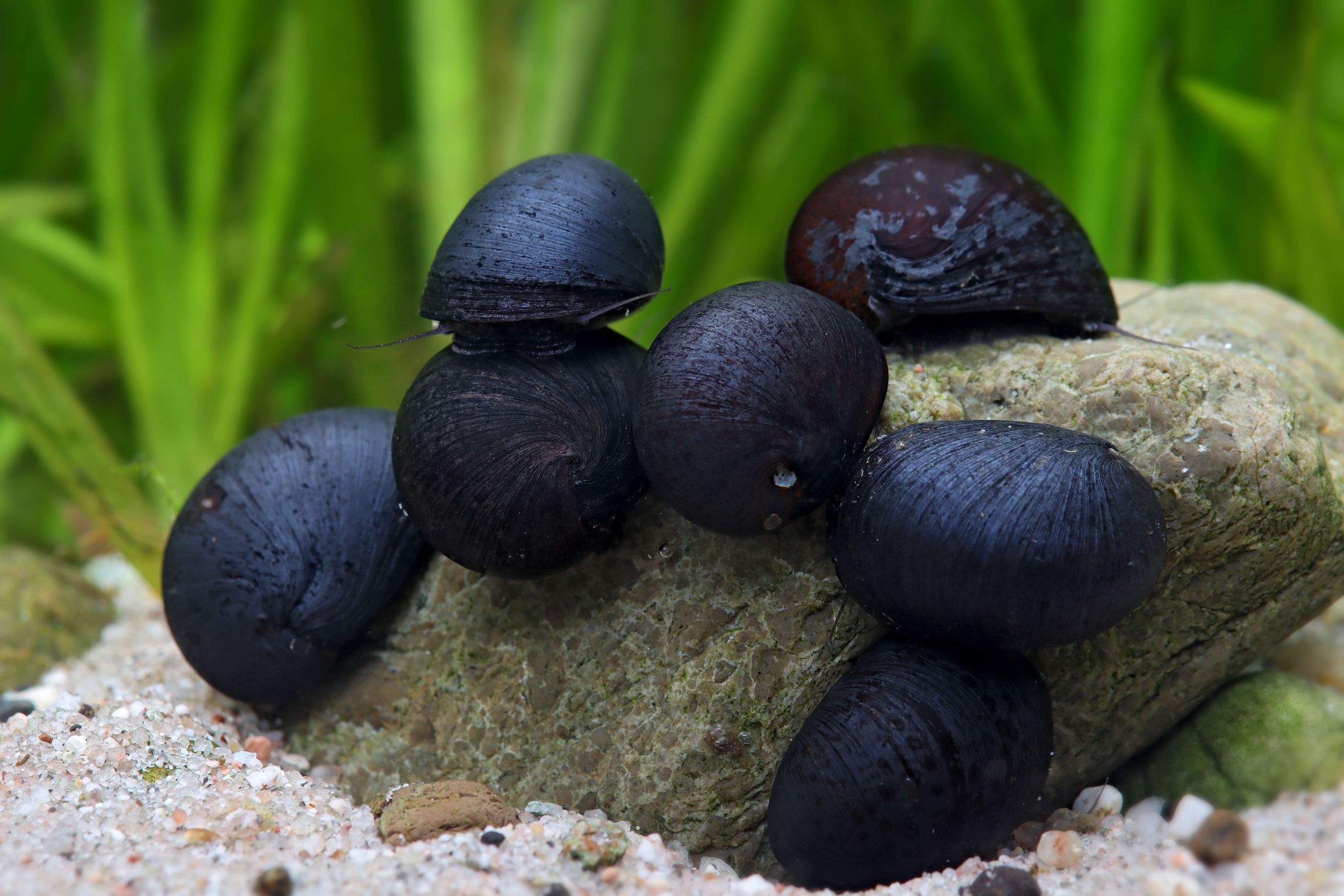
Often, yes, when the fish are peaceful and small enough to avoid treating shrimp as prey. Adult shrimp and snails may coexist successfully, but young shrimp can still be eaten. Dense moss, plant roots, and attached growth improve shelter, while stable water quality remains important.
Should red aquarium plants be placed in the center?
Not necessarily. Red plants usually work best as accents near a focal point, surrounded by green foliage or open space. Placing several red plants throughout the aquarium can make the layout look busy and reduce the impact of each accent.
How much open space should a planted aquarium have?
There is no fixed percentage that suits every tank. Keep enough open substrate and water to observe livestock, perform maintenance, and preserve a clear visual path. Open space is especially valuable in nano aquariums because it prevents dense planting from making the tank look smaller.
Leave your comments