Judge's scorecard
Judging basis: IAPLC Secondary Screening Judging Criteria. The score is an editorial assessment from the submitted image, not an official contest result.
Recreation of natural habitat for fish: 43 / 50
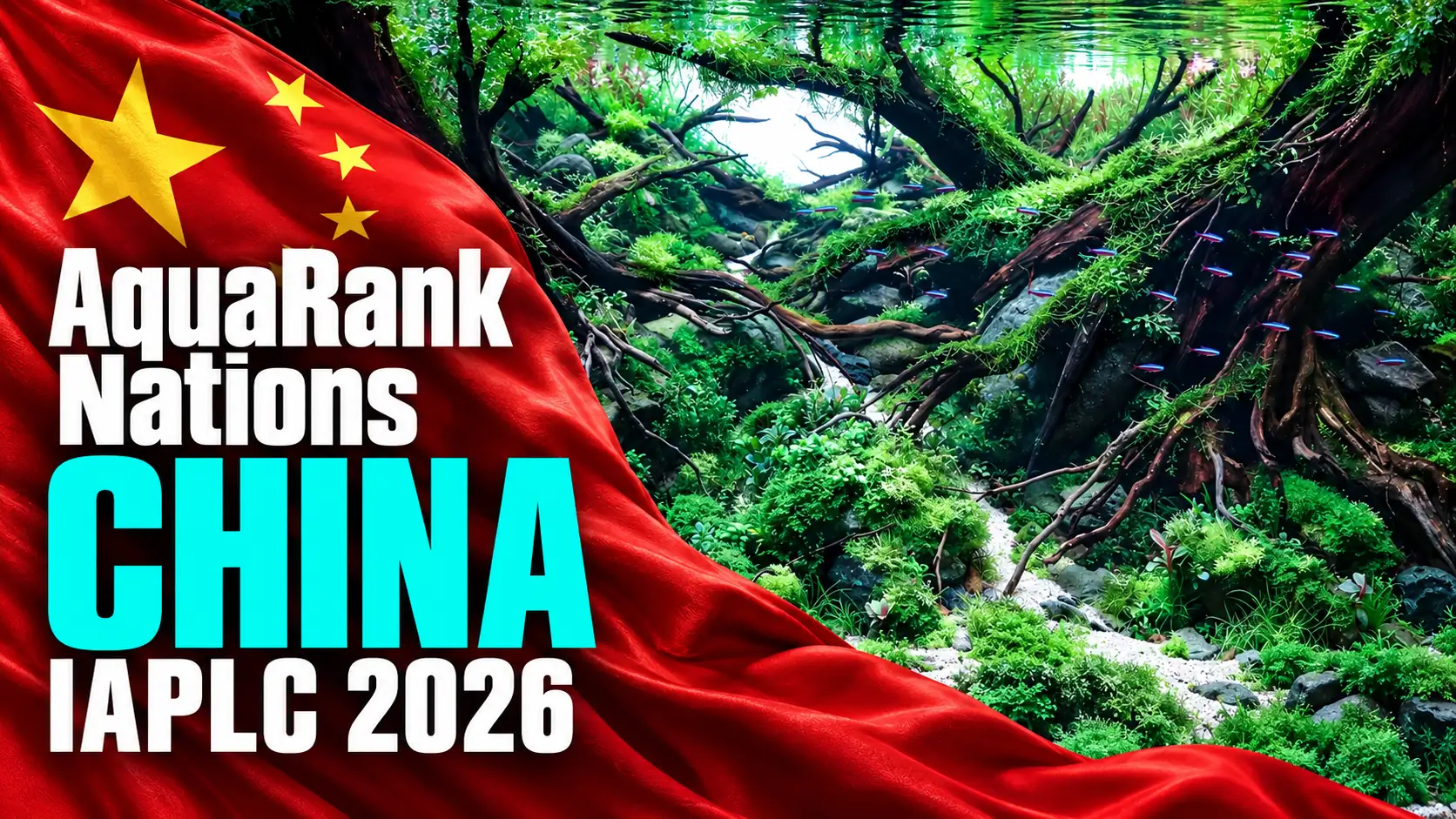
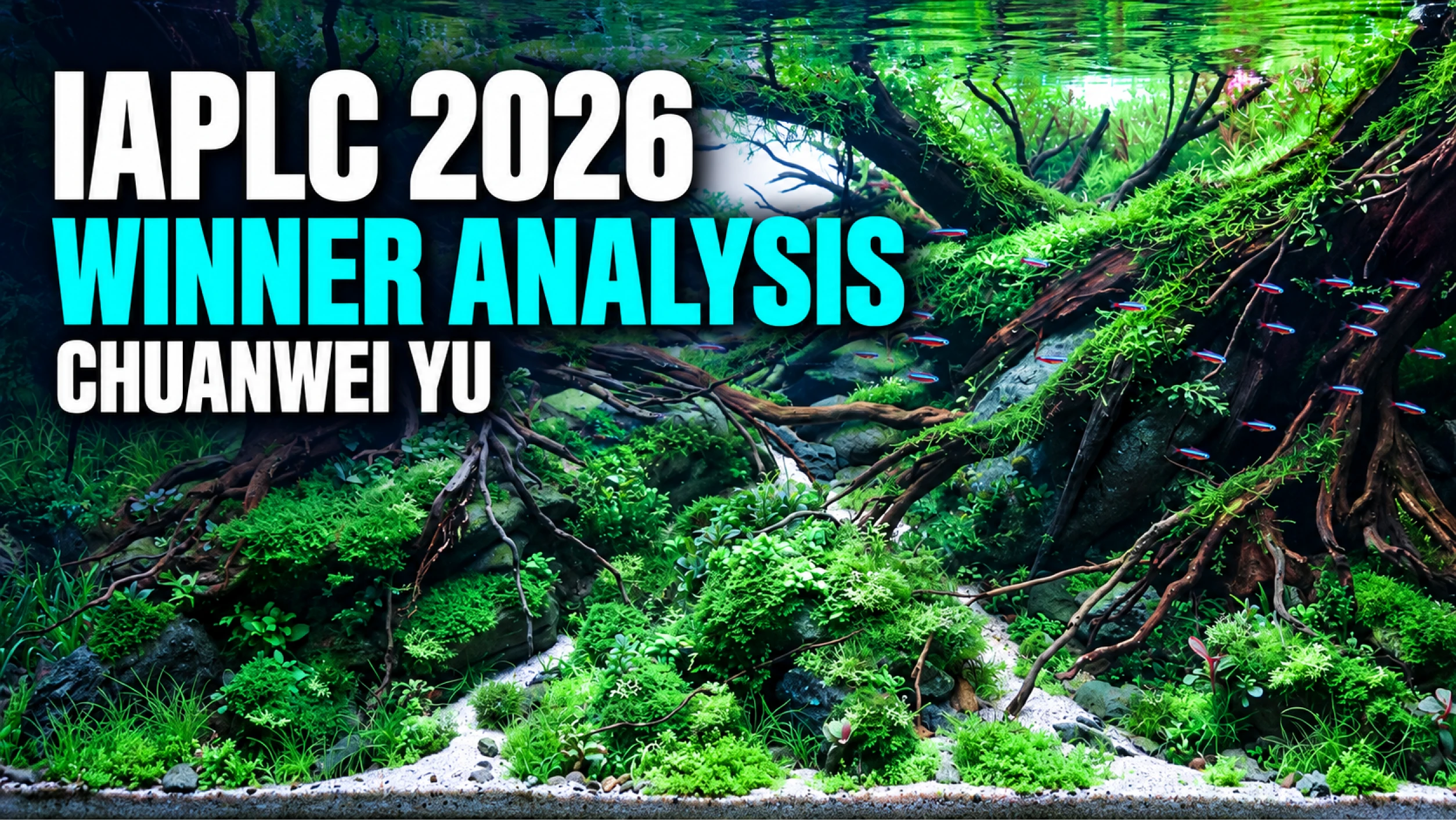
The dense branching wood, layered planting and central swimming corridor create a convincing underwater forest. The vertically striped, long-finned fish appear integrated with the scale and atmosphere of the layout. Exact species, ecological compatibility and detailed fish condition cannot be verified from the image alone.
Strengths: Strong shelter and travel-route impression created by interlocking wood.; Fish are visibly incorporated into the composition rather than added as an isolated focal point.; Planting, dark recesses and open water combine to suggest a mature aquatic environment.
Limitations: Fish identity and ecological requirements are not verifiable.; The crowded outer structure leaves less clearly defined open habitat than the central corridor.
Long-term maintenance of the layout: 6/10
The photographed presentation shows controlled growth and readable hardscape, but maintenance history cannot be established from one image. The dense upper and central planting would likely require consistent trimming and algae control to retain this clarity.
Strengths: Plant growth remains organized around the wood instead of completely obscuring it.; Major compositional lines and swimming space are still visible.
Limitations: No evidence is available about stability over time, water quality or recurring maintenance.; Dense growth appears potentially demanding to prune without disturbing the composition.
Creator's technical skills: 9/10
The overlapping branches produce convincing depth, while planting is placed to reinforce wood direction, recesses and foreground texture. The technical execution is highly controlled in the visible frame, although hidden hardscape construction and attachment methods cannot be assessed.
Strengths: Excellent layering from foreground wood to background planting.; Clear control of texture, contrast and plant coverage.; Fish-scale presentation is supported by the hardscape rather than competing with it.
Limitations: Some upper areas are so dense that individual construction decisions become difficult to read.; Base construction and planting methods remain unseen.
Originality and impression of the layout: 9/10
The combination of a near-continuous driftwood canopy, richly covered branches and a school of tall, striped fish creates a distinctive and memorable first impression. The composition has a complete visual identity, though the density slightly reduces immediate simplicity.
Strengths: Strong immersive opening impression.; Distinctive integration of livestock with a forest-like hardscape.; The work avoids a generic open-ground composition.
Limitations: High visual density can make the focal hierarchy less immediate.; Selective reduction of peripheral detail could sharpen the central statement.
Presentation of natural atmosphere: 9/10
Layered growth, dark timber, background illumination and moving fish produce a convincing sense of a mature submerged woodland. The score addresses visual atmosphere only; no geographic habitat or exact biological reference can be confirmed.
Strengths: Excellent depth and enclosure without losing a central opening.; Plant textures and lighting imply time, shelter and submerged complexity.; The fish add movement and scale to the naturalistic presentation.
Limitations: The controlled contest lighting is more dramatic than verifiably natural.; A little more open substrate variation could increase habitat realism.
Overall composition and planting balance: 9/10
The central corridor, inward-pointing branches and contrasting background create a cohesive composition. Planting is balanced across the wood and lower areas, while the fish provide a strong focal group. Slight crowding at the sides and upper corners prevents a perfect score.
Strengths: Clear central focus supported by diagonal structural lines.; Good balance between dense texture and usable negative space.; Planting reinforces the hardscape instead of appearing separately layered.
Limitations: Peripheral branches compete with the fish for attention.; Additional breathing room around the central group could improve visual hierarchy.
Total editorial assessment: 85/100
Judge's overall verdict
Editorial estimate: 85/100. This is a highly accomplished, immersive forest-style aquascape with strong technical control, natural atmosphere and effective fish integration. Its principal limits are visual density and the inability of a single image to verify long-term maintenance or biological compatibility. The score is not an official IAPLC result.
Assessment limits: Assessment is based solely on the supplied image and trusted contest metadata. Plant species, fish species, tank dimensions, construction methods, maintenance history, water conditions, geographic habitat reference and author identity were not verifiable.
Habitat Recreation and Fish Integration
The layout strongly suggests a complex submerged forest rather than a simple decorative arrangement. Extensive branches form cover and travel routes, while mossy or fine-textured growth occupies the wood and surrounding substrate. The striped, long-finned fish are grouped through the central opening, making their scale and movement an important part of the scene. Their placement provides a clear sense of an inhabited environment, and the open foreground appears sufficiently unobstructed for swimming. The image does not allow reliable identification of the fish, their ecological requirements or their condition beyond a healthy-looking presentation, so compatibility cannot be fully verified. A slightly clearer division between shelter and open water could make the habitat read even more naturally.
Long-Term Maintenance Prospects
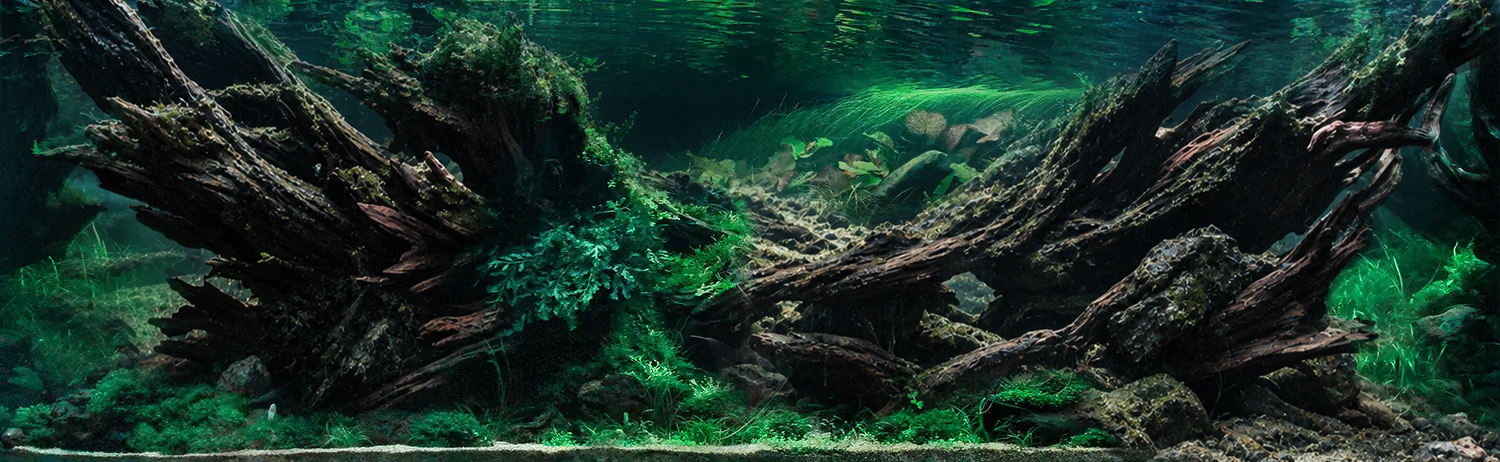
The photograph shows impressive control over a high-maintenance planting scheme. Growth appears deliberately attached to or arranged around the wood, with the main contours still readable despite the density. This is a strength because uncontrolled growth could easily hide the carefully built structure. However, a single contest image cannot establish pruning frequency, plant health over time, algae control, water quality or whether the fish and plants remain balanced after the photographed peak. Several dense areas, especially along the upper wood and central background, would demand regular trimming to preserve visibility and layered depth. The score therefore rewards visible restraint and organization but remains conservative about long-term sustainability.
Technical Construction and Planting Control
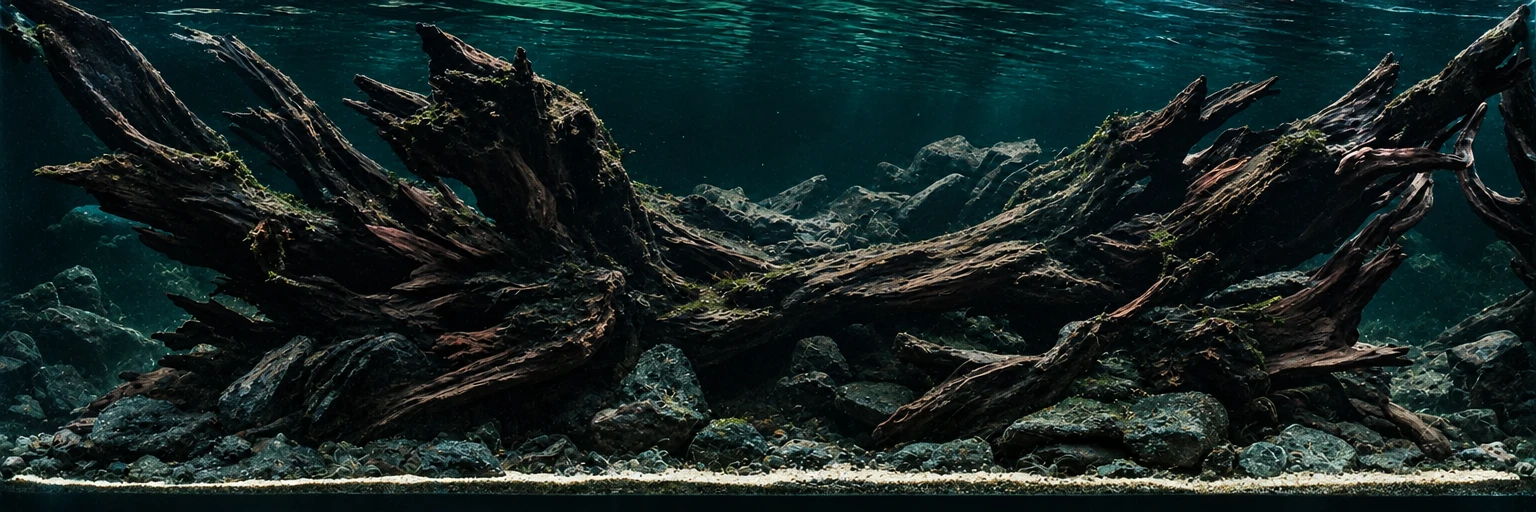
The strongest technical evidence is the layered hardscape. Large diagonal and horizontal branches overlap convincingly, creating foreground, middle-ground and background planes instead of a flat wall. Planting has been controlled closely enough to emphasize branch direction, preserve dark channels and frame the fish. The lower carpet-like textures and suspended growth also soften transitions between wood and substrate. Exposure is dark, but that darkness reveals deliberate contrast between illuminated foliage and recessed timber rather than obvious structural disorder. Because the base, attachment methods and substrate depth are hidden, some construction skill cannot be directly judged. A few more visibly open gaps in the upper mass could improve legibility without reducing the forest effect.
Originality and First Impression
The first impression is immediate: the viewer enters a deep, green-black woodland with fish passing through its central opening. The distinctive combination of heavily branched wood, extensive epiphytic-looking coverage and a coordinated group of tall-bodied striped fish gives the scene a strong identity. It avoids the more familiar appearance of an exposed stone composition or a broad, empty sand path. Its originality lies less in a single unusual object than in the convincing integration of structure, planting and livestock. The visual intensity may be slightly demanding, however, because numerous branches and plant textures compete for attention near the edges. Selective simplification could make the central subject register even faster.
Natural Atmosphere and Sense of Time
The aquarium communicates age and immersion through layered textures, softened wood contours and substantial plant coverage. Dark recesses beneath the branches imply depth, while the lighter background growth prevents the scene from becoming a uniformly closed mass. The fish add scale and movement, helping the layout feel like an ecosystem rather than a static botanical display. This atmosphere is highly effective, although the strong, controlled lighting and exceptionally tidy presentation reveal the photographic and competition context. The image cannot establish a real geographic habitat or identify the plants and fish, so the evaluation concerns visual naturalism rather than taxonomic accuracy. More visible variation in open substrate and current-facing growth might strengthen the habitat narrative.
Composition and Planting Balance
The composition is built around a broad, irregular canopy of wood that frames a central fish corridor. Diagonal lines lead inward from both sides, and the darker foreground supports the brighter, more open center. Planting balance is generally strong: dense textures occupy the structure, while lower spaces and background openings provide relief. The school’s position prevents the composition from becoming static and gives the central area a clear focal point. The main limitation is that the outer upper corners and side branches are nearly as visually forceful as the center, producing a rich but crowded frame. Slightly greater negative space around the fish would improve hierarchy while preserving the established forest character.




Leave your comments